




Abstract
Recent field experiments have documented that discrimination constitutes a barrier to employment for people with disabilities. Less is known about how disability discrimination varies across contexts in the labor market. This study explores whether hiring discrimination based on a history of mental health problems and against wheelchair users varies with company size using data from two field experiments. The study provides mixed evidence suggesting that the negative effect of disclosing a history of mental health problems on employers' hiring decisions does not vary with company size, whereas discrimination against wheelchair users occurs less often in large companies.
Keywords
Across countries, disabled people are employed at far lower rates than their non-disabled counterparts, and those who are employed earn significantly less (OECD, 2010). Recent field experiments conducted in the United States, United Kingdom, Belgium, Canada and Norway provide direct evidence that hiring discrimination constitutes a considerable obstacle to employment opportunities for people with various types of impairment (Ameri et al., 2018; Baert, 2016; Baert, De Visschere, Schoors, Vandenberghe and Omey, 2016; Bellemare, Goussé, Lacroix and Marchand, 2019; Bjørnshagen, 2021; Bjørnshagen and Ugreninov, 2021; Hipes, Lucas, Phelan and White, 2016; Stone and Wright, 2013). Less is known about how disability discrimination varies across contexts in the labor market. This article provides further insight into organizational contexts that may limit or promote discrimination based on disability. More specifically, the study explores whether the negative influence of disability on employers' hiring decisions varies by company size based on data from two field experiments conducted in the Norwegian labor market.
Previous research based on employer surveys and qualitative interviews conducted in the United States, United Kingdom and the Nordic countries suggests that the employment opportunities of disabled people may vary with company size since large employers are often more likely to report that they have hired workers with disabilities (Beatty, Baldridge, Boehm, Kulkarni and Colella, 2019; Bredgaard and Salado-Rasmussen, 2021; Brohan et al., 2012; Domzal, Houtenville and Sharma, 2008; Fraser, Ajzen, Johnson, Hebert and Chan, 2011; Houtenville and Kalargyrou, 2012; Jasper and Waldhart, 2012; Svalund and Hansen, 2013). While several factors on both the supply and demand side of the job matching process likely contribute to this empirical pattern, it may at least partly be due to company size variation in discriminatory hiring practices towards applicants based on disability.
Field experiments in which some characteristic of interest is randomly assigned to fictitious job applications for actual job vacancies provide causal evidence of the extent of discrimination in hiring processes (Gaddis, 2018; Pager, 2007). Several field experiment studies on ethnic/racial discrimination have documented a negative relationship between organization size and discrimination (e.g., Banerjee, Reitz and Oreopoulos, 2018; Carlsson and Rooth, 2007; Wood, Hales, Purdon, Sejersen and Hayllar, 2009), while some studies find no association between size and discrimination based on ethnicity/race, gender or age (Baert, De Meyer, Moerman and Omey, 2018; Bertrand and Mullainathan, 2004; Birkelund, Rogstad, Heggebø, Aspøy and Bjelland, 2014). In recent field experiment studies on disability discrimination, only two address variation by organization size. In the US, discrimination of applicants who disclosed a spinal cord injury or Asperger’s syndrome was concentrated among small companies with 15 or fewer employees that were not subject to the Americans with Disabilities Act (ADA), which prohibits disability discrimination (Ameri et al., 2018). By contrast, a field experiment conducted in the Canadian labor market, where all employers are subject to disability discrimination legislation, found no significant interaction between company size and discrimination against wheelchair users (Bellemare et al., 2019). Field experiment studies that investigate discrimination based on other types of impairment, such as mental health conditions (Baert et al., 2016; Bjørnshagen, 2021; Hipes et al., 2016), did not examine heterogeneity by company size.
To investigate whether disability discrimination occurs less often in large companies, the present study uses data from two field experiments on Norwegian employers' actual hiring behavior towards fictitious job applicants with physical or psychological impairments (Bjørnshagen, 2021; Bjørnshagen and Ugreninov, 2021). The study provides new evidence of the relationship between organization-level characteristics and discrimination and, by extension, the contexts in which disabled job applicants may be treated more or less fairly. The study makes two main contributions. First, it explores the relationship between organization size and discrimination in a new labor market context. Norwegian disability discrimination legislation covers all employers, though the extent of employers' proactive duties to promote equality and non-discrimination is contingent on company size. Second, it is the first study to examine whether disability discrimination in hiring based on a history of mental health problems varies with organization size.
Why Large Employers may Discriminate Less
Employers make hiring decisions within organizational contexts that shape their perceived opportunities, possible courses of action and potentially their beliefs and hiring preferences (Midtbøen, 2015; Petersen and Saporta, 2004; Reskin, 2003). Thus, access to employment opportunities for categorically subordinate groups likely varies depending upon the organizational context (Tomaskovic-Devey and Avent-Holt, 2019). The size of a company is one such contextual source of variance. Although the purpose of the present study is not to test the mechanisms that may be in play, there are several explanations why organization size may matter for the extent of disability discrimination. Specifically, large employers often differ from smaller ones in individual- and organizational-level characteristics that may reduce discrimination. Possible explanations for why large employers may discriminate less can be grouped into two categories: 1) explanations that concern company size as a proxy for organizational features that may restrict discriminatory behavior, and 2) explanations that pertain to how company size may more or less directly influence employers' beliefs, perceptions and hiring preferences.
Company Size Variation in Factors That may Limit Discrimination
Compared to small organizations, large ones tend to be more bureaucratized and to more often follow formal personnel practices (Kalleberg and Van Buren, 1996). Organizational sociologists argue that formalization can minimize the influence of stereotypes and bias in decision-making and thereby discriminatory behavior (Bielby, 2000; Reskin, 2000). In line with this argument, formalized recruitment procedures, such as standardized reviews of job applications according to pre-determined, job-relevant criteria, may limit the extent to which employers rely on characteristics such as disability as a salient source of information in hiring assessments. Hence, differences in formalization should leave less room for discrimination in large organizations than in small ones (e.g., Bygren and Kumlin, 2005), where recruitment is organized in a more informal and flexible manner (Carroll, Marchington, Earnshaw and Taylor, 1999) and where employers may be more likely to make quick hiring decisions based on discretion, “gut feeling” and arbitrary criteria. The opposite argument, as contended by feminist scholars, is that bureaucratic organizational structures and processes simply formalize and legitimize employer behavior that disadvantage women and minorities (Acker, 1990). According to this perspective, formalization in large companies would not limit discrimination.
Along similar lines of arguments, there is disagreement on how the use of newer, automated hiring tools, such as artificial intelligence and algorithmic evaluation, to screen, sort and rank job candidates affects hiring outcomes in terms of diversity (Köchling and Wehner, 2020). Large organizations that hire more often are more likely make use of such automated tools. However, it is unclear whether the standardization provided by automation can overcome human biases and prejudice and thereby reduce discrimination, or whether poorly designed algorithms will reproduce and replicate biases and lead to more systematic discrimination of already disadvantaged groups.
Dobbin, Schrage and Kalev (2015) argue that whether or not formalization or standardization prevents discrimination depends on other factors such as the degree to which they also elicit accountability and transparency (see also Bielby, 2000; Kalev, Dobbin and Kelly, 2006; Reskin, 2000). Large organizations more often have human resource (HR) departments or personnel and are more likely to have structures that establish responsibility for achieving specialized goals, including efforts to increase workplace diversity. Generally, HR professionals play a pivotal role in altering and implementing organizational practices (Stainback, Tomaskovic-Devey and Skaggs, 2010). Accordingly, some have suggested that having HR personnel who are more aware of anti-discrimination legislation may reduce discriminatory behavior in hiring and increase compliance with legal responsibilities (Ameri et al., 2018). In smaller companies without HR professionals, concerns relating to non-discrimination may be less pronounced.
Finally, as the visibility of an organization increases with its size, so does exogenous pressures to conform to societal expectations (Knight, Dobbin and Kalev, 2022; Stainback et al., 2010). Large organizations may therefore be more likely to make deliberate organizational efforts to prevent discrimination and apply policies and practices in support of workforce diversity to sustain a legitimate public image that is sensitive to the social and legal environment. However, the extent to which disability and people with various types of impairment are targeted in such diversity efforts relative to other underrepresented groups, such as women and ethnic minorities, is less clear (Østerud and Vedeler, 2022).
Regardless of the underlying motive, however, survey findings do indicate that, although few employers may proactively hire workers with disabilities, large employers are relatively more likely to report that they do so than are smaller ones (Bruyère, Erickson and VanLooy, 2006; Svalund and Hansen, 2013), and are more likely to have formal disability equality policies and procedures in place (Bacon and Hoque, 2022; Balser, 2002; Bruyère et al., 2006). Moreover, longitudinal evidence indicates that having disability-related hiring policies is associated with actual hiring of disabled workers (Araten-Bergman, 2016; see also Beatty et al., 2019). In addition, research suggests that equal opportunities policies may be less likely to be “empty shells” in larger workplaces, public sector workplaces and workplaces with HR professionals (Hoque and Noon, 2004).
Company Size Variation in Employers' Beliefs and Hiring Preferences
While the above arguments concern how organizational structures associated with company size may promote equal treatment of job seekers, previous research suggests that employers' contextual circumstances may also shape their beliefs about, and hiring concerns regarding, applicants with disabilities.
In line with some models of statistical discrimination (e.g., Aigner and Cain, 1977), employers may discriminate against candidates they are uncertain about due to risk aversion. As the relative impact of one new worker will be greater in an organization with few employees than in one with many, the risk or costs of a job mismatch may therefore be perceived as higher by employers in small organizations. Consistent with such a logic, some previous studies indicate that, compared to employers in larger companies, employers in smaller ones may worry more about potential financial loss, costs of and capacity to provide accommodation, training, and supervision of workers with disabilities as well as their expected productivity (Bruyère et al., 2006; Domzal et al., 2008; Fraser et al., 2011; Houtenville and Kalargyrou, 2012).
However, productivity considerations and risk minimization are not the sole drivers of employers' hiring decisions (Rivera, 2020). Due to homophily, or ingroup favoritism, employers will likely be more prone to trust, like and prefer applicants who they perceive as similar to themselves (Reskin, 2000). This tendency is an important driver of evaluations of the degree to which a candidate is perceived to “fit in” socially with the existing workforce and organizational culture. The notion of fitting in and hiring based on similarity has been a recurring theme in the literature on recruitment in small companies (Carroll et al., 1999), and evidence also suggest that such evaluations become especially prominent when hiring is informal and unstructured (Rivera, 2020). Findings from qualitative interviews with a subsample of the employers that were subject to the current field experiment on discrimination against wheelchair users indicate that concerns about whether candidates will fit into the workplace culture may be a more salient barrier to hiring applicants with impairments in small organizations because each individual employee has a greater relative impact on the work environment (Bjørnshagen and Østerud, 2021; Østerud, 2022).
Finally, company size may also indirectly shape employers' beliefs about workers with disabilities. While studies indicate that employers' perceptions of disabled people are often formed with little objective knowledge and based on misconceptions and stereotypes (Lengnick-Hall, Gaunt and Kulkarni, 2008; Unger, 2002), research also suggests that employers in large companies are more likely to have previous experience with hiring disabled workers. Moreover, employers who have past experience with hiring people with disabilities tend to report more positive attitudes and greater willingness to hire such workers in the future (Andersson, Luthra, Hurtig and Tideman, 2015; Brohan et al., 2012; Unger, 2002). In addition to having more economic and administrative resources, large employers and HR personnel that have experience with hiring people with disabilities will have more knowledge and may have established routines for providing accommodation, which could offset potential concerns about future hiring of disabled workers.
In sum, the above literature suggests that employers in large companies may be less likely to discriminate against job applicants based on disability. Whether this is the case and whether it applies to applicants with various types of impairment, however, is an empirical question given the limited number of field experiment studies of disability discrimination that have investigated this relationship.
Company Size and Norwegian Anti-Discrimination Legislation
As already noted, organizations are influenced by the institutional environment in which they are situated (Avent-Holt and Tomaskovic-Devey, 2010; Tomaskovic-Devey and Avent-Holt, 2019). The Norwegian Equality and Anti-Discrimination Act prohibits discrimination based on disability. Employers are also obliged to provide individual accommodation, and failure to do so is considered discrimination unless it would impose a disproportionate burden on the employer. The law provides individuals who perceive that they have been discriminated against the right to file a complaint to the Anti-Discrimination Tribunal. 1 Importantly, discrimination legislation often also includes size-based regulatory requirements, thus influencing companies differently depending on their number of employees.
Since 2009, Norwegian discrimination legislation has included proactive obligations for all public employers and private employers with more than 50 employees to promote equality and non-discrimination in employment for disabled people, including in recruitment. Since 2018, these proactive obligations were extended to cover all employers in the Norwegian labor market. However, while disability discrimination in hiring is prohibited regardless of an organization’s size, the scope of the proactive measures is contingent on its size. There are no specific demands on how small companies fulfil their general obligation to make active, targeted, and systematic efforts to promote non-discrimination, whereas public employers, regardless of size, and private companies with more than 50 employees are obliged to follow a specific four-step approach. These four steps include: (1) examination of potential risk of discrimination or other barriers to equality, (2) analysis of the causes of identified risk factors, (3) implementation of measures that are suited to counteract discrimination and promote equality and diversity, and (4) an evaluation of the results of these efforts. Since January 2020, the obligation to follow this four-step model also covers private employers with more than 20 employees if requested by the employer, the employees, or employee representatives in the company. All employers are also required to document their equality and non-discrimination efforts, while employers who are obliged to follow the four-step approach have an additional duty to issue a statement on this work in their annual reports or other document available to the general public. The Equality and Discrimination Ombud has a supervisory role and follow up on employers' activity and reporting duties, but it has no authority to sanction breaches. If the Ombud finds that a company is not fulfilling their reporting duties, it can issue a complaint to the Tribunal that may instruct the company to report in compliance with the law.
The minimal enforcement of employers' adherence to the proactive measures is consistent with the general Norwegian approach to labor market inclusion, as characterized by tripartite cooperation between the government, employers' associations and trade unions, voluntary efforts, and a reluctance to enforce formal obligations (Halvorsen and Hvinden, 2014; Hvinden, 2004). Accordingly, there has been no improvement in the employment rate of people with disabilities following the introduction and amendment of disability discrimination legislation (Figure 1). 2
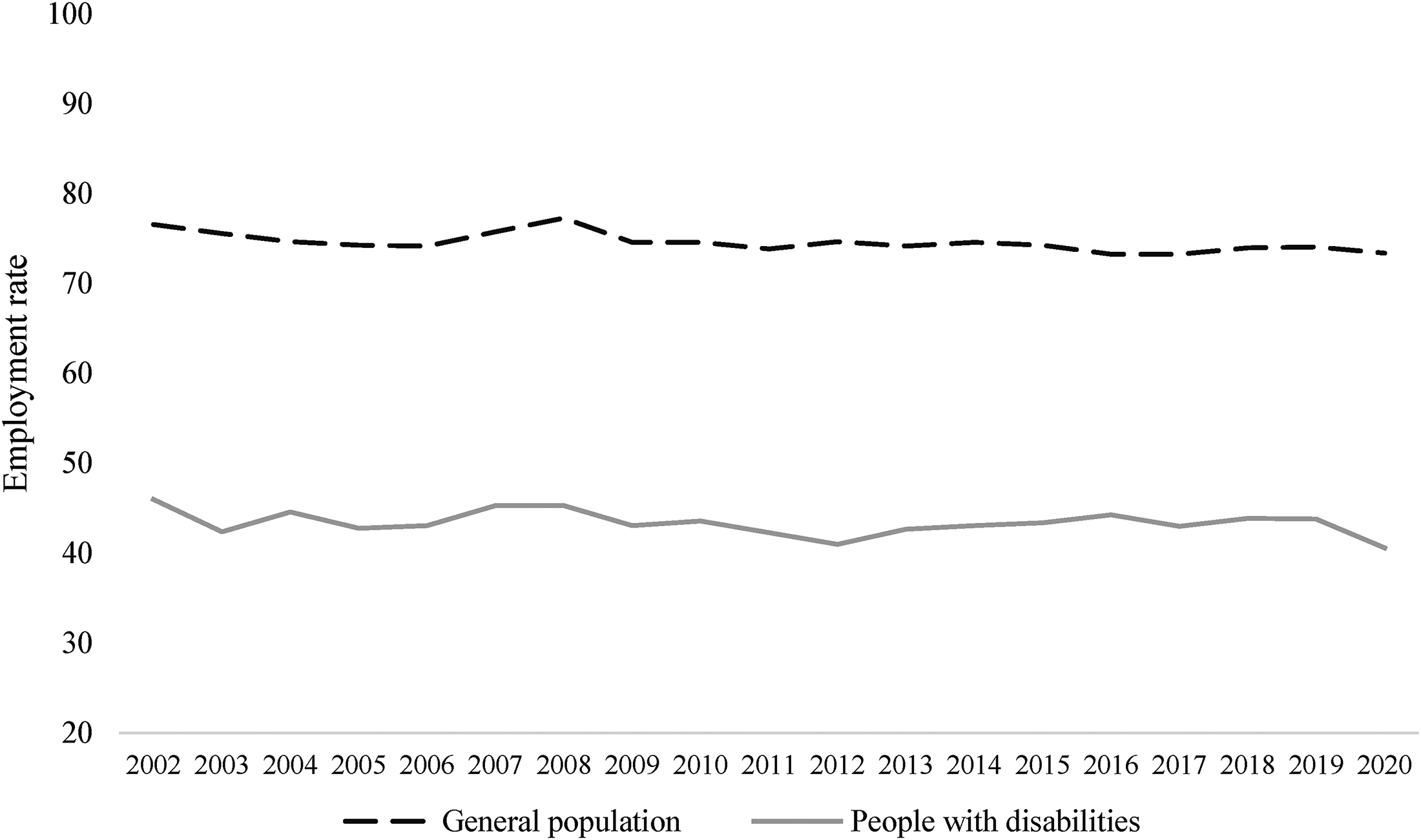
Employment rates of the general population and people with disabilities, ages 15–66 years in the Norwegian labor force survey, 2nd quarter, 2002–2020.
Aside from these general figures, the statistics reveal little about whether there have been different effects of the law across different organizational contexts or types of impairments, and what would have occurred had the legislation not been implemented. Generally, the literature on disability discrimination laws provides no clear answers to how they affect employers' hiring behavior as it mostly focusses on employment rather than hiring (Altman, 2005; Button, 2018). To the extent that the disability discrimination legislation may have heightened Norwegian employers' awareness of disability discrimination and equality, it should have been more effective in doing so among large employers that are subject to more extensive requirements. Even though few employers may actually make strong efforts to fulfil their obligations concerning disability, an employer survey found that large companies in Norway are more likely to report that they have taken proactive measures such as adopting disability hiring policies (Svalund and Hansen, 2013).
Methods
Field Experiment Data
The data come from two correspondence studies that were conducted in the Norwegian labor market to measure disability discrimination against wheelchair users (Bjørnshagen and Ugreninov, 2021) and people with a history of mental health problems (Bjørnshagen, 2021) respectively. In each correspondence study, pairs of job applications that were equally qualified in terms of education, work experience and personal characteristics, but that differed in factors such as current employer, wording, and layout to avoid employer suspicion, were sent in response to actual job vacancies. For each vacancy, one of the applications was randomly assigned to signal disability. 3 Systematic differences in employer response between applications assigned to each experimental condition can thus be attributed to disability and be interpreted as disability discrimination.
In the first field experiment, 1,200 job applications were sent in pairs to 600 employers with advertised jobs in which work tasks could be performed by wheelchair users. These included software developers, information and communication technology (ICT) operations and user support technicians, accounting and office clerks, graduate sales representatives, customer service and sales representatives and medical assistants. Disability was indicated by stating in the CVs and cover letters that the applicant was a wheelchair user, which was randomly assigned within each application pair. Data collection was conducted between January 2019 and January 2020.
In the second field experiment, 1,398 job applications were submitted in pairs to 699 employers with advertised jobs. The occupations in this experiment included early childhood teachers, electricians, carpenters, waiters, cooks, material-recording and transport clerks, shop sales assistants and hairdressers, in addition to the occupations included in the first experiment except for medical assistants. A history of “mental health challenges” was indicated in the cover letter as an explanation for a past one-year employment break indicated in the CV. 4 The comparison group explained an equally long gap in employment history with having travelled. The explanation for the employment break was randomized within each application pair. Data collection was conducted between September 2019 and December 2020. Initially, the applicants had one year of work experience following the employment break, but since the application material was not updated over the course of the data collection period, they gradually gained more work experience.
In both experiments, we created the application templates based on reviews of authentic job applications as well as job postings to include the qualifications typically on demand in the chosen occupations. To ensure that the applications were realistic and equally qualified, they were evaluated by recruiters and people working in the selected occupations. The same procedures were used to apply for jobs and to measure employer response in each experiment. The gender of the applicants was randomized across vacancies but held constant at the employer level so that each employer received either a male or female pair. Within the chosen occupations, all vacancies for which the fictitious applicants had the required qualifications were collected from the main private recruitment website in Norway. In the first experiment, advertisement texts were also screened for work tasks that could be particularly challenging to perform for wheelchair users. Both experiments were restricted to vacancies in the Oslo area. 5 The applications in each pair were sent with a time-lag of one or two days to avoid suspicion among employers. Despite these similarities, however, the experiments are not directly comparable due to other differences in design and the circumstances under which they were carried out. Separate analyses were therefore conducted for each field experiment subsample.
Information about organization size, that is, the number of employees, was gathered from the job advertisements if provided or otherwise from the employers' website or an online Norwegian financial database, proff.no. Of the 600 employers in the first field experiment, information on company size was available for 579, which equals a total of 1,158 job applications since two applications were sent to each vacancy. Of the 699 employers in the second field experiment, information on size was available for 681, which equals 1,362 job applications.
Variables
Two dichotomous dependent variables are used in the analyses: (1) invitation to interview and (2) any employer interest. The former indicate that the candidate received an explicit invitation to a job interview, which is an unambiguous signal of interest from the employer. The latter also include requests from employers for additional information or that the applicant call back to the employers. Two dummy variables indicate whether or not the application was assigned a disability signal: information about the candidate either being a wheelchair user or having a history of mental health problems in the first and second field experiments respectively.
Company size is organized as four dummies according to the size thresholds that delineate the extent of employers' proactive obligations in the Norwegian anti-discrimination legislation including a category for the largest companies with 100 employees or more: (1) 19 or fewer employees; (2) 20–49 employees; (3) 50–99 employees; (4) 100 employees or more. 6
During the first field experiment on discrimination against wheelchair users, only employers with 50 employees or more were subject to more extensive obligations, including the specified four-step working model and the reporting obligation. These specified obligations could also encompass employers with 20 to 49 employees in the second field experiment on discrimination based on a history of mental health problems if requested by one of the social partners, in line with legislative amendments as of January 2020, approximately three months into the data collection. Table 1 presents the number of job applications sent to employers in each of the company size categories by field experiment.
Job Applications by Company Size and Field Experiment.
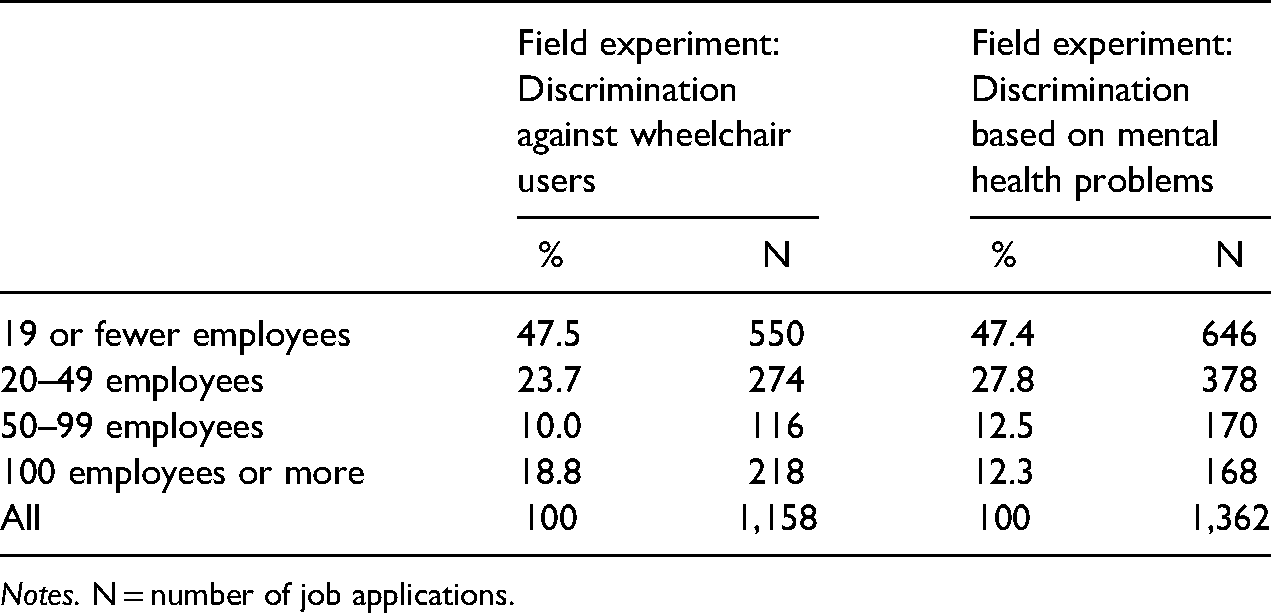
Notes. N = number of job applications.
Analytical Strategy
Discrimination is measured as differences in employer response by disability. Logistic regression is used to explore whether the rate of employer response to applications with information about disability relative to the rate of employer response to applications without any information about disability differs depending on company size. For each field experiment subsample, the model includes the dependent variable, the disability indicator, company size dummies, and interactions, or product terms, between the disability indicator and the size dummies. While the disability indicators are orthogonal by experimental design, company size is not. As company size is correlated with occupation, variation in discrimination across occupations could confound estimates of the relationship between company size and discrimination. Hence, occupation dummies are included as control variables as well as interactions between these and the disability indicator. Since two applications were sent for each job opening, the standard errors are clustered at the vacancy level to account for correlation across repeat observations.
Given the challenges with interpreting interaction terms in logit models for binary outcomes, 7 the approach proposed by Mize (2019) is followed. For each company size category, probabilities of interview invitation and any employer interest are derived from the estimated regression models for non-disabled and disabled applicants along with tests of the disability gaps in probabilities, the average marginal effects (AMEs) of disability. Thereafter, tests of second differences, that is, whether the disability gaps/marginal effects are equal across the company size categories, are conducted to determine whether an interaction effect is significant across these categories. 8 The regression coefficients are presented in Table A1 in the online appendix.
Another issue when comparing discrimination levels across categories such as different levels of company size is that baseline callback rates (i.e., response to applications without information about disability) often vary. The absolute difference in probabilities is insensitive to such variation (Bursell, Bygren and Gähler, 2021; Di Stasio and Lancee, 2020). To provide a measure of the relative differences in probabilities by disability that is sensitive to the baseline callback rate, percent differences are also reported.
Results
Results from the analysis of the relationship between company size and discrimination against wheelchair users are presented in Table 2 and visualized as predicted probabilities in Figure 2A–B. Concerning the probability of receiving an interview invitation, there is a significant disability gap across all size categories. The disability gaps in the two categories representing the largest companies (i.e., 50–99 employees and 100 or more employees) are approximately half the size of the gaps in the smallest size categories. As indicated by the “contrasts” column, however, none of these gaps, or average marginal effects of disability, differ significantly from one another. Moreover, note that the gap in interview invitations by disability represented as percent differences are consistent with a lower level of discrimination only in companies with 100 employees or more.
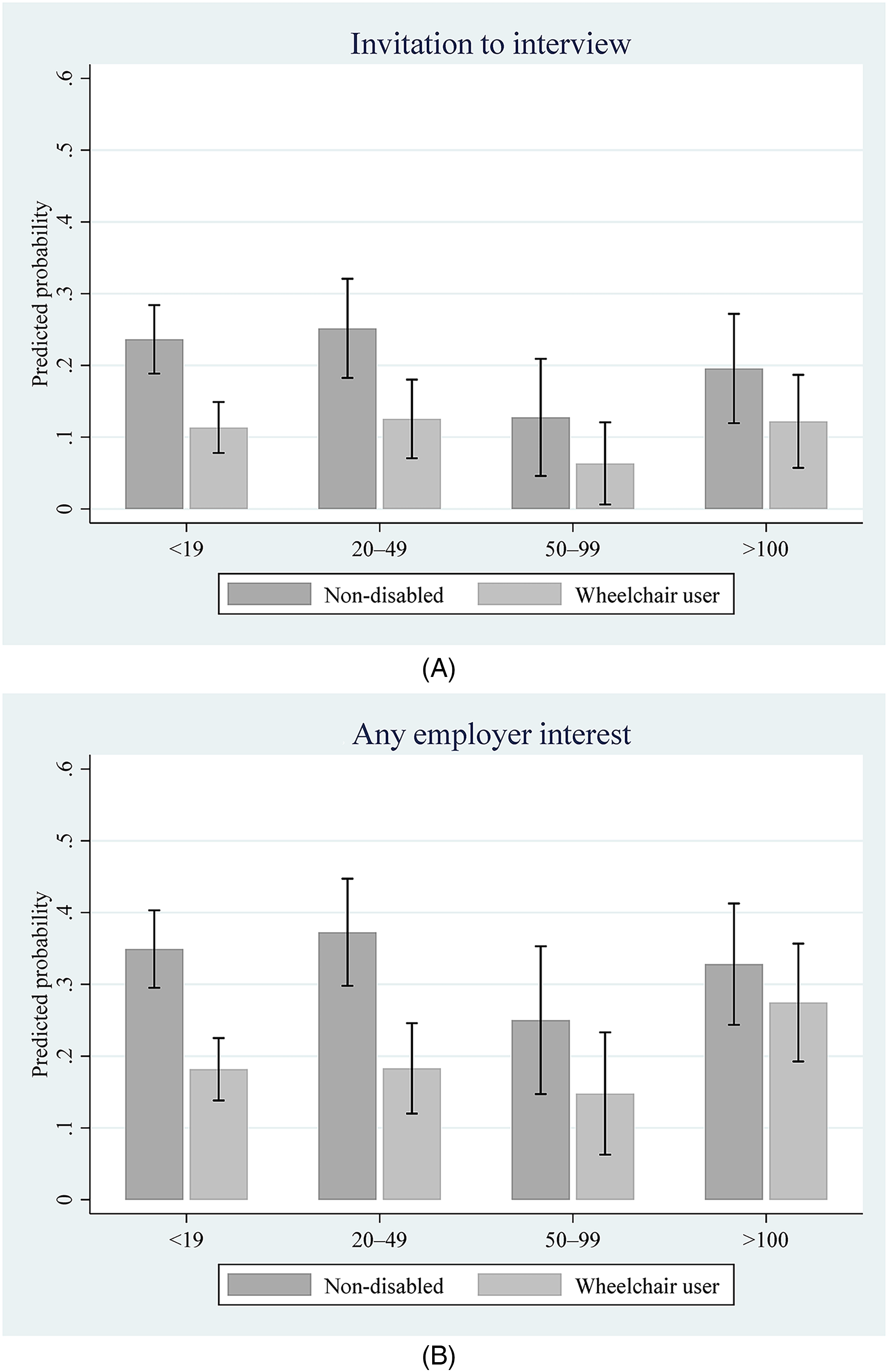
A. Probability of invitation to interview by company size. Field experiment: Discrimination against wheelchair users. 95% confidence. intervals. B. Probability of any employer interest by company size. Field experiment: Discrimination against wheelchair users. 95% confidence intervals.
Probability of Interview Invitation and any Employer Interest: Marginal Effects of Disability and Differences in Effects of Disability Across Firm Size Categories. Field Experiment: Discrimination Against Wheelchair Users.
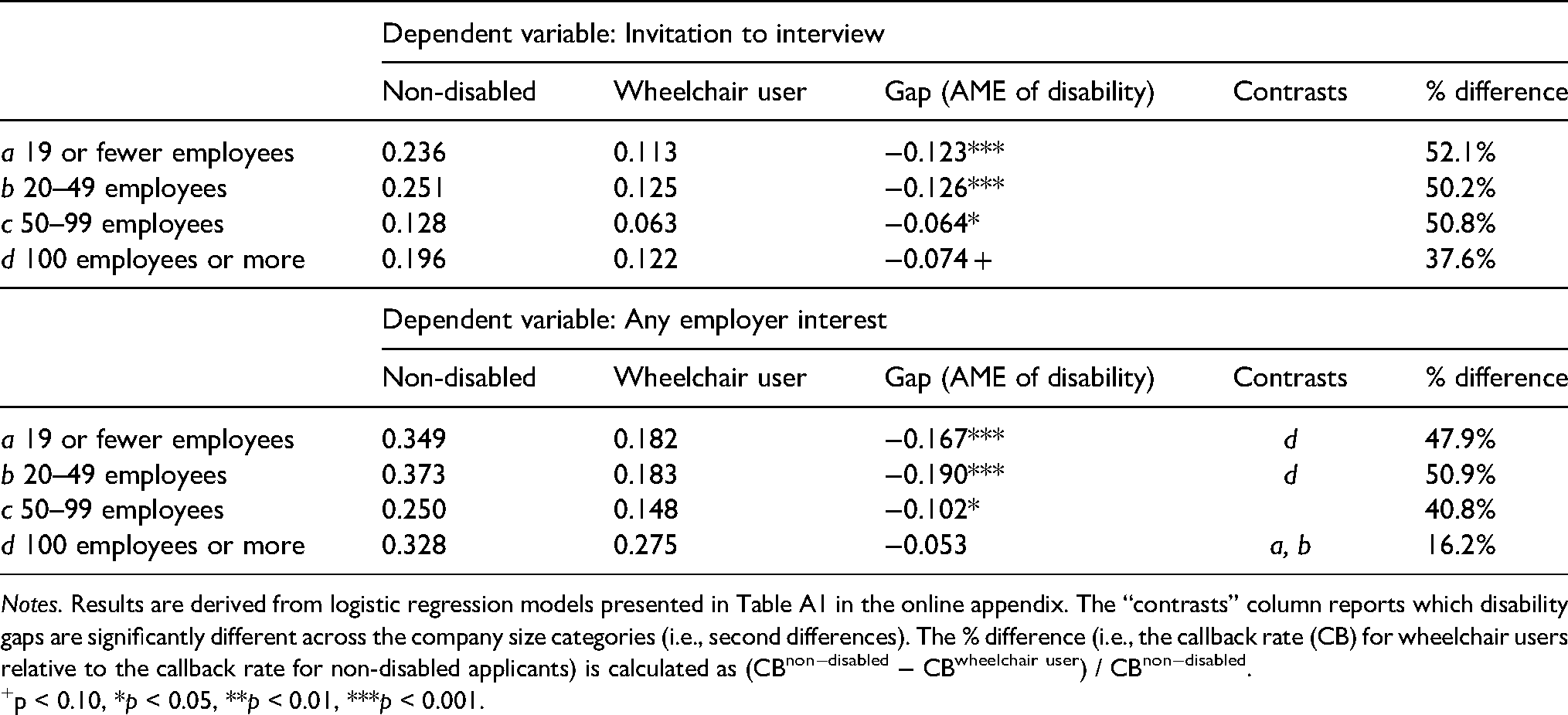
Notes. Results are derived from logistic regression models presented in Table A1 in the online appendix. The “contrasts” column reports which disability gaps are significantly different across the company size categories (i.e., second differences). The % difference (i.e., the callback rate (CB) for wheelchair users relative to the callback rate for non-disabled applicants) is calculated as (CBnon−disabled − CBwheelchair user) / CBnon−disabled.
+p < 0.10, *p < 0.05, **p < 0.01, ***p < 0.001.
Next, the negative effect of disability on the probability of receiving any expression of employer interest is significant across the company size categories except for the largest companies with 100 employees or more. The disability gap is largest in companies with 19 or fewer employees (−0.167) and in those with 20 to 49 employees (−0.190). The disability gap is smaller in companies with 50 to 99 employees (−0.102), whereas the disability gap is −0.053 in companies with 100 employees or more and is not statistically significant. This pattern is similar in terms of percent differences. The small disability gap in the largest companies is significantly different from the large gaps in the two categories representing companies with fewest employees, while the disability gap in companies with 50 to 99 employees does not significantly differ from any of the other gaps. Overall, this suggests that there is less disability discrimination in larger companies. 9
Besides hiring discrimination, wheelchair users are also systematically excluded from job opportunities due to inaccessible workplace environments. Since Norwegian employers have no obligation to provide information about accessibility in job advertisements, wheelchair users will most often not know whether the workplaces to which they apply for jobs are accessible. Moreover, failure to provide accommodation is considered as discrimination only if it does not constitute an undue burden on the employer. If smaller employers are disproportionally located in buildings where accommodation would be impossible or too expensive to provide, this may contribute to more differential treatment of wheelchair users by the smaller companies than the largest ones. Thus, the wheelchair accessibility of the premises of a subsample of the companies was examined. These included all employers who gave a positive response only to the non-disabled applicant (N = 101 of the total sample). Accessibility was examined primarily by physical visits, but in some cases also through online searches, and included an inspection of the entrance area with respect to staircases and ramps as well as a recording of whether there were lifts inside the building.
While the wheelchair accessibility of some of these buildings remained undetermined (N = 13), few of them were evaluated as inaccessible to wheelchair users (N = 12). When these companies (N = 25) are excluded from the analysis, the disability gaps are somewhat reduced (see Appendix Table A4). The small gap in interview invitations in the largest companies is no longer significant, while there is no gap in any employer interest. A closer inspection of the excluded observations in the largest size category reveals that these represent cases where the accessibility of the building was difficult to determine, and thus may in fact be accessible. In sum, the overall pattern between company size and discrimination remains the same. While a better test would be to have information about accessibility on all employers and include it as a control variable interacted with the disability indicator, the results based on the present approach suggest that the documented company size variation in disability-differentiated responses from employers is not due to situations where physical accommodation might have constituted a disproportionate burden on the employer.
Results from the analysis of the relationship between company size and discrimination against applicants with a history of mental health problems are presented in Table 3 and visualized as predicted probabilities in Figure 3A–B. The disability gaps in the probability of interview invitations across the size categories are of similar size and statistically significant, except for companies with 50 to 99 employees. While the disability gap (−0.057) in the latter category is small and not statistically significant, none of the gaps are significantly different across the size categories.
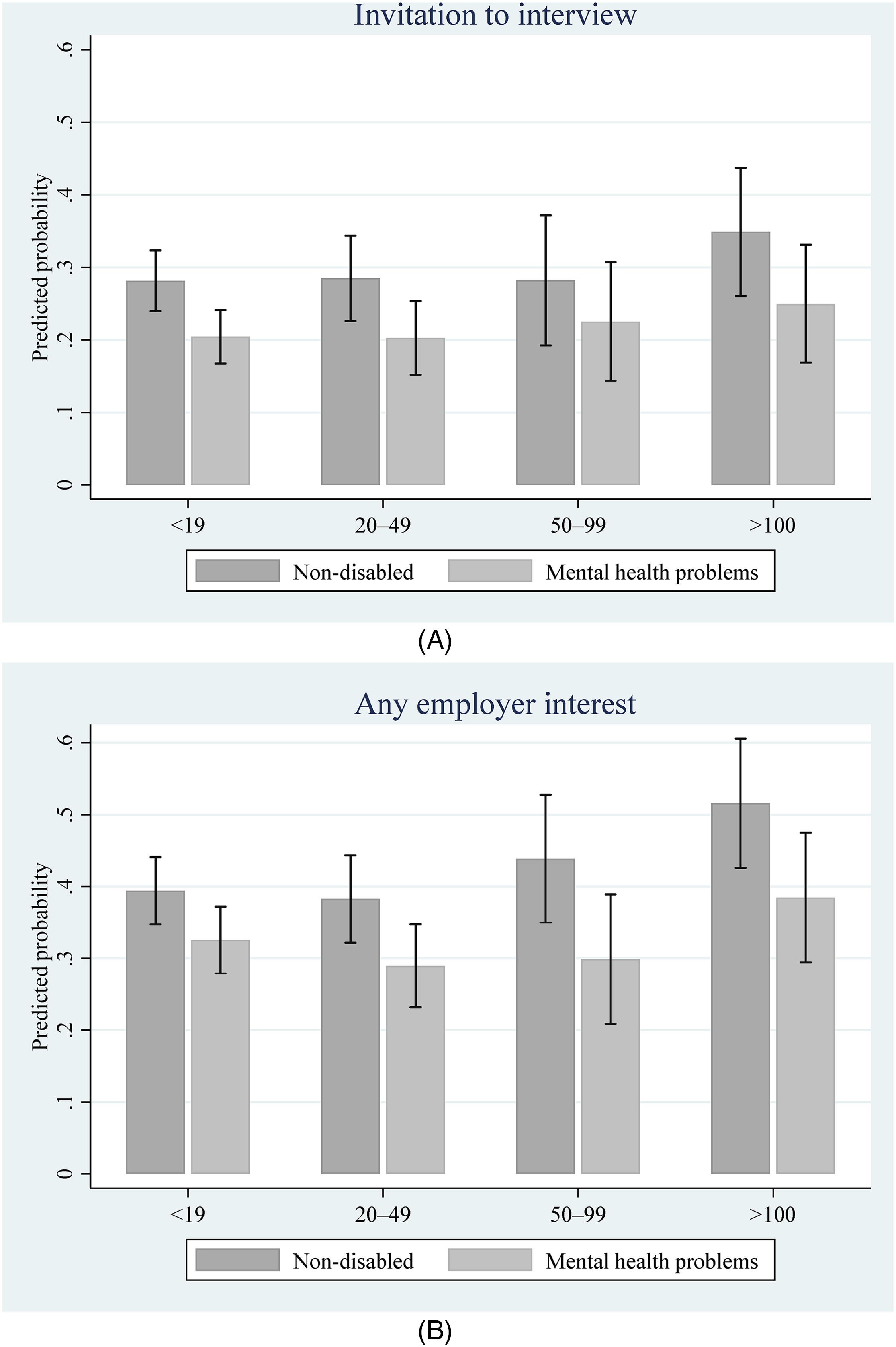
A. Probability of invitation to interview by company size. Field experiment: Discrimination based on mental health problems. 95% confidence. intervals. B. Probability of any employer interest by company size. Field experiment: Discrimination based on mental health problems. 95% confidence intervals.
Probability of Interview Invitation and any Employer Interest: Marginal Effects of Disability and Differences in Effects of Disability Across Firm Size Categories. Field Experiment: Discrimination Based on Mental Health Problems.
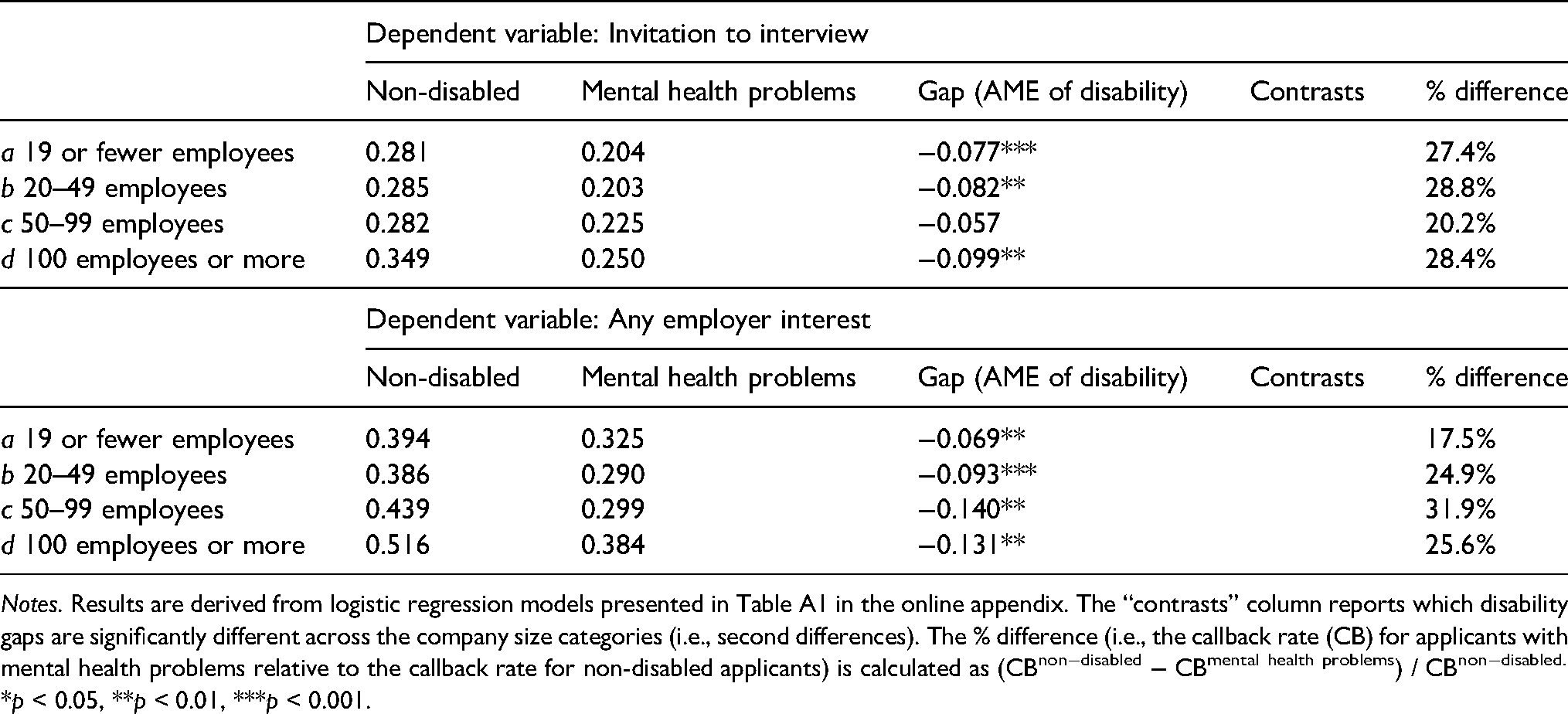
Notes. Results are derived from logistic regression models presented in Table A1 in the online appendix. The “contrasts” column reports which disability gaps are significantly different across the company size categories (i.e., second differences). The % difference (i.e., the callback rate (CB) for applicants with mental health problems relative to the callback rate for non-disabled applicants) is calculated as (CBnon−disabled − CBmental health problems) / CBnon−disabled.
*p < 0.05, **p < 0.01, ***p < 0.001.
When looking at the probability of receiving any expression of employer interest, all disability gaps are statistically significant. While differences in the size of the absolute disability gaps indicate that, if anything, the discrimination level increases with organization size, these differences are small and not significant. Moreover, in percent differences, there is no such pattern. Thus, the disadvantage associated with disclosing a history of mental health problems does not seem to vary with company size.
Discussion
The scope for discrimination often varies across the organizational contexts in which employers make their hiring decisions. The purpose of this article was to explore the relationship between company size and disability discrimination based on experimental data from two correspondence studies of discrimination against wheelchair users and people with a history of mental health problems respectively.
A main finding is that discrimination against wheelchair users occurs less often in the largest companies (with 100 employees or more), at least when discrimination is measured as differences in receiving any expression of employer interest. Of course, even if this measure suggests that the employer is interested in the candidate, it does not reveal whether the applicant will eventually be invited to an interview. However, the level of discrimination is lower in companies with more than 100 employees, even when the stricter outcome variable of explicit interview invitations is used, although the differences in disability gaps across the size categories are not statistically significant. Notwithstanding, the level of discrimination is quite high in companies with less than 100 employees, and particularly in those with 49 or fewer employees when considering both the absolute and relative measures of discrimination.
These results are in accordance with previous field experiment research on ethnic/racial discrimination (Banerjee et al., 2018; Carlsson and Rooth, 2007; Wood et al., 2009). Interestingly, however, the findings differ from the Canadian field experiment study that did not find variation in discrimination against wheelchair users by organization size (Bellemare et al., 2019), while they are only somewhat consistent with the results from the field experiment on disability discrimination conducted in the US labor market (Ameri et al., 2018). The US study found that discrimination was concentrated among the smallest group of employers with fewer than 15 employees, which are not covered by federal disability discrimination legislation, which may indicate that discriminatory behavior by medium and large employers is constrained by their knowledge of relevant legislation. By contrast, legal prohibitions on disability discrimination in the labor market cover all Norwegian companies regardless of size, and discrimination was primarily reduced among the largest employers with more than 100 employees. While comparison of results from field experiments is complicated due to differences in study characteristics and so on, this suggests that several mechanisms might contribute to the observed relationships between company size and disability discrimination.
Various factors that may limit discrimination in larger companies were outlined above. One reason why discrimination against wheelchair users may occur less often in larger organizations is that they more often follow standardized and formalized hiring procedures that are likely to reduce the influence of psychological and motivational bias on decision-making and thus the impact of characteristics such as disability. This explanation is often invoked in field experiment studies that document less ethnic/racial discrimination by large employers (Banerjee et al., 2018; Carlsson and Rooth, 2007; Quillian and Midtbøen, 2021; Wood et al., 2009). An alternative explanation for why large employers might be less likely to discriminate against wheelchair users in particular may be that they have more resources and experience with providing workplace accommodation, which could offset potential concerns related to such issues (cf. Ameri et al., 2018; but see Shuey and Jovic, 2013, pp. 194–195). Relative to smaller employers, their offices may also more often be wheelchair accessible, thus removing the need to adapt the workplace. Furthermore, qualitative interviews with a subset of the employers that participated in the field experiment revealed that employers in small companies may also be more prone to make hiring decisions based on perceptions of similarity and on whether applicants will fit into the workplace culture and be able to participate in social activities, thereby excluding wheelchair users due to disability stereotypes and inaccessibility outside the workplace (Bjørnshagen and Østerud, 2021; Østerud, 2022). While the data do not allow for addressing the relative importance of these mechanisms as well as others outlined above, several of them may contribute to the observed pattern between company size and discrimination against wheelchair users.
Contrary to expectations, however, there was no evidence that discrimination based on disclosing a history of mental health problems varied with the size of the company to which the applications were sent. This is nonetheless in accordance with some previous suggestive evidence of a lack of relationship between company size and ethnic, gender and age discrimination (Baert et al., 2018; Birkelund et al., 2014), and with the findings of the Canadian study on discrimination against wheelchair users (Bellemare et al., 2019). A lack of significant results may result from the small number of observations in the larger size categories. However, the size of the estimates of discrimination based on a history of mental health problems by company size provides no indication of such an association between discrimination based on mental health problems and company size.
While the findings suggest that discrimination against wheelchair users may vary with company size whereas discrimination based on mental health problems does not, it is unclear exactly what drives this difference. It may reflect unobserved heterogeneity in organizational or contextual characteristics between employers in the two experiments, differences in stigma, employers' beliefs and concerns about workers with mental health problems and wheelchair users, or some combination of these factors. On the one hand, the field experiments cover different, though somewhat overlapping, segments of the labor market, and differences will likely exist in the extent and type of formalized recruitment procedures followed by large organizations as well as how they implement such practices. If so, the scope for discretion and discrimination may differ between the large organizations in each experiment. However, the inconsistent findings may also be related more directly to employers' evaluations of the specific type of impairment. Employers are, for example, more likely to expect higher levels of sickness absence and associated costs from applicants who disclose a history of mental health problems than from applicants who disclose that they are wheelchair users (e.g., Bubonya, Cobb-Clark and Wooden, 2017; Janssens et al., 2021; Østerud, 2022). Mental illness accounts for a significant proportion of the doctor-certified sick leave in the Norwegian labor market, estimated at about 16 per cent in 2020 and 2021 (Norwegian Labour and Welfare Administration, 2021). If prevention and reduction of sickness absence is an objective for large and small employers alike, they may be equally cautious about hiring applicants who disclose a history of such problems. A factor that may contribute to such reluctance even among large organizations is that, despite having more resources than smaller companies, they tend to be structured in smaller departments or sections to which the new employees are recruited. Since such departments are composed of fewer employees, the relative importance of individual workers, and thus potential challenges with absenteeism associated with mental health problems, may not be perceived very differently by employers in large as opposed to small organizations. By contrast, the size of departments is likely less important for ensuring that offices are wheelchair accessible.
Finally, there was no consistent or substantial drop in discrimination levels at the 50-employee threshold that requires more extensive proactive measures under Norwegian anti-discrimination legislation. Consequently, the legal obligations do not appear to have brought about organizational change towards less discrimination based on disability, especially in companies with 50 to 99 employees and regarding applicants with a history of mental health problems. To be sure, it cannot be completely ruled out as contributing to the lower level of discrimination against wheelchair users in the largest companies. However, previous qualitative research nevertheless suggests that anti-discrimination legislation has had little impact on Norwegian companies' hiring practices towards disabled people (Kuznetsova and Yalcin, 2017) and that there may be little awareness of disability discrimination legislation (Østerud, 2022). One can therefore speculate whether, for example, enforcement and increased monitoring of companies' adherence to their proactive non-discrimination duties might encourage a more active and systematic approach to identifying discriminatory barriers in organizational routines and behaviors as well as potential remedies.
Limitations
Several limitations to the study should be acknowledged. First, correspondence studies measure discrimination at the first stage of the hiring process, not in final job offers, and applicants may also be subject to discrimination at later stages. Second, company size could correlate with unobserved factors other than occupation that influence the extent of discrimination. The associations between company size and discrimination should therefore not be interpreted as causal effects. Third, field experiments have significant limitations in providing insight into the mechanisms that produce patterns of discrimination, as revealed by the above discussion. Fourth, the information on number of employees is captured on the company level. While companies often have only one establishment, others have several. Within large companies with more than one establishment, hiring practices could differ depending on whether recruitment is organized locally at the workplace level or centrally on the company level. Preferably, data on both levels would have been available and future studies should aim to obtain such information in order to account for potential variation. A final limitation is that pre-study power calculations for the interaction between company size and disability discrimination were not conducted. As a consequence, statistically insignificant results cannot be used to conclude that there are in fact no differences in discrimination based on a history of mental health problems across levels of company size, and the present findings should be interpreted as suggestive.
Conclusion
While a number of recent field experiments have provided direct evidence of discrimination based on disability in hiring processes, it is still somewhat uncertain how disability discrimination may vary across contexts in the labor market. Consistent with the large cross-national literature of field experiments on ethnic/racial discrimination, this study provides suggestive evidence of a negative relationship between company size and discrimination against wheelchair users. However, discrimination based on a history of mental health problems does not vary with the size of the employer. It is difficult to determine whether and how these mixed findings might reflect unobserved differences in organizational characteristics between the companies in each field experiment or in the stigma, beliefs and concerns related to the specific type of impairment. Future research on the relationship between company size and discrimination would benefit from combining data from a sufficiently powered field experiment with survey data on the same employers' organizational features such as hiring practices and diversity or disability equality policies to address potential explanations more directly.
Supplemental Material
sj-docx-1-wox-10.1177_07308884221126877 - Supplemental material for Do Large Employers Discriminate Less? An Exploration of Company Size Variation in Disability Discrimination Based on Data from two Field Experiments
Supplemental material, sj-docx-1-wox-10.1177_07308884221126877 for Do Large Employers Discriminate Less? An Exploration of Company Size Variation in Disability Discrimination Based on Data from two Field Experiments by Vegar Bjørnshagen in Work and Occupations
Footnotes
Acknowledgements
This paper is part of the HIRE project at Norwegian Social Research, Oslo Metropolitan University. The field experiments were conducted in cooperation with Elisabeth Ugreninov, who I also thank for valuable feedback on the manuscript. Sehrish Akhtar, Nora Birgitte Framstad, Even Kallevik and Netta Marie Rønningen provided indispensable research assistance. For comments I thank Gunn Elisabeth Birkelund, Sara Seehuus and Ida Wernø. I also thank the participants and partner institutions of the HIRE project. All errors are the author's own.
Declaration of Conflicting Interests
The author(s) declared no potential conflicts of interest with respect to the research, authorship, and/or publication of this article.
Funding
The author(s) disclosed receipt of the following financial support for the research, authorship, and/or publication of this article: This work was supported by the Norges Forskningsråd, (grant number 273745).

Supplemental material
Supplemental material for this article is available online.
Notes
Author Biography
References
Supplementary Material
Please find the following supplemental material available below.
For Open Access articles published under a Creative Commons License, all supplemental material carries the same license as the article it is associated with.
For non-Open Access articles published, all supplemental material carries a non-exclusive license, and permission requests for re-use of supplemental material or any part of supplemental material shall be sent directly to the copyright owner as specified in the copyright notice associated with the article.
