




Abstract
India possesses an extraordinary, yet largely untold, story of the co-evolution of Earth as a planet and life upon it. The crescendo of this story is the formation and later break-up of the supercontinent Gondwana, followed by the Indian subcontinent’s solitary northward drift as an island landmass. This remarkable journey through diverse climates profoundly shaped its history as a unique travelling nursery of plant and animal life, a story etched in the fossils discovered across the subcontinent. India’s Phanerozoic rocks hold globally significant palaeontological treasures, from dinosaur nesting sites and the earliest odd-toed mammals to ancient walking whales and some of the planet’s oldest plant groups. Furthermore, the older Precambrian shield regions offer a glimpse into life before complex organisms evolved and are also vital repositories of mineral wealth. Astonishingly and sadly, despite this rich palaeontological and geological heritage, India lacks a central Natural History Museum to safeguard and showcase these treasures for public education and appreciation. To address this critical gap, the establishment of The Indian Museum of Earth (TIME) has been initiated through collaborative efforts supported by the office of the Principal Scientific Adviser to the Government of India. This account details the journey so far in creating this vital institution.
INTRODUCTION
India’s geological record offers an unparalleled glimpse into the interplay of Earth’s dynamic processes and the evolution of life on and around our planet’s surface. The subcontinent’s unique journey from the supercontinent Gondwana to later collision with Asia showcases the dramatic break-up and movement of tectonic plates over millennia, transporting and ultimately integrating diverse ecosystems that rode atop. This geological odyssey has left behind a rich tapestry of features, from ancient green schist belts to the fossil-laden sediments of the former Tethys Sea, which chronicle life’s history from the Cambrian Explosion to the Himalayan orogeny. Key sites like the Permian-Triassic boundary in Kashmir provide crucial insights into mass extinction events. The Gondwana Supergroup illuminates ancient climates and the early diversification of land plants and vertebrates. The Lameta Formation preserves an extraordinary record of dinosaur reproduction, while the Deccan Traps offer a window into the end-Cretaceous extinction event. The Palaeogene formations of India, such as the Cambay Shale and Harudi Formation in Gujarat, and the Subathu Formation in Jammu and Kashmir, provide significant evidence that India was a key region for the origin and early diversification of several mammalian groups, notably whales, horses, primates and sea-cows. Hailing from the Palaeogene of India and unearthed in Kutch, the 47 million-year-old snake, Vasuki indicus Datta and Bajpai, 2024, is the largest known fossil snake. The Neogene Siwalik deposits further document the evolution of terrestrial vertebrates in the Himalayan foreland basin. Besides its geological significance, India also harbours crucial biodiversity hotspots such as the Western Ghats and the Northeast Himalaya.
Despite its extraordinary geological history and significant biodiversity hotspots, the nation surprisingly and sadly lacks a National Museum of Natural History of international standing dedicated to promoting research, preserving invaluable biological and fossil specimens, and educating the public about its remarkable natural heritage. The Indian Museum in Kolkata, while holding a substantial collection of rocks, minerals and fossils largely accumulated by the Geological Survey of India (GSI), cannot currently prioritise collections-based research. Furthermore, before its unfortunate destruction in 2016, the Natural History Museum at Delhi possessed a limited collection, particularly in palaeontology. This contrasts sharply with other major countries, where natural history museums are crucial institutions for conserving scientifically vital biological and fossil materials, offering essential insights into the history of life, including diversification, extinctions, climate change impacts and the influence of plate tectonics on species distribution—and utilising their treasures for public education.
THE INDIAN INITIATIVE
The consequence of India’s historical lack of a national fossil repository has been a disconnect between its citizens, particularly children and its own remarkable fossil heritage, leading to greater familiarity with dinosaurs such as Tyrannosaurus rex and Brontosaurus excelsus rather than with native species such as Rajasaurus narmadensis and Isisaurus colberti (Lopez, 2017; Newsclick Report, 2018; Niyogi, 2013; Patnaik, 2019; Prasad, 2012; Ravindran, 2016; Sharma, 2002; Thewissen & Hughes, 2010). However, it was a particularly sharp critique published in Science (Kumar, 2018), highlighting concerns about the state of palaeontological research and the lack of a national centre to safeguard and showcase significant fossil discoveries to the public in India, which ultimately set in motion a sequence of positive developments.
Soon after the publication of the Science article, a delegation consisting of Pranay Lal (Delhi), Sanjay Kumar (Delhi), Rajeev Patnaik (Panjab University, Chandigarh), C. R. Babu (University of Delhi), S. D. Biju (University of Delhi) and G. V. R. Prasad (University of Delhi) presented an overview of the current national situation concerning fossil conservation and public engagement to Professor K. Vijay Raghavan, who held the position of Principal Scientific Advisor (PSA) to the Government of India at the time. The delegation further proposed organising a national meeting for relevant stakeholders to discuss the prevailing circumstances in the country concerning palaeontological research, the conservation of fossil collections and public engagement. Following this discussion, it was agreed that a stakeholder meeting would be convened on 10–11 September 2018, with financial support provided by the PSA’s office.
THE FIRST STEP: BRAINSTORMING MEET ON THE INDIAN MUSEUM OF EARTH
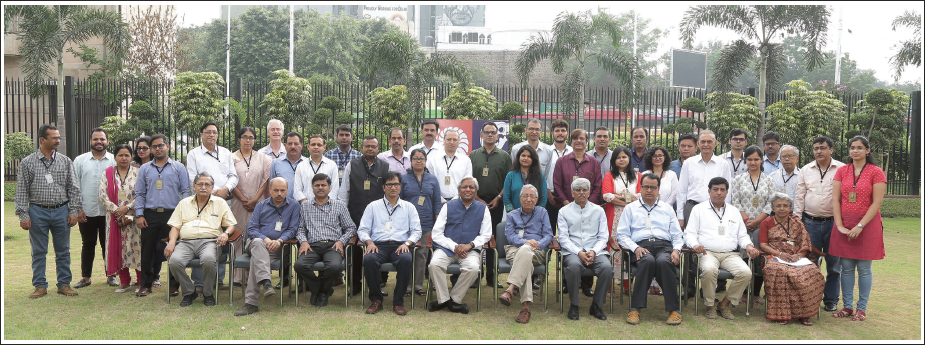
To address the challenges facing Indian palaeontology and to explore the creation of a National Earth Museum, a Brainstorming Meet was held on the topic ‘Rejuvenating Indian Palaeontology and establishment of a National Earth Museum’ under the guidance of the office of the PSA to the Government of India. This meeting, held on 10–11 September 2018, at the Indian National Science Academy, New Delhi, fostered a multidisciplinary dialogue. A diverse coalition of 47 individuals from across India converged, united by a shared interest in the nation’s fossil heritage. This inclusive group, spanning genders and career levels, represented a wide array of institutions, from the Principal Scientific Adviser’s Office and esteemed research centres like Birbal Sahni Institute of Palaeosciences (BSIP), Wadia Institute of Himalayan Geology (WIHG), National Centre for Biological Sciences (NCBS) and Indian Statistical Institute (ISI), to government bodies such as GSI, Ministries of Earth Sciences (MoES), Mines and Culture, Department of Science and Technology (DST). Leading academic institutions (universities and colleges, Indian Institute of Technology (IIT), Indian Institute of Science Education and Research (IISER)), along with organisations like Indian National Trust for Art and Cultural Heritage (INTACH), Indian Institute of Forest Management (IIFM), National Institute of Design (NID), science communicators and passionate amateur and early-career palaeontologists, actively participated (Figure 1). Their collaborative efforts were instrumental in shaping a future agenda to propel Indian palaeontology forward.
Group photo of the participants of the Brainstorming Meet on ‘Rejuvenating Indian Palaeontology and establishment of a National Earth Museum’ held at the Indian National Science Academy, New Delhi, from 10–11 September 2018.
The Brainstorming Meet resoundingly endorsed the establishment of The Indian Museum of Earth (TIME) as a world-class, iconic institution. This museum is envisioned to serve as a vital platform for communicating and showcasing India’s unique geological history and heritage to the general public, fostering cutting-edge research in palaeontology and providing a crucial national repository for India’s valuable fossil collections—ultimately revitalising Indian Palaeontology and Earth Sciences as a whole. Furthermore, participants strongly recommended organising a two-day international consultation meeting involving museum experts from the USA, Europe and Asia, alongside Indian specialists, to discuss key aspects of TIME’s development, including its structure, infrastructure, building design, staffing, laboratory facilities, analytical equipment, collections and exhibits. Deliberations during the meeting were concentrated on the following three areas.
The Indian Museum of Earth
TIME will be a pivotal national institution dedicated to India’s natural heritage. Its core functions will encompass:
Recognising the inherent connection of rural Indian communities to the land and its ancient life, ‘The Indian Museum of the Earth’ possesses a unique advantage in engaging a wide spectrum of the Indian populace. Careful consideration of its physical location will maximise this potential. By embracing this connection, TIME can establish a new paradigm for informal science education within India’s burgeoning human potential. Drawing inspiration from global successes while forging its distinct identity, TIME will become a national asset and an international beacon in Earth Science education and outreach.
The envisioned Indian Museum of the Earth (TIME) has the following primary objectives:
The TIME will also prioritise:
In addition to recommending the establishment of the Indian Museum of Earth, the brainstorming meeting suggested that the following two aspects also need to be addressed.
Rejuvenating Indian Palaeontology
Introduction of India’s story as a key component of Gondwanaland, its migration to Asia, its Gondwana heritage of animals and plants, including dinosaurs and India as a centre of origin and early evolution for whales and other mammals at the primary school level.
Introduction of a separate Earth Science component in the 10+2 syllabus.
Institution of 10 palaeontology-specific fellowships for Ph.D. students every year
over a 5-year period with a provision to support 12 months’ residency in an institution abroad.
Institution of 10 summer internships every year for undergraduate students tenable at palaeontological centres in India
Protection of India’s geological heritage sites
Engaging the public through captivating stories and movies that feature geological expertise is key to fostering awareness and appreciation for our geo-heritage. This should be coupled with recognising new sites and their integration with existing geological museums. Crucially, effective policies must be implemented to safeguard and maintain India’s declared geo-heritage sites, representing its entire geological timeline. Enabling easy access for scientific research at these sites is vital for future fossil discoveries. This requires enacting clear laws that grant scientists access to both public and private land while imposing significant consequences for illegally acquiring specimens. The development of such legislation demands thorough collaboration with legal professionals specialising in fossils and palaeontological excavations, as well as paleontologists themselves.
APPROVAL BY PM-STIAC
As a follow-up to the above brainstorming meeting, a presentation on the establishment of TIME was made before the Prime Minister’s Science, Technology and Innovation Advisory Council (PM-STIAC) on 16 January 2019. The PM-STIAC reviewed the proposal for establishing the Indian Museum of Earth—envisioned as a National Repository for type specimens, a centre for preserving significant Indian fossils, minerals and rocks, and a facility for acquiring important international fossils for geological and evolutionary study, alongside its own research, training and public education programs. Recognising the importance of this initiative, the Council, in its meeting held on 16 January 2019, recommended the following key steps: A brainstorming meeting with international experts, along with national experts, for creating TIME in the first week of April 2019. This project will be a Public–Private Partnership (PPP) model with participation of private sector, philanthropists and state governments; Potentially attract support and funding from Ministries of Earth Sciences; Culture; Mines; Science & Technology. Ensure that the National Earth Museum is conveniently located in the Delhi/NCR region, preferably in an area of geological significance. Developing a virtual museum with a comprehensive digital platform to broaden access to information and research, complementing the physical museum.
THE NEXT STEP: INTERNATIONAL ADVISORY AND CONSULTATION MEETING
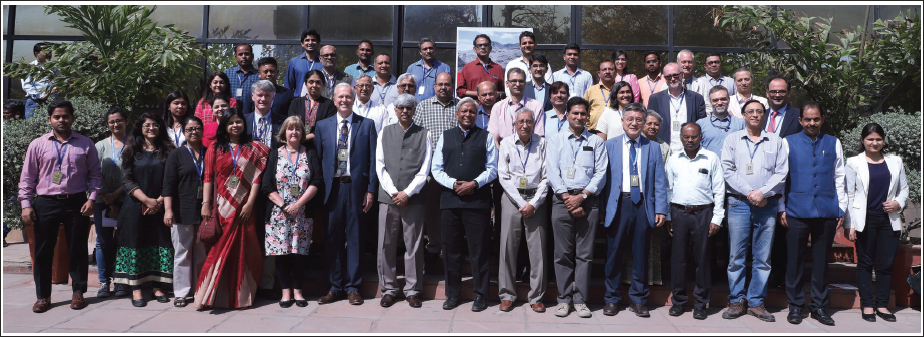
Following the recommendation of the PM-STIAC, an International Consultation cum Interaction Meet was convened on 1 April and 2 April 2019, at the Indian National Science Academy. Organized under the auspices of the PSA to the Government of India, with support from the Palaeonet Indica network, the meeting aimed to discuss the practical steps for establishing TIME. This crucial event brought together eight leading international experts in museums and geoparks/geosites from the US, UK and South Korea (Figure 2). Additionally, a diverse group of Indian experts and stakeholders actively contributed to shaping the vision of TIME. This included numerous specialists in palaeontology and geology from BSIP, WIHG, ISI, IIT, IISER and universities and colleges, biologists from NCBS, representatives from the GSI and various museums, professionals in graphic design (NID), science writing and science journalism, as well as officials from the Ministries of Earth Sciences, Mines and Culture, legal experts, dedicated amateur palaeontologists, enthusiastic young researchers and representatives from Invest India. Their varied perspectives and recommendations were crucial in realising the project’s goals.
Group photo of the participants of the International Consultation cum Interaction Meet held at the Indian National Science Academy, New Delhi, from 1–2 August 2019.
Professor K. Vijay Raghavan, the then PSA, addressed the consultation meeting, outlining a vision for a 21st-century museum that prioritises communication and dynamism. He stressed that TIME should be a unique entity, not merely imitating world-class museums, but a research-driven institution of unparalleled grandeur, vision and functionality. He defined TIME as a National Repository, Collections Centre and a distinctive Museum of Earth. The international participants at the consultation meet expressed strong appreciation for the ambitious vision presented for TIME. They acknowledged that while its realisation would require significant support, time and resources, the resulting institution had the potential to become one of the world’s premier museums, offering a global benchmark for earth science museums in the 21st century. They identified TIME’s core strength as its dual function: a vital National Repository for fossils, minerals and rocks, combined with its role as a state-of-the-art museum for research, specimen management and conservation of world-class standards.
OUTCOME OF THE CONSULTATION MEETING
The International Consultation cum Interaction Meet employed a structured approach, utilising six breakout group discussions followed by a combined session. This process yielded the following key recommendations as actionable steps towards realising the vision of TIME: Establishing a detailed timeline and agenda for the next two years. Defining the subsequent steps required for setting up the museum, including the development of policies and the institutional framework. Strategising for resource mobilisation. The ensuing deliberations during the meeting further highlighted several important points, which are as follows:
Location, space and governance of TIME
Location of TIME is deemed crucial for its success, necessitating excellent public transport accessibility, ideally near a metro station or national highway to ensure high visitor numbers. Proximity to urban centres with significant educational, research and tourist populations is also vital. Ideally, the museum should be situated within a geologically relevant setting.
Space: TIME requires a substantial land area of 40 to 50 hectares (approximately 100–125 acres) to accommodate future expansion, infrastructure and to create an appealing natural campus that can also serve as a public space.
For governance, it is recommended that TIME be registered as a Section 8 not-for-profit company, actively seeking certifications under Sections 12A, 80G and relevant clauses for tax exemptions and foreign funding (Foreign Contribution Regulation Act, FCRA). Its operational oversight should be provided by an independent governing board comprising representatives from central and state governments, independent experts and a scientific advisory group consisting of both national and international experts.
Capacities and technical requirements
The operational framework of TIME will be built upon three primary activities, with a central emphasis on palaeontology and geology, while also incorporating relevant neontological aspects:
Key activities: outreach, research and conservation
To quickly establish a public presence and deliver educational value, TIME should focus on curating captivating web and mobile exhibitions featuring artifacts and information from India’s national repositories, museums and government agencies. Complementing this digital outreach, TIME should commission a series of travelling exhibitions designed to tell the remarkable stories of the Indian subcontinent. These exhibitions could highlight key scientific areas like the discovery of India’s oldest fossils, the diverse life forms of the ancient Gondwana landmass, the impact of Deccan volcanism on the planet’s biosphere, the unique history of Indian dinosaurs, the evolutionary journey of whales, the geological upheaval of the India–Asia collision and its effect on animal distribution and the isolated evolution of plant and animal life on the drifting Indian tectonic plate. Integral to this effort should be the establishment of strong collaborative relationships with universities, academic institutions and local communities to offer valuable hands-on training and continuous professional development programs.
Resource mobilisation
TIME’s foundation should be built on a PPP model, requiring registration as a Not-for-Profit Section 8 Company or Trust. The government’s initial capital investment will be vital, encompassing the provision of land (via a state government MoU), support for setting up office and on-site facilities, initial building and infrastructure development and funding for preliminary staff salaries. To ensure national relevance, state governments should be encouraged to participate through regional representation in exhibitions. However, TIME’s long-term vision should be self-sufficiency, actively seeking engagement from the private sector and leveraging its own resources for revenue generation. A phased approach to philanthropic fundraising should be adopted, offering recognition opportunities like naming rights for buildings and galleries to both Indian and international companies. By focusing its scope on Earth, Nature and Space, TIME can attract a broad spectrum of investors. Sustainable income streams can be generated through the sale of replicas and casts, the rental of its appealing gallery spaces, and the creation of a revenue-generating Food Park, Recreation, and Business Area. Establishing a dedicated Corpus Fund will provide a financial safety net for core operational costs.
To broaden its funding base, TIME should consider engaging with foreign participants. This strategic move will require careful navigation of the FCRA and the establishment of clear institutional guidelines outlining the operational framework and the responsibilities of all stakeholders. Concurrently, recognising that the current legal statutes for antiquities and treasures are unsuitable for scientific specimens, TIME needs to advocate for creating a separate legal framework for ownership and transfer. This framework should be informed by successful models from other countries and should apply to both existing and newly discovered specimens. Moreover, it is crucial to determine whether the prospecting and extraction of new specimens should be subject to a permitting process and what penalties should be in place for non-compliance.
PANDEMIC AS A MAJOR SETBACK
The coronavirus disease 2019 (COVID-19) pandemic in early 2020 presented a major setback to the initial establishment of TIME. Planned activities, such as the constitution of a Detailed Project Report (DPR) committee, a workshop on natural heritage conservation legislation and capacity building initiatives, were brought to a standstill, resulting in a significant loss of momentum. While efforts were made to regain traction the following year, including expert consultations on facility and land requirements and the drafting of geoheritage conservation legislation (submitted to the PSA), the disruption caused by the pandemic continued to present challenges, ultimately preventing any advancement in securing potential sites and budgetary allocations for TIME within the 2021–2022 annual budget cycle.
POST-COVID-19 INITIATIVES
In a meeting on 12 January 2023, the new PSA Professor A. K. Sood was briefed on the current status of the TIME project, along with Dr. Parvinder Maini, Scientific Secretary to the PSA. Prof. Sood recommended identifying a nodal ministry to spearhead the project’s advancement, suggesting that the MoES was the most logical choice given TIME’s focus on fossil, mineral and rock specimens from various geological periods, its aim to facilitate scientific research and its commitment to education and outreach. He emphasised the immediate need to identify a suitable land parcel. The meeting also recognised the necessity of forming a committee to develop the DPR, with initial budget estimates of ₹500 crores for construction, ₹500 crores for exhibits and equipment and an annual operating budget of ₹200 crores.
Following Professor Sood’s recommendation, a meeting was held with Dr. M. Ravichandran, Secretary of MoES, on 2 February 2023. A presentation highlighted TIME’s unique nature and provided an update on progress, future plans and proposed interim outreach and capacity building activities. Attendees unanimously agreed on MoES’s crucial role in advancing this project, which aligns directly with the ministry’s mandate. Dr. Ravichandran informally agreed to designate MoES as the nodal ministry. He also suggested initiating assessments for the required land area, budget, potential sites and manpower. The Safari Park of the Haryana Government was identified as a potential location for TIME. Furthermore, the need to outline successful implementation strategies was discussed.
IMMEDIATE ACTIONS AND STRATEGIC PLANNING
The immediate priority for TIME is the comprehensive development of a DPR. This crucial document will translate the project’s vision into concrete plans and outline a detailed budget, informed by extensive consultations with national and international experts. To facilitate this and build momentum, urgent consideration should be given to allocating initial budgetary funds for TIME, ideally with an announcement in the upcoming budget. An initial allocation of ₹100 crores are required to commence work on land acquisition and site development, infrastructure and building plans, securing necessary clearances and initial human resource requirements. This initial investment would provide a strong foundation for the project and enhance its attractiveness for private sector funding within the envisioned PPP model.
The selection of TIME’s location is critical for its success. It necessitates a large land area in close proximity to urban centres with significant educational, research and tourist populations, as well as robust public transportation access (ideally near a metro station and major national highway).
To initiate the DPR and ensure a world-class institution, an expert committee under the auspices of the PSA’s Office should be established. This committee will study leading national and international museums (both established and emerging) to understand their scale, design, collection strategies (acquisition, management, conservation, displays, digitisation), research practices, instrumentation and interactive outreach programs. Feasibility permitting, study visits facilitated by bilateral or multilateral agencies such as the British Council could provide invaluable insights into cutting-edge museology and natural history museum practices, directly contributing to the DPR’s recommendations for an iconic museum.
Concurrently, key foundational steps must be taken: hiring a dedicated CEO, a manager and core personnel; constituting key committees under the PM-STIAC and fostering collaborations with relevant Ministries and Government Departments; and establishing a transparent reporting and monitoring mechanism for TIME’s deliverables. Furthermore, an independent Board of Governors and an Advisory Board of Eminent Persons should be formed to provide guidance and oversight. The feasibility of registering TIME as a Section 8 not-for-profit company and seeking relevant certifications (12a, 80G, 32/2/1, FCRA) should be evaluated. Establishing an independent office with dedicated budgetary support from the parent Ministry for an initial five-year period is also crucial.
A consultant should be hired to develop a comprehensive Vision Document for TIME to guide the project’s overall direction. This process should identify a sustainable model that attracts investment from both private and public entities (potentially seeking support from INVEST India and other specialised groups) and develop a detailed three-year work plan and micro-plans for key deliverables.
In the interim, while the DPR is being prepared, parallel efforts should focus on Capacity Building, Outreach and team development. An adequately funded Earth Museum Cell should be created to initiate these activities, building upon previously suggested proposals that were delayed due to the COVID-19 pandemic and address the lost time and momentum.
SUMMARY
The stark realisation emerged that while India boasts an unparalleled geological history and harbours fossils of immense evolutionary importance, the absence of a government-supported central repository has severely limited their availability to researchers and has kept the public largely unaware of these significant finds. Over the past two decades, numerous articles in research journals and newspapers have voiced growing concerns regarding the neglect of India’s palaeontological heritage and the lack of a central repository. These persistent calls for action culminated in the organisation of both national and international stakeholder meetings, financially supported by the Office of the PSA. The consensus reached at these gatherings was a strong recommendation for establishing the Indian Museum of Earth in the National Capital Region. This institution was conceived as a central repository, a public exhibition space for domestic and international visitors and a centre for research and education. These recommendations received formal endorsement from the PM-STIAC, which suggested a PPP model for the project implementation. Unfortunately, the COVID-19 pandemic significantly delayed the progress of this promising initiative and considerably derailed the momentum. Establishing a national museum, while currently unrealised, is a matter of urgent necessity. The imminent retirement of many Indian scientists, each possessing remarkable and hard-earned collections, highlights the critical importance of establishing this museum soon to ensure the preservation of these invaluable contributions to our scientific heritage.
Footnotes
Acknowledgements
Professor Mukund Sharma, Chief Editor, Journal of the Palaeontological Society of India, is thanked for inviting us to put this historical account of TIME on record. We also thank two anonymous reviewers for their helpful suggestions on the original version of the manuscript.
Declaration of Conflicting Interests
The authors declare no potential conflict of interest concerning the research, authorship and/or publication of this article.
Funding
The authors received no financial support for the research, authorship and/or publication of this article.
