




Abstract
My career as a professional palaeontologist has involved work on the palaeontology, stratigraphy and environments of the Indian subcontinent, primarily in rocks of Cambrian age. The work has included revision of systematic studies conducted by earlier scientists, coupled with our own fieldwork and fresh discoveries of fossil material. It has helped place the subcontinent’s Cambrian history in a global context and impacted the interpretation of the tectonic history of the Himalayan orogen. Opportunity for palaeontological educational outreach to rural and urban dwelling children has been associated with the book মনীযার পাথরের বন (Monisha and the Stone Forest) that was published in 2012. This experience informed a current project, a 15-minute-long animated movie for children in Bengali called আমাদের পাহাড়চূড়ায় সমুদ্র (The Ocean on the Top of Our Mountain). This film will be made free-to-access on the Internet so that children with limited reading ability may become familiar with the subcontinent’s tectonic migration northwards, the formation of the Himalaya and the diversity of ancient life associated with this epic journey. The launch of this film is planned for 2026.
INTRODUCTION
I would like to thank the Palaeontological Society of India for this opportunity to take part in celebrating its 75th anniversary. As a member of the Society who is not an Indian palaeontologist, but some of whose career has been as a palaeontologist of India, I am especially grateful to be included in the list of invited authors. This contribution offers an introduction to the palaeontological and geological research that our group has completed in the subcontinent and elsewhere regionally, and also discusses our experiences with palaeontological educational outreach in the subcontinent. I draw attention to the upcoming launch of a 15-minute-long animated movie being made in Bengali to be called আমাদের পাহাড়চূড়ায় সমুদ্র (The Ocean on the Top of Our Mountain) that we hope to make accessible in various regional languages throughout the subcontinent in the years to come. Our mission in this endeavour is to make knowledge of the subcontinent’s tectonic journey and the stories of its fossilised inhabitants available to children throughout the region in an appealing, free-to-access way that does not require developed reading skills.
BACKGROUND
I have been fortunate to have enjoyed a career as a professional palaeontologist working in museums and universities in several parts of the world. My PhD focused on evolutionary patterns in late Cambrian trilobites from the midcontinental United States in their stratigraphic context, an interest that continues to the present. In this work, we have sought to document morphological change at the species-level using geometric morphometrics, place it in phylogenetic context using cladistic approaches and then to try to understand the patterns revealed in their sequence stratigraphic context (e.g., Srivastava & Hughes, 2024; Srivastava & Hughes, in press). The purpose has been to explore what can be understood from the fossil record about evolutionary tempo and mode in a particular family of trilobites, the Dikelocephalidae. Further on the biological side of palaeontology, a major focus of our lab has been on exploring the developmental controls governing trilobite growth (e.g., Fusco et al., 2004; Hughes, 2007; Hughes et al., 2017), with particular attention paid to an unique palaeontological ‘model animal’ (a term developmental biologists use for those living organisms, such as the fruit fly Drosophila melanogaster, that whose developmental controls are particular well understood), the Silurian trilobite Aulacopleura koninckii from the Middle Silurian of the Prague Basin. Large numbers of specimens at various stages of development are preserved in an outcrop not far west of Praha, offering the opportunity to explore how growth was regulated in these forms. We have been particularly interested in exploring controls of the numbers, sizes and forms of body segments and, most recently, how segmentation relates to functions such as the ability to enroll protectively (Esteve & Hughes, 2023). Throughout this work, I have enjoyed learning to think of fossils as living animals and as a key part of our planet’s organic history.
Fossils also help us understand in other ways, and our work in the subcontinent and SE Asia has been more related to the role of fossils and stratigraphic geology in understanding plate tectonic history. This and related matters are the subject of this article.
THE CAMBRIAN OF THE INDIAN SUBCONTINENT
Of all Phanerozoic systems, the Cambrian has among the widest distribution along and across the Himalayan orogen, extending even onto cratonic India (Hughes et al., 2019a; Kumar & Pandey, 2008; Wadia, 1975). If we are interested in reconstructing the geology of the north Indian margin prior to collision with Asia, the Cambrian (along with the also well-represented Permian) is thus a particularly important time. I became interested in the Cambrian of the subcontinent partly because a putative dikelocephalid trilobite had been reported from the Himalaya (Reed, 1910) (later shown to be incorrectly assigned systematically), and also because of prior visits to the subcontinent in 1982 and 1985–1986, during which time I was a foreign casual student at Visva Bharati.
Due to the extensive history of geological investigation in the subcontinent (see Chakrabarti, 2020), the biotas of all Phanerozoic systems have been represented in the Geological Survey of India/Indian Museum collections in their headquarters in Kolkata. These specimens are not necessarily the best examples now known of their particular taxa, but the formal, international rules of biological systematics require that those specimens first assigned to a taxon are preserved as the name-bearing reference standards and that they are made freely accessible to legitimate investigators. I was first welcomed into The Geological Survey of India’s (GSI’s) collections in 1990 to begin redescription and reconsideration of Cambrian fossils from Kashmir and Spiti, collected mostly by Henry Hayden and associates. It took over 30 years for our group to complete redescriptions of all available Cambrian type and figured specimens from the GSI collections, including the works of officers serving soon after GSI was instituted (e.g., Wynne, 1878) up to those serving in relatively recent times (Kumar et al., 1987). It has included revisions of trilobites, brachiopods, hyolithids (Kruse & Hughes, 2016) and various other groups (Hughes, 2016a), including India’s first Cambrian soft-bodied organism, an eldoniid with Burgess Shale type preservation (Hughes, 2016b). Similar revisionary work on Himalayan fossils from other Phanerozoic systems awaits attention, and in many cases will be more substantial tasks because the diversity of described fossil species is higher than that of the Cambrian (see, e.g., Myrow et al., 2023).
New fieldwork and additional collecting have been required to further improve knowledge of the subcontinent’s Cambrian biota and environments, both in the classic sections from which original type specimens were collected and from new localities. We have been fortunate to visit a number of these, including the classic Parahio Valley section and also sites in Zanskar, the Kumaon, Nepal, Tibet, Bhutan and Rajasthan. The results of our Cambrian studies in the Himalaya and onto the Indian craton have been published in a series of three systematic monographs (Jell & Hughes, 1997; Peng et al., 2009; Popov et al., 2015) and over 30 other works on the systematic palaeontology, sedimentology and stratigraphy, detrital zircon geochemistry and implications for other geological matters. A summary of the subcontinent’s Cambrian palaeontology is available, considering workup to 2016 (Hughes, 2016a) with more recent work on the Cambrian of the Salt Range of Pakistan (Hughes et al., 2019a). In addition to our work in systematics, the principal geological contribution has been to show that during the Cambrian an extensive blanket of sedimentary cover deepened to the north and extended onto the craton, countering the view of tectonic geologists such as Peter DeCelles (DeCelles et al., 2016) and Aaron Martin (Martin, 2017), who view Himalayan Cambrian sedimentary rocks as wholly or largely exotic. Much of this blanket has been eroded in subsequent uplift, and considering when this happened leads to important implications for the timing and sequence of movement along Himalayan faults (Colleps et al., 2018; Myrow et al., 2015). In this journal, we have exchanged views on some Cambrian stratigraphic matters with Drs Bhargava and Srikantia (Srikantia & Bhargava, 2018, 2020). Two articles made our case (Hughes et al., 2018; Hughes et al., 2019b), which remains to be effectively refuted. In recent years, our group’s Cambrian fieldwork has moved further eastward to Myanmar, Thailand, Cambodia and Vietnam, where we are assessing the early Palaeozoic histories of various terranes that rifted off the northern margin of Gondwana before breakup of its core. This shift in focus is not because studies of the subcontinent’s Cambrian history are complete or sufficient, but because the principal objective for which the US National Science Foundation funded for our work—to help understand the configuration of the north Indian margin before India collided with Asia in the Cenozoic—has been met. Considerable opportunity for additional research remains for the Cambrian geology of the subcontinent. Accurate geographical and stratigraphical location of fossil collections both in the field and in published reports, along with secure repositories for specimens collected, may help ensure effective progress.
With regard to fossils that we have collected in India, type and figured specimens have been reposited in the collections of the Wadia Institute of Himalayan Geology, and we have made many plastotypes of material reposited in the Geological Survey of India that are available in the Cincinnati Museum Center. Details of specimen repository are provided in each article in which fossil material has been described.
REPOSITORIES AND MUSEUMS
The subcontinent has a long tradition of reverence for relicts of our planet’s past and with respect to fossils this has been achieved for the last 170 years principally by the various Surveys of India and the Indian Museum in Kolkata, institutions whose officers collected the material and oversaw its publication. Since the independence of subcontinental countries palaeontological and other specimen-based research has become more widely distributed, particularly in association with the growth of universities and research institutes. As this material was not collected by GSI officers, its long-term preservation is not secured by that organisation, nor can GSI’s present facilities accommodate the volume of specimens recently recovered by scientists from across the subcontinent and beyond. This situation has led to a series of discussions (e.g., Prasad, 2012; Thewissen & Hughes, 2010) about the pressing need for a dedicated national repository equipped to preserve specimens for generations to come, preferably with many also exhibited to the public. Persons interested in fossils in India from many walks of life have responded to this call, including ‘amateur’ palaeontologists, being those whose primary occupation is otherwise but who pursue palaeontology passionately as a hobby. Others are science writers or journalists, including Sanjay Kumar and Pranay Lal, the latter of whose popular book Indica (Lal, 2016) was an extraordinary achievement in explaining the subcontinent’s geological prehistory to the English-reading public. The need for a national repository is felt particularly pressingly by one particular community: senior palaeontology faculty employed in universities and colleges that lack formal museums of their own. Without a dedicated repository available to secure the long-term preservation of vital fossils, including some type and figure specimens, they are in danger of being discarded as the offices of retiring palaeontologists are occupied by new faculty with different research specialties who need the space the fossils occupy. Although a national network of science museums is well established in India, such institutions do not function as specimen repositories, and so the answer to this problem must be sought elsewhere. Happily, plans for a national museum and collections centre are being actively discussed within India at this time (see Prasad et al., this volume).
PALAEONTOLOGICAL EDUCATIONAL OUTREACH
Fossilised objects have long aroused public curiosity for being unusual, and in the subcontinent are sometimes associated with mythological origins, such as petrified wood interpreted to be the bones of various ashur, or ammonites seen as shaligrams (Chakrabarti, 2020). Recent years have seen several efforts to bring science-based interpretations of Indian fossils to public attention, of which Lal’s book for adults and Chakravorti’s for children (Chakravorti, 2024) provide examples published in English.
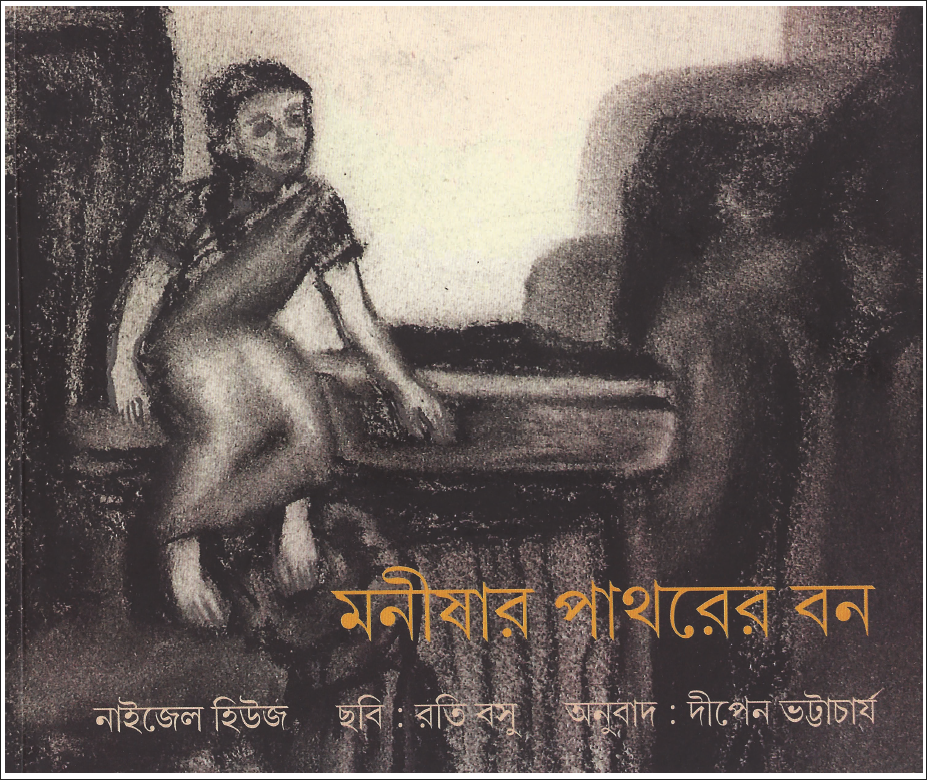
Our own efforts in this regard have focused on what is referred to as ‘place-based’ educational outreach, in which the subject of the work is familiar to the intended audience because it takes place locally. মনীযার পাথরের বন (Monisha and the Stone Forest) (Hughes et al., 2012) (Figure 1) was such an attempt and was a children’s book that considered possible origins for petrified wood common in eastern India and Bangladesh, including explanations provided by various religious traditions. In the story the main character, Monisha, is a girl aged 11+, who seeks a natural explanation of the petrified wood, and whose persistent efforts are ultimately rewarded by a trip back to the time the trees were living and interactions with the animals that lived in Bengal at that time, some 5 million years ago. This book was published in both Bangla and English language versions, and several thousand copies were distributed free-of-cost to rural and city dwelling children in West Bengal and Bangladesh through the help of teachers’ unions, NGOs and the Kolkata and Dhaka American Centers. We also held events at schools, madrassehs and madhymik shiksha kendras in Kolkata and Dhaka, as well as in Birbhum and Burdwan districts of West Bengal. An account of this effort and evaluation of its effectiveness was published in the Journal of Geoscience Education (Hughes et al., 2015).
Cover of মনীযার পাথরের বন (Monisha and the Stone Forest), Monfakira Press/Geological Society of India, 2012), a geologically themed story for rural children in Bengal (see Hughes et al., 2012).
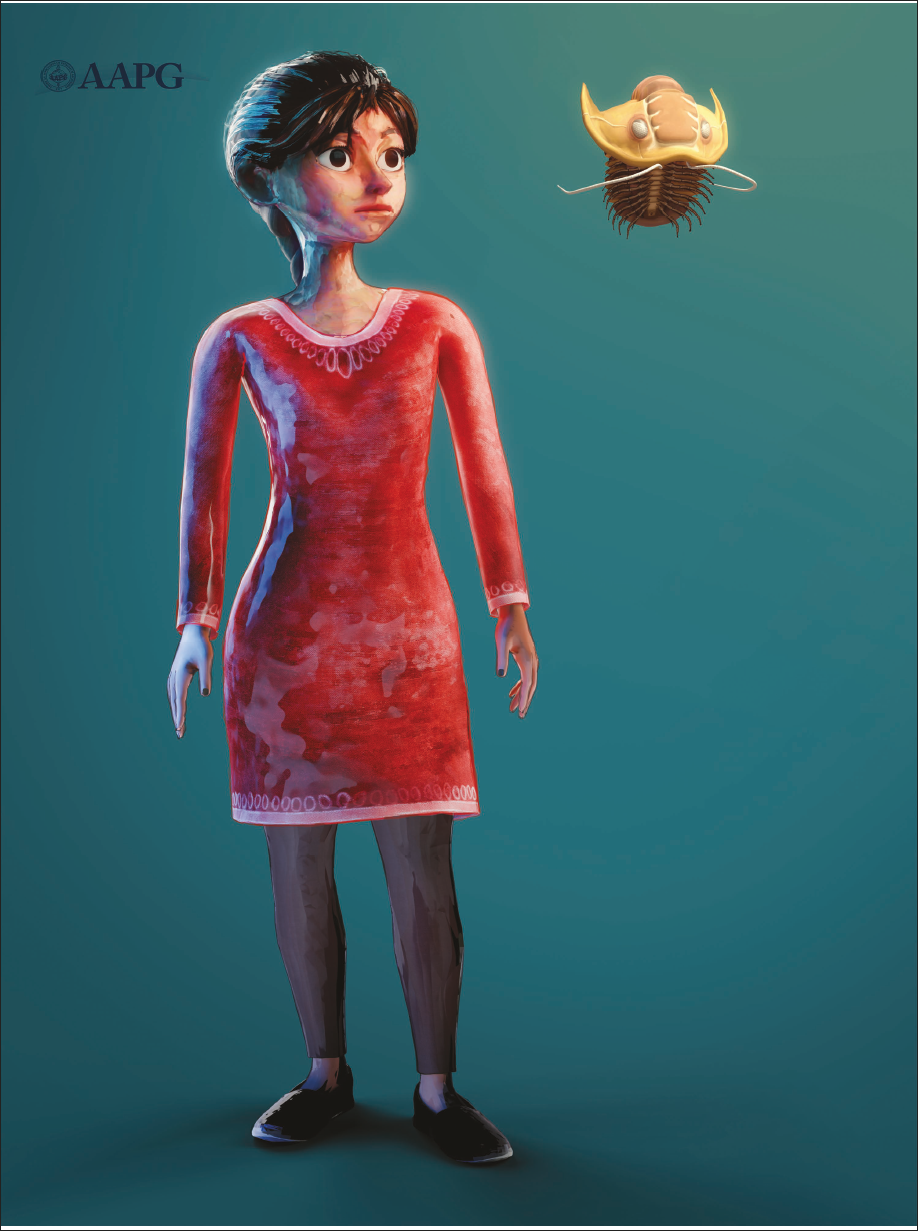
Our experiences with the মনীযা project taught us some valuable lessons that have been significant in forming plans for our next endeavours in this area. Principal among these was that even though the মনীযা story was set in an environment immediately familiar to the rural children it was primarily aimed at, the level of reading comprehension needed to understand the মনীযা story proved challenging for this audience, including those formally recognised as literate in Bengali. For this reason, our current project, আমাদের পাহাড়চূড়ায় সমুদ্র (The Ocean on the Top of Our Mountain) (Figure 2), is a movie that does not require reading ability, but does tell the quite challenging story of the subcontinent’s tectonic migration following Gondwana breakup from the perspective of various fossils alive before and during parts of this epic journey—trilobites, dinosaurs and walking whales. It is being made in collaboration with Dristikhon Arthouse and its talented producer Trisha Banerjee, who is herself a trained microbiologist. Financial support has been obtained from various organisations, most notably from the American Association of Petroleum Geologists and, in India, the Association of Petroleum Geologists - India. Our plan is to make the film available free-to-access on YouTube, with a launch hopefully in 2026. At the time of the launch, we will hope that fellow members of the Palaeontological Society of India can play an important part in drawing attention to the film, and we are looking forward to informing members of the launch date because the project can only be successful in reaching a wide audience if the film is widely watched upon initial launch and word of it spread quickly and widely. Our hope is that the film will capture sufficient attention for us to then make versions available on YouTube in several other subcontinental languages.
Still from the animatic for the children’s educational film আমাদের পাহাড়চূড়ায় সমুদ্র (The Ocean on the Top of Our Mountain), currently in production.
Aside for these personal efforts, the subcontinent’s spectacular and varied physiography and its underlying geological history are rightly subjects of pride for citizens of all of its constituent nations. In recent years, the UNESCO Geoparks program and World Heritage site have played a significant role in celebrating and connecting the role of geological history in determining current natural landscapes. Our group’s research work has contributed support for the Satun UNESCO Global Geopark in southern Thailand (e.g., Wernette et al., 2023). India has several sites of great palaeontological value that might potentially be considered for this status, which many countries have found to be of positive value for promoting both the regional conservation of natural resources and the local economy.
In conclusion, I would like to thank the palaeontological and geological community of the subcontinent for extending to me (and to associated colleagues) the opportunity to work freely and with wide access to data both in scientific repositories and in the field. We have enjoyed and benefited greatly from interactions with multiple scientists and those who assist science, including where our scientific interpretations have disagreed. I am also grateful to the wider Indian public and the country’s public institutions for their enduring enrichment of all aspects of my career.
Footnotes
Acknowledgements
The United States National Science Foundation has supported my research work in South and Southeast Asia, most recently with grant EAR-1849963. The Fulbright Academic and Professional Excellence Award 2019 APE-R/107 and the Geological Studies Unit, Indian Statistical Institute, Kolkata, further assisted in this work. Our geoscience outreach efforts in India have been sponsored particularly generously by the Foundation of the American Association of Petroleum Geologists and by the Association of Petroleum Geologists—India, the Paleontological Society, the Palaeontological Association, the Geological Society of London and the Geological Society of America. I thank the editor of this volume, Prof. Mukund Sharma, and the two reviewers, including Dr C. M. Nautiyal, for their improvements to the article.
Declaration of Conflicting Interests
The author declared no potential conflicts of interest with respect to the research, authorship and/or publication of this article.
Funding
The author received no financial support for the research, authorship and/or publication of this article.
