



Abstract
Background:
This article presents a new analytical approach to acute malnutrition causal analysis that is different from the orthodox approach in 2 respects. First, it engages with basic causes, that is, beyond the usual focus on individuals and households. Second, it uses a relational view in the causal analysis. The orthodox approach identifies the malnourished and their individual and household characteristics. In contrast, a relational approach explores the ways in which the relationships between people, their livelihoods, and the environment, mediated by systems and institutions, create the underlying drivers associated with acute malnutrition for some, while simultaneously creating better conditions for others.
Methods:
The article draws on 2 case study communities in West Darfur, Sudan, first considering the Darfur context and the inequitable policies and weakened institutions that have led to ethnic polarization, multilayered conflict, and humanitarian crises. The article explores how this context has played out differently in each community, contrasting their livelihood specializations, conflict-related losses, and livelihood diversification over time.
Findings:
This analysis shows how the relative vulnerability of some people versus others is strongly influenced by their social, economic, and political relationships, as reflected in their shifting power relations and uneven control over livelihood resources.
Conclusions:
Shifting the focus to the basic drivers, especially the institutional structures, processes, and relationships, will deepen the causal analysis of child acute malnutrition, make it more meaningful, and provide a new direction for engagement, learning, and action to address the deepening problem of child acute malnutrition.
Plain language title
A Relational Approach to the Drivers of Acute Malnutrition
Plain language summary
This article introduces a new approach to understanding the causes of child acute malnutrition that differs from the traditional methods in 2 key ways. First, it goes beyond focusing solely on individuals and households by examining the underlying and basic causes. Secondly, it adopts a relational perspective in analyzing the causes. The traditional approach to studying the causes of acute malnutrition identifies malnourished individuals and examines their personal and household characteristics. In contrast, the relational approach looks at how the connections between people, their livelihoods, and the environment, influenced by systems and institutions, contribute to the development of acute malnutrition while also creating better conditions for some others. To illustrate this approach, the article presents findings from 2 communities in West Darfur, Sudan. It examines the Darfur context, including the policy and institutional context that has contributed to ethnic polarization and multiple conflicts and led to humanitarian crises. The article compares these 2 communities, focusing on their livelihood specializations, losses related to conflict, and changes in livelihood strategies over time. The article argues that by concentrating on the basic drivers of acute malnutrition, particularly the institutional structures, processes, and relationships, we can gain a deeper understanding of the issue. This approach can make the analysis of child acute malnutrition more meaningful and provide new insights for addressing this pressing problem.
The Problem
Concerns are increasing globally about the growing numbers of wasted children, the predominant form of child acute malnutrition (note 1). 1 This points to a failure of the measures to sustainably prevent malnutrition and leads us to reconsider the adequacy of the instruments used in the analysis of the issue. 2 Failures are also attributed to an imbalance between prevention and treatment efforts. 3 These challenges have prompted reflections on analytical approaches and solutions, with several UN agencies jointly calling for “radically improved solutions addressing the fundamental drivers of malnutrition.” 4 (p2)
Current perspectives conceptualize malnutrition as an attribute of individuals and households and focus on the immediate and underlying (ie, proximal) causes; for example, the child does not eat enough or the household does not have enough food. The analysis is mostly limited to measuring malnutrition and assessing causes at the level of the individual or household. Beyond this narrow focus, explanations generally rely on a disaster narrative, directly linking local nutritional outcomes with climate, conflict, or other shocks (note 2). This narrow understanding potentially hinders and/or misdirects humanitarian and development efforts aimed at preventing child acute malnutrition.
In an attempt to move beyond this tradition, this article proposes an analytical approach within a political ecology perspective, 6 aimed at taking into consideration that individuals and households don’t exist in isolation but always in relationships with other people and with the environment, and that such relationships are themselves mediated by policies, institutions, and processes.
A study of child acute malnutrition in climatically similar areas of the Sahel and Horn of Africa revealed a very similar pattern, with 2 relatively regular annual peaks of wasting. 7 This shared pattern points to the significance of long-term structural causes interlinked at national, regional, and international levels. These same generalized structural causes also give rise to disasters and vulnerability. 8,9 Figure 1 shows this pattern of child wasting in the Darfur region of Sudan. It seems clear that the understanding of generalized structural causes (ie, basic drivers) is a crucial part of the analysis of malnutrition, and one that is still largely missing.
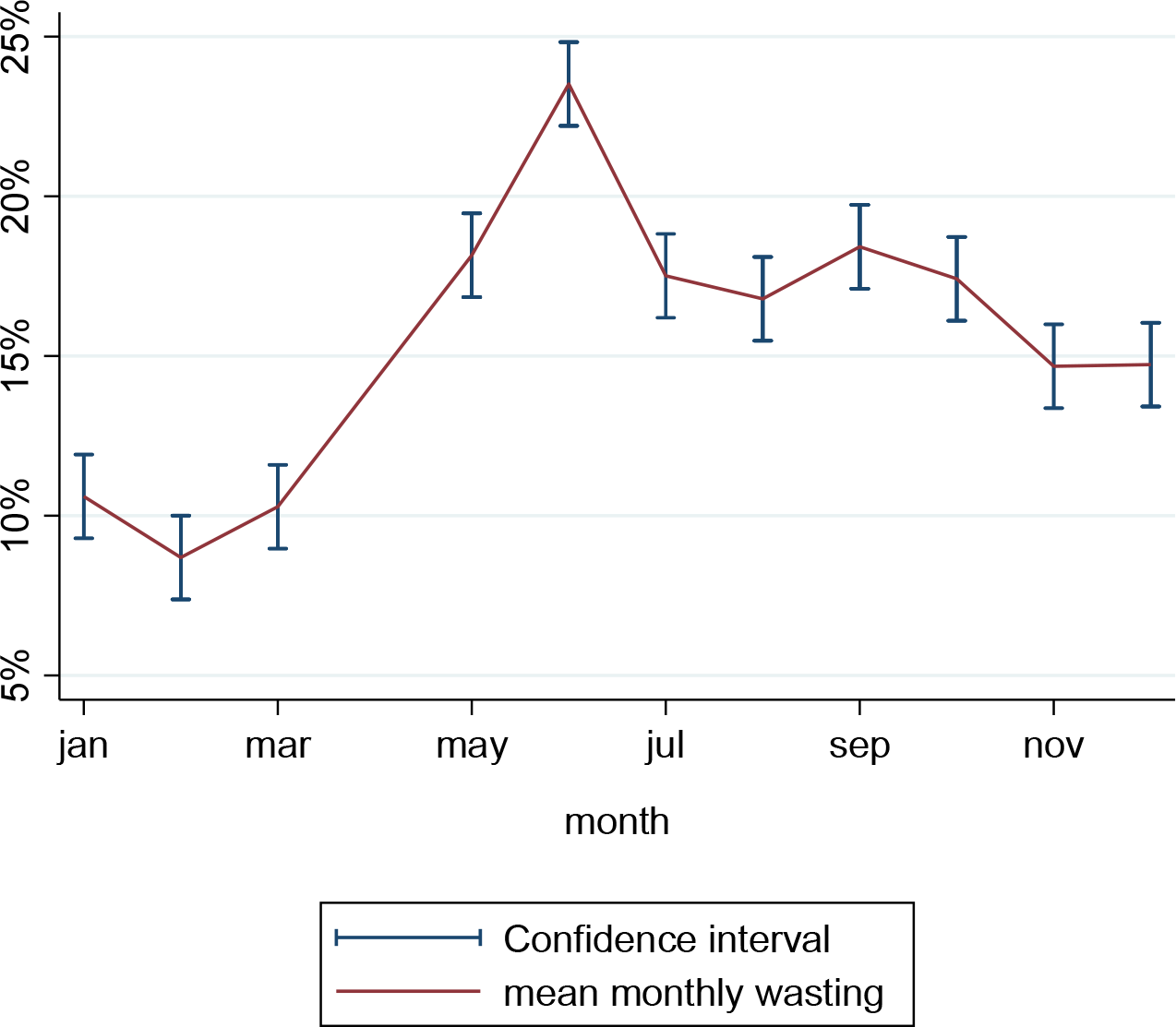
Rates of acute malnutrition and their seasonality in the Darfur region of Sudan. Average prevalence of acute malnutrition across months in all Darfur regions from 2003 to 2015 (based on a total of 50 584 individual observations).
We propose an approach to the analysis of malnutrition that pays greater attention to basic drivers: the ways in which the interplay of social, political, and economic relationships at different scales creates the conditions eventually associated with the underlying and immediate causes of malnutrition for some, while simultaneously creating better conditions for others.
In brief, we propose to extend to the analysis of malnutrition the relational approach already used or recommended for the analysis of famine (Sen 10 ), livelihood (Scoones 11,12 ), vulnerability (Taylor 8 ), poverty (Mosse 13 ), and natural resources (Bathelt and Glückler 14 ).
A Relational Approach—Justification
Sen’s analysis of famine explains it in terms of a failure of peoples’ entitlements to food in relation to the forces of the market. 10 His entitlement theory contrasts with the orthodox view that objectifies “famine” as the result of an absolute decline in total food availability (a supply failure).
With regard to poverty, Mosse (2010) explains that “a relational view… is one that asserts that ‘people are poor because of others’… therefore changing social relations is a pre-requisite for enhancing assets or income.” 13 (p1158)
A relational approach in livelihood studies emphasizes the need to extend the analysis beyond the local and the particular, so as to include “the wider, structural and relational dynamics that shape localities and livelihoods” 12 (p115) and the way in which livelihoods are structured by relations of gender, ethnicity, class, and so on. Scoones (2021) urges to “bring politics back in. For it is… political economy—and the institutional, knowledge and social relational dimensions of this—that determines who owns what, who gets what.” 12 (p103)
Similarly, a relational approach to the understanding of disaster vulnerability moves beyond the view of shocks as discrete events requiring technocratic solutions, to take into consideration that human vulnerabilities are generated by people, social systems, and power dynamics. 9,15,16 Vulnerability arises from historical institutional processes that have led to discriminatory power structures and institutions, which in complex political emergencies are manifest in structural violence. 17
As for “natural resources,” Bathelt and Glückler (2005) emphasize their relational quality, the fact that resources only exist as such within socioeconomic relationships, and therefore it is misleading to represent them as stocks “out there” in the world—as if their final application and use-value were predetermined. 14
The continued predominance of disaster narratives in humanitarian and development studies of acute malnutrition ignores the vast body of learning about entitlements, livelihoods, vulnerability, resilience, and so on and leaves little or no space for more nuanced reflections on the structural causes of malnutrition. Yet all the above examples of a relational approach are relevant to the analysis of the basic causes of acute malnutrition. Nutritional indices, such as weight-for-height z-scores (WHZ), are used to compare a child’s weight to an international growth standard. 18 Fixed “cut-off points” are used as reference points to categorize children as either healthy or malnourished (children whose measurements fall below −2 z-scores). Nutrition surveys estimate the prevalence or rate of child acute malnutrition and examine statistical associations between nutritional status outcomes and household and child characteristics.
But care should be taken in portraying acute malnutrition in a mechanistic way, as if its meaning, causes, and properties were predetermined. The study of child wasting cannot be just the study of malnourished children—the task of measuring anthropometric status and associated attributes, and then only problematizing high rates of global acute malnutrition (GAM) in an oversimplified manner.
A relational approach to the basic drivers of child acute malnutrition and insights from political ecology can provide an important way to move forward debates on the nature and meaning of child wasting, with significant practical use for decision-making. In a relational approach, “nutritional status” is simply a proxy for a wider set of unknown conditions and risk factors firmly embedded in the basic drivers illustrated in Figure 2.
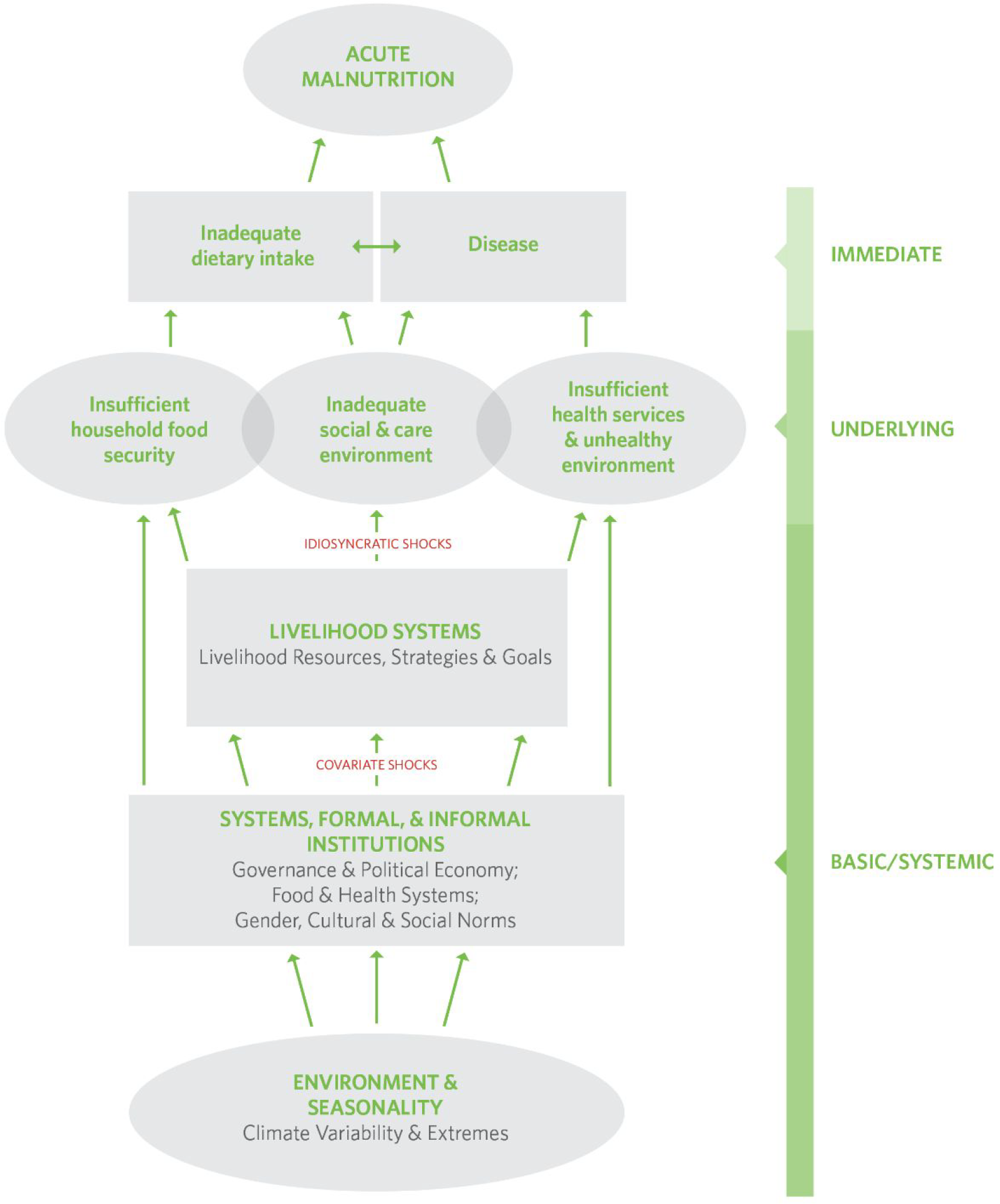
The adapted conceptual framework of drivers of acute malnutrition in Africa’s.
Many forces are at play in the creation of acute malnutrition, and “malnutrition” itself can mean different things depending on the circumstances. From a relational perspective, we would need to ask not only “who” but also “when,” “how,” and “what” lies behind the analytical category of “malnutrition” (note 3).
The Adapted Conceptual Framework
The most commonly used reference tool for the analysis of malnutrition causality is the UNICEF 1990 framework. 20 This framework acknowledges interrelated levels of causality (immediate, underlying, and basic), implying that addressing malnutrition requires multiple interconnected actions. In the application of the framework, however, the “basic causes” have been routinely overlooked. Attention has been focused on “immediate” and “underlying” causes.
Following theoretical advances in the field of disaster vulnerability, resilience, and pastoralism, Young (coauthor) 21 adapted the UNICEF framework to: (i) emphasize the interconnection between immediate, underlying, and basic drivers; and (ii) expand the analysis of basic drivers into 3 interlinked dimensions: environment and seasonality; systems, and formal and informal institutions; and livelihood systems (Figure 2). The inclusion of livelihood systems reflects the ground-breaking work of Ian Scoones on sustainable livelihoods approaches. 12
The basic causes of malnutrition in Figure 2 emphasize the central role of systems and institutions in shaping relations between people’s livelihoods and their environment, which brings together a broader structural analysis of power dynamics, policies, and institutions with a community- or producer-level perspective of local decision-making and agency.
Resilience in relation to sustainable livelihood systems is important in this respect, particularly the way producers manage environmental variability through their own initiative and specialized practices over the longer term. 22,23 At the same time, a community-level analysis reveals the lived experience of communities and individuals and the implications for the underlying malnutrition drivers related to food, health, and care.
Integrating a relational approach into the analysis of acute malnutrition helps to achieve a better balance between identifying the associated symptoms of malnutrition (food insecurity, disease, etc) and a deeper understanding of their basic, more systemic drivers linked to historical social, political, and economic processes and institutions. An understanding of the relational dynamics of malnutrition causality can help to elucidate the options, possibilities, and limitations of strategies to prevent acute malnutrition and thereby improve effectiveness of different initiatives, while also reducing associated harms and risks.
Methods
We use mixed methods (archival evidence, qualitative methods, and time-series livestock tracking) to develop 2 community case studies. Archival material is drawn from the authors’ earlier studies on livelihood systems, nutrition, and conflict in the Darfur region. 24 -27
The case studies are from 2 settlements in West Darfur: Telehaya, Geneina Locality, and Beer Taweel, Kulbus Locality, West Darfur (Figure 3). These communities were part of a large mixed-methods study. The methods used included qualitative methods and GPS livestock tracking. 28,29
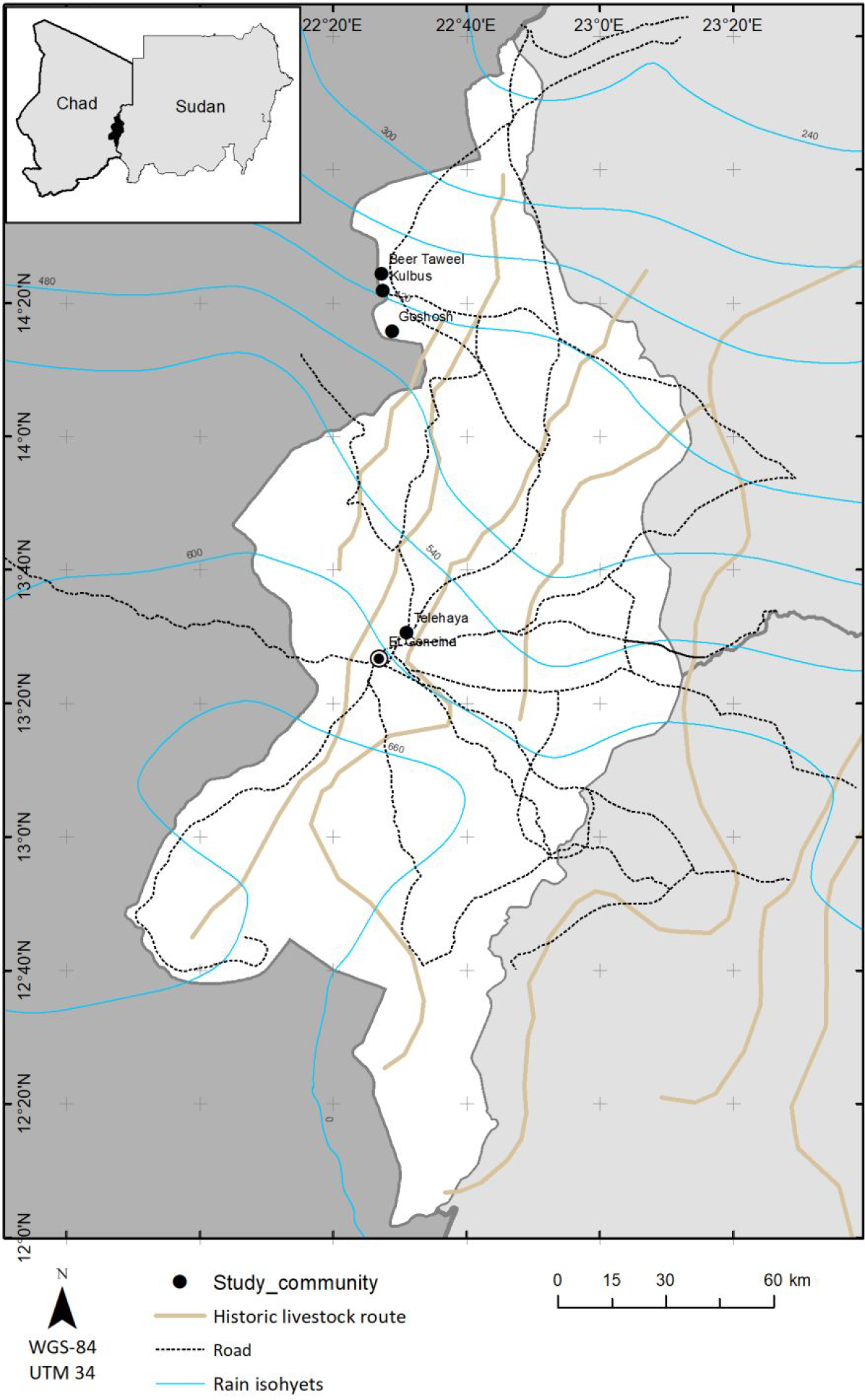
Map showing west Darfur state and location of the study communities.
Livestock Tracking
Livestock mobility enables herds to take advantage of the variable distribution of water, pasture, and fodder, and thus is a core strategy for maintaining livestock health and nutrition. Mobility patterns are changing, yet little is known about how they’ve changed and why, and their implications for household food security, livelihood diversification, and workload by gender. The study used archival GPS devices fitted to animals using a livestock collar that collected coordinates every 30 minutes from April to September 2017. This period covered 3 seasons: the hot dry season (seif), the short transitional season at the start of the rains (rushash), and the main rainy season (kharif). 29
Qualitative Methods
Sulieman (coauthor) conducted semistructured interviews with livestock keepers at the initial device fitting, during a midterm visit, and on device removal. Qualitative research teams undertook 2 rounds of data collection on community histories, livelihoods, and nutrition, in August 2016 before livestock tracking started and in April/May 2017. The training and qualitative tools are described elsewhere. 28
The Tufts University Internal Review Board and the Institutional Animal Care and Use Committee provided ethical approvals. In Sudan, the Federal Ministry of Livestock Resources gave support, and the Sudan Humanitarian Affairs Commission gave permissions.
A methodological limitation of the study was that we conducted women focus groups in the settlements, thereby missing women and children who were with the migrating herds or absent for other reasons. Given their very different environment and proximity to livestock and animal source foods, this is a gap in our study. A further evidence gap is the lack of longitudinal anthropometric data to compare with the regional seasonal patterns and trends.
Findings
The findings present an overview of the Darfur context and its history associated with a wider governance gap, inequitable policies, and weakened institutions that led to ethnic polarization, multilayered conflict, and humanitarian crises. The case studies illustrate how this history has played out differently in each community, contrasting their current situation as reflected by their livelihood specializations and diversification, and their lived experience of the underlying causes of malnutrition linked to food, health, and care.
The Darfur Context—A History of Economic Neglect and Inequitable Policies Leading to Ethnic Polarization, Conflict, and Crisis
The Darfur region has a history of economic neglect, marginalization, and an imbalance in regional investments, 30 in large part the result of a governance gap. National development policies have consistently favored the promotion of cultivation (particularly mechanized and irrigated cultivation) over pastoralism, as reflected in the failure to incorporate pastoralists’ rights as part of formal land tenure policies. 31 Land laws and policies interface at the local level with the customary governance system—the tribal administration. 32 Historically, the customary land tenure systems have integrated the rights of different land users (pastoralists and farmers, women and men). Political administrations since colonial times have weakened pastoralist rights to environmental resources through their failure to recognize and integrate traditional flexible approaches to land access and resources into policy. 33 Furthermore, land, ethnicity, and power relations are interlinked, subjecting communities to tactical manipulation by national political actors for political mobilization, which has contributed to ethnic polarization, intertribal tensions, and conflict. 34
Ethnic divisions between the Fur, Arab, Zaghawa tribes and others were sharpened as these groups began to increasingly participate in national politics. Eventually these once-complex relations were reduced to an opposition between “Arab” and “zurq” (black). 35 Alliances between the national Khartoum government and the Arab nomads started to emerge by the late 1980s. Other Darfur tribes (Fur, Masalit, Zaghawa, and others) had begun to participate in national politics, creating increasingly polarized cross-scalar, ethnically based allegiances, which contributed to ethnic conflict in Darfur. Raiding and counterraiding were often linked to land and its resources. The subsequent Darfur rebel insurgency and counterinsurgency that started in 2003 reflected these ethnic divisions and their national links. 35
The national-level economic and political marginalization of Darfur, the wider regional conflicts, and the government’s manipulation of ethnic identities have contributed to the weakening of the authority of the tribal administration, and the associated environment/land governance structures and institutions. 36 Despite multiple peace agreements, the Darfur conflict has continued, with the government-funded military, paramilitary forces, and security services on one side and multiple rebel factions on the other. Conflict manifests locally in conflict over land and the connected land resources. Increasingly, environmental claims, control, and access to land is based on violent processes. 37 The 2 West Darfur case studies seek to elucidate how these wider trends and dynamics have affected the livelihoods of the 2 communities (Telehaya and Beer Taweel) and their implications for the underlying drivers of acute malnutrition.
History Matters—Crises and Conflict and Their Impact on Livelihoods
The people of Telehaya are from the Arab Alrizeigat-Almahamed tribe and have a nomadic background. Traditionally, they migrate seasonally with their livestock herds, traveling long distances between their southern dry season grazing areas and the northern rainy season pastures. The Beer Taweel community is more ethnically mixed: mostly Gimr, but also Tama, Zagawa, Arabs, and Guraan, who historically combined farming and pastoralism as part of a more mixed livelihood system, with more limited livestock migration.
Both Telehaya and Beer Taweel have experienced multiple conflicts, severe droughts, and famine over the past 50 years or more. Elders from both communities recalled the epoch-changing effects of prolonged drought in the early seventies and again from 1982 to 1984 that led to famine, and the arrival of international agencies who provided food assistance. A rinderpest epidemic 38 coincided with the famine, wiping out cattle and further exacerbating the situation for the Telehaya nomads. These combined crises and heavy livestock losses led some Telehaya herders to seek alternative livelihoods and look for work in ElGeneina, the state capital. A few men left for Libya and even Saudi Arabia. As Telehaya elders explained, “For us agriculture was not a livelihood in the past but because of famines that took place in the eighties and the loss of livestock we suffered, we thought of settling down and practicing an activity in line with our situation and our needs” (Telehaya Focus Group (FG) 2 men, 2017). They also thought that settling in Telehaya would improve their access to amenities and services.
Beer Taweel elders also recalled the devastating effects of the eighties famine, including deaths of people and livestock, and migration of people to nearby towns, and even to cities as far as Gezira in central Sudan, in search of work. Hunger, malnutrition, and disease led to many famine deaths at that time, including among older children and adults, reflecting the wider impact of such crises on the population.
Conflict has also been a frequent threat, and since the eighties the people of Beer Taweel have suffered in large part because of their suspected links to Chadian insurgents taking refuge inside Sudan that put them at risk, and the cross-border conflict with Chad, forcing them to flee their homes for safety, and resulting in violent loss of life and destruction of property. From 2003, the wider Darfur conflict led to their long-term forced displacement and impoverishment. The Beer Taweel area continues to experience problems, with problems of Chadian herdsman seizing ploughs, blocking access to farms, and their herds destroying standing crops. The Darfur conflict, and the cross-border conflict with Chad, have led to heavy livelihood-related losses, a shrinking of external social ties, a blocking of livelihood opportunities, and loss of cooperative relationships with other communities. As Beer Taweel elders explained, “Conflict has brought poverty, killing, hunger, and all evils… displacement, joblessness, restrictions on mobility and insecurity… life has witnessed a major transformation, from herders to small farmers and from rich to poor” (Beer Taweel, elders, 2016). Insecurity has restricted access to common property resources—cultivable land, pastures, and rangeland—affecting both farming and pastoralism in this area for the people of Beer Taweel. Security concerns when accessing the rangeland have also limited hunting of wildlife and collection of wild honey. Unsafe roads and insecurity have curtailed cross-border crop trade opportunities. Gum Arabic tapping has stopped; in part because trees were felled to make way for crop cultivation or to fuel brick kilns. 39 The conflict-related losses, shifts in power relations between them and others, and a war economy have reshaped the livelihoods of the people of Beer Taweel.
The people of Telehaya have also experienced conflict over many decades. Around the time of their original settlement in Telehaya, a local government reorganization of tribal areas triggered a major intertribal conflict (with the Arab Masalit) and years of ethnic tensions and violence, fomenting political unrest that contributed to the wider Darfur conflict in 2003. 26
The Telehaya experience of the Darfur conflict was very different from that of Beer Taweel, with fewer direct conflict losses, no long-term forced displacement, and an increase in trade opportunities linked to the war economy. Telehaya groups described the many battles, killings, cattle thefts, and lack of security, which drove some Telehaya households to relocate to nearby towns for safety (especially in 2006 when “almost the entire population migrated to Geneina and Seraf Omra seeking security” [FG men, 2017], so that year they were unable to farm).
Specialized Livelihood Systems—Pastoralism and Farming
Despite the devastating effects of conflict and crises, pastoralism and farming remain the primary livelihood strategies in both communities, pastoralism for the people of Telehaya and predominantly farming with some livestock for the people of Beer Taweel. Other nonagricultural livelihood activities are generally timed to fit in around the seasonal demands of farming and herding, which illustrates the priority given to the primary livelihood strategy.
Livestock mobility
Both communities depend on livestock mobility as a strategy to take advantage of the variable distribution of pasture, fodder, and water resources. The patterns of livestock mobility are very different in the 2 communities. Telehaya herds travel long distances south to north between their seasonal grazing areas, while the Beer Taweel herds migrate within a more limited area, moving in a more circular fashion. For both pastoralist systems, the rangeland area covered during an annual cycle has contracted, largely because of the threat of looting and general insecurity. In the past, Telehaya nomads migrated far to the north to enable their herds to benefit from the nutritious rainy season pastures and ideal mating conditions in this area, whereas now their herds travel as far as the state border with North Darfur. Figure 4 illustrates the migratory pattern of a Telehaya herder who owns a cattle herd and a flock of sheep. At the start of the first rain in early June, he takes his cattle south to the newly emerged grasses. With the progress of the rainy season, he starts to move gradually northwards and, on reaching his home area, pauses until the intensive cultivation makes the area uninhabitable for his herd. For Telehaya pastoralists, the 2-week southward migration of livestock to meet the first rains advancing from the south is the most difficult time for people and their animals. This period coincides with the peak of child acute malnutrition, illustrating how child acute malnutrition coincides with these tough seasonal conditions.
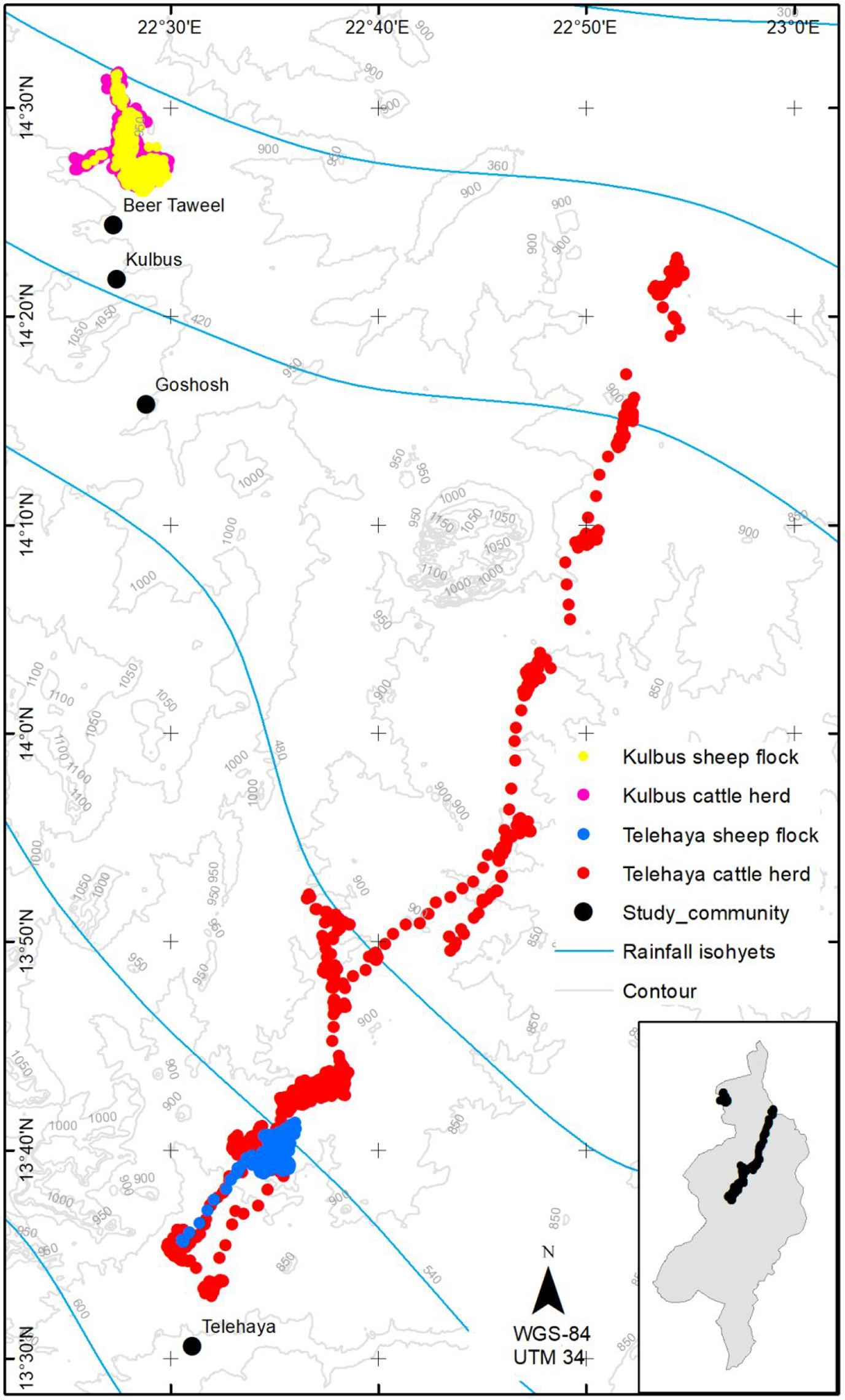
Mobility pattern and territories for pastoralist from Telehaya and agro-pastoralist from Beer Taweel in Kulbus area.
In Beer Taweel, herd sizes are small compared to before the Darfur conflict. Livestock mobility is shorter because insecurity means herds must keep to nearby safer areas, and because households need to juggle their labor to manage both their farming and herding activities. Some Beer Taweel herders practice short-distance mobility, moving no further than 7 km from their home (see Figure 4). Other households combine their few cattle into one larger herd that can reach the more distant grazing areas up to 50 km away. A third group follow the serha system, whereby their herds graze in the village outskirts away from their farms, returning to overnight in their homestead. The different arrangements for herding animals in Beer Taweel have implications for division of household labor between farming and herding and for the workload of women and childcare arrangements.
In Telehaya, mothers regard animal milk as the best food for young children. In Beer Taweel, milk is an important seasonal source of nutritious food and income, which has diminished due to livestock losses and threat of insecurity and livestock theft.
Producers’ careful management of their herds is important from a nutritional perspective. Milk production depends on the reproductive cycle of livestock, and births are often timed to coincide with the rainy season and increasing availability of pasture. This seasonal pattern of births explains the general increased availability of milk in the rainy season and subsequent decrease in the dry season. In addition, keeping more than one livestock species can help maintain milk production throughout the year, given the different reproduction cycles and lactation periods, and thus smooth milk consumption. 40 Equally functional is keeping different lineages of animals within the same breed with different patterns of productivity. Some lineages are particularly productive during the rainy season, and others are particularly productive during the dry season. 41 Combining livestock species offers multiple advantages: complementarity in the use of vegetation and smoothing the seasonality of production and contribution to household food and income.
Farming
Beer Taweel households are experienced farmers who manage multiple cropping seasons and a variety of crops and livestock. They have resettled near their original area and return to cultivate their farms on a daily basis. In the rainy season, they cultivate sorghum, millet, okra, groundnut, and watermelon on sandy soils. In the dry season, they cultivate tomato, sweet and green melon, and onions in the wadi (valley) farms. In their irrigated horticultural gardens, they cultivate watercress, radish, Jew’s mallow, green okra, and salad leaves, and harvest fruit trees such as citrus and guava. They are adept at managing rainfall variability, resowing millet or sorghum if necessary to secure their staple food harvest; for example, if there is a delayed start to the rains or gap in the rains.
In contrast, Telehaya producers are inexperienced at farming, and many depend on hired agricultural labor. Telehaya men explain that “arable land narrowed and water sources shrunk” (FG2 men, 2017). This has led to competition among local residents and between them and pastoralists crossing the area, which has affected the quality of peoples’ lives for the worse.
This increasing competition and conflict over formerly shared resources reflects the weakening of informal (customary) institutions that uphold cooperative social relations and sharing of livelihood resources. For example, in the past the tribal administration specified the date when herds could graze the postharvest crop residues, known as the tallaig. Both communities described how in the past the tallaig benefited farmers and herders. Herds grazed crop residues and manured the farmers’ fields. Both benefited from exchange of produce. Telehaya herders explain that farmers rarely share crop residues now, as they sell them or keep them for their own herds. Pastoralists complain also that farms are expanding at the expense of grazing for livestock and stretching seasonally into what was the pastoralist grazing season because of irrigation and new drought-resistant varieties. Conversely Beer Taweel farmers suffer severe crop losses when migrating livestock trespass on fields and damage crops. These problems have arisen because of a weakening of the social systems and institutions that underpin these relationships. In practice, this means herds have less access to dry season animal feed resources, which affects their reproduction and milk production and has implications for child nutrition. 42,43 From the perspective of Beer Taweel farmers, they feel threatened by armed migrating pastoralists and the risk of livestock trespassing on their fields and damaging standing crops.
Livelihood Diversification
The devastating experience of famine and ongoing conflict have led both communities to seek alternative sources of food and income and diversify their livelihoods. Livelihood diversification among Telehaya nomads started in the nineties with an interest in farming and has widened since then to include economic opportunities linked to conflict and the war economy. Nevertheless, pastoralism remains the primary livelihood strategy for the former nomads of Telehaya, albeit with smaller herds and changing patterns of mobility. Their other activities fit in seasonally with pastoralism. In the dry season, when livestock are close to the home area, men pursue a wide range of income-earning activities: animal brokerage, sale of millet, brickmaking, contract labor, water selling, urban labor migration, artisanal mining, and military work. This experience contrasts with the activities of poorer households and especially poorer women in Telehaya, who depend on collecting and selling firewood and manure for construction. In years with poor harvests, women work as daily laborers. These marginal, low-return activities do not provide adequate food security and other essential conditions for good nutrition.
Trade in Telehaya has expanded beyond livestock brokering and crop sales to trading opportunities in “all kinds of goods” (Telehaya FG1 women, 2017), linked with the rapid urbanization of nearby ElGeneina, the war economy, and associated cross-border smuggling (note 4). Such opportunities are not open to all and are potentially maladaptive. 27
Given their loss of assets and opportunities, women and men in Beer Taweel are actively engaged in an increasing number of low-return income-earning activities. Since displacement, some women work as agricultural day laborers for a growing number of absentee landlords (linked with increasing land privatization). Year-round, women and men collect firewood, grass, hay, and wild foods to sell. They also sell local produce—cereals, peanuts, and other crops—at different weekly markets. The involvement of men in collecting environmental resources illustrates their fewer income-earning opportunities compared to the Telehaya community. The only other opportunities for men are day labor (brick making) and migration to towns for limited casual work. Small numbers of men migrate to Europe, but few send back remittances. Increasing numbers of men are migrating to the gold mining areas. But focus groups explain that these new activities do not meet their needs. The labor migration of men from Beer Taweel further increases the livelihood responsibilities and workload of women, with implications for breastfeeding practices, mothers’ dependence on secondary carers (siblings, relatives, or neighbors), and the quality of care and supervision by secondary carers or mothers (if women have to take their children with them while working).
A Final Reflection on Power Relations
The 2 case studies illustrate how systemic and institutional changes have radically altered people’s relations with the land, and contributed to winners and losers, with the severe loss of livelihood assets and environment entitlements on one side and the apparent enrichment of others on the other. Farming and pastoralism systems have both suffered because of the contraction in social networks and agreements, and a reconfiguration of environmental entitlements and social relations. The poor in both communities face similar struggles to survive and depend on many of the same marginal coping strategies. The wider conflict and violence that is embedded within the institutional context has shaped the livelihood trajectory of these communities and their subsequent relational arrangements with the environment.
Another institutional factor contributing to the imbalance in environmental entitlements is the efforts to formalize rights to cultivable land through official land registration processes. In the absence of similar efforts to protect pastoral resources, the efforts will likely contribute to increasing tensions and deepening violent processes of land resource appropriation.
For both communities, the opportunities for communal use of environmental resources have contracted because of risks of insecurity, violence, and livestock theft, and the increasing individual private ownership of land. This loss of communal land, whether legalized through registration or illicit because of land grabs and rent seeking, reduces the power and authority of the tribal administration to administer communal environmental resources.
Other land resources, including water, forest, and rangeland products, have been commercialized, from petty trading to wholesale stripping of forest resources as part of the wider war economy. 39 War economy interests further contribute to an imbalance in power relations.
Discussion
The relational approach to the analysis of the basic drivers of acute malnutrition in this article requires analysis of the systems, processes, and institutions that shape the relationship between people’s livelihoods and their environment. Paramount are the political, economic, and natural resource governance systems that lie at the heart of the basic driver’s framework and the social institutions related to ethnicity, gender, social norms, and values.
The Sudan case studies provide a brief history of government policies and institutions related to development, local environmental governance and rights in Darfur, and the impact of conflict and famine on 2 communities. There are fundamental similarities between the Telehaya and Beer Taweel communities, especially in their livelihood specializations, shared history, and institutional contexts. Pastoralism and farming are not simply what people do for a living, rather they are part of an overarching livelihood system that integrates a wide range of producers and their strategic choices for managing resources. Of central importance to this system are the formal and informal (customary) institutions that manage entitlements and use of environmental resources by women and men, young and old. Furthermore, the farming and pastoralist strategies that communities have developed are the result of experience and adaptation over the long term, leading to their particular livelihood specializations.
The relational analysis further reveals the changing relationships between people, their livelihoods, and the environment, which have led to contrasting livelihood trajectories, radically altered institutions, and a major shift in social relations. These have brought about different lived experiences and have varying implications for the underlying drivers of malnutrition in each community. Key to understanding these differences and how to sustainably address the basic drivers are the systems, processes, and institutions that shape the relationships.
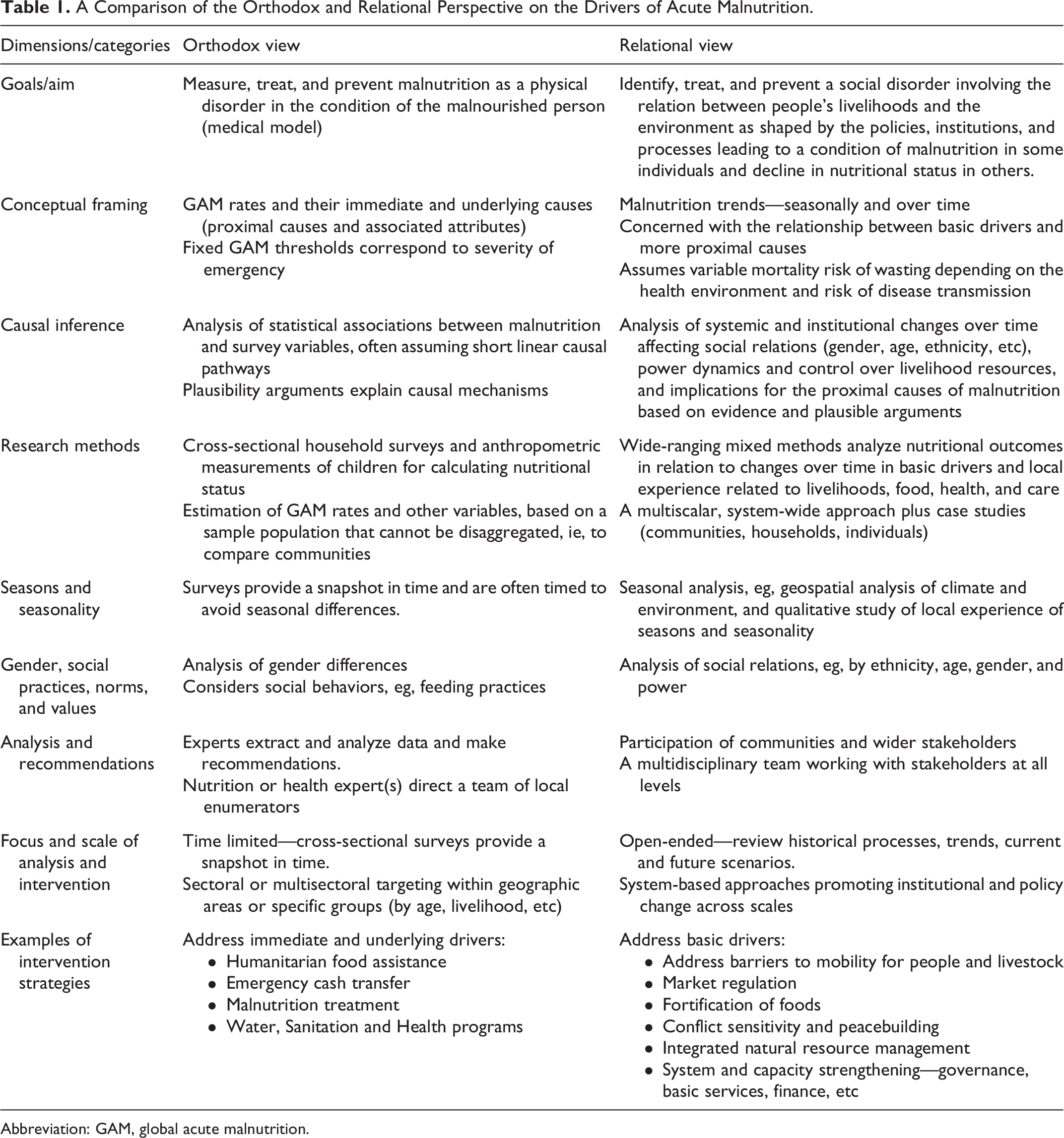
This relational perspective contrasts with the orthodox approach. Table 1 summarizes the key differences between the 2 approaches, which are discussed below and draw on the findings from Sudan.
A Comparison of the Orthodox and Relational Perspective on the Drivers of Acute Malnutrition.
Abbreviation: GAM, global acute malnutrition.
Both approaches are concerned with prevention of malnutrition. The orthodox approach focuses on child wasting as a physical disorder, reflected by an anthropometric deficit or abnormal growth (< −2 WHZ), and the discrete role of a limited set of immediate and underlying factors. In contrast, the relational perspective is concerned with identifying, treating, and preventing child wasting as a social disorder that is embedded in the wider processes, institutions, and policies that have led to a decline in nutritional status.
Anthropometric data and GAM estimates are relevant to both approaches, although they are interpreted differently. The orthodox approach is time limited, often providing only a snapshot, in contrast to the open-ended reviews of historical processes, and current and future scenarios in the relational approach.
The orthodox approach interprets GAM rates in a mechanistic way. A cross-sectional nutrition survey provides a one-time snapshot of the GAM rate. There is a long history of the use of fixed GAM thresholds as a severity index for acute malnutrition in emergencies and its use for decision-making. 45,46 In contrast, the relational approach interprets GAM rates in relation to their trends over time, expected seasonal patterns, and from a population-wide or community (sentinel site) perspective.
Orthodox methods, such as cross-sectional nutrition surveys, have their uses and limitations. As Figure 1 shows, they provide a wealth of anthropometric data that allow us to explore trends. In practice, nutrition surveys are often implemented at the same time each year to eliminate seasonal effects that interfere with analysis of changes over time, which risks ignoring seasonality. Survey results present descriptive statistics and sometimes, but not always, important differences in nutritional status by gender and age-group. Population surveys aggregate data across a heterogeneous population, thereby missing critical differences between neighboring communities within the sample. For this reason, GAM estimates by community are rarely available.
The secondary analysis of data from multiple surveys in Figure 1 shows the seasonal patterns of GAM across the region and peaks in malnutrition. Nutritional problems of this severity, scale, and duration are structural and can only be sustainably addressed through systemic and institutional change. Figure 1 also shows a regular pattern whereby GAM rates decline to below 10%, illustrating that rapid improvements in child nutritional status are regularly achieved under the right conditions. This strongly suggests that when conditions allow, communities know how to provide and care for their children based on their livelihood systems and local agency.
The livelihoods analysis in this article highlights the continuing importance of people’s livelihood specializations—pastoralism and farming—as the livelihood mainstays. In both communities, the principal livelihood strategies are based on flexible approaches and specialized livelihood skills and expertise, which enable them to take advantage of the seasonal and spatial distribution of resources. There are variations in livelihood practices between producers, but the underlying rationale is the same—the management of seasonal environmental opportunities. Livelihood specializations work with nature and thus are adapted to their environment, which is fundamental to long-term resilience. 47
Both communities have diversified into nonfarm/nonpastoralist sources of food and income. For Beer Taweel, and among the poor in Telehaya, these are labor-intensive, low-return activities, which substantially increase women’s work burden, with implications for childcare. In Telehaya, higher return maladaptive livelihood activities are evident: smuggling, trading black market goods, and joining armed groups. As found in northern Kenya and other dryland contexts, none of these nonfarm/nonpastoralist diversification strategies are an adequate substitute for the core livelihood specializations that underpin their resilience. 48
Figure 2 places systems and institutions centrally in the configuration of basic drivers because of their overarching importance in shaping the relationships between people, their livelihoods, and the environment. These institutional relationships perpetuate inequalities, underdevelopment, and the violent asset-stripping processes in conflict settings. 17,49,50
The political ecology perspective in this article shows that the relative livelihood vulnerability of some people (communities, households, individuals) versus others, as revealed in the case studies, is strongly influenced by their uneven control over livelihood resources, particularly land and the resources associated with that land.
The 2 case study communities, despite their differences, show how livelihoods are always interconnected, with shared histories and links to institutional environments. A relational approach to the analysis of malnutrition clarifies how these histories and their outcomes are driven by discriminatory or weakened institutions, as well as by shifting social relations linked with wider political allegiances, and the way these manifested in local conflict dynamics and the war economy. Persistently high rates of acute malnutrition are better analyzed as an effect of political systems, especially the political allegiances and processes of inclusion or exclusion. The relations between people and their environment are the result of historically determined social, economic, and political processes and institutions. Only a relational approach allows this complexity to be understood.
Further advantages of a relational approach are that it reflects the contextual and interactive nature of people’s lives and livelihoods, especially the flexible use of pastoral resources that varies across seasons and geographies, as illustrated by the strategic mobility patterns of both groups. A relational approach recognizes the variety and heterogeneity of different uses of resources and their values to different actors at different times, by women and men, herders and farmers. This is particularly relevant in a nonequilibrium environment characterized by uncertainty and unpredictability, where producers manage their production through their own initiative and specialized practices. The result is the heterogeneity in livelihood strategies illustrated in the case studies. This finding challenges the assumed homogeneity of “livelihood groups” and their distribution in demarcated “livelihood zones,” categories frequently referred to in early warning systems and used for planning and decision-making. 45 The 2 case studies are an important reminder that pastoralism and farming are found throughout the region and are integrated at the household, community, and landscape level. Livelihood zones and categories are divisive and, if used as the basis for targeting interventions or other decision-making, could be harmful as they potentially undermine integration and promote polarized perspectives. The alternative systemic approach takes a broader landscape view and recognizes the fundamental interconnectedness and interdependence between different actors and livelihood production systems. The case studies provide evidence of community efforts to rebuild their relationships by setting up local committees to address the twin issues of trespassing herds and farms blocking migration routes. Such initiatives highlight the importance communities attach to the peaceful comanagement of shared resources. However, in the absence of addressing the fundamental imbalances in the power relationships between producers, and the question of integration at the landscape or systems level, scattered and piecemeal efforts will have limited impact.
Individual actors do not have the capacity to directly change these systems. However, a systemic approach can give systems a “nudge” that helps them to change themselves, codeveloping new patterns and new organizational structures. Research based on a relational approach must always go hand in hand with research uptake strategies that promote shared cross-scalar learning among stakeholders and facilitate the use of knowledge in practical ways.
The focus and scale of interventions associated with the orthodox approach compared to the relational approach are very different. These different approaches give rise to fundamentally different targeting and intervention strategies (see Table 1). The orthodox approach is essentially concerned with addressing the immediate and underlying drivers, while the relational approach addresses the basic drivers by adopting a multiscalar, systems-based approach. The findings show how multiscalar systems and institutions influence entitlements (access) to livelihood resources, social relations, and power dynamics, which in turn affect the underlying causes of malnutrition related to food, health, and care (food insecurity, the social and care environment, and the health environment and access to health care).
Conclusions
This article provides a relational analysis of why and how inequalities between 2 communities exist, and the underlying power relations that brought about such uneven control over livelihood resources and high levels of malnutrition.
We conclude that an analysis of the basic drivers of malnutrition requires a relational approach that explores the relationship between people and their environment, as reflected in the institutionally embedded economic, social, and power relations. We highlight the structural vulnerability and violence that undermine the rights-based entitlements that livelihoods depend on. Such an analysis is needed to explain the causes of inadequate food security, social care and support systems, public health, and other essential services. While these systemic deficiencies can be addressed temporarily by humanitarian response, only systemic change at the institutional level will bring about sustainable improvements in relation to development and peacebuilding. Hence, a relational perspective shifts the aid or intervention focus from the external provision of material assistance (relief distribution) to processes of institutional and systemic change—processes that requires all stakeholders to engage in a process of shared reflection, learning, and strategic action according to their capacities.
Footnotes
Acknowledgments
The case study research was funded by UK Aid Direct under its support to the program Building Resilience in Chad and Sudan led by Concern Worldwide. Special thanks to Dr Musa Ismail and staff from the University of Zalingei for supporting some of the qualitative fieldwork. Thanks also to Anastasia Marshak for her analysis of rates of child acute malnutrition and their seasonality provided in Figure 1.
Declaration of Conflicting Interests
The authors declared no potential conflicts of interest with respect to the research, authorship, and/or publication of this article.
Funding
The authors received no financial support for the research, authorship, and/or publication of this article.