



Abstract
Background:
Twenty-seven African countries have committed to restore more than 100 million hectares of degraded land by 2030 as part of the African Forest Landscape Restoration Initiative (AFR100). In addition, for the same period of time, the African-led Great Green Wall initiative seeks to restore 100 million hectares of degraded agro-sylvo-pastoral lands in the Sahel. The current UN Decade on Ecosystem Restoration (2021-2030) moreover marks an unprecedented opportunity to shape future landscapes, and forge more biodiverse and nutritious food systems. Yet most large-scale restoration actions continue to be largely isolated from socioeconomic challenges facing dryland communities, not least food security and acute malnutrition. Such isolations contribute to low restoration successes and outcomes in Africa’s drylands. At the same time, international interventions aimed at improving acute malnutrition in the drylands have not adequately considered the agriculture-nutrition linkages, particularly “pre-farm gate”—including consumption pathways which optimize the use of native plant diversity.
Objectives:
This article identifies priority action areas emerging from experiences over 5 years of restoration activities carried out in the Sahel through Food and Agriculture Organization’s (FAO) Action Against Desertification Programme supporting the implementation of Africa’s Great Green Wall. These actions aim to inform development and humanitarian interventions on the ground to render restoration interventions nutrition-sensitive and hence more effective in practice.
Results:
Recognizing the symbiotic relationship between landscapes and livelihoods, FAO developed a blueprint for large-scale restoration that combines biophysical and socioeconomic aspects for the benefit of rural communities. The approach builds climate and nutritional resilience into its restoration interventions as a preventative approach to reverse land degradation and ultimately improve livelihoods, food security, and nutrition.
Conclusions:
FAO’s experience demonstrated that what is planted and when has the potential to not only significantly improve biodiversity and reverse land degradation, but also positively influence nutrition outcomes. Future interventions in the drylands must involve joint efforts between nutritionists and natural resource managem prove both human and planetary health.
Plain language title
Restoring Africa’s Drylands With Nutritious Native Plants
Plain language summary
The African-led Great Green Wall (GGW) initiative seeks to restore 100 million hectares of degraded lands in the Sahel, in the context of the current UN Decade on Ecosystem Restoration by 2030, marking an unprecedented opportunity to shape future landscapes, and forge more biodiverse and nutritious food systems. At the same time, international interventions aimed at improving acute malnutrition have not adequately considered the agriculture-nutrition linkages, particularly “pre-farm gate,” including consumption pathways which optimize the use of native plant diversity. Recognizing the symbiotic relationship between landscapes and livelihoods, Food and Agriculture Organization (FAO) developed a blueprint for large-scale restoration that combines biophysical and socioeconomic aspects for the benefit of rural communities and builds climate and nutritional resilience into its restoration interventions as a preventative approach to reverse land degradation and ultimately improve livelihoods, food security, and nutrition. This article identifies priority action areas emerging from experiences over 5 years of restoration activities carried out in the Sahel through FAO’s Action Against Desertification supporting the implementation of the GGW. The results demonstrated that what is planted and when has the potential to not only significantly improve biodiversity and reverse land degradation but also positively influence nutrition outcomes. Future interventions in the drylands must involve joint efforts between nutritionists and natural resource management specialists in order to improve both human and planetary health.
Keywords
Introduction
Plant diversity has for millennia underpinned ecosystem services essential for human health and well-being, making agricultural production systems more resilient to shocks such as climate change and socio-economic disruptions. Yet the emergence of 20th century intensive agriculture contributed to a rapid decline in biodiversity, leading to an overall decline in species diversity in food production (agrobiodiversity) as well as genetic diversity within plant species. 1 -3 Two in 5 of the world’s plant species are at risk of extinction. 2 The number of edible plant species is estimated at 7039 edible species 4 in a broad taxonomic sense, with some estimates reaching <30 000. 5 Yet a mere 8 species, including rice (Oryza sativa), maize (Zea mays), wheat (Triticum ssp.), and potato (Solanum tuberosum), supply more than 50% of our daily calories and only 9 species account for 66 of total crop production. 6 Many crop wild relatives (CWR), the foundation of tomorrow’s agriculture whose nutritional and climatic resilience potential are yet to be discovered, are forecast to be lost in the next 50 or so years, likely leading to less resilient agroecosystems and less nutritious diets. 1,7
Domestication has led to a severe reduction in genetic diversity when compared to their wild relatives. Crop wild relatives have been bred by farmers who have crossed them with domesticated crops to produce new varieties for generations and gathered them from the wild for household nutrition for millennia. There are some 10 000 CWR that are considered high potential value to food security. 7 A wealth of them moreover is very nutritious, accessible, adapted to local conditions, and resilient to climate variabilities. This is crucial in view of the compelling evidence suggesting climate change will affect food quality (diversity, nutrient density, safety) and food prices. 8 Native, wild plant species moreover are increasingly important to diversify our food systems and provide the wide variety of nutrients that we need for a healthy life. Native wild species are typically multipurpose, and often have nutritional content superior to their domesticated counterparts. 9
Drylands, home to over one-third of global biodiversity hotspots, are an important genetic reservoir, essential for climate change adaptation, with wild, native tree species for example capable of enduring long periods of drought and characterized by extreme longevity. 10,11 Up to 45% of the world’s cultivated plants are thought to have originated in the drylands. 12 Agriculture, agro-forestry, and agro-ecology in the drylands have long been highly dependent on this diversity. Yet it is waning due to climatic changes, the conversion of wild ecosystems to intensive agricultural production, overgrazing, overharvesting of firewood, forest products, and so on, among other factors. 6
Food production in Africa’s drylands—home to over half a million people—is dominated by small-scale and subsistence farming, pastoralist and agro-pastoralist systems, which have long been shaped by extreme climate variability, seasonal scarcity of water, and temperatures of up to 50°C. 13 Livestock keeping is the main source of livelihood for 40 million people across the Horn of Africa and the Sahel. 14 Cropping systems consist predominantly of cereals and pulses and occasionally with cucurbits. In most cases, in addition to harsh climatic conditions, the monocropping increasingly practiced by farmers limits crop yield. Climate change has further exacerbated irregular rainfall and extreme events such as droughts and floods in the Sahel. 15 While climate resilience is a key feature of dryland farming systems, climate change and conflict are testing this resilience. 13,16
Land degradation and the loss of associated biodiversity, coupled with increasingly harsh environmental conditions, moreover, have contributed to persistent acute malnutrition in the drylands. Food insecurity is periodically at emergency levels. The number of food insecure people across Burkina Faso, Niger, and Mali alone reached 12.7 million in 2021 17 (Figure 1). Current estimates (2022) reach 12.7 million food insecure people across the 3 countries, with 3.45 million concentrated in Burkina Faso alone. 17 In the past, many of the highest levels of Global acute malnutrition (GAM) were recorded in famine-related emergencies. 18 Yet persistent GAM is known to affect nonemergency contexts, illustrating the complexity of malnutrition in the drylands.
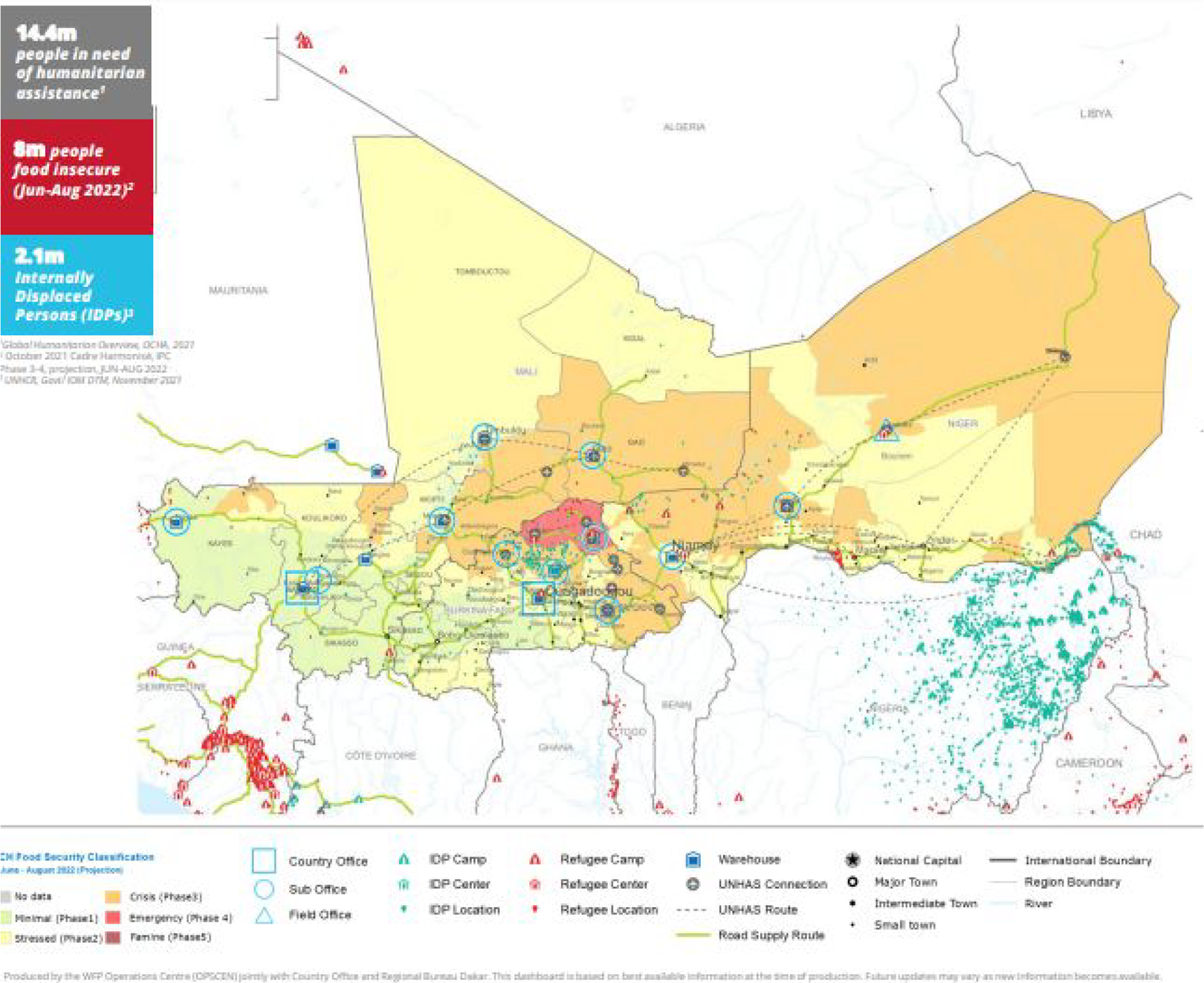
Central Sahel emergency. Assessment of state of food insecurity in Burkina Faso, Niger, and Mali as of December 2021 indicated 8 million food insecure across the central Sahel, with 2.1 million internally displaced. Current estimates (2022) reach 12.7 million food insecure across the 3 countries, with 3.45 million food insecure in Burkina Faso alone. 17
Against this backdrop, the unlocked potential of plants and trees to contribute to food system transformation, including improved nutrition, is receiving increased recognition. 19 -21 “Territorial approaches” that integrate cross-sectoral and multilevel governance mechanisms, as well as coherence across different spatial levels, while focusing on linkages and opportunities between systems in a given territory, are viewed as vital systems approaches necessary for the transformation of food systems. 15 One such approach, FAO’s Action Against Desertification (AAD) in support of the GGW initiative across the Sahel, involves an 11-country project blending native-plant based landscape restoration with interventions aimed not only at improving land productivity but simultaneously addressing food insecurity and malnutrition, creating jobs and promoting humanitarian stability. The first phase of the project reached 56 000 hectares of degraded lands and involved over 90 000 households, with the aim of reversing land degradation, improving biodiversity, and positively influencing food security and nutrition. The latter was approached through interventions predominantly aimed at “pre-farm gate” consumption pathways, understood as agricultural practices or interventions that increase the production of nutrient-dense foods and in turn open up possibilities of increased consumption and nutrient intake, 21 and subsequently at income and post-farm gate (local food environment) pathways. This article identifies priority intervention areas which emerged over 5 years of restoration activities, with the aim of informing development and humanitarian actions on the ground and potentially influence both nutrition and restoration outcomes.
Methods
Intervention Area
Food and Agriculture Organization’s AAD supports the implementation of Africa’s GGW and works on the ground to restore drylands and degraded agro-sylvo-pastoral lands at scale in 10 countries: Niger, Nigeria, Senegal, Ethiopia, Burkina Faso, Mali, Gambia, Eritrea, Mauritania, and Sudan (Figure 2). This area coincides with some of the highest rates of persistent global malnutrition (P-GAM) in the world. 18 The current review focuses on experiences in Niger, Nigeria, Senegal, and Burkina Faso, for which baseline and end-line data are now available. 23,24
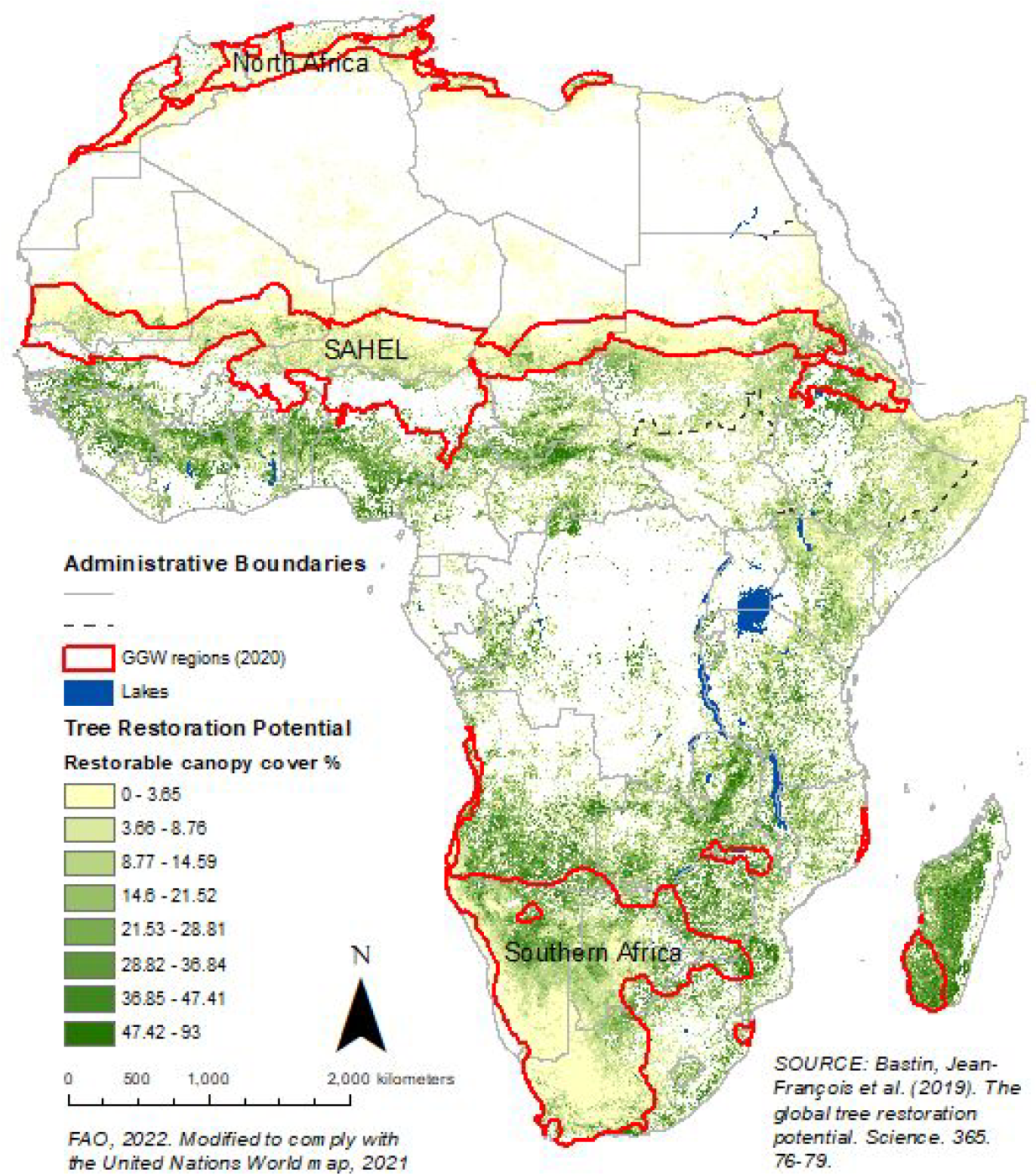
Drylands Map. The Africa’s drylands depicted in 3 regions of North Africa, the Sahel, and Southern Africa with boundaries of arid and semi-arid restorable lands. 28
Blueprint for Large Scale Land Restoration
After nearly a decade of involvement in dryland restoration in Africa, 5 of which through the AAD Programme, FAO developed a blueprint for large-scale land restoration that combines biophysical as well as socioeconomic aspects for the benefit of rural communities (Figure 3).
25,26
The approach involves a blend of:
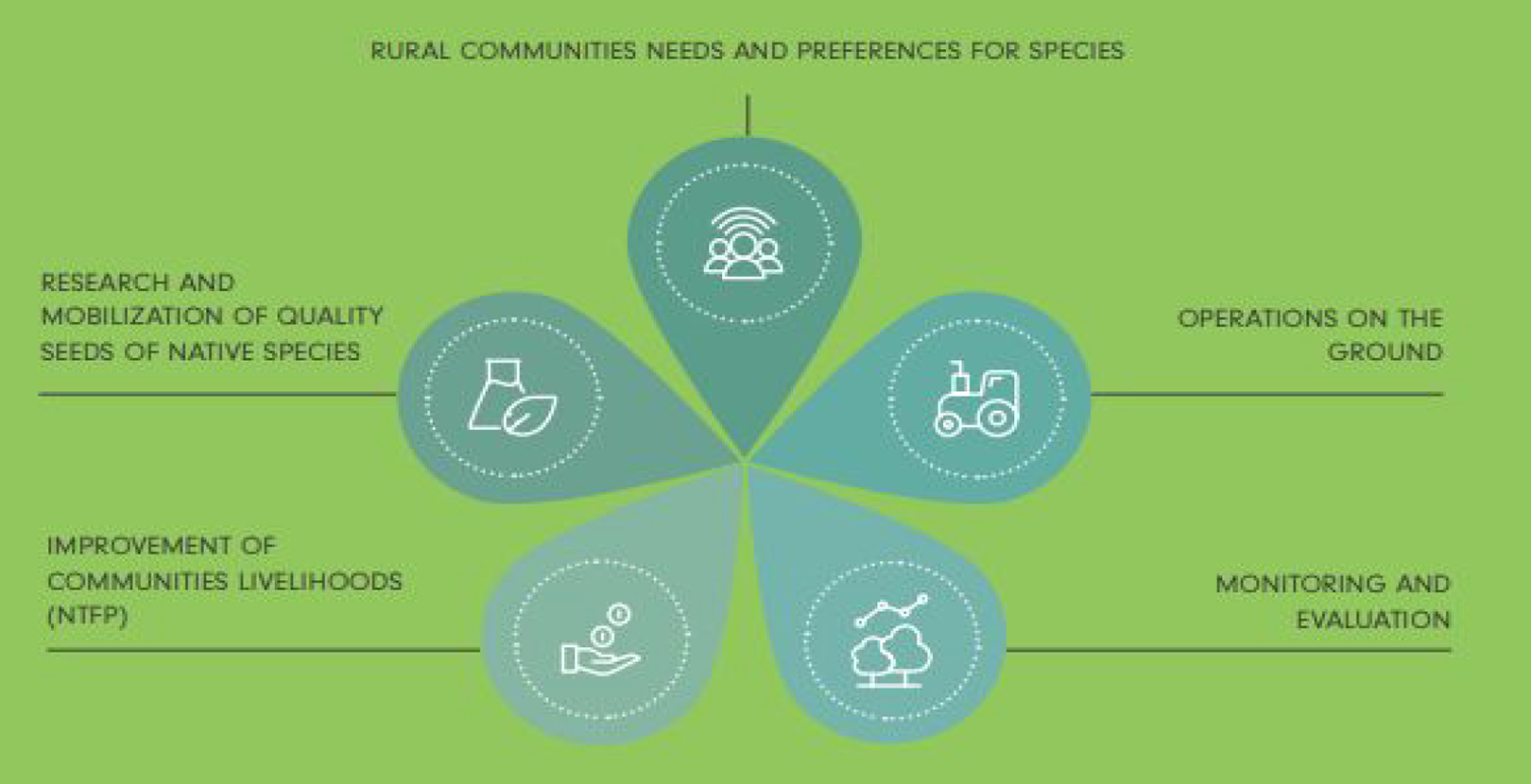
Food and Agriculture Organization’s restoration approach. 29
Results and Discussion
Restoration interventions have heavily focused on increasing biomass without accounting for the dramatic local challenges many communities face, contributing to poor restoration outcomes. 30 At the same time, it has been argued that nutrition interventions in the drylands are still skewed toward treatment rather than prevention (nutrition-specific versus nutrition-sensitive). 13 The linkages between agriculture and nutrition moreover are complex and multifaceted, and agricultural interventions are equally largely geared toward increasing productivity instead of food quality and nutrition density, 21 although this is improving. In this review, we describe 4 main opportunities identified by FAO through 5 years of restoration activities which can, in time, improve the production of nutrient-dense foods, with potential impacts on prefarm gate consumption, income, and eventually, postfarm gate consumption (eg, increased availability in local markets). 22
Matching Local Preferences for Species With Plant Science for Socioecologically Suited Restoration
Food and Agriculture Organization’s restoration interventions were designed to be socioecologically suited, through the use of useful, multipurpose woody and herbaceous species essential for (i) the revegetation, rehabilitation, and productivity of the agro-sylvo-pastoral landscapes, (ii) the planting (seeding) of fast-growing fodder species—highly preferred by communities, the large majority of which keep livestock, and iii) fulfilling future nutrition and income needs. Over 200 [mostly native] plant species were identified as useful species by communities surveyed through participatory diagnostic meetings. The main preferred species by households are presented in Figure 4. Community preferences for species were largely influenced by their market value as well as other factors ranging from medicine, food, to livestock feed and health needs. 31
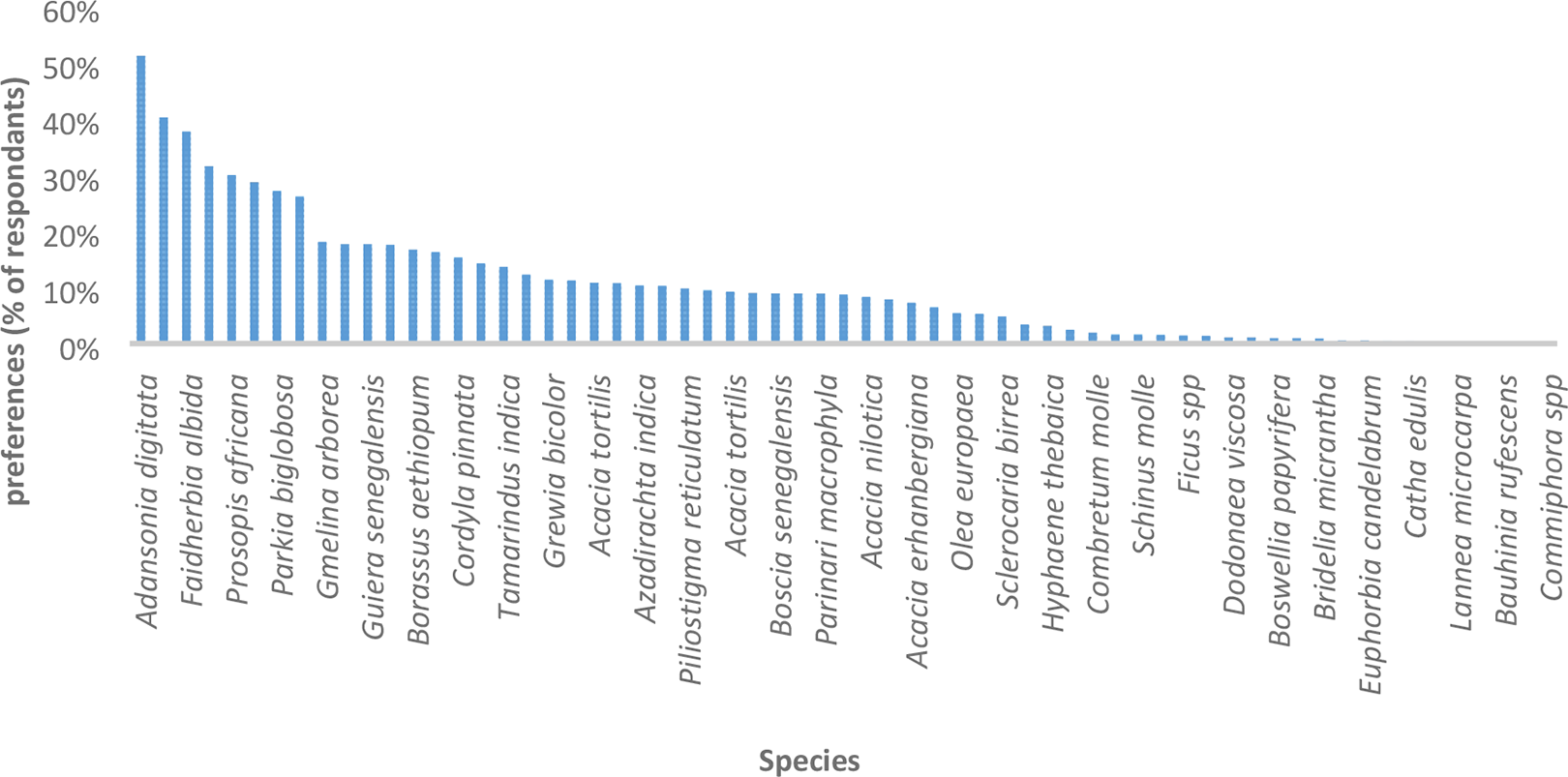
Main preferred species by households considered in restoration interventions. Note: A diversity of native plant species selected and used by Action Against Desertification’s (AAD) rural communities for their livelihoods in 8 Great Green Wall (GGW) countries (Burkina Faso, Ethiopia, Gambia, Mauritania, the Niger, Nigeria, Senegal, and Sudan). Only native species are planted for restoring degraded lands in agro-sylvo-pastoral landscapes (exotic species identified by communities such as moringa and neem are planted in home-gardens). 33
This approach was subsequently matched with plant science to identify species that were ecologically suited. For example, diversification of cropping systems and introduction of drought and saline tolerant crop species and varieties, characteristic of many CWRs, are essential to improve productivity in drylands. The diversification of cropping systems requires development and implementation of suitable technologies and methodologies. Crops and varieties specific to regions with short maturation periods in order to escape drought conditions (eg, cereals and pulses) can be selected and scaled up to produce good yields for food security. Reviving native species for rangeland and managing grazing with a landscape approach has been successful, for instance in Africa, with the (re-)introduction of native species including Baobab (Adansonia digitata), tamarind (Tamarindus indica), desert palm (dates), acacia (Acacia senegal—also known as Senegalia senegal), shea (Vitellaria paradoxa) and the African locust bean (Parkia biglobosa).
One-hundred ten native species were finally selected for revegetation, keeping in mind the need to balance community needs and plant science in determining species for restoration. This consultative process was vital for responding to the urgent need for revegetation. At the same time, it responded to local needs, motivating communities to manage the broad spectrum of planted vegetation and contributing to an average of 60% seed survival and growth rate after 3 rainy seasons. 16,24,31
Accounting for Seasonality
It has been argued that one of the most compelling arguments for the importance of diversity within a food system is that it provides seasonal evenness. 32 In other words, the more species in a food system, the greater the probability that one or another is “in season” in any given month of the year. Wild tree and native plant species can in turn act as an important source of resilience in a food system, both for nutrition and food security as well as for healthy ecosystem functioning, including the provision of ecosystem services essential for agricultural production. While there appears to be higher dependence on wild foods in lean or food insecure seasons, in many parts of the world, wild food consumption seems to depend more on seasonal variation and availability than need. 32
Recently, increasing attention has been paid to the role of seasonality as a critical source of vulnerability, and the variability of nutrition outcomes correlated with seasons (such as temperature, rainfall, and vegetation). 37 Seasonal variation in acute malnutrition is particularly marked in the Sahel Belt and Horn of Africa. 18 The environmental extremes characterizing the drylands make the seasonality of acute malnutrition especially pronounced. 37
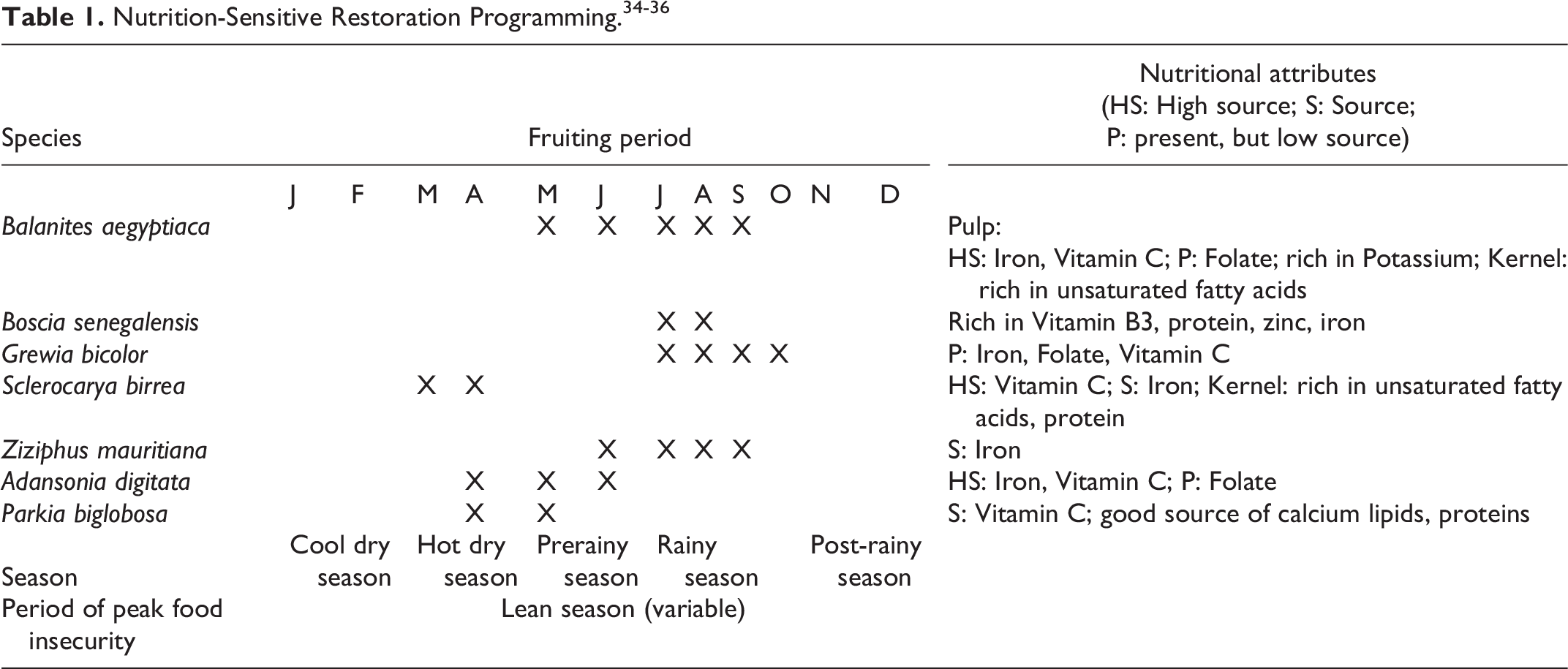
In 2015, FAO began to initiate its restoration planning through a more nutrition-sensitive lens, recognizing nonetheless that malnutrition causal pathways are complex and that there are no silver bullets. 18 Assessments undertaken by FAO found that most households experience lack of food/food shortages between July and November. FAO hypothesized that programming its interventions to guarantee greater availability of food and feed particularly during these months but also more evenly throughout the year would contribute to meeting restoration goals, and potentially filling nutrient gaps in the longer term. Peak fruiting period of several native fruits for instance coincides with the lean season in the Sahelian zone, which extends roughly from April to September, depending on the harvest (Table 1). 38 Important to note is that other than fruit, different parts of the tree are also used (eg, kernel for making oil, leaves, bark) which also contribute to food, feed, and human and animal health needs, in addition to forage for animals. A similar approach has been utilized to diversify farm production by the World Agroforestry Center based on “fruit tree portfolios,” based on the potential of tree foods to complement staple-based diets with valuable micronutrients also during dry periods as trees tend to be more drought tolerant than annual crops. 34
Developing Wild Plant Product Value Chains
Five main wild/NTFP value chains were developed with the aim of improving incomes, providing an incentive to conserve native agrobiodiversity in the drylands as well as immediate economic relief for households, in particular benefiting women and youth. While it is widely understood that farmers may increase output of nutrient-rich foods without directly consuming them but marketing production, and that extra income may not be devoted to the purchase of nutrient-dense foods, 23 these are variables that the project could not necessarily control, but that warrant further research and assessment. The project did have a greater likelihood to contribute however to (1) first and foremost to improving livelihoods, which can be expected to improve household food security and may improve nutrition in the longer term, and (2) improve the food environment in the medium-term by increasing the availability of nutritious native fruits on local markets.
Wild edible fruits and oil
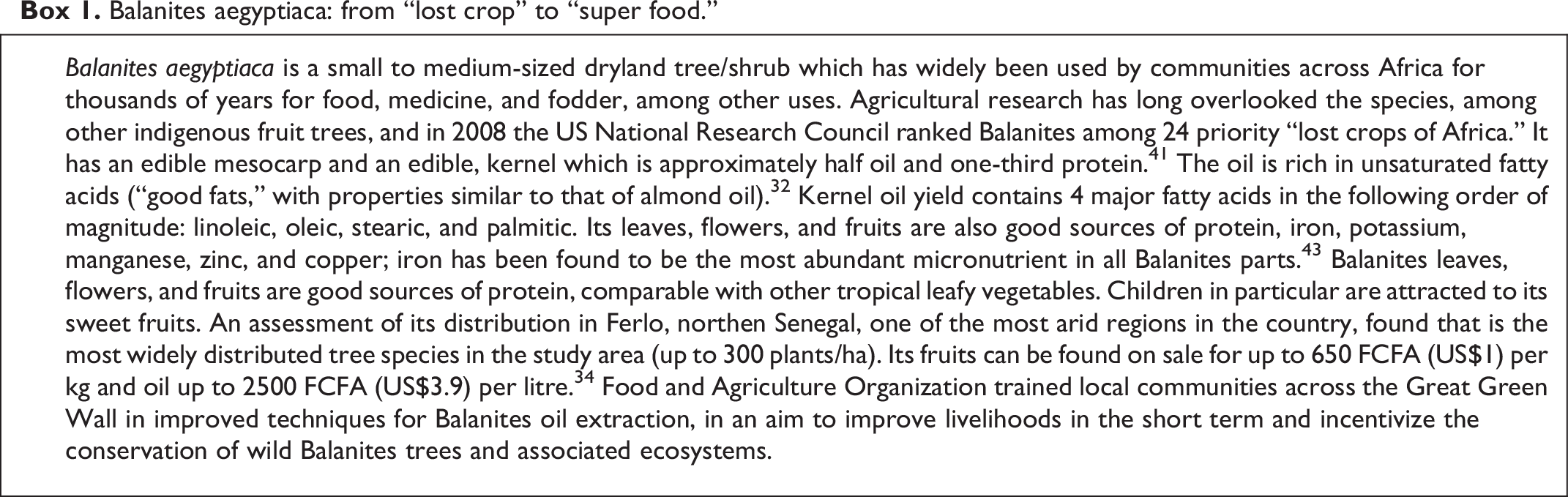
Tree-sourced foods have increasingly been valued for their potential to be a critical part of food system transformation. 39,40 Wild edible tree fruits and nuts were found to be consumed by up to 86% of households in assessments conducted by FAO (Sokoto State, Nigeria), 33 with particularly pronounced consumption in Niger and Senegal, underlying the importance of conserving existing native plant diversity and ensuring restoration planting can match this consumption behavior in the future. Adansonia digitata (Baobab) was identified as the preferred restoration species, likely due to its strong market demand on national and international markets. It is also one of the most researched wild edible species for its nutritional composition. 31 Other tree fruits/legumes selected by FAO for restoration include Ziziphus mauritiana, Sclerocarya birrea, Parkia biglobosa, Grewia bicolor, Tamarindus indica, and Boscia senegalensis, among others. 37 Although the nutritional composition of many of these wild, native fruits is still incomplete, 9, 32 increased consumption of fruits is generally associated with improved overall health. 44 Balanites aegyptiaca (Box 1), although less popular for restoration, possibly due to its wide distribution in several project areas, and low capacities to process the oil, was selected for value chain development by AAD as it is well adapted to desertification, boasts a nutritious oil and pulp and it was deemed among the most promising for improving income after value chain assessments conducted by AAD in Senegal and Niger.
Balanites aegyptiaca: from “lost crop” to “super food.”
A key challenge and research need to increase the availability of wild, native fruits on local markets is supply. While domestication has increased availability of some native fruits, many still face propagation challenges (eg, V paradoxa). Given the abundance of many of these fruits in the wild, efforts could aim at conserving existing diversity, enhancing access, and improving storage/processing practices of wild-gathered fruits, in addition to furthering research and practice on domestication.
Fodder
Livestock production is directly dependent on biomass in agro-sylvo-pastoral systems for use as food. As such, fodder species (grasses and trees) were targeted as key species in AAD interventions. Fodder grasses are fast growing, can supply feed within a year of planting, and are also highly profitable. Fodder trees and shrubs selected for restoration are typically easy to grow, have multiple uses, and contain high levels of protein (eg, Piliostigma reticulatum).
Several fodder species were selected by communities during participatory diagnostic meetings. This is not surprising given the proportion of communities who keep livestock in the Sahel. In Widou, Senegal, one of the project sites, livestock is the main source of income for up to 90% of households. It is also one of the most profitable forest products bringing near immediate contributions to income. The selection of fodder grasses such as Panicum laetum and Senna tora by the project made it possible to supply feed within 1 year of planting.
In Burkina Faso and Niger, averages of 1200 kg of planted herbaceous fodder per hectare was harvested on restored plots just 1 year after planting, generating revenues of US$ 40 per hectare, equivalent to half of the countries’ monthly minimum wage. Additional income reported by AAD-participating farmers in Niger and Burkina Faso averaged US$150 to US$190. 37 In Senegal, in communities where some 4000 ha of degraded lands were planted for restoration, harvesting of some 100 kg of fodder generated between US$2 and US$4, or approximately 80 000 per year. Supporting pastoralist livelihoods and boosting incomes was deemed as a core intervention which could support feed and food security in the immediate term and was widely well-received by communities.
Honey
In view of its low-input/quick return nature, beekeeping was promoted as an incentive to protect and manage flowering trees, grasses, and shrubs and prevent forest fires, with the added benefit of providing apicultural products for home consumption and sale. Managing bees for honey production or other apiculture products can provide communities with additional income, increase crop yields through pollination, improve nutrition and incentivize the protection of landscapes and sustainable management of flowering trees, shrubs, and grasses. Twelve native melliferous tree and shrub species were selected based on their capacity to support honey production. Action Against Desertification supported beekeepers to improve colony management and handling of honey, in addition to supporting organization of producer groups and sharpening marketing skills. The average additional annual income reported by honey producing farmers in AAD intervention areas in Burkina Faso was US$ 73.
Gums and resins
Given the expected growth rate of the global gum market (8.26% between 2017 and 2021), the compatibility with restoration objectives, and preference of local communities, particularly women, Gum arabic (A senegal) was a key species used in AAD restoration initiatives in Burkina Faso, Niger, and Mali (30% of all seedlings). Gum Arabic, one of the most important commercial plant-based gums, is traded internationally for use in the food industry (emulsifier, flavor fixative, stabilizer). Gum arabic of commerce is mainly obtained from A senegal (also known as Senegalia senegal) and Acacia seyal (also known as Vachellia seyal), although gums from other species and genera (Acacia laeta, Acacia polyaccantha, and Acacia mellifera, Albizia, Combretum) may also be included in broad definitions of the term. 45 The Joint FAO-WHO Expert Committee on Food Additives defines gum arabic as gums deriving exclusively from A senegal and A seyal, the two most important commercial species. 46
There is also widespread local use beyond international markets: the dried and preserved seeds of S senegal are used as vegetables; the leaves and pods are browsed by sheep, goats, camels, impala, and giraffe. The flowers are also a good source of honey. Some 35 additional gum and resin-producing plant species were identified by AAD as high potential for improving incomes in local communities, including other gums (Combretum, Albizzia species) and resins (Frankincense, Myrrh, Opoponax).
Restoration seeds and seedlings
It is widely acknowledged that global restoration targets require large-scale reintroduction of plants of wild species, and that the availability and effective use of seeds is instrumental to success. 47 In AAD interventions, enrichment planting/sowing was combined with assisted natural regeneration wherever possible, particularly in mildly degraded lands through soil seed bank. A total of 100 tons of forest seeds and more than 12 million seedlings from woody and herbaceous forage species were collected and sown/planted in the 10 GGW countries as a means to expedite restoration over such a large scale. These operations took place in more than 500 village communities of the GGW and have a beneficial impact on the communities’ agricultural and pastoral lands, as well as on their livestock and the environment. Typically farmers sold seeds between US$ 50 and US$60/kg, although this varied according to species (can range between US$6 and US$215/kg depending on seeds. In Niger alone, over 14 000 kg of quality seeds of 17 species were planted in AAD plots in 2018.
Efficient Rainwater Use
Efficient, sustainable, and fair management of water resources is considered a priority to improve the resilience of vulnerable communities and raise their levels of food security and nutrition. 48 Bringing degraded drylands back to life requires efficient water harvesting, sustainable and equitable management of limited rainwater. One piece of mechanized technology, the Delfino plough, was found by FAO to be highly efficient for farmers who are dealing with tough farming. This heavy digger is used to cut through impacted, bone-dry, and bare soil to a depth of more than half a meter. It creates large half-moon catchments ready for planting seeds and seedlings, boosting rainwater harvesting 10-fold and making soil more permeable for planting than the traditional—and backbreaking—method of digging by hand.
The mechanized plough also does the work at scale. One hundred farmers digging traditional half-moon irrigation ditches by hand can cover a hectare a day, but when the Delfino is hooked to a tractor, it can cover 15 to 20 hectares in a day. Once an area is ploughed, the seeds of woody and herbaceous native resilient species are then sown directly, and nursery seedlings planted. By improving the productivity of degraded lands back to life through restoration, farmers do not have to clear additional forest land to turn into cropland for Africa’s rising population and growing food demands. In Burkina Faso, for example, one-third of the land is degraded. In other words, over 9 million hectares of land were used for agriculture, but it but it is no longer suitable, and it is projected that degradation will continue to expand at 360 000 hectares per year.
Mechanization does come with a cost, for example the delfino plough is prohibitive for the small farmer, and undoubtedly animal-drawn technologies are likely to be more environmentally benign than mechanized land preparation. However, our experience favors mechanization inasmuch as the delfino plough has been employed through a shared-approach, making it accessible to dozens of farmers across large scales. Moreover, covering large swathes of land in a short time period is realistically only possible through a mechanized approach. Integrated approaches may be sought where feasible and applicable, but by and large this technology was the only means through which ambitious restoration targets could be met.
Innovative and Evaluation: Measuring More Than Biomass
Data-collection efforts are crucially important to assess progress and socioeconomic impacts derived from large scale restoration interventions. FAO’s community-centred interventions generate positive impacts on livelihoods and increase socioecological resilience. An evaluation of socioeconomic impacts carried out based on household surveys was conducted in the intervention areas in Niger, Nigeria, and Senegal between 2016 and 2020. Both diachronic (before and after the implementation) and synchronic (beneficiaries vs control group) assessments of the socioeconomic status of the communities used a set of indicators derived from the Sustainable Livelihoods Framework 49 and FAO’s Food Insecurity Experience Scale 50 as an experience-based measure of household food insecurity. The outcomes revealed significant improvements in the socioeconomic situation of the targeted population. Household income improved after the interventions in all 3 countries, with positive significant differences against the control groups particularly in Nigeria and Senegal. In addition, perceived food insecurity significantly decreased in 2020 compared to 2016 observations, dropping from 46% to 15% in Senegal and from 69% to 58% in Niger. This assessment confirms the dual benefits of land restoration, both increasing vegetation cover and improving the livelihoods of rural communities.
Simultaneously, biophysical monitoring of these large-scale restoration interventions from land preparation to biomass growth in the drylands are also assessed through field observations and by remote sensing methods. For early and independent verification, Sentinel-1 radar imagery is used that is sensitive to changes in soil roughness and thus able to rapidly detect disturbances due to mechanised ploughing, including identification of the time of occurrence and the surface area prepared for planting. Subsequently, time series of the normalized difference vegetation index derived from high-resolution imagery enables tracking and verifying of the increase in biomass and the long-term impact of restoration interventions. Out of the over 100 plots assessed, 58 plots were successfully verified, corresponding to an area of more than 7000 ha of degraded land. 23,25 Qualitative data on planted species also showed an increase in biodiversity as direct sown seeds of a minimum of 10 native Sahel species (6 woody mixed with 4 fodder herbaceous species) are planted per hectare. This innovative and standardised monitoring method provides an objective and timely assessment of restoration interventions and will likely appeal more actors to confidently invest in restoration as a part of zero-net climate mitigation.
Next Steps
Twenty-seven African countries have committed to restore more than 100 million hectares of degraded land by 2030 as part of the African Forest Landscape Restoration Initiative (AFR100). In addition, for the same period of time, the GGW seeks to restore 100 million hectares of degraded agro-sylvo-pastoral lands in the Sahel. The current UN Decade on Ecosystem Restoration (2021-2030) marks an unprecedented opportunity to shape future landscapes, and forge more biodiverse and nutritious food systems. While malnutrition causal pathways and agriculture-nutrition linkages are complex, 18,22 and several data gaps exist, for example on nutritional composition of wild native foods, 3,42 5 key opportunities can be distilled from FAO’s experience, which can already begin to improve nutrition-sensitivity of restoration programs which are already being rolled out in several dryland countries: (1) matching local preferences for species with plant science for socioecologically suited restoration; (2) accounting for seasonality in restoration programming; (3) developing value chains based on wild and native plants; (4) efficient rainwater harvesting; and (5) monitoring and evaluation which balances biophysical and socioeconomic data. Combined, these steps may positively influence pre-farm gate consumption, income, and post-farm gate consumption.
Simultaneously, further efforts could be taken to improve the mainstreaming of nutrition into restoration interventions. These include:
Improving restoration programming and targeting to consider native, wild fruits, nuts, seeds, and vegetables in species selection to improve availability of nutrients throughout the year, whenever ecological conditions permit.
Consider the selection of nutrient-dense wild or native species in restoration planning, keeping in mind deficiencies in particular micro- and macro-nutrients in the project areas. Where this information is absent, support research on the nutritional composition of wild, native species to facilitate inclusion in nutrition programs in the project area.
Consider the integration of nutrition assessments, indicators, and tools in restoration monitoring, in addition to those on food security, with a specific look into consumption of native foods. The FAO-Bioversity Guidelines on Assessing Biodiverse Foods in Dietary Intake surveys, for example, provide guidance on designing dietary assessment surveys that can capture the consumption of foods with taxonomic details below the level of species. 51 Other tools, such as the household dietary diversity questionnaires, 27 or the updated guide for measurement, Minimum Dietary Diversity for women, 52 for example, provide rapid, user-friendly, and easily administered low cost assessment tools to measure dietary diversity, yet still have not been adequately adapted to capture native food consumption in areas where such foods are widely consumed. These tools can be adapted and improved to better capture seasonal foods and could be administered in different seasons to capture the diversity of foods in the project area, for example, with specific probing for wild, native plants.
Support sustainable value chain development of wild products/NTFPs particularly for local markets for improved income to incentivize the conservation of local agrodiversity and improve the local food environment through increased availability of nutritious foods throughout the year. At the same time, conduct research on the impacts of commercializing native plants (and associated products such as fruits, nuts, leaves) on household food security and nutrition.
Footnotes
Acknowledgments
The authors are grateful to the European Commission for funding the FAO’s Action Against Desertification Programme.
Author Contributions
MS and GM designed the study; local project teams in respective countries collected the data; MS and GM analyzed the data, developed a first draft and revised the manuscript.
Declaration of Conflicting Interests
The authors declared no potential conflicts of interest with respect to the research, authorship, and/or publication of this article.
Funding
The authors received no financial support for the research, authorship, and/or publication of this article.