




Abstract
Background:
The need for nutrition-sensitive agriculture is well recognized and of growing interest to global development players. Extension and advisory services (EAS), with their established infrastructure, provide a unique opportunity for nutrition interventions to be implemented at scale with significant reach.
Objective:
To assess current integration of nutrition in EAS, document training provided to EAS agents, and identify challenges and opportunities for the integration of nutrition.
Methods:
A mixed methodology was used, which included a systematic literature review covering the following databases: PubMed, ISI Web of Science, Agris, Google Scholar, Econlit, and IBSS. In addition, online surveys and semistructured key informant interviews with stakeholders were performed. Data were collected between December 2012 and June 2013.
Results:
Based on this study, the most common integration of nutrition into EAS is through efforts to increase the availability of nutritious food. The nutrition training of extension agents is often inadequate, particularly in the realm beyond technical agricultural skill. Additionally, a lack of career opportunities discourages EAS agents form engaging with nutrition integration. The major challenges to integrating nutrition into EAS centered on lack of training for agents, unclear organizational mandates, lack of female inclusion, lack of mobility, and systemic challenges between agriculture and nutrition sectors. Key opportunities for integration efforts are engaging communities, creating a demand for nutrition, and use of innovative communications.
Conclusions:
This study demonstrates a large degree of variability across programs in the integration and implementation of nutrition activities into EAS, providing differing opinions on the feasibility of integration. Although the need for nutrition-sensitive agriculture is known, and there is agreement that EAS would provide a positive framework, there are still challenges impeding a simple integration of nutrition into EAS as a delivery platform.
Keywords
Introduction
There is a heightened awareness globally and within development institutions and governments of the need to better understand the linkages between agriculture and nutrition, and to decipher the ways in which the agriculture sector can contribute to improved nutrition. 1 The what and the how of effectively delivering “nutrition-sensitive agriculture” services to rural households remain even less understood. “A new emphasis on making agricultural systems and food and agriculture policies more nutrition-sensitive is called for”. 2 Nutrition-sensitive agriculture involves the design and implementation of nutrition-based approaches to sustainable farming and cropping systems. 2 Ultimately, nutrition-sensitive agriculture is aimed at improving the nutritional status of a population by maximizing the impact of food and of agricultural systems, while minimizing the potential for negative externalities regarding the sector’s economic and production-driven goals. It is agriculture with a nutrition lens, and it should not detract from the sector’s own goals. 3
Extension and advisory services (EAS) are often thought of as a vehicle for the improved nutritional health of rural communities because they reach and interact closely with farmers in different settings. EAS can function as significant service providers on crop, livestock, and forestry aspects of food security, consumption, and production. However, the context and mechanisms for delivery of nutrition EAS on the ground have been less clear and less evaluated.
EAS are recognized as a vital component of agricultural development. EAS are the different activities and sets of organizations that provide the information and services needed and demanded by farmers and other actors in rural settings. This assists them in developing their own technical, organizational, and management skills and practices, so as to improve their livelihoods and well-being. 4 At present, EAS are increasingly recognized by many development actors as an essential vehicle to ensure that research, development of farmer organizations, improved inputs, and other elements of rural development support actually meet the needs and demands of farmers and other rural actors.
The public sector is the largest provider of and player in EAS 5 , providing approximately 80% of agricultural EAS, compared with nongovernmental organizations (NGOs) and other sectors, which provide about 12%, and the private sector, which provides about 5% of services. 6 There are estimated to be at least 800,000 official extension agents worldwide. 6 More than 90% of these agents are located in the developing world 7 , where the majority of the world’s farmers reside.
Traditionally, agricultural EAS involved the application of scientific research and new knowledge to agricultural practices through farmer education. However, EAS are no longer limited to the transfer of technology and education. Agents now have broader objectives beyond providing technical solutions; they assist farmers in organizing and acting collectively, they address processing and marketing issues, and they partner with other service providers and rural institutions. 8 It should be noted that EAS are still an underfunded area of rural development due to structural adjustment pressure to reduce publicly funded services, and in those countries with EAS, operational and human capacity is limited in what it can provide to the millions of farmers, many of them marginalized and in geographically challenging areas, who are in need of technology, knowledge, and assistance. 6 This presents a challenge in considering EAS as a vital delivery platform.
EAS continue to place a high value on low-cost solutions for resource-constrained, small-holder farmers. The point has been raised that these farmers, who are predominantly rural poor, have many more needs than just agriculture. There is more interest now in finding innovative ways to leverage EAS to go beyond their traditional roles within agriculture and expand their pro-poor development portfolio across these multiple needs. EAS are now seeking to address environmental deterioration, HIV/AIDS, and nonfarm rural employment, as well as malnutrition, in addition to agricultural production. However, these additional goals and responsibilities have created a need for a type of extension agent equipped with a diverse set of capacities to respond effectively. 9
As nutrition becomes an important contributor to poverty-reduction strategies and as countries start scaling up nutrition programs, new ways of delivering interventions, knowledge, and tools will be essential. One potential vehicle would be through EAS, because of their ability to improve knowledge, provide information, and deliver improved practices to rural households through consistent provision of services and far-reaching networks with rural communities.
The purpose of this study was to examine the extent to which nutrition is included in the portfolio of EAS activities historically and at present, document the nutrition content of training provided to EAS agents, understand the extent to which EAS agents coordinate and/or duplicate nutrition-related services with workers from other sectors, and identify the challenges and opportunities of integrating nutrition into EAS.
Methods
Objectives of the Study
There were five main objectives of the study: To understand the status or existence of nutrition as part of the portfolio of EAS activities in different regions of the world; To document the technical nutrition content of extension workers’ training and the messages and information delivered to farmers and other clientele; To understand whether and how extension workers coordinate and/or duplicate work related to nutrition with rural workers from other sectors, such as rural health; To understand challenges faced by existing home economics EAS and identify opportunities for strengthening these services (e.g., training and supervision quality concerns, constraints to work performance such as lack of transportation, task overload, supply bottlenecks, high extension agent turnover, etc.); To identify good-practice country or program cases and to note the comparative advantages of different types of providers and of nutrition advice coming from EAS rather than from other sectors, such as health.
In order to achieve these objectives, a mixed methods approach was necessary to highlight good practices stemming from country or program cases and to describe the comparative advantages of different types of models. The data collection included some secondary data analysis stemming mainly from the literature. However, because very little has been written and published on this specific topic, it was necessary to collect primary qualitative data from experts on the topic by two additional methods: online surveys that were distributed globally and semistructured interviews with expert stakeholders. Thus, three main types of data collection were performed: a systematic literature review, an online survey, and semistructured key informant interviews. These three different methods are used to achieve the same elements of a single objective, increasing confidence in the validity and reliability of the evaluation results. These mixed methods also capture a wider range of perspectives through triangulation than might be captured by a single method. Data were collected between December 2012 and June 2013.
Data Collection
Systematic literature review
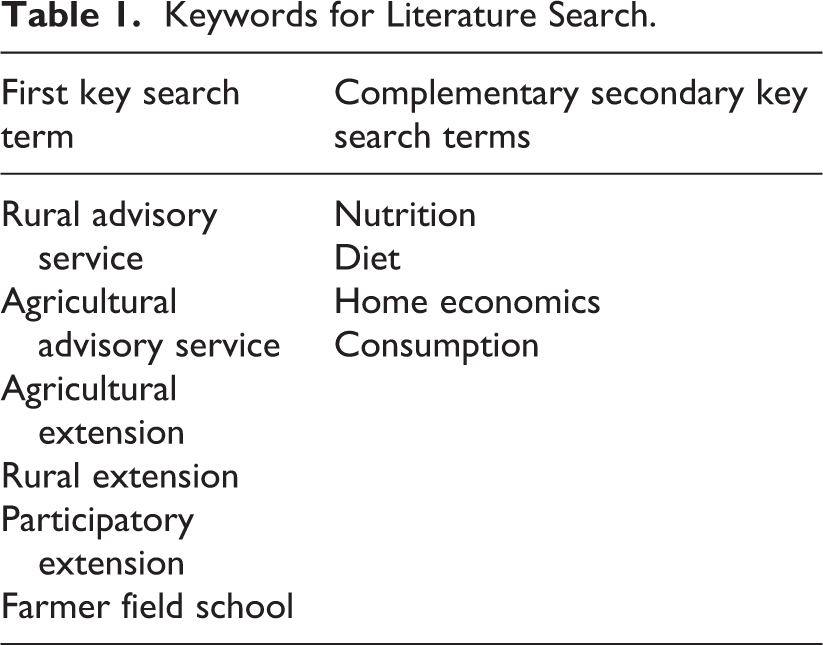
The starting point for the literature review was the use of the Global Forum for Rural Advisory Services (GFRAS) Worldwide Extension Study to seek out relevant information on nutrition, diets, and home economics within EAS programs. 10 Thereafter, the following literature databases were searched across the five main objectives of the study with a specific emphasis on case studies resulting from extension programs: PubMed, ISI Web of Science, Agris, Google Scholar, Econlit, and IBSS. The following key words were used: rural advisory service OR agricultural advisory service OR agricultural extension OR rural extension OR participatory extension AND nutrition OR diet OR home economics OR consumption; farmer field school AND nutrition OR diet OR home economics OR consumption (Table 1). The following sources for gray and unpublished literature were searched: Eldis, IDEAS, International Food Research Policy Institute (IFPRI), Jolis, and World Bank. Lastly, studies were only considered if they had been published between 1960 and the present in English.
Keywords for Literature Search.
A snowball process, whereby the reference lists of all the included studies were scanned to discover further potentially relevant studies, was used to identify additional studies. No differentiation was made between studies obtained by the initial search and those identified by snowballing. The snowball process was also used to identify gray literature and information papers that had not been published in peer-reviewed journals. Some of the programs being implemented in countries with a limited history of documentation were also included by reference or recommendations.
The inclusion criteria for review of the primary and gray literature were the following: Must be focused on low- and middle-income countries; Must have a stated objective of contributing to improved nutritional, dietary, and consumption, or home economic outcomes; Must target a potential interaction between agriculture and nutrition; Should emphasize current or planned (within the next 5 years) initiatives, although the start date could be in the past.
The studies were screened in two stages. In the first stage, one investigator, by reading titles and abstracts, selected the studies that were written in English and that were relevant to the topic. In the second stage, two investigators independently reviewed the full text and excluded those that did not meet the standard set by the review. The initial screening provided 232 papers, and after exclusion, the 25 remaining papers were included in the study.
Online surveys and interviews with stakeholders
An online survey and interviews with key stakeholders were performed to obtain EAS experiences from individuals with country- and global-level experience. The semiquantitative and qualitative data were also collected to complement and triangulate the findings from the literature review. Purposeful sampling was used to select online survey and interview participants who were information-rich sources. Sources included the GFRAS Worldwide Extension Study database and directory of extension providers, as well as the specific contacts already known to the research team, in addition to information provided by GFRAS and the World Bank.
To ensure that most EAS programs were captured in the initial search for participants, an inclusion criterion for the countries, programs, and relevant stakeholders was not developed for this report. Programs that had the stated objective of contributing to improved nutritional or dietary outcomes, or those that were composed of nutrition or home economic activities, were selected for deeper analysis, and some were highlighted as part of the specific country case studies.
For surveys, a brief online survey was published on eight agriculture- and nutrition-focused websites. Follow-up e-mails were sent to various nutrition, food security, and agriculture listservs, as well as to the GFRAS extension contact list. The surveys were available electronically (and also in paper form) in English, French, and Spanish. The online survey was circulated to networks of development agencies in the three languages. Sixty-eight responses were collected: 55 in English, 9 in Spanish, and 4 in French. The majority of the responses came from government organizations and educational or research institutions. Survey data were compiled, synthesized, and analyzed according to the five main objectives of the study.
For interviews, semistructured interviews were conducted by telephone, by Skype, or in person with key informants who were not among the online survey respondents. Planning for these interviews included compiling a set of questions that drew from the five specific objectives of the study. The participants included those whose programs were relevant and/or those who were involved in interesting programs where additional information was deemed valuable. Snowball sampling was also employed to reach actors involved with community workers and agricultural EAS. The team first identified individuals who fit the inclusion criteria, and in turn they recommended others who also met the same criteria. Interviews were conducted in the primary language of the stakeholder (we had a team of French, Spanish, Portuguese, and English interviewers). During the interviews, the questions asked were selected from the interview guide, but in varying order. The questions were selected depending on the flow of the interview as well as on the level of expertise of the interviewee about the various objectives. Because the researchers were present during data gathering, issues of anonymity and confidentiality were present throughout the interviews.
Two members of the research team audio-recorded the interviews and took notes. A daily interpretive analysis was performed to assemble and interpret the information that was collected, review the notes and the tapes, and write a log that synthesized the bulk of the interview information. Qualitative data analysis consisted of identifying, coding, and categorizing major themes that corresponded with the research objectives. Interview responses were reviewed and analyzed to identify trends and case examples and to obtain expert opinions with respect to the five main objectives of the study. Thirty-eight interviews were conducted with experts from government agencies, international and multilateral organizations, research and academic institutions, and NGOs.
Data Analysis
After data collection, the qualitative and quantitative data were analyzed concurrently. For the literature review, articles were included in the study if they provided information on one of the five objectives grounded within implementation of programs. For both the online surveys and the interviews, the analysis was performed at two levels: within each case and across the cases. For the interviews, each interview was audiotaped and transcribed verbatim. Preliminary exploration of the data was done by reading through the transcripts and coding data by coding the text. These codes were then used to develop themes. The themes were then connected and interrelated across all three methodologies, and a case study narrative was constructed across the five objectives, pulling examples of challenges and best practices (mainly from the online surveys and interviews) and country case studies (mainly from the literature and interviews). This cross-case thematic analysis allowed for the use of both qualitative data to help explain quantitative results that needed further exploration and quantitative results to purposefully select the best participants for qualitative study.
Results
The results summarize the findings from the systematic literature review, the interviews, and the online survey. The results are grouped into five areas: the status of nutrition in EAS activities, nutrition training of extension agents, the role of extension vis-à-vis other rural workers, challenges to EAS integrating nutrition, and opportunities of EAS to integrate nutrition. Where applicable, relevant direct quotes from interviewed stakeholders are included where common themes and ideas emerged.
Status of Inclusion of Nutrition in EAS
The research examined the status or existence of nutrition as part of the portfolio of EAS activities in different regions of the world. Countries have approached integration of nutrition into EAS differently at the national, provincial, district, and community levels. The approach is strongly dependent on the capacities of the national governments to coordinate multisectoral strategies and resource constraints faced by individual countries. Some countries, rather than roll out a comprehensive national program to integrate EAS and nutrition, have focused initially on regions with significantly high levels of stunting and/or food insecurity. Some of the most innovative approaches to integrating nutrition and EAS are developed at the community level by international and local NGOs and research centers, varying in the degree to which they engage the national EAS in the delivery of interventions and practices.
The World Food Summit in 1996 defined food security as existing “when all people at all times have access to sufficient, safe, nutritious food to maintain a healthy and active life”. 11 Food security is built on three pillars: food availability (sufficient quantities of food available on a consistent basis), food access (having sufficient resources to obtain appropriate foods for a nutritious diet), and food utilization (appropriate use based on knowledge of basic nutrition and care, as well as adequate water and sanitation). With the recognition that the primary impact pathway of EAS to nutrition would be through food-based approaches to improving dietary intake (as opposed to reducing disease), these three pillars were used as an organizing framework to catalog different types of EAS activities with a nutritional impact. From the literature review, interviews, and online surveys, current common practices promoted by extension agents were compiled into the three pillars and are shown in Table 2.
Practices Promoted by EAS Broken Down by the Three Major Pillars of Food Security.
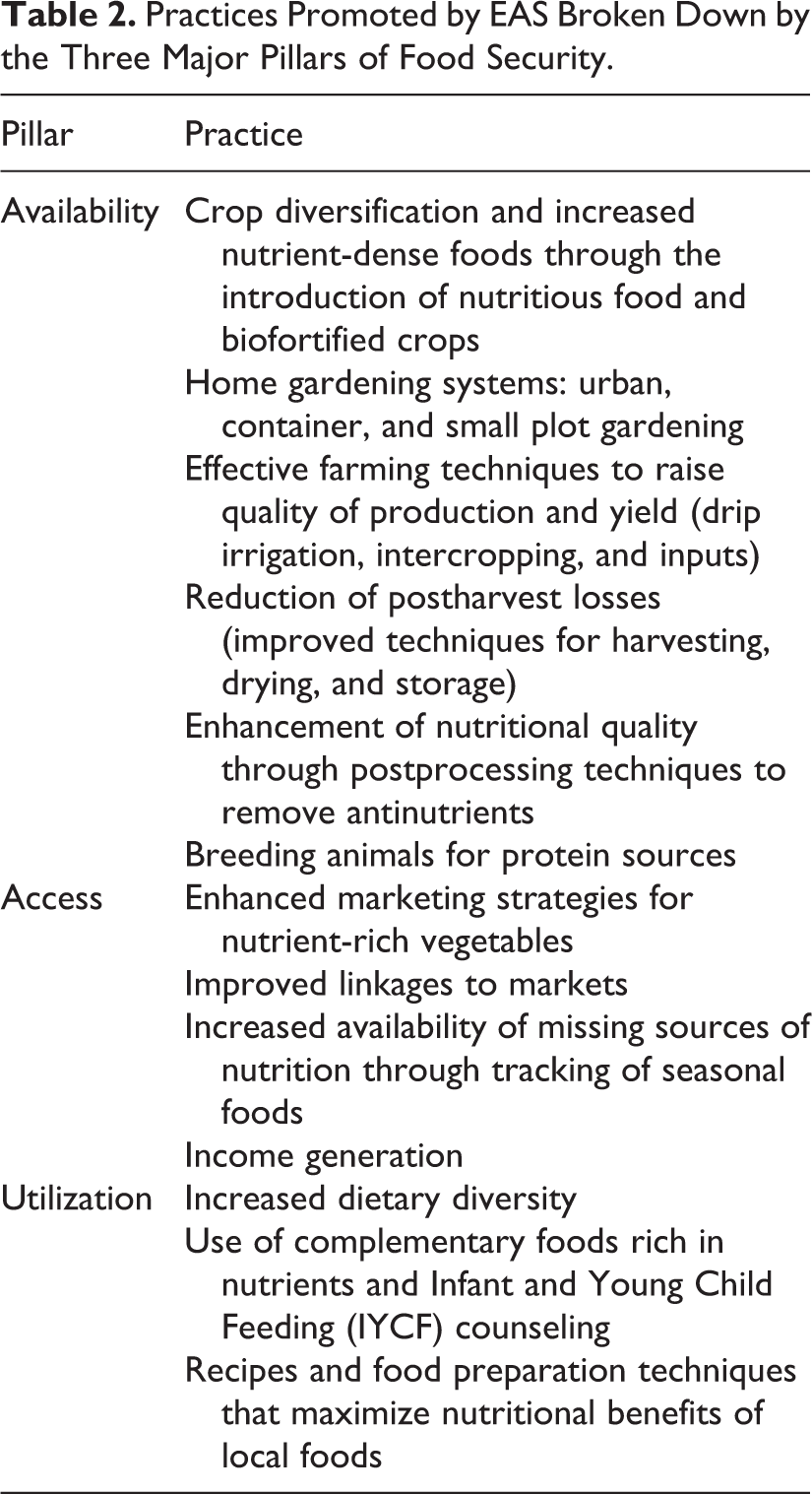
At present, the most common nutrition-sensitive activities engaged in by extension agents aim to increase the availability of nutritious food. This is not surprising, given the unique role of agriculture in food production and its potential to supply nutritious food, combined with the established presence of extension agents at the field level working directly with farmers. Most of the practices promoted by EAS naturally fall into the “availability” pillar of food security, because the messages and training do not fall far from their already existing mandate. Most of the practices and programs researched fell into four common areas: home gardening, crop diversification and increased production of nutrient-dense foods, biofortification, and reduced postharvest activities to preserve nutritional value.
Home gardens
Home gardens increase the production and availability of micronutrient-rich horticultural crops and ultimately dietary diversity, likely facilitated by the proximity of gardens to households and their orientation toward home consumption. 2 Additionally, home gardens hold the potential to increase household income, assuming excess crop is sold. Across all countries and programs studied as part of this research, there was a high level of involvement of extension agents in promoting home gardens and transferring key skills and knowledge for their success.
Crop diversification
Diversifying crops through intercropping or mixed cropping strategies is another way of increasing the availability of nutritious foods. 12 Traditionally, extension agents have promoted staple crops, but studies have shown a limited positive correlation between increased staple crop production and improved nutrition outcomes in countries. 13 Particularly in countries where market orientation is low, household consumption patterns are determined by crop production patterns, and extension agents could improve nutrition by facilitating crop diversification.
Biofortification
Biofortification holds tremendous potential for addressing micronutrient deficiencies. It could be cost-effective, as the plants themselves would do the work of fortification once the initial improved varieties had been developed and adopted by farmers. This is a sustainable alternative to supplementing or fortifying during the processing phase, which entails recurring costs. It has the potential to bring nutritional benefits to remote areas that lack processing facilities needed for conventional fortification or marketing systems. 14 Further, biofortification is highly pro-poor, as it targets staple crops, which already make up a large portion of daily food consumption in poor households. The adoption of orange-fleshed sweet potatoes (OFSP) has been a key biofortification initiative undertaken in several countries. A study conducted in Kenya in 1995/97 introduced OFSP and involved multiple extension agent visits to a women’s group to support OFSP adoption. During this time, a 93% increase was recorded in the proportion of children under 5 years of age consuming vitamin A–rich foods. 15,16
Postharvest
EAS have focused on reducing postharvest losses, as well as the activities of appropriate processing and storage of nutritious crops to promote sustained availability. Aflatoxin exposure is a prominent example. Aflatoxins are fungal metabolites that contaminate staple food crops in many developing countries and are loosely associated with growth impairment in children. Food-borne exposure to aflatoxin in maize and groundnuts is common in Africa and Asia. 17 EAS agents can play a vital role in ensuring that postharvest storage and handling includes aflatoxin control.
Some of these programs have demonstrated an impact on nutritional outcomes. There is an increasing body of evidence that biofortified crops that improve the intake and status of vitamin A and iron have been effective. 18 -20 Beyond single-nutrient approaches, production of nutrient-dense foods by home, community, and school gardens, including fruits and vegetables, fish, small-animal rearing, livestock, milk, and eggs, can facilitate dietary diversity and, in some cases, improve nutrient status in children when consumed. 21 -23 However, none of these programs and approaches have closely examined the role and impact that EAS, specifically, have had on nutritional outcomes.
Nutrition Training of Extension Agents
To better understand how nutrition is incorporated into EAS, the types of training of extension agents were examined. To date, education and training programs aimed at preparing extension agents to incorporate nutrition into their portfolio have been executed on a relatively limited scale, compared with training received by the broader EAS workforce.
Technical and Soft Skills of EAS
Three main findings were made with regard to improving technical knowledge. First, extension agents must understand the basic nutrition characteristics of crops and make the connections between the crops in the field and their nutritional benefits in the household (R. Harawa, AGRA, personal interview, March 14, 2013). Second, even with a heavy focus on increasing the production of staple crops, extension agents must, at minimum, be aware that more than staple crops such as maize and rice are needed for good nutrition (S. Nordin, FAO, personal interview. March 18, 2013). Finally, extension agents require ongoing training and refresher courses to instill a professional focus on nutrition and to stay relevant in their messages (P. Fatch, DAES and MAFAAS, personal interview, April 8, 2013). Education and training, including on-the-job training, are essential to the ability of agricultural extension agents to effectively incorporate technical knowledge of nutrition into their activities and interactions. There is at present an educational gap (W. Rivera, University of Maryland, personal interview, March 8, 2013).
Beyond technical nutrition-specific skills, soft skills are also required for the integration of nutrition –– skills such as communication, facilitation, management, and gender sensitivity. These skills are often most difficult to acquire because of the traditional emphasis of EAS on delivering standardized information and technologies to capitalize on economies of scale. Further, strong critical thinking and problem-solving skills are considered a precondition to ensuring that EAS are effective (K. Davis, GFRAS, personal interview, April 8, 2013). For nutrition training, extension agents should be good at: communication skills, using visual aids, skills for demonstrations, how to do evaluations, how to apply participatory approaches, how to motivate farm families to identify projects on their own. They have to understand things from the bottom up rather than top down. While female extension agents have a better chance to reach the women in the household, the literature tells us that it should not be nutrition education just for women—if women get the information but nobody else in the household does, they may not be able to act on it.
Training Support Systems
Complementary to the integration of nutrition content and participatory skills into training, there is potential for mentors and supervisors to support extension agents’ adaptation of new knowledge and skills. Mentorship and feedback mechanisms can provide ongoing guidance and support to ensure that extension agents gain confidence with new approaches. Even if extension agents receive nutrition training, they still require mentorship to be able to effectively promote and enable behavior change (H. Bagnall-Oakley, Save the Children, personal interview, March 11, 2013). Further, feedback mechanisms allow agents to solicit the higher-level technical or specialized support they do not possess.
In conjunction with a lack of mentorship and guidance, a frequently cited training challenge is the lack of career advancement or performance-based incentives for extension agents. This may affect extension agents’ decisions to study nutrition before entering the workforce, or sap their motivation to incorporate nutrition-related activities after they have been hired. Public investment and commitment is required to create jobs and establish a curriculum, which once in place, the workforce can follow (W. Rivera, University of Maryland, personal interview, March 8, 2013).
Types of Extension Workers and Other Rural Workers
The research also explored whether and how extension workers coordinate and/or duplicate work related to nutrition with rural workers from other sectors, such as rural health.
Types of extension agents
The types of extension workers fall into four major categories: frontline public sector generalists, subject matter specialists, generalist extension agents (with access to nutrition specialists), and home economics extension agents.
Frontline public sector generalists have been trained to have a broad range of agriculture-based knowledge relating to farming systems, fertilizers, or marketing, as well as knowledge of rural poverty alleviation and development issues, such as nutrition. The study revealed considerable variation in how frontline extension agents incorporate nutrition. The ability of EAS to incorporate nutrition into frontline activities will, in many cases, be determined by their capacity to execute the standard agricultural activities that fall into their technical mandate. This is difficult to assess, as little is known about the capacity, quality of service, and performance of EAS in some countries. 25
Subject matter specialists (SMS) commonly serve as technical backstoppers and provide ongoing training to frontline extension agents whom they supervise from the district or provincial level. Although SMS traditionally focus on agricultural topics, such as fertilizers or crop management techniques, there are examples of SMS who focus on nutrition. 26,27
Generalist extension agents with access to nutrition specialists are found in several countries that utilize systems whereby frontline extension agents, or those interacting most closely with communities, are agriculture-focused but have received basic training in a range of topics, including nutrition. Their primary responsibility with respect to nutrition is to identify gaps within a community and to understand the potential causes of malnutrition. Their role is then transformed into that of a coordinator who helps the community to access other resources or services pertaining to nutrition, or to reach nutrition-focused extension agents within their own cadre. Within the agriculture extension workforce, all agents are expected to understand the basics of nutrition. However, during their training, nutrition is also on offer as a specialization. Those who elect this option are nutrition specialists and could be called on to deliver nutrition education to farming families in areas that experience particularly high chronic malnutrition (V. Ofosu, University of Ghana, personal interview, April 11, 2013).
Home economics extension agents of agriculture ministries also specialize in nutrition and were a fixture of EAS during the 1970s and 1980s. They were mostly female fieldworkers who addressed the nutritional needs of vulnerable family members as part of a mandate that included other household matters relating to family resources and women’s health. 28 The reduction in usage of home economics agents has been credited to the professionalization, or restructuring, of EAS in the past two decades, which introduced a set of minimum qualifications for all extension agents. The qualifications were primarily oriented toward agricultural production, which benefited males because they were more likely to pursue agricultural courses of study in school. Male extension agents who were limited in their ability to deliver gender-sensitive services were tasked with sharing knowledge of what remained of nutrition in EAS after home economics was phased out. 29
Other Models Working in Agriculture and Food
Community members
There are also numerous examples of community members serving as extension agents. Extension agents from the public sector or NGOs train volunteers to act as promoters within their community. This approach enables the community to leverage resources already available at the local level and increases the reach of EAS in a time-efficient and participatory manner.
Farmer field schools
The farmer field school (FFS) model of EAS promoted by the Food and Agriculture Organization of the United Nations (FAO) provides another example of extension agents who integrate nutrition. FFS facilitators lead community farmers in experiential group learning activities, including experiments with different cultivation techniques, field observations, and group analysis. Although the focus is often on agricultural production, FFS also integrates priority issues such as HIV, gender, and nutrition. The involvement of public-sector EAS in FFS varies across countries; in some cases, government extension agents are themselves involved as facilitators, in others they supervise facilitators, or there is no cooperation between FFS and government EAS. Further, FFS are characterized by greater gender representation among facilitators and participants. 30 More women participate as facilitators than as extension agents at the country level, according to an FFS study in Eastern and Central Africa, which found 37.5% of FFS facilitators in those countries to be women. 31
Community health workers
Although this research was largely devoted to agricultural EAS, it should be noted that health-sector EAS and community health workers (CHWs) also play key roles in nutrition. Similar to agriculture extension agents, health-sector fieldworkers often lack adequate knowledge of the causes of, and possible solutions to, malnutrition. Health at the community level works hand in hand with Ministry of Agriculture frontline staff when delivering extension messages. The Ministry of Agriculture has a concept called “Model Village Approach” which aims at totally transforming villages in all features, health inclusive. This forms the platform for collaboration.
Challenges of EAS in Integrating Nutrition
The challenges faced by existing EAS in integrating nutrition were investigated. In reality, EAS face a range of challenges from the local to the national level and across both individual and institutional dimensions, creating capacity gaps between the skills and knowledge of extension agents and those that they would need to integrate nutrition effectively. Some of these are common across EAS in the developing world, while others are specific to certain countries. In either case, these constraints affect the decision-making of policy makers and program designers when assessing the capacity of EAS to integrate nutrition.
The Individual Challenges
The online survey respondents were asked to respond to challenges in integrating nutrition into EAS. The major thematic challenges were transportation costs and inaccessibility, weak local demand for such information (people do not necessarily recognize nutrition as a priority area), funding, task overload for extension agents, quality of training provided to extension agents, poor local supervision and monitoring of programs, and high turnover rate of extension staff (primarily as the result of low pay, poor incentives, and task overload) (Figure 1).
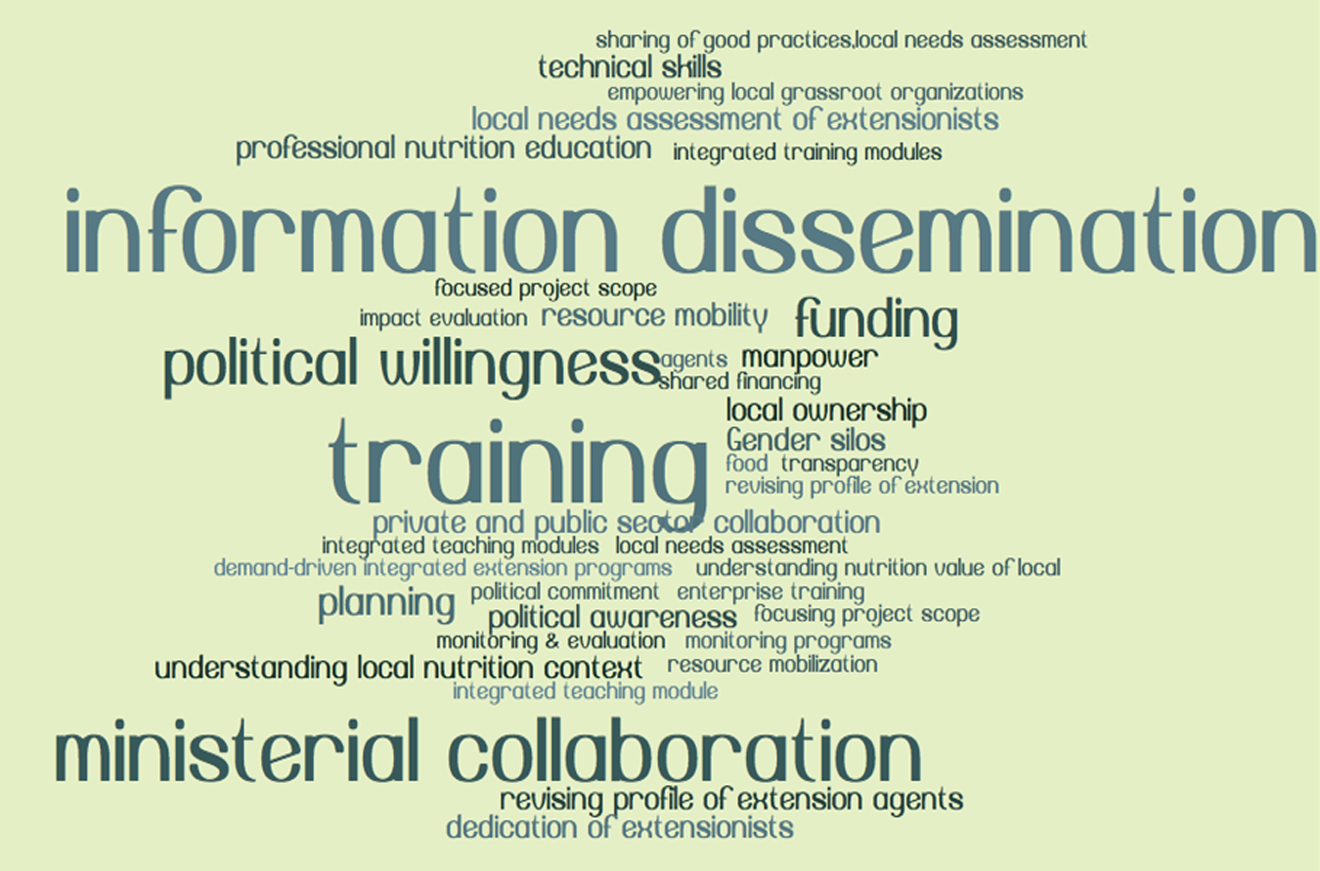
Challenges in integrating nutrition into EAS by online survey respondents. The figure represents a word cloud of the most frequently mentioned keywords by respondents to the online survey question “What would be considered the greatest challenges in integrating nutrition into EAS.” The font size of the words that are placed into the wordcloud represent frequency and usefulness. The more prominent (larger text size) the word is in the word cloud, the more frequently it appeared in the online provided. Transportation, task overload, funding, and quality training were considered the most frequent challenges listed in the survey responses.
The challenges stemming from the online surveys and interviews could be characterized into four major challenges for the individual EAS agent and three broader systemic challenges:
Challenge 1: Ineffective nutrition training and lack of awareness
Nutrition training provided to extension agents at agricultural schools and universities is frequently ineffective and inadequate in length, which impedes the ability of agents to identify nutritional needs and provide possible solutions. Online survey responses showed that these included poor training on the technical aspects of nutrition, lack of materials such as tools and diagrams for extension agents to share with communities, and nonexistent training at the decision-making level to raise awareness of nutrition as a priority.
Challenge 2: Unclear organizational mandates
The capacities and roles that extension agents are expected to assume have also expanded dramatically, leading to unclear organizational mandates. The expanding capacities required by extension agents at the individual level also require broadening the organizational mandate of EAS to develop new capacities at the organizational and enabling environment levels.
9
Extension agents are looked at as supermen or superwomen—they are supposed to solve all the problems, from legal issues for farmers to nutrition, marketing, and many other topics.
Challenge 3: Women’s inclusion in EAS
Women represent only 15% of extension agents worldwide, and only an estimated 5% of women benefit from EAS. 32 When online survey respondents were asked to break down the percentage of female extension agents in their country or district, more than half of the respondents replied that women constituted 30% or less of the total agent count. Women constituted 90% or more of extension agents in only 7% of countries or districts (Figure 2). The online survey respondents were also asked if female extension agents had different roles than male extension agents. Of those familiar with the roles, 33% said that female extension agents did have different roles. Lastly, online survey respondents were asked if female extension agents served more female or male clients. It emerged that most (81%) worked with men.
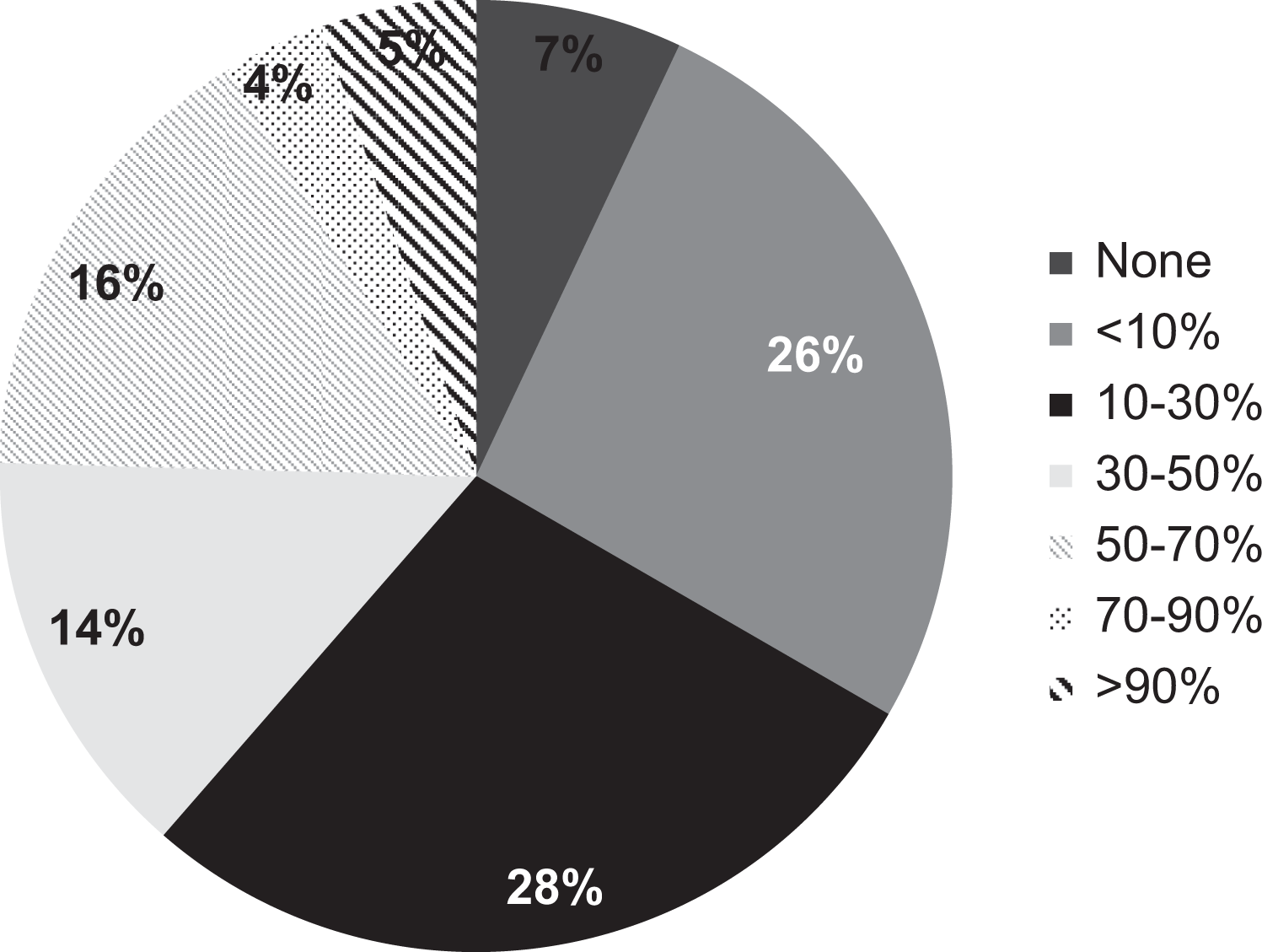
Percentages of female extension agents in the country. The figure shows the percentage of online survey responses to the question of what is the gender composition of extension agents in their respective country. The figure shows the percentage of survey respondents (n = 47 countries) with > 90% of extension agents being female (5%), 70% to 90% (4%), 50% to 70% (16%), 30% to 50% (14%), 10% to 30% (28%), < 10% (26%), and 0% (7%).
Challenge 4: Reduced mobility and poor access to the materials that extension agents need to carry out their duties
Where nutrition is concerned, lack of access to free or affordable transportation may impede the ability or motivation of extension agents to reach communities or to make repeat journeys (V. Ofosu, University of Ghana, personal interview, April 11, 2013). For example, a home extension agent mentioned in an interview that all expenses for transport, food, and materials for activities were deducted from his salary, which acted as a disincentive to travel long distances to reach communities or to conduct demonstrations that required multiple materials (C. Bowen, and A. Barkett, Semilla Nueva, personal interview, March 4, 2013). On the other hand, limited resources can force extension agents to collaborate with other sectors.
Systemic Challenges
Aside from challenges faced by extension agents in acquiring required capacities to improve nutrition outcomes, there are challenges within the broader system in which extension agents operate. The mandates of agricultural extension agents and the resources that they have to work with are the product of national-level policies and politics, institutional dynamics, and institutionalized management systems.
Challenge 1: Agriculture and nutrition sectors speak different “languages”
There is limited understanding of nutrition and a lack of joint planning and dialogue at all levels. Coming from different disciplines, agriculturalists and nutritionists adopt different languages, priorities, and terms in a move that constrains integration (J. Luoh, AVRDC, personal interview, March 4, 2013).
Challenge 2: Importance of coordinated planning and dialogue among the relevant agriculture, nutrition, and health actors
There is an underlying unfamiliarity with the basics of nutrition. Despite a spike in overall nutrition awareness, practical understanding of nutrition and the role that each sector plays is still lagging. There is some collaboration at the national ministry level, but not at the project implementation level. Existing mechanisms and venues for collaboration, such as district meetings, need to be identified and leveraged. One United Nations employee who was interviewed said, “You need to physically be together to work together.”
Challenge 3: Resources
Incorporating nutrition activities into EAS will require additional resources. Online survey and interview respondents detailed some of the key cost drivers as being “training and time. They need to be well prepared and time-allocated—extension agents are already overburdened with tasks” (development practitioner) and the “cost of additional human resources, training for communication skills as well as logistics and equipment for information collection and dissemination” (government agent, Ministry of Agriculture, Liberia).
The Opportunities of EAS Integrating Nutrition
The vast majority of online survey respondents in this study—64 out of 68—believed that agricultural EAS are a valid mechanism by which to deliver nutrition information to households. The survey respondents listed several reasons in favor of linking EAS and nutrition. These include:
Established infrastructures. In some countries, the EAS delivery system is already in place and it is just a matter of “topping-up” their portfolio with simple nutrition activities and messages.
Reach. The existing networks of extension agents already reach many people, and thus there is no need to tap into or seek new clientele. Extension agents have direct and sometimes extensive linkages to farming communities in rural and remote areas. These linkages are founded upon well-established structures and systems that cover most farming households.
Community trust. Extension agents maintain regular contact and have established relationships with the people and the communities in which they work. It is much easier to introduce nutrition issues into communities with preexisting relationships built on trust.
Cultural awareness. Extension agents are often aware of the local social norms, cultures, and belief systems that accompany and contextualize food. Agents frequently hail from the region where they work and therefore have intimate knowledge and understanding of the local context.
Empathy and understanding. Because of their familiarity with the conditions and context under which the farmers work and associated limitations and opportunities, extension agents are more able to demonstrate empathy with the farmers. This is particularly true with regard to questions of food production and access. Equipped with knowledge of the local food production system, access to markets, and the nutrition status of households, extension agents have a clearer understanding of how to mitigate the constraints faced by farmers.
Yet, there is disagreement among organizations working on agriculture and nutrition as to how much to depend on agricultural extension agents to deliver nutrition-relevant information and how much to collaborate with or depend on health staff to deliver coordinated messages (A. Herforth, Consultant for FAO and World Bank, personal interview, March 13, 2013). This study found several opportunities that should be harnessed for the integration of nutrition into EAS.
Engage communities
Stakeholders interviewed for the study emphasized the necessity of truly engaging community members by identifying and leveraging appropriate community channels. Group-based and participatory approaches to providing EAS are gaining ground. These methods have the potential to overcome barriers to participation, foster inclusiveness, and lead to more demand-driven services. 33 Such groups could include farmers’ groups (or FFS), women’s groups, and self-help groups. Another strategy identified in the study is to mobilize communities and reinforce messages to rely on community champions or promoters through a train-the-trainer approach. As with the larger extension workforce, however, it is important to recognize the existing profile and relative capacities of community members. In particular, literacy and educational levels should influence whether a program can effectively utilize community-level champions.
Create demand for nutrition
It was further established that a critical factor in the success of nutrition interventions is the ability to create demand for better nutrition and for increased nutrition education and options. You need to have a system and enough space for communities and individuals to set the agenda, to discuss things, and to pick from the menu what they want. You need to facilitate that. You do not miss what you do not know.
Frontline extension agents mobilize communities to identify their own needs and areas of interest through a focal area approach (participatory community planning), FFS, and the formation of common interest groups. 34
Demand-driven EAS can enable identification of the nutritional needs within communities from crop production and livestock across to nutrition (R. Rajalahti, World Bank, personal interview, March 13, 2013). The visual signs of stunting and micronutrient deficiencies, often called hidden hunger, are not especially evident to the untrained eye. Communities are not necessarily aware that undernutrition is an area of concern. In these cases, initiating “demand” for better nutrition knowledge and services helps to tackle the problem by compelling communities to prioritize nutrition and request EAS involvement (R. Rajalahti, World Bank, personal interview, March 13, 2013).
Innovative communications
Improved communications can also be achieved through the use of information and communications technologies (ICTs) to backstop and support providers of EAS. Mobile platforms using text messages, applications, and voice messages have been in use for some years. For the most part, these services prove beneficial in relation to agronomic and marketing themes, for instance, over questions of fertilizer application, pest identification, weather, and price information (L. Iver, Digital Green, personal interview, April 11, 2013). The use of ICTs to support nutrition interventions is more prevalent within the health sector. Under the mHealth umbrella, several initiatives, such as ChildCount, Rapid SMS, and CommCare, among others, are rapidly expanding the use of ICT applications to bolster the effectiveness of CHWs and other frontline workers. Although cellphones are increasingly available in rural communities, radio remains the cheapest and most widespread form of communication technology available to most farmers (S. Rao, Farm Radio International, personal interview, March 6, 2013). 35
Discussion
There have been many recent reviews and reports outlining what agricultural approaches, interventions, and pathways could impact nutrition and dietary outcomes and what empirical evidence is still needed to demonstrate such an impact. 13,36 -51 Without a clear understanding of what to scale, it is much more difficult to have a conversation about how to do so and by whom. Integrating nutrition interventions into the portfolio of EAS has been discussed as one way of better delivering nutrition-sensitive agriculture to rural households because of their established networks of agents linked to communities and their reach to farmers.
This study shows that the extent to which it is effective to rely on EAS to deliver nutrition interventions is uncertain. Also, few of the integrated approaches have been implemented at scale, and although there are pilots under way, scant evidence for their effectiveness is currently available. Consequently, although this study is premised on the notion that there is potential to increase alignment and collaboration of nutrition and agriculture through EAS, there are in fact differing opinions as to whether integration is viable or beneficial, and countries approach the integration of nutrition within EAS in different ways. This study indicates that programs vary in the scope of their integrated nutrition EAS activities, the types of organization that are involved in implementation, and the core functions of EAS agents, including how they incorporate nutrition and the clientele they target.
There is a dearth of information on the integration of nutrition into EAS activities. The use of a thorough literature review, online survey, and key stakeholder interviews produced substantial qualitative data that took time to analyze and group into thematic findings. There were limitations to the methodology. First, it was difficult to obtain general extension information from the GFRAS Worldwide Extension Survey, such as the number of extension agents by country or even globally, and the number of agents that are publically or privately funded. To obtain information on what services extension provides at the country level is even more of a challenge. Second, the online survey responses had a small sample size, with representation of only 47 countries. Thus, the extent of quality responses was limited. Third, the use of mixed methodology presents challenges to triangulating and validating data. The researchers coded data thematically; however, not all results were verified across all three sources of data collection. Nonetheless, to the best knowledge of the researchers, this is the first review that examines the role of nutrition within extension. Data stemming from this study provide some lessons on past experiences, but more operations research needs to be done to translate best practices of integrating nutrition into EAS.
Is Integration of Nutrition into EAS Scalable?
Scalability is the ability of an intervention to show efficacy on a small scale and/or under controlled conditions and to be receptive to further expansion under real-world conditions to reach a greater proportion of the population, while retaining effectiveness. 42
This study did a comprehensive sweep of the literature and opinions, with a call for input globally, and found that the integration of nutrition (and home economics) into EAS often remains archaic, scattered, or side-streamed. Most of the programs lacked measures of efficacy because of the limited amount of data collected and the lack of peer-reviewed publications or evaluations examining the impact of integrated programs on dietary and nutritional outcomes. This makes scalability recommendations for nutrition within the existing EAS portfolio more challenging. Scalability will depend on achieving high-level government buy-in and multisectoral coordination, effective and equitable use of ICTs and other low-cost technology, and flexibility and resourcefulness in deciding who participates in EAS formally and informally.
Is Integration of Nutrition into EAS Sustainable?
Sustainable development has been defined as “development that meets the needs of the present without compromising the ability of future generations to meet their own needs”. 43 Promoting nutrition as a development priority among a wide range of stakeholders creates openings for action and sustained attention to nutrition. 44 Sustainability of nutrition within agriculture will depend on a separate set of factors, as this study shows, including the ability of EAS to be demand-driven and empower communities, the quality of nutrition education and training for EAS, the stability of funding for EAS, and the operational continuity and stability of EAS that results.
The growing interest in agriculture, as expressed in the Maputo Declaration and in various global initiatives, has translated into additional political and budgetary commitments in the agriculture sector. It is unclear, however, if these additional resources are trickling down to EAS. On the one hand, there is an increase in the awareness of the role that EAS could play in improving the nutrition of rural communities and households by virtue of their reach and advantages. This study, along with other studies, shows that there remains a considerable gap between the perceived potential of the role of EAS and the commitment to and investment in equipping the extension workforce with the requisite knowledge and skills. 45
Multisectoral coordination, particularly between the agriculture and health sectors, lies at the heart of integrating nutrition into EAS. To make agriculture and nutrition work together, there needs to be institutional innovation to “facilitate and generate political pressure”. 38 The results of this study show that coordination is still a major challenge. This was cited and demonstrated to be a core factor for governments to drive the integration of nutrition into agricultural policies and, more specifically, into the mandate of EAS, which are frequently focused on increasing agricultural productivity. 46,47
Future Directions
EAS could be seen as a promising vehicle for delivering nutrition interventions through agriculture. However, much more understanding is needed of what approaches have the most significant impact on nutrition outcomes. Without that understanding and research to assess impact, it is difficult to understand the effectiveness of integration of nutrition into extension. Beyond just evidence of what approaches are most appropriate, there also needs to be significant investment and ramping up of EAS in general. If EAS are unable to provide the most basic agriculture services, it will be much more difficult to layer nutrition interventions, messages, and activities within their portfolio. EAS systems need support—financial, training, and infrastructure—to ensure that the services that are provided are robust. With the increased attention to and investment in “nutrition-sensitive agriculture,” EAS should be considered an important contribution to delivering effective nutrition to rural farming communities. The hope is that these results will inform the nutrition-sensitive dialogue in the Scaling Up Nutrition (SUN) movement and other global, regional, and country initiatives.
Footnotes
Declaration of Conflicting Interests
The author(s) declared no potential conflicts of interest with respect to the research, authorship, and/or publication of this article.
Funding
The author(s) disclosed receipt of the following financial support for the research, authorship, and/or publication of this article: Funding for this study was provided by the World Bank’s SecureNutrition Knowledge Platform and the Global Forum for Rural Advisory Services.