



Abstract
Background:
School feeding programs (SFP) in low-income countries are designed to provide food to vulnerable school children to create optimal educational and health conditions for learners. Ethiopia scaled up the implementation of SFP in Addis Ababa. Yet, the utility of this program in terms of school absenteeism has not been monitored thus far. Hence, we aimed at evaluating the effect of the SFP on school performance of primary school adolescents in Addis Ababa, Central Ethiopia.
Methods:
A prospective cohort study was carried out from 2020 to 2021 on SFP-beneficiary (n = 322) and non-SFP beneficiary (n = 322). Logistic regression models were done using SPSS version 24.
Results:
In logistic regression, unadjusted model (model 1), the school absenteeism of non-school-fed adolescents was higher by 1.84 (adjusted odds ratio [aOR] 0.36, 95% confidence interval [CI] 1.28-2.64) as compared to school-fed adolescents. The odds ratio remained positive after adjusting for age and sex (model 2: aOR 1.84, 95% CI 1.27-2.65), and sociodemographic (model 3: aOR 1.84, 95% CI 1.27-2.67). In the final model, adjusted model 4, health and lifestyle, there was a significant increase in absenteeism of non-school-fed adolescents (model 4: aOR 2.37, 95% CI 1.54-3.64). The likelihood of absenteeism in female increase by 2.03 (aOR 2.03, 95% CI 1.35-3.05), whereas being in a low tertile wealth index family decreases absenteeism by (aOR 0.51, 95% CI 0.32-0.82). School feeding was negatively associated with school absenteeism.
Conclusions:
The findings imply the need for strengthening school feeding programs.
Plain language title
School Feeding and Absenteeism
Plain language summary
To ensure optimal educational and health conditions for students, the school feeding program (SFP) provides food to needy children in low-income countries. Ethiopia has expanded the implementation of the SFP in Addis Ababa. However, the benefits of this program in terms of school absenteeism have not been studied. Therefore, we sought to examine the impact of the SFP on the school performance of primary school students in Addis Ababa, central Ethiopia. A prospective cohort study of SFP beneficiaries and non-SFP beneficiaries was conducted. This study found a significant increase in absenteeism among youth who did not receive school meals compared with their school-supplied peers. The results indicate that school meal programs need to be strengthened. Therefore, it is imperative that the Ethiopian government allocate significant resources to the program for it to be successful and scaled up to other regions of Ethiopia. Programs should include cross-sectoral participation, strong institutional resource management, capacity building, and linkages with fundraising nongovernmental organizations.
Introduction
According to the World Food Program, in the developing world, 66 million schoolchildren attend classes hungry, and the figure is as high as 23 million in Africa alone. 1 According to the United Nations Food and Agricultural Organization (FAO), hungry children are starting school later, drop out sooner, learn less while they do attend, and are also more likely to be absent. 2 Attending classes hungry severely impacts children’s and adolescents’ abilities to learn, thrive, and maximize their full potential. 3
Chronic absence means missing 10% or more school days in a year (18 days in a year) for any reason (excused or unexcused, consecutive or not). 4 School absenteeism is a common and serious problem as regular school attendance is foundational to children’s success. 5 School absenteeism can be explainable if it is due to medical illness, environmental, or social reasons. 6 Absenteeism of students in a country is considered an important criterion that shows the quality of education in that country, and it is regarded as an important predictor of the existing and future problems of the education system. 7 Students who are chronically absent miss critical learning opportunities, and chronic absenteeism is a better predictor of school dropout than low grades or poor standardized test scores. 8 Frequent school absenteeism is associated with immediate- and long-term negative effects on academic performance, social functioning, college graduation rates, adult income, health, and life expectancy. 9,10 Chronic absenteeism is most prevalent among students of low income, and they are those who benefit the most from being in school every day. 8 School absenteeism has been declared as a public health issue and a hidden educational crisis. 4,11 In the adolescent context, their mental well-being also plays a significant influence on their dietary intake and physical activity. Mental health conditions may affect mood and desire to eat, disrupt the ability to digest food or absorb nutrients, and cause a person to neglect their well-being and forget to eat. 12 Fortified biscuits in Bangladesh have improved school enrollment by 14.2% and reduced the probability of dropouts by 7.5%. 13
School feeding programs (SFPs) are interventions that regularly provide nutritious foods to children and adolescents attending school. 14,15 Globally, nearly 400 million children are fed daily at school, and school feeding remains an important component of national social protection systems, even in many high-income countries with a low prevalence of undernutrition. 15 Poverty eradication, nutrition, health, and education continue to be pillars of sustainable development. Holistic school meal programs can make an adequate, sustainable positive impact on these determinants of development through various pathways. 16 School feeding program (SFP) is a tool that enables children worldwide to attend school. 17 The World Food Programme (WFP) asserts that SFPs help to increase enrolment and attendance in schools because they serve as incentives to children to participate in learning. 18 In addition, parents send their children to SFP-benefited schools so that they can reallocate food in the household away from these children who are already benefiting from the program. 19 Improving school enrollment and attendance, improving cognitive and academic achievements, alleviating hunger, reducing malnutrition, and contributing to gender equity to education are some of the benefits of school feeding. 20 -24
The WFP-sponsored SFP was piloted in Ethiopia in 1994. 25 In 2016, more than a million children in drought-affected places were involved. 26 Very recently, the SFP reached major urban areas, including Addis Ababa. The National Nutrition Program 27 and the National School Health and Nutrition Strategy of Ethiopia have identified a key nutrition-sensitive intervention by promotion of home-grown SFP to combat malnutrition. 28 Addis Ababa city government provides an SFP for about 300,000 students, aiming at increasing enrollment and reducing absenteeism among school children. Students receive a 150-g of hot lunch meal prepared from either wheat, corn, or bean, according to the program guideline from Monday to Friday. 29
Although the SFP is initiated in some parts of Ethiopia, to what extent it improves school attendance of adolescents is not explored. On the contrary, few other studies revealed that there are no observable impacts of SFPs on school participation. This study aimed to investigate the effect of school feeding on the reduction of school absenteeism. We hypothesized that non-school-feeding adolescents would be more likely to be absent from school after a semester compared to their school feeding peers.
Methods
Study Area
A prospective cohort study design was conducted among primary school adolescents’ in Addis Ababa, Central Ethiopia. Addis Ababa is the capital city of Ethiopia with great diversity, and homes of almost all ethnicities are found in the country. According to the 2018 report of the Addis Ababa City Government Educational Bureau, there are 806 primary schools. In all these schools, there are a total of 504,205 students. Of the total number of schools, 223 (27.66%) are governmental and 583 (72.33%) are private. 30 Non-school-fed children as controls were selected from Adama City, Ethiopia, is found 99 km southeast of Addis Ababa. According to Adama City Administration Education Office (ACAEO) statistics records in Adama, there are 11 governmental, 3 publics, 6 religious, and 13 local private schools. According to the Adama city administration office, the total number of primary school students is 38,503. 31 Addis Ababa (exposed group) and Adama (unexposed group) are 2 neighboring cities that are found in the central part of Ethiopia. Both cities are urbanized, have standardized governmental primary schools, similar population density, culture, and only 99 km apart. Furthermore, the only difference between these 2 cities is providing universal SFP for primary school adolescents (exposed) in Addis Ababa, but not in Adama city, city coverage area and population size. Indeed, these 2 cities are divided in the form of an independent city only for the purpose of administration issues. The SFP schools (Exposed group) are given to all the government primary schools found in Addis Ababa, and it was considered our source population. The non-SFP schools (unexposed group) were taken from the neighboring town, Adama. Regarding the characterization of exposed and unexposed, we have conducted an independent t-test to check sociodemographic characteristics and found insignificant differences, showing that the 2 groups have similar sociodemographic characteristics.
Study Design and Period
This study was a 6-month prospective cohort study. Baseline data were taken in September 2020, which was collected from the previous semester’s (January 2020 to September 2020) absence score, and end-line data were collected in January 2021 for the semester (September 2020 to January 2021) from students’ roster records.
Populations
Adolescents aged between 10 and 19 in Addis Ababa and Adama enrolled in the primary school for the 2020/2021 academic years who were attending their regular classes were included.
Sample Size Determination
The sample size was calculated using G*Power 3.1 program, 32 assuming that the 2 primary outcomes (school absenteeism and academic performance) were compared within the 2 groups using a 1-tailed mean difference test. The sample size was calculated with 95% confidence level (CI), 80% power, medium effect size (d = 0·4), one-to-one allocation ratio between the 2 groups, and design effect of 2. A 5% was added for possible dropout and a final sample size was 676 (338 SFP beneficiaries and 338 non-SFP beneficiaries).
Sampling Technique
A stratified multistage sampling method was used after obtaining the name of every governmental primary school in Addis Ababa and Adama. There are 223 governmental primary schools in Addis Ababa and 11 in Adama cities. In all, 67 and 3 governmental primary schools were selected by simple random sampling from Addis Ababa and Adama, respectively. First, continuous numbers were assigned alongside the name of schools (1-223) in Addis and (1-11) in Adama. From the list of each city, 30% of the total schools (67 schools from Addis Ababa and 3 schools from Adama) were selected using a simple random sampling technique. A proportionally allocated sample size of SFP beneficiaries and non-SFP beneficiaries from each school was selected by a random sampling method using a computer-generated random number. All adolescents eligible for the study were selected from the student registry of each section.
Data Collection Procedure
The data were collected using structured questionnaires. Interviewers received a 1-week intensive training about the questionnaire before the pretest, which was done December 2019. The questionnaires were checked by supervisors daily to ensure the accuracy of the data and the research team was supervising the data collection team. The questionnaires were translated to the local languages of Amharic and administered by an interviewer. During the baseline survey, school absenteeism and sociodemographic variables were recorded. School academic records were used to collect absence score data from 2020/2021 rosters from seventy sampled schools.
Measurement
School absenteeism
This was defined as “any illegitimate absence of students from school for at least a day.” 33,34 Illegitimate absence is any absence from school due to reasons other than the formal school closure days (due to either religious days or national holidays for which the school is closed). The school absenteeism rate was based on school administrative records.
Mental health
To assess mental health status (common mental disorders), we used the Self-Reporting Questionnaire (SRQ-20). The SRQ is a 20-item retrospective survey with yes/no answers that measure psychiatric symptomatology. Development of the SRQ was reported by the World Health Organization. 35,36 It is used throughout low- and middle-income countries, including Ethiopia and many other African settings. 36 -39
Dietary assessment
We used a food frequency questionnaire (FFQ) to assess the nutritional determinants. First, we have collected information on commonly eaten foods in the study area from each food group among the key informant like health extension workers and community leaders in Addis Ababa and Adama. Finally, we developed 28 food items listed by name, and data collectors conducted face-to-face interviews of all the study participants about their consumption of various listed foods for the past 1 week. After data collection, the 28 food items of the FFQ result were grouped into 9 food categories based on individual dietary diversity scores (IDDS) according to the FAO. The FFQs are useful for ranking individuals for specific food items so the characteristics of those with high and low intakes can be compared. 17
Data Analysis
The data were entered into Epi-Data version 3.1 and exported to SPSS for Windows version 24 to check for missing values and outliers and further analysis. A household wealth index was generated using principal component analysis. Varimax rotation was applied and the Kaiser-Meyer-Olkin was acceptable, and Bartlett’s test of sphericity was significant. The variables that had communality scores greater than 50% were retained in the analysis. The factor with the highest eigenvalue was taken and then divided into 3 equal tertiles: poor, middle, and rich. Predictors of school absenteeism were identified using the multivariable logistic regression model. Multicollinearity among independent variables was assessed, and no multicollinearity among independent variables was found.
Significant variables of school absenteeism in the bivariate analyses were entered in a multivariable logistic model. Finally, the results were tabulated using as adjusted odds ratios (OR) with 95% confidence intervals and P values < .05.
Results
Out of the 676 adolescents intended, 663 completed the questionnaires at baseline. For further analysis of school absenteeism, we excluded 32 adolescents who were not enrolled in the school. A total of 644 participants aged 10 to 19 years were enrolled from 70 selected primary schools. Of these, 322 were from the SFP beneficiary group whereas 322 were from the non-SFP beneficiary group, and the response rate was 95%. Nearly, 50% of the respondents in non-school-feeding and 48% in the schools-feeding adolescents were female. The mean (±SD) age of school-feeding and non-school-feeding adolescents were 14.9 (±1.86) and 15.04 (±1.67), respectively. Similarly, the mean (±SD) family size of respondents was 5.47 (±1.57) for school feeding and 5.59 (±1.77) non-school feeding(Table 1).
Demographic and Socioeconomic Characteristics of a Cohort of Primary School Adolescents at Baseline in Addis Ababa and Adama, Central Ethiopia in 2020/2021.a
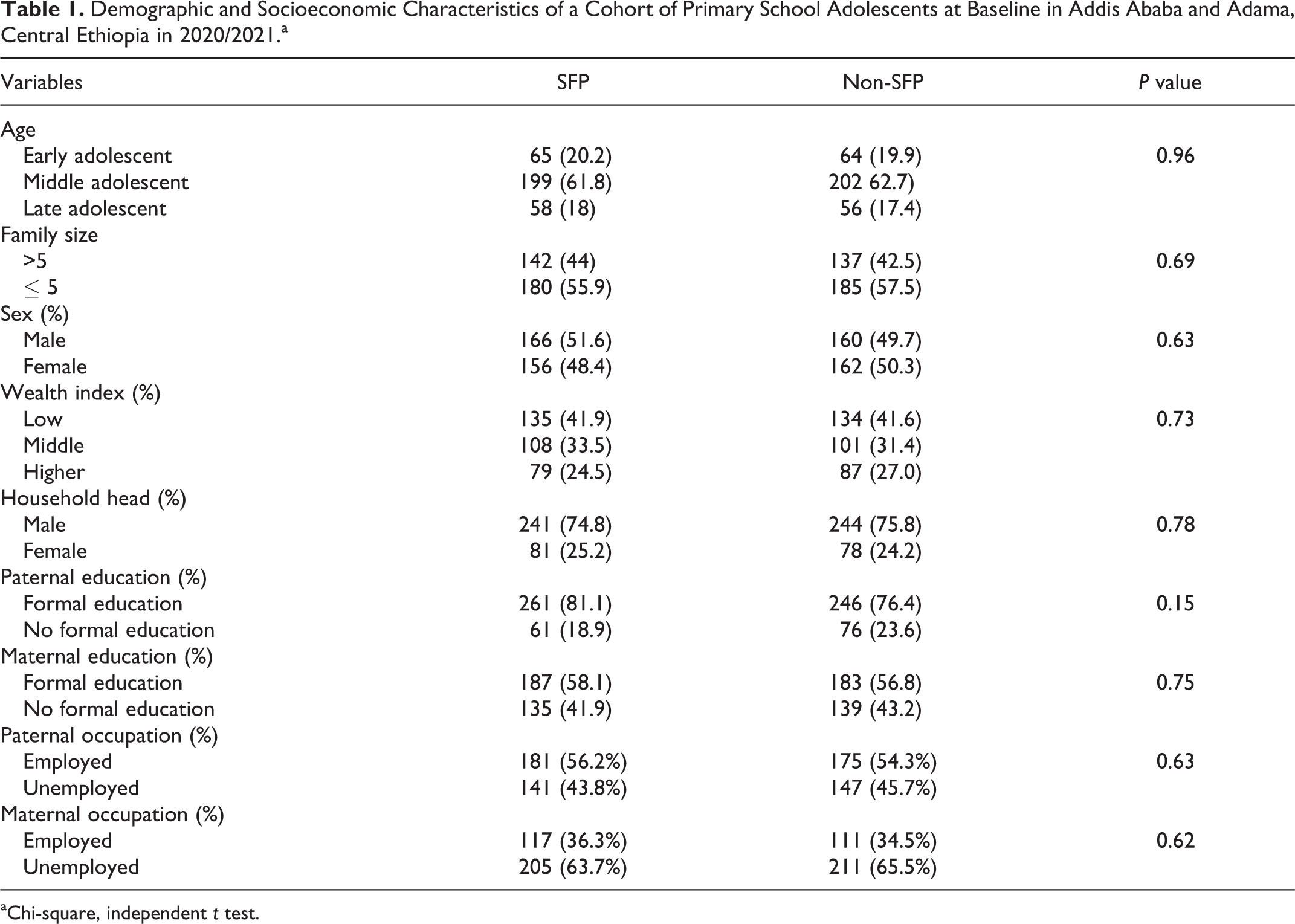
aChi-square, independent t test.
Bivariate analyses showed that school absenteeism was positively associated with, family size, household head, occupation of mother, wealth index, and school feeding (Table 2).
Characteristics of Adolescents by School Absenteeism in Addis Ababa and Adama, Central Ethiopia, 2020/2021.
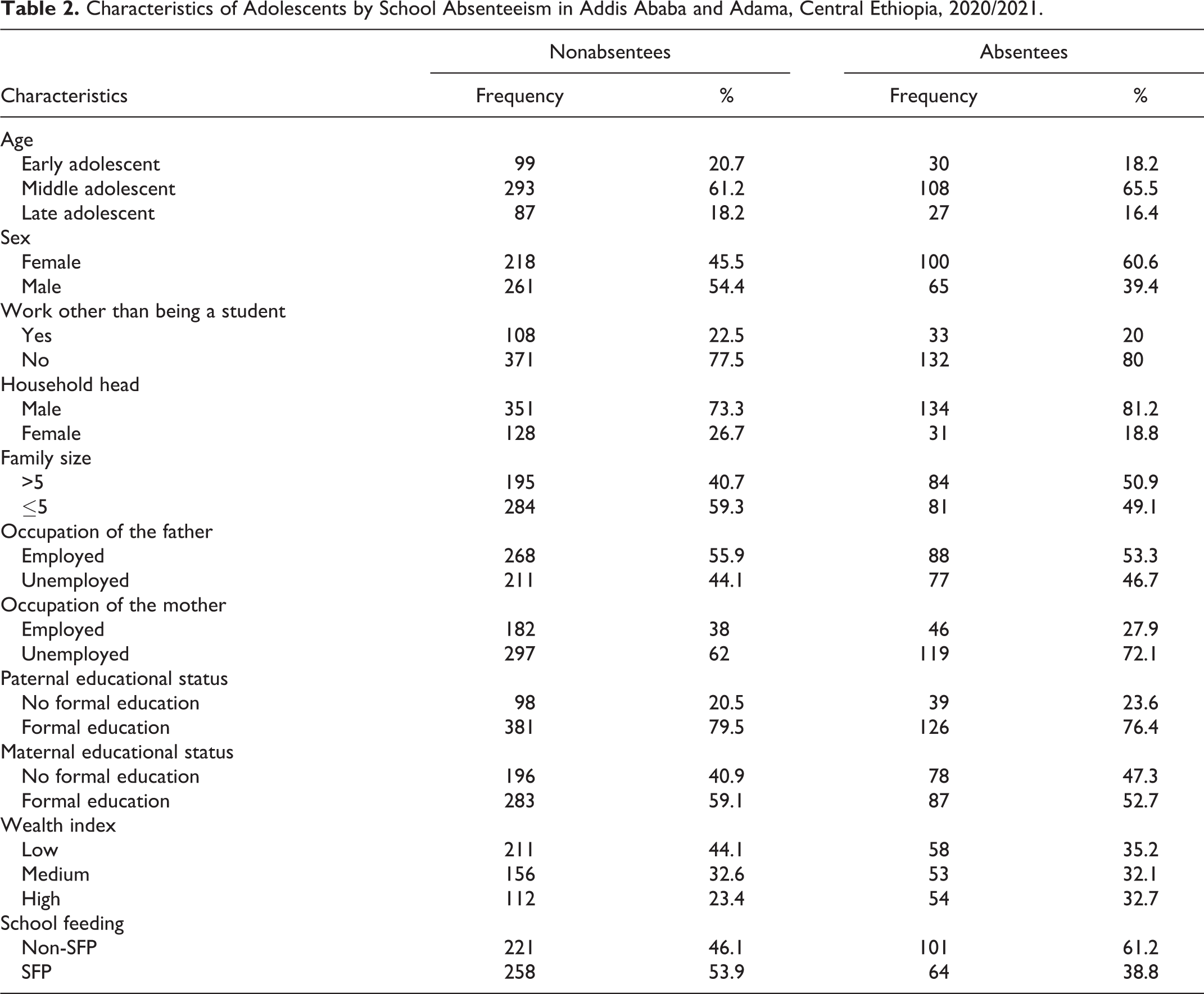
Figure 1 shows the frequency of absenteeism by school feeding status. Among 644 adolescents in the study sample significantly lower proportion (20%) of school-feeding adolescents was identified as absentees compared with non-school-feeding adolescents (31%), P < .001.
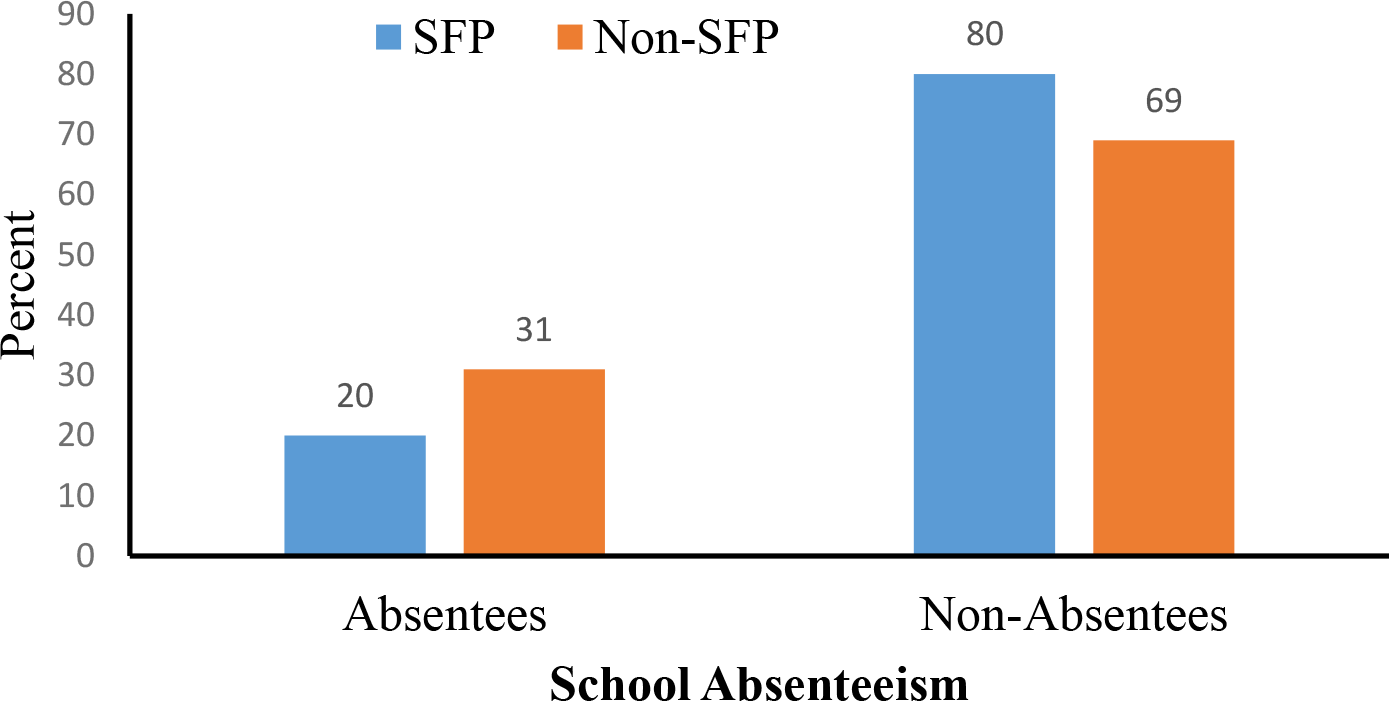
School absenteeism by school feeding status in Addis Ababa and Adama, Central Ethiopia, 2020/2021.
Figure 2 shows the frequency of school absenteeism by sex. The frequency of school absenteeism was significantly higher among female adolescents (31%) as compared with male adolescents (20%).
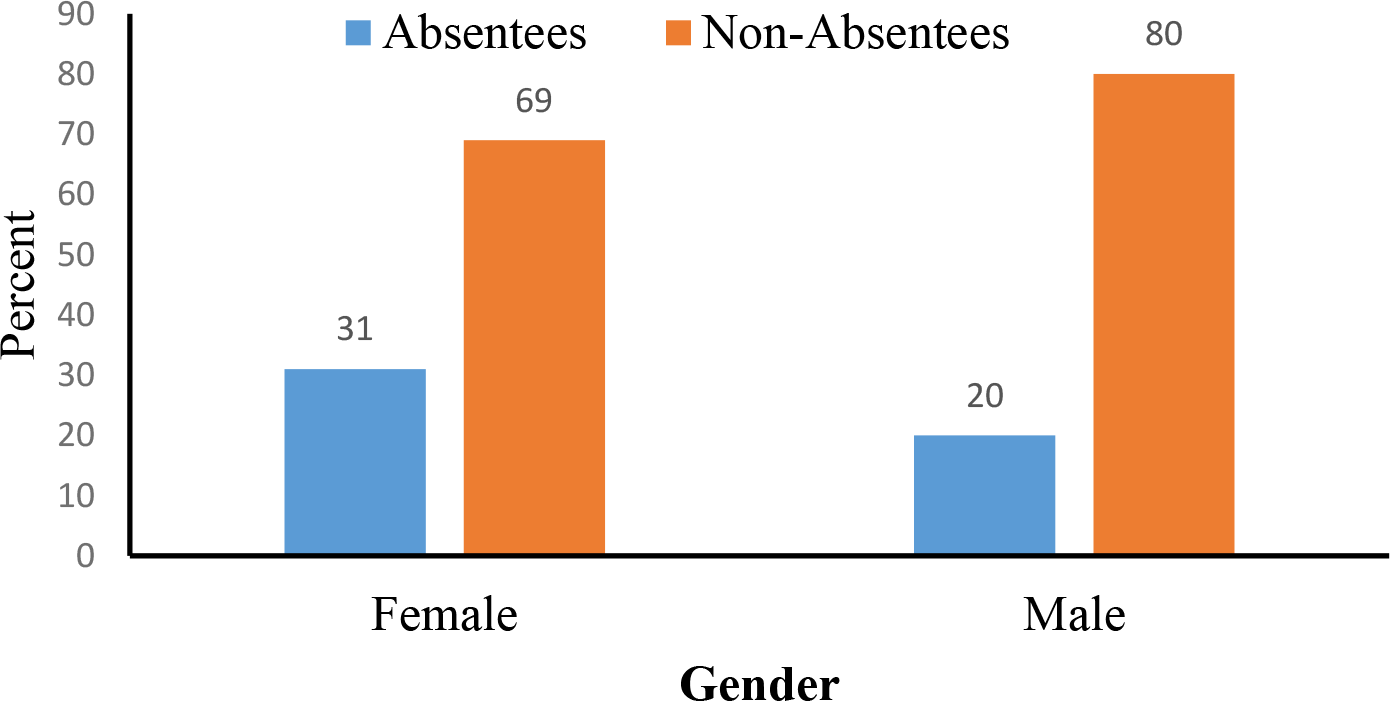
Adolescents school absenteeism by gender in Addis Ababa and Adama, Central Ethiopia, 2020/2021.
In logistic regression, unadjusted model (model 1), the likelihood of school absenteeism of non-school-fed adolescent was higher by 1.84 (aOR 1.84, 95% CI 1.28-2.64) as compared to school-fed adolescents. The OR remained positive after adjusted for age and sex (model 2: aOR 1.84, 95% CI 1.27-2.65) and sociodemographic variable (model 3: aOR 1.84, 95% CI 1.27-2.67). In the final model, adjusted for model 4, health and lifestyle factors, there was a likelihood of significant increase in absenteeism of non-school-fed adolescents (model 4: aOR 2.37, 95% CI 1.54-3.64; Table 3).
Predictors of School Absenteeism in Adolescents in Addis Ababa and Adama, Central Ethiopia, 2020/2021.a,b,c,d
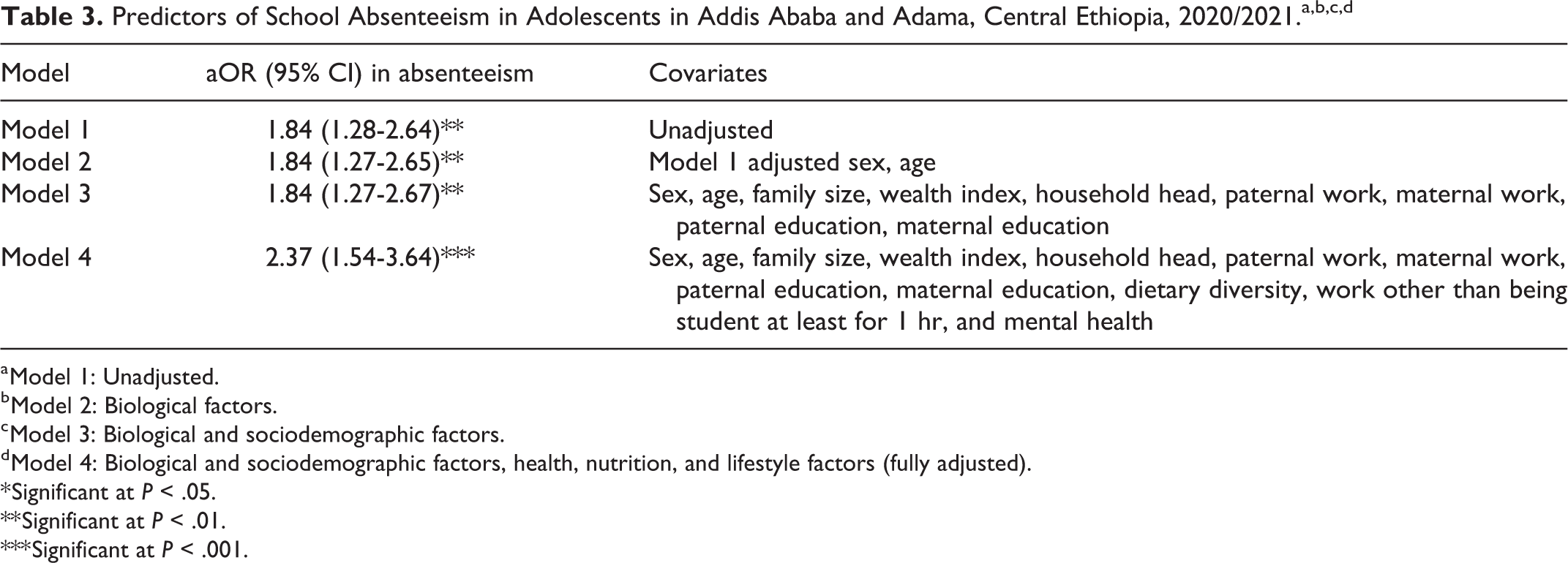
a Model 1: Unadjusted.
b Model 2: Biological factors.
c Model 3: Biological and sociodemographic factors.
d Model 4: Biological and sociodemographic factors, health, nutrition, and lifestyle factors (fully adjusted).
* Significant at P < .05.
** Significant at P < .01.
*** Significant at P < .001.
The likelihood of absenteeism in females increased by 2.03 (aOR 2.03, 95% CI 1.35-3.05), whereas being in a low tertile wealth index family decreased absenteeism by 0.51 (aOR 0.51, 95% CI 0.32-0.82; Table 4).
Factors Associated With School Absenteeism at Primary Schools in Addis Ababa and Adama, Ethiopia, 2020/21.
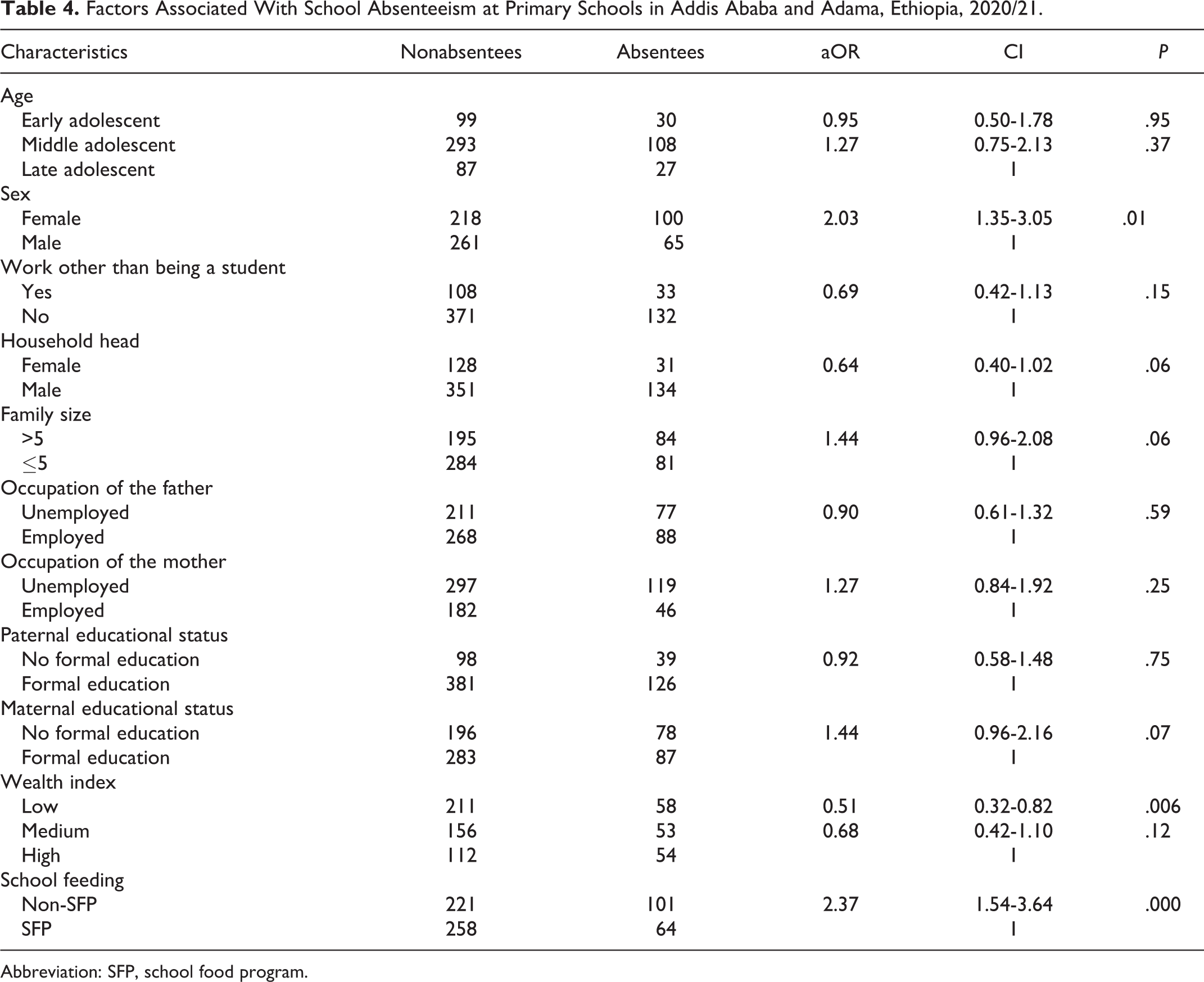
Abbreviation: SFP, school food program.
Discussion
This study demonstrated a positive effect of SFP on school attendance of primary school adolescents. Adolescents’ academic and cognitive achievements are highly influenced by poor health and malnutrition. Improved health and nutrition are positively associated with enrolment, reduced absenteeism, decreased grade repetition, and higher performance on test scores 40,41 because of better cognitive development. 42 Our finding reveals the SFP serves as an instrument for reducing school absenteeism.
The present findings show that non-school-feeding adolescents were 2.37 times as likely to be absent from school, and it is in line with other studies of risk factors in school absenteeism on the proximal and distal level. 43 -47 In a study done in Jamaica, it is plausible that the provision of meals encourages children to attend school more regularly. Marginal improvement in attendance rates was observed among children receiving school breakfast. 47 Similarly, a cross-sectional study done in Bangladesh, due to school feeding class attendance was increased by 13 days per month. 44 In Peru, SFP increased attendance rates by 0·58 percentage points. 48 Furthermore, a prospective randomized trial done in Burkina Faso shows that students who were receiving school meal programs increased girls’ enrollment by 5 to 6 percentage points attendance rate. 19 As students go through enrollment to the SFP, school absenteeism tends to be lower as reported by the studies in Ghana. 46 Moreover, a cohort study done in the Sidama zone reveals that nonbeneficiary children had 2 times increased probability of missing classes than their counterparts and the SFP increased class attendance by approximately 5 days over the year. 49 A study from Debre Libanos, Ethiopia concluded treatment schools consistently showed a greater increases \in attendance rates. 43 An institutional-based cross-sectional study done in Addis Ababa showed that odds of having school absenteeism among feeding participants were 1.796 times higher than nonfeeding participants. 50 Similarly, a school-based comparative cross-sectional study from Sidama zone Boricha District, Southern Ethiopia, reported a highly significant difference in which School absenteeism between nonbeneficiaries (91.0%) than beneficiary children (49.7%). 45
On the contrary, a case study done in Southern Ethiopia observed no significant positive impact of SFP on any of the 3 school participation indicators (enrollment, attendance, and dropout). 51 In the study done in Kenya, 60.6% of the pupil respondents do not believe that school meal is the reason for attending school. The majority of the pupils (96%) cited a desire to learn as the reason for attending school. 52 This difference may be due to the improved socioeconomic status of the study participants and the design they implemented which cannot conclude beyond their study participant.
School feeding program has a serious of positive implications on the education and schooling of adolescents. An adequate supply of food may enhance school attendance and mental and physiological health by reducing the use of negative coping food insecurity mechanisms. 41,53
We observed that being female increased school absenteeism by 2.03 as compared with male adolescents. A study done in Jimma zone showed that male adolescents were 34% less likely absent from school compared to female adolescents. 49 In a situation analysis done in Ethiopia, a high proportion of girls were more likely to be absent from school compared to boys. A study done in Norway revealed that girls were less likely be absent compared to boys. 54 Furthermore, adolescents with female household head increase school absenteeism by 2.01 as compared with male household head. This could be due to socioeconomic and cultural factors that enforced females to take part in housework responsibility and child care. Moreover, being in a low tertile, wealth index family decrease absenteeism by 0.51. The possible explanation is, those adolescents from lower tertile wealth index family attend school more importantly may be due to the sake of the food availability provided by the SFP, which may not obtain from their household.
Strength and Limitation
The strength of this study was applying a 6-month prospective cohort study to show the cause and the effect relation of SFPs on school absenteeism. Even though we have tried to control for potential confounders in our study, there may be residual confounders from unmeasured variables. Furthermore, small sample size could be considered as a limitation.
Conclusions
The results showed that school feeding was negatively associated with school absenteeism. Being female was positively associated whereas being in low tertile wealth index was negatively associated with absenteeism. The findings may imply the need for strengthening SFP with more focus on interventions addressing adolescent girls to avert school absenteeism. However, these changes may not be meaningful to generate a firm conclusion on the utility of school feeding in improving the school absenteeism.
Recommendation
It has been shown that investing in adolescents has proven to improve their nutritional status, which in turn helps them achieve their full potential, increase productivity, and improve community resilience.
Therefore, it is imperative that the Ethiopian government devote significant funding to the program in order for it to succeed and to expand the program to other regions of Ethiopia.
The programs should engage multisector involvement, strong institutional resource management, capacity building, and linkages with nongovernmental fund-raising organizations (World Bank, WFP, and FAO).
Footnotes
Authors’ Note
The data sets used and/or analyzed during the current study are available from the corresponding author based on reasonable request. The study was conducted as per the Helsinki Declaration for biomedical research. Ethical approval and clearance were obtained from the Jimma University, Institute of Health, Institutional Review Board with a reference number of IRB/261/2020. An ethical clearance letter was submitted to the Addis Ababa and Adama Education office and a permission letter was obtained. Informed written consent was taken from each student and informed written consent was taken from their parents for those students whose age less than 18.
Acknowledgments
The authors thank Jimma University for providing funding for the accomplishment of this study and University of Gondar for unreserved support of materials. We are extremely grateful to adolescents involved in the study, data collectors and the research team members.
Author Contributions
The authors’ responsibilities were as follows: BM, KH, TB, SK: Designed and supervised the study and ensured quality of the data and made a substantial contribution to the local implementation of the study and BM, KH, TB, SK assisted in the analysis and interpretation of the data. All authors critically reviewed the manuscript. BM, the corresponding author did the analysis & drafted the manuscript and had the responsibility to submit the manuscript for publication.
Declaration of Conflicting Interests
The author(s) declared no potential conflicts of interest with respect to the research, authorship, and/or publication of this article.
Funding
The author(s) disclosed receipt of the following financial support for the research, authorship, and/or publication of this article: The authors received financial support for the research from Jimma University with a reference number of IRB/261/2020. The funders had no role in study design, data collection and analysis, decision to publish, or preparation of the manuscript.
