




Abstract
Background:
Interventions that enhance linkages between healthy diets and local agriculture can promote sustainable food systems. Home-grown school feeding programs present a promising entry point for such interventions, through the delivery of nutritious menus and meals.
Objective:
To describe the adaptation of the School Meals Planner Package to the programmatic and environmental reality in Ghana during the 2014 to 2015 school year.
Methods:
Guided by a conceptual framework highlighting key considerations and trade-offs in menu design, an open-source software was developed that could be easily understood by program implementers. Readily available containers from markets were calibrated into “handy measures” to support the provision of adequate quantities of food indicated by menus. Schools and communities were sensitized to the benefits of locally sourced, nutrient-rich diets. A behavior change communication campaign including posters and songs promoting healthy diets was designed and disseminated in schools and communities.
Results:
The School Meals Planner Package was introduced in 42 districts in Ghana, reaching more than 320 000 children. Monitoring reports and feedback on its use were positive, demonstrating how the tool can be used by planners and implementers alike to deliver nutritious, locally-sourced meals to schoolchildren. The value of the tool has been recognized at the highest levels by Ghana’s government who have adopted it as official policy.
Conclusions:
The School Meals Planner Package supported the design of nutritious, locally sourced menus for the school feeding program in Ghana. The tool can be similarly adapted for other countries to meet context-specific needs.
Keywords
Introduction
Almost every country in the world has a school feeding program serving an estimated 368 million children with an annual investment of up to US$75 billion globally. 1 These programs serve a variety of objectives related to social protection and improving nutrition, education, and agriculture outcomes. In low- and middle-income countries, school feeding has traditionally focused on improving access to education, as measured by increased school enrollment, attendance, and retention rates. In response to the 2007/08 food and fuel crises which led to escalating food prices, many countries scaled up their school feeding programs in recognition for its role as a safety net for vulnerable communities. 2 Evidence that school feeding can contribute to nutrition outcomes is mixed, although positive relationships have been documented with indicators such as height and weight, hemoglobin concentration (a predictor of the status of iron), and vitamin A status, suggesting that the intervention can be nutrition sensitive. 3 The Global Nutrition Report emphasizes the need for a multisectoral approach to reduce malnutrition with nutrition-specific and nutrition-sensitive interventions being implemented through a number of different sectors. 4
Leveraging the sourcing of nutrient-rich foods for school meals through an approach known as home-grown school feeding (HGSF) has the potential to contribute to agriculture as well as nutrition outcomes. It has received greater attention in recent years in low- and middle-income countries, in particular countries seeking to manage and implement their own school feeding program as opposed to relying on external donor and technical support. 1 The HGSF seeks to decentralize some or all procurement of foods for school feeding programs to community producers or markets. As schools operate for a set number of days a year, the sourcing requirements for school feeding present a structured, year-round, and predictable market for food producers including smallholder farmers. Furthermore, the inclusion of nutrient-rich foods in school feeding rations can contribute to the recommended daily allowances of energy, protein, essential fats, and micronutrients such as iron, iodine, and vitamin A, which are critical for optimal child and adolescent development, while promoting diverse diets. 2,3 These concerns are relevant for countries where wasting and stunting are the main nutrition concerns as well as countries undergoing the nutrition transition with an increasing incidence of overweight and obesity. 5,6
In 2003, HGSF was included as a key intervention under the food security pillar of the Comprehensive Africa Agriculture Development Programme. By 2014, at least 47 out of 54 countries on the continent were implementing school feeding programs with at least 20 countries implementing HGSF (note 1). Through its focus on menus, which serve as a practical link between agriculture and nutrition objectives, the School Meals Planner tool and accompanying materials can help governments assess trade-offs and operationalize HGSF at a scalable and sustainable manner.
This paper describes the development of the School Meals Planner Package—including the School Meals Planner tool, “handy measures,” and behavior change communication (BCC) activities and materials—which was designed to meet this demand from governments implementing HGSF as well as its adaptation to the programmatic and environmental reality of the Ghana School Feeding Programme (GSFP) during the 2014/15 school year. The GSFP menus are designed at the district level and can be tailored to foods grown by farmers in the community and the broader agroecological zone. The School Meals Planner tool was used to design menus in 42 out of 216 districts in Ghana, while the BCC sought to heighten knowledge and awareness of communities to healthy diets. The tool, used in the context of a larger program, helps to focus attention on providing a more nutritious diet by designing school meals to provide not only energy but also micronutrients that are critical for child growth and development, making school meals more nutrition sensitive. Monitoring reports and qualitative feedback collected during the pilot experience provided insights into how to enhance the design of the tool, scale up the intervention in Ghana as well as inform its adoption by other countries.
Country Setting
The GSFP
The GSFP was launched in 2005 by the National Secretariat with oversight from the Ministry of Local Government and Rural Development to contribute to 3 objectives: (1) increase school enrollment, attendance, and retention; (2) reduce short-term hunger and undernutrition including anemia among schoolchildren; and (3) boost domestic food production. The HGSF served about 1 in 3 children attending public, primary schools in 2012. 7 An estimated 21% of children aged 5 to 15 years were stunted, while 39% of children from the same age-group had anemia, which may be due to iron deficiency and parasitic infections. 8 Subsistence farming accounted for nearly 40% of Ghana’s economy and employed nearly 60% of the workforce. 9
The GSFP contracts private caterers to procure foods and prepare school meals for children in targeted schools. These caterers may hire cooks to assist in these activities. In return, the caterers receive funds every 2 weeks based on the number of meals served, which is expected to cover the costs of food procurement, other meal preparation costs, and their salary. Since November 2014, caterers were eligible to receive Ghana Cedi (GHS) 0.80 (US$0.21) for every meal served. Each district developed a weekly menu for its schools for the school year, which specified traditional or common meals to serve each school day. A meal typically included a staple food such as rice, plantain, or yam accompanied by a soup or sauce containing oil, protein-rich food (eg, fish, meat, and/or legume), and vegetables (eg, dark green leaves, tomatoes, and onions). 6
Implementation Challenges
Before the introduction of the School Meals Planner Package, the GSFP faced several implementation challenges. 8 First, program guidelines instructed schools to provide “nutritious” meals without clear specifications as to what this meant in practice. National nutrition guidelines for school-aged children were not in place and could not inform the setting of standards and targets for school meals. The menus did not specify the ingredients, their quantities, and the portion size, all of which are critical to the nutrient content of the meals. Investigations into the nutrient content of GSFP meals found that they were more likely to meet international recommendations for energy, protein, carbohydrates, and fat as compared with micronutrients (ie, vitamins and minerals), although there was substantial variation across regions. 10 –13
In terms of procurement for the school meals, no guidance was available before the 2014/15 school year on the tendering process for foods in terms of the approach and the source. Caterers usually purchased foods from the local community market or from traders. Foods from the local community market may have been sourced from within the proximate geographic area but may have also traveled from other regions or countries. 9 Lastly, caterers may have provided smaller- or lower-quality meals to maximize their profits due to the per-meal reimbursement scheme and lack of meal standards and specifications.
The Development of the School Meals Planner and Its Application in Ghana
Reflecting on the identified challenges with the GSFP, it was believed that the School Meals Planner Package, designed by the Partnership for Child Development (PCD), based at Imperial College London, could meet these needs by being adapted as a programmatic, user-friendly tool. 14 The PCD worked with the Government of Ghana to design and pilot the School Meals Planner Package—including the School Meals Planner tool, handy measures, and BCC—to 42 (19%) of the 216 districts in Ghana, which were selected to offer school meals during the 2014/15 school year, reaching more than an estimated 320 000 children (see Figure 1). In 2012, the Government of Ghana retargeted the school feeding program to districts with the highest levels of poverty and food insecurity. Poverty rankings were developed using the 2005/2006 Ghana Living Standards Survey and 2003 Core Welfare Indicators Questionnaire. Food insecurity was measured using the 2008/2009 Comprehensive Food Security and Vulnerability Assessment. Based on the set of districts with school feeding, districts for the intervention were randomly selected after stratifying by region. 8 The steps taken to develop the package are described below.
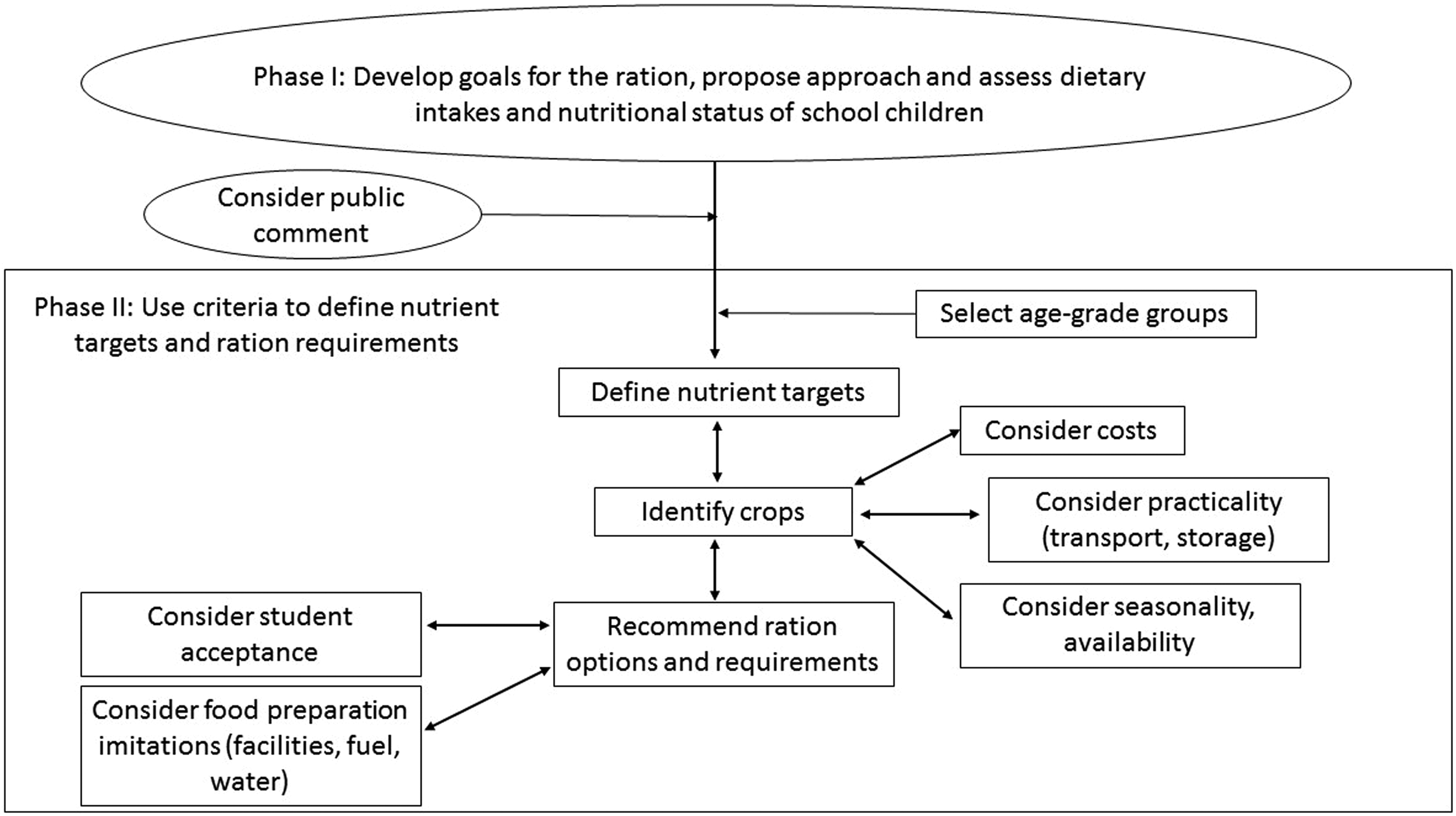
Districts in Ghana where the School Meals Planner was introduced in the 2014/15 school year.
Conceptual Framework
The design of the School Meals Planner was guided by a conceptual framework (Figure 2). 15 In phase 1, goals should be established at the national level, such as nutritional standards for school-aged children. In phase II, criteria such as the age–grade group, student acceptance, and food preparation limitations should be considered to define nutrient targets and ration requirements. Figure 3 illustrates the activities that took place at the national, regional, school, and community levels to support the sustainable implementation of the pilot as well as the key considerations and trade-offs. The tool builds on the Nutval software, which is used by the World Food Programme (WFP) and the United Nations High Commissioner for Refugees for planning and monitoring the nutritional content of general food aid rations. 16
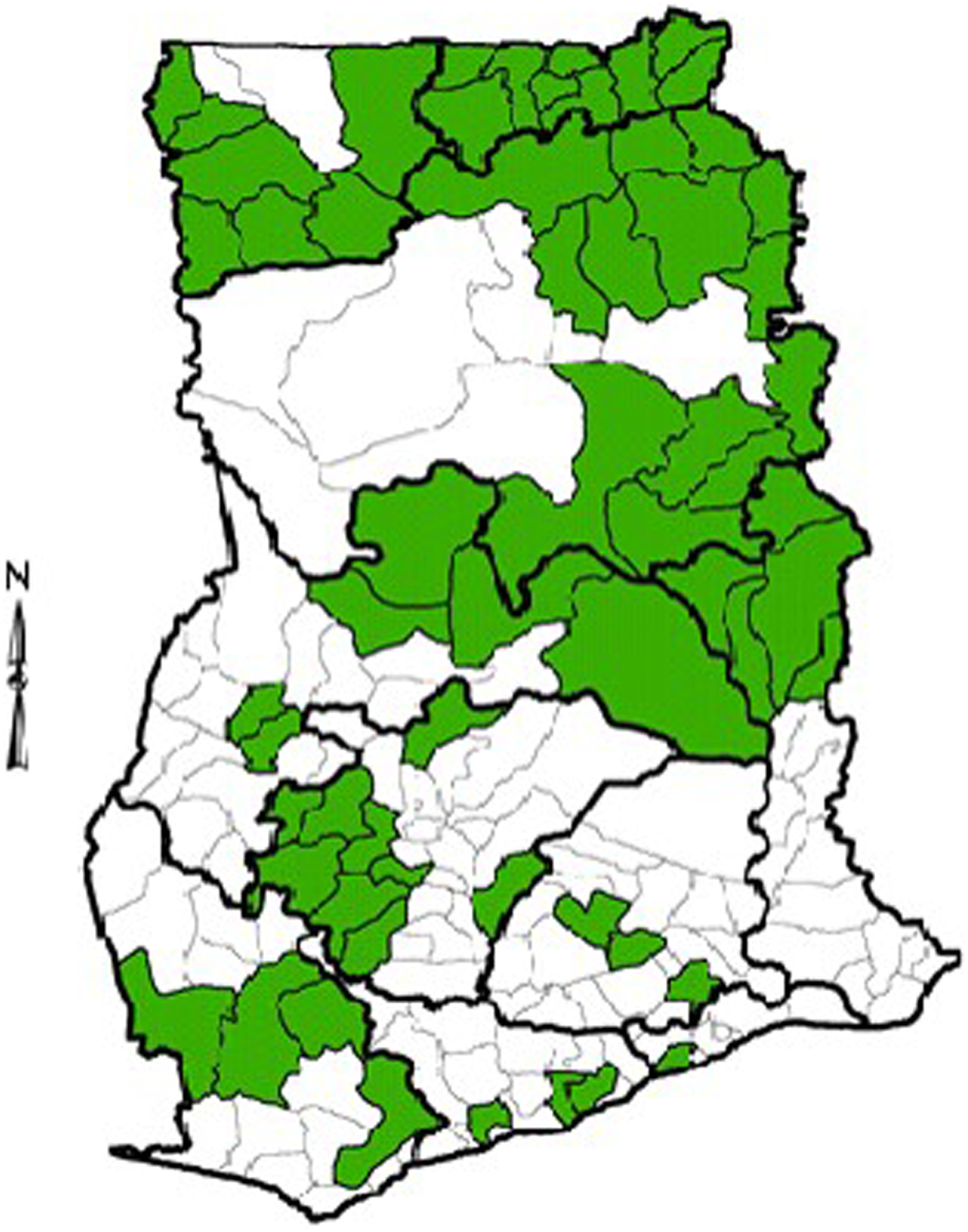
A framework for developing menus for home-grown school feeding programs. Adapted from Galloway 15 (School Meals: Building Blocks for Healthy Children. US National Academy of Sciences, 2010).
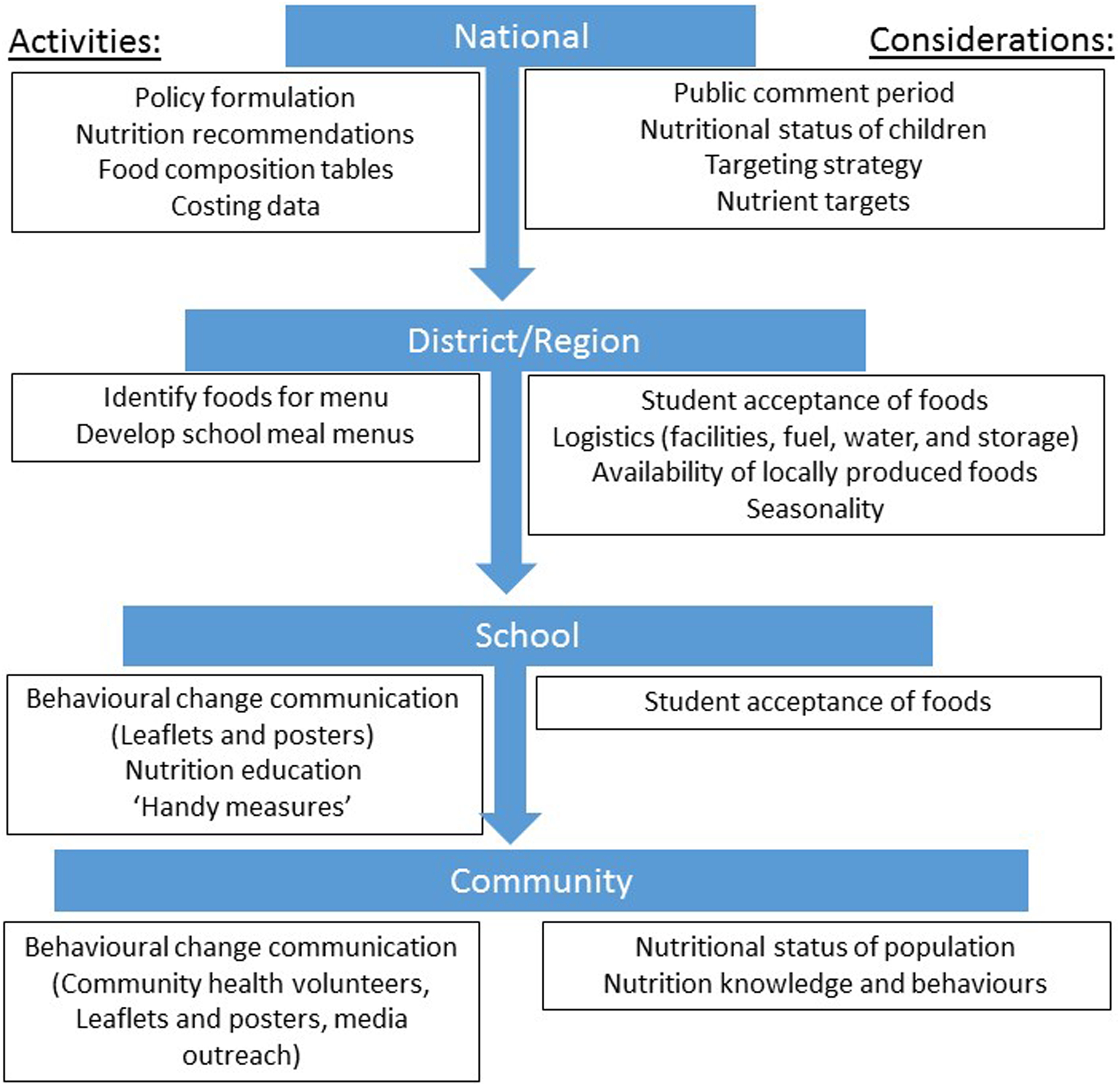
Four-tier strategy for implementing the School Meals Planner.
Nutrition Recommendations and Targets
While attention to the dietary quality of children and adolescents has grown, few low- and middle-income countries have adopted nutrition recommendations for this age-group. 17,18 In terms of school meals for this age-group, some countries like Brazil and Chile specify nutritional objectives and standards, while this practice is less common in Africa. For the pilot in Ghana, districts sought to provide 30% of the international recommended daily allowances (RDA) for children 6 to 12 years of age for energy, protein, fat, 4 minerals, and 4 vitamins (note 2). 19,20 These nutrients were chosen because of the known prevalence of inadequate energy intake in developing countries and suspected inadequate intakes of protein and fat. The vitamins and minerals chosen represent micronutrients that are known to be deficient in the diets of vulnerable groups in developing countries and which are associated with health status and cognitive function. This target drew from international recommendations that meals provided in half-day schools provide 30% to 45% of the RDAs, while meals in full-day schools provide 60% to 75% of the RDAs. 21 Typically, 1 meal is provided in half-day schools, which may be a mid-morning meal or lunch. Meals in full-day schools may include 2 meals, where 1 is a small meal or snack.
Table 1 presents the international RDAs of energy and the selected micronutrients (vitamins and minerals) as well as the 30% targets adopted by the Government of Ghana for the school feeding program. In addition to the 6- to 12-year-old age-group thresholds, the School Meals Planner tool also includes settings for the 3- to 5-year-old age-group and the 12- to 16-year-old age-group that similarly are based on the international recommendations. 17 –19 Energy and nutrient requirements and recommendations are generally higher for boys than girls, by 5% to 15%, and the tool incorporated the reference values for boys. 17 –19 Depending on the age distribution of children attending primary schools, it is possible that children outside the 6- to 12-year age-group receive meals. In Ghana, the gross enrollment rate for public primary schools was 97% in 2012, while the net enrollment rate was 82% (note 3). 22
Recommended Daily Allowances of Energy and Nutrients by Age-Group and Targets Established for GSFP.
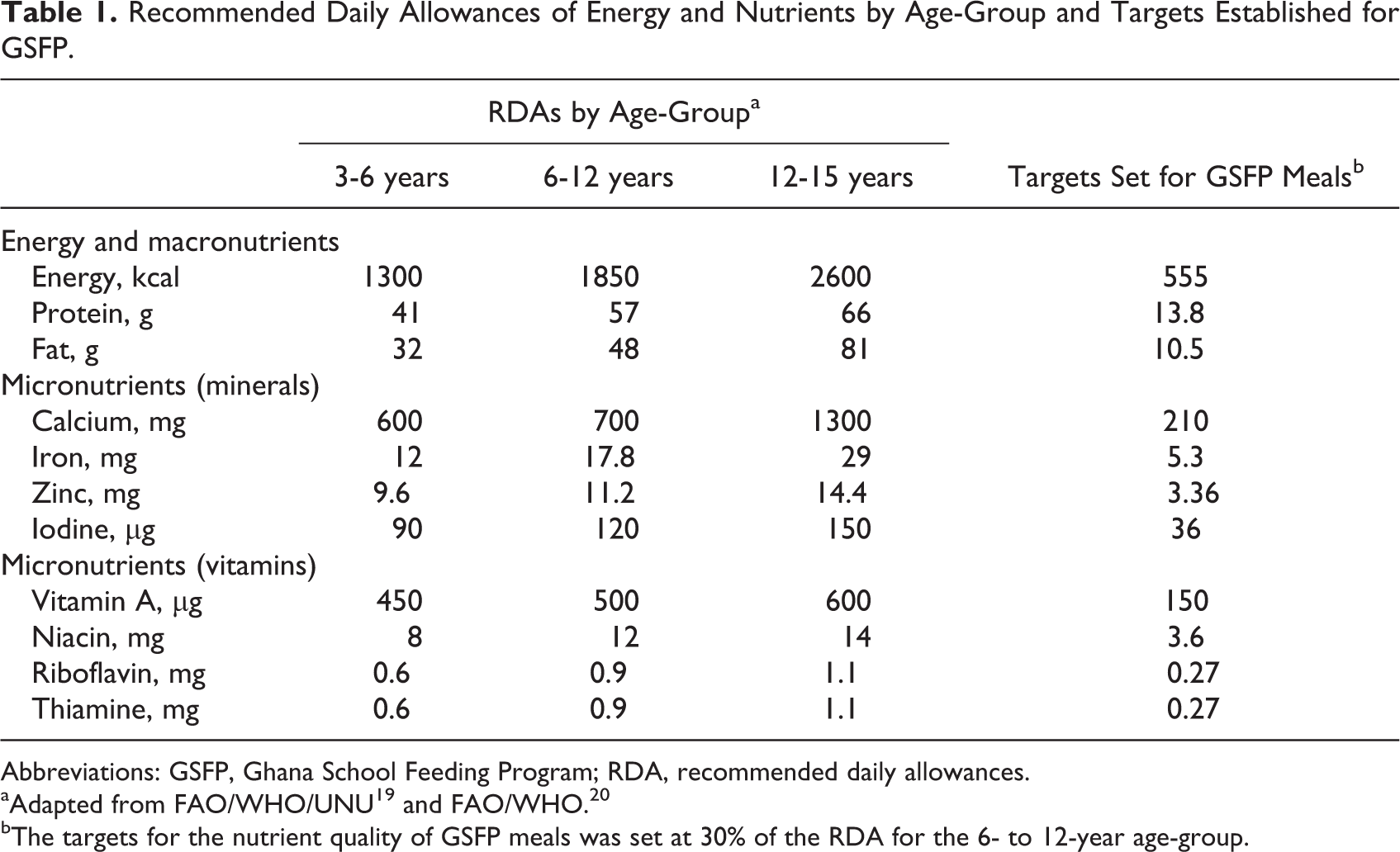
Abbreviations: GSFP, Ghana School Feeding Program; RDA, recommended daily allowances.
bThe targets for the nutrient quality of GSFP meals was set at 30% of the RDA for the 6- to 12-year age-group.
Food Composition Tables
The School Meals Planner tool draws from country-specific food composition tables (FCTs), which provide the nutrient (energy, macronutrient, and micronutrient) composition of foods commonly available and consumed from different regions in the country. Some national food and regional FCTs are also available through the International Network of Food Data Systems of the Food and Agriculture Organization (FAO). 23 The FCTs for the Ghana version of the School Meals Planner consisted of a total of 559 food items including cooking oils. These FCTs included the 2012 edition of the West Africa FCT developed by the FAO, an FCT developed in 2012 by the University of Ghana, and the FCT underlying Nutval 3.0 (note 4). 24 The FCTs also included multi-micronutrient powders (MNPs), which were tested in the pilot project as a short-term strategy to improve the micronutrient content of school meals and mitigate anemia in the population. 8 Caterers mixed the appropriate quantity of MNPs into the main dish prior to serving it to schoolchildren. The formulation included 15 vitamins and minerals, including iron in the form of ferrous fumarate.
Food Prices
Corresponding market prices to foods from the FCTs can be incorporated in the School Meals Planner tool to estimate the cost of producing a menu. In Ghana, several options were possible based on weekly market food price information collected by the Ghana Ministry of Agriculture. Average food prices from the past year could be used, or averages adjusted for emergent trends over the coming year. Food prices could be set every budget cycle or school term, with allowance for adjustments in case significant fluctuations occurred over the period. As such fluctuations can have significant repercussions on the HGSF system, managing spatial and temporal variation is critical.
Significant challenges were faced during the pilot in Ghana to incorporate food price data. Ultimately price data for some food items were included in the pilot but not all foods. Food price data reflected significant seasonal and regional variation, suggesting that a fixed reimbursement rate across regions and across the school year may not be efficient for the GSFPs decentralized procurement model. Prices also varied notably by source of purchase. Prices offered by farmers were typically the lowest followed by trader prices and market prices. Due to these challenges, the tool may have generated menus that were too costly with respect to the per-meal reimbursement rates.
Menu Design
Menus can be designed with the School Meals Planner tool as follows. For each dish, the individual foods must be selected from a drop-down menu and their respective per-child quantities noted. Once defined, a dish can be named and saved. Multiple dishes can be toggled together to create daily meals and weekly menus, which could then be printed and posted in schools. 25
In this process of defining dishes and menus, the full nutrient value of the raw foods is calculated and depicted in the dashboard, which was designed to aid program officials who are not nutrition specialists but nonetheless responsible for planning school meals for children. As an example, Figure 4 presents the dashboard from a meal that includes rice, beans, and plantains cooked in red palm oil. A set of gingerbread men figures, one for energy and each key nutrient, filled with color as individual foods were added to the meal, providing a visual indication of the meal’s overall nutrient content. The color filling the gingerbread men figures varied depending on whether the energy or nutrient content was less than 40% of the target, between 40% and 100%, and above 100% of the target (note 5). The estimated nutritional content of dishes was based on the sum of individual raw foods, whose nutrient content may alter over the course of cooking and meal preparation. Also, the estimation for protein did not adjust for quality, which may be related to its bioavailability, utilization, or growth promotion.
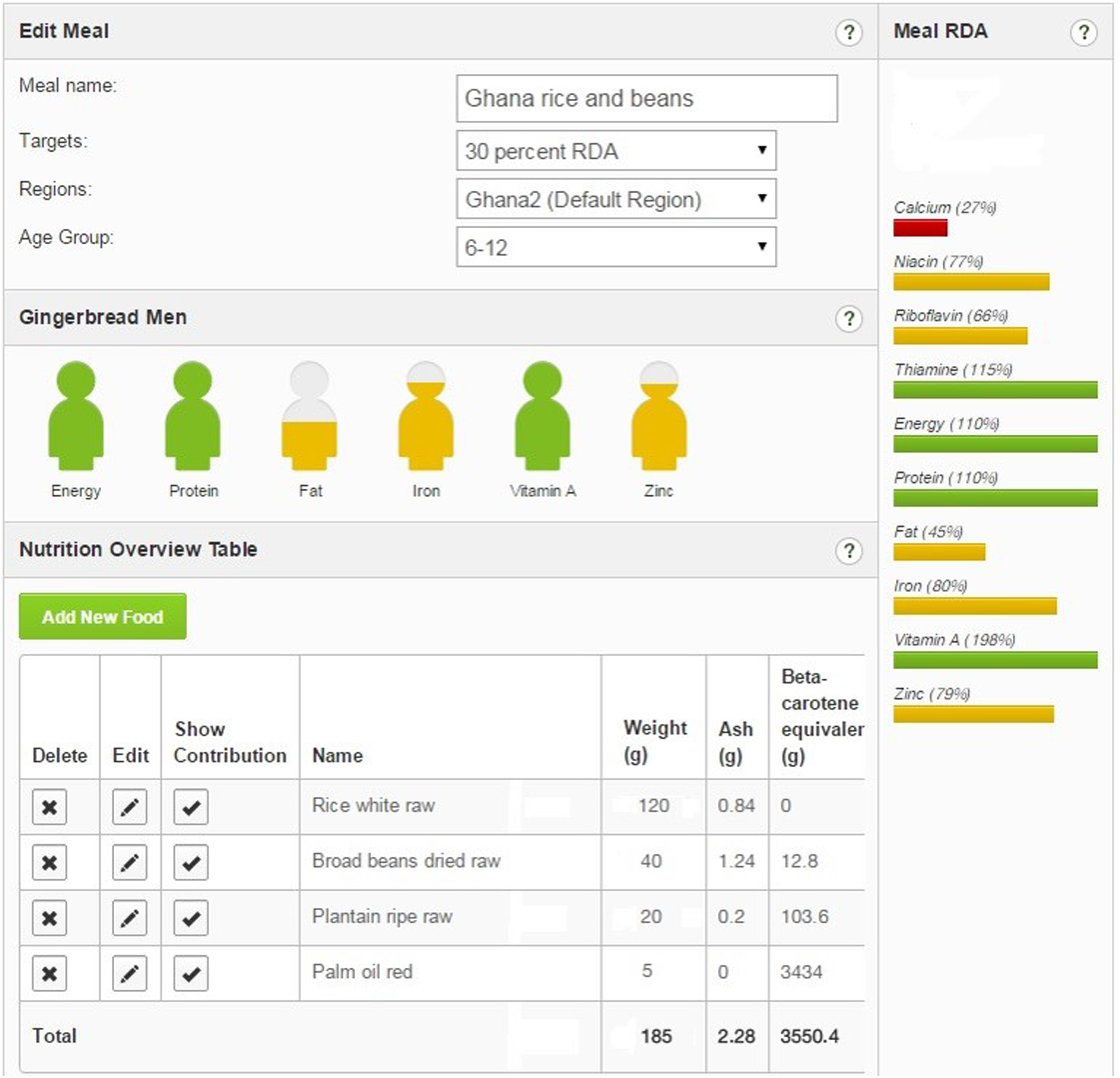
The Ghana Meal Planner tool dashboard.
Handy Measures
In order to translate quantities noted in menus developed with the School Meals Planner into programmatic reality, a set of calibrated handy measures were developed in Ghana to help caterers accurately visualize appropriate portion sizes and prepare meals accordingly (note 6). 26 Handy measures were developed for raw ingredients prior to cooking as well as for serving portions of prepared meals after cooking (see Table 2). In Ghana, a market survey was conducted to identify potential handy measures for cereal-based foods, tubers, plantain, beans, and stews and soups. The measures were then calibrated to desired portion sizes by scooping and weighing relevant foods and dishes. A set of wooden blocks provided a visual indication of the portion sizes for animal source foods, plantain, and yam. The recommended serving of 10 g of cooking oil per child was equivalent to half a plastic teaspoon.
Handy Measures Developed for the Ghana School Feeding Program (GSFP).a
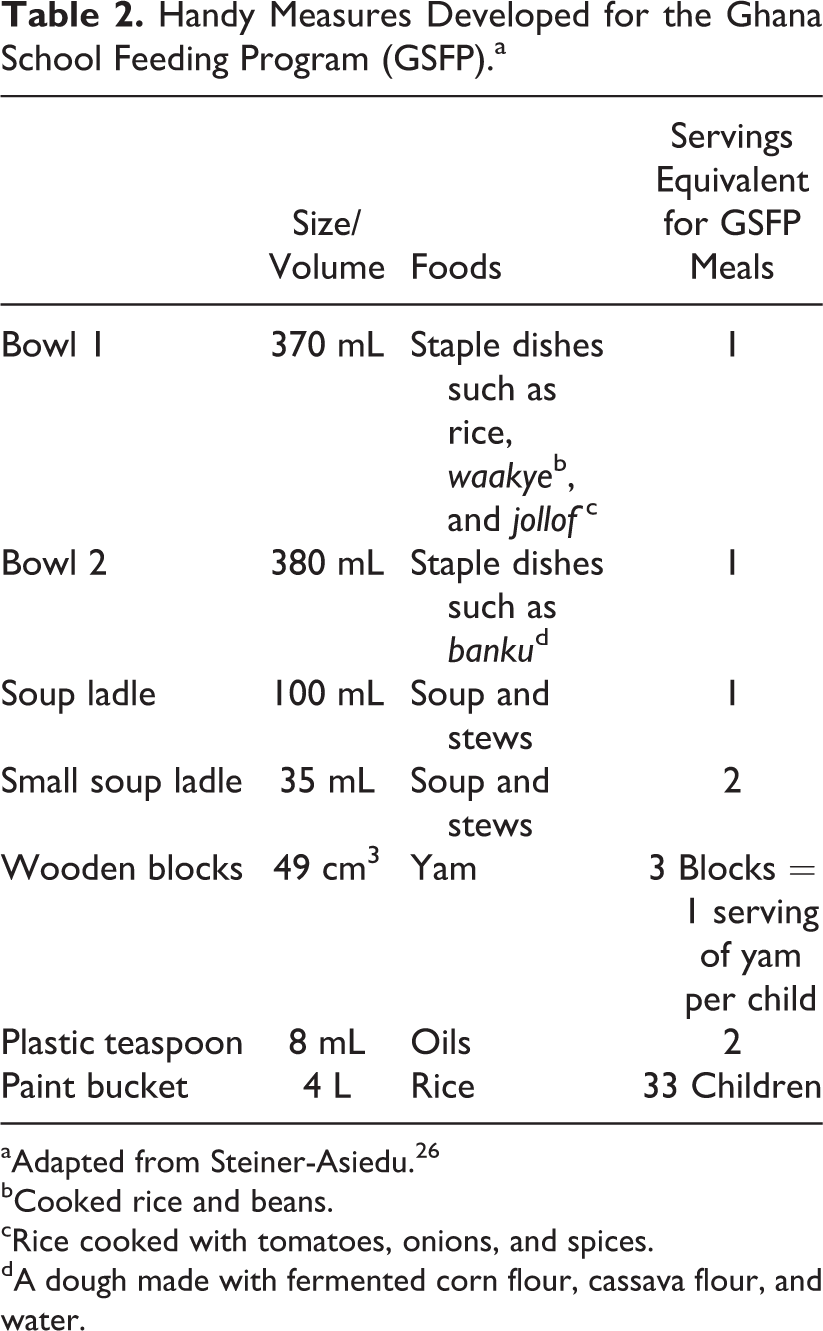
aAdapted from Steiner-Asiedu. 26
bCooked rice and beans.
cRice cooked with tomatoes, onions, and spices.
dA dough made with fermented corn flour, cassava flour, and water.
Behavior Change Communication
A behavior change communication (BCC) campaign was developed for the pilot based on a review of similar interventions in Ghana and West Africa and scoping analysis that included focus group discussions. 27,28 A focus for this investigative work was to assess the extent of negative perceptions associated with some nutrient-rich foods. 29 For example, according to traditional belief in West Africa, cocoyam may cause hemorrhoids and infertility, while others consider it as a poor man’s food. 29 In discussions with communities in Ghana, it was learned that such beliefs are often quite traditional and no longer adhered to, though they may influence eating practices for some individuals.
Posters, wall charts, and fliers were designed to place in communities and schools that depicted healthy diet messages that centered on the “3 Gs”—grow (proteins), glow (fruits and vegetables), and go (energy). Nutrition-themed children’s songs called “jingles” were also developed and delivered via radio in English and 6 local languages. A media and advertising company undertook the community radio outreach in the project districts.
Training, Monitoring, and Evaluation
Comprehensive step-down training was undertaken in districts, communities, and schools to implement the School Meals Planner Package in Ghana. The activities that took place are described below. An overview of the monitoring and evaluation (M&E) approach is presented.
National- and district-level training
In the summer of 2014, national policy makers including representatives from the Ghana Health Service (GHS), School Health and Education Programs (SHEP), and GSFP participated in trainings on the proper usage of the School Meals Planner tool. Subsequently, multisectoral district-level training was conducted in Accra, Kumasi, and Tamale on use of the tool to design school menus. Each training lasted about 1 day, and the sessions were guided by a manual. 30 In addition, district teams estimated the appropriate weekly quantities of each individual food in the menu that needed to be procured by schools participating in the GSFP using school enrollment figures.
Training covered strategies to enhance the nutrient content of menus such as using the tool to identify and select nutrient-rich foods for menus. Other areas covered in the training included food safety and nutrition. Furthermore, the training advised on the usage of foods rich in complementary proteins such as rice and legumes as an alternative to the complete proteins available in foods from animals, which are more costly and challenging to store safely in the absence of refrigeration. Ghanaian children tend to have a mixed diet with animal proteins sourced mainly from fish, which can increase the bioavailability of iron from African indigenous vegetables and other plant sources. The training also provided guidance on the usage of appropriate types and quantities of vegetables, which was especially important as handy measures for this food group were not developed. The handy measures were omitted due to the wide range of vegetables used in Ghanaian cooking and which vary substantially in nutritional content.
Communities and schools
A core team of trainers comprising the project team, national, and regional officials carried out training at the community and school levels (caterers, cooks, head teachers, and circuit supervisors) prior to the 2014/15 school year to support the implementation of the School Meals Planner Package in schools. 28 The Government of Ghana issued a directive to caterers and cooks in the project districts to participate in training where they learned about how to prepare meals according to the new menus and how to use the handy measures. In addition, they were provided with general education on food safety, hygiene, cooking practices, and nutrition such as handwashing with soap and the quality of water for cooking, drinking, and washing. As the use of iodized salt is a public health measure to control iodine-deficiency disorders prevalent in the country, cooks and caterers were encouraged to use iodized salt in meal preparation. Head teachers and some members of the community were trained to monitor meal preparation including the usage of the handy measures.
Training was also provided to 15 local nongovernmental organizations that were recruited to undertake regular BCC activities in the communities. They provided households with information regarding water, sanitation, and hygiene (WASH); food preparation and consumption; and improved hygiene and sanitation behaviors. In addition, they distributed and monitored the usage of the BCC materials including the posters.
Monitoring and evaluation
Monitoring information was reported monthly by district desk officers to the GSFP Secretariat. In addition, monitoring visits were undertaken in all the 42 pilot districts at least once every school term. The M&E teams that included representation from district offices to ensure alignment with the broader GSFP M&E system asked teachers and caterers about different aspects of the intervention. These visits also served the purpose of providing additional training, for example, in schools which had been assigned new caterers.
The impact of the School Meals Planner Package on the dietary intake of children and the sourcing of foods will be assessed through an impact evaluation following the collection of the end line survey data in 2016. 8 Of the 42 districts where the School Meals Planner was introduced, 29 districts represent 1 arm of the impact evaluation. Other arms of the study include districts where regular GSFP meals are served and districts where no free school meals are provided. Feedback from the implementation of the School Meals Planner Package in the 29 districts representing an arm of the impact evaluation is reported below.
Findings From the Implementation
Following the district-level trainings, about 66% of district desk officers reported that the School Meals Planner tool was easy to use. Participants appreciated the opportunity to learn about nutrition, especially the value of locally available foods, and determining the quantities of foodstuffs to procure. For example, 1 district desk officer noted:
The tool has enabled us, those who plan the meals, to correctly estimate the quantity of food the caterer needs to prepare per child and also assures us of the quality of food.—District desk officer from Nkwanta South, Volta Region
The handy measures were positively received although partial compliance was observed in about 30% of the districts. One district desk officer reported:
The SMP has made planning the district menu very easy. In addition, the use of the handy measures has also ensured that the amount of food served is the right quantity the child requires.—District Desk Officer from Mpohor, Western Region
The implementation of the school BCC was uneven across districts due to delays in the provision of school-level training. However, community-level BCC activities took place in all the districts during the study period. The jingles were played by 15 radio stations during the 2014/15 school year reaching a monthly listenership population of more than 1.4 million. In the northern regions of the country which are generally poorer, targeted children and households were less aware of the jingles due to low radio usage and the times when they were broadcasted. Furthermore, primary listeners of community radios were mostly adult men. In order to increase the transmission of BCC messaging to the target population, vans were employed to drive through the communities and broadcast the jingles.
The community volunteers and monitoring teams reported that children and households who heard the jingles liked them, and the messaging was clear. However, some individuals noted that the importance of diverse diets is well understood, but that the high cost of foods from certain food groups contributing to diverse diets such as fruits and vegetables is a major barrier.
In focus group discussions, concerns were raised by government officials that menus that met the 30% RDA targets may exceed the per-meal allowance to caterers. This would imply that budgetary allocations be increased or nutritional targets lowered. Some suggested that the costing functionality would be more useful if the tool could suggest alternative foods to increase nutrient value while lowering costs. In addition, they contributed to decisions by the government to increase the per-meal reimbursement rate for caterers from GHS 0.50 to GHS 0.80 in November 2014 with plans to further increase the rate to GHS 1.0.
Discussion
Governments seek evidence-based guidance on how to implement and scale up sustainable HGSF programs that provide nutrient-rich meals while facilitating linkages with agricultural producers in the proximate area. 2 The School Meals Planner Package was designed to address this need by allowing decision makers to develop options and assess trade-offs. The success of its introduction in Ghana during the 2014/15 school year is reflected in an address by the Minister of Finance and Economic Planning of Ghana, the Honorable Seth Terkper, in which he stated that “the [School Feeding] Policy will be launched for implementation and the ration design tool [School Meals Planner] will be applied to improve the nutritional intake of pupils” (note 8). Further research documenting the effectiveness of the School Meals Planner Package in contributing to the nutrition and agriculture objectives of the GSFP is needed. 8,31
The pilot of the School Meals Planner Package in Ghana identified new avenues to strengthen HGSF programming. First, the School Meals Planner could improve information flow between caterers and local procurement entities including farmers with regard to the procurement requirements of the school meals, supporting the development of forward contracts. Second, an adjustment to the tool that would allow it to automatically propose alternate lower-cost, higher nutrient content foods for meals could help address the challenge of designing meals within a budget constraint. Third, linear programming could be added to the School Meals Planner tool to support optimal menu design within the constraints, which could be informed by findings from the pilot. 32 Adjustments for protein quality and bioavailability of certain micronutrients (eg, iron and zinc in particular) could also be part of the tool, resulting in greater accuracy in estimating the contribution of school meals to meeting children’s nutritional requirements. All aspects of the tool are data driven, flexible, and can be easily modified for this purpose. For example, the display content can be configured to display different nutrients depending on the key deficiencies in the population, and other parameters such as age-groups and food prices.
Conclusions
It is clear that the School Meals Planner Package can be used by planners and implementators alike to enable the provision of nutritionally balanced meals that can be locally sourced. The success of the pilot is reflected in Ghana’s adoption of the tool as official policy. Furthermore, more than 21 governments from sub-Saharan Africa have expressed interest in adopting the School Meals Planner Package to support their HGSF programs.
The tailoring of the intervention to the context is necessary in order to most effectively contribute to the objectives of the program and the target populations. Country-specific FCTs are especially important for the proper functioning of the tool and may need to be developed. Other considerations include the policy and political context; for example, whether national nutrition recommendations for school-age children exist on which to base the nutritional targets for school meals.
Footnotes
Authors’ Note
All authors contributed to the development of the manuscript and have approved of its submission to Food and Nutrition Bulletin. MF collated inputs from all the individuals involved in the development and implementation of the School Meals Planner in Ghana and led the drafting of the manuscript. RG developed the conceptual framework for the tool, contributed to the original design of the tool, and provided significant inputs to the organization and drafting of the manuscript. AG contributed to the original design of the tool and accompanying materials, the drafting of the manuals, as well as the design of the impact evaluation and M&E to document the impact. DM was instrumental in introducing the tool in Ghana and in liaising with the government, for example, in achieving the directive to caterers to use the handy measures. As the lead nutritionist in the project, SH contributed to the setting of the nutrition recommendations, the development of the training materials, and the handy measures. She also provided inputs and reviewed the accuracy of text related to nutrition. JK provided strategic inputs on the high-level implementation of the tool and how to adapt the tool to the Ghanaian context. She also supported the development of the manuscript, in particular the introduction and discussion sections as well as the organization. As a representative of the Ministry of Health, KQ was a key focal point for the implementation of the School Meals Planner in Ghana, in particular the nutrition aspects. She provided a close review of text related to the implementation of the tool in Ghana. RB worked closely with SH on the development of the handy measures and the SBCC. EA provided key support to the drafting of the manuscript. FP led in the design of the dashboard of the School Meals Planner, and the development and dissemination of the behavior change communication materials. LD led and coordinated the overall process of the School Meals Planner and provided strategic direction on the development of the manuscript.
Acknowledgments
The School Meals Planner and accompanying tools were developed by Imperial College London’s Partnership for Child Development (PCD). The authors acknowledge the enabling environment provided by the Government of Ghana, particularly the Ghana School Feeding Programme (GSFP), for the adoption and implementation of the School Meals Planner Package in Ghana. Specific individuals who supported the pilot include GSFP national coordinator, Hon Siedu Paakuna Adamu and his team, including Mrs Kuma Mintah, Mrs Anima Wilson, Mrs, Susan Torson, Mr Kwame Nuako, as well as regional and monitoring coordinators and district desk officers, also provided significant support. The authors also recognize the key role played by PCD Ghana staff during the pilot in particular the Country Program Director, Getrude Ananse-Baiden, Lutuf Abdul-Rahman, Rosanna Agble, Abigail Bondzie, and Fred Amese. Members of the BCC reference committee are also acknowledged for their technical input. These members included Kate Quarshie, Gloria Folson, Dr Matilda Steiner Asiedu, Susan Torson, Dr Philip Baba Adongo, Yvonne Ampeh, Rosanna Agble, Edna Appiah, Lutuf Abdul-Rahman, Dr William Anyan, and Fred Amese. Matilda Steiner-Asiedu developed the handy measures for the project. Support from Charlotte Broyd, Kristie Neeser, and Alvin Parish is acknowledged for the development of the guidance documents, while Alvin Parish also developed the offline version of the tool. Valuable inputs from partners are also recognized, including from Arlene Mitchell from the Global Child Nutrition Foundation, Alesha Black formerly from the Bill and Melinda Gates Foundation, and Mona Tahboub from Dubai Cares. Ideas and feedback on the School Meals Planner from WFP Ghana, SNV Ghana, Ajinomoto, African Union, and NEPAD are also acknowledged.
Declaration of Conflicting Interests
The author(s) declared no potential conflicts of interest with respect to the research, authorship, and/or publication of this article.
Funding
The author(s) disclosed receipt of the following financial support for the research, authorship, and/or publication of this article: The authors acknowledge funding from the Bill and Melinda Gates Foundation, the World Bank and Dubai Cares that supported the design of the School Meals Planner tool, the research framework and the program activities.