



Abstract
Since the late 1990s, the International Potato Center has promoted orange-fleshed sweet potato (OFSP) cultivars in Mozambique as a healthy food, emphasizing its capacity to reduce the prevalence of vitamin A deficiency among mothers and young children. This article seeks to reveal why consumers in Maputo, the capital city of Mozambique, adopt or reject OFSP looking at the role of food systems and consumer characteristics in access and acceptance of healthy food and at the positioning of OFSP on the market in terms of lifestyle and need satisfaction.
The results of 255 street interviews confirm that OFSP is widely known. Information reaches people mainly via informal channels (relatives and retailers). Nonadoption is the result of the positioning of OFSP as food for young children and sick people. The OFSP appeals most to the hedonistic and conservative lifestyle segments. Adoption is associated with the perception of OFSP as a source of vitamins that builds up muscles and improves physical appearance and self-fulfillment. While women are typically responsible for domestic tasks, male adopters emphasize the role of OFSP in family health and well-being more than female adopters. This first attempt to understand the marketing of healthy food in Mozambique exposes many similarities between the urban consumers in Maputo and those in developed countries. The results indicate that future marketing should exploit informal channels such as vendors and emphasize its nutritious value for all consumers instead of focusing on mothers and young children.
Introduction
What people eat is a major cause of health and environmental problems on our planet. For that reason, many are calling for drastic changes in the global food system and are urgently promoting the consumption of healthy food. 1,2 Sweet potato is widely acknowledged to be a healthy food. 3 Biofortified orange-fleshed sweet potato (OFSP) cultivars are a good source of vitamin A and can play a key role in combatting vitamin A deficiency 4 when linked to community-based nutrition education. 5 As vitamin A deficiency affects mostly young children, OFSP has been positioned as an excellent component of complementary feeding programs. 6,7
Food and nutrition insecurity have traditionally been approached as rural problems affecting the global south (eg, Burchi and De Muro 8 ). More recently, it has become clear that they also affect urban populations 9 -11 and that specific interventions are required to achieve inclusive and resilient urban food systems. 12 The OFSP can be part of such inclusive and resilient urban food systems through the promotion of fresh root supply to urban markets and the incorporation of OFSP in processed products. 5,13 Sweet potato is mostly grown and eaten by the poorer strata, which means that these can reap the nutritional benefits of biofortified, orange-fleshed cultivars. 14,15 As it is multiplied vegetatively, its planting material can be shared, avoiding the market-induced inequalities associated with hybrid crops that require annual purchase to sustain superior yield levels. 16
In Mozambique, ministries responsible for health and agriculture and the International Potato Center have actively promoted the production and consumption of OFSP. The health sector actors emphasized the use of OFSP for young child feeding to avoid vitamin A deficiency. A branding campaign was built around the Portuguese word for a candy: OFSP as “The sweet that gives health.” 17,18
Maputo City is the capital of Mozambique. With about 1.1 million inhabitants, it is the country’s largest city. 19 About 87% of its population is food insecure. 11 Data collected in 2014 and 2017 in different neighborhoods across the city show that during these 3 years, the percentage of the population in Maputo consuming OFSP rose from 69% to 90%. The OFSP had become more available and its quality had improved 20 as new, high dry matter content cultivars had been disseminated to farmers. 21 About one-third of the estimated 8000 tons traded annually in the city consists of orange-fleshed cultivars. 22
By 2017, OFSP was widely adopted in Maputo City, but survey responses suggested that its use for complementary feeding decreased from 44% in 2014 to 31% in 2017. Thus, while the OFSP innovation was successful as to adoption for consumption, it was less successful in contributing to the improvement of the nutritional status of the children most vulnerable to vitamin A deficiency. 20
Theoretical Framework and Hypothesis
Lessons from across the globe show that the uptake of a healthy food such as OFSP is shaped by the interplay of contextual and individual decision-making factors. Five concepts help to understand the context in which healthy dietary choices are made: availability, accessibility, convenience, affordability, and acceptability. 23 Availability, accessibility, and convenience refer to the physical existence and the proximity of a certain food. Food retail outlets affect consumers’ nutrition- and diet-related health by the foods they sell and prices they charge. 24 In “food deserts,” there are no outlets selling healthy food and, as a result, people tend to follow unhealthy diets. 25 The Maputo sweet potato market is dominated by traditional outlets, mainly sidewalk hawkers and open-air markets. Supermarkets supply less than 0.2% of sweet potato roots. 22 Unfortunately, there are no systematic data as to by whom and where OFSP are regularly sold.
Affordability combines price and purchasing power. Healthy food alternatives are often more expensive than unhealthy ones. 23,26,27 In Maputo, orange- and white-fleshed roots are normally mixed and carry the same price. 22 Affordability is, therefore, not an important factor in deciding between the healthier orange and the less healthy white-fleshed alternatives.
Acceptability refers to cultural and social factors. In the case of sweet potato, adult consumers in the Americas prefer low dry matter varieties, whereas adults in sub-Saharan Africa prefer moderate-to-high dry matter types. 17 Culture may appear to be an inert and insuperable impediment to change. In reality, it is dynamic and mutable. Irish potato was initially “met with repulsion,” but became a staple in European diets. 28 In many countries, the Italian cuisine has functioned as “door-opener for other ethnic cuisines.” 29 Pizza, once the diet of the paupers of Naples, is now eaten by poor and rich across the planet. 30,31 Globally, there is a convergence to Westernized diets driven by changes in the socioeconomic context and in supply 32 and associated with the emergence of new nutritional inequalities. 33
Group behavior and imitation of role models (including gender models) are important and pervasive social factors shaping individual diets, 34 -38 pointing at the importance of communication for behavioral change. Communication happens through a broad array of channels ranging from mass media to face-to-face contacts. The impact of each channel depends on the intended change and the targeted social setting. 39 Haas et al 26 emphasize the role of word-of-mouth and mass media in promoting organic food. While mass media such as TV and radio can reach vast audiences, 2-way communication between 2 or more individuals is more powerful to create or change an individual’s attitudes. In the European Union, typical sources are TV/radio, magazines and newspapers, health professionals, and relatives and friends. 40 Retail traders can have an important role in promoting the new foods and spreading nutritional messages, too. 17,29
Individual consumer characteristics influence dietary choices. Demographic variables such as age, gender, socioeconomic status, and ethnicity are associated with health behaviors. 41 Women and higher educated people are more likely to buy and eat healthy food. 42 Age seems to have an influence on the nature of the health motive. Younger consumers, for example, may have more an “enjoy-wellness-health orientation, parents connect health with responsibility-security and for older people a health-sustaining view is dominant.” 26 Haley 43 grouped consumers into 4 lifestyle categories: hedonistic, active, conservative, and value oriented. Each lifestyle is characterized by a specific dominant benefit: taste, appearance, health, and price. Understanding the segments in the market allows a marketer to effectively present and position the product.
The final decision about what is eaten in a household is taken by the ones who buy and cook. These tasks are part of the wider, often gender-defined, division of tasks and responsibilities within the household. 23,44 -46 It is, therefore, important to identify who within the household level is responsible for these tasks. 24 In many African communities, women run their households and thus shop for household commodities more than men. 47 There appears also to be a difference between the genders as to the allocation of income. Data from Kenya and Malawi indicate that the proportion of income controlled by women has a positive and significant influence on household caloric intake. 48 Similarly, interviews with informal traders in airtime for mobile phones in Maputo show that women use the revenues to sustain their households whereas men use them for their personal aims. 49
How can healthy functional foods that appear unfamiliar or less appealing be incorporated into mainstream diets and into long-term eating patterns? Changes in food preferences in the Second World War in the United States prepared the terrain for approaching dietary change in terms of barriers and incentives. 50 Different models have been proposed, such as the stages of change model, the health belief model, and social cognitive theory. 51 Social cognitive theory posits a multifaceted causal structure in which self-efficacy beliefs operate in concert with cognized goals, outcome expectations, and perceived environmental impediments and facilitators in the regulation of human motivation, action, and well-being. 52 -54 The 3 models share the assumption that the subject reflects on his or her health situation and his or her capacity to improve that through behavioral change before acting. They have been applied to guide and analyze healthy food campaigns in different geographic and cultural contexts such as the United Kingdom, 55 Germany, 56 Kenya, 7 and Nigeria. 57 The Kenya and Nigeria cases refer to experiences with the promotion of OFSP.
Consumer choices are influenced by their preexisting attitudes. For example, it is difficult to persuade people who strongly oppose to genetically modified food with safety messages if food safety is their most important concern. 58 Marketing strategies—social and commercial—try to present a product in a way that appeals to consumer needs. Social marketeers appeal to 4 motivations (2 negative and 2 positive): problem removal, problem avoidance, self-approval, and sensory gratification (mood elevation). For some health behaviors, positive appeals are underutilized. Negative social marketing campaigns may elicit negative emotions, which may encourage “defensive or maladaptive” responses. 59 Some positive appeals may be through nudges such as the association with popular cartoons or aspirational figures. 60,61 In the case of OFSP, the emphasis has been on its potential to contribute to the reduction of vitamin A deficiency, that is, on the negative appeal of problem removal or avoidance.
One model to understand consumer motivations was developed by Maslow. 62 It assumes that there are 5 hierarchically ordered general drivers of human behavior. From the bottom of the hierarchy upward, the needs are basic needs (physiological, safety), psychological needs (love and belonging, esteem), and self-fulfillment needs. The model presumes that the higher order needs can only be met when the inferior ones are satisfied.
Critics of Maslow’s model have questioned the validity of the proposed hierarchy 63 -65 ; the absence of heroic and altruistic behavior and of needs such as dominance, abasement, play, and aggression 65 ; and his treatment of gender. 66 Buttle 67 argues that Maslow conceives of needs as “universal and instinctoid” and fails to recognize that needs are “the requirements of a particular social life” and vary historically and geographically.
Maslow’s model’s appeal stems from its “parsimoniousness and elegance,” its face validity “which provides it with a plausible explanatory power,” and its broad explanatory scope. 67 Concepts such as esteem and self-actualization are imprecisely defined. This gives researchers space to operationalize them in their own manner for their own field of interest. Maslow’s model has been applied to the analysis of business problems, 66 the use of social network services, 68 disaster response, 69 global food markets, 70 and the adoption of organic food. 26,51 According to Haas et al 26 in line with Maslow’s prioritization of safety and security needs, most organic food consumption is driven by egoistic motives (health, safety). Acton and Malathum (2000) quoted by Henley and Donovan 59 found that the need for self-actualization was the best predictor of health-promoting self-care behavior. People who already satisfied their basic and psychological needs were more likely to adopt behaviors that led to improved health.
Diets are influenced by factors at macro and micro level. Access, affordability, convenience, and acceptability mold the context within which people make dietary choices. Acceptability emerges from the local food culture, but that culture is dynamic and malleable. Food choices are made to meet needs that can go beyond the basic physical survival of the individual to psychological satisfaction and self-realization. These needs are also shaped by the individual’s position in the household and the wider society, with gender being one of the most pervasive factors. For the specific case of OFSP in Maputo, this study evaluates the following hypotheses: (1) Retail plays an important role in the adoption; (2) adoption is related with its positioning on the market as a healthy food; and (3) women and men will differ as to their perceived satisfaction of their psychological and self-fulfillment needs by OFSP.
Method
This study uses the results of survey among pedestrians at different locations across Maputo City. Although there are constraints such as the length of the questionnaire and a possible selection and interviewer bias, 71 Haghdoost et al 72 and Nasirian et al 73 found that during street-based interviews, respondents may disclose more sensitive information than during telephone and household interviews.
Respondents were selected according to their availability and willingness to participate. Before starting the interview, they received an explanation about the objective of the research. They were not asked to provide their names or other identifiable information. After obtaining the interviewee’s consent, the enumerator applied a structured precoded questionnaire covering 3 major areas. The first area addressed the respondent’s socioeconomic position. Socioeconomic status variables covered were gender, 48 education, 74,75 occupation, 76 domestic responsibilities, 44 -46 and the area of residence. 77 In the case of Maputo, people who live in the city’s central district DU1 are generally better-off than those in the other areas. 78,79 For that reason, it is important to carry out interviews in all parts of the city. 20
The questionnaire’s second area was sweet potato consumer behavior. The main topics were whether the respondent ate and bought sweet potato, what kinds of outlets they patronized, and which ones they favored. It also addressed motives shaping the respondents’ preferences looking in particular at factors such as shopping environment or ambiance, convenience of the location, relation with the vendor, easy availability of the products one needs, price, hygiene, and quality. 23,80 -82 Despite the so-called “supermarket revolution,” most consumers in developing countries continue to purchase fresh food at traditional outlets. 80 In Maputo, 98% of the population buy food from informal vendors and 78% from small formal outlets. 11
The questionnaire’s third area aimed to uncover the motives that influenced adoption. After identifying the channels through which people obtained information about OFSP, the motives of those who consciously rejected OFSP were evaluated using the crop’s key attributes (taste, dry matter content), social marketing positioning (complementary feeding, healthy food), and availability. Next, motives of those who eat OFSP were assessed. The first assessment used Haley’s 43 market segmentation according to lifestyles (hedonistic, active, conservative, concerned with value) combined with memetics 34 to acknowledge pervasive social influences on eating. 36,37 The final assessment applied Maslow’s 62 hierarchy of basic, psychological and self-fulfillment needs described above. Questions covered OFSP capacity to cheaply satiate and give strength (basic survival), generate safety and happiness at the level of the household (belongingness), demonstrate the love one feels for one’s family (love and esteem), build prestige by demonstrating one’s knowledge about providing healthy food (self-esteem), and achieve self-realization by OFSP assisting molding one’s body as one desires.
Respondents were asked to express their level of agreement on a 3- or 5-point Likert scale. As normality cannot be assumed for these ordinal values, median scores were calculated and compared using nonparametric tests (χ2 and Mann-Whitney). 83 Calculations were carried out in STATA version 13.
Results
One male enumerator interviewed 255 respondents (139 women and 116 men) at 12 different locations: 11 within Maputo’s central district KaMpfumo (DU1) and 1 in neighboring KaMaxaquene (DU3). For practical reasons, it was not possible to cover the other urban districts. This is clearly reflected in the composition of the sample. The distribution of the residents across the urban districts is skewed in favor of KaMpfumo. In the sample, 36% of all respondents and 44% of the 210 respondents living in Maputo City resided in KaMpfumo against 9% of the city’s population in general. 19 The mean age of the respondents was 27.9 years; 75% were younger than 31 years. Only 1% (3 respondents) did not have any formal education. Fifty-two percent had completed secondary education, 39% were currently in school, and 38% were employed by a private business or the government (Table 1).
Percentages of Respondents by Area of Residence, Completed Level of Education, and Occupation by Gender.
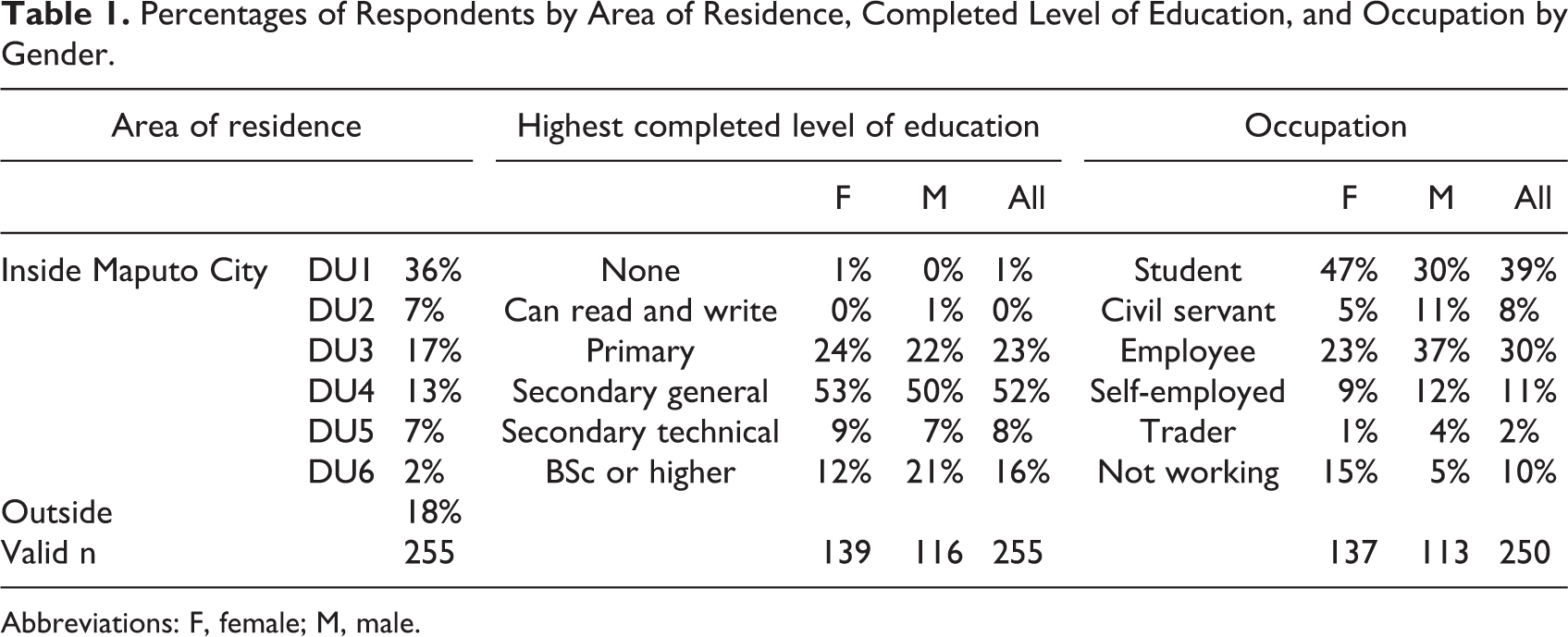
Abbreviations: F, female; M, male.
There was no statistically significant difference between male and female respondents regarding the attained level of education, χ2(255, 5) = 7.0859, P = .214, but they differed regarding access to labor. More men (65%) than women (38%) were economically active, χ2(250, 5) = 19.9731, P = .001). Within the household, women were significantly more responsible for domestic tasks (house cleaning, buying food, preparing food, childcare) and men for contributing money (Table 2). Shopping was predominantly a female responsibility, but 40% of the men declared that they buy sweet potato.
Median Scores of Household Responsibilities on a 3-Point Scale (Never, Sometimes, or Always) by Gender.
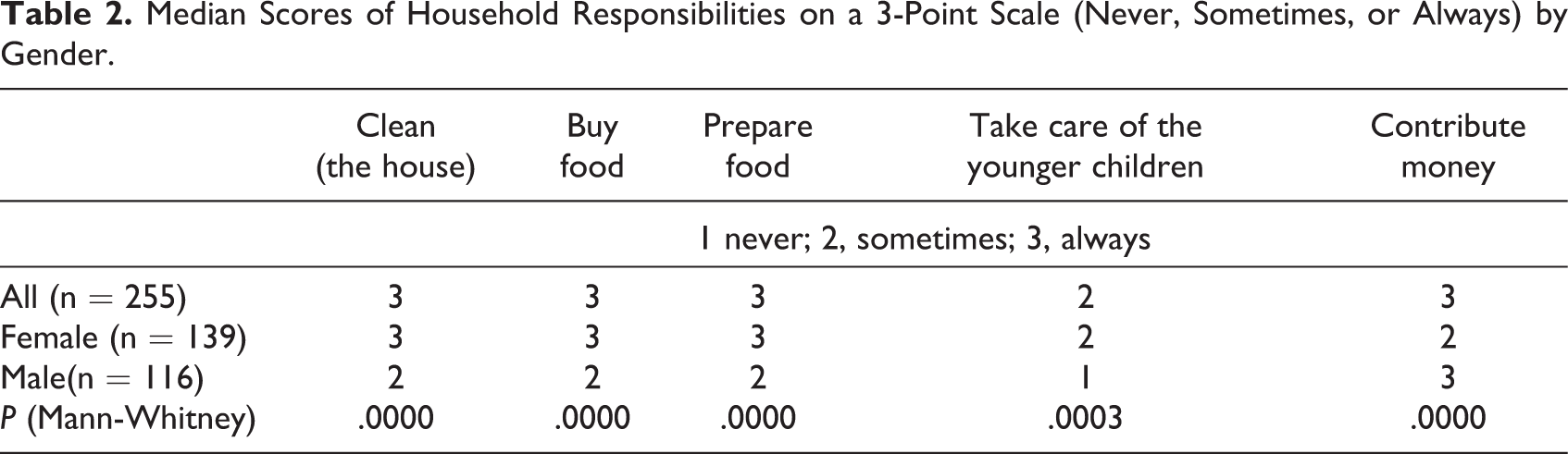
Sweet potato was widely known (97%), eaten (93%), and bought (54%). A smaller percentage knew (78%) and ate (53%) OFSP over the last 6 months. The OFSP was eaten by chance (53%) or choice (47%). Two-thirds of those eating OFSP obtained it from the market. The 2 most frequently mentioned reasons for not buying roots during the reference period were that the respondent is not the one who does the shopping (40%) and that somebody gives the roots (24%). The third most important reason was that they produce sweet potato themselves (13%). According to Tedesco and Brouwer, 84 24% of Maputo residents produce sweet potato.
The percentage of female respondents knowing and eating OFSP (73%) was higher than that of male respondents (60%), χ2(199, 1) = 3.7747, P = .052. Aggregating the levels of education in 3 groups (the 3 respondents with no formal education taken together with only primary education) showed a significant positive association between education and knowing about, χ2(255, 3) = 20.86086, P = .000, and eating OFSP, χ2(199, 3) = 11.4313, P = .0100. The respondents’ age did not influence OFSP consumption, 2-sample t(182) = 0.3112, P = .7560.
About two-thirds of sweet potato consumers bought their roots. Most respondents bought sweet potato at open-air markets (92%) or sidewalk stalls (72%), with the majority (63%) preferring the former. Shops were the least preferred (Table 3).
Frequency, Preference, and Assessment of Outlets Preferred to Buy Sweet Potato on a 5-Point Likert Scale.
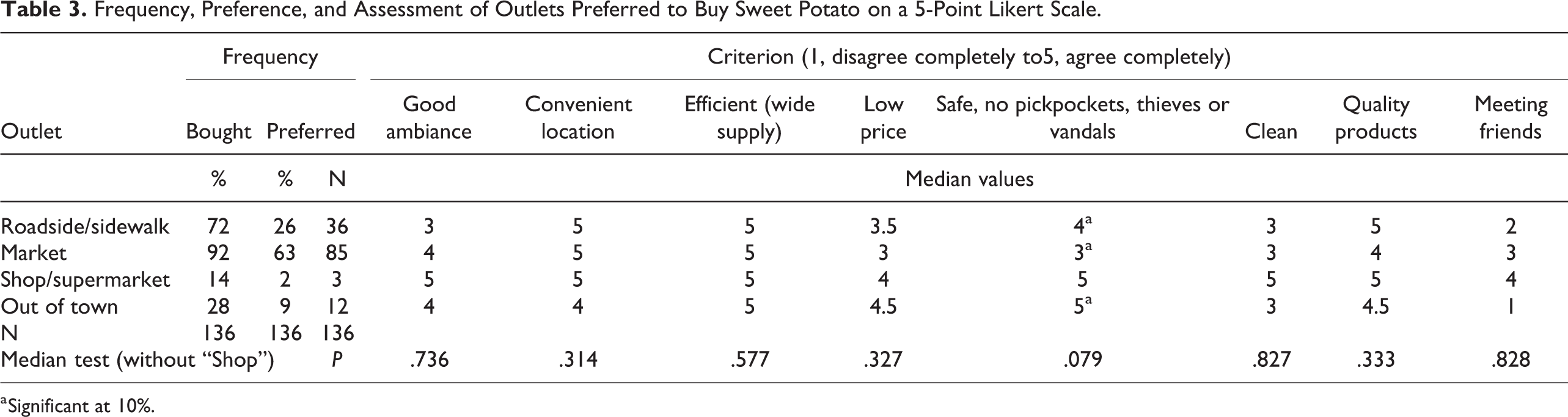
a Significant at 10%.
Respondents were asked to evaluate their preferred outlet for purchasing sweet potato regarding 8 criteria ranging from “ambiance” to “meeting friends.” Median scores suggest that respondents appreciated the outlets differently. For example, those preferring shops agreed that these were a good opportunity to meet friends, whereas those who preferred sidewalks disagreed. However, differences were only significant for safety. Those preferring roadside and sidewalk outlets considered them safer than those preferring markets (Mann-Whitney, P = .011).
Table 4 summarizes the sources of information about OFSP for those who said that they had heard about OFSP and those who said they had eaten OFSP during the previous 6 months. The most cited channels were family and friends (76%), informative TV programs such as discussions and documentaries (65%), and vendors (48%). Only 14% of the respondents cited health services. A particularity is the reference to radio and television soaps. In Mozambique, between 2015 and 2018, UNICEF and the World Food Program sponsored a radio-soap call Ouro Negro (Black Gold) to promote Facts For Life information. 85 Its nutrition component contained a story line dedicated to OFSP. In general, about 70% of those referring to a certain channel ate OFSP. The only channel with a lower impact was schools (39%). The difference is not statistically significant, χ2(966, 1) = 2.2433, P = .134.
Absolute and Relative Frequencies of Sources About OFSP Mentioned by Respondents Knowing and Eating OFSP.
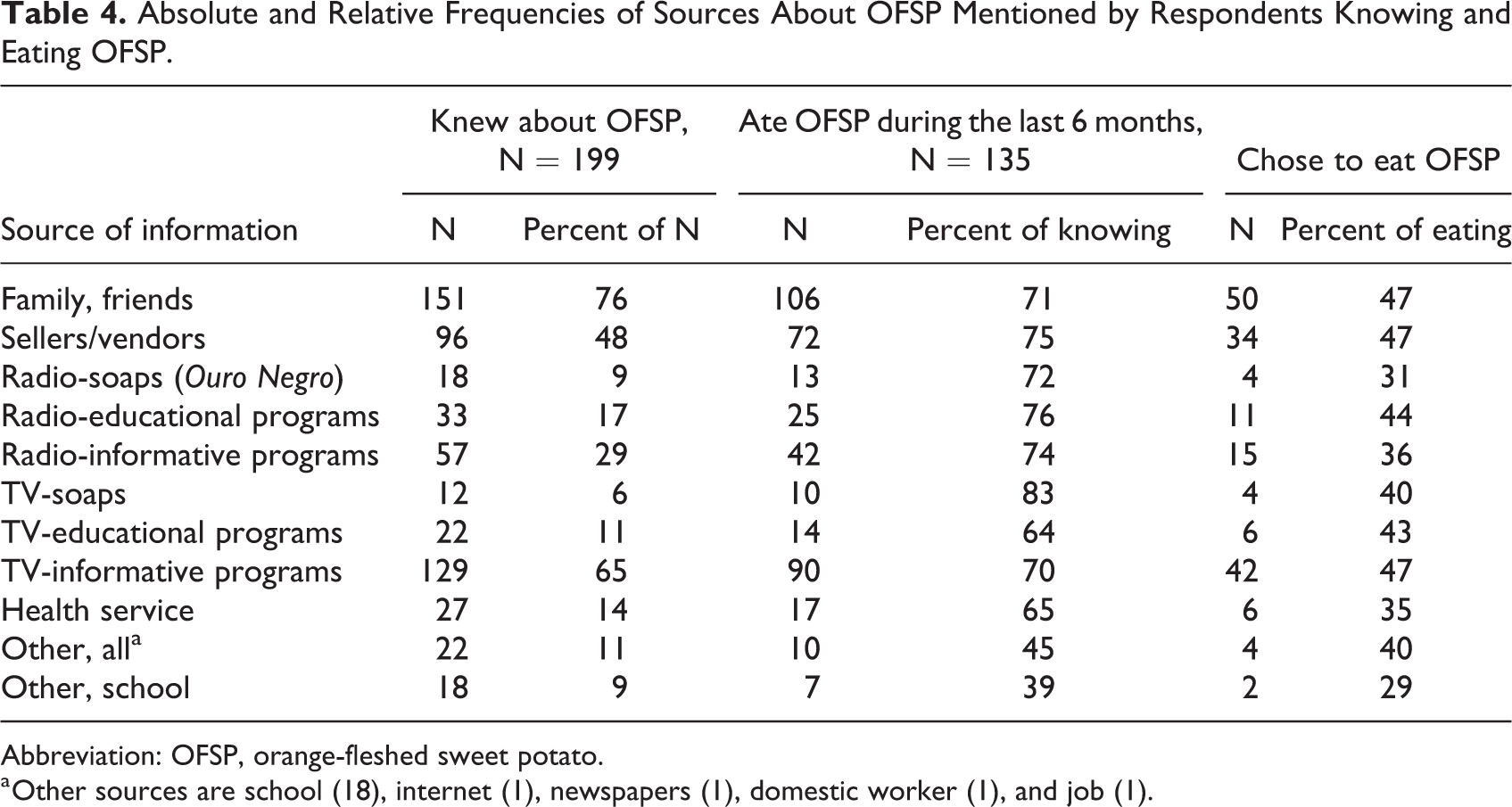
Abbreviation: OFSP, orange-fleshed sweet potato.
a Other sources are school (18), internet (1), newspapers (1), domestic worker (1), and job (1).
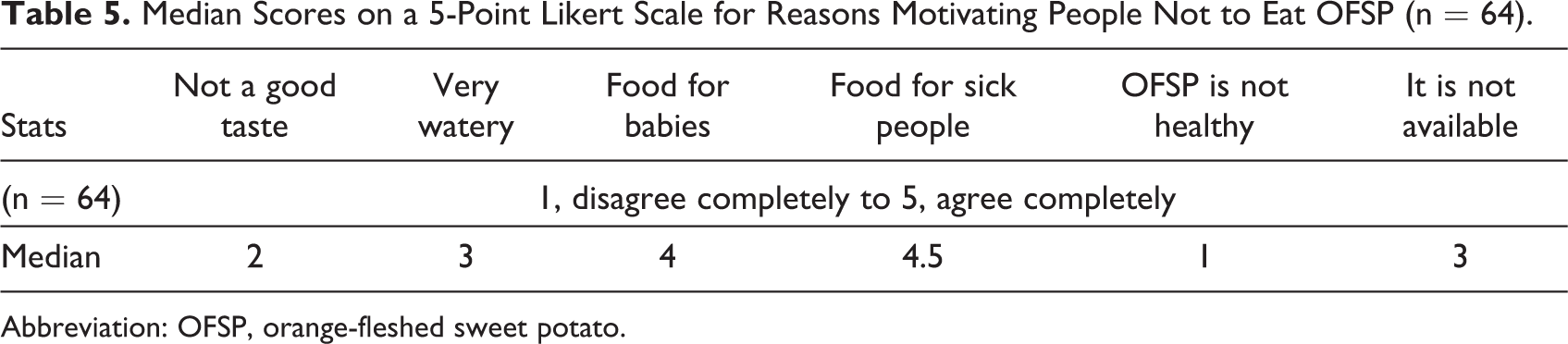
People knowing about OFSP have 3 options: not eat them, eat them because orange roots are sold mixed with white ones, or eat them by choice. Sixty-four respondents or 32% of those who had heard about OFSP said that that they did not eat them. These were asked to assess on a 5-point Likert scale the 6 possible reasons for not eating them: bad taste, wateriness, OFSP is food for babies, OFSP is food for sick people, OFSP is not healthy, and OFSP is not available. Table 5 summarizes the responses.
Median Scores on a 5-Point Likert Scale for Reasons Motivating People Not to Eat OFSP (n = 64).
Abbreviation: OFSP, orange-fleshed sweet potato.
Two possible reasons provoked strong opinions. Respondents strongly agreed that OFSP are for sick people (median 4.5) and strongly disagreed that OFSP is not healthy (median 1). They agreed that OFSP is food for babies (median 4) and disagreed that it does not have a good taste (median 2). Opinions about wateriness and availability were neutral (median 3). These answers suggest that the association of OFSP with babies and sick people are the strongest motives for people to reject them.
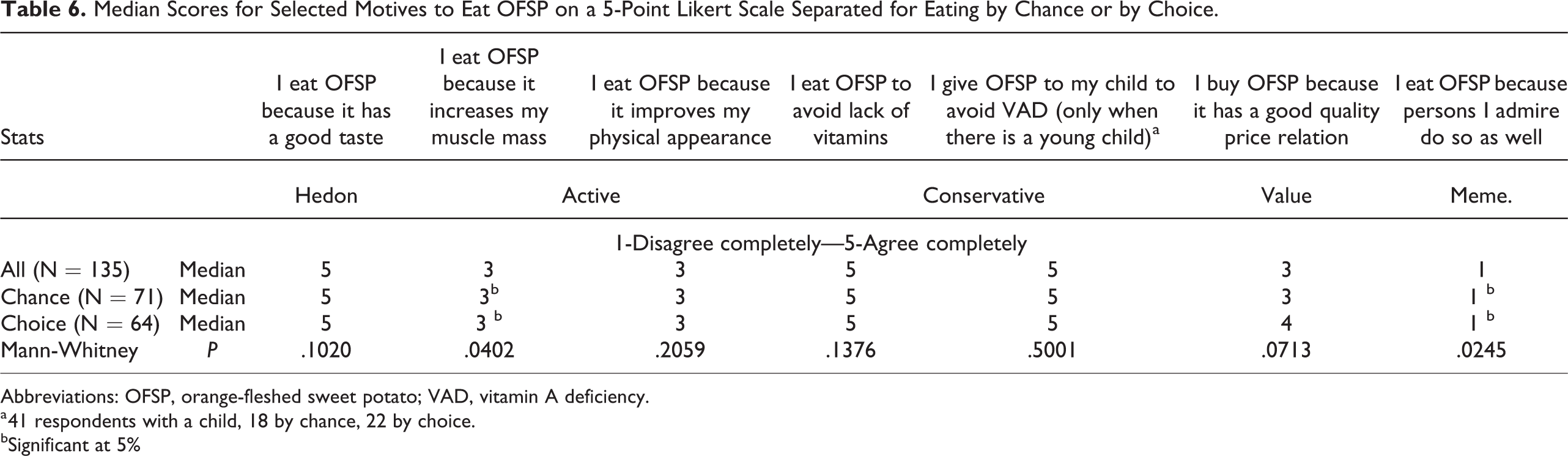
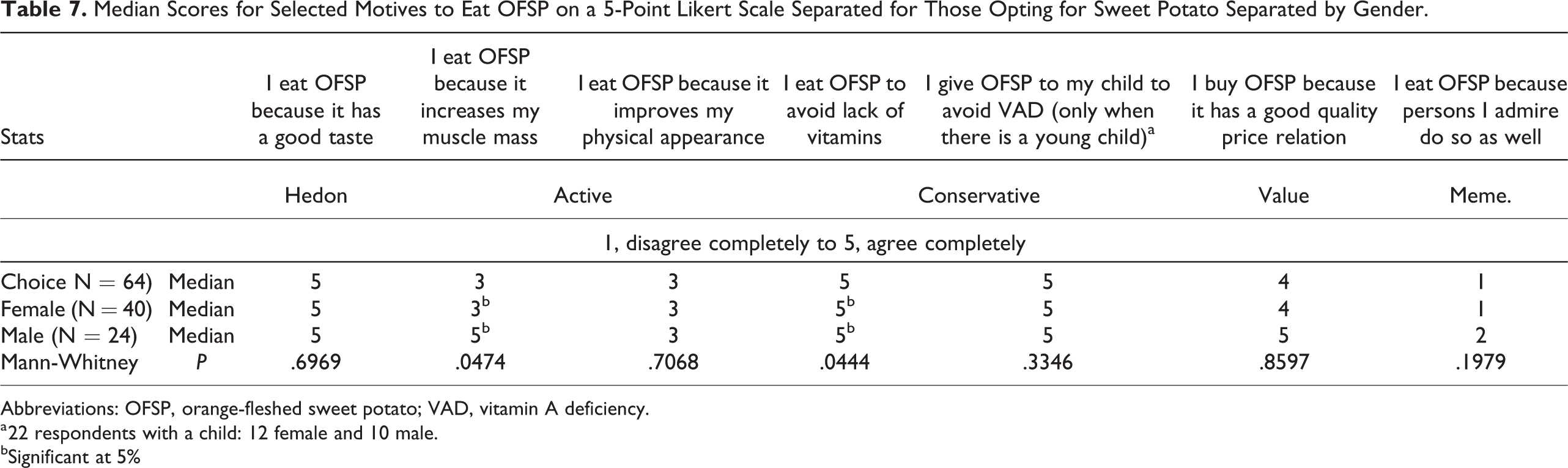
Tables 6 and 7 summarize the median scores for the assessment of the 6 possible motives for consuming OFSP based on Haley 43 with the addition of memetics. 34 The results in the first line in Table 6 show that people strongly agreed (median 5) that they ate of OFSP because of its good taste and its capacity to help avoid the lack of vitamins and that they bought it to give it to their child to reduce vitamin A deficiency. (This motive was only assessed by the 41 respondents with children.) They strongly disagreed (median 1) that they ate OFSP because persons they admire do so. The second and third lines in Table 6 compare the motives of respondents eating OFSP by chance and by choice. It appears that the motives for both groups are very similar, except for muscle mass and memetics, where those who ate OFSP by choice showed a small but significant higher level of agreement, even though the median scores were the same. The figures in Table 7 highlight the role of gender. Male respondents agreed more with the affirmations regarding muscle mass, value-for-money, and memetics. The difference was only significant for the muscle mass (P = .0474). The other significant difference concerned vitamin intake, with again men agreeing more strongly with this motive than women (P = .0044), even though the median scores were equal (5).
Median Scores for Selected Motives to Eat OFSP on a 5-Point Likert Scale Separated for Eating by Chance or by Choice.
Abbreviations: OFSP, orange-fleshed sweet potato; VAD, vitamin A deficiency.
a 41 respondents with a child, 18 by chance, 22 by choice.
bSignificant at 5%
Median Scores for Selected Motives to Eat OFSP on a 5-Point Likert Scale Separated for Those Opting for Sweet Potato Separated by Gender.
Abbreviations: OFSP, orange-fleshed sweet potato; VAD, vitamin A deficiency.
a 22 respondents with a child: 12 female and 10 male.
bSignificant at 5%
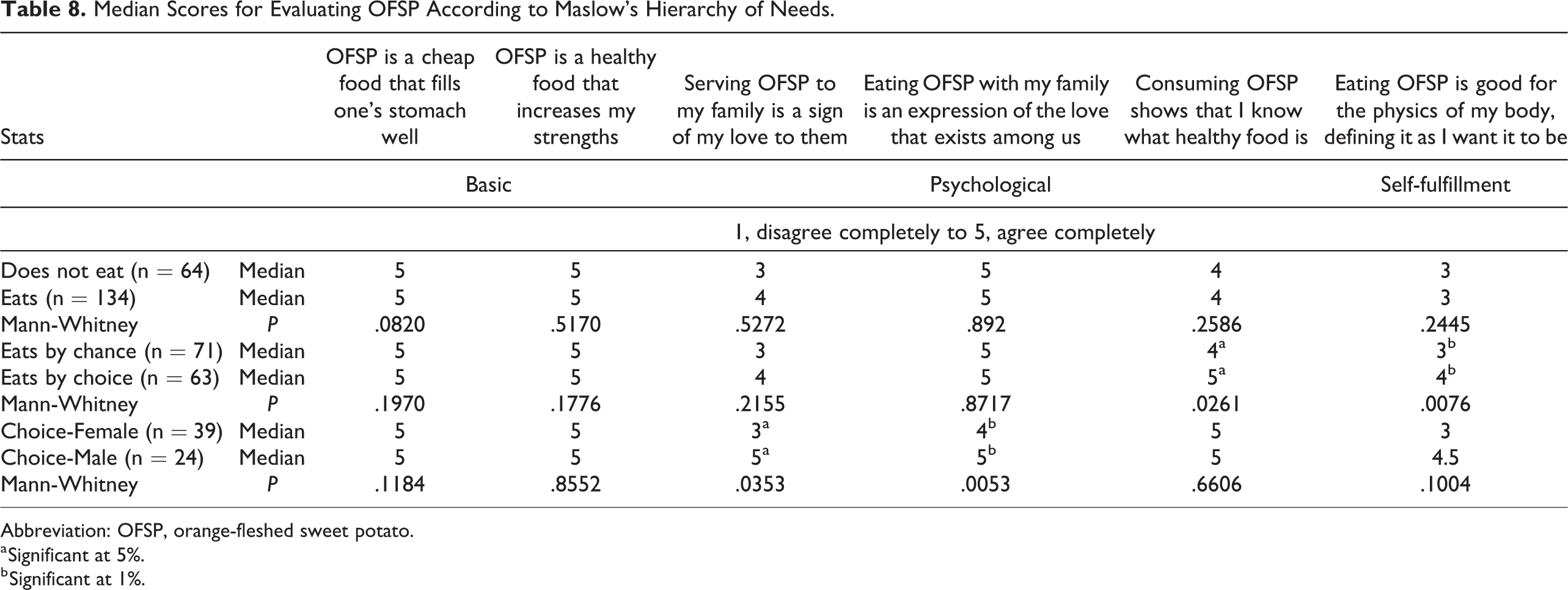
The final assessment uses Maslow’s hierarchy of needs (Table 8). This assessment covers all respondents who knew about OFSP. It appears that those who knew about OFSP but did not eat them and those who ate them had a similar perception of the crop regarding the satisfaction of their basic and psychological needs. Respondents agreed strongly that OFSP is nutritious (fills one’s stomach well) and healthy (gives strength) and that eating it is a sign that one knows what is good for one’s family. There is a significant difference between those who ate OFSP by chance and those who ate it on purpose with respect to esteem (consuming OFSP shows that one knows what is healthy food) and self-actualization (eating OFSP helps defining my body). This outcome suggests that respondents who ate OFSP by choice perceived OFSP not as a basic food, but as something special, with an added value. Further analysis by gender shows that men agreed stronger with the psychological needs than women. There are no differences between men and women regarding the importance of basic and self-fulfillment needs.
Median Scores for Evaluating OFSP According to Maslow’s Hierarchy of Needs.
Abbreviation: OFSP, orange-fleshed sweet potato.
a Significant at 5%.
b Significant at 1%.
Discussion
The study confirms that OFSP is widely known (78%) and eaten (53%) and that about a quarter of the people eat them by choice. These percentages are close to those observed by Brouwer. 20
The results indicate that women and more highly educated people are more inclined to eat healthy food such as OFSP 42 than men in general and those with low education levels. Age did not influence OFSP consumption, but one needs to consider that the relation between age and healthy diets may be complex. Haas et al, 26 for example, distinguish 3 age groups. As the sample is small, there are not enough respondents in the higher age segments for a valid comparative analysis.
The results indicate that although the division of household responsibilities is traditional, 46 women and men both engage in buying sweet potato. As expected, people prefer informal outlets to purchase roots. 11,80 Shops and supermarkets are unimportant. 22 Factors such as ambience, location, availability of the different items one needs, low price, quality, and hygiene are important for selecting a preferred outlet. Surprisingly, consumers with different preferences make similar assessments. The only factor that was evaluated differently was safety. This factor was not covered by authors such as Gupta 81 and Noor 82 and most likely reflects an increase of crime and fear of crime in the city. 86 The importance of informal retail is reflected in their role as a source of information, confirming that retailers play a key part in furthering growth, promoting products, increasing range, and aiding farmers. 24 This is consistent with the importance attributed by Haas et al 26 to interpersonal communication but differs very much from the image painted by Almeida et al. 40 According to this source, only 22% of their respondents across the European Union mentioned relatives and friends and 10% retailers (supermarkets) as a source of information about healthy food.
An analysis of the attributes given to OFSP by nonadopters reveals the importance of its positioning as a food for infants and young children and confirms that negative nudges may lead to a maladaptive response. 59 The importance of the positive nudge is supported by data from 738 interviews made in 2017. The OR of people correctly recognizing the slogan “the sweet that gives health” and eating OFSP by choice against those eating or eating by chance is 2.51 (P = .004). The lifestyle approach 43 provides useful insights in the position of OFSP on the market. In line with the marketing of OFSP as a healthy food, OFSP appeals most to the hedonistic and conservative lifestyle segments. Imitation of peers or role models 33,38 is not an important motive, although slightly more relevant to male consumers, perhaps because of the absence of relevant role models.
The use of Maslow’s 62 hierarchy of needs shows that those who eat and do not eat OFSP strongly agree that it satisfies basic needs and, to a lesser extent, psychological needs. Those who eat OFSP by choice agree significantly stronger that it contributes to esteem and self-realization. The OFSP promotion campaigns do not appeal to these needs.
Limitations
The study is constrained by the sample size and the locations of the interviews. As a result, residents of DU1 are overrepresented and it is not possible to arrive at meaningful conclusions about, for example, age as a factor in consumer motivation as the age subsegments in the sample are too small. Nevertheless, it sheds light on how OFSP is perceived and provides useful insights on how it could be better promoted.
Conclusions and Recommendations
Between 2014 and 2017, there has been a significant upswing in the adoption of OFSP by consumers in Maputo City. This study shows that the drivers behind that upswing are similar to those driving the adoption of healthy food elsewhere: self-approval and sensory gratification. The OFSP consumers believe that their basic and psychological needs are already satisfied and that OFSP will help them to meet satisfy self-fulfillment needs. In line with observations elsewhere, a higher percentage of women adopt OFSP than men. However, despite the traditional division of responsibilities between men and women with the latter being homemakers and caretakers, and despite earlier evidence that men are more egoistically motivated than women, in this particular case men appear to emphasize OFSP as a means to satisfy their psychological needs more than women.
The results are consistent with work on the adoption of healthy food in other countries. The general lesson is that it is important to understand consumer behavior and motivations when marketing healthy food. These findings indicate that in urban environments such as Maputo where retail has not (yet) been taken over by the supermarket revolution, marketing campaigns should engage sidewalk and open-market retailers as knowledgeable communicators to inform consumers. The promotion of healthy food such as OFSP should focus on self-approval and sensory gratification, emphasize the nutritious value for all, and appeal to psychological and self-fulfillment needs to win over those who currently are maladaptive or merely eat it by chance.
Footnotes
Acknowledgments
The author thank the 2 anonymous reviewers for their useful comments and valuable suggestions that made it possible to improve and ready the text for publication. He express his gratitude to Jan Low for commenting on the draft and Alberto Bute for supporting the collection of the data. Finally, he wishes to recognize the European Union (contract FOOD/2016/ 380-038) for supporting his participation at the meeting of the African Potato Association in Kigali (August 2019) where an early version of this text was presented.
Declaration of Conflicting Interests
The author(s) declared no potential conflicts of interest with respect to the research, authorship, and/or publication of this article.
Funding
The author(s) received no financial support for the research, authorship, and/or publication of this article.
