




Abstract
Background:
The design of the original nutrition supplementation trial that was conducted from 1969 to 1977 in 4 villages in rural Guatemala to evaluate the benefits of improving nutrition during pregnancy and early childhood, combined with several follow-up studies, provides unique data to examine the effects of improving nutrition on the next generation.
Objective:
This article provides a summary of the key findings from the INCAP Longitudinal Study on the intergenerational effects of improving nutrition on the growth and well-being of the next generation.
Methods:
The key outcomes include offspring birth size as well as attained size and body composition through age 11 years. The sample sizes varied from approximately 200 to 800 depending on the timing of the follow-up studies and data collection protocols. The effects of parental birth size, maternal linear growth from birth through adulthood, and exposure to the nutrition intervention, that is, Atole versus Fresco during critical periods from prenatal through age 15 years, have been examined using complex models and approaches.
Results:
Overall, these publications demonstrate clear improvements in the growth of the next generation. Effects were seen primarily for maternal exposure to Atole and were larger for boys compared to girls. Stunting during early childhood among girls was also a significant predictor of offspring birth size, and younger age at first pregnancy (<20 years) was associated with an increased risk of stunting in the offspring.
Conclusions:
These studies have contributed significantly to our understanding of the importance of investing in nutrition, especially during early childhood for future generations.
Introduction
Considerable advances have been made in recent decades on our understanding of the importance and mechanisms underlying intergenerational and transgenerational effects on the risk of poor health outcomes over the life course. Typically, intergenerational effects occur when maternal environmental exposures have direct effects on the germ cells or developing fetus, which in turn lead to altered phenotype of the child and possibly grandchild, whereas on the paternal line, environmental exposures of the father have direct effects on the germ cells that will form the child. In contrast, a true transgenerational effect, in which epigenetic information is transmitted across generations, can only be proved if the effect of exposure is transmitted to the F2 (on the paternal line or in a maternal line in which exposure occurred only before conception) or F3 (on the maternal line when exposure occurs during pregnancy) generation and possibly future generations in the absence of further environmental exposure or germline mutation. 1
The complex interactions between genetics and environment have further been examined by studying the role of the epigenome that controls gene expression through mechanisms like DNA methylation and histone modification which have helped map the effects of a wide range of environmental exposures that include nutrients. 2 Similarly, the development origins of health and disease hypotheses that were first postulated by Barker in the late 1980s have also revolutionized our understanding about the long-term effects of early nutrition especially during pregnancy for later outcomes, including the health and well-being of the next generation. 3 Most of this work, however, is still based on animal studies and, to a lesser extent, from observational studies in humans.
The INCAP Longitudinal Study was an intervention trial in the 1970s that evaluated the benefits of food supplementation during pregnancy and early life. This study has served as an invaluable resource to evaluate the role of early-life nutrition that may begin even before conception and/or during critical periods of growth and development during childhood for both outcomes during adulthood and intergenerational effects, such as the growth and development of the next generation. The rich data on maternal and child dietary intakes, illness, growth, and development that have been collected over the past 5 decades in this well-characterized Guatemalan birth cohort and their offspring have provided valuable opportunities to elucidate the pathways by which early childhood nutrition influences the health and well-being of the next generation. The specific contributions of the INCAP Longitudinal Study to current knowledge and understanding of the intergenerational effects of malnutrition are summarized in the following sections of this article, including (1) a description of the conceptual framework describing the pathways of intergenerational nature of malnutrition, (2) summary of key findings, and (3) the implications and impact of these results on global policy and research.
Conceptual Framework for Intergenerational Effects of Nutrition
The INCAP Longitudinal Study has contributed significantly to our knowledge on the pathways by which intergenerational effects of malnutrition are transmitted, along with solutions to break this cycle of deprivation and poor development. As shown in Figure 1, it is widely recognized today that young girls who experienced growth failure during early childhood become stunted women as adults and/or may be at increased risk of having children at a younger age, both of which increases their risk of obstetric complications and delivering small babies, thereby perpetuating the intergenerational cycle of growth failure. 4 In a systematic review of the evidence on intergenerational effects of growth that highlighted the contributions of the INCAP Longitudinal Study, Martorell and Zongrone 5 concluded
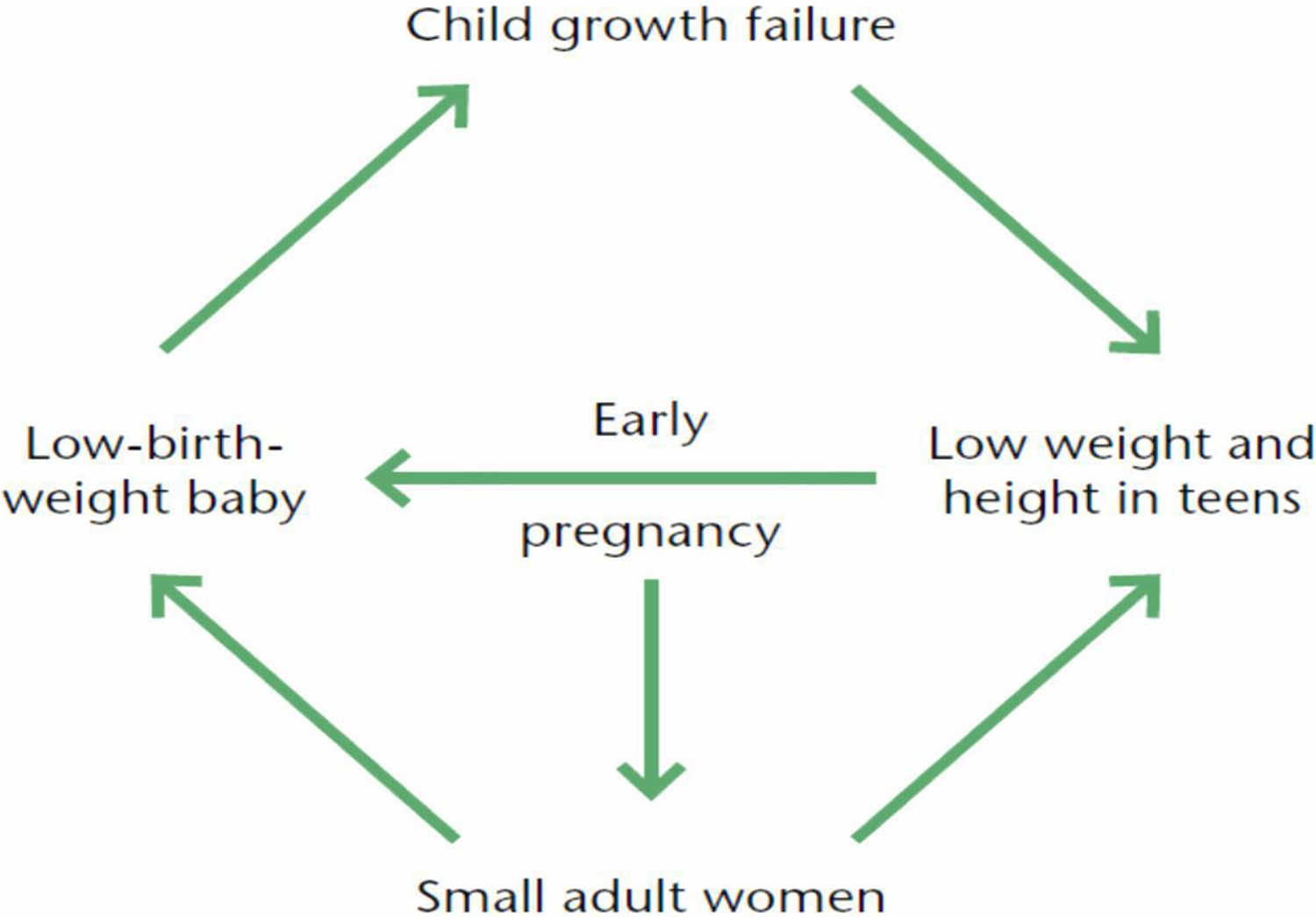
Intergenerational nature of growth failure. 4
Intergenerational effects on growth are well documented. The mechanisms are complex and range from the purely biological to the socio-cultural and are not mutually exclusive. Several generations are necessary in animal models to ‘wash out’ effects of undernutrition, consistent with the unfolding of the secular trend in growth in Europe and North America. Birthweight is correlated across generations and short maternal stature, which reflects intrauterine and infant growth failure, is associated with LBW, child stunting, delivery complications and increased child mortality, even after adjusting for socio-economic status.
The original intervention trial that was carried out in 4 villages in the Oriente from 1969 to 1977 was one of the first studies to demonstrate the benefits of improving maternal nutrition on birth size. 6 The offspring of women who consumed the high-energy, high-protein supplement also known as “Atole” when compared to those who consumed the low-calorie, low-protein supplement “Fresco” during pregnancy were heavier and longer at birth. 7 Similarly, significant reductions in the risk of stunting during the first 3 years of life were also seen among those who received “Atole” compared to “Fresco” during early childhood. The positive associations between maternal attained size, especially height and offspring birth size, have also been demonstrated in both generations of the INCAP Longitudinal Studies. 8,9
The contribution of improving nutrition during early childhood to later outcomes has also been documented in the follow-up studies that have measured a wide range of outcomes, such as attained size and body composition, physical work capacity, educational attainment, and economic productivity for the INCAP birth cohort. 10 Most notably, the benefits of improved nutrition during early childhood, especially for girls in terms of attained height, body composition, especially fat-free mass, are important determinants of the health and well-being of the next generation. Children who experienced growth restriction in utero were at increased risk of being shorter and lighter as adults, 11 which in turn can increase the risk of growth failure for the next generation as shown in Figure 1. Improved nutrition in early childhood was also associated with increases in the age at marriage and first birth, 12 which in turn has been shown to risk of adverse pregnancy outcomes, especially preterm delivery and low birth weight. 13,14 The pathways by which nutritional status during early childhood influences subsequent fertility outcomes have been shown to operate via increased attained size as well as attained schooling among girls. 15 Last but not the least, the increased returns to schooling as a result of improved nutrition during early childhood 16,17 also have the potential of improving the health and well-being of the next generation.
Summary of Key Findings
The key publications that describe the effects of nutrition on the next generation using data from the series of follow-up studies of the original INCAP Birth Cohort, that is, the INCAP Longitudinal Study are listed in Table 1 along with details of the main outcomes, exposure(s) of interest, and data sources. A summary of the key findings of this important body of research is described below followed by their implications and impact on global policy and research.
Summary of Key Publications Describing Intergenerational Effects of Malnutrition in the INCAP Longitudinal Study.
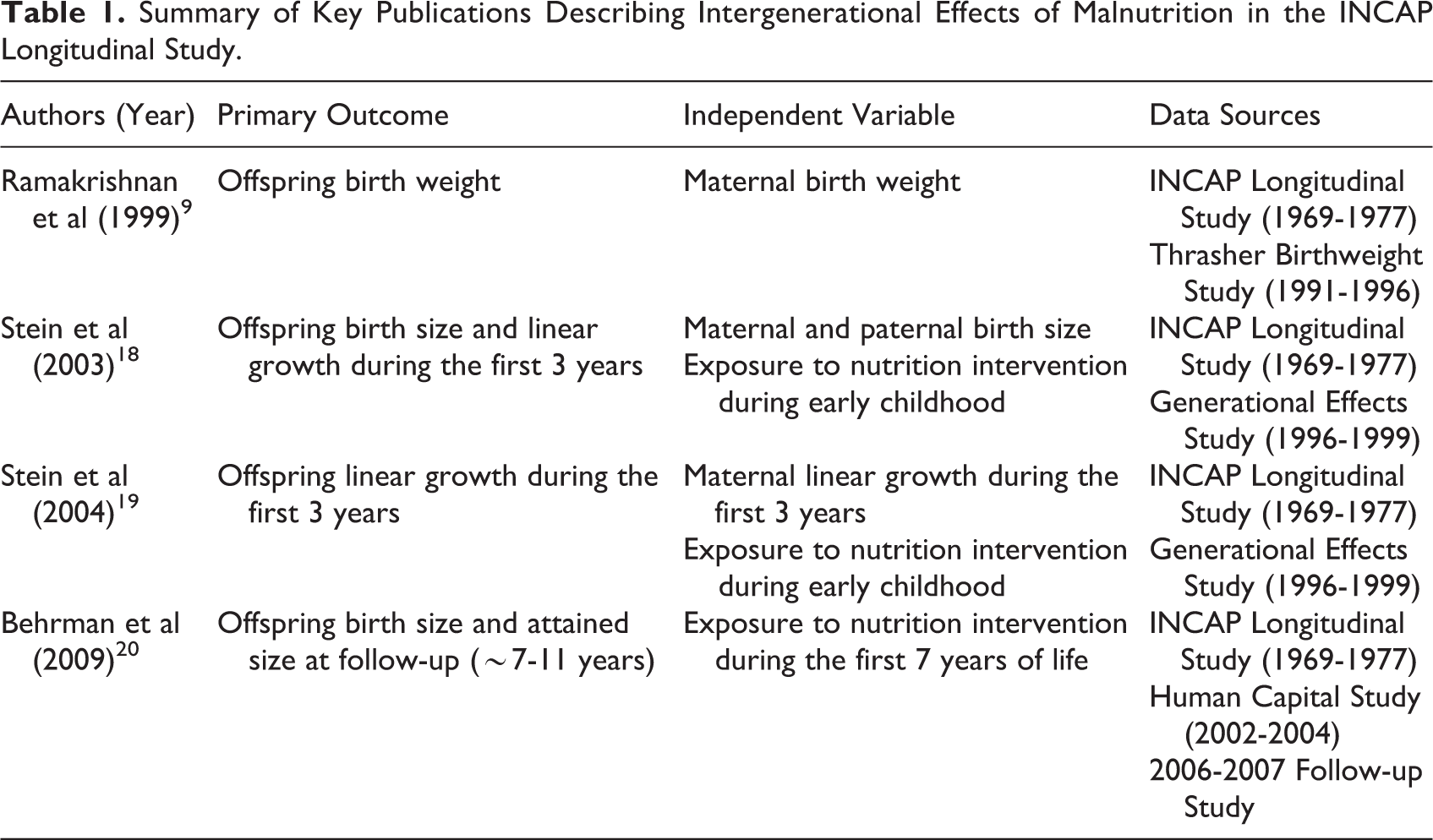
The earliest publication to document intergenerational effects of malnutrition in the INCAP Study was published by Ramakrishnan et al 9 who evaluated the associations between maternal birth weight and offspring birth size. Data on birth outcomes including birth weight and length were obtained prospectively for all offspring who were born to women who had participated in the INCAP Longitudinal Study (1969-1977) and were residents of the 4 study villages between 1991 and 1996. All pregnancies were identified prospectively using a surveillance system in which all eligible women living in the 4 study villages were visited every 4 weeks. Once confirmed, all pregnancies were followed up through delivery for birth outcomes. The analytical sample was restricted to singleton term births (n = 215) that occurred in the 4 study villages between 1991 and 1996 with data on offspring birth size (weight and length) gestational age and sex and as well as age, adult height, prepregnancy weight, birth weight, and current socioeconomic status for the mothers. Mean birth weight (∼3 kg) and gestational age (39.3 weeks) were similar among the mothers and children, while birth length that was measured at 15 days compared to within 72 hours for the offspring was higher among mothers. The key findings were that for every 100 g increase in maternal birth weight, offspring birth weight increased by 29 g after adjusting for various confounding factors that included socioeconomic status, maternal prepregnancy weight, height and age. These estimates were much higher than what has been reported primarily in developed country settings (10-20 g) where malnutrition is not common. This article used a cohort design to estimate the contribution of maternal birth weight to offspring birth weight using prospectively collected data across 2 generations in a developing country context for the first time. Key strengths included the quality of the data on birth outcomes and size that were obtained using standardized methods for both generations. There were, however, some important limitations that affect the generalizability of the findings. First, there is potential for selection bias since (1) data on the next generation were not obtained for those who had migrated and (2) the participants were still young and had just started having children. Other limitations include the lack of data on paternal birth size and other characteristics that may have influenced the relationship and these are associations as the contribution of the intervention was not evaluated.
The next publication by Stein et al
18
describes the intergenerational effects of improving the nutrition in the mother during her childhood on offspring linear growth during early childhood. This article used data that were collected on the offspring of the women who participated in the original study between 1996 and 1999 as part of the Intergenerational Effects Study when the offspring were also followed up for growth and development and also included data on maternal and paternal birth size. Stein et al
18
examined the contributions of child, maternal, and grandparental characteristics on child linear growth from birth to 3 years in a sample of 232 children who were born to 231 mothers who had participated in the original INCAP Longitudinal Study, and the key findings were: The annual linear growth rates during the first 2 years of life were slightly higher for the offspring when compared to those of their mothers in both intervention groups (Figure 2). Children whose mothers received Atole were longer than were children whose mothers received Fresco at most ages. The age-adjusted effect of supplement type was 0.8 cm (95% confidence interval [CI]: 0.16-1.44 cm) but was attenuated and no longer statistically significant (0.43 cm; 95% CI: −0.1 to 0.96 cm) after adjusting for sex and singleton status as well as maternal attained height, and child birth size (length and weight) that could be mediating factors. Examination of effects by different windows of exposure showed that the maximal effect of the intervention was seen among children whose mothers were exposed during ages 3 to 7 years and part of the first 3 years of life.
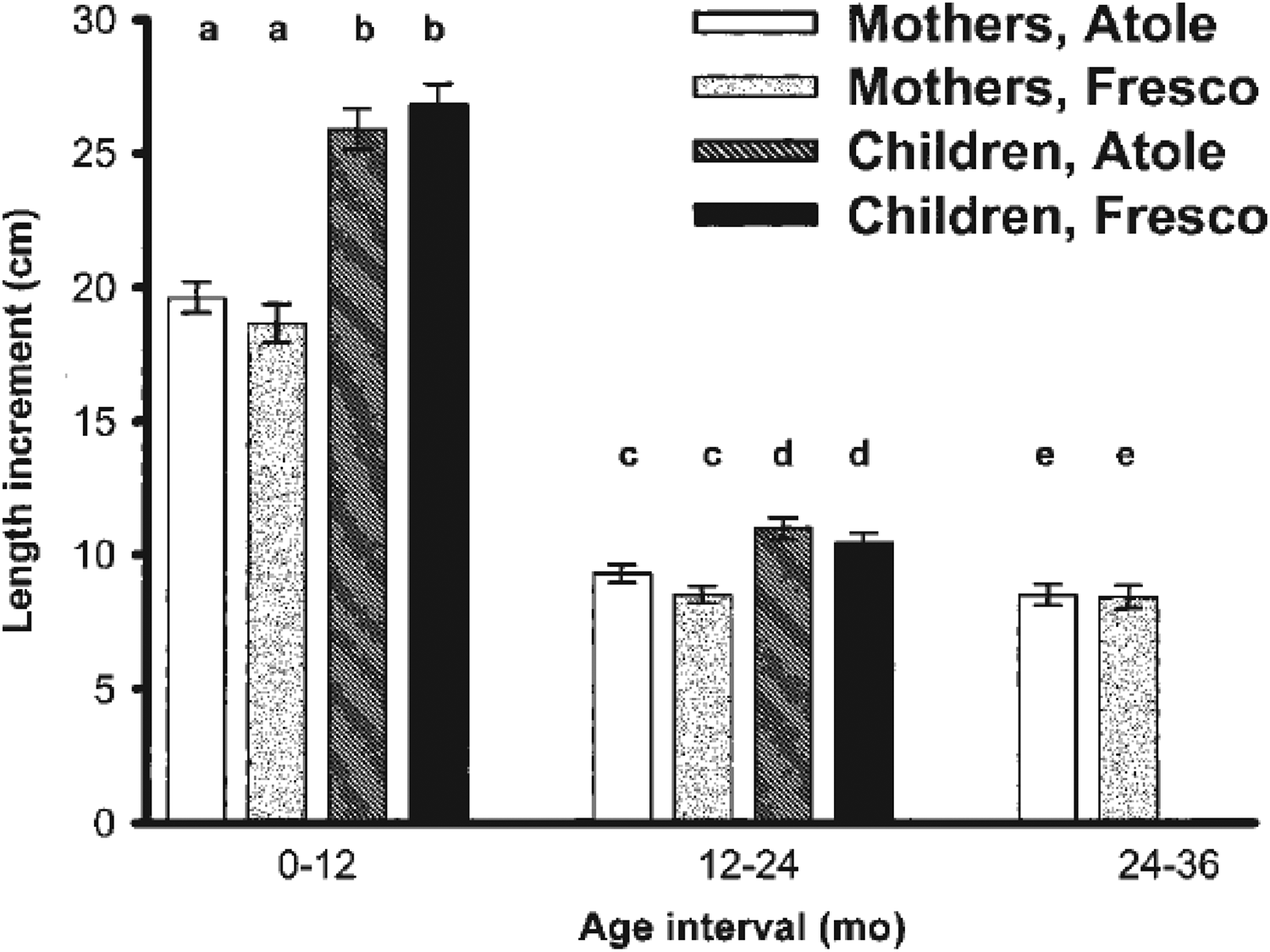
Mean annual length increments during early childhood among mothers who participated in the INCAP Longitudinal Study as children (1969-1977) and their offspring (1996-1999) by type of intervention that the mothers were exposed to. Error bars represent 95% confidence interval; bars and with different letters represent significant differences at P < .05. Reproduced from Stein et al. 18
In a related paper, Stein et al 19 also compared the patterns of linear growth during the first 3 years of life across 2 generations using anthropometric data that were available for 283 mother–child pairs born to 197 women who participated as children in the original trial and followed up between 1996 and 1999 as part of the Generational Effects Study. Both mothers (G2) and their offspring (G3) had several measurements (range 3-12) that were obtained from birth through age 3 years (mean = 8.6 for mothers and 9.7 for offspring) and used to model the patterns of growth that were examined by offspring sex. The key findings as shown in Figure 3 were:
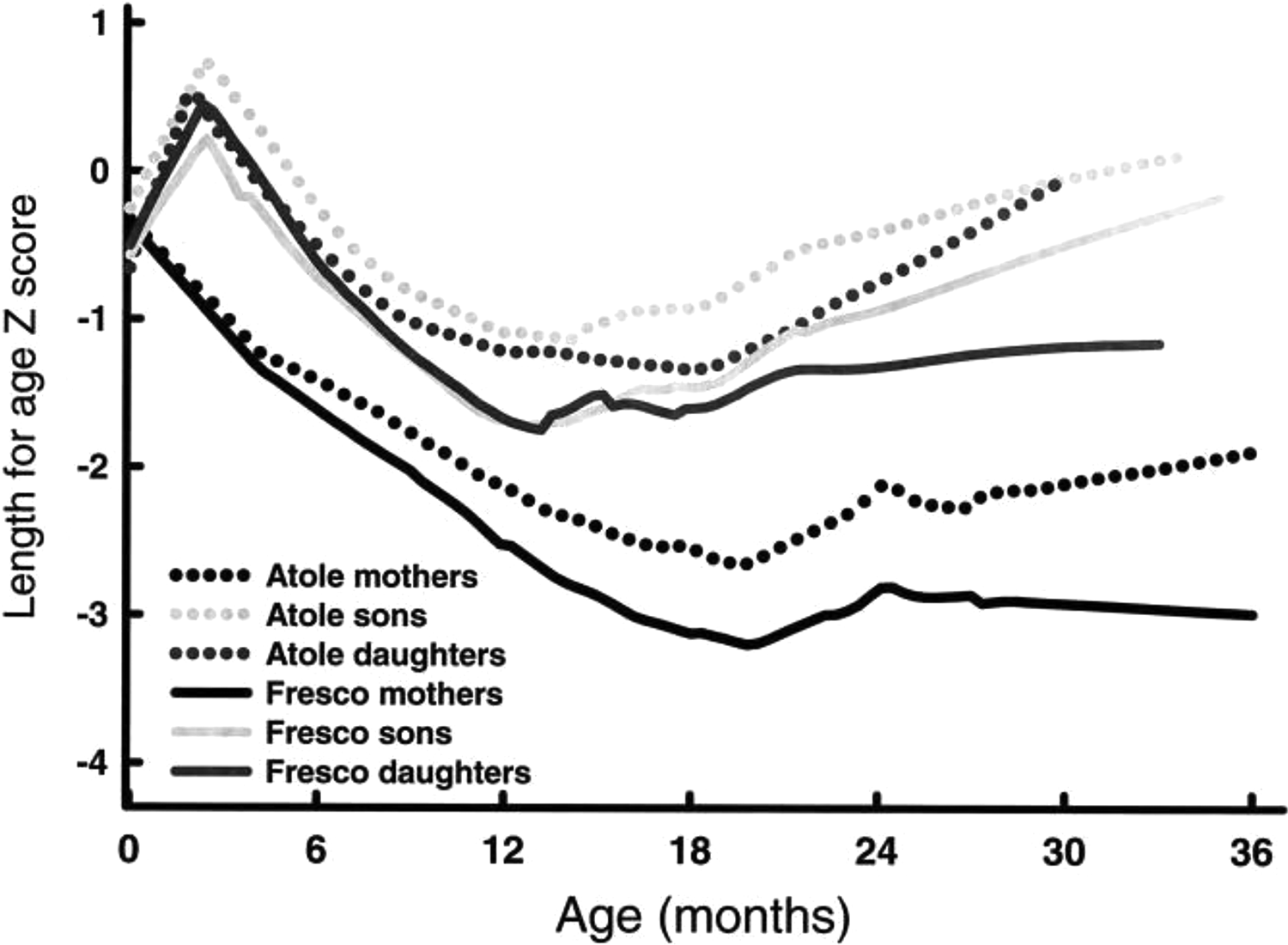
Comparison of linear growth patterns during the first 3 years among mothers and their offspring by type of intervention and offspring gender. Reproduced from Stein et al. 19
Linear growth retardation was common and seen in both generations; however
The G3 children grew faster than their mothers (G2), resulting in a lower prevalence of stunting at various ages and supporting a secular trend, and
The pattern of growth differed during the first few months of life; the G3 generation showed an increase in length for age Z score that declined later, whereas the G2 generation declined consistently from birth.
Maternal growth during early childhood was significantly associated with her offspring’s growth during the same period, especially among those who were exposed to Atole. The correlations between length measurements obtained at the same time points were all positive and ranged from 0.21 to 0.53 for Atole and 0.14 to 0.37 for the Fresco group.
Although these findings were limited by (1) small sample size resulting in imprecise estimates as well as (2) possible biases related to the lack of representation of out-migrants, it is one of the first that used longitudinal data to demonstrate the intergenerational benefits of improving nutrition during the first 1000 days on early childhood growth.
Finally, the most impactful and comprehensive paper describing intergenerational effects of malnutrition using data from the INCAP Longitudinal Study is the one by Behrman et al. 20 The key outcomes included birth weight as well as height, weight, mid-upper arm, and head circumference during mid-childhood. In contrast to the previous papers, this analysis included the offspring of all participants who had exposure to the intervention though age 15 years by taking into account the design of the original intervention study that enrolled all children younger than 7 years at study launch, that is, 1969 and newborns from birth until the study ended in 1977. Other key strengths were the advanced statistical methods that accounted for the original study design in which the unit of randomization was the village and not the individual, and the role of other biases related to differences in village-level and grandparental characteristics and attrition.
This article used data that were collected during 2006 to 2007 when the original participants of the INCAP Longitudinal Study were about 35 years (28-43 years). Offspring birth weight was obtained by interview, while anthropometric measurements that included length/height, weight, head and mid-upper arm circumference, as well as triceps and subscapular skinfold thickness were obtained in duplicate using standard procedures for all offspring. Although birth weight data were based on recall, the validity of the estimates was evaluated by comparing to the data that were prospectively obtained between 1991 and 1999. Parental height was also measured and completed grade of schooling was self-reported. The sampling frame for this study was based on the original INCAP Longitudinal Study that included 1162 girls of whom 992 were living in 2006 to 2007 and had participated in the Human Capital Study that was conducted from 2002 to 2004 and included those who remained in the study villages as well as those who had migrated to neighboring villages and Guatemala City. A total of 589 women were eligible, of which 414 still lived in the original villages, while the rest were either in neighboring villages (n = 73) or Guatemala City (n = 105). Over 90% of this sample was interviewed and the final sample included 791 biological children (age 0-12 years) of 401 women who had been exposed to supplementation. The mean age of the offspring at follow-up was 7 years and did not differ by intervention group. There were also no differences in maternal age at the time of follow-up, but maternal height and completed grades of schooling were higher among those exposed to “Atole” compared to “Fresco.” The key finding was the demonstration of significant positive impact of the nutrition intervention that was carried out during the 1970s on (1) the mean birth weight of the next generation as well as (2) mean values of offspring head circumference, height-for-age Z (HAZ), and weight-for-age Z (WAZ) scores at the time of follow-up. Of particular importance is that the observed effects were evident only for maternal childhood exposure to the intervention and not paternal exposure, differed by gender with larger associations for sons; mean differences in birth weight, HAZ, and WAZ were in favor of “Atole” among girls, but they were smaller compared to the estimates for boys and not statistically significant, except for head circumference, were attenuated only for birth weight when adjustments were made for maternal height and schooling attainment, declined with birth order for HAZ and WAZ, remained even after adjusting or grandparental characteristics such as socioeconomic status that was measured in 1975 and grandmother’s height, and remained after adjusting for observed village-level characteristics and controlling for fixed effects by including a dichotomous variable for the less populous Atole and Fresco villages.
Consortium of Health-Oriented Research in Transitioning Societies
This section summarizes key findings from papers from the Consortium of Health-Oriented Research in Transitioning Societies (COHORTS) that includes the INCAP Longitudinal Study and has advanced current understanding of the effects of nutrition on the health and well-being of the next generation in populations living in low-middle-income countries. The availability of prospectively collected high-quality anthropometric data from the INCAP birth cohort at various time points starting from birth through adulthood was a major asset and impetus to form COHORTS when plans were made for a series of landmark papers on maternal and child undernutrition in the Lancet in 2008. 21 Most notably, Dr. Cesar Victora was instrumental in identifying and bringing together the various teams working in Guatemala, the Philippines, South Africa, India, and the Pelotas in Brazil and published the landmark paper that documented the long-term consequences of maternal and child undernutrition in the 2008 Lancet series. 22 The 5 studies that are part of COHORTS are (1) the 1982 Pelotas Birth Cohort Study from Brazil, (2) the INCAP Nutrition Trial Cohort from Guatemala, (3) The New Delhi Birth Cohort from India, (4) The Cebu Longitudinal Health and Nutrition Survey Cohort from the Philippines, and (5) the Birth to Twenty Cohort from Soweto-Johannesburg in South Africa, and collectively included almost 11,000 individuals with follow-up data from birth to early adulthood. The COHORTS investigators have been highly successful and with financial support from the Wellcome Trust and the Gates Foundation, they have contributed significantly to advancing current knowledge on (1) the early origins of chronic disease and (2) the determinants and long-term consequences of growth failure during early childhood for human capital formation, using data from low- to middle-income countries.
Some of the key findings on the effects of early childhood nutrition on human capital formation that were first reported from the INCAP Longitudinal Study were replicated using the COHORTS data sets and demonstrated that intrauterine growth retardation and stunting in the first 2 years of life were significantly associated with shorter adult height, lower attained schooling, reduced adult income, and lower offspring birth weight. 23 Furthermore, anthropometric status at 2 years of age was not associated with an increased risk of chronic disease even among children with intrauterine growth retardation, making a very strong case for investments in maternal and child nutrition. The findings from 3 key publications 14,24,25 from COHORTS that relate to the effects of nutrition on the next generation are summarized below.
Addo et al 24 evaluated the associations between maternal height and child growth patterns and showed that short mothers (<150.1 cm) were 3 to 5 times more likely to have a child who was stunted at age 2 years and as an adult after adjusting for household income, sex, birth order, and study site. A 1 cm increase in maternal height was also associated with a 0.024 (95% CI: 0.021-0.028) standard deviation (SD) increase in birth weight, as well as 0.037 (95% CI: 0.033-0.040) and 0.044 (95% CI: 0.04-0.048) SD increase in conditional height at age 2 years and adulthood, respectively. These analyses also showed that the intergenerational mean differences in adult height between mother and daughters range from 0.6 to 4.6 cm among the sites, with Guatemala being in the middle (2.5, 95% CI: 1.6-3.3 cm).
Addo et al 24 also evaluated the relative associations of parental linear growth during key periods that included parental birth weight and linear growth from 0 to 2, 2 to 4, and 4 years to adult on offspring birth weight using data from all the sites that participated in the COHORTS consortium and included Guatemala. The key finding from this article was the demonstration of the associations between early childhood stunting especially among women and the birth weight of the next generation, which in turn would be related to their growth and development. The overall combined estimate of the effect of being stunted at age 2 years on offspring birth weight was −108 (95% CI: −160 to −55) g for mothers compared to −29 (95% CI: −95 to 38) g for fathers. Examination of site-specific results also revealed that Guatemala had the highest rates of growth failure, most of which occurred during early childhood whereas growth from 4-year to adult was comparable to the other sites.
The third publication by Fall et al 14 evaluated the associations between age at first birth and a wide range of outcomes that included adverse pregnancy outcomes as well as measures of offspring growth and risk of adult cardiovascular disease. The importance of maternal age at first birth and inter-pregnancy interval as determinants of adverse pregnancy outcomes especially preterm birth and low birth weight is well recognized, but most of the data is from high-income countries. 13 As expected, the investigators found a U-shaped relationship, where the risk of adverse pregnancy outcomes such as preterm delivery and low birth weight was significantly increased among both younger and older mothers. The unique contribution of this article is the evidence of a 46% increased risk of being stunted by age 2 years and 38% increased risk of not completing secondary schooling for the offspring of younger mothers (<20 years) when compared to those aged 20 to 24 years. Interestingly, the risk of stunting at age 2 years and failure to complete secondary schooling was significantly reduced by 36% and 40%, respectively, among older mothers, even though they had a higher risk of preterm delivery as expected. Offspring of both younger and older mothers, however, had higher fasting glucose concentration (∼0.05 mmol/L). These findings provide valuable evidence to support programs and policies that address reproductive health and family planning as a way to improve child health and nutrition of the current and future generations.
Impact and Significance of Findings
The body of evidence on the intergenerational effects of malnutrition that has been produced using data that have been collected from the INCAP Longitudinal Study over the past 5 decades has been central to informing the policy dialogue on the importance of investing in first 1000 days for future generations and need for sustained interventions. Although it is not easy to disentangle the effects of genetics from environment, the strength of the evidence from the INCAP study compared to the other similar longitudinal studies including those included in COHORTS is the ability to demonstrate the benefits of a targeted nutrition intervention in improving the health of the next generation by improving birth weight, risk of stunting by age 2 years, and finally attained adult height, body composition, schooling, and income. As techniques to study long-term effects advance, this cohort continues to provide unique opportunity to study both intergenerational and transgenerational effects on a wide range of outcomes that extend from maternal and child health outcomes to noncommunicable diseases and other conditions associated with aging and the double burden of malnutrition facing many low- to middle-income countries. Challenges associated with migration and other sociopolitical issues, however, remain.
Footnotes
Declaration of Conflicting Interests
The author(s) declared no potential conflicts of interest with respect to the research, authorship, and/or publication of this article.
Funding
The author(s) received no financial support for the research, authorship, and/or publication of this article: The INCAP Longitudinal Study was supported by contract HD-5-0640 from the National Institute of Child Health and Human Development, National Institutes of Health, Bethesda, Maryland. The follow-up studies were supported by grants from the Thrasher Research Fund, National Institutes of Health and the National Science Foundation.
