



Abstract
Background:
The Government of Ethiopia and development partners have invested heavily in nutrition through multisectoral nutrition programs and the recently announced Food and Nutrition Policy. By making nutrition a political priority, the government has enabled multisectoral collaboration.
Objective:
To trace the development of multisectoral nutrition policy in Ethiopia and identify lessons learned from implementation.
Methods:
We utilize the literature and stakeholder interviews across government ministries, donors, and nongovernmental organizations (NGOs) to analyze Ethiopia’s progress toward multisectoral nutrition governance through 5 lenses: coordination and structural accountability, political commitment, financing, human resources, and data monitoring and transparency.
Results:
Despite significant progress, coordination and structural accountability for nutrition activities and outcomes across and within sectors remain challenges. While political will is strong, financing is often insufficient. Ethiopia has a shortage of nutrition policy makers and experts but is investing in education to close this gap. Finally, wider sharing of data across ministries and partners would enable enhanced feedback and improvement upon existing programs. Several lessons are notable for policy makers and partners: (1) making nutrition a national political priority is key to fostering multisectoral collaboration and improving nutrition outcomes; (2) nutrition champions are critical for political prioritization of nutrition; (3) multisectoral collaboration has helped reduce undernutrition in Ethiopia, due to expansion from nutrition-specific to nutrition-sensitive strategies; and (4) accountability structures are vital to effective coordination, monitoring, and evaluation in multisectoral nutrition governance.
Conclusions:
Ethiopia has made significant progress toward multisectoral integration for nutrition. Despite contextual differences, lessons learned from Ethiopia may guide other countries aiming to reduce malnutrition.
Keywords
Introduction
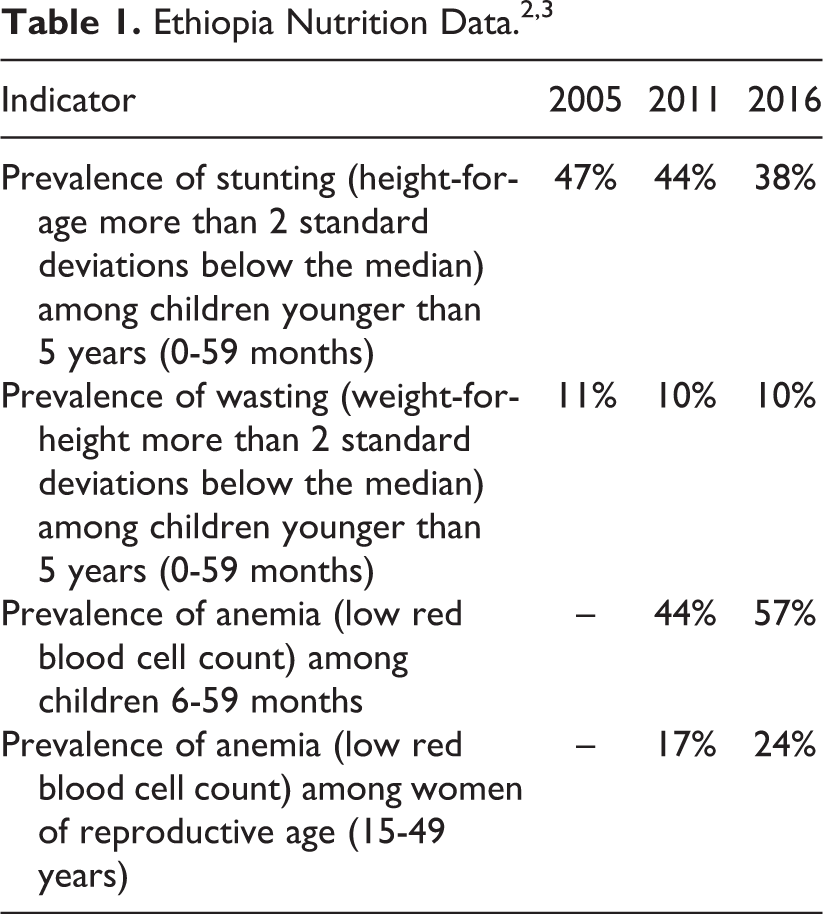
Malnutrition is linked to approximately 45% of under-five deaths, primarily in low- and middle-income countries (LMICs), and has developmental, economic, social, and health impacts on communities. 1 Ethiopia has a significant burden of malnutrition but has made notable progress in reducing this burden over the past decade. Table 1 demonstrates the Demographic and Health Survey data from 2005, 2011, and 2016. 2,4 Ethiopia’s gains in stunting reduction should be celebrated and are even more impressive over a longer time period, having dropped from 67% in 1992. However, 38% is still well above the global average of 22.2% in 2017, and wasting has remained constant at 10%, which is above the global average of 7.5% in 2017. 5 Finally, Ethiopia has seen disappointing increases in its rates of anemia among women and children, from 17% and 44% in 2011 to 24% and 57% in 2016, respectively.
Agriculture, health, and nutrition are mutually reinforcing sectors. Although the health sector is often tasked with the prevention and management of undernutrition, the agriculture sector is a key player in addressing the root causes. Agriculture has typically focused on livelihood and economic impact, but increasingly its contribution to advancing optimal nutrition is recognized, with dietary quantity and quality closing the value chain from agricultural productivity to improved health outcomes. As part of this new multisectoral approach, health promotion has shifted from an almost exclusive focus on nutrition-specific interventions, such as exclusive breastfeeding, optimal complementary feeding, and nutrition education and supplementation, to include nutrition-sensitive interventions, such as diverse crop agriculture promotion, food fortification, and water, sanitation, and hygiene (WASH) interventions.
In the region, there has been increasing recognition of the interconnectedness of these sectors and significant interest in developing cross-sector solutions for malnutrition. As noted by one Kenyan policy maker: “if the agricultural sector does not invest enough, the cases end up in the hospital and the burden goes to the health sector to treat malnutrition.” 6 Despite their expressed interest, policy makers struggle to create sustainable multisector policies, missing opportunities to achieve better health and development outcomes through the integration of systems. Ethiopia has made notable efforts to address malnutrition by integrating across sectors, including the Ministry of Health and Ministry of Agriculture, with growing involvement of other sectors as well. In this article, we have sought to examine this effort, with the aim of documenting how multisectoral integration for nutrition is pursued in practice, and to define lessons for other countries that are considering similar efforts.
Methods
This research was conducted via literature review and expert interviews. The literature review, conducted between November 2018 and January 2019, included a systematic review of articles on multisectoral integration and nutrition in Ethiopia, as well as a comprehensive review of reports and documents published by the Ethiopian government, Central Statistical Agency, World Health Organization (WHO), United Nations Children’s Fund (UNICEF), and US Agency for International Development (USAID) regarding nutrition trends in Ethiopia.
The research team traveled to Ethiopia in January 2019 to conduct in-person interviews with 20 representatives, including 6 from the national government, 11 from NGOs and philanthropies, and 3 from bilateral and multilateral organizations. The authors applied for institutional review board (IRB) approval from the Harvard T.H. Chan School of Public Health, which granted an exemption based on the determination that this work does not qualify as human subjects research. Similarly, the authors applied for IRB approval from the Addis Continental Institute of Public Health with the assistance of Dr Amare Worku and was granted an exemption. The full list of interviewees may be found in the “Acknowledgments” section.
Interviewees were identified through contacts at the Addis Continental Institute of Public Health, Save the Children, the Ethiopian government, and the Bill & Melinda Gates Foundation, leading to a varied sample of key actors in policy and program design and implementation. Interviews within the Ethiopian national government were chosen to represent key policy makers and a range of experience levels within the ministries, with a focus on the Ministries of Health and Agriculture, as our research and in-country colleagues identified these 2 as the most engaged actors in nutrition-specific and nutrition-sensitive policies to date.
Each interview included a standard set of questions about the successes and challenges of multisectoral integration for nutrition, with additional questions to understand the particular experience and perspective of that stakeholder. Each interview had 2 to 3 data collectors present, and notes from each interview were consolidated following the conclusion of the interview period. The research team extracted 5 common themes from these consolidated notes, which informed the 5 components of the Discussion section: coordination and structural accountability, political commitment, financing, human resources, and data monitoring and transparency. Information from each interview was categorized by topic and incorporated into the Results and Discussion sections.
Several interviewees provided access to government documents outlining the development of the National Nutrition Programs, the National Nutrition-Sensitive Agriculture (NNSA) Strategy, the Seqota Declaration (SD), and the Food and Nutrition Policy (FNP). These documents provided additional context for our interviews and supplemented our literature review following the interview period.
The authors drafted this article in Spring of 2019 and shared it with all interviewees for review and the opportunity to provide feedback on its content and analysis.
Results
Evolution of Nutrition Programs in Ethiopia
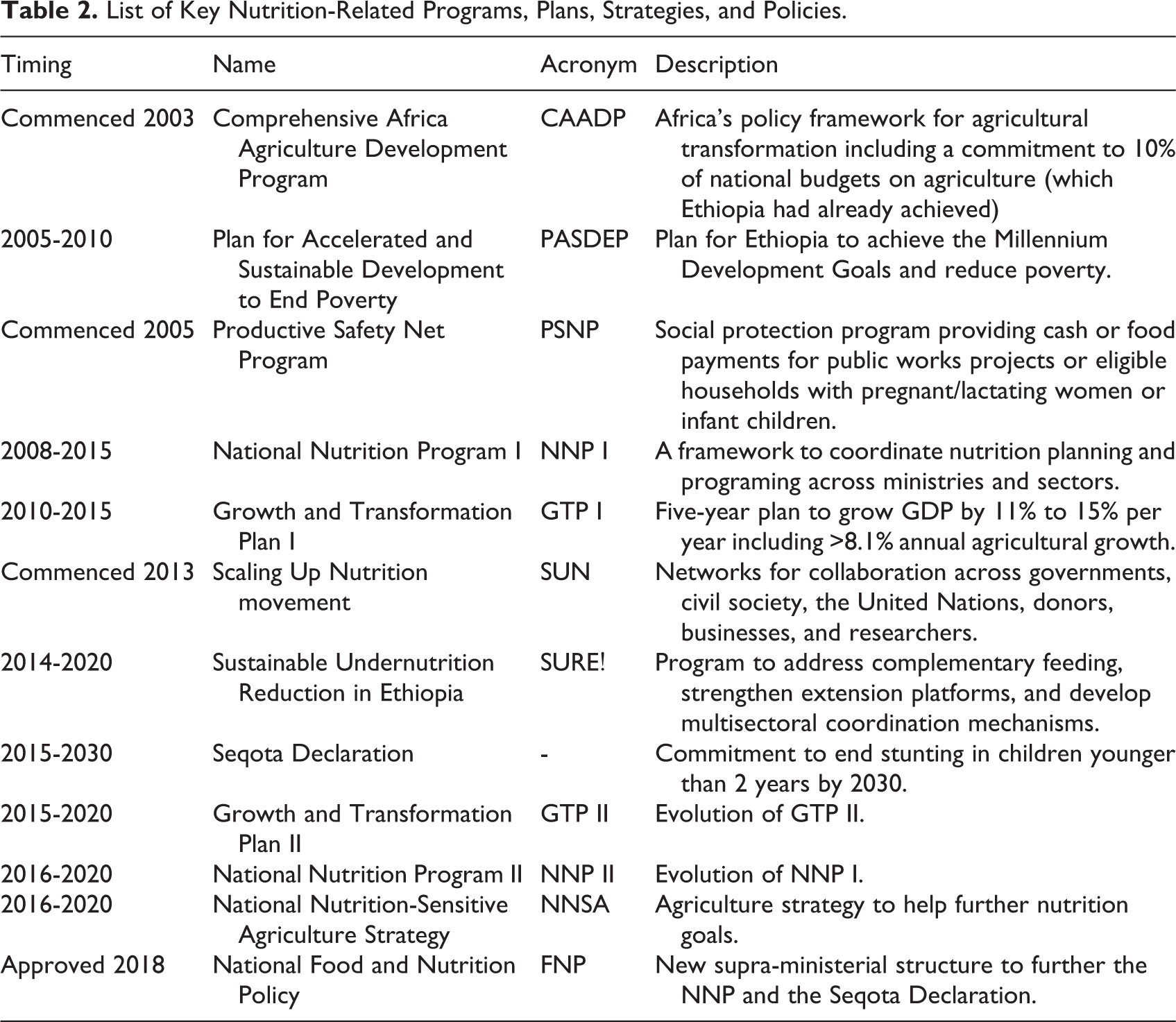
The flagship nutrition programs in Ethiopia have been the National Nutrition Program I (NNP I) and National Nutrition Program II (NNP II). In addition, there was the 2015 SD to end stunting by 2030, and the 2016 NNSA Strategy. Most recently, the National FNP was approved in late 2018. The following section will provide a brief overview of these programs. A full list and timeline of related programs, such as the Plan for Accelerated and Sustainable Development to End Poverty and the Growth and Transformation Plan, may be found in Table 2 and Figure 1.
List of Key Nutrition-Related Programs, Plans, Strategies, and Policies.
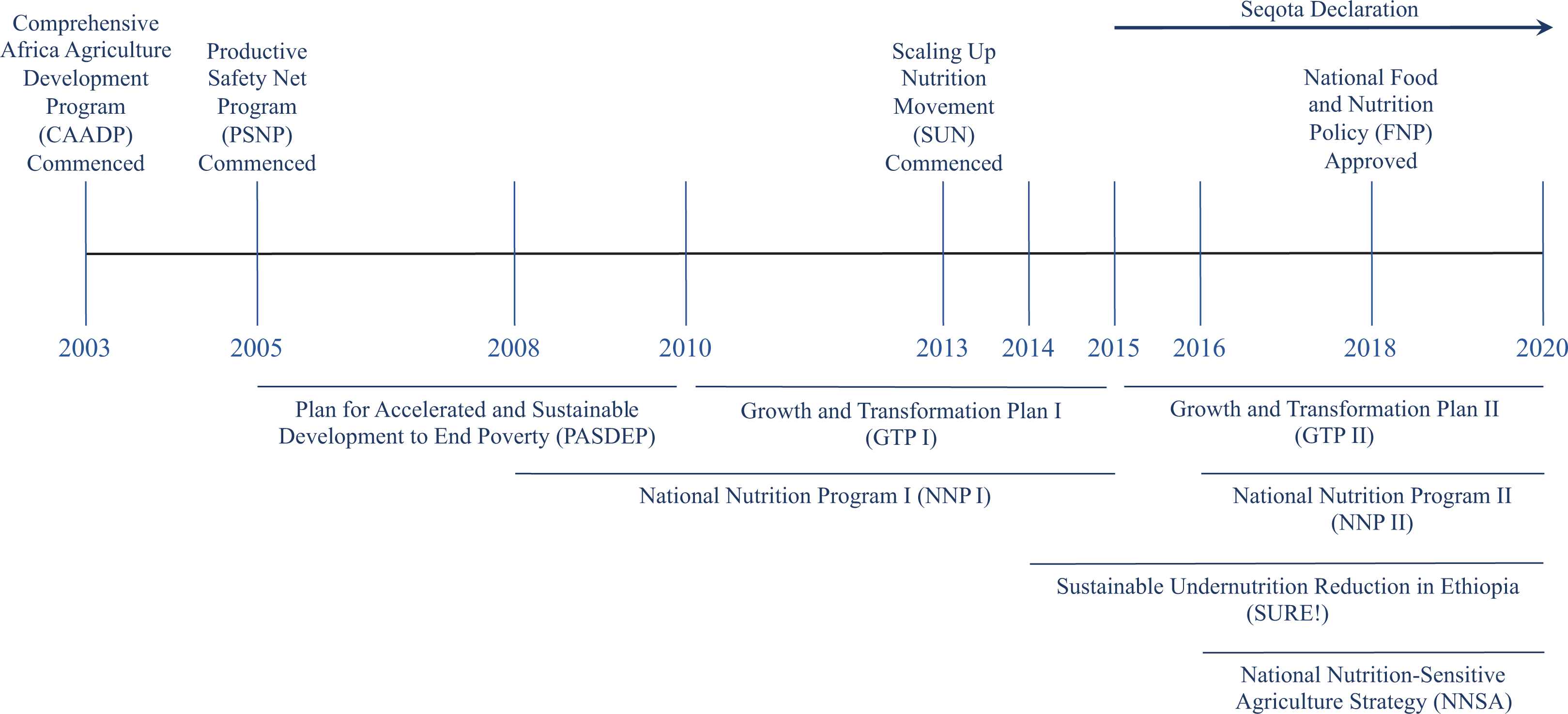
Timeline of key nutrition-related programs, plans, strategies, and policies (2003-2020).
National Nutrition Program I
The NNP I, implemented between 2008 and 2015, was focused on the “immediate causes of suboptimal growth and development” 7 and the effects of nutrition-specific programs on malnutrition. In particular, there was a focus on integration and coordination across nutrition-specific interventions that were supported by “evidence-enhanced decision making.” 7 Nutrition interventions under NNP I involved sector-based strategies including the National Food Security Strategy, National Health Sector Transformation Plan, National Food Fortification, and the National School Health and Nutrition Strategy. 7 Nutrition programs were scaled up and sectoral coordination platforms were created in the forms of the National Nutrition Coordinating Body (NNCB) and the National Nutrition Technical Committee (NNTC).
Although NNP I began the process of integrating and mainstreaming nutrition into various sectors, effective multisectoral coordination and integration were not achieved, primarily due to inadequate commitment and lack of strong governance structures to ensure accountability. 7 Therefore, it evolved into the NNP II, which attempted to address the shortcomings of NNP I by increasing multisector involvement and developing nutrition-sensitive strategies, including nutrition-sensitive agriculture practices, food fortification, and WASH interventions as key underlying determinants of malnutrition.
National Nutrition Program II
The NNP II was developed as a framework for coordinated implementation of nutrition interventions that both directly and indirectly contribute to the reduction of malnutrition. It was developed with 4 primary rationales. 7 First, to address the NNP I implementation challenges and maximally sustain achievements to date. Second, to brand the “1000 days” initiative through intensive social and behavioral change communication and community mobilization, recognizing the first 1000 days of life as a critical period for nutrition and development. Third, to strengthen objectives not well-addressed by NNP I, such as nutrition interventions for adolescents and individuals with communicable and noncommunicable diseases. Fourth, to strengthen multisectoral nutrition coordination, capacity building, and nutrition-sensitive intervention implementation. Together, these rationales motivated a renewed focus on improving nutrition governance structures to enhance integration and reduce malnutrition.
The Ethiopian government identified the following 5 objectives as ways to improve nutrition governance structures:
7
develop and enforce nutrition-related policies and legislation; sustain political will and commitment on nutrition; mainstream nutrition as a priority agenda item in all NNP-implementing sectors and beyond; strengthen multisectoral nutrition coordination for a harmonized, multisectoral response and for efficient resource mobilization and utilization; define feasible, locally accepted communication for development activities to bring about the behavioral changes required for improved nutrition; and continue providing leadership to regions on cascading and executing the NNP implementation plan.
One example of how NNP II has sought to achieve the objective of strengthened multisectoral coordination noted above is the SD, a high-level commitment unveiled by the Ethiopian government in July 2015 to end stunting in children younger than 2 years by 2030. The SD focuses on efforts in the Seqota region, an area with historically high rates of malnutrition, but supports the objectives and implementation of NNP II. Specifically, the 15-year SD Implementation Plan focuses on delivering high-impact nutrition-specific, nutrition-sensitive, and infrastructure interventions, with the following 10 strategic objectives:
8
improve the health and nutritional status of adolescents, women, and children; ensure 100% access to adequate food all year round; transform smallholder productivity and income; ensure zero postharvest food loss; enhance innovation around the promotion of sustainable food systems (climate-smart); ensure universal access to water supply, sanitation, and adoption of good hygiene practices; improve the health and nutrition status of school children; improve the nutritional status of pregnant and lactating women and children through PSNP interventions; improve gender equity, women’s empowerment, and child protection; and improve multisectoral coordination and capacity.
Thus, the SD encourages a multifaceted, multisectoral approach that includes both nutrition-specific and nutrition-sensitive strategies to dramatically reduce childhood malnutrition. The 6 implementing sectors of the SD at the federal level are the Ministry of Health, Ministry of Agriculture (formerly the Ministry of Agriculture and Natural Resources and the Ministry of Livestock and Fishery), Ministry of Water, Irrigation and Energy (formerly called the Ministry of Water, Irrigation and Electricity), Ministry of Labor and Social Affairs, Ministry of Education, and Ministry of Women, Youth, and Children (formerly called the Ministry of Women and Children). 8 Importantly, the SD has served as a mechanism to galvanize wide-spread and high-level political commitment to nutrition in Ethiopia.
Program Delivery Units (PDUs), developed as part of the NNP II and SD, are an example of how these initiatives are fostering multisectoral integration through innovative changes to nutrition governance structures. PDUs are small teams of multisectoral experts placed at the federal level and in the offices of the Presidents of the Amhara and Tigray regions to secure high-level political commitment to regional nutrition activities and to ensure accountability to the highest level of the regional government. The PDU teams generally consist of a health manager, a multisector senior program manager, a program analyst, a communication adviser, a WASH manager, and an agricultural manager. These teams work to implement annual plans, with support from partners who contribute resources to the PDUs.
At the regional level, competing priorities, human resources, and recruitment of appropriately trained professionals for these PDU positions have been challenges. Interviewees shared that PDU implementation experiences have varied, even between the 2 regions. Several interviewees stated that the regional leader’s commitment to take responsibility for nutrition and achieve the government’s goal to end stunting is a key determinant of PDU success. Despite these challenges and variable implementation at the regional level to date, interviewees were hopeful that PDUs would continue to develop in the regions, as the concept of a team with diverse nutrition expertise proximal to regional executive power is promising for prioritization and implementation of nutrition initiatives.
Finally, the financing of this ambitious declaration remains a challenge. The cost to implement the proposed SD investment plan over 3 years from 2017 to 2020 is US$539 million, and the government and development partners have each committed to contribute 50% of this cost. 8 However, at this stage, the government has committed 6.2%, donors through government account for 17%, implementing partners have committed 14%, and the community has contributed 11.1%. This totals to 48%, leaving a funding gap of 52% of the total investment cost. 8
National Nutrition-Sensitive Agriculture Strategy Strategy
The State Minister of Agriculture, inspired by a state visit to Brazil in 2014, became a champion for the prioritization of nutrition within the agriculture sector and has driven significant progress in mainstreaming nutrition into agriculture over the past 3 years. Recognizing the integral role of agriculture in nutrition, the ministry developed the NNSA Strategy in 2016, the first strategy of its kind in Ethiopia. The overall goal of the NNSA Strategy is to “contribute to improving the nutritional status of children and women by increasing the quantity and quality of food available, accessible and affordable, and promoting utilization of diverse, nutritious and safe foods for all Ethiopians at all times.”
9
Multiple interviewees expressed excitement about the political traction of nutrition in agriculture and the consequent changes in nutrition governance within agriculture in Ethiopia. The NNSA Strategy marks significant progress toward multisectoral involvement in nutrition beyond the health sector, and collaboration in nutrition governance that may serve as a model for other sectors to mainstream nutrition interventions. Specifically, the strategic objectives of the NNSA Strategy are:
9
to leverage nutrition into agriculture and livestock policies, strategies, programs, and work plans at all levels; to establish/ strengthen institutional and organizational structures and capacity responsible for planning and implementing NNSA; to increase year-round availability, access and consumption of diverse, safe and nutritious foods of both plant and animal origin; to enhance the resilience of vulnerable agrarian, agropastoral, and pastoral households and communities prone to climate change and moisture stress; to ensure women and youth empowerment and gender equality; and to establish and strengthen multisectoral coordination within the agriculture sectors and with signatories of NNP and other development partners.
Food and Nutrition Policy
The FNP, approved in November 2018, aims to build upon the successes and address the challenges of the NNP II, particularly in the areas of coordination and accountability to higher governing bodies in the executive branch. To facilitate further multisectoral involvement and coordination, the FNP aims to create a shared vision for nutrition among multiple sectors, with clear delineation of roles and responsibilities and corresponding accountability structures that provide legal backing to the engagement of different sectors in nutrition-related activities. It proposes greater accountability across sectors by situating a new national coordinating body, the Food and Nutrition Council, in the prime minister’s office, and greater national and regional accountability through the establishment of the Food and Nutrition Secretariat, which will take over the role of PDUs from the national down to the kebele level. Furthermore, the FNP will incorporate additional nutrition-related topics such as food safety and security, with a focus on dietary diversity and harvest management, to stabilize the agricultural market. Specifically, the overall objectives of the FNP are to:
10
improve the availability and accessibility of adequate food to all Ethiopians at all times; improve access to quality and equitable nutrition and nutrition-smart health services to all Ethiopians at all times in all settings; improve consumption and utilization of diversified and nutritious diet that is compatible with optimal health throughout the life cycle; improve the safety and quality of food throughout the value chain; reduce food and nutrient losses along the value chain; improve food and nutrition emergency risk management and resilience systems; and improve food and nutrition literacy of all Ethiopians.
Under each of these objectives, there are several broad strategies outlined within the FNP to improve the associated systems, which span the sectors of Health, Agriculture, Education, Trade, Water, Irrigation, and Energy and Women, Youth, and Children. To enable effective engagement and coordination of these diverse sectors, and based upon previous challenges with multisectoral collaboration in NNPs I and II, the FNP outlines a Food and Nutrition Governance structure “from the federal to kebele level.” 10 This governance structure, or “Food and Nutrition Governing Body”, located within the federal government is designed to serve in an advisory capacity and as the primary unit of accountability for nutrition-related activities. 10 The policy indicates that a legal framework will be put in place to ensure implementation, coordination, and monitoring and evaluation of these activities across sectors. Because accountability has been a major challenge to date, several interviewees, including those at the Ethiopian Public Health Institute (EPHI), were optimistic that this new policy approach would improve accountability and thus greatly contribute to improvements in nutritional outcomes. Although the FNP was recently approved, the specific strategies and plans for this policy are yet to be developed.
Discussion
As outlined above, Ethiopia has implemented multiple nutrition-specific and nutrition-sensitive programs that have required the development of structures and processes that facilitate multisectoral coordination. The NNP II highlights the “Five Building Blocks of Effective Nutrition Governance” as consensus building and coordination, political commitment, financing, service delivery capacity, and transparency and accountability. 7 Here we provide an analysis of Ethiopia’s nutrition governance structures and progress toward multisectoral integration for nutrition to date through 5 lenses, based upon these building blocks: coordination and structural accountability, political commitment, financing, human resources, and data monitoring and transparency.
Coordination and Structural Accountability
The NNP I and NNP II were developed under an overarching strategic plan titled the Ethiopian Growth and Transformation Plan. The national nutrition governance structure, as defined in NNP II, is represented in Figure 2.
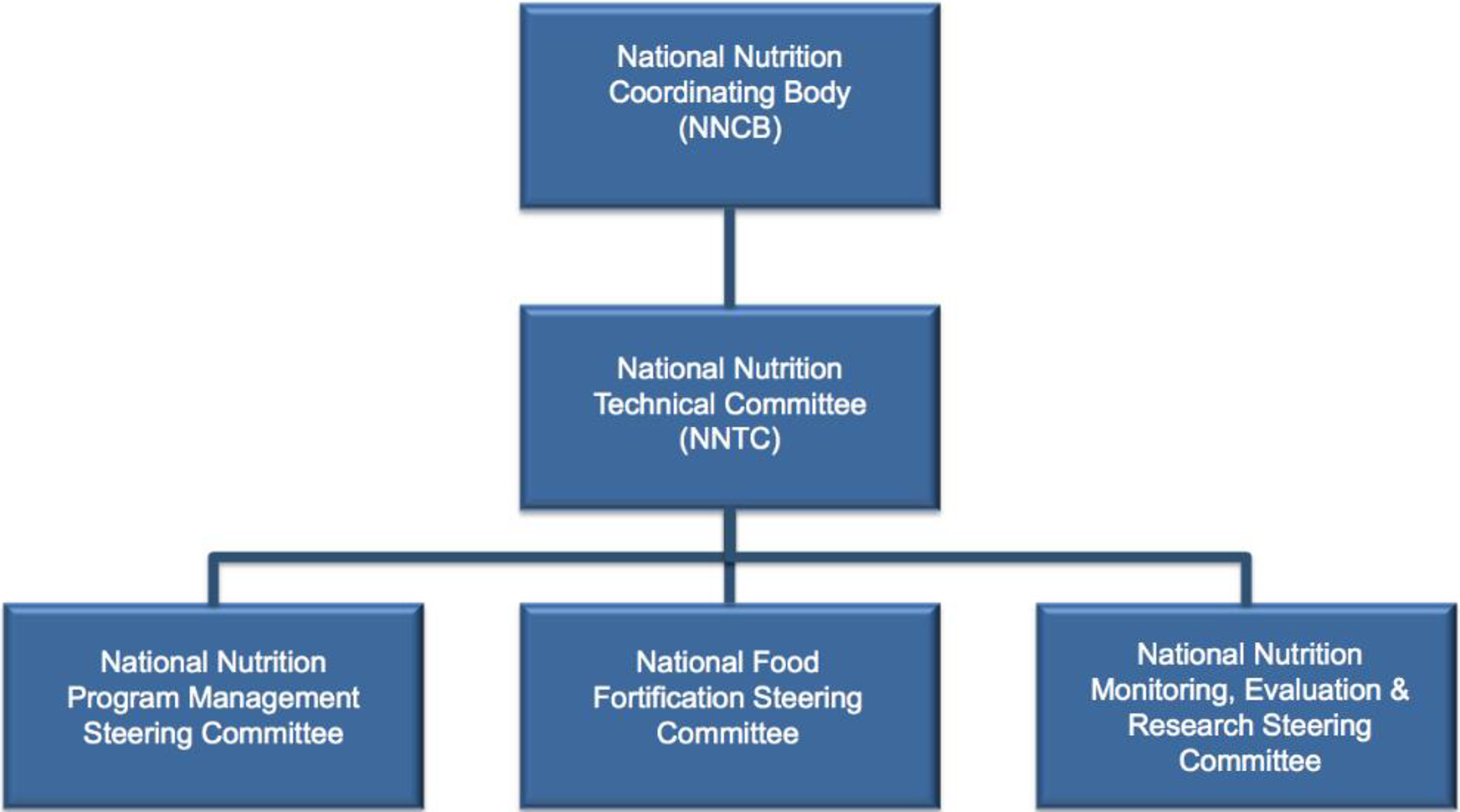
National nutrition governance structure. 7
This structure was developed to facilitate multisectoral coordination in response to several challenges encountered during NNP I. As described in the NNP II government document as well as by multiple interviewees, there was a lack of clear implementation guidelines, inadequate dedicated personnel at the sector level, and limited reporting mechanisms using clear and measurable indicators to track progress. 7 Stakeholder interviewees brought up ongoing challenges with accountability and ownership and highlighted coordination as the most important issue to address in achieving improved nutrition outcomes in Ethiopia. Ministry staff felt that with no cross-ministry reporting structures, there has been a lack of clarity about sectoral roles and responsibilities for nutrition outcomes. To address this, the Ethiopian government made nutrition governance structures a priority in the NNP II design. While the structure represented in Figure 2 was developed to facilitate improved multisectoral coordination, there are ongoing challenges with accountability and ownership that the new FNP will attempt to address.
Most interviewees supported the idea of moving the NNCB to a supraministerial level to address the challenge of accountability across sectors, although this has not yet happened in practice. Supraministerial placement under the prime minister’s office would empower the NNCB to hold multiple ministries accountable for prioritizing nutrition and reporting on nutrition-related activities and outcomes. In the current structure, it is difficult for the Ministry of Health, which takes ownership of most nutrition-related activities, to hold other ministries accountable as parallel structures. To address this challenge, the new FNP will aim to catalyze the move of the NNCB to the executive branch to create a clear vertical reporting structure. It is as of yet unclear whether and how the prime minister and/or deputy prime minister would oversee a supraministerial NNCB, and whether this supraministerial placement would ensure equal involvement and power across all involved sectors. Despite these challenges, interviewees spoke about ongoing momentum and growing buy-in from various sectors to make nutrition a priority, and many were hopeful of continued improvement in nutrition governance regardless of specific leadership structure.
A separate but related challenge has been how to improve coordination at the regional level. While many interviewees at the national level spoke about the leadership of the NNCB in nutrition governance, the Regional Nutrition Coordination Bodies (RNCBs) were rarely discussed. The function of the RNCBs in different regions appears to be variable, with ongoing work needed to strengthen them as coordination platforms. These bodies struggle with the same cross-sector accountability concerns which exist at the national level and, furthermore, have limited communication with and accountability to the NNCB.
In order to continuously improve nutrition outcomes, nutrition must be a priority within and between distinct government structures. Strong horizontal (cross-sectoral) and vertical (national to regional) coordination, bolstered by accountability structures, leadership, and resource capacity, are critical to a governance structure’s ability to effect change. 11 A theme that emerged during our interviews with both government and nongovernment stakeholders was the need for effective structures of accountability for various government ministries working in parallel toward a common goal.
Horizontal coordination and accountability
Despite its multisectoral, multidisciplinary implications, nutrition tends to be housed in one government structure or ministry. Historical context unique to a country may influence which government entity ends up housing nutrition. In Ethiopia, nutrition was initially housed in the Ministry of Agriculture, as a consequence of the famines due to droughts and poor crop yields in the 1980s. However, the Ministry of Health has taken ownership of nutrition initiatives over the past 20 years, in line with international organizations and research that frame malnutrition as a health problem. In recent years, as part of the effort toward multisectoral engagement to improve nutrition outcomes, the Ministry of Agriculture has once again started to take an active role in nutrition through NNSA initiatives. The simultaneous engagement of both sectors in nutrition raises questions about who should be accountable for which nutrition-related tasks and outcomes.
A key component of accountability is the clear delineation of roles and responsibilities for all stakeholders. However, this role definition for each sector is a challenge in the setting of multisectoral collaboration for nutrition governance. Deciding where the work of one ministry starts and ends, and how it interfaces with other ministries at the national, regional, and local levels is a dynamic process with implications for political interests, leadership, budgeting, and accountability.
A recent study found that, in the context of multisectoral nutrition governance, boundary-spanning actors involved in more than one sector may be helpful in bridging the spaces in between sectors in LMICs like Ethiopia. 12 Another approach is coordinating bodies at the national level; entities such as the NNCB and the NNTC provide structures to bring together stakeholders from multiple sectors toward a common goal of improving nutrition outcomes. Given that each ministry has distinct objectives, programs, and budgets, the first step is fostering the political will within each ministry to mainstream nutrition into its activities. In Ethiopia, several ministries, especially the Ministries of Health and Agriculture, have taken this first critical step.
Whether through boundary-spanning actors or coordinating bodies that hold multiple parallel ministries accountable, an important next step will be to promote cocreation of priorities across ministries with clear delineation of roles and responsibilities in a way that builds engagement and institutionalizes nutrition in all relevant sectors.
Vertical integration and accountability
Vertical integration refers to the process by which political priorities set at the national level translate to prioritization and action at the regional and local levels. This process presents an accountability challenge of how to functionally mainstream nutrition activities within a sector. This is distinct from cross-sector coordination, although vertical integration may help ensure that any cross-sector coordination occurs at all levels. Vertical integration, from national political will to grassroots action, is particularly important to consider for countries such as Ethiopia with strong regional identities and local governments. The diversity of languages and cultures in Ethiopia contributes to the opportunities and challenges of adapting national policies to local implementation.
At the time of the development of NNP II, only a few of the regional and woreda-level nutrition coordinating bodies were functional. The NNP II attempted to address this challenge by proposing a vertical accountability structure in which regional sectors would be held accountable to regional presidents for achieving nutrition goals and targets. Still, the uptake of this accountability structure remains varied across regions, and work is ongoing to cascade policies from national to local settings.
One adaptation to this challenge has been in training structure. The Ethiopian government found that nutrition-related training at the national level was not translating to regional levels. In response, they instituted joint trainings to bring together national and regional leaders. Other solutions to enhance vertical integration have included publishing strategic documents on how to mainstream nutrition within each sector, implementing cascading structures from national to local levels and developing sustainable financing and budget allocations to increase sectoral commitment to nutrition. Going forward, sectors may work on creating positions for nutritionists and other nutrition-related practitioners at the regional and woreda levels, drawing upon human resource assessments or consultants to strategize. Sectors may also establish reporting structures on nutrition-related activities and outcomes that would necessitate regional reporting and engagement. Implementation of these strategies may support vertical integration and draw upon the significant national-level political will to drive community-level action.
Nongovernment coordination
Although coordination and accountability within the government are critical for effective nutrition governance, the complex interplay between government, private sector, development partners, and academia shape the nutrition landscape and influence nutrition outcomes. NNP I and NNP II recognize the importance of this interplay and assume a collaboration between these diverse entities.
Ethiopia was an early participant in the Scaling Up Nutrition (SUN) movement. 13 Priorities of this movement, including the emphasis on the first 1000 days of life, were reflected in the creation of NNP I. As nutrition and reduction of childhood stunting became a priority for global movements such as SUN, as well as international organizations like the WHO and UNICEF, Ethiopia collaborated with these entities to create the NNP and lead the way in prioritizing nutrition governance among LMICs. Collaboration with international entities has been an important component of the development of nutrition governance in Ethiopia; the NNP I was supported and funded primarily by the World Bank, UNICEF, and USAID. 14
Conversations with various nongovernment nutrition stakeholders in Ethiopia revealed the importance of partnerships between the Ethiopian government and these stakeholders for the prioritization of nutrition programs, as well as the need for better coordination among the wide variety of nongovernmental stakeholders involved in Ethiopia, including United Nation (UN) entities, NGOs, and donors. Key nongovernmental actors include Save the Children, which leads the implementation of USAID’s multisectoral Growth through Nutrition project, and UNICEF, which supports breastfeeding initiatives and community-based nutrition. The Bill and Melinda Gates Foundation, Big Win, Children’s Investment Fund Foundation (CIFF), Global Affair Canada, USAID, and World Bank are also key donors who support capacity-building and investments, in partnership with the Ethiopian government. USAID and UNICEF are members of the NNCB and represent the perspective of development partners, including donors, UN agencies, and NGOs.
Both the NNCB and the Nutrition Development Partner Forum (NDPF) attempt to bring together stakeholders to strategize collectively and reduce redundancies in nutrition-related work. In addition to participating on the NNCB, USAID and UNICEF serve as chairs of the NDPF, which broadly engages donors, UN agencies, and NGOs working on nutrition in Ethiopia. An interviewee at one donor organization shared that, although the NDPF meets regularly, member organizations still largely coordinate with the Ethiopian government separately and would benefit from greater alignment and communication to increase shared learning and minimize redundant efforts. Therefore, the NDPF presents an opportunity for leadership by USAID and UNICEF to increase communication across nutrition donors and UN agencies, to enhance collaboration and shared learning across the projects they are funding. For example, the NDPF may collect and synthesize an ongoing compendium of projects, proposals, and financing that would clarify areas of overlapping efforts and identify areas of remaining need. Such a compendium and an aligned plan for coordination, developed by the NDPF and shared with both the Ethiopian government and broader international and NGO community, may streamline nutrition efforts in the country and address the ongoing challenge of coordination across diverse nongovernmental nutrition stakeholders.
Political Commitment
The NNP I and NNP II and the subsequent FNP exemplify the Ethiopian government’s dedication to improving nutrition outcomes. This political prioritization has been led by the national government, and ambitious plans as outlined in the SD have served to convey the government’s commitment, garner funding, and motivate multiple sectors to collaborate toward improved outcomes. Both government and nongovernment officials highlighted 4 salient drivers of this national political prioritization and movement toward nutrition-related multisectoral collaboration: the international community’s emphasis on reducing undernutrition, the 2012 Cost of Hunger in Africa study, 15 international experience exchanges to learn from other countries, and nutrition champions within Ethiopia.
Both the Millennium Development Goals, published in 2000, and the Sustainable Development Goals (SDGs), published in 2015, advocate for a commitment to ending undernutrition. Specifically, SDG 2 calls for zero hunger, SDG 6 calls for clean water and sanitation, and SDG 3 calls for good health and well-being, all of which are closely tied to nutrition. Given the increasingly recognized importance of nutrition in individual and national health and development, international entities such as the World Bank and donors such as USAID, CIFF, and the Bill and Melinda Gates Foundation have increasingly allocated funds toward improving nutrition outcomes in low-income countries. The Ethiopian Ministry of Health conducted a nutrition resource mapping analysis that demonstrated this increase in funding: Expenditures to support NNP II increased from $181 million in 2013/14 to $455 million in 2015/16, with a significant increase in funding for nutrition-sensitive programs. 16 At the same time, international movements like SUN have helped to engage leaders and civil society to advocate for the prioritization of nutrition. Multiple interviewees within and outside of the Ethiopian government recognized that trends in the priorities of the international community played a key role in bolstering the importance of nutrition in the Ethiopian context.
The Cost of Hunger in Africa study, published in 2012, demonstrated that 16.5% of Ethiopia’s national GDP was lost due to child undernutrition, through health-care costs, loss in education, mortality, and workforce absenteeism. 15 The estimated cost of heath morbidities related to child undernutrition was 155 million USD, the estimated loss in productivity associated with child undernutrition was 1.153 billion USD, and the estimated cost of primary school grade repetitions associated with child undernutrition was 8 million USD. 15 When asked how nutrition became a national priority, most nutrition stakeholders in Ethiopia cited this study as a catalyst for political will to prioritize the reduction of child undernutrition.
Two state visits in 2014 to learn about multisectoral efforts in other countries served as another significant catalyst that increased political will for multisectoral coordination around nutrition. In 2014, representatives from the NNCB and the RNCBs, including the leadership of the Ministry of Agriculture, visited Brazil and Israel, both countries that have made progress in improving nutrition outcomes through multisector involvement. These visits served as an impetus for the prioritization of nutrition in the Ministry of Agriculture. As recently as 2013, the Ministry of Agriculture had focused primarily on increasing agricultural production, with minimal involvement in nutrition-specific or nutrition-sensitive interventions. 14 However, following these visits, the State Minister of Agriculture committed to making nutrition a priority in his sector, leading to the 2016 NNSA Strategy and the mainstreaming of nutrition in the agriculture sector.
Champions of nutrition, like the State Minister of Agriculture, have been key for initiating and sustaining political commitment to nutrition across sectors. Many ministry officials and NGOs emphasized that, to foster buy-in among stakeholders that have traditionally not prioritized nutrition and to garner financial support for nutrition initiatives, such champions are needed in each sector and at each level of government. The State Minister of Agriculture spearheaded the development of the NNSA Strategy, structurally mainstreaming nutrition into the sector’s work and strengthening his ministry’s role in the multisectoral collaboration for nutrition. Specifically, there is now a dedicated nutrition team within the ministry that reports directly to the minister. Another example of a high-profile, efficacious nutrition champion is the former first lady, Her Excellency Roman Tesfaye. She directly engaged in nutrition activities, kept the spotlight on the issue, and convened a high-level Nutrition Advocacy Mission that “accelerated nutrition interventions and multisectoral linkages in Ethiopia.” 17 By following these examples, nutrition champions in other sectors have the potential to build political will and contribute to greater multisectoral collaboration for nutrition at all levels of government.
Financing
Despite significant political commitment, the government’s financial commitment to nutrition programs has been less than robust. According to government officials, funding for health (through which nutrition initiatives obtain the majority of their funding) is growing both in absolute terms and as a proportion of the budget, and there is widespread recognition of the significant economic impact of malnutrition outlined in the 2012 Cost of Hunger in Africa study. However, the NNP II document acknowledges that “inadequate budget allocation, resource shortages, weak financial mobilization, and low utilization have been the main challenges to implementing the National Nutrition Program.” 7 Among nongovernment interviewees, there was a perception that the government’s strong commitment to plans and programs did not always translate to sufficient funding. However, there was broad recognition that significant public funds had gone toward nutrition-sensitive infrastructure such as roads and irrigation.
In terms of nongovernment funding, multiple interviewees described Ethiopia as a “donor darling.” For example, Big Win Philanthropy is contributing most of the funds to support the SD initiatives, CIFF is funding the Sustainable Undernutrition Reduction in Ethiopia (SURE!) program, and UNICEF is procuring supplies such as Plumpy Nut to treat acute malnutrition. Donors are also funding much of the agriculture and health extension workforce. The World Bank has granted large loans to support nutrition efforts that are classified as government funding as they will eventually be paid back but are not currently sourced from government revenue. Key informants from the Gates Foundation also highlighted USAID, Department for International Development, and the European Union as large bilateral donors prioritizing nutrition in Ethiopia.
Ethiopia has set an ambitious goal of becoming a middle-income country by 2025. 18 While increasing national income is broadly positive, one of the negative side effects is likely to be significant reductions in donor funding. Given how much of the current nutrition programming is donor-funded, with reductions in donor involvement the government faces a decision between generating more revenue, reallocating existing revenue, and/or trying to grow the role of the private sector to support nutrition activities. How the funding gap will be filled when Ethiopia transitions to middle-income status remains an open question. This funding challenge may be alleviated by continued political prioritization of nutrition, to mobilize domestic funding and drive budget allocations to nutrition. In addition, as noted by interviewees in the ministries and at the Gates Foundation, each sector is separately required to allocate a portion of its budget to nutrition initiatives. If the new coordination structure is able to streamline these funds into specific, collaborative initiatives, it may increase the financial efficiency of programs, facilitating more effective government funding of nutrition programs.
Ethiopia has taken the first critical step toward improving nutrition outcomes by fostering significant political commitment. It remains to be seen how the new administration, FNP, and growing multisectoral coordination efforts will impact the financial commitments needed to achieve sustainable nutrition programming.
Human Resources
An adequate workforce, both in number and in competency, is critical to effective implementation of the nutrition policies set forth by the national government. One ministry official who was instrumental in developing the SD noted that, in order to create greater buy-in and accountability for nutrition, frontline workers need to be better trained and mobilized. Regional and local offices must play an active role in mobilizing these frontline workers, who mainly consist of health extension workers and agricultural extension workers.
According to expert interviews, Ethiopia has a health extension workforce of about 40 thousand women and an agriculture extension workforce of about 60 thousand men. Currently, the health extension workers are responsible for identifying and treating malnutrition, while the agriculture extension workers are responsible for educating farmers about new farming and postharvest techniques. Although these extension workforces remain robust, several stakeholders including the International Food Policy Research Institute noted the challenge of significant worker turnover due to remote placement, limited pay, inadequate training, and poor career development opportunities. These frontline extension workers have been identified to deliver nutrition-specific and nutrition-sensitive strategies, but these would be in addition to their pre-existing responsibilities, adding strain to a workforce already under stress.
Currently, Ethiopia suffers from a shortage in its nutrition-related workforce. Across multiple ministries, and particularly in the Ministry of Agriculture, government workers expressed the need for greater human resources to support the growing nutrition agenda. Specifically, they noted the need for improvements in recruitment, allocation, and engagement of nutrition professionals. Promisingly, some described the significant recent growth in university nutrition centers of excellence and in Ethiopian students graduating with degrees in nutrition. This increased interest will help to increase the quality of nutrition training, and stakeholders anticipate that this growth may start filling the growing demand for Ethiopian nutrition practitioners, experts, and champions. Further development of the nutrition workforce in Ethiopia will require dedicated funding for nutrition-related educational and training programs.
In the meantime, to mitigate the nutrition workforce gaps, the FNP proposes hiring and supporting a minimum number of young nutrition professionals to be nutrition-related staff within the government. In addition to training nutrition professionals, integrating nutrition into existing preservice education or training courses is another strategy to improve capacity for nutrition. For example, USAID, through the Growth through Nutrition program, is working with the Ethiopian Ministries of Education, Agriculture, and Health to integrate nutrition into preservice courses and curricula for midwife, health officer, plant science, animal science, and agricultural development agents in training.
Ministry officials and NGO members alike indicated that the Ethiopian government is trying to develop human resources to integrate more across sectors at the regional and local levels. For example, there are clear opportunities for health and agriculture extension workers trained in nutrition to target messaging to both men and women within households and to partner on messages such as home gardens that improve both health and agriculture. Training professionals across sectors together may also enable them to better function as a team, and there is growing support for educational reform to enhance multidisciplinary interprofessional work globally. 19 In Ethiopia, multidisciplinary education may be achieved preservice or in-service, through the inclusion of nutrition and agriculture in preservice professional degree curricula or promotion of in-service executive courses and joint experiential training.
Data Monitoring and Transparency
To determine the efficacy of multisectoral integration for nutrition in the NNP and soon the FNP, there must be: (1) a shared definition of success and (2) a mechanism to regularly measure outcomes that reflect the level of success. One nutrition expert within the Ministry of Agriculture indicated that success is defined as a decline in malnutrition rates. Other stakeholders defined success as when programs such as SURE! have met their goals to “reduce stunting by up to 26% by 2020 in four rural regions,” 20 or when other goals outlined in the NNP II are achieved. Based upon these definitions of success by stakeholders and the NNP, the indicators that should be measured with enough frequency to inform adaptive change include prevalence of stunting, underweight, and wasting among children younger than 5 years, proportion of newborns weighing less than 2.5 kg, prevalence of anemia among children and women of reproductive age, and proportion of underweight and overweight women of reproductive age. 7 Other indicators helpful in tracking programmatic impact on a shorter time horizon include dietary diversity scores, rate of iron folic acid supplementation, rate and duration of breastfeeding, and participation in nutrition promotion activities at the community level. Success in multisectoral integration may be measured by percentage of budget allocated to nutrition-related activities by each government sector, and the presence of functional coordination platforms at the national and local government levels.
The EPHI and Ethiopian Institute of Agricultural Research are charged with undertaking “periodic assessments, operational research, and surveys to help identify program strengths, weaknesses, and key challenges.” 7 In addition, routine service and administrative records collected through sectoral information systems are used to provide information for timely monitoring, supervisory visits, and review meetings. For example, scorecards are one strategy used to enhance accountability within each sector. Although these processes exist, donor organizations voiced some concern about the timeliness and quality of outcome assessments. Coordinated data collection is particularly challenging because it requires coordination not only across and within governmental sectors, but also between the government, NGOs, and other multilateral organizations. Although the EPHI is tasked with collecting data for the Ministry of Health, there does not appear to be significant coordination between EPHI and other organizations.
Data collection and transparent data sharing are critical to tracking progress, sharing lessons, and adapting strategies as needed. Within the research sectors of the government, there is recognition that data may be controversial, and several government representatives were hesitant to share specific outcome data. This has several consequences. First, implementing partners are left to duplicate data collection. Second, duplicated data collection may result in differing government and partner data. Third, data are dismissed for being different rather than pooled and utilized by the collective community of government and partner stakeholders to learn and improve nutrition programs.
A challenge distinct from data collection and sharing is whether and how the collected data are used to inform change. Researchers at EPHI shared that their data collection and research, particularly their needs assessments and process evaluations, have facilitated change in the Ministry of Health. However, among other stakeholders, there were reservations about the extent to which the Ministry of Health has viewed and acted upon EPHI data, suggesting room for improvement in utilization of collected data. Similarly, there have been efforts by the NNCB to develop “nutrition dashboards” for each sector to assess performance and increase accountability, but there is room for improvement in routine utilization of these tools and transparent dissemination of their data to advise change.
The new FNP aims to enhance coordinated data collection, transparency, and translation of data into evidence-based change by having the EPHI, which is tasked with monitoring and evaluation, cochair the supraministerial coordination body, which will convene multiple government sectors and nongovernmental stakeholders. Placement of monitoring and evaluation within a horizontal and vertical accountability structure like the supraministerial coordination body may facilitate shared learning across the government and other multilateral organizations and enable more adaptive nutrition programs. Similarly, it will be important to enhance data collection and transparency at the level of regional coordination bodies and facilitate the integration of this regional data into national data sets that may reveal areas of relative success and remaining need. Routine use of a scorecard tool to track nutrition progress, such as the one recently developed by the African Development Bank and CIFF for African countries, 21 may enable improved country planning and contribute to regional efforts. Finally, there is a need for capacity to not only collect and share but also analyze the data collected. This may involve bringing staff across sectors together to jointly analyze data, interpret findings, and identify gaps in implementation that warrant improvement.
Conclusion
With the ongoing implementation of the NNP II and the upcoming implementation of the FNP, Ethiopia is making great strides toward decreasing undernutrition and food insecurity. This success is due, at least in part, to its new multisectoral collaborations and nutrition-sensitive initiatives. The Ministry of Agriculture has modeled effective engagement in multisectoral coordination for nutrition by creating a nutrition-sensitive initiative in collaboration with the Ministry of Health and committing to nutrition as an important component of its sectoral strategy. The prioritization of nutrition, at the national level and increasingly across sectors, has allowed for a unique and evolving nutrition governance structure in Ethiopia which, though faced with challenges, holds great potential.
Looking forward, the successful implementation of the new supraministerial nutrition governance structure with accountability to the prime minister will be essential for greater integration and cohesion across ministries. The success of the new FNP depends on the establishment of clear and responsive accountability structures that tie together the new implementation strategies, councils, and secretariats at all levels. These efforts will need to be reinforced with a strong financial commitment from both the government and development partners. Finally, regional and local governments must be able to incorporate this policy into their sectoral plans and budgets, which will require multisectoral and multilevel coordination between the local, regional, and federal governments.
While Ethiopia is a unique context with specific cultural considerations, there are a few salient points that may be derived from this case to help guide efforts to address malnutrition in other countries across the region: Making nutrition a national political priority is a key component of fostering multisectoral collaboration and improving nutritional outcomes. Although funds may be limited, political commitment and thoughtful programs can often attract donor organizations to contribute resources. Additionally, political pressure and grassroots efforts can help mobilize domestic funding and drive budget allocation to nutrition. Nutrition champions at all levels are critical for making nutrition a political priority. Champions in government and other high-profile positions can foster a political environment that prioritizes nutrition. Within government, international experience exchanges with other nations that have improved nutrition through multisectoral coordination may help cultivate nutrition champions and build political buy-in for multisectoral coordination. Multisectoral collaboration has contributed to a reduction in undernutrition rates in Ethiopia, largely due to the expansion from nutrition-specific to nutrition-sensitive strategies. This approach is preferred, as it addresses all determinants of nutritional status including social and economic determinants. Accountability structures are vital to effective coordination, monitoring, and evaluation in multisectoral nutrition governance. Multisectoral coordination holds great capacity to improve population nutrition by simultaneously addressing multiple determinants of nutritional status, but its implementation and evaluation necessitate vertical and horizontal accountability structures at the local, regional, and national levels.
Ethiopia presents an excellent example of what can be achieved by making nutrition a national priority. It has developed nutrition policy that has engaged multiple government sectors and diverse development partners, with ongoing innovations and developments in governance structures, political commitment, financing, human resources development, and data monitoring and transparency. There have been both successes and challenges in each of these domains, from which other states and nations in the region may learn. Multisectoral nutrition governance is a growing priority in the region, as demonstrated by the recent publication of the African Development Bank’s 2018 to 2025 Multisectoral Nutrition Action Plan. 22 The African Development Bank’s targeted effort to improve nutrition by strengthening political engagement and building partnerships with Heads of State, ministers, and other leaders in member states to champion a multisectoral investment approach will underpin a sustained and widespread multisectoral nutrition governance effort in the region. 23 As the Plan reflects Ethiopia’s multisectoral approach, the lessons from Ethiopia’s efforts to date may prove instructive to neighboring countries in the coming years. With the newly approved FNP, Ethiopia hopes to address key challenges in accountability, coordination, financing, capacity-building, and data utilization to continue to move toward improved multisectoral integration for nutrition and to meet national and SDG nutrition targets. As a country, it has made progress in reducing stunting and other poor nutrition outcomes over the past 2 decades and even since the release of the Cost of Hunger study in 2012. In a changing political climate with a new administration, steady progression toward middle-income country status, and increasing financial demands, Ethiopia will have to continue to adapt to the evolving challenges of multisectoral nutrition governance implementation to further improve nutrition outcomes for its citizens.
Footnotes
Authors' Note
Acknowledgments
We acknowledge and thank the following key informants: Mr Hashim Ahmed, agriculture advisor to the prime minister in the Government of Ethiopia; Mr Girmay Ayana, director of the Food Science and Nutrition Research Directorate at the Ethiopian Public Health Institute; Dr Paul Dorosh, director of Development Strategy and Governance Division at the International Food Policy Research Institute; Mr Solomon Eshetu, director of Food Science and Nutrition Research at the Ethiopia Food Science and Nutrition Research Institute; Dr Israel Hailu, deputy chief of Party/Growth Through Nutrition/SUN Civil Society Lead at Save the Children; Dr Arnaud Laillou, nutrition manager at UNICEF; Dr Ferew Lemma, Public Health nutritionist and specialist at the Ethiopian Ministry of Health; Mr Raphael Makonnen, senior nutrition program officer at the Bill & Melinda Gates Foundation; Ms Yabi Marcos, program officer at the Bill & Melinda Gates Foundation; Ms Amsale Mengistu, agriculture senior program officer at the Bill & Melinda Gates Foundation; Mr Fisseha Merawi, senior project management specialist at the US Agency of International Development; Dr Bart Minton, senior research fellow at the International Food Policy Research Institute; Dr Abdulaziz Ali Oumer, country program director at Alive and Thrive; Dr Sisay Sinamo, senior program manager for Seqota Declaration and Federal Program Delivery Unit at the Ethiopian Ministry of Health; Mr Tamene Taye, seconded nutrition advisor to Ministry of Agriculture at GIZ and the Ethiopian Ministry of Agriculture; Mr Frew Tekabe, lead nutrition specialist-consultant at the World Bank; Dr Amare Worku, associate professor at the Addis Continental Institute of Public Health; Mr Birara Melese Yalew, head of nutrition case team at the Ethiopian Ministry of Health; Dr Belaynesh Yifru, nutrition specialist at UNICEF and the Ethiopian Ministry of Health; and Mr Tafesse Yifru, senior director at the Agriculture Transformation Agency.
Declaration of Conflicting Interests
The author(s) declared no potential conflicts of interest with respect to the research, authorship, and/or publication of this article.
Funding
The author(s) disclosed receipt of the following financial support for the research, authorship, and/or publication of this article: This work was supported by the Walker Study Group, a partnership of the Center for Public Leadership at the Harvard Kennedy School and Nutrition and Global Health Program at the Harvard T.H. Chan School of Public Health. We acknowledge this generous support and the insightful discussions on the theme of this paper with Mr. Jeffrey C. Walker.
