




Abstract
Background:
Iron and zinc deficiencies affect human health globally, especially in developing countries. Agronomic biofortification, as a strategy for alleviating these issues, has been focused on small-scale field studies, and not widely applied while lacking of cost-effectiveness analysis (CEA).
Objective:
We conducted the CEA of agronomic biofortification, expressed as USD per disability-adjusted life years (DALYs) saved, to recommend a cost-effectiveness strategy that can be widely applied.
Methods:
The DALYs were applied to quantify the health burden due to Fe and/or Zn deficiency and health cost of agronomic biofortification via a single, dual, or triple foliar spray of Fe, Zn, and/or pesticide in 4 (northeast, central China, southeast, and southwest) major Chinese rice-based regions.
Results:
The current health burden by Fe or Zn malnutrition was 0.45 to 1.45 or 0.14 to 0.84 million DALYs for these 4 regions. Compared to traditional rice diets, the daily Fe and/or Zn intake from Fe and/or Zn-biofortified rice increased, and the health burden of Fe and/or Zn deficiency decreased by 28% and 48%, respectively. The cost of saving 1 DALYs ranged from US$376 to US$4989, US$194 to US$2730, and US$37.6 to US$530.1 for the single, dual, and triple foliar Fe, Zn, and/or pesticide application, respectively, due to a substantial decrease in labor costs by the latter 2 applications.
Conclusions:
Agronomic biofortification of rice with the triple foliar spray of Fe, Zn, and pesticide is a rapidly effective and cost-effectiveness pathway to alleviate Fe and Zn deficiency for rice-based dietary populations.
Keywords
Introduction
Iron (Fe), as an essential micronutrient for living organisms, is the component of a wide variety of enzymes that are involved in a number of metabolic processes. 1,2 At present, Fe deficiency is the most widespread micronutrient deficiency that affects the health of ∼2 billion people and causes ∼0.8 million deaths annually worldwide. 3 For example, there were more than 14 million men, 26 million women, and up to 85 million children under 5 years old had iron deficiency anemia in India. 4 Meanwhile, zinc (Zn) plays a vital role in biological systems, and the lack of Zn in soil, plants, and human beings has aroused public concerns. 5 Zn deficiency, according to the 4th International Zinc Symposium held in October 2015 in Brazil, is also a worldwide challenge. 6 In general, with an annual death of 0.45 million children under 5 years old, 7 ∼2 billion people are affected by Zn deficiency. 8,9 Fortunately, Fe and Zn in the edible parts of a plant could be significantly increased through a number of fortification approaches. 10 –13
The common and traditional approaches to alleviate human micronutrient deficiency are food fortification, dietary diversification, and medical supplementation. 14,15 However, for poor rural residents, especially those living in the developing countries, any of these strategies is too expensive or unreachable to be afforded. Biofortification, a new strategy of obtaining crops with higher micronutrient contents in edible parts for human uptake, 16,17 has increasingly become the most practical, sustainable, and cost-effective approach to improve the daily Fe and Zn intake by the micronutrient malnourished people through economic analyses. 18 –20 Because of the benefits and availability of biofortification, either genetic or agronomic strategies could be selected as one of the measures to enhance Fe and Zn content in the staple food for their daily intake by rural residents (Figure 1).
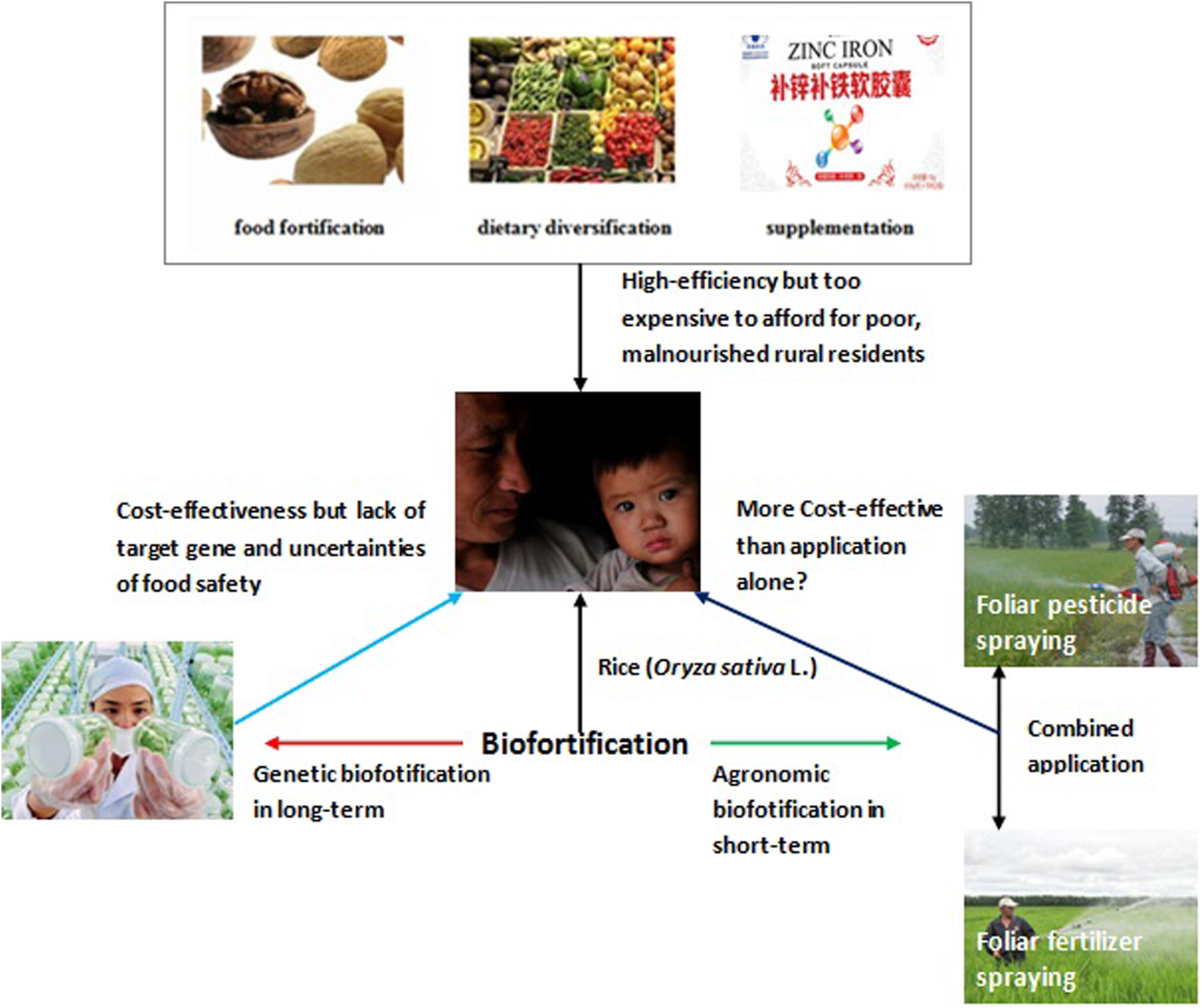
Strategies to alleviate Fe and Zn deficiency for malnourished rural residents in rice plantation regions.
Rice (Oryza sativa L.), as one of the most important grain crop globally, covers 50% to 80% daily caloric requirement for more than 3 billion people. 21 However, the average content of Fe and Zn in polished rice grains is only 8.1 to 16.7 mg·kg–1 and 19.7 to 23.3 mg·kg–1 in China, respectively, which cannot reach the human daily requirements if rice is the main staple food, particularly in the rural areas. 22 Hence, the effect of biofortificated rice on improving human Fe and Zn intake has attracted an ever-increasing attention. 23,24 It has been proposed that the genetic strategy, that is, to breed Fe- or Zn-enriched crop species, is a sustainable pathway for wide areas independent of soil Fe/Zn status with low recurring costs. 15,25 For its highly cost-effectiveness, the genetic strategy seems like an optimal way to tackle malnutrition. 26,27 However, numerous limitations still exist in the genetic biofortification such as lack of a target gene, interactions between genotypes and environments, potential food safety risks, and so on. 28 –30 Unfortunately, existing genetic strategies could not overcome these limitations in a short period of time, though iron contents in rice grain could be effectively increased by a concomitant introduction of the ferritin gene and mugineic acid biosynthetic genes, and/or the expression of an iron-regulated metal transporter, nicotianamine synthase, and Ferritin gene cassette. 31,32 Instead, the agronomic strategy, such as fertilizer foliar applications, is practically and effectively to increase the tissue micronutrient content of rice and other crops in a short period of time. 13,20,33 Nevertheless, the agronomic biofortification of foliar application, due to repeated applications with costs of labor and extra relevant expense, is still considered as a comparatively expensive measure. 34 For instance, the cost of agronomic biofortification with Zn is quite high in Pakistan, though up to US$461 to US$619 per disability-adjusted life years (DALYs) saved. 35 A combination of both Zn and Fe fertilizer into the conventional foliar pesticide spray would hence decrease the labor cost. 36 Our study is based on this combined strategy and the reality of China, which is the largest rice producer and consumer in the world and as well a developing country where the micronutrient deficiency has been a widespread problem. For instance, a previous study showed that ∼208 million and ∼96 million people had from iron-deficiency anemia and stunting due to Fe and Zn deficiency in China, respectively. 26 The expected result in China could provide the reference for other countries, especially those rice-dominated developing countries, to perform the practice of agronomic biofortification.
Materials and Methods
Major Rice Plantation Regions in China
The 4 major rice regions across the humid temperate to subtropical monsoon climate in China are shown in Figure 2: the northeast (NE), central China (CC), southeast (SE), and southwest (SW) rice region (Figure 2). In general, the dominant cropping system is a rice–wheat–maize rotation in the NE, a rice–wheat rotation in the CC, a single rice plantation in the SE, and a rice–maize rotation in the SW. These 4 rice plantation regions have a size of 4.5, 6.6, 13.0, and 4.5 million hectares, with an annual rice grain yield of 16.5, 25.2, 44.5, and 15.5 million tons (15.9, 24.4, 43.1, and 15.0% of the total national annual rice yield), respectively. 37 Meanwhile, the population size and daily rice consumption vary in the 4 regions (Table 1).
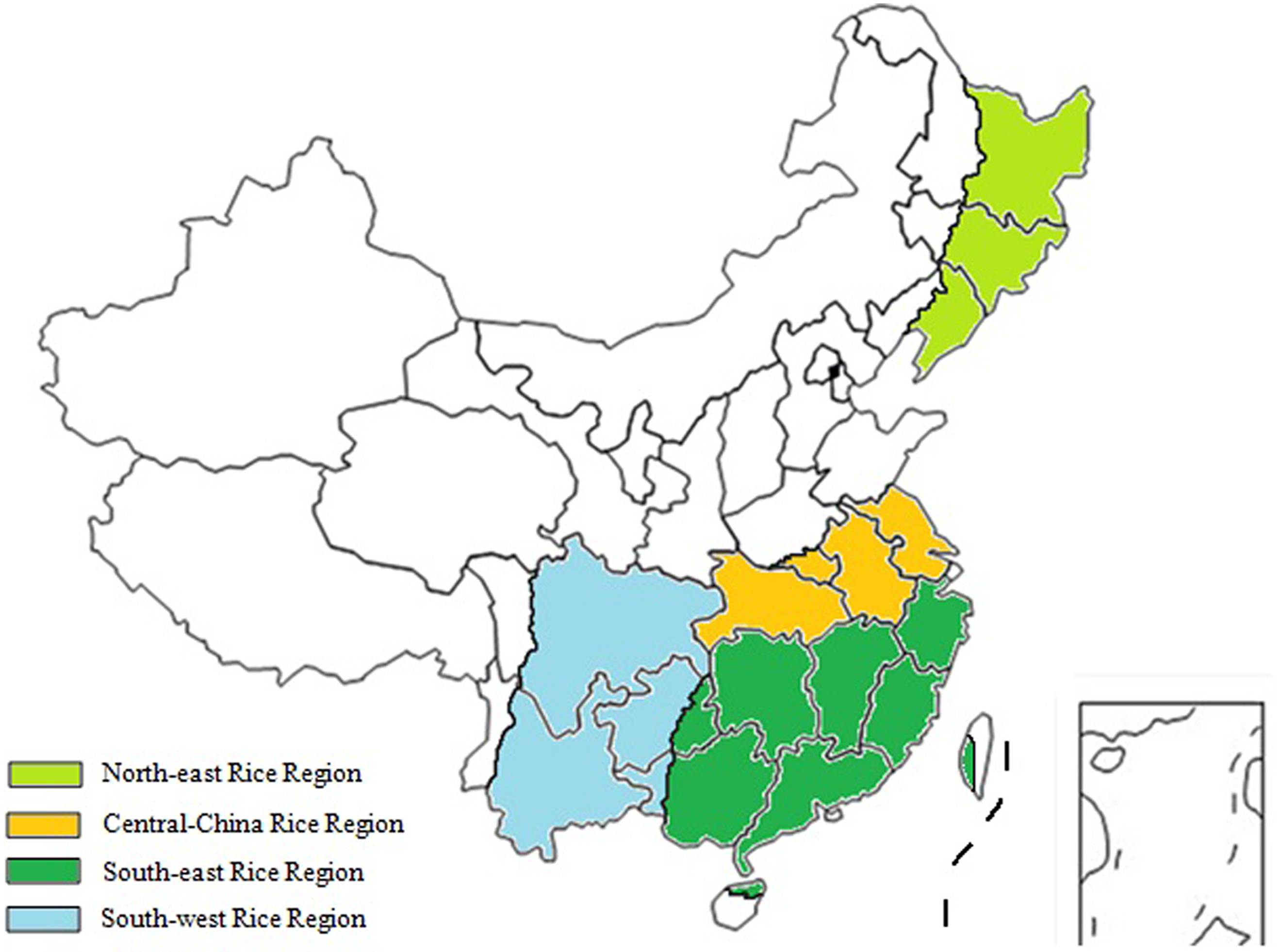
Geographic distribution of 4 major rice plantation regions in China.
Daily Rice Consumption and Population Size in 4 Major Rice Plantation Regions in China.
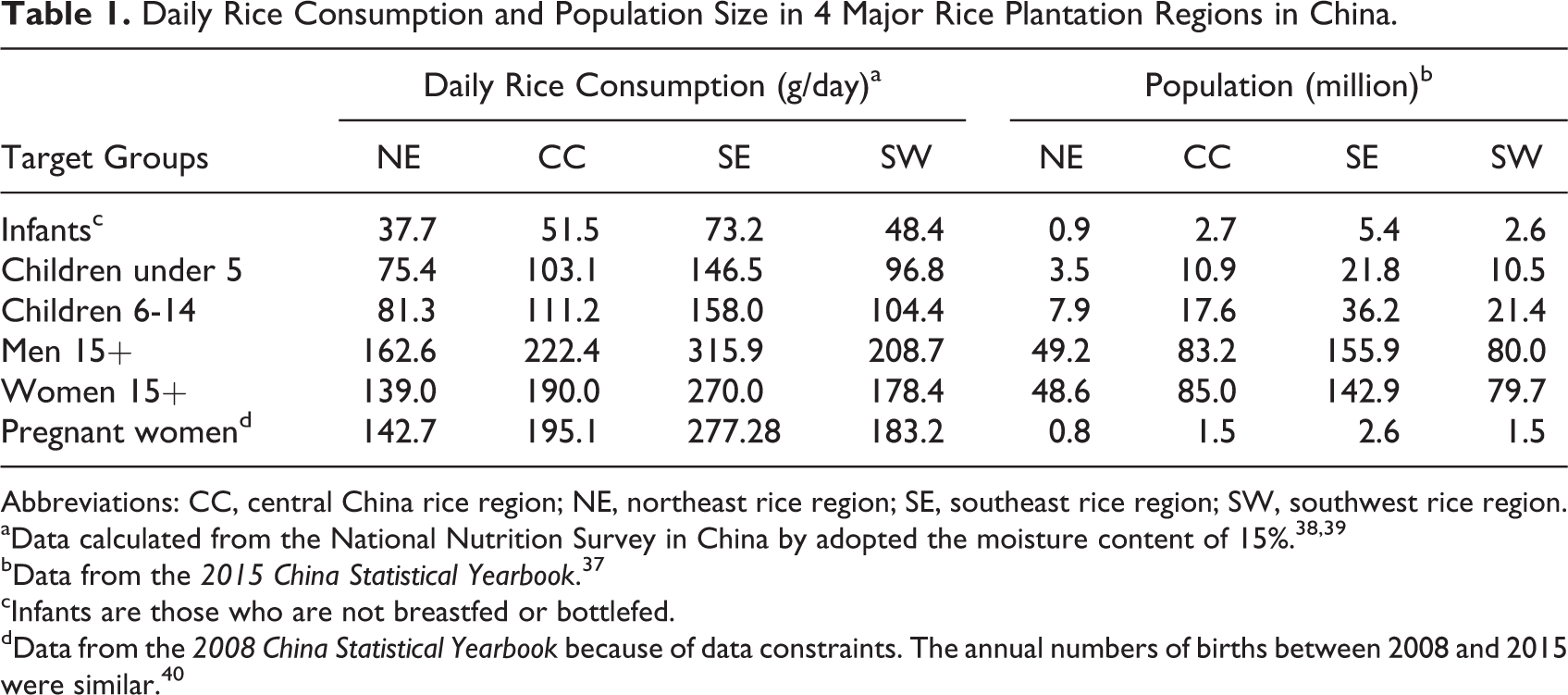
Abbreviations: CC, central China rice region; NE, northeast rice region; SE, southeast rice region; SW, southwest rice region.
aData calculated from the National Nutrition Survey in China by adopted the moisture content of 15%. 38,39
bData from the 2015 China Statistical Yearbook. 37
cInfants are those who are not breastfed or bottlefed.
dData from the 2008 China Statistical Yearbook because of data constraints. The annual numbers of births between 2008 and 2015 were similar. 40
Health Impacts of Agronomic Biofortification of Rice in China
The DALYs framework, which has been widely used by the World Bank and the World Health Organization (WHO) to calculate the malnutrition health burden of population, is applied in this study to estimate the current health burden caused by Fe and Zn deficiency and the health impact of foliar combined Fe and Zn application in 4 major rice plantation regions in China. 20,41,42 Two scenarios are set to account for the uncertainty of reality based on previous studies in China. 43 The current health burden (in terms of the DALYs lost) caused by Fe and Zn malnutrition of people in these 4 regions was calculated according to a recent study in China. 43 The required data for the calculation are listed in Table S1. Furthermore, for estimating the health impact of Fe and Zn malnutrition, the required parameters from these 4 rice plantation regions in China, including improved grain micronutrient content, initial grain micronutrient content, post-harvest losses, and so on, are presented in Table 2.
Concentrations of Fe and Zn in Rice That Agronomically Biofortificated With Fe and Zn Under the Optimistic and Pessimistic Scenarios in 4 Major Rice Plantation Regions in China.
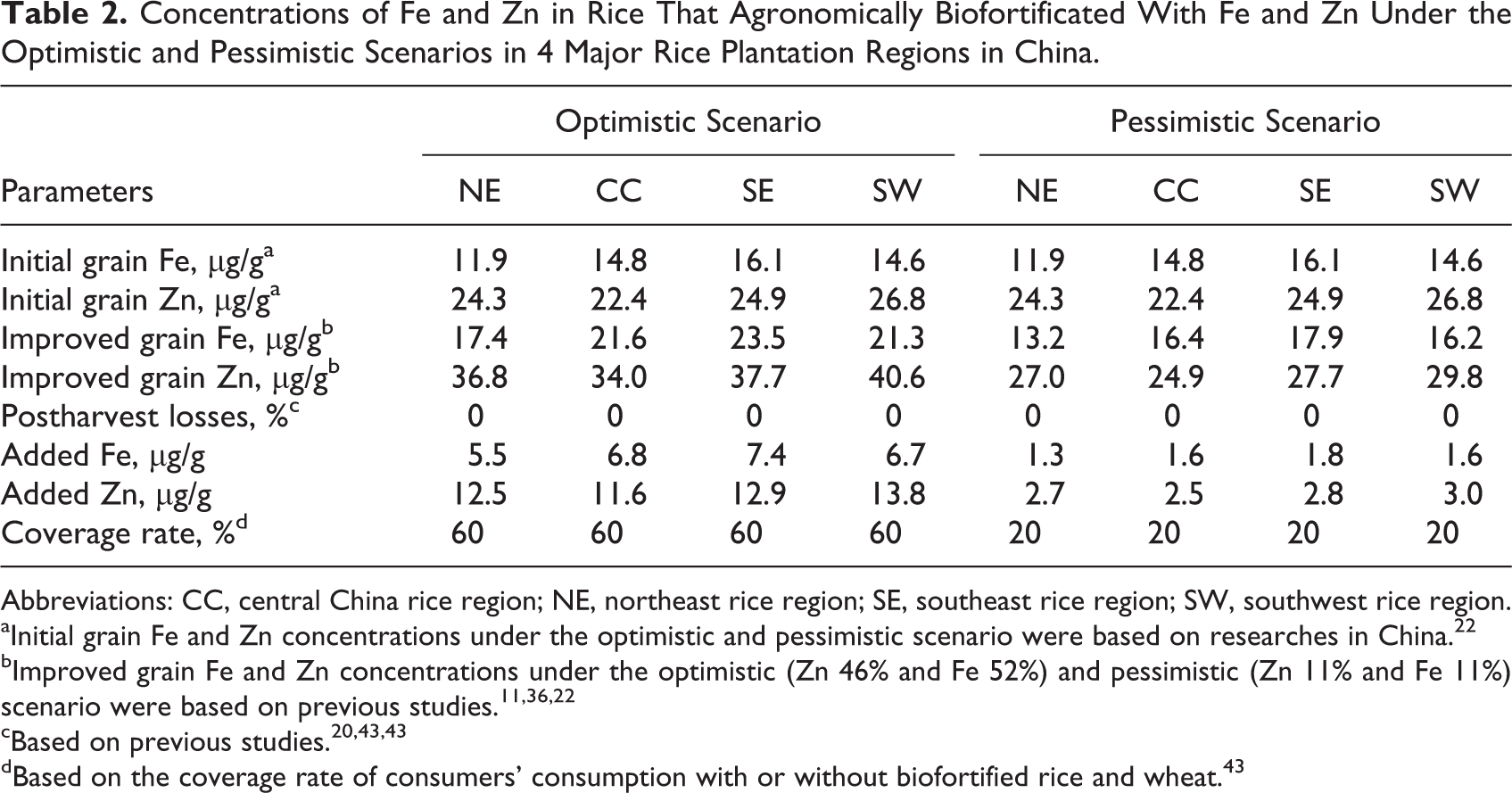
Abbreviations: CC, central China rice region; NE, northeast rice region; SE, southeast rice region; SW, southwest rice region.
aInitial grain Fe and Zn concentrations under the optimistic and pessimistic scenario were based on researches in China. 22
bImproved grain Fe and Zn concentrations under the optimistic (Zn 46% and Fe 52%) and pessimistic (Zn 11% and Fe 11%) scenario were based on previous studies. 11,36,22
dBased on the coverage rate of consumers’ consumption with or without biofortified rice and wheat. 43
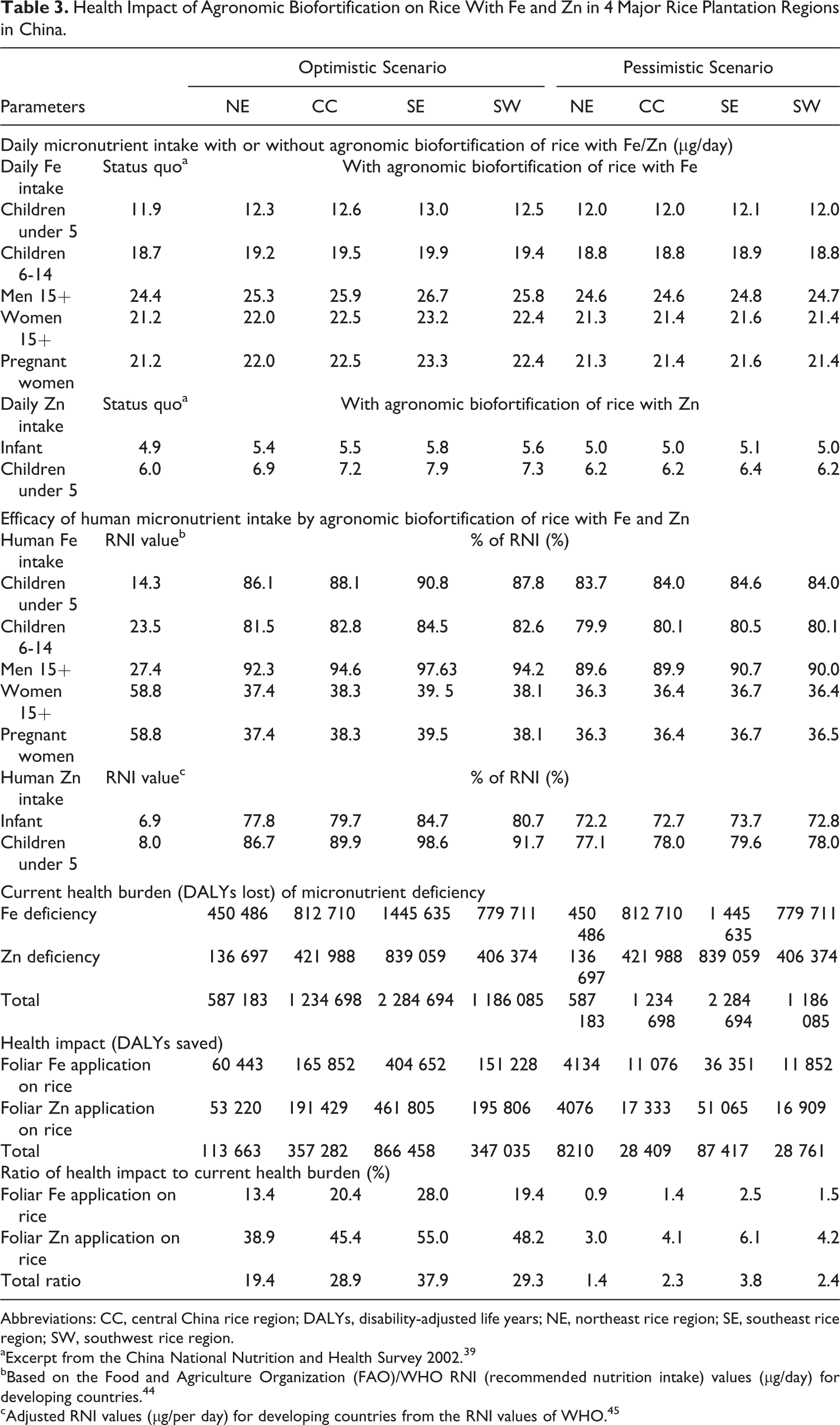
Based on data in Table 2, the health impact (in terms of the DALYs lost saved) of foliar Fe and Zn spray on rice was calculated (Table 3). Our expectation is to apply the agronomic biofortificaiton via a combination of foliar Fe and Zn application to rice for increasing the human micronutrient intake. In addition, a recommended nutrition level (RNI) of micronutrient intake for human health was calculated for estimating the numbers of DALYs saved (Table 3).
43,46
While the micronutrient intake levels with agronomic biofortification above the RNI would totally protect consumers from any adverse functional outcomes and were replaced by 100% in the calculation, an intake increase below the RNI could still alleviate the health risk of micronutrient malnutrition. Then, the new incidence rates of functional outcomes are calculated as follows
43
:
Health Impact of Agronomic Biofortification on Rice With Fe and Zn in 4 Major Rice Plantation Regions in China.
Abbreviations: CC, central China rice region; DALYs, disability-adjusted life years; NE, northeast rice region; SE, southeast rice region; SW, southwest rice region.
aExcerpt from the China National Nutrition and Health Survey 2002. 39
bBased on the Food and Agriculture Organization (FAO)/WHO RNI (recommended nutrition intake) values (μg/day) for developing countries. 44
cAdjusted RNI values (μg/per day) for developing countries from the RNI values of WHO. 45

In the equation, MI represents the micronutrient intake levels with or without agronomic biofortification; RNI, the recommended nutrition level; Iij , the incidence rate of functional outcomes i in target group j; Ej , the efficacy of agronomic biofortification in target group j; and C, the coverage rate.
A lower incidence rate with the agronomic biofortification on rice could be introduced into the DALYs framework to get a new health burden (in terms of the DALYs lost). Thus, the gap between the new and the old values could be regarded as the health impact (in terms of the DALYs saved) of foliar Fe and Zn spray on rice.
Cost Analyses of Agronomic Biofortification on Rice in China
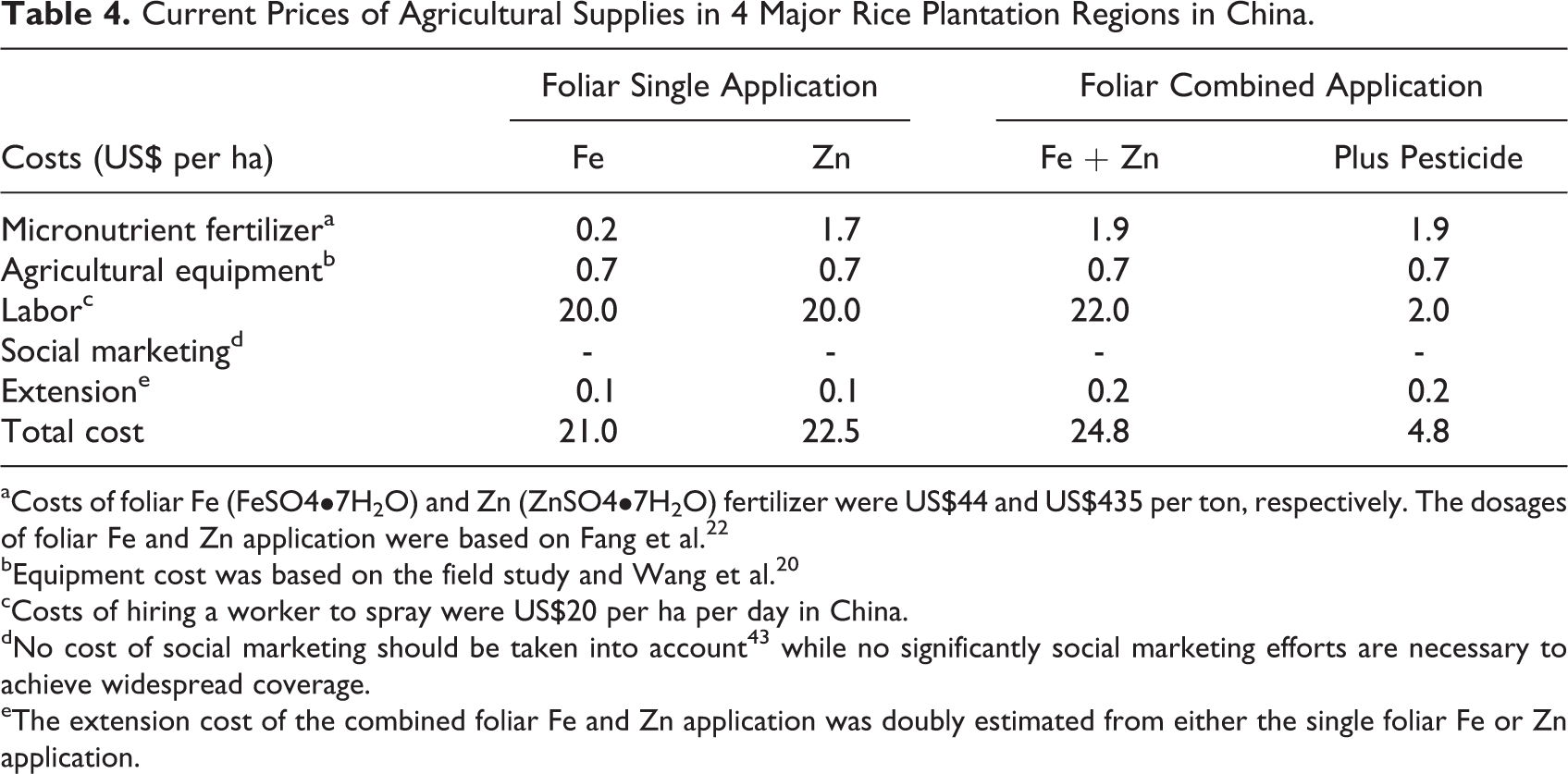
With a lower cost and higher cost-effectiveness compared to the genetic biofortification, the agronomic biofortification of current rice varieties via foliar micronutrient applications or sprays would come into effect immediately, though the cost of foliar sprays could be different as discussed by Ma et al 23 and Meenakshi et al. 27 Therefore, the cost of agronomic biofortification on rice should be considered whether it is feasible and valuable. For estimating the costs of agronomic biofortification, the current prices of agricultural supplies and commodities in China are listed in Table 4. The combined Zn and pesticide spray has showed a cost decrease compared to a single Zn spray in a number of grain crops including common, bean, rice, and wheat. 20,36 A spray combination of both Fe and Zn with pesticides may diminish the cost further. If Fe and Zn fertilizers were added in the routine spray of foliar pesticide, the labor cost of spraying Fe and Zn fertilizers (at present US$20 per ha per day) would be saved to 0, theoretically, while currently, the labor cost of mixing the pesticides with Fe and Zn fertilizers is US$2.
Current Prices of Agricultural Supplies in 4 Major Rice Plantation Regions in China.
aCosts of foliar Fe (FeSO4•7H2O) and Zn (ZnSO4•7H2O) fertilizer were US$44 and US$435 per ton, respectively. The dosages of foliar Fe and Zn application were based on Fang et al. 22
bEquipment cost was based on the field study and Wang et al. 20
cCosts of hiring a worker to spray were US$20 per ha per day in China.
dNo cost of social marketing should be taken into account43 while no significantly social marketing efforts are necessary to achieve widespread coverage.
eThe extension cost of the combined foliar Fe and Zn application was doubly estimated from either the single foliar Fe or Zn application.
However, this foliar combined Fe and Zn application plus pesticides could not only reduce the cost of labor but also increasing the extension cost due to more investment for government and social publicity to promote and introduce such a new combined strategy. Moreover, the costs of agronomic biofortification can be easily calculated by parameters such as the rice plantation regions, coverage rate, and time horizon. 20 In doing so, the cost-effectiveness analysis (CEA) has been conducted to compare the cost of the foliar Fe or Zn spray alone, the combination of both Fe and Zn spray with or without pesticides, respectively (Table 4). 20,46,47
Results
Potential Increases in Daily Intake of Fe and Zn via Foliar Fe and Zn Applications
The initial grain Fe and Zn contents in these 4 rice regions were approximately 9.2 to 16.1 μg·g–1 and 20.7 to 26.8 μg·g–1 (Table 2). Depending on different coverage rates under the optimistic and pessimistic scenario, the grain Fe and Zn contents would be increased to about 17.4 to 23.5 μg·g–1 and 34.0 to 40.6 μg·g–1 under the optimistic scenario and 10.2 to 13.6 μg·g–1 and 23.0 to 24.8 μg·g–1 under pessimistic scenario via foliar Fe and Zn application (Table 2). Combined with the daily rice consumption of different groups in these 4 regions (Table 1), the increased daily Fe and Zn intakes were listed in Table 3. Compared to the daily Fe intake without biofortification, it could be increased by 0.6 to 3.1 μg·day–1 under the optimistic scenario and 0.10 to 0.59 μg·day–1 under the pessimistic scenario with biofortification, except for women older than 15 and pregnant women, the daily Fe intake could reach 81.5% to 97.6% and 79.9% to 90.7% of RNI, respectively. Meanwhile, the daily Zn intake could be increased from 4.9 μg·day–1 in infants (who are not breastfed or bottle fed) and 6.0 μg·day–1 in children under 5 years old under nonbiofortification to 5.4 to 5.8 μg·day–1 and 6.9 to 7.9 μg·day–1 under biofortification in the optimistic scenario and 5.0 to 5.1 μg·day–1 and 6.2 to 6.4 μg·day–1 in the pessimistic scenario, respectively (Table 3). And the daily Zn intake could reach to >70% of RNI.
DALYs Saved by Foliar Fe and Zn Applications
Both Fe and Zn deficiency are severe in all these 4 rice-dominated regions in China (Table 3), indicating an agronomic biofortification of rice with Fe and Zn is urgently required to reduce this burden. On the one hand, the health burdens of Fe deficiency in the NE, CC, SE, and SW rice region are 0.45, 0.81, 1.45, and 0.78 million DALYs lost per year, respectively (Table 3). On the other hand, the corresponding health burdens of Zn deficiency are 0.14, 0.42, 0.84, and 0.41 million DALYs lost in these 4 rice-based regions in China. Given the increased daily Fe intake via agronomic biofortification of rice in the NE, CC, SE, and SW regions could save 60 443, 165 852, 404 652, and 151 228 DALYs lost, accounting for 13.4%, 20.4%, 28.0%, and 19.4% or 0.9%, 1.4%, 2.5%, and 1.5% DALYs lost, under the optimistic or pessimistic scenario, respectively. Meanwhile, according to the increased daily Zn intake in the NE, CC, SE, and SW regions, the DALYs lost could be saved by 38.9%, 45.4%, 55.0%, and 48.2% under the optimistic scenario, whereas it dropped down to 3.0%, 4.1%, 6.1%, and 4.2% under the pessimistic scenario, respectively (Table 3).
CEAs for Different Spraying Measures
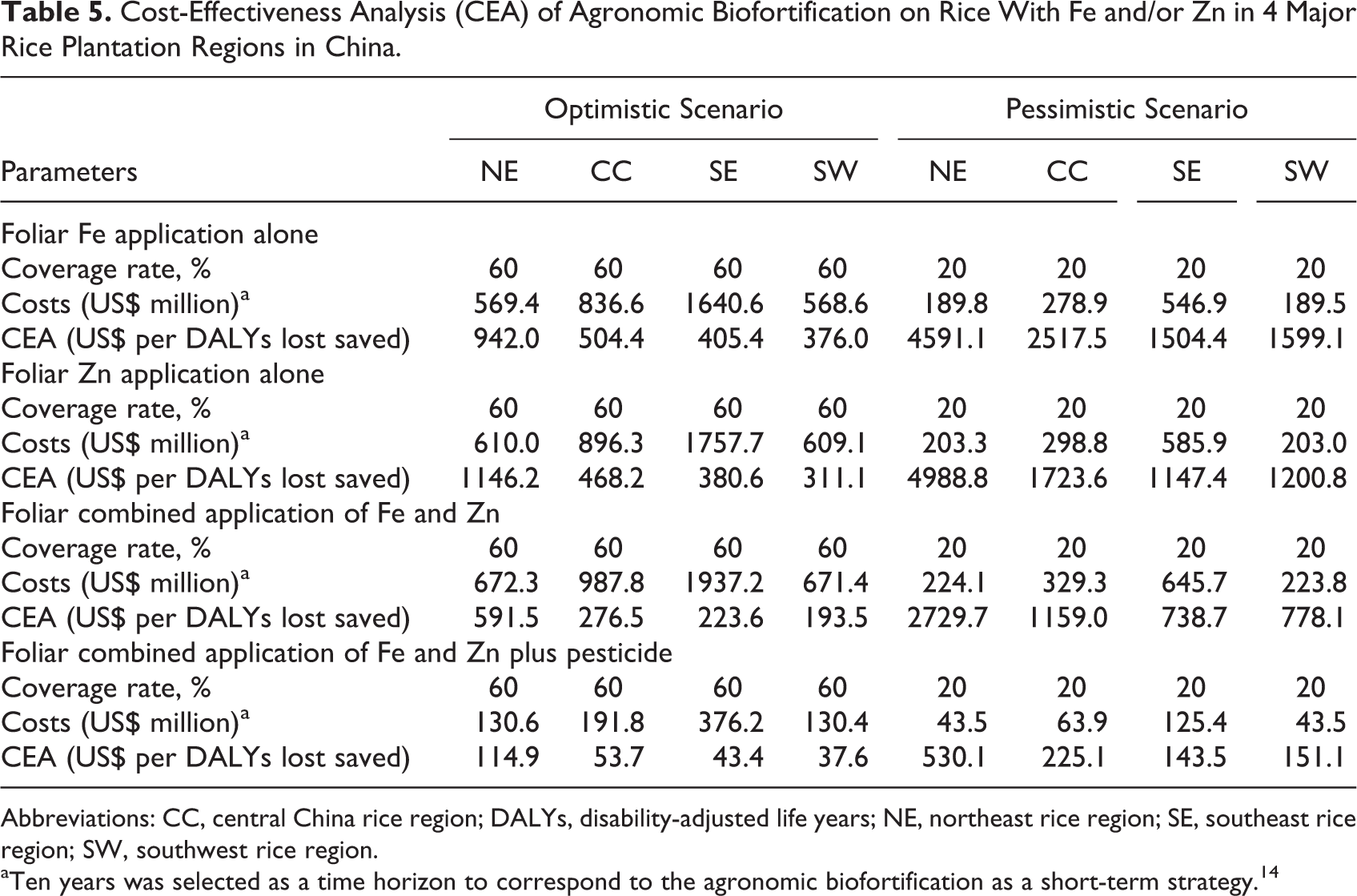
Valuing the cost of 1 DALY saved is based on Table 4, and the results are displayed in Table 5. When the foliar spray of Fe and Zn is applied, a range of US$376 to US$942 and 311 to 1146 or US$1504 to US$4591 and 1147 to 4989 would be used for saving 1 DALY lost under the optimistic or pessimistic scenario, respectively. However, because of the decrease in labor and agricultural equipment cost, when the foliar combined of Fe and Zn is applied, the cost of saving 1 DALYs dropped down to only US$194 to US$592 and US$739 to US$2730 under the optimistic and pessimistic scenario, respectively. According to the further reduction in labor cost, only US$1145, US$54, US$43, and US$38 or US$530, US$225, US$144, and US$151 are required in NE, CC, SE, and SW regions to save 1 DALY lost under the optimistic or pessimistic scenario when a triple foliar spray of Fe, Zn, and pesticide is applied. Moreover, the cost of saving 1 DALY in the NE region is double or even triple than that in other regions.
Cost-Effectiveness Analysis (CEA) of Agronomic Biofortification on Rice With Fe and/or Zn in 4 Major Rice Plantation Regions in China.
Abbreviations: CC, central China rice region; DALYs, disability-adjusted life years; NE, northeast rice region; SE, southeast rice region; SW, southwest rice region.
aTen years was selected as a time horizon to correspond to the agronomic biofortification as a short-term strategy. 14
Discussion
Health Impacts of Foliar Fe and Zn Applications
Although the Chinese government has implemented sustainable development strategies during its rapid leap process in economy for the recent 30 years to a required human nutrition level designated by the United Nations Millennium Development Goals, 48,49 the deficiencies of micronutrients including Fe and Zn are still widespread. Our results in Table 3 showed that the DALYs lost were almost doubled under Fe deficiency than under Zn deficiency, which was consistent with results by De Steur et al. 43 Thus, Fe deficiency is the greater risk of micronutrient deficiency. The agronomic biofortification on rice with Fe is supposed to increase the daily Fe intake by people who consume Fe-biofortified rice and, with the increased Fe content in rice, the daily Fe intake would thus be increased. 43 But according to Table 3, the daily Fe intake from biofortified foods of women over 15 years old and pregnant women is only achieved 36.3% to 39.5% of the proposed requirements in both scenarios. Generally, the Fe requirement of women over 15 years old and pregnant women is significantly greater than other population categories because of Fe losses during the menstruation and transportation of Fe to growing fetus and placenta, 50 thus the RNI of these groups is higher than that of other groups. This is suggested that the Fe supplementation should be multidimensional in severe Fe-deficiency groups. Similarly, the daily Zn intake could be increased with agronomic biofortification and achieved above 70% of RNI (Table 3). Our results demonstrate that the agronomic biofortification on rice with Fe and Zn is feasible for rural people living in rice-based Fe and Zn deficit areas to improve human Fe and Zn intake and reduce health burden, with a more efficient pathway in overcoming Zn deficiency than Fe deficiency. This phenomenon may be due to phytate, an antinutritional chemical substance presenting in the rice grain, which can inhibit human Fe uptake, 51 or perhaps the demand of Fe by human beings, especially for women over 15 years old and pregnant women, is more than the demand of Zn. Overall, the combined foliar application of Fe and Zn on rice is a practical and feasible strategy to be timely implemented for the poor rural residents who are often affected by a variety of micronutrient deficiency. 52 Thus, compared with the agronomic biofortification with a single micronutrient, the combination of both Fe and Zn biofortification would be more meaningful. In addition, a combination of soil plus foliar Fe or Zn application could be a better suitable strategy in the field of both optimum grain yield and grain Fe or Zn biofortification of wheat, compared to a single of soil or foliar application. 17
Comparisons of CEAs in Different Spraying Measures
The feasibility of agronomic biofortification of crops with micronutrients has been a long debate whether the benefits of such an agronomic biofortification are greater than its cost. 15,53 Therefore, the 4 spraying strategies (spray single Fe and/or Zn, spray combined Fe and Zn with/without pesticide) were compared to find the most effective strategy. Firstly, we focus on the comparison of the former 3 strategies. Our results indicated that the cost of saving 1 DALY by the foliar combined application of Fe and Zn was lower than by the foliar Fe or Zn application alone (Table 5). However, according to the World Bank, an intervention, if considered as a highly cost-effectiveness strategy, its cost of saving 1 DALY has to be below US$274 (The Word Bank standard is in an absolute term as US$150 per DALY in 1990 which is equivalent to US$274 in 2015 after adjusting for inflation). 54 Obviously, the strategy of the combined foliar Fe and Zn spray has only met such a minimum requirement in the CC, SE, and SW regions under the optimistic scenario, though it is a highly effective strategy than the Fe or Zn spray alone. Studies indicated that a foliar spray of Zn fertilizer with pesticide could increase grain yield of rice. 55 Thus, this study also considered a combined foliar spray of dual Fe and Zn plus pesticide on rice (Table 5). Only a range of US$38 to US$115 or 144 to 530 is required to save 1 DALY lost under the optimistic or pessimistic scenario when a triple foliar spray of Fe, Zn, and pesticide is applied (Table 5). The cost of saving 1 DALY of agronomic biofortification is obviously higher than that of genetic biofortification (<US$20). 4,43,56 But compared with the dietary diversification, medical supplementation, and food fortification (US$103-399), 23 the agronomic biofortification seems a more competitive strategy. Meanwhile, the cost of saving 1 DALY (US$38-115) of the combined foliar spray of Fe and Zn with pesticide in the rice-based regions is equal to or less than that in wheat-based regions (US$41.2-US$108.2) in China, 20 except a greater cost of saving 1 DALYs (US$530) in the NE region under the pessimistic scenario, where the cropping system is a rice–wheat–maize rotation. These results indicated that the diversified cropping system could cause more diverse staple food, for example, in the NE, people could choose any product from rice, wheat, or maize as their major food to compensate for or balance their nutrition requirements. Further studies are needed to solve the multiple micronutrient deficiency of people who could select multiple crops as their staple food via agronomic biofortification.
Certainly, as the growth in the living standard, more people could choose more sources of micronutrient supplementation as long as they want. However, it will take a long time to achieve this. Therefore, agronomic biofortification is still an alternative strategy for policy makers to alleviate micronutrient deficiencies for poor rural residents, even for people living in the city. Further, according to Wissuwa et al, 57 applying micronutrient fertilizer into soil and breeding an appropriate high micronutrient genotype to match locally environments should be an optimal approach.
Limitations
Despite these promising findings, some limitations of our research should be pointed out. Firstly, the biofortification (include all measures to increase Fe intake through food chain) efforts have been criticized due to an increase in dietary Fe supply might have limited efficacy in alleviating deficiencies because of an impaired absorption, for example, Fe deficiency could still occur despite an adequate dietary intake in the presence of infection. The calculation of the DALYs framework is based on several assumptions and current available data. 43 Thus, results would be affected by lack of data for validations. Secondly, improvements in grain Fe and Zn concentrations have been demonstrated in some field trials, but they may have lower efficacy in large scale of field applications, and farmers may be reluctant to adopt this strategy unless they can realize tangible benefits. Similar to the research in India reported by Cakmak, 58 it would be a beneficial for alleviating Zn deficiency–related problems in India by widely foliar Zn fertilizers application, but this strategy needs government action and policy plan. Therefore, the government should be involved in the biofortification program by investing in breeding Zn- or Fe-enrich rice varieties and encouraging farmers to take part in the agronomic biofortification. Thirdly, the selection of methods and benchmarks should be consistent. For instance, the World Bank benchmark is in absolute terms, taking a value of US$150 per DALYs in 1990 as a base year while it is equivalent to US$274 in 2015 after an inflation adjust. And the WHO benchmark is calculated in relative terms as 300% of a country’s per capita gross domestic product, when the value is US$22 197 in 2015. It is hence no sense that all of the interventions will be cost-effective according to the latter values. As a result, we selected the World Bank benchmark in 2015 as the baseline just for the display of our study significance. Fourthly, some experts argue that the RNI should be replaced by an estimated average requirement (EAR) or converted into latter by appropriate conversion factors because the level of RNI would meet requirements for 97% to 98% of population, and most individuals would not have deficiency if their intake lies between the EAR and RNI. 59 They thought that the purpose of food fortification is to increase overall nutrient intake level so that only a small number of people is undernourished, but those who consume a larger amounts of biofortified food will face the risk of excessive intake. However, in our research, the nutrient intake level of target population living in rural regions is widely low, and this causes many health burden; thus, we must make sure that everyone could intake adequate nutrients. Besides, rice as a staple food is hard to have an excessive intake. Even if the excessive intake of Fe and Zn in children under 5 years old and women (especially pregnant), there may be benefits from building up Zn stores, but that would need to be supported by further researches. Finally, it is assumed that rice is produced and also consumed in the same region without a consideration of market flow. Therefore, more accurate information is needed to validate the presently obtained data in further studies.
Conclusion
The current health burden caused by human Fe and/or Zn deficiency is severe in China, especially in rice-dominated rural areas. The agronomic biofortification via the combined foliar Fe and Zn spray on rice could increase both the Fe and the Zn intake from rice-based food or meals. Such increases could consequently reduce the health burden and save the DALYs lost attributing to human Fe and Zn deficiency. According to the CEA, the combined triple foliar spray of Fe and Zn plus pesticide is the most cost-effective agronomic biofortification strategy and sustainable pathway for increasing grain Fe and Zn content in rice. Although the lack of 1 or more than 1 micronutrient is always a global nutritional concern and complex, agronomic micronutrient biofortification with a field crop could offer policy makers a more cost-effective and sustainable alternative strategy for curbing human malnutrition.
Supplemental Material
Supplemental Material, Zhangchengming_Supplementary_Data - How Could Agronomic Biofortification of Rice Be an Alternative Strategy with Higher Cost-Effectiveness for Human Iron and Zinc Deficiency in China?
Supplemental Material, Zhangchengming_Supplementary_Data for How Could Agronomic Biofortification of Rice Be an Alternative Strategy with Higher Cost-Effectiveness for Human Iron and Zinc Deficiency in China? by Cheng-Ming Zhang, Wan-Yi Zhao, A-Xiang Gao, Ting-Ting Su, Yan-Kun Wang, Yue-Qiang Zhang, Xin-Bin Zhou, and Xin-Hua He in Food and Nutrition Bulletin
Footnotes
Authors’ Note
C.-M.Z., X.-B.Z., and X.-H.H. were responsible for this study and involved in designing, writing, data collection, analysis, and editing this article. W.-Y.Z., A.-X.G., T.-T.S., and Y.-K.W. were responsible for the data and analysis. Y.-Q.Z. contributed to the concept of this study and also responsible for the data.
Acknowledgments
We thank the financial support from the National Natural Science Foundation of China (31372141 and 31672238), Chongqing Research Program of Basic Research and Frontier Technology (No. cstc2017jcyjAX0425), and Fundamental Research Funds for the Central Universities (XDJK2017D197). We are also grateful to 2 anonymous reviewers for their valuable comments on this manuscript.
Declaration of Conflicting Interests
The author(s) declared no potential conflicts of interest with respect to the research, authorship, and/or publication of this article.
Funding
The author(s) disclosed receipt of the following financial support for the research, authorship, and/or publication of this article: The National Natural Science Foundation of China (31372141 and 31672238), Chongqing Research Program of Basic Research and Frontier Technology (No. cstc2017jcyjAX0425), and Fundamental Research Funds for the Central Universities (XDJK2017D197).
Supplemental Material
Supplementary material for this article is available online.
References
Supplementary Material
Please find the following supplemental material available below.
For Open Access articles published under a Creative Commons License, all supplemental material carries the same license as the article it is associated with.
For non-Open Access articles published, all supplemental material carries a non-exclusive license, and permission requests for re-use of supplemental material or any part of supplemental material shall be sent directly to the copyright owner as specified in the copyright notice associated with the article.
