




Abstract
Background:
Meeting the nutritive needs of infants and young children is a challenge in Ghana. Alternative animal source foods, including insects, could enhance infant and young child dietary quality while also improving livelihoods.
Objective:
To investigate the perspectives of Ghanaian stakeholders on the acceptability of the palm weevil larvae (akokono) as a food source and the feasibility of micro-farming this local edible insect as a complementary food for infants and young children.
Methods:
We conducted an ethnographic study in the Brong-Ahafo Region of Ghana. First, 48 caregivers were asked questions about feeding and care practices, including attitudes toward production and consumption of akokono. Then, a selection of previously interviewed respondents joined 1 of 8 focus group discussions to provide further insight on key themes that emerged from earlier interviews. Concurrently, interviews with 25 other key local stakeholders were conducted.
Results:
Respondents generally had favorable perceptions of akokono as a nutritious food. A small minority would not consume akokono for religious reasons. Key factors positively influencing the acceptability of akokono as a complementary food were familiarity with the consumption of akokono by the primary caregiver and health worker endorsement of akokono. Stakeholders consider the larvae farmable and were open to its domestication.
Conclusions:
Anticipated barriers to scaling up akokono micro-farming include a need for greater familiarity with and acceptance of the insect as food for infants and young children and creation of a sustainable market. Engagement with stakeholders, including health workers, will facilitate use of akokono as a complementary food.
Keywords
Introduction
Malnutrition of children and mothers is a serious problem in many developing countries, contributing to approximately 3.1 million annual child deaths worldwide. 1 In Ghana, only 13% of children aged 6 to 23 months meet the minimum acceptable diet; the lowest rate (6%) is reported among infants aged 6 to 8 months, and the highest rate (18%) is reported among children aged 12 to 17 months. 2 As of 2009, approximately 5% of Ghana’s population (about 1.2 million) was food insecure and an additional 9% (about 2 million) was at risk of food insecurity. 3 Due to the complex and multisectoral nature of malnutrition, both nutrition-specific and nutrition-sensitive interventions, such as those focusing on the underlying determinants of malnutrition, are needed to address this global problem. 4
Globally, insects have played an important role in human diets and nutrition for millennia, including in regions with the highest burdens of malnutrition. 5,6 Approximately 2 billion people in Asia, Africa, and Latin America consume more than 2000 species of insects as components of traditional diets.6 In Ghana, it has been estimated that 9 edible insect species are consumed by approximately 30% of the population. 7 Importantly, due to lower feed conversion rates, resource requirements, and greenhouse gas emissions, edible insects have the potential to promote environmental sustainability as a food source in comparison to conventional livestock. 6,8 Accordingly, entomophagy—the consumption of insects as food—offers a promising avenue through which to sustainably address malnutrition and food insecurity both in Ghana and globally. 9
Of particular interest, the palm weevil larva, Rhynchophorus phoenicis Fabricius, presents a potential opportunity to improve nutrition in Ghana. Known locally as akokono, palm weevil larvae inhabit oil palms and coconut trees and are found and traditionally consumed throughout tropical and equatorial Africa.7
Several studies have examined the nutritional profiles of palm weevil larvae, suggesting its potential to positively impact health outcomes—particularly in the context of locally sourced, traditional diets. 10 –16 In general, palm weevil larvae have been found to represent good sources of iron, zinc, essential amino acids, and fat. 10 –16 In their review of insect nutrient compositions, Rumpold and Schluter report mean protein (25.04%), fat (50.23%), fiber (12.60%), and ash (3.91%) contents among studies of R phoenicis larvae (n = 7). 17 In a second modeled analysis, palm weevil larvae proved to be equally or significantly more healthy (P < .001) than chicken or beef with respect to median macro- and micronutrient profile scores from the International Network of Food Data Systems database. 16 Although these studies suggest the potential of palm weevil larvae to combat undernutrition, it is important to note that the nutrient content of palm weevil larvae—and of edible insects more broadly—is subject to significant variation, which may be attributable to differences in factors such as geography, feed, metamorphic lifecycle stage, and measurement. 17
In Ghana, akokono are typically harvested from felled palm trees that have been cut down to extract sap that is used in the production of palm wine. 18 After the palm sap is harvested, the felled palm trunks are left and later revisited once adult palm weevils have infested the wood and produced their larvae. In this sense, akokono can be understood as a “second crop” or even as a “by-product” of the palm wine industry in Ghana. 18 Several studies have observed indigenous practices of palm weevil larvae semicultivation to facilitate more consistent seasonal availability and greater ease of procurement. 19 –21 Accordingly, in the Ghanaian context, the concept of “micro-farming” akokono using kits that can be kept near the home has been proposed as a potential intervention to improve nutrition.
Akokono micro-farming interventions have a number of suggested advantages. For example, by providing access to a new and more consistent source of income, such interventions could offer opportunities for job creation and livelihood enhancement. 22 Furthermore, the insects’ small size enables them to be farmed close to the home, which would reduce the amount of time and effort required for their care in comparison to conventional livestock and render this activity particularly suitable for female entrepreneurs. 23 Environmentally, lower resource requirements—such as land, water, and feed inputs—and greenhouse gas emissions in comparison to conventional livestock have also been proposed as advantages of insect farming. 6,8 For the Ghanaian palm weevil larvae in particular, micro-farming could allow alternative sources of feed, such as food wastes or culinary by-products, to be explored, which would increase the sustainability of this intervention and reduce any reliance on felled trees. It is important to note, however, that palm weevils are often regarded as pests and any micro-farming interventions should be implemented with careful attention to the local ecology. 24
In order to guide the implementation of such interventions, however, formative research is needed to examine local knowledge, attitudes, and beliefs related to the production and consumption of palm weevil larvae in specific contexts. As such, the purpose of the study is to gain insight into the perspectives of Ghanaian stakeholders on the acceptability of akokono and the feasibility of micro-farming this local edible insect in rural and peri-urban areas of Brong-Ahafo Region, Ghana. This article presents findings from a focused ethnographic study and is intended to serve as a proof-of-concept for this novel intervention.
Methods
This study was conducted in 2 districts within the Brong-Ahafo Region of Ghana over a 4-month period (July through October) in 2015. One community each was purposively selected from 2 districts: Ntankro in Kintampo South District and Tuobodom in Techiman North District. Ntankro has an approximate population of 1535 persons 25,26 and is located within the greater Kintampo South District of 81 000 persons. 27 Farming is the most common economic activity in this rural community. Although the local infrastructure is limited, the community has access to water pumps, schools, and electricity. In contrast, Tuobodom has an approximate population of 30 000 persons and is roughly 9 km from the Techiman municipality of 207 000 persons. 27 Farming and small-scale market trade are the main economic activities in Tuobodom; employment for many women involves processing gari, a West African food made from cassava tubers. Both communities are located within the forest–savannah transitional ecological zone, approximately 50 km away from one another. The local environment supports the growth of akokono, which many inhabitants regard as a delicacy. In these communities, akokono is harvested from naturally fallen trees or felled palm trees by palm wine tappers or other inhabitants of the communities—mostly during the rainy season and the early part of the dry season (July to December).7
Study Design and Sampling Methodology
The methodology used for this article is situated within the context of a larger, 3-phased focused ethnographic study. This article, however, presents the results of phases II and III; the results of phase I are presented elsewhere. 28 The research design for this study was based on the principles of focused ethnography, and the interview protocols were drawn from modules in the Focused Ethnographic Study of Infant and Young Child Feeding Manual. 29
In phase I, 78 key informants were purposively identified and interviewed to provide an overview of local infant and young child feeding and care practices. In phase II, 48 caregivers were asked specific questions about feeding and care practices, along with their attitudes toward the production and consumption of akokono. Caregiver respondents were mothers or other residents responsible for the feeding and care of a child between 6 months and 5 years of age. The caregivers were selected through recommendations from the local chief, other community members, or the local health facility. Caregivers were selected such that a diversity of child ages was represented. In phase III, previously interviewed participants (both key informants and caregivers) were asked to join 1 of 8 focus group discussions (FGDs) to gain further insight on key themes that emerged from the interviews in the previous 2 phases.
Finally, other key stakeholders were interviewed concurrently during phase III. Specifically, these stakeholders included 8 palm wine tappers (ie, harvesters of akokono), as well as 17 other individuals with knowledge of local farming and agriculture activities, local health and nutrition programs, and the informal economic sector. A list of each community’s local palm wine tappers was generated with the help of the local chief and elders. All interviewed stakeholders lived in the study areas, and all palm wine tapper respondents were in the practice of (or expressed a keen interest in) harvesting akokono from palm trees.
Sample size was driven by saturation sampling; that is, we continued to interview stakeholders until no new information emerged. Saturation was determined by reading all manuscripts and through frequent reflection meetings to discuss emerging themes.
Data Collection, Management, and Analysis
Four trained fieldworkers, 2 research officers, and 2 field supervisors conducted the interviews in the respondent’s preferred language of English or Twi. The interviews were audio-recorded with permission, and field notes were taken. Audio recordings were checked for quality, translated (if necessary), and transcribed into English. Qualitative data were coded in NVivo software (version 8, 2008; QSR International Pty Ltd Melbourne, Australia) for emergent themes. All interviews were reviewed by the study coordinator for quality, with daily feedback given and reflective meetings held.
Human Participants Approval
This study was reviewed and approved by PATH, Ghana Health Service, and Kintampo Health Research Centre ethics committees. This human participant research was conducted according to the principles expressed in the Declaration of Helsinki. Written informed consent was obtained from all study participants.
Results
Below, we present the characteristics and perspectives of caregivers and other stakeholders on harnessing palm weevil larvae for improved nutrition and livelihoods in Ghana.
Characteristics of the Sample
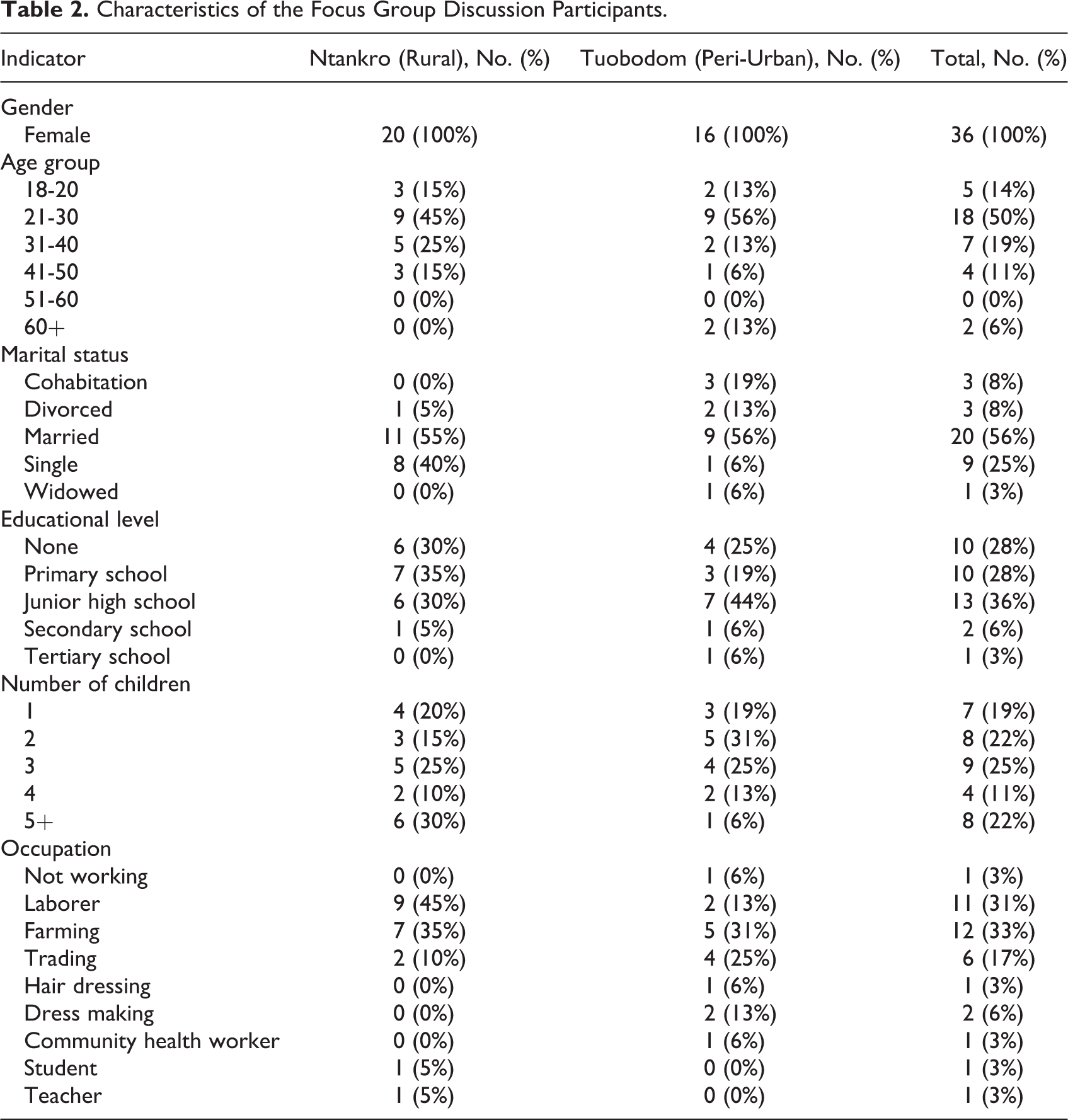
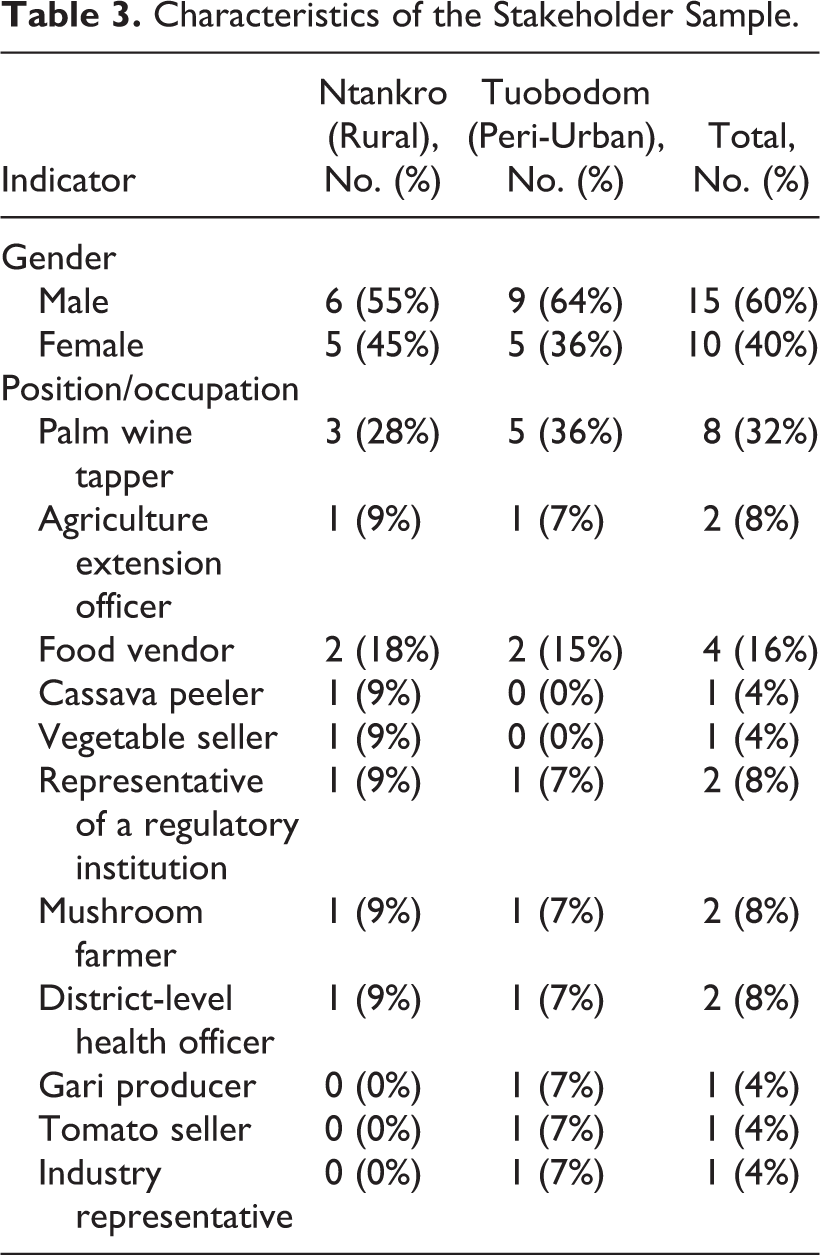
Table 1 presents the characteristics of the caregiver sample. Caregivers were all female, and the large majority were under age 35. Only small differences in education were observed between the respondents from Ntankro and Tuobodom; reported occupations, however, reflect the more rural status of Ntankro in comparison with peri-urban Tuobodom. Similarly, Table 2 presents the characteristics of the key informants and caregivers who participated in 1 of the 8 FGDs. As with the caregiver sample, FGD participants were all female. The majority of participants (56%) were married. Focus group discussion participants represented a wider range of ages and corresponding levels of childcare experiences than the caregiver sample. Finally, Table 3 presents the characteristics and roles of the stakeholders selected for interviews in phase III. The majority (60%) of stakeholders in both communities were male; the stakeholders interviewed represented a wide variety of social roles, ranging from palm wine tappers to informal agriculture or market workers to representatives from government bodies and formal institutions.
Characteristics of the Caregiver Sample.
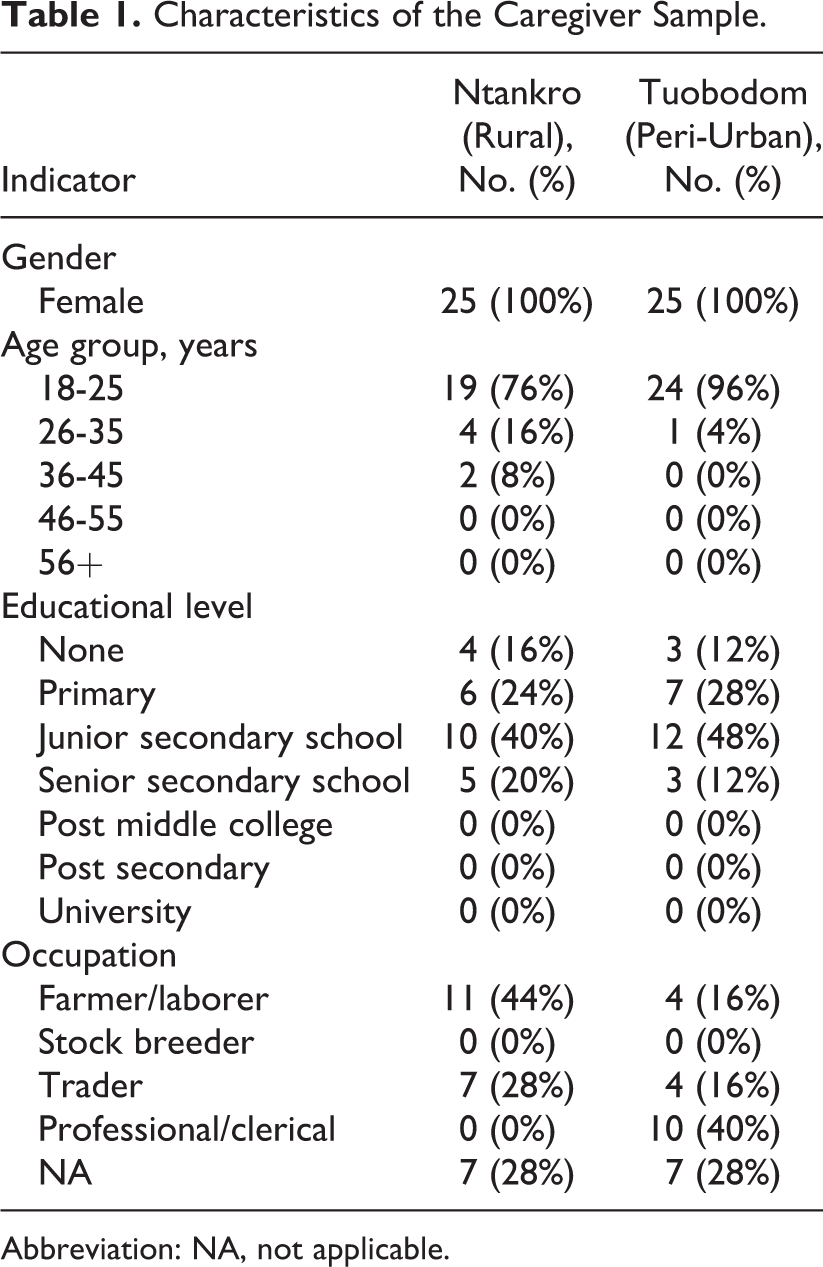
Abbreviation: NA, not applicable.
Characteristics of the Focus Group Discussion Participants.
Characteristics of the Stakeholder Sample.
General Views About Akokono
In general, many caregivers demonstrated knowledge of akokono and its natural habitat. Their knowledge of akokono as well as attitudes and beliefs surrounding its consumption appeared to be influenced by age, connection to a palm wine tapper, and religion. A few respondents were averse to the consumption of akokono, largely due to food prohibitions prescribed by religious or ethnic doctrines. The consensus nevertheless was that akokono makes a tasty meal and its increased availability would be welcome. I grew up to see my father eat it so I also ate some and found it to be tasty…I like it very much. If I get the chance I will eat it every day. (Focus group participant, 48 years, female, Tuobodom) My father was a palm wine tapper so what I know is that when he harvest akokono and bring them home, they would put them on sticks and roast it. It is also fried. It is much more than a chicken and it has a good aroma too. After food has been prepared, they would fetch the akokono and add it to the food and eat. (Focus group participant, 38 years, female, Ntankro) When I was young, around 8 years old, I remember I lived in a community where palm wine tapping was common. So we went and harvested the akokono and used it to prepare stew with palm oil and it was so nice. It can also be roasted like a kebab. But since then I have not eaten it again and I am not aware that it has become a delicacy for people in this community. (Focus group participant, 33 years, female, Tuobodom) I have seen it but I have not eaten it before. I know that it is a meat used to prepare soup and stew. I am a Seventh-day Adventist and we don’t eat it because it looks like a shrimp. (Caregiver, 20 years, female, Tuobodom)
Traditional Akokono Preparation Techniques
Many key informants and caregivers had consumed akokono on its own or with a meal and shared their personal preferences on the preparation method. The preparation methods listed were frying, roasting on wooden skewers, and boiling for either soups or stews. You can add salt, pepper, onion, and tomatoes to make it a soup for food such as fufu, it is very nice. It can also be added to a stew and taken with rice or ampesi (boiled yam/plantain/cocoyam/cassava). (Focus group participant, female, 32 years, Ntankro) I will prefer it roasted on a stick like a kebab. (Caregiver, 28 years, female, Ntankro) I prefer the fried one. It makes it dry and you don’t see any softness in it. (Caregiver, 24 years, female, Tuobodom)
Reduced Availability of Harvested (Nonfarmed) Akokono
A key subtheme that emerged was akokono availability. Consumers noted the recent scarcity of palm weevil larvae harvested from palm tree plantations, resulting in reduced consumption. The reasons cited by stakeholders for the decline in akokono availability included reduced interest in palm wine tapping (not lucrative), increased use of chemicals by palm wine tappers to improve wine yields, and reduced interest in harvesting akokono by younger generations. Several respondents, however, asserted that they would frequently consume akokono if it were readily available. These days the akokono is very difficult to find, and when the palm trees get rotten, very few of the akokono appear unlike the olden days because the palm wine tappers have learned too much and so are always applying chemicals to the palm trees. (Caregiver, 27 years, female, Tuobodom) These days we use chemicals in tapping the wine unlike the olden days when we used to use fire…Palm weevils lay eggs at the surface of the tree where you cut. So we use the chemicals to prevent the eggs from being hatched until you tap all the wine in the tree. Also we used to cover the surface with leaves and it promoted the growth of the akokono in the palm tree. But these days we cover it with rubber (polythene) and remove it after tapping the wine. So the surfaces dries up faster and it is not able to get rotten to produce akokono. (Palm wine tapper, male, Ntankro) Distance to the farm inhibits me. Also some of the palm trees do not have the larvae. (Palm wine tapper, male, Ntankro)
Perceived Nutritional Value and Health Benefits of Akokono
With all respondents, we explored perceptions about the nutritional value and health benefits of akokono. As illustrated by the quotes below, respondents described akokono as a nutritious insect that provides energy and promotes health. I have heard about them. I heard when you eat them, they make you healthy. (Caregiver, 23 years, female, Tuobodom) The akokono is full of oil and found mainly in the palm tree. It is very nutritious and when it is used to prepare stew it’s very tasty and nutritious.” (Focus group participant, 48 years, female, Tuobodom)
Acceptance of Akokono as a Complementary Food for Infants and Young Children
Caregivers offered varying responses on their acceptance of akokono as a complementary food for infants and young children. Factors influencing acceptance included familiarity with and consumption of akokono by the primary caregiver of the infant or child, endorsement of akokono as a suitable food for infants and young children by a health worker, and the idea of processed akokono products (eg, powder, paste, or other more acceptable forms). Almost all caregivers who were initially familiar with akokono and had ever eaten it were receptive to feeding young children akokono. They believed akokono would nutritionally benefit both children and adults and offered recommendations on how to incorporate akokono into the child’s complementary diet. The akokono is very tasty and nutritious so if some were to be available currently you could use it to prepare soup to feed the child when it is 6 months or beyond…Whatever benefit [nutrient] the parent derives from it, the child will also get the same benefit from it. (Caregiver, 23 years, female, Tuobodom) If children cannot chew it, you can boil and grind it for their food.” (Focus group participant, 42 years, female, Ntankro) I like it because it has no bones that will lock up in your throat when eating, and it can be given to children. (Focus group participant, 33 years, female, Ntankro)
Conversely, several respondents who had not consumed akokono before did not support the use of akokono as food for infants and young children. I haven’t eaten it before so I will not allow my child to even eat it from a neighbor. (Caregiver, 25 years, female, Tuobodom) No, because it is not my traditional food. I haven’t taken some before. It will seem like I am feeding my child with maggots. (Focus group participant, 28 years, female, Ntankro) If they [health workers] advise us that, for instance, we should give it to them [children] from 6 months or 1 year, we will do it. So it all depends on the advice we will receive from the doctors. (Focus group participant, 42 years, female, Ntankro) I also don’t like it so I will only give it to my child when a health worker says so. (Caregiver, 19 years, female, Ntankro)
Acceptance of Processed Akokono
Although not universally accepted, many caregivers and key informants were receptive to the idea of processing akokono into various forms such as powder or pastes. They asserted that the powdered and paste forms could be better incorporated into the food of infants, young children, and adults, particularly for those who disliked unprocessed akokono. If the akokono can be processed into something like Cerelac [instant cereal mix] or milk powder or Maggi cubes [condiment], then I can eat it because in that state I will not see the akokono, but to eat the akokono in its normal state I can’t. (Caregiver, 24 years, female, Tuobodom) Yes, I will like it most in the powdered form because when it is fresh you may not get enough to serve everyone. But the powder will dissolve in the soup so it will be equally consumed by everybody. (Focus group participant, 33 years, female, Ntankro) I will like it because it can happen that for a whole year you will not see fresh akokono. However, with the akokono-based products, you can easily buy and use it to prepare your food. (Focus group participant 40 years, female, Tuobodom)
Domestication of Akokono
In the study area and other forested regions of Ghana where palm trees exist, akokono are most common during the rainy season and the early part of the dry season. Stakeholders were supportive of innovations that would address the problem of akokono seasonality through domestic farming. They noted that it had the potential to create jobs and provide sustainable livelihoods. Furthermore, they considered the larvae easier to farm in comparison to other animals. If we can get people to come and buy it and process it into something else, it will be helpful. It will create jobs for those of us at home doing nothing. (Focus group participant, 32 years, female, Tuobodom) I will also invest into it because it will save me time from going to the bush all the time for it. (Focus group participant, 30 years, female, Tuobodom) I don’t foresee any problems with it because it is not a type of animal that will run away when the door is open so that you would have to go and search for it. (Focus group participant, 42 years, female, Ntankro) We will need financial support and training on how to farm the akokono and how much it will cost to invest in farming the akokono. (Focus group participant, 48 years, female, Tuobodom) Well, I think you will have to first of all look at the market; whether people will buy it or not. In every business you need to know if there is ready market for the products. (Mushroom Farmer, male, Tuobodom) For us, we cannot because we stay in someone’s [rented] house, so farming the akokono will be a problem. (Focus group participant, 31 years, female, Tuobodom) I can also farm it without getting any problem because I have my own house. (Focus group participant, 48 years, female, Tuobodom)
Women and Akokono Farming
Traditionally, akokono are harvested in the wild by men. Men are also typically decision-makers regarding the kind of crops to grow in family fields, although women play a vital role in the harvesting and marketing of agricultural products. It is therefore expected that both the men and women will be involved in various aspects of akokono farming. Responses from stakeholders show that women’s involvement in farming this edible insect could be accepted, particularly if it is financially rewarding. The man takes the decision regarding the type of crops they should go into. The woman gives her opinion, but at the end of the day, the man takes the final decision. (Agricultural Extension Officer, male, Tuobodom) It is about your passion and interest in farming akokono. If it is lucrative and you want to do it that is fine. You know these days our women do not sit down for men to go and work for them. They like to do it themselves. So once she does it and gets money into her pocket, it is good that she goes into it.” (Mushroom Farmer, male, Tuobodom)
Anticipated Barriers to Micro-Farming
Stakeholder interviews reveal a number of potential challenges to akokono farming, including lack of universal acceptance of akokono as food for infants, sustaining production of akokono to meet demand, and a need for increased involvement of women in the production of akokono. Religion, ethnicity, and traditional eating practices also featured as prominent limiting factors to scaling up akokono farming. Although participants from the forested regions, the natural habitat of akokono, favor its use as a complementary food for infants, those outside these areas were not as receptive. These sentiments were expressed by 2 respondents as follows: The other thing the project has to take into consideration is issues of culture and taboos. An example is the consumption of snails. People in the 3 regions in northern Ghana just don’t want to eat it [snails] for no obvious reason. Similarly, the lobster is eaten by those along the coast and I learned it is rich in protein but they [northerners] don’t eat it. It is difficult to convince them to take it. So they just follow the belief that it is like this or that. (Representative of a Regulatory Institution, male, Kintampo South District) I can’t farm akokono because at my place, people will complain as to why a Muslim should live with akokono. The Dagomba people [one of the ethnic groups in the country] will complain because they don’t know what akokono is. (Key Informant, 31 years, female, Tuobodom)
Discussion
This article documents the perspectives of Ghanaian caregivers and stakeholders on the palm weevil larvae (akokono) as a traditional food source and its potential to be micro-farmed in rural and peri-urban Ghana. Although previous studies have documented the human consumption of palm weevil larvae in Ghana 7,30 and investigated its nutritional composition, 10 –16 to our knowledge, this study is the first to date to qualitatively examine the perspectives of local caregivers and other stakeholders in the Brong-Ahafo Region of Ghana with respect to the acceptability akokono and the feasibility of its micro-farming as a food for infants and young children. Elsewhere, however, studies have shown promising results regarding the promotion of entomophagy to improve nutritional outcomes in low- and middle-income countries. For example, in the Democratic Republic of the Congo, Bauserman and colleagues 31,32 demonstrated the acceptability, nutritional value, and efficacy of a “caterpillar cereal” (made with locally available mopane worms) to improve micronutrient deficiencies among infants and young children.
In this study, we find that respondents largely have positive perceptions about consuming akokono. Primary caregivers of infants and young children would use it as a complementary food, particularly if they were familiar with it, if they had consumed it themselves, if it was recommended or approved by a health worker, and/or if it was processed.
Further, respondents generally consider the insect to be farmable and are open to innovations that facilitate its domestication. This suggests that micro-farming initiatives involving akokono would be acceptable in this context and could have the potential to positively impact nutritional outcomes, household food security, and women’s livelihoods. Respondents expressed concerns about the dwindling availability of akokono. We note that these concerns are largely attributed to issues surrounding dependence on natural harvesting techniques; these challenges could be addressed through household micro-farming activities designed to smooth seasonal variability and increase overall production.
However, despite a history of traditional consumption of akokono in southern Ghana, several respondents did express a reluctance to consume the insect for reasons that included religious and ethnic prohibitions, lack of prior exposure to the insect, and a preference for processed forms of akokono, such as powders and pastes. Critical analysis of the views expressed shows that akokono is not considered a traditional food of the mostly Muslim settlers from northern Ghana. Although some Islamic schools of thought prohibit the consumption of insects. Christians from northern Ghana also do not consume akokono. The plausible explanation is ecological in nature; the ecology of the northern regions is savannah, which precludes habitation of the weevils. Thus, aversion to akokono in this setting is not necessarily based strictly on religious considerations.
Stakeholders also stressed the importance of designing interventions that are responsive to culture and taboos surrounding traditional foods. These findings highlight the importance of ongoing community and stakeholder education and engagement to help preserve traditional knowledge of akokono and the desire to consume it. Culturally embedded practices related to the consumption of specific food items have been observed elsewhere in Ghana. For example, our recent work documented various food prohibitions during pregnancy in a rural district of Ghana’s Eastern Region. 33 Further, another study revealed that pregnant women in some Ghanaian communities avoid fufu, gari, kokonte (all cassava-based foods), fresh fish, corn dough porridge, eggs, banana, crabs, and ripe plantain for reasons that included nausea, taboos, superstition, and loss of appetite. 34 Organizations and interventions seeking to engage with and promote akokono micro-farming and consumption should be aware of and responsive to such sensitivities surrounding dietary choices and akokono’s status as a traditional food that may not be perceived as “modern” by younger generations.
Programmatic and Policy Implications
Our findings have a number of implications for programs and policy. Although our results carry promising implications for the implementation of akokono micro-farming programs and interventions in these communities, ongoing and continued engagement with key stakeholders will be essential to ensure the success of such programming. The importance of buy-in and support from local stakeholders, such as health workers and members of government ministries, cannot be overstated. Fostering a social and policy environment that is supportive of activities involving edible insects, including akokono, will be integral to the success of interventions. 35,36
Strengths and Limitations
Strengths of this study include our ethnographic methodology that explicitly prioritizes voices of local caregivers and other stakeholders. Our work underscores the importance of formative implementation research that is grounded in local perspectives and experiences; such methodology is essential for the development of nutrition interventions that are responsive to culture and context. 37 This approach is particularly relevant to investigations related to edible insects, which often carry deeply embedded cultural and traditional meanings. 6,38 Other methodologies and data are warranted, however, to provide statistically supported quantitative assessments of the acceptability of akokono, which fall outside the scope of the current study. Future research is also needed to assess the generalizability of these findings to other regions and communities within Ghana, as well as within the larger West African subregion. Further, additional research could also investigate the successes and challenges associated with the implementation or scale-up of micro-farming interventions in this region, demand creation for akokono micro-farming interventions in various contexts, the nutrient content of Ghanaian akokono prepared in different forms, and the effect of akokono consumption on nutritional outcomes. Although the findings of this study are promising, they highlight the need for further inquiry into various aspects of this novel intervention.
In summary, we present the results of a focused ethnographic study that highlights insights into caregiver and stakeholder perceptions of edible palm weevil larvae in the Brong-Ahafo Region of Ghana. We find that respondents generally have favorable perceptions of akokono and are open to its domestication. These efforts, however, will not be without challenges, and we emphasize the fundamental importance of continued stakeholder engagement. We hope that this study will help to inform the efforts of future and ongoing activities related to akokono promotion and micro-farming and serve as a foundation for continued investigation on this topic.
Footnotes
Authors’ Note
G.P., M.P., P.M., and A.L. contributed to the study design. C.T., G.M., M.P., and A.L. coordinated the study and managed the data collection. S.S. and J.P.A. contributed to the field data collection. C.T. analyzed the data. A.L., A.T., A.K., G.M., and C.T. drafted the manuscript. N.K., C.E., S.Z., M.P., and G.P. contributed to rewriting the manuscript. All authors proofread the manuscript and consented to its publishing.
Acknowledgments
The authors thank the director and staff of Kintampo Health Research Centre for their support in this study. Special thanks also go to Awurabena Quayeba Dadzie, Bashiru Alhassan, James Donyina, and Abdul-Razak Fuseini of Kintampo Health Research Centre for their efforts in conducting the participant interviews. The authors would also like to thank the many participants and community members who contributed their time to this study. The supportive roles provided by Ernest Amoah Ampah, Nathaniel Coleman, and Gideon Senyo Amevinya toward generating data for the manuscript deserve acknowledgment.
Declaration of Conflicting Interests
The author(s) declared no potential conflicts of interest with respect to the research, authorship, and/or publication of this article.
Funding
The author(s) disclosed receipt of the following financial support for the research, authorship, and/or publication of this article: Funding for this project was provided by the Bill & Melinda Gates Foundation, Seattle, WA.