



Abstract
Background:
Nutritious underutilized foods (NUFs) significantly contribute to sustainable dietary diversity but are often unused for many reasons.
Objective:
We assessed the influence of food security status (FSS) and anemia-related knowledge (ARK) on perceptions about Solanum torvum (turkey berry) and Rhynchophorus phoenicis Fabricius (palm weevil larvae) among Ghanaian caregivers.
Methods:
A cross-sectional survey was conducted among 891 caregivers (aged 20-49 years), who have children 6 to 59 months old, from Upper Manya Krobo district (Eastern region), Kumasi metropolitan (Ashanti region), Ho municipality (Volta region), La-Nkwantanang-Madina, and Ga West municipality (Greater-Accra region), Ghana. Food security status, ARK, and perceptions about the 2 NUFs were obtained using pretested semi-structured questionnaire. Logistic regression models were used to determine effect of FSS and ARK on perception outcomes.
Results:
Thirty-six percent of caregivers were food secure, while 13.9%, 28.4%, and 21.7%, respectively, were mildly, moderately, and severely food insecure. Most caregivers (62.0%) scored above 70% on ARK. High favorable perception was significantly lower for palm weevil larvae than that for turkey berry. Food secure caregivers were 4.5 times more likely to have poor favorable perceptions about palm weevil larvae than food insecure caregivers (P = .03). However, food secure caregivers were 2.9 times more likely to have high favorable perceptions about turkey berry than food insecure caregivers (P < .001). Caregivers’ knowledge about anemia was associated with high favorable perception about turkey berry by 3.3-fold (95% confidence interval: 2-5.5, P = .001).
Conclusions:
Nutrition education about turkey berry and palm weevil larvae is needed to encourage their use for promoting nutrient density of complementary and household foods.
Introduction
Protein deficiency is the most common form of malnutrition and accounts for the high prevalence of stunting and wasting in children younger than 5 years. Globally, 165 million children younger than 5 years are too short for their age (stunting) and 52 million are too thin for their height (wasting). 1 In Ghana, 19% of children younger than 5 years are stunted, 11% are underweight, and 5% are too thin for their height. 2 In children younger than 5 years, stunting and wasting contributes to 14.5% and 14.6%, respectively, of global deaths. 1,3 Stunting has been associated with poor cognitive and school performance, impaired productivity, and reduced income in adult life among others. 1,3
In relation to micronutrient deficiencies, anemia is the most common public health problem. Global estimates indicate that 1 in 5 children are anemic and this is highest in Africa and Asia. 1 Statistics from Ghana indicate that 66% of children aged 6 to 59 months are anemic. 2 If anemia is not prevented or corrected in children, it may cause stunted growth, delayed motor development, increased child morbidity and mortality, and increased health-care cost. 3
Reduced dietary diversity underpins protein deficiency and anemia in children. These can be tackled in one of many ways, including the promotion of food-based approaches to increase access to high-quality diets, especially during the complementary feeding period. 4 This is widely accepted as a cost-effective and sustainable way of improving childhood malnutrition. 3 However, the critical complementary feeding period begins earlier than recommended and is characterized by erratic feeding of predominantly cereal- or legume-based gruels that are low in protein and micronutrient density. Therefore, it is recommended that nutrient gaps in complementary foods be addressed by including animal-source foods. 5 Unfortunately, this is an expensive strategy for low-income households. Cheap and locally available nutritious underutilized foods (NUFs) with high nutrient content could be a panacea to improve dietary diversity and nutrient density of complementary foods.
In Ghana, many households, particularly in rural areas, cannot afford animal-source foods to boost the nutrient density of complementary and household foods. Edible insects and plant foods that are high in protein and iron may offer a low-cost sustainable approach. For example, Rhynchophorus phoenicis Fabricius (commonly known as palm weevil larvae; locally referred to as Akonono in the Akan language in Ghana) is top among commonly consumed insects in most ethnic groups in Ghana 6 and known for its delicacy. Based on the Food and Agriculture Organization (FAO) International Network of Food Data Systems (INFOODS) database, Payne et al reported that palm weevil larvae have 8.4 to 20.7 g protein, 0.53 to 8.4 mg iron, and nutrient value score significantly healthier than beef and chicken. 7 The high variability in nutrient composition reported by Payne et al could be due to the regional differences in insect species availability.
In addition to the above, the fruits of Solanum torvum (commonly known as turkey berry; locally referred to as Kwahu Nsusua in the Akan language in Ghana) are used in preparing soups and stews. Its juice is also used to treat anemia in Ghana as it is considered to help increase hemoglobin concentration. 8 Turkey berry fruits are known to have considerable amount of iron among other micronutrients on a dry weight basis: iron (7.69 mg/100 g), manganese (1.95 mg/100 g), and zinc (2.15 mg/100 g). 9 These NUFs could potentially be a livelihood coping strategy for food insecure households, 10 but the extent to which food insecurity influence perceptions and decisions to use NUFs remains unclear. Besides in contexts where NUFs are widely accepted, they are usually reserved for adult consumption. 11 We hypothesized that NUFs may be an alternative source of protein and micronutrients to improve nutrient density of complementary and household foods. Hence, we obtained caregivers’ perception of NUFs and examined knowledge of anemia as well as caregivers’ food security status (FSS) as 2 underlying determinants of NUFs usage.
Certainly, an era of nutrition transition in Ghana has decreased consumption of NUFs, coinciding with increased obesity and other chronic diseases, associated with increased consumption of highly processed calorie-dense foods. Thus, lack of nutritional information and familiarity with NUFs, 12 negative attitude toward NUFs (termed “foods for poor”), and lack of advocates to promote NUFs are constraints that could undermine their contribution to food security and health. Nutritious underutilized foods once lost are hard to popularize, hence the importance of dissemination of knowledge of its use and factors influencing its future use, are needed for improving food and nutrition security. The objective of this study was to determine the influence of FSS and anemia-related knowledge (ARK) on perceptions about turkey berry and palm weevil larvae among Ghanaian caregivers. The significance of this study is to raise awareness of the factors needed to promote NUFs consumption to improve food and nutrition security.
Methods
Study Design and General Context
This was a cross-sectional study among caregivers of reproductive age in selected communities in Greater-Accra, Eastern, Volta, and Ashanti regions in Ghana. The selected communities were cosmopolitan and could be described as urban and peri-urban settlements. Eastern, Volta, and Ashanti regions were purposefully chosen because these regions have fair insect consumption patterns. 6 Greater-Accra region was also purposefully chosen to understand the dynamics of the influence of city life on perceptions about insect consumption.
Selection of the districts/municipalities from each region was purposefully done to reflect ethnic diversity and the criterion that moderate amount of research had been conducted in those districts/municipalities. The selected districts/municipalities were La Nkwantanang Madina municipality and Ga West municipality for Greater-Accra region, Ho municipality for Volta region, Upper Manya Krobo district for Eastern region, and Kumasi metropolitan for Ashanti region. In each participating district/municipality, communities were selected by simple balloting taking into account ethnic diversity. Briefly, with the help of district/municipal health officer, about 5 to 10 communities were selected based on ethnic diversity, then the final communities were randomly chosen by simple balloting from the shortlisted communities. The communities selected in La Nkwantanang Madina municipality were Madina and Agbogba. Amasaman and its environs were selected for Ga West municipality. Ho township was selected for Ho municipality and Asesewa and its environs were selected for Upper Manya Krobo district. Atonsu-Agogo, Ayigya, and Enema were chosen as study sites for Kumasi metropolitan.
A sample size of 196 was calculated for each region based on an estimated 15% caregivers’ knowledge on anemia, a 5% α level and 80% power to detect regional differences in food security and perceptions about NUFs. 13 We recruited 210 caregivers per region to account for nonresponse from caregivers. Caregiver eligibility was defined as residing in selected community for at least 3 months prior to the study. Caregiver should be 20 to 49 years old and have a child 6 to 59 months old. Caregivers residing outside the selected communities, as well as those who were critically ill, and with children older than 5 years were excluded from the study. All caregivers provided informed consent. Ethical approval for the study procedures were obtained from the ethics committee of the Ghana Health Service (GHS-ERC: 011/07/17) and Iowa State University (institutional review board ID: 17-289).
Sampling and Data Collection
Trained research assistants traveled by road into the communities to inform women about the study using survey flyers. Recruitment was done through house-to-house visits in the communities. The sampling technique used for recruitment was systematic sampling with a random sampling point. Briefly, an important landmark (eg, hospital) in the selected community was located and a random direction was chosen by spinning a pen. The houses were numbered sequentially on both sides as the research assistants walked in a straight line following the direction of the spanned pen. The random number chosen to represent the house that contains the first household represented the starting point of the survey. If there was more than 1 eligible household in a house, 1 eligible household would be chosen by simple balloting. Recruitment was based on the inclusion and exclusion criteria and willingness of caregiver to participate in the study. A systematic sampling technique was used to select every second house in each community until the sample size for each region was obtained. Research assistants were familiar with local culture and community, spoke local dialects, and were able to communicate effectively with the caregivers being surveyed. The research assistants were supervised by the principal investigator.
The questionnaire was pretested in another community with similar characteristics away from communities where the actual questionnaire was administered. The pretested semi-structured questionnaire was administered through a face-to-face interview to collect information on sociodemographic characteristics, including FSS, ARK, and perception of turkey berry and palm weevil larvae. Food security status was assessed using the Food Insecurity Experiential Scale (FIES). 14 Anemia-related knowledge questions were developed using a 15-item questionnaire and tested for internal consistency with a Cronbach α of .852. Questions on perception included willingness to eat turkey berry and the larvae, knowledge about its nutritional and health benefits, and its potential as an alternative livelihood. Perception was assessed using a 5-item Likert scale: 1 = strongly disagree, 2 = disagree, 3 = neutral, 4 = agree, and 5 = strongly agree. Perceptions about turkey berry and palm weevil larvae were developed using a 21-item questionnaire and a 12-item questionnaire, respectively. Cronbach α was .724 for turkey berry and .743 for palm weevil larvae. Questions were also asked to determine caregiver willingness to introduce turkey berry and palm weevil larvae into complementary and household foods. Interviews were conducted in homes of caregivers in the local dialect by trained research assistants.
Statistical Analyses
Data were coded and entered in SPSS version 20.0 (IBM Corp, Armonk, New York). Food Insecurity Experiential Scale was analyzed as described by Ballard and colleagues. 14 Structured knowledge questions related to anemia were dichotomized based on the average of correct responses: below average (0%-70%) and above caregivers’ average (>70%). For descriptive statistics on perception, the 5-item Likert scale was collapsed into 3 levels: disagree = strongly disagree + disagree, neutral and agree = agree + strongly agree. Complete responses of caregivers were used to compute a composite score for perception about turkey berry and palm weevil larvae. A total of 13 questions were scored for perceptions about turkey berry and 11 for palm weevil larvae. Briefly, a caregiver who answers (3 = agree) to all 13 questions (maximum) gets a score of 39 and a caregiver who answers (1 = disagree) to all 13 questions (minimum) gets a score of 13. Based on the mean composite score, perception was dichotomized into high or low favorable perception for regression analysis. A low favorable perception was defined as below the mean composite score and a high favorable perception as the mean composite score and above. Descriptive statistics (frequency, percentages, mean, and standard deviations) were reported for sociodemographic characteristics. Caregivers who had incomplete responses (missing data) on ARK, FIES, and perceptions about turkey berry and palm weevil larvae were included in analysis of sociodemographic characteristics but were excluded from subsequent analysis. There were no significant differences in sociodemographic characteristics between caregivers with valid responses and those with missing data (P > .126). Pearson χ2 was used to characterize FIES and ARK by age, region, educational level, and occupation; significant associations were included in regression models. Binary logistic regression was used to determine predictors of ARK, FIES, and factors influencing perceptions about turkey berry and palm weevil larvae. The covariates used in the models were the background characteristics such as age, household size, region, educational level, occupation, water facility, and toilet facility.
Results
Sociodemographic Characteristics: ARK and FSS
There were about equal number of caregivers from each region (Table 1). About 40% of the caregivers completed middle school/junior high school, 20.6% completed senior high school, 16.4% had tertiary education, and 56.3% were traders. Thirty-three percent of caregivers reported taking iron supplements in the last 1 month but not routinely. Figure 1 showed that 83.7% of the caregivers related anemia to low blood level, 81.9% were of the view that poor iron diet causes anemia, and 56.9% said orange increases iron absorption. In Table 2, majority (61.6%) had above average (>70%) correct responses on ARK. One-third of a total of 891 caregivers were food secure, 13.9% were mildly food insecure, 28.4% were moderately food insecure, and 21.7% were severely food insecure (Table 2). There were no age differences in ARK and FSS among the caregivers. However, there were significant differences in ARK and FSS by region, educational level, and occupation (P < .0001, Table 2).
Background Characteristics of Ghanaian Caregivers Aged 20 to 49 Years (N = 891).
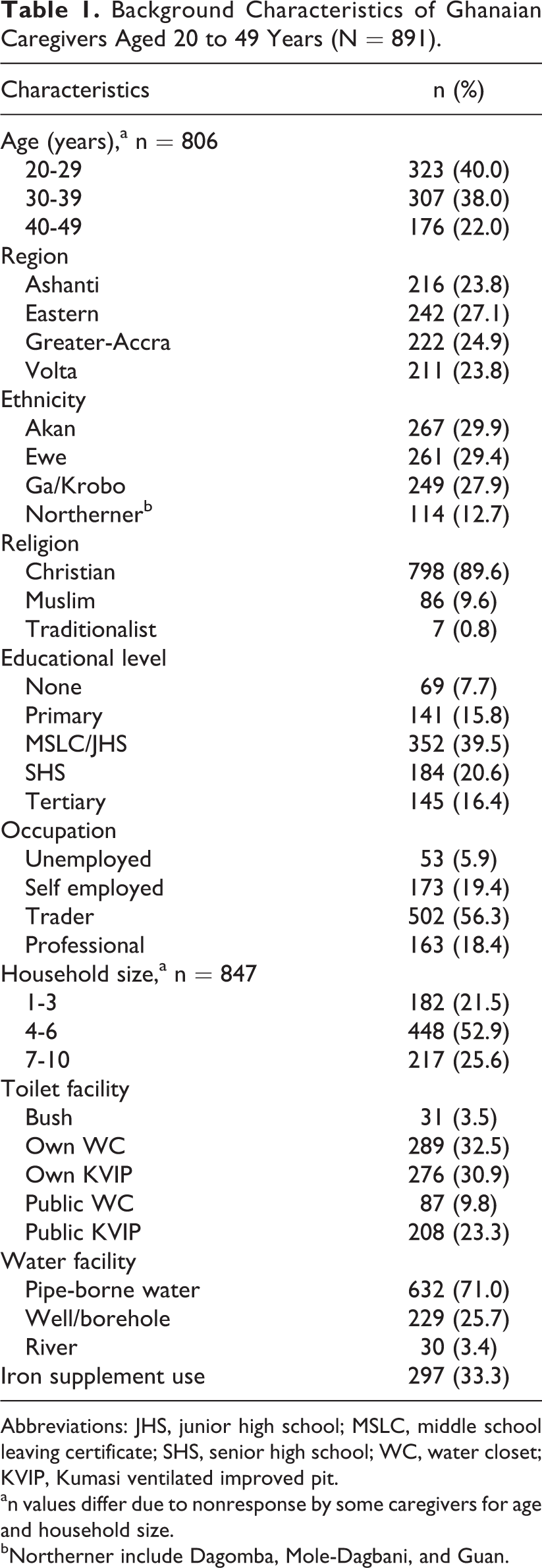
Abbreviations: JHS, junior high school; MSLC, middle school leaving certificate; SHS, senior high school; WC, water closet; KVIP, Kumasi ventilated improved pit.
an values differ due to nonresponse by some caregivers for age and household size.
bNortherner include Dagomba, Mole-Dagbani, and Guan.
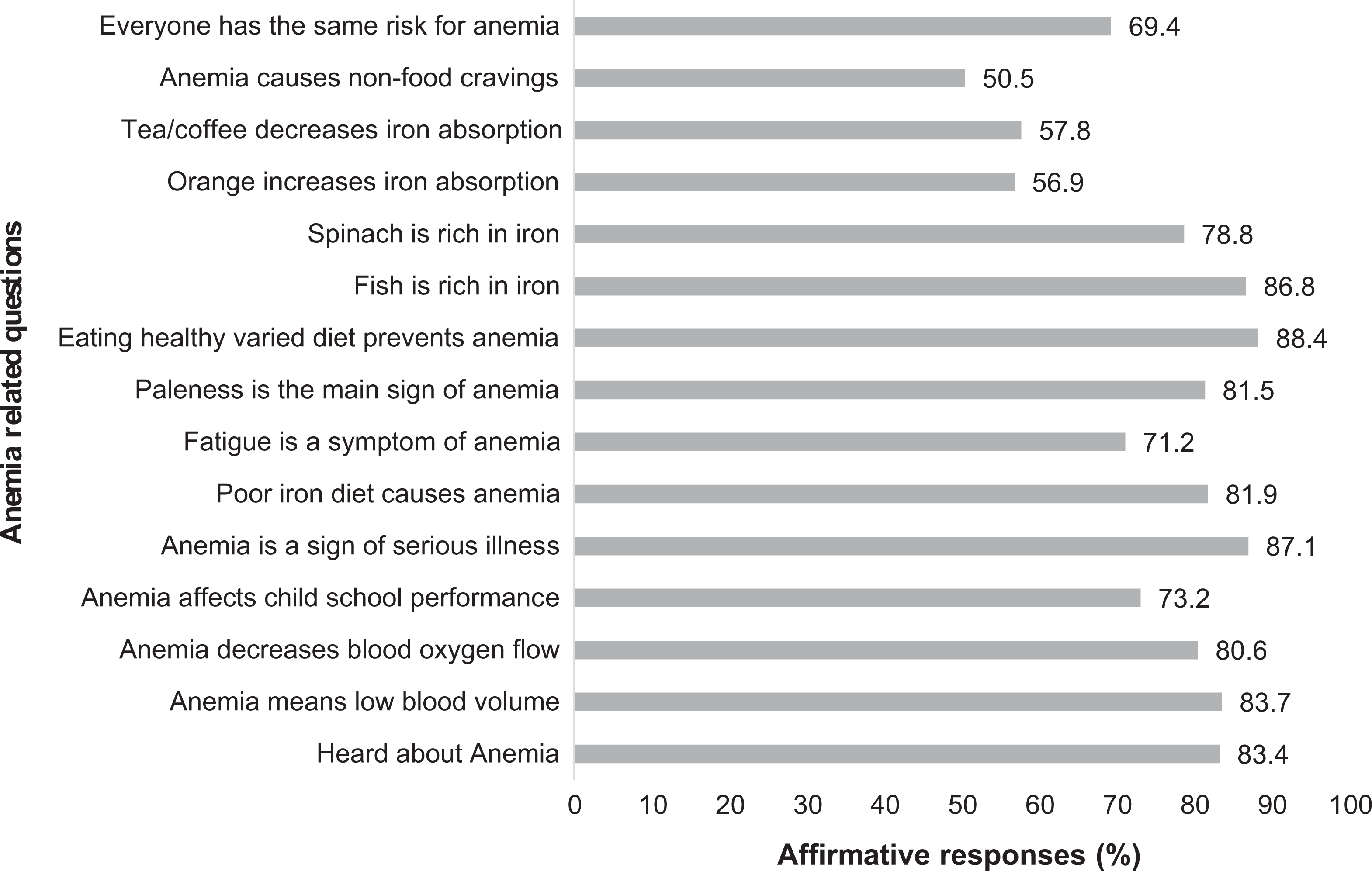
Distribution of affirmative responses to anemia-related questions.
Associations Between Sociodemographic Characteristics and Food Security Status and Anemia-Related Knowledge Among Ghanaian Caregivers Aged 20 to 49 Years.a
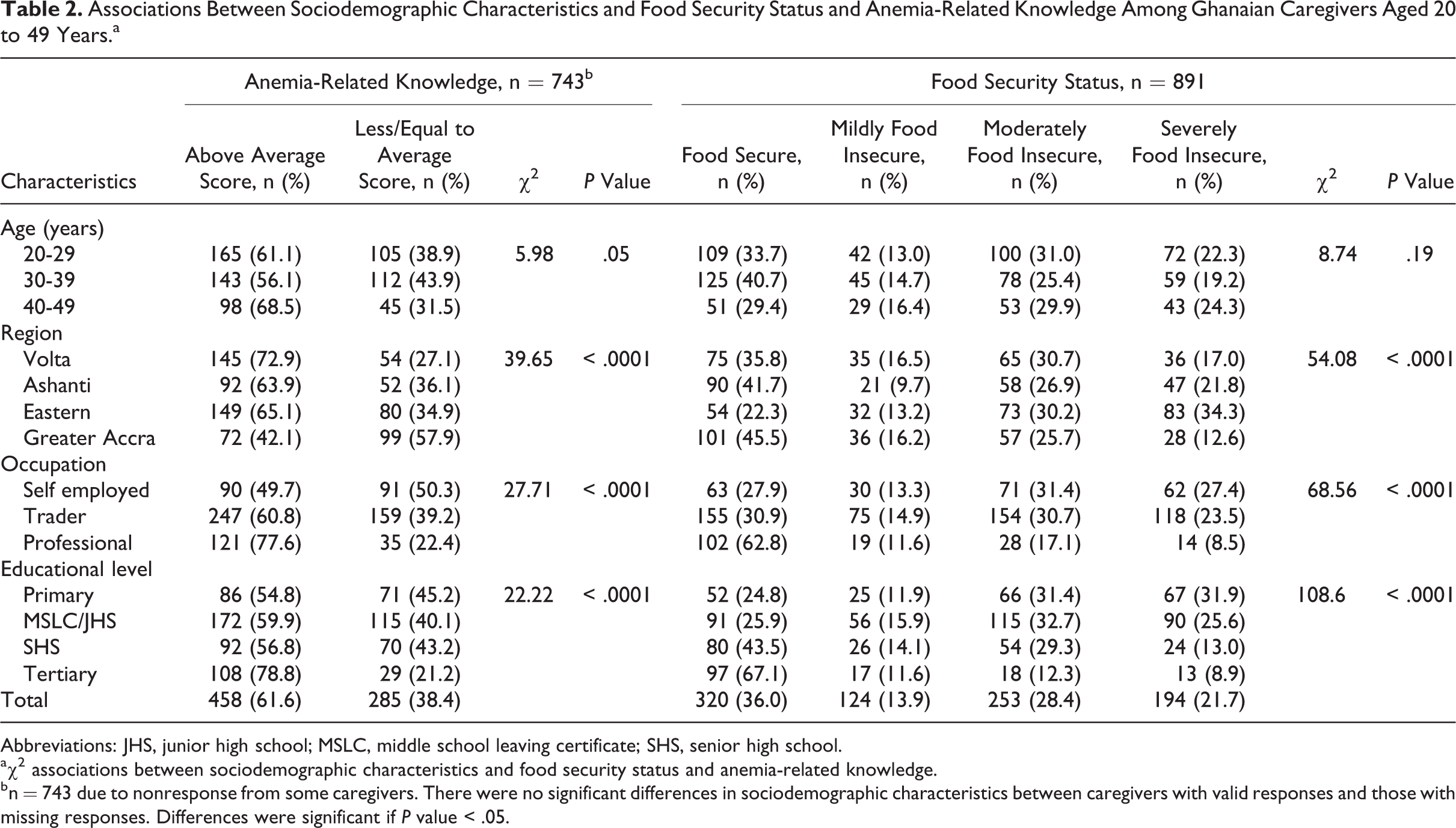
Abbreviations: JHS, junior high school; MSLC, middle school leaving certificate; SHS, senior high school.
aχ2 associations between sociodemographic characteristics and food security status and anemia-related knowledge.
bn = 743 due to nonresponse from some caregivers. There were no significant differences in sociodemographic characteristics between caregivers with valid responses and those with missing responses. Differences were significant if P value < .05.
Perceptions About Turkey Berry and Palm Weevil Larvae
Approximately, 97% of caregivers had some knowledge about turkey berry, and 64% had some knowledge about palm weevil larvae (Table 3). Almost all the caregivers (93.8%) perceived that turkey berry gives blood (Table 3). More than 85% of caregivers perceived turkey berry to have medicinal value, treat anemia, and improve nutrition. About 90% were also willing to include turkey berry in complementary and household foods and were optimistic that their child will eat it if it is introduced. Nonetheless, 22.3% of the caregivers mentioned they dislike the bitter taste of the turkey berry and its tough texture makes it difficult in food preparation. Majority of caregivers (75%) agreed that turkey berry is common in the community. Most caregivers (86.1%) also agreed that it is important for them to learn about the health benefits of turkey berry. In general, caregivers (61%) had high favorable perceptions about turkey berry, while only 17% of caregivers had high favorable perceptions about palm weevil larvae. For the larvae, 56.4% of caregivers agreed it could improve nutrition, but only about 40% were willing to include it in complementary and household foods (Table 3). Few caregivers (21.4%) agreed that the larvae are common in the community. Only 20% of caregivers believed that people use the larvae, and 53.8% said it is important for the community to learn about the health benefits of eating the larvae.
Perceptions of Ghanaian Caregivers About Turkey Berry and Palm Weevil Larvae.
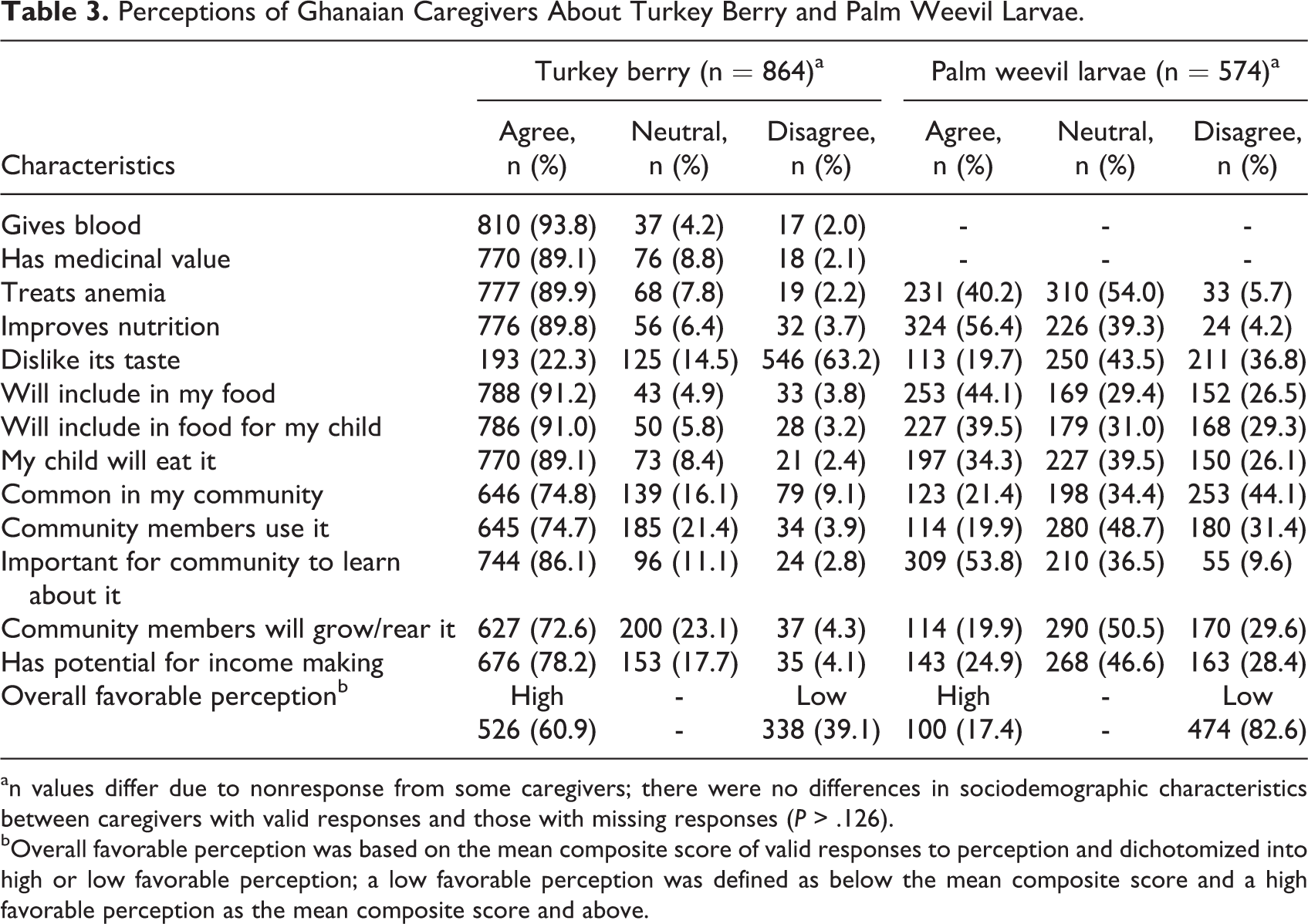
an values differ due to nonresponse from some caregivers; there were no differences in sociodemographic characteristics between caregivers with valid responses and those with missing responses (P > .126).
bOverall favorable perception was based on the mean composite score of valid responses to perception and dichotomized into high or low favorable perception; a low favorable perception was defined as below the mean composite score and a high favorable perception as the mean composite score and above.
Factors Influencing ARK and FSS
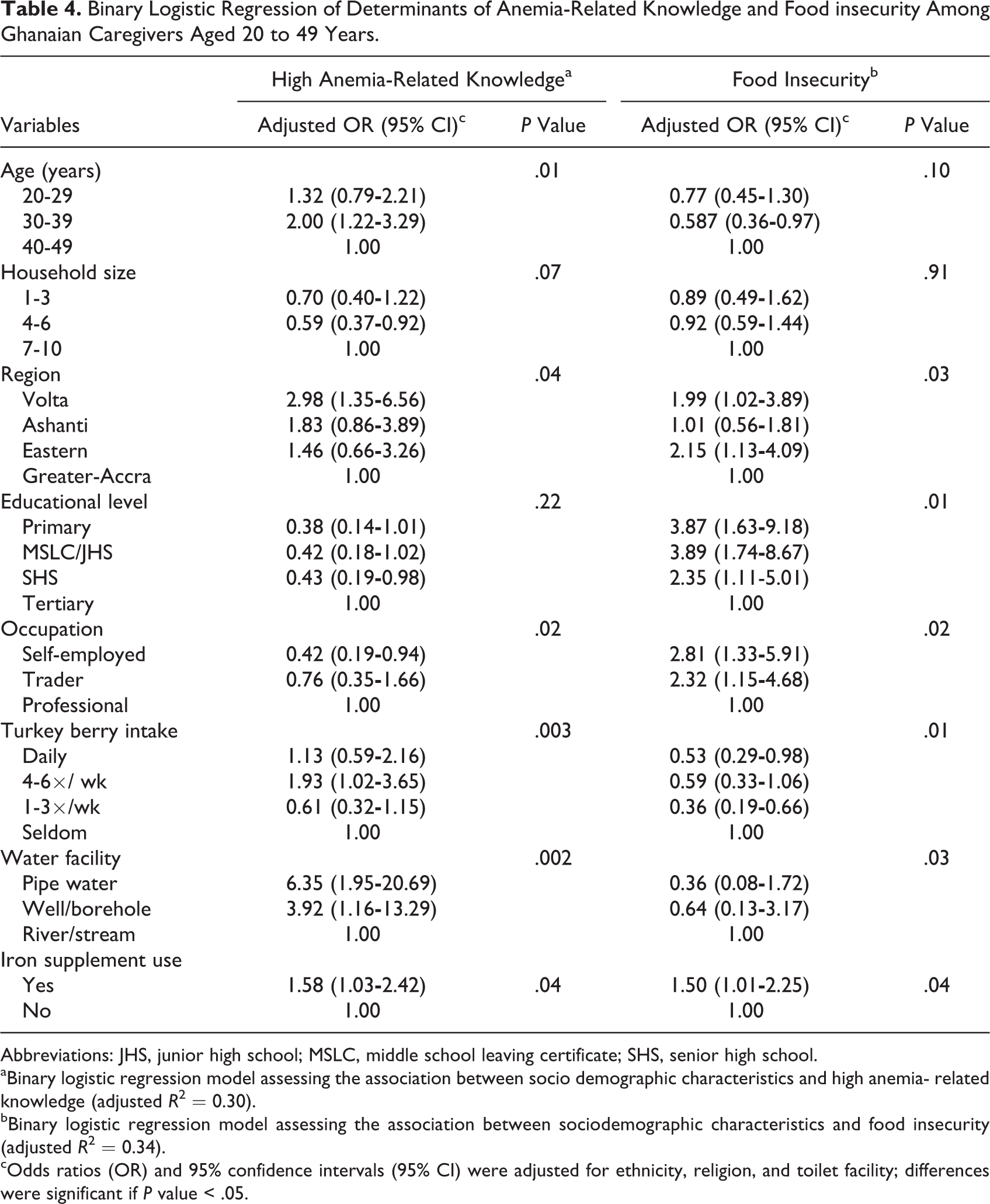
Variables significantly influencing ARK were age, region, occupation, turkey berry intake, water facility used, and iron supplement use. Traders were 76% less likely to have high knowledge on anemia (adjusted odds ratio [AOR] = 0.76, 95% confidence interval [CI]: 0.35-1.66, P = .02, Table 4). Caregivers who consumed turkey berry 4 to 6×/wk were 93% more likely to have high knowledge on anemia (AOR = 1.93, 95% CI: 1.02-3.65, P = .003, Table 4). Caregivers who took iron supplements were 58% more likely to have high knowledge on anemia (AOR = 1.58, 95% CI: 1.03-2.42, P = .04, Table 4).
Food security status was significantly influenced by region, education, occupation, turkey berry intake, water facility used, and iron supplement use. Caregivers in the Volta region were twice as likely to be food insecure compared to those from Greater-Accra region (AOR = 1.99, 95% CI: 1.02-3.65, P = .03, Table 4). Caregivers who completed at most primary or middle school/junior high school had about 4-fold increased odds of food insecurity compared to those who had tertiary education (AOR = 3.89, 95% CI: 1.74-8.67, P = .001, Table 4). Traders were 2 times more likely to be food insecure compared to caregivers who had professional jobs (AOR = 2.32, 95% CI: 1.15-4.68, P = .02, Table 4). Caregivers who consumed turkey berry 4 to 6×/wk were 59% less likely to be food insecure compared to those who occasionally ate turkey berry (AOR = 0.59, 95% CI: 0.33-1.06, P = .01, Table 4).
Binary Logistic Regression of Determinants of Anemia-Related Knowledge and Food insecurity Among Ghanaian Caregivers Aged 20 to 49 Years.
Abbreviations: JHS, junior high school; MSLC, middle school leaving certificate; SHS, senior high school.
aBinary logistic regression model assessing the association between socio demographic characteristics and high anemia- related knowledge (adjusted R2 = 0.30).
bBinary logistic regression model assessing the association between sociodemographic characteristics and food insecurity (adjusted R2 = 0.34).
cOdds ratios (OR) and 95% confidence intervals (95% CI) were adjusted for ethnicity, religion, and toilet facility; differences were significant if P value < .05.
Factors Influencing Perceptions About Turkey Berry and Palm Weevil Larvae
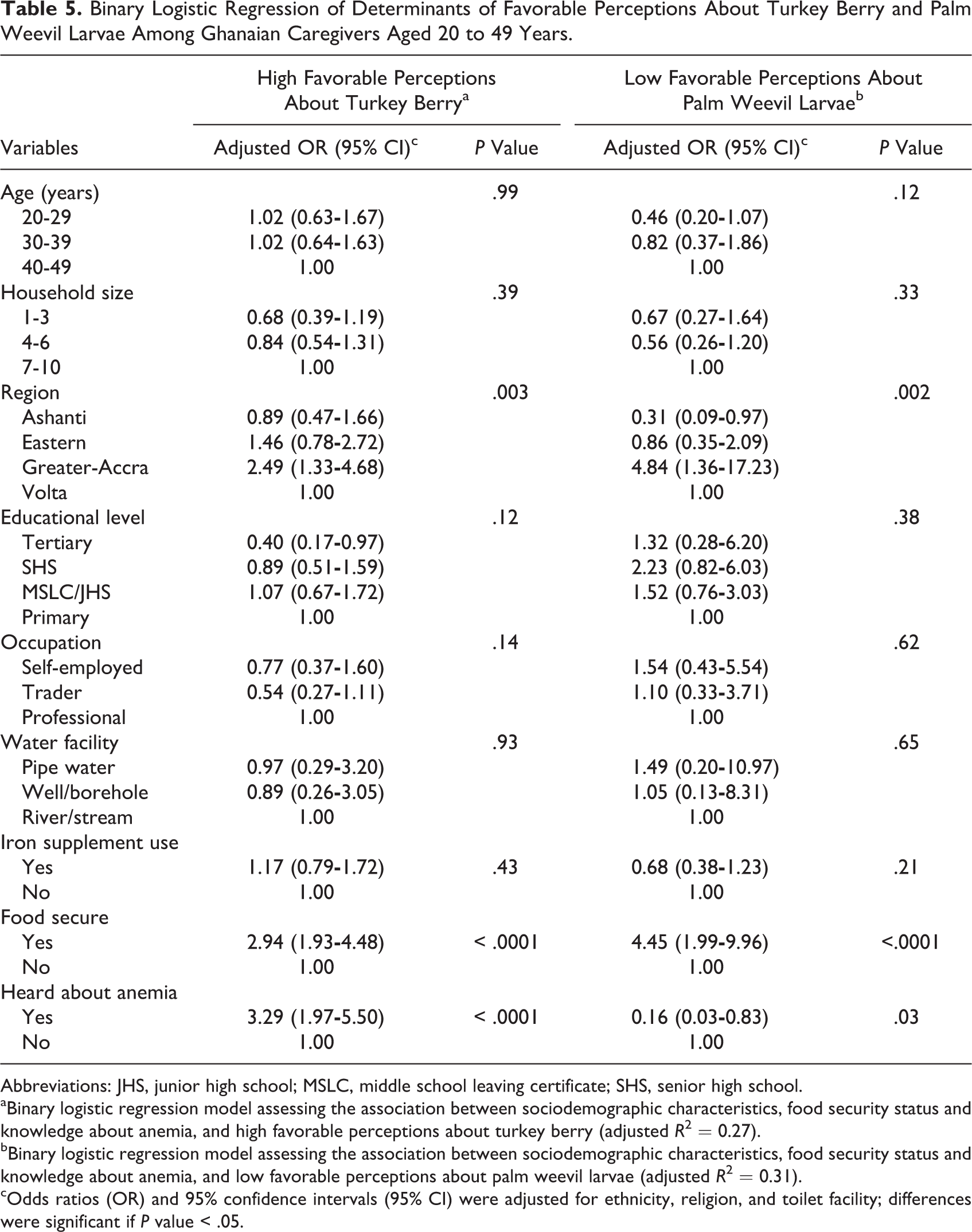
High favorable perceptions about turkey berry were influenced by region, FSS, and hearing about anemia. Caregivers in the Eastern region were 46% more likely to have high perceptions about the plant compared to those from Volta region (AOR = 1.46, 95% CI: 0.78-2.72, P = .003, Table 5). Caregivers who were food secure were about 3 times more likely to have high favorable perceptions about turkey berry compared to food insecure caregivers (AOR = 2.94, 95% CI: 1.93-4.48, P = < .0001, Table 5). Having heard about anemia was associated with 3.3, odds of having high perceptions about turkey berry (AOR = 3.3 95% CI: 1.97-5.50, P = < .002, Table 5).
Similarly, region, FSS, and hearing about anemia were significant predictors of low perceptions about palm weevil larvae. In contrast to caregivers in Volta region, caregivers in the Greater-Accra region were about 5 times more likely to have low perceptions about palm weevil larvae (AOR = 4.84, 95% CI: 1.36-17.23, Table 5). Caregivers in the Ashanti and Eastern regions were less likely to have poor perceptions about palm weevil larvae compared to caregivers in the Volta region (Ashanti region: AOR = 0.31, 95% CI: 0.10-0.97; Eastern region: AOR = 0.86, 95% CI: 0.35-2.09, P = .002, Table 5). Food secure caregivers were 4.45 times more likely to have low perceptions about the larvae compared to food insecure caregivers (AOR = 4.45, 95% CI: 1.99-9.96, P = < .002, Table 5).
Binary Logistic Regression of Determinants of Favorable Perceptions About Turkey Berry and Palm Weevil Larvae Among Ghanaian Caregivers Aged 20 to 49 Years.
Abbreviations: JHS, junior high school; MSLC, middle school leaving certificate; SHS, senior high school.
aBinary logistic regression model assessing the association between sociodemographic characteristics, food security status and knowledge about anemia, and high favorable perceptions about turkey berry (adjusted R2 = 0.27).
bBinary logistic regression model assessing the association between sociodemographic characteristics, food security status and knowledge about anemia, and low favorable perceptions about palm weevil larvae (adjusted R2 = 0.31).
cOdds ratios (OR) and 95% confidence intervals (95% CI) were adjusted for ethnicity, religion, and toilet facility; differences were significant if P value < .05.
Discussion
Anemia-Related Knowledge
Improving nutrition literacy and use of knowledge is critical to reducing preventable forms of maternal and child malnutrition, including anemia. Nutrition literacy extends beyond education and communication to improve the capacities and motivations of caregivers to access and use information to improve both mother and child health. Caregivers’ knowledge of anemia indicated a good understanding of its nutritional causes, signs, and symptoms. The proportion of caregivers who had below caregivers’ average level of knowledge regarding anemia was consistent with results from a study in Southern Israel 15 but not with those from another study in Tanzania. 16 Study design, location, and variables used to determine knowledge regarding anemia may have accounted for the differences between the studies. Previous studies have shown knowledge of women’s nutrition is related to better health-care-seeking behavior, diet quality, and nutritional outcomes. 17 This is attributable to their more significant role in household food purchasing and preparation. Their knowledge or lack thereof, about nutrition can compromise dietary diversity and dietary habits of household members. Interestingly, nutrition knowledge may not always translate into improved diet quality. 18 This indicates caregivers’ knowledge of nutritional causes of anemia may not necessarily translate into consumption of iron-rich foods or limiting consumption of foods that inhibit iron absorption. Indeed, the choice of foods to prevent and/or treat anemia is influenced by numerous factors, including taste, convenience, food cost, food insecurity, and cultural/religious beliefs.
Consistent with results from other studies, we observed associations between high nutrition knowledge and higher education or socioeconomic status. 19,20 It is likely nutrition knowledge would also influence dietary diversity. However, there is no standardized questionnaire to assess general nutrition knowledge or measure specific nutrition concepts such as anemia. 21 Clearly, the anemia knowledge assessed in this study and by other researchers 15,19 is general knowledge of nutrition and may not necessarily be the knowledge required to make appropriate dietary decisions that can reduce nutritional anemia. Although this type of knowledge is necessary, future studies should focus on knowledge and skills that have practical relevance to inform appropriate dietary choices that can prevent anemia.
Food Insecurity
According to the FAO, 22 food insecurity exists when all people, at all times, do not have physical and economic access to sufficient, safe, and nutritious food to meet their dietary needs and food preferences for an active and healthy life. Compared to the 2012 comprehensive food security and vulnerability analysis in the 3 northern regions of Ghana, our current estimate of the prevalence of food insecurity among women is about 2½ times higher than the 2012 food insecurity prevalence of 26%. 23 The differences are due to the target population and tools used for food insecurity assessment. Building on limitations of previous food insecurity scales, the FAO voices of the hungry project developed and validated an experience-based food insecurity scale (FIES) that was used in this study. 14 The use of this scale reflects cultural and personal values of people’s direct response to a series of questions regarding their access to adequate food. The high prevalence of food insecurity indicates that most of the women in this study do not have access to adequate food to meet their nutritional needs and those of their children. Probably, extreme manifestations of food insecurity may not be obvious in these women or their children, and as such, constraints facing their access to food may be less discernable.
The negative association of education with food insecurity found in our study supports previous studies in Nigeria, Ethiopia, and India. 24 -26 This is likely because educated women are more skillful in domestic financial management as shown in Indian women. 25 Additionally, better employment contributed to more stable financial resources and lower odds of food insecurity, a finding consistent with other studies. 24,27 Lack of purchasing power, and ultimately, the lack of access to food, especially for the rural and urban poor households, forces them to remain food insecure. Corroborating the evidence from previous studies in Ghana, 2,23 regional differences still exist with respect to food insecurity. Economic growth, particularly for women in food insecure regions, may be necessary but may not be enough to reduce food insecurity, and as such, other interventions should be provided.
Factors Influencing Perceptions About Turkey Berry
Consistent with previous findings in Ghana, women with knowledge about anemia had high perceptions about turkey berry. 8 Many testimonies by women during the data collection showed their confidence that the fruits and leaves of turkey berry help increase the amount of blood in the body and enhance general health status. These testimonies are based on personal experiences and traditional values that have been handed down from generations. This belief in preventing and/or treating anemia by eating or drinking aqueous extracts of turkey berry has been reported in India and Cameroon, where the ripened fruits and leaves are used in the preparation of “blood tonic.” 28 Also, its hematinic property has been demonstrated in anemic rats, and this is attributed to its high B vitamin content. 29
Regional differences in perceptions about the health benefits of turkey berry could be explained by familiarity with the plant. Turkey berry mostly grows in the wild or is cultivated on a very small scale, and this limits its availability. Thus, perceptions about its use are expected to be high among women who have had personal experience or have been told about it from their parents, friends, and healthcare providers. Nutrition education is needed to increase knowledge and awareness about the plant so that caregivers understand its health benefits. Likewise, the culture of seeking traditional treatment for anemia using turkey berry corroborates previous findings in Tanzania. 30 Though there seems to be good acceptance of formal health care in Ghana, the use of traditional remedies to treat anemia cannot be overlooked. Additionally, our findings indicate turkey berry could be a livelihood improvement option for caregivers. Caregivers are already using a wide range of neglected plants (personal communication from some caregivers) such as turkey berry to meet household nutrient needs. Research to increase the value of turkey berry and make them readily available would broaden the resource base and increase the livelihood options for caregivers. Also, turkey berry can help increase dietary diversification and improve nutrition of the women and their households if knowledge about its nutritional benefits is promoted.
Factors Influencing Perceptions About Palm Weevil Larvae
In agreement with a study in Italy, 31 caregivers were willing to include palm weevil larvae in complementary and household foods. Our study is in disagreement with previous studies in Germany and China due to the low number of respondents willing to adopt insects as a meat substitute. 32,33 These differences can be attributed to research design, target respondents, and country of study. Consistent with previous studies, 32,33 it is likely that familiarity with the larvae played a key role in shaping caregivers willingness to include it in complementary and household foods. We observed that familiarity was mainly due to hearsay, which may have influenced their perceived willingness to include the larvae in complementary and household foods. For caregivers who have ever consumed the larvae, some considered it an important delicacy to include in complementary and household foods. Nonetheless, there may be discrepancy between attitudes and behavior, which may lower the actual willingness of caregivers to procure, prepare, and consume the larvae. 33 Regional differences in perceptions about the larvae confirm past findings in Ghana, Germany, and China. 6,32 Probably, the regional differences in perception may be related to consumption, familiarity patterns as well as availability due to the requirement of fallen palms as breeding sites for the larvae.
Though a previous study has documented palm weevil larvae as the most commonly consumed of the 9 staple insects in Ghana, 6 there was no information about how often and how much insects were consumed. We posit that there may be some preconceived opinion in communities that consume these insects and even higher preconceived opinion in non-insect-eating communities in Ghana. For caregivers in non-insect-eating communities, their preconceived opinion may be influenced by what they culturally perceived as food when growing up. 34 This preconceived opinion, often referred to as the “disgust factor,” may have accounted for the overall low favorable perception about the health benefits of the larvae. In line with other studies, caregivers’ willingness and perception was not influenced by nutrition and health claims of the larvae. 32,33 Contrary to our findings, respondents who were interested in health indicated a higher willingness to eat novel food after receiving health information about that food. 35 In our study population, the problem may not simply be communicating the nutrition and health benefits of eating insects but also making sure that the traditional practice of eating insects does not disappear as the Ghanaian food environment continues to undergo nutrition transition. Globally, several efforts are being made to merge the traditional practice of insect eating with more popular foods, a strategy that has shown great promise in reducing the “disgust factor.” 32,33 An approach to the development of edible insect products as a sustainable food-based strategy that can suit the expectations of the Ghanaian consumer may be to increase demand and scaling up of insect farming to prevent food insecurity.
In contrast to previous findings, 33 age was not a significant predictor of low perceptions about the larvae, but this finding agrees with previous studies in Germany, China, and Italy. 31,32 In accordance with previous studies, education had no impact on perceptions about the larvae. 32,33 However, an Italian study associated perceived willingness to eat insects with a stronger social acceptance among the educated. 31 For food secure households, there may be reason to believe that insects are still considered a primitive food source, which may not befit their social status except to eat it occasionally as an important cultural delicacy. Generally, the caregivers viewed the larvae as a delicacy that could provide a culturally appropriate alternative protein source to alleviate food insecurity and malnutrition. However, in today’s Ghanaian culture, the “disgust factor” of eating insects cannot easily be ignored despite findings from a 2017 study that reported favorable perceptions of the larvae as a nutritious food. 12 It is envisaged that as scientific literature on edible insects increases, entomophagy would not be reserved for certain ethnic groups or vulnerable people but would become a sustainable food-based alternative that would be embraced by everyone.
Strengths and Limitations
It is important to note several limitations while interpreting the findings of the study. This study is a cross-sectional design, which means the findings cannot be used to infer causality in the reported association between FSS, ARK, and perceptions about turkey berry and palm weevil larvae. Also, the FIES used may be subject to recall bias. The ARK questions were developed based on counseling materials on infant and young child feeding practices and were pretested, but it has not been validated against any standardized ARK questions for developing countries. We also did not access the frequency and amount of turkey berry and palm weevil larvae consumed. Given that several binary logistic regression models were used to examine the pattern of relationships of FSS, ARK, and perceptions about turkey berry and palm weevil larvae, the P values reported should best be interpreted as revealing relative strengths of relationships. Although the Likert scale allowed a greater understanding of perception, it may cause some bias in the results of the regression since they were specified as binary outcomes. Although dichotomizing the measure implies a possible loss of information, we believe this approach is justified on practical and empirical grounds for this study. Despite these limitations, the relatively large sample size and sampling from 4 regions in Ghana, and the current evidence provided in the present work, contribute greatly to our understanding of the sociodemographic characteristics related to perceptions about turkey berry and palm weevil larvae, which would shape ongoing efforts related to promoting these foods in Ghana and other developing countries.
Conclusions
Caregivers’ knowledge of anemia indicated a good understanding of the nutritional causes, signs, and symptoms. Despite significant economic growth in recent years, there is still widespread food insecurity among Ghanaian caregivers. Higher education or professional jobs were associated with high levels of nutrition literacy on anemia and lower odds of food insecurity. Hematinic properties of turkey berry continue to drive its high favorable perception and use among caregivers. Familiarity with these NUFs, but not education and age, greatly influenced perception and willingness to use turkey berry and palm weevil larvae. Food security predicted high perceptions about turkey berry and low perceptions about palm weevil larvae. Although overall favorable perception was low for palm weevil larvae, attempts to establish the larvae as a nutritive source in Ghana shows promise as reflected by women’s willingness to include the insect in complementary and household foods. Turkey berry and palm weevil larvae, if widely available, have the potential to increase livelihood options and dietary diversity for Ghanaian caregivers and their children to improve food and nutrition security. Although the findings of this study are promising, they highlight the need for data on the frequency and use of these NUFs, particularly palm weevil larvae. Additional research on the nutrition profile, sensory characteristics, and acceptability of these foods in Ghana is needed. Finally, we recommend a randomized control trial on the efficacy of consumption of these NUFs on nutritional outcomes, particularly among children.
Footnotes
Authors’ Note
IA, SLF, HHJ, and MBR conceptualized and designed the original surveys; IA supervised data collection, data entry, and cleaning; IA, SLF, HHJ, and MBR conceived the present analysis; IA analyzed the data; IA drafted the initial manuscript; all authors reviewed and revised the text and approved the final manuscript as submitted. The data set used and/or analyzed during the current study is available from the corresponding author on reasonable request.
Acknowledgments
The authors thank Dr Richmond Aryeetey (University of Ghana) for guidance on study implementation in Ghana and Dr Chong Wang (Iowa State University) for guidance on statistical analyses.
Declaration of Conflicting Interests
The author(s) declared no potential conflicts of interest with respect to the research, authorship, and/or publication of this article.
Funding
The author(s) disclosed receipt of the following financial support for the research, authorship, and/or publication of this article: This work was supported by the Doris A. Adams endowment funds from the College of Human Sciences at Iowa State University, Ames, USA.
