



Abstract
Background:
Suaahara, a large-scale integrated program, aimed to improve diets and nutritional status among women and children, in part by facilitating enhanced homestead food production (EHFP).
Objective:
This study examines associations between EHFP and maternal and child dietary diversity and variations by season and agroecological zone (AEZ): mountains and terai.
Methods:
We used data from household monitoring surveys (n = 2101 mothers; n = 994 children, 6-23 months), which included a 7-day dietary recall and maternal report on participation in 5 EHFP activities—received vegetable seeds, chicks, and technical support and participated in training and EHFP groups. We constructed binary variables for each activity and a scale (0-5) summing participation. For dietary diversity, we used the Women’s Dietary Diversity Score using 10 food groups and 7 food groups for child diets. Multivariable linear regression analyses were used to assess associations between EHFP participation and dietary diversity by season and AEZ, controlling for potential confounders and clustering.
Results:
In adjusted models, we found positive associations between dietary diversity and chicks, technical support, and EHFP beneficiary groups; the magnitude of the associations varied by season and AEZ. The degree of participation in 5 EHFP activities was positively associated with maternal dietary diversity in the terai (β = .24, P < .001) and mountains (β = .12, P = .01) and child dietary diversity in the terai (β = .35, P < .001) during the winter. No associations were found in the rainy season.
Conclusion:
Our findings highlight the potential for EHFP to address dietary diversity constraints among this population. Variation by subnational setting and seasonality suggest that policies and programs should be contextualized.
Introduction
Undernutrition: Globally and in Nepal
Globally, nearly 160 million children younger than 5 years are stunted (being too short for one’s age), with 50 million wasted (being too thin for one’s height) and more than 40 million overweight (being too heavy for one’s height). 1 Maternal malnutrition is also a substantial global public health problem: at least 10% of women are underweight (body mass index [BMI] < 18.5 kg/m2) and nearly 40% of women are overweight (BMI > 25 kg/m2) or obese (BMI > 30 kg/m2). 1 Malnutrition leads to both short- and long-term consequences including death and disease, as well as losses to educational and economic achievements, and an increased likelihood of poverty among survivors. 2 –4 Without addressing the burden of malnutrition, a wide range of development goals are unlikely to be reached. 5
South Asia has some of the highest rates of undernutrition globally. 1 Nepal is no exception to this public health burden, despite progress made over the last few decades to reduce the prevalence of child stunting and wasting, as well as maternal underweight. 6 Further reductions are needed, particularly among pregnant and lactating women and children younger than 2 years. In Nepal, 48% of children up to 2 years of age are stunted and 16% wasted; among their mothers, 27% are underweight (BMI < 18.5 kg/m2). 7 Dietary intake, an immediate determinant of undernutrition, is poor in Nepal. Due to poverty, small mixed farm landholding, remoteness, and lack of access to resources, household food insecurity remains high throughout rural Nepal, and availability of and access to diverse and nutrient-rich foods remain a challenge for many. 8,9 Low-quality, monotonous diets are the norm in Nepal, particularly in the more remote mountainous areas. The typical rural Nepalese household mostly eats rice and lentils, with limited vegetables and fruits, particularly in lean seasons. 10 –13 The average consumption of vegetables, fruit, and animal source foods in Nepal is well below estimated requirements. Poor dietary quality and low dietary diversity likely contribute to host micronutrient deficiencies and may also result in inadequate energy intakes and stunted growth and development. 14 –17
Acknowledging that the determinants of nutritional well-being are varied and that progress in nutrition will, in turn, require progress across sectors such as education, agriculture, health, and water, sanitation, and hygiene (WASH), the Government of Nepal (GoN) adopted a Multisector Nutrition Plan (MSNP) in 2012. 18 This evidence-based shift to addressing malnutrition via multisectoral policies and programs is consistent with global recommendations and trends. 19 –21 In Nepal, the development community has aligned with the MSNP by funding and implementing integrated multi-sectoral programs to reduce malnutrition, particularly among mothers and young children from conception until a child’s second birthday.
Suaahara and Enhanced Homestead Food Production
Suaahara, a USAID-funded program, aimed to improve maternal and child diets and nutrition in rural communities throughout 41 of Nepal’s 75 districts in its first 5 years (2011-2016). Program goals included (1) improving household nutrition, health, and WASH behaviors; (2) increasing the use of quality nutrition and health services; (3) increasing the production and consumption of diverse and nutrition foods; and (4) strengthening coordination among nutrition actors. Suaahara used various social and behavior change communication (SBCC) platforms to implement an integrated program at-scale spanning 5 sectors: health services, family planning, WASH, nutrition, and agriculture/enhanced homestead food production (EHFP). All 1000-day households residing in Suaahara intervention districts received a core package of SBCC intervention activities related to maternal, infant, and young child nutrition (MIYCN), maternal and child health and family planning, and WASH. Additional complementary activities were also implemented, such as EHFP, but only for those village development committees (VDCs) classified by the GoN as having the highest concentrations of disadvantaged groups (DAGs).
Helen Keller International (HKI) led the EHFP components of Suaahara. Building on HKI’s prior experience throughout Asia, Suaahara EHFP activities included agricultural production activities alongside nutrition and health behavior change communication, primarily promotion of essential nutrition actions (ENAs) and essential hygiene actions (EHAs). The specific agricultural activities included (1) trainings in optimal techniques for vegetable gardening and poultry production, (2) distribution of 5 chicks per household, (3) seasonal distribution of vegetable seeds, (4) technical support, and (5) creation and facilitation of EHFP beneficiary (EHFPB) groups. Mothers in the 1000-day period were specifically targeted to increase their participation in capacity strengthening and resource generation activities and in turn facilitate improvements in dietary diversity and nutrition. The various hypothesized pathways to impact are highlighted in our conceptual framework (Figure 1): (1) increased availability and consumption of micronutrient-rich foods produced at home and (2) increased income through the selling of excess production, which could be used for nutrition-related expenses including supplementary food and health care, for example.
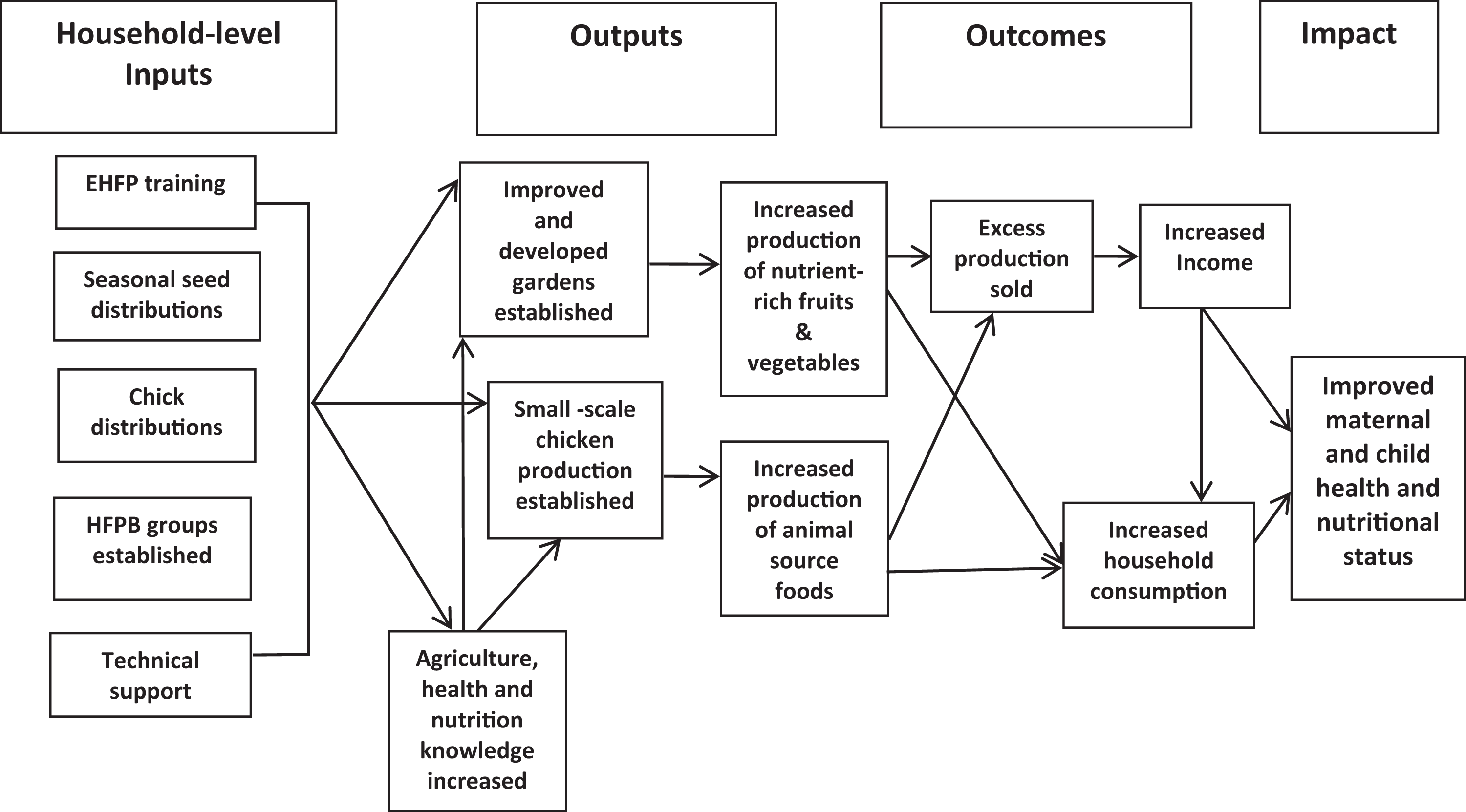
Conceptual framework linkage between HFP interventions and nutrition. HFP indicates homestead food production.
Initially launched in 9 highly food insecure districts in 2012, these EHFP activities expanded to cover all VDCs in Suaahara’s 14 most food insecure districts and in 10 to 15 VDCs with high concentrations of DAG households in Suaahara’s 27 food secure districts. In total, an estimated 100, 000 EHFP beneficiaries across 1001 VDCs were reached. EHFP beneficiaries were selected based on meeting preestablished criteria: (1) being currently pregnant or a mother of at least 1 child younger than 2 years and (2) having at least 40 to 75 m2 of land near the home. New women meeting these criteria at a later date did not receive EHFP inputs. Suaahara also facilitated the formation of 1 village model farm and associated village model farmers (VMFs) per ward, the smallest subdistrict administrative unit in Nepal. A total of 5642 VMFs were trained and each VMF was responsible for providing technical assistance to beneficiary households, who were organized into groups of approximately 20 beneficiary women. The VMFs used their model farms for training and demonstrating improved agriculture and livestock techniques and they also served, in coordination with the District Agriculture Development Office, District Livestock Services Office, and other local community development partners, as a community resource person for agriculture and agriculture–nutrition linkages.
Evidence Gaps and Study Objective
Although there is considerable anecdotal evidence and gray literature suggesting that homestead gardening, and specifically HKI’s approach to EHFP, may be a means of improving dietary diversity and nutritional well-being, peer-reviewed publications to date have been limited. Three early studies found HKI’s HFP (homestead gardening only) intervention to be associated with increased production and consumption of micronutrient-rich fruits and vegetables. 22 –24 These studies also suggested that HFP may be linked to income gains, especially when income earned from HFP activities remains under the control of women and when women’s household-level decision-making power is strengthened.
However, HKI’s model changed substantially from HFP to EHFP, when it expanded from gardening only to the inclusion of poultry breeding for animal source food and ENA/EHA promotion. 25 Five more recent studies have looked at this full EHFP model. 26 –30 A recent cluster randomized controlled trial (RCT) on this topic found that a 2-year HKI EHFP intervention in Burkina Faso reduced anemia, wasting, and diarrhea in very young children. 29 In another cluster RCT in 1 mountain district of Nepal, Osei and colleagues found no impact on child anthropometry but lower odds of maternal underweight and child and maternal anemia in intervention areas. 30 Thus, evidence linking EHFP and nutrition is growing, but much work remains both to thoroughly evaluate whether EHFP programs impact nutrition and to ask questions of how, for whom, and under what conditions EHFP can improve health and nutritional outcomes. 26 No studies to date have assessed the effect of EHFP on maternal and child diets in a South Asian setting and no studies globally have used standard dietary diversity indicators to assess these linkages. Finally, there are no published EHFP studies that examine subnational or seasonal variation.
The main objectives of this study are to (1) assess associations between participation in various EHFP activities and dietary diversity among rural Nepali women and children in the period between conception and a child’s second birthday and (2) to examine how these associations may vary by season—rainy and winter—and in 2 distinct agroecological contexts—the flat plains (terai) and the mountains. We hypothesize that the degree of participation in EHFP activities is positively associated with dietary diversity of both mothers and children, but that the magnitude and strength of these associations will vary by specific EHFP season and agroecological zone (AEZ).
Methods
Survey Design, Data Collection, and Ethics
As part of Suaahara’s monitoring system, data were collected at 3 different points to represent seasonal variation in programmatic activities: June and July 2014, corresponding to the agricultural dry season of March to June (n = 821), November and December 2014 (n = 1094), corresponding to the agricultural rainy season of July to October, and April to May 2015, corresponding to the agricultural winter season of November to February (n = 1014). Figure 2 highlights the time line for both Suaahara programmatic and monitoring activities.
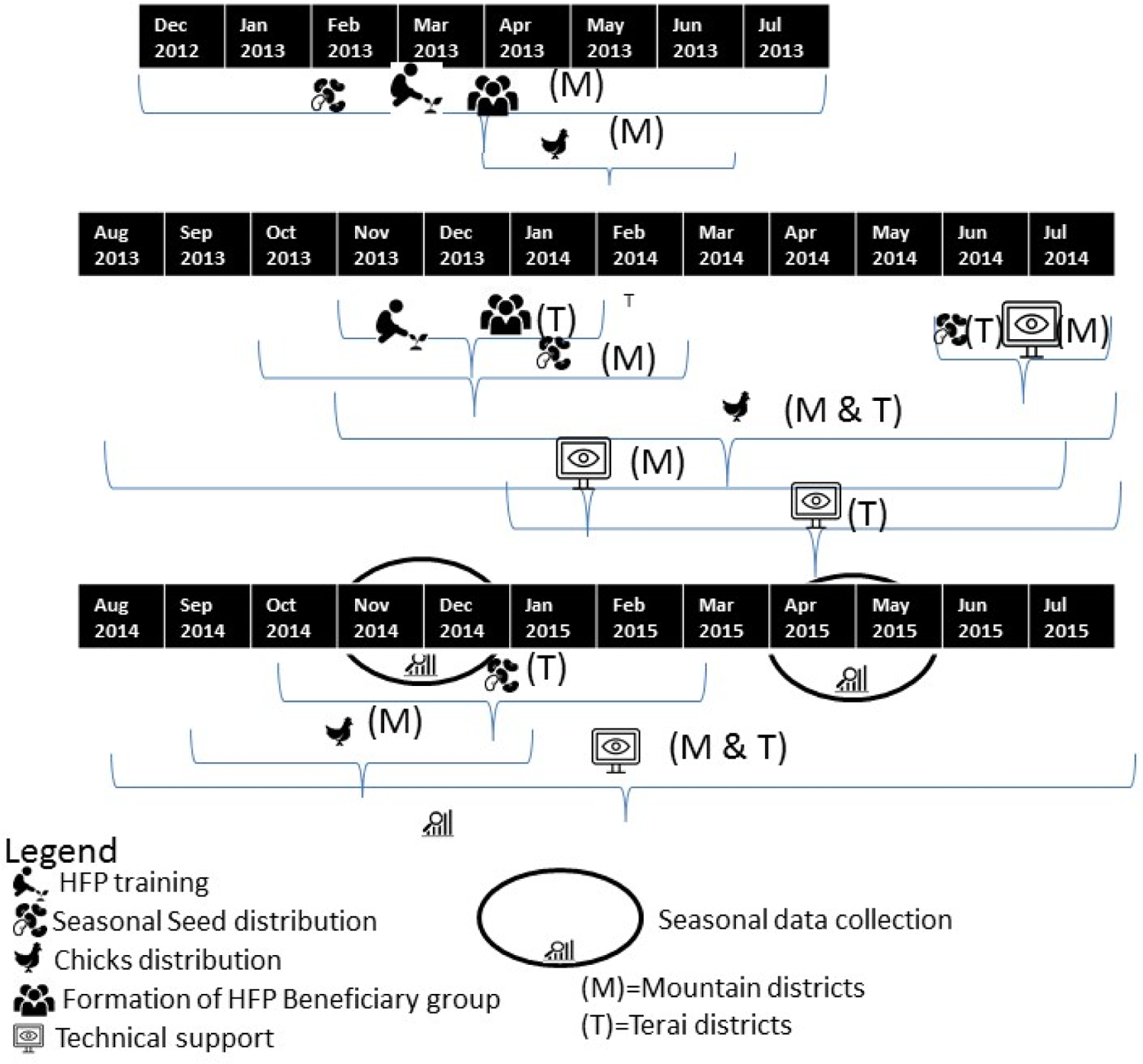
Timeline for Suaahara HFP intervention and seasonal monitoring activities. HFP indicates homestead food production.
The primary survey respondents were beneficiary women who started receiving the EHFP components of the Suaahara intervention during 2012. The seasonal monitoring surveys used stratified multistage cluster sampling techniques in line with program coverage areas. A total of 7 mountain districts and 2 terai districts were selected for seasonal monitoring, because all EHFP components of Suaahara had reached the subdistrict level in these districts. Within each district, a sampling frame of all wards was used and 20 wards (n = 180) were selected randomly using probability proportionate to size techniques. For this, using the list of potential wards and the number of households per ward, a sampling interval (k) was obtained by dividing the total number of households by the desired sample size of 11 per study arm. A random number (x) between 1 and the sampling interval (k) was chosen as the starting point, and the sampling interval (k) was added cumulatively and repeatedly (x + k)th, (x + 2k)th, and so on, until selection of the full sample was done. Within each ward, 11 beneficiaries were systematically randomly sampled for inclusion in the study, from a full roster of beneficiaries in each selected ward. The total sample size across the 3 seasons was 2929 women. In this article, we limit our analysis to data collected during the rainy and winter season to maintain consistency across the seasons analyzed (n = 2101 mothers; n = 994 children of 6-23 months).
The survey included questions relating to demographics and socioeconomic status; exposure to Suaahara, including participation in key EHFP activities; and a 7-day dietary recall to assess consumption among women and children. The questionnaire was developed in English, translated into Nepali, and back translated into English. The questionnaire was pretested in a district not included in the main study. RIDA International, a Nepalese survey conducted the data collection, using a team of 20 enumerators and paper surveys. Data entry was done in CSPro.6, and a program in IBM SPSS-23 was used for data management.
Ethical approval from the Nepal Health Research Council was received before starting data collection, and verbal informed consent was taken from each respondent prior to starting the interview.
Data Analysis
Data analysis were done in SPSS. Descriptive statistics and bivariate and multivariable analyses were done to examine the relationship between participation in EHFP and maternal and child dietary diversity and variations by season and AEZ.
The 2 primary outcome variables—maternal dietary diversity and child dietary diversity—were constructed from a weekly (7-day) dietary recall data. Foods were grouped into standard food group categories and a binary indicator created to denote whether any foods from each food group were consumed. We constructed the Women’s Dietary Diversity Score (W-DDS) using 10 food groups, and a 7 food group score for child dietary diversity. 31 –33 The primary exposure variable—participation in HFP—involved constructing a scale (0-5) of 5 key EHFP program activities: attended trainings facilitated by Suaahara, received chicks from Suaahara, received vegetable seeds from Suaahara, received technical support from Suaahara, and participated in an EHFP beneficiary group facilitated by Suaahara. We also constructed variables for the following factors identified a priori that have been theoretically or empirically linked to maternal or child nutrition or dietary diversity, which therefore could potentially confound any association: child sex, women’s age (in years), women’s education (no formal education, some primary schooling, some secondary schooling, or completed grade 12), household caste (Dalit or not), number of family members in the household, number of children <5 years of age in the household, labor migration of any adult household member, household access to food markets (distance in minutes), size of land owned by the household, and residency by AEZ (mountains and terai).
Descriptive analysis was conducted for all variables of interest, calculating means, standard deviations, and ranges for all continuous variables and proportions for all binary and categorical variables. Bivariate analysis was conducted to examine the associations between the degree of EHFP participation and maternal and child dietary diversity. All potentially confounding factors identified a priori were controlled for in the final multivariable regression models, as were district-level dummy variables. For all regression results, we report both the beta coefficients (β) and the P value and consider the association to be significant if P < .05.
Results
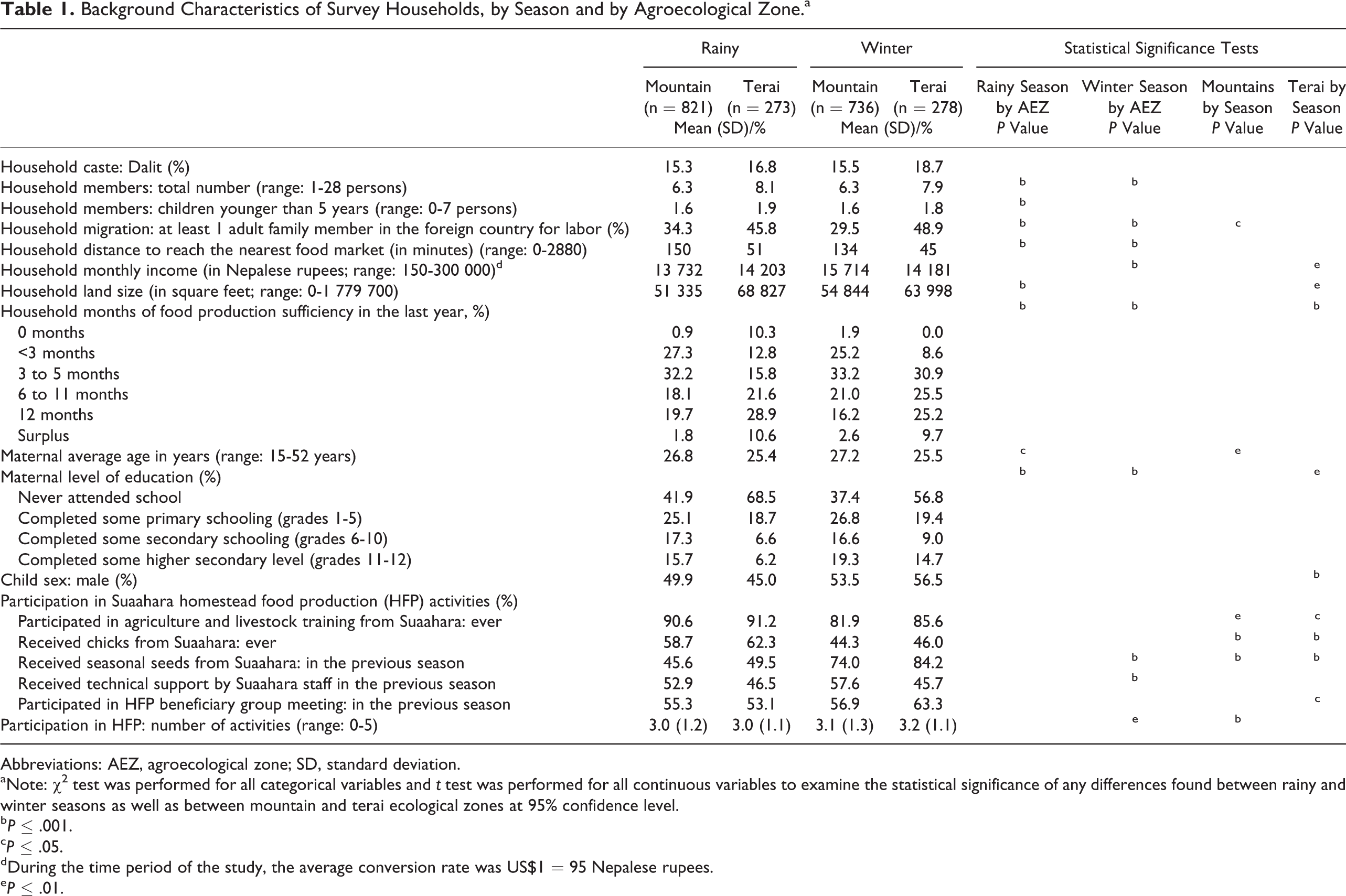
Table 1 presents characteristics of the study participants, by season and by AEZ of residence (mountains vs terai). Our descriptive analyses highlight differences among of households from —the mountains and terai. Overall, less than 1 in 5 of the women sampled were Dalit, the most socially disadvantaged caste group in Nepal. On average, terai households had 8 family members and mountain households had 6. With some seasonal variation, approximately 1 in 3 mountain households (vs 1 in 2 terai households) had an adult household member living away from home as a labor migrant. The average time reported to reach the nearest food market from homes in the terai was about 45 to 50 minutes, but in the mountains, this same task averaged over 2 hours in both seasons. Average land size in the mountains was much smaller than in the terai. Not even 1 in 3 households in the terai, but less than 1 in 5 households in the mountains, reported home production of enough food sufficient to feed the household for an entire year, and very few households reported producing a surplus of food, that is, more than required to feed the entire family. The sampled pregnant and lactating women were, on average, 25 to 27 years old. More than half (54%) of the women were ever enrolled in the formal education system, and overall, women in the mountains were more highly educated. Approximately, half of the children in each sample were boys. These differences noted between AEZs were statistically significant (P < .05).
Background Characteristics of Survey Households, by Season and by Agroecological Zone.a
Abbreviations: AEZ, agroecological zone; SD, standard deviation.
aNote: χ2 test was performed for all categorical variables and t test was performed for all continuous variables to examine the statistical significance of any differences found between rainy and winter seasons as well as between mountain and terai ecological zones at 95% confidence level.
b P ≤ .001.
c P ≤ .05.
dDuring the time period of the study, the average conversion rate was US$1 = 95 Nepalese rupees.
e P ≤ .01.
Women in both the mountains and the terai reported participating in an average of 3 of 5 EHFP activities, in both seasons. Although there was some significant variation, the magnitude was too small to be meaningful. Regardless of season or AEZ, the most common EHFP activity was participation in a Suaahara-facilitated training on agriculture and livestock (range: 82%-92%), which is the first EHFP household-level activity. Participation levels in the other 4 activities varied by AEZ and season. None of the differences between mountains and terai in the rainy season were statistically significant, but in the winter season, some differences by AEZs were marginal but significant: received technical support (mountain: 53%, terai: 47%; P < .001) and received seasonal vegetable seeds (mountain: 46%, terai: 50%; P < .001). Seasonal variation in participation in nearly all of the activities seen within each AEZ was also statistically significant (P < .05).
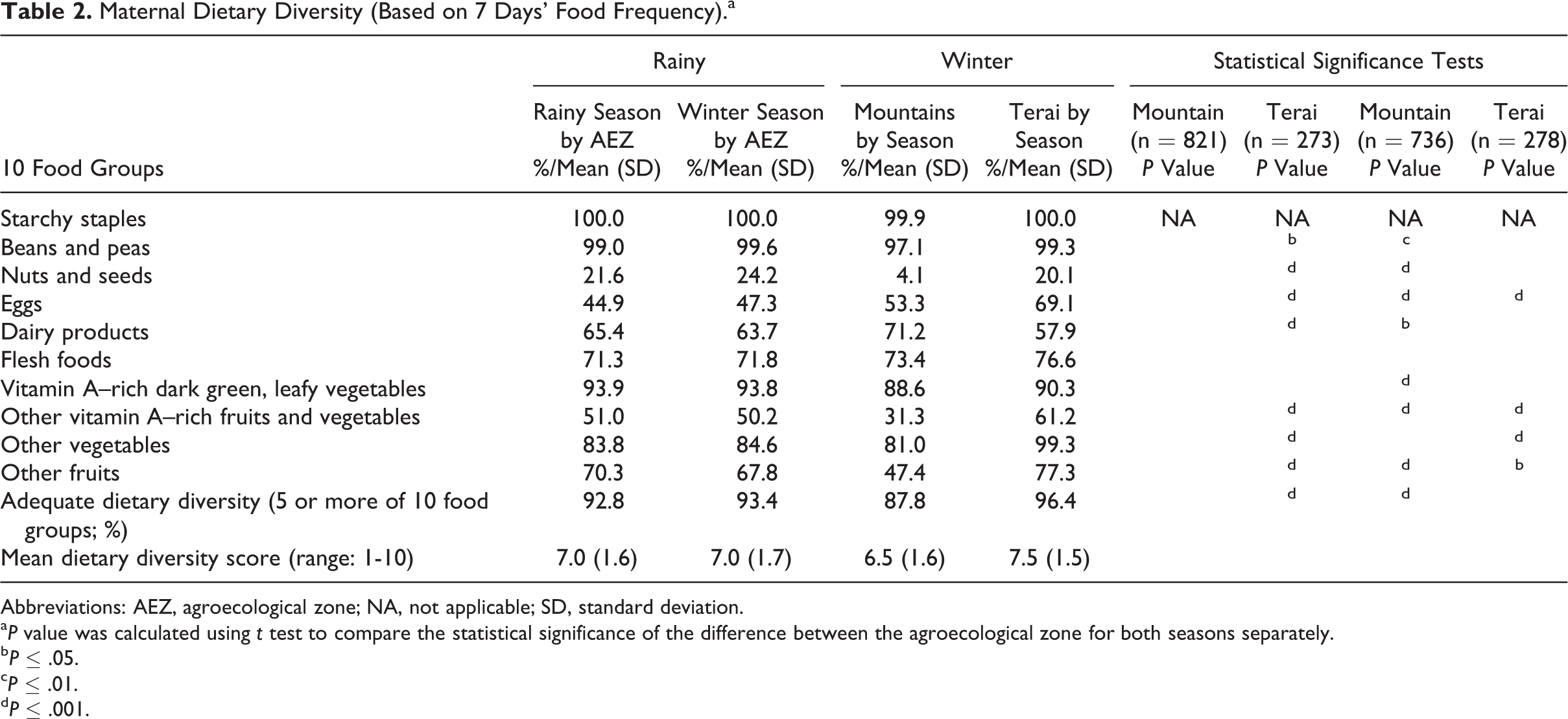
Table 2 presents descriptive data on women’s dietary diversity. Significant variations by season or AEZ were not found for overall dietary diversity scores, based on foods consumed in the 7 days prior to the survey. The prevalence of achieving adequate dietary diversity (at least 5 of the 10 food groups) was similar for the mountains and terai during the rainy season, but in the winter season, the prevalence was higher in the terai (terai: 96%, mountain: 88%; P < .001). There were no significant differences by AEZ in consumption of foods from any of the 10 food groups during the rainy season, but within the winter season, the AEZ variation was significant for all but 2 food groups (flesh foods and vitamin A–rich fruits and vegetables). While the prevalence of consuming foods from nearly all food groups was higher in the terai, more women in the mountains consumed dairy products. Furthermore, seasonal variation within each AEZ and was statistically significant for 7 of the 10 food groups in the mountains and 4 of the 10 food groups in the terai. However, the direction of seasonal variation and magnitude of these differences were inconsistent.
Maternal Dietary Diversity (Based on 7 Days’ Food Frequency).a
Abbreviations: AEZ, agroecological zone; NA, not applicable; SD, standard deviation.
a P value was calculated using t test to compare the statistical significance of the difference between the agroecological zone for both seasons separately.
b P ≤ .05.
c P ≤ .01.
d P ≤ .001.
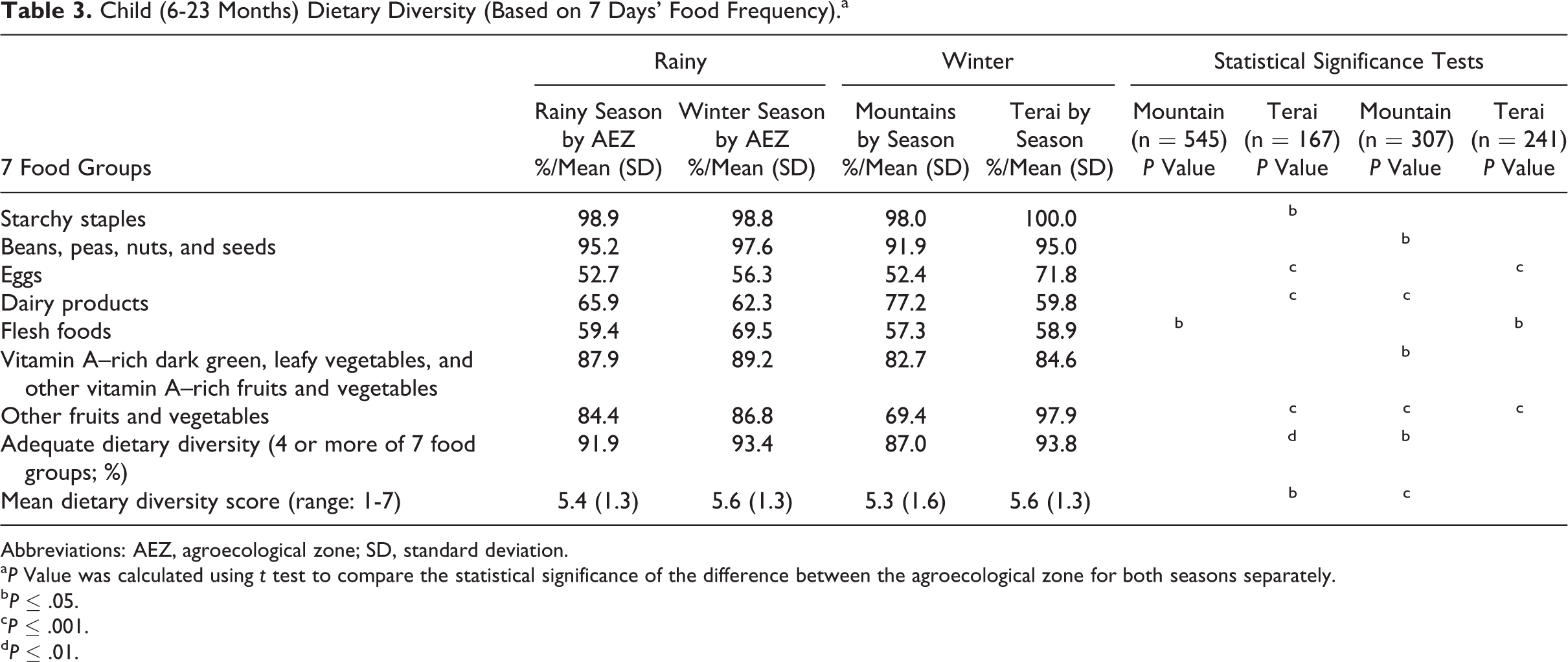
Table 3 presents descriptive data on the dietary diversity of children aged 6 to 24 months. In the last 7 days, they had consumed foods from approximately 5 and a half of the 7 food groups, regardless of season or AEZ. The adequate dietary diversity (at least 4 of the 7 food groups) pattern for children was similar to that of their mothers: the prevalence did not differ between the mountains and terai during the rainy season, but in the winter season, the prevalence was higher in the terai (terai: 94%, mountain: 87%; P < .01). There was only 1 significant difference by AEZ in child consumption of foods from any of the 7 food groups during the rainy season: more children in the terai than in the mountains consumed flesh foods (mountain: 60% vs terai: 70%, P < .05). Again, during the winter months, the prevalence of consuming foods from certain food group was higher in the terai—eggs (mountain: 52%, terai: 72%; P < .001) and other fruits and vegetables (mountain: 69%, terai: 98%; P < .001), but more children in the mountains consumed dairy products (mountain: 77%, terai: 60%; P < .001) than children in the terai. Also, within each AEZ, significant seasonal variation for many of the food groups was found: 4 of 7 in the mountains and 3 of 7 in the terai. However, the direction and magnitude of these seasonal differences were inconsistent.
Child (6-23 Months) Dietary Diversity (Based on 7 Days’ Food Frequency).a
Abbreviations: AEZ, agroecological zone; SD, standard deviation.
a P Value was calculated using t test to compare the statistical significance of the difference between the agroecological zone for both seasons separately.
b P ≤ .05.
c P ≤ .001.
d P ≤ .01.
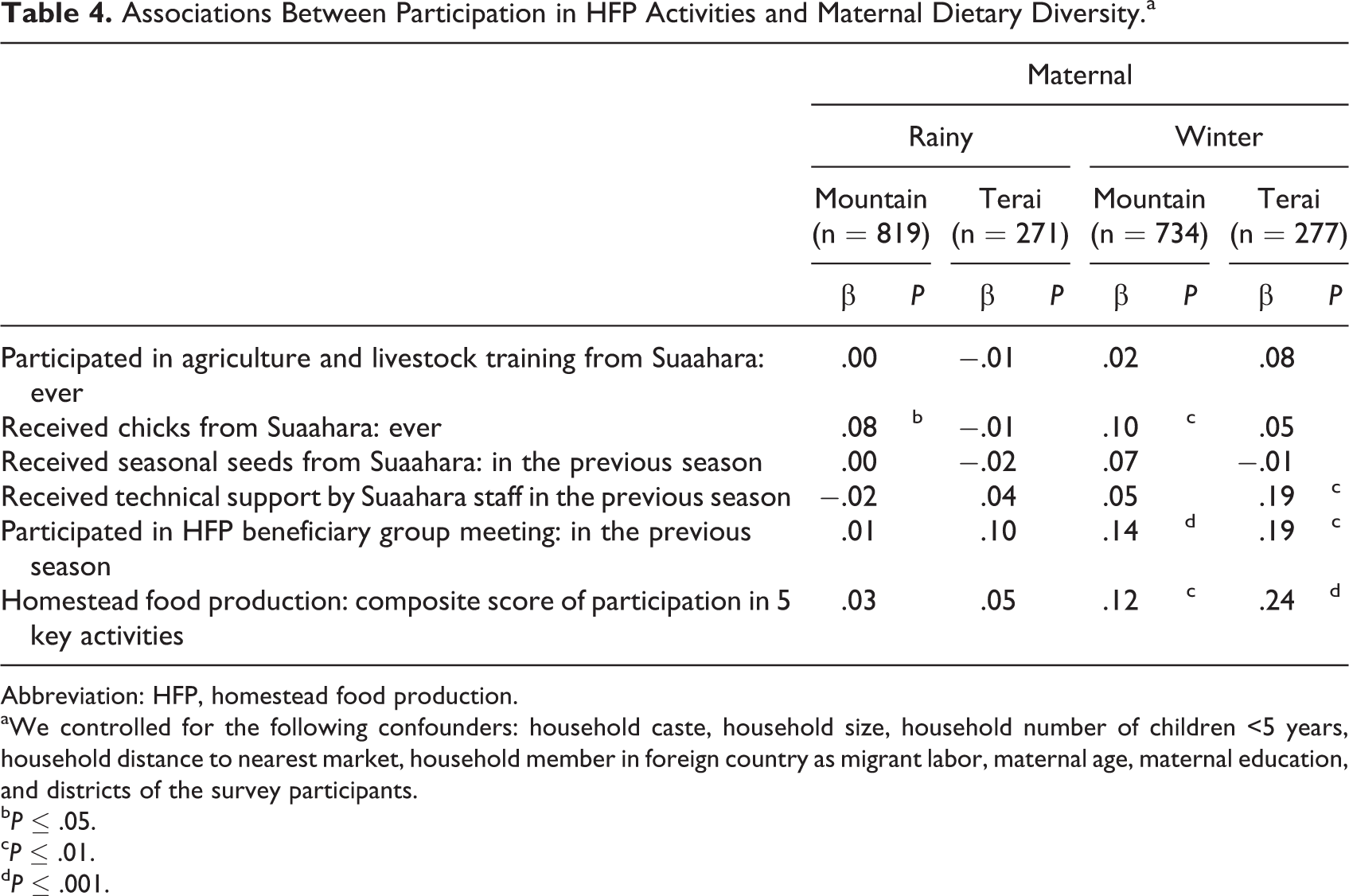
Table 4 shows the multivariable associations between participation in Suaahara EHFP activities and maternal dietary diversity. For the rainy season, we found no association between participation in EHFP activities and maternal dietary diversity in the terai and only 1 association in the mountains—received chicks ever (β = .08, P < .05). During the winter months, the magnitude and strength of this positive association in the mountains were larger (β = .10, P < .01). During the winter, having participated in an EHFP group also had a significant positive association with maternal dietary diversity in both the mountains (β = .14, P < .001) and the terai (β = .19, P < .01). In the terai, having received technical support in the previous season also had a positive significant association during the winter season with maternal dietary diversity (β = .19, P < .01). In our final model, we found that the degree of participation in 5 key EHFP activities was positively associated with maternal dietary diversity, but only significant during the winter season: for mountains (β = .12, P < .01) and for the terai (β = .24, P < .001). The β of .12 in the mountains, his indicates that maternal dietary diversity increases by 12/100ths of a point on the 10-point scale per unit increase (ie, per participation in EHFP activities). If a mother in the mountains were to participate in all 5 activities, it would yield a 0.6-point increase in weekly maternal dietary diversity. In the same way, for mothers in the terai, where β = .24, the effect (if causal) would be a 1.2-point increase in weekly maternal dietary diversity.
Associations Between Participation in HFP Activities and Maternal Dietary Diversity.a
Abbreviation: HFP, homestead food production.
aWe controlled for the following confounders: household caste, household size, household number of children <5 years, household distance to nearest market, household member in foreign country as migrant labor, maternal age, maternal education, and districts of the survey participants.
b P ≤ .05.
c P ≤ .01.
d P ≤ .001.
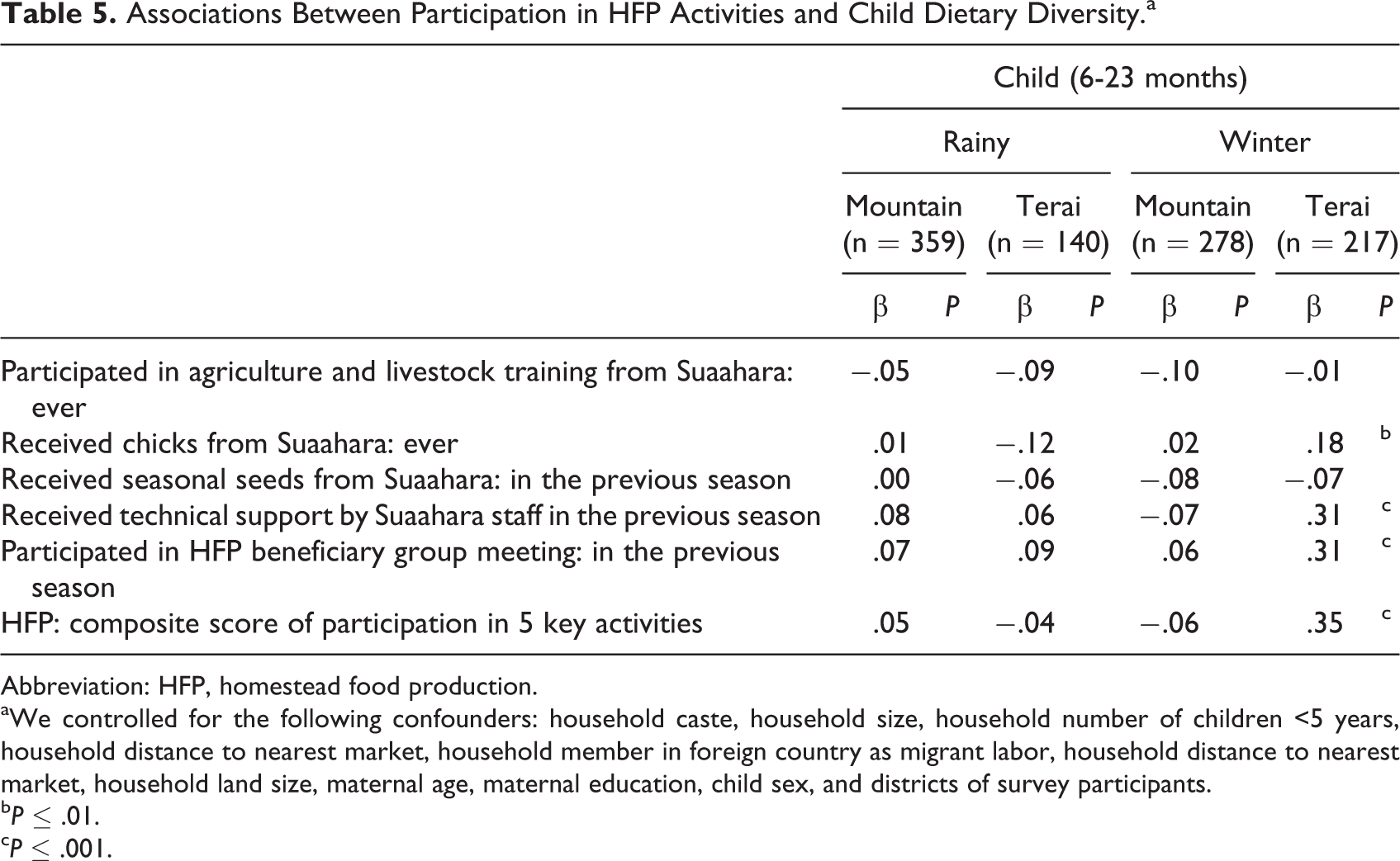
Table 5 shows the multivariable association results between participation in Suaahara EHFP activities and child dietary diversity. Similar to the results seen for mothers’ dietary diversity, we found no association between participation in any of the 5 EHFP activities and child dietary diversity in the rainy season for either AEZ. During the winter season, we also found no association for participation in any of the 5 EHFP activities and child dietary diversity in the mountains. However, positive significant associations were found for 3 of the 6 activities in the terai during the winter: to have ever received chicks (β = .18, P < .01), to have received technical support in the previous season (β = .31, P < .001), and to have participated in an EHFP group the previous season (β = .31, P < .001). We also found that the degree of participation in 5 key EHFP activities had a positive significant association with child dietary diversity, but only in the winter season and in the terai (β = .35, P < .001). This means that child dietary diversity increases by 35/100ths of a point on the 7-point scale per unit increase and that if a household were to participate in all 5 activities, it would yield (if causal) a 2.5-point increase in weekly child dietary diversity in the winter in the terai.
Associations Between Participation in HFP Activities and Child Dietary Diversity.a
Abbreviation: HFP, homestead food production.
aWe controlled for the following confounders: household caste, household size, household number of children <5 years, household distance to nearest market, household member in foreign country as migrant labor, household distance to nearest market, household land size, maternal age, maternal education, child sex, and districts of survey participants.
b P ≤ .01.
c P ≤ .001.
Discussion
We found several positive significant associations between participation in EHFP activities and maternal and child dietary diversity in the context of rural Nepal and a large integrated nutrition program, Suaahara. We also found that these associations varied by EHFP activity, season, and AEZ. When controlling for various confounding factors at the household and individual level as well as district-level clustering, we found that the overall composite score of participation in 5 key EHFP activities was positively associated with maternal dietary diversity in both the terai and the mountains during the winter season, but not the rainy season. Similarly, we found a positive significant association between participation in 5 key EHFP activities and child dietary diversity only in the winter season, but and only in the terai. Three of 5 EHFP activities had positive significant associations with maternal and/or child diets in at least 1 season and at least 1 AEZ: received chicks, received technical support, and participated in EHFPB group meetings. Our findings highlight that the relationships between EHFP and maternal and child dietary diversity are complex and may vary by place and time.
We found little to no difference in dietary diversity between the mountains and the terai during the rainy season, but the differences in the winter season were quite pronounced. For each of the 10 food groups for maternal dietary diversity, consumption was lower in the mountain districts than in the terai districts during the winter. In the terai, the seasonal effect is also important, with the prevalence of dairy and all 3 categories of fruits and vegetables consumed higher during the rainy season. This seasonal effect is not surprising given the dryness of the winter months, and the greater significance for the mountains is also perhaps intuitive given the remoteness and limited availability of markets in the mountains, compared to the terai. These findings are consistent with a recent Bangladesh cross-sectional study, which found significant seasonal variation in food security and diet diversity. 34 Variations were less pronounced for children, although they do show up, than for women, and this is likely because the types of foods fed to children younger than 2 years (eg lentils, rice) are less vulnerable to seasonal variation. Furthermore, our results highlight that EHFP participation may play a more important dietary role in the winter season than in the rainy season for both mountain and terai districts. Perhaps this indicates that at certain times of the year, EHFP activities can help households overcome food availability constraints and/or related labor constraints that are less of a problem during the rainy season.
It is also interesting that the same 3 EHFP activities—receipt of chicks, receipt of technical support, and EHFPB group participation—were statistically significant in different models across AEZs and seasons. During the EHFPB group meetings, mothers discuss their challenges and lessons learned with the VMF. In these meetings, crop calendars, poultry manuals, a chicken coop card game, and other SBCC materials were used to reinforce key agricultural concepts; nutrition, health, and WASH discussions were also a key part of group meetings. Technical support and supervision were usually provided by agricultural and livestock service centers, more readily available and accessible in the terai, and included technical solutions for agriculture and livestock rearing problems. It is unsurprising that training was not significantly associated, given that it is the first EHFP household-level activity intended to provide basic information before distribution of seeds and chicks and provision of longer-term support. Seasonal seed distribution was also not significantly associated with dietary diversity in any of the models, and this may be because several steps (eg, planting, irrigation, production) and several months are required to translate the input into an output.
It is important to note that although we have separated out the programmatic activities, each of the EHFP components forms part of a comprehensive package of knowledge generation, physical inputs, follow-up, and group meetings. Some activities may be showing up as more important than others due to other programmatic components, for example, promotion of eggs was a major part of Suaahara SBCC activities. Therefore, the activity-by-activity analysis should be interpreted with caution.
Finally, EHFP faces various supply- and demand-side constraints, making interpretation of the reasons for certain findings quite challenging. For example, in Suaahara, the 7 mountain districts were targeted precisely because of their high levels of food insecurity, but there were many more challenges in rolling out the interventions to households in the mountains than in the terai. The timing of implementing different activities also varied and may be influencing study results. For example, the seasonal variation found in participation in EHFP activities may relate to seasonal effects (e.g., climate, migration) but may also relate to program maturation.
Overall, EHFP may help households overcome barriers related to the consumption of nutritious foods. EHFP interventions aim to increase accessibility to fruits and vegetables, as well as animal source foods, as an avenue for increasing accessibility to important nutrients that would otherwise be out of the economic reach of poor households. However, it is important to remember that food alone is insufficient—food, health care and a clean environment, and care are all important for nutritional well-being. 35,36 For this reason, HKI’s EHFP programs complement home gardens and backyard poultry interventions with linking ENA, EHA, and other nutrition-related SBCC including strategies to promote gender and social inclusions.
The results from this study are consistent with other evidence to date on how EHFP may be a mechanism for improving diets and nutrition. Among the previous published studies on EHFP and nutrition, only the 2 studies by Olney and colleagues examined dietary diversity of women and/or children.26,29 In 2009, Olney found a positive association between household production of fruits and vegetables and household-level dietary diversity, which in turn was associated with maternal and child (<5y) dietary diversity. The recent RCT on EHFP found small effects on dietary diversity of children 6 to 13 months of age. 29 Our findings also provide evidence for positive associations between EHFP participation in and dietary diversity, but among a different population and in a different context. Given the relatively small magnitude of the associations and variations in associations, our results are also consistent with the previous work done by Olney and others, cautioning that a longer implementation time frame may be needed to better understand how these types of interventions may influence diets. This study’s findings also suggest that EHFP programs, and similar agriculture/nutrition interventions, should be carefully designed, implemented, and evaluated. It may be that a homogenous approach even within 1 country is not the best approach and that those designing and implementing programs should think carefully about what is done with great attention to location and timing given field realities. The specific package of interventions should perhaps vary depending on the specific needs of the target population.
This study is limited primarily because of the lack of a comparison group; without any counterfactual scenario, attribution of outcomes to the intervention is not possible. This study also only uses cross-sectional survey data, which prevents assessment of causality. Furthermore, the survey included a 7-day dietary recall, which may introduce greater recall bias than would have been the case for 24-hour dietary recall data. Finally, this study cannot answer questions about the pathways through which EHFP participation may influence diets, given that the data collected in these surveys for production and income—2 potential pathways—were limited and error-prone. Despite these study limitations, this study is one of the first to use the newly released W-DDS to measure dietary quality. 37 Furthermore, although child dietary diversity is fairly consistently measured throughout nutrition studies by using the 7 food-group indicator, to our knowledge, this is the first EHFP study to do so. Furthermore, the methods used for assessing how EHFP participation and maternal and child diets related were unique. This is the first EHFP study globally to assess how the relationship between EHFP participation and dietary outcomes may vary by EHFP activity. Although many studies have noted that context is important, this is also the first EHFP study to empirically examine the role of seasonality and agroclimatic conditions in how EHFP and diets are related.
This research is important not only for Nepal but also for other countries in similar contexts, as it shows how household-level agricultural interventions, specifically EHFP, may be an avenue for helping to ensure adequate and appropriate diets for mothers and young children. Rigorous impact and process evaluation studies, including ones with clear counterfactual scenarios, are now needed to further confirm how household-level agriculture programs influence (or do not) maternal and child nutrition. Although an intervention to increase food access among rural households likely increases food security and improves diet and nutrition, the evidence for this area of agriculture to nutrition research is poor to date. Adequate resources need to be allocated to facilitate robust and rigorous monitoring and evaluation of EHFP and other agriculture to nutrition interventions. Specifically, additional experimental studies could be used to further generate evidence regarding EHFP’s influence on specific health and nutritional status outcomes and how this may vary by subnational context and/or season. In integrated interventions, such as Suaahara, studies should also be designed to be able to disentangle the role of EHFP from other program components and attribute impact. Future data collection and analysis could also use an intervention’s program impact pathways to ensure that program monitoring and evaluation efforts capture data related to each step along the pathway, so that gaps along the pathways can be identified and addressed.
Footnotes
Authors’ Note
This manuscript is an original piece of work and has not been submitted elsewhere for publication. All authors contributed to drafting of the manuscript, and all authors have read and approved the final version. None of the authors participated in data collection. K.C. conceptualized and guided the analysis and B.P.D. carried out the analysis.
Acknowledgments
The authors would like to acknowledge USAID for providing the financial resources and support for Suaahara. A special thanks to RIDA for managing data collection of the season surveys and state-level Suaahara partners and frontline workers, including Female Community Health Volunteers for facilitating data collection efforts. The authors are particularly indebted to several colleagues for their ongoing support of this study and/or feedback during preparation of a related technical brief and initial manuscript drafts: Ame Stormer, Dale Davis, Laura Brye, Rolf Klemm, Ram Kumar Neupane, and Sanoj Tulachan.
Declaration of Conflicting Interests
The author(s) declared the following potential conflicts of interest with respect to the research, authorship, and/or publication of this article: P.P. was part of the senior management team for Suaahara. B.P.D., R.S., and G.M. work for Helen Keller International but were not part of Suaahara, and K.C. worked as an independent research consultant for Suaahara.
Funding
The author(s) received no financial support for the research, authorship, and/or publication of this article.