



Abstract
Background:
In homestead food production (HFP) programs, village model farmers (VMFs), after training, implement agriculture and nutrition activities to improve household knowledge and practices. Little evidence exists on what enables VMFs to remain actively engaged and for impacts to be sustained.
Objective:
To examine variables explaining active engagement of VMFs, at least 4 years post-training, in an HFP program in Nepal.
Methods:
We used cross-sectional data, collected from 2018 to 2019, among 4750 VMFs of Suaahara, a multisectoral nutrition program. We assessed whether respondents registered their HFP group with the local government, conducted regular group meetings, discussed vegetable growing and chicken rearing practices with group members, or engaged in saving and credit activities in their HFP group. Outcome variable was a count of these 4 activities in which the VMF engaged. Socioeconomic, demographic, and programmatic explanatory variables were identified a priori and by bivariate analysis and were adjusted in ordinal regression models accounting for clusters.
Results:
On average, VMFs engaged in 1.4 activities. Having attended primary or secondary school (adjusted odds ratios [AOR] = 1.39), being a female community health volunteer (AOR = 1.27), being from an advantaged caste/ethnic group (AOR = 1.34), receiving additional trainings (AOR = 1.56) and inputs (AOR = 1.31) were associated with more active engagement of VMFs.
Conclusion:
Village model farmers receiving more training and inputs were more likely to remain actively engaged. Female community health workers, people from higher caste/ethnic groups, and those with primary or secondary education were more likely to remain active VMFs and could be targeted for this role in HFP programs leading to sustained impact.
Introduction
Consumption of nutrient-rich foods such as vegetables, fruit, eggs, and meat in low- and middle-income countries (LMICs) remains a challenge. Low consumption of such nutrient-rich foods can be attributed to poor knowledge of the importance of such foods, lack of skills in producing these foods, consumption preferences, habitual dietary practices, high prices, limited access to markets, lack of availability, and underlying food policies. 1 -4 Low consumption of nutrient-rich foods has been linked to malnutrition, including stunting (low height-for-age), wasting (low weight-for-age), underweight, anemia, vitamin and mineral deficiencies, and overweight or obesity and diet-related noncommunicable diseases, especially among vulnerable populations, including women and children under 5 years of age. 5 -10 Globally, 149 million children (0-59 months of age) are stunted, 49.5 million children are wasted, 40.1 million children are overweight, and 2.4 billion (one in three) people are obese or overweight, most of which could have been prevented by improved diets. 4
Globally, efforts are being made to improve diets and reduce food insecurity, in part by pushing for transformations of food systems to be climate-smart, healthy, and sustainable. 11 A healthy diet, however, is unreachable for millions of people, particularly those who are disadvantaged and vulnerable with limited access to high-quality food and resources such as land, seeds, and fertilizers. 11 People living in remote rural areas, urban slums, or isolated areas like mountains or small islands might have limited availability and accessibility of nutrient-rich foods partly due to dysfunctional food supply chains. 4 In addition, the cost of nutrients-rich food is often high and when coupled with low incomes affect disadvantaged, marginalized, and poor populations the most. 2,12,13 Even the most affordable diet proposed by the EAT-Lancet commission costed about US$3 per day in 2011, 14 of which the largest share (31%) was the cost of fruit and vegetables. 15
In South Asia, despite the relatively rapid increase in the gross output value of milk and milk products, meat, and fruit and vegetables as compared to that of cereals, 16 the issues of availability, accessibility, rising food prices, and affordability of nutrient-rich foods still prevail. Food value chains (ie, complex interactions between multiple actors from production to markets to consumption) of nutrient-rich foods are struggling, and there is a disconnect between farmers and consumers leading to low consumption of healthy foods. 17,18 For example, markets in Nepal are concentrated in urban areas, and lack of markets in rural settings leave people with no options for purchasing nutrient-rich foods. The limited markets that exist in remote areas sell mainly staples, oils, sugar, spices, and condiments that people buy frequently and that do not spoil quickly. Rural markets for locally produced fruits and vegetables are often missing and undervalued, which also hinders the purchase these nutrient-rich foods. In addition, the increasing number of small stores in rural areas have exposed local people to low-nutrient value foods like noodles, savory snacks, cookies, and sugar-sweetened beverages. 19 Furthermore, the higher cost of nutrient-rich foods compared to cereals in Nepal has exacerbated challenges related to the promotion of high-quality of diets. 20 -22
One important way to deal with issues of poor availability, affordability, and accessibility of nutrient-rich foods is to promote households’ own production of these foods. Since the 1980s, Helen Keller International has promoted homestead gardens and small-animal production in several countries in Asia and Africa. 23 Helen Keller International’s homestead food production (HFP) programs empower women from poor households in Africa and Asia with agriculture, nutrition, and health education, as well as agricultural resources needed to produce their own nutritious foods that are rich in vitamins, minerals, and proteins. 24 Helen Keller International’s HFP program in Nepal has been implemented for several decades, including through a United States Agency for International Development-funded integrated nutrition program known as Suaahara (2011-2023). One of Suaahara’s 4 specific intermediate results on the path to reducing undernutrition among mothers and children is to improve access to diverse and nutrient-rich foods for women and children. Suaahara’s HFP component is vital to achieving this result and improving food security and nutritious diets particularly in disadvantaged communities throughout Nepal. Initially launched in 9 highly food-insecure districts in 2012, Suaahara has since expanded to cover 42 of Nepal’s 77 districts by 2019 (Figure 1).
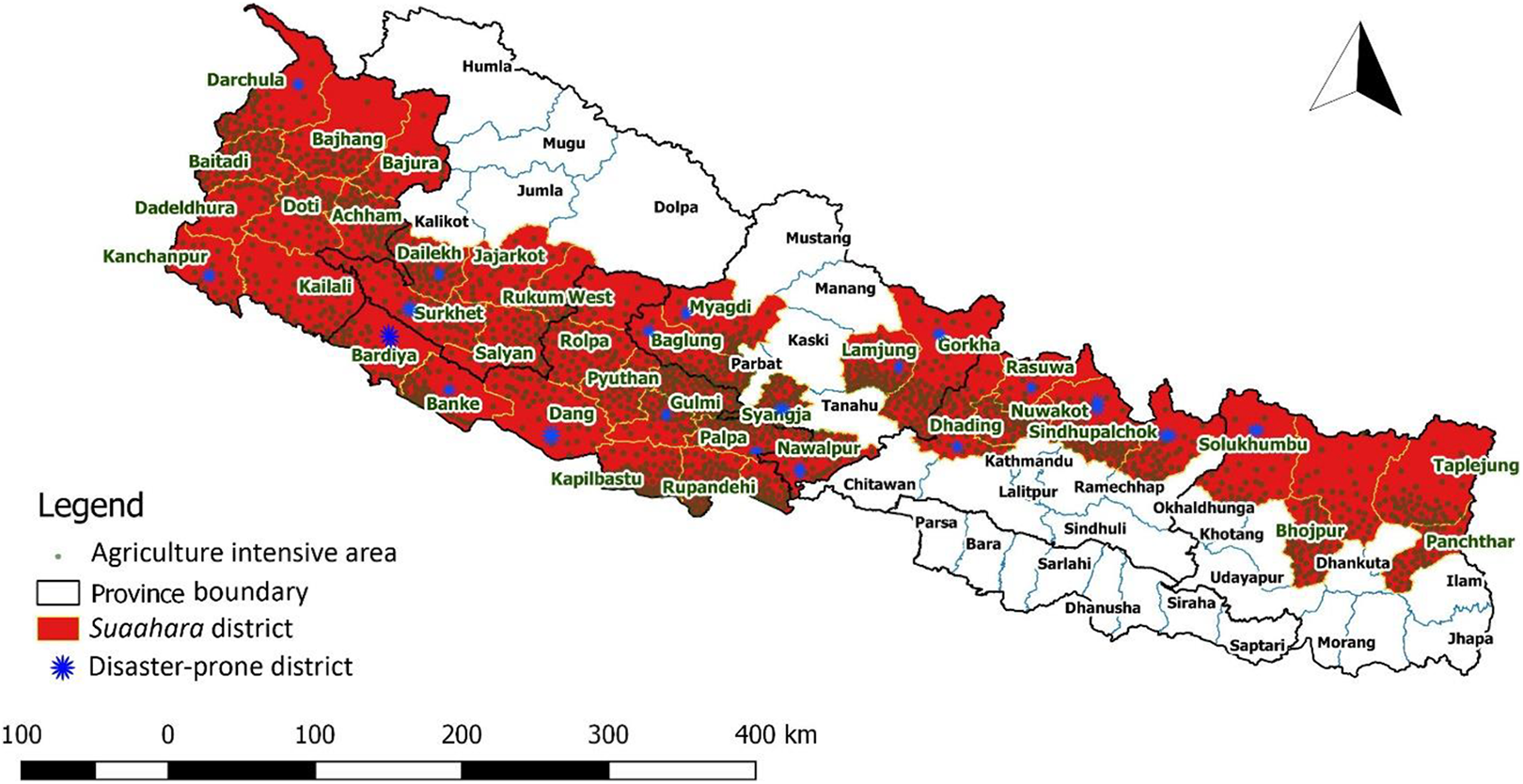
Suaahara Homestead Food Production reach in Nepal.
Homestead food production programs rely on village model farmers (VMFs), who, once trained, become community-level extension workers or change agents. They promote garden to plate (agriculture to nutrition) activities with households in their communities. Village model farmers provide agricultural inputs and information to households in their communities and teach through demonstration so that the households can increase and diversify their production to ensure availability of nutrient-rich foods throughout the year. In the Suaahara program, VMFs are also referred to as frontline workers as they directly provide services to households in their communities. 25 When individuals become VMFs, they get the opportunity to become community role models and can receive respect from peers and local government; they receive inputs, trainings, travel, and related per diems; and their families benefit from changes in production and income-generation from agriculture based on their learnings and program engagement.
Helen Keller International collaborated with local farmers and community organizations to establish one VMF per old ward, a subunit of Village Development Committee (VDC), before the restructuring of administrative areas in 2015 (old wards were merged and VDCs became rural/urban municipalities). 26 Old wards were the smallest administrative unit in Nepal at the start of Suaahara. From 2013 to 2017, a total of 5686 residents of the communities were selected to be VMFs, in consultation with community government bodies. Selected VMFs needed to be from households meeting these criteria: (1) have at least 1000 to 1200 square meters of irrigable, flood-free land in close proximity to the home; (2) centrally located in the community, surrounded by at least 20 households with mothers in the 1000-day period (ie, the time between conception and a child turning 2 years of age); (3) have at least one literate and numerate household member; (4) the selected individual must be able to commit time to engage in trainings, HFP meetings, agricultural labor, and other HFP activities; (5) show interest to become a lead farmer in his/her community; and (6) with family members supporting him/her to fulfill his/her roles and responsibilities as a VMF. Additionally, when possible, priority was given to mothers in the 1000-day period or female community health volunteers (FCHV). Female community health volunteers can use their experience of community engagement gained through health programs in sharing information and resources for how to grow and consume nutritious foods, as they are already promoting good health and nutrition practices including dietary diversity in the communities. The selection criteria ensured that the VMFs, once trained, become community-level extension workers and provide support and guidance on vegetable and poultry production to the community; establish a village model farm where they can teach community members through demonstration; and disseminate knowledge and skills to their communities. All VMFs received a 5-day initial training to enhance their knowledge and skills on technical aspects required for demonstration of food production techniques and leadership development which would be required for them to motivate households to adopt good agricultural practices. Following this, the trained VMFs received diverse vegetable seeds for 3 seasons (rainy, winter, and dry) and 5 to 10 eight-week brooded chicks to establish demonstration areas at their homes on quality food production which aimed to create spillover effects in their communities. During the last several years, opportunities for further capacity building of VMFs have been made available to those who have shown interest and readiness. These included training to specialize as a Local Resource Person in vegetable or poultry production, business plan development and agricultural marketing, savings and credit groups, and others. In addition, to withstand shocks, stress, and uncertainties, select VMFs were trained on climate-smart agriculture techniques, for example polyhouse or tunnel agriculture, solar pump irrigation, and multiuse water system that meets both domestic and agricultural needs. Regarding additional inputs, some VMFs who received additional training and who were producing at a larger scale for the market were provided with chicken coop building materials, weighing scales, vegetables crates, drip irrigation, garden pipes, and plastic tunnels to support their farms to be more resilient and to sell produce in local markets.
Homestead food production programs and other nutrition-sensitive agricultural interventions have been associated with, and in part have been successful at, improving outcomes like dietary diversity (in Bangladesh, Cambodia, and Nepal), 27 -31 household food security (in Bangladesh and Nepal), 32 -34 hemoglobin levels (in Bangladesh, Burkina Faso, Cambodia, Nepal, and Philippines), 32,33,35 and reduced wasting among children (in Burkina Faso and Zambia). 36,37 Quasi-experimental studies done in Bangladesh focused on long-term impacts of nutrition-sensitive agricultural interventions on vegetable production and consumption 3 years after the intervention ended. 29,38,39
These studies are essential but understanding participation and performance of frontline workers in nutrition-sensitive agricultural interventions is also important. To deliver nutrition-sensitive agricultural interventions at scale, frontline workers at the community levels can be the most convenient and sometimes only point of contact. 40 As in health care interventions, community-level volunteers and frontline workers are the backbone of nutrition-sensitive agricultural interventions, who serve as channels of information, resources, and counseling in the communities. Various studies of health systems in LMICs have shown that individual, sociocultural, and contextual characteristics might be associated with performance of frontline workers and uptake of services. 41 -44 In addition, a systematic review of 140 studies performed among frontline workers working in primary health care settings in LMICs showed that incorporation of frequent supervision and continuous training in intervention designs can strengthen frontline worker performance. 43 Similarly, to scale-up nutrition services, frontline nutrition workers play an important role, but in LMICs, they often lack high-quality training, are given outdated training and assessment materials, and lack development of broader skills that would enable them to work as part of multisectoral team. 45,46 A study using behavior change communication to promote infant and young child feeding practices in Bangladesh showed that frontline health workers maintained good knowledge and fidelity to the intervention even 1 year after the intervention. 47 A dearth of evidence exists, however, on what and how different demographic, socioeconomic, programmatic, and contextual characteristics influence participation and performance of frontline workers in nutrition-sensitive agricultural interventions. Several studies on nutrition-sensitive agricultural interventions that mobilized community-level volunteers or frontline workers have been conducted, but these lack information on participation and performance. Low participation and inadequate performance of frontline workers in turn harms service quality. 48 Thus, understanding the determinants influencing VMFs’ sustained participation and performance in programs is needed to improve service provision and to inform nutrition-sensitive agricultural interventions.
Similar to health care interventions, if nutrition-sensitive agricultural interventions are to be made sustainable, frontline workers must have fully mastered knowledge, skills, and practices, and have the motivation to continue using the learned practices. 49 Sustainability of nutrition-sensitive agricultural interventions largely depends on frontline workers as their acquired knowledge and skills can be utilized even after outside support concludes. A recent review showed a lack of evidence for sustained impacts of nutrition- and gender-sensitive programs. 24 Another study conducted in Bangladesh showed that nutritional gains of a home garden intervention were fully sustained for at least 3 years after support ended. 38 A study conducted to assess sustainability of a nutrition-sensitive agriculture project in an urban setting showed that participants’ nutrition knowledge remained unchanged while improved practices of growing vegetables and raising chickens promoted by the project declined after 18 months of project completion. 50 Therefore, a cognizant selection of frontline workers is necessary to sustain program participation and in turn benefits for both the frontline workers and participants.
To our knowledge, limited studies have assessed factors that are associated with continued VMF engagement and sustainability of nutrition-sensitive agricultural interventions. 38,50 Therefore, the aim of this study was to examine socioeconomic, demographic, and programmatic explanatory variables associated with active engagement of VMFs several years after being selected as VMFs in Nepal.
Methods
Data Collection
A cross-sectional survey of Suaahara VMFs was done in 2018 and 2019 to create a full roster of updated information on all VMFs trained by Suaahara since 2013. Suaahara staff, based in each of the 42 implementation districts, conducted face-to-face interviews (or phone interviews, when an in-person interview was not possible) with VMFs. Out of a total of 5686 Suaahara VMFs to approach, 4750 (83.5%) were reached.
Outcome Variable
The outcome variable was created based on VMF self-reported engagement in 4 activities: (1) conduct regular HFP group meetings, (2) discuss vegetable growing and chicken rearing practices with HFP group members, (3) engage in saving and credit activities in the HFP group, and (4) register the HFP group at any point with the local governmental Agriculture and Livestock Service Office, which requires the VMF to proactively collaborate with the local government and other stakeholders to make the group officially eligible for support from the local government. The variable, “number of VMF activities” was created by summing the number of these activities (0-4) in which the VMF engages. A value of zero indicates that a VMF is not performing any of the 4 activities and reflects no participation in the program (48.6%, n = 2307). A higher number of activities reflects better VMF performance. If the VMFs perform all their assigned activities, program participants are more likely to receive the support and guidance required for them to improve their production of vegetables, chicken, and eggs.
Explanatory Variables
Socioeconomic, demographic, and program-level explanatory variables were identified a priori based on earlier studies conducted in health care systems and nutrition-sensitive agricultural interventions in LMICs. 49,51,52 These variables were identified as they can potentially explain the variation in the engagement of the VMFs in the HFP program. Those constructed as categorical variables were gender (male, female), caste (socially excluded, advantaged), being a female community health volunteer (no, yes), current 1000-day household (no, yes), residing in a disaster-prone district (no, yes), education (none, primary, secondary, higher), equity quintile (1, 2, 3, 4, 5) to measure socioeconomic status, 53 years since the first VMF training (at least 4, 5, or 6 years ago), agricultural land size (at least 0.5 hectares, less than 0.5 hectares), and agroecological zone (mountains, hills, and Terai [plains]). Socially excluded caste groups consisted of Dalits, Muslims, and disadvantaged Janajatis, while advantaged caste groups consisted of Brahmins/Chhetri, Gurung/Thakali, Newar, and non-Dalit Terai caste based on the caste/ethnicity defined by the Government of Nepal Health Information and Management System. 54 Disaster-prone districts were determined based on a report by the Government of Nepal and included landslides, floods, wildfires, and lightning from 2008 to 2019 and also included the earthquake in 2015. 55 -57 Equity quintiles were developed using the method specifically developed for Nepal by EquityTool (https://www.equitytool.org/nepal-2/). Eight questions were asked on item ownership (television, cupboard, table, and fan) and housing materials (floor material, wall material, roof material, and type of cooking fuel used). For each question, variables were created that contained the national scores based on National Demographic and Health Survey, 2016. These scores were summed to create a total score for each respondent. Finally, a quintile based on the lower quintile limits provided from the national survey was assigned to each respondent. 53 Agricultural land size was categorized to compare subsistence and small commercial farmers versus smallholders, based on the classification used by the Government of Nepal. 58
Continuous variables were age (in completed years), household size (in persons), a sum of the number of additional trainings beyond the basic introductory training (0-6), and a sum of the number of additional inputs received (0-6). Additional trainings considered were VMF capacity building, savings and credit and group management, business, local resource person, seed production, and post-harvest handling. Similarly, additional inputs received were those that went beyond the basic package of 3 packets of seeds and 5 to 10 chicks: saplings of mango trees, banana, and papaya as per the agroecological zones, coop construction materials, farm materials, marketing promotion materials, hatchery machine, and solar dryer to improve existing traditional open drying practices, which often are not hygienic, safe, and time consuming (used mostly for radish, tomatoes, cauliflower, and broadleaf mustard).
Statistical Analysis
First, we conducted a bivariate analysis to examine the association between the explanatory variables and the outcome variable. Those variables that were associated with the outcome variable with P < .05 were included in the final adjusted regression models, along with some other variables that were theoretically important in explaining the variation in the active engagement of the VMFs in the HFP program. Mutually adjusted odds ratios (AOR) and respective 95% confidence intervals were estimated to quantify associations between the outcome variable and the explanatory variables using an ordinal logit regression model as the outcome variable is ordinal. First, we ran a proportional odds model (using the command ologit in Stata) with the assumption of odds ratios being the same across categories. Second, since the proportional odds assumption may not strictly hold, we ran a generalized ordered logit model (using the command gologit2 in Stata) that relaxes the proportional odds assumption. 59,60 Generalized ordinal logistic regression model helped us to examine the odds ratios for each threshold (ie, number of activities) and examine the association at each threshold. The results from this model were similar to the results obtained from the proportional odds model supporting our proportional odds assumption. The results for the first threshold corresponded to a binary logistic regression for no activity versus some. We accounted for clustering by districts using a sandwich estimator of variance. All analyses were performed using Stata version 14.2 (StataCorp, Texas).
Ethical Approval
Ethical approval for the study was provided by the Nepal Health Research Council as part of Suaahara’s monitoring system ethical review (Reg. No: 197/2018). Participants were briefed about the purpose of the study. Participation was voluntary and consent was obtained before the start of each interview. For those participants who were interviewed in person, written consent was obtained and for those who were interviewed over the phone, which was logistically not possible, oral consent was obtained.
Results
Almost all VMFs were women (95%) and their mean age was 35 years (Table 1). Two-fifths of the VMFs had some or completed secondary education. More than half of the VMFs were from advantaged caste groups and two-fifths were residing in households in the lowest equity quintile. The majority of VMFs were smallholder farm households (land size < 0.5 ha). About half of the VMFs lived in disaster-prone districts (52%) and in the hills of Nepal (54%). The mean number of additional trainings and inputs received were 1.3 and 0.7, respectively.
Characteristics of Village Model Farmers and Their Mean Number of Activities Performed in a Homestead Food Production Program in Nepal.
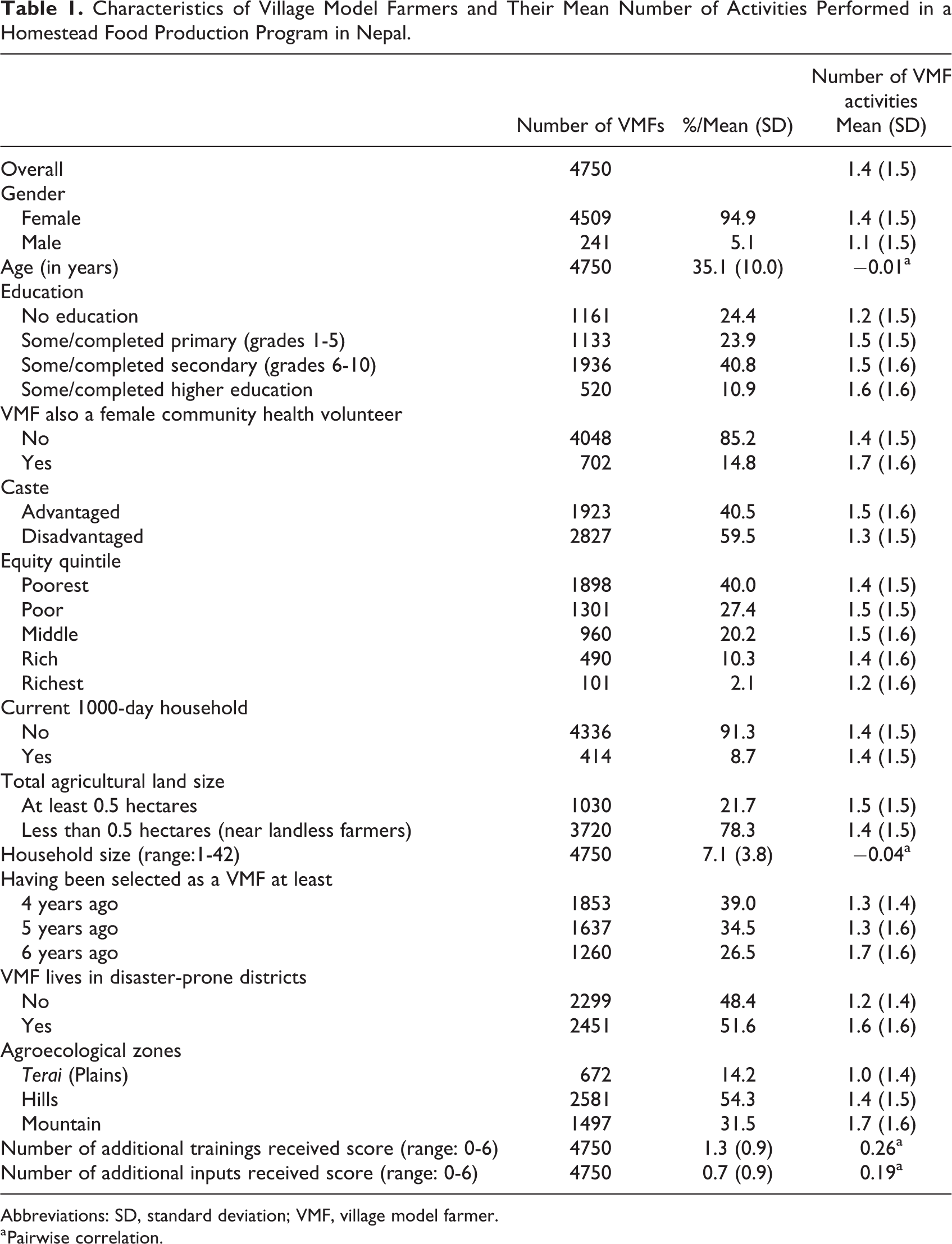
Abbreviations: SD, standard deviation; VMF, village model farmer.
a Pairwise correlation.
Among the VMFs who participated in the study and were interviewed, the mean number of VMF activities was 1.4 (Table 1). The mean number of VMF activities for those who had higher education was 1.6. If the VMF was a FCHV, the mean number of VMF activities was 1.7 compared to 1.4 if she was not. Village model farmers from advantaged caste groups performed a higher average number of VMF activities (1.5) than VMFs from disadvantaged caste groups (1.3). The mean number of activities of VMFs from poor and middle equity quintile households was 1.5 and that of VMFs from the richest households was 1.2. If the total agricultural land size was less than 0.5 hectares (near landless farmers), the average number of VMF activities was 1.4 compared to 1.5 if they had at least 0.5 hectares of agricultural land.
In the unadjusted bivariate proportional odds models, VMFs having higher education were more likely to perform more activities compared to the VMFs without education (Table 2). Village model farmers from advantaged caste compared to the disadvantaged caste and those who were FCHVs compared to those who were not FCHVs were more active. Village model farmers living in the disaster-prone districts and living in hills were also actively engaged as VMFs. Those VMFs who received greater number of trainings and inputs were more likely to remain active. Gender, age, equity quintile, current 1000-day household, total agricultural land size, household size, and number of years of having been selected as VMFs had a P value > .05 but were theoretically important in explaining the variation of active engagement of the VMFs.
Associations Between Explanatory Variables and Active Engagement of Village Model Farmers in a Homestead Food Production Program in Nepal, Results From Bivariate and Multivariable Ordinal Logistic Regression Models.a
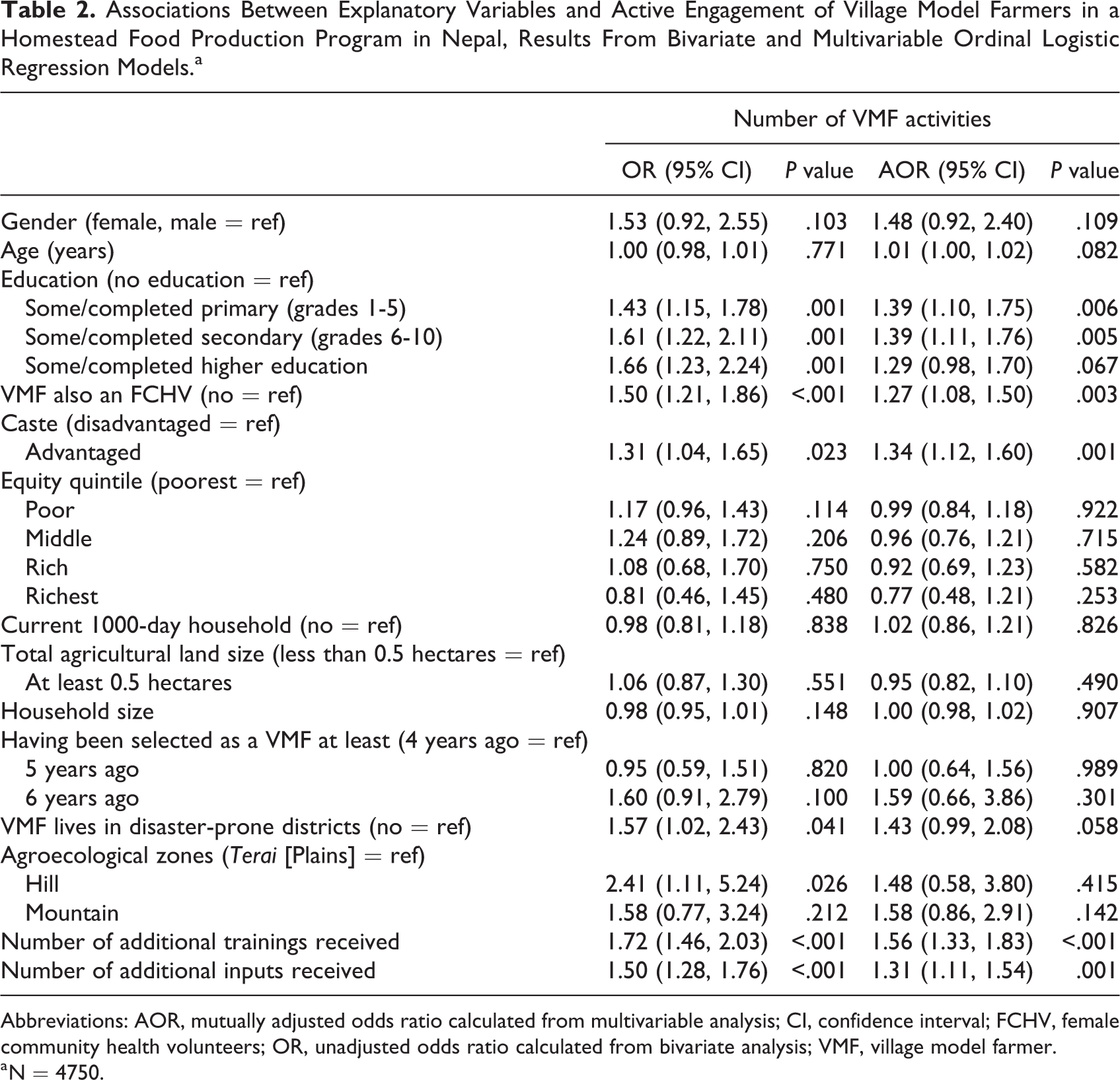
Abbreviations: AOR, mutually adjusted odds ratio calculated from multivariable analysis; CI, confidence interval; FCHV, female community health volunteers; OR, unadjusted odds ratio calculated from bivariate analysis; VMF, village model farmer.
a N = 4750.
In the mutually adjusted proportional odds model, several socioeconomic and demographic covariates were associated with people continuing to work actively as a VMF after their training (Table 2). Compared to VMFs without education, those who had completed primary and secondary education had 1.39 times greater odds of being more active (ie, performing more activities). If the VMF was a FCHV, the odds of being more active were 1.27 times higher. Village model farmers from advantaged caste groups had 1.34 times the odds of being more active as compared to VMFs from disadvantaged caste groups. Village model farmers living in disaster-prone districts had higher odds of being more active than VMFs not living in disaster-prone districts. For each number of additional trainings and inputs received, VMFs were more likely to be active.
The generalized ordinal logistic regression model that estimated the associations of socioeconomic and demographic determinants at each threshold showed the odds ratios for VMFs: with higher education, from advantaged caste groups, trained at least 5 or 6 years ago (as compared to 4 years), and living in disaster-prone areas were greater with performing higher number of VMF activities than lower number of activities (Table 3). These results are similar to the ones we obtained from the mutually adjusted proportional odds model, which supports our proportional odds assumption.
Associations Between Explanatory Variables and Greater Active Engagement of Village Model Farmers in a Homestead Food Production Program in Nepal, Results From Generalized Ordered Logistic Regression Model.a
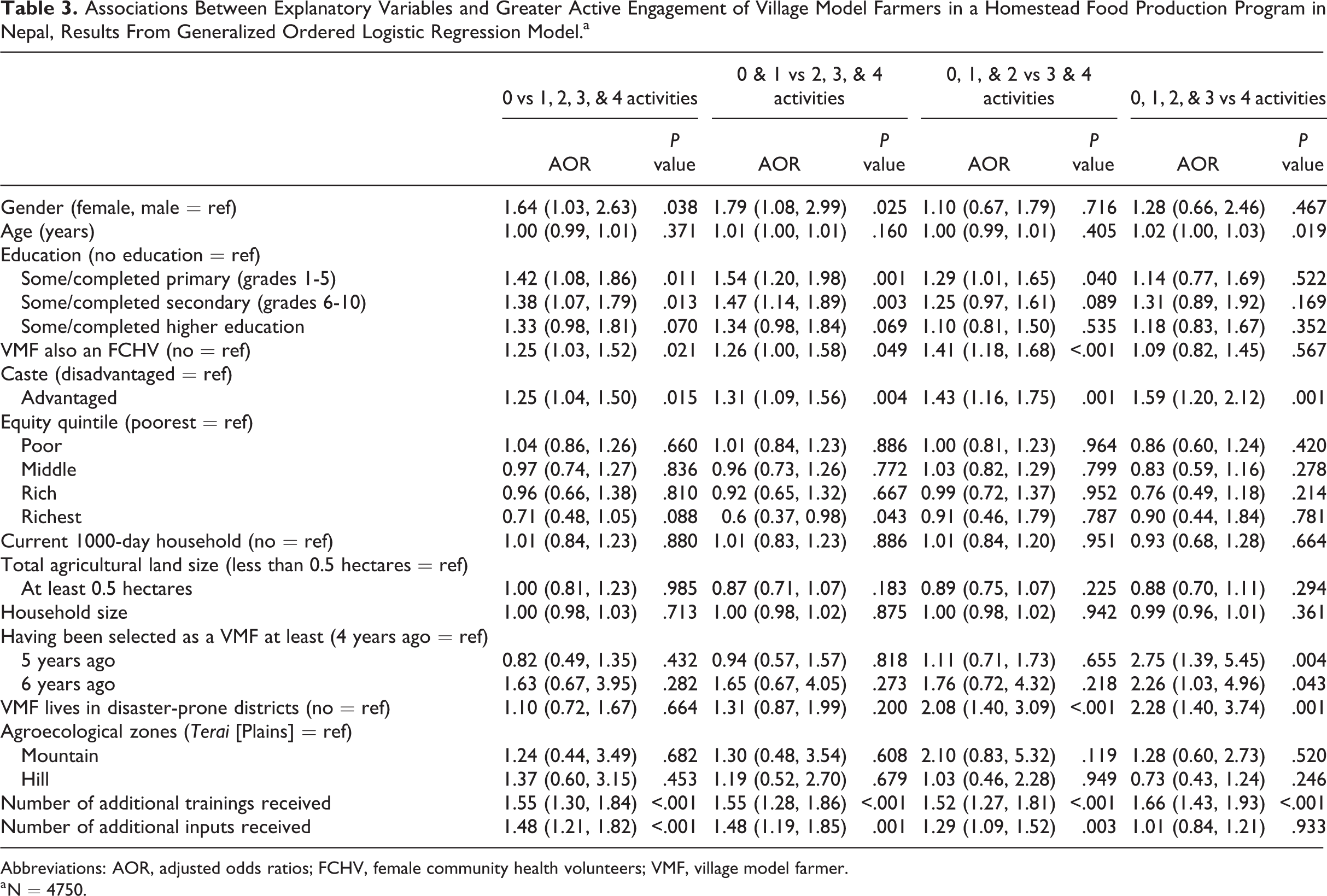
Abbreviations: AOR, adjusted odds ratios; FCHV, female community health volunteers; VMF, village model farmer.
a N = 4750.
Discussion
This study examined demographic, socioeconomic, and programmatic explanatory variables of sustained participation and performance of frontline workers in a nutrition-sensitive agricultural program that has been implemented in Nepal for more than a decade. Higher levels of education, being a female community health volunteer, being from an advantaged caste household, and having received more additional trainings and inputs were associated with more active participation among VMFs retained in the HFP program. These characteristics can be important considerations for successful implementation at a large scale and sustainability of nutrition-sensitive agricultural interventions.
Education has been shown to be important for uptake of new information and improved performance among frontline workers. Improved nutrition education competencies among agriculture extension workers enable them to perform well in multisectoral nutrition policy contexts. 61 In this study, higher education of VMFs was associated with higher chances of working actively and performing more VMF activities in the program. The most likely reason is that higher education enables the VMFs to better understand the importance of their work and effectively utilize the inputs, including written materials provided to them so that they continue to be actively involved in the program compared to those who are less educated. In addition, they might better inculcate the knowledge and better utilize the inputs than those that are less educated, which can further enhance their active participation and performance. For community health volunteers in Nepal and Bangladesh, education is one of the key reasons for their continued willingness to work as volunteers and has enabled them to take care of themselves as well as other households in their communities. 49,51,62 In addition, community health volunteers’ lower level of education can limit them to communicate the importance of health care messages to mothers. 51 In Uganda, less educated community health workers have lower community acceptance, 63 which necessitates to have a higher level of education among community frontline workers to have sustained participation and better performance in their jobs. The results also suggest that as retiring frontline workers retire and are replaced by more educated workers, performance might improve, although the experience of older workers may have compensated in part.
Female community health volunteers have been Nepal’s frontline health workers in communities, promoting health, delivering health services, and collecting and reporting data to health facilities since the 1980s. 64 Female community health volunteers have a remarkable reputation in supporting the health system and making health interventions successful. 65 Our study showed VMFs who were also FCHVs were more likely to work actively as a VMF and performed more activities. People know and trust FCHVs because they are from the same communities, 65,66 which make them favorable conduits to implement interventions. Female community health volunteers seem able to apply their experience in community engagement and use this to successfully implement the HFP program. 62,67 For instance, it may be a natural next step for FCHVs to share information and resources for how to grow and consume nutritious foods, as they are already promoting good health and nutrition practices including dietary diversity in the communities. Female community health volunteers often perform multiple tasks for similar activities by different health programs. Also, FCHVs are sometimes mobilized by other nonhealth programs such as forest-users group, community development groups, education, and microcredit and saving groups. Therefore, program implementers should be cautious not to overburden FCHVs. 64
Caste has been a long-standing organizing system for Nepalese society and the values and relationships among caste groups are deep-rooted in the local society. 68 -70 People from disadvantaged caste groups such as Dalits face constraints such as lack of land and can be bonded laborers for better-off households reflecting social inequities. 52,71 It is crucial for nutrition-sensitive programs to understand the social constraints faced by disadvantaged groups. If selecting people from disadvantaged caste groups as frontline workers, it may mean that the desired outcomes will take longer to achieve. 72 In Uganda, low social status of community health workers hinder their delivery of services to communities. 63 To achieve the targeted goals, programs should balance the tension between getting good results fast versus equity. Programs can be inclusive by helping to gradually overcome constraints and challenges faced by frontline workers of low social status by increasing self-confidence, timely supervision, and support from program staff to the workers having low social status.
Training events are meant to empower and increase the VMFs’ knowledge and skills, particularly related to agriculture, whereas the provision of inputs help them to convert this into practice, especially when there are resource constraints. Suaahara II provided some VMFs with additional trainings related to savings and credit and group management, business development, becoming a local resource person, seed production, and post-harvest handling. In addition, VMFs in the same communities were also connected with each other, and with supply-chain actors and the local government. These activities along with the trainings and post training follow-ups might have enhanced VMFs’ confidence level, which enabled them to work more actively. Since those VMFs who were already actively working might have become more interested and have sought additional trainings and inputs, a reverse causality might be a possibility, warranting a careful interpretation of the results. Similarly, frontline farmer volunteers in Kenya believed that capacity building through training workshops and provision of training materials were important for improving their performance. 73 Likewise in Bangladesh and Vietnam, training along with supervision and mass media exposure contributed to improved frontline health workers’ service delivery by enhancing their knowledge and motivation. 74 In some locations in Nepal, local governments mobilize trained VMFs as agricultural facilitators to disseminate climate-smart agricultural practices. In addition, in some districts, trained VMFs are serving as community frontline workers for other development projects working to improve access to technologies, inputs, credit, and extension services. Such recognition of Suaahara VMFs might also motivate them to continue working actively and perform well as VMFs in their communities.
To our knowledge, this is the first study, to analyze the socioeconomic, demographic, and programmatic characteristics of VMFs remaining actively engaged in a nutrition-sensitive agriculture program multiple years after being selected and trained. The cross-sectional nature of the data allowed us to identify associations but not causality between the explanatory variables and outcomes. Social desirability bias might have affected the responses, particularly regarding whether the VMFs remained engaged in all the 4 activities. As we did not have information among those who dropped out of the program, we could not explore the reasons why those VMFs did not continue to work. In addition, being a rapid survey, we collected information only on the 4 activities performed by the VMFs to measure “active participation,” which, although perhaps not adequate, indicates that by performing these activities a VMF continues to actively serve households in the communities. Finally, several factors including time and resource allocation, social support, irrigation, information on community recognition, motivation, and engagement of the VMFs with other development programs or activities, which were not measured and might have been associated with the outcome. 52
Further research using in-depth interviews might be helpful to understand how the identified determinants help to sustain the participation and performance of frontline workers in nutrition-sensitive agricultural interventions including HFP. Future research on how and over what period of time the frontline workers use their knowledge and skills honed by participating in nutrition-sensitive agricultural interventions might help understand sustainability of such interventions. 38,50 Additional research is necessary to measure the performance of the VMFs from the participants’ perspectives, what they think about the services provided by the VMFs in their communities, as done by a study among health care frontline workers in Bangladesh and Vietnam. 74 Examining the determinants of working actively as VMFs might not be sufficient for implementation and scale-up of nutrition-sensitive interventions since implementers and government are also interested in the cost and benefits of involving VMFs in nutrition-sensitive agriculture programs, which necessitates cost effectiveness studies of such programs.
Conclusion
Sociodemographic characteristics like higher education, advantaged caste, being a female community health volunteer, and program-level characteristics like receiving additional trainings and inputs were associated with frontline workers’ sustained participation and performance, which, in turn, are necessary for improved service provision and to inform nutrition-sensitive agricultural interventions at scale. Program implementers need to consider these characteristics along with the physical and social environment while designing nutrition-sensitive agricultural interventions at scale. Selecting community health volunteers or frontline workers as VMFs might help achieve intervention goals as these people are more likely to continue to participate and remain actively engaged in the program many years after the training. Besides the basic training and inputs given to the VMFs at the start of the intervention, the provision of additional training and inputs at regular intervals contributes to VMFs remaining actively engaged.
Footnotes
Authors’ Note
SB, EAF, and KC developed the research concept presented here. RS, ASG, NPT, and KC assisted in data collection. ASG managed the data set. SB performed the data analysis with guidance from EAF and KC. SB wrote the initial draft. EAF, RS, PS, ASG, CEB, NPT, and KC critically reviewed the drafts. All authors have read and approved the final draft of the manuscript. Kenda Cunningham is also affiliated with Helen Keller International, New York, NY, USA.
Acknowledgments
The authors would like to acknowledge Suaahara staff who designed the survey and collected the data and all the study participants who gave their time and energy and without whom this research would not have been possible. All authors deeply acknowledge USAID for their support. The contents of this manuscript are the sole responsibility of authors and do not necessarily reflect the views of USAID or the United States Government.
Declaration of Conflicting Interests
The author(s) declared the following potential conflicts of interest with respect to the research, authorship, and/or publication of this article. Coauthors KC, RS, ASG, and NPT work with the Suaahara program; SB and EAF produced and reported the results independently of these coauthors.
Funding
The author(s) disclosed receipt of the following financial support for the research, authorship, and/or publication of this article: The funding for Suaahara II, including the collection of data used in this study, was provided by United States Agency for International Development (USAID) under Cooperative Agreement No. AID-367-A-16-00006 between Helen Keller International and USAID. No direct support was received from the grants for this analysis.
