



Abstract
Background:
Two billion people worldwide have micronutrient deficiencies. Food fortification is a proven intervention to increase essential micronutrient availability in diets without requiring consumer behavioral change. Fortification of rice has high potential reach; however, cost, technology, market, and cultural constraints have prevented its wider adoption.
Objective:
From 2010 to 2014, PATH and Global Alliance for Improved Nutrition implemented a pilot project in Brazil testing a model to scale up rice fortification through commercial channels. The project focused on 5 areas: (1) building fortified rice kernel production capacity; (2) supply chain development; (3) distribution channel and market development; (4) demand generation; and (5) advocacy and knowledge dissemination.
Methods:
Primary data were collected in 2 rounds of quantitative research 6 months apart and conducted in 2 regions in Brazil. Secondary data were sourced from published literature, socioeconomic and demographic data, and sales figures from the project’s rice miller partner. Postmortem analysis was conducted by the project team with input from external sources.
Results:
Although the project successfully launched a fortified rice product and a category brand platform, it was unsuccessful in reaching meaningful scale. Market and industry dynamics affected producers’ willingness to launch new fortified products. Consumers’ strong attachment to rice combined with a weak understanding of micronutrient malnutrition hampered demand creation efforts.
Conclusion:
This project showed that a purely commercial approach is insufficient for sustainable scale-up of fortified rice to achieve public health goals in a 3- to 5-year period.
Introduction
Micronutrient deficiencies, a shortage in the essential vitamins and minerals that affects more than 2 billion people worldwide, contribute to devastating health consequences including stunting, wasting, morbidity, mortality, and disability across populations. 1 Pregnant and lactating women and young children, most living in low- and middle-income countries, are the most affected. Micronutrient deficiencies damage whole economies through impaired work productivity, poorer cognition, and increased health-care costs, adding up to as much as 12% of gross domestic product lost in poor countries. 1 This problem is also linked to equity: poorer households struggle to spend more on food and tend to shift away from micronutrient-rich protein sources and vegetables in favor of lower-quality staple foods that provide essential calories, leading to micronutrient deficiencies. 1,2
Micronutrient fortification of staple foods and condiments is one of the most cost-effective strategies to combat micronutrient deficiencies. 3,4 It has the potential to reach across all population groups without requiring change in eating habits. In the Western world, including Latin America, fortification of staples such as milk, flour, oil, sugar, and salt has been practiced since the early 1940s. 2,5 However, the introduction of fortified staple foods in Africa and Asia began only in the 1990s with salt iodization efforts and in the 2000s with staple fortification. For fortification to have an impact, fortified foods must be consumed in sufficient quantities by a high proportion of the population, including those with micronutrient deficiencies. Industries are not typically driven to invest in fortification voluntarily due to lack of consumer knowledge and demand for fortified foods. Therefore, mandatory legislation is recommended to ensure equitable costs for all players and widespread consumption of fortified foods. 6 However, without regulatory, financial, and monitoring resources from the public sector, as well as coordination with the private sector, mandatory legislation will not per se ensure meeting public health objectives. 7,8
Fortification of rice has a high potential for impact given its wide consumption in many countries that have micronutrient malnutrition 9 ; however, introduction of fortified rice faces several constraints including industry fragmentation, high capital costs of effective technologies, acceptability of changes in organoleptic properties, and cultural practices that often involve washing rice and picking out kernels with a different appearance. 10 Due to these barriers, mandatory rice fortification has not yet been widely adopted. There are 3 main technologies to fortify rice: dusting, coating, and extrusion. In dusting, a dry powder micronutrient premix is added to the rice grains. In coating, a fortificant premix that includes waxes or gums is added for improved micronutrient retention. In extrusion, rice-shaped simulated kernels are produced by passing fortified rice flour dough through a pasta extruder. In coating and extrusion, extruded fortified kernels are blended with nonfortified rice at a ratio typically between 0.5% and 2%.
From 1999 to 2010, with the support of the Bill & Melinda Gates Foundation (BMGF), PATH advanced Ultra Rice, an extrusion technology that produces fortified rice with minimal or unnoticeable change in organoleptic properties, and transferred this technology to rice millers mainly in Brazil and India. Although these efforts verified the feasibility of introducing Ultra Rice, the pathway to scale had not yet been demonstrated. Given the barriers preventing mandatory rice fortification, as well as the increasingly important role that commercial markets are playing in reaching the poor, PATH hypothesized that scaling up rice fortification could be achieved through the commercial market. To test this hypothesis, in 2010, PATH partnered with the Global Alliance for Improved Nutrition (GAIN), an organization with over a decade of experience in food fortification, with additional funding from BMGF, to develop a replicable model to scale up rice fortification through commercial channels. Brazil was selected as the demonstration country due to its relatively high rice industry concentration, its mature retail sector, and PATH’s significant prior work in the country. In addition, rice is primarily sold through sealed, branded packages, which was hypothesized to facilitate consumer recognition of the fortified product. Brazil was intended to serve as a testing ground to develop a replicable model for other markets.
This article documents the model, results, and lessons learned from the Brazil commercial rice fortification project implemented from 2010 to 2014 to inform similar rice and food fortification efforts in other geographies.
The Pilot Model for a Commercial Rice Fortification Program in Brazil
The project comprised the following specific objectives: (1) expand production capacity of fortified kernels; (2) build the supply chain: establish supply of fortified rice through commercial mills; (3) distribute fortified rice through commercial channels and select public sector programs; (4) generate demand through social marketing; and (5) advocate for an enabling environment to promote sustainable impact.
Given that the technology to produce Ultra Rice kernels required a significant initial capital investment, the pilot model was based on vertical integration, enabling few upstream rice kernel producers to supply fortified kernels to numerous rice millers (Figure 1). Millers, who generally own the rice brands in Brazil, could then in turn blend the kernels with unfortified rice to market fortified rice to consumers. Through establishing a commercial rice fortification production and distribution system, the project aimed to deliver fortified rice to at least 10 million consumers or about 5% of the Brazilian population (Figure 2). The project would also transfer the fortification technology to a national institution, which would establish and enforce quality standards, ensuring that the rice was consistently fortified in compliance with the standards, beyond the end of the project-supported intervention.
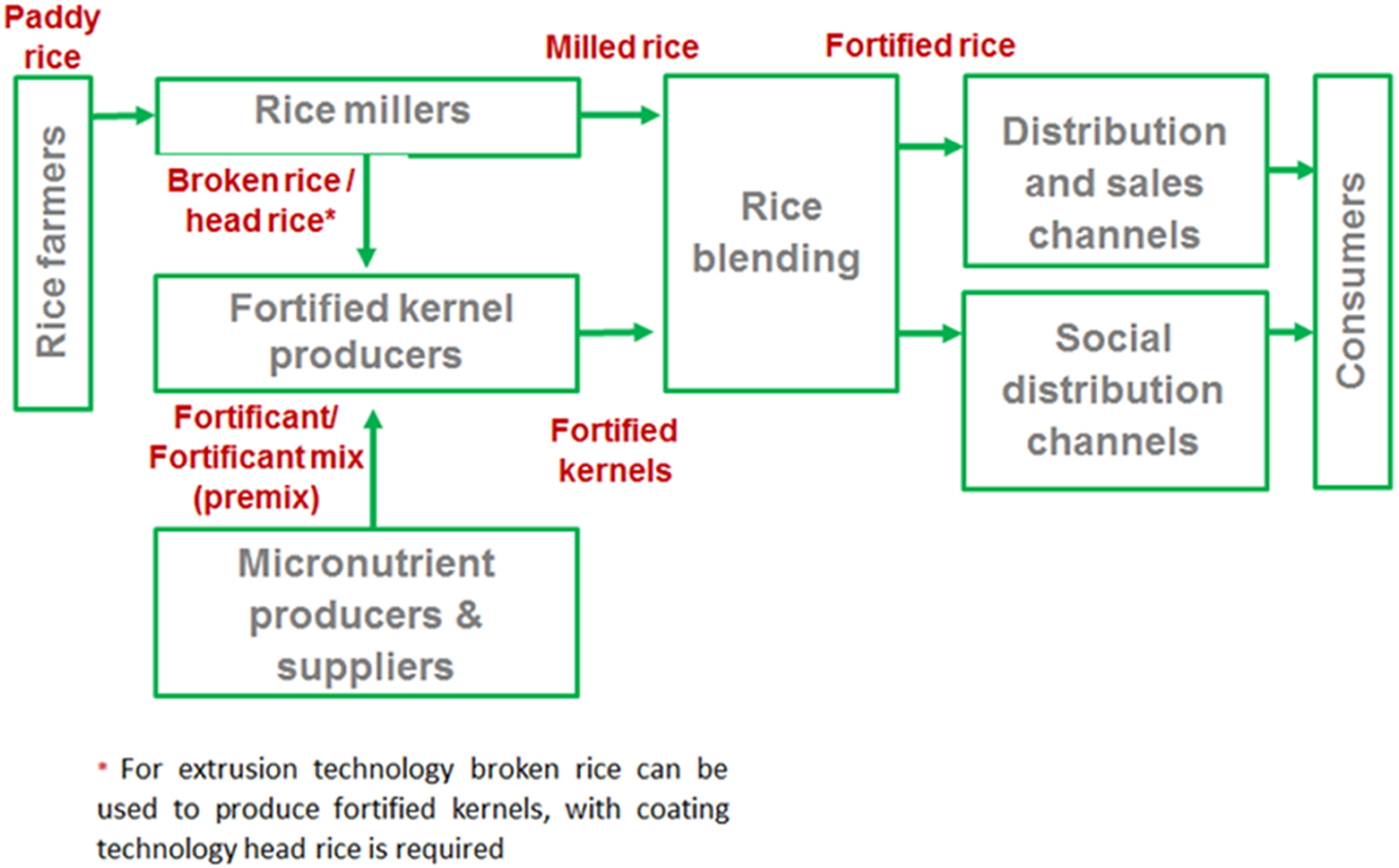
Value chain model for fortified rice.
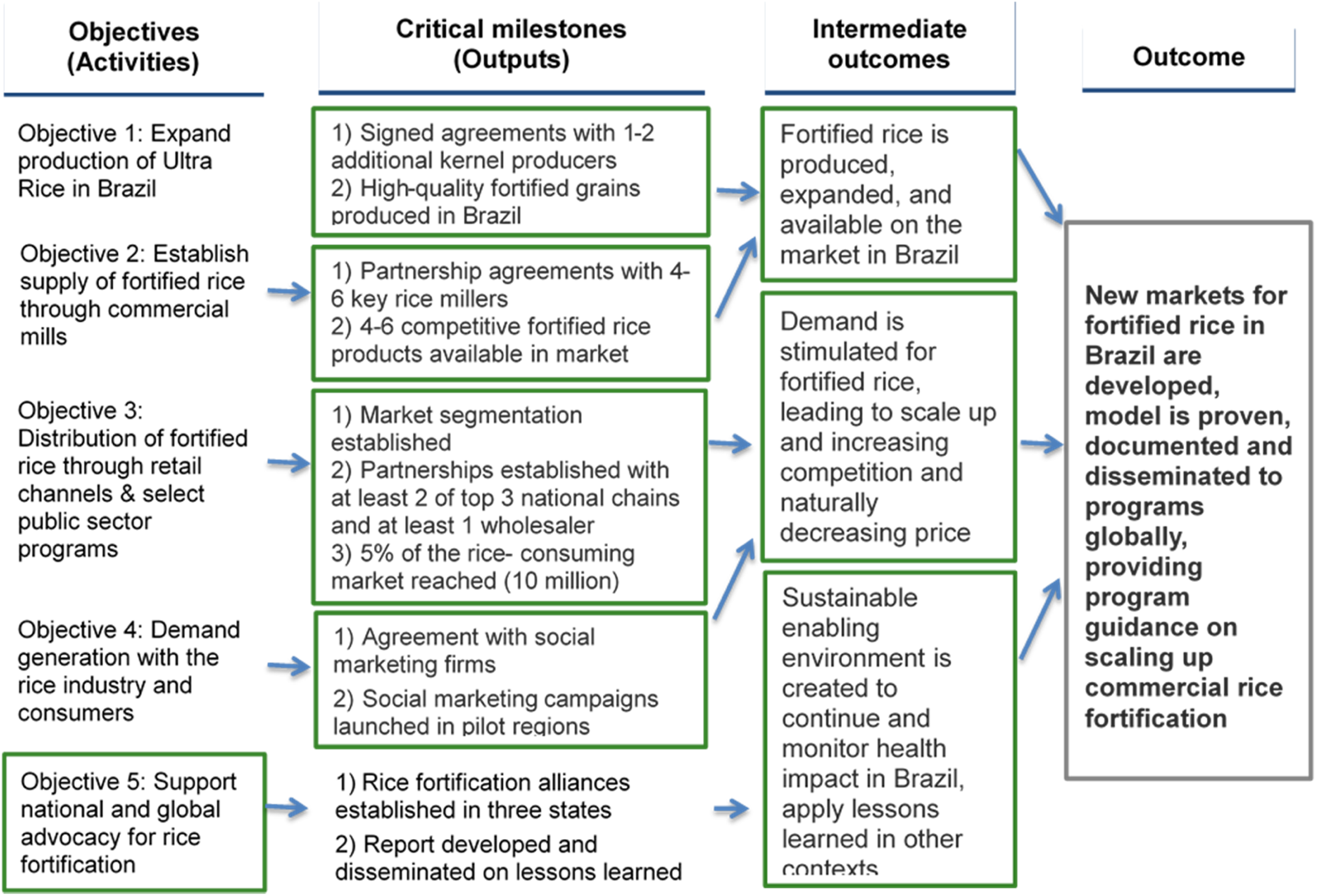
Brazil fortified rice project: theory of change.
This model relied on several assumptions regarding the potential to scale up coverage and achieve sustainability. First, the benefit of consuming fortified rice would be generally perceived and accepted by consumers, who would then change their behavior to purchase fortified rice. Second, consumers switching to fortified rice would do so definitively, so that nearly all of their rice purchases from the switching point onward would be of fortified rice. On the supply side, rice millers would respond to increased demand by producing more fortified rice, and fortified kernel producers would enable the market by ramping up their kernel production. Increased demand would catalyze a shift in the market to encourage more millers to blend fortified kernels, generating a long-term growth trajectory in Brazil. The project relied on recruiting 1 to 2 initial rice kernel producers in order to initiate this growth trajectory. Finally, the project assumed that this sustainable fortified rice market could be built within a project time frame of 4 years.
Implementation
Objective 1: Expand Production Capacity of Fortified Kernels
At project start, 1 fortified kernel producer, Adorella, was already operating in Brazil. PATH worked to enable a second producer, Urbano, one of the largest rice milling companies in the country, to fortify. Urbano already owned extrusion equipment, had low-cost access to rice flour, and the ability to generate the final product by blending kernels with unfortified rice. Having 2 kernel suppliers was important to strengthen the supply chain and avoid a monopolistic market structure.
To further build in-country capacity and sustainability, PATH transferred the Ultra Rice technology to the Federal University of Viçosa (UFV), the most respected agribusiness university in the country, in 2011. UFV would have the role of transferring the technology to any interested private sector player, managing supply quality, advancing research in staple fortification and micronutrient deficiency solutions, and supporting related South–South cooperation efforts.
Objective 2: Build the Supply Chain: Establish Supply of Fortified Rice Through Commercial Mills
Besides working with Urbano to support its launch of fortified rice products, the project strived to attract other millers into the market. This effort involved a high-profile presence at the largest industry event in 2013, direct marketing interactions with millers to acquaint them with the project, presentations to the Brazilian rice miller association (Abiarroz) and individual millers, and specialized media actions. Besides highlighting the business opportunity in rice fortification, the team offered millers technical and marketing support, as well as free kernel samples for them to gain confidence in the technology and processes involved.
Objective 3: Distribute Fortified Rice Through Commercial Channels and Select Public Sector Programs
Retail sector engagement followed 2 parallel routes. First, the project approached the 3 major supermarket chains operating in Brazil through their corporate social responsibility divisions. The requests were for point-of-sale promotion, shelf space allocation, and the development and launch of fortified rice private labels. Second, Urbano also engaged its customers—large and mid-sized retail chains throughout the country—on the concept of fortified rice as a novel consumer offering. Urbano emphasized the initiative’s public health goals and its own business strategy of adding only the incremental cost of fortification to the product price in order to keep it affordable. A pricing analysis (Figure 3) was conducted to provide insight into the relevance of the pricing and positioning of fortified rice compared to other rice products. Hypotheses were made about the impact of these aspects on consumer perception and sales and relevance for rice fortification programs.
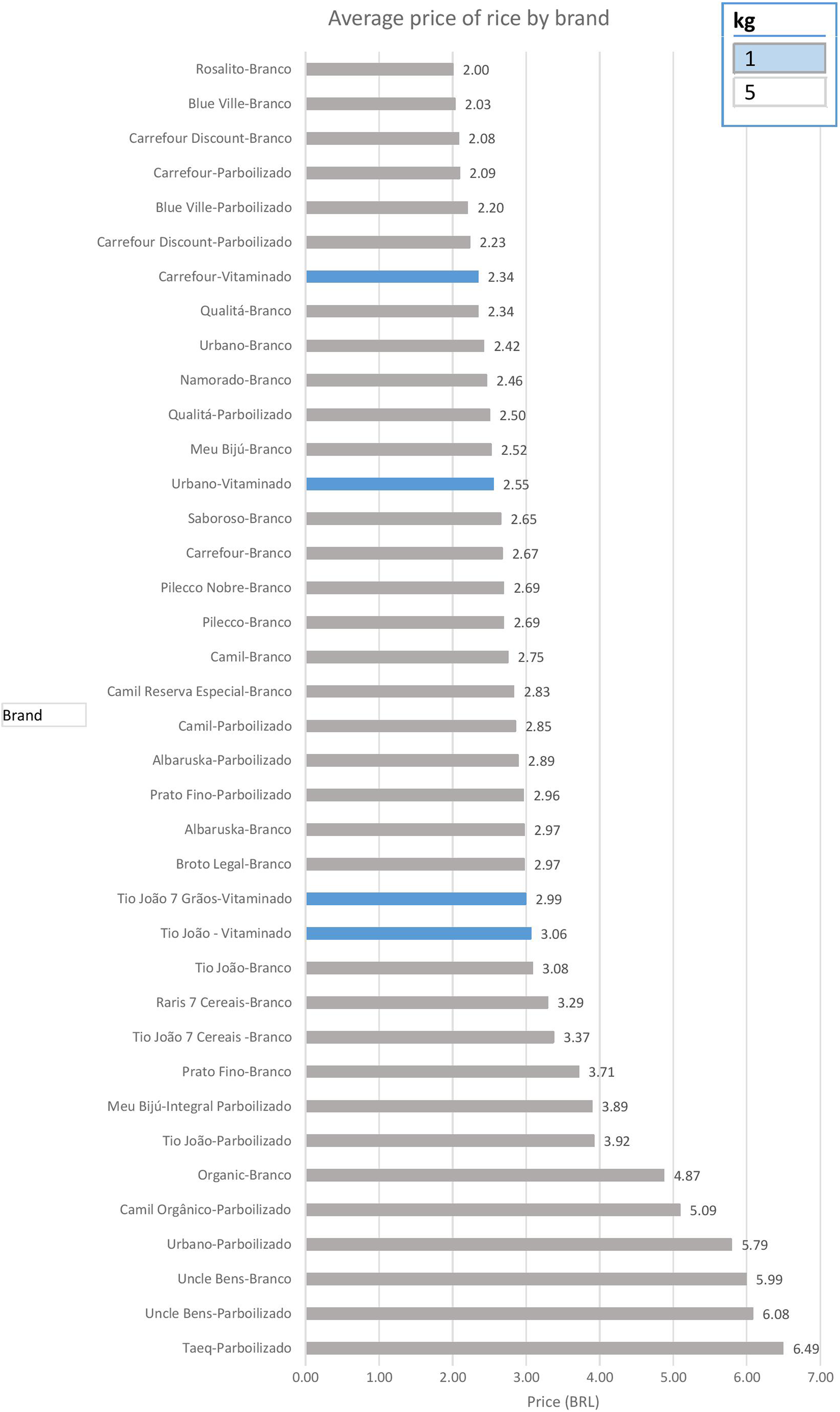
Average price in reals of 1 kg packages of multiple rice brands in São Paulo in August 2014. Fortified brands are depicted in dark color.
On the public sector side, efforts were concentrated on state school feeding programs, a well-developed and high-coverage channel Brazil has refined over several decades.
Objective 4: Generate Demand Through Social Marketing
To develop a social marketing strategy founded on customer and market insight, the project invested significantly in market research. The first round of data collection consisted of an ethnographic study with 18 subjects from different socioeconomic classes living in cities in different regions in Brazil. The second round consisted of a quantitative survey of 1164 mothers who buy and cook food for the family. Results indicated the importance of winning consumer trust, given the traditional and central place of rice in the Brazilian family diet and the novelty of the concept to most consumers. 11 The research suggested the product had to be positioned as organoleptically identical to unfortified rice, but healthier. It also suggested the need to build awareness of micronutrient deficiencies among the population to enable consumers to value fortified rice as a convenient way to address the issue. 11,12
The approach adopted included the development of a category brand standing for quality and nutritional value, high-profile endorsements by 6 nationally esteemed figures, and the launch of fortified rice products as line extensions of traditional brands rather than new brands of their own. Of particular impact to the social marketing endeavor was the “ambassadorship” of Mauricio de Sousa, Brazil’s most respected popular cartoonist, whose personal support of the campaign extended to his Turma da Monica (“Monica’s gang”) family of characters, cherished by most Brazilians since the 1970s. In-store promotions included sales associates educating consumers and distributing collateral materials, often in tasting booths positioned next to rice shelves, adult-sized Turma da Monica cutouts, and occasional exposure in supermarket promotional tabloids.
Objective 5: Advocate for an Enabling Environment to Promote Sustainable Impact
Advocacy efforts at the national level were directed at creating an enabling environment supportive of the incorporation of fortified rice into social safety net programs at the federal, state, and municipal levels and its eventual inclusion in national government policy.
Results
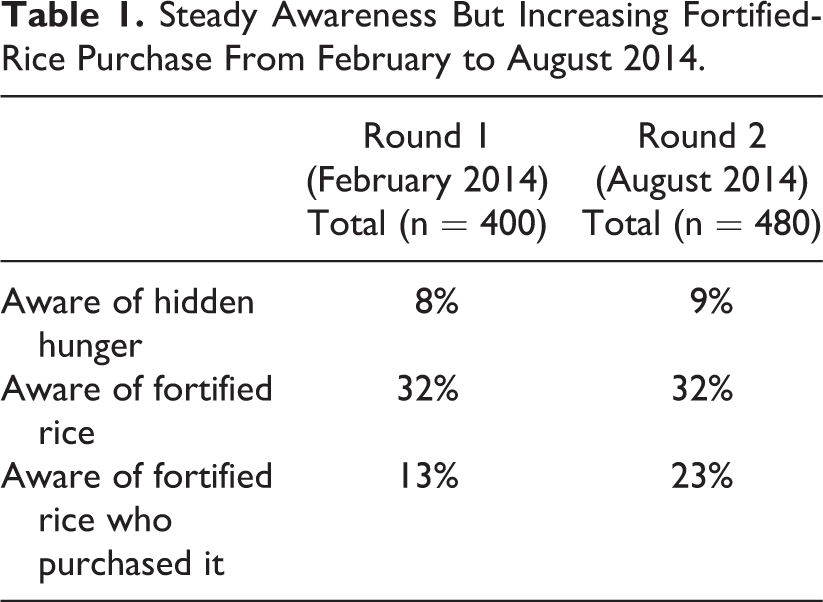
Over 3 years, the project established a category brand and expanded production of fortified kernels to 1 of the 5 largest rice millers in Brazil, who also launched its own fortified rice product. Commercial retail channels that began stocking fortified rice on shelves included the top 3 national retailers, many mid-sized chains, and 1 national wholesaler. One of the leading supermarket chains, Carrefour, launched its own private label. Fortified rice sales began in February 2013 and reached over 2.5 million consumers, an estimated 460 000 of which repeat consumers and the majority of which belonging to the bottom 3 of Brazil’s 5 socioeconomic classes, by April 2015. Two rounds of consumer research conducted in February 2014 and August 2014 indicated that during that time, although the percentage of consumers aware of fortified rice remained flat at 32% of those sampled, the percentage of those aware who actually purchased fortified rice increased from 13% to 23% (Table 1).
Steady Awareness But Increasing Fortified-Rice Purchase From February to August 2014.
National advocacy efforts to support rice fortification were unsuccessful as the administration’s micronutrient policy was focused on targeted supplementation of iron and vitamin A to children under 5 years of age. At the state level, the government of the state of Tocantins temporarily embraced rice fortification through its education, health, and agriculture departments. As a result, fortified rice was incorporated into state school meals and agricultural development policy. However, in general, the highly decentralized structure of school feeding in the country, with decisions made at the municipal level, limited the potential reach of this channel within project time frame and budget. At the peak of school feeding pilots conducted during the project, some 200 000 children were reached by fortified rice in their school lunch menus.
Lessons Learned
Objective 1: Expand Fortified Kernel Production
Lesson 1: Market factors, especially industry structure and competitive dynamics, have significant implications for scale-up potential
The business model of fortified kernel production, blending, and distribution is heavily dependent on the country context, rice industry landscape, and the delivery channels. In this project, the business model tested was one of vertical integration: one main rice miller supplied fortified kernels to other millers. Although this model offered an attractive business proposition to the fortified kernel supplier, it also created conflicts of interest for other millers who felt discouraged to source from a competitor. Creating disincentives for other players to join the market risks generating a monopolistic situation and limits market growth. In return for agreeing to fortify, private companies may demand exclusivity conditions that run counter to the goal of a competitive marketplace, with negative public sector procurement and social goodwill implications. Program design should be based on careful microeconomic analysis and avoid to the extent possible creating conditions that do not favor a competitive marketplace.
Objective 2: Establish Supply of Fortified Rice
Lesson 2: A purely commercial model for fortified rice is not sufficient to reach meaningful scale within a 3- to 5-year time frame. Public sector engagement is essential to de-risk fortification and level the playing field in rice fortification programs
National fortification programs with specific public health goals are typically regulated by government and are mandatory, voluntary, or a mix with subsidized food distributed through public sector programs being fortified. The voluntary model usually involves development of technical regulations, information, education, and communication by the public sector to induce supply chain actors and consumers to join the new market. This project hypothesized that given the unique factors associated with rice as a vehicle for fortification, triggering mass commercialization without major public sector involvement would unlock the scale-up potential of fortified rice. Based on the assumption that generating consumer demand would convince local businesses to invest, the project focused primarily on private sector engagement and social marketing. This strategy had limited results: all 35 rice companies in the country were engaged directly and indirectly through consumer-marketing campaigns over a 2-year period, and only 1 decided to invest. All others were ultimately unwilling to bank on a new product with return on investment (ROI) risk perceived as high. Over US$1 million (26% of the total program budget) was invested in social marketing over 1 year, resulting in 32% of consumers claiming awareness of fortified rice. Meaningful scale was not achieved through commercial channels during the 4-year project time frame.
For a national fortification program, the first step is to gain consensus among health policy makers, food industries, and civil society that there is a need for the intervention. This is consistent with policy development for other fortification programs such as vegetable oil in West Africa, 13 and with the pathway to impact documented in Costa Rica. 7 This project was not designed or intended to be a national fortification program but instead aimed to reach approximately 5% of the population. Still, in low-trust societies such as Brazil and other low- and middle-income countries, 14 a certain level of public sector support—in the form of mandatory legislation, voluntary guidelines, or public health education, adds important credibility to fortification as a safe and recommended approach for industries and consumers. Public sector signaling to consumers helps overcome their mistrust regarding food labeling and claims not supported by a trusted institution. On the industry side, rice milling companies are typically risk-averse, traditional businesses. Positive signaling to the sector by the government helps to overcome millers’ hesitation to launch new products that involve uncertainty regarding ROI. Precommitted volume from the public sector, multilateral agencies, or other institutional buyers can help drive rice miller engagement by creating new markets and thereby reducing risk. This is consistent with the experience in Costa Rica, where millers also expressed that the opportunity to increase market share and expand to new markets was a strong value proposition to encourage rice millers to fortify. 7 Potentially, because this project was primarily driven by foreign organizations and not locally owned, public sector priority setting and stewardship were absent. As a result, fortified rice in Brazil is currently a niche product with little potential to reach meaningful scale unless the public sector prioritizes it.
Objective 3: Distribute Fortified Rice Through Commercial Channels and Select Public Sector Programs
Lesson 3A: Pricing is not a major barrier to commercializing fortified rice and should be driven by market forces
In mass staple food fortification programs, one criterion for sustainability is a low proportional increase in product price as a result of fortification. 14 The relative higher cost to industries—and therefore price to consumers—of fortified rice has been cited as an inhibitor to making fortified rice available at scale. 9,10 A common concern among policy makers and industries is that any increment in price of a fortified food versus its nonfortified counterpart will impede uptake by low-income consumers, often the most vulnerable populations. This was not the case in our pilot. The Brazilian rice market is large, crowded, and competitive, and pricing analysis at 2 separate time points showed a wide range in pricing in the category: premium brands of unfortified rice cost up to 5 times more than nonpremium brands. Consumer demand for high-quality, high perceived value rice has grown in recent years. Consumers with rising incomes are willing to spend more for higher quality rice, further reducing the generally low price-elasticity of demand for rice. The average price of all available brands of fortified rice was 40% less expensive than the average price of nonfortified rice, when including premium brands (Figure 2). Our market research showed that only 1 in 5 rice consumers in Brazil has price as the top purchase decision driver. 11 This environment allowed for the modestly higher costs brought about by rice fortification to be absorbed by producers, retailers, and consumers. Fortified rice was positioned and strategically priced as aspirational yet affordable—within that band where consumers would recognize fortification as an added value but still be able to buy it. Price parity with unfortified rice, besides being unsustainable in the long run due to reduced profit margins, could actually dampen demand by stoking consumer suspicion. China experienced such a phenomenon with iron-fortified soy sauce: when the price point was close to or equal to that of unfortified soy sauce, consumers were skeptical about false claims and did not trust or purchase it. 15
This project also illustrated that the price of the final product on the shelf is set by retailers, which means that program implementers—and even producers—have little to no control over price setting. The very limited pricing levers available to implementers include keeping supply chain cost structures as low as possible, engaging retailers on the positioning and social purpose of the project, and fostering a competitive marketplace with a variety of brands. In this project, the producer-to-retailer engagement strategy was effective in 2 ways. First, it helped secure space on retail shelves for the new product in a crowded category. Second, it signaled to retailers that mid-market (rather than premium) positioning and pricing were the appropriate course to promote consumer uptake and move inventory.
Fortification is only one of many factors—including brand positioning, competitive dynamics, seasonal fluctuations, input costs, and macroeconomic conditions—driving retail pricing. Initial market research showed that consumers were willing to pay a reasonable premium for a product they perceived to be of good quality and beneficial to the family, and market research conducted at the end of the project revealed that most fortified rice consumers belonged to the third and fourth of Brazil’s 5 socioeconomic classes. Our conclusion is that with appropriate positioning and messaging to consumers, a modest price increment (eg, 10% or less) can be borne even by low-income segments in urban and peri-urban markets, while still fostering trust in the product and its health attributes.
Lesson 3B: Local governance structure, policy, and political shifts are major determinants of reach through public sector programs
Social safety net programs such as school feeding and distributions to the poor or displaced persons are an attractive delivery option for fortified rice, as they generally reach the most vulnerable populations and can serve as a catalyst for mandatory or voluntary fortification. 16 That said, the more fragmented the governance structure of such programs, the more complex and costly they become as a fortified rice delivery channel. In the early phase of this project, significant effort was invested toward the introduction of fortified rice through school feeding in Brazil. National and state-level authorities were approached with that intent, but it became apparent that the ultimate decision-making authority on school meals rested at the municipal level. Brazil has over 5500 municipalities, which made whole-country coverage unfeasible within the project time frame. Moreover, the national government’s policy was lukewarm toward fortification in general and not inclusive of rice fortification, which made for a harder sell to municipal governments. As previously mentioned, 1 state government (Tocantins) did adopt fortified rice in its limited state-level school feeding program for about 1 year. However, the late 2014 election ushered in a new administration that chose to discontinue many of the previous administration’s policies, including rice fortification. Almost overnight, fortified rice reach through public sector programs in the state went from nearly 200 000 children to 0.
Objective 4: Generate Demand
Lesson 4A: The unique characteristics of rice as a fortification vehicle pose particular challenges
Rice is the most complex and costly fortification vehicle among staple foods. Our market research demonstrated that consumers have strong emotional engagement with the rice category. A singular characteristic of rice, when compared to other fortification vehicles such as salt, flours, and condiments, is that these foods are all ingredients in some final food product the preparer (typically the mother) will put on the family’s table, whereas with rice, the fortified food is the final product on the table. In contrast with these other foods, the emotional investment with which a mother typically prepares and serves the rice to her loved ones creates what Norton et al call the “Ikea effect” 17 around rice—a disproportional valuation of, and attachment to, a product one sees as a “labor of love.”
Related to that, our market research indicated that consumers seek more than satiety in rice. There are also strong expectations about the customary sensory experience associated with texture, appearance, aroma, and taste. For many mothers, rice is also associated with social standing, with husbands and families through providing a satisfying family meal or when priding in serving a premium rice brand to guests. Thus, there is high perceived risk—psychological and economic—in purchasing an unknown rice brand or subcategory on the part of consumers, as even small organoleptic deviations can put these sources of fulfillment in jeopardy. This suggests a lower willingness to try fortified rice than other fortified staples on the part of consumers, an especially important hurdle for a new commercial product. Uptake of fortified rice through a commercial model involves greater challenges than with other fortification vehicles.
Lesson 4B: Consumer knowledge, attitudes, and practices have significant implications for reach and impact potential and should be considered in project design
In hindsight, the original goals of this project were too ambitious considering the size, competitiveness, and crowdedness of the Brazilian rice market. However, at least as important, the extremely weak association Brazilian consumers make between rice and health combined with their strong attachment to the category caused 63% of consumers reached by the social marketing campaign to view fortified rice as an irrelevant product to them. Whether these consumers rely on other foods (eg, fruits and vegetables) or supplements to promote family health, they are unlikely to view rice playing that role and therefore unlikely to even consider purchasing fortified rice given the perceived risks and higher cost. These fundamental attitudes toward the rice category are very hard to change and act as powerful limiters of the potential reach and impact of fortified rice in Brazil. The general lesson is that, in market-based fortification programs, gaining as much consumer insight as possible in advance of program design can lead to more realistic goal setting and more targeted and effective strategies.
Lesson 4C: Social marketing is necessary but not sufficient for a new product launch to change behavior on a large scale
Social marketing is a typical program component of mass food fortification programs; however, program managers are usually not familiar with social marketing and outsource the task to specialist firms. In some cases, governments assume responsibility for public health messages, whereas in others, product marketing of fortified foods is conducted by industry. In both cases, direct messaging to general consumers through media channels such as TV and radio, billboards, and events is costly, lending itself to short-term campaigns with limited impact and low sustainability. The project took an innovative approach to leverage its limited marketing budget by partnering with esteemed Brazilian personalities to act as pro bono ambassadors, promoting fortification via social media channels, targeting rice purchase decision-makers (mothers), and seeking to earn their trust. One of the most broad-reaching social marketing activities was the licensed use of the popular “Turma da Monica” characters to integrate fortified rice into their stories, speaking to the heart of Brazilian culture. In addition, Urbano embraced fortification as part of its marketing strategy, coinvesting substantially in store collateral, tasting booths, and other marketing actions to promote the product.
Fortified rice sales reached more than 2.5 million consumers over 27 months (Figure 4). This is a substantial achievement, given the operating context. According to the Harvard Business Review, around 75% of new consumer packaged goods and retail product launches fail within the first year. 18 Reach, a consumer insights firm based in the United Kingdom, defines 4 product launch imperatives: (1) filling a need or gap, (2) credibility, (3) uniqueness, and (4) understandability among consumers. Consumer surveys conducted at the baseline at point of sale in 2 major cities found a lack of understanding and interest about the concept of fortified rice coupled with low awareness about hidden hunger and the importance of micronutrients. 11 As there was a low level of understanding of the concept, the product struggled to meet imperatives (1) and (4). Marketing messages on the product’s health benefits also struggled to achieve credibility (2) both with consumers and rice producers in the absence of any public sector backing or support. Rice milling companies are typically risk-averse, family-owned businesses, hesitant to launch new products. “Wait and see” and “let others try it first” are deep-seated industry attitudes that were not fully appreciated when this pilot was designed. Social marketing was therefore necessary to increase awareness and create a market, but a significant investment and push would need to be made by the public sector to improve credibility and understandability to consumers, as well as to mitigate the risk of launching a new product among producers. Social marketing must be coupled with support, buy in, and collaboration from all sectors (public, private, civil society, academia) to be effective. Budget, time, and reach constraints will limit the ability of social marketing to produce scalable and sustainable behavior change if the fundamental conditions for success are not present.
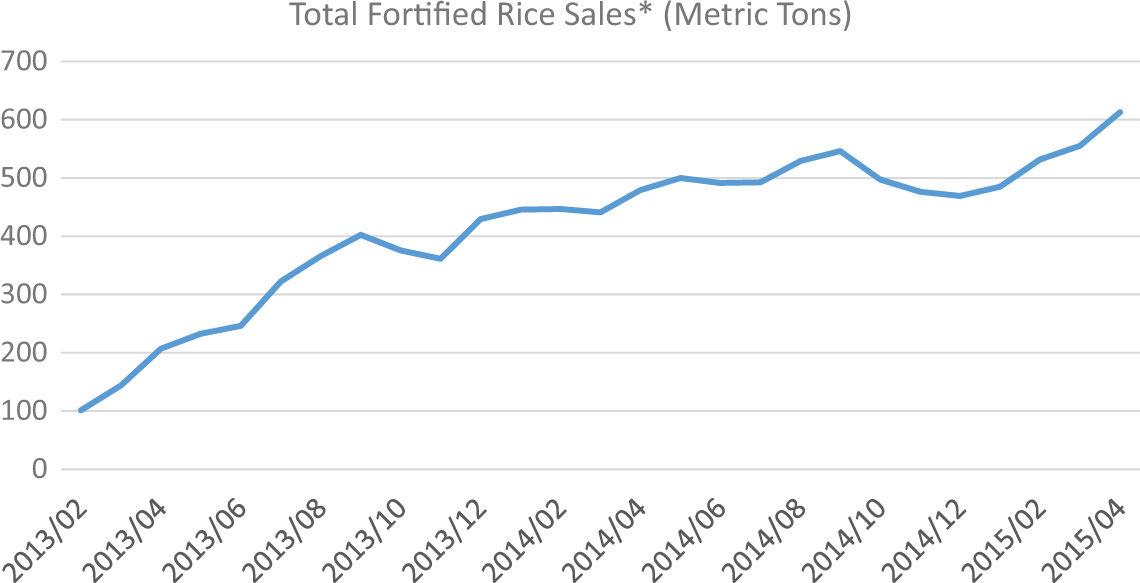
Steady increase in fortified rice sales since introduction in February 2013. *Data are smoothed using a 3-month moving average window. Data provided by Urbano.
Objective 5: Support National and Global Advocacy
Lesson 5: In voluntary commercial approaches to rice fortification, an ecosystem comprising a category brand, a quality management system, social marketing, and a governance framework can be instrumental to sustainability
Lack of regulation for mandatory fortification for a staple food product introduces the critical element of consumer choice in a traditional and often competitive staple category. Our market research showed that building trust and de-risking were key themes across all market players, particularly in the absence of public sector support. The importance of building a highly credible category brand soon became apparent to help build trust in the positioning and messaging of fortified rice as beneficial to individual and family health, establish a unique, common, and visual identity across fortified rice products represented by a logo, and boost the perceived value of the category, which among other things would increase consumer willingness to pay for the fortification premium. 11 This brand promise of quality and value called for a robust quality management system to ensure actual micronutrient content consistent with product packaging and labeling. The project put such a system in place in partnership with the UFV and Abiarroz, the Brazilian rice miller association. A quality verification process was developed and implemented by UFV requiring millers to both undergo quality audits and periodically submit product samples for microbiological and micronutrient testing against standards. Validated products were then granted the right to display the brand logo as a quality seal on their packaging and marketing communications by Abiarroz. This strong and aspirational local brand, Vitaminado, sustained by the quality management system became a core element of the social marketing strategy and implementation that achieved awareness among almost one-third of consumers in 1 year.
In a complex undertaking such as a country-wide fortification endeavor, coordination among stakeholders will be essential to success, particularly when there is little or no public sector involvement, as was the case in this project. A clear governance structure engaging UFV and Abiarroz that became operational in the latter part of the project facilitated the transition from an initiative led by PATH and GAIN to a locally owned program that has stewardship of the category brand, the quality management system, and ongoing social marketing. This functioning ecosystem bodes well for the sustainability of the whole endeavor. Future similar program designs may benefit from these 4 elements assembled in a mutually reinforcing architecture.
Conclusion
The Brazil rice fortification pilot project demonstrated the feasibility of introducing a fortified rice product on the market through a vertically integrated model in an operating context where awareness of rice fortification was low. At the same time, it highlighted the fact that a purely commercial model for rice fortification without public sector engagement can, within a 3- to 5-year time frame, at best produce a niche market and therefore only a modest nutritional and public health impact. In the spectrum of population-based fortification approaches, a purely commercial strategy is the least likely to succeed and will have the added disadvantage of being an isolated effort rather than part of a multivehicle portfolio approach based on micronutrient intake gaps and dietary patterns and preferences.
The project also demonstrated that rice fortification program implementation follows some of the same rules—and some different ones—as for other staple food fortification programs such as salt, wheat flour, soy sauce, or vegetable oil. Similar to these programs, rice fortification does not have a natural home in the purely private or public sector. It needs to involve cross-sector collaboration, supported by strong evidence produced by academia. Unlike in these programs, pricing and positioning can be more flexible. The strong cultural, social, political, and economic underpinnings that shape the production, consumption, and distribution of rice require a program model that cuts across all aspects of the market: supply, demand, and policy. Therefore, a solely commercial rice fortification model without sufficient time to garner the necessary support and leadership of the public sector to promote acceptance and understanding among consumers and industries—as well as open up institutional markets—is likely insufficient to reach meaningful scale and hence relevant public health impact.
Footnotes
Declaration of Conflicting Interests
The author(s) declared no potential conflicts of interest with respect to the research, authorship, and/or publication of this article.
Funding
The author(s) disclosed receipt of the following financial support for the research, authorship, and/or publication of this article: This work was funded in whole by a generous grant from the Bill & Melinda Gates Foundation. The views expressed herein are solely those of the authors and do not necessarily reflect the views of the Foundation.