



Abstract
Sustaining large-scale and good-quality food fortification requires strategies that incentivize food processors to invest in and consistently meet national food fortification standards where they exist. A standardized Micronutrient Fortification Index (MFI) piloted in Nigeria has provided a ranking of fortified branded products for each participating company, based on a score aggregating the effectiveness and efficiency of the company’s systems and levels of product fortification. The MFI has demonstrated the significance of brands as a focal point for investment and industry accountability in food fortification and the power of harnessing the competitive nature of businesses to drive their food fortification performance. The initiative started with a pilot consisting of well-known brands of 4 companies and has since expanded participation to 15 companies, representing 31 brands, having completed the first entire ranking cycle. The publicly listed brands on the Index now cover approximately 80% of the flour milling market, 40% of the edible oils market, and 88% of the sugar market in Nigeria, reaching an estimated 134 million people in the country in 2022 according to analysis by TechnoServe Supporting African Processors of Fortified Foods (SAPFF) program in Nigeria. The data inputs are made through company-owned digital portals, and the results are published on a secure, web-based public portal which also serves as a gateway for stakeholders to access related information on micronutrient fortification and food quality (https://technoserve-mfi.web.app/). The ultimate aim of the MFI is to serve as a leverage for private sector efforts to both digitalize quality assurance and business processes linked to industrial automation and to harness their competitiveness through voluntary participation in the Index to drive improved food fortification performance based on industry best practices and quality benchmarks.
Keywords
Introduction
Food fortification, in which essential vitamins and minerals are added to staple foods and condiments during industrial processing 1 , is widely identified as a cost-effective strategy for addressing micronutrient malnutrition on a large scale. 2,3 Micronutrient malnutrition can lead to lifelong consequences, increasing the risk of impaired physical and cognitive development and diminished productive capacity. 4 TechnoServe’s (TNS) Strengthening African Processors of Fortified Foods (SAPFF) program works in Nigeria, Kenya, and Tanzania to strengthen the capabilities of food processors of staple foods to ensure that their branded products comply with national fortification standards while working with governments, industry associations, and development partners to enhance an enabling environment that promotes the competitive, cost-effective, large-scale production of fortified foods on a sustained basis.
Despite significant decades-long investments in national food fortification programs in sub-Saharan Africa focused mainly on regulation and establishing industrial processes and capabilities, food fortification quality remains inconsistent in many markets. 5 The main reasons behind poor commitment from the industry are the lack of integration of food fortification into day-to-day business processes, the absence of appropriate incentives, and a lack of transparency around food fortification compliance with product quality standards. 6
To create a market environment in which food fortification can sustainably contribute to consumer access to safe and nutritious foods, the SAPFF Program engaged with the private sector to deepen their ownership of the fortification agenda, enhance their digital data integration capabilities, and forge new partnerships between stakeholders across sectors. Specifically, the program maintains close coordination among key industry players with the highest market share of milled staple foods in the countries of focus and complementary and innovative data-driven initiatives to enhance their transparency and accountability. Furthermore, the program facilitates more effective communication channels across the ecosystem of actors needed to support the sustained scale of food fortification and improved critical ecosystem initiatives such as the development of compliance review mechanisms, regulatory agencies’ monitoring structures, laboratory testing and consumer advocacy, integrated at company-level through digital platforms linked to increasing levels of industrial automation of data collection.
The strategic public health and economic benefits of effective food fortification are well understood in the SAPFF focus countries. To this end, the food industry has repeatedly called for a level playing field among processors to sustain fair competition for the production and supply of fortified foods, expressing support for transparent and equitable mechanisms that can effectively differentiate between compliant and noncompliant companies in a timely basis. Furthermore, existing regulatory systems cannot guarantee compliance through enforcement and are expensive to sustain in resource-limited countries. 6 In this context, articulating the business case for food fortification and developing tools to support and respond to the needs of companies to pursue fortification excellence remains imperative. It has become increasingly apparent that integrating food fortification into industrial processes is not enough to achieve sustained success. Processors require support for integrating food fortification into business processes, enabled by digitalization and reinforced by incentives that encourage them to increase access to healthier products for their consumers and promote competitive and sustainable business practices.
The idea for the Micronutrient Fortification Index (MFI) emerged from the 2018 Nigeria Food Processing and Nutrition Leadership (CEO) Forum, an annual event convened by TNS, the Bill & Melinda Gates Foundation, the Dangote Foundation, and the Federal Government of Nigeria. The inaugural forum served as an opportunity for the various stakeholders (company executives, senior government officials, and development partners) to identify cross-cutting challenges and agree on concerted strategies to overcome them, culminating in a signed communique highlighting key activities that would be pursued collectively to advance national food fortification efforts.
One of these commitments became the primary driver for the evolution of the MFI—to support the development of an industry-led and customized tool that would serve as a key performance indicator in corporate measurement frameworks with regular reviews and reporting, both at company level and across the industry, making the results public for the first time. The ensuing mandate was also positioned by industry executives as an effort to implement a self-regulatory mechanism, which the Organisation for Economic Co-operation and Development defines as concerning groups of firms in a particular industry or entire industry sectors that agree to act in prescribed ways, according to a set of rules or principles. Participation by firms in the groups is often voluntary, but could also be legally required (note 1). Furthermore, it enhances the ability of participating companies to not only demonstrate a strong commitment to producing nutritious foods for their consumers but also engage with government regulators on the basis of their participation and adherence to a range of broader industry quality benchmarks. This innovation was subsequently reemphasized during the 2020 CEO Forum by the Vice President of Nigeria, H.E. Yemi Osinbajo, who urged the industry to actively pursue wider adoption of the MFI to enhance the competitive landscape and support existing regulatory monitoring efforts. 7
The MFI is an industry-owned suite of tools, primarily based on a self-assessment, that can be deployed to identify good practices and diagnose areas for improvement against a framework designed to highlight systemic characteristics of well-managed food processing operations. It was developed by TNS’s SAPFF program in partnership with food processing stakeholders in delivering a 2018 industry leadership mandate. It is a promising solution that can increase accountability within the food industry toward compliance with food fortification and can potentially be a game-changer in how food fortification is regulated. The Index complements traditional regulatory systems while reducing the resources required for government enforcement. The tool relies on robust and timely information collection, interpretation, and triangulation from multiple channels. Therefore, it naturally improves the integrity and credibility of industry actions in the face of dynamic economic and demographic variables. While the MFI enhances confidence across all stakeholders ranging from government institutions to consumers, it remains imperative for its sustainability that the private sector invests in and leads this initiative.
In this regard, the MFI, at its core, must build consumer awareness, which is essential for the private sector to build brand equity. In this way, the index offers a key incentive for the industry to invest in improved food fortification performance. To ensure validity, it was integral that the index is built upon a strong foundation of data and serves as a structured and predictable instrument, one that incorporates the following criteria: Sets benchmarks for improved performance Demonstrates compliance across a range of quality standards Measures and monitors the business/industry Encourages learning and enhanced performance Improves communication within the business/industry and among investors
To this end, the MFI presents an opportunity for the private sector to intensify its efforts at tackling malnutrition and assuming ownership of innovative solutions that follow a strong business case. Traditional models that approach the treatment and prevention of malnutrition from the perspective of corporate social responsibility or charity fail to address the problem; they also lack the infrastructure required to ensure sustainability as they do not channel opportunities for revenue growth. More importantly, SAPFF sees the deployment of industry-based and adopted initiatives, such as a publicly available index, serving as a commercial incentive for corporations to crowd in to maintain or grow market share rather than justify their nonparticipation or risk-averse consumer reactions to the same.
Overview: A theory-based self-assessment approach to advance fortification
The MFI initiative serves as a pathway to voluntarily promote competitive business practices among participants. The primary goal of the MFI is to assess a company’s ability to sustain and embed quality systems that lend themselves to effective fortification compliance and to identify opportunities for strengthening this.
The mechanism aims to support preestablished regulatory systems with an industry-driven initiative that effectively differentiates companies by the extent to which their products meet industry benchmarks, including compliance mandated by Nigerian standards, in the context of a whole-of-business approach. It looks at overall quality parameters and indicators throughout the business that are related to fortification performance. The MFI built on existing literature and experience in similar fields to develop the conceptual tool, which was then adapted to capture factors influencing fortification. The theory behind the framework and domains in the tool is described below; the measurement approach is detailed in the methods section.
The mere existence of precise regulatory requirements for micronutrient fortification has not been a significant driver for consistent or improved performance. However, compliance with fortification standards can be seen as a proxy for the overall quality of delivery in the relevant food production operations. As with effective corporate governance, it is integral to sustained quality outcomes, and there is likely to be a strong correlation between effective compliance in food fortification, overall food production quality requirements, and indeed systemic governance and accountability in target participating companies that underlie perceptions of risk, opportunities to attract investment, and assessments of company leadership performance.
The MFI initiative supports a market-driven system in which food fortification can sustainably improve access to nutrients in diets critical to reducing a nation’s disease burden and improving productivity, with the industry taking the lead in implementation. As a mechanism that stimulates and depends on the integration of food fortification practices into day-to-day business processes, the development of a fortification index, therefore, catalyzes the achievement of better all-round quality, performance, and governance, with better-positioned businesses being able to distinguish themselves through the quality associated with their product brands and others competing to do so. When delivered in tandem with advocacy and public awareness building, an index can also serve as a potent societal tool to drive systemic and behavioral change in the market.
MFI Methodology
Early targeted engagement with a range of food processing businesses during the developmental stages of the MFI project helped affirm some hypotheses around organizational constraints in food fortification practice. It motivated the creation of tools that would be operationalized by food processors and was further validated through a series of technical workshops with participating pilot companies. Therefore, the view of micronutrient fortification as a point-in-time procedure in industrial processing was expanded to include linkages with other aspects of businesses’ activities that can positively or otherwise impact micronutrient fortification compliance.
Hitherto, micronutrient fortification was perceived as “the sole purview of quality control personnel,” “an unnecessary cost point warranted by regulatory compliance” (note 2), and mostly inconsistently complied with across the industry, thereby giving noncompliant firms an unfair cost advantage in terms of profit margins. This informed the development of a framework, the 4PG, that would both ensure the relevance and integration of fortification practices across the organization and as a convening point across sectors to support a national food fortification strategy. This framework also serves as the building block for 2 of the 3 MFI components and will be further detailed below.
Stakeholder Engagement
The development and introduction of the MFI have been steeped in purposeful and proactive stakeholder engagement from concept inception through to trials and now in coverage expansion. The call-to-action that led to the MFI emerged from industry leaders via the 2018 Nigeria CEO Forum, and TNS’ steering to execution has involved inputs from industry representatives at both executive and operational tiers, technical experts, and academia.
Starting with the goodwill, drive and buy-in created by the 2018 Nigeria CEO Forum, TNS was keen to build upon that foundation with a clear strategy for identifying, engaging, and partnering with stakeholders across the necessary product value chains and beyond. Stakeholder mapping and eventual selection of pilot companies took into account market share. Initially, they led to top-level engagements with senior executives at 7 firms that expressed interest in participating in a pilot of the MFI toolkit. Engaging with companies that collectively commanded most of the market share in the food sectors of wheat flour, edible oil, and sugar was critical in transitioning this initiative from concept to implementation and subsequently expanding.
The initiative articulated a strategy for addressing stakeholder needs; it would involve a “pincer movement” in many instances—commencing with robust engagements with key quality management personnel to understand each stakeholder’s operational vulnerabilities, followed immediately by top-level engagement with the C-suite (typically at MD/CEO level) to obtain high-level support for the initiative. The critical determinant of the strategy was leveraged access, coupled with a deep understanding of the policy, political, and practical concerns of targeted stakeholders. Resource planning, therefore, envisaged the necessity for both levels of engagement at the outset.
Inception and sensitization workshop
The inception phase began with discussions with individual contacts and industry associations. Our initial foray was an intimate affair, organized as a sensitization forum, in June 2019, with senior-level quality management personnel representing 8 food processing firms, firstly to establish their views on the issues around fortification compliance. We then sought to gauge their interest in and perception of our ideas and concepts to improve the fortification landscape. Our key objective from that meeting was not a demonstration of the MFI system and all it would achieve, but to obtain industry buy-in for the business case for effective micronutrient fortification, demonstrate how successful firms in other jurisdictions measure the effect of change, and how cost-saving approaches can be adopted to ensure that adopting fortification does not lead to the erosion of margins. We went on to test the concepts for the MFI including the 4PG Framework (which had up to that point been the 5PG Framework), as well as weightings assigned to each of the framework indicators. This led to some very strong debates and outcomes that are a key illustration to demonstrate the effect of our engagement. The erstwhile 5PG Framework included a “Policies” indicator that we removed; it was actually integrated into each of the remaining 5 indicators following a case for same that emerged during the engagement sessions.
Supported piloting
Over 3 months, from October 2019 to December 2019, TNS successfully piloted the MFI self-assessment tool with 4 firms that initially completed the self-assessment process. The pilot also included validation of the SAT responses and supporting evidence by an independent consultant. Furthermore, TNS also provided hands-on resources to support pilot companies’ understanding of the tool’s operations and establish the nature of evidence.
Validation workshop
We held a final engagement (post-pilot feedback) event in October 2019, during which we aimed to achieve a few key objectives: Feedback and suggested improvements from participants on all aspects of the MFI, from design to development and pilot Sustainability suggestions Summary of key learnings
As with the previous events, this proved to be very insightful, with key highlights as follows; Obtaining the buy-in of their CEOs was the key factor that ensured commitment of their firms to the process. The SAT was comprehensive, giving them a holistic view of their fortification process that is useful to their operations. The completion of the SAT required collaboration across business units, therefore, the initial engagement with participants in the pilot should have included key personnel from other business units (such as corporate services and company secretarial/legal) that would ultimately be involved in the process. Many CEOs and company secretaries were concerned about confidentiality of the information shared in the tool, which was later addressed through one-on-one communication and execution of NDAs detailing our information sharing policy. More time should have been allotted for the completion of the SAT.
During this engagement session, participants were asked to individually reconsider appropriate weightings to be allocated to each of the 4PG indicators. Their new responses were then analyzed against the previous ones obtained during the initial focus group session. Some interesting findings were made regarding the weighting of priorities suggested by the same participants at the initial event, following their engagement with the MFI tools, especially the SAT, with their recommended weightings very similar to those suggested by the development team. The analysis of those findings is captured in Table 1.
Pre and Post Pilot Scores.
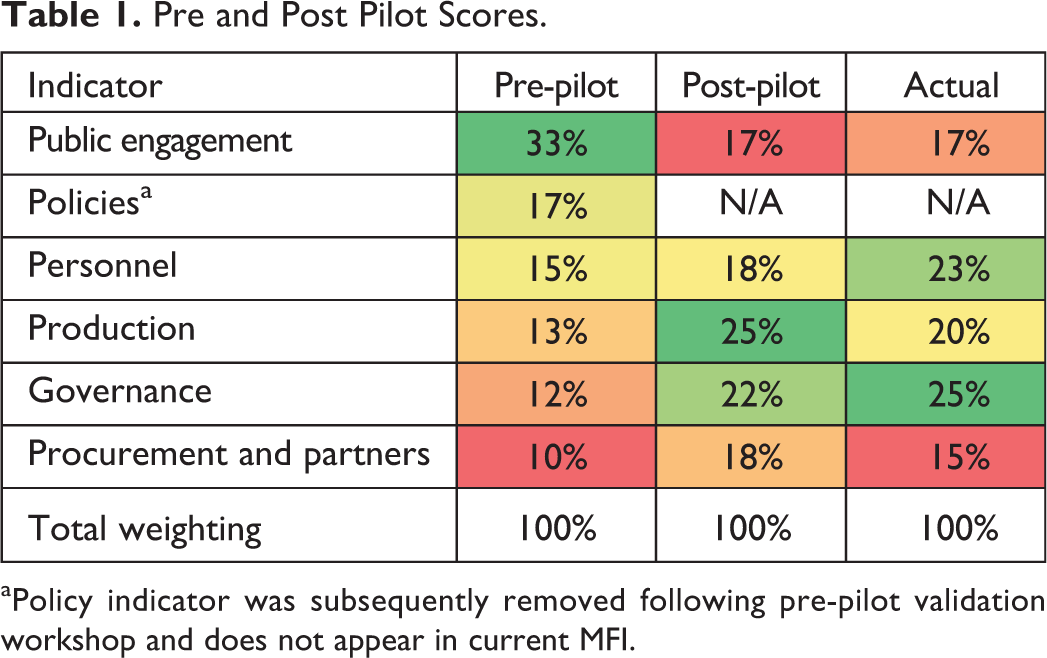
aPolicy indicator was subsequently removed following pre-pilot validation workshop and does not appear in current MFI.
The 4PG framework
The creation of this framework moved to a holistic view by company leadership of micronutrient fortification that addressed these concerns and ensured that firms adopt measures that deeply entrench fortification in their business activities, practices, and spirit.
The 4PG framework is the central framework that anchors market systems thinking to the idea that fortification must be treated as the key qualitative mission for food processors (note 3). The MFI tools, primarily the SAT, are built on the 4PG framework. 4PG is simply an acronym representing the systemic indicators of the MFI, namely
In approaching micronutrient fortification based on these categories above, we sought to drive responsibility for fortification further up the chain of command into the boardroom and away from the quality assurance function as being regarded as the helm of fortification efforts. We also endeavored to demonstrate the ideal distribution of fortification responsibilities across varying business units. This approach compels food-processing firms to be deliberate and strategic about their food quality efforts. It also provides ideas of policies and processes that should be in place for effective micronutrient fortification as a more comprehensive qualitative initiative. The 4PG framework also serves as the basis of standards that address internal dynamics and external relationships, which set uniform expectations for fortification across the industry, regardless of the subsector. This is expected to minimize and possibly eliminate mistrust among firms in terms of cutting down on fortification costs to maximize margins.
MFI Component Design
The refined MFI suite consists of 3 component scores, each serving a unique role in assessing participating companies. They include:
1. The Self-Assessment Tool
The MFI SAT is owned and completed by participating companies and can be updated regularly. The SAT enables companies to assess salient elements of their quality management systems, values, and governance. Companies evaluate their quality management and fortification practices under these 5 broad indicators of the 4PG framework. These earlier discussed indicators are assigned different weights to reflect their relative importance to effective fortification compliance.
Each SAT component, and completion of this exercise, is broken down into tiers of descriptors, with tier 1 reflecting fundamental practices and systems and tiers 2 and 3 indicating advanced adherence to global best practices. The encompassing metrics are descriptors (i.e., scenarios ideal for all food processing companies) and are drawn from a range of recognized quality management systems and manufacturing best practices in the respective sectors. Tiers 2 and 3 are deliberately aspirational and established to demonstrate the characteristics that better-organized companies should have. Larger companies with more mature operations would likely opt to be assessed on all 3 tiers, with additional opportunities for continuous improvement. The weighting attached to tier 1 (60%) reflects its essential nature, with tiers 2 and 3 weighing 25% and 15%, respectively. All SATs will be valid for one annual cycle. However, companies will have the ability to update their final SAT submissions on an ongoing basis and have updates reflected during the next annual cycle.
In recognition of the need for small and medium enterprises (SMEs) to participate in the MFI, an abridged self-assessment tool that comprises only tier 1 descriptors was also developed. Indeed, companies may use this as a sample before full participation. Companies, however, receive a weighted score depending on the version of the SAT they choose to complete and whether the MFI independent expert consultant validates it. This adjustment to the original methodology addressed the expressed needs of the industry to have the MFI support a level playing field while continuing to encourage processors with less sophisticated systems to enhance their processes. Furthermore, it was observed that the option to adopt the abridged version proved to be particularly appealing to users from the edible oil sector, which is a historically fragmented market in Nigeria and consists primarily of SME processors.
Status selectors assign a status that reflects the availability of evidence to support the organization’s perception of its level of implementation of the principles in the descriptors. A narrative must accompany these scores to provide additional information and supporting evidence explaining why the company has chosen a status selector. The status selector provides weighted scoring options, as detailed in Table 2.
Self-Assessment Tool Status Selectors, Descriptions, and Scores.
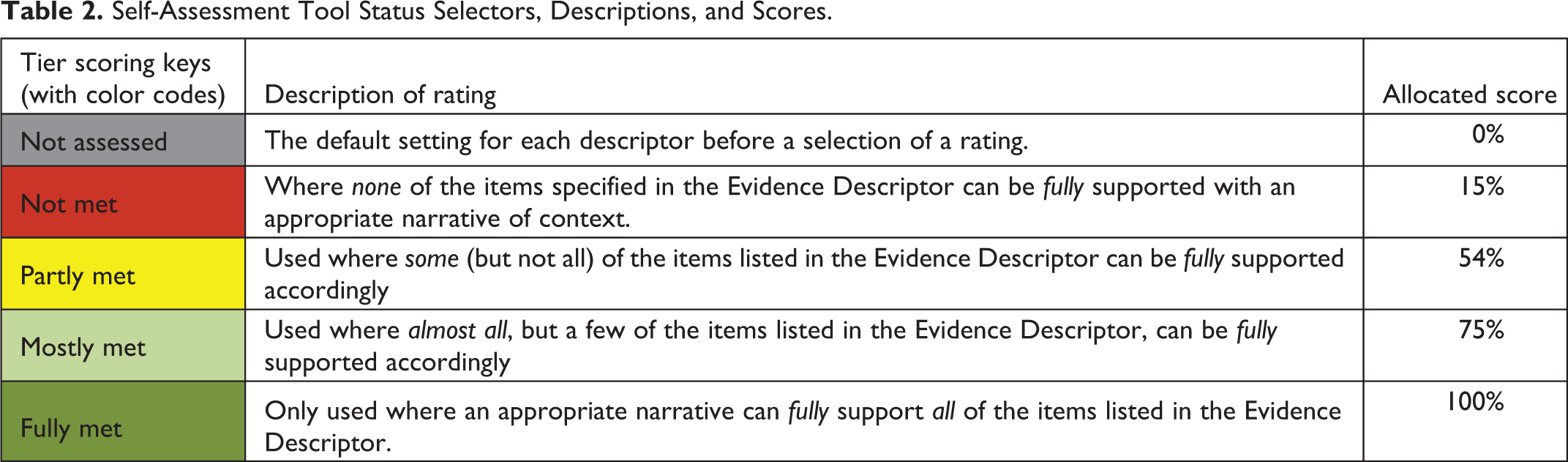
The selection of scores for each descriptor results in an overall rating for that section. These narrative ratings are accompanied by a numerical score which can differentiate organizations with similar final ratings and enable organizations to track year-on-year improvements and areas for improvement. Each descriptor assessment must be accompanied by evidence, primarily in the form of documentation, to support the participating company’s rationale for determining itself to be at that level of performance. The evidence provided is an integral component of this exercise, as it validates the claims captured within individual responses. It further strengthens the MFI’s ability to collect data, insights, and information that can be consolidated and used to deduce cross-cutting challenges across participating industries. Additional analysis is subsequently conducted and captured to guide corrective action measures at an organizational level and inform national policy considerations where appropriate.
A dashboard integrated into the MFI web portal captures all scoring automatically (Figure 1), based on selected entries. In a graph format, it shows the scores against each section (and subsection) of the 4PG indicators and a graphical demonstration of the same.
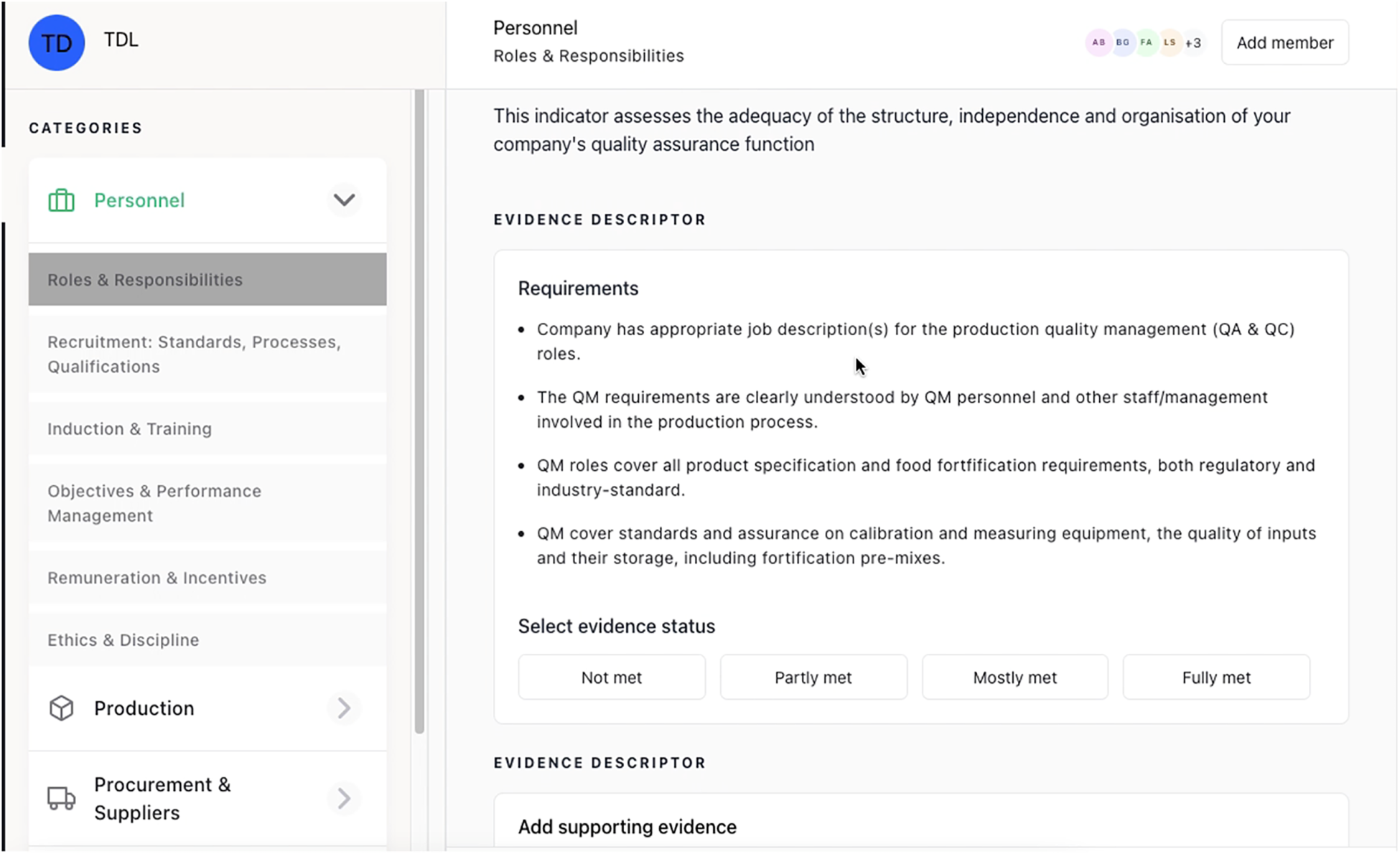
Self-Assessment Tool (SAT) view with example of evidence descriptors.
The SAT requires an attestation outside of its shareholders (acting in unison); the Board is the embodiment of the business and the channel through which leadership and strategy are put into effect. The Chief Executive Officer (or Managing Director) delivers the company’s strategic objective daily. The review and approval of the completed SAT by the Managing Director demonstrates the ownership of the tool at the highest operational level of the business and serves, more importantly, as a means of ensuring that responsibility is proactively taken at the highest levels for micronutrient fortification.
A validation process follows the completion and submission of the SATs. This involves the deployment of an independent consultant who compares SAT evidence against the company scores, moderating the same as necessary to reflect the evidence available better. One clear outcome of our SAT validation process was that the levels of variation in each pilot company, regardless of whether they were high or low, were relatively consistent. In effect, a company usually demonstrated a specific appetite for variation and appeared to stick with it across the Board. Please refer Figure 2 to view example of the participant SAT dashboard, comparing company performance against industry average by SAT category.
2. Product Testing
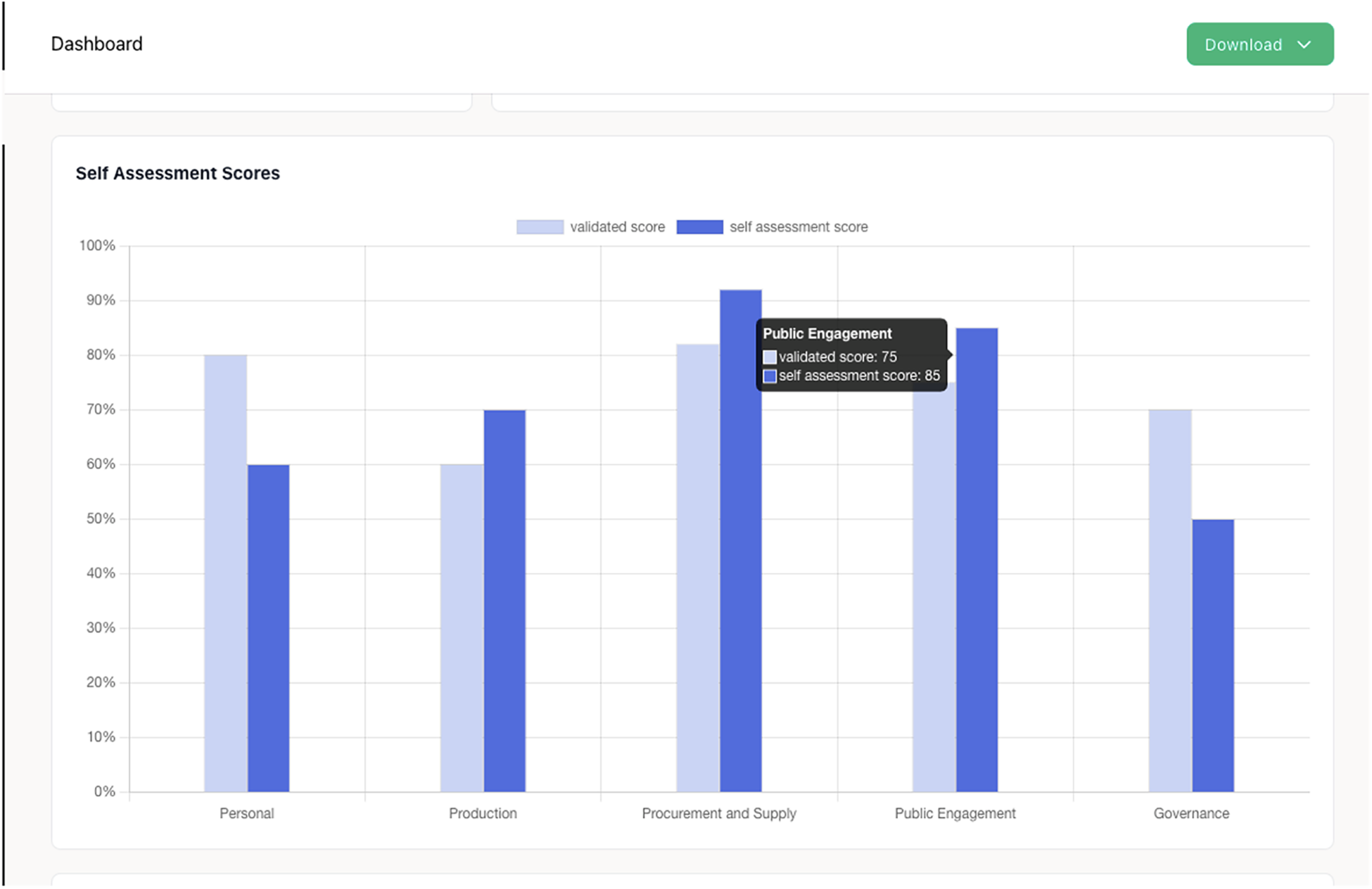
A Self-Assessment Tool (SAT) dashboard presentation (with simulated data).
The second element of the MFI system involves periodic independent testing of participant products available on the open market, assessing them for key fortification quality indicators and classifying them by proximity to the required compliance range. The outcomes from this crucial element are viewed against the systemic improvements envisaged from addressing gaps identified in the self-assessment, with outcomes, in particular fortification compliance outcomes. The compliance data gathered and analyzed via this process should also highlight industry-wide issues with the quality of inputs in pursuance of a joint regulatory approach. Subsequently, thoughts around the sustained availability, visibility, and coordination of regularly available monitoring data will be linked to complementary and associated efforts of the MFI. For instance, in undertaking the MFI with 15 participating companies, samples were collected and composited by the SAPFF project team, and analysis was outsourced to Medallion Laboratories in the United States. However, there is an opportunity to create a more robust platform for data dissemination and a supplementary communication strategy in the future. It is expected that this component of the MFI will remain outsourced to third-party providers to maintain the integrity of the testing mechanism.
3. Industry Intelligence
The third pillar of the MFI tripod (Industry Intelligence) involves a stakeholder feedback mechanism designed to gather and analyze relevant industry perceptions via the Industry Expert Group. A body comprised of relevant stakeholders—buyers/consumers, various related industry representatives, and independent experts would arrive at a moderated opinion of the participants based on their reasoned but subjective knowledge of the industry.
Data Outputs and Management
These 3 outputs, each weighted for relevance, feed into an overall score presented in a dashboard (see Figure 3) that consolidates all the constituent parts of the MFI. The dashboard may include a short narrative report to put context on the performance of the assessed organization. In addressing the need to ensure trust between participants and the MFI, ownership of all this information, although housed within the web-portal, is still treated as extremely sensitive. The guidance for managing the MFI portal, contained within the MFI Information Sharing Policy, specifically addresses protocols for assigning categorized security access. The web-portal serves as a repository of information and data that serves a purpose; the inputs covered in the section above result in customized participant dashboards and a public index of participants. However, it is clear that there are several other derivatives that could emerge from the information: industry trend analysis, research findings, and the resultant publications. Please refer Figure 3 to view an example of participants' overall score dashboard, indicating the overall weighted score and performance on each of the 3 individual components.
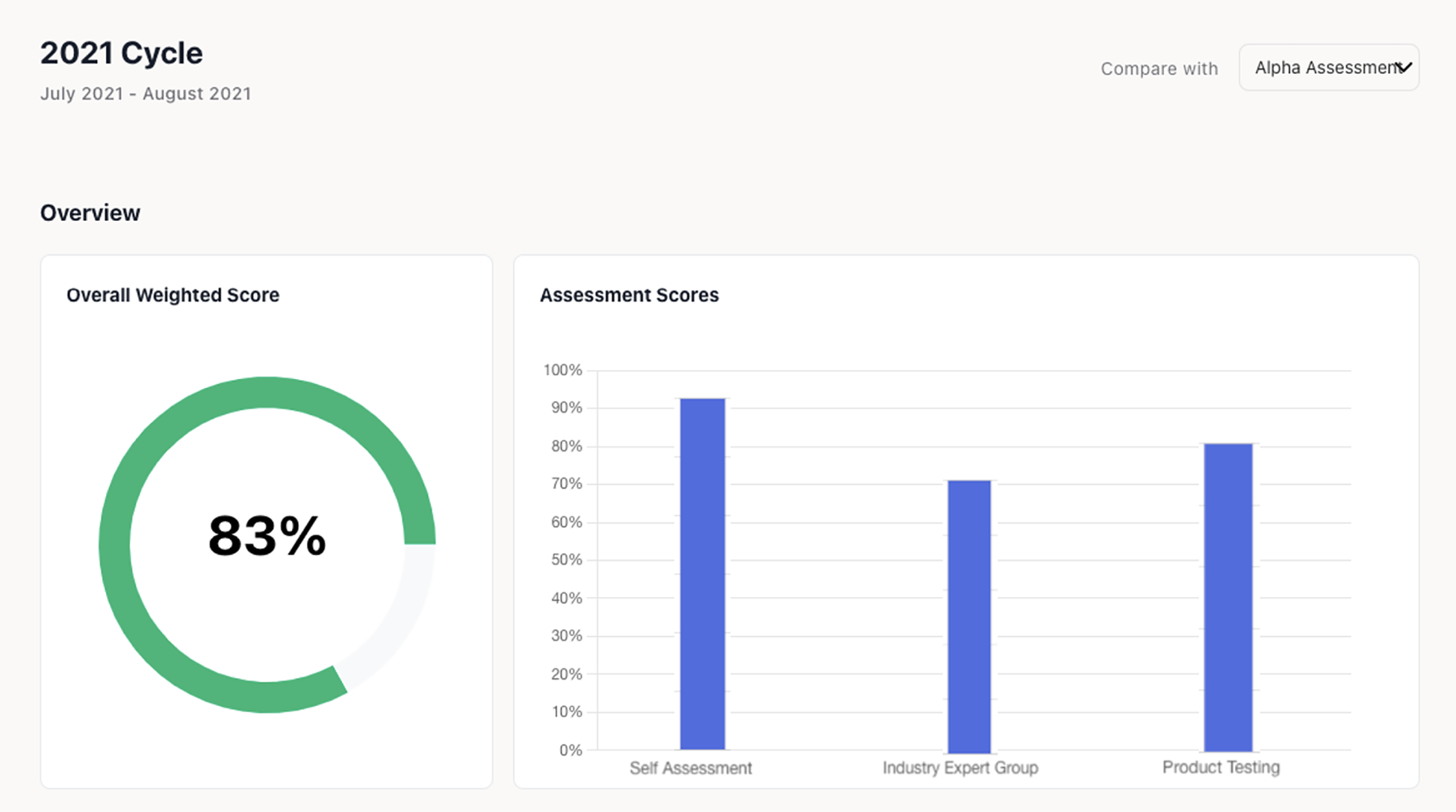
Full MFI dashboard with simulated scores. MFI indicates Micronutrient Fortification Index.
The MFI secretariat and duly authorized partners will have the ability to make analytical linkages between relevant groups of data to better explain performance patterns and subsequently share this with relevant stakeholders, as deemed appropriate by MFI users.
Deliberations regarding the nature of data and sharing protocol will remain a continuous dialogue between the TNS and key stakeholders, with the private sector largely dictating what they feel comfortable with, as this is intended to be a self-regulatory mechanism. Individual company dashboards will be made available to participating companies immediately upon completion of the MFI exercise, with the full and updated index being presented to the public on an annual basis.
Going forward, TNS intends to engage with both the private and public sector in order to develop other critical reporting outputs that will ensure effective self-regulation.
The diagram below illustrates a participating company’s overall dashboard, which could be integrated into comprehensive performance management and governance reporting structures.
MFI Results
A ranked index of MFI companies/brands is accessible to the public on the MFI portal (https://technoserve-mfi.web.app/public-index) (Figure 4).
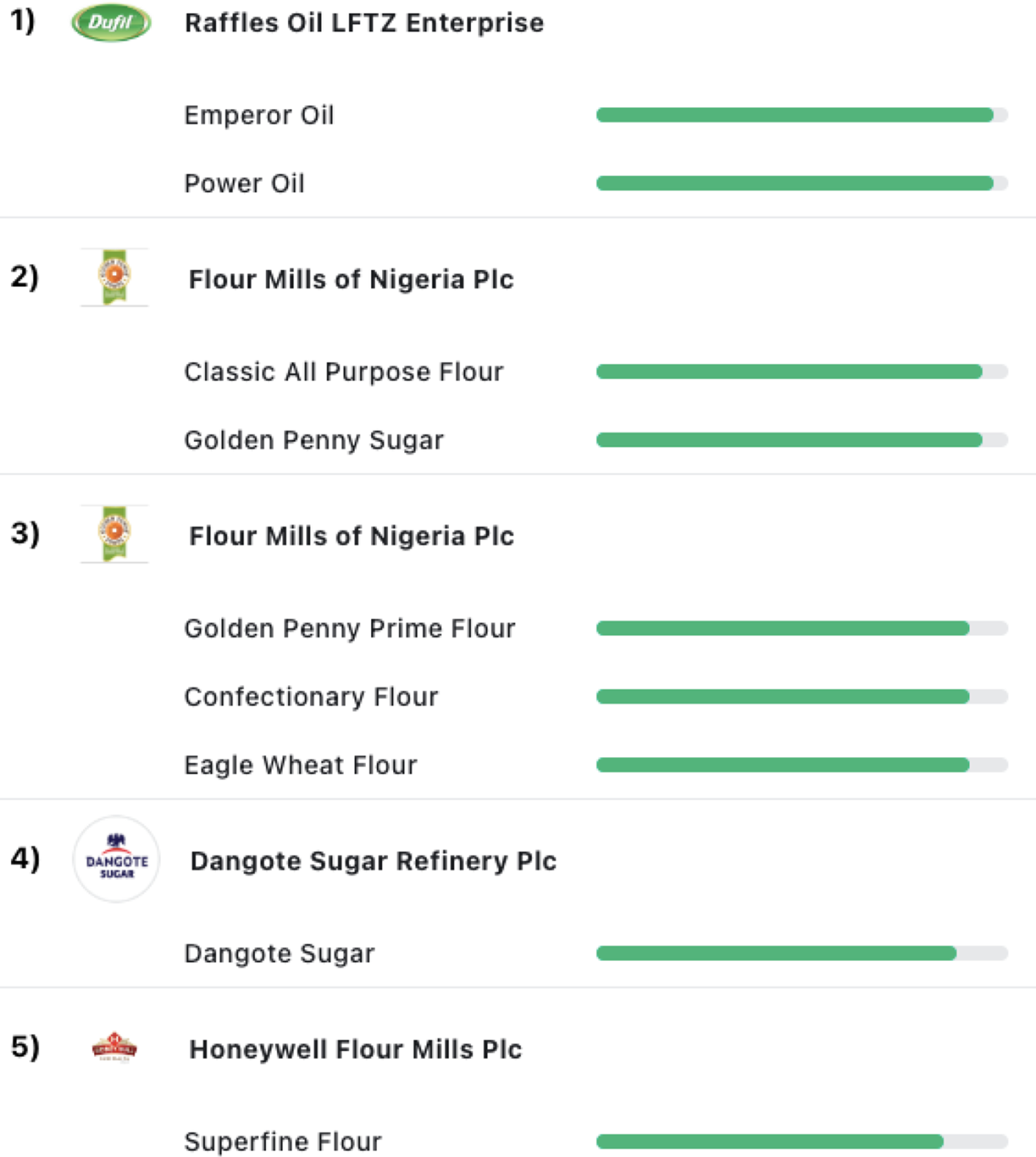
2021 Ranking (top 5 MFI participants by overall score) (note 4). MFI indicates Micronutrient Fortification Index.
Discussion
As a result of the significant engagement with processors and other industry stakeholders, the MFI has established a strong business case for its application across a diverse stakeholder group. These formed the underlying value proposition for commercial processors to participate in the MFI initiative. As with any other, these entities tend to react to stimuli in determining what behaviors to change. The MFI project is therefore designed as a behavior change mechanism, not just for introducing new tools, but with the necessary incentives for processors to benefit sustainably from the direct benefits it brings.
Looking forward, the sustained embedding of MFI and its capacity to scale will be driven most notably by several key factors. First, partnership for resources to establish an administrative secretariat for MFI to promptly build on the successes of the pilot, with a key priority being to start communicating and sharing some of the success stories at events and conferences. This also highlights the need to develop a clear strategic communication and advocacy plan, possibly beyond the life of the existing SAPFF program, for scaling and expanding uptake of the MFI.
Secondly, the consolidation of the participation incentive through the provision of tailored support to participants through supplementary Large Scale Food Fortification programs (i.e., technical assistance and training) based on the findings and regular data generation. It is believed that this process will also serve to strengthen the hand of fortification champions within each business, who have been essential in enabling participation and completion of the pilots.
Thirdly, it is recognized that the MFI approach is driven mainly by behavior change in the market system context of Nigeria and, therefore, the need to resource the team accordingly, with creative communications (formal and informal) at the core while refining and sharing the understanding of incentives.
Finally, the MFI can be further strengthened by aligning performance metrics with those migrating from the Environmental, Social, and Governance (ESG) investment risk assessment domain to measuring social impact and tracking business leadership performance.
Strengths and Potential Limitations
The MFI scores are designed to convey one systemic level of fortification compliance in a company and the relative levels compared to others. The final MFI score is a triangulation of the 3 MFI components, therefore, reducing the bias that comes from using a single method, testing the consistency of findings obtained through different instruments, and increasing control of the potential threats to the influencing of results.
The MFI scores can be useful in comparing companies with others with similar product and production capacities. Furthermore, it was found that because company-level SAT scores are applied to all of their participating brands and quality testing for their brands, performance on the index often reflected a clustering of MFI brands that fall within a certain parent company. Differentiation of performance, however, is quite observable when reviewing the full list of participating brands. As with indexes of other types, there is the opportunity to develop a single average that could be used to compare across regions or countries with the geographical expansion of MFI adoption. In the case of the MFI in Nigeria, the index has been designed to generate a revised ranking on an annual basis, with the next publication scheduled to take place in December of 2022.
Though derived from several theories, the MFI itself is easy to use and deploy and is significantly more robust in its approach than the mere testing of products’ fortification levels. The system lends itself to levering digital data with detailed analysis of component and sectional scores to identify specific areas for improvement of food fortification at the company and, potentially, market levels. It also allows for raising performance threshold criteria (and associated component scores) once a critical mass of brands participating is achieved and linking to ESG metrics for assessing the social impact of businesses and national food fortification strategies, and eventually, executive compensation improving collective accountability for food fortification performance.
One limitation to the MFI is the question of the accuracy of the SAT submissions, especially with the majority weighting of 60% assigned to it. SAT scores are only as good as each company’s information collection accuracy and methods. However, this is mitigated by the SAT validation process, the documentation, and more anecdotal but equally important industry intelligence mechanism. Furthermore, all 3 components are not “pure” but are qualified by the companies. There is also a built-in assumption of a correlation between SAT scores and the empirical product testing results, which may need to be jointly recalibrated over time in collaboration with participating companies.
Further research is needed to identify relationships between overall MFI (and its subcomponents) outcomes and other aspects of food fortification, such as laws and regulations, which have major nutritional and socioeconomic determinants. It is believed that the MFI will enable countries to prioritize their fortification challenges and develop sustainable solutions with structured industry participation aligned with national public health and economic development goals.
Conclusion
In principle, the MFI approach could work anywhere, depending on the operating environment it serves and the content and availability of data from which the emergent standards are drawn (note 5). In Nigeria, the MFI is offered to partners as an integrated tool that enhances and harmonizes quality management governance and practices, highlighting gaps in micronutrient fortification compliance. The political economy issues around compliancy by millers in other global regions may well differ from what is apparent in Nigeria, as would the potential to harness opportunities related to digitalization and timely use of digital data. Only a diligent examination of those circumstances, through research, interviews, and observations, would unearth the context for introducing the MFI as is or modified.
Footnotes
Declaration of Conflicting Interests
The author(s) declared no potential conflicts of interest with respect to the research, authorship, and/or publication of this article.
Funding
The author(s) received no financial support for the research, authorship, and/or publication of this article.
