



Abstract
Background:
The world’s population is increasingly becoming urbanized. If the current urban growth rate is to continue, new and unprecedented challenges for food security will be inevitable. Dietary diversity has been used to ascertain food security status albeit at the multicountry and country levels. Thus, household-level studies in urban settings, particularly in sub-Sahara African, are few. Yet, it is imperative that assessments of food security are undertaken particularly in urban settings, due to the projected fast rate of urbanization and the challenges of attaining food security.
Objective:
To examine household characteristics and dietary diversity.
Methods:
The study uses data from 452 households from the second round of the Regional Institute for Population Studies (RIPS) EDULINK urban poverty and health study. Bivariate and multivariate analyses are undertaken.
Results:
Mean dietary diversity for all households is 6.8. Vegetables have the highest diversity, followed by cereal-based and grain products. Household characteristics that have statistically significant associations with dietary diversity include sex and level of education of household head, household wealth quintile, and source of food.
Conclusions:
There is high dietary diversity in the study communities of Accra but low consumption of foods rich in micronutrient, such as fruits and milk/dairy products. The study brings to fore issues related to resource-disadvantaged entities of the urban system, namely, females, poor households, and the non-educated who have food insecurity problems.
Introduction
The world’s population is increasingly becoming urbanized as a result of both natural increase and rural–urban migration. It is projected that by the year 2025, 61% of the world’s population will be living in urban areas, and sub-Saharan Africa will particularly experience a very fast urban growth. 1 As a result, it is projected that many people will live close to or even below the poverty line, making it a challenge to feed the ever-expanding urban population. Urban growth rates, projected to double in less than 20 years, may compound the problems of limited space for constructions and farming. 2,3 If this urban growth rate is to continue, new and unprecedented challenges for food security will be inevitable, especially in urban poor places.
Over the past decades, numerous studies have used a dietary diversity measure to ascertain food security status because the consensus is that data are easy to collect and these have been a reliable proxy indicator of quality and quantity of diet in different geographic settings. 4 –14 Some of the studies have even gone a step further to link dietary diversity to outcome variables including birth weight, child anthropometric status, hemoglobin concentration, hypertension, cardiovascular diseases, cancers, and obesity. 15 –23 However, these studies have been mainly at multicountry levels, although other country-level studies also exist, and they have provided platforms for monitoring changes in dietary energy availability.
Thus, specific studies in urban settings, and at the household level, are few at the global level, and even fewer in sub-Sahara African cities. Yet, it is imperative that assessments of food security are undertaken particularly in urban settings, due to the projected fast rate of urbanization and the challenges of attaining food security in urban settings outlined in the next section of this article. Our main objective is to examine household characteristics and dietary diversity as a measure of food security in poor communities of Accra. Accra is selected not only because of very few studies but also because the study communities used are located close to major food markets and populations in these areas may have a wide range of food items to choose from.
Justification for Studying Food Security in an Urban Context
Pothukuchi and Kaufman 24 have stated the importance of placing the food system on the urban agenda. Due to the fast-paced urban lifestyle, many urban consumers rely on already prepared or convenience foods (mainly from street vendors, restaurants, and kiosks) with high energy density but with potentially low micronutrients. 25 –28 In addition, a filthy environment, chocked gutters, and refuse dumping near places where foods are prepared and sold render urban dwellers susceptible to diarrheal diseases. Thus, gastro-intestinal infections are known to be more associated with the high levels of bacterial contamination of street foods than of homemade foods. 29
Reasons attributed to the high patronage of out-of-home foods in urban areas are that a greater number of women in the workforce have less time to prepare meals for the family, due to the substantial amount of time spent commuting to and from work. In addition, living spaces are smaller and often not equipped with kitchens or outdoor cooking spaces, and there is decreased access to natural fuel sources. Furthermore, access to urban foods depends largely on cash exchange, with a few exceptions where some urban households engage in a little backyard farming for household consumption, which is not the case in shanty towns. 25,30 For instance, urban residents in Mozambique purchase 83% of the food they consume, 31 and in Accra, families spend an average of 54% of their income on food. 25 A number of studies have shown that urban diets are strongly influenced by prices and incomes, but they are also influenced by lifestyles, social relationships, marriage patterns, family structures, the availability of packaged and processed foods, and advertising and the media. 32
Processed and packaged foods are more widely available in urban than in rural areas, in part because food manufacturing sectors are based nearby. Urban markets are more likely to contain imported food items. The urban poor are particularly vulnerable to price changes due to limited cash and cash reserves. Wholesale food markets and discount supermarkets are mostly located in the city outskirts. These locations may not be favorable to urban poor due to lack of transportation and inadequate municipal transportation systems. 9 The urban poor are often obliged to purchase food in small neighborhood shops, which are more expensive and lack fresh produce.
Finally, most urban poor households neither have large food stores nor do they have access to areas for their own production due to overcrowding. By and large, even though there may be a wide variety of foods on the urban markets, it is not necessarily of diverse superior nutritional values and may not be socially accepted foods. 7
Conceptualizing Food Security and Dietary Diversity
Food security exists when “all people, at all times, have physical or economic access to sufficient, safe and nutritious food to meet their dietary needs and food preferences for an active and healthy life.” 33 There are 3 fundamental components of food security: food access (affordability, allocation, and preference), food availability (production, distribution, and exchange), and food utilization (nutritional value, social value, and food safety), and a fourth, food stability, was added by Clover. 34 This can therefore be viewed as food systems that have a much broader consideration than just productivity and production alone. 35 –41
Millions of people worldwide suffer from hunger and undernutrition, the majority being women and children. 6 This is particularly attributed to food insecurity, which continues to be a challenge not only in developing countries but also in developed countries. 5 The concept of food security has long evolved since the World Food Summit of 1974 42 and has shifted from global and national levels to household and individual levels and from the concept of food availability to food accessibility. 6,43 The right to food remains one of the most consistently mentioned international human rights to date. However, unfortunately, it is also one of the most violated in recent times. 34
Dietary diversity at the individual or household level is an important element of food utilization. It entails the consumption of foods with basic macronutrients and micronutrients and thus relates to diet variety or balance. 4,7 –9,44 It is important to study dietary diversity because previous research have shown that it is a valid outcome in itself and either directly or indirectly may lead to improved health outcomes such as birth weight, 15 child anthropometric status, 16 –18 hemoglobin concentrations, 19 reduced incidence of hypertension, 20 the risk of mortality from cardiovascular diseases and cancer, 21 and obesity. In addition, dietary diversity scores can be used as part of food security and nutritional information systems, at the regional and national levels, and can provide an early warning system for program targeting and interventions. At the community level, dietary diversity scores can be used in evaluating programs that aim at improving food security and nutrition of local communities.
Conceptualizing Household Characteristics and Dietary Diversity
First, older household heads are more likely to prefer food prepared at home than younger ones who may buy from the roadside to feed their households. On the other hand, younger household heads may have the strength to work and provide variety of food for their households compared to older household heads. Second, members of households headed by females are more likely to eat home-cooked food and also have food diversity since per the culture of the study area, it is the responsibility of women to cook for their families. Third, regarding household size, a study has shown that increasing household size means more mouths to feed, increased expenditure on food, and thus reduced levels of consumptions on quantity, quality, and variety. 45 Thus, smaller households are more likely to have more diverse food consumption compared to larger households.
Fourth, wealthier households are expected to have the resources to purchase more food and diverse ones compared to poor households. Fifth, a higher educational level is associated with better employment opportunities and higher incomes and may translate into higher purchasing power and better nutrition knowledge for all household members through improved dietary diversity. 7 Sixth, wealthier study localities are more likely to have better dietary diversity.
Ethnicity is important in a dietary diversity analysis, since pregnant Ewe women in Ghana, for example, abhor eating okro, snails, and ripe plantain. Reasons provided are that it may cause miscarriage and children born may become flabby, which could delay walking. 35,46 Among the Dagaare of northern Ghana, eating of baobab leaves by pregnant women is forbidden, 47 and there is fear of giving protein products such as eggs and meat to children since it may instigate them to steal. 48 All these may have consequences for limiting the food variety of household members.
Religious doctrines are significant in examining what is considered consumable and nonconsumable foods and may therefore have impacts on dietary diversity in households. For instance, Moslems do not eat pork, and among some Christians, olive oil is only used for religious purposes.
Furthermore, the kind of work household heads are engaged in determines the incomes, access to resources and other social services, and access to food in terms of affordability. 25,49 The occupation household heads are engaged in may prevent them from having enough time to cook food or even monitor the food given to younger household members. As a result, the households may resort to buying food from outside as a matter of convenience.
The study further hypothesizes that households that receive support and transfers are more likely to use them to complement household resources and therefore have a higher dietary diversity compared to households that do not receive support and transfers. In addition, it is conceptualized that households with heads that perceive that they have sufficient quantity and quality of food should have higher dietary diversity compared to households’ heads perceive otherwise. Furthermore, households where members avoid the eating of any food due to taboos are expected to have lower dietary diversity, and households where food is mainly prepared at home are more likely to have higher dietary diversity compared to households where food is mainly purchased. Finally, households with higher total monthly expenditure on food are expected to have higher dietary diversity. 50
Study Area
The city of Accra with a population of 1 848 614 in 2010 51 is a sprawling metropolis with rapid regeneration of new suburbs and pockets of partially built environments. 52 The communities used in this study are Jamestown, Usshertown, and Agbogbloshie. Jamestown and Usshertown are large neighborhoods of the Ga Mashie area of Accra, whereas Agbogbloshie, on the other hand, lies in the suburbs of Accra and has one of the largest markets in the Accra metropolitan area. It is a densely populated, permanent community with some residents tracing their roots back to the early 1960s. 53 The people in Agbogbloshie mainly live in kiosks and makeshift wooden shacks, and others live in uncompleted building after carrying out minor structural work (eg, patching up uncompleted windows, doors, and ceilings with scrap wood, aluminum, polythene, and netting). The structures lack basic amenities such as pipe-borne water, sanitation (bathrooms and toilet), and electricity. 54
Data and Methods
Data
The study uses data from the second round of the Regional Institute for Population Studies (RIPS) EDULINK urban poverty and health study, conducted in November and December of 2011. Two sets of questionnaires were administered, one at the household level (actual household or de facto heads) and the other at the individual level (household members who were eligible, ie, 15-49 years old for females and 15-59 years old for males). All study participants signed or thumb-printed an informed consent form before participating in the study. The information on the consent form was read to each volunteer and those who agreed to participate in the study either signed or thumb-printed depending on their level of education. In the case of participants who could not read, a witness was made to sign in addition to the thumbprint of the participant to indicate that the project was explained to the participant and he/she agreed to participate in the research.
This study considers the nutritional value of food measured by a proxy variable (household dietary diversity [HDD]) to ascertain household nutritional adequacy after the studies by Food and Agriculture Organization (FAO) and Kennedy et al. 6,9 The analysis is based on responses from the actual heads of households who responded to the food list section in the individual questionnaire. The food frequency questionnaire used to measure dietary diversity was administered only to eligible individual respondents.
The RIPS EDULINK study has a total sample of 806 households distributed across 29 enumeration areas. A new sample size of 452 households is obtained after eliminating households with heads younger than 15 years for males and females and older than than 49 years for females and 59 years for males. These household heads were eliminated because the selection criterion for individual participants to which the food frequency questions were administered did not include individuals in these ages.
The smaller units in compound households are the basis of the definition of a household for the survey, since they were defined largely in terms of consumption and were comparable in terms of composition to households in other areas of the city, as stated by Maxwell et al. 25 The definition of a household is a group of people who eat from the same pot when food is prepared at home and who get money for street food from the same source. Although these households depend heavily on cash exchange and reciprocity, overcrowding means that some people, while not accurately categorized as “homeless” in the usual sense of the word, do not have a permanent place where they sleep. They may sleep in shifts, and people who are part of a household may not sleep with that household at all. 55
For this reason, especially for the kind of households that predominate Accra’s migrant communities, coresidence does not define these households, and because of the heavy reliance on consumption of street foods, consumption from a common pot alone is not an adequate definition of a household. 25 In addition, the fact that children often eat somewhere else outside the home of their mothers needs to be taken into account when defining a household in this context.
Household members are identified with reference to the head of the household who is defined as the person with primary responsibility to see that members are provided for in terms of food and care (even though the person may not be doing the actual provision of food and other support). The de facto household head is the person who acts the role of household head in the (temporary) absence of the actual household head.
Measuring Dietary Diversity and Frequency of Food Consumption
Following Ruel 10 and Kennedy et al, 9 dietary diversity in this study is a measure of the number of individual unique food groups consumed by households over a 7-day period preceding the survey, for both foods prepared at home and outside the home, irrespective of the time of meals (breakfast, lunch, or supper). Usually, the reference period varies depending on the interest of the study, but generally the previous day or week is used. 6,44
Nine different standardized food groups are scored to generate the HDD score ranging between 0 and 9 using Food and Nutrition Technical Assistance Project 7,8 and the Radimir/Cornell scale. 56 There is no international consensus on which food groups to include in the scores, and the results of new research could justify changing the groups proposed in these guidelines. Each food group has a range of food items for which the household head was to mention the frequency of eating and where it was eaten (home, local restaurant, street vendor, fast-food joint, and restaurant) in the last 7 days preceding the survey.
In all, households reported 76 food types that are categorized into 9 different standardized food groups. The food groups and types as shown in Table 1 include the following: (1) cereal-based and grain products; (2) starch, roots/tubers, and plantain-based staples; (3) fats and oil; (4) meat/fish/eggs/poultry; (5) processed foods; (6) soft drinks/sweets/sugar; (7) milk and dairy products; (8) fruits; and (9) vegetables. Alcoholic beverages are excluded from the analysis since not all household members derived utility from it. The food groups are adapted from the FAO’s49 food composition tables for West Africa.
Food Groups and Food Types.
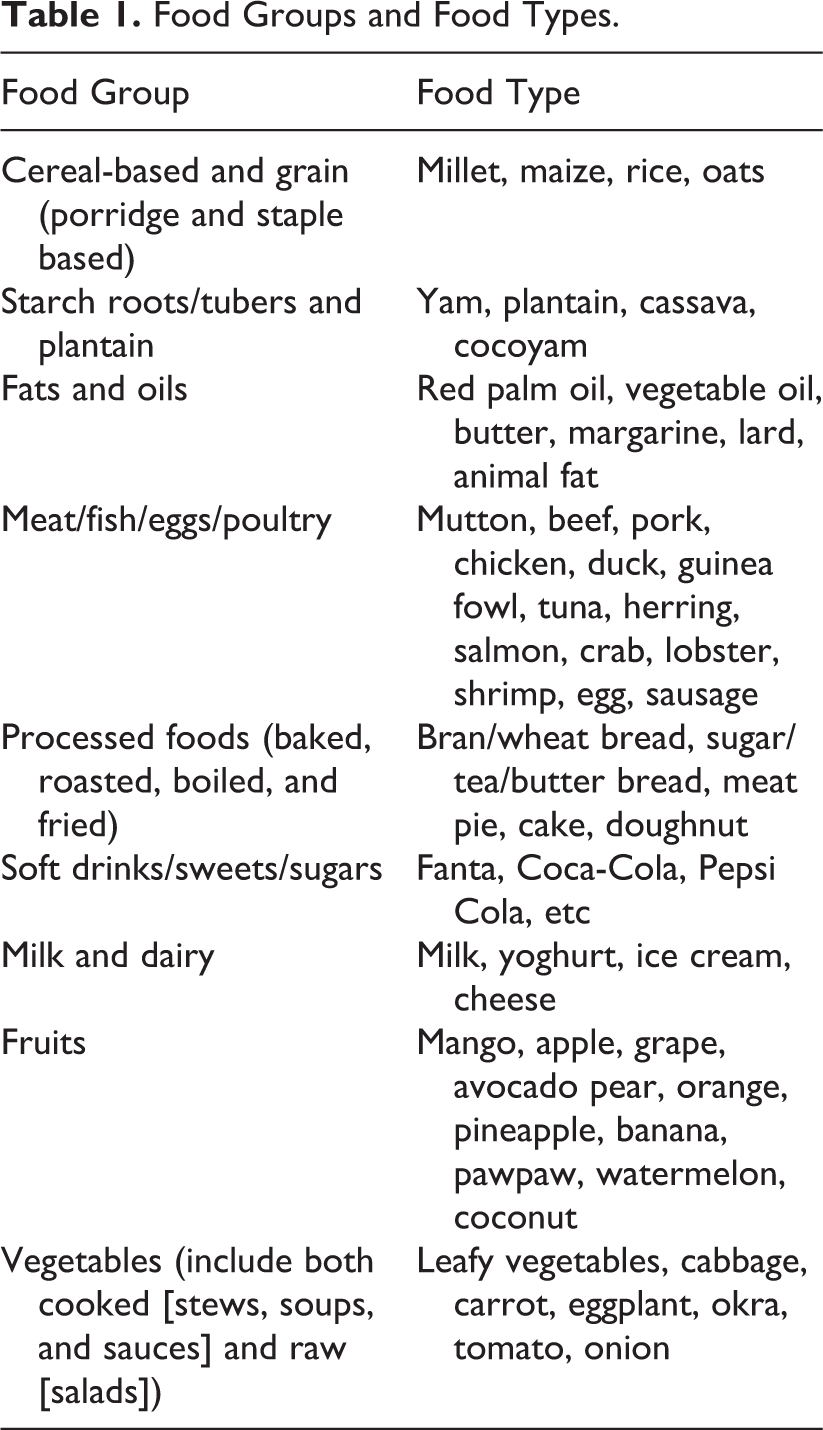
Household dietary diversity is calculated by the summation of the number of times different food items under each food group was eaten. This is based on the assumption that every household should be able to consume a particular food group at least once in the last 7 days. This means that if a household consumes different food items from different food groups for the 7 days preceding the survey, then that household would have consumed from 7 food groups for the week. It is also possible for a household to consume from 2 or more different food groups in a day, and this was taken into consideration in the computation of the HDD score. A new food group is created for those food items that needed to be aggregated—an example being starchy roots and tuber-based staples as one of the food groups.
The HDD score is then computed by summarizing all the scores from the 9 different food groups created. The focus here was to have the total score for the different food groups over the week without considering the specific days that households consumed those foods. This was done with the assumption that what a household consumes over a week is more likely to be the food consumption habit of the household. A check is also conducted to ensure the summation of the scores fall between 0 and 9, and a score closer to 0 indicates insufficient diets, whereas a score closer to 9 implies high dietary diversity. There are no established cutoff points in terms of number of food groups to indicate adequate or inadequate dietary diversity, although some studies suggest HDD score less than 4 represents poor dietary diversity, 4 as medium, and 5 or more is an indication of high dietary diversity. 8,9 At the bivariate level of the analysis, the number of times food groups is consumed is divided by 7 (number of days) to give an average number of times food groups are consumed on a daily basis. This is done to ascertain the food groups that are most or least consumed.
Measuring Household Characteristics
Age of household head is categorized as less than 20 years to 50 years and above in 10-year intervals and later entered in the regression model as a continuous variable. Sex of household head is either male or female. Household size is categorized as single member, 2 to 3 members, 4 to 5 members, and 6 or more members and entered as a continuous variable in the regression model.
The construction of the wealth quintile included all household assets and utility services rather than a section of items. This broad criterion, with its greater number of indicator variables, improves the distribution of households, with fewer households being concentrated on certain index scores. 57 All variables included in the index are dichotomized. The next step in the index construction uses the principal component analysis to calculate an index score.
Using this method, the indicator variables are standardized (calculating z-scores), then the factor coefficient scores (factor loadings) are calculated, and finally, for each household, the indicator values are multiplied by the loadings and summed to produce the household’s index value. In this process, only the first of the factors produced is used to represent the wealth index. The resulting sum is itself a standardized score with a mean of 0 and a standard deviation of 1. The index score is then divided into 5 cut points (20 percentiles) in order to generate the household wealth index ranging from the poorest to the richest quintiles.
The educational level of household heads is categorized as heads with no education, primary, middle/junior high school, secondary/senior high school (SHS), and higher education.
Localities used in the study are Usshertown, Jamestown, and Agbogbloshie. Ethnic groups of household heads include Akan, Ga-Dangme, Ewe, Guan, Gruma, Mole-Dagbani, Grussi, Mande, and other minor ethnic groups. However, Grussi, Gruma, Guan, and Mande are combined at the bivariate and multivariate levels of analysis. Religious affiliation is categorized as no religion, Catholic, Protestant, Pentecostal/Charismatic, other Christian, Islam, traditional/spiritualist, and other. Occupation of household heads includes none, professional/technical/managerial/clerical, agricultural self-employed, sales, household and domestic, service, skilled manual, unskilled manual, and other occupations.
Furthermore, support and transfers in the last 30 days preceding the survey are categorized as no support, money only, in-kind, and both money and in-kind. In the regression model, no support is categorized as households that did not receive any support and the others are classified as households that received support. Perceptions of household heads are sought on sufficiency or otherwise of food quantity and quality. The responses are in the affirmative (Yes) or negative (No). Household heads are also asked whether their household members avoid the eating of any food due to taboos. The responses are also in the affirmative or negative. In addition, source of food eaten in the household is categorized as (those) prepared at home and (those) prepared outside the home (street vendors, chop bars, fast-food joints, and restaurants). For each source, the mean number of times food was consumed is computed for the various food groups and entered in the regression model as a continuous variable.
Finally, household food expenditure is computed as a percentage of total household monthly expenditure on food and the overall household expenditure in the last 30 days preceding the survey. The amount is calculated based on the currency conversion rate at the time of survey (1.00 USD = 1.57 New Ghana Cedi [GH¢]). In the regression model, it is treated as a continuous variable.
Statistical Analysis
Statistical analyses are undertaken with SPSS for Windows (version 20.0). Descriptive characteristics of variables are assessed by means or percentage distribution in order to highlight the important differences across all household characteristics. Bivariate analyses are undertaken to assess frequency of food consumption and dietary diversity by household characteristics. Finally, a linear regression model is used to investigate the relationship between household characteristics and dietary diversity.
Results and Discussion
Descriptive Statistics
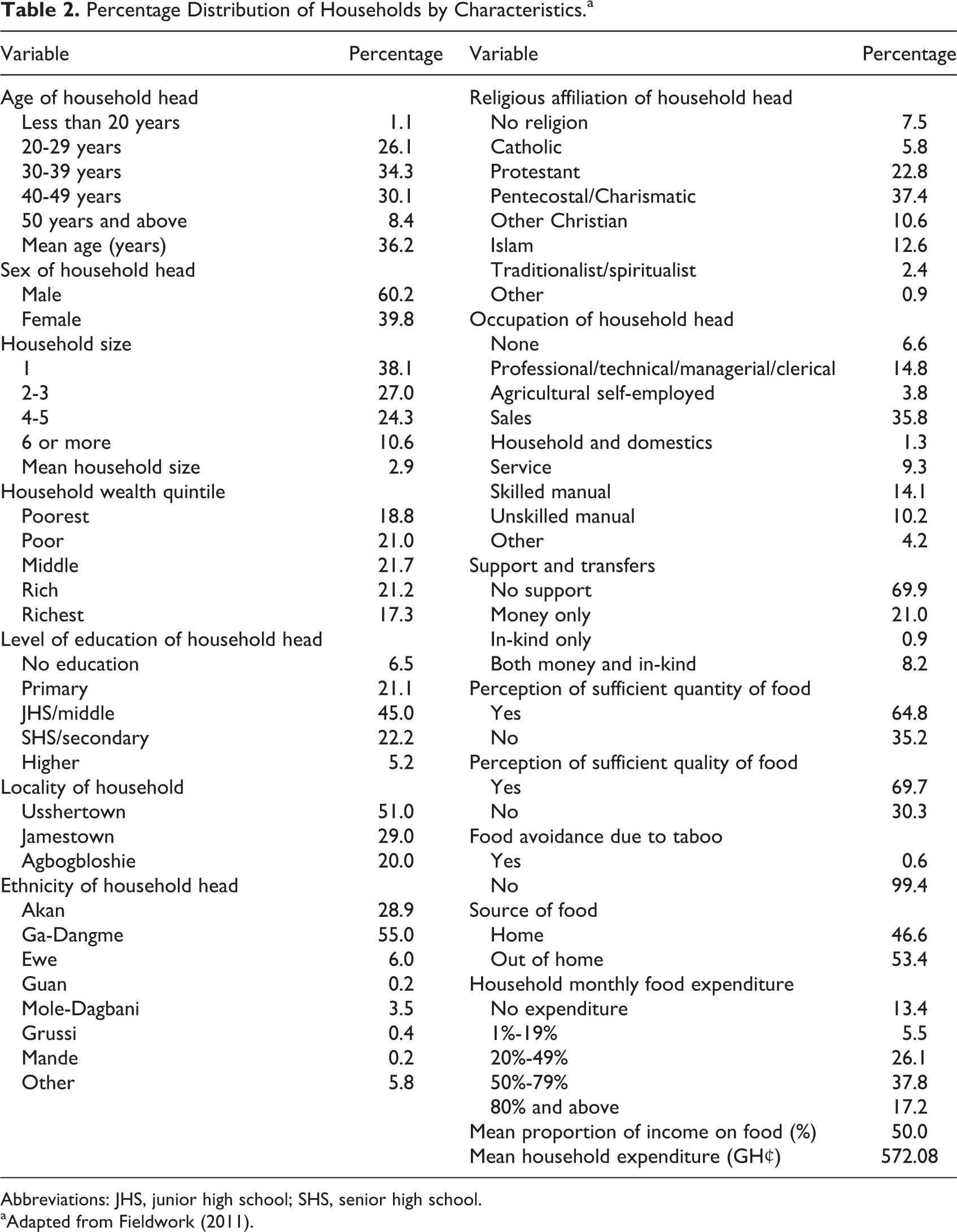
Table 2 shows that the mean age of household heads is 36.2 years, and 60.2% and 39.8% of household heads are males and females, respectively. The mean household size is 2.9 persons, with 38.1% being single-member households. Furthermore, slightly more than one-third (39.8%) of the households is in the poor and the poorest quintiles, and 21.2% and 17.3% are in the rich and richest wealth quintiles. Although 6.5% of heads of households have no formal education, 5.2% have higher education.
Percentage Distribution of Households by Characteristics.a
Abbreviations: JHS, junior high school; SHS, senior high school.
aAdapted from Fieldwork (2011).
More than half (51.0%) of the sampled households is in Usshertown, followed by Jamestown (29.0%) and Agbogbloshie (20.0%). As expected, most (55.0%) of the household heads are Ga-Dangme, followed by Akan (28.9%). Furthermore, more than one-third (37.4%) of household heads are Pentecostals/Charismatic, and 7.5% has no religion. With regard to occupational status, a relatively larger proportion (35.8%) of household heads is involved in sales, and 14.8% engage in professional/technical/managerial or clerical work.
Overall, 69.9% of all households did not receive any form of financial or in-kind support within the reference period. Of the 30.1% that received support, 21.0% was in the form of money only, whereas 8.2% received both money and in-kind. Furthermore, although 64.8% of household heads perceive that they have sufficient quantity of food, 69.7% perceive that they have sufficient quality of food. In addition, 99.4% of household heads indicated that they do not abhor any food due to cultural taboos. Regarding source of food, 53.4% of the households consumed foods prepared outside the home, and 46.6% consumed foods prepared at home. The analysis further shows that 13.4% of households have no expenditure on food and depend on their harvests from fishing and farming. The mean proportion of income on food is 50%, and the mean monthly household food expenditure is GH¢ 572.08.
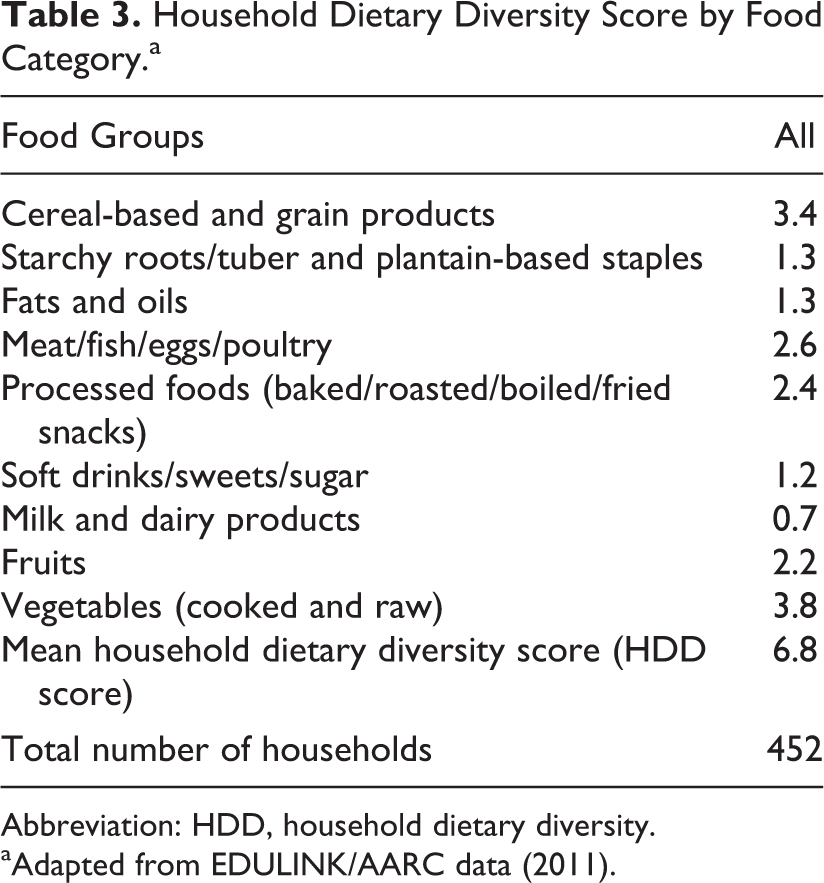
Table 3 shows that the mean HDD for all households is 6.8, which suggests that on average, every household consumed almost 7 different food groups in the 7-day period preceding the survey. Vegetables have the highest diversity (3.8), followed by cereal-based and grain products (3.4). Consumption of foods rich in micronutrient such as fruits and milk/dairy products was relatively low, and this could be due to high prices attached to such commodities, 58,59 lack of nutritional knowledge, and social factors such as taste and preference.
Household Dietary Diversity Score by Food Category.a
Abbreviation: HDD, household dietary diversity.
aAdapted from EDULINK/AARC data (2011).
Bivariate Analysis
This section presents the bivariate relationship between household characteristics and dietary diversity. A test of statistical association was performed between all the independent variables and the dependent variable. In all, only the age and the educational level attained by the household head had statistically significant association with dietary diversity, and the rest of the independent variables were not significant.
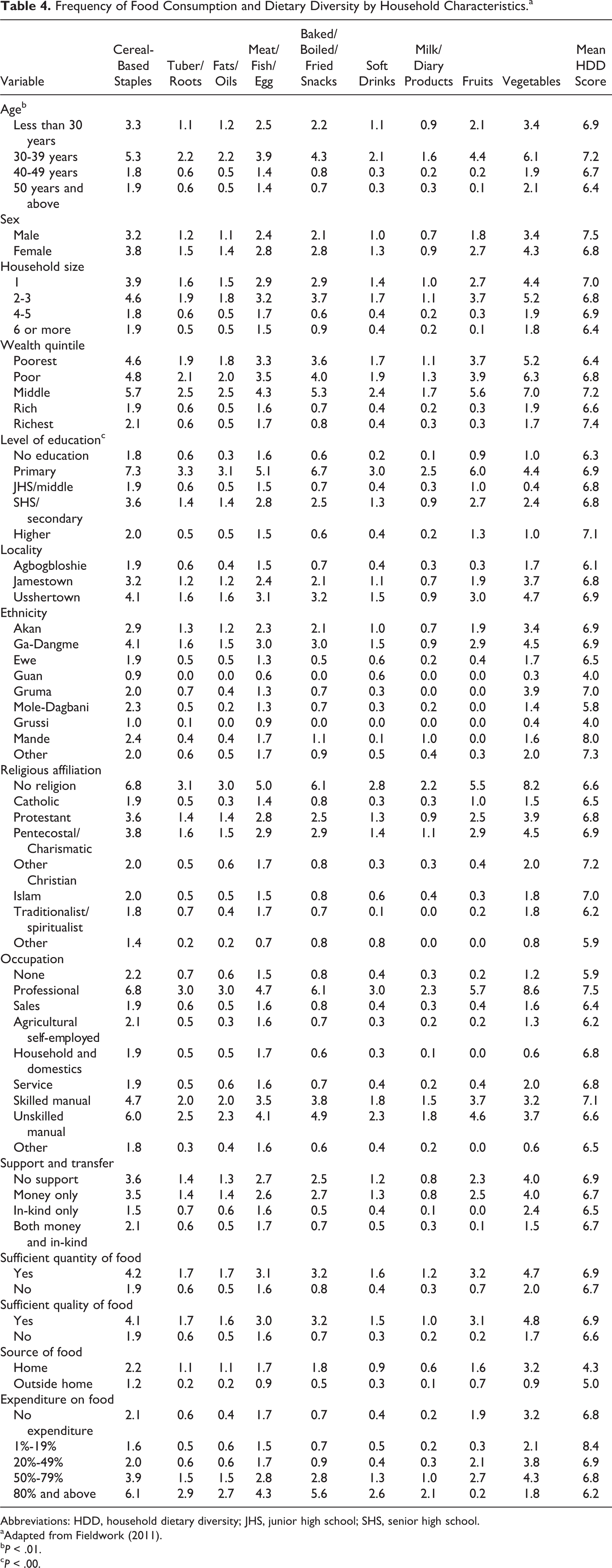
As shown in Table 4, households with heads in their 30s have the highest dietary diversity (7.2) and households with heads in the 30- to 39-year age category have the highest frequency of consumption for all food categories. Households with male heads have a higher dietary diversity (7.5) compared to households with female heads (6.8). However, households with female heads have the highest frequency of consumption for all food groups.
Frequency of Food Consumption and Dietary Diversity by Household Characteristics.a
Abbreviations: HDD, household dietary diversity; JHS, junior high school; SHS, senior high school.
aAdapted from Fieldwork (2011).
b P < .01.
c P < .00.
Single-member households have the highest dietary diversity (7.0), and as expected, households in the richest wealth quintile have the highest dietary diversity (7.4). In addition, households with heads having higher education have the highest dietary diversity of 7.1, and consumption frequency of all food categories is highest among households with heads having primary education. Regarding locality of residence, Usshertown (6.9) and Jamestown (6.8) are generally more advantaged than Agbogbloshie (6.3) in terms of dietary diversity and consumption frequency of food categories.
In terms of ethnicity, households with heads that belong to the Mande ethnic group have the highest dietary diversity (8.0), followed by Gruma (7.0) Akan (6.9), and Ga-Dangme (6.9). Furthermore, households with heads who are Ga-Dangme have the highest consumption frequency for all the food categories. The results further indicate that households with heads who are of the category “other Christians” have the highest dietary diversity of 7.2, however, households with heads having no religion have the highest consumption frequency for all the food categories.
Households with heads who have professional/technical/managerial/clerical occupations have the highest dietary diversity (7.5) and the highest consumption frequency. As expected, households with heads who perceived that their households have sufficient quality and quantity of food recorded higher dietary diversities and consumption frequencies. Table 4 also shows that households that mainly derive their meals cooked outside have a higher dietary diversity, however, households that eat home-cooked meals have a higher consumption frequency. Finally, households that spend less than 20% of their household income on food have the highest dietary diversity, and households that spend 80% or more of their income on food have the highest consumption frequency.
Multivariate Analysis
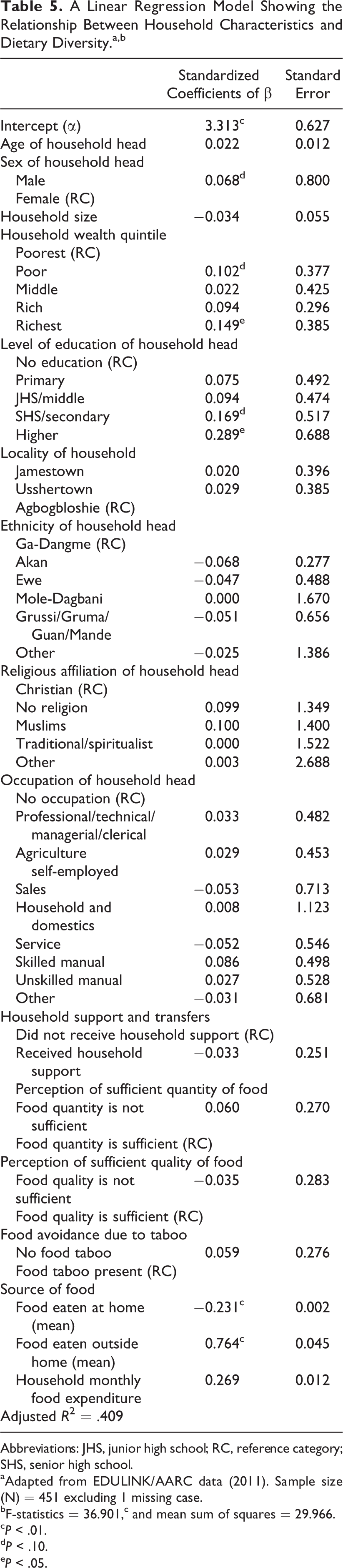
The model shows that 40.9% of the changes in HDD are explained by household characteristics. The F-statistics of the model is significant at 99% confidence interval, indicating that the model is a good fit. Table 5 shows that the independent variables that have statistically significant associations with dietary diversity are sex of household head, household wealth quintile, level of education of household head, and source of food. The remaining household characteristics were not significant predictors of HDD. Male-headed households are likely to have 0.068 units more of dietary diversity compared to female-headed households. This could be attributed to differences in access to resources and income, which culminates in better purchasing power. Other studies have shown that female-headed households are more vulnerable to food insecurity, compared to male-headed households. 25,35,49
A Linear Regression Model Showing the Relationship Between Household Characteristics and Dietary Diversity.a,b
Abbreviations: JHS, junior high school; RC, reference category; SHS, senior high school.
aAdapted from EDULINK/AARC data (2011). Sample size (N) = 451 excluding 1 missing case.
bF-statistics = 36.901,c and mean sum of squares = 29.966.
c P < .01.
d P < .10.
e P < .05.
Table 5 further shows that households in the poor and richest wealth quintiles have higher dietary diversity compared to households in the poorest wealth quintile. Households in the poorest quintile, because of their financial situation, are unable to afford varieties of foods. However, households in the richest wealth quintile have more financial resources for diverse foods. The analysis further shows that households with heads having SHS and higher education have more dietary diversity compared to households with heads having no education. This may be due to the fact that households whose heads have SHS/secondary and higher education are those engaged in professional occupations, which are associated with better employment opportunities and subsequently higher incomes. Thus, those households have better purchasing power and can afford a variety of foods. Education may have also provided these household heads with knowledge on nutritional benefits of a balanced diet.
Finally, although households that eat home-prepared meals have less dietary diversity, households that eat food prepared outside their homes have more dietary diversity. This could be due to the fact that home-made foods may only be of a specific type, and therefore, it limits a household to the consumption of certain types of food. Due to the busy nature of urban life, some household heads stated that they preserve home-prepared stews, soups, sauces, kenkey, banku, and fufu in refrigerators for days and, in some instances, for weeks. Until the stored foods are depleted, new ones are not prepared. This practice limits the consumption of other food types. 45 On the other hand, foods prepared outside the home are always available and in varieties.
Conclusion
As urban food demand rises, food supply and distribution systems have to supply the inhabitants of cities with increasing amounts of food coming from ever more distant production zones and/or from more intensive production systems. 60 Urban areas will provide the necessary incentives for increased national production made possible by more remunerative producer prices. The challenges facing decision makers in the years to come is how to meet the rapidly increasing urban food demand, while reducing dependence on imports, and achieving an efficient and dynamic distribution of nutritious foods at reasonable prices to the poorest sectors of urban populations, while creating jobs in the food marketing and distribution sectors. 61
Numerous studies in the past have used a dietary diversity measure to ascertain food security status, and others have gone on to link dietary diversity to several outcome variables. However, those studies have been mainly undertaken at the multicountry and country levels to the detriment of the household. In addition, studies in urban settings have been very few, especially in sub-Sahara African cities. Yet, it is imperative that assessments of food security are undertaken particularly in urban settings, due to the projected fast rate of urbanization and the challenges of attaining food security in urban settings. This article examined household characteristics and dietary diversity as a measure of food security in Accra. The objective is to contribute to the discussion on dietary diversity and food security within the context of rapid urbanization occurring globally, but especially in sub-Saharan Africa.
The study shows that the mean dietary diversity for all households is 6.8, which suggests that on average, every household consumed almost 7 different food groups in the 7-day period preceding the survey. Vegetables have the highest diversity (3.8), followed by cereal-based and grain products (3.4). Consumption of foods rich in micronutrient, such as fruits and milk/dairy products, was relatively low, and this could be due to high prices attached to such commodities, lack of nutritional knowledge, and social factors such as taste and preference.
Results from a multivariate analysis show that household characteristics that have statistically significant associations with dietary diversity include sex of household head, household wealth quintile, level of education of household head, and source of food. The analysis indicated that female-headed households, the poorest households, and households with noneducated heads had lower dietary diversity compared to male-headed households, richest households, and households with heads educated at the SHS/higher levels.
The study recommends a few pointers for policy. First, a closer look at the significant variables in the multivariate analysis brings to the fore issues related to resource-disadvantaged entities of the urban system, namely, females, poor households, and the noneducated. It is recommended that the Government of Ghana should intensify efforts being made to improve the living conditions of females and poor households. Education has also been demonstrated here as in numerous studies as a key socioeconomic indicator of success or otherwise. Some members of these study communities of Accra with substantial proportions of migrants have peculiar challenges with education. This is due to the fact that to be able to meet the heavy financial demands of city life as well as remunerating family members back at home, these migrants engage in the brisk business activities that the city business district offers to the detriment of their education. Thus, efforts being made to improve educational levels in the country should also specifically target members of these migrant communities in the cities.
Second, in the short run, there is a need to encourage households to increase intake of other food groups, for example, fruits and milk/dairy products other than concentrating on the consumption of cereal-based foods. This can be achieved with an increase in the production and supply of such food commodities (horticulture) in the long run rather than encouraging massive production of low-nutrient energy-dense foods. As well, regulating the influx of imported food products while subsidizing the cost of locally produced food commodities and infrastructural improvements will go a long way in regulating distribution and market prices, making those foods not only available but also affordable.
In Accra, food consumption is deeply entrenched in people’s culture, making attempts to introduce new but more nutritious foods difficult. Promoting a shift to richer natural organic foods should be at the core of a long-term strategy. Nevertheless, there is a further need for a more rigorous sensitization on nutrition to address changes in consumption behaviors and to promote awareness of the dangers involved in dietary inadequacy or excessive consumption of specific diets, such as obesity, cardiovascular diseases, and diabetes.
Finally, further research should be undertaken to address the paucity of data on food consumption at the intrahousehold level, which will allow for the development and testing of a more comprehensive, reliable, and valid measure of food security. Household dietary diversity measures, if appropriately used alongside other components of food security measures such as food access and food availability, may yield a substantive proxy measure to food security at individual, household, community, and national levels.
Footnotes
Acknowledgments
The authors are grateful to the International Development Research Centre of Canada for providing funding for this study through the Climate Change Adaptation Research Training Capacity for Development (CCARTCD) Project.
Authors’ Note
S.N.A.C., D.O., and M.A. contributed equally to the conceptualization, analysis, and write-up of the manuscript. Any underlying research materials related to this article can be accessed from the lead author at
Declaration of Conflicting Interests
The author(s) declared no potential conflicts of interest with respect to the research, authorship, and/or publication of this article.
Funding
The author(s) disclosed receipt of the following financial support for the research, authorship, and/or publication of this article: This study received funding through the Climate Change Adaptation Research Training Capacity for Development (CCARTCD) Project of the International Development Research Centre (IDRC) with Component Number: 106548-001.