



Abstract
The battery electric truck (BET) has emerged as a promising solution to reduce greenhouse gas emissions in urban logistics, given the current strict environmental regulations. This research explores the formulation and solution of the bi-objective BET dispatching problem with backhauls and time windows, aiming to simultaneously reduce environmental impacts and enhance the efficiency of urban logistics. From the sustainability perspective, one of the objectives is to minimize total energy costs, which include energy consumption and battery replacement expenses. On the other hand, from an economic perspective, the other objective is the minimization of labor costs. To solve this bi-objective BET dispatching problem, we propose an innovative approach, integrating an adaptive large neighborhood search-based metaheuristics algorithm with a multi-objective optimization strategy. This integration enables the exploration of the trade-off between fleet energy expenses and labor costs, optimizing the dispatching decisions for BETs. To validate the proposed dispatching strategy, extensive experiments were conducted using real-world fleet operations data from a logistics fleet in Southern California. The results demonstrated that the proposed approach yields a set of Pareto solutions, showcasing its effectiveness in finding a balance between energy efficiency and labor costs in urban logistics systems. The findings of this research contribute to advancing sustainable urban logistics practices and provide valuable insights for fleet operators in effectively managing BET fleets to reduce environmental impacts while maintaining economic efficiency.
Keywords
Urban freight transportation plays an important role in fostering economic development and sustainability within cities, garnering attention from stakeholders in both the public and the private sectors. For example, the U.S.A. has set a goal to achieve a 50%–52% reduction in greenhouse gas (GHG) emissions below 2005 levels economy-wide, including from the transportation sector, by 2030 ( 1 ). As another example, the European Environment Agency has planned to reduce GHG emissions from transportation to a level of 6% below 1990 levels by 2030 ( 2 ). These ambitious goals have led to the implementation of diverse policies and measures, particularly promoting low-carbon fuels and electric vehicles (EVs). Among others, battery EVs have emerged as a promising and viable option to achieve sustainable urban freight transportation and contribute toward reaching these environmental targets.
In recent years, there has been a surge in the adoption of EVs such as battery electric trucks (BETs) within the logistics and transportation network planning domain. Notably, this trend is evident in various applications, such as EV routing ( 3 – 8 ), BET fleet dispatching ( 9 – 12 ), and electric bus scheduling ( 13 , 14 ). Those efforts have been made to reduce GHG emissions through efficient routing and scheduling of EVs. This is especially important for heavy-duty (i.e., Classes 7 and 8) BETs, which are subject to limitations such as short range of travel, high vehicle purchase and battery replacement costs, scarcity of recharging stations, and long recharging time.
Our study is motivated by the pressing need to curb transportation-related GHG emissions and establish a sustainable urban freight dispatching strategy. However, we recognize the inherent conflict between two essential perspectives when developing such a strategy—the need to address environmental concerns while also meeting economic goals. On the one hand, from a sustainability point of view, an energy-efficient dispatching approach is desired to minimize total energy consumption. On the other hand, a time-efficient routing strategy is crucial to ensure the optimal level of service and customer satisfaction.
For instance, cargo weight is one of the key factors influencing heavy-duty BET energy consumption, especially for Class 8 BETs. During a route, more energy is consumed when a BET travels long distances with a full or heavy load. Consequently, decision-makers may adjust the service sequences of BETs to achieve an energy-efficient dispatching solution for the truck fleet. In that case, customers who require heavy cargo may have priority. The BET can visit them first to reduce the cargo weight, and then visit the remaining customers. Thus, this adjustment may lead to an increase in the total travel time, potentially causing delays for other customers and reducing the level of service.
Researchers have applied techniques from multi-objective optimization (MOO) to solve multi-objective vehicle routing problems. For example, Demir et al. ( 15 ) extended the traditional pollution routing problem (PRP) and proposed a bi-objective PRP model for an internal combustion engine vehicle fleet. The first objective is minimizing fuel consumption while the second objective is minimizing the total travel time. To address this problem, the authors incorporated MOO techniques with an adaptive large neighborhood search (ALNS) metaheuristic, where the ALNS is a search engine to find a set of Pareto solutions. Muñoz-Villamizar et al. ( 16 ) introduced a bi-objective urban transport network model aimed at improving the efficiency of urban logistics while simultaneously reducing environmental impacts and maintaining service levels. Specifically, the authors investigated the efficient trade-off between potential economic impacts and GHG emission reduction when implementing an EV fleet. A weighted method was introduced to find the efficient frontier of the problem. Recently, Amiri et al. ( 17 ) introduced a green vehicle routing problem (G-VRP) variant and considered a heterogenous truck fleet, which includes heavy-duty diesel trucks and BETs. The authors first investigated the economic impact as one objective when deploying the mixed truck fleet. To address environmental concerns, they also considered GHG emissions as the second objective.
Contrary to the traditional PRP ( 15 ), developing a dispatching strategy for a BET fleet poses greater challenges. Since BETs have limited battery capacity (and thus, range), decision-makers need to consider an optimal recharging scheme at both the tactical and operational levels when necessary. Firstly, an en route partial recharging policy ( 18 ) should be taken into account. This policy has the potential to reduce idle time and improve dispatching efficiency. Secondly, because of the scarcity of charging stations, BETs may need to make a detour to reach a suitable recharging station. In this study, we incorporate these practical considerations in the design of BET dispatching strategies.
In addition, the proposed BET dispatching problem considers a backhaul strategy, where the BET routes follow a last-in, first-out rule ( 19 ). It has been demonstrated as a sustainable way to improve the dispatching efficiency in urban logistics ( 20 ). To do this, customers are categorized into linehaul customers, who require deliveries, and backhaul customers, who require pickups. The pickup orders are only initiated once all deliveries are completed. This strategy is commonly known as the vehicle routing problem with backhauls (VRPB) ( 21 ). Over the years, various approaches have been proposed to solve the VPRB, including exact methods ( 21 , 22 ) and metaheuristics approaches ( 23 – 25 ).
Major contributions of this paper to the research field are summarized as follows.
Formulation of a bi-objective BET dispatching problem: A novel bi-objective dispatching problem is proposed for BET fleets, considering important factors such as backhauling, en route partial recharging policy, limited range and capacity, and time window constraints. This extended formulation of the classic G-VRP incorporates two objective functions, total BET fleet energy cost and total labor cost, addressing both environmental and economic concerns.
Development of an efficient dispatching strategy: An advanced dispatching algorithm is developed to solve the bi-objective BET dispatching problem. The algorithm combines the ALNS metaheuristics with a MOO approach. By leveraging the ALNS framework, the algorithm searches for a set of Pareto solutions that provide versatile dispatching guidance for fleet operators.
Validation with benchmark and real-world fleet dispatching data: To assess the performance of the proposed dispatching algorithm with respect to solution quality and computation time, we apply our dispatching algorithm to a VRPB benchmark dataset ( 21 ) and find that it achieves the best-known solution (BKS) in 16 instances (out of 62). The deviation between our best solution and the BKS is less than 1% for more than half of the problem instances, demonstrating the efficacy of our algorithm. In addition, the ALNS framework is extensively validated using real-world fleet dispatching data, confirming the effectiveness of the dispatching algorithm in practical applications.
Overall, this research significantly contributes to advancing the field of sustainable urban logistics and BET fleet management, providing valuable insights and practical tools for optimizing dispatching decisions while considering energy efficiency and cost-effectiveness.
The remainder of this paper is organized as follows. The second section presents a mixed-integer linear programming (MILP) model of the bi-objective BET dispatching problem. The third section describes the methodology of the ALNS-based metaheuristics algorithm, integrated with a MOO approach to effectively solve the proposed problem. The fourth section is dedicated to the evaluation of the solution performance based on a VRPB benchmark dataset as well as a real-world case study. Finally, the fifth section concludes the paper and outlines potential directions for future work.
Problem Description and Formulation
The proposed bi-objective BET dispatching problem considers a set of customers with known delivery type (pickup or delivery), appointment time windows, service time, demand, and address. The dispatcher should make a dispatching decision for a fleet of BETs with limited cargo payload and battery capacity, following the last-in and first-out strategy. The goal is to construct optimal routes that start from the depot, visit all customers exactly once following a first-out and last-in rule, and return to the same depot within the predefined operation time. Specifically, a possible en route recharging scheme is considered during the route planning when the BET route is energy infeasible.
There are two conflicting objectives during the decision-making stage: fleet energy cost (i.e., battery electricity and depletion cost) and labor cost. The first objective is to minimize the fleet energy cost related to battery energy consumption, recharging cost, and battery replacement cost in urban distribution. The second objective is minimizing the labor cost, which is a linear combination of travel and recharging time. Considering a realistic energy consumption model (detailed in the BET Fleet Energy Cost of Transportation section), the cargo weight and travel distance can influence the total energy consumption. So, the BET may detour to avoid a full truckload with long trips. Therefore, the total travel time could be increased because of the detour.
A bi-objective evaluation is recommended to estimate the efficient frontier between fleet energy and labor costs. The detailed mathematical formulation of those objectives is described in the BET Fleet Energy Cost of Transportation and Travel Time Cost of Transportation sections, following the Problem Description section.
Problem Description
The proposed BET dispatching problem requires decision-making at two levels: (1) the strategic level, where an en route recharging schedule needs to be located during dispatching; and (2) the tactical level, which determines the energy-efficient routing strategy of the BET fleet considering the backhauling strategy, time windows, and partial recharging policy.
To formulate the BET dispatching problem, we define it on a complete directed graph
The arc set is defined by
BET Fleet Energy Cost of Transportation
The first objective function of the bi-objective BET dispatching problem is to minimize the total energy cost, which consists of total energy consumption, recharging, and battery replacement costs. In addition, we consider the microscopic energy consumption models presented by Wang et al. ( 26 ) and Goeke and Schneider ( 3 ) to estimate BET energy consumption in each arc.
Figure 1 illustrates the calculation of required energy consumption for the BET. We first determine the mechanical power applied to fulfill its acceleration and overcome the air and rolling resistance. Then, electric power output
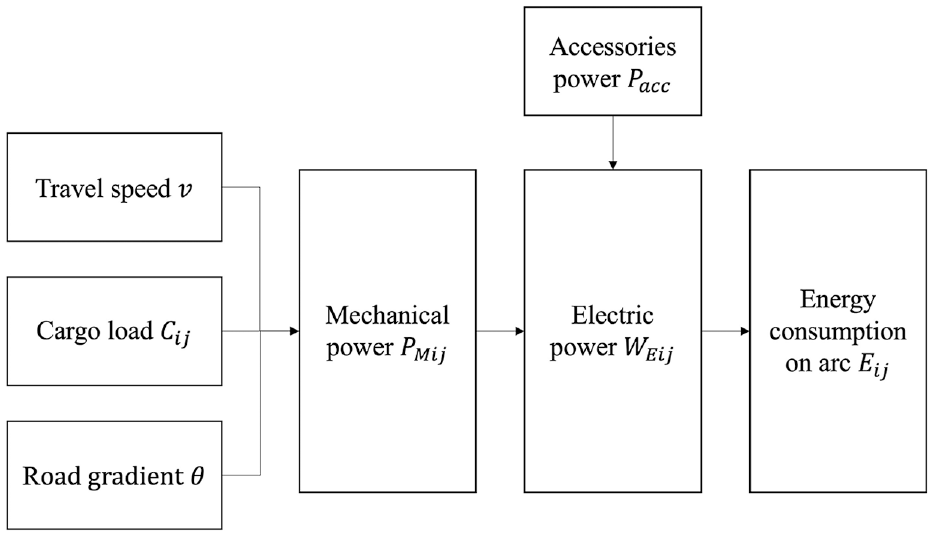
Calculation of required energy on an arc.
The rolling resistance

Considering the speed

Therefore, the total mechanical power
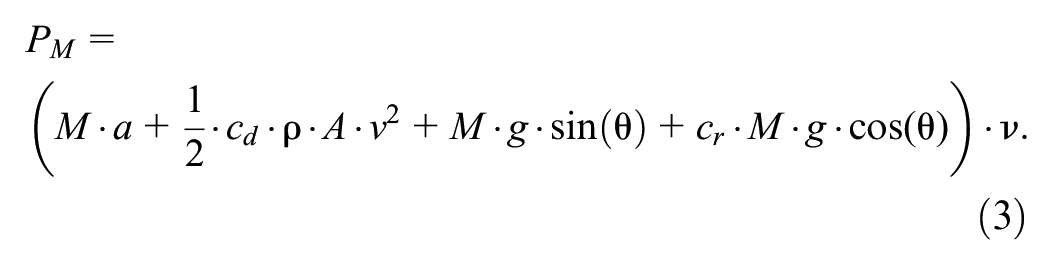
The mechanical and accessory energy required by the BET is estimated by the following:

where
Therefore, the motor efficiency
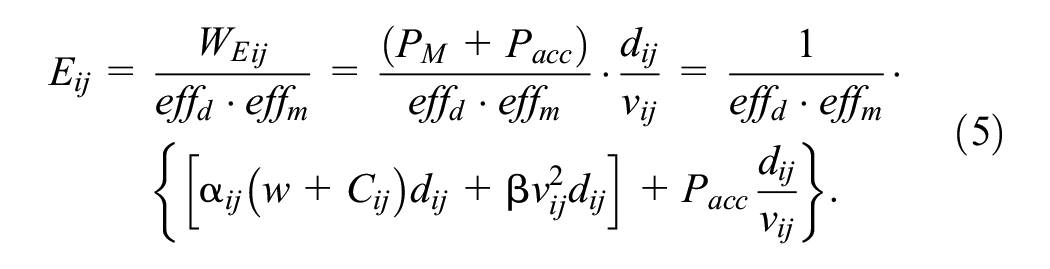
In this study, minimizing the total fleet energy cost

Travel Time Cost of Transportation
The second objective function of the bi-objective BET dispatching problem is to minimize the total labor cost of transportation with respect to travel time. It consists of travel times, loading/unloading service times at each customer, and idling time at the recharging station. Table 1 summarizes the variable definitions in our model:

Notations and Vehicle Parameters of the Mathematical Model
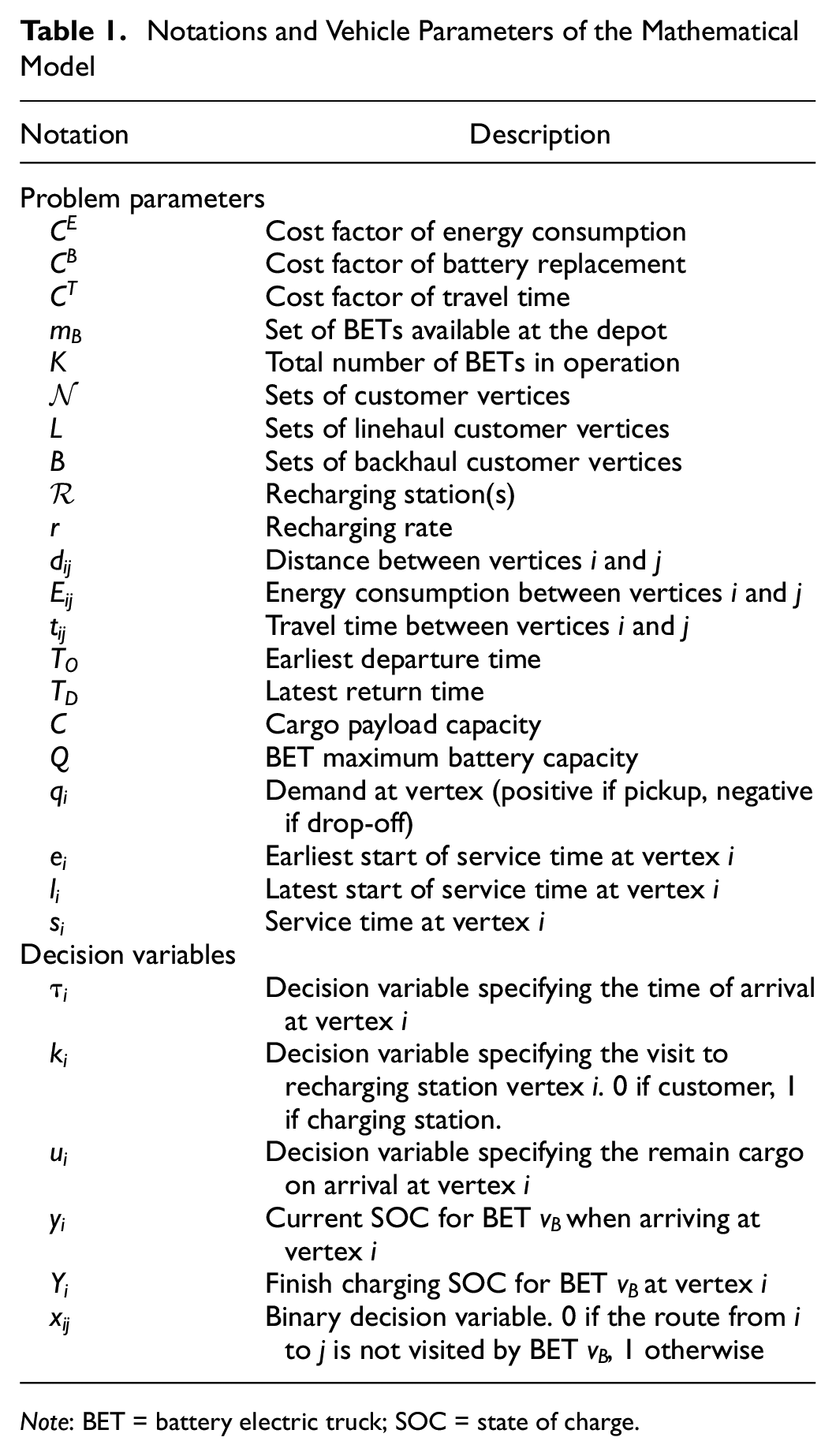
Note: BET = battery electric truck; SOC = state of charge.
Multi-Objective Evaluation and Constraints
The multi-objective evaluation is used to evaluate the impact of the fleet energy cost and the labor cost of transportation by identifying a set of non-dominated solutions (i.e., Pareto optimal solutions). When searching for the Pareto optimal solutions, it attempts to improve one of the objective functions without compromising the other. Thereby, one way is to use the weighted method, which minimizes the weighted sum of the objective functions. This method transfers a multi-objective function to a single objective function by multiplying a weighted sum of factors. The mixed-integer programming formulation of our problem is shown in Equation 8. We define non-negative weighting factors
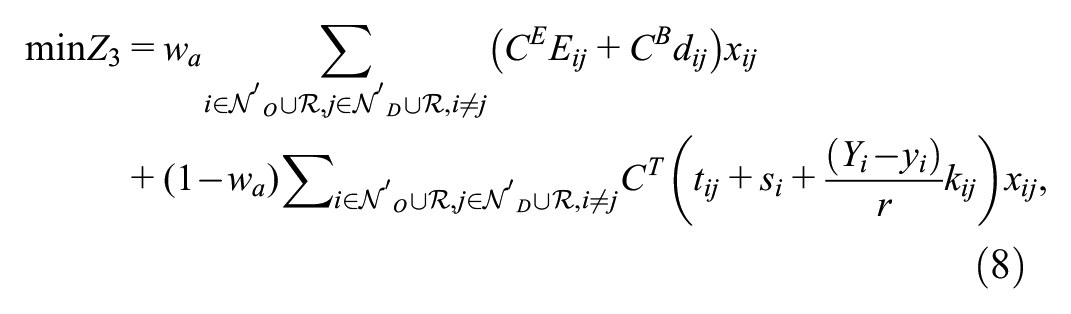
subject to the following.
Demand and flow balance constraints:





Vehicle constraints:

Recharging constraints:

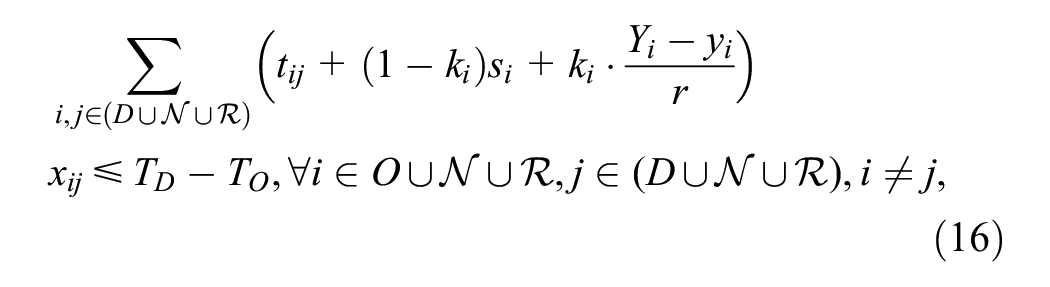


Time window constraints:


Demand constraints:


Binary decision variable:

Constraints 9–11 define the forward and backward flow conservation constraints. Constraints 12 and 13 ensure that the number of routes equals the number of operating BETs. Constraint 14 defines that the BET fleet is fully recharged with battery capacity
Methodology
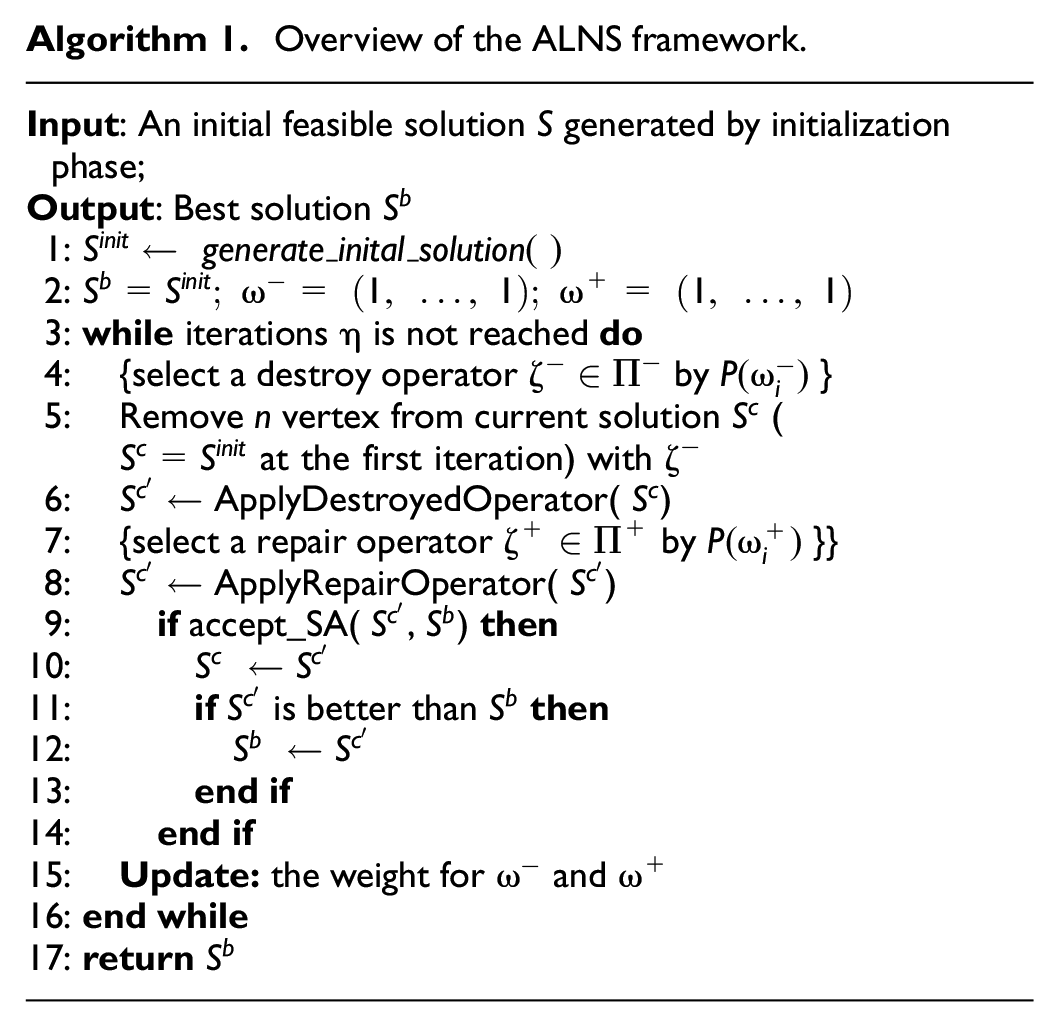
In this section, an ALNS metaheuristic is proposed to solve the bi-objective BET dispatching problem. There are two main goals for the developed ALNS framework. One on hand, the ALNS is used as a searching engine to find a set of Pareto solutions for the proposed bi-objective BET dispatching problem. On the other hand, an en route partial recharging schedule is scheduled for the BET fleet. An overview of the ALNS framework is described in Algorithm 1.
Overview of the ALNS framework.
Generation of the Initial Solution
The initial solution for ALNS is generated by a greedy constructive heuristic. At the beginning, unvisited customers are first sorted in a non-decreasing order according to the cost function
Destroy and Repair Operators
Our ALNS framework uses five destroy operators for removing
Our ALNS framework applies four repair operators to reconstruct all unvisited customers such that the new solution is feasible. Figure 2 shows an example of the repairing process.
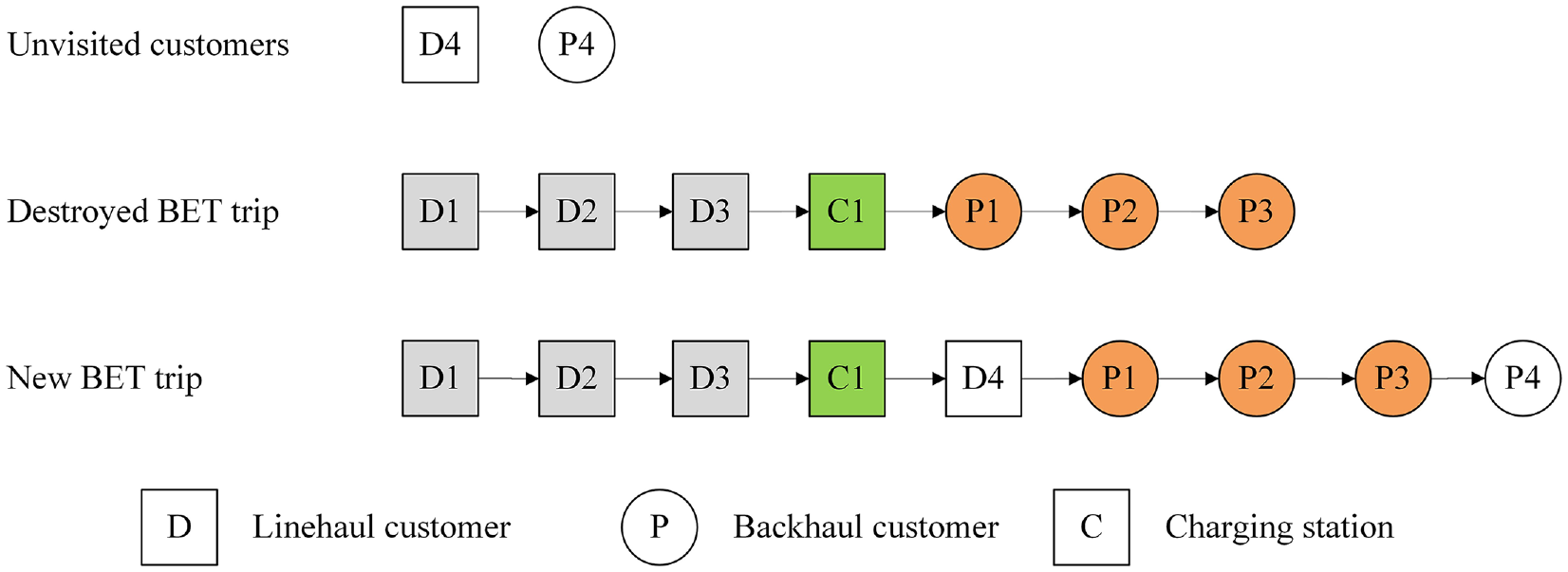
An example of the repairing process.
ALNS Improvement
The ALNS algorithm iteratively uses the removal and repair operators described above to construct new solution
In our ALNS framework, a simulated annealing (SA) heuristic is used to accept or reject the new solution
An adaptive mechanism is used to update the weight of the removal and repair operators with respect to their performance. In each iteration, there are four possible outcomes of the new solution
Numerical Studies
To evaluate the proposed BET dispatching strategy in the real-world scenario, this section presents numerical tests using real data from a full-service supply chain company. The section is structured as follows. The Experiment Design and Parameter Setting section presents the characteristics of the real-world data and the parameter settings used in our study. In the Experiments on Standard VRPB Instances section, we assess the solution quality of the proposed ALNS algorithm by testing it on the standard VRPB benchmark dataset ( 21 ) and comparing the results with the BKSs in the literature. The Bi-Objective Model Results Analysis section analyzes the results of the bi-objective BET dispatching problem.
The mathematical models described in our study are programmed in Python 3.9 language. The experiments of the bi-objective BET dispatching problem are conducted on an online server with 32 GB RAM. The test performed on the benchmark instances is conducted on a desktop computer with an Intel Core i7 CPU 3.6 GHz processor and 16 GB RAM. The data and detailed routes are open access via GitHub (https://github.com/CurtisPeng123/Results-for-the-standard-VRPB-dataset-GJ89-).
Experiment Design and Parameter Setting
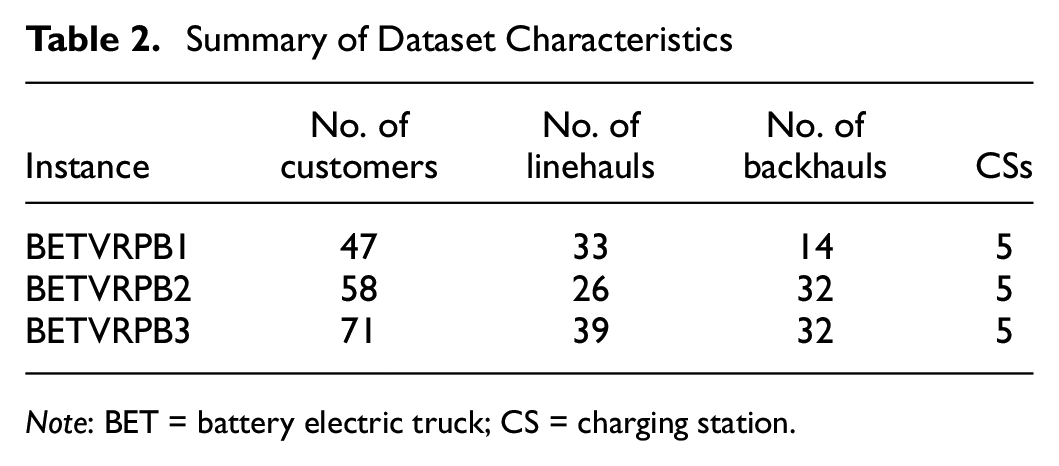
The experimental data is obtained from a logistics company that operates in Riverside and San Bernardino Counties, California. It contains one-day historical itineraries of a heavy-duty diesel truck fleet, including customer IDs, locations, service types (delivery or pickup), required demands, service times, and required time windows. Three BET dispatching instances are sampled from the historical data with different customer sizes to assess the performance of the proposed dispatching approach. In each instance, five customers are randomly selected where a charging station is equipped in their parking lot. A BET can be recharged immediately when arriving at the charging stations. Table 2 summarizes the characteristics of the generated instances.
Summary of Dataset Characteristics
Note: BET = battery electric truck; CS = charging station.
Based on the customer’s location information, the Direction Service Application Programming Interface (DSAPI) provided by OpenRouteService ( 28 ) is used to generate geographical travel distance and travel time matrices for the truck routes. Those matrices consider the urban transport network, speed limitation, and restricted zones for the heavy-duty trucks.
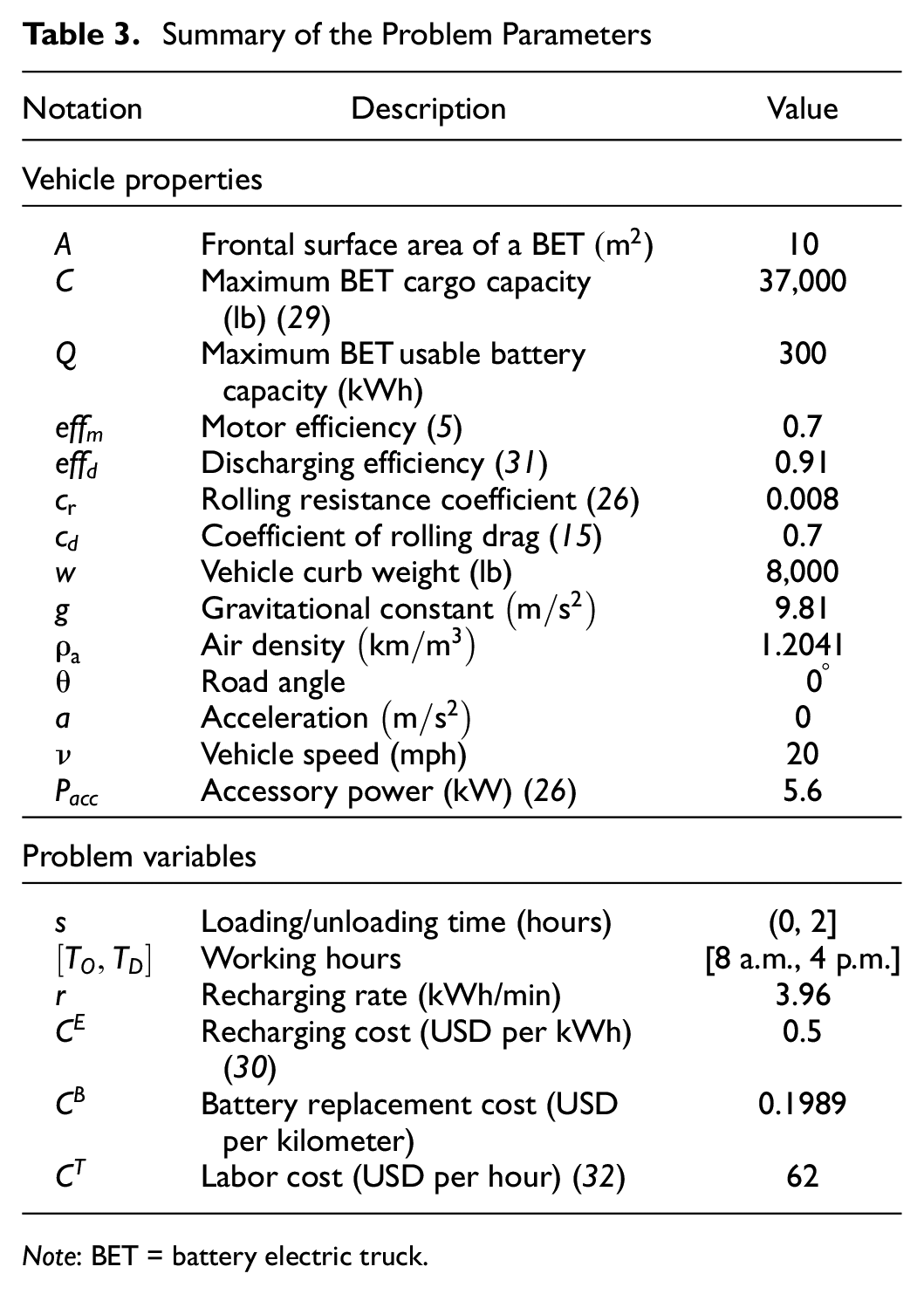
In the numerical study, we use the properties and coefficients of a Class 8 BET model that is commercially available in the current U.S. market ( 29 ). To safely use the battery and extend its life, this study assumes the usable battery capacity of the BET to be 300 kWh, which is 80% of its nominal value (i.e., 375 kWh) as given in VNR Electric Specifications ( 29 ). The accessory power of the BET is set to 5.6 kWh, as described by Wang et al. ( 26 ). For the energy cost, the recharging cost is set to 0.5 dollars per kWh at high peak times ( 30 ) using 250 kW DC fast chargers. Table 3 summarizes the problem parameter settings.
Summary of the Problem Parameters
Note: BET = battery electric truck.
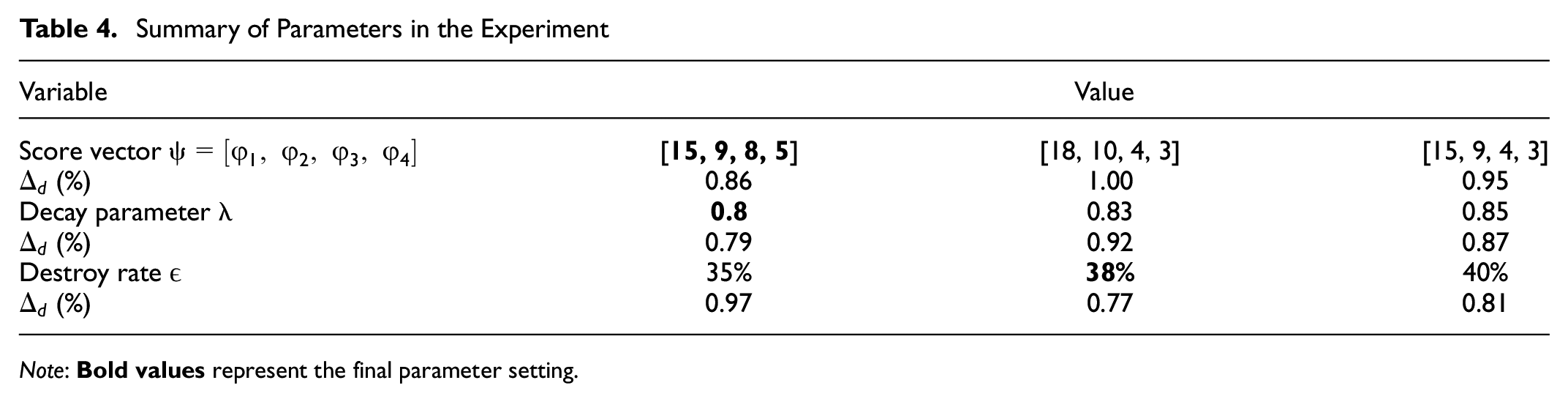
We used the instance BETVRPB1 with 47 customers to find appropriate parameter values. The first objective function is used to tune the parameters. Similar to the parameter tunning process in Ropke and Pisinger (
33
), a preliminary analysis was conducted to initialize the parameters. We predefine a set of candidate parameter values in Table 4 that have a stronger influence on the performance of the ALNS framework. Next, we vary one parameter value while holding the rest the same, and then run the algorithm 10 times. A preferred parameter value is defined by observing the minimum cost. Therefore, the bold values in Table 4 are the fine-tuned parameters used in the experiment. The average deviation (in percentage) between the results for the tested settings for each parameter and the best results we obtained is reported as
Summary of Parameters in the Experiment
Note:
The complete parameter tuning leads to the parameter vector
Experiments on Standard VRPB Instances
To assess the performance of our BET dispatching strategy with respect to the solution quality and solution time, we implement the proposed ALNS framework on the standard VRPB instance set of Goetschalckx and Jacobs-Blecha ( 21 ) (GJ89). The GJ89 instance set contains a total of 14 groups that include 62 problem instances with customer size ranging from 25 to 150. It has been used to evaluate the performance of algorithms for solving standard VRPB by Toth and Vigo ( 22 ), Ropke and Pisinger ( 23 ), and Brandão ( 24 ).
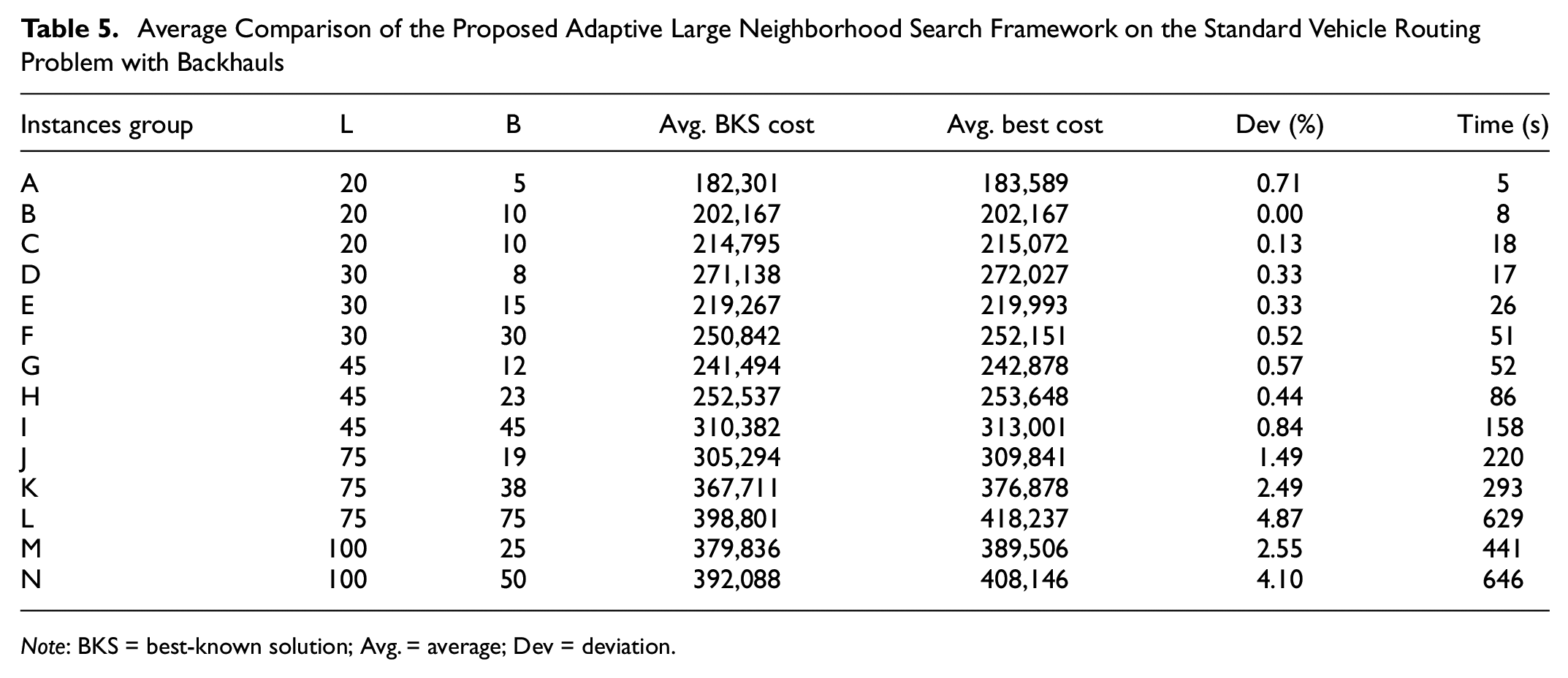
Using the parameter settings in Table 4, the ALNS framework aims to minimize the total travel distance objective in the standard VRPB instances. We use the double precision method ( 23 ) to compute the Euclidian distance. The results are rounded to the nearest integer value. Table 5 summarizes the results for the standard VRPB instances with 14 groups. Columns L and B represent the number of linehaul and backhaul customers, respectively. The average results demonstrate that our dispatching strategy generally performs well for the problem instances with fewer than 90 customers, where the average deviation is less than 1% compared to the BKS cost.
Average Comparison of the Proposed Adaptive Large Neighborhood Search Framework on the Standard Vehicle Routing Problem with Backhauls
Note: BKS = best-known solution; Avg. = average; Dev = deviation.
In the Appendix, we present detailed results obtained by our ALNS algorithm and compare them with the BKS reported by Koç and Laporte ( 34 ) as well as the solutions obtained by other metaheuristic algorithms in the literature. The abbreviations of the papers that we use for comparison are as follows: RP06 for Ropke and Pisinger ( 23 ) and B16 for Brandão ( 24 ). Our proposed ALNS algorithm can obtain the BKS in 16 of the 62 instances. The results indicate that our proposed ALNS algorithm performs well within a moderate computational time.
Bi-Objective Model Results Analysis
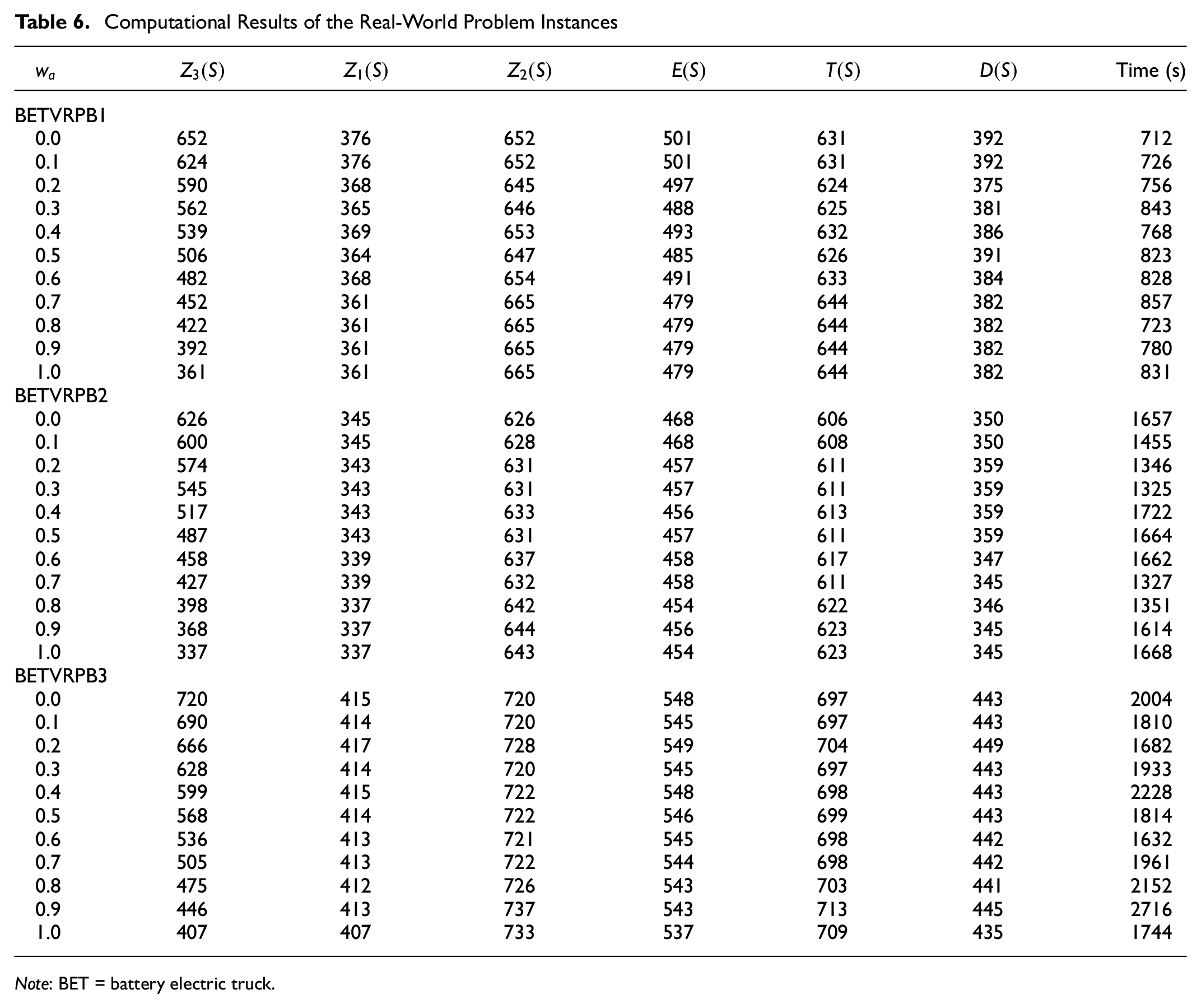
Real-world truck dispatching data is used to validate the proposed bi-objective model. The bi-objective model is solved by the proposed BET dispatching strategy to gain insight into the relative efficient frontier. As discussed in the second section, the first objective
Computational Results of the Real-World Problem Instances
Note: BET = battery electric truck.
As demonstrated in Table 6, the proposed BET dispatching strategy can find four Pareto solutions for each problem instance, and the efficient frontier shows the possible best trade-off between the labor cost and the total energy cost for the BET fleet. The decision-makers can choose a dispatching strategy based on one of these solutions. Taking the instance BETVRPB1 as an example, Figure 3a shows the Pareto solutions where the total travel time cost ranges from $645 to $665 USD, while the total BET energy cost ranges from $361 to $368 USD. Figure 3b illustrates how the total travel time changes under the obtained solutions. Comparing between solutions A and B, the BET fleet can save 20 min of travel time if the fleet owner spends $3 USD more on the BET energy cost.
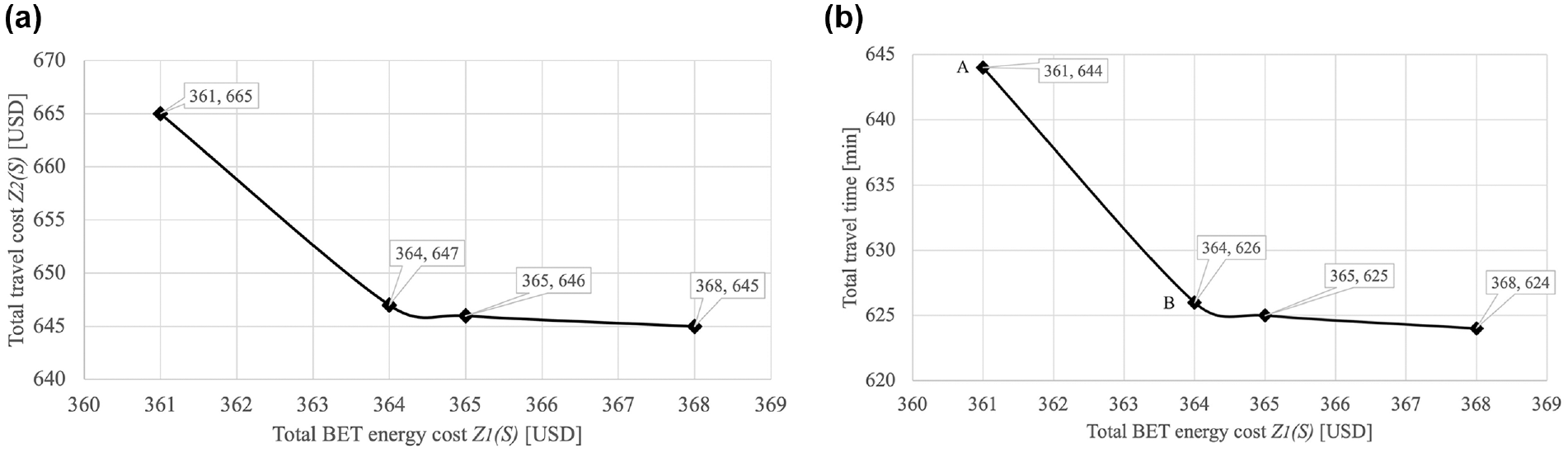
(a) The Pareto frontier of instance BETVRPB1. (b) Total battery electric truck (BET) energy cost (USD) versus total travel time for the Pareto solutions of instance BETVRPB1.
Conclusion and Future Work
This paper presents a bi-objective BET dispatching problem encompassing backhauls and time windows within a MOO framework, aimed at devising an efficient dispatching strategy for urban freight transportation. By accounting for both environmental and economic factors, the proposed model offers a comprehensive approach to address the complexities of BET fleet operations. Striking the right balance between the multiple objectives is vital to create an effective and harmonious BET dispatching strategy that achieves both environmental and economic goals. Our ALNS-based metaheuristic algorithm, integrated with a MOO approach, effectively finds an efficient set of optimal dispatching strategies for fleet operators.
As avenues for further research, this study opens possibilities to expand the proposed model by incorporating additional constraints related to BET fleets, such as charging station density or charging power. By considering these factors, future studies can refine the dispatching strategy further and foster sustainable practices in urban logistics. This research contributes valuable insights into optimizing BET fleet operations and lays the groundwork for ongoing investigations in advancing sustainable transportation solutions.
Supplemental Material
sj-docx-1-trr-10.1177_03611981241246270 – Supplemental material for Bi-Objective Battery Electric Truck Dispatching Problem with Backhauls and Time Windows
Supplemental material, sj-docx-1-trr-10.1177_03611981241246270 for Bi-Objective Battery Electric Truck Dispatching Problem with Backhauls and Time Windows by Dongbo Peng, Guoyuan Wu and Kanok Boriboonsomsin in Transportation Research Record
Footnotes
Acknowledgements
The authors are thankful to Mr. Troy Musgrave of Dependable Highway Express for sharing sample fleet operations data for use in this study.
Author Contributions
The authors confirm contribution to the paper as follows: study conception and design: D. Peng, G. Wu, K. Boriboonsomsin; data collection: D. Peng; analysis and interpretation of results: D. Peng, G. Wu, K. Boriboonsomsin; draft manuscript preparation: D. Peng, G. Wu, K. Boriboonsomsin. All authors reviewed the results and approved the final version of the manuscript.
Declaration of Conflicting Interests
The author(s) declared no potential conflicts of interest with respect to the research, authorship, and/or publication of this article.
Funding
The author(s) disclosed receipt of the following financial support for the research, authorship, and/or publication of this article: This study was funded by a grant from the National Center for Sustainable Transportation (NCST), supported by the U.S. Department of Transportation’s University Transportation Centers Program.

Supplemental Material
Supplemental material for this article is available online.
The contents of this paper reflect the views of the authors who are responsible for the facts and the accuracy of the information presented here. These contents are disseminated in the interest of information exchange and do not necessarily reflect the official views or policies of the U.S. Government. The U.S. Government assumes no liability for the contents or use thereof.
References
Supplementary Material
Please find the following supplemental material available below.
For Open Access articles published under a Creative Commons License, all supplemental material carries the same license as the article it is associated with.
For non-Open Access articles published, all supplemental material carries a non-exclusive license, and permission requests for re-use of supplemental material or any part of supplemental material shall be sent directly to the copyright owner as specified in the copyright notice associated with the article.
