



Abstract
With K-12 students from diverse social and cultural backgrounds in the classroom today, it is crucial to develop a more inclusive and socially diverse curriculum, especially in science, technology, engineering, and mathematics (STEM) topics. Transportation in particular is a topic that can relate to people’s culture and can be a suitable medium to introduce diversity and inclusion in STEM fields. Culturally responsive teaching (CRT) is a technique that can help connect students’ cultures, languages, and life experiences with their learning. Despite the known benefits of CRT, this strategy had not been adequately implemented in transportation education because of the limited awareness and knowledge of educators. This research contributes to the literature by investigating the current state of knowledge, awareness, and resources present in transportation pedagogy and investigates the feasibility of transportation as a suitable topic to incorporate culturally responsive learning strategies through surveys and workshops with pre-service science teachers and the future transportation workforce. Five key elements emerged from the analysis. First, the existing lack of diversity in STEM curriculum started to change to be inclusive. Second, teachers’ awareness and preparation are crucial for creating quality educational materials. Third, curriculum topics that can relate to cultural components in daily living enhance social diversity in transportation education. Therefore, fourth, transportation can be a good curriculum topic and, fifth, barriers including the difficulty of incorporating many cultural components, privacy, and legal issues still exist. The identified gaps and highlighted areas can contribute to the current state of knowledge and practice of CRT in STEM and transportation pedagogy.
Keywords
Students enrolled in K-12 public schools in the United States have various cultural backgrounds based on their race, gender, and ethnicity. A study showed that more than half (54.2%) of K-12 students in the United States are non-White, including Black, Hispanic, Asian, and other racial demography ( 1 ). As teachers have more students with diverse social and cultural backgrounds in their classrooms ( 2 ), it is important to develop a more inclusive and socially diverse curriculum in K-12 education. The literature shows that a lack of diversity could cause psychological isolation or discouragement in learning, which in turn could lead to reduced graduation and retention rates ( 3 ).
To develop an inclusive curriculum, teachers must promote a student-centered environment in the classroom. Culturally responsive teaching (CRT) is one of the key techniques to connect students’ cultures, languages, and life experiences with their learning ( 4 ). The importance of centering students’ cultural references in all aspects of learning is recognized by CRT, which helps students to gain meaningful and relatable knowledge from their classroom materials ( 5 ). For successful implementation of a constructivist approach to learning, teachers are required to train themselves to enhance sociocultural consciousness and a positive attitude to students from different backgrounds ( 6 ).
Despite these known benefits, the literature indicates that CRT strategies have not been adequately implemented in transportation education because of teachers’ limited awareness and knowledge of transportation and CRT. However, the lack of understanding on how to translate CRT theories to transportation practice can be improved by training teachers properly ( 7 ). Professional development training allows teachers to become more knowledgeable of the differences in how their students perceive educational materials based on their cultural backgrounds and to learn how to construct lesson plans and hands-on activities ( 7 ).
Many researchers agree on the importance of introducing transportation education at an early age for successful recruitment of the workforce in practice. Therefore, universities, agencies, and professional organizations have created transportation education materials for K-12 students. For example, the University of Minnesota Center for Transportation Studies (CTS) developed K-12 programs, events, and web-based tools to encourage students to explore transportation components. They used various lesson plans covering several topics of fundamental transportation engineering, including traffic control, bridge structure, and transportation safety, which all enrich students’ knowledge of transportation systems ( 8 ).
However, transportation engineering education tends to lack social or cultural elements that differ by region. This could create unintentional bias in learning, since most transportation topics address complex social and human interactions between users and the systems. A lack of awareness and knowledge of different cultural and social elements around transportation also contributes to the field being more of a “technical” domain rather than “social engineering” incorporating human elements.
To the best of the authors’ knowledge, there is a significant absence of empirical or theoretical evidence on why there is limited cultural diversity in the K-12 transportation curriculum and how the curriculum could integrate cultural or social components of transportation planning and engineering to enhance inclusiveness and diversity in learning processes. This research contributes to the literature by investigating the current state of knowledge, awareness, and resources present in transportation pedagogy through workshops with pre-service science teachers and the future transportation workforce. This study also investigates the feasibility of transportation as a suitable topic to incorporate culturally responsive learning strategies.
Literature Review
U.S. policymakers have been prioritizing science, technology, engineering, and mathematics (STEM) education over recent years by stressing the importance of a strong workforce ( 9 ), including the potential of enhancing epistemic fluency, interdisciplinary learning, and increasing diversity and inclusion in policymaking and implementation ( 10 ). Yet, one of the major limitations of the STEM field is the lack of effective educational support for individuals with diverse demographics, which discourages them from entering the field ( 11 ). Even though the STEM field features numerous employment options, the number of men in the STEM field in college outnumbers the number of women, with women representing only 28% of the workforce ( 12 ). A workforce that includes groups of individuals with diverse background is more likely to outperform groups with less diversity ( 13 ).
Diversity and inclusion are known to be increased by encouraging students to navigate through multiple disciplines of knowledge, especially pedagogy strategies of valuing students from various nondominant groups ( 14 ). Bang stated that if teachers and students both acknowledge diverse viewpoints of STEM subjects, then diverse and underrepresented groups are more likely actively participating in classroom learning ( 14 ). Diversity in the classroom with regard to lesson plans and pedagogy strategies also likely creates inclusive environments in the classroom.
A CRT approach presents opportunities for students to bring their culture into the classroom and make a connection to STEM concepts. The term “CRT” was first introduced by Gloria Ladson-Billings in the early 1990s and was defined as a technique “that empowers students to maintain cultural integrity, while succeeding academically” ( 15 ). It became popular and widely accepted, especially in the education field. The U.S. Department of Education’s funded equity assistance centers such as the Intercultural Development Research Association provides free or low-cost technical assistance and training to schools in the areas of race, sex, national origin, and religion to promote equitable education opportunities ( 16 , 17 ).
A CRT approach acknowledges the significance of the inclusion of students’ cultural references in all aspects of learning ( 15 ). Culturally relevant pedagogy is a student-centered approach that supports students to maintain their cultural identity and develop perspectives on social inequalities. The main elements of culturally relevant pedagogy support students’ self-perception and social relationships to develop positive ethnic and social identities with intellectual growth and moral development ( 15 , 18 ). Therefore, CRT assists in building relationships to promote cross-cultural insight ( 19 ).
Researchers suggested many approaches for practicing CRT in the classroom. For example, Samuels highlighted the importance of opportunity and encouragement for students to participate in rich and meaningful conversations to allow their voices to be represented in multiple contexts ( 19 ). They also suggested open-ended questions, effective conversation demonstrations, medium-to-large group discussions, and equitable time allocation for discussion as meaningful strategies for CRT ( 19 ). In addition, Wlodkowski and Ginsberg proposed creating a learning environment for both the student and teacher where they feel respected and connected ( 20 ). A favorable attitude toward learning is expected when discussions and learning materials encourage students to share their personal choices and interests. Techniques include developing learning communities with critical questions, holding culturally responsive teacher/student/parent conferences, performing historical investigations, and encouraging feedback and self-assessment during discussions ( 20 ).
Researchers stress the requirement of a culturally responsive STEM curriculum in the classroom. The National Academies of Sciences, Engineering, and Medicine support the participation of all races and genders to meet the increasing demand for workers in STEM fields ( 21 ). The National Science Foundation (NSF) Robert Noyce Teacher Scholarship Program invites projects addressing needs in high-need schools for recruiting, preparing, and retaining qualified elementary and secondary math and science teachers and teacher leaders ( 22 ). One of the notable examples is NSF’s Division of Undergraduate Education (DUE) funding of $1.4 million to the university system of New Hampshire. The grant formed the Culturally Responsive and Effective STEM Teaching Program (CREST) and prepared a minimum of 31 highly qualified secondary school teachers in the STEM field ( 23 ). Another notable example of funding is the $2.9 million grant to the Illinois State University’s Center for Mathematics, Science, and Technology (CeMaST) to enhance the development of learning communities among STEM educators and motivate the sharing of relevant cultural practices ( 24 ). The grant requires planning and coordination of a conference to invite Noyce scholars, principal investigators, and alumni from 90 regional programs and encourage them to join the K-12 educator workforce ( 24 ).
Transportation is a topic that can relate to people’s cultures. It is an inseparable aspect of society that exhibits a very close relation to an individual’s style of life and activities ( 25 ), as transportation engineering includes active and interconnected complex subsystems such as drivers, vehicles, roads, behaviors, and rules ( 26 ). Acknowledging the complex relationships among decision-making factors in transportation activities, numerous research has introduced engineering education strategies to support basic learning. Adaptive learning is one of the popular techniques based on educational computer games ( 27 ). It features role-play or simulation to provide effective, efficient, and customized learning experiences to engage with students. For example, Abbas and McNair designed a game-aided pedagogy to improve students’ learning outcomes and engagement in transportation engineering for introductory transportation engineering courses. Their learning modules support students’ design in signal timing, car-following model, road geometry design, route choice, traffic volume prediction, and pavement design ( 26 ).
Universities and professional organizations have also developed lesson plans for K-12 transportation education. The Institute of Transportation Engineers (ITE) designed interactive classroom activities that demonstrate transportation concepts, including traffic waves, snow plowing, traffic counts, signal timing, intersection safety, and road geometry for preschoolers and elementary grade students ( 28 ). The University of Minnesota Center for Transportation Studies developed K-12 programs, events, and web-based tools to encourage students in exploring traffic control, bridge building, and transportation safety-related activities ( 8 ). Arizona DOT launched the “ADOT kids’ program,” including topics of built infrastructure, environmental impacts, traffic and safety, and engineering as a career for supporting teleworking parents and homeschooling children during the coronavirus disease 2019 pandemic ( 29 ).
The above-mentioned professional resources and research efforts focused on familiarizing students with transportation concepts from an early age. Despite their significance and contribution to providing useful transportation knowledge, these resources and materials appear to lack cultural or social components of transportation planning and engineering. To fill the gap in current pedagogical strategies in transportation, this study aimed to investigate the following research questions: (1) What is the current state of practice of CRT in STEM education? (2) What is the current state of knowledge, awareness, and resources present in transportation pedagogy? (3) How suitable is the topic of transportation to incorporate CRT pedagogy in STEM education?
Methodology
This study conducted two workshops with pre-service science teachers and the future transportation workforce to understand their knowledge, awareness, and perception of the transportation curriculum and its incorporation of CRT in STEM education. The workshops included 19 participants from diverse backgrounds, including science education, civil engineering, and transportation/urban planning. At the beginning of the workshops, a pre-assessment survey was conducted to understand their knowledge and awareness of STEM education and transportation curriculum, which was then compared with a post-assessment survey that assessed the level of improvement in participants’ awareness of CRT.
The participants were recruited from the Department of Curriculum and Instruction under the College of Education, the Department of Civil Engineering, and the College of Architecture, Planning, and Public Affairs at the University of Texas at Arlington. This study used two recruitment processes to include future workforces with diverse backgrounds. The pre-service teacher participants were recruited from the college of education through the course “ELED 4312: Teaching Science and Health in Early and Elementary Education,” where the students learn pedagogical approaches to address instructional requirements and consideration for an inclusive, multicultural, and multilingual classroom for health- and science-related topics. The future transportation workforce (transportation engineering and planning students) was recruited through the student organizations ITE and the Women in Transportation Seminar to ensure gender, race/ethnicity, and age diversities.
The pre-service teachers and transportation engineers/urban planners participated in the workshops separately on November 17, 2021, and November 30, 2021, via an online meeting platform. Each workshop was designed in the form of a short lecture discussing inclusion and diversity in STEM education for K-12 through transportation concepts and an open discussion to share assessments and strategies for an inclusive and diverse transportation curriculum. The lectures and discussions were led by two trained research assistants and audio-recorded for transcription. The audio files were transcribed verbatim with the help of the meeting software that was used for recording.
The pre and post surveys were quantitively summarized, while the workshop transcripts were analyzed using thematic analysis. Two trained researchers familiarized themselves with the data, developed the initial idea for potential themes, and finally defined the final themes. The pre survey was used to set the ground for the participants about their knowledge and awareness before the workshop, and the post survey collected their perspectives on the concept and the workshop. This paper reports the integrated findings from each of the surveys and workshop discussions.
Results and Discussion
Participants
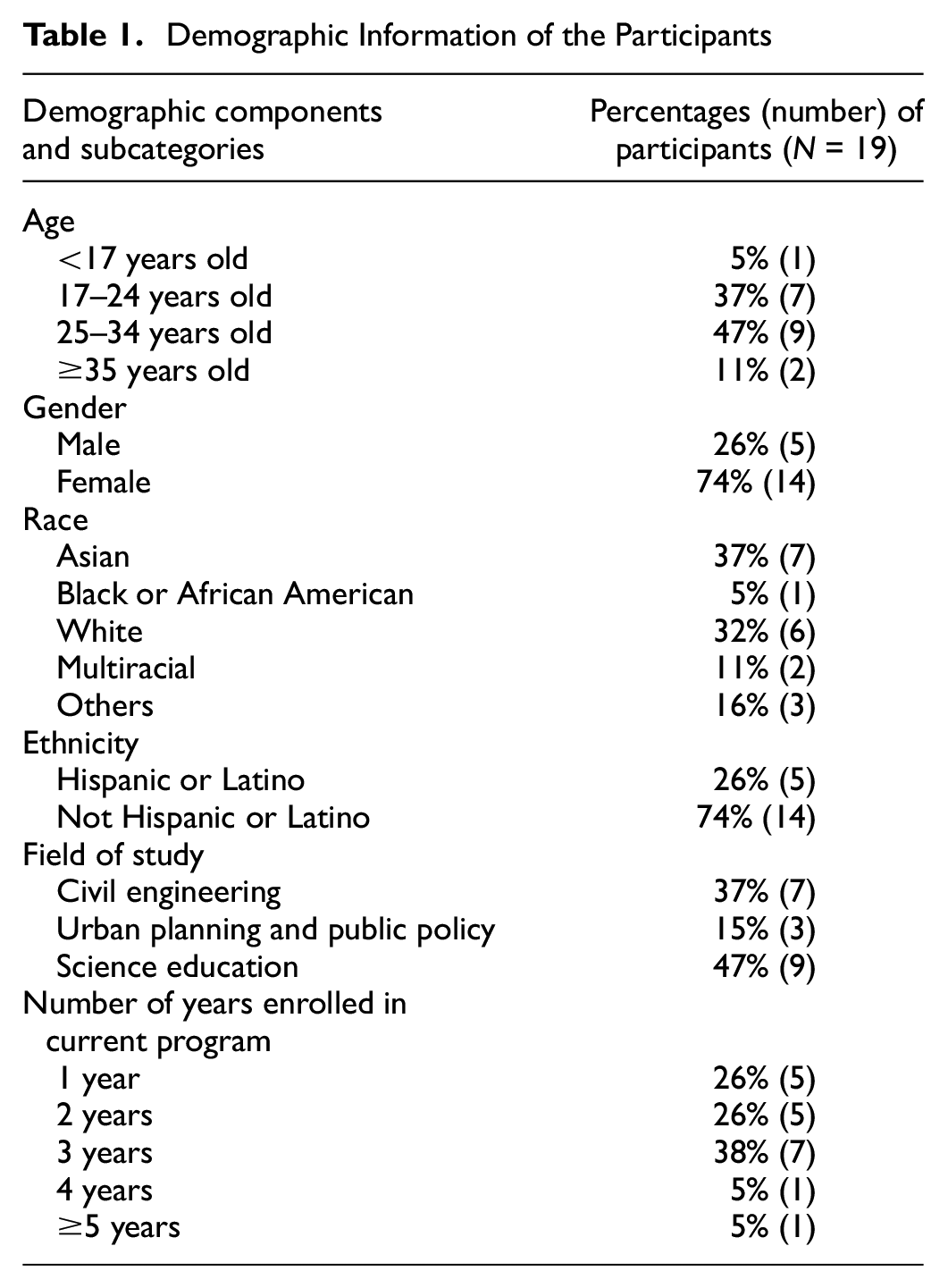
The majority of the participants were between 17 and 34 years old (86%) and were female (74%), Asian (37%), or White (32%). Their educational backgrounds included civil engineering—transportation (37%), urban planning and public policy (15%), and education (47%). Half of the participants had been enrolled in their current degree program (B.S. in education, M.S./Ph.D. in transportation engineering, M.S./Ph.D. in urban planning, B.S./M.S./Ph.D. in political science) for two years or less (52%), and rest for three or more years. Table 1 summarizes the demographic information of the participants.
Demographic Information of the Participants
Integrated Findings from Quantitative and Qualitative Analysis
The findings are discussed in two sections: (1) initial awareness and knowledge before the workshops, and (2) assessments and findings from the workshops.
Initial Awareness and Knowledge Before the Workshops
Given that K-12 students have various cultural backgrounds based on their race and ethnicity, several researchers mentioned the importance of incorporating cultural components in their curriculum or class modules through hands-on experiences ( 30 ). This study starts with documenting participants’ awareness and knowledge about CRT before the workshops.
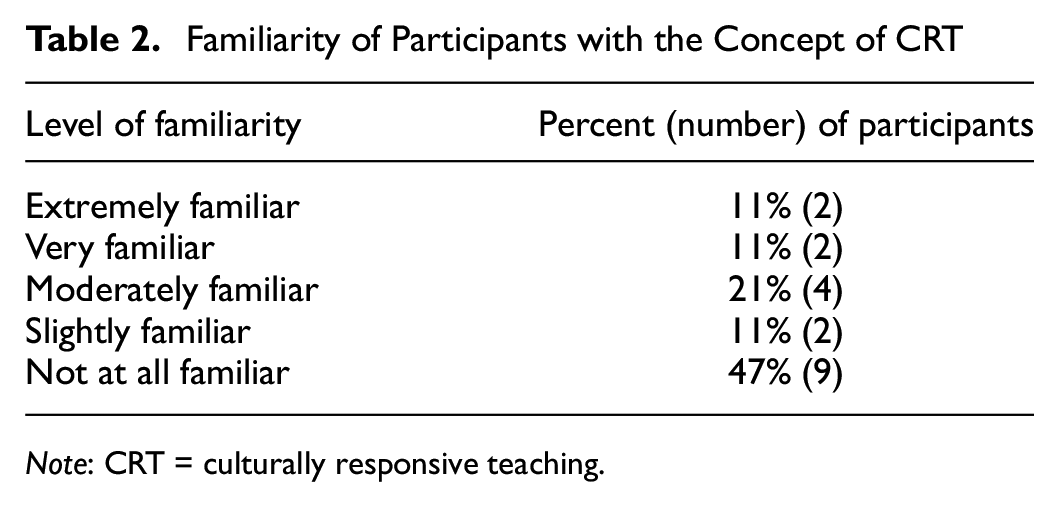
Participants were asked about their familiarity with the concept of CRT. About half of the participants (47%) were “not at all familiar” with the concept, as shown in Table 2. About one third of the participants (33%) were moderately to slightly familiar, and about one fourth (22%) were very familiar (very to extremely familiar) with the CRT concept. The results align with the educational background of the participants, since more than half of the participants (53%) were outside the education major.
Familiarity of Participants with the Concept of CRT
Note: CRT = culturally responsive teaching.
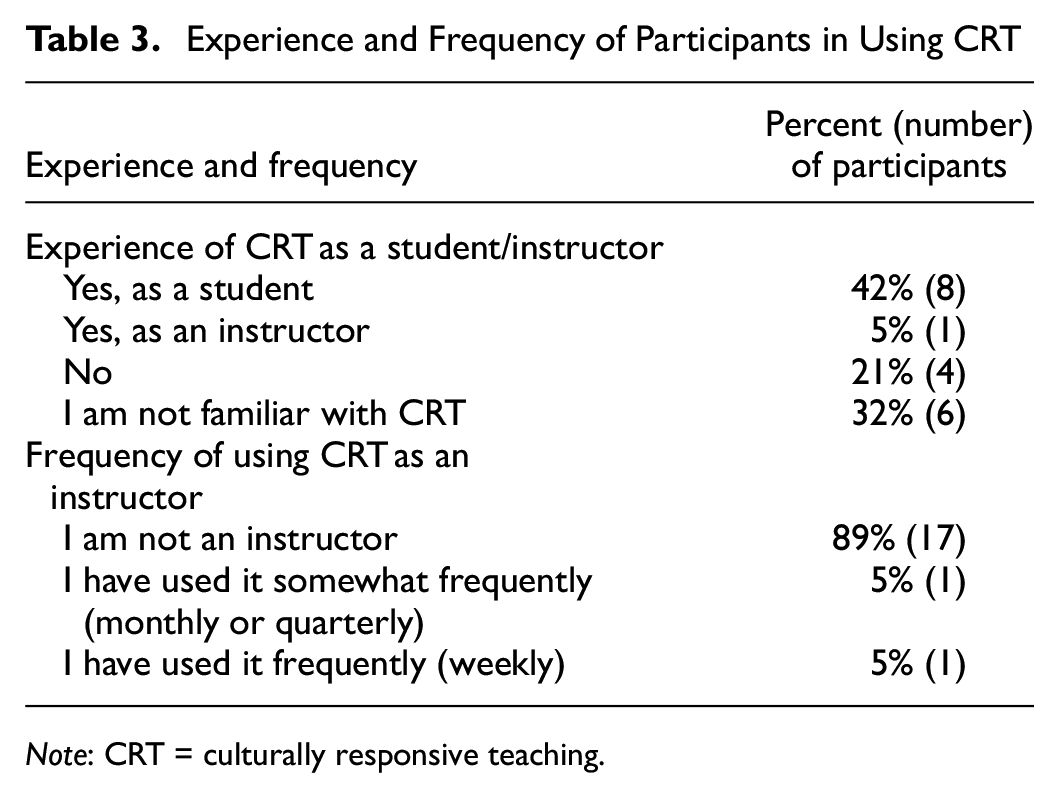
Less than half of the workshop participants (42%) had experienced CRT as a student, while only one participant used CRT as an instructor, which means that more than half of the participants (53%) either had no experience or were not at all familiar with the concept of CRT, as shown in Table 3. With regard to the frequency of using CRT in the past, among two instructors, one of them has never used it, and one used it weekly in their classroom.
Experience and Frequency of Participants in Using CRT
Note: CRT = culturally responsive teaching.
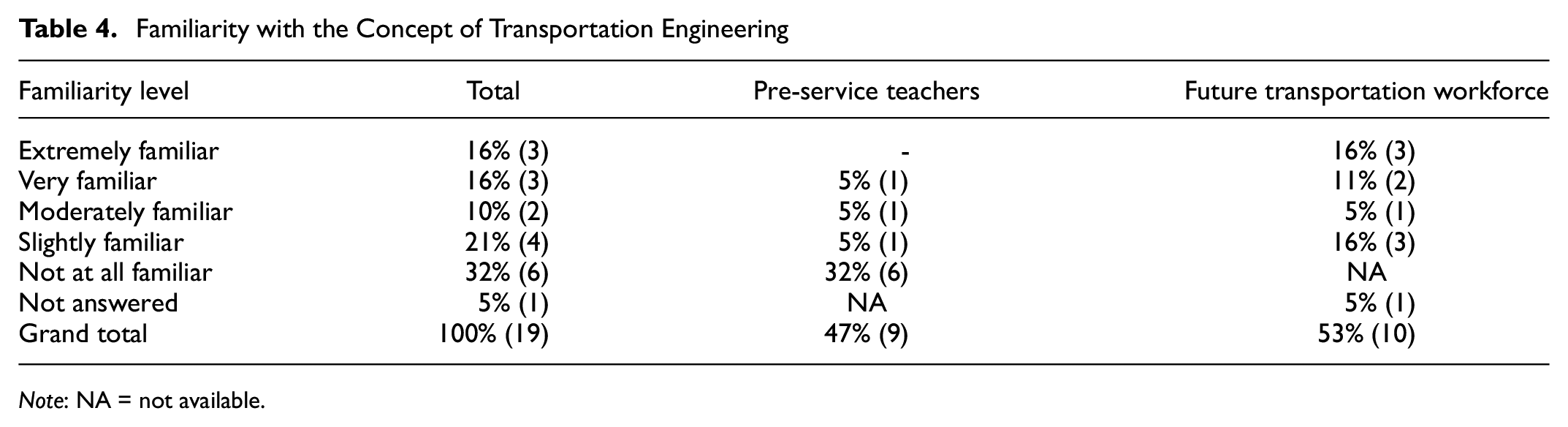
In addition, participants were asked about their familiarity with the concept of transportation engineering in the pre survey. Even though familiarity is a crucial requirement in research design, its effects have not been sufficiently acknowledged in transportation research ( 31 ). The result also provides a comparison of participants’ knowledge before and after the workshops to evaluate how much their awareness changed after the workshops. Table 4 illustrates the absence of familiarity with transportation concepts for one third (32%) of the participants, since half (47%) of the workshop participants were education major students. Among the education majors, only one participant was “very familiar” and two were “slightly to moderately familiar” with transportation concepts.
Familiarity with the Concept of Transportation Engineering
Note: NA = not available.
Qualitative Assessments and Findings from the Workshops
After the preliminary survey, the workshops focused on explaining the meaning of CRT in STEM education, where participants shared their viewpoints on overall diversity and CRT in STEM education and the transportation curriculum. Some shared that they feel there is a lack of diversity in STEM education and emphasized teachers’ awareness on cultural components to prepare lesson plans adequately incorporating culturally diverse examples. On the topic of transportation and diversity, there was a consensus among participants that transportation can be a good topic for the K-12 curriculum to encourage inclusion at all levels. All qualitative findings are elaborated below under the five key themes, including direct quotations from the workshop participants. The researchers have performed minimal edits on the quotes to keep the original meaning and intention of the participants’ responses.
Current STEM Curriculum Lacks Diversity but Has Started to Change To Be Inclusive
Several studies have confirmed that curriculum models of K-12 incorporating cultural components likely enhance early understanding of social equity in science and engineering fields. The absence of diversity in STEM education limits students’ early understanding of social inclusion and justice, which could lead to the marginalization of women and individuals from racial and ethnic backgrounds in STEM fields by treating them unequally ( 32 ).
Before the discussion around transportation engineering, pre-service teacher participants were asked a broader question to understand if STEM education includes a culturally and socially diverse curriculum and whether it is currently diverse and inclusive. We found mixed opinions among the participants. Some expressed that STEM educators are trying to incorporate cultural components through different STEM activities. However, the level and the degree of incorporation depend on the educator.
I’ve done some STEM activities with some students at an after-school program … whenever I’m trying to decide which activities to do, I would try to incorporate, different things, different activities from different time periods … It [depends] on the teacher … how much knowledge they have about STEM education and different cultures. (Sasha)
Some participants felt that STEM education has been unintentionally designed toward and promoted to racial majorities (e.g., White) or male students. This bias in creating educational materials could cause many females or students of racial minorities to be driven away from STEM fields, which ultimately makes the field less diverse in problem development and solving processes. Many participants also believed that educators lack expertise in creating a curriculum to include various cultural and social components because they were not well trained to equip students with such skills: Current STEM education is not diverse and inclusive. According to some research studies, many STEM education still focuses on boys … also girls didn’t like to [pursue] STEM areas … that’s why we’re still encouraging culturally responsive science teaching. Many teachers … don’t know how to include, especially the minority, woman, people with special needs. They don’t know their culture … So how to integrate their culture in teaching science? … [I have] a feeling they’re failing. (Jill)
However, participants also expressed that many programs in STEM have recently been encouraging women and people of color to join the fields through scholarships, fellowships, and research participation. These opportunities can create meaningful changes. Fry et al. found that women are underrepresented in a few specific fields such as math, physical science, and computing and engineering, although not in all STEM fields ( 33 ). In the last 12 years from 2010 to 2022, the number of women has increased by 5%, and women now represent 45% of the students majoring in STEM fields ( 34 ). In addition, the proposed Women and Minority in STEM Booster Act of 2021 requires the NSF to fund STEM workshops, student mentoring, and outreach to increase recruitment and retention of underrepresented faculty and students ( 34 ).
Teachers’ Awareness and Preparation Play an Important Role in Creating Quality Educational Materials
One of the most challenging but important goals in education is to ensure an educator’s quality ( 35 ). Some good qualities of an educator include communication abilities and classroom presence that engages students with strong teamwork, adaptability, compassion, and perseverance, since these features adapt the classroom lecture more into real-world learning ( 36 ). The literature emphasizes that the quality of teaching strongly influences student achievement compared with other in-school factors such as resources, the curriculum, school leadership, and the environment ( 37 ).
It’s important because, the diversity of our nation is growing. We as educators need to know how to incorporate different cultures into our curriculum. (Sasha)
Our workshops found similar results to the literature. Many participants agreed that it is important for educators to prepare themselves to reduce or remove cultural or societal gaps among students. As shown in Table 5, most of the participants (79%) conveyed higher importance (“very to extremely”) of CRT for K-12 classrooms.
Importance of Using CRT in the K-12 Classroom
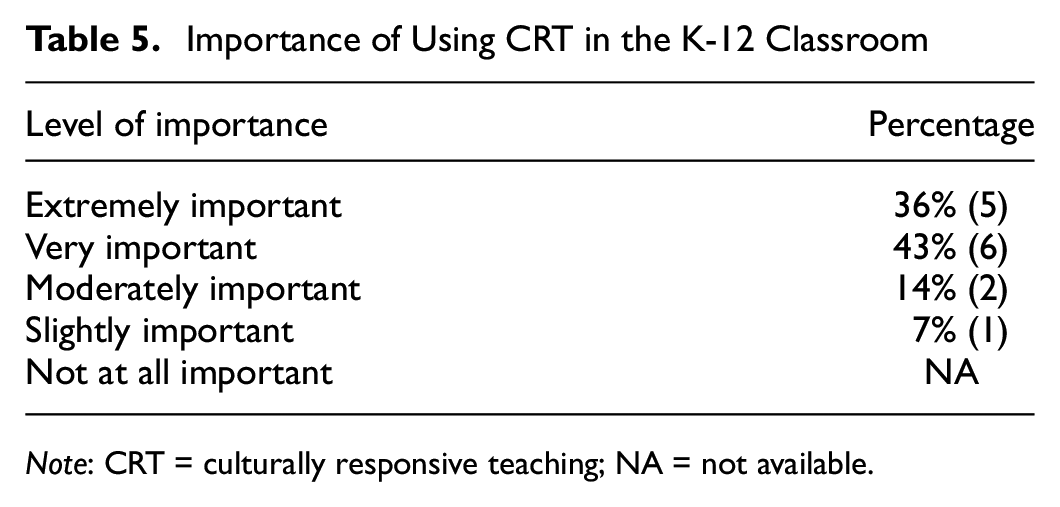
Note: CRT = culturally responsive teaching; NA = not available.
Among many required skills, our workshop participants specifically emphasized the technical abilities of teachers to integrate different cultural components into the STEM curriculum to make students feel welcome and connected to each other.
It’s important to help make sure students feel welcome and don’t have any feeling like they have any bias going on. (Bob)
With increased cultural variations in the United States, it is critical to prepare teachers for working with a culturally diverse student population ( 38 ). Because of the different cultural and social backgrounds of student groups, it is almost impossible for pre-service teachers to prepare perfectly and learn enough about their future students ( 6 ). However, teacher education programs should prepare the next generation of teachers to promote educational equity by understanding the social and academic needs of diverse student populations ( 19 ). The programs should also assist pre-service teachers to develop expectations for student diversity, give them the ability to teach in diverse settings, and help them to be responsive to social and cultural differences on any instructional topics ( 38 – 42 ).
When teachers are aware of and prepare with the necessary skills to incorporate cultural components into the class, they can help create quality educational materials that are unbiased, open, and inclusive. These materials make future teachers feel confident and competent in implementing practices of CRT. Since CRT is inclusive in nature, it assists not only talented unprivileged students but also teachers to support students’ independent learning by identifying the strengths and weaknesses of students ( 43 ) and providing cross-cultural knowledge ( 19 ).
Curriculum Topics that Can Relate to Cultural Components in Daily Living Enhance Social Diversity in STEM and Transportation Education
Early exposure to encourage women and minorities to pursue STEM and transportation studies appears to be important for the introduction and retention of them in the field ( 44 ). To understand educators’ preparedness to reduce cultural and societal gaps in their classrooms, we asked for their own strategies that can be incorporated in transportation lesson plans. A few themes emerged, including (a) increasing familiarity with different cultures and ethnicities, (b) using lived experiences and examples from different cultures, and (c) promoting communication with students and their families.
Participants mentioned that educators must equip themselves with a solid understanding of different cultures to allow them to be more accepting, open, and understanding of other communities, and knowledge of how people solve transportation issues or problems in different geographic locations, especially the ones of their own students. This facilitates a broader understanding of the possibility that different perspectives could exist on the same engineering problems and reduces negative conventions and biases. A few quotations from the participants describe how they would develop the curriculum to improve students’ understanding of racial and gender diversities: Educate yourself on the cultures of your students through research and communication with them and their family … Include lessons or examples of other cultures within the school … and take the time to get to know where your students are from and the culture. (Jill) Learning about the different cultures and implementing it into lesson so everyone in your class can understand from different viewpoints. (Amy)
Participants also shared the importance of exposure to real-life examples by either visiting schools in different sociodemographic neighborhoods or listening to experiences from a professional relevant to the field. This would enhance students’ first-hand knowledge of diversity in their communities.
In addition, participants shared that engaging with students using a class discussion on the specific culture of different communities could be helpful to enhance awareness of the general topic of equity and diversity. Frequent and in-depth interaction with students in a classroom will enhance students’ performances and understanding on education materials. Students might feel disconnected toward learning when they cannot relate the school with themselves and their living environment ( 45 ). Teachers can provide real-life examples and allow students to share their ideas related to their cultural diversity.
Giving them enough opportunities to share their experiences and ideas. Providing them with examples and engaging them in new experiences. (Amy)
Participants were also asked to talk about pedagogical techniques that they think can be implemented to encourage participation from students of diverse races and backgrounds. As a well-designed pedagogy helps students learn successfully and develop high order thinking skills ( 46 ), the following techniques emerged from the discussion with participants: (a) including realistic example into lessons, and (b) encouraging a growth mindset among underrepresented group of students. Early exposure to this type of pedagogical technique can help students reach their desired career path.
I think teachers could do more lessons on the different cultures and how women of color or other cultures have played a big part. For instance, they can teach lessons on that kind of diversity to draw more people toward it. (Bob) Some girls in school are intimidated by STEM … they think that they’re not able to do the activities or the lessons that are provided to them. As educators we could push for a growth mindset tell them that they can do these things that are being presented to them. (Sasha)
The workshop participants also shared that the current education systems may not be well equipped with resources to implement hands-on activities to cover various cultural and social components in transportation, and one of the most efficient strategies is to prioritize minority areas systematically to allocate more resources. A lack of public school funding in high poverty areas results in limited access to technology and the Internet ( 47 ). Financial commitments and institutional support for low-income communities and independent school districts will reduce educational disparity and knowledge gaps ( 48 ).
Transportation Can be a Good Curriculum for Increasing Diversity and Inclusion
Participants largely agreed that transportation components are not sufficiently addressed in the K-12 STEM curriculum, although transportation addresses varying societal topics of mobility, access, and infrastructure, which could add a more cultural component to pre-engineering, math, and physics materials. Potential lesson plans may include public transit and ride hailing systems in different countries, transportation technologies in different time horizons, the impact of socioeconomic characteristics on land use, and transportation mode choice.
I think you can use transportation to teach many different things from how a steam engine works to how a gasoline motor works. You can talk about other countries and how they use different kinds of taxi systems or different kinds of bus systems. Or the bullet train for instance. (Bob) It (transportation education) is very much related to diversity. Diversity of population and their socioeconomic characteristics affect their place of their living and how far or close they are to job opportunities; and therefore, their transportation needs could be different based on where they live. (Rick)
In addition, the participants expressed that the importance of a sustainable green transportation system can be explained as educational materials on sustainability, which could naturally provide lesson plans on environmental equity and transportation justice, while some participants believe that cultural lessons using various transportation examples around the world would ultimately have synergetic impacts on the transportation engineering/planning fields to improve overall transportation systems. If a student who was exposed to diverse perspectives on transportation becomes a transportation engineer in the future, they would be more open and have inclusive and diverse solutions for transportation problems.
The more we know about all the transportation options around the world, all the countries, the more ideas we can get for bettering our own transportations systems and everything. We can get ideas from everyone around us. That would be really helpful from an engineer’s perspective. Because they’ve seen other transportation issues and they’ve thought about it. And seeing other ways that work. (Bella)
However, some participants pointed out that discussions on students’ own cultural backgrounds might be a sensitive topic for young students who could feel confused or uncomfortable talking about their culture. For example, students whose families do not own a private vehicle might feel uncomfortable talking about various transportation modes, including passenger vehicles. The participants emphasized that personal questions should be handled carefully, and there are always options to ask more indirect questions that do not require any private information.
A Variety of Transportation Topics Could Serve, although Barriers Persist
Participants were asked which transportation concepts they are interested in including in culturally responsive K-12 STEM education. The majority (42%) selected “general transportation knowledge” and “transportation issues and problems,” while some (16% each) selected “transportation goals and objectives,”“transportation and communities,” and “transportation user,” as shown in Figure 1.
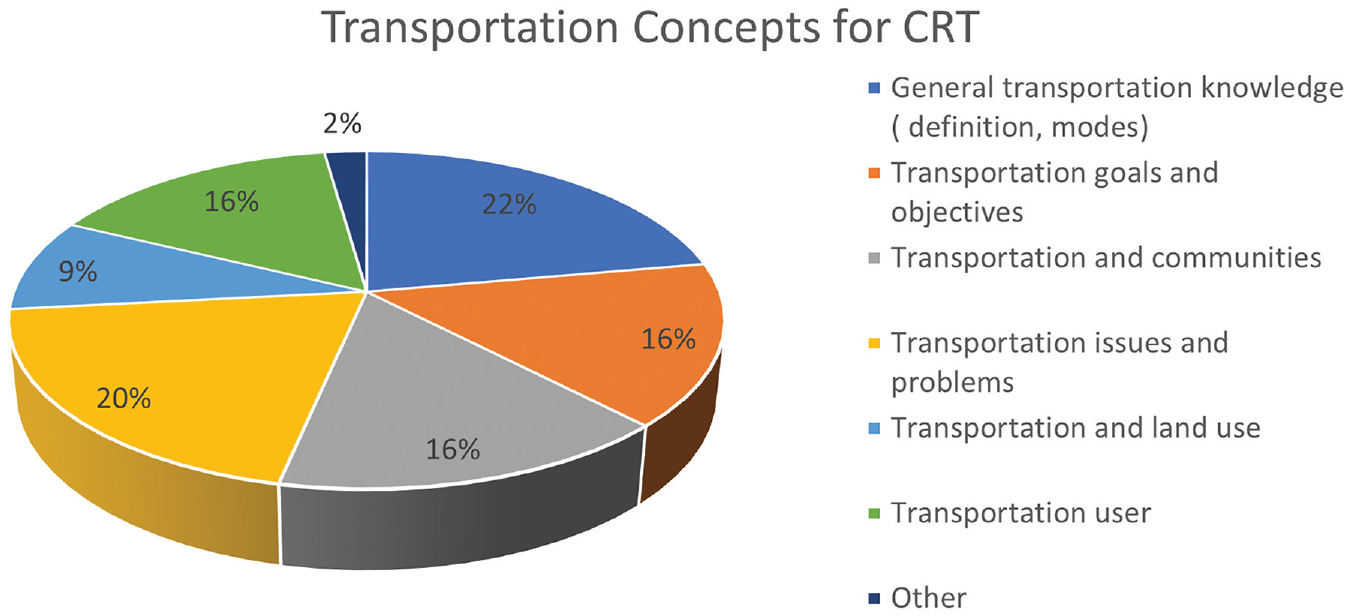
Transportation concepts to include in K-12 science, technology, engineering, and mathematics (STEM) education.
Besides the above-mentioned concepts, they also were interested in including additional transportation concepts in K-12 STEM curricula such as environmental impacts (e.g., emissions), land use difference between rural locations and the city, safety, infrastructure, equity, and transportation options/modes. However, participants highlighted the possible challenges of CRT implementation concerning the difficulty of incorporating many cultural components, privacy, or even legal issues.
Some challenges I expect to face while implementing CRT are trying to incorporate all cultures that are present in my classroom, since there are so many different ethnicities. I also expect to face gender-related issues. So many people are very gender sensitive in today’s society. So, it is important to be aware of this while teaching. (Sasha) If the reasons and goals of this method are not clear and well defined, it might create confusion, and even some might refuse it. When working with kids, we should be very careful not to put them in spot or to give them the sense of discrimination. (Amy) A college setting versus K through 12 setting is very different, and topics might have to be approached little bit more carefully … Because kids are more shy … they need some exposure first that can lead to further discussions. (Eve)
Participants expressed that students from other cultures might get offended or feel judged. Thus, the content or discussion should be carefully conducted. Besides the cultural challenges, resources such as time and costs to develop interactive programs could be another challenge for the successful application of CRT. Similarly, researchers believe that the difficulty of connecting families of underserved cultural and linguistic groups serves as a barrier to access and inclusivity in the STEM field ( 49 ). Since the lack of investment in teachers’ professional development and research collaboration across the STEM field creates additional barriers to a successful implementation of STEM education ( 50 ), cultural competence training and partnership with community organizations will build structured programs to support teachers to equip them with the necessary skills and hands-on activities to facilitate CRT.
Discussion
Culture is an important part of curriculum planning. Since a key goal of education is to transmit the cultural heritage of the community to its younger generations, the curriculum should be designed to attain the educational goal ( 51 ). Curriculum topics from daily life with real cultural components can enhance social diversity in STEM/transportation education.
Overall, the workshop discussions found a lack of familiarity and experience concerning the use of CRT in the classroom. The participants felt that current STEM education is ingrained with an unintentional bias toward one or more races and gender. However, a promising view on gender and racial diversity also emerged as more people of color and women have started to join the STEM fields. A variety of transportation knowledge, including system users, transportation and communities, equity, land use, safety, infrastructure, and transportation modes, can serve as meaningful topics to introduce diversity and inclusion in the classroom because it can easily relate cultural components to daily living. However, barriers such as gender sensitivity, poorly defined goals of the CRT approach, and feelings of discrimination and judgment by the students can hinder the implementation of CRT pedagogy in the classroom.
This study emphasizes the importance of utilizing state-of-the-art research evidence in the classroom. Eash proposed three models using displacement, authority, and co-action that translate research findings into classroom practices ( 52 ). Teachers could convert research topics into classroom materials (displacement) or rely on researchers to take the authoritative role in bringing their findings into the classroom (authority). Both teachers and researchers could also collaborate to introduce research topics and derive and test the relevant hypothesis together (co-action) ( 52 ). However, research findings may be too technical for K-12 classrooms. Therefore, teachers need to evaluate them before implementation ( 53 ). Ferlazzo also pointed out that by the time studies are published in classroom textbooks, the intended solutions in the research could become obsolete ( 54 ). Therefore, researchers and practitioners need to assist teachers in understanding the implications of research and recommend the proper role of research to incorporate into K-12 education ( 55 ).
Inviting guest speakers or industry professionals into a traditional classroom or online discussion can play an important role in promoting student engagement and could open opportunities to capture varying viewpoints ( 56 ) as a potential way to embrace culture and student backgrounds to incorporate CRT ( 57 ). This is an important lesson for future workforces because the lack of engagement from communities on transportation project planning and decision making can introduce biased and inequitable outcomes. Community-based organizations (CBOs) can bring in the voice of vulnerable and underrepresented neighborhood residents in the traditional planning process ( 58 ). The future transportation workforce can benefit by connecting with CBOs to learn from the residents’ lived experiences and transportation needs. Educators at the K-12 level can also play an important role in bringing in the voices of different communities.
Researchers and practitioners show that evidence-based practices (EBP) directly support transferring research findings to CRT practices ( 59 ). EBP are proven to increase the likelihood of positive student outcomes because teachers can implement effective teaching approaches derived from research ( 60 ). In addition, teachers are likely to be supported by the administration and parents because the techniques adopted from EBP are validated ( 61 ). However, EBP require a rigorous examination of the research behind the practice ( 62 ). Therefore, Odom suggested using professional opinion, a literature scan, and a qualitative review of research findings ( 63 ).
Each student is unique and brings different experiences, principles, and customs to the classroom. Sharing and listening to each other provides students with ample opportunities to share their beliefs, perspectives, feelings, and values while honoring the differences of their classmates ( 57 ). Knowledge of transportation appears to provide cultural and social differences because students’ diverse socioeconomic backgrounds develop inclusive perspectives on transportation options and technologies. For example, the World Factbook by the Central Intelligence Agency provides basic intelligence on transportation and its connections to equity, social justice, and cultural diversity ( 64 ). As transportation organizations and agencies started to recognize the importance of diversity and inclusion in transportation services and the workforce, transportation journals are also promoting diversity through special programs ( 65 ).
Conclusions
Transportation can be a suitable topic to incorporate culturally responsive pedagogy into the K-12 curriculum if the existing gaps between students and teachers in the understanding of cultural diversity are reduced and necessary resources are systematically secured in education systems. The survey and workshop conducted in this research showed the scope of the pedagogical strategies that need to be in place to achieve diversity and inclusion in STEM education. The identified gaps and highlighted areas in this paper are expected to improve the current state of knowledge and practice of CRT in STEM and transportation pedagogy.
This study focused on awareness and knowledge of pre-service teachers and transportation professionals on CRT to understand how well the future workforce prepare themselves to implement STEM/transportation activities with equitable and diverse perspectives. The knowledge on future workforces’ awareness of CRT and transportation also provides useful insights to college instructors or in-service teachers to support them in creating inclusive and culturally responsive perspectives and pedagogical materials in their early career. However, future research could recruit a larger group of participants to provide comprehensive and more reliable results with possible additional perceptions. A future study could also engage experts from diverse backgrounds such as educational professionals (i.e., in-service teachers) with several years of teaching experience, principals, and curriculum developers in workshops to expand the discussions on the current practice of transportation curriculum and resources required to implement CRT. In addition, the research team could collaborate with transportation experts to develop a practical culturally responsive transportation curriculum for early professional development programs for K-12 educators.
Footnotes
Acknowledgements
The research team would like to acknowledge and thank Dr. Jiyoon Yoon, Ph.D., Associate Professor of Science Education at the University of Texas at Arlington and all the participants for their useful insights.
Author Contributions
The authors confirm contribution to the paper as follows: study conception and design: Farah Naz, Troyee Saha, and Kyung Hyun; data collection: Farah Naz, Troyee Saha, and Kyung Hyun; analysis and interpretation of results: Farah Naz, Troyee Saha, and Kyung Hyun; draft manuscript preparation: Farah Naz, Troyee Saha, and Kyung Hyun. All authors reviewed the results and approved the final version of the manuscript.
Declaration of Conflicting Interests
The author(s) declared no potential conflicts of interest with respect to the research, authorship, and/or publication of this article.
Funding
The author(s) disclosed receipt of the following financial support for the research, authorship, and/or publication of this article: This work was supported by a grant (Grant number: CTEDD 021-12) from the Center for Transportation Equity, Decisions and Dollars (CTEDD) funded by U.S. Department of Transportation Research and Innovative Technology Administration (OST-R) and housed at The University of Texas at Arlington.
