




Abstract
In 2017, the International Headache Society convened a Global Patient Advocacy Summit (GPAS-1) to begin a collaborative effort involving patients, patient advocates, patient advocacy organizations, healthcare professionals, scientists, professional pain, neurology, and headache societies, pharmaceutical manufacturers, and regulatory agencies to advance issues of importance to patients affected by headache worldwide. In September 2019, the second Global Patient Advocacy Summit (GPAS-2) was convened to revisit issues from the inaugural meeting, assess the progress of the International Headache Society Global Patient Advocacy Coalition (IHS-GPAC) in meeting the goals set forth therein, and discuss strategies for achieving established goals and supporting future development. Short- and long-term mandates from the first Summit were realized, including publishing the Vancouver Declaration on Global Headache Patient Advocacy 2018, determining the governing and operational structures of the IHS-GPAC, and helping to facilitate the first World Federation of Neurology World Brain Day dedicated to migraine. Another short-term mandate, creating a unified advocacy strategy, was fulfilled by the Coalition’s decision to focus on encouraging support from employers and implementing employee support programs for people with migraine. To help execute the strategy, the Coalition is developing an employer engagement toolkit that will educate employers and employees about the impact of migraine in the workplace, reduce stigma directed toward employees with migraine, and facilitate the care of employees with migraine to reduce the burden of illness and improve workplace productivity. Coalition members will disseminate the toolkit and encourage the adoption of migraine workplace programs by employers worldwide. The Coalition has established an alliance with two global, multinational employers to expand migraine awareness and support among policy makers and other stakeholders around the world. The IHS-GPAC met many of the goals established at GPAS-1, and it has initiated a global strategy focused on the psychosocial and economic toll of headache disorders, especially migraine, in the workplace. Ongoing and future activities will explore a range of opportunities with employers and across the full spectrum of advocacy goals.
Keywords
Abbreviations
disability-adjusted life years
European Migraine and Headache Alliance
Global Patient Advocacy Summit
International Headache Society Global Patient Advocacy Coalition
quality of life
World Federation of Neurology
World Headache Association for Migraine
World Health Organization
years lived with disability
Introduction
Recent estimates of the global burden of headache by the World Health Organization suggest that primary headache conditions are considerably more prevalent and disabling than previously believed, with almost 3 billion people now thought to be affected by tension-type headache (1.89 billion) and migraine (1.04 billion) (1). Migraine remains the most disabling headache condition (1), the leading cause of disability among people younger than 50 (2), and, due to its combination of high prevalence and often substantial impairment, among the most disabling of all medical conditions (3). Many people with cluster headache face irreversible costs — such as impairment of career options, relationships, and family planning issues — and the fear of future attacks is ubiquitous (4). Access to adequate care for headache pain remains extremely limited, even in high-income countries (1), and while excellent training programs are available (5,6), the supply of new providers with experience in caring for people with headache is vastly outpaced by the demand for services (7).
Despite this enormous and growing unmet need, persons with chronic pain conditions lacking visible symptoms, as with recurrent headache, are less likely to receive optimal care and empathetic behaviour from healthcare professionals than those with visible signs of illness or disability (e.g. rheumatoid arthritis) (8), and they frequently report that their condition is misunderstood by family, friends, colleagues, and employers (4). As a consequence, a serious public health problem is rendered clinically and socially invisible, leaving many of those affected to believe that their only option is frustrated silence.
Though these challenges are neither new nor unique to the headache community, patients and healthcare professionals have recognized the troublesome trends and, emulating counterparts affected by other neurologic conditions (9,10), have begun to take concerted action to manage them. Specifically, in September 2017, to understand and advance issues of importance to patients with headache, the International Headache Society hosted the first Global Patient Advocacy Summit (GPAS-1). Attendees included patient leaders; patient advocacy organizations; leading health, neurologic, and pain organizations; healthcare professionals; pharmaceutical manufacturers; scientists; and regulators from around the world. A central outcome of the proceedings involved attendees collaborating on a series of consensus statements and agreeing to form an International Headache Society-Global Patient Advocacy Coalition (IHS-GPAC) with the goals of understanding and promoting the global, regional, and local interests of people with headache disorders and challenging their widespread stigmatization by healthcare professionals and the general public (11). At a second GPAS (GPAS-2) held in Dublin, Ireland, in September 2019, more than 100 representatives from regulatory organizations, advocacy groups, medical societies, and industry (Supplemental Table e-1) discussed progress in fulfilling mandates from GPAS-1 and outlined next steps for IHS-GPAC. The proceedings of GPAS-2 (Table 1), as well as its main outcomes, are summarized herein.
Proceedings of GPAS-2.

GPAS: Global Patient Advocacy Summit; WHO: World Health Organization; WFN: World Federation of Neurology; WHAM: World Headache Association for Migraine; EMHA: European Migraine and Headache Alliance.
IHS-GPAC since GPAS-1
At GPAS-1, IHS-GPAC identified three key objectives: Utilize insights of patient advocates and advocacy organizations from around the world; leverage experience and influence of leading health and neurological organizations; and raise awareness of the role of regulatory agencies in disease advocacy (11). Since then, multiple short- and long-term mandates have been fulfilled (Table 2).
IHS-GPAC mandates fulfilled from GPAS-1.

aOngoing.
IHS-GPAC: International Headache Society-Global Patient Advocacy Coalition; GPAS: Global Patient Advocacy Summit; WFN: World Federation of Neurology.
The Coalition’s governance and operations, comprising an Executive Team (three providers and four patients), a Sponsor Council, and Subcommittees focused on employer engagement, toolkit development, and website and communications, were established. Members also codified the IHS-GPAC vision (to create a world where migraine is understood and optimally managed) and mission (to help implement optimal standards of migraine care and raise awareness of its impact on the individual and society).
Notably, the group set an overall objective for 2019: To highlight the financial impact of migraine and focus on encouraging support from employers and implementing employee programs. Members chose to emphasize the impact of migraine in the workplace as the area to most likely to produce measurable, durable results for the greatest number of patients and because best practices might be scalable across a range of industries and instructive for policy makers and the general public. They also decided that the employee care programs developed by IHS-GPAC will have three objectives: Empower employees to seek treatment and improve their wellbeing, reduce stigma, and ensure lifestyle, non-pharmacological, and medical support for those with unmet treatment needs. To facilitate adoption, improve results, and extend reach among regional and local constituencies, workplace materials developed by IHS-GPAC will undergo pilot tests by employers in several industries. A Japanese information technology company, with global operations headquartered in Japan, was the first employer to make a commitment; IHS-GPAC employee care programs at other information technology companies, as well as major employers in finance, fashion, and cosmetics, are planned. To encourage sharing of information and best practices and allow open access to IHS-GPAC employer engagement toolkits, an IHS-GPAC website has been developed (https://ihs-gpac.org/).
Organizational partners
World Health Organization
The WHO focused on the importance of migraine as a matter of public health, as measured by disability-adjusted life years (DALYs, the sum of years of life lost [YLLs] and years lived with disability [YLDs]). Between 1990 and 2016, migraine accounted for 16.3% (11.7–20.8) of total disability associated with neurologic disease, ranking it second only to stroke (12), with most “costs of inaction” attributable to lost productivity. On a global scale, the salient challenges in the delivery of services to patients with headache include a lack of urgency among governments and ministries of health; low rates of accurate diagnosis and minimally appropriate treatment; and an insufficient supply of trained providers, especially in lower income regions and at the primary care level.
The three main delivery platforms for public health initiatives are population-wide, community, and health care, each of which is associated with distinct strategies and tactics (Table 3).
Main delivery platforms for public health initiatives.

Since the need for migraine care is greatest at the community level, where costs are lowest, it was proposed that challenges in generating support might be addressed by classifying migraine with other chronic conditions (e.g. a chronic pain condition) as a component of universal health coverage or within a broader “wellbeing” (e.g. brain health) category focusing on conditions likely to receive support that are comorbid with migraine, such as stroke and mental health conditions (depression, anxiety). It was also suggested that mobilizing organizations across different sectors to engage policy makers with the results of real-world research demonstrating successful implementation of migraine-related programming might be effective. Recommended best practices for workplace initiatives included instituting measures to identify health problems among employees; providing support for health problems and informing staff of treatment options; supporting a healthy work-life balance; involving employees in decision-making; recognizing/rewarding good performance; and providing paths for career development.
World Federation of Neurology
The activities and successful public reception of World Brain Day 2019 (Migraine: The Painful Truth), which was led by the WFN in collaboration with IHS-GPAC leadership, were recounted. The event was supported by a promotional campaign that involved advertising; a toolbox designed to facilitate distribution of educational and informational materials; promotional videos; a webinar; postings on social media, and a press conference. A scientific poster was presented at the 2019 International Headache Congress (13), and short articles detailing the event and the advocacy campaign were published in Lancet Neurology (14) and the European Journal of Neurology (15).
The World Federation of Neurology was also involved in the publication of a book with more than 30 chapters that define advocacy, explain its essential role in modern neurologic practice, and review various methods and techniques of advocacy (16). The persistent lack of awareness about headache conditions in general and migraine in particular, their “invisibility” relative to other medical conditions, was said to be similar to a wave approaching the shoreline; conditions with striking presentations or the potential for devastating outcomes draw attention like the leading edge of a breaking wave, while migraine seems to trail behind as the apparently placid back wall of the wave (Figure 1).
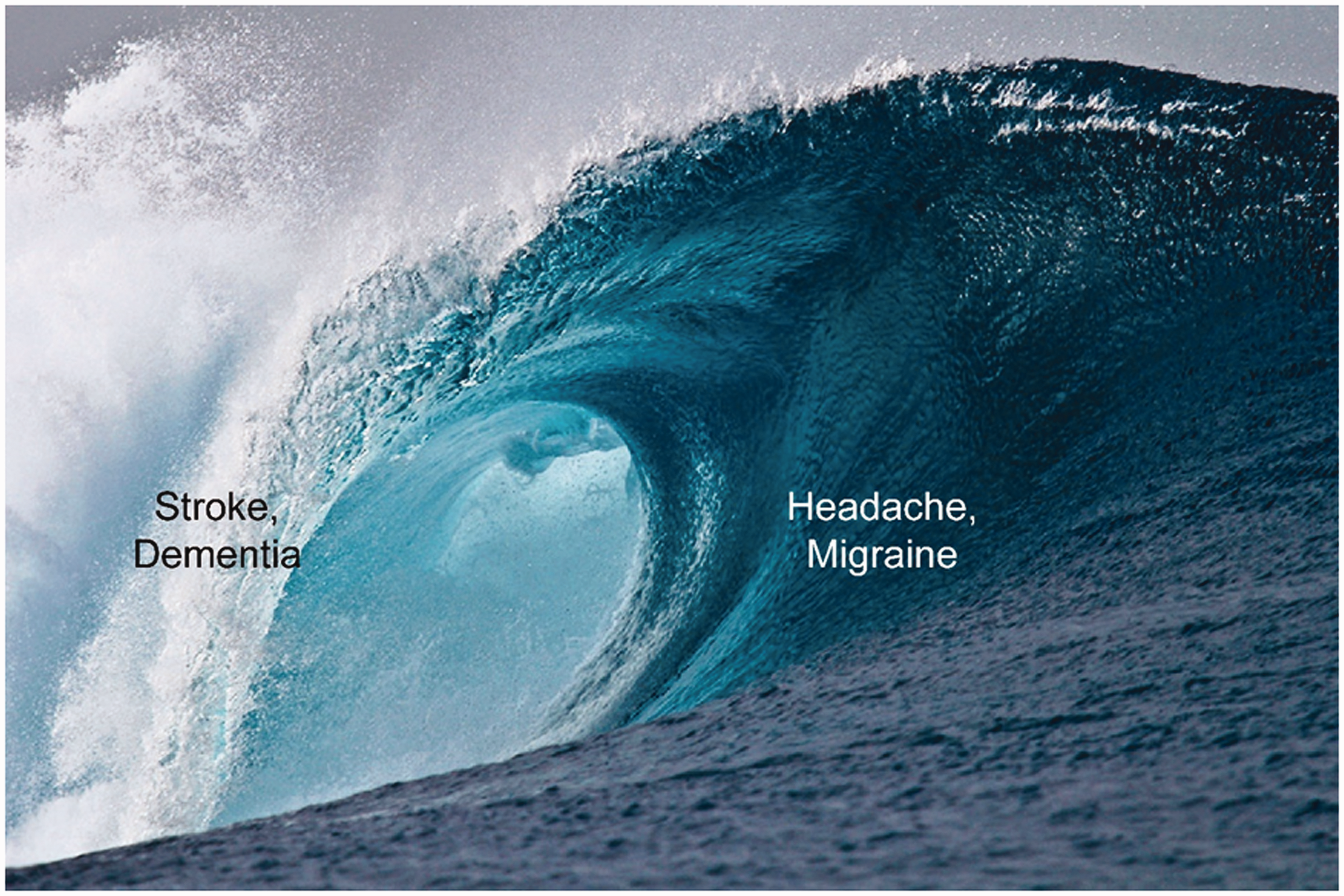
“Invisibility” of headache and migraine relative to neurologic conditions with visible signs/symptoms and sequelae.
In developing IHS-GPAC advocacy programs aimed at encouraging employers and policy makers to be more accommodating to people with migraine and other headache conditions, GPAS-2 attendees were urged by the WFN to be cognizant of the burden and overall public health status in low-income countries. Access to medical care is often difficult or impossible. The introduction of employee care programs in these regions is presently secondary to providing access and care for patients with headache. Strategies recommended for raising migraine awareness when resources are limited included targeting physicians and other healthcare providers and having the WHO devote increased attention to migraine as an important topic in public health. Creative tools for education and dissemination as online education (M-learning when accessed via mobile devices), podcasts, webinars, and technology will need to be supported in their development.
Patient and provider perspectives
Patients
A patient panel comprising three female professionals with a wide range of symptoms, ranging from decades-long duration attacks of migraine and cluster headaches to five years of new daily persistent headache, led a discussion around personal impact and patient-centric priorities. The first panellist, with a decades-long history of migraine, emphasized the continuing need to engage with government officials to modify regulations around migraine disability in the workplace. She described the importance of the advocacy work done by Headache on the Hill in prompting the Social Security Administration to clarify the factors that determine whether migraine and other headache disorders qualify as a disability, a decision that had implications for many patients under Title I of the Americans With Disabilities Act, which requires employers with 15 or more employees to accommodate people with disabilities and ensure that they are provided with equal employment opportunities (17). She also noted the importance of continuing to educate those impacted by migraine and other headache disorders about the resources and laws in place that can protect them and their employment.
A female with a 12-year history of cluster headache and multiple surgical interventions summarized 2019 research from 10 countries in Europe (n = 1500) showing that 33% of cluster headache patients are unemployed due to their condition, 60% fear job loss, and 20% have lost more than 30 work days per year (18). She explained that employers lack awareness of the condition, and because patients have no suitable tools to help them inform their employers, many never formally report their condition.
A female with a 5-year history of new daily persistent headache following successful cataract surgery urged IHC-GPAC to leverage recognition, compassion, and accommodation to support patients impacted by headache disorders in the workplace; maintain a clear distinction between pain and suffering; and remind patients to continue to celebrate and seek joy.
Providers
A panel of three healthcare professionals was aligned in the belief that, to provide learned counsel to employees with migraine and other headache conditions, the need for training about the evaluation process for disability in the workplace and employee rights (e.g. accommodations) is urgent. The panellists also agreed that active collaboration between providers and patients, perhaps facilitated by professional and patient associations at the grassroots level, may be the best approach to successful advocacy. They stressed that persuasive evidence demonstrating the adverse effects of migraine and other headache disorders on productivity in the workplace, especially presenteeism, will be required to ensure that employers and officials responsible for public health understand the impact of migraine and other headache disorders. They applauded IHS-GPAC efforts to supply coalition members, advocacy organizations and employer partners with educational toolkits that encourage individuals to self-advocate at the local level and expressed strong support for initiatives aimed at improving access to care. Developing open platforms that allow patients to share stories, insights, and ideas may alleviate the experience of “suffering in silence” and reduce feelings of invisibility.
Patient advocates
Five representatives of major patient advocacy organizations provided a wide range of suggestions intended to make the work of IHS-GPAC more effective and impactful.
The use of positive language and universal messages that can be adapted for local use (“think globally, act locally”) is crucial when engaging with policymakers and employers. Because traditional definitions of disability do not capture the experience of migraine, communications about migraine-related disability should be precise about its nature and extent to avoid increasing stigma; classifying migraine as a disability and describing patients with migraine as disabled may limit employment opportunities by associating migraine with a permanently reduced capacity for work (19). Messaging that accounts for attack-related effects and the interictal, relatively asymptomatic periods often characterized by high levels of productivity (e.g. temporarily disabled) may help to clarify understanding of those affected by the condition. Headache-related disability is complex and highly individualized, however, and IHS-GPAC initiatives must be careful not to understate the issue. Intermittent symptomatology has been used to invalidate disability claims and weaken legislative efforts to ensure that the rights of patients with recurrent headache conditions are not limited or denied due to fluctuations in disability status.
People whose headache condition reduces their quality of life and affects their performance should be encouraged and trained to self-advocate, and organizations such as IHS-GPAC should provide support mechanisms to empower them. One effective approach to advocacy — the collection of compelling individual narratives to complement data from well controlled studies — might be facilitated by consistent IHC-GPAC messaging about the invisibility many people feel (e.g. “taking off the makeup”).
Collection of data is essential to support the credibility of IHS-GPAC initiatives. Because people with migraine are more likely to work at reduced capacity than to be absent from work or school, accurate and compelling representations of presenteeism are foundational. Whenever possible, investigators leading observational and clinical studies should be encouraged to include employment-related disability as an endpoint. Assessment and reporting on workplace disruption should include organization-wide and aggregated individual data to demonstrate the scope of the problem, identify and characterize subgroups, and differentiate treatment options. In the provision of services to patients consulting for headache, healthcare professionals should also be encouraged to monitor the effects of prescribed interventions on workplace disruption and consider restoring or maintaining the ability to work as a goal of care. Ultimately, these datasets can become highly effective tools in assessing the quality of care, developing guidelines, and enabling policy makers to match the allocation of resources to those with the greatest levels of unmet need.
Regulatory and industry
Regulatory
In most countries, access to treatments that require a prescription is determined by regulatory decisions and reimbursement recommendations (e.g. health insurance). Therefore, regulators try to involve patients as early as possible, often shortly after a dossier is received, to facilitate reviews and ensure that all perspectives are included in decisions. In migraine, patients are most likely to be consulted about the clinical significance of data reporting efficacy or treatment effects on disability. In the US, the review and approval of a new treatment can be accelerated if it addresses an unmet need for a serious condition, and migraine is designated as a serious condition. Although migraine is not yet classified as a serious condition in the EU, regulators are empowered to grant an accelerated assessment (150 days rather than 210 days) if a sponsor can show that a new treatment addresses an unmet medical need (e.g. no existing treatment, existing treatments are risky or suboptimal) or represents a significant improvement over the available methods of prevention diagnosis and treatment. To date, this option has not been pursued for a new migraine treatment so the impact of the policy on access to care is unknown.
Industry
Most industry participants were already involved in supporting employees and patients with migraine, but it was suggested that IHS-GPAC could share experiences from these programs to promote implementation of similar programs across the pharmaceutical industry. It was emphasized that data collection is a standard and important component of all workplace initiatives, especially since the combination of personal narratives and reliable evidence tends to be most persuasive to other employers and policy makers. In addition to economic incentives (e.g. gains in productivity and reduced human-resource costs), employers currently administering employee-care programs for people with migraine can describe tangible improvements in the company culture (i.e. overall work environment, levels of trust and collaboration). Efforts to create or expand support, awareness, and care programs are most successful when they use an enterprise-wide approach, with upper management, medical affairs, human resources, and facilities management assuming key roles.
Research: Migraine in the workplace
Fujitsu migraine study
The IHS-GPAC is engaging with an information technology company in Japan to establish the first employer support program for migraine, and it will be used as the foundation for future expansion to other employers globally. In this company, the results of an epidemiological study to determine the prevalence and disability caused by migraine and other headaches and to estimate the costs associated with productivity loss among employees was presented. The survey revealed that 17% of employees had migraine or probable migraine, and that there were decrements in health-related quality of life (QoL), as assessed by the 12-item Short Form Survey, due to bodily pain and emotional and mental health; workers with migraine also experienced losses in energy and concentration compared with colleagues with no headache or with tension-type headache. The annual economic loss due to presenteeism per person was 375 ± 1039 US dollars, according to the Migraine Disability Scale (days when productivity was reduced) and 2217 ± 4497 US dollars when measured by the Work Productivity Activity Impairment (impact at which work productivity was affected by headache). With approximately 150,000 employees, these results indicated an annual potential loss of 350 million US dollars. Presented with these data, executives were convinced to support development of an employee care program and collaborative work with IHS-GPAC, which is ongoing.
Migraine at Work in the EU
The results of an analysis of the effects of migraine in the workplace in eight European countries were presented (20). Respondents were employed adults who had received a diagnosis of migraine (n = 3350). They completed the 30-item Migraine at Work online survey of sociodemographics, migraine characteristics, and employment. Large percentages of working adults reported that migraine had prevented them from accessing a job (43%) or renewing a contract (44%), and one third (33%) had been warned about the negative effects of migraine on their job performance. Although most respondents (≥50%) had requested a modification in their working conditions due to migraine, more than 70% of the companies that employed them had refused the request. Most workers (57%) did not feel that their employer understood their condition and how it can affect productivity.
These results were similar to the 31-country My Migraine Voice survey of more than 11,000 adults with a history of at least four migraine days each month (21). In that study, 72% of participants reported that migraine had influenced their professional life. Almost two thirds (63%) said their employers knew about their condition, but only 18% said their employer offered support.
Conclusion
The IHS-GPAC was formed in 2017 to understand and promote the interests of people with headache disorders and to challenge stigmatization by healthcare professionals and the general public. In September 2019, the group hosted GPAS-2 to build on the achievements of the global advocacy movement and chart future directions. Short- and long-term mandates were realized, and Coalition members agreed to focus on supporting workplace programs for people with migraine. Employer materials are in development, and the first programs will be initiated in 2020. As workplace initiatives become established, the Coalition will pursue a full spectrum of advocacy programs with policy makers and the general public.
Clinical implications
The Vancouver Declaration II on Global Patient Advocacy reviews the progress made by the International Headache Society’s Global Patient Advocacy Coalition (IHS-GPAC) since its inception in 2017. Specific milestones include the formation of IHS-GPAC governing and operational structures, the development of a unified advocacy strategy focused on migraine in the workplace, and the creation of an employer engagement toolkit for use by Coalition members. The Coalition has initiated relationships with multinational employers and will continue its worldwide efforts to raise migraine awareness and develop support among policy makers and other stakeholders.
Supplemental Material
sj-pdf-1-cep-10.1177_0333102420921162 - Supplemental material for Vancouver Declaration II on Global Headache Patient Advocacy 2019
Supplemental material, sj-pdf-1-cep-10.1177_0333102420921162 for Vancouver Declaration II on Global Headache Patient Advocacy 2019 by David W Dodick, Messoud Ashina, Fumihiko Sakai, Wolfgang Grisold, Hitoshi Miyake, Deborah Henscheid-Lorenz, Audrey Craven, Elena Ruizd e la Torre, Rachel Koh, Nikita Reznik, Lisa Bance, Elizabeth Leroux, Lars Edvinsson and on behalf of the International Headache Society Global Patient Advocacy Coalition in Cephalalgia
Footnotes
Acknowledgement
The International Headache Society would like to thank the sponsors of the Global Patient Advocacy Summit: Amgen, Eli Lilly, Novartis, Allergan, Teva. The International Headache Society Global Patient Advocacy Coalition would like to thank Christopher Caiazza for writing and editorial assistance related to this manuscript.
Declaration of conflicting interests
The authors declared the following potential conflicts of interest with respect to the research, authorship, and/or publication of this article: DWD reports the following conflicts: Personal fees: Amgen, AEON, Association of Translational Medicine, University Health Network, Daniel Edelman Inc., Autonomic Technologies, Axsome, Allergan, Alder BioPharmaceuticals, Biohaven, Charleston Laboratories, Clexio, Dr Reddy's Laboratories/Promius, Electrocore LLC, Eli Lilly, eNeura, Neurolief, Novartis, Ipsen, Impel, Satsuma, Supernus, Sun Pharma (India), Theranica, Teva, Vedanta, WL Gore, Nocira, PSL Group Services, XoC, Zosano, ZP Opco, Foresite Capital, Oppenheimer; Upjohn (Division of Pfizer), Pieris, Revance, Equinox, Salvia, Amzak Health. Speaking fees: Eli Lilly, Novartis Canada, Amgen, Lundbeck. Speakers Bureaus: None. CME fees or royalty payments: HealthLogix, Medicom Worldwide, MedLogix Communications, Mednet, Miller Medical, PeerView, WebMD Health/Medscape, Chameleon, Academy for Continued Healthcare Learning, Universal Meeting Management, Haymarket, Global Scientific Communications, Global Life Sciences, Global Access Meetings, Catamount, UpToDate (Elsevier), Oxford University Press, Cambridge University Press, Wolters Kluwer Health. Stock options: Precon Health, Aural Analytics, Healint, Theranica, Second Opinion/Mobile Health, Epien, Nocira, Matterhorn, Ontologics, King-Devick Technologies. Consulting without fee: Aural Analytics, Healint, Second Opinion/Mobile Health, Epien. Board of Directors: Paranet North America, Precon Health, Epien, Matterhorn, Ontologics, King-Devick Technologies. Patent: 17189376.1-1466:vTitle: Botulinum Toxin Dosage Regimen for Chronic Migraine Prophylaxis without fee. Research funding: American Migraine Foundation, US Department of Defense, PCORI, Henry Jackson Foundation. Professional society fees or reimbursement for travel: American Academy of Neurology, American Brain Foundation, American Headache Society, American Migraine Foundation, International Headache Society, Canadian Headache Society.
MA has received personal fees from Alder BioPharmaceuticals, Allergan, Amgen, Alder, Eli Lilly, Lundebeck, Novartis, and Teva; participated in clinical trials as the principal investigator for Alder, Allergan, Amgen, Eli Lilly, Novartis, and Teva. He currently serves as an associate editor of Cephalalgia, associate editor of Headache, co-editor of the Journal of Headache and Pain, and President of the International Headache Society.
FS is a consultant, speaker, or scientific advisor for Amgen, Otsuka, Eli Lilly, Teva, and Eisai.
EL has received speaker fees and consulting fees from Allergan, Eli Lilly, and Teva Neuroscience; consulting fees from Aralez Pharmaceuticals, McKesson Canada, and Medscape; speaking fees, consulting, and reimbursement for travel from Novartis; and reimbursement for travel from IHS-GPAC.
NR is employed by ZS Associates.
LB is an Associate Partner and is employed by ZS Associates.
LE has given sponsored talks at conferences for Amgen, Lilly Pharma, Novartis, and Teva and received research grant support from Amgen, Novartis, and Teva.
WG, HM, DHL, AC, ERdlT, and RK have no conflicts to disclose.
Funding
The authors disclosed receipt of the following financial support for the research, authorship, and/or publication of this article: The International Headache Society received funding from the sponsors of the Global Patient Advocacy Summit: Amgen, Eli Lilly, Novartis, Allergan, Teva.
References
Supplementary Material
Please find the following supplemental material available below.
For Open Access articles published under a Creative Commons License, all supplemental material carries the same license as the article it is associated with.
For non-Open Access articles published, all supplemental material carries a non-exclusive license, and permission requests for re-use of supplemental material or any part of supplemental material shall be sent directly to the copyright owner as specified in the copyright notice associated with the article.
