



Abstract

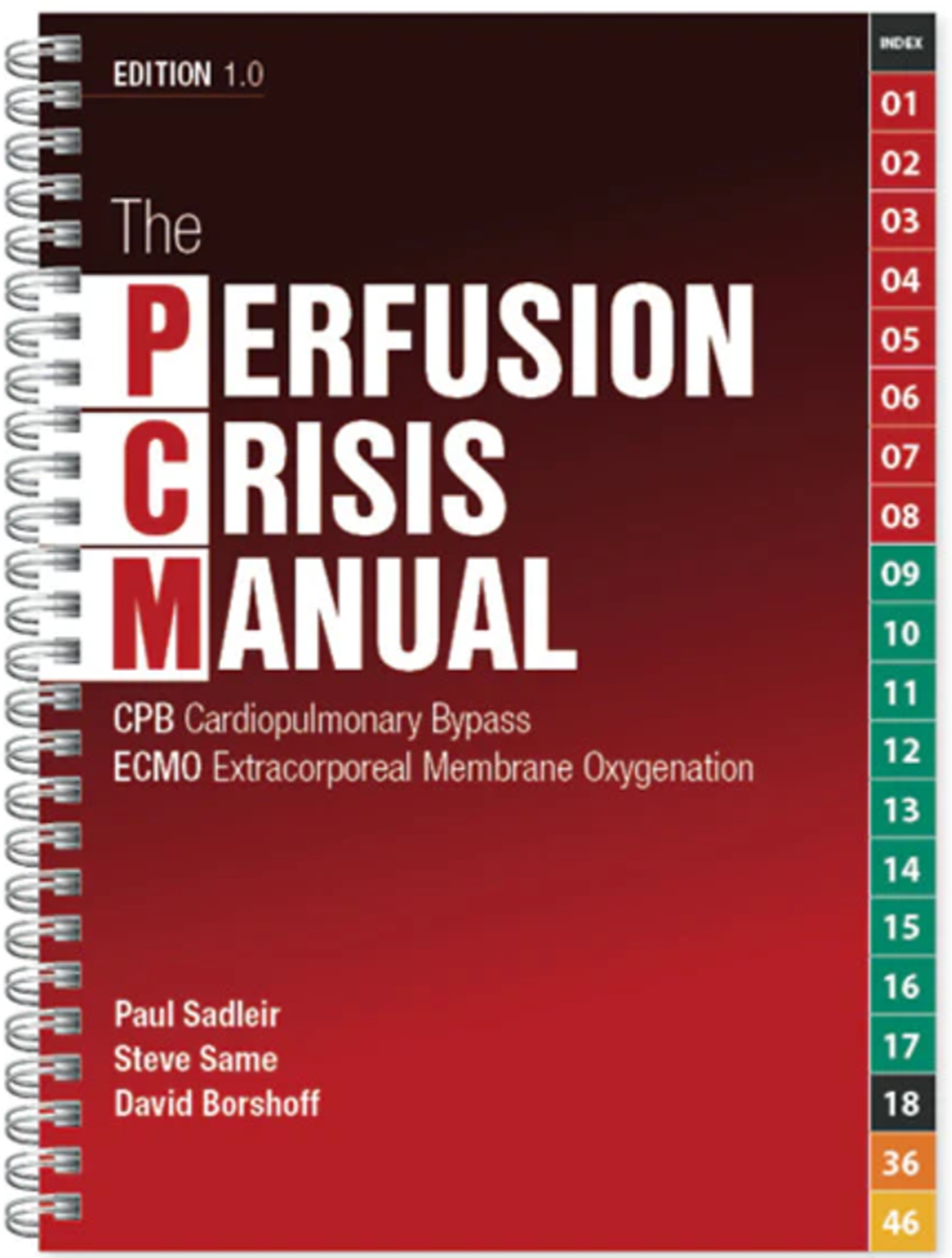
This manual, which works as an aide memoire, leverages the authors’ experience in management of anaesthesia and resuscitation scenarios and attempts to give a ‘one page’ structured approach to uncommon but clinically significant events that can occur during cardiopulmonary bypass. It also seeks to embed safe practice with advice such as ‘approach early high line pressure as dissection until proven otherwise’.
Section one focuses on the heart, great vessels and monitored parameters where there is considerable crossover with anaesthesia management, and section two is more focused on the cardiopulmonary circuit and is divided into blood components and equipment failure.
In addition, a third section is devoted to the management of events during the use of extracorporeal membrane oxygenation (ECMO) for pulmonary (veno-venous) or cardiac (veno-arterial) support.
While being more suited for junior members of the cardiac team, the easy readability and concise structure would definitely aid all practitioners in overcoming fixation error, through the use of point form lists and checklists.
The manual could also be used in a crisis akin to the approach to anaphylaxis and other anaesthesia crises when a second operator or team member consults and reads through the checklists provided. Hopefully, in the near future this kind of information could be automatically available to practitioners within the clinical workspace/electronic record, akin to safety features and alerts in the aviation and motor transport spheres.
From a critical viewpoint, this manual, which is version 1.0 (I reviewed the international edition) was written within the context of the institution of its authors. This point is mentioned up front by the editorial team who note that the protocols do make assumptions about the use of certain types of cardiopulmonary machines and circuits. Furthermore, it may have been beneficial to include some line diagrams to explain certain concepts, especially for the emergency procedure section, even if they are examples for drills performed ‘off line’. Most pumps are consistent enough in layout to allow a schematic diagram of a statement such as ‘correctly orientate vent tubing in roller pump race’, which is difficult to understand in a crisis for a junior practitioner.
Practitioners should also be cognisant that updates not referenced in this manual have occurred subsequently, such as the European 2019 EACTS/EACTA/EBCP guidelines on cardiopulmonary bypass in adult cardiac surgery. 1
Overall, though, this manual is well written and concise and works as advertised—‘a cognitive aide in crisis’. It would be a useful point-of-care tool in the management of the many and varied emergencies that present during extracorporeal circulation.
Footnotes
Declaration of conflicting interests
The author(s) declared no potential conflicts of interest with respect to the research, authorship and/or publication of this article.
Funding
The author(s) received no financial support for the search, authorship and/or publication of this article.