




Abstract
Background:
Assessment of patient satisfaction with orthosis is a key point for clinical practice and research, requiring questionnaires with robust psychometric properties.
Objectives:
To identify which validated questionnaires are used to investigate patient satisfaction with orthosis in limb orthotics and to analyse (1) their main fields of clinical application, (2) the orthosis-related features analysed by the questionnaires and (3) the strength of their psychometric properties.
Study design:
Systematic review.
Methods:
A literature search using MEDLINE (PubMed), Cumulative Index to Nursing and Allied Health Literature (CINAHL) and Scopus databases for original articles published within the last 20 years was performed.
Results:
A total of 106 papers pertaining to various clinical fields were selected. The main features of patient satisfaction with orthosis analysed were as follows: aesthetic, ease in donning and doffing the device, time of orthotic use and comfort.
Conclusion:
Of the questionnaires used to investigate patient satisfaction with orthosis, only four are adequately validated for this purpose: two for generic orthotic use (Quebec User Evaluation of Satisfaction with assistive Technology 2.0 and Client Satisfaction with Device of Orthotics and Prosthetic Users’ Survey) and two for specific application with orthopaedic shoes (Questionnaire for the Usability Evaluation of orthopaedic shoes and Monitor Orthopaedic Shoes). Further development, refinement and validation of outcome measures in this field are warranted.
Clinical relevance
Given the importance of analysing patient satisfaction with orthosis (PSwO), appropriate instruments to assess outcome are needed. This article reviews the currently available instruments and reflects on how future studies could be focused on the development, refinement and validation of outcome measures in this field.
Keywords
Background
The International Organization for Standardization 1 defines an orthosis as ‘an externally applied device used to modify the structural and functional characteristics of the neuromuscular and skeletal system’. Orthoses are commonly prescribed in medical and surgical practice to restore physical function and improve patients’ well-being, both of which are primary goals of the treatment process. They can be classified into three main groups: spinal, upper limb and lower limb. While spinal orthoses are mainly used to support and immobilize the spine, limb orthoses find application in a wide range of clinical conditions. 2 They are used to support, immobilize, or treat muscles, joints or skeletal parts which are weak, ineffective, deformed or injured. 3
A recent consensus conference on appropriate lower limb orthotics has stated that ‘user involvement including satisfaction surveys must be an integral part of outcome assessment’ and that ‘user satisfaction surveys should be performed and include measures of the impact of orthotic management to enhance the quality of life’. 4 There are numerous types of satisfaction that can be measured, including personal aspects of care, the technical quality of care, financial considerations and efficacy. 5
The demonstration of sound psychometric properties in these measures is a key factor for clinicians to know they can rely on data as accurate and meaningful indicators of the treatment outcome, thus improving decision-making in clinical practice. 6 In 2011, a literature review (on papers published up to January 2010) on patient satisfaction with orthotic treatment was published. 7 Its aim was to identify and appraise instruments for assessment of satisfaction with orthotic devices (for spine and limbs) and/or services. That review focused solely on studies describing devices fit by an orthotist or pedorthist and excluded papers about interventions applied by other health professionals. However, in the last 4 years, new papers on patient satisfaction with orthosis (PSwO) have been published, and validated questionnaires identified by the earlier review have subsequently undergone further psychometrical analyses.8–11
Therefore, the aim of this study was to conduct an updated systematic literature review on limb orthotics in order to identify psychometrically valid questionnaires for assessing PSwO and to analyse (1) their fields of clinical application, (2) the orthosis-related aspects they deal with and (3) the strength of their psychometric characteristics.
Methods
A broad literature search was conducted on research articles published within the last 20 years (January 1993–April 2014) in journals indexed by PubMed, CINAHL and Scopus databases. The following keywords were used: (orthosis (All Fields) OR brace (All Fields) OR splint (All Fields) OR orthotics (All Fields)) AND (questionnaire OR survey) AND (satisfaction OR effectiveness). In line with the search strategy, critical papers published in English were selected, while reviews, case reports and papers not dealing with limb orthoses (i.e. spinal orthoses) or that assessed healthy subjects were excluded. Finally, the bibliographies of the selected articles were examined for additional relevant articles with the same characteristics. The titles, abstracts and then full text of the papers identified by the search were screened by two independent reviewers to identify those that met the selection criteria and extract the data.
Results
The literature search produced 524 papers, 106 of which met the inclusion criteria for this review. The questionnaires included in the selected papers were analysed in terms of the field of their clinical application, the orthosis-related features considered and general psychometric characteristics.
Fields of application
The selected papers were divided according to the body region treated and the main diagnosis underlying orthotic use. Tables 1 and 2 list 99 papers assessing patient satisfaction with site- or region-specific devices (24 for upper limbs (Table 1)12–35 and 75 for lower limbs (Table 2)39–112) in patients with orthopaedic (52.1%), rheumatologic (18.3%), neurological (19.4%) and vascular (1%), or miscellaneous diseases (9.2%). In addition, seven papers assessed PSwO in patient groups with a wide range of diseases and related upper and lower limb devices with no site-specific questionnaires.10,11,36–38,114,115
Fields of clinical application in which patient satisfaction with upper limb devices is assessed.
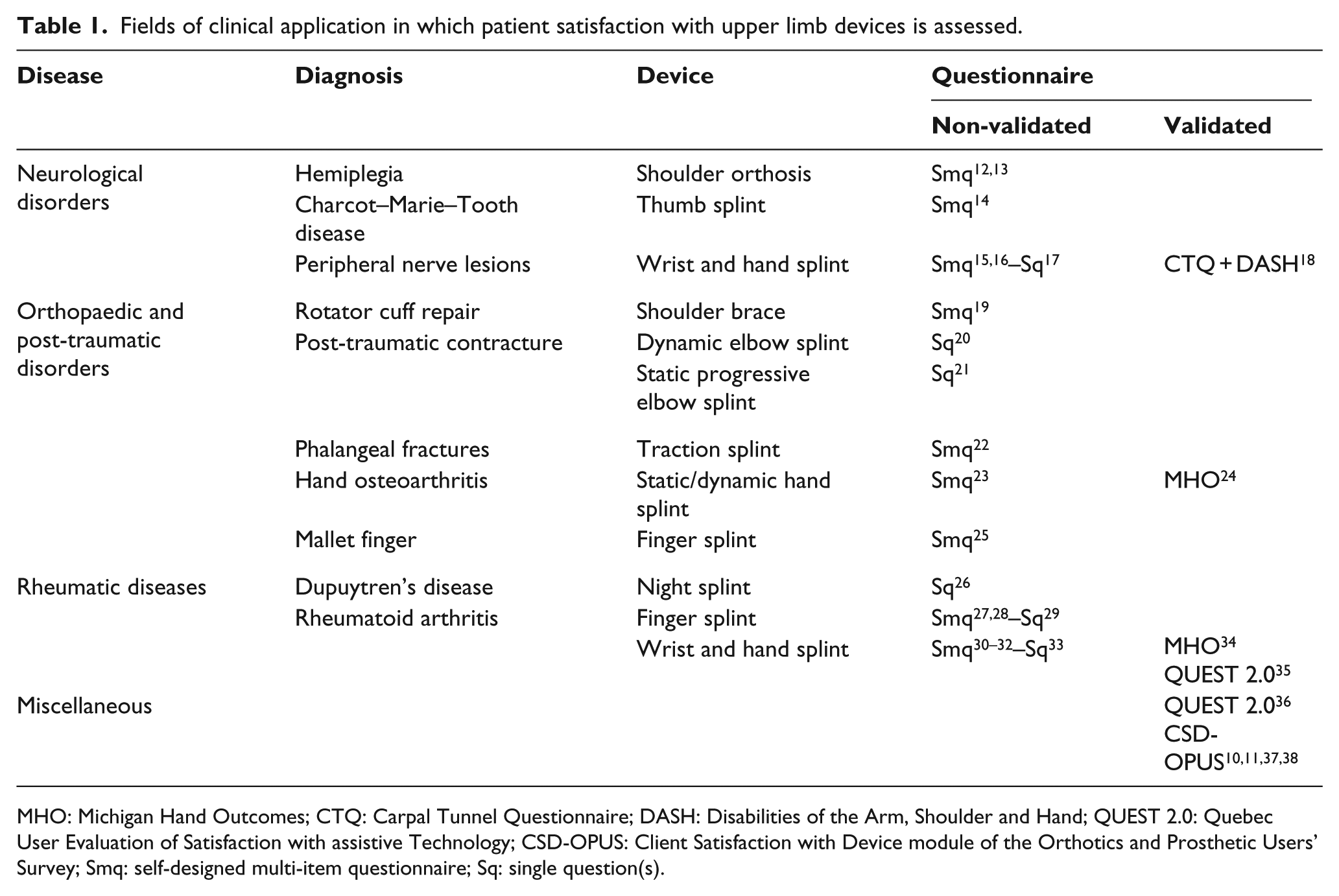
MHO: Michigan Hand Outcomes; CTQ: Carpal Tunnel Questionnaire; DASH: Disabilities of the Arm, Shoulder and Hand; QUEST 2.0: Quebec User Evaluation of Satisfaction with assistive Technology; CSD-OPUS: Client Satisfaction with Device module of the Orthotics and Prosthetic Users’ Survey; Smq: self-designed multi-item questionnaire; Sq: single question(s).
Fields of application in which satisfaction with lower limb devices is assessed.
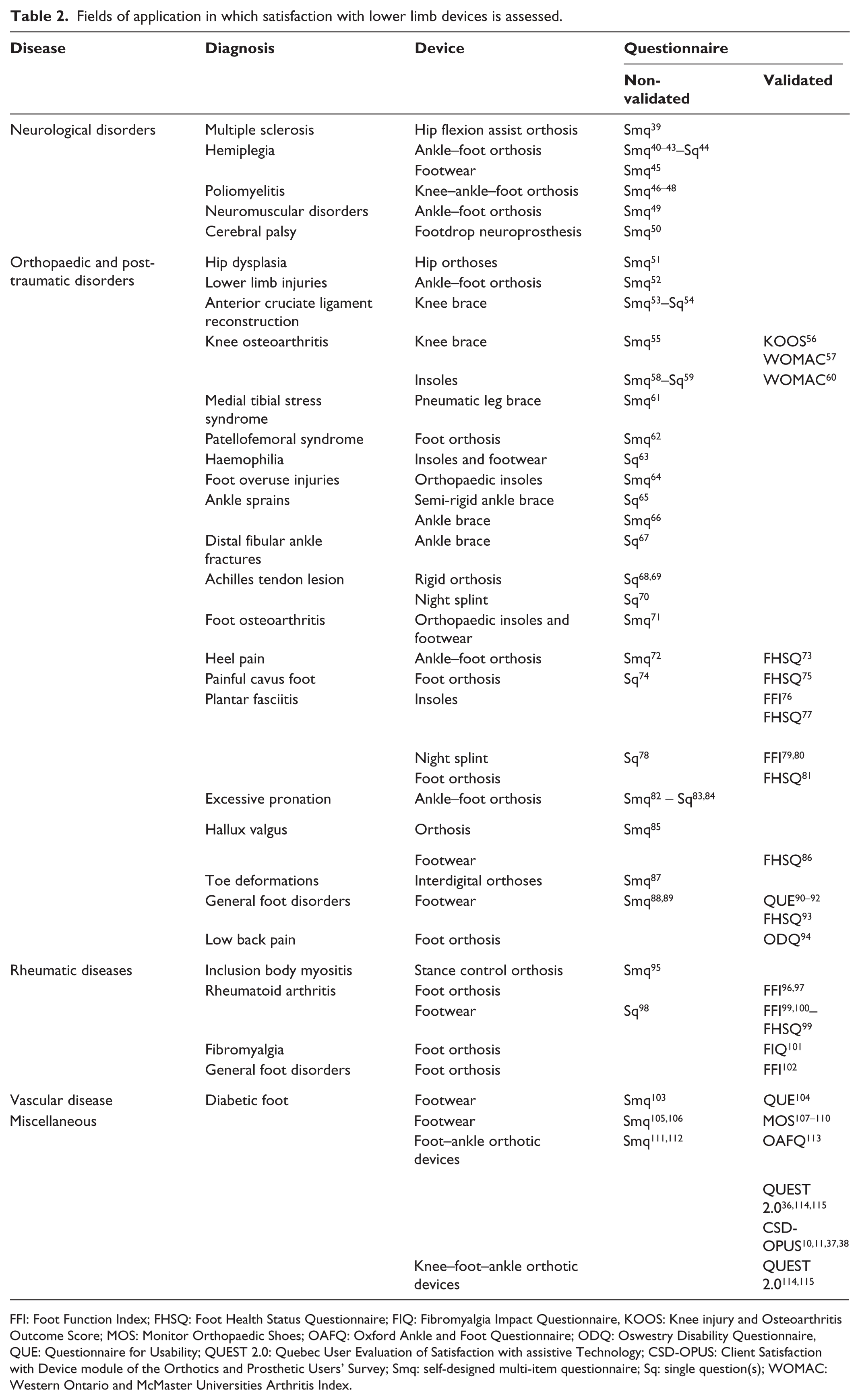
FFI: Foot Function Index; FHSQ: Foot Health Status Questionnaire; FIQ: Fibromyalgia Impact Questionnaire, KOOS: Knee injury and Osteoarthritis Outcome Score; MOS: Monitor Orthopaedic Shoes; OAFQ: Oxford Ankle and Foot Questionnaire; ODQ: Oswestry Disability Questionnaire, QUE: Questionnaire for Usability; QUEST 2.0: Quebec User Evaluation of Satisfaction with assistive Technology; CSD-OPUS: Client Satisfaction with Device module of the Orthotics and Prosthetic Users’ Survey; Smq: self-designed multi-item questionnaire; Sq: single question(s); WOMAC: Western Ontario and McMaster Universities Arthritis Index.
Orthosis-related features
Different questionnaires were utilized in the selected papers to assess a variable set of orthosis-related features. It was decided to classify these features into three main groups: intrinsic characteristics, functional characteristics and patient perceptions (Table 3).
Orthosis-related features assessed in the reviewed questionnaires.
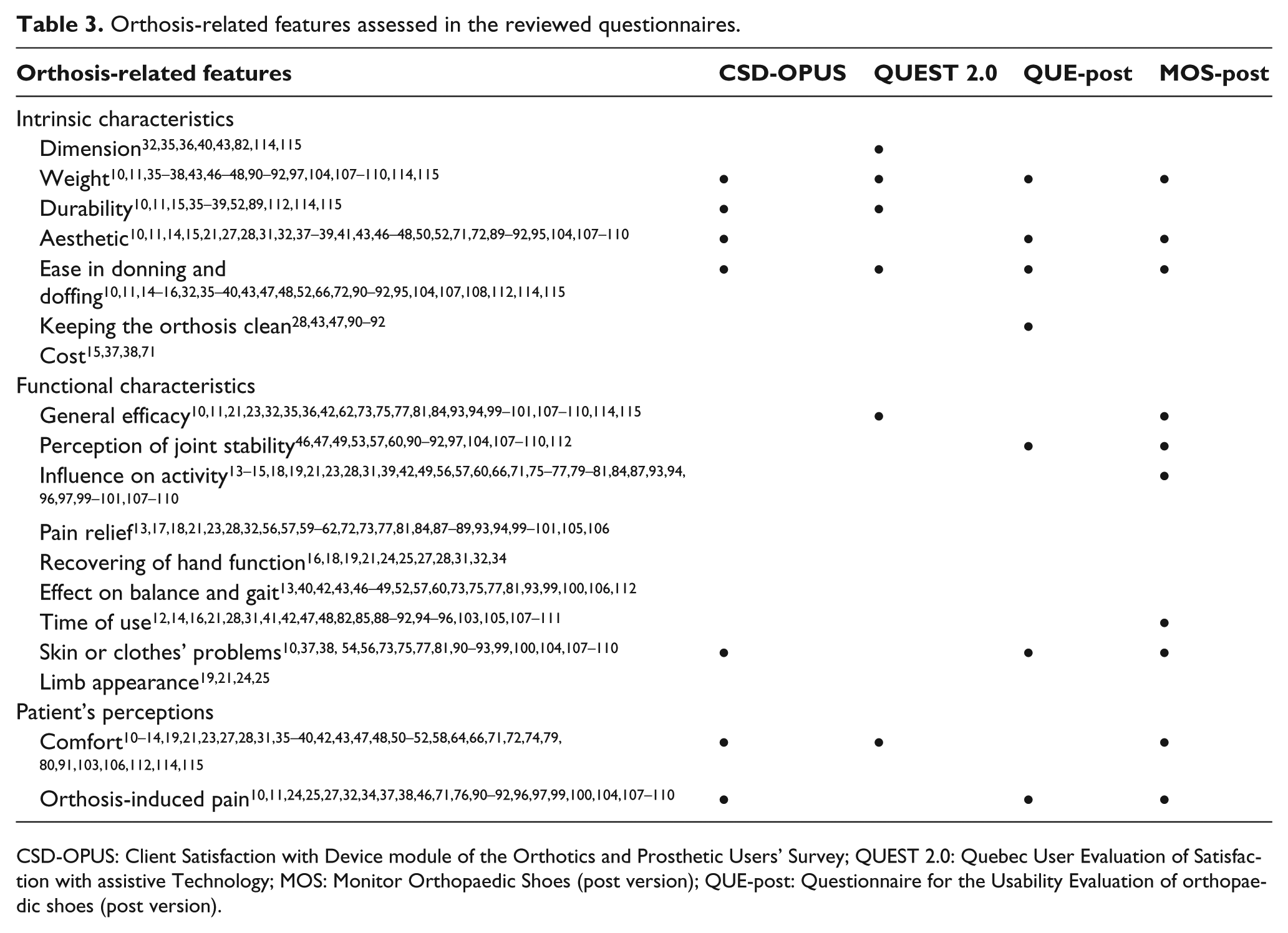
CSD-OPUS: Client Satisfaction with Device module of the Orthotics and Prosthetic Users’ Survey; QUEST 2.0: Quebec User Evaluation of Satisfaction with assistive Technology; MOS: Monitor Orthopaedic Shoes (post version); QUE-post: Questionnaire for the Usability Evaluation of orthopaedic shoes (post version).
Intrinsic characteristics
The intrinsic characteristics of an orthosis were defined as its physical characteristics and aspects related to its provision and use. Most of the questionnaires assessed how satisfied the patient was with the physical characteristics of the orthosis (dimension, weight, durability and aesthetic judgment) and the orthosis usability (ease in donning and doffing, and keeping the orthosis clean). Only a few questionnaires investigated the patient’s opinion about the economic cost of the device.15,37,38,71
Functional characteristics
Functional characteristics of an orthosis are closely linked to its utilization. 7 The most frequently assessed characteristics were influence on activity,13–15,18,19,21,23,28,31,39,42,49,56,57,60,66,71,75–77,79–81,84,87,93,94,96,97,99–101,107–110 pain relief13,17,18,21,23,28,32,56,57,59–62,72,73,77,81,84,87–89,93,94,99–101,105,106 and time of use.12,14,16,21,28,31,41,42,47,48,82,85,88–92,94–96,103,105,107–111 Items concerning satisfaction with limb appearance when wearing an orthosis were found only in questionnaires assessing hand orthoses.19,21,24,25
Patient perceptions
The psychological consequences of wearing a device are another important field to assess. Negative feelings can reduce compliance to the treatment, limiting orthosis utilization and patient socialization, while positive reactions give useful feedback on orthosis suitability and usability. The two main patient perceptions assessed by the questionnaires were comfort in wearing the orthosis10–14,19,21,23,27,28,31,35–40,42,43,47,48,50–52,58,64,66,71,72,74,79,80,91,103,106,112,114,115 and orthosis-induced pain.10,11,24,25,27,32,34,37,38,46,71,76,90–92,96,97,99,100,104,107–110 Comfort and discomfort (caused by orthosis-induced pain) are in fact two separate entities related to different factors or concepts. 116
Psychometric characteristics of the questionnaires
A total of 67 papers (63.2%) analysed PSwO with questionnaires developed and used for their specific study, without providing sufficient information about their main metric properties: 117 of these, 47 used self-designed multi-item questionnaires and 20 one or more single-item questions (Tables 1 and 2).
In contrast, 39 articles (36.8%) discussed questionnaires with known psychometric characteristics. However, 24 of them used questionnaires measuring functional outcome (Carpal Tunnel Questionnaire, 18 Disabilities of the Arm, Shoulder and Hand questionnaire, 18 Michigan Hand Outcomes,24,34 Knee injury and Osteoarthritis Outcome Score, 56 Western Ontario and McMaster osteoarthritis index,57,60 Foot Health Status Questionnaire,73,75,77,81,86,93,99 Fibromyalgia Impact Questionnaire, 101 Oswestry Disability Questionnaire, 94 Foot Function Index76,79,80,96,97,99,100,102 and Oxford Ankle Foot Questionnaire for Children 113 ) to assess the patient’s opinion about orthotic efficacy. They did not analyse other important features related to PSwO, such as intrinsic characteristics of the orthosis and patient perception as regards weight, aesthetic appeal, ease in donning/doffing and comfort, which are the most assessed features in the other questionnaires.
Finally, 15 papers10,11,35–37,90–92,107–110,113–115 dealt with four questionnaires validated for use across all types of orthotic devices and clinical conditions (here defined as generic questionnaires) or for specific use in relation to orthopaedic shoes (here defined as specific questionnaires) to assess the main aspects of PSwO. 117 These tools are described in the two following paragraphs.
Generic questionnaires
The Quebec User Evaluation of Satisfaction with assistive Technology 2.0 (QUEST 2.0) is a 12-item outcome measure that assesses user satisfaction with assistive technology devices. 118 The scale consists of two subscales: satisfaction with the device (eight items: dimension, weight, adjustment, safety, durability, simplicity of use, comfort and effectiveness) and satisfaction with the service (four items: service delivery, repairs and servicing, professional services and follow-up services). This questionnaire can be self-administered, completed with the caregiver’s help or conducted by interview. Users are asked to rate their satisfaction using a 5-point scale from 1 (not satisfied at all) to 5 (very satisfied) (Figure 1). 118 QUEST 2.0 has shown a high reliability coefficient and adequate construct validity (when compared to some questionnaires on general satisfaction) to evaluate user satisfaction with all kinds of assistive devices, including orthoses.9,36,114,115
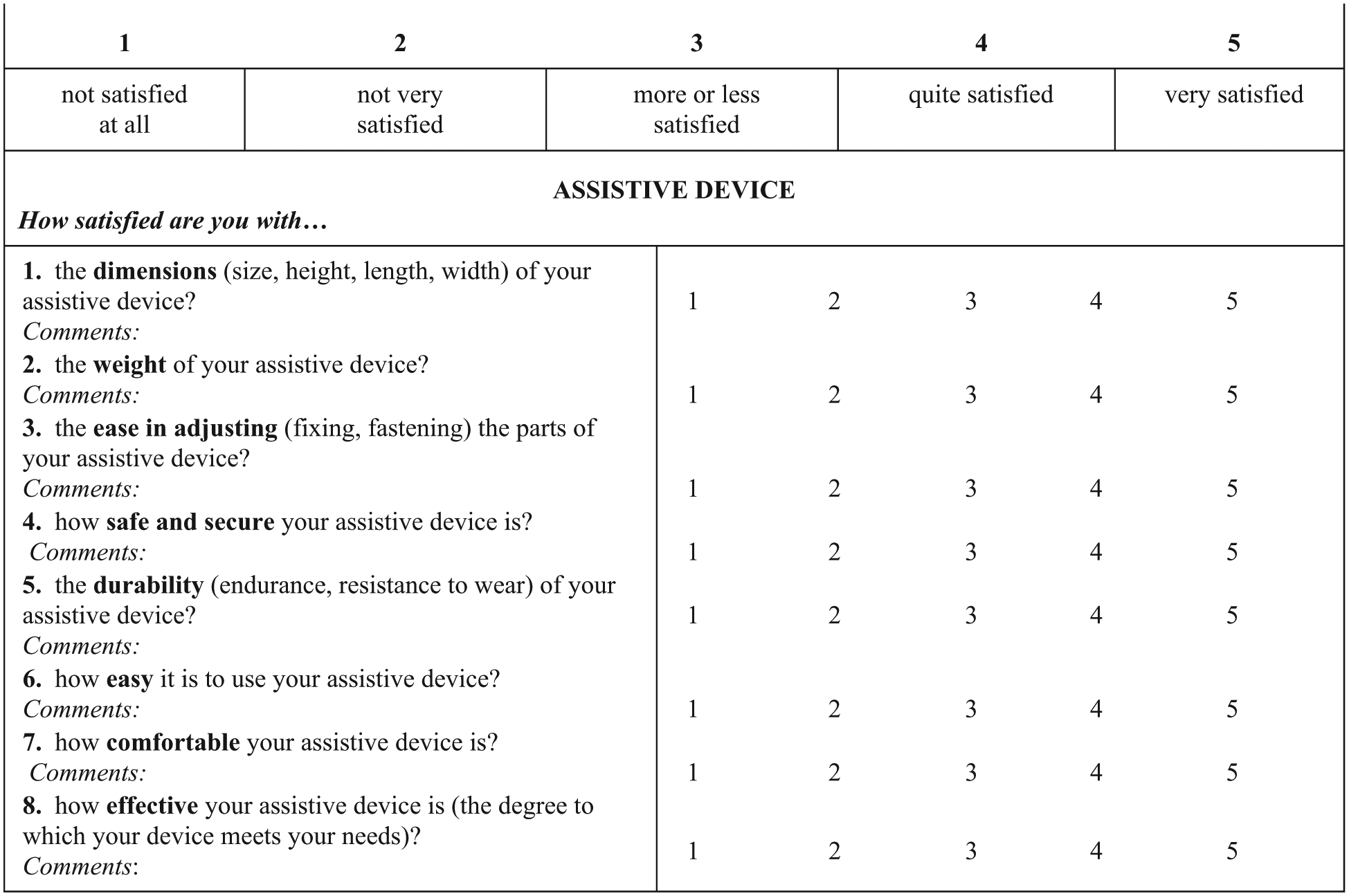
The 8-item subscale regarding satisfaction with the device of the Quebec User Evaluation of Satisfaction with assistive Technology 2.0 (QUEST 2.0).
The Client Satisfaction with Device (CSD) is one of the five modules of the Orthotics and Prosthetics Users’ Survey (OPUS), a patient-report outcome measure, validated by Rasch analysis.8,114 The CSD module asks patients about their level of agreement with a series of statements regarding their satisfaction with different aspects of the device. Answers are rated on a 4-level Likert scale with high scores indicating poor satisfaction. A recent paper validated a revised version of OPUS improving the psychometric characteristics. 10 After modifications, most of the new OPUS subscales demonstrated acceptable psychometric properties (unidimensionality was satisfactory, and item reliability was excellent for all the modules); the revised CSD module (Figure 2) – reduced from 11 to 8 items in order to improve its unidimensionality – showed some evidence of validity and reliability.8,10,11 Similar to QUEST 2.0, also OPUS has a module to assess client satisfaction with services, a 10-item 4-level Likert scale, separate from the CSD.
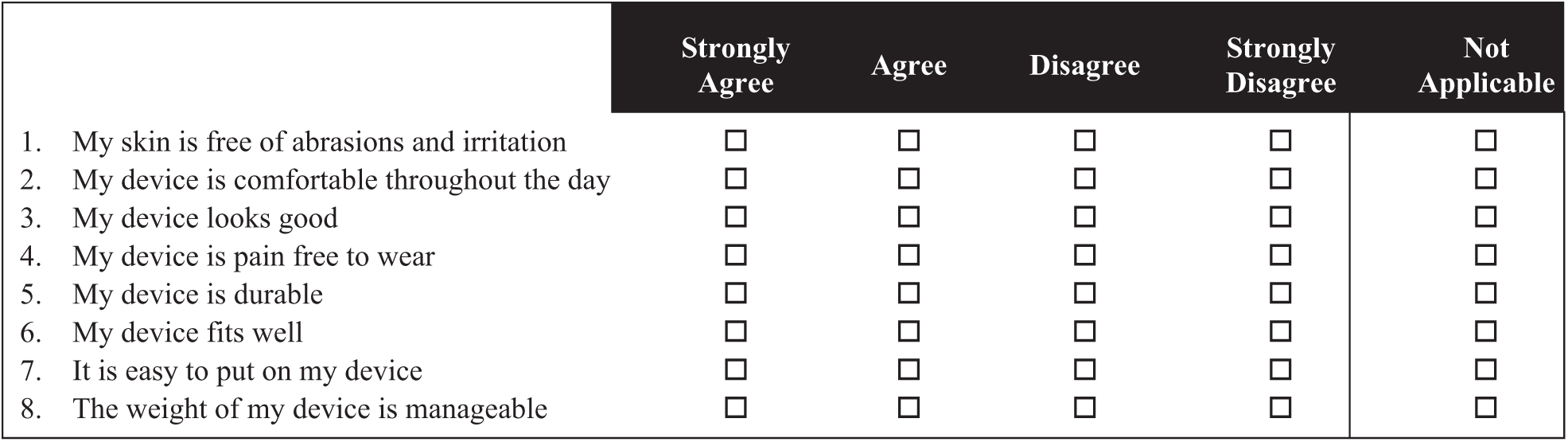
The Client Satisfaction with Device module of the Orthotics and Prosthetic Users’ Survey (CSD-OPUS).
Specific questionnaires
The Questionnaire for the Usability Evaluation of orthopaedic shoes (QUE) focuses on all aspects of usability (effectiveness, efficiency, satisfaction, context of use) of orthopaedic shoes and consists of two parts (QUE-pre, QUE-post). 90 The QUE-pre should be completed before patients receive their orthopaedic shoes. It contains 56 questions measuring different aspects of foot problems and the expectations of inexperienced patients with regard to the effectiveness of orthopaedic shoe use (pain, instability, callus and wounds), efficiency (putting on/taking off orthopaedic shoes) and satisfaction with their use (pinch, slip, weight of shoes, cold feet, perspiration, maintenance and cosmetic appearance). The QUE-post consists of 45 questions measuring a series of foot problems and the patient’s experience with regard to usability of orthopaedic shoes in terms of effectiveness, efficiency and satisfaction. It is recommended that the patient fill out the questionnaire after the orthopaedic shoes have been worn for at least 3 months. Most of the questions have a dichotomic response format (yes/no), while pain-related items are rated on a visual analogue scale (VAS) scale. In patients with degenerative foot disorders wearing orthopaedic shoes, QUE showed good test–retest reliability, satisfactory internal consistency and validity.90–92
The Monitor Orthopaedic Shoes (MOS) was developed as a short and easy-to-use questionnaire for measuring the most relevant aspects of use and usability of orthopaedic shoes in a wide range of patient groups, in opposition to QUE that was defined as lengthy and time-consuming and was specifically developed for patients with degenerative foot disorders. 107 Like QUE, MOS has a pre- (MOS-pre) and post- (MOS-post) format. The MOS-pre is composed of 15 multiple choice questions, 12 VAS questions, 5 open questions and 2 photo-based questions. It examines the current situation before patients receive their orthopaedic shoes, patients’ expectations regarding the most significant aspects of the usability of their orthopaedic shoes and their expectations regarding the information received from the medical specialist and the orthopaedic shoe technician. The MOS-post is composed of 11 multiple choice questions, 19 VAS questions, 7 open questions and 2 photo-based questions. It analyses the patient’s actual use and experience of the usability of their orthopaedic shoes, and the scope is to measure the difference between previous expectations and actual experience. The orthotist’s role is not mentioned. The MOS demonstrated to be reproducible and reliable outcome measure. 107
Discussion
This review supports the large interest shown by clinicians and researchers in assessing patients’ satisfaction about wearing a limb orthosis as an important clinical outcome.119,120 The patient’s perspective is crucial since (1) patient satisfaction is related to quality of care, which in turn is related to compliance, that is, treatment efficacy versus abandonment rate. 120 In fact, the suitability and usability of an orthosis depend on its perceived benefits and/or detriments (discomfort, embarrassment, etc.), and the high rate of orthosis abandonment could be reduced by improving the orthosis-related features; 121 (2) patient feedback can be useful for deciding between alternative methods of treatment. 122
Most of the papers reviewed assessed satisfaction with lower limb orthoses (in particular in orthopaedic and post-traumatic disorders); in upper limb orthotics, PSwO was mainly assessed in patients with rheumatic diseases.
The majority of the papers examined upper limb splints, ankle–foot orthoses or orthopaedic shoes and insoles. Despite the high frequency of orthosis provision in disability after stroke, 123 only eight papers (7.5%) assessed PSwO in these clinical conditions.12,13,39–45 Finally, most questionnaires analysed specific groups of diseases and related devices; few papers studied samples with a large variety of diseases and devices, using generic questionnaires for PSwO.10,11,36–38,114,115
The orthosis-related features most frequently assessed by the questionnaires (i.e. in 20 papers or more) were aesthetic, ease in donning and doffing, time of orthotic use and comfort. Conversely, the orthosis-related features least frequently assessed (i.e. in five papers or less) were dimension, keeping the orthosis clean, limb appearance and costs.
In particular, in the recently modified version of OPUS, the two items about client costs for the devices were deleted from the CSD section as measuring another dimension. 109 This could be linked to the fact that in many countries orthoses are provided by National Health Services or covered by insurance, without cost for the patient.
The psychometric properties (such as reliability and validity) of most of the questionnaires selected by this review have not been sufficiently assessed. Often, these tools show a poor conceptualization and vagueness in their construct definition, being based on a single question (Tables 1 and 2). Moreover, when a set of questions is used, the satisfaction level is usually described by a profile (multiple numbers) without any analysis of the dimensionality of the proposed set. Also, the use of single questions should be avoided because they provide insufficient information for an adequate analysis of the PSwO. 124
On the contrary, an appropriate validation of each outcome measure should complement a thorough conceptual definition of the variable(s) under study and a rigorous instrument development process. 124 As an example, the CSD of OPUS 10 and QUEST 2.0 118 underwent a robust analysis of their psychometric characteristics. In particular, the CSD has been analysed not only by classical theory statistics but also by Rasch analysis, a modern statistical approach to assess and refine outcome measures. Conversely, the QUE 90 and MOS 107 are two questionnaires developed and validated only to measure patient satisfaction with orthopaedic shoes. The first considers many aspects of patient satisfaction and so is lengthy and time-consuming. The second is a shorter questionnaire but requires a larger validation process.
All four questionnaires investigate many aspects of the PSwO with some minor differences between them (see Table 3). Nevertheless, there is still room both for further refinement of these four tools and for development and validation of new (generic and specific) measures.
Our findings are in line with another review assessing PSwO 7 that adopted different exclusion and inclusion criteria (e.g. it was limited to devices fitted by an orthotist or pedorthist; it also analysed satisfaction with the services provided and covered a larger period of publication). Both studies identified OPUS and QUEST as two measures that possess a documented history of psychometric development. This review adds some new information: it identifies two further measures specific for orthopaedic shoes, it shows how many studies have used inappropriate measures for PSwO and it specifies in which particular fields, in recent years, researchers have been interested in PSwO assessment.
Conclusion
This review underpins the large current interest in PSwO questionnaires, describes their fields of clinical application, summarizes the orthosis-related features analysed by the questionnaires and classifies the questionnaires according to their psychometric properties. Only four questionnaires (two for generic orthotic use and two for specific application with orthopaedic shoes) prove to be potentially adequate after filtering for solid metric characteristics, while many widely used questionnaires have not undergone a rigorous validation process.
Thus, there is need for further analysis of the psychometric properties of existing questionnaires (in different conditions and settings). Moreover, as occurred for the assessment of orthopaedic shoes, it seems that there is a need for new validated tools, related to specific body-regions or specific types of satisfaction (e.g. recovery of hand function, effect of orthosis on balance and gait, or pain relief). A better understanding of patients’ perception towards orthosis’ characteristics is important both for a more effective clinical selection of existing, well-accepted devices and for the development of new quality products.
Due to the importance of analysing PSwO in clinical practice and research and the need for appropriate instruments to assess outcome, further reports on the development, refinement and validation of outcome measures in this field are warranted.
Footnotes
Author contribution
All authors contributed equally in the preparation of this manuscript.
Declaration of conflicting interests
None declared.
Funding
This research received no specific grant from any funding agency in the public, commercial or not-for-profit sectors.