




Abstract
Pressure distribution measurement offers an objective and quantifiable method of determining the loads applied to the human body during static and dynamic situations such as walking and the more demanding tasks associated with sporting activities. While there are various systems available on the market, the technology and developments offered by novel (novel.de) a company based in Munich, Germany are regarded as innovative. The intent of this article is to outline the development of novel’s pressure measurement technology and explore how the pliance® system can assist in determining an optimal fit of a prosthesis in an athlete. The discussion also focuses on the introduction of a new Elastisens® technology of the novel sensor pads to enable analysis of very contoured surfaces. Key pressure parameters for determining optimal performance are also explored; however, clinicians and researchers are guided to acknowledging the need to direct and perform their analysis within context – in other words, the analysis must be hypothesis driven.
Clinical relevance
Pressure measurement analysis can play an important role in clinical assessment and various treatment modalities. As technology increases, so does the ability of pressure systems. Clinicians should be cognisant of evolving technology such as Elastisens®, which can aid in prosthetic and wheelchair assessment.
novel is renowned for its sophisticated and quality pressure (i.e. pliance® systems) measurement technology and has played an important contribution to the development and understanding of the prosthetic–stump interface and pressure distribution within wheelchair users. In 200 words, can you sum up the evolution and success of novel’s technology?
From the start of the novel GmbH in the year 1978, novel’s first priority has always been to provide their users with high-quality, reliable and accurate-measuring systems. After intensive research, we decided to use capacitive sensor technology for all our pressure measuring systems – emed® (platform), pedar® (in-shoe) and pliance (for other, contoured surfaces). We refined this technology within the last 30 years and also developed a special calibration method, which provides for each individual sensor a calibrated output of pressure. Although the calibration of novel sensors is long-term stable, each user can test the accuracy of the system by using the trublu calibration systems himself. Since many of our applications are medical ones, our systems are classified according to the European law as medical devices with measuring function – class ‘Im’ and the measuring function is approved by a notified body.
The combination of accurate sensor technology with mobile, wireless data acquisition for the pedar® and pliance® systems as well as user-friendly software are the basis for a wide use of the novel systems in many different fields, like fitting of prosthesis or wheelchairs. Special scientific software allows researchers to perform complex, statistical analysis of pressure data and to search for common rules.
In 2008, the pedar®-x system was used to determine the performance of Annette Roozen, a Dutch Paralympian silver medallist from the Beijing 2008 Paralympian Games. The pedar® is known to have 99 sensors per insole and you measured pressure distribution, forces and loading times for both limbs. How many sensors were used for measuring Annette’s artificial limb?
In her case, the pressure distribution underneath the feet (referred to as Pedography) was measured. For the assessment of the socket of artificial limbs, we offer the pliance® system with a maximum of up to 1024 sensors. A typical set-up for such a measurement consists of 3 or more sensor pads with a sensor number from 4 to 256 per pad, depending on the application.
Your analysis enabled optimisation of fit, design and material choice of the prosthesis; what were the comparisons in terms of pressure data between both limbs?
This research was undertaken at Fontys University of Applied Science in the Netherlands and they have all the details. However, more generally speaking, the assessment of any prosthesis is an individual process for each person, due to the fact that everybody has an individual anatomy. The socket of the prosthesis needs to be fitted for each person individually. Depending on how well the socket is fitting, the areas where fitting problems were experienced needs to be measured. After modification of the socket, the local pressure distribution in these areas is measured again to make sure that the modifications were successful and have not negatively affected other areas of the socket (Figures 1 and 2).
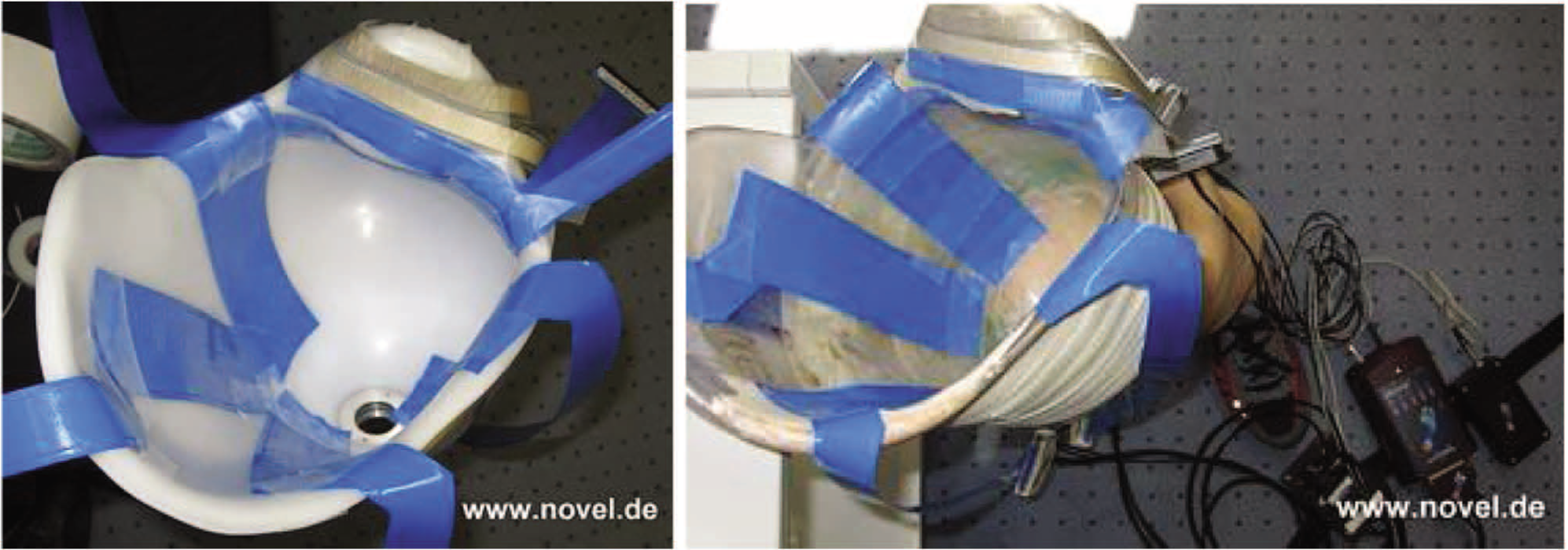
Pressure analysis distribution of the stump-to-socket interface using the pliance® system.
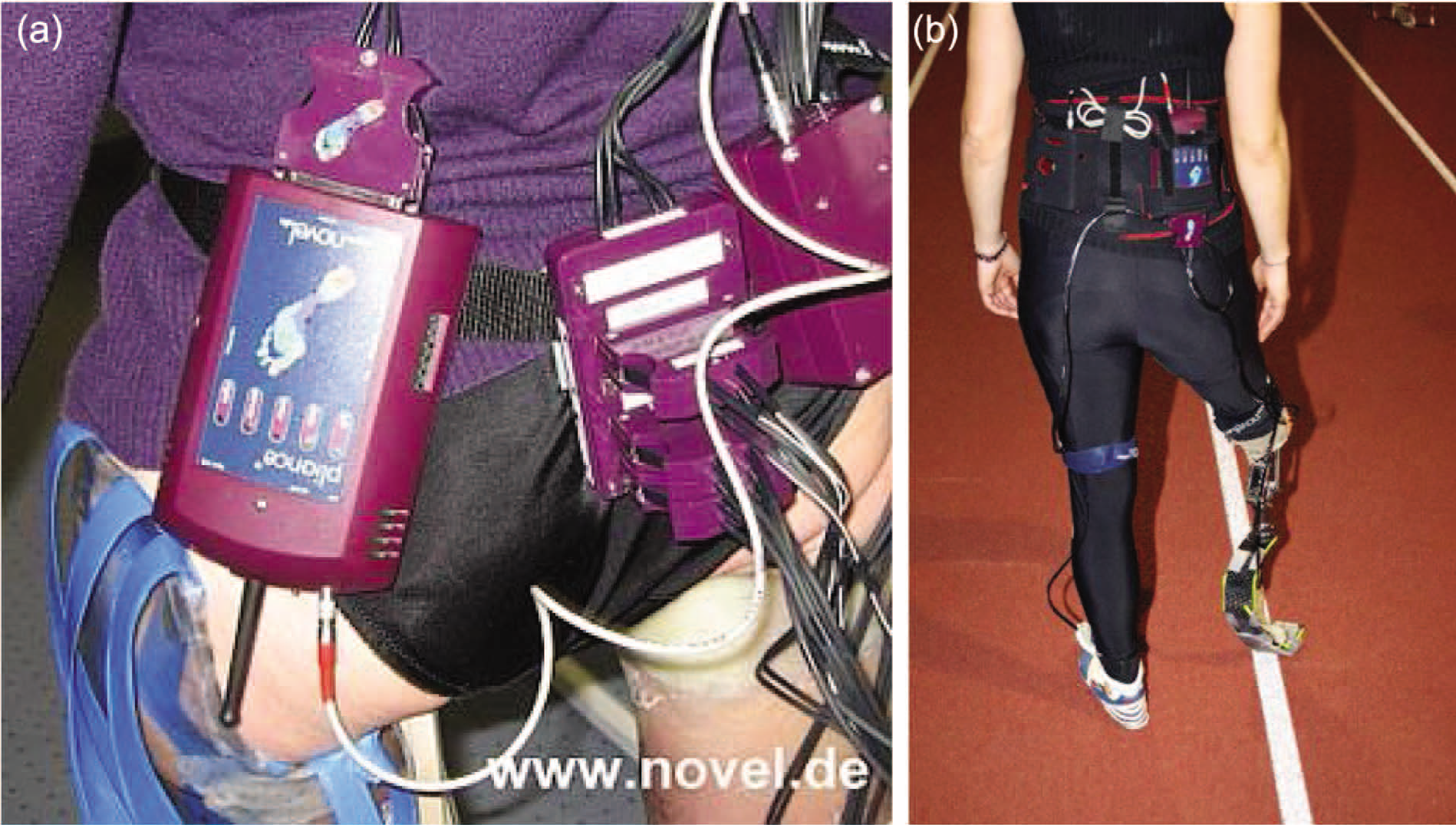
(a) The pliance® system data logger in situ (left side of the picture). The data logger is light and does not impede the participant’s performance and activity. (b) The pedar® system set-up for plantar pressure analysis.
Should this analysis be reserved for elite athletes with a disability (i.e. amputee) or can it be used for those individuals starting out in sport? What advice would you offer the prosthetic technician and coaches?
Proper fitting of prosthesis or wheelchairs is important for each person because most of the time people have to put up with daily activities. Nevertheless, athletes may have additional requirements on the prosthesis or the wheelchair, depending on the sports discipline they are participating in. There is on-going research on what those requirements are and how to ‘translate’ them into an optimised prosthesis shape or optimal adjustment of the wheelchair.
What new novel technological sport-related systems are available for 2012 and how do they differ from previous systems?
There is the new Elastisens® technology from novel for pliance® sensor pads, which makes the sensor mats even more elastic than our standard sensors. This allows the user to cover bigger, three-dimensional (3D) strongly shaped areas of the body, for example, on the residual limb or on a very soft cushion of a wheelchair. This is necessary for a better understanding of the interaction between the person and the assistive device (Figure 3).
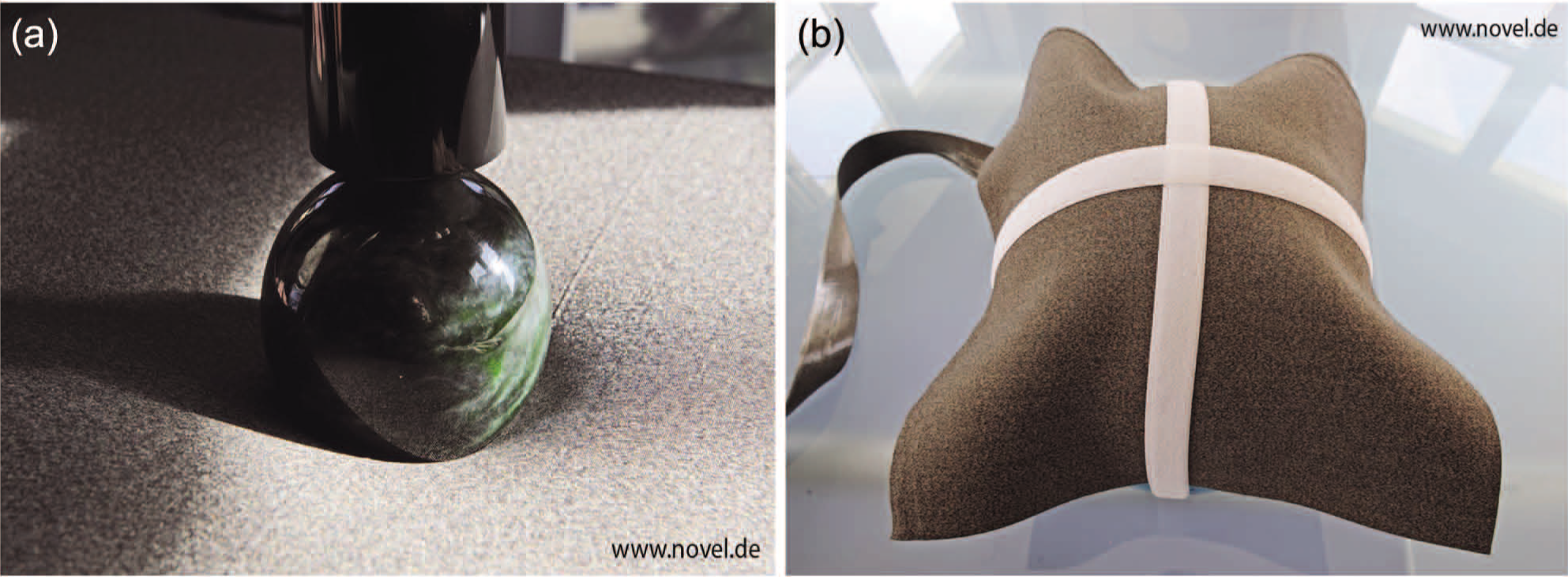
Three-dimensional deformation of a (a) sensor pad and (b) wheelchair sensor mat.
What advice do you give to researchers and clinicians seeking to use the pliance system for sport analysis?
Before starting any measurement or any experiment the application should be well defined and the expected findings should be discussed. Based on this, the right system set-up has to be selected. If the investigator needs any advice or has any question regarding his/her application, they are always welcome to contact our biomechanics laboratory. We are pleased to share our experience in this field and to provide recommendations for data acquisition and scientific data evaluation.
Has novel undertaken any research using the pliance systems that involve elite level athletes? How does the analysis differ from the ‘everyday’ analysis that may be performed on a more sedentary individual?
Most of the research with novel systems is done by our users around the world. We not only provide the scientific support with an extended knowledge about pressure distribution measuring technology and the correct application of that technology, but also give advice on its limitations.
One of the most well-known quotes in pressure measurement analysis is by Brand 1 who states that pressure is ‘… the critical quantity that determines the harm done by the force’. Given this statement and the various pressure parameters that can be obtained, what parameters do you perceive as ‘key’ to determining optimal performance in terms of training and minimising injury risk with the use of the pliance® and pedar® systems?
The pressure and the duration of its application on a certain area of the body is what our systems are measuring. How the values and derived parameters, such as pressure time integrals, forces and so on, are interpreted depends always on the specific situation or task of the athlete. It is well known that overloading of certain areas underneath the ischial tuberosity of a paraplegic patient during sitting in a wheelchair will lead to a pressure sore. The question is, how high is the pressure at this spot and how long is it applied, before this happens? The literature is giving some values (which have been validated with the pliance system), but for an athlete the situation might be different, since his/her task (competition) is either on a very short time scale and maybe with much higher loads or he/she goes through many cycles of loading and unloading during the competition, which is again a different situation.
We see our main contribution to the field of elite sports of Paralympians in providing accurate and reliable measuring systems to physiotherapists, prosthetic technicians, companies and research institutes active in fitting of prosthesis or wheelchairs. They are also undertaking research to optimise performance on one side, but protecting the athletes from the repetitive and negative pressures and forces (i.e. reduce risk of injury) from the other. In essence, there is no straight answer with a single pressure threshold, since the activities of these athletes are so ‘diverse’ that each individual application has to be analyzed/treated separately and within context.
Footnotes
Acknowledgements
The authors are grateful for permission to use  from Dr Ton de Lange, Centre of Expertise Health and Mobility, Fontys University of Applied Sciences, Eindhoven, the Netherlands. Thanks are also expressed to Gabriella Atzori (private consultant to novel GmbH) for her organisational input during the early phase of this article.
Funding
This research received no specific grant from any funding agency in the public, commercial or not-for-profit sectors.