




Abstract
Background: The WISH-type S-form brace, is considered to improve hip function and gait in patients presenting with painful hip osteoarthritis (OA).
Objectives: To evaluate the effects of the brace on functional mobility.
Study Design: Cross sectional survey.
Methods: The Timed Up & Go Test (TUG) was performed with right and left turns separately in each subject.
Results: In the patients with the bilateral hip brace, the average time to complete the TUG (8.3 ± 1.7 seconds) was significantly shorter than in those without the brace (9.4 ± 2.9 seconds). On the other hand, for the patients with unilateral hip OA, the improvement of TUG with the hip brace was significant in turning the unbraced leg inside (7.4 ± 1.1 vs. 7.6 ± 1.2 seconds), while not turning the braced leg inside (7.5 ± 1.1 vs. 7.6 ± 1.2 seconds). Furthermore, significant improvement of TUG was found at three-month follow-up and maintained until the 12-month follow-up assessment. This improvement was independent of the application of the brace at the assessment.
Conclusions: The direct effect of the hip brace may be related to the hip function in the turning phase of TUG. In addition, mechanical improvements due to daily exercise may provide an indirect, but essential, effect of the brace on TUG performance.
From a functional mobility viewpoint, the present WISH-type hip brace may contribute to risk reduction of future falls in hip OA patients.
Background
Osteoarthritis (OA) of the hip develops in older people. Dynamic lateral instability develops in patients in roughly the third decade of life. 1 Symptoms of OA of the hip, including joint pain, tenderness, limitation of movement, crepitus, limping and variable degrees of local inflammation, often cause difficulties in performing normal daily activities and work engagement. 2 Increased joint stiffness is a common clinical sign in patients with OA of the hip and is related to balance. 3 Recently, we developed a WISH-type hip brace and demonstrated high compliance of the brace in pain hip OA with a decrease in pain. 4 The pain control effects encouraged the patients, most of whom were able to stop taking analgesics, to perform daily walking exercise. Harris and Japan Orthopaedic Association (JOA) scoring systems revealed these positive effects of the brace quantitatively. 4 Biomechanical assessments suggest that the abnormal gait in hip OA may become closer to normal in patients with the use of the WISH-type hip brace. 5
The Timed Up & Go Test (TUG) is a test of balance that is commonly used to examine functional mobility in community-dwelling, frail older adults. 6 The TUG is a sensitive and specific measure for identifying community-dwelling adults who are at risk for falls. 7 The TUG could be a useful screening instrument to predict those who have frequent near falls, 8 and thus might be useful in predicting risk of future falls in older adults with hip OA. 8 In patients with bilateral painful OA of the hip, TUG was improved with the application of the present WISH-type hip brace. 9
TUG involves several behavioural phases, including turning. Two main strategies for turning have been identified, the spin and the step turns. 10 The spin turn involves a change in direction toward the same side as the stance limb. This has led to the assumption that the stance limb serves as a pivot point about which the body can spin around the longitudinal axis. 11 Inversely, the step turn involves a change in direction opposite to that of the stance limb. Therefore, in the present study, TUG was evaluated with turning in two different directions.
Subjects and Methods
Subjects
Between May 2007 and October 2009, patients with OA of the hip were referred to the outpatient clinic of Gunma University Hospital. Hip OA was defined according to the clinical criteria of the American College of Rheumatology. 12 Patients in whom hip pain induced by weight bearing during gait was clearly reduced by manual pressure on to the great trochanter were recruited into this investigation. People who were on a waiting list for hip replacement or had a hip replacement were excluded. The radiological grade of OA was estimated according to Crowe et al., 13 and patients with radiological grades of III and IV were excluded. The local ethics committee approved the study (Gunma University, Maebashi, Gunma, Japan), and each individual participant in the study gave informed consent.
Hip brace
The WISH-type S-form hip brace was based on the design concept of Wakayama Medical College type, as demonstrated previously. 1 In the original Wakayama Medical College type, the pelvic portion of the hip brace holds it at the correct position against the pelvis to prevent rotation of the brace, and provides a fulcrum of the lever though a lateral bar. The lateral bar possesses a single joint allowing for hip flexion and extension near the peripheral edge. Another joint allowing hip abduction is located at the peripheral edge, and thus the combination of these two joints restricts only hip adduction. The peripheral joint provides a fulcrum between the S-form bar as a power point and greater trochanter pad as a working point. Through a universal joint, the third joint allows the pad face to trochanter correctly, and the pad then pushes the greater trochanter inward when the affected limb is abducted or bears weight.
In the present WISH-type hip brace we utilized Thrust Bearing Hip Joint Assembly, Variable Abduction (Fillauer LLC, Chattanooga, TN) as the lateral bar (see photography in References 4 and 9). An upper extended bar was fixed inside the lower hip joint bar. Then the greater trochanter pad and the universal joint were removed, and the greater trochanter pad was fixed directly to the upper extended bar attached to the lower hip joint bar, though a copolymer polypropylene material. Furthermore, an S-form bar holding the thigh was replaced by copolymer polypropylene material with continuity to the greater trochanter pad. The resultant WISH-type hip brace weighed around 0.9 kg, and the lateral prominence due to the lateral bar was reduced.
In this study, the side on which the brace is pushed on the greater trochanter through the pad attachment is designated as the ‘braced side’, and the other side as the ‘unbraced side’. A bilateral WISH-type hip brace with two S-form portions for bilateral thighs was available for patients with bilateral painful osteoarthritis of the hip. 9
Timed Up & Go Test
The Timed Up & Go test (TUG) measured in seconds, is the time taken by an individual to stand up from a standard arm chair (approximate seat height of 46 cm), walk a distance of three meters as quickly and as safely as possible, turn around a cone, walk back to the chair, and sit down again.6,7 The subjects wore their own shoes. In each subject, TUG was performed with right and left turns separately. When a patient walked and rounded the cone with the braced leg inside (BLI), the TUG with spin turn was evaluated; inversely with unbraced leg inside (ULI), the step turn was evaluated. We also estimated both turns in patients with bilateral hip OA equipped by the brace on both sides. A stopwatch was used to time the performance. Since in patients with OA of the hip high intra-class correlation coefficient, ICC (1.1) > 0.9, was obtained in the quickly performed TUG preliminarily, 14 data measured once were used here.
Assessments
Hip function was evaluated with the Harris Hip Score (HHS). 15 HHS was treated as the primary outcome measure and consisted of four variables: pain, functional capacity, range of motion and deformity. The total score of the HHS is 100, and a score <70 has been reported to reflect poor functioning (poor category). 15 Whether the data are normally distributed was analyzed by the Shapiro-Wilk test. Then the paired t-test or Wilcoxon matched-pairs test was used to analyze dependent variables within individuals for normally distributed data or other data, respectively. The unpaired t-test or Mann–Whitney U test was used to analyze independent variables for normally distributed data or other data, respectively. The Pearson’s correlation coefficient was evaluated to find a correlation between time of TUG and the HHS, after whether the data are normally distributed was analyzed by Shapiro-Wilk test. A p-value of <0.05 was considered statistically significant.
Results
Patient characteristics and follow-up
Between May 2007 to October 2009, 16 patients (1 male, 15 female) were recruited (Table 1). The ages ranged from 26 to 69, and the average was 50.6 years (SD, 13.2 years). The period until TUG evaluation ranged from 0 to 32 months, the average being 5.9 months (SD, 6.8 months). Range of HHS was between 45.7 and 98. Four patients had bilateral involvement, five patients had only right side involvement, and seven patients had only left side involvement. Radiological grades of the affected hip in the present study included 15 in grade I and five in II. In all patients, OA was estimated to be secondary to acetabular dysplasia. In each subject, TUG was performed with right and left turns separately, although eight TUGs were evaluated with only one-way turn according to the patients’ demands. As a result, a total of 94 TUGs, including those with 39 ULI and 33 BLI turns for patients with unilateral OA and 22 for patients with bilateral braces, were evaluated. Total hip arthroplasty was performed in three patients (patient number: 4, 8 and 13), two of which received extensive surgery between six and 12 months after the initial use of the brace.
Patient characteristics.
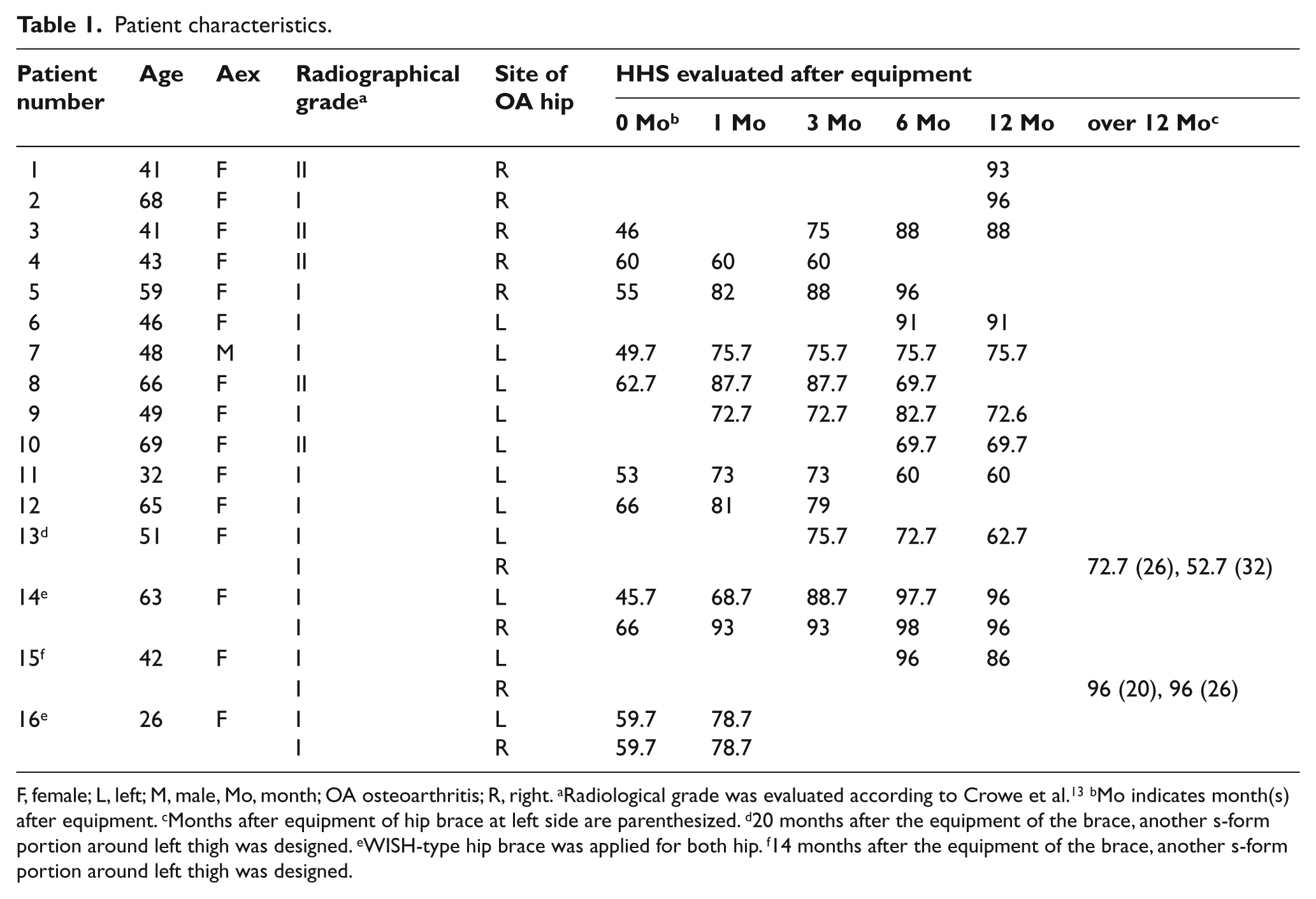
F, female; L, left; M, male, Mo, month; OA osteoarthritis; R, right. aRadiological grade was evaluated according to Crowe et al.13 bMo indicates month(s) after equipment. cMonths after equipment of hip brace at left side are parenthesized. d20 months after the equipment of the brace, another s-form portion around left thigh was designed. eWISH-type hip brace was applied for both hip. f14 months after the equipment of the brace, another s-form portion around left thigh was designed.
Improvement of Harris hip score after use of WISH-type hip brace
As shown in Figure 1, this earlier improvement in Harris hip score (HHS) was observed in the present study. HHSs were improved in nine out of 10 hips at one-month follow-up assessments, indicating the functional effectiveness of the brace, as shown in Table 1. All 11 hip joints showed poor hip function score (>70) at first assessment. 15
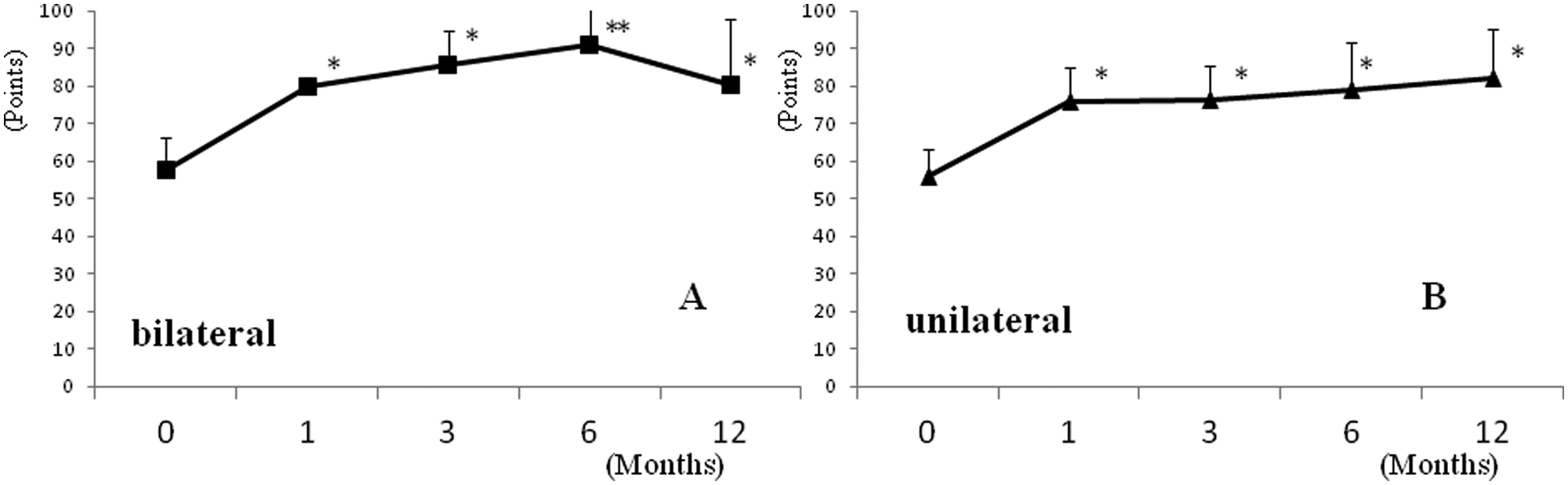
Time course of the average of Harris hip score (HHS) at each follow-up period in patients with bilateral (A) and unilateral (B) application of the WISH-type hip brace. Bar indicates the standard deviation. Asterisk(s) indicates significant difference in the average of HHSs from the time of initial application with p-value less than 0.05 according to unpaired t-test (*) or Mann–Whitney U test (**).
Effect of WISH-type hip brace on TUG
As shown in Figure 2, for patients with bilateral hip OA, the average time to complete the TUG was 9.4 ± 2.9 seconds when the WISH-type brace was not used, and 8.3 ± 1.7 seconds when the brace was used. The improvement was significant (p < 0.05). On the other hand, for patients with unilateral hip OA, the time to complete TUG was relatively short and was reduced less with the brace application. The mean differences between those with versus without WISH hip brace were 0.18 (7.4 ± 1.1 versus 7.6 ± 1.2) and 0.13 (7.5 ± 1.1 versus 7.6 ± 1.2) seconds, in the TUG with turning ULI and BLI, respectively. Interestingly the improvement of TUG by the WISH-type hip brace was significant in turning ULI, while not in turning BLI, suggesting that the WISH-type hip brace may have a positive effect when the affected hip joint in the stance limb is rotated externally with abduction in the turning phase of TUG.
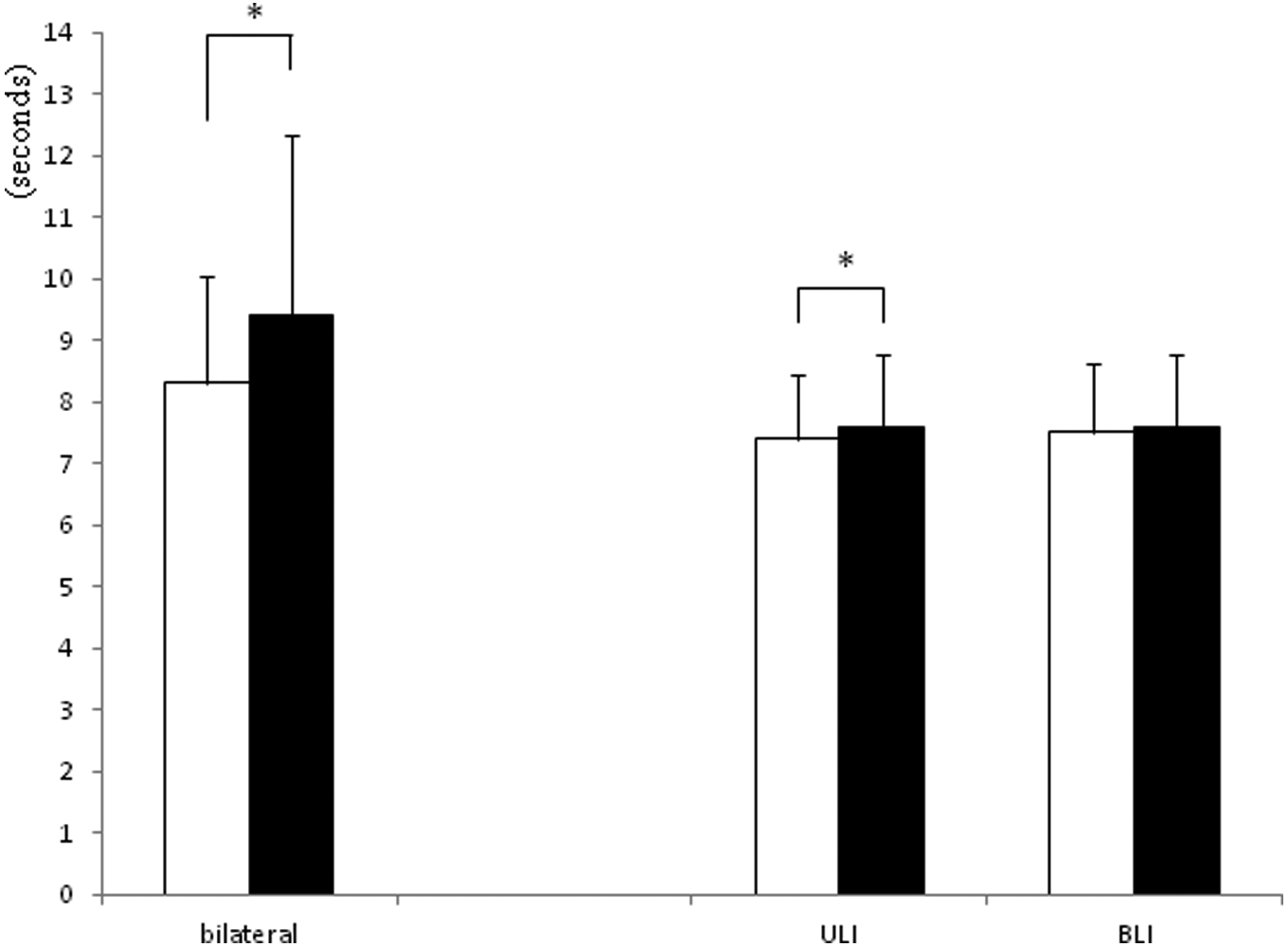
Average time taken to complete the TUG in the patients with (white columns) and without (black columns) the hip brace. In the patients with unilateral braces, TUG with turning unbraced leg inside (ULI) and braced leg inside (BLI) were evaluated separately. Bar indicates the standard deviation. Asterisk indicates the significant difference with p-value less than 0.05 according to paired t-test.
Time course of the improvement of TUG after application of the WISH-type hip brace
In contrast to HHS, significant improvement of TUG was found at three-month follow-up assessment in patients with bilateral braces (Figure 3A), indicating that the improving effect of the brace on TUG was slower than that on HHS. Interestingly the improvement was maintained until 12-month follow-up assessment, and found to be independent of the application of the brace at the assessment (Figure 3A). In contrast to the patients with bilateral OA, in those with unilateral OA, significant improvement of TUG was observed only when the patients turned ULI (Figures 3B and 3C), and the improvement was slower, i.e. at 6 or 12-month follow-up assessment for the patients with application of the brace (Figure 3B). Significant difference between the mean time of TUG with and without WISH-type hip brace was not observed at each follow-up assessment.
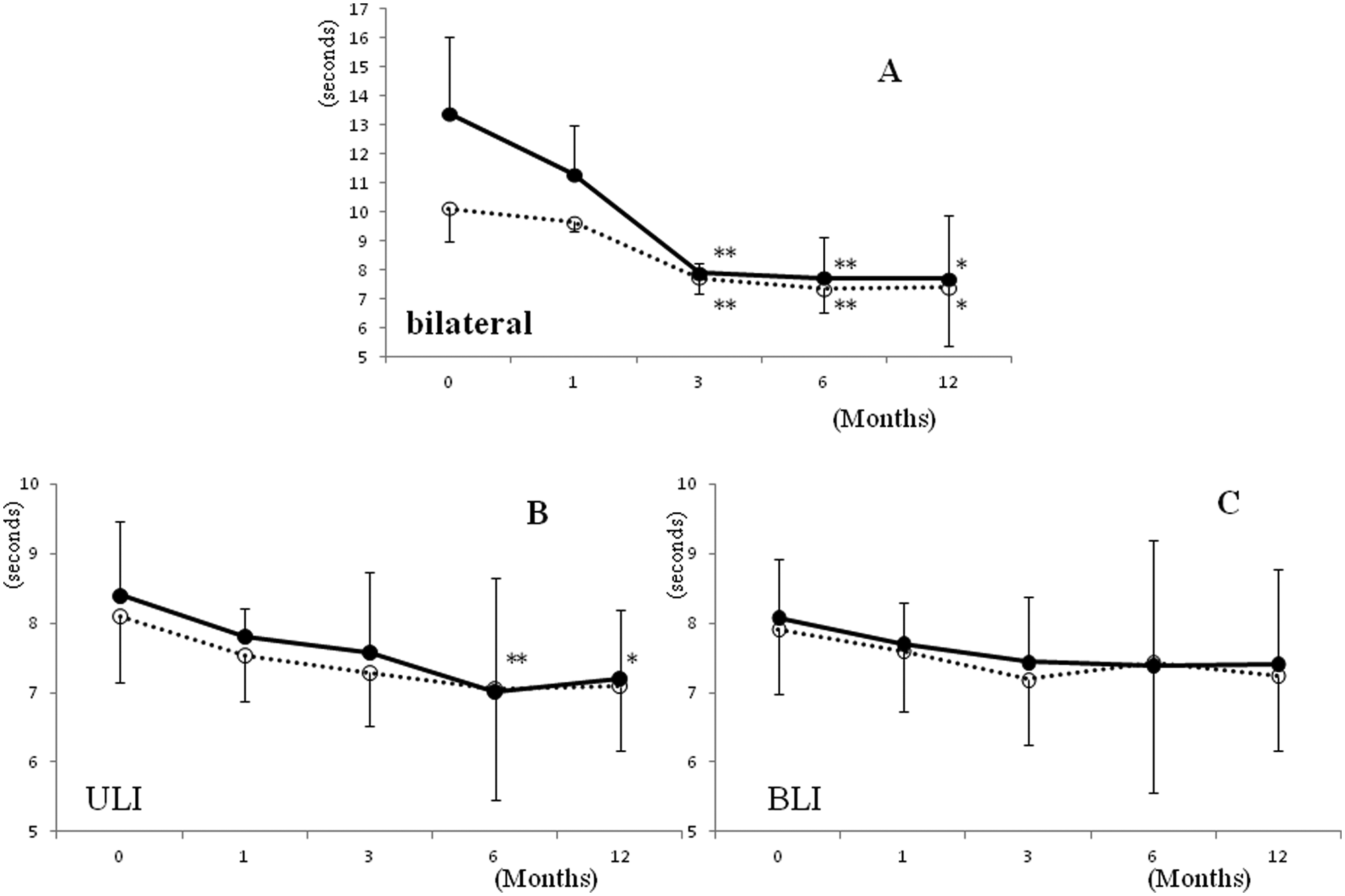
Time course of the average time taken to complete the TUG at each follow-up period in patients with (open circle) or without (closed circle) bilateral (A) and unilateral application of WISH-type hip brace. TUG with turning unbraced leg inside (ULI) and braced leg inside (BLI) was performed for patients with unilateral braces. Bar indicates the standard deviation. Asterisk(s) indicates significant difference from the average time to complete TUG from the time of initial application with p-value less than 0.05 according to unpaired t-test (*) or Mann–Whitney U test (**).
Relationship between HHS and TUG
As shown in Figure 4, there was a significant negative relationship between HHS and TUG with and without the brace in the patients with bilateral braces as well as those turning with ULI (Figures 4A–D). However, TUG did not significantly correlate with HHS either with or without the application of the brace in patients turning with BLI (Figures 4E and F).
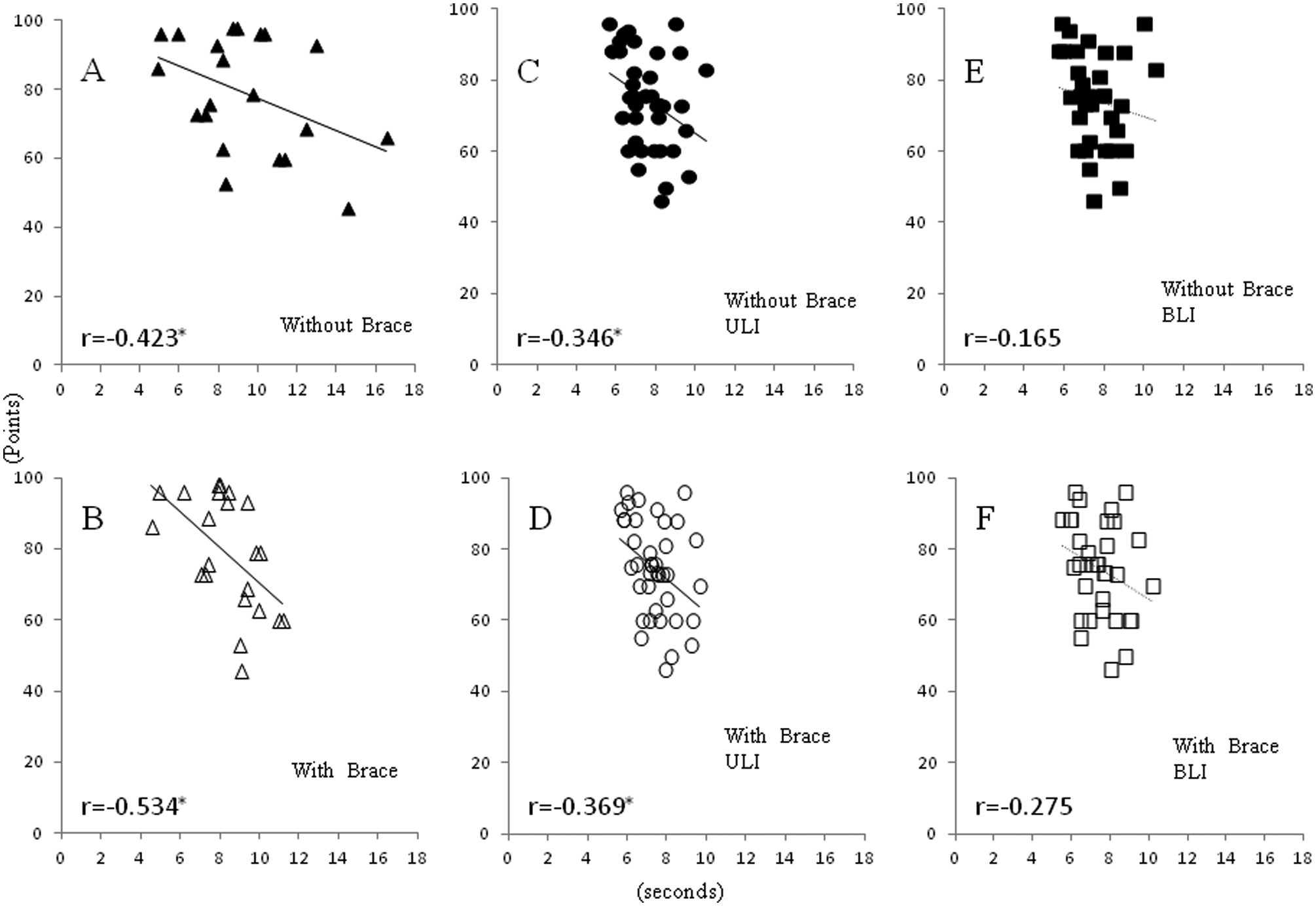
Relationship between Harris hip score (HHS) and time to complete TUG in the patients with (open marks: B, D, F) and without (closed marks: A, C, E) the bilateral (A, B) and unilateral (C–F) hip brace. In the patients with unilateral braces, TUG with turning unbraced leg inside (ULI) (C, D) and braced leg inside (BLI) (E, F) were evaluated separately. Asterisk and straight line indicates significant negative relationship, and dotted line indicates no significant difference.
Discussion
In the present study, HHSs were improved at one-month follow-up assessment. Previously we have shown that HHSs were improved at one-month follow-up assessment, and the significant improvement by the hip brace was maintained for at least one year. 4 These findings may confirm the functional effectiveness of the WISH-type hip brace.
In patients with bilateral hip OA equipped with the WISH-type brace, the average time to complete the TUG was significantly shorter than in those without the brace, suggesting that the present brace has a direct effect on functional mobility in those patients. The mechanism by which the WISH-type hip brace improves functional mobility in patients with hip OA is uncertain. TUG is composed of several phases, including standing, walking, turning, walking and sitting. In patients with painful hip, OA asymmetrical gait has been observed between the sound and affected limbs. For example, patients showed a shorter total weight-bearing period and a shorter period of single-limb support on their painful limb than on their sound limb. 16 We have evaluated the biomechanical effects of the brace on gait using a force plate, and shown stronger vertical reaction force at the first peak in the early stance and earlier switch from backward to forward reaction force vectors as effects of the hip brace, suggesting that abnormal gait in hip OA may be closer to normal gait in patients using this brace. 5 These effects may contribute to the improvement of TUG during the walking phase.
On the other hand, for patients with unilateral hip OA, the improvement of TUG by the WISH-type hip brace was significant only in turning ULI, while not turning BLI, suggesting that the WISH-type hip brace may also, at least in part, have positive effects on functional mobility during the turning phase. Two main strategies for turning have been identified, the spin and the step turns. 10 The spin turn involves a change in direction toward the same side as the stance limb. This has led to the assumption that the stance limb serves as a pivot point about which the body can spin around the longitudinal axis. 11 Inversely the step turn involves a change in direction opposite to that of the stance limb. During turning with BLI, the hip joint in the stance limb may be estimated to be rotated internally accompanied with adduction. Inversely, during turning with ULI, the hip joint is rotated externally with abduction. Taken together, the WISH-type hip brace may contribute to improved hip function during external and/or abduction movements in TUG at the turning phase.
Significant improvement of TUG was found at three-month follow-up assessment in patients with bilateral braces, and maintained until 12-month follow-up assessment. Since the improvement was independent of the application of the brace at the assessment, this effect may be due to indirect mechanisms. We have shown that daily walking exercise is associated with improvement of the hip brace equipment, and an ideal cycle, in which pain reduction induced by the hip brace encourages daily walking and vice versa, can be constructed. 4 Improvement of HHS seemed to be followed by that of TUG. Probably, mechanical improvements such as muscle power and range of motion around the affected hip joint, which might be accentuated with daily exercise, may provide indirect but essential effects on TUG performance.
In the present study, there was a significant negative relationship between HHS and TUG in patients with bilateral equipment as well as those turning with ULI. These findings suggest that TUG may reflect hip functions in patients with hip OA. On the other hand, no significant correlation between time of TUG and the score of HHS was obtained in patients with turning with BLI. Also, although the brace showed positive effects directly and indirectly on TUG in patients with bilateral OA as well as those turning with ULI, little effect in those with turning with BLI was seen. Most likely, the sound limb may play a significant role in performing TUG with turning BLI by compensating for alterations in the affected hip function. Central control mechanisms predict the required anticipatory adjustments and organize the body configuration before and during the turn action based on the movement goal. 17 Hip abduction moments are needed during straight walking to control the large mass of the head, arms and trunk during stance against gravitational and balance demands. 18 A comprehensive approach to address mechanical factors contributing to the improved functional mobility will be needed in the future.
One of the limitations of the present study is the lack of the evaluation of the presence of pivot in a turn motion. Two distinct substrategies for spin turning are identified as ipsilateral pivot and ipsilateral crossover. 11 Subjects using ipsilateral pivot initiate a pivot at approximately midstance, which is completed by a terminal stance. In contrast, for the ipsilateral crossover there is no pivot, with the contralateral limb swung around the outside of the ipsilateral limb. 11 The pivot motion may also occur in the step turn. To confirm the conclusion that the effect of the brace in the turning phase may be related to external and/or abduction movements of the hip, careful evaluation of the presence of pivot motion in the stance phase of the affected limb is necessary. Secondary, the ages ranged from 26 to 69. In Japan, secondary osteoarthritis of the hip due to congenital dislocation or acetabular dysplasia is more common than primary osteoarthritis. 19 Surgical treatments are adopted for younger patients with secondary OA of the hip. 20 The large range of ages may be due to the results that patients included here were secondary OA. To evaluate the effects of the brace on functional mobility in patients with primary OA another project will be required.
The results obtained from TUG evaluation suggest that the WISH-type hip brace improved functional mobility in patients with painful hip OA indirectly as well as directly. The TUG could be a useful screening instrument to predict those who have frequent near falls. 8 The present study indicates that TUG might contribute to predicting risk reduction of future falls by the present WISH-type hip brace in older adults with hip OA.
Footnotes
Acknowledgements
We thank for Prof. Yumi Sato for her kind help and Ms Mika Sato for her kind assistance and typing.
Conflict of interest
The authors declare that there is no conflict of interest.
Funding
This work was supported in part by Grant-in-Aid for scientific research (C) 23592156 (HW) from the Ministry of Education, Culture, Sports, Science and Technology, Japanese Government.