




Abstract
A feature of being a young person in care is that your life is overseen by a range of professionals, who make decisions that affect you. There is a lack of research into the experiences of young people in care to inform these decisions from the perspective of the young people. A need for research that allows young people in care to contribute to the literature about what is important to them during adolescence was established. This exploratory study used a participant-led, photo-elicitation methodology with six young people (13–15 years) who lived in foster care. A photo-elicitation interview was conducted in which participants brought photographs of what was important to them which they then discussed. Data were analysed using Interpretative Phenomenological Analysis.
Participants described their experiences as being embedded in the place they lived, with their development being shaped by the possibilities this provided. Participants described what was important to them as: being seen and heard; a part of their place and being with others; finding space to escape to; relationships with their pets; and getting to know themselves. Discussion of how this relates to existing knowledge, and relevant clinical implications and future research directions, are discussed based on this analysis.
Plain Language Summary
Six young people aged between 13–15 who live in foster care in England took part in a piece of research to understand what was important to them at the moment. This research aimed to add to a better understanding of what it is like to grow up in foster care during adolescence. To do this, each young person was asked to take photographs in response to the question ‘What are the important things in your life at the moment?’; they then brought their photographs to an interview. During the interview the young people and the researcher spoke about the photographs that they had taken. This conversation aimed to let the young people explain what was important about each photograph, as a way of sharing information about their lives in foster care. The researcher then looked at what was said by the young people in detail and used what was said across the six interviews to create an understanding that could be shared about the young people as a group. Six main areas of focus seemed to connect the interviews and these themes seemed to be the things that were most important to the group of young people who took part. In their interviews the young people shared the ways in which they live and manage in foster care, including the animals, people and places which are part of their lives at the moment, as well as their hopes for the future. They also spoke about how hard they work to fit in and to be accepted as part of their experience of being in foster care. After this, ways to respond to what the young people said were thought about, considering the new learning that came from what the young people generously shared about their lives and themselves.
Keywords
Introduction
Between 2010 and 2020 the number of young people entering care in England each year increased by 19%, with a 41% increase since 1994 (Department for Education [DfE], 2020a, 2020b). On 31 March 2022 there were 82,170 young people in care in England (DfE, 2022). Approximately 64% of young people in care are adolescents (10–18 years; DfE, 2022).
A total of 66% of those joining the care system in 2022 did so because of abuse or neglect (DfE, 2022), supporting the existing view that adversity is a common feature in the narratives of young people in care. These experiences are widely referred to within the literature as ‘developmental trauma’ (van der Kolk, 2005) which denotes ‘developmentally adverse traumatic events, most often of an interpersonal nature (e.g., sexual or physical abuse, war, community violence) and early-life onset. These exposures often occur within the child’s caregiving system’ (van der Kolk, 2005: 402). The potential negative impacts of trauma on the development of children are well documented, and include effects on emotional, social and language development (Fisher, 2015; Meltzer et al., 2003), as well as physical and neurobiological development (Gerhardt, 2014).
Young people who have experienced developmental trauma progress through life based on these foundational experiences, with these ‘setting the stage, (van der Kolk, 2005: 402) for further traumatic experiences and increased need for the support of health and social care services. Struggle and adaptation are common features of the narratives of young people who have experienced developmental trauma, with these difficulties extending throughout life (Cook et al., 2005). Young people in care are therefore recognised as having complex needs, which may be ongoing throughout their time in care and beyond (Stott et al., 2006).
The transition into and through adolescence for many young people in care follows an experience of early childhood trauma. Adolescence has been proposed as a ‘window of opportunity’ (Andersen, 2003: 3) during which time the environment in which a young person develops may have the potential to reduce the impact of early developmental trauma (Eiland and Romeo, 2013). However, this hopeful possibility is underpinned by adolescence being a period during which certain areas of the brain become increasingly sensitive to experiences, meaning the brain is also vulnerable to further stressors (Andersen, 2003; Eiland and Romeo, 2013).
Adolescence is recognised as a time of significant change for all young people. Classic theories of adolescence primarily focus on the transition to adulthood solely from the perspective of the individual, and processes which occur within their internal world as they negotiate developmental milestones (e.g., Erikson, 1968). However, developmental contextualism argues that we need to pay closer attention to the context in which young people are transitioning to adulthood (Lerner, 1991; Lerner and Kauffman, 1985), including a dynamically interacting social and physical ecology, involving family, peer, romantic and educational relationships, as well as socio-economic conditions, with each influencing and being influenced by the other (Lerner, 1991; Lerner and Kauffman, 1985). For a young person in care, their context is likely to be different to their peers raised in birth families, such as having one’s life overseen by a range of professionals (Golding et al., 2006) and it being more common that young people in care do not report an experience of having a trusted adult in their life as they progress to adolescence (Selwyn and Briheim-Crookall, 2022). Thus, the transition to adulthood for a young person in care may be a qualitatively different experience and process compared to those transitioning to adulthood in birth families.
The existing work exploring young people in care’s experience of adolescence does indeed suggest that they encounter distinct contexts and with it distinct challenges, with some of these challenges relating to the system in which they are cared for. Young people in care want their system to be responsive to them as they develop, but often find processes to be inflexible and unresponsive to their experience of change, such as adolescence (Selwyn and Lewis, 2022). An important factor, when considering the relationship between young people in care and their system, is the experience reported by young people where they are denied a voice within the decisions that impact on them (Dixon et al., 2019). A study by Munro found that the context of growing up in care, with multiple stakeholders, gave rise to experiences whereby young people in care had to contend with the system’s needs alongside their own (Munro, 2001). Young people in care suggested they had limited or no power or influence over decisions about their lives whilst expressing a desire for more autonomy and privacy (Munro, 2001), which are established normative needs of most adolescents (Steinberg and Sheffield-Morris, 2001).
The challenges of developing in this context appear to contribute to a core theme of ‘difference’ within the experiences of young people in care. Madigan and colleagues’ (2013) analysis, for instance, explored the experiences of young people (12–16 years old) living in foster care in Scotland. Young people in this study felt that their context and experiences diverged from the norm. They responded by concealing their ‘in care’ status, with one young person stating, ‘If people think you’re different, you’re different’ (Madigan et al., 2013; 399).
Together, a lack of control and the associated sense of instability in their lives, such as the possibility of having to move placement, has been suggested as putting their ‘identity’ development on standby for young people in care (McMurray et al., 2011). Moving placement can result in a cascade of disruption, including change of school and loss of meaningful relationships (Francis et al., 2021). In these moments, it may be that the adolescent developmental tasks for young people in care are on ‘standby’ due to the young person having to focus on their need, like any child, to build and experience relational and place-based stability (Francis et al., 2021).
A component of healing for young people following experiences of developmental trauma is to develop within an environment which allows an experience of mastery and competence (Cook et al., 2005; van der Kolk, 2005). Young people in care, however, are not overcoming their traumatic life events and social circumstances alone, as they remain embedded in a support system largely made up of others (Roffey, 2017). It is within these contexts, places and relationships that young people in care develop, and consideration is therefore indicated around how these interactions occur and the ways they could be enriched to impact on the lives of young people in care during adolescence. For young people in care, the experience of adolescence appears to include the possibility that their identity development may be stalled and/or influenced to the extent of viewing themselves as ‘different’. Systemic and contextual influences may potentially contribute to this experience of individual development, particularly if the young people have limited opportunity for sharing their perspectives.
When young people in care report experiences such as feeling listened to, their views being respected and being given key information as positive (Selwyn and Lewis, 2022), then the resulting impact is that their development and feelings of wellbeing increase (Francis et al., 2021; Riley, 2019). This sense of control allows young people to navigate through events which are leading to an overwhelming and intense emotional experience, and thus reduce the level of stress experienced (Gregorowski and Seedat, 2013). To support young people in care during adolescence, it is important for the adult decision-makers to understand the needs of this group from their perspective. Literature has recommended that a young person in care’s development can be supported when we understand how these young people see themselves, when we maximise their participation in decision-making, and when we understand the important relationships in their lives (Dixon et al., 2019; McMurray et al., 2011). Without the opportunity to share their perspectives, it may be that the systems which support young people in care could be working against them and their developmental needs, prioritising the needs of the professionals and adults, and potentially therefore contributing to an experience of stress and distress (Munro, 2001).
Whilst this body of work points to some dominant issues for adolescents in care, notably their need for autonomy and control, we know relatively little about the complex experiences young people in care navigate through during adolescence, and how these may compare to young people raised with birth families. The recent literature suggests that we have not listened enough to young people in care so as to inform those around them about how to support them through this developmental phase (e.g., Dixon et al., 2019). It is established that services are not always well attuned to the developmental spaces that matter to young people in care, which highlights why it is important for adults in the lives of young people not to assume that they know what is important to young people in care. This is particularly the case for professionals who hold power over the trajectories of these young people. Generating an in-depth understanding based on the perspectives of adolescents living in care could therefore help services become more attuned to the developmental challenges, experiences and opportunities that matter to them and importantly, contribute to ways of working which are more attuned to their needs.
The present study aimed to understand more about how adolescents experience their lives in care, alongside a focus on what is important to them in their experience of this developmental phase. The core of the research was eliciting the views of young people in care, whilst giving young people positive opportunities to shape the direction of research about them. A participatory approach was utilised (e.g., Hart, 1992, 2013). In practice, this meant that the final research question, methods of data collection and ethical safeguards were developed in consultation with a group of five young people in care (aged 12–15 years). The methodological approach was shaped by the underpinning participatory aims of the research. It was based on the assertion that participation in their own lives, in terms of contributing to decisions, appears to have positive effects for young people in care (Clark and Statham, 2005; Francis et al., 2021; Riley, 2019).
As a clinician and a researcher, this also presented an opportunity to draw on participatory research skills to develop knowledge and inform clinical thinking, and for previous experiences of working with young people in care to inform the research process and analysis. Central to this was the aim of co-creating knowledge with young people in care which could contribute to developmentally-appropriate attuned care and understanding.
Methodology
Design
The study was an exploratory photo-elicitation interview. The research was conducted in three phases: consultation, main study and feedback. Ethical approval was granted by the University of Leeds School of Psychology Research Ethics Committee.
Consultation
The aim of the consultation phase was to increase the accessibility and understanding of the research and research materials for all participants. It also aimed to generate an understanding of how elements of the research may support or limit the participants’ ability to engage fully in the main study.
Following the consultation, the final research question was: ‘What are the important things in your life at the moment?’. This was felt to be sufficiently exploratory (given the minimal existing literature in this area) and to make few assumptions (e.g., that participants’ experience necessarily felt different to other young people). The question was also anticipated to be answerable by young people, and therefore more appropriate than an experience-based question (i.e., ‘How do you experience adolescence in care?’).
Main Study
Recruitment And Participants
Young people in care from a northern English city were recruited via their social worker. The study inclusion criteria were young people aged 13–16 years old, living in foster care, for whom the local authority held full parental responsibility, and who had been in care for at least one year. Of the young people identified as eligible, eight were approached and six young people consented to take part. A sample of this size is common within qualitative research and was decided upon to allow a detailed analysis of participant experience whilst being able to consider points of similarity and difference in participant experience (Smith et al., 2009, 2021).
The purpose of the study was explained to participants as being interested in what is important in life for young people aged 13–16 years old who are in care, and what they would want people to understand better. Participants were six young people aged 13–15 (M = 14.33); three males and three females. Table 1 provides demographic and contextual information shared by individual participants. Of the six participants, four identified as White and two as being global majority. Participants chose the pseudonyms used.
Participants’ demographic and contextual information.
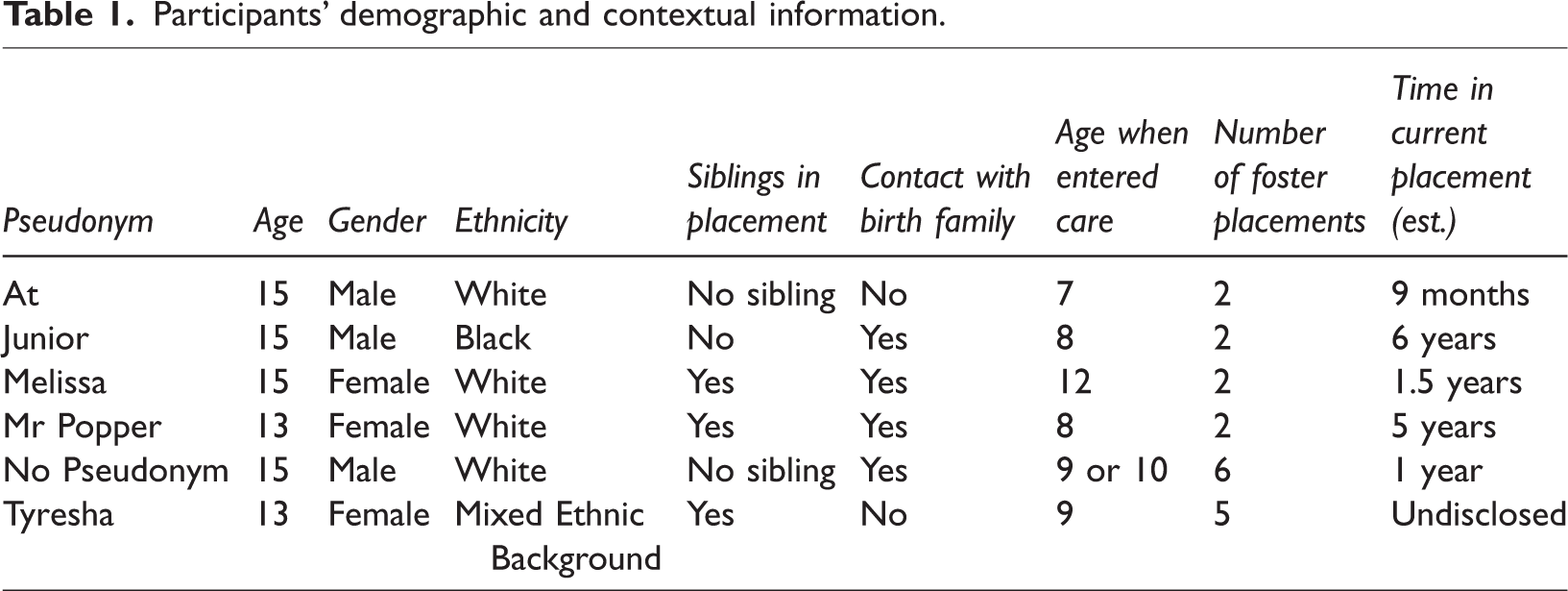
Photo-Elicitation
Data collection was via photo-elicitation interviews, whereby participant-generated photographs, relevant to the research question, drive the interview (Harper, 2002; Lapenta, 2011; Rose, 2012). Photo-elicitation has been described as supporting young people to engage with and to ‘open up’ in research (Lapenta, 2011; Smith et al., 2012). Through listening to their interpretations of the images they have chosen to bring to the interview, photo-elicitation can allow the researcher to gain insight into the participants’ perspectives on their lives as they experience them (Croghan et al., 2008). In these ways, photo-elicitation interviews are argued to be participant-centred, as they drive the substantive content of the interview. It is suggested that the way in which participants respond to photographs not only generates more information, but can also generate information of a different, more in-depth kind (Harper, 2002; Rose, 2012). Creative methods, such as photo-elicitation, have also been argued as being well-suited for research with young people in care due to the familiarity with imagery and other creative outputs as a form of communication (Dixon et al., 2019).
Procedure
A meeting was organised with participants who expressed interest in taking part in the research, via their social worker. To ensure young people had sufficient information and time to consider their participation and consent, there were multiple contact points to the research process, as shown in Figure 1.
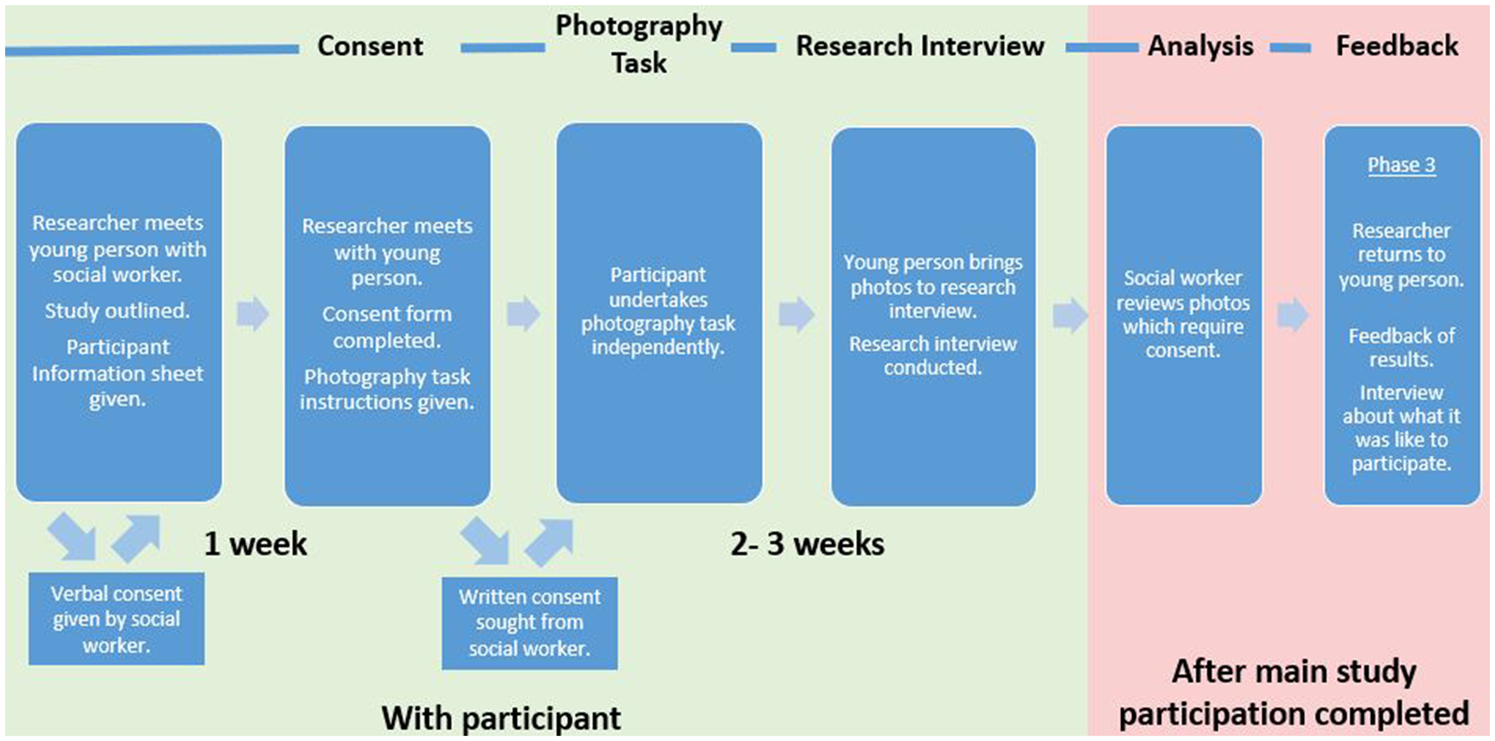
Diagram of research procedure.
Participants were asked, at the second point of contact, to generate or collate images over three weeks, that represented their response to the following question: ‘What are the important things in your life at the moment?’.
Participants then brought the photographs to the research interview and the conversation was shaped by their explanations of those images. Participants were instructed to bring between five and eight images to the meeting. The number of images brought ranged from five to seven, with four participants bringing five images, one bringing six, and one bringing seven. It is not possible to know how many photographs each young person took in generating their chosen images. An interview schedule was used based on the protocol of Johnson and colleagues (2011) and their description of the SHOWeD technique in a photo-elicitation study. The SHOWeD technique was chosen as it was described by Johnson and colleagues as leading to a collaborative discussion. The research interviews lasted between 35 and 72 minutes.
Analytic Procedure
Interview data were analysed using Interpretative Phenomenological Analysis (IPA), a qualitative methodology that is used to gain a detailed understanding of the experiences of participants from a first-person perspective, and how participants make sense of these experiences and their psychological world (Smith and Osborn, 2007; Smith, 2011).
The research approach and the associated analytical procedure were undertaken based on the theoretical stance of IPA, as a relatively structured and prescriptive methodology (Smith et al., 2021
A reflexive diary was also completed by the lead researcher (TM) throughout the research process (Finlay, 2003) and this acted as a way of recording and exploring existing presuppositions, with the time prioritised to complete the journal providing an opportunity for greater self-understanding through the reflexive analysis. The lead researcher was solely involved in the creation of themes, with the use of research supervision (with SHJ) being used to assess the coherence of themes and theme headings. Supervision was also used to ensure that there was a continued consideration of the situated nature of the data, alongside consideration of power as a potential influence on the research interaction. In addition, the researcher returned to participants to share the output of the research. This feedback session included an opportunity for member reflections (Tracy, 2010) which sought to further extend the understanding of the researcher through the participants’ reflections rather than to act as a ‘check’. This time with participants preceded the ‘write up’ and ‘dissemination’ stages of the research and so undoubtedly enhanced the way the themes are outlined, discussed and understood.
Results
The six interviews generated five main themes outlined individually, including presentation of some of the visual data generated.
The Importance Of Animals
Participants spoke about the importance of pets in their lives. Animals were described as accepting and non-judgemental, and as providing unconditional care and connection. Participants felt these were relational qualities which they did not experience elsewhere, and which helped them cope with difficult times. Junior described his snake as his ‘best friend … [I] Just do everything with him’. Tyresha spoke about her cat: It makes me just, it makes me feel like if I get hurt or worried at school it’s like I’ve always got a second instinct by my side … it feels like I’ve got like another soul living inside me. (Tyresha) If I didn’t have the connection with her I don’t know where I’ll be. I’d be lost in my mind. (Melissa)
Animals enabled participants to talk about events and their emotions, and it was described that during these interactions they felt heard and understood by the animals in their lives. The importance of being listened to was emphasised by participants. It was the opportunity to talk that was important, rather than participants wanting a reply: I could actually instead of her butting in, in all my conversations, in every word I said she literally just laid there and listened to me. So it’s quite, cats are quite like people, they listen to you. (Tyresha)
Participats described interpreting their animal’s behaviour as communicating care and attention to their problems which further developed this relationship and their sense of connection. Again, Tyresha described this in relation to her cat (Figure 2):

A photograph of her cat by Tyresha.
Yeah she erm she looked at me and like, like with sorryful eyes like saying oh poor you … It was like, like it was like the cat listened to you and understood every word you said. It was just, it was just amazing.
The care in the relationship between participants and their pets was described as reciprocal, with participants also possessing a caring role toward their pets. Participants described being depended on for care leading to a feeling that they were important. I don’t know, I look after him a lot and stuff so … don’t know. Caring guy. (Junior)
Physical connection and affection were described as relating to the physical touch participants experienced with their animals and the importance of this due to the comfort it gave, which supported them to cope and to moderate their emotions and sometimes distress: When I’m worried about something she just licks my face and I’m not worried about anything any more. (Melissa)
Whilst the importance of the connection and relationship with animals was shared, an experience of pets not being brought with participants when they moved places was described. For some, this represented the potential loss of a relationship which was experienced as just as important, and sometimes of greater importance, than the humans in their lives: I used to have two yellow-bellied slider turtles. … but when I left I didn’t quite get to bring them here, so. (At)
Being A Part Of The Place And Being With Others
Beyond the animals in their lives, participants spoke about the importance of having relationships, such as within their foster family and their wider context, and the impact of these on their subsequent development. All participants appeared to seek a sense of inclusion and to be a part of something and connect with others, although this was not always focused on their foster family, but also included school and their social groups. If I didn’t have school I’d be bored out of my head and I don’t know what would happen I’d have no friends, I’d have no one so and I like and that’s why I like and I like school. … I’d have no one, I’d practically have no one. I’d be sad, I’d be depressed. (No Pseudonym)
For some participants, being a part of a place led to them feeling more open and able to depend on people for support: Yeah like me and my younger sister never actually had a real childhood so I still act like a child even at home. And erm it’s the only place that I really feel free and understood. (Tyresha)
For participants who were in a placement alongside their younger birth siblings, this was another dimension of their experience of being with others. They communicated an experience in which they were within the family as an individual whilst also being part of a continued birth family subsystem. As part of this, participants also spoke about a continued feeling of responsibility to care for their siblings despite now being ‘in care’. Participants described developing a view of themselves as trustworthy and caring due to their relationship with their siblings; for Tyresha, it led to her reflection that she was a person who ‘can be trusted’. They also described the way their siblings behaved and how this related to how they believed they were viewed by others, often using the term ‘we’ rather than ‘I’. It appeared that their view of how others saw and felt about them related to the views of the sibling subsystem as a collective, rather than just them as an individual: Well sometimes my foster sister, that one, um she – we get on her nerves a little bit so she’s – sometimes she gets really frustrated with us because we’re always getting on her nerves … I don’t know. It’s mainly my sister that bugs her. (Mr Popper)
Getting Away And Finding Space
Space, both internal and external, was important to all participants, to manage interactions, events and emotions. Some disliked noise and loudness, whilst others needed to escape confrontation. Private bedroom space was particularly important. When escape to physical space was not available, other methods were used. No Pseudonym brought earphones (Figure 3) to the interview to explain how these were a key coping resource for him:
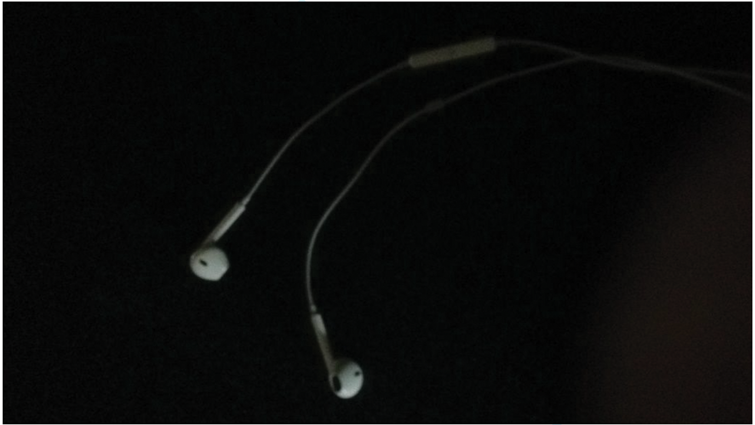
Photo of earphones by No Pseudonym.
My earphones are erm quite important to me I use them on a daily basis … it just blocks out everything else so and yeah and it makes, it makes me feel better knowing I have them and when I don’t have them I just stress a lot but when it, when I do have them it just makes me feel better. (No Pseudonym)
The use of space and objects that created a feeling of space were being used to self-regulate either away from others or to create distance between the participant’s external world and their internal experiences. This appeared to be an attempt to keep their internal experiences private and unseen by those around them. It was also an attempt to prevent their emotions impacting upon or being directed towards others. It’s good because when you want to have them thoughts and when you want to keep them inside and do you know when you want to think to yourself and no one else then yeah. (No Pseudonym).
Themselves On Show: Seen And Unseen
Participants talked about the importance of controlling how and when they are understood and ‘seen’ by others. Being able to control the image of themselves, so that they were perceived in certain ways, was particularly important. No Pseudonym described using clothing for impression management: But I mean if I’m walking in front of someone looking nice and smart then you know it’s that, it makes that standing base of who you are, of what you’re going to be like.
Participants particularly wanted to be seen for their present achievements and efforts and who they currently are, rather than their past being dominant in others’ views of them:
Because you don’t want people knowing who you are, what you’ve done, because it’s not the past you judge them for it’s the future. (No Pseudonym)
Yet many young people described experiences where their life history was ‘seen’ by others, despite participants’ wishes to keep this private or hidden. Much of the participants’ lives was described as widely known. No Pseudonym used Figure 4 to express how he feels his life story can be picked up, shared and read by others, which he had set as partially open to communicate about the visibility of his story.

A photograph of my life story book by No Pseudonym.
Being visible as a young person in care appeared to undermine the attempts of participants to manage their image and to show themselves in a way they believed would be accepted and liked. Tyresha described an experience in which she ‘had to’ explain about her life in response to a version of herself being seen and understood which she felt was untrue and which appeared to be based on the stigma, assumption and social construct of the ‘foster child’: Someone started a rumour going round that I came from a foster home, like a proper foster place like an orphanage so I had to explain to practically the whole year that I moved from my previous school because of bullying and also erm moving foster placements and I erm it was really hard because they wanted to know why I got into foster care and how I got into foster care and all this, all the inside details, it was just really, really hard.
Participants described the version of themselves that they presented to others as becoming the person they identified as themselves. Perhaps this represented an attempt to hide the unwanted parts of themselves from themself. The importance of keeping up this presentation of themselves was described by No Pseudonym. He shared his fear that showing an unwanted version and reducing the effort he puts into presenting himself, even for a day, would lead to a loss of who he was forever, due to the way he appeared ‘defining my personality’: If one day I slacked off who I really was then that would be it, I’d lose it forever. Who I actually am. (No Pseudonym) I feel just put away in the corner erm and not speak or anything and told not to speak, told not to move, told not to do anything erm that’s what I feel sometimes. But on the other hand like if people do bring me in the conversations I feel happy about that.
Finding Their Future (Self)
Participants emphasised the importance of doing activities and trying different things, as it was through these that they could learn what was important to them and what they were good at. The impact of this process for Junior was significant and led to him advising others to do the same: Just do something you like. If you like something then you’ve just got to do it.
Participants used the feedback of others to recognise areas of their life in which they were doing well or had an interest or strength. This relied on participants being seen for their achievements and efforts, rather than their past being dominant. This knowledge about themselves appeared to be part of a process in which participants put effort into themselves so as to navigate towards a wanted future, to move past the part of their life story that could not be re-authored, their past: It tells you who you are, the future … like you can’t really judge it all what’s going to happen but I mean the future decisions make the, affect the future of your future I mean the past it’s just all in the past. (No Pseudonym)
It appeared that participants took a self-sufficient approach to their future and took responsibility for the movement from a less preferred situation towards a wanted present and future: I think just if you don’t work hard then you don’t get anywhere do you, so … you work hard and then do better things for yourself. (Junior)
For some, these opportunities had led to an internalisation in relation to themselves, such as Junior seeing himself as ‘hardworking’ due to his rugby and Melissa referring to herself as ‘caring’ due to the relationship with her dog.
Discussion
The primary experience of participants was the situated nature of their life and development within the foster placement in which they resided, with this place and the associated possibilities influencing who they were, how they coped, and what they believed they would become. Place for participants was wider than physical location and referred to a systemic, social world. Based on the possibilities and opportunities in their place, participants adapted and found a way to cope with the difficult parts of their lives. Through asking participants what was important to them currently, participant narratives were temporally situated in the present, with reference to how they were moving forward to the future and away from the past. The importance of place and the breadth of its impact illuminates the literature that discusses placement disruption (e.g., Francis et al., 2021), and the ways in which this experience cascades through a young person’s life and relationships. This challenges traditional theories of adolescence that focus on the development of the individual in a largely decontextualised manner.
As introduced previously, developmental contextualism (Lerner and Kauffman, 1985; Lerner, 1991) as a framework emphasises the importance of the interaction between the young person and the social world at both a familial and societal level, rather than development being an individualistic process. Within the literature on developmental contextualism, there is discussion of adolescents behaving in ways to elicit change in their environment, playing an active role in shaping their own development (Lerner and Kauffman, 1985). This process was less apparent within this research, however, which may suggest that characteristics of the context and being a young person in care impacted on this process. Rather than attempting to modify their environment to meet their needs, participants appeared to instead use escape, physically or internally, and controlled self-presentation as a way of coping with an environment which remained unchanged. The processes through which development is theorised to occur, such as a dynamic relationship between environment and the young person, appeared to be moderated by an awareness of the possibility of a placement being unstable and therefore at risk of breakdown if young people in care pushed the boundaries too far.
Young people in care in this and other research (e.g., Selwyn and Lewis, 2022) are clear that factors that are important to them include a desire for control and choice, greater autonomy and increased privacy during adolescence. Whilst these experiences appear broadly universal, and are shared with their peers, what was communicated by the young people in care in this study is their experience of the heightened stakes when such factors are lacking. At the centre of participant descriptions appeared to be a focus on stability in context (place, relational and educational), with a focus on being acceptable and wanted.
Participants in the present study described feeling unheard and ignored, with a limited ability to have any level of influence in their own lives, as previously established (e.g., Dixon et al., 2019). Any suggestion of the ability of participants to shape their development through making autonomous decisions, akin to their wider peer group, may therefore be far-fetched. This seems similar to descriptions in the literature, previously outlined, in which young people in care have described a lack of power and autonomy in their own lives due to having to wait for decisions to be made by adults on their behalf (Golding et al., 2006). When this was explored by McMurray and colleagues (2011), participants described this as leading to an experience of their development being ‘on standby’, due to having to wait for decisions to be made about their life before they can live it (McMurray et al., 2011: 216). This begs the question: How do young people in care make an adaptive adolescent transition in a context in which they do not have control?
Attachment And The Importance Of Animals
Within their homes, animals were described as important to participants and were often talked about more centrally and with greater depth than their discussion of relationships with adults. Through their relationships with animals, reciprocal feelings of acceptance, support, care, and compassion were described.
In recent years, literature has begun to emerge that highlights the important role that pets may play in the wellbeing of young people in care. Having a pet is suggestive of improved subjective wellbeing in young people in care (Selwyn and Briheim-Crookall, 2022; Wood and Selwyn, 2017). Research also supports the finding of this study that young people in care cite the importance of communication and physical contact with a pet as enhancing wellbeing (Wood and Selwyn, 2017). Contact with their birth family pets has also been found to be something that was important to young people in care when considering contact arrangements (Wood and Selwyn, 2017), though the importance of these relationships is not often identified by the adults around young people in care.
Within this research, the way in which participants described the relationship with their pets and the consistent and predictable care they experienced with them appeared similar to the care that underpins the development of secure relationships in infants. For instance, participants described an experience in which their pets were dependable and always available to meet their needs, through listening and being emotionally attuned with participants at times of distress. Research using measures of attachment in adults has found that relationships with animals were a source of attachment security, with the structure of the relationship being similar to that in a human-to-human relationship (Beck and Madresh, 2008; Kurdek, 2008). This provides context to the deep sense of connection and belonging within the relationships described with their pets.
Participants emphasised the non-judgemental nature of their relationships with animals, which, taken alongside the ‘themselves on show’ theme, reflected a unique relational context where a young person can let their guard down and present more of their whole experience and perhaps a more holistic self. Considering the ‘high stakes’ experienced by the young people if they got their self-presentation wrong, and the need to keep their internal world hidden, this provides further insight to the importance of the haven they found in their relationships with pets. Pets may therefore be a substitute, when required, in place of human attachment (Sable, 1995). The relationship with pets may have been important to participants as it enabled them to experience a level of attachment security that was difficult to experience with humans in their place.
It is possible that experience of a positive relationship with an animal, without fear of their response, could prepare the young people for future relationships with humans, including within therapeutic support (O’Haire et al., 2015; Wood and Selwyn, 2017). It was apparent in this research, however, that the experiences that underpinned the young people in care’s relationships with pets may not be the same ones that they found in their relationships with other people. The importance of this relationship with a pet may therefore highlight the lack of opportunity for adolescents in care to experience a trusted, non-judging relationship with an adult. This is aligned to the findings of Selwyn and Briheim-Crookall (2022), who highlighted the proportion of adolescents in care who feel they have a trusted adult in their lives is decreased in comparison to younger children. Such strong relationships with pets, however, may have unintended consequences as the young person adapts to be more reliant on the human–animal relationship, particularly when considering that animals may have shorter lifespans than humans. In addition, as described by the participant ‘At’, pets do not often move placements with a young person and are often overlooked when considering future contact.
Pets were also described in relation to the reciprocal physical affection in the relationship, with participants describing the comfort that such interactions could bring and the enjoyment they had of these affection-based interactions. Noonan suggests that pets provide an opportunity for physical intimacy and connection through ‘touching, tickling, stroking, cuddling, talking and gazing with a pet’ (Noonan, 2008: 399). Research has investigated the benefits of touch for enhancing attachment relationships, as a natural component of a parent–child attachment relationship (Golding, 2006). A lack of touch both in early life and in foster care or this being misunderstood, painful or traumatic can lead to a young person in care’s relationship with physical contact being complex (Golding, 2006). Pets may, however, provide a place where the young person has sufficient trust to allow the need for closeness to be met (Rynearson, 1978). Based on the study, pets appeared to allow young people in care to care, be cared for and to have physical contact with another, potentially developing their empathy and skills in caring. During a time of developing identity, and alongside the ‘finding their future (self)’ theme, it is apparent that such experiences during adolescence could be internalised to a view of themselves as responsible and caring.
Being A Part Of And Belonging
All the participants discussed the importance of a sense of inclusion with someone; however, for some participants there was less discussion of the importance of family, and instead the wider context was discussed. Attachment theory would suggest that descriptions of attachment security support a young person’s feelings of safety (Golding and Hughes, 2012) and so enable autonomy and exploration, which is theorised as central to the social and emotional development of adolescence (Allen, 2008). However, Hart and colleagues (2007) suggest that the concept of belonging can also be a useful adjunct to attachment theory when considering the importance of relationships for young people. This may be particularly relevant for young people in care as important relationships extended into the wider community in which they were embedded, with experience of connection and relationships of importance being largely outside of the home.
Belonging is based on the idea that humans need to feel part of something and feel connected within a larger group of humans, and emphasises the wider context as a potential source of these important relationships (Hart et al., 2007). Belonging moves away from the idea of an attachment figure with whom security originates, instead suggesting that the need to belong can be met by a number of people, with the loss of a relationship being somewhat replaceable by a relationship with another person (Baumeister and Leary, 1995). With a focus on belonging, particularly within school, research has established that belonging can be particularly impactful on psychological wellbeing and wider social, academic and health outcomes for young people in care (Arslan, 2019; Roffey et al, 2019). Belonging has been associated with supporting development and having the potential to be transformative through positive and caring relationships due to there being psychological and physical benefits to having a sense of belonging (Baumeister and Leary, 1995; McAdam-Crisp et al., 2005; McCubbin and McCubbin, 2005). This study suggests the significance of belonging is felt and known to young people in care, with participants drawing focus to their immediate context through their discussion of school and sports teams, as well as their wider culture and geography.
Through establishing feelings of belonging, participants in this study described having somewhere that was either a tangible or psychological support at times of distress or difficulty. Being a part of their place and being with others was important to participants, with feeling unseen and unheard undermining the feelings of connection and inclusion that participants valued. A sense of belonging is theorised to reduce feelings of isolation, assisting individuals to understand where and how they fit in with others and to reduce their perception that they are alone (Hart et al., 2007). A further benefit of belonging may be to challenge an experience of ‘difference’ (e.g., Madigan et al., 2013) which has previously been described by young people in care. It has been suggested that belonging is particularly important for young people who struggle to experience attachment security. A sense of belonging may therefore have allowed participants to experience feelings of safety, through being supported by being with others, which they do not experience elsewhere due to a lack of attachment security with a caregiver (Hart et al., 2007). Thus, the concept of belonging provides context to the discussion of the importance of being a part of their place by participants in this research.
Informing Practice
It is important for adults, irrelevant of background or profession, who are involved in the lives of young people in care to recognise the importance of pets and the ways they support these young people. In work with young people in care, including therapeutic work, conversations should be encouraged about the pets in the young people’s lives. Sable (1995) suggested that it is the responsibility of the professionals to facilitate this due to a possible reluctance on young people’s part to share the level of importance an animal holds due to embarrassment or worry about their significant feelings in relation to their pet. This is important as the loss of a pet, through death or a placement move, could symbolise the loss of an attachment figure and the associated grief and mourning experienced may be significant. In addition, it may also open up further conversations about attachment, emotions, and unresolved grief and loss, and support young people in care to develop greater connection with trusted humans around them (Wood and Selwyn, 2017). Through an ecology of trusted relationships, human and animal, it would be hoped that young people in care have the best opportunity to develop through adolescence and toward an independent adulthood.
The care system theoretically focuses on encouraging young people to become gradually more independent as they develop, to support the transition toward being a ‘care-leaver’ (Holland, 2009). However, if young people in care are unable to have influence and be heard within their own lives, the ability to make decisions and learn from the consequences within the safety of the foster placement is reduced. For participants to feel prepared for adulthood, this would involve foster carers and social workers allowing them the opportunity, like their peers, to gradually develop toward exercising greater autonomy. Such experiences are not only suggested by this research as important to young people in care but also as being related to a greater sense of belonging and wellbeing (Riley, 2019). However, the current system appears to limit the ability of participants to be heard and explore the consequences through making their own decisions. Young people are then expected to live independently and be autonomous, but the developmentally typical transition in this process of autonomy has not been supported.
Participants described the importance of learning what they are good at and doing what matters to them. Through doing this, they had the opportunity to meet others who have similar interests to them and develop their wider context in their place. Selwyn and Briheim-Crookall (2022) are supportive of this, citing having a hobby as an indicator of wellbeing for young people in care, specifically in developing their resilience. Undertaking these activities was described as participants developing their skills and being a part of something which provides feelings of belonging and companionship. Participants described finding what was important to them and then being committed to these activities, putting effort in to advance toward a wanted future. Part of this effort and commitment may be understood as due to a commitment to the relationships formed and an attempt to maintain the feelings of belonging that develop. Based on research literature, developing an embedded, enriched social world through activities and engagement in their place, such as described here, can then act as a pillar of resilience and wellbeing in adolescents in care (Roffey, 2017). Other participants in this research, in contrast, spoke about struggling to maintain effort when it is not being noticed and seen. It is also possible that these activities, such as effort in school, which were lacking a social component were also less reinforced due to a lack of belonging as a secondary gain. It therefore appeared important that the activities participants were guided toward by school staff, foster carers and their social workers, if they required effort and commitment, included a social component and that participants were recognised for their efforts.
Implications For Future Research And Limitations Of The Current Research
The supportive relationship that pets provide for young people in care is beginning to emerge in the literature, though largely through survey data as part of a much larger dataset and broader focus on wellbeing (e.g., Selwyn and Briheim-Crookall, 2022). Research to investigate this relationship in more detail, to establish the outcomes for those who have access to a supportive pet, may provide further insight into this. Further research that considers the importance of belonging for this group, and the way that this interacts with their likely attachment insecurity, would also be of benefit to the extant literature.
This research focused on the experiences of a group of young people in care who were put forward as they were deemed appropriate and ‘good’, and this may have reflected a certain type of representation and a limited range of experiences. A similar study in which young people in care who are coping less well in foster care and may exhibit behaviours that make them less ‘good’ participants, as well as with those who are living in other care situations such as residential care, would complement this study. Such research would respond to an established risk that those young people in care who are most marginalised remain unrepresented (Dixon et al., 2019). Practical limitations of the research also reduced the ability to explore those in an out-of-area placement, who could also have interesting experiences to share. Through exploring a similar question, the applicability of the findings for different groups of young people in care, and similarities and differences, may be established.
Ethnicity was not a focus of the interview nor was it mentioned by any participant within their discussions in response to the research question. The participants included two young people in care who identified as being from the global majority (one Black young person and one young person with Mixed Ethnic background); the primary researcher was White. The exploratory nature of the research aimed to allow participants to introduce what was important to them, and for the interview to be driven by the young people in care through utilising the photo-elicitation methodology. Inherent in this methodology is that themes of discussion are generated by participants; as such, the researcher did not introduce ethnicity or social identity into discussion. As such, if anything relating to ethnicity or ethnicity were to be introduced into conversation during the research interview, this would have been generated by the participant. This is a high level of expectation, and it is possible that the researcher’s whiteness was a barrier to these discussions occurring and that aspects of experiences of participants from the global majority remained unheard.
Conclusions
This exploratory, participant-led, photo-elicitation research study asked what is important to six young people in care, aged 13–15 years old, during adolescence. The research showed that when provided with an opportunity, young people in care engaged well with a research process and were able to reflect and talk about what was important to them at that current time. The experiences of the young people were closely linked to their context, with their development occurring in relation to the place and possibilities they were embedded within. Space, animals, being seen and heard, a part of their place and being with others, and getting to know themselves were all important to participants. Participants appeared to use these to find a way through their lives, focusing on the present and future, rather than the past that led to their care experience beginning and the movement to their current place. An understanding of what was important to a group of young people in care was generated, with implications for practice providing some guidance about ways in which these young people could be heard and create participant-led change.
Footnotes
Declaration of conflicting interests
The author(s) declared no potential conflicts of interest with respect to the research, authorship, and/or publication of this article.
Funding
The author(s) received no financial support for the research, authorship, and/or publication of this article.
