




Abstract
Appropriate allegation investigations within social care are paramount to protect children. However, many allegations are unsubstantiated (Biehal et al., 2014) and result in stress and anxiety for fostering families (Adams, Hassett and Lumsden, 2018), financial uncertainty (Boffey, Stanton and Thomas, 2019), unplanned endings and foster carers leaving their role (Adams, Hassett and Lumsden, 2018). There is little research into the prevalence, nature and outcomes of allegations against foster carers. This UK-based study uses The Fostering Network’s State of the Nation’s Foster Care (SOTN) 2021 survey and analyses responses from 3,352 UK foster carers and 99 fostering service staff. Qualitative findings reflect six themes: (1) emotional impacts, (2) financial implications, (3) independent support, (4) social services involvement, (5) understanding allegations, and (6) children being removed or foster carers leaving their role. Quantitative findings show only 25% of those experiencing an allegation believed they were sufficiently communicated with, only 20% believed specified timescales were adhered to, 57% did not receive independent support, and 36% said no support was offered to children in their home. Poor information-sharing and lack of support were found to have exacerbated the stress experienced.
Plain Language Summary
When someone accuses a foster carer of being unsuitable to care for children or of harming a child, it is crucial to investigate these claims thoroughly. These investigations play a vital role in keeping children in foster care safe from harm. Listening to the concerns of children and young people and taking their opinions seriously can also contribute to their improved self-esteem, confidence and wellbeing.
Research shows that many of the allegations made against foster carers are unsubstantiated, meaning there is not enough evidence to decide if the event occurred or not. Regardless of the outcome, these investigations often have negative side effects for foster carers and their families including stress, anxiety and financial uncertainty. In addition, allegation investigations can lead to children and young people’s placements ending and foster carers stopping fostering.
The Fostering Network’s State of the Nation’s Foster Care (SOTN) 2021 survey in the UK asked foster carers and fostering services about their experiences of allegations. This study looked at the responses to the survey, which found that allegation investigations were often very difficult and emotional experiences for foster carers and their families and sometimes caused financial difficulty. There seemed to be a lack of independent support, and foster carers often felt unsupported by social services. Foster carers’ understanding of allegation processes was sometimes unclear, and it seemed that allegations could lead to children being abruptly removed from their placements as well as foster carers ending their fostering role.
The strengths and limitations of the study are discussed and suggestions are made to improve how foster carers are supported through allegation investigations.
Introduction
A fostering household aims to replicate the family home and give children the opportunity for ‘a life more ordinary’ (Sinclair, Wilson and Gibbs, 2001). In the UK, foster care is the most common type of placement for children looked after (The Fostering Network, 2022a). However, there are rising numbers of children needing placements in care (Ofsted, 2021) and an increasing and worrying shortfall in registered foster carers (The Fostering Network, 2022a). The role of the foster carer involves numerous challenges, including caring for children who may be traumatised and have complex additional needs (Adams, Hassett and Lumsden, 2018; Boffey, Stanton and Thomas, 2019; Minty and Bray, 2001; Nesmith, 2020; Wilson, Sinclair and Gibbs, 2000), as well as navigating complex social services systems (Adams, Hassett and Lumsden, 2018; Khoo and Skoog, 2014; Nesmith, 2020; Randle et al., 2017; Wilson, Sinclair and Gibbs, 2000). For foster carers, family life becomes enmeshed with formal services and can be perceived as impersonal and bureaucratised (Nutt, 2006). Adams and colleagues (2018) found that when foster carers feel their expertise is not valued, and there are poor interactions with key stakeholders, these are more significant stressors than those associated with parenting a traumatised child. Rees and colleagues (2023) found that foster carers were rarely included in the team around the child and believed their expertise was not valued.
Nesmith (2020) suggests that caring for children with complex needs is not the most stressful aspect of a foster carer’s work, and that experiencing an allegation investigation and feeling unsupported can provoke more anxiety and be challenging. In addition, research has identified a lack of adequate support for foster carers during and after facing allegations (Boffey, Stanton and Thomas, 2019; Khoo and Skoog, 2014; MacGregor et al., 2006; Plumridge and Sebba, 2016; Randle et al., 2017). Thus, it could be that being the subject of an allegation, and the subsequent need to navigate complex systems and processes with limited support, could be one of the greatest stressors that foster carers face. Yet there is limited research about the prevalence of allegations against foster carers, the experiences of those involved during allegation investigations, or the longer-term impacts of allegations on foster carers, their families and the children and young people in their care.
Defining And Managing Allegations
Defining and managing allegations differs slightly in each of the UK’s four nations because the issue is underpinned by devolved legislation and guidance (see Appendix 1). A consolidated definition used by The Fostering Network is that ‘an allegation within foster care is an assertion from any person that a foster carer or other member of the fostering household has, or may have, behaved in a way that has harmed a child, committed a criminal offence against a child, or behaved toward a child in a way that indicates they are unsuitable to work with children (The Fostering Network, 2022b: 3). Standard of care concerns or complaints are not classed as allegations (The Fostering Network, 2022b). Outcomes of allegation investigations have been summarised by The Fostering Network as shown in Figure 1.
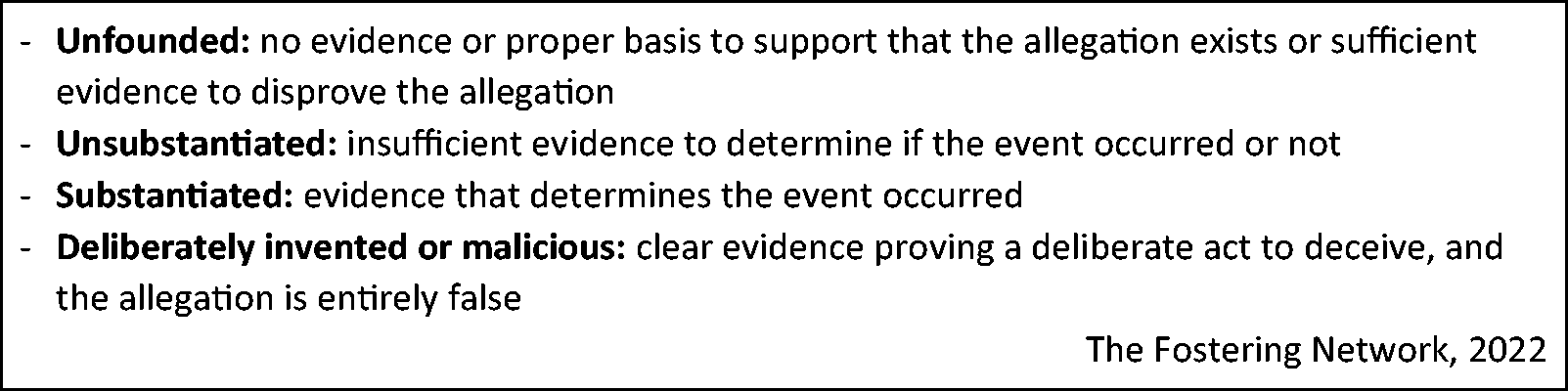
Definitions of outcomes of allegations.
Prevalence Of Allegations Against Foster Carers In The Uk
Previous data on the prevalence of allegations against foster carers in the UK is only available for England (Ofsted, 2022b). Between 2021 and 2022, 3,010 allegations were made against approximately 4.91% of the 61,360 registered foster carers in England for that year (Ofsted, 2022a). By comparison, 4,642 allegations were made against teaching and non-teaching staff in England between 2009 and 2010 (Department for Education, 2012) representing approximately 0.6% of 700,000 registered school staff in England (UK Government, 2021). In an earlier study of allegations across 116 local authorities in England, of the 12,086 allegations, 11% were made against foster carers, 11% against people employed in social care and 44% against people employed in education (Department for Education, 2012). Given the significantly larger workforce in the education sector, this represents a disproportionately high number of allegations made against foster carers.
Balancing The Rights Of Children And Foster Carers
It is paramount that allegations are appropriately investigated to ensure the safety and protection of children and young people in the care system (Biehal et al., 2014). Small numbers of foster carers are not suitable to foster safely (Cleaver and Rose, 2020) and therefore while staff must be able to maintain ‘respectful uncertainty’ (Laming, 2003: 205), investigation processes must give confidence that assessments are balanced and evidence based. Ensuring that the concerns of children and young people are taken seriously, and their opinions are valued, contributes to their self-esteem, confidence and overall wellbeing (Hall, 2010; Kellett et al., 2004; UNICEF, 1989; Warwick, 2007). This is particularly important for children who may have additional needs and vulnerabilities and are at increased risk of lower wellbeing and self-esteem (Tarren-Sweeney and Vetere, 2015).
Research shows that a high proportion of allegations made against foster carers are not substantiated (Biehal et al., 2014; Boffey, Stanton and Thomas, 2019). Biehal and colleagues’ (2014) study of all 211 local authorities in the UK showed that between one-fifth and one-quarter of allegations of abuse or neglect made against foster carers were confirmed as abuse or neglect, meaning that most allegations – between 75% and 80% – were not substantiated. Ofsted (2021) figures show that 54% of allegations against foster carers in England between 2020 and 2021 resulted in an outcome of ‘no further action’ as opposed to being subject to continued monitoring or being referred to panel for review. Further research is required to develop our understanding of the many possible reasons why foster carers experience high numbers of allegations.
Balancing the rights of children and foster carers is difficult, but it is essential that the rights of both are protected. Providing effective support for foster carers is considered a means to improving outcomes for children in care (Midgley et al., 2019). Positive, respectful and inclusive relationships with other professionals working in child protection have been shown to be highly valued by foster carers (Pithouse and Rees, 2014; Saarnik, 2021). When foster carers feel that their professional knowledge and experience are valued, and they are provided with effective, ongoing support, particularly through times of increased stress, this helps them to provide the best possible quality of care for children and young people in the care system (Williams, 2021).
Methods
This paper focuses on allegations against foster carers through a mixed-methods analysis of The Fostering Network’s State of the Nation’s Foster Care (SOTN) 2021 survey. The Fostering Network conducts the survey every three years, with the 2021 survey being the fourth. The survey aims to produce a reliable insight into fostering across the UK and includes questions about how well foster carers and fostering services believe the needs of children and young people in care are being met, as well as practice issues such as support, capacity and recruitment. It is part of the charity’s core work and was not externally funded; it is used to inform the charity’s activities and priority setting. The Fostering Network and Cardiff University jointly analysed the 2021 survey results in relation to allegations.
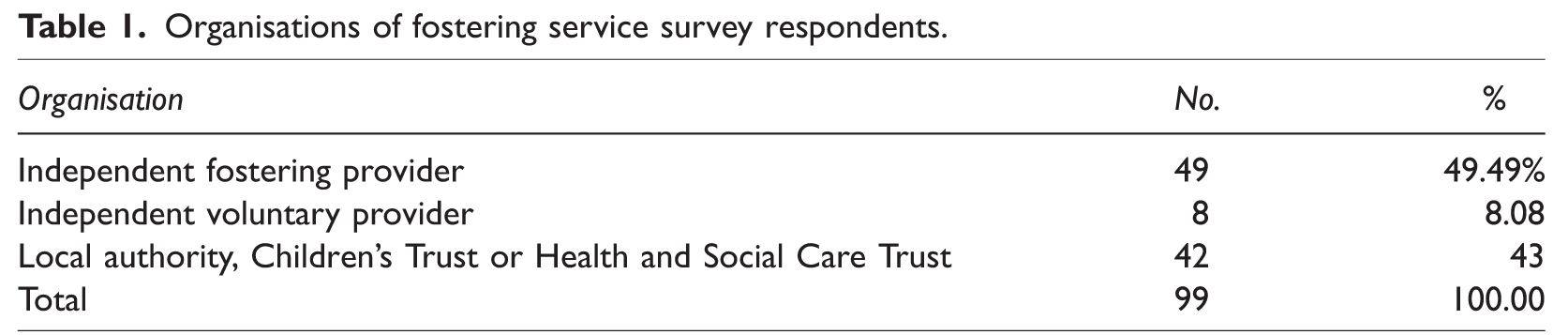
SOTN is the largest independent survey of foster carers in the UK and in 2021 responses were received from 3,352 foster carers. This represented 8% of fostering households in Scotland, 7% in Wales, 6% in England and 4% in Northern Ireland. The respondents reported caring for approximately 5,669 children and young people, representing around 9% of all children and young people living in care in the UK at the time (The Fostering Network, 2022b). The 2021 survey included fostering service practitioners for the first time. One response was submitted per fostering service and the invitation to participate was sent to the fostering service manager. Represented in the survey are 99 fostering service responses, equating to 19% of the total fostering service providers in the UK at the time (The Fostering Network, 2022b). Table 1 shows the type of fostering providers that responded to the survey. Respondents included 96 professionals in management or leadership roles and three senior social workers.
Organisations of fostering service survey respondents.
Foster Carer Survey
In addition to demographic questions covering foster carer gender, age, ethnicity, sexual identity, disability, location, care experience and number of years fostering, the questions in the foster carers’ survey that were analysed for this study are shown in Figure 2.
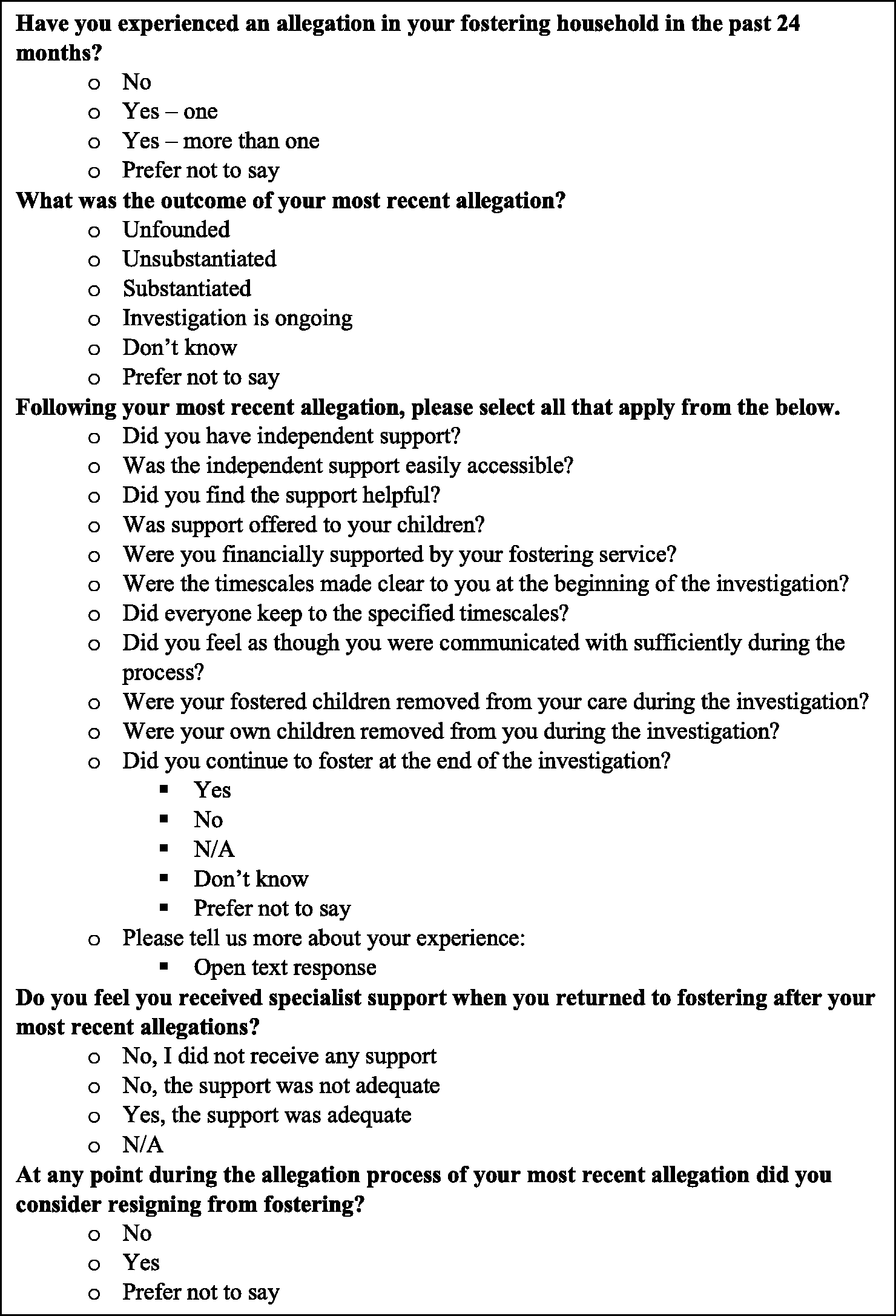
Foster carer survey questions about allegations.
For the quantitative analysis the data were cleaned in Microsoft Excel and imported into Stata (Version 17). For the qualitative strand of the study, 220 foster carers of the 471 who said they had experienced an allegation answered the open text response question ‘Please tell us more about your experience’. Braun and Clarke’s (2006) model of thematic analysis was used following the six stages of (i) familiarisation with the data, (ii) initial coding, (iii) generating themes, (iv) reviewing and verifying themes, (v) defining and naming themes, and (vi) writing up. The 220 responses were split equally between the three researchers (two from Cardiff University and one from The Fostering Network). Each researcher read through 15% (n = 33) of the responses to familiarise themselves with the data and then made an initial attempt at coding. All three researchers met to discuss and agree codes, which were then applied to the rest of the responses. After this the three researchers met to generate themes, which were subsequently reviewed in regular meetings. The six themes developed were:
Emotional impacts; Financial implications; Independent support; Social services’ involvement, including: ○ ∘support ○ ∘information-sharing and timescales of investigations ○ ∘an imbalance of power; Understanding allegations and minor family infractions; Children being removed from care and continuing to foster after allegations.
Fostering Services Survey
The questions shown in Figure 3 are those analysed from the fostering services survey.
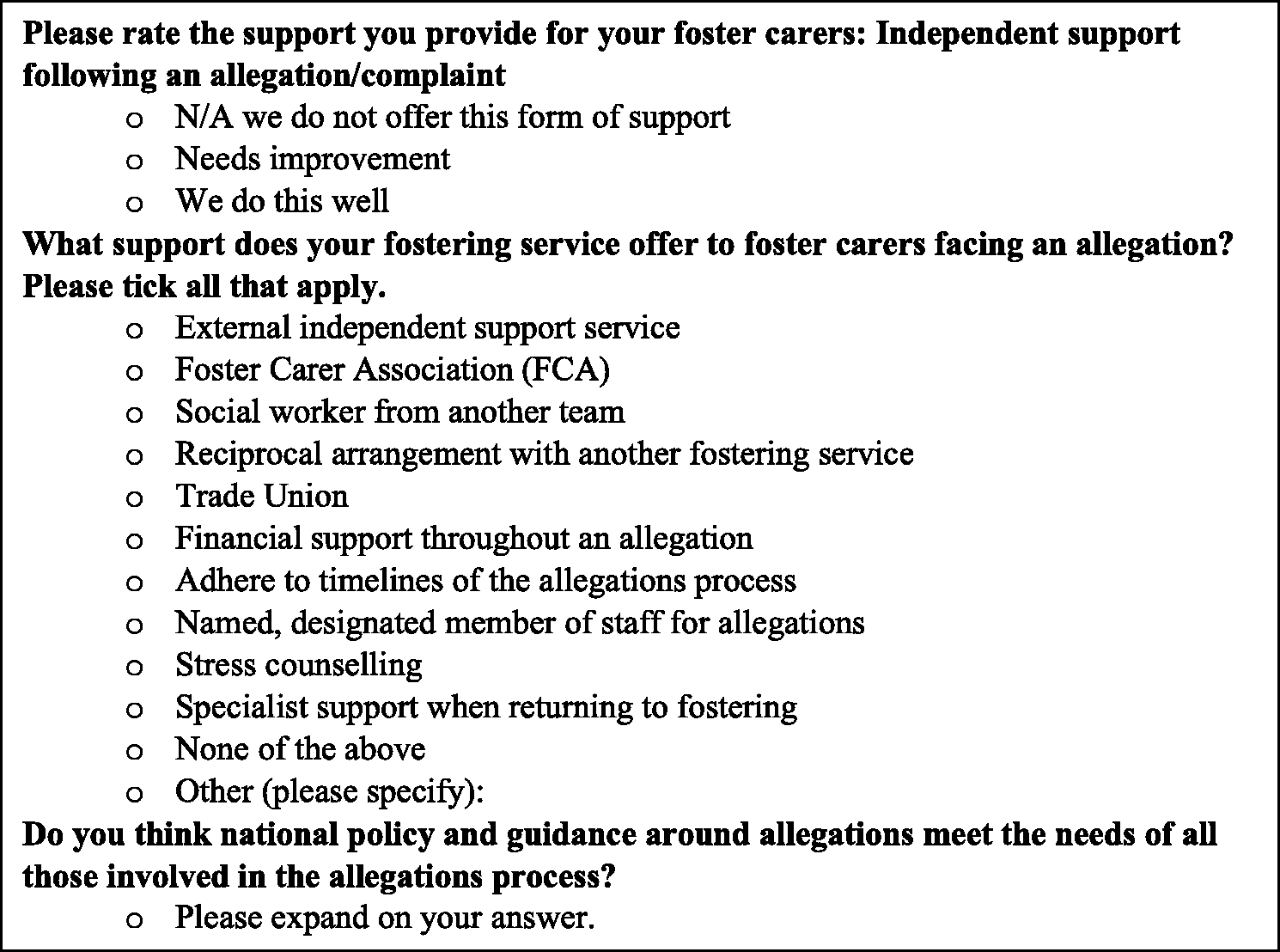
Fostering service survey questions about allegations.
Ethics
The study received ethical approval from Cardiff University’s School Research Ethics Committee prior to commencement and was carried out in accordance with the Research Integrity and Governance Code of Practice (Cardiff University, 2019).
The foster carer survey was promoted to foster carer members of The Fostering Network via email and to all approved foster carers through The Fostering Network’s social media channels. The fostering service survey was for members of The Fostering Network only. The Network has 450 organisational members representing around 80% of all fostering services across the UK. An individual link was sent via email to the fostering service manager at each member organisation. Both surveys were also promoted through word of mouth at forums across the UK. The survey was open for ten weeks between May and July 2021.
As an incentive for participating, foster carer respondents were entered into a prize draw with the chance to win one £100 voucher, two £50 vouchers and ten £25 vouchers, and fostering service participants were invited to an exclusive event. The event gave participants additional, anonymised and country- or regional-specific information from both surveys with the aim of helping services to make improvements. The occasion also provided networking and best practice-sharing opportunities. All participants gave consent that they had been fully informed about the survey and understood how their responses would be stored and used.
Of the researchers, one was based in The Fostering Network and three in Cardiff University. The Fostering Network researcher who developed the SOTN 2021 survey is closely attuned to the data and the needs of foster carers but is not a foster carer herself. Two of the university researchers are experienced in quantitative methods but not in foster care; the third is a qualified social worker and an experienced social care researcher specialising in foster care. There was no clear positionality of the researchers within the university. There was no direct contact between them and participants, or any power dynamic influence, as this was secondary analysis of a pre-existing dataset.
Findings
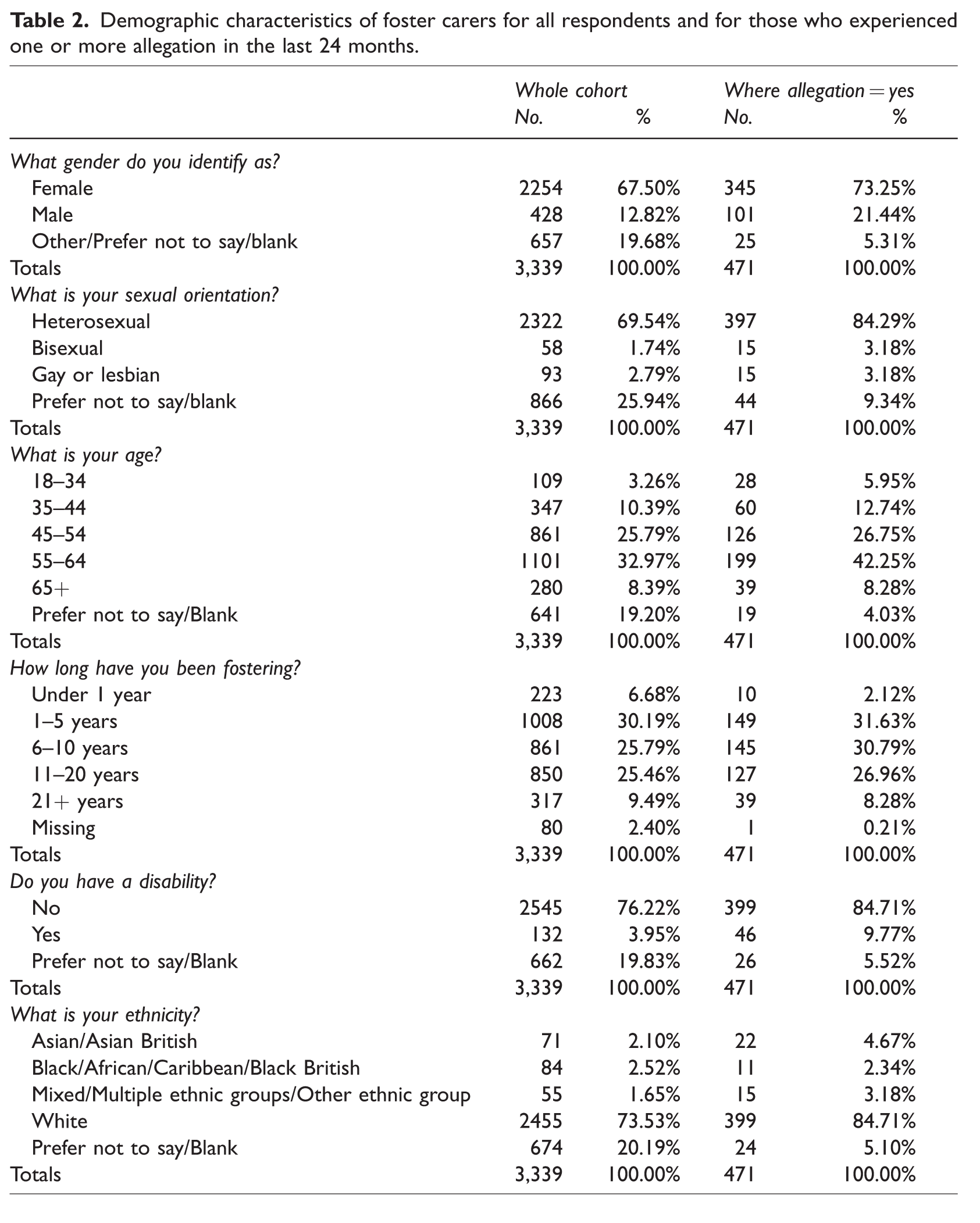
The survey was completed by 3,352 foster carers with 3,339 valid responses and the characteristics of survey respondents are shown in Table 2.
Demographic characteristics of foster carers for all respondents and for those who experienced one or more allegation in the last 24 months.
Foster Carer Demographics
The data suggest possible differences in the likelihood of experiencing an allegation dependent on some demographic characteristics (see Table 2) including gender and having a disability. Only 13% of foster carers were male but 21% of foster carers subject to an allegation were male. Four percent of foster carers reported having a disability but 10% of those who reported experiencing an allegation also revealed having a disability. It would seem that some groups of foster carers may be over-represented in experiencing allegations. Given the small numbers of respondents, it is not possible to report on differences in relation to allegations by other demographics such as ethnicity or sexual orientation. However, the possible differences in allegation experiences by gender and disability suggest the need for further research into the reasons and likelihood of different groups of foster carers experiencing allegations.
Emotional Impacts Of Allegations
When foster carers were asked to share their experiences of allegations, their distress and the devastating impact for them and their families was very clear.
For one foster carer: The terrible trauma and shock have left me with long-term bad anxiety/breathing problems. I have to take medication every day for it as the effects have truly taken their toll.
For another it was ‘the worst day of my life’. Not only were foster carers impacted, but also other members of their family, including their birth children, with one foster carer sharing that ‘The whole process scarred us and our three adult children for life’.
An allegation can potentially damage foster carers’ confidence when working with children, making them cautious and risk averse in their subsequent behaviours. For example, one foster carer explained that: It has left a nasty, unshakeable taste in my mouth. [We] now use technology to prove [we] don’t do anything and [make sure there are] always two people there at all times.
For foster carers, their place of work and livelihood is also their home and their family, and an allegation brings them and their family’s reputation and integrity into question. In these circumstances, it is not surprising to see the huge emotional impact on families when an allegation is being investigated. Practitioner respondents corroborated what the foster carers said about the emotional impacts of experiencing allegations: ‘I think that an allegation can cause untold worry for carers’; ‘the process does not take into account the high levels of distress it can cause to those who have allegations made against them’.
Financial Implications
There are two components to foster carers’ income from fostering: the allowance and the fee. The allowance is designed to cover the full costs of caring for a child, and a foster carer only receives this when they have a child in foster care living with them. The second component to foster carers’ income from fostering is a fee that recognises their time and skills. Some, for instance, kinship carers, may not receive a fee.
The survey asked about the financial impacts on foster carers and while 42% (n = 199) responded that they had not received financial support following an allegation, it is unclear how many foster carers would have been financially disadvantaged due to an allegation being made. The financial impacts of allegations were also explored in the qualitative strand of the study. Clearly some foster carers were affected in this respect. One foster carer shared that they ‘had no income for five months and accrued a lot of debt’ and another said they were ‘left with months in hardship’. Where financial support was provided, one foster carer said they ‘had to press very hard for financial help even though promised’. This issue was also highlighted by fostering practitioners: … carers are usually out of pocket and find they might retire from fostering after allegations. … they remain disadvantaged by not being paid if a child is removed due to the allegation.
Independent Support
It seems from foster carers’ responses that independent support is not always available when they are experiencing some of the most distressing circumstances of their work with children and young people. Some suggested that the ‘fostering service shrivels away from offering support’ and that ‘we felt really unsupported by everyone’. One foster carer felt that ‘you are just left in no man’s land; no one takes into account how much stress this puts you under’.
In total, 57% (n = 269) of foster carers who experienced an allegation said they did not receive any independent support (Figure 4). Interestingly though, of the 32% (n = 152) who said they did receive independent support, 82% of those (n = 125) found it easily accessible and 82% (n = 125) found it helpful. This suggests that some forms of independent support are effective in making foster carers feel helped but they are not widely available.
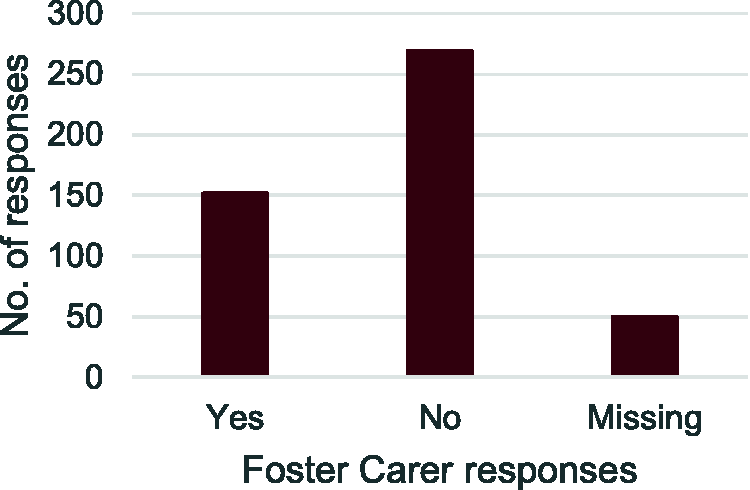
Foster carer responses to the question, ‘Did you receive independent support following your most recent allegation?’.
Despite the potential for an allegation investigation to be distressing for all family members, only 14% (n = 65) of foster carers said that support was offered to their children following an allegation, while 36% (n = 169) of foster carers said that no such support was even suggested.
While 76% of service providers responded that they ‘do provide independent support following an allegation’, 19% reported that there needed to be improvement, and 1% that they did not offer that kind of support. As one fostering service manager said: ‘…I feel that the independent support is often minimal, too late and too little.’
Social Services’ Involvement
Support
In addition to a lack of independent support, many carers felt they were also not assisted by social services and that the allegation investigation process meant that the system quickly became about ‘them and us’, with ‘social workers closing ranks’ and treating foster carers with a lack of respect: ‘It was like a “wall” came up and no one talked to us.’
Foster carers often felt unsupported by fostering teams, with no one thinking of the impact of the situation on them: ‘I felt abandoned and unsupported by anyone from the fostering team’; ‘I felt like a criminal. I was beaten badly, and no one showed empathy.’
This led to some foster carers losing trust in the fostering system, and despite still being committed to the children they cared for, they found it difficult to continue working for the same organisation: I have lost so much trust in the system that while I desperately want to help support the children because this is not their fault, I don’t know if I can continue to work for an organisation that can treat someone like this. … was an awful time and we are fed up of the system now. It makes you feel unsupported, not valuable and worth nothing.
Some foster carers felt sufficiently empowered that they complained about the local authority and their complaint was successfully upheld: The LA literally did nothing to support us or to provide the information that the police would have found useful… Their communication to us was so bad we complained, and this was upheld.
Some foster carers did feel supported by both their local authority fostering services and third-sector organisations: ‘[The] Fostering Network gave us a lot of useful information’ and ‘Social services were wonderfully supportive to us throughout the whole process.’
Information-Sharing And Timescales Of Investigations
Many foster carers reported that during the allegations process they were not communicated with effectively. In many cases, details of an allegation cannot be shared due to confidentiality, but this was not always made clear. For example, one carer noted: ‘[they] couldn’t give me any information except to say an allegation had been made and that they would be investigating’.
Many foster carers also reported that no clear information was given to them about the processes and timescales that would be involved in an investigation. For one foster carer they were ‘…never sure what was going on or happening next…’. Even where timescales were agreed, foster carers suggested these were not usually adhered to. Only 25% of foster carers who experienced an allegation said they were communicated with sufficiently (Figure 5). Furthermore, only 22% said that timescales were explained to them at the beginning of the investigation (Figure 6) and only 20% said that specified timescales were adhered to (Figure 7). The majority however (75%) noted that things were more chaotic: ‘… review rearranged five times’.
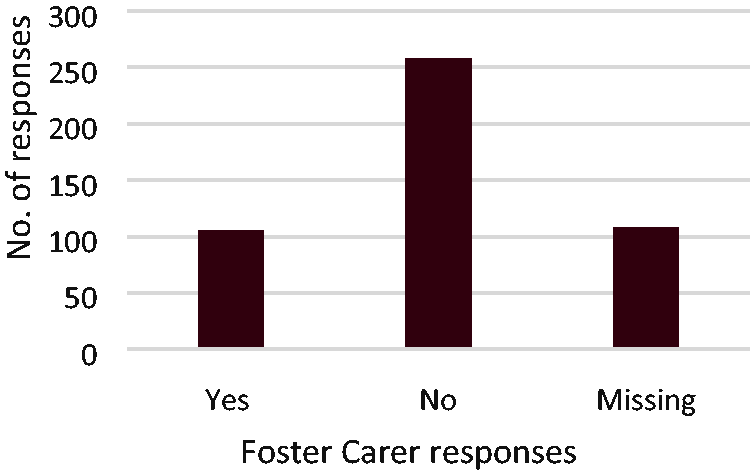
Foster carer responses to ‘Were the timescales made clear to you at the beginning of the investigation?.
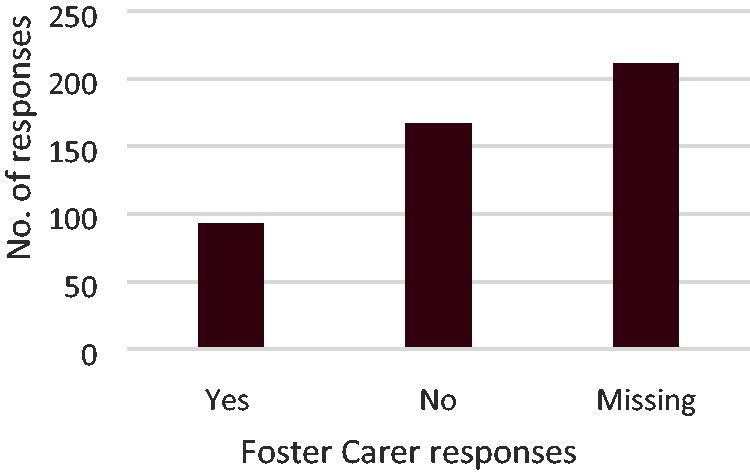
Foster carer responses to ‘Did everyone keep to the specified timescales?’.
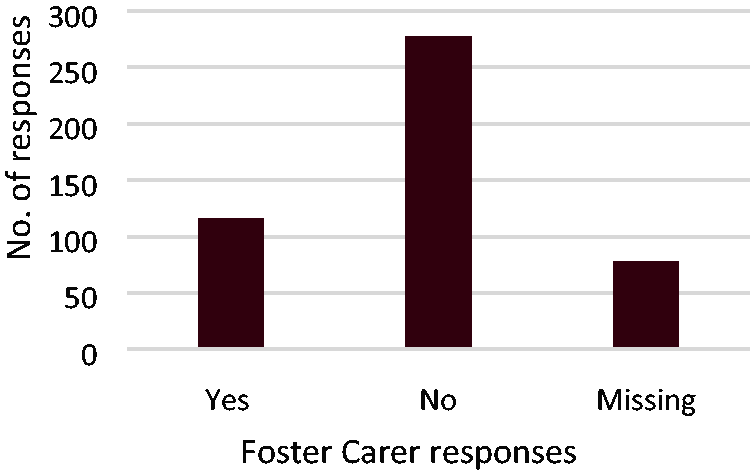
Foster carer responses to ‘Did you feel as though you were communicated with sufficiently during the process?’.
It seems that foster carers can be left waiting for months, and in some cases years, to be told the outcome of their allegation. One foster carer reported that ‘it took a total of six months for everything to be confirmed, even though the police dismissed the allegation straight away’; and for another, ‘the local authority and the police dragged this out for nearly three years’.
Ofsted data, available in England only, from the years covered by the survey (2019–2021) report that, for allegation investigations:
50% were completed in less than four weeks; 12% in four to six weeks; 12% in six to ten weeks; 26% in more than ten weeks.
However, the survey data suggest this is not how foster carers experience the timescales of investigations.
Lack of clear information-sharing with foster carers and elongated timescales clearly serve to increase the levels of stress they experienced during allegation investigations and add to their feeling unsupported and not respected. Even when investigations were dealt with quickly and efficiently, information was often still not shared, including details of the actual allegation: ‘It was all over within 48 hours, however I was not really kept informed.’ Sometimes even after investigations were complete, foster carers still felt left in the dark: ‘We still do not know the details of it; no discussions have been had to tell us what the concern is.’
Poor information-sharing and lengthy timescales were also seen as problematic by fostering service respondents: … carers unsure what is happening at times – and for them [it] is not done in a timely manner as of course they are anxious. The main issue is timescales which can degenerate to a standstill where there is police involvement, resulting in almost inevitable deregistration.
An Imbalance Of Power
Foster carers, when experiencing an allegation, often felt that they had no rights or protection: ‘still to this day, my voice has never been heard’; ‘it has made us realise how vulnerable we are as foster carers’. When an allegation is made against a foster carer, many report feeling as if they are presumed to be guilty, even where there is little or no evidence. Child protection legislation prioritises listening to the child and investigating allegations, but foster carers are often unprepared and are lacking the support needed to cope with such an emotionally distressing situation. In the words of one such carer: ‘We felt that the manager dealing with it had already believed the person before even speaking to us’; another stated that it ‘felt like I was on trial for murder – not believed, not trusted not valued in any way’. For another foster carer, this sense of an unjust approach that was lacking in empathy was exacerbated by the apparent lack of appreciation of their experience and professionalism: … The ‘guilty until proven innocent’ attitude towards carers with 18 years’ experience and over 200 children is really hard to understand and accept – as was the lack of empathy.
Fostering service providers also noted how vulnerable foster carers could be when facing allegations and that ‘a more inclusive system may serve this purpose better’.
It seems clear that many foster carers who have faced allegations do not feel that social services are supporting them, there can be poor information-sharing and timescales are both lengthy and not communicated clearly. These contribute to foster carers feeling that they are not respected, their voices are not heard and their rights are not supported.
Understanding Allegations And Minor Family Difficulties
While the question of allegations in the survey asked, ‘Have you experienced an allegation in the last 24 months?’, it is possible that some foster carers may have answered yes, when the process was in fact a standard of care concern, a complaint, or a situation that needed to be discussed with the social work team. It is possible that in the survey responses, some foster carers may have been referring to instances when they felt that an allegation had been levelled against them and so may not be referring to what had actually constituted a formal allegation.
Some foster carers highlighted examples of seemingly minor issues that led to allegations such as: … [I] wasn’t buying child the right type of bread … allegation by a child that had already left our care claiming we did not allow him to take [the] game console with him. It was not bought as a gift for him!
This points to the issue of supporting children and foster carers to manage minor infractions, as well as improved training for carers around what constitutes allegations as opposed to standard of care concerns, complaints or other difficulties. Both of these issues were also recognised by fostering service respondents: I think that allegations needs completely relooking at. Issues arise in all families that require discussion and not moving a child… It is a very accusatory process that is not helpful at all. I think foster parents continue to not fully understand the allegation process.
Removal Of Children And Continuing To Foster
Twenty-two percent (n = 102) of foster carers reported that foster children were removed from their care during the investigation, and of those, 53% reported the outcome of the investigation as unfounded and 25% as unsubstantiated. It appears that foster children in households where an allegation has been made are at increased risk of disruption to their placement. By contrast, only four foster carers (less than 1%) responded that their own children had been removed from their care during an investigation (38% of responses were missing or not applicable). The results show a higher proportion (61%) of birth children than foster children remaining in the home during an allegation investigation. The survey did not address the source of allegation and it may be that foster children are more likely to be removed when they are the complainant. However, removing foster children from a placement when an allegation is made needs to be considered in the context of safeguarding individual children and the nature of the allegation, as well as the negative impacts of placement instability on young people looked after.
The impact of allegations on the retention of foster carers was evident from the survey findings. While 80% (n = 375) of foster carers said that they continued to foster following the allegation investigation, the qualitative findings revealed that many did so only because of their commitment to children already in their care, and they had ceased fostering, or intended to cease fostering, when those children left. This means that attrition could continue for some time, perhaps even years, after initial allegations are made. This is concerning given the shortage of foster carers and instability of the fostering workforce (The Fostering Network, 2021).
There would also seem to be a lack of support for foster carers when returning to fostering after an allegation. Only 22% (n = 103) of foster carers said that they received adequate specialist support when returning to fostering with 48% (n = 228) saying that they did not receive support or the support that they received was inadequate: ‘We don’t feel we can continue to be foster carers, however, because of how we have been treated.’
One fostering service provider highlighted that feeling that allegations were unresolved was a problem for foster carers when continuing in their role: Foster carers also often struggle if an allegation is found to be unsubstantiated. I don’t think enough explanation is given as to why this was found from those investigating, which leaves the subject of the allegation without resolution.
Discussion
This study reports findings from foster carers’ experiences of allegations in the UK. It highlights the negative emotional impacts of allegations on foster carers, fostered children and their families. It is imperative that children and young people living in out-of-home care are listened to and their concerns are taken seriously. The study by Biehal and colleagues (2014) found that in the UK between one-fifth and one-quarter of allegations were confirmed to be abuse or neglect. Allegation processes must be robust to protect children and young people from harm. Positive and respectful working relationships between foster carers, social care professionals, and where necessary with the police, are of greatest importance when foster carers are facing an allegation investigation. Effective support can contribute to foster carers being enabled to continue to provide the best quality care for children and young people looked after; there is a clear need for timely and effective support for such carers and their families, both during and after an allegation investigation. However, the UK-wide SOTN 2021 survey results suggest that the opposite is in fact happening, with foster carers feeling less supported both during and after such an investigation. It appears that once an allegation is made, the needs and rights of the child eclipse the needs and rights of the foster carer (even when caring for other children). There would seem to be few attempts to look for reconciliation, or to adopt a restorative approach (Williams, 2019) to ameliorate and preserve family relationships.
Echoing the findings of Plumridge and Sebba (2016), the lack of both independent and social services’ support, poor communication and information-sharing, and unclear and lengthy timeframes for investigations all exacerbated the stress and anxiety experienced by foster carers and their families. The lack of support from social services also caused foster carers to feel isolated, undervalued and not respected within the team around the child. Across the UK, foster carers are not currently afforded the same Human Resources protections, or emotional and legal support, as their social work or education colleagues.
There are numerous possible reasons why foster carers may be subject to allegations with unfounded or unsubstantiated outcomes. Children spend more time in the foster home than in any other setting. They come to live in the intimacy of those homes, where boundaries around expected behaviour might be less clear, than, for example, in more formal settings such as education. Around two-thirds of allegations against foster carers in England came from a fostered child or young person (Ofsted, 2021). Many children living in care have experienced trauma (Bellis, Ashton and Hughes, 2016), and many may be highly sensitised and/or hypervigilant (Hughes and Golding, 2012). Some young people living in foster care struggle with or may not have experienced boundary-setting by caregivers (Naish, 2018), or they may seek ways to leave foster placements to be reunited with siblings and birth families (Gibbs, Sinclair and Wilson, 2004). Allegations can also be made by members of birth families who may disagree with a child or young person being placed in a foster home (Williams, 2021).
It is not always clear from the survey whether foster carers were differentiating in their responses between complaints, standard of care concerns or allegations. A child-centred approach should ensure that minor family difficulties (which may nevertheless be extremely important to a child) are dealt with but not escalated to the detriment of the stability of the placement. Minor infractions, testing of boundaries and disagreements and conflict are all part of relationships and family life, especially as children move into adolescence. Most ‘ordinary’ family conflict between children and parents does not and should not attract the formal involvement of services (Department for Education, 2018). Alongside the need to listen to children and young people, take their concerns seriously and protect them from harm, allegation processes should take into account the benefits of normalising family life for children in care, in the words of Sinclair, Wilson and Gibbs (2001): ‘a life more ordinary’.
In practice, the threshold for investigating family issues within foster care in the UK may be lower compared to families not in foster care (Welsh Government, 2022). Seemingly, minor infractions and normal family disputes may be escalated out of proportion, to the detriment of the children, foster carers and their extended family. Disagreements are experienced in all families and enabling children and young people looked after to manage conflict within families and close relationships is an important aspect of their social and emotional development (Naish, 2018). Moving quickly into formal allegation investigations may serve to further stigmatise these young people by increasing the involvement of social services and police in their family lives. There have been attempts to reduce the likelihood of foster carers and residential staff resorting to calling the police when disputes occur, to protect children from being jettisoned into the criminal justice system, when their counterparts in birth families are not (Department for Education, 2018; Welsh Government, 2022). It seems there is a need for more streamlined systems for social services to support children and young people as well as foster carers, through minor infractions and family disputes.
Some foster children are removed from placements before the outcome of investigations are known. Unplanned endings stemming from an allegation are common regardless of the outcome and are known to be a negative experience for young people looked after as well as other children in the home. Furthermore, multiple unplanned endings can contribute to a range of negative outcomes for young people looked after (Mannay et al., 2017). An allegation investigation can also lead to a foster carer leaving their role. This is especially important in the context of decreasing numbers of foster carers (The Fostering Network, 2022a) and increasing numbers of children and young people in need of care placements (Ofsted, 2021), which are arguably the biggest issues currently facing the children’s social care sector. If foster carers do continue to foster after an allegation investigation, the foster carers and fostering service respondents to the survey suggest that there is limited support for them. Social services could conceivably better manage allegation investigations, to ensure damage limitation to all parties, and to avoid escalating allegations and removing children too quickly, which can be damaging to all involved.
This study suggests that further research is needed to better understand:
the prevalence of allegations compared with standard of care concerns, complaints and other circumstances that foster carers might perceive as an allegation; the nature and source of incidents that lead to allegations; the views and experiences of children and young people around allegations and the investigations process.
Strengths And Limitations
This study used the State of the Nation’s Foster Care survey, which is the largest survey of foster carers in the UK, and in the 2021 version also reflects the views of fostering service providers. This adds the voices of foster carers and details of their own experiences to the formal statistics gathered on allegations in foster care. However, with 3,352 foster carer responses, less than 10% of foster carers in the UK are represented. In addition, the numbers of foster carers who are kinship carers (caring for a family member through a formal or informal fostering arrangement) included in the survey were too small to report. Furthermore, only 19% of fostering service providers are represented.
This is a self-report survey and as such only represents what participants are willing to share about themselves. Such surveys can be subject to reporting biases like memory recall and social desirability, particularly when covering sensitive or emotional issues.
Recommendations
The study concludes that there is a need to make improvements to allegations processes to ensure better outcomes for children in care and fostering families. The findings suggest the need for changes in five main areas: managing disagreements and conflict in family relationships; local policy; learning and development; support; and data collection and understanding at a national level. This study also calls for a change to other aspects of national foster care policy which would have a positive effect on improving allegations practice.
Managing Disagreements And Conflict In Family Relationships
Heads of fostering services should ensure that they create a fostering environment where everyone listens and respects one another. All who work with children in care should ensure that children are encouraged to speak about their experiences and that there are accessible outlets for them to have their say and be listened to. Appropriate action needs to be taken by the fostering service and communicated to children to let them know their concerns have been heard. Social workers working with foster families and children in foster care should support foster carers to understand the importance of listening to children. In turn, social workers and the broader fostering service should listen to foster carers, so they feel trusted and respected, to encourage an open dialogue about any challenges they are facing, and to avoid these escalating to allegations.
Further and ongoing support is required for foster carers, their families and children and young people looked after, to manage disagreement and conflict within their family relationships. This could be provided through training opportunities and by working with the foster carers’ and child’s social worker collaboratively. This would potentially reduce unnecessary escalations that can negatively impact both foster carers and children and young people looked after.
Local Policy
Heads of fostering services should review and monitor their compliance with their respective country’s safeguarding legislation and guidance. Heads of service need to ensure that their allegation policies and processes comply with national guidance leading to best practice. Such policies should protect the stability of placements for children as paramount, and be clear, easily accessible and developed in consultation with foster carers and young people. These policies should provide clarity around both information-sharing and timeframes, and must enable greater expediency of investigations, particularly for less serious allegations and disputes. Some foster carers were left uncertain about what decisions had been made and why, as well as what information remains on their files. Therefore, better information-sharing following an investigation is an important part of the support foster carers should receive to enable them to continue fostering in the wake of an allegation.
Learning And Development
Learning and development opportunities for foster carers and social workers who work with foster families is needed to better understand allegations and the associated investigation processes. Being the subject of an allegation is very often shocking and upsetting for foster carers, and stressful situations can make it more difficult to understand complex information. Providing all foster carers with information and training about allegation procedures could help them if they should subsequently experience an allegation themselves. To help alleviate this stress, social workers should be confident at the level of support they can provide in line with current guidance and local policies.
Support
Timely and effective independent support and advocacy for foster carers is clearly needed throughout an allegation investigation. Some research suggests peer support for foster carers facing allegations from those who have experienced a range of difficult and stressful fostering circumstances can be effective (Nesmith, 2020). Assurances must be clearly made by the fostering service that foster carers will not be financially impacted during an allegation investigation. The report recommends that foster carers should have access to confidential mental health support when experiencing an allegation, in keeping with what would be afforded their social work colleagues in a similar situation. There is also a need for support to be made available to the wider family and when foster carers return to fostering following an allegation investigation.
Data Collection And Understanding At A National Level
There is a need for a better understanding of the impact of allegations. Relevant government departments across the UK should conduct research that analyses current policies and processes, how they are working in practice, and barriers to implementation of national guidance. Such research should also include the police and other agencies involved in allegation investigations to help develop a deeper understanding.
Additionally, all bodies responsible for regulating fostering services across the UK should record information about allegations against foster carers to measure impact, practice and processes, similar to that done by Ofsted in England. Regulatory bodies must collect and report data around the relationship between allegations and foster carer resignations to monitor impact on retention.
Overall, all positive ways of working that can lead to better care for children and young people looked after as well as better foster carer retention, such as good information-sharing and working collaboratively with the team around the child, needs to be actively enhanced during an allegation investigation.
Declaration Of Conflicting Interests
The author(s) declared no potential conflicts of interest with respect to the research, authorship, and/or publication of this article.
Funding
The author(s) received no financial support for the research, authorship, and/or publication of this article.
Supplemental Material
supplemental material for this article is available online.
Supplemental Material
sj-pdf-1-aaf-10.1177_03085759231212501 - Supplemental material for ‘The worst day of my life’: Foster carers’ experiences of allegations
Supplemental material, sj-pdf-1-aaf-10.1177_03085759231212501 for ‘The worst day of my life’: Foster carers’ experiences of allegations by Louisa M Roberts, Alyson Rees, Daisy Elliott and Sophie Wood in Adoption & Fostering
Footnotes
References
Supplementary Material
Please find the following supplemental material available below.
For Open Access articles published under a Creative Commons License, all supplemental material carries the same license as the article it is associated with.
For non-Open Access articles published, all supplemental material carries a non-exclusive license, and permission requests for re-use of supplemental material or any part of supplemental material shall be sent directly to the copyright owner as specified in the copyright notice associated with the article.
