




Abstract
Young adults in many contexts struggle on the housing market. Parental support has become increasingly important in allowing young adults to enter homeownership or to acquire secure housing in general. Consequently, the intergenerational transmission of inequalities has become more pronounced with regard to housing. Using longitudinal individual-level register data from Statistics Netherlands, this paper investigates how and to what extent parental wealth background is associated with socio-spatial inequalities and residential segregation in Amsterdam and Rotterdam. Results show that spatial segregation based on parental wealth is strong. Parental wealth background has notable spatial consequences, as it both deepens existing socio-spatial divides and establishes new ones. The influence of parental wealth background on socio-spatial divides is stronger in Amsterdam than in Rotterdam, suggesting that especially in the high demand Amsterdam housing context, young adults may need to draw on parental resources to outcompete other households and/or to acquire housing in expensive areas.
Keywords
Introduction
Contemporary housing market conditions are in many contexts unfavourable towards young adults. Especially since the onset of the 2008 global financial crisis, though already before this, the housing position of young adults has worsened due to various factors. These include increasing labour market precarity and impeded access to mortgage credit. Worsening housing positions are reflected in decreasing access to homeownership, prolonged stays in and more frequent returns to the parental home, and a greater dependence on insecure housing arrangements (Clapham et al., 2014; Lennartz et al., 2016; Mackie, 2016). It is to be expected that under these conditions, parental support becomes ever more important in allowing young adults to get onto and subsequently climb the housing ladder, for example by assisting in the purchase of a dwelling. Consequently, housing may play a key role in fortifying and deepening inequalities handed on from one generation to the next (Forrest and Hirayama, 2015).
Parental support is, however, not just a matter of helping young adults to gain access to homeownership or housing in general. Parental support may also help in terms of acquiring housing in desirable and expensive locations (Hochstenbach and Boterman, 2017; Van Ham et al., 2014). The intergenerational transmission of inequalities may therefore forge new, or exacerbate existing, spatial divides between population groups. In the contemporary context of increasing wealth concentration and inequality (see Piketty, 2014; Saez and Zucman, 2016), the intergenerational transmission of wealth may have an ever more crucial influence on spatial divides. Furthermore, the intergenerational transmission of broader social and cultural class dimensions, including non-financial resources and dispositions, also leaves deep marks (Friedman et al., 2015; Savage, 2015).
Despite this, we know little about how and to what extent the intergenerational transmission of inequalities is actually projected onto urban space and translated into spatial inequality. This paper therefore sets out to investigate spatial inequalities associated with parental (wealth) background. It compares and links these divides to other spatial inequalities based on young adults’ own socio-economic and socio-cultural position. Inequalities based on parental background may exist on top of, or alternatively in spite of, personal socio-economic status. The following main research question informed this paper: ‘To what extent does the intergenerational transmission of inequalities produce socio-spatial divides among young adults? How do these divides compare and relate to other dimensions of socio-spatial inequality?’
In other words, this paper aims to ‘spatialize’ the intergenerational reproduction of inequality. This offers insight into the extent to which there are intergenerational continuities regarding who can isolate themselves in the most privileged locations and to what extent young adults from disadvantaged backgrounds are relegated to neighbourhoods of poverty.
This paper specifically looks at two urban contexts, motivated by the fact that cities are a common destination for young adults to move to for education or employment. The two largest cities of the Netherlands, Amsterdam and Rotterdam, are compared. Even though both cities are situated in the same institutional context and boast a similar housing market structure, the two may be considered contrasting cases: Amsterdam is an expensive booming city, while Rotterdam represents a struggling and cheaper former industrial city. To understand how family background shapes socio-spatial divides, this paper focuses on young adults aged 25–34. It draws on individual-level, geocoded register data from the System of Social-statistical Databases (SSD) managed by Statistics Netherlands.Inequalities transmitted across generations are spatialized through GIS mapping, measurement of unequal neighbourhood access, segregation analyses, and regression modelling.
Literature
How inequalities are reproduced across generations
Apart from persistent intergenerational continuities in class position that maintain housing market differentiation, parental background and support influence housing trajectories in a host of specific ways. Well-off parents may be able to provide direct financial support to their children by buying a home for them or by providing financial assistance in the purchase, for instance by making a down payment (Druta, 2017; Helderman and Mulder, 2007; Öst, 2012). Financial support not only smoothes access to homeownership but also helps young adults to enter more expensive housing segments (Spilerman and Wolff, 2012). In the rental market, parental financial support can be put to use to cover housing costs, effectively allowing young adults to take on higher rent burdens. Regardless of tenure, parental support has specific spatial dimensions as it can open up housing opportunities for young adults in privileged areas otherwise unattainable (Coulter, 2017; Hochstenbach and Boterman, 2017). These may be neighbourhoods offering specific locational advantages or neighbourhoods of distinctive social status (cf. Rérat and Lees, 2011). It is hence to be expected that parental financial support factors into the spatial sorting of population groups.
Intergenerational financial support may effectively be combined with property investment: parents may buy property for their children to live in, but simultaneously consider the purchase a strategic investment. This is part of a broader trend of older generations that have previously and successfully accumulated wealth, turning to the housing market looking for safe and profitable investment opportunities. Intergenerational house purchases may thus follow the financial logic of private housing wealth accumulation similar to, for example, second home or buy-to-let purchases (DeVerteuil and Manley, 2017; Leyshon and French, 2009; Paccoud, 2017; Paris, 2009; Ronald and Kadi, 2017). Here too, a notable spatial dimension exists, as parents may particularly seek out established areas for a safe investment, or gentrifying neighbourhoods for a highly profitable investment.
Mechanisms other than financial support exist in the intergenerational reproduction of inequality in housing trajectories. Young adults’ tenure preferences are, in part, the result of socialization processes, with the consequence that children of home-owning parents are more likely to desire to become homeowners themselves (Mulder et al., 2015; Rowlands and Gurney, 2000). Similar socialization processes may be at work with regards to location: young adults that grow up in affluent areas may develop persistent preferences for residing in such areas (Van Ham et al., 2014). More specifically, parents that have lived in the city as a student or young professional themselves – or still do so – may pass on specific preferences for inner-city living arrangements related to gentrification (Hochstenbach and Boterman, 2018).
Parents can also transfer non-financial resources to their children to help them advance in the housing market. They may, for instance, provide useful social networks through which housing opportunities arise, often in the private rental or informal sectors. They may broker housing, or transfer specific knowledge about the housing market, such as how to make optimal use of housing regulations (Boterman, 2012). Rather than occurring in isolation, these forms and mechanisms of support are likely to accompany one another, forging multilayered inequalities based on various aspects of parental background (Druta, 2017).
Changing intergenerational dynamics
Spatial divides based on the intergenerational transmission of inequality need to be considered in light of changing wealth distributions. Recent decades have seen the gradual and partial erosion of welfare state safety nets, and an increasing primacy of private property and private accumulation in politics and policies (Aalbers and Christophers, 2014; Sassen, 2014). Under these conditions, inequalities are growing, with wealth concentrating ever more in the hands of those belonging to the upper echelons. Simultaneously, a growing number of inhabitants have few to no assets at their disposal or are confronted with substantial household debt (Piketty, 2014).
The current rise in wealth inequalities comes with profound generational dynamics in which housing plays a key role. Housing equity distributions are heavily and increasingly skewed towards older generations (Arundel, 2017). To some extent, this is part of regular life course progression as wealth is accumulated over longer stretches of time, but there are also notable intergenerational inequalities involved. Older generations have typically been able to benefit to a greater extent from extensive welfare state provisions, labour market security, and supportive housing market conditions (Forrest and Hirayama, 2015). It is also important to note that among older generations, the potential to accumulate housing wealth through homeownership has always been uneven. Particularly older middle-class households were able to benefit from easy and affordable access to attractive segments of the owner-occupied stock and subsequent long-term house price booms. Yet older generations of lower class households have not been able to accumulate housing wealth, either because it remained impossible for them to enter homeownership, or because they bought into cheaper segments of the housing market and may be faced with sustained mortgage debt into old age (Wind et al., 2017). Because of these uneven housing wealth accumulation patterns, both between and within generations, it is arguably more productive to focus on the intergenerational transmission of inequalities, rather than simply to look at intergenerational inequalities alone (see Christophers, 2017).
For younger generations and other housing market outsiders, it has generally become more costly and difficult to enter into homeownership. During the 1990s and 2000s, house prices increased rapidly, which was initially offset to some extent by lenient mortgage lending that allowed households to take on larger debts. Yet since the global financial crisis of 2008, housing reforms, such as stricter mortgage lending practices, have been carried through. In the Netherlands, permanent labour contracts have become more important when qualifying for a mortgage, while maximum loan-to-value ratios have been lowered. The consequence is that the ‘home ownership systems which have emerged from the crises are ones which favour the financially privileged – the primes rather than the subprimes’ (Forrest and Hirayama, 2015: 237, original emphasis). That is, following the crisis, mortgage lenders have shifted priority to low-risk households with a high income, secure employment, and private assets at their disposal. These developments forge a range of fault lines and produce housing exclusion, not least of younger households that are faced with longer term trends towards greater socio-economic precarity (Arundel and Doling, 2017; Forrest and Hirayama, 2009).
Under these unfavourable housing conditions, young adults prolong their stay in the parental home and return there more often in boomerang moves (Lennartz et al., 2016). Furthermore, they depend to a greater extent on rental housing sectors that in many contexts are relatively small and unaffordable, subject to long-standing decline, or marked by precarity and insecurity (Kemp, 2015; Lennartz et al., 2016; McKee, 2012; Pattison, 2016). Furthermore, because access to rental housing is often regulated and restricted, young adults may have to look elsewhere and settle for precarious, temporary, and often semi-illegal housing arrangements (Clapham et al., 2014; Hochstenbach and Boterman, 2015). Consequently, it is suggested that intergenerational support is taking on greater importance in allowing young adults to overcome barriers in order to prevent precarious housing arrangements and advance in the housing market (Forrest and Hirayama, 2015). Recent evidence from the UK indeed points to a growing importance of parental background in young adults’ housing trajectories (CML, 2011; Coulter, 2018)
In major cities, decreasing housing affordability, subsequent housing exclusion, and increasing spatial segregation are particularly pertinent issues (Bischoff and Reardon, 2014; Lees et al., 2008; Minton, 2017; Tammaru et al., 2016). Within such a context, it may be expected that the intergenerational transmission of inequalities further deepens these divides. As outlined above, parental support allows young adults from well-to-do backgrounds to residentially isolate themselves from their peers in areas of privilege. Likewise, parental support facilitates access to neighbourhoods of gentrification, in turn contributing to the process and its displacement effects (Hochstenbach and Boterman, 2017, 2018). Young adults from poor backgrounds may increasingly become restricted to low-income areas – if they manage to live independently at all.
Welfare state and urban housing context
The influence of parental background and support on young adults’ housing trajectories depends, among other things, on the welfare state and housing context. Welfare states influence the importance, form, and timing of intergenerational support. In the Netherlands, state institutions seek to support young adults to follow independent housing and labour trajectories (Albertini and Kohli, 2012). Forms of parental co-residence are less accepted (Albertini et al., 2007), although intergenerational financial transfers are relatively common. Although income inequalities continue to be relatively modest in the Netherlands, wealth inequalities are remarkably strong, with housing market structure and welfare safety nets cited as important explanations (Van Bavel and Salverda, 2014).
This paper focuses on the urban contexts of Amsterdam and Rotterdam. In both cities, still around 45% of the housing stock is social rent, while homeownership rates stand at 30% in Amsterdam and 35% in Rotterdam. Both cities’ relatively large social rental stock may effectively reduce the importance of parental support. In this housing segment, dwellings are allocated to households earning below €34,678 per year (2014 figure, subject to annual change) on the basis of waiting time. The accessibility of social rent is low, however, especially for young adults, due to long waiting times and limited new allocations (Hochstenbach, 2017; Musterd, 2014).
In the Dutch context, especially in cities, young adults face the particular problem of falling in between tenures. They are often ineligible for social rent, while also unable to purchase a home. The private rental stock is comparatively small in size and increasingly often too expensive. Young adults, and especially specific groups such as recent graduates that must vacate their student apartment, low-income home leavers, and newcomers to the city, are consequently left excluded or are faced with sharp trade-offs. The different forms of parental support outlined above may help to overcome existing barriers in the private rental or owner-occupied market.
House prices in Amsterdam are substantially above the national average and have been rising rapidly since 2013. Rotterdam house prices remain below average, reflecting the city’s relative affordability. It is expected that the role of parental wealth in determining housing and neighbourhood outcomes is greatest in the more expensive and high demand Amsterdam housing context. Here, a broader segment of the population may also depend on, or at least make use of, parental support. Thus, not only students, recent graduates, and others in a transitory life phase, but also those in a more mature phase of life, such as those that have settled down and started a family, may all have to tap into the ‘bank of mum and dad’.
Housing marketization is well under way in both Amsterdam and Rotterdam (Hochstenbach and Van Gent, 2015). It proves fertile ground for rising spatial inequalities as it heightens the necessity to bring ample economic resources to the table in order to outcompete others (Tammaru et al., 2016). Contemporary policies of housing liberalization will therefore typically amplify the intergenerational transmission of inequality. This need not be an explicit policy goal, but may come as a side effect of housing policies that privilege private property and accumulation. In the case of both Amsterdam and Rotterdam, the erosion of social rent in favour of market housing is a clear example of this. Yet there are also Dutch housing policies that explicitly promote parental support, for example by exempting intergenerational financial transfers from taxation if they are used for the purchase of a house. These measures seek to improve the housing market position of young adults, but in fact only help certain segments of the population and strengthen inequalities handed across generations. During crises, such policies are typically employed or expanded to encourage house purchases and boost investment in the housing market and the wider economy, and may therefore be considered examples of privatized Keynesianism (Crouch, 2009).
Data and methods
This paper draws on data from the SSD from Statistics Netherlands to investigate socio-spatial inequalities based on the characteristics of young adults and their parents. The SSD combines data from various sources, including tax registers and municipal administration registers. These data are available for the entire population and include fine-grained spatial levels. All analyses in this paper focus on the household level, since this is where the economic resources determining housing access and need are typically bundled. For reasons of readability, the remainder of this paper will not always explicitly refer to the household level, but may instead use terms that refer to the individual level (e.g. young adults). A specific focus is on young adults, operationalized as 25–34-year-olds, following the age of the oldest household member. Households younger than 25, student households, 1 and institutional households are excluded, because this paper focuses on young adults who are somewhat further in their life course trajectory towards independence. For reasons of data availability (see below), this paper only looks at young adult households of which at least one parent lives in the Netherlands.
This study focuses on young adults’ parental wealth, as well as their own income and education level. It does not investigate the actual intergenerational transfers taking place, but rather looks into the levels of parental wealth more broadly, which are indicative of potential support as well as overall social class position. Parental assets are measured by linking individual young adults to both parents, and include all forms of household assets, including housing wealth, savings, and stocks and bonds, while also taking debt into account. Parental wealth can therefore be negative, for instance due to net mortgage debt. If total assets differ between both parents, typically due to separation, both parents’ assets are summed. Likewise, when young adults form a couple or other type of multi-person household, total parental wealth is calculated by summing the wealth of all parent households. This reflects the fact that couples may have more parental resources to fall back upon. In the regression analyses, a dummy variable is included to account for parental separation or death, as well as a variable for the number of siblings. Extreme outliers (assets worth more than €5,000,000 or debts over €500,000) are coded as missing. In the case of substantial debt, parental wealth does not reflect class position. For 23.6% of the 25–34-year-old households, parental wealth is unknown. Additional checks reveal that in 81% of these cases, young adults are first-generation migrants whose parents live abroad. The wealth of these parents is hence not included in the Dutch tax registers upon which this study draws. Other missing values are due to deceased parents or incomplete data. All cases with missing parental wealth data are excluded from the analyses.
Income is measured using equivalized household income, which accounts for differences in household size and composition (see CBS, 2008). For 1.2% of young adults, household income data are unknown. Household income levels are categorized in percentile groups relative to the entire Dutch population. Three broad groups are defined: a low-income group belonging to the poorest 40%, a middle-income group, and a high-income group in the top 30%. In the regression analyses, a continuous income variable of gross household income is used, as other variables already control for household composition. Educational attainment is measured by taking the highest completed level of education in a household. Education levels are categorized as low, middle, and high, with low defined as a high school degree or less, middle as a vocational degree, and high as a bachelor’s degree or higher at a university or polytechnic. For 6.2% of young adult households, education level is unknown.
Households’ spatial outcomes are gauged using the registered residential address on 1 January 2014. It should be acknowledged that some young adults may not be registered where they actually live (e.g. to circumvent regulations). This is a minor caveat. Addresses are geocoded and linked to neighbourhoods that follow Statistics Netherlands’ official classification, which are typically bounded by major infrastructure or waterways. After excluding scarcely populated neighbourhoods, there are 84 neighbourhoods in Amsterdam and 66 in Rotterdam, ranging in size from 376 to 9582 households aged 25–64.
This paper uses various approaches to investigate socio-spatial inequalities. Uneven population distributions are mapped using GIS, highlighting nuanced neighbourhood-level variations. Additionally, this paper constructs a neighbourhood typology of social status, using neighbourhood quintiles of average house sale prices per square metre in 2013 for Amsterdam, and average real estate values per square metre of owner-occupied dwellings in 2013 for Rotterdam. Although these measures are not identical, they are highly similar when used to construct neighbourhood quintile groups. This neighbourhood status typology offers insight into the extent to which households are able to access areas of privilege or are restricted to accessing areas of low status.
Spatial segregation levels are measured using the Index of Dissimilarity (ID). Spatial segregation is measured and compared over income, education, and parental assets. The ID ranges from 0 to 100, where 0 reflects an equal distribution of different population groups across neighbourhoods and 100 reflects total separation. An important characteristic of the ID is that the measure is insensitive to differences in population group size. It must be acknowledged that the ID is not without limitations: for one, it does not take into account spatial dependencies between neighbourhoods, nor does it pay attention to neighbourhood socio-economic status. Spatial inequality can therefore only be gauged by analysing the ID in combination with the maps and neighbourhood status typology described above.
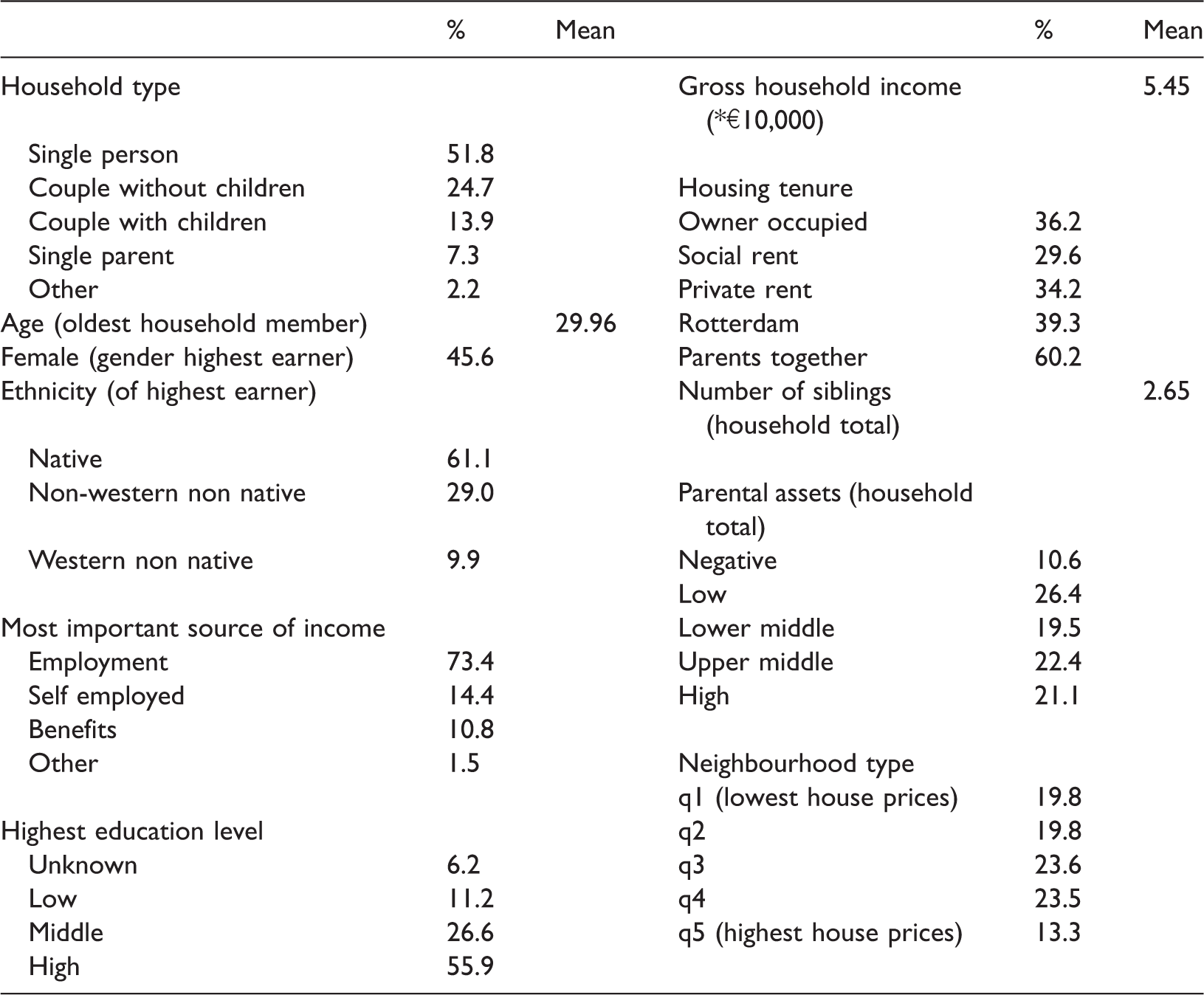
Finally, ordered logit models are used to estimate the association between parental wealth and neighbourhood outcomes, while controlling for various household and parental characteristics. Table 1 provides descriptive statistics for the variables included in the model. The spatial and segregation analyses are based on a total of 100,328 cases. For the regression analyses, 1481 (1.5%) additional cases with missing information on any of the control variables are excluded, leaving 98,847 cases.
Descriptive statistics for the variables included in the regression analyses. Total N = 98,847.
Data: SSD, own calculations.
Results
Unequal geographies
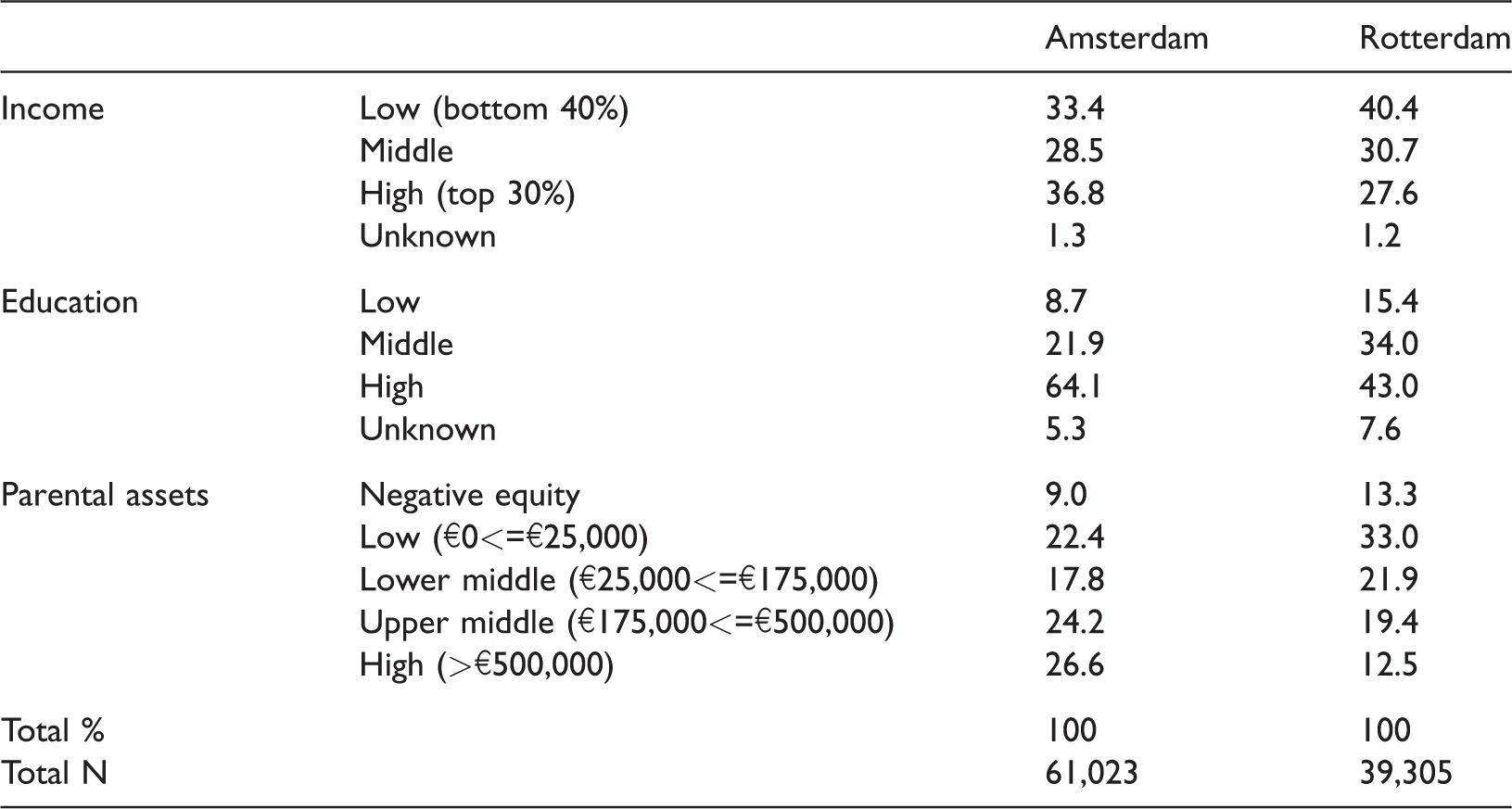
Young adult geographies and parental wealth background are investigated in the context of Amsterdam and Rotterdam. Basic figures about young adult households’ characteristics reveal some striking patterns (Table 2). The majority of young adults living in Amsterdam is highly educated (64%). This share is lower but still high in Rotterdam (43%). Young adults in Amsterdam more often earn a high income than their Rotterdam counterparts (37% compared to 28%). Interestingly, many of the young adults living in Amsterdam are drawn from affluent family backgrounds. For almost 27% of young adult households living in Amsterdam, parental assets are at least €500,000. A further 24% of young adult households has parents with assets worth between €175,000 and €500,000. These assets are the sum of all assets possessed by all parents and do not measure actual financial support. In 9% of cases, parental wealth is negative, meaning that parental debts are higher than assets, often due to mortgage debts. Young adults living in Rotterdam more often have parents with few assets at their disposal (33%) or they have indebted parents (13%). The share of young adults with wealthy parents is lower, as 12.5% have parents in the top category. These basic characteristics reflect the fact that both cities, but especially Amsterdam, attract many highly educated and upwardly mobile young adults. The presence of education institutions and opportunity-rich labour markets function as important pull factors.
Income, education, and parental wealth background of young adult households (aged 25–34) in Amsterdam and Rotterdam.
Data: SSD, own calculations.
Within both cities, parental wealth background is associated with highly uneven geographies among young adults. Figure 1 maps the spatial distributions of young adults from different parental wealth backgrounds at the neighbourhood level (as the percentage of all young adults in the neighbourhood). The maps reflect the fact that overall, the shares of young adults with asset-poor parents tend to be higher in Rotterdam than in Amsterdam, while the opposite is true for young adults with wealthy parents. In both cities, clear and highly uneven spatial patterns come to the fore. In Amsterdam, there is a centre–periphery divide. Young adults with asset-poor parents concentrate in the – mostly post-war – urban periphery in the North, New West, and Southeast boroughs. Similar but less pronounced patterns exist for young adults with indebted parents. Conversely, young adults with wealthy parents concentrate in the city’s most affluent neighbourhoods, such as the Canal Belt and the elite Old South district, and in adjacent neighbourhoods of advanced gentrification. Young adults with parents in the upper-middle wealth category also live relatively often in these neighbourhoods, but show strongest concentrations in gentrifying neighbourhoods west and east of the centre.
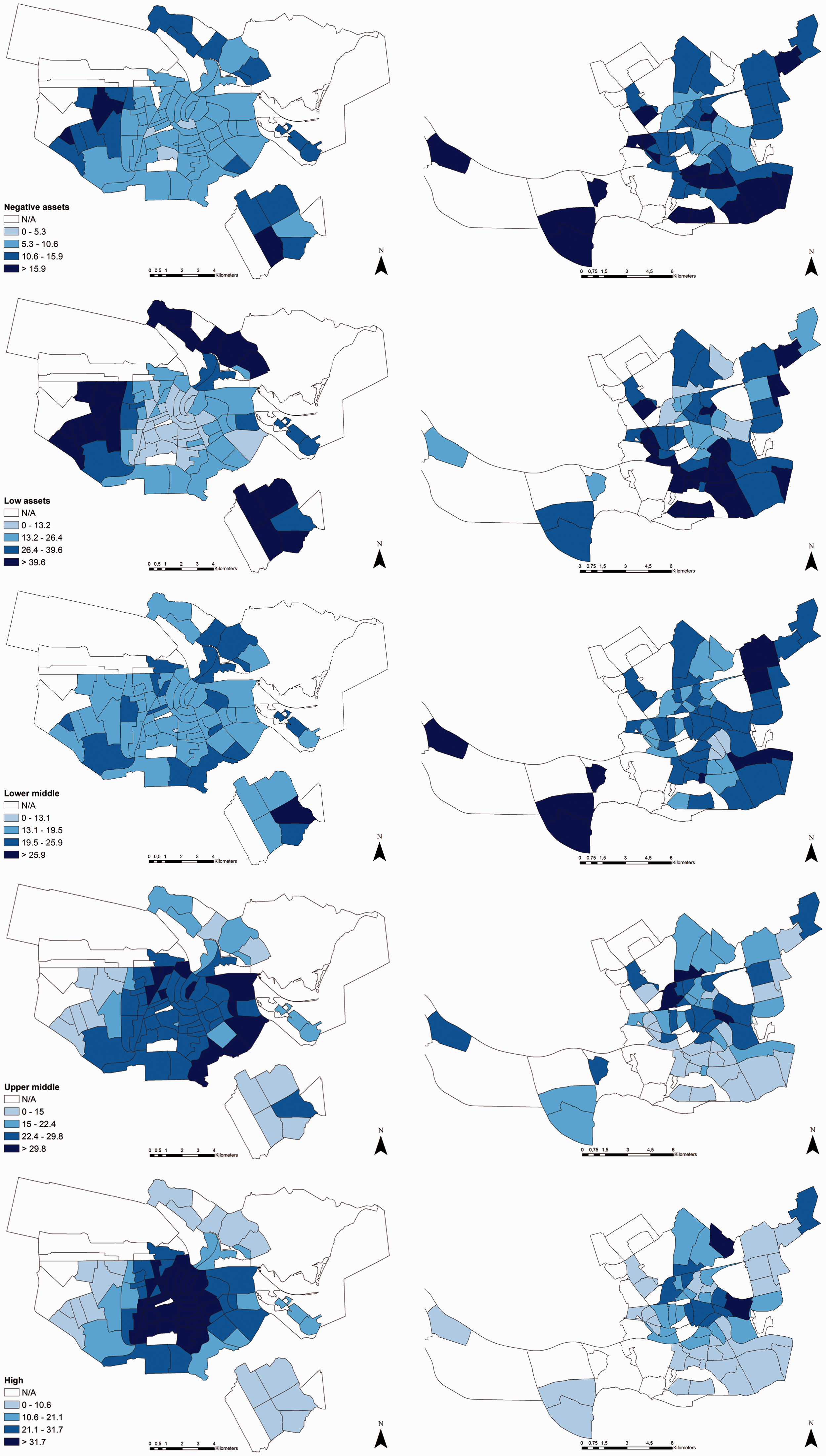
Share of young adult households with parents with negative assets (top row), low assets (second row), lower middle assets (middle row), upper middle assets (fourth row), and high assets (bottom row), as percentage of total number of young adult households per neighbourhood in Amsterdam (left) and Rotterdam (right). Data: SSD, own calculations.
In Rotterdam, young adults with asset-poor parents tend to concentrate south of the New Meuse river in cheap neighbourhoods of low socio-economic status. Other concentrations can be found in neighbourhoods in the north-eastern and western periphery of the city. Similar patterns apply for young adults with parents with negative equity. Young adults with parents in the lower-middle asset group typically concentrate in post-war residential areas in the northeast and southwest. Concentrations of young adults with wealthy parents are sparser in Rotterdam when compared to Amsterdam, but do exist in the affluent Molenlaankwartier and Kralingen neighbourhoods. Young adults with parents in the upper-middle category concentrate in similar neighbourhoods, but their largest shares can be found in the gentrifying neighbourhood of Blijdorp just north of the central train station.
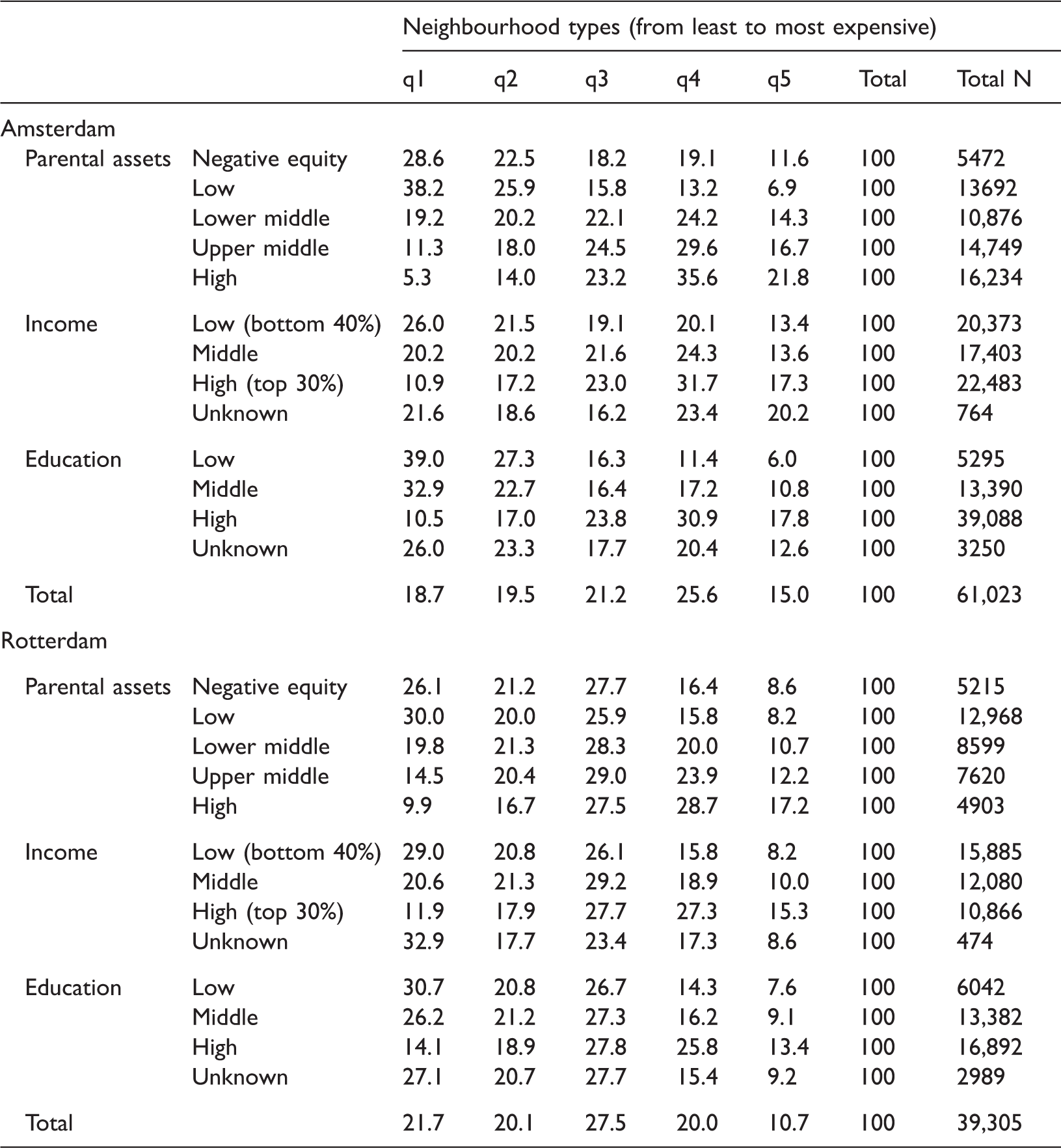
From these fine-grained socio-spatial patterns, it is possible to distil some more general patterns and relationships (Table 3). Parental wealth is strongly and positively associated with living in more expensive neighbourhoods. In Amsterdam, of all young adults with low-asset parents, 38.2% lives in the cheapest neighbourhood type, while only 6.9% lives in the most expensive areas. Interestingly, for young adults with parents in negative equity, the patterns are less pronounced, with 28.6 and 11.6% residing in the cheapest and most expensive areas, respectively. In contrast, some 21.8% of young adults with wealthy parents reside in the most expensive neighbourhoods. Only 5.3% of these young adults live in the cheapest neighbourhood type. For Rotterdam, similar but less pronounced patterns come to the fore, with 30% of young adults with low-asset parents living in the cheapest neighbourhood type, and 17.2% of young adults with high-asset parents living in the most expensive neighbourhood type. These data tentatively suggest that parental wealth may play an important role in facilitating access to areas of privilege, especially in Amsterdam.
Spatial distribution of young adult households (aged 25–34) across five neighbourhood types, stratified according to parental wealth, income, and education in Amsterdam and Rotterdam (2014).
Data: SSD, own calculations.
Table 3 also stratifies neighbourhood outcomes according to young adults’ own income and education level. Different categorizations and substantive meanings make it impossible to directly compare the socio-spatial inequalities associated with income, education, and parental wealth. Nevertheless, it is striking that in both Amsterdam and Rotterdam, parental wealth is associated with highly uneven neighbourhood distributions, comparable to, or stronger than, distributions based on young adults’ own income or education level. This is important: even if many young adults have already made steps in the life course and on the labour market (see Table 1), parental wealth background remains strongly associated with neighbourhood outcomes, also in relation to other socio-economic characteristics.
Spatial segregation
Socio-spatial inequalities can be further unravelled through analyses of spatial segregation among young adults (see Figure 2). Income segregation is stronger in Rotterdam than in Amsterdam, as the ID measuring segregation between low- and high-income young adults is 33 in Rotterdam, compared to 25 in Amsterdam. Higher levels of income segregation in Rotterdam can be explained by lower demand pressures on the city’s housing market. Lower housing prices and less competition over housing allow households of a higher income to acquire housing in established high status areas, where they residentially isolate themselves from other groups. Conversely, in Amsterdam high prices may necessitate high-income groups to accept housing in neighbourhoods of still lower status. This contributes to forceful gentrification processes, but at least initially dampens spatial segregation (cf. Bailey et al., 2017). One should therefore be careful with equating lower spatial segregation with greater spatial equity, as low levels of segregation may be produced by gentrification processes that in fact worsen the housing position of households in a weak socio-economic position (cf. Uitermark et al., 2017). Segregation levels based on education are comparable in both cities.
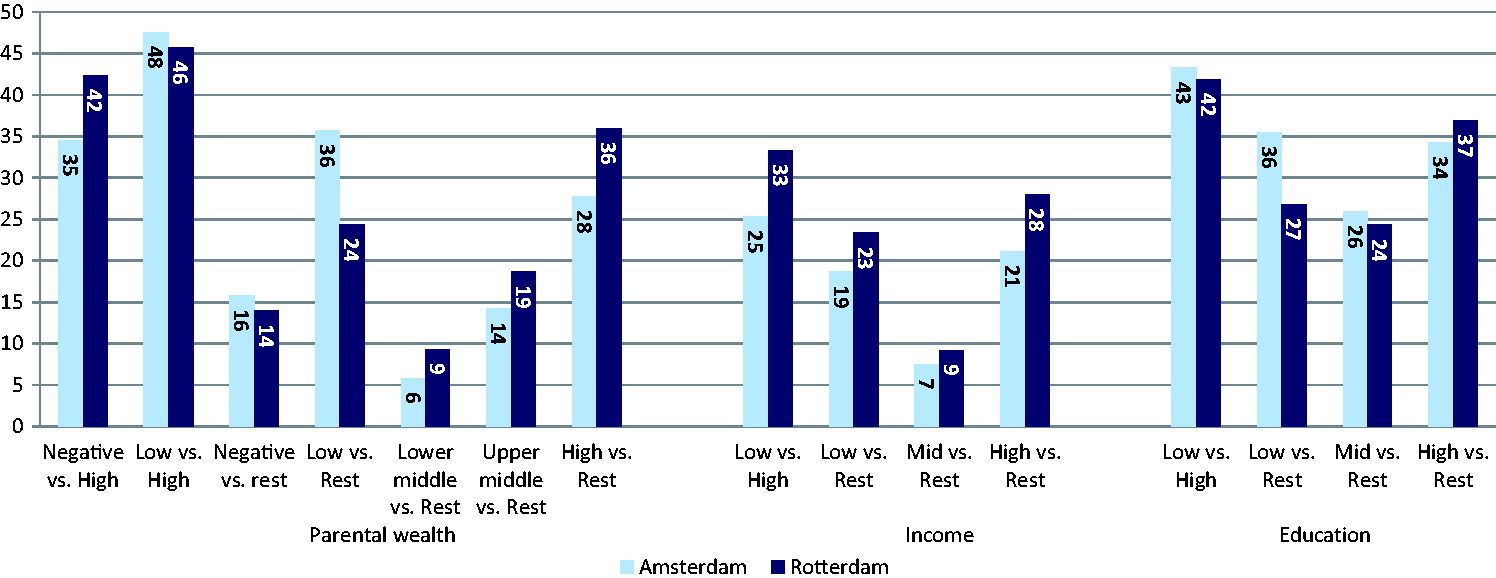
ID for young adult households (aged 25–34), based on equivalized household income, education level, and total parental wealth. Data: SSD, own calculations.
In both cities, levels of segregation between young adults with low-asset and high-asset parents are particularly strong: in Amsterdam, the ID for low versus high parental wealth is 48, while in Rotterdam it is 46 (Figure 2). While in Amsterdam young adults with low-asset parents live the most segregated, in Rotterdam particularly those with wealthy parents live segregated. Young adults with indebted parents are less segregated than young adults with asset-poor parents, suggesting that these parents may on average be of a higher class position, such as homeowners with mortgage debt higher than the house value. Again, while one should be careful to compare socio-spatial inequalities associated with income, education, or parental wealth, it is remarkable that levels of spatial segregation based on parental wealth are higher than those based on young adults’ own income or education.
These patterns raise the question of how to interpret the importance of parental wealth in producing spatial divides in both cities. The results suggest that parental wealth reinforces existing patterns of income segregation. That is, parental wealth segregation should not be considered as independent from income segregation, but rather parental wealth adds an extra layer on top of already existing income inequalities. Given the general intergenerational continuity in socio-economic status, potential parental support will particularly benefit young adults in an already strong socio-economic position. Parental wealth may represent an important additional financial resource that young adults can draw on. This is especially the case in the high demand Amsterdam context, but also in Rotterdam. Furthermore, residential segregation based on parental wealth may also reflect broader class reproduction, entailing the intergenerational transmission of non-financial resources and (neighbourhood) preferences.
It is possible to combine young adults’ own income and their parents’ wealth in analyses of segregation (Figure 3). This reveals that in both cities, segregation levels of young adults who are doubly disadvantaged (low income, low parental wealth) versus those who are doubly advantaged (high income, high parental wealth) are, as may be expected, strongest (IDs of 52 and 56 in Amsterdam and Rotterdam, respectively). These results show that the combination of own income and parental background results in particularly strong spatial divisions in both cities. Figure 3 shows how parental wealth may mitigate residential segregation between low- and high-income groups, as segregation between low-income young adults with wealthy parents and high-income young adults is relatively low (IDs of 16 in Amsterdam and 21 in Rotterdam). These findings suggest that some low-income young adults may be able to overcome housing constraints by, for instance, drawing on parental support, which dampens income segregation while at the same time reinforcing parental wealth segregation.
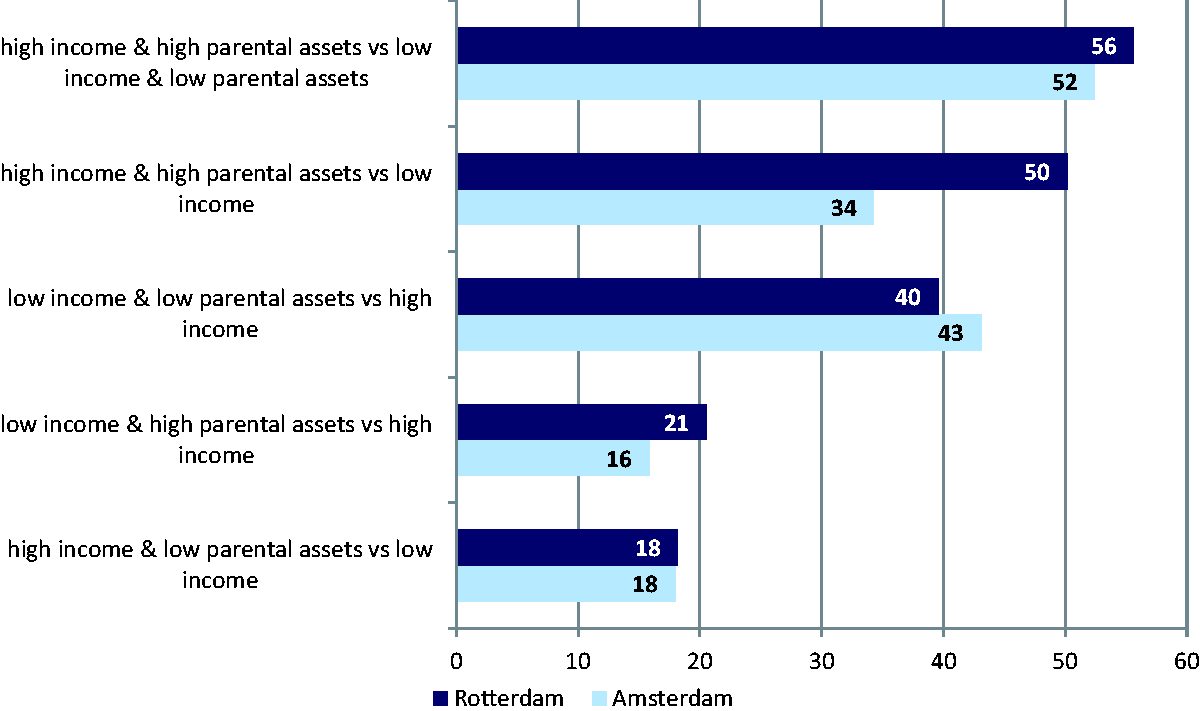
ID for young adult households (aged 25–34), based on combinations of household income, and parental wealth. Data: SSD, own calculations.
Regression analyses
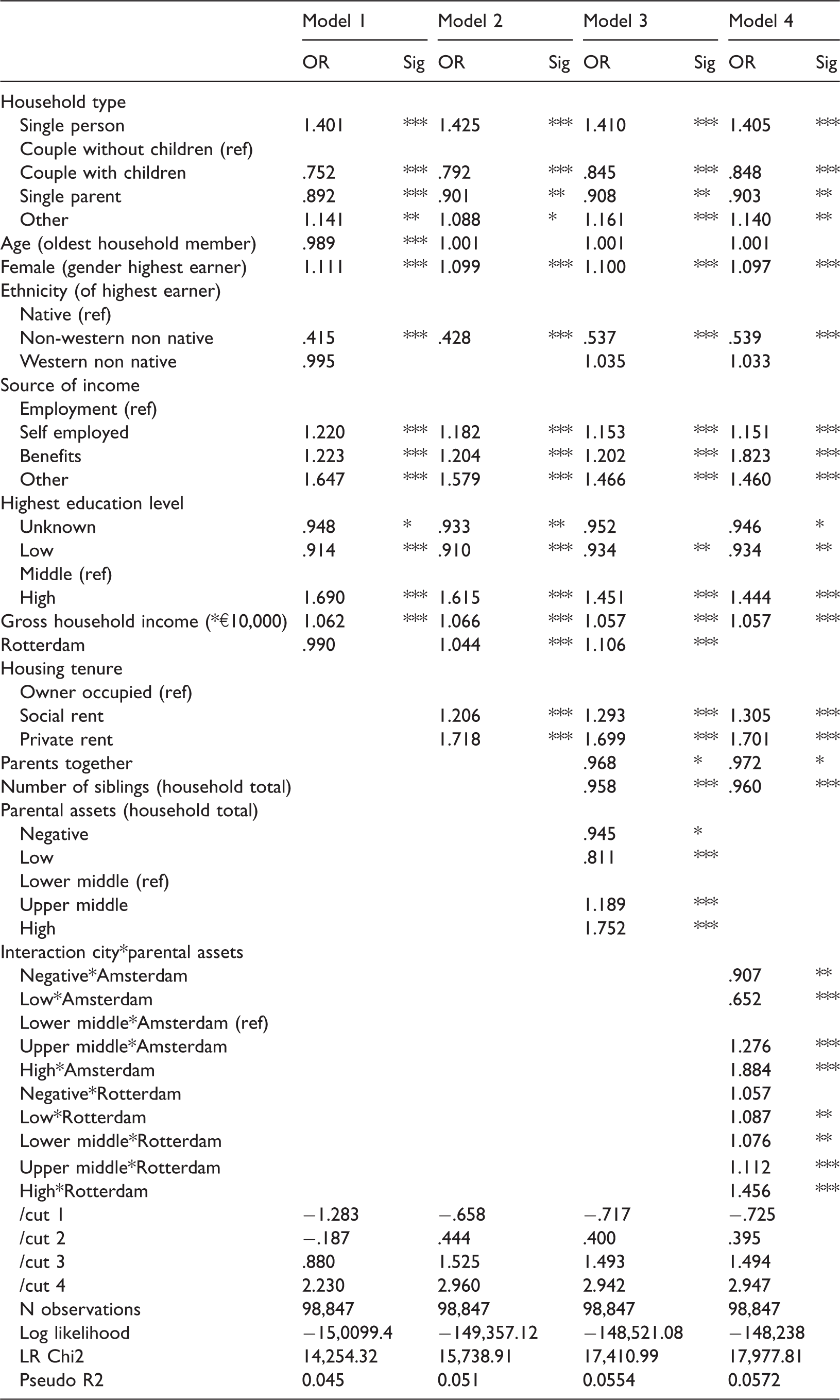
Finally, it is possible to model the relationship between parental wealth background and neighbourhood of residence, controlling for other characteristics. The dependent variable of the model is neighbourhood of residence, using the neighbourhood typology based on house price quintiles described in the ‘Data and methods’ section. Ordered logit models are used to estimate the relationship between various variables and neighbourhood of residence (see Table 1 for descriptive statistics). This model takes into account the ordinal nature of the dependent variable, estimating odds ratios that combine the different ‘steps’ between categories. A Brant test showed that the proportional odds assumption was not met in this ordered logit model. Additional generalized ordered logit models were therefore run using the gologit2 package in Stata. These models have more relaxed assumptions, estimating odds ratios for each step between categories of the dependent variable. These additional analyses confirmed that the odds ratios estimated for the key variables remained roughly the same per step, and that the overall findings were not substantially or substantively influenced by violation of the proportional odds assumption. 2
Table 4 presents four estimated models. For all models, it should be acknowledged that the model fit (Pseudo R2) is relatively low. The first model only includes household level variables for the young adults, confirming a significant positive association between income and education, and neighbourhood socio-economic status. Single person households are ceteris paribus significantly more likely than couples (with or without children) or single parents to live in more expensive areas. The second model introduces a housing tenure variable, which highlights that young adults in both private and social rental housing are significantly more likely than their home-owning counterparts to live in more expensive neighbourhoods, when all else is kept constant.
Ordered logit models. Dependent variable is neighbourhood type of residence (in five quintile groups from least to most expensive).
Note: OR: odds ratio. Data: SSD, own calculations.
*p < 0.05, **p < 0.01, ***p < 0.001.
The third model introduces parental wealth, as well as controls for number of siblings and parental separation. It shows that there is a strong, positive, and independent association between parental wealth and neighbourhood socio-economic status. Young adults with wealthy parents are significantly more likely to reside in areas of privilege than young adults with parents in the (lower) middle wealth category, while young adults with parents in the low or negative assets category are significantly less likely to do so. The model thus confirms that there is an effect of parental wealth on neighbourhood of residence that exists on top of income and education effects. These results suggest that parental wealth background is important in determining young adult households’ neighbourhood outcomes, whether through direct financial support or through other forms of class reproduction.
The fourth model interacts parental wealth with the city dummy variable to gauge whether there are differences between Amsterdam and Rotterdam in terms of the importance of parental wealth. Because distributions on the dependent variable differ between both cities, one should be careful in interpreting these differences. Nevertheless, the greater variation in odds ratios for Amsterdam suggests that parental wealth has a bigger independent effect there than in Rotterdam. One possible explanation is that in Rotterdam, because of comparatively low prices, additional parental support is not as important when it comes to accessing more expensive areas. Certainly, in Rotterdam and other lower demand contexts, young adults will draw on parental support to advance in the housing market and gain access to popular housing market segments. Yet it appears to be less of a stratifying factor than in Amsterdam, where it may figure as a key additional resource to advance in the housing market.
Discussion and conclusion
This paper has shown how and to what extent the intergenerational transmission of inequalities are projected onto urban space. Although this paper did not track actual intergenerational transfers, it does show that parental wealth background plays an important role in forging uneven spatial outcomes and strong levels of residential segregation between young adults. Clear spatial patterns exist, with young adults from wealthy backgrounds clustering in expensive neighbourhoods, while young adults from poor backgrounds are heavily overrepresented in lower status areas. The resulting levels of residential segregation based on parental wealth are higher than segregation levels based on household income and are comparable to segregation based on education, though it should be acknowledged that these indicators are not fully comparable. Disparities due to family wealth background should, in this regard, be considered to partly reflect intergenerational continuities in class and socio-economic position. In other words, inequalities based on parental background to some extent reflect inequalities based on young adults’ own socio-economic position. These inequalities should, however, be considered an additional layer that exists on top of these other socio-economic inequalities, as this study confirms a substantial independent influence of parental wealth on young adult households’ ability to acquire housing in expensive neighbourhoods.
The strong segregation levels associated with parental wealth can partly be interpreted as a persistent ‘class ceiling’ (Friedman et al., 2015) materializing in urban space. High-income young adults from wealthy backgrounds are able to cluster in areas of privilege, while high-income young adults from modest backgrounds struggle to access these same areas. In addition to this class ceiling in the upper echelons, young adults with a low income and poor parents are also highly segregated from their peers, suggesting that they may face extra strong barriers and constraints. In the context of young adults’ growing urban presence (cf. Moos, 2016), parental wealth is set to become increasingly key in determining urban spatial sorting.It is therefore imperative to map not only the geographies of age, life course, and generations, but to consider these in conjuncture with other key stratifying dimensions such as class, socio-economic status, or ethnicity.
Parental background is likely to influence residential arrangements, including place of residence, in a host of direct and indirect, implicit and explicit ways. Parents supporting their children in the housing market are far from a new phenomenon. Yet in light of growing labour market precarity and housing insecurity among young adults, direct financial support has gained increasing importance. Financial support becomes ever more crucial in acquiring a mortgage, making a down payment, outbidding others, and shouldering housing costs (Coulter, 2018; Forrest and Hirayama, 2009, 2015; McKee, 2012). In addition, parents also influence their offspring’s neighbourhood outcomes in other ways, by providing non-financial support as well as by handing on preferences for certain residential environments (Hochstenbach and Boterman, 2017).
Zooming in on potential parental support taking place, the ensuing importance of family support relates to young adults’ increasingly precarious position and wealth concentration among many older middle-class households. For these households, providing financial support to their children may be an act of intergenerational solidarity, but at the same time it may also be an intergenerational investment strategy. Such intergenerational investments can be considered part of broader trends towards the increasing strategic investment in housing by (often older) households with substantial assets at their disposal. This study extends previous work suggesting that it is likely for there to be a distinct geography to such intergenerational investment strategies (Hochstenbach and Boterman, 2017). First, and overall, parental wealth is relatively likely to land in cities where increasing numbers of young middle-class adults prolong their stay. Second, within urban areas, parental wealth is particularly guided towards expensive and gentrifying neighbourhoods. These neighbourhoods are popular among young middle-class households and are attractive to invest in due to prospective house price increases.
While the primary focus of this paper was on intra-urban differences, this paper also points to some inter-urban dynamics and differences. Amsterdam attracts a substantially larger share of young adults with affluent parents than Rotterdam. Greater pull factors and a more exclusive housing market may serve as explanations for this difference. Future research could further unravel uneven parental wealth geographies at this spatial scale. Furthermore, while this paper found a clear link between parental wealth and neighbourhood outcomes for both cities, results suggest that parental wealth is of greater importance in Amsterdam. In the face of strong competition between households over housing, as is more the case in Amsterdam, parental support may give the edge, while in lower demand contexts like Rotterdam such support may be welcome but less crucial (cf. Coulter, 2017; Mulder et al., 2015).
The findings of this paper thus urge future research on intergenerational support for housing, and on intergenerational investment strategies in housing, to take geography into account more explicitly. For one, parental wealth background has notable spatial consequences, as it may reinforce existing divides and establish new ones. Furthermore, potential parental support does not occur randomly across (urban) space, but will particularly be invested in (often urban) areas that are popular among young adults and marked by a booming local housing context, thus enhancing the profitability of investment. Such investments in the most profitable locations in turn perpetuate uneven accumulation patterns, and influence wealth distributions and disparities within and across generations. As parental support becomes more important in shaping young adult housing trajectories, it is set to play an increasing role in drawing socio-spatial dividing lines.
Footnotes
Acknowledgements
This paper draws on author calculations of non-public micro-data from the Systems of Social-statistical datasets (SSD) from Statistics Netherlands (CBS). The author thanks three anonymous reviewers and the editor for their thoughtful and supportive comments.
Declaration of conflicting interests
The author(s) declared no potential conflicts of interest with respect to the research, authorship, and/or publication of this article.
Funding
The author(s) received no financial support for the research, authorship, and/or publication of this article.