



Abstract
Social constructivism is considered the main driver of curriculum overhaul for the new set of learning in the digital age. Implementation of cost-effective solutions of social constructivism in higher education is a challenge. The paper circumnavigates around the principle and practice methods and implemented in a module design for robotics teaching to students from diverse academic backgrounds and familiarity levels. A gap analysis between the current practices of a generalized module design and a social constructive approach revealed the specific areas for a focussed approach to consider. Such strategies are employed in the module redesigning strategy and found cost-effective and impactful in Engineering higher education. The designed module is presented to engineering students in an integrated robotics education in the context of control, communication, sensing and biomechatronics. Multiple implemented innovations for social constructivism in different aspects of the module have not only made it a popular option among engineering students but also resulted in better engagement, student achievement, inclusivity, and resource utilization.
Keywords
Introduction
The learning process is regarded as the commodity 1 that is handy to disseminate among the knowledge seekers. The transfer process is important in a sense that the handing over of a complete commodity is highly dependent on the transfer mechanism itself. For the success of the learning process, certain conditions exist including the learner's active participation with a high level of curiosity. Practically speaking, this mechanism becomes compromised due to process inefficiencies and low motivation levels among students. It is argued that higher education (HE) in Science, Technology and health-related disciplines are still heavily dependent on conventional classroom teaching with a focus on the theoretical perspective.2–4
In recent decades, more student-focused approaches have resulted in open-ended strategies, 5 in which project-based activity and open-ended problem solving are introduced, integrated with learning outcomes based on quantification of student experience. This is usually enhanced by involving media technologies 6 and online tools. Other additions include video-based laboratory support7,8 in the form of virtual or remote access laboratories, a flipped learning approach in computer science 9 and Engineering has resulted in better student engagement and performance. It is evident that the traditional model of didactic lecturing is still relevant but to a lesser extent. 10 Though, the social constructivist theory 11 seems promising toward student learning, practical cost-effective implementation is the most challenging part of it. 12
This research will focus on student achievement and inclusivity as the overall objective. As every course has the participation of students from diverse backgrounds, the module redesigning activity may face inclusivity as the biggest challenge. A significant proportion of students representing, low academic and socio-economic backgrounds exist, in a large number of higher education institutions in the United Kingdom. 13 The purpose is to bring activities based on constructivism in the module redesign to fulfill the core objectives of student engagement and improvement in achievement levels. The identified groups in this study are students from the Business and Technology Education Council (BTEC) 14 and Black, Asian, and Minority Ethnic (BAME). 13 BTEC are mainly designed for vocational training and education and the data suggests that the students entering through BTEC route underachieve at the university as compared to their A-level peers. 15 BAME-related HE data sets suggest that despite huge disparities within the group, attainment disparities appear in comparison with the majority ethnic group. 16 The research hypothesis is that by introducing and supporting a constructivist-based approach in HE 17 and keeping the right engagement at regular intervals, the curiosity and motivation levels 18 of students can be improved that can foster critical thinking as a better approach to learning. Section 2 sets the research objectives followed by section 3 that covers the research methodology. Section 4 covers the multiple aspects of innovations implemented in the module redesigning attempt for social constructivism (SC) in HE. The robotics module selected for this research is core to the Mechanical Engineering education and the module redesigning is carried out with the intention to develop it in a holistic way.
Theoretical base
The concept that SC can support in the progress of HE is tested on students to improve in the overall objective of engagement and inclusivity 11 where five major learning theories are presented. Constructivism19,20 treats the student as a constructor of knowledge and the student learns while building blocks and connecting them with the environment. The teacher's role is of a facilitator and provides adequate resources to the learner so that the student can experiment and try different approaches. SC emphasizes group work, collaboration, and communication skills that may lead to reduced individual learning opportunities and less focus on acquiring technical skills required for technical subjects and disciplines.
Curriculum redesigning based on SC can be the key toward bringing inclusivity and equality in HE. For example, in technical disciplines, it is known that BTEC students possess some outstanding vocational skills that support them13,14 in performing well in workshop settings and laboratory work. On contrary, they struggle with the theoretical and philosophical parts of the modules. The current practice in HE, in general, is to deliver theory-heavy lecture content with some application-specific information in order to cater skills-based learning outcomes. 21 The big challenge in the current setting is to keep a high motivation level for disadvantaged students in a conventional style, long lectures and hybrid blended learning. 22 In online lecturing and hybrid mode lecture settings, keeping the student’s interest for a long duration is a challenge. 23
A big drawback associated with SC is that it may not be applicable in all situations or engineering/technical domains, as there are times when individuals need to work independently and make decisions based on technical expertise. Overall, SC helps to develop critical thinking skills, prepares students for real-world engineering situations, and emphasizes the importance of collaboration and communication in engineering practice. The current approach of didactic lecturing cannot be effectively delivered without involving diversity in terms of multiple techniques put together in a rigorous way. 24 A low level of student learning can be the outcome of a poorly delivered lecture, in which even an active student can be disengaged from a lengthy didactic lecture. 25 It is necessary for lecturers to keep grabbing student attention by introducing a variety of activities and effective practices,24,26 as student engagement drops sharply after 15 min of presentation. 27 So, finding cost-effective methods of implementation of SC in various ways and situations has the potential in engineering education. The strategy of redesigning the curriculum can follow the Gibbs reflective model 28 in which the learning is supported by the previous experience and the new action plan is arranged after every iteration.
Learning theories
By comparing and assessing, different educational theory frameworks, 29 it is possible to understand any unique or blended approach that can be proven highly influential to improve the learning process. A deep understanding of experimented frameworks is explained, 11 where five major learning theories are presented. These learning theories are arranged in three broad categories of behaviorism, cognition, and knowledge construction. These theories are linked with human reaction to behaviors and emotions, the use of human senses, memory and retrieval process, social conscience, and formal and informal support system for knowledge construction. All these can influence the human ability to learn in different settings and discover new phenomena. The two theories based on behaviorism are strictly teaching-centred 30 and highly dependent on the teaching skills of the teacher and the student as a passive learner. In behaviorism, learning is defined by the observation of identified behaviors and the relationship between the stimulus and response. The social cognitive theory uses behaviorism reinforced by the cognitive abilities of the student that supports imitation, practice, demonstration, goal setting, and learner's self-regulation. 31 The role of retention, or remembering the required behavior and consequence is important to the learner which directs, of what is expected from the learner. Any deviation from the desired response can cause punitive actions.
The cognitive learning theory is based on the information storage mechanism 32 of the human mind. The storage mechanism is divided into two broad categories; one with short-term memory and the other comprised of a long-term storage and retrieval process. 33 The student is an active part of this learning process, in which the information processing by the student's mind is activated using memory practice through knowledge constructs developed by the teacher. Cognitive learning theory is helpful for learning well-organized knowledge constructs that have obvious exemplars. In contrary to the behavioral and cognitive theories, constructivism 19 treats the student as a knowledge constructor and the teacher's role is of a facilitator who provides adequate resources to the learner. Open-ended complex problems can be tackled with direct or indirect guidance from the teacher, supervisor, experts, or peers. It cannot be termed as the knowledge transfer system anymore, rather more participatory way toward collective knowledge gathering and creation using exploratory means that include free will and learners’ experiences, knowledge and ability. Social constructivism learning is the addition of internalization and adoption of external experience to constructivism. Learners can use any source of information or support to meet the challenge as in the case of group projects. Flipped learning, group-based, and inquiry-based learning, are all examples relating toward constructivism.
Research objectives
To introduce the social constructivist theory principle in the teaching modules, it is important to see the current practice and to compare it with the reference theory. Finding the gaps and filling them with cost-effective ways or replacing current practice with constructivism-based activities for HE, is crucial. Moreover, enhancing student engagement levels by increasing participation, thereby effecting their achievement levels, and creating more inclusive content and environment for low achievers is the main objective. This can be achieved by harnessing the curriculum, teaching skills and learner's motivation. The result will be far-reaching benefits in understanding the concepts, use of technology, soft skills development, bringing innovation and creativity, thereby, increasing employability chances as it is the most important factor for students in choosing the discipline. 34 Apart from employability, the curriculum itself must fulfill the requirements of ethics, equality, and sustainability defined through the millennium development goals set out by the United Nations. 17 Finally, the chosen approaches can be optimized through student feedback and observing interest at different levels of constructivism for inclusivity, student curiosity, motivation and achievement, learning, teaching and resource management.
Research method
The research process is composed of few steps, for which the aim is to develop a generalized gap analysis first between, with and without SC in the module redesign. The research process is based on finding generalized, easy and cost-effective ways to transform conventional course modules toward constructivism. Figure 1 explains the continuous improvement in the curriculum, desired in modules by adding constructivism-based activities and then gauging the student interest through feedback and survey forms. This is an action research approach by intervening on a yearly basis for optimization and observing the student reaction and achievement levels, at different levels of constructivism. The research process is a cycle for the ultimate objectives of student learning, motivation, inclusivity, curiosity, and achievement. In this context, multiple aspects of a robotics module are redesigned after the SC implementation and action research phases. The action research35,36 is conducted, where the research outcomes are explained using both qualitative and quantitative data.
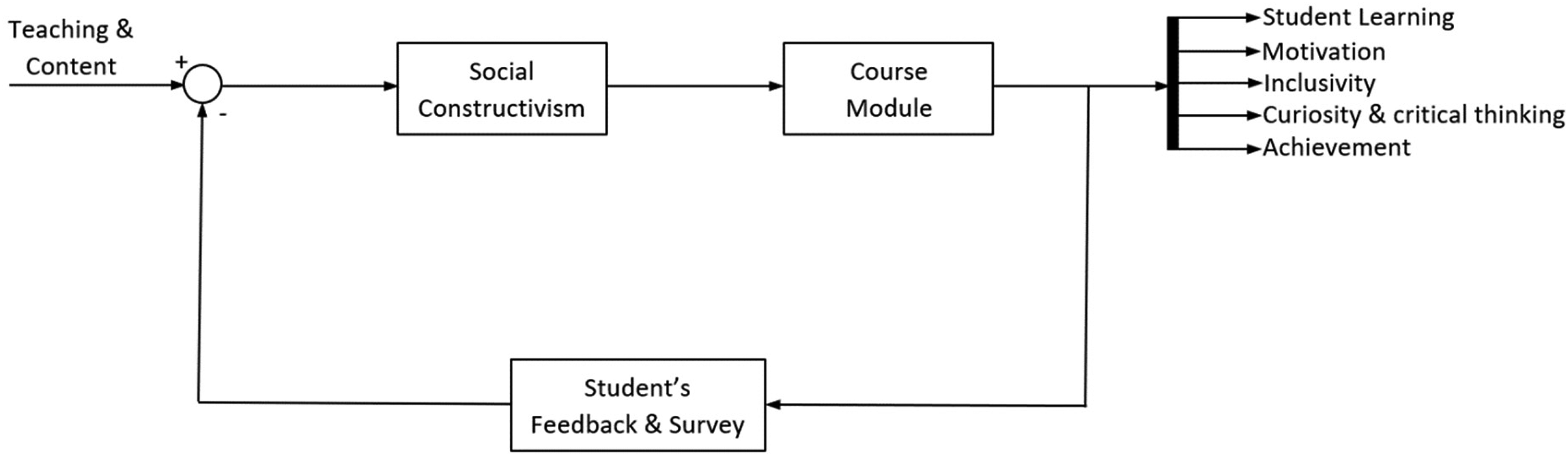
Module modification system: A control systems analogy.
Gap analysis
In the module redesigning process, there are many avenues to explore for gap searching and improvements for implementation. The first thing is to analyze the current style of teaching, module content, assessment, student evaluation, feedback, and student achievement. Secondly, any evaluative framework can be followed as a reference like SfA, (success for all) 37 as it is important to see the traits of the weaker categories of students and the impact of their backgrounds on their achievement levels. This may set the direction toward modifying the module for increased participation of students, inclusivity and success in achieving high goals. For example, BTEC 14 and BAME 13 can be focused on this approach to improve their participation. The modification exercise of the module can start by introducing the activities based on SC.
To incorporate SC as part of the module redesign, it is important to see the current practice and to compare it with reference, thus evaluating the gap and then filling it. A detailed comparison is given in Table 1, in which a module is audited based on the requirements of SC. The main elements chosen for the comparative analysis are learning outcomes, taught lectures, laboratory activity, assessment and feedback, learning resources, and module evaluation. The current practice for all the elements is judged according to general practice in the U.K. universities. This may vary depending on the discipline and the institution.
Gap analysis: a comparison of the current practice in an example module versus the requirements of the SC theory.
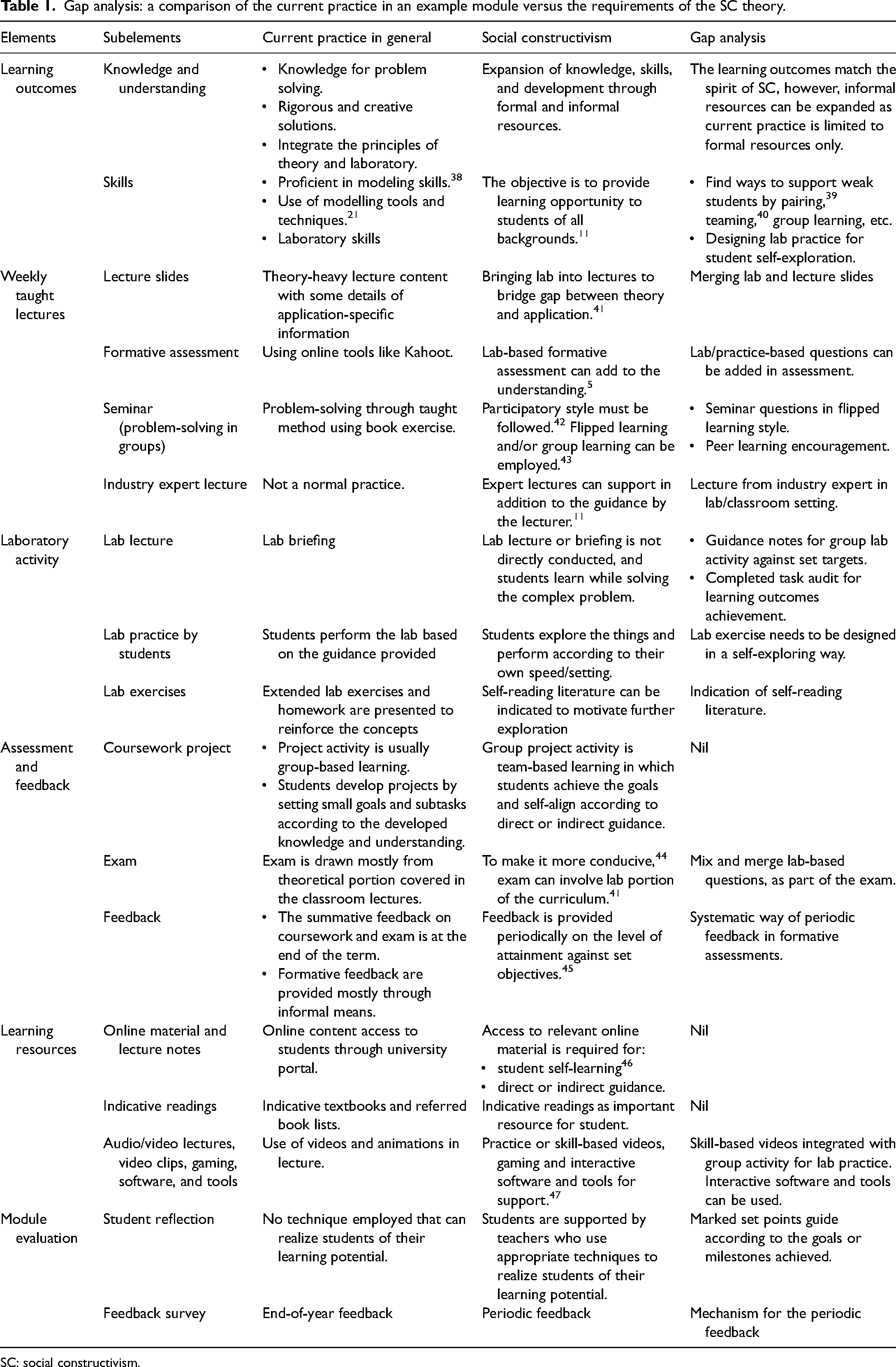
SC: social constructivism.
Implementation in engineering module
The module is core to the Mechanical Engineering education as robotics is studied in different perspectives, and here the intention is to develop a robotics module in an integrated way. Conventionally, robotics for mechanical engineers is only limited to kinematics, dynamics and a programming language. With the advent of technologies, there are now numerous underlying areas that can be well integrated into robotics education. We have selected few implemented examples to improve robotics education where technically, the module is divided into three main sections of robotics, cybernetics, and biomechatronics. The activities are designed in line with SC requirements for better student engagement and achievement. There is a systematic overview of challenges and the resources utilized in developing the activity and the feedback from the students and respondents is also presented later. The module transformation took almost a year to plan and implement. The innovations are introduced in the academic year 2021–2022. The student group size involved in this study is around 20 as every year module receives a similar-sized cohort. The data is provided for three academic years for student achievement and module feedback starting from 2020–2021 to 2022–2023. The innovations and development work carried out in all the components of the module, is summarized in Table 2.
Innovations summary: for robotics, biomechatronics and cybernetics components.
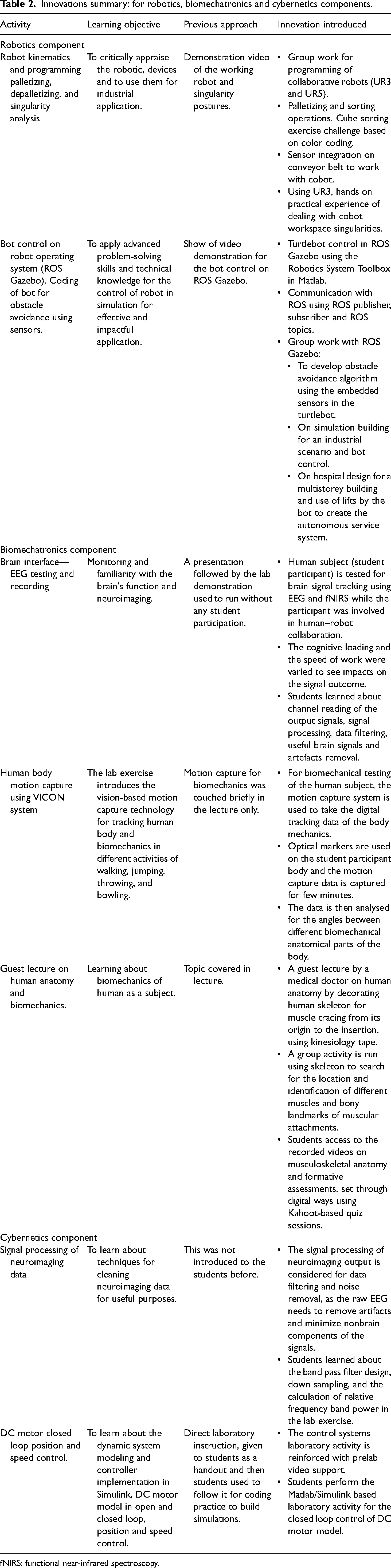
fNIRS: functional near-infrared spectroscopy.
Innovations in robotics component
The robotics part of the module consists of the conventional style teaching on kinematics and dynamics. The challenge in teaching is to present these concepts to a range of students with diverse backgrounds, varied skills and achievement levels. The module leader decided to take advantage of the social constructive approach to redesign the module for better inclusivity and engagement for the disadvantaged students and to keep the curiosity level up for the high achievers. For this purpose, a series of labs are designed on the programming of collaborative robots and the robot operating system, commonly known as robot operating system (ROS).
Collaborative robots are used to design an activity for the palletizing and depalletizing jobs. Wooden cubes are used to set patterns for multiple layers in a pallet. Students do the group work for the programming of robots for the mentioned tasks. The sorting exercise of the cubes is then designed by the students, based on the color coding on the cubes and by integrating the conveyor belt on which the wooden cubes are fed on a continuous basis. Students have also been given a hands-on experience with workspace singularities in the robots. The students are allowed to work on two different robots, namely UR3 and UR5 as shown in Figure 2(a). These two robots have different payload capacities, and they are also different in size dimensions. This makes it possible that if the same activity is followed for UR3 as is designed for UR5, then due to size constraints, UR3 links are aligned and stuck into kinematic singularities. This configuration allows the students to experience singularities in the workspace in a practical way, rather than just learning about it in a theory lecture.
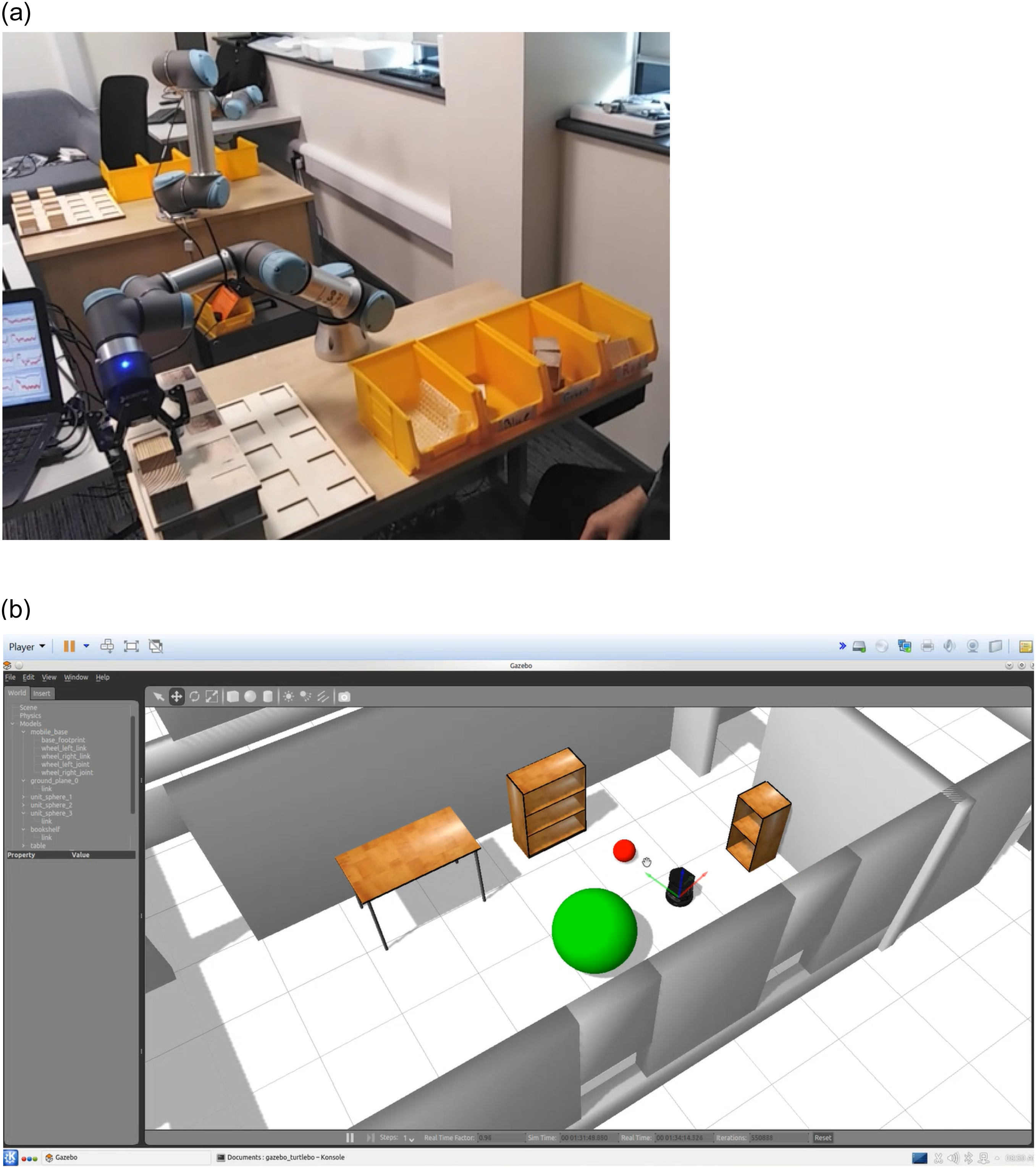
Robotics laboratory exercise by students: (a) collaborative robots programming in group work (b) bot control in ROS using robotics systems toolbox in Matlab.
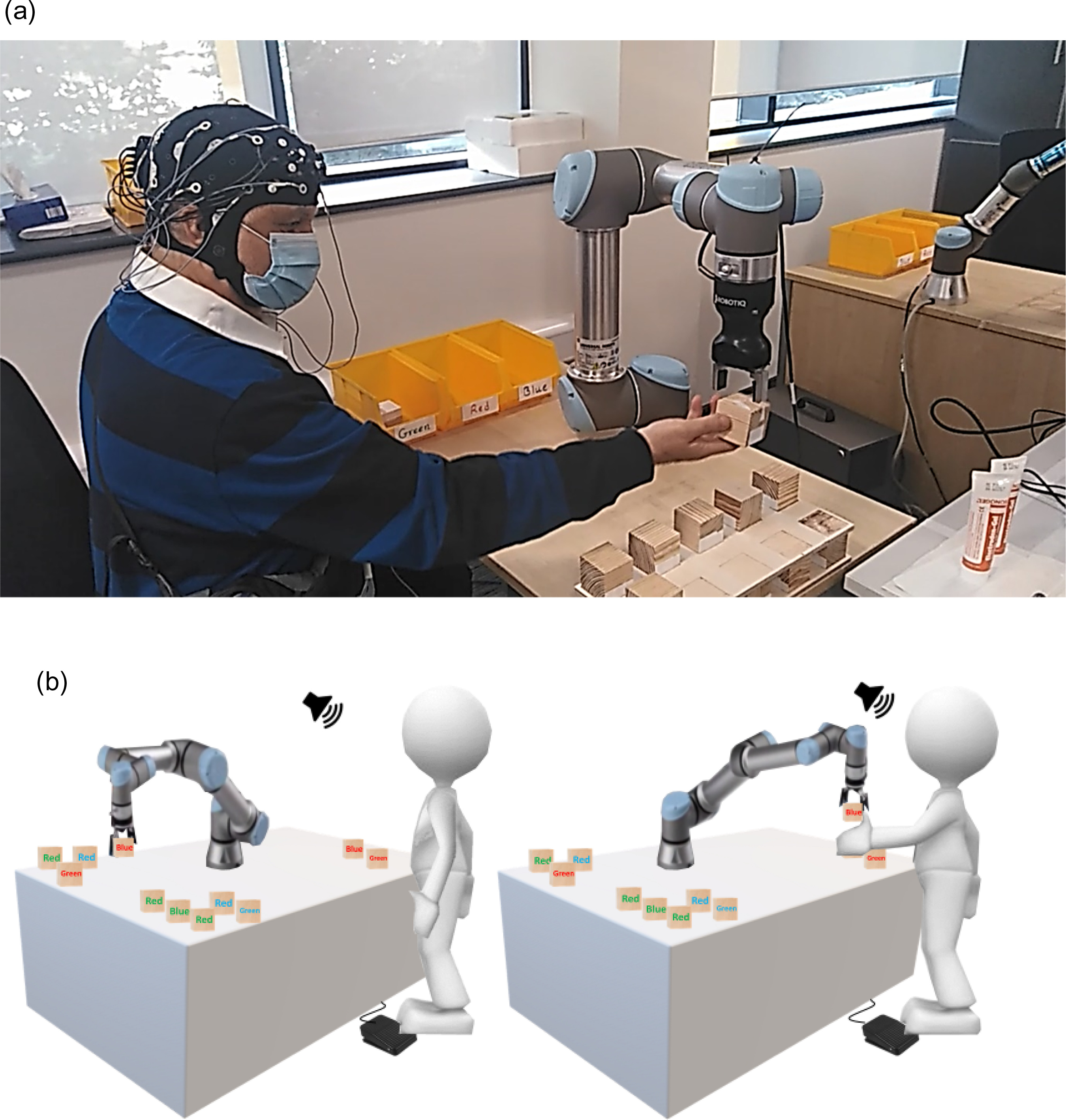
Biomechatronics laboratory exercise by students: (a) neuroimaging during human–robot collaboration (b) cognitive loading through simultaneous primary and secondary tasks (use of foot pedal by a participant to react against random beeps).
Another series of labs is designed while working with ROS Gazebo. The turtlebot control in ROS using the Robotics Systems Toolbox can provide numerous ways of controlling and implementing algorithms. Students learned to communicate with ROS using ROS publisher and ROS subscriber and particular ROS topics for controlling. Students are guided to develop an algorithm for obstacle avoidance using the embedded sensors in the turtlebot (see Figure 2(b)). ROS Gazebo also allows to build industrial or any other type of setting in a simulation that is useful for the control of bots and building environment close to real scenarios. For example, students came up with a hospital design for a multistorey building and used lifts by the bot to create the autonomous service system.
Innovations in biomechatronics component
The biomechatronics part of the module dealt with biomechanics and bioelectronics related to the human body. The human subject is put to the test for biomechanical and brain signal tracking. For brain interfacing, an EEG and functional near-infrared spectroscopy-based scanning is conducted, while the student participant was involved in human–robot collaboration (See Figure 3(a), (b)). This was considered as the primary loading task on the participant. The cognitive loading task and the speed of work were allowed to increase to see the impacts on the signal outcome. The secondary loading task was designed in terms of continuous beeps at random frequency and the participant's reaction time and error was noted. Students discovered the channel reading of the signals as the signals in different frequency bands were generated. Students learned about signal processing, amplification, data filtering and information about the useful brain signals and the artefacts involved. Students could correlate the relaxed and stressed situations with the output signals of certain frequency bands.
For biomechanical testing of the human subject, the motion capture system is used to take the digital tracking data of the lower body mechanics. There are optical, inertial, magnetic and electrical type instruments available as motion capture systems with different ranges of accuracies and cost. The optical and the inertial system are most common in use while inertial ones are a preferred choice for outdoor activities. Optical markers are used on the student participant’s lower body and the motion capture data is captured for few minutes. The data is then analysed for the angles between different biomechanical anatomical parts of the body (Figure 4(a)). This is a direct way of motion data capturing and tracking of body angles between different kinematic limbs. Students were also shown a freely available software (Figure 4(b)) for motion tracking and angle measurement between body limbs and for other biomechanical analyses.
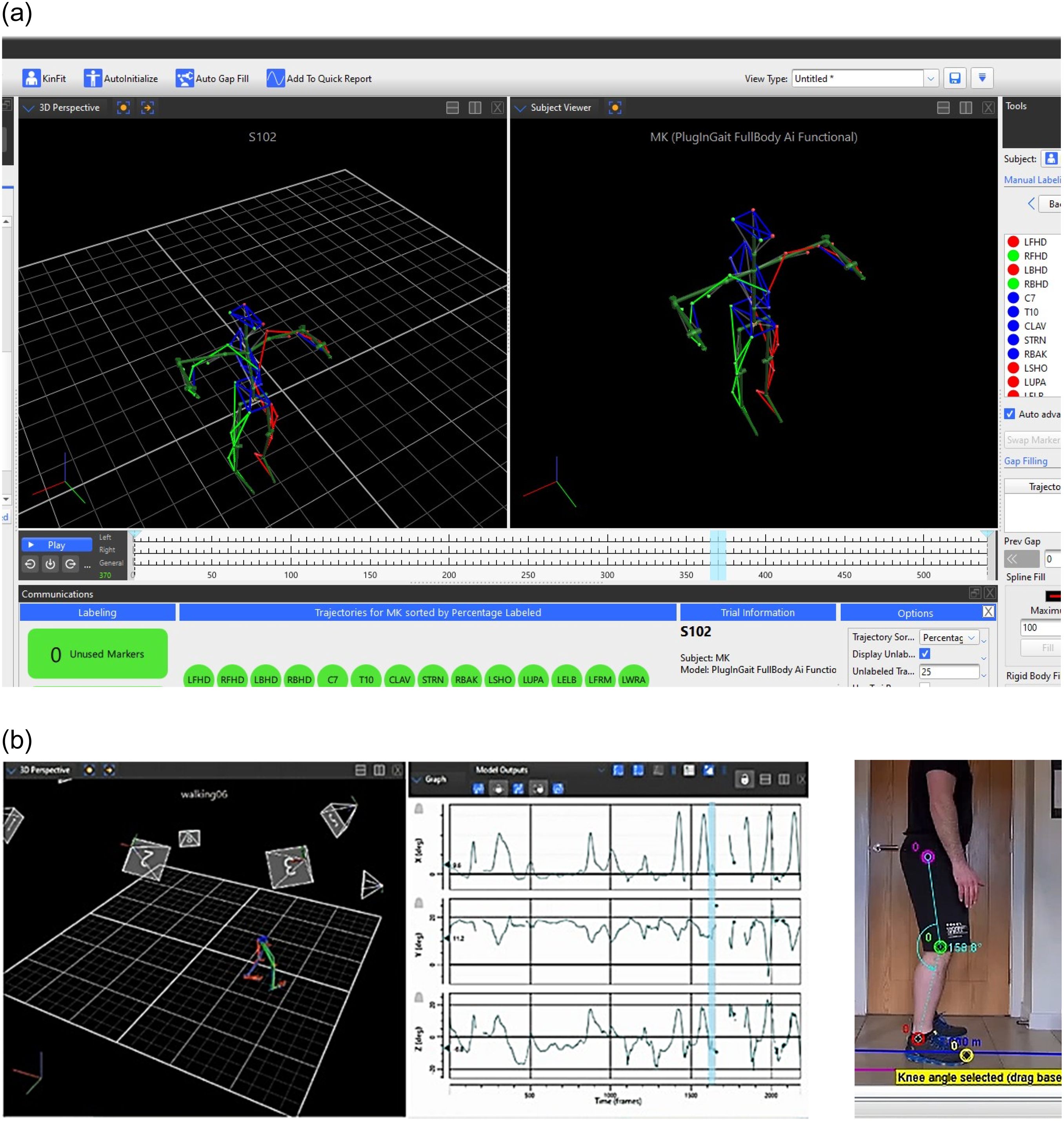
Biomechatronics laboratory exercise: (a) motion capture system used for body tracking and analysis (b) free software tool for biomechanical analysis.
The biomechatronics part of the module is integrated with a guest lecture to get an understanding for the students on human anatomy as guest lecturing is suggested in SC. The guest lecturer was a medical doctor with expertise in human anatomy. The setting becomes unique, as the interaction was the first of its type, for both sides (medical doctors with engineering students) and gave students a different perspective other than their usual domain. The use of lab in the lecture type approach in the basic anatomy and physiology lecture is made interesting by using and decorating the human skeleton for muscle tracing from its origin to the insertion, using kinesiology tape (see Figure 5(a)), to achieve the goal of better learning experience of students. This has involved planning of Musculoskeletal Anatomy lab session in the lecture as a means of devising some modern ways of anatomy learning, as an effective approach. Students were engaged using skeleton through a group activity to search for the location and identification of different muscles and bony landmarks of muscular attachments. For the use of digital tools, multiple steps are taken to spearhead a constructive approach by providing students access to recorded videos on Musculoskeletal Anatomy. Further, the module includes formative assessments, set through digital ways using Kahoot-based quiz sessions (see Figure 5(b)).
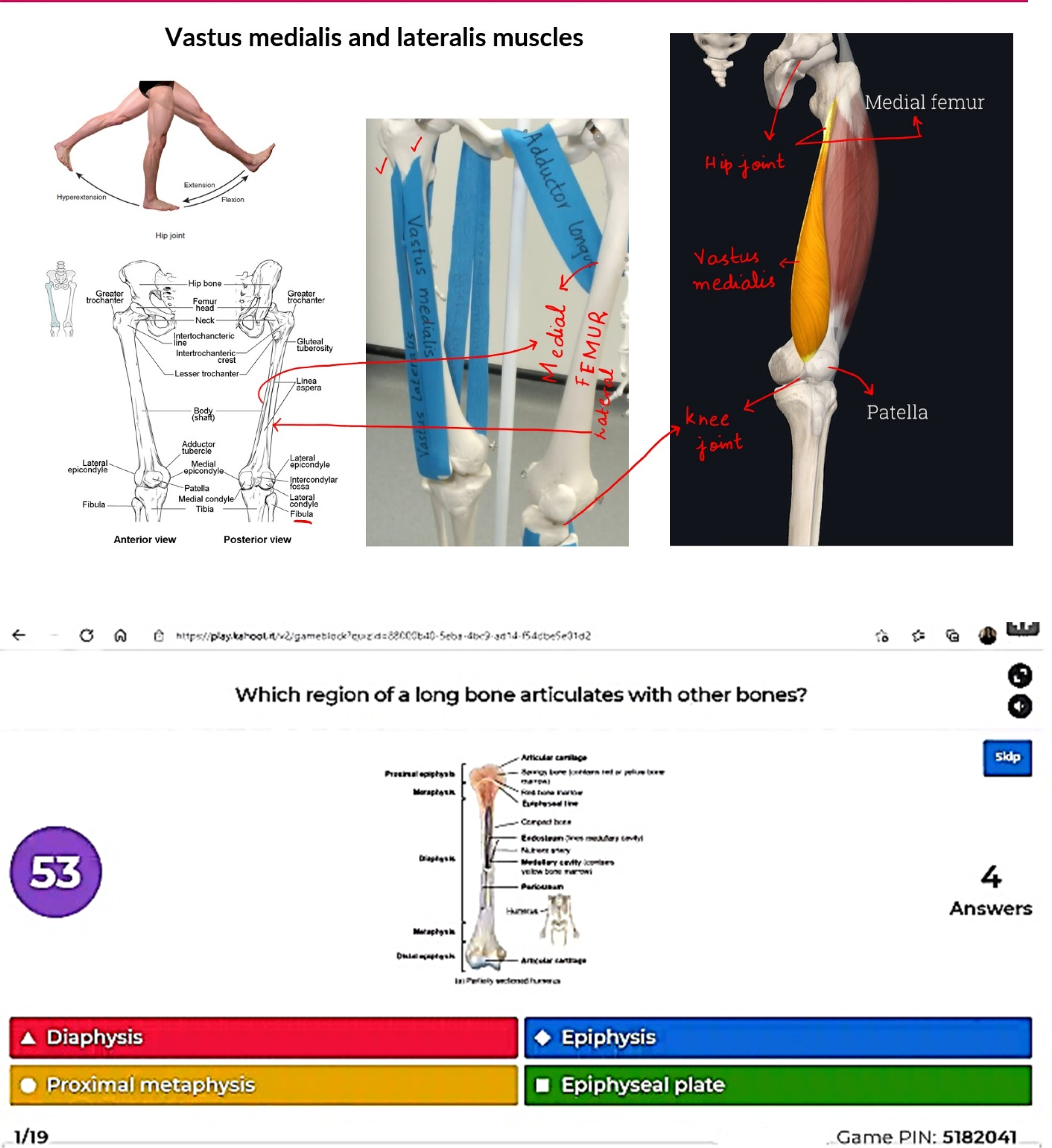
Biomechatronics laboratory guest lecture: (a) decorating human skeleton for muscle tracing, using kinesiology tape for musculoskeletal anatomy (b) formative evaluation mechanism, set through digital ways.
Innovations in cybernetics component
The engineering cybernetics part is linked with the study of control and communication of a biological system, and in this module human is the selected biological subject. For the communication part, the signal processing of neuroimaging output is considered for data filtering (see Figure 6(a)) and noise removal, as the raw EEG needs to remove artifacts and minimize nonbrain components of the signals. Students learned about the bandpass filter design, downsampling and the calculation of relative frequency band power in the lab exercise. For the control part, the students perform the Matlab/Simulink-based laboratory activity for the closed-loop control of the DC motor model. The activity is reinforced with prelab video (see Figure 6(b)) support as compared to the previous practice of direct laboratory instruction, given to students as a handout and then students used to follow the written instructions for coding practice to build simulations on their own. It is decided to improve student learning and attention in laboratory practice by introducing video lectures in laboratory settings to give a kickstart to students before the actual session. Students were informed through class group email and module news portal, about the uploading of prelab video, few days before the actual lab sessions. The consultation to the prelab video was kept on a voluntary basis and was not enforced. The challenge was to support students who missed few laboratory sessions, found themselves being lagged a lot and ended up achieving very low grades. The evidence from the module user report confirmed the use of prelab videos by the absentee students in addition to other students. The cohort has experienced four such laboratories in which they have been shown video-based coding practice for the laboratory tasks.
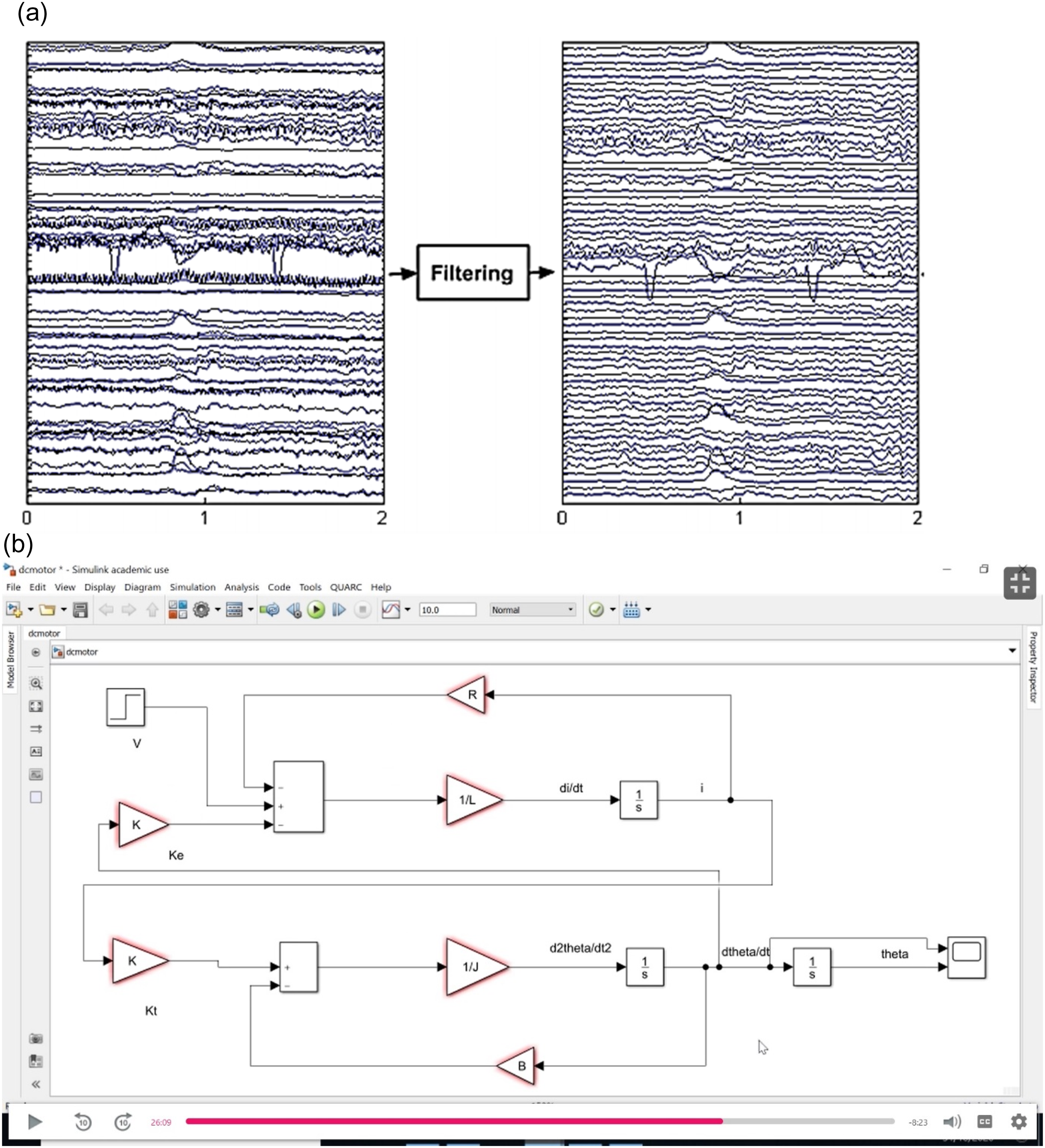
Cybernetics laboratory: (a) EEG neuroimaging data before and after digital filtering, which still includes artefacts (b) prelab video demonstration for simulink/control system design.
Coursework project
The coursework project was set to develop a biomechatronic or robotic device that can lead to a start-up idea. The coursework problem presented to students gave them a perfect way to correlate their previous knowledge and embrace new technological solutions. The goal was to make students realize, a fair and intellectually stimulating challenge, irrespective of their background knowledge. With the freedom and the technical support in terms of formative feedback, the students opted for the development of industrial applications by programming collaborative robots and designing new grippers. Some students developed the concept of a biomechatronic device design for rehabilitation, surgical and other applications and conceived it as a product development, for a start-up company. For the participation of industry in the module, the developed concepts and design ideas are exhibited in the open event arranged for industry collaborators, to witness the conceptual solution and videos developed for crowdfunding opportunities.
Results and discussion
Group work, collaboration, and communication skills are emphasized while adopting SC in learning and teaching, but it is generally known that this may lead to reduced individual learning opportunities. It is a drawback in SC that it is challenging to implement in all situations, as the acquisition of technical skills has the highest importance in an engineering discipline. The innovations developed in the module redesign highlight the fact that while teaching technical skills, it is possible to adapt academic practices in a way that the benefits of SC can be accrued in parallel while not compromising the technical development. Devising cost-effective methods of implementation of SC in various ways and situations has the potential in engineering and HE as it helps to develop critical thinking and emphasizes the importance of collaboration and communication.
Figure 7 shows the results of a survey conducted for the module feedback by the students, in which few questions were asked from the participants (number of participants on the y-axis) on a Likert scale from 1 to 5 with 1 meaning mostly agree. There are some useful patterns arrived as survey outcome, based on the bar charts for each question. The participants responded with a clear voice in Question 3 on increasing interest levels while working in a group setting in the lab sessions. In Question 4, there is a direct query about the support videos, for which the response can be suggested as overwhelmingly positive. The outcome also negates the criticism about SC that individual learning is not supported, as in the case of coursework, individual learning opportunities are provided in the designed activity. This is a clear outcome of the action research followed in this work. It should be noted that the respondents remain anonymous during this survey and it cannot be concluded that the intended approach is liked by a student subgroup of any particular background.
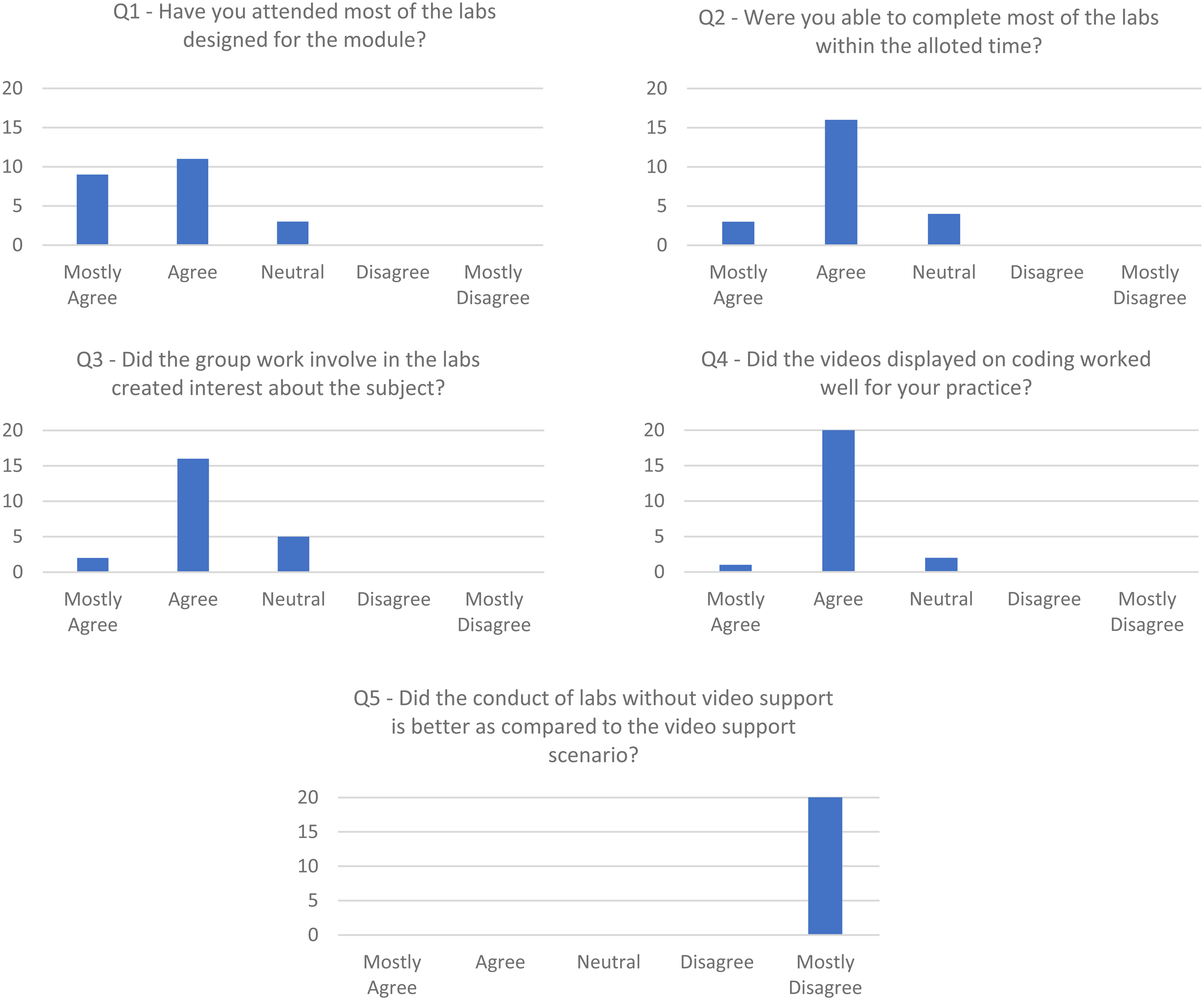
Participant's answers to the questionnaire in survey.
The module was well received by the students, as evident by their strong engagement and attendance. Students’ performance in the coursework and module exam, with zero failure rate was notable. Students appreciated the available online resources in advance to lessons. Figure 8(a) shows the student achievement in course work element of the module's summative assessment, that covers most of the innovations introduced. The coursework grades are converted to numeric marking scheme and the means are calculated. The coursework mean data reflects the improvement in student achievement when module changes are introduced in the academic year 2021–2022. The data shows the sustained student achievement in the academic year 2022–2023. Achievement results are also checked in the case of BAME students against the full cohort as shown in Figure 8(b). The BAME students’ performance has also shown improvement after the module transformation, with higher levels of achievement sustained, for the consecutive two years. Based on the positive student feedback, this has become the popular module option in engineering courses. Student feedback has gone up from 3/5 to 4.5/5 the next year after implementing the modifications to the module, as evident from the year-wise student feedback data, shown in Figure 8(c). The students narrate it as stimulating and highly relevant to the industry at its core. Students also appreciated freedom within coursework to work around personal interests and the support, they received in doing so.
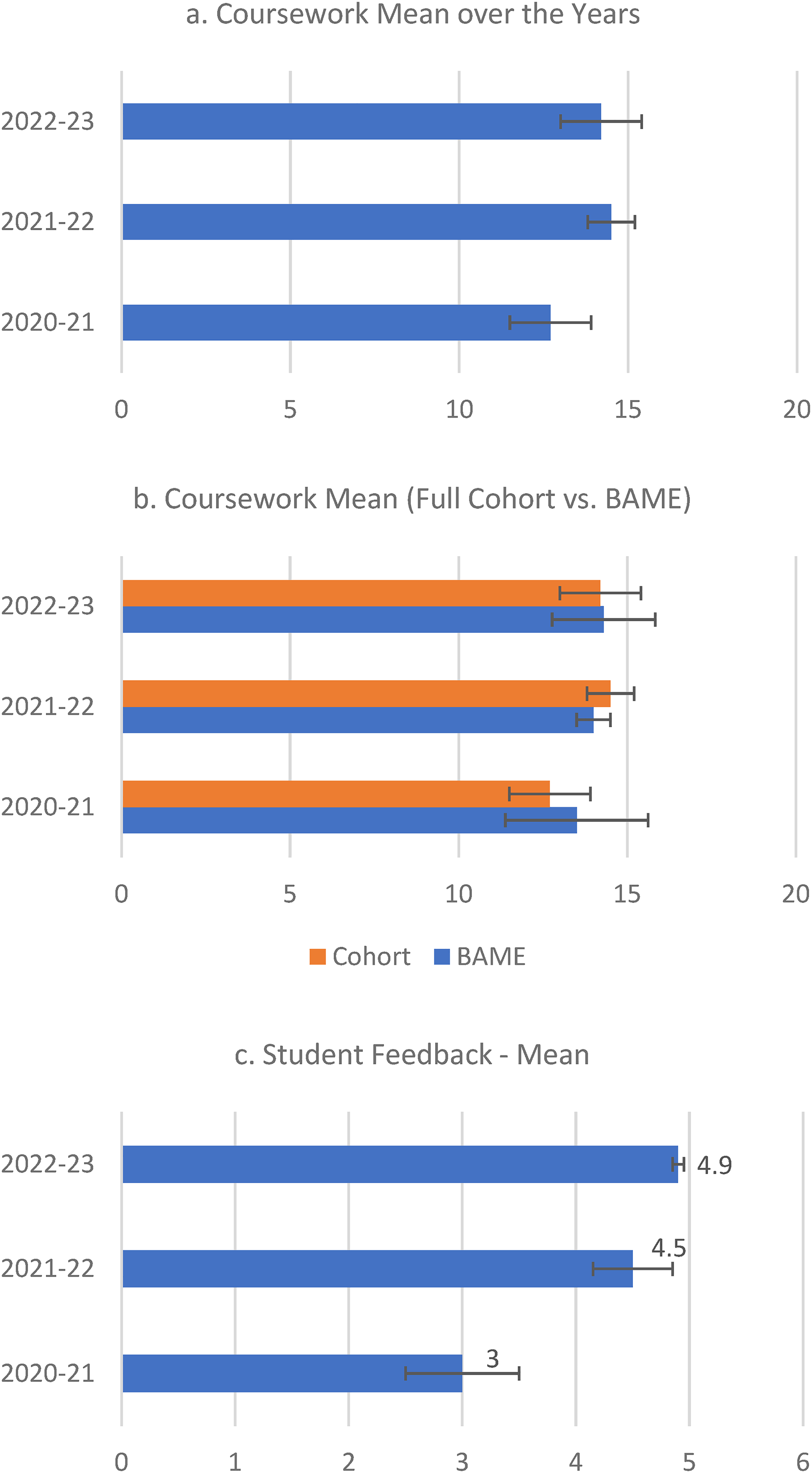
Student achievement data: (a) coursework result (mean) over the years. (b) Comparison between cohort and BAME achievement. (c) Student Feedback, Mean value over the years.
The review of engineering module redesign has shown interesting trends and ideas which are implemented to introduce constructivism. The engineering innovations covered various ways of use of laboratory integration into module teaching, module redesigning using open-ended laboratory sessions, facilitating students through pre-lab video support, optimized utility and alignment of simulation and equipment resources and use of digital tools for student learning. The example innovations presented give evidence of supporting ways and academic management, to implement SC in the wider context.
Conclusion
Some primary objectives are identified as universally accepted in HE such as student achievement, inclusivity, learning, and high motivation. This is also widely applicable that the module redesigning activity must include arrangements for the participation of students from diverse backgrounds. The urge to follow social constructivism emanated from the characteristics as it is known for the socially engaging learning process. A generalized module redesigning exercise found the gaps between the current practice and the requirements for social constructivism. The gap analysis exercise resulted in highlighting some main areas that are prioritized for implementation. These include both implicit and explicit curriculum-like skills, lecture content, formative assessment, lab practice, coursework, and periodic feedback. The innovations for constructivism-based practices are conceived and implemented in a robotics-based engineering module. It is observed that with better academic management, this is possible to develop a constructivist-based curriculum and modules without spending large financial resources, thereby, breaking the myth that implementation of SC needs large financial investment. It is proven here that the SC, as the main driver of curriculum overhaul, for the new set of learning in the digital age is inevitable, and its cost-effective implementation in engineering is emerged as successful. On a wider scale, this can be effectively followed in other academic disciplines of HE.
Footnotes
Declaration of conflicting interests
The authors declared no potential conflicts of interest with respect to the research, authorship, and/or publication of this article.
Funding
The authors received no financial support for the research, authorship, and/or publication of this article.

Data availability statement
Data sharing not applicable to this article as no datasets were generated or analyzed during the current study.