



Abstract
The evolution of learning in higher education is nowadays evident. Several discussions and studies have been performed about new methodologies that can disrupt the way the classes are taught in universities. In this context, Project-Based Learning (PBL) is the most emphasized.
In the Mechanical Engineering course at the University of Minho (UM), the Integration Project (IP) courses apply a PBL methodology, being these classes the differentiating element of the Integrated Master in Mechanical Engineering (IMME) compared with other Portuguese universities. However, even if the innovative aspect of this approach is recognized nationally, the opinions between students and Professors, about the structure and organization of this class, are still divided. In that sense, this work presents a new proposal for the IP courses in which the opinion of students and successful models implemented in international universities are considered. This study analyses the best PBL methodologies implemented in Engineering courses and presents a PBL model actually implemented at the IMME. This information is combined with the student's views obtained from a survey conducted at the Department of Mechanical Engineering (DEM), regarding the actual PBL model. Through this study, a new proposal for the IP courses is presented. This proposal intends to provide an effective answer to the necessity of the students, using successful tools and methodologies to improve the teaching and learning process in the IMME course.
Through this proposal, it is expected to increase the learning process and motivation of the students making them better prepared for a productive profession.
Introduction
Engineering education has been facing important challenges, mainly related to the different skills required to be an engineer of the 21st century. According to Nasr, 1 nowadays, an engineer must integrate different scientific areas with technology to solve problems never addressed before. An engineer must be a source of technical knowledge, as well as a good communicator, manager, a leader, always having in mind ethical, economic, social, and cultural aspects.2,3 In that sense, universities across the world are under increasing pressure to provide the industry with high qualified work-ready graduates, leading to the necessity to reorganize the engineering curricula, to be able to face the pedagogical challenges imposed by society.4,5
According to Mills and Treagust 6 and Li et al., 7 graduates, who received high-quality teaching, are more likely to be adaptable, assured, courageous in openness to new ideas, curious enough to seek new solutions and opportunities, innovative and entrepreneurial. These conclusions support the fact that the quality of the learning is essentially due to the teaching quality, being the traditional lecture-based teaching, particularly in subjects such as engineering, no longer suitable to provide all the professional skills needed by contemporary graduates. 8 Furthermore, Terrón-López et al. 9 mentioned that the necessity to modify the teaching and learning methodologies in engineering is highly related to students motivation. In that sense, a teaching-learning methodology that activates student curiosity and hands-on work should improve motivation and reduce dropout rates. 10 These methodologies must focus on an active, student-centered (learning), instead of a passive, teacher-centered (teaching), learning process, and they are known as Project-Based Learning and Problem Based Learning (PBL).
Guerra et al. 11 analyzed different PBL models implemented in Engineering courses and summarized the drivers that led the institutions to transform the traditional learning practice and promote PBL in four main groups: (a) Educational – increase of the student’s intake and motivation; (b) Professional - employability and needed for technical and transversal competences; (c) Political - implementation of guidelines such as Bologna Declaration; (d) Social - fast adaptation to the changing and restructuration of the economy as well as to the technology and innovation. Although these changes are positive, they are also extremely complex, involving a deep re-structuration of the courses, strong collaboration, and interaction between faculties, students, and other stakeholders, such as local industries, and the application of new methodologies that follow the objectives, vision and learning principles of the course. According to Chen et al., 12 the challenges related to PBL implementation can be organized into three main levels: individual, institutional, and cultural. In the first level, the lack of facilitation training for teachers, challenges for choosing effective assessment methods and the need for continuous PBL skills training for students are the main challenges identified. In terms of institutional levels, the lack of support from departments and institutions and the limitation of external resources are the main aspects that difficult the implementation of an effective PBL model. The culture level is mainly related to different cultural backgrounds and language barriers for non-native students.
From the information presented, it is clear that the development and implementation of an effective PBL model in engineering courses are challenging. Although several papers approached the PBL methodologies implemented in mechanical engineering curricula,13–17 few of them present a new model proposal based on the best practices implemented in world-leading universities and opinions collected from the students. To complement the literature, this study focus on the analysis of an already implemented Project Based Learning model developed by Claro
18
in a Portuguese Mechanical Engineering course. This methodology has the particularity to have implemented a PBL course in each semester throughout the first four years of the curriculum (Mechanical Engineering is a 5 years course). However, due to the fast evolution of society, it is important to update the structure and organization of these courses, in order to provide students with the best learning experience. In that sense, this work is conducted to answer two relevant research questions:
Which are the aspects that Mechanical Engineering students consider important to improve their learning process, making them more prepared for the real world? How a PBL model can be restructured to increase the student's motivation and help them to develop soft skills?
To answer these research questions, a survey was conducted on the graduate and undergraduate Mechanical Engineering students. Through this study, the student's feedback regarding the actual model implemented in the Mechanical Engineering course at the University of Minho is analyzed and the relevant conclusions are considered for the development of a new proposal for the Integration Projects in IMME. Through this approach, the main limitations of the model, that lead to the student's resistance to the active learning model, are identified. This information is used to strengthen the vision proposed in this work. Moreover, the best methodologies implemented by the world-leading universities are analyzed and some ideas are implemented in the proposal. Through this work, an improvement of the Mechanical Engineering student's learning process is expected. The new proposal intends to increase their motivation and help them to be more prepared for the professional world and to enrich students with soft skills, which are extremely important both socially and professionally.
PBL models implemented in engineering courses
In this section, a brief review of the PBL models implemented in Mechanical Engineering courses in world-leading universities and Portugal is presented. The information collected from this analysis is applied in a new proposal for the Integration Project in Mechanical Engineering course at the University of Minho.
PBL models in mechanical engineering courses
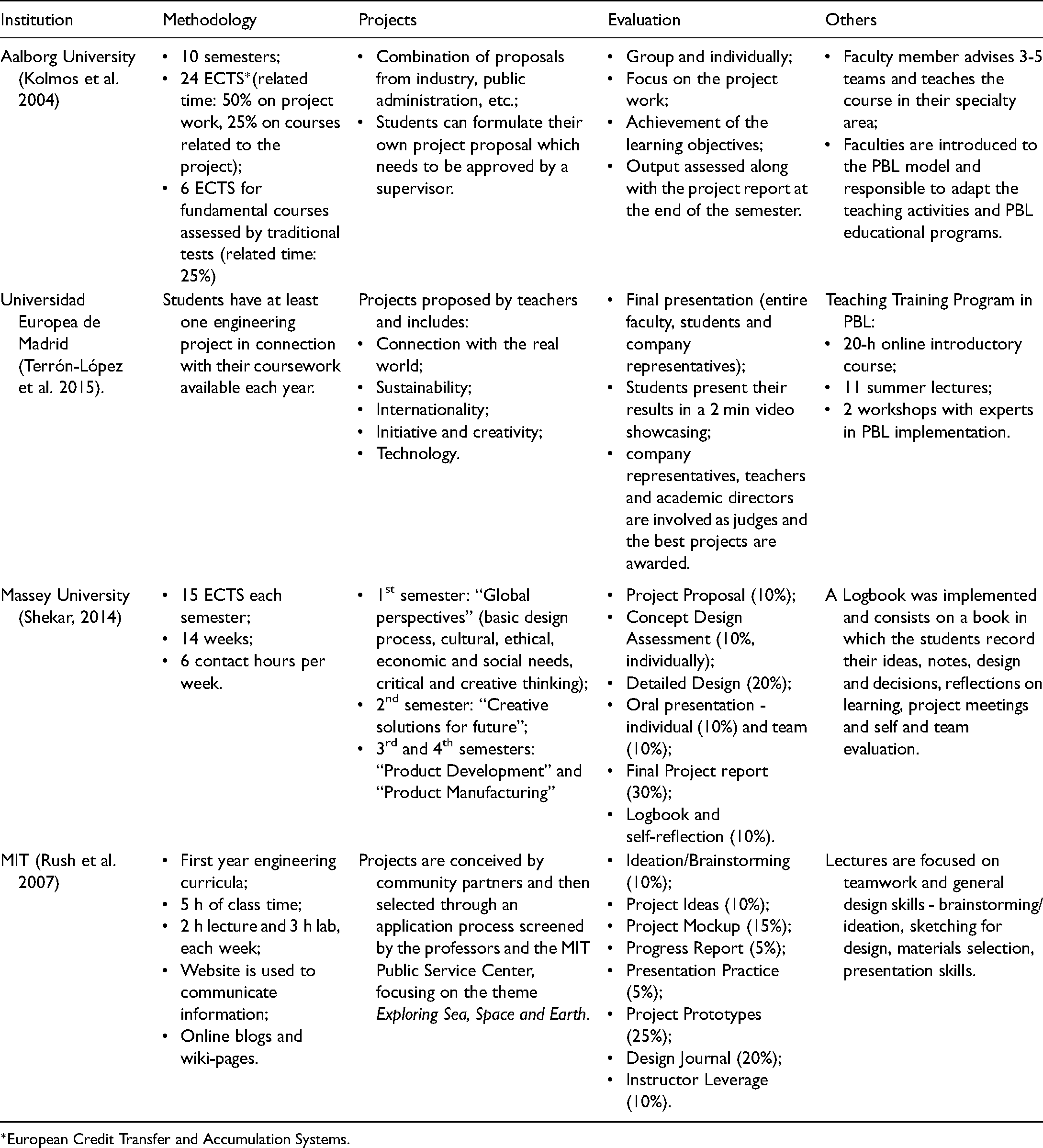
After the analysis of several PBL models implemented in Engineering courses, four models are selected, based on their versatility and a strong focus on sustainability, innovation, creativity, and entrepreneurship. The relevant information is summarized in Table 1.
PBL models nimplemented in mechanical engineering courses in world-leading universities.
*European Credit Transfer and Accumulation Systems.
While the PBL model pursued at MIT is exclusive to the freshman curricula, the Universidad Europea de Madrid conducted different projects once a year. Regarding Aalborg and Massey universities, a semester-long project is implemented throughout all the Mechanical Engineering courses. Regarding the project subject, it is very important to ensure the success of the PBL model since it is directly related to the student’s motivation. 19 Although at Universidad Europea de Madrid and Massey University, the projects are selected by the staff faculty before the beginning of the PBL course, at Aalborg University and MIT, the projects are conceived by the industry and community partners. Still, in both approaches, the project proposals focus on the connection with the real world which is fundamental to increase the student's motivation. 9 Furthermore, according to Zhou, 20 real-life projects stimulated creativity and engagement, since students learn in social practice. Owens et al. 21 mentioned that creativity helps students to develop high quality questions and foster students to apply this skill in practicing science. Hadgraft and Kolmos 19 added that projects identified and formulated by students themselves also increase motivation. Concepts such as sustainability, technology, creativity, and innovation are part of daily life and they must be addressed and explored in any project. Regarding the student's assessment, each model presents several evaluation elements. The larger component of the evaluation focus on the final project report and oral presentation, which are the typical assessments to measure team performance and outcomes. 12 However, the Universidad Europea de Madrid implements an interesting approach regarding the oral presentation. The final presentation is performed in front of a heterogeneous public (professors, students, company representatives), which increases the motivation of the students and their awareness of not failing. As mentioned by Kuniyoshi et al., 22 oral communication skills are fundamental for engineers nowadays, but their assessment is challenging. Magin 23 added that the assessment by a single teacher is not reliable and should be combined by peer assessment, for example. This shows that it is important to ensure a heterogenous jury to conduct the final presentation.
Even if not mentioned in Table 1, peer assessment is another important way to evaluate students in PBL. As mentioned by Vu et al., 24 it is beneficial for students learning and development as professionals. However, several conditions must be verified to ensure its successful implementation. Other interesting assessment components are presented in Table 1, namely the Logbook presented by Shekar, 25 to stimulate the idea generation and reflection of the students. MIT follows the same ideology since “Project ideas” are assessed. Another relevant methodology followed at MIT and Aalborg University is related to the lectures which focus on teamwork, brainstorming/ideation, presentation skills, among others. According to Chen et al., 12 these lectures are important to train students in self-learning and arouse students’ enthusiasm. Finally, a Teaching Training Program is available at Aalborg University and Universidad Europea de Madrid. Considering the importance of the teacher's role in PBL, it is important to ensure a careful preparation of the faculty staff. The relevance of teacher training for the success of the implementation of the PBL model is mentioned by several authors.11,26,27
Through the analysis of the PBL models presented in Table 1, an overview of the best PBL practices implemented in mechanical engineering courses is obtained. The main ideas collected are related to the project proposal, which plays a vital role in student motivation, evaluation parameters, and other relevant aspects, such as the use of websites and blogs to enhance the teachers-students and team members communication. The lectures implemented in PBL are completely different from the traditional engineering lectures. In PBL, lectures and workshops are used to develop soft skills among students and to provide knowledge in areas that are not widely explored in engineering curricula, such as management, teamwork, but also basic technical concepts relevant for idea generation and project development.
PBL models in Portuguese mechanical engineering courses
Six Portuguese universities offer the Integrated Master in Mechanical Engineering course: Universidade do Minho (UM), Universidade do Porto (FEUP), Universidade de Aveiro (UA), Universidade de Coimbra (UC), Instituto Superior Técnico de Lisboa (IST) and Universidade Nova de Lisboa (UNL). However, only FEUP and UM implemented a PBL model in their curriculum.
FEUP
PBL in Mechanical Engineering curricula at FEUP appears in the first semester of the first year as “FEUP Project”, specially designed to address freshmen adjustment in both social and academic activities. 28 “FEUP Project” is worth 2 ECTS and consists of the development of a team project. Students have one intensive week with seminars related to “How to perform a report, oral presentations and poster creation”. Each topic has a theoretical and practical module, which is assessed individually at the end of the week.
Faculties propose a project for each team with 6 members and a monitor, who is often a senior student assigned to each group. The team must use a diary, in which students register all the information relevant to their projects, including meetings, decisions making, etc. The evaluation consists of Seminar participation (5%), an individual test (10%), a scientific report (40%), a poster (20%), and an oral presentation (25%). The oral presentations are performed in front of a panel in a congress named “FEUP Congress”.
UM
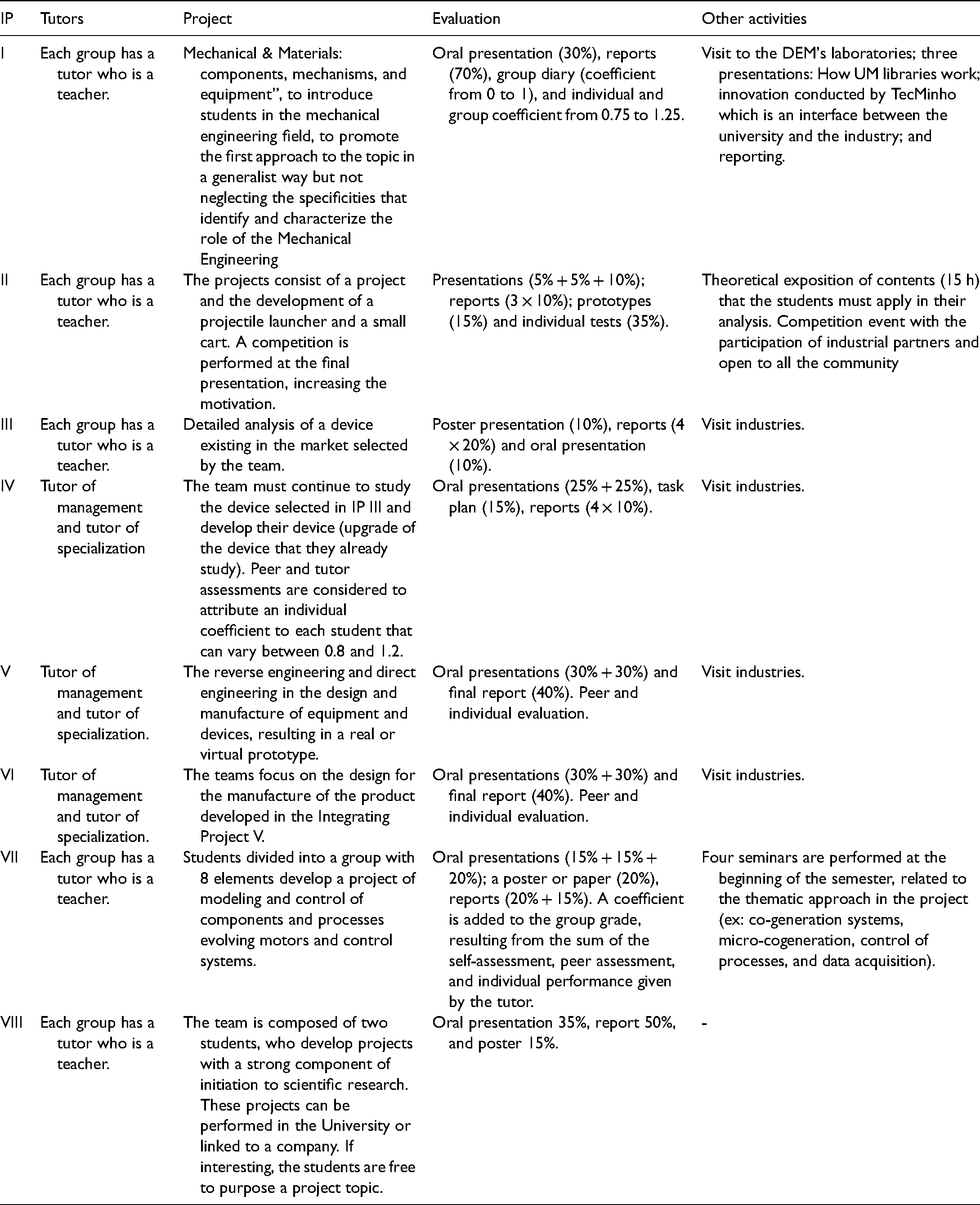
The PBL model implemented in the IMME was proposed by Professor Pimenta Claro, being revised in 2008. 18 This model consists of 8 Integration Project (IP) courses. These courses aim to integrate the knowledge acquired in other classes taught during a specific semester.
The staff faculty are selected by the coordination of the IP courses and by the Director of the Department. The classes have the same number of ECTS, 5. For the autonomous work performed by the students, 110 h from IP I to IP VII and 80 h for IP VIII are assigned. In terms of contact time, the model comprises a total of 15 h of theoretical lectures and 15 h theoretical-practical ones, taught 2 h per week, 1 h for each lecture.
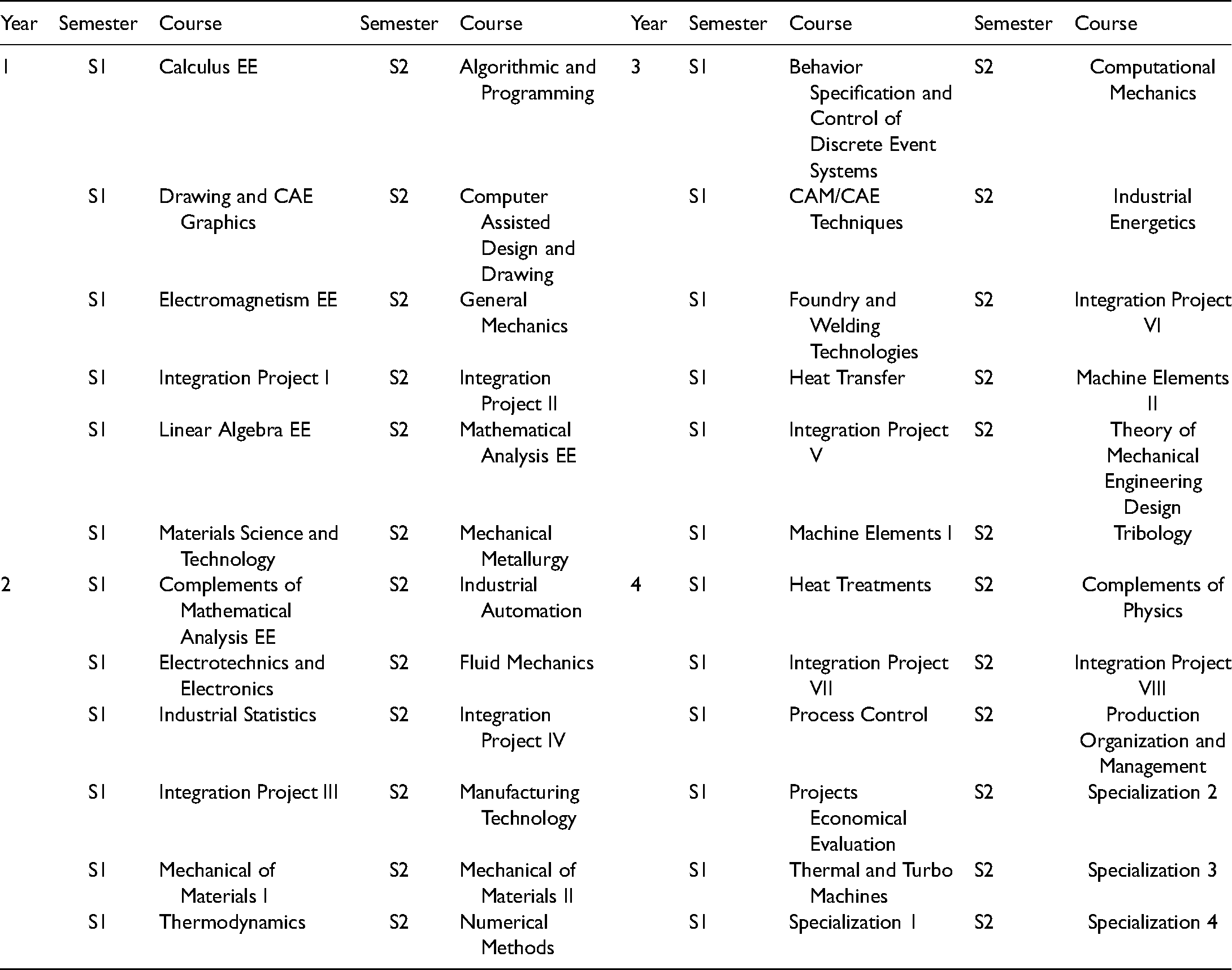
Regarding tutoring, two models are applied: (1) One tutor is responsible for 2 groups; (2) A management tutor (usually a researcher or a PhD student) is responsible for two groups and different specialist tutors integrate the staff faculty to guide the students in their area of expertise. Table 2 summarizes the methodology implemented in each IP at the Department of Mechanical Engineering (DEM). As already mentioned, the aim of the Integrating Projects is, besides the development of soft and technical skills that are not acquired in conventional learning methodology, the integration of different courses related to the Mechanical Engineering curriculum. Thus, to understand the bridge between the course curricula and the IP's projects, the MIEM study plan is presented in Table 3. As it can be observed, the IP's are implemented over the four years of the course, while the fifth year mainly focuses on the development of the master thesis and therefore it was not shown in Table 3.
Integration projects methodologies implemented at DEM.
MIEM curricula.
As previously stated, the actual PBL model implemented at the Mechanical Engineering course at the University of Minho was last revised by Claro. 18 Even if this is an interesting approach, it is necessary to update the courses to agree with the expectations of the students. Society suffers profound changes in the past 12 years, facing huge technical, environmental, socio-political, and economic challenges.3,29 In that sense, to ensure the proper training of future engineers, it is fundamental to improve the learning process of the students by making the IP courses more effective and motivating. To determine the strong and weak aspects of the PBL model implemented since 2008, a survey was conducted on the graduate and undergraduate students of Mechanical Engineering, as it can be analyzed in the next chapter.
Students views about the integration project courses
The student’s feedbacks are important to understand if the actual PBL model implemented is in line with their expectations and if it contributes to the improvement of their learning process. In that sense, this section presents the main ideas collected from a survey completed by graduates and undergraduate students of the Mechanical Engineering course at the University of Minho. This study is crucial to identify aspects that cause student's resistance to active learning, leading to the development of a new approach able to overcome this issue.
Methodology
The results presented in this paper are collected from a survey conducted within the framework of research work on Initial Training and Transition of the world of work: perceptions of undergraduates and graduate students in Mechanical Engineering. From this research, the relevant information is obtained regarding the influence of the IP's in students’ curricula and as added value for the professional work. Moreover, a set of guidelines that enhance the quality of student training is presented, showing the impact of the IMME.
To conduct this research, a total of 276 surveys were answered: 153 by undergraduate students from the 3rd, 4th, and 5th year of the course and 123 by graduate students. The surveys were answered over two months and consists of closed questions with an option “other” where students can express their opinions on a free basis. In this paper, the analysis is centered on the answers presented to the questions related to the Integration Project courses, in a total of 18 closed questions. In addition, considering the relevance of the technical and transversal competencies of the professional profile acquired in the Mechanical Engineering course, the answers to these questions are also analyzed in this work. Graduates and undergraduate students were asked about: (a) The organization and combination with other classes; (b) The content of the Integration Projects curricula; (c) The support of the faculties; (d) The adequacy and workload; (e) The teaching strategy; (f) The share of experiences between pairs; (g) The learning process, and (h) The evaluation. In this part of the survey, the answers provided by the students vary between: “Totally unsatisfied”, “unsatisfied”, “neither satisfied nor unsatisfied”, “satisfied”, “Totally satisfied” and “without opinion”.
Findings
From the overall analysis of the answers presented by the undergrads, most of them seem to be satisfied with the organization of the Integration Project courses. However, the percentage of students satisfied, unsatisfied, and neither satisfied nor unsatisfied is very close. This result shows that in general, the opinion regarding the organization of the course does not satisfy all the students, being necessary improvements in that domain.
Regarding the contents approached in the IP, Figure 1(a) demonstrated that 35.3% of the students agreed that the coherence and the structure of the contents are satisfactory, while 33.3% do not find any satisfaction or dissatisfaction and 20.3% seem to be unsatisfied. Focusing on the actuality of the thematic approach in this course, Figure 1(b), students are mainly satisfied (45.1% against 12.4% unsatisfied). A less positive aspect is related to the balance between the theoretical and practical contents, Figure 1(c) since 39.2% of the students are unsatisfied and 8.5% are totally unsatisfied. This shows that the relationship between the theory and the practice does not meet student's expectations.
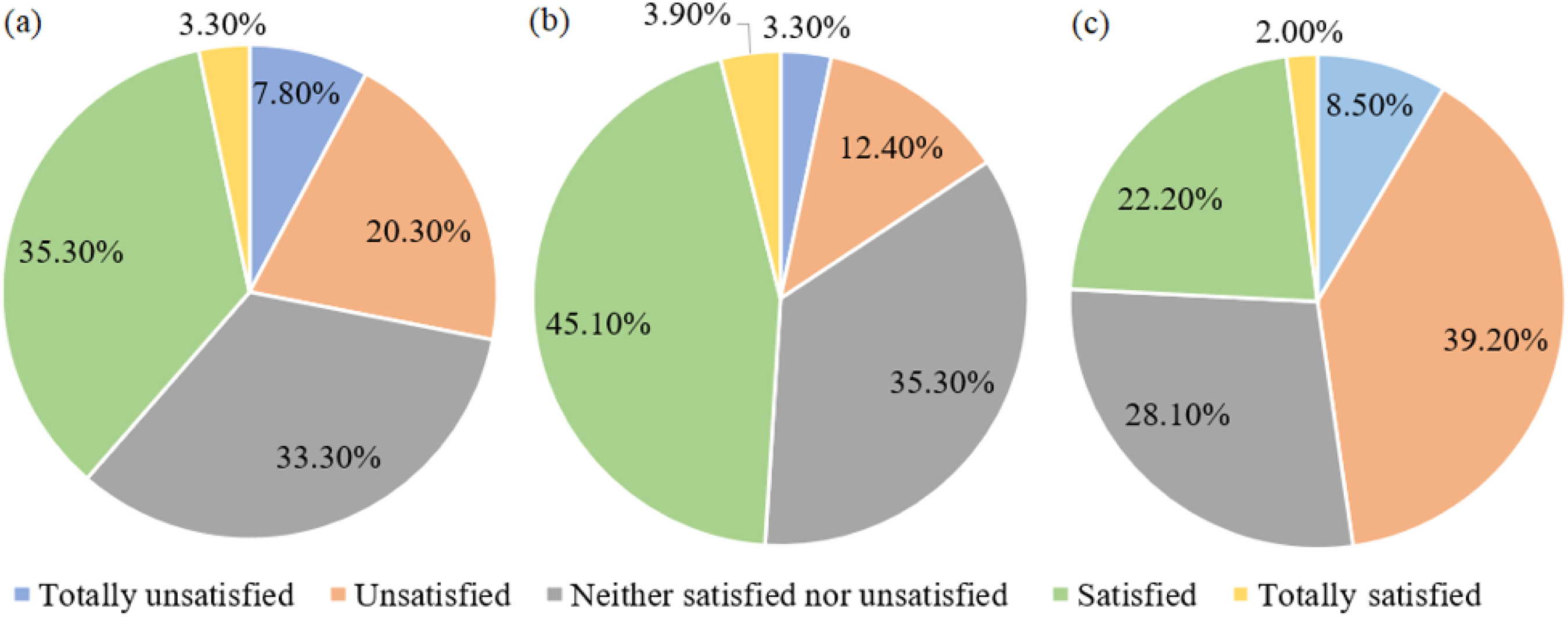
Statistical analysis of the answers provided to the questions regarding (a) contents approached in the iP's; (b) actuality of the project's thematic; (c) balance between theoretical and practical contents.
In terms of the support and availability from the tutors, the student's opinions, expressed in Figure 2(a), are divided between 39.9% satisfied and 31.4% unsatisfied. This is another aspect that must be explored in detail. As mentioned previously, the role of the tutor is crucial to enhance the learning process. Since this PBL model does not include any faculty training, it is expected that the role of the tutor is not always in line with the PBL goals and student's needs. Although dissatisfaction is also identified when students are asked about the workload, Figure 2(b), with 33.3% unsatisfied and 22.9% totally unsatisfied, 41.8% of the students seem to be neither satisfied nor unsatisfied with the activities and projects conducted in this course, as it can be observed in Figure 2(c). This point is explored further since the student's comments provide more details on this topic. Concerning the strategy implemented in Integration Project courses, Figure 2(d), 37.5% do not present any satisfaction or dissatisfaction regarding the promotion of an innovative, entrepreneur, and creative approach. This result shows that more efforts must be conducted to improve this point, since innovation, entrepreneurship, and creativity are important features that determine the success of the implementation of the PBL method, providing the students with important soft skills. Another important characteristic of PBL is related to fostering discussion in the classroom and sharing experiences between students. Results, expressed in Figure 2(e) and (f), demonstrated that the students are more satisfied with the interactions among them (50.3%) than in the classroom with the tutor support (32.0%). This point highlights, once again, the relevance of the tutor role in the classroom, being necessary to increase the interaction between students and promote the discussion directed towards the project objectives.
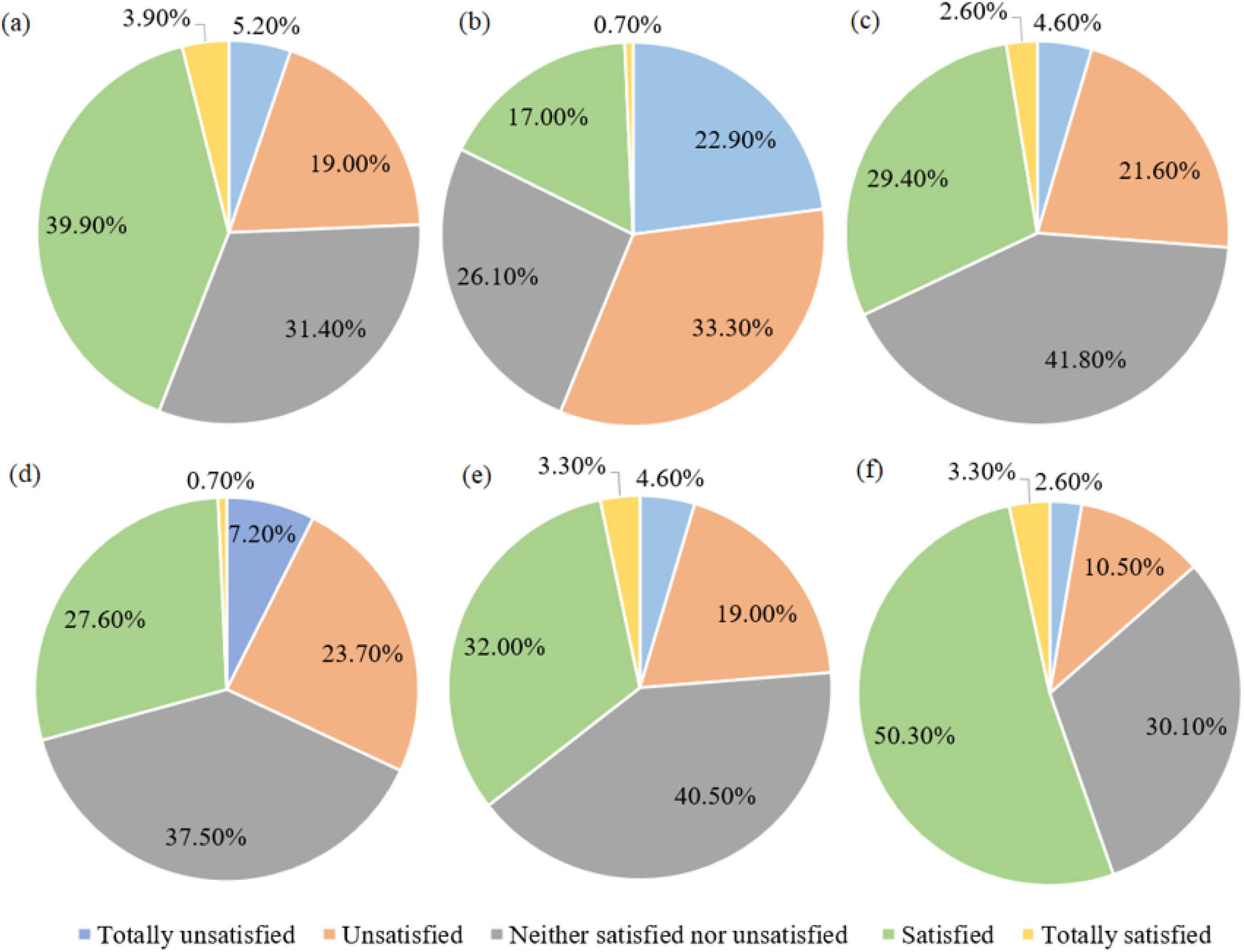
Statistical analysis of the answers provided to the questions regarding (a) tutors availability; (b) workload; (c) adequacy of the activities and projects; (d) iP's strategy; (e) interaction with tutors; (f) share of experiences between students.
The feedback of the students regarding the learning process is important to assess the success of the PBL model implemented. The student's answers show that the majority are satisfied with the knowledge acquired in IP. The development of activities that focus on self-learning and the promotion of continuous learning are also considered by the students as a strong point. However, when students are asked about knowledge based on contemporary engineering, the opinions are divided with 32.0% satisfied, 27.5% unsatisfied, and 32.0% neither satisfied nor unsatisfied, Figure 3(a). This is another important feature that must be improved to ensure that future engineers are prepared for the “real world”. The multidisciplinary ambient is another parameter mentioned in the survey, and Figure 3(b) shows that 37.3% of the students seem to be satisfied, while 11.1% are unsatisfied. While about the evaluation method and the continuous feedback of the work performed, students do not show any satisfaction or dissatisfaction which is a negative aspect. More information regarding student’s views is collected from the student’s comments.
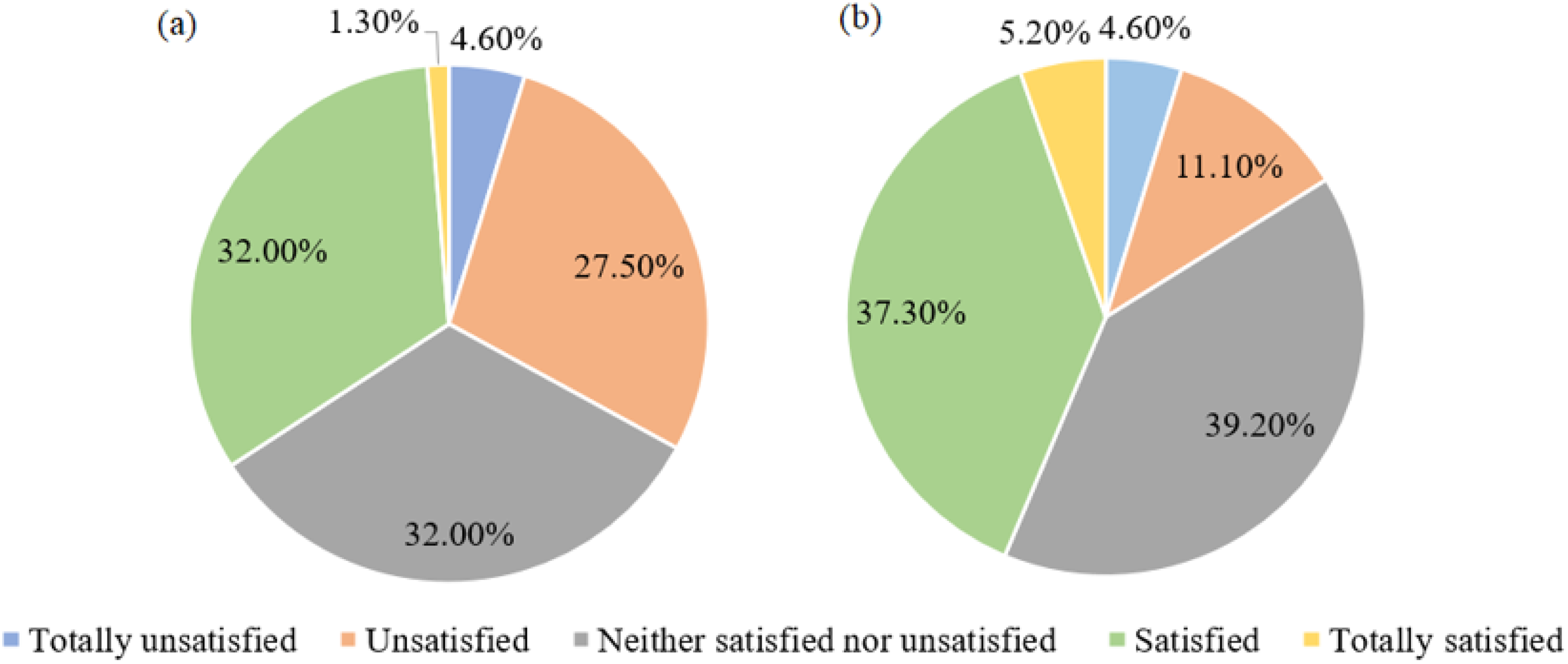
Statistical analysis of the answers provided to the questions regarding (a) knowledge acquired based on contemporary engineering; (b) multidisciplinary projects.
Another interesting aspect collected from the surveys is related to the areas that graduate and undergraduate students consider as “missing” areas in their curricula, i.e. areas that are perceived to be relevant for the students, but which are not enough explored in Mechanical Engineering curricula. As presented in Figure 4, areas such as informatics, micro, and nanotechnologies, accounting, economy, and management are pointed out as the ones that students would like to explore in more detail in their course. The integration of these areas with the fundamental areas of Mechanical Engineering is possible through the Integration Project course. However, to ensure the success of this implementation, important work must be conducted by the faculties throughout the preparation and organization of the project's thematic and definition of the milestones.
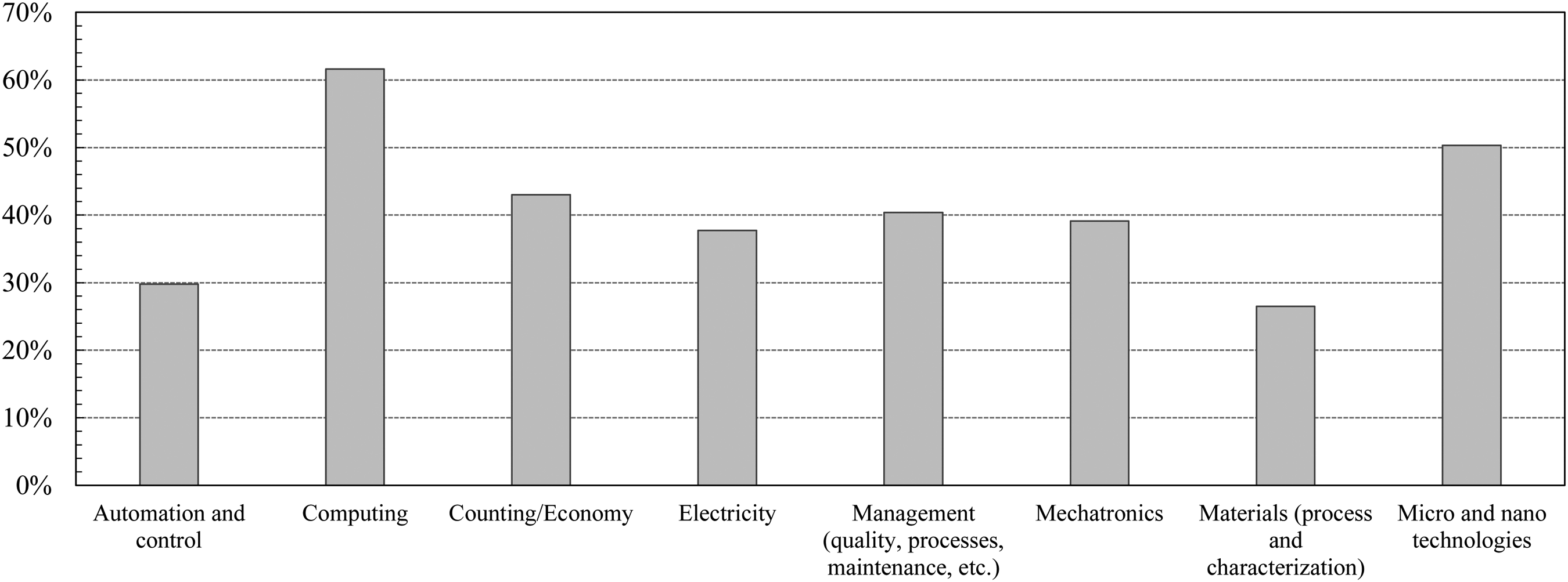
Missing areas in MIEMEC curricula according to the students.
Finally, a relevant question answered by the graduate and undergraduate students is related to the aspects that they would like to see improved in Mechanical Engineering. The majority pointed out the necessity of (a) A more practical side since the first years of the course (74.5%); (b) A greater coordination between the University and the Industry (65.4%); c) More extracurricular activities such as workshops, congresses, etc. (33.3%); d) The integration of students in research projects (32.0%).
Comments and opinions shared by the graduate and undergraduate students regarding the IP are collected and presented in Table 4. The answers are divided into four main areas - course methodology, evaluation, projects, and resources – each one is subdivided into strong and weak aspects, and suggestions.
Student's opinions about the integration project course in DEM.
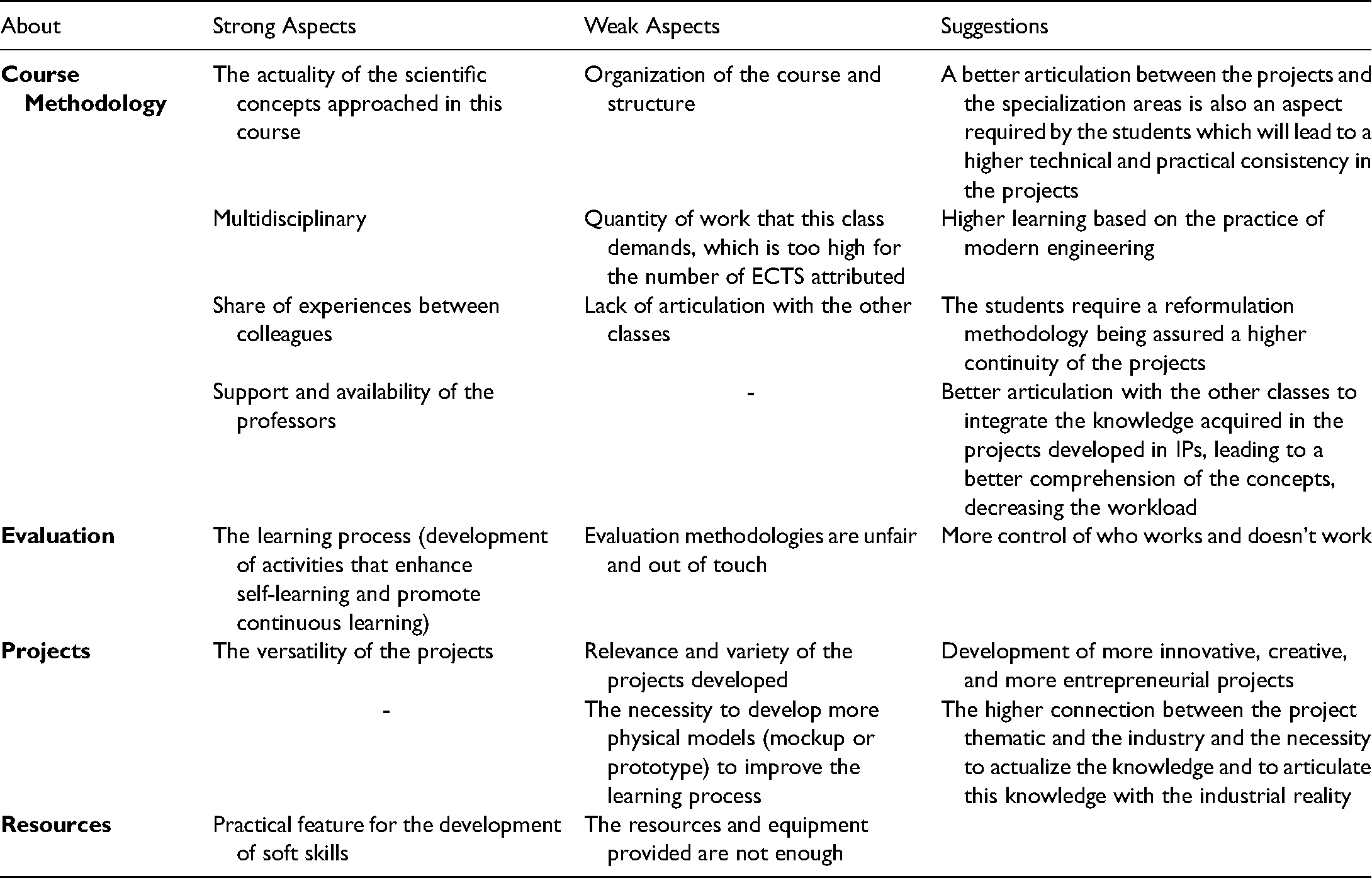
Through the analysis of the student's feedback, it is clear that IPs are an added value for the students. However, some aspects must be improved, namely the evaluation methodologies, the relevance and variety of the projects proposed, the resources provided to the students for the development of prototypes as well as an improvement of the tutor role. These observations are in accordance with other studies.12,29–32
Limitations to the active-learning approach
The analysis of the student's perceptions is important to establish the main limitations of the PBL model implemented, that lead to the student resistance to the active-learning approach. From the quantitative data, the main limitation of the model is related to the workload (56.2% unsatisfied + totally unsatisfied), and this is directly related to the qualitative data expressed in the student's comments “Quantity of work that this class demands…is too high…” and that there is a “Lack of articulation with the other classes”. This point is interconnected with the course organization and structure, which was also considered as a weak aspect by the students. This aspect is directly linked to the “Balance between theoretical and practical contents”, considered as the second major limitation of this model (47.7% unsatisfied + totally unsatisfied) and with the strategy adopted, the third weaker aspect (32.9% unsatisfied + totally unsatisfied). A weak structure and organization of the course can lead to a decrease of the knowledge acquired by the students, which leads to dissatisfaction (32.1%), as well as to the implementation of non-adequate activities and projects, leading to 26.2% of unsatisfied students. These conclusions are in agreement with other works21,33,34 and can be improved by the implementation of a good and strong strategy. The last question answered by the students provide relevant insights to decrease student's resistance to the active learning, being mainly related to the need to include more practical projects since the first year of the course and the creation of connections with the industry in order to improve the relevance and challenges of the projects. These aspects are expected to improve the students motivation, decreasing their resistance to the learning process.
Taking into account the feedbacks collected from the Mechanical Engineering students and considering the brief literature review presented previously, a new proposal for Integration Projects implemented in the Mechanical Engineering Course at the University of Minho is presented in the next chapter.
New proposal for integration projects
This new proposal for IPs is based on the analysis of the student's perspective and the main ideas under successful PBL models implemented in Mechanical Engineering courses all over the world. This new vision has two main objectives: (a) the improvement of the learning process of the students, helping them to be better mechanical engineers, and (b) to support the DEM to follow the evolution of the industry and to contribute to the improvement of the society. To achieve these goals, it is fundamental that all the projects developed by the students have an impact, a purpose. The students must feel that their work and efforts have a contribution to society. 9 For that, it is crucial to involve industrial partners and organizations, with impact in the mechanical engineering field, in the integration projects, acting as juries, sponsors, and/or partners of the projects.19,35
According to this vision, the proposal presented in this chapter is based on five important aspects: the project theme, the involvement of companies, the class organization, the tutors, and the evaluation process, as presented in Figure 5, being in agreement with several authors.3,12,32 Besides, a small faculty training program is presented. With this training, it is intended to clarify the faculties about the PBL concept, to show them, through successful examples and testimonies, the methodologies implemented that generate projects with foundation and value, but also the best practice to enhance the learning process of the students and in the acquisition of technical and soft skills.
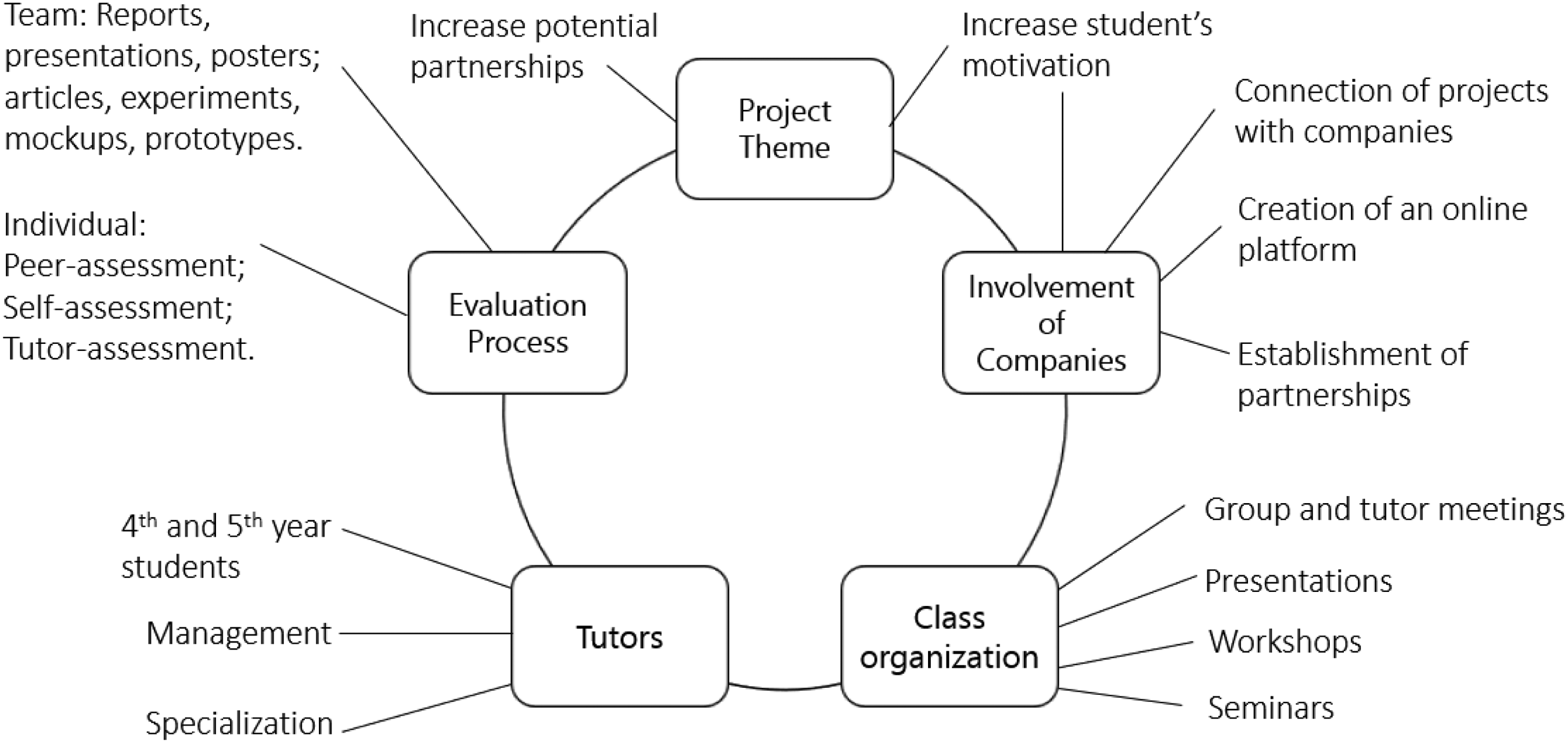
Important aspects focused on the new proposal.
The present methodology was designed to provide an effective solution to improve the negative aspects mentioned by the MIEM students but which are common in other institutions.12,29,36,37 In that sense, this proposal is not exclusive to the MIEM curricula and can be adapted to other universities. In fact, this philosophy has been strongly advised by the school board for all the new engineering curricula for both BSc and MSc which are due to start for the 2021/2022 academic year. The main ideas behind this proposal are the relevance of the project theme since students must feel that their works have an impact, a purpose on society. For that, it is crucial to involve industrial partners and organizations, with an impact in the mechanical engineering field, acting as juries, sponsors, and/or partners of the projects. To emphasis the relevance of the projects, it is important to “open the doors” and to show to society different works achieved by the Mechanical Engineering students. To ensure the success of these projects, the class organization is crucial since the contents developed each semester must be useful for the students, allowing them to conduct detailed studies with a strong technical background. Furthermore, as previously mentioned, the role of the tutor is highly important to improve the learning process of the students and, therefore, the faculty training will enhance the implementation of the PBL model. Finally, it is important to be aware that the success of the project is also reflected in the evaluation process. If proper feedbacks are given to the students during the development of the project, through mid-term reports and presentations, interesting results and ideas are most likely to be achieved. Moreover, if the evaluation panel includes guests from industry and different associations, student's motivation increases, and successful projects can arise.
Main principles behind the proposal
As mentioned, the IMME curriculum includes eight Integration Projects, one in each semester during the first four years of the course (the fifth year is mainly dedicated to the master thesis). Even if this proposal presents a specific vision for each IP, some ideas are common to all of them, being addressed in this section.
Integration of the other courses
The organization of the course must be carefully analyzed by the faculty staff before the beginning of the semester, always having in mind the integration of the knowledge acquired in the other courses of the mechanical engineering degree. The project subject must be discussed by all the faculty members of the courses taught in the specific semester, to guarantee that all the important areas are covered during the project development. It is important to highlight that cooperation between the staff faculty is crucial in this process since the professors of the other courses can adapt part of the course curriculum to help the students with theoretical concepts important for their project. 9 Furthermore, the projects must focus on the engagement of the students in their learning, and in solving real-life problems, is challenging for the team, to keep them motivated. 36 For this purpose, several seminars and workshops are introduced, approaching contents that are relevant to the success of the student's learning process.
Contact with companies
One extremely important aspect that needs to be introduced in the Integration Projects is the connection of the projects developed by the students with companies. Students need to link the theoretical concepts with practical work to increase their motivation, increasing the success of the work. 19 This is possible with the direct contact of the students with the industry and with the development of projects proposed by companies.3,38 In that sense, the coordination of the IP must try to establish some partnerships with local companies (at an initial phase), having in mind the possibility to expand these contacts to other national and multinational companies based in Portugal.
Considering the importance of contact with industry for the development of projects, this proposal suggests the creation of an online platform dedicated to the partnership with industries, aiming to establish, develop and increase the cooperation between DEM and companies. This must be an interactive platform implemented to facilitate and support the contact between faculties, students, and external organizations. The platform must contain information about DEM, the projects developed in Integration Projects, a section related to schedule meetings with DEM faculty, and another section that allows the companies to submit project proposals that can be performed by the students. According to Edmondson et al., 39 through this tool, the university-companies cooperation is easier to establish and maintain. In addition, activities inside the campus must be performed to bring the companies to the DEM, to show them the projects developed by the students, and the research developed in Mechanical Engineering. According to Pascual, 35 this interaction between companies, professors, and students is an interesting opportunity to legitimate peripheral learning among communities. To convince companies to start a partnership with the DEM, it is important to demonstrate how mechanical engineering students can be an added value for their business. It is important to mention to the companies that if they contribute to the development of projects, they seed on student's skills that are fundamental for the industry and that are difficult to acquire in academia. Thus, it should be pointed out that both sides benefit from a partnership. As mentioned by Campos et al. 40 “companies and engineering universities must go hand in hand to develop future candidates with the right skills”.
E-Learning
The e-learning is an important mean of communication that it is not used, yet, in the IP's. However, as it was mentioned in several methodologies used by other European and American Universities, this tool is essential to establish a good interaction between the teams and the staff faculty.16,41,42 Blackboard can be used to share information regarding the classes but also information related to the projects. It is an efficient platform of communication to schedule tutor and group meetings, to create blogs, fora, and wiki pages, and to create and manage diaries. As mentioned by Evenhouse et al., 30 forums and blog discussions facilitate communication among students. In that sense, the use of these tools is essential for the correct organization and management of the student's projects.
Team dynamics
In student teams, it is important to ensure the diversity of the group between males and females and younger and older students. As mentioned by Rush et al., 42 having older students in a team would result in a better learning experience, essentially for the freshmen. These older students help the team to feel more confident in their decision-making and offer solutions in the building process with which the freshmen are not familiar. Regarding the size of the group, according to Race, 43 there is no right answer, since it depends on the context of the work and the nature of the learning outcomes that must be achieved by the students. However, groups with more than six members require a skilled facilitator that focuses on achieving consensus and agreements within the team rather than attempting to set the direction of the group. Each group must elect a team leader and a secretary at the first meeting. An important aspect regarding team dynamics is mentioned by Chen et al. 12 For students who have not reached teamwork and PBL experiences, which is the case of first-year students, the lack of PBL skills training makes it difficult to deal with important teamwork features such as team members interaction, collaboration, communication, conflict management, among others. To minimize these effects and improve the learning process, skills training must be added to the PBL course, such as lectures, workshops or seminars.
Tutors
Three types of tutors are presented in this proposal, each one performing a specific function:
Specialist tutor: this tutor guides the group through the technical aspects of the project. The tutor does not give a direct answer to the problem brought by the students, but he/she must help them to find the answer by themselves using guiding questions, helping them to understand and recognize important concepts related to the project to enhance and stimulate the learning process.
44
Management tutor: This tutor focusses its activity on teamwork, especially on the management of the relations between the members of the group; helps the students to organize and structure their work; provides tools and advice that helps them to conduct their literature research; stimulates the learning process using driving questions and promoting the reflection both individually and in the group.
45
The tutor must be involved in the evaluation process, monitoring the work developed by the students, and providing feedback regarding the individual and team performance. All the deliverables assessed by the tutor must be discussed in a group to improve the learning process of the students (they can see what they missed, and they can improve that in future works). Considering the characteristics of the management tutor and all the aspects related to the importance of this role, it can be attributed to PhD students, Post Docs, or researchers with previous experience in PBL. Student Tutor: They are fourth and fifth-year students from IMME that are interested in helping the freshman in their journey. The introduction of this role in the first year of the course is very important to help the freshman to be introduced in academia, to guide their work, providing them with important advice about the management and organization of their projects.46,47
Regardless of the tutor type, it is fundamental to ensure that all of them have theoretical knowledge and skills regarding PBL methods.
12
Recent studies demonstrated that tutor plays an important role on anticipating student's resistance to active learning.34,48,49 Some strategies are delined in order to increase student's participation in active learning and focus on explaining the course expectation and the aim of the project and activities implemented throughout the course, as well as increase the interaction between the tutor and the students always having a pro-active role inside the classroom.
34
In that sense, faculty training is presented in this work taking these findings into consideration.
Group room
According to Davies et al., 41 several Universities that implemented PBL models pointed out the importance of the group room for the enhancement of teamwork and as a support tool to achieve learning goals. This working space must be adapted to the needs of self-oriented and active learning in a project-based environment. 50 Considering the advantages mentioned, a group room was already created to give support to the projects of the students. The room contains support material, tools, small bench machine tools, and a 3D print, aiming to help the students in their hands-on activities, proof of concept, mock-ups, and prototypes. It is also a place where the students can meet and work as a team. According to Evenhouse et al., 30 student's motivation increases when relevant resources are available when they need them.
Evaluation
The assessment of the Integration Projects contains two components, one related to the teamwork (poster, oral presentations, reports, prototypes, etc.) and another to the individual work, which is in accordance with the literature review conducted by Chen et al. 12 In terms of individual assessment, the methodology adopted in this vision is the same for all the IPs, except for IP VIII, since the project is individual. In this specific case, a self-assessment must be performed by the student and discussed with the tutor. Each team member must perform a peer and group assessment, but also a self-assessment. The peer assessment focus on meeting presence, effort level in the project, the contribution to the decision-making process, originality, and creativity of the solutions presented, and interpersonal relationship. However, for the success of the peer assessment, Vu et al. 24 pointed several conditions that must be followed, and mainly related to the proper preparation of the assessment, alignment with the learning objectives, availability of the tutor to help students throughout the peer assessment followed by a constructive discussion. Each team member must complete their evaluation which is discussed in the group with the presence of the tutor. The tutor also assesses all the team members and the teamwork. 31 A coefficient between 0.8 and 1.2 is attributed to the students considering the comments of each team member and tutor feedback.
Costs
Costs are one of the main problems identified in the current model of Integration Projects in MIEM. DEM provides the student's tools and a space to conduct their works, as previously mentioned. A budget for consumables, such as PLA for 3D printing is assured. DEM facilities have a manufacturing workshop with a technician who can help the students with their projects, mainly in the implementation of manufacturing processes. Moreover, the laboratories support the student's projects in terms of experimental tests and analysis, such as microstructural analysis by the Metallurgy lab, mechanical characterization by Functional Materials lab and Functional Surfaces lab, hardness tests by the Materials Testing lab, fluid flow analysis by the Heat and Fluids, casting and welding processes by the Foundry lab, fatigue tests by the Machinery and Tribology lab, controlled measurements by the Metrology lab, a test to the automated systems by the Automation lab, mechatronics systems analysis by the Mechatronics lab, and technical support in thermodynamics systems by the Engines and Applied Thermodynamics lab. However, all the analysis and experimental tests to support the Integration Projects are restricted to a small budget by each lab. In that sense, if a detailed analysis is needed or if complex manufacturing processes must be conducted by the teams, they must find industrial partners. In this context, the use of the online platform mentioned in the previous sub-section “Contact with Companies” is crucial to ensure the success of the projects. If partnerships with local companies as well as the City Hall are established, a fund can be created to sponsor the student's activities but also the scientific activity spreading actions, which are fundamental to disseminate the work that is conducted by the MIEM students. With these initiatives, more partnerships can be created and the Mechanical Engineering course can be publicized.
Specific features of each integration projects
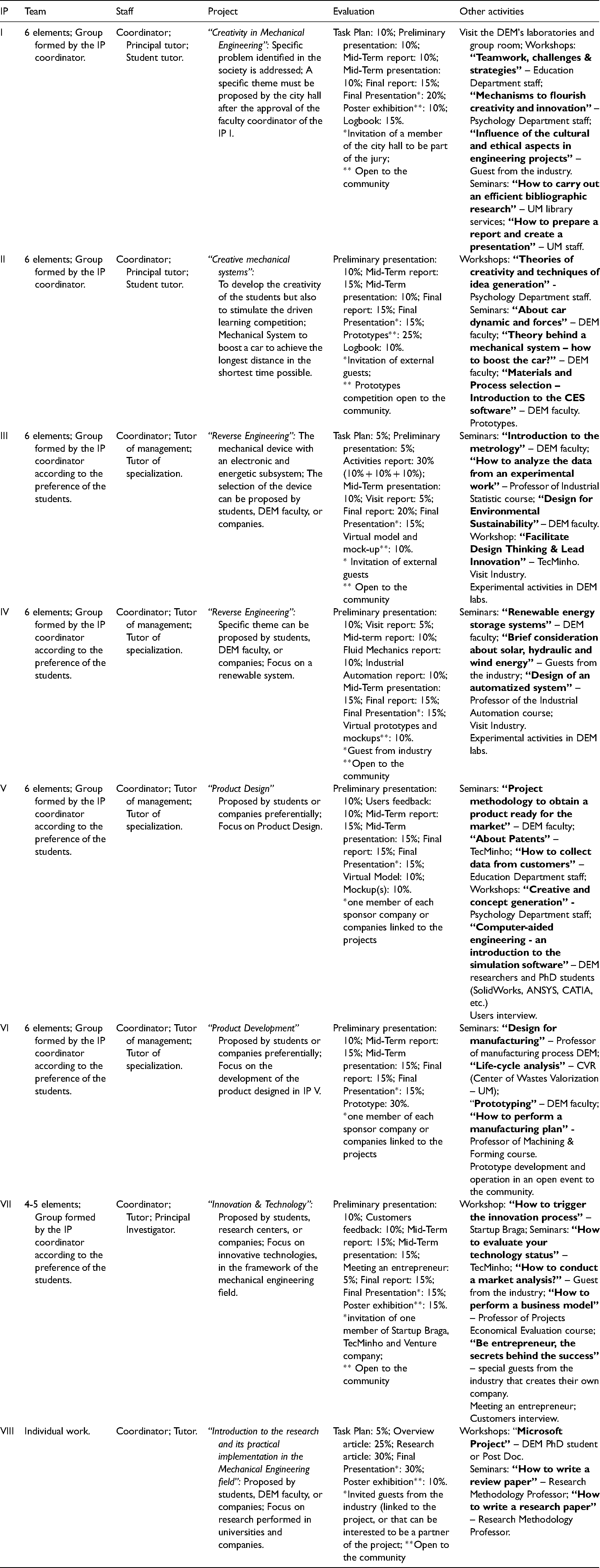
The main ideas behind each Integration Projects (I to VIII) are presented in this section. The specific features regarding the team, project organization, and evaluation process are summarized in Table 5. Activities are proposed for each IP in order to provide students with soft skills as well as improve their technical knowledge.
Main ideas behind the new proposal for integration projects.
Integration project I
The IP I is introduced in the first semester of the first year of the Mechanical Engineering course. The first contact of the freshmen with the Mechanical Engineering field is crucial, since, according to Wu et al., 51 Vesikivi et al., 31 and Dym et al., 4 this first approach enhances the student's interest in engineering as well as the retention in engineering programs, motivates learning in engineering science courses and enhances the performance in design courses and experiences. At this moment, the students do not have any idea about how Mechanical Engineering works and the versatility of this area. In that sense, it is important to implement challenging and motivating projects, generating in each student several skills such as creativity, innovation, teamwork, communication, ethics, management, organization, and leadership.11,13,38
Currently, the thematic under the IP I focus on “Mechanical & Materials: components, mechanisms, and equipment”, the students are introduced to the mechanical engineering field. For these first-year students, the challenge is to promote the first approach to the topic in a generalist way but not neglect the specificities that identify and characterize the role of Mechanical Engineering. The project base consists of a usual device (e.g. household appliance) through which it is expected that the students identify elementary mechanical functions, elements, materials. But also, to promote the brief analysis of the various elements, in terms of structure, conditions of operation, design, manufacture, among others, as well as to integrate the students in the nomenclature and taxonomy used in Mechanical Engineering.
Even if the projects developed are interesting and introduce to the student's the basic concepts of Mechanical Engineering, the socio-cultural aspects and ethics are forgotten. However, it is important to create in the freshmen the principle that every system, product, or machine developed has an impact on the environment in which they are introduced. Børsen et al. 52 present best practices and important aspects to be considered in teaching ethics and socio-ecological responsibilities to engineering students. Massey University has an interesting model for 1st year engineering students, whose main ideas were implemented in this proposal. 25 First-year students focus their attention on the socio-environmental impact of a project and its economic viability. The projects are related to the creation of solutions through humanitarian engineering and are associated with the Engineers without Borders (EWB) organization. Even if it is difficult to establish this contact (we must try), it is possible to focus on solutions for problems that occur in Portugal. A partnership with the city council can be established in order to define projects that are both related to mechanical engineering and to the city needs, being important the participation of one city hall element in the final presentation of the project. As also mentioned by Pascual, 35 this type of partnership can be extremely valuable both for the city council, which has an innovative spirit, and for the students that, at the beginning of their course, have the responsibility to work on a project that can be an added value for the city where they live and study. The introduction of the Logbook in this stage is fundamental since it is a means to stimulate the creative and innovative process, but also to assess if students understand the concept and principles approached in seminars and workshops. 41 To encourage the development of a socio-cultural mindset in students, enhancing their role as active citizens showing them the relevance of Mechanical Engineering in society and increasing their motivation, a different project approach and evaluation methodology is presented in Table 5.
Integration project II
IP II focuses on creativity for the development of a concept, under the thematic “Development of creative mechanical systems”. While in IP I, student's creativity is the focus, in IP II, this creativity is constrained by some specifications. The integration of the knowledge acquired in the general courses taught in this semester namely, Computer Assisted Design and Drawing, General Mechanics, and Mechanical Metallurgy must be included in their projects. This is possible through the design and construction of a mechanical system, a thematic related to the principles approached in the General Mechanics course. An example of an interesting project that has been developed in IP II and must continue due to the good feedbacks coming from the students, is the development of a projectile launcher. To conduct this project, students must perform a dynamics analysis of the bodies implemented in the launcher, using the theoretical background developed in the General Mechanics course, as expressed by Flores & Marques. 53 The project design is achieved using proper CAD tools and a precise selection of the materials applied in the launcher construction is performed based on the Mechanical Metallurgy concepts.
In addition to the design and construction of a mechanical system, this project aims to develop the creativity of the students but also to stimulate the driven learning competition. The main goals of the competition are to challenge the creativity, engineering imagination, and knowledge of the students. The focus is not only on the product they conceive but all the processes conducted by the team, the challenge they face, and the knowledge and skills they gain. 54 As mentioned by Zhou, 20 creativity training is necessary and useful for the students, since it stimulates motivation and improves learning methods of initiating projects. In that sense, this component is included in the proposal as a workshop.
Integration project III
While the IP I and IP II can be considered as introductory courses, in the second year, students are already deep into mechanical engineering learning. In that sense, Reverse Engineering is the thematic selected for the projects developed in IP III, focusing mainly on the integration of different courses taught this semester. The integration strategy is very important and must be discussed and defined by the staff faculty before the beginning of the course. 11
Three main areas are identified in the first semester of the second year: electronics, mechanics of materials, and thermodynamics. However, the methodology currently implemented focuses essentially on the mechanics of material since teams must identify material and processes implemented in a specific device (ex: pumps, discharge systems, among others). The students use emerging and not conventional materials and processes and identify and calculate forces applied in structures and components. A slight approach to the electronics concepts is introduced since students must understand and apply principles of the selection of electric motors. Nevertheless, thermodynamics and electronics are still slightly approached in the projects. Therefore, this aspect is expected to be improved by this new proposal.
The interconnection between electronics and mechanical systems has increased drastically over the last decade. Although the electronic course continues to be developed independently from mechanical engineering, the integration of the knowledge acquired in the Electrotechnics and Electronics class is an added value for the project. On the other hand, the mechanics of materials is identified in any mechanical system, being easy for the students to integrate this knowledge into their projects. Regarding thermodynamics, it is identified on several systems and devices and in any industrial process that involves heating or cooling. In that sense, the projects developed in this course must combine these three areas. Metrology is introduced in IP III since students will perform measurements during the teardown of their devices. Students will establish the first contact with the metrology lab, to identify the measurement instruments, following the measurement protocols, to be able to determine errors and uncertainties.
The methodology behind the reverse engineering is based on Wood et al. 17 : (1) a detailed analysis of a device and identification of the global need; (2) a description of the operation mode, disassembly of the product, characterization, and definition of the key features and issues/disadvantages; (3) improvement of the device, development of an alternative concept that maximizes the improvements, detailed characterization of the upgrades, design (2D and 3D sketches) of the new subsystems and development of a virtual prototype of the new device and finally construction of a mock-up for proof of concept. These tasks must be complemented with laboratory work since it is important that the students establish the first contact with the laboratory experiments and understand how they complement and improve the quality of their project. 19
Integration project IV
Currently, IP IV focus on knowledge consolidation using the teardown of the mechanical device explored in IP III. Students apply experimental and numerical tools, methodologies and principles approached in the other classes to understand fundamental concepts of the systems that compose their device. From the different analyses and laboratory tests, the teams must compare solutions and optimize their devices, as well as perform cost analysis and a Life Cycle Analysis. However, even if the level of detail is higher in this methodology, with the introduction of different Mechanical Engineering concepts, there is a need to change the engineering application, extending the projects to other areas of interest
Following the principles presented in IP III, IP IV focuses on the study of a renewable system instead of a device. Through this project, it is expected to demonstrate the potential of these alternative resources for the production of energy, using the technical concepts approached in the courses taught this semester, namely, industrial automation, fluid mechanics, manufacturing technologies, and materials mechanics. The laboratory experiments are an interesting point that will be maintained in this proposal. A sponsor is not necessary for this IP, since the students do not have to construct a prototype. However, it will be interesting if the staff faculty can establish contacts with companies which work in this field, to provide some equipment or to permit organized visits to their facilities. This will help students to understand the mode of operation of their renewable systems. In addition, teams must design an application in which these systems can be applied, contributing to a sustainable environment, to instill in students socio-ecological responsibilities. 52
Integration project V and VI
IP V and VI are presented together since IP VI pretends to continue the work performed in IP V in a logic of Product Design and Development. In IP V, each team must select a household appliance and perform the teardown of the device, identifying the manufacturing techniques and technologies used for the development of each component. To conduct this detailed analysis, students apply the technical concepts approached in CAM/CAE techniques, foundry and welding technologies, heat transfer, and machine elements. In order to integrate these classes, the devices must contain a part made by a casting process, machining, or welded construction, and the thermal behavior of the device must be analyzed. The project conducted in IP VI is a continuity of IP V, where students must analyze the problems of their device, conceptualize solutions and develop numerical models to link the design to the manufacturing process. The budget considered in these integration projects is mainly related to the laboratory consumables and accounts for the support of the manufacturing workshops located in DEM.
To improve the methodology already implemented, this proposal presents a strategy that must be followed by the student's teams, helping them to work towards the project's goals. Although several strategies are presented in the literature, the one presented by Ulrich and Eppinger 55 is followed in this proposal. With the implementation of the Product Design and Development concept in the third year, it is expected that the students put into practice all the knowledge acquired in the previous Integration Projects. At this time, the students must be prepared to develop a product from the beginning, is expected, at the end of the project, a functional prototype (patentable, if possible).
The students work on Product Design in IP V (1st semester) and Product Development in IP VI (2nd semester). At the end of IP V, each team must present a virtual model of their product and a mock-up, while at the end of IP VI, they must present a functional prototype. If needed, each team is responsible to find a sponsor to finance their project. However, as previously mentioned, the online platform dedicated to the partnership with industries and DEM is an important means to help the students to find the right company to support their project. The development of this type of project is very important to start to shape future engineers for the “real-world”. 3
Integration project VII
Currently, the projects developed in IP VII are related to the modeling and control of components and processes evolving motors and control systems. Applying the knowledge acquired in Process Control and Thermal and Turbo Machines courses, it is expected that the students will be capable: to evaluate and understand the state of the art of motors and control systems; analyze problems related to this technology and defining its surroundings; conceive and analyze automatic control systems; develop numerical modeling and computational simulation; link research projects and development; and to implement systems of acquisition and data treatment. However, since the students are in an advanced stage of the Mechanical Engineering curricula, and considering student's feedbacks, there is a need to develop a project which is guided toward more innovative, creative, and entrepreneurial solutions. In that sense, this proposal presents a different approach to the IP VII.
This proposal considers concepts from the MIT Innovation Teams program 56 and the model implemented at Sheffield University. 27 The main objective of IP VII is to provide students with several skills that are needed to face real-world problems, giving them tools to scale up an idea, analyze its impact, and work on their communication skills, to be able to communicate actively these ideas in real-world conditions. In that sense, the students are prepared for innovative and entrepreneurial environments, which increase their motivation. 9 Here, the tutor acts as a PI and can be a Professor, researcher, PhD student, or Post Doc and the main objective is the development of a business plan for a new technology that can be proposed by the students, research centers, or companies. The final presentation follows the “SharkTank” idea, a 2-min elevator pitch to convince the audience about the viability of the projects. In this presentation, the jury should be composed of the course coordinator, a member of Startup Braga (entrepreneurship company), a member of TecMinho (a nonprofit entity that links the University of Minho and the industry) and a member of a Venture company (such as Portugal Ventures). The three guests, according to their work field, must assess if the projects have potential to go further or not. As mentioned by Mughrabi and Jaeger 32 including company representatives increases the quality of the evaluation.
Integration project VIII
The actual concept implemented in IP VIII is maintained, in the sense that the projects are proposed by the DEM teachers, allowing students to propose their projects. However, the contribution of the industry is also considered in this proposal. In that sense, companies are allowed to propose projects. This approach considers on one hand the difficulty that the students have to perform a good state of the art and, on the other hand, the lack of preparation of the students to write a paper. In some cases, the students never had the opportunity to write a paper during their degree. However. it is important to understand the methodology applied in a scientific paper. This can be useful for the development of their thesis, allowing them to perform good scientific research, focusing on the information which really matters. Furthermore, this IP is an opportunity for the students to integrate research groups. As mentioned by Damas et al., 57 undergraduate research experiences are one of the leading high-impact practices to encourage students to pursue a research career.
Faculty training
The success of the implementation of the PBL model is essentially due to the quality of the teachers. However, it is extremely important to prepare all the staff involved in PBL courses, to ensure the proper operation of the classes, appropriate tutoring, and the correct definition of the evaluation criteria, that guide the students to the successful development of their project. 12 Lima et al. 58 mentioned that the two reasons that lead to the unsuccess of the implementation of a Project-Based Learning approach are related to the inflexibility of the organization's curriculum which is not propitious for interdisciplinary environments and the lack of teacher's collaboration and engagement to implement PBL models. In that sense, faculty training is crucial to stimulate self-assessment and raise awareness about the skills that the students need to follow with success.12,40
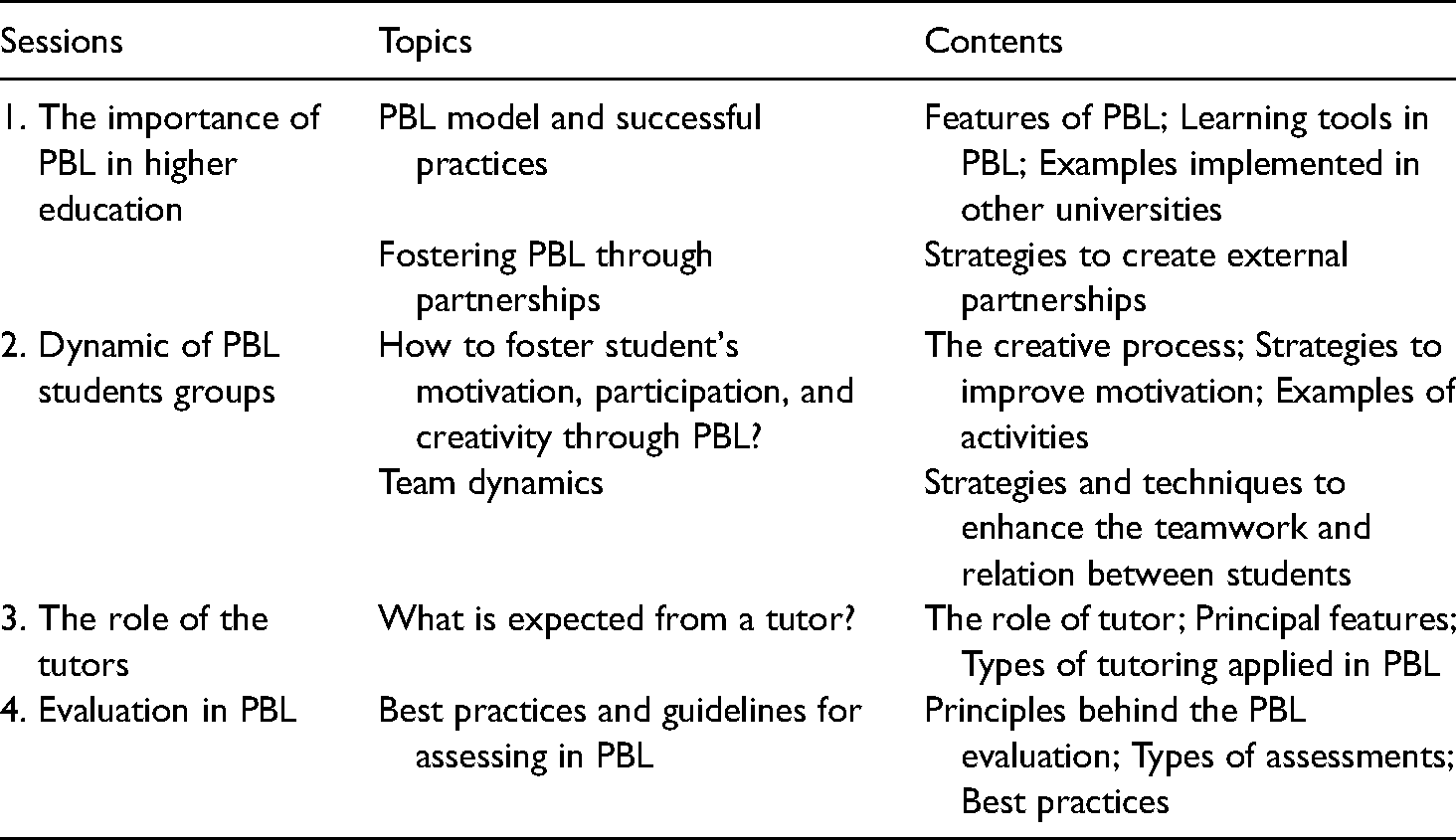
The faculty training proposal is based on several “teacher training” implemented all over the world, mainly: the course “Introducing Project-Based Learning in the classroom” conducted by Paslawski et al. 59 and Zaidi et al. 60 The main topics of these sessions are presented in Table 6. It is expected that this training session occurs in a period more favorable for the faculties and other members interested in this initiative. The sessions have a duration of approximately one hour each, considering approximately 45 min of training and 15 min of discussion.
PBL faculty training proposal.
Conclusion
This work presents the relevant information to understand the principles and the philosophy behind Project-Based Learning, as well as different examples of the implementation of this learning methodology in several Universities of the world. Converging the information obtained from the literature review, a new proposal was presented for the Integration Projects implemented in the Mechanical Engineering course at the University of Minho. This vision tried to respond effectively to the necessity of the students, using successful tools and methodologies, being designed in such a way that it could be integrated into the IMME course and not as a non-tangible ideology. The student’s feedback, both on the assessment of their work but also the monitoring of their learning progress, was presented and analyzed. This study was crucial to identify the strong and weak points of the methodology implemented and the main limitations of the model, that can cause student resistance to active learning are identified. This analysis allows to focus on the aspects that must be improved, in order to be introduced in the new proposal, such as, more creative and innovative projects, some of them linked to the industry, to motivate and challenge the students. Another important conclusion from this work is related to the involvement of external guests from the industry, organization, and other Departments of the University of Minho, being crucial to open horizons and to introduce new perspectives and ideas to the students.
As a side note, some of these ideas are in process of being implemented as the Mechanical Engineering course is going through a reorganization. More emphasis is put on student's work (by reducing the formal lecture load and increasing tutorial lectures) and by bringing industrial partnerships for the IP's.
Footnotes
Acknowledgements
The first author would like to express her gratitude for the support given by the Portuguese Foundation for Science and Technology (FCT) and the MIT Portugal Program. This work has been supported by FCT – Fundação para a Ciência e Tecnologia within the R&D Units Project Scope: UIDB/00319/2020 (ALGORITMI Center) and R&D Units Project Scope UIDP/04077/2020 (METRICS Center).
Declaration of conflicting interests
The author(s) declared no potential conflicts of interest with respect to the research, authorship, and/or publication of this article.
Funding
The author(s) received no financial support for the research, authorship and/or publication of this article.
