




Abstract
This research investigates the relationship between music consumption and cultural dimensions within a Japanese context. Since Japan is the second largest music market globally, it is surprising that there is little focus on those factors often examined in cross-cultural research that might mean Western findings do not extrapolate well. A questionnaire using established measures of tightness–looseness, relational mobility, and ideal affect was used to test three main research questions. RQ1 was that there should be a relationship between cultural dimensions and musical taste, and this was fully supported. RQ2 was that cultural dimensions should relate to participants’ goals of music consumption, and this was largely supported. RQ3 was that there should be a relationship between socioeconomic status and musical taste, but this was not supported. The findings also supported several more specific research questions concerning how specific uses of music ought to relate to specific cultural dimensions. The findings of the study help us better understand the way music is consumed in relation to specific cultural dimensions in the context of Japan and beyond. It also extends the literature concerning music and cross-cultural psychology where prior research has not considered these dimensions within the context of music consumption.
Across the world, music streaming is becoming a preferred means of music consumption (International Federation of the Phonographic Industry [IFPI], 2022). The rise in streaming has created a need for research on the motivations behind this trend, as music may fulfill specific purposes in individuals’ lives, aligning with their broader goals and motivations. These goals and motivations are influenced by cultural factors where, despite a growth of research into streaming and music consumption, there remains a notable gap in understanding the role of culture in these. As cultures may differ in behavioral predispositions, this can translate into differences in music consumption across cultures. One potential manifestation of this found in global charts is the increasing diversity of music listening between countries (Bello & Garcia, 2021), which may explain why algorithms employed by streaming services such as Spotify factor in the users’ region/country and provide localized content recommendations (Anderson et al., 2020).
Music consumption in Japan
This article considers the relationship between cultural dimensions and music consumption in Japan. Both global (e.g., Apple Music, Spotify) and domestic (e.g., Gyao by Yahoo! JAPAN and LINE) music streaming services have entered the Japanese music streaming market, with 21.6 million users in 2019 and growth to over 29 million expected by 2023 (Statista, 2022). Projected Japanese revenues for streaming services are expected to hit US$2.9 billion by 2027 (Statista, 2022), contributing significantly to the industry (Ingham, 2021). Despite the popularity of streaming, CD consumption nonetheless remains one of the prominent ways of consuming music in Japan. As Japan is the second largest music industry behind the United States (IFPI, 2022), there is merit in investigating the consumption preferences of Japanese consumers in the context of a literature that is predominantly Western; it is surprising that little attention has been paid to understanding Japanese music consumption within the context of cultural factors.
Cross-cultural consumer research
Recent research on music consumption has focused on how the motivations behind the consumption or utilization of music differ between individuals. Multiple studies (e.g., Boer, 2011; Lonsdale & North, 2011) show that individuals utilize music particularly as means of identity expression, mood regulation, and socialization. However, these studies are typically conducted within a Western context. This study aims to address this through a cross-cultural perspective on musical taste and uses of music. Music consumption is a form of consumerism. Thus, considering it in the context of consumer research is appropriate. Several studies have demonstrated that culture affects consumer behavior, particularly when comparing Eastern and Western cultures (e, g., Kim et al., 2002; J. Park et al., 2010; Rozin et al., 2003). These studies highlight how cultural differences can account for varied behaviors when it comes to consumer choices and preferences. To cite one example, there are differences between South Korean and Chinese participants in purchasing goods for social and performance purposes compared with purchasing for the experience (Kim et al., 2002).
Studies in media psychology suggest that cultural factors influence music consumption. For instance, M. Park et al. (2019) found cultural variations in music preferences within Spotify streaming data, reflecting users’ different moods. In addition, Liew et al. (2023) observed that participants from different cultures are likely to experience certain moods more (e.g., Western countries and high arousal negative emotions) and be more inclined to use highly arousing music as a means of regulating and discharging emotion. The limited research concerning consumption of music indicates the potential for research that identifies how cultural factors influence the music listening of individuals. Therefore, this study aims to investigate how differences in cultural orientations at an individual level in Japan might account for musical taste and goals of music consumption.
Cultural dimensions
This study draws on cross-cultural psychology in identifying factors that may explain music consumption among Japanese people. Matsumoto (1996) defines culture as a set of values, beliefs, and attitudes that are similar across a group of people but yet individually unique. Numerous attempts to conceptualize and model cultural similarities and differences have been proposed. Perhaps the best-known example is Hofstede’s (2011) dimensions, which examine dimensions such as individualism–collectivism and power distance, which offer explicit insights into how behavior and practices vary across cultures. However, Hofstede’s model has been criticized on numerous grounds with issues related to data (see McSweeney, 2002; Taras et al., 2010), validity (Beugelsdijk & Welze, 2018), and lack of theoretical basis (Kaasa, 2021).
This study will employ three cultural factors to understand Japanese music consumption; tightness–looseness, relational mobility, and ideal affect. Although these dimensions are frequently examined in contemporary cross-cultural research, they have received little attention within music psychology. This study aims to test potential relationships concerning music consumption based on findings in other cross-cultural research concerning tightness–looseness, relational mobility, and ideal affect. Specifically, tightness–looseness and relational mobility are relatively new cultural dimensions that can be measured both at an individual and national level (Gelfand et al., 2011; Thomson et al., 2018), providing better insight into variations in individuals’ musical taste and use. Furthermore, ideal affect has received a lot of attention from a cross-cultural standpoint, but very little concerning music consumption despite links between mood regulation, affect, and music consumption observed in several studies (e.g., Juslin & Sloboda, 2001; Tsai et al., 2007).
Tightness–looseness
Tightness–looseness (Gelfand et al., 2011) refers to the degree of behavior deviation from social norms. Tight cultures often have strict and well-established norms and deviant behavior results in negative consequences. Conversely, loose cultures are more lenient on social norms and deviant behavior. For individual behavior, tighter individuals have different decision-making styles and psychological adaptations that influence the individuals’ behavior (Gelfand et al., 2006). In the context of music, R. Li et al. (2017) found that loose societies tend to promote creative exploration, allowing individuals to prioritize creativity. Furthermore, Liew et al. (2021) found that loose societies tend to prefer higher arousal music for emotional regulation, indicating a link between the dimension and music consumption. Moreover, tighter cultures tend to resist change and are less likely to try new things (R. Li et al., 2017), and this may translate to new music taking longer to achieve popularity across the general public. Gelfand et al. (2011) suggested that tighter cultures might be more resistant to the introduction of new products, which can be attributed to maintaining social order and feelings of cultural superiority. In the context of music, this may have implications for introducing foreign songs into tighter countries/cultures which predominantly consume localized music. Hence, despite the absence of research directly examining the topic, there are clear grounds to suspect that tightness–looseness plays a role in musical taste and uses of music.
Relational mobility
Relational mobility refers to the extent where individuals in their social environment feel free to form interpersonal relationships and networks (Thomson et al., 2018). Individuals scoring high on relational mobility tend to perceive greater freedom to form and leave interpersonal relationships as they wish. Conversely, those scoring low for relational mobility tend to perceive less flexibility when forming new relationships, often basing relationships on specific circumstances such as duties, roles, and rites rather than personal preference. The literature indicates that low relational mobility is one key feature of Japanese culture (Thomson et al., 2018). Relational mobility can be related to music consumption, as the consumer research literature shows that it influences people’s perceptions of the products they consume (Koo, 2022; M. M. Li et al., 2023; San Martin et al., 2019). For example, Koo (2022) suggests that those higher on relational mobility might prefer brand extensions due to the focus on interrelationships where consumers can better appreciate the link between parent and extension brands. This suggests a possible link between relational mobility and musical taste and goals of music consumption, given the potential role of music as a means of socialization and forming new interpersonal relationships. For instance, individuals higher on relational mobility might be more inclined to use music as a tool of identity expression in order to form new relationships with others, something less likely to occur in setting where relational mobility is low. Furthermore, Takemura (2014) found that individuals higher on relational mobility often have the need to be more unique, which might have implications for musical taste. This need for uniqueness might cause individuals to consume music that they perceive as being more unique or niche, perhaps in the belief that this helps them to stand out or appear unique to others. Therefore, despite the absence of earlier research, this study will attempt to explore the relationship between relational mobility and music consumption of individuals in Japan.
Ideal affect
Ideal affect refers to those emotions, feelings, and mood that individuals ideally would like to experience (Tsai et al., 2006). This concept is based on affect valuation theory (AVT), which claims that an individual’s ideal affect can influence their behavior and decisions (Tsai et al., 2006). Previous literature consistently links music consumption to emotions and affect (e.g., Cespedes-Guevara & Eerola, 2018; Juslin, 2013). Juslin and Sloboda (2001) summarize the role of music in conveying and regulating emotions. Note that previous research indicates a relatively stronger preference for low arousal positive (LAP) affect among Japanese compared with stronger preference for high arousal positive (HAP) affect among Western participants (Park et al., 2015; Sims et al., 2018; Tsai et al., 2007). Furthermore, Liew et al. (2021) also report a relationship between musical taste and affect in Japanese participants whereby they were more inclined toward LAP in comparison to Western cultures (i.e., America) who favored HAP.
The relatively stronger preference for LAP in Japan, indicated by the literature, is significant in understanding music consumption behaviors in Japan. Lonsdale and North (2011) (see also Schäfer et al., 2013) found that one of the main motivations of individuals consuming music was mood management. This raises the possibility that ideal affect should be related to music tastes, where a desire to achieve particular affective states predisposes the listener to select particular musical genres that help achieve these states. The current study will allow insight into how Japanese individuals might consume or use music in order to attain certain ideal states of emotion and mood.
Socioeconomic status
While socioeconomic status (SES) is not a dimension of culture, it can also provide a valuable contribution to explaining music consumption in Japan. Many cross-cultural studies consider gross domestic product and similar measures of wealth and often investigate how individuals from different cultures respond differently to disparity in social hierarchy and status through dimensions like social dominance and power distance (Hofstede, 2011; Pratto et al., 2013). SES can be a good representation of social standing disparities between individuals and has been implicated in musical (and other artistic) tastes in several studies. Meuleman (2021) suggests that highbrow culture/taste are more common in individuals with higher SES as they have more access and exposure to different cultural products. This allows a buildup of an acquired taste for products such as music, art, dance, and more. In contrast, lowbrow culture and tastes (or popular culture) are often related to lower status “stuff of everyday sociability” (Meuleman, 2021), such as popular TV entertainment shows. Multiple studies concerning musical taste indicate that liking for specific genres correlate with SES (M. Liu et al., 2019; Mellander et al., 2018). For instance, Mellander et al. (2018) found that individuals within the United States from higher socioeconomic backgrounds are more likely to prefer genres such as jazz, classical, and opera, while those from lower socioeconomic groups are more likely to prefer genres such as gospel, rock, and punk. However, it is unknown if these results could be repeated in non-Western cultures where SES may imply differing values and behaviors (Hamamura, 2011; Miyamoto, 2017), which may include music tastes.
Current study: research questions and possibilities to explore
This article is part of a larger cross-cultural study, in which Japan is selected due to it being a significant Asian economy and unique music streaming market compared with Western countries. The study aims to explore music consumption in Japan from a cultural perspective concerning people’s musical taste and their goals for consuming music. It seeks to understand how individuals’ cultural orientation can influence the way they consume music. In addition to considering musical taste, we also consider what motivates people to consume music in light of prior Western research (e.g., Ferwerda et al., 2009; Lonsdale & North, 2011; North, 2010; Schäfer et al., 2013). We propose three main research questions and within each of these research questions a few more specific and speculative possibilities that can also be tested by the same dataset.
The first research question concerns the musical taste of individuals in Japan. We hypothesize that tightness–looseness, relational mobility, and ideal affect each predict Japanese individuals’ music taste. Beyond this, the study explores more specific possibilities, based on existing findings. For instance, individuals who are tightly oriented may be less likely to consume music genres often associated with anti-authoritarian sentiments such as rock and heavy metal (e.g., North et al., 2005; Schwartz & Fouts, 2003; Smith & Boyson, 2002) as a consequence of the priority these individuals place on accepted attitudes and behavior. Furthermore, individuals with high relational mobility may exhibit unique music consumption patterns, specifically music genres that are considered “niche” or “specialist” (Takemura, 2014; Takemura & Suzuki, 2015). To examine this possibility, the study categorizes jazz as a “niche” genre, as it is often consumed less by the wider population (Krumhansl, 2017; Statista, 2022), so that liking for it may correlate positively with relational mobility. In addition, based on North et al.’s (2019) findings concerning emotional expression in music genres, the study predicts a relationship between HAP ideal affect and liking for pop music, and between LAP ideal affect and liking for classical/opera and jazz music genres.
The second research question is whether Japanese people’s goals for music consumption are related to their tightness–looseness, relational mobility, and ideal affect. In addition to assessing this relationship, we explore several specific possibilities based on existing literature. First, individuals who have a tighter orientation might use music as a means of coping with stress, given the heightened scrutiny they experience as a result of the need to comply with societal norms and increased accountability (Gelfand et al., 2006). In addition, individuals with higher relational mobility have a higher need for uniqueness and freedom in their relationships, and so may be more inclined to utilize music as means of unique social identity expression (Takemura, 2014; Takemura & Suzuki, 2015).
The third research question concerned the relationship between individuals’ musical taste, goals of music consumption and their subjective SES. Research in Western societies (see, for example, M. Liu et al., 2019; Mellander et al., 2018) has shown that people with higher SES are more likely to consume “high art” genres, but it is unclear whether this common western finding generalizes to Japanese society given its differing cultural characteristics.
A summary of these research questions and hypotheses is as follows:
RQ1. Are an individual’s scores for tightness–looseness, relational mobility, and ideal affect related to their liking for various genres of music?
H1a. Individuals who are more tightly oriented might be less likely to prefer rock and metal music genres.
H1b. Individuals who have higher relational mobility might be more likely to prefer jazz music genres.
H1c. Individuals who have stronger preference for high arousal positive affective states are more likely to prefer pop music genres.
H1d. Individuals who have stronger preference for LAP affective states are more likely to prefer jazz and classical music genres.
RQ2. Are an individual’s scores for tightness–looseness, relational mobility, and ideal affect related to their goals for music consumption?
H2a. Individuals who are tightly oriented might be more inclined to use music as a means of coping and stress relief.
H2b. Individuals who have higher relational mobility might be more inclined to use music as a means of identity expression.
RQ3. Is an individual’s SES related to their liking for various music genres and their goals of consuming music?
Method
Participants
Ethics approval for the research was obtained from the Human Research Ethics Committee at the lead author’s university. The study sampled 205 university student participants from Japan aged between 18 and 30 years (M = 22.1, SD = 2.76) who identified as Japanese. Among these participants, 77 participants identified as male, 127 identified as female, and 1 identified as other. The one case where participant identified as other gender was excluded from the analyses where sex was included as a dummy coded control variable. Convenience sampling was employed. The questionnaire was uploaded to CrowdWorks (Japan), an online crowdsourcing platform, which redirected respondents to a Qualtrics survey. Payment was approved on the condition that the survey was completed fully. The questionnaire was available for 2 weeks. Forced response for items concerning participants’ status as students and age were employed to ensure that the inclusion criteria were met and to maximize the homogeneity of the sample in terms of age and education experience. Participants were paid 300 yen (approximately US$2) each to complete the questionnaire.
Measures
Data collection involved an online questionnaire containing 159 questions concerning different cultural dimensions, goals of music consumption, and liking for musical genres. Most of the measures used in the questionnaire have established translations, however, the measures of liking for musical genres and goals of music consumption were newly developed and required translation through a professional translation service. Translated versions of these measures underwent evaluation by a native Japanese speaker fluent in English and trained in cultural psychology and a researcher based in Japan who were part of the research team, and the translations were deemed suitable for Japanese native speakers.
Tightness–looseness
This scale consists of six items to which participants respond on six-point Likert scales (1 = strongly disagree and 6 = strongly agree). Measurement equivalence has been tested and established by Gelfand et al. (2011) across countries including Japan. Example items (in English) are “There are many social norms that people are supposed to abide by in this country” and “People in this country almost always comply with social norms.”
Relational mobility
This measure consists of 12 items to which participants respond on six-point Likert scales (1 = strongly disagree and 6 = strongly agree). Measurement equivalence has been tested and established by Thomson et al. (2018) across countries including Japan. Example items are “They (the people around you) have many chances to get to know other people” and “It is easy for them to meet new people.”
Ideal affect
Tsai et al.’s (2006) measure of ideal affect comprises 30 items, each of which is rated on a five-point Likert scale where 1 = never and 5 = all the time. Participants are presented with a list of adjectives and asked to rate the extent to which each is desirable. Measurement equivalence of the scale in Japan was demonstrated by Tsai et al. (2007). Example items are “serene” and “happy.” Given the focus of this study separate means were calculated for the HAP—3 items (i.e., excitement, enthusiasm, and elation) and LAP—3 items (i.e., calm, peacefulness, and serenity), respectively, to produce a single score for each.
Subjective SES
Subjective socioeconomic status (SSS) is an individual’s perception of their place within the socioeconomic structure of a given society (Nobles et al., 2013). This study used MacArthur’s Scale of Subjective Social Status (Adler et al., 2000), which is a widely used single item measure (e.g., Bullock & Limbert, 2003; Franzini & Fernandez-Esquer, 2006) that asks participants to rank their perceived SES compared with others. Respondents are presented with an illustration of a ladder with 10 rungs with the first rung representing low SES relative to other people in the respondents’ social circle and the 10th rung representing higher SES compared with other individuals. This measure has been used in and deemed valid in Japan (Curhan et al., 2014).
Musical taste
We developed this measure to assess respondents’ liking for different music genres. We are not aware of an existing measure which assesses liking for music genres that produces consistent factor structures, reliability scores, and validity across cultures (see, for example, Chung et al., 2017; Devenport & North, 2019; Merz et al., 2020). The measure employed here consists of 13 genres that were chosen based on the popularity of genres on the global Billboard charts, enabling comparison of data across various countries. Items are listed in Table 1. Participants rated liking for each genre using seven-point Likert scales where 1 = not at all and 7 = strongly. Example items are “Rock” and “Jazz.” A reliability analysis using the current dataset produced a Cronbach’s alpha of α = .848. An exploratory factor analysis, reported below, aimed to identify any underlying factor structures and latent variables within the data using varimax rotation. Three factors with eigenvalues greater than 1 were identified, which accounted for 57.24% of the variance. The three factors were labeled as “Western,” ‘Rock,’ and “Pop” (see Table 1), and factor scores were calculated for use in subsequent analyses.
Factor Loadings for Musical Taste Scale.
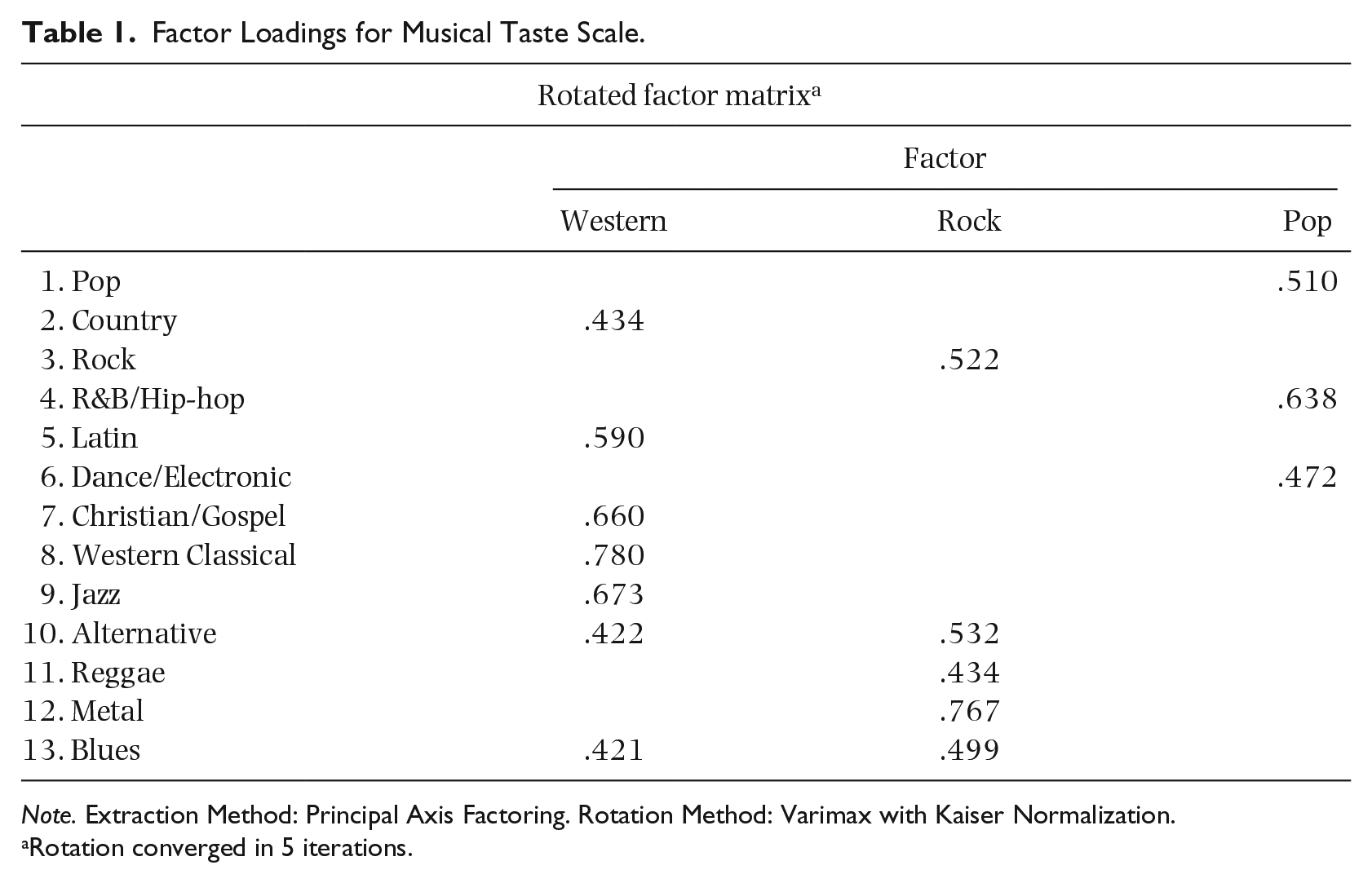
Note. Extraction Method: Principal Axis Factoring. Rotation Method: Varimax with Kaiser Normalization.
Rotation converged in 5 iterations.
Goals of music consumption
This measure is adapted from Lonsdale and North’s (2011) assessment of individuals’ goals of music consumption, which in turn was based on McQuail et al.’s (1972) model of media gratifications. The measure consists of 30-items which are assessed on a seven-point Likert scale where 1 = not at all and 7 = completely. Items are listed in Table 2. Example items are “To relieve anxiety” and “To relieve stress/tension”. A reliability analysis was carried out using the current data set, producing a Cronbach’s alpha of α = .937. Measurement equivalence has not been established in a Japanese sample, as it has only previously been used in a Western context. An exploratory factor analysis using varimax rotation is reported below for this measure. Five factors were identified for the goals of music consumption measure which accounted for 66.27% of the variance. The five factors were labeled “Identity,” “Coping,” “Trends,” “Time,” and “Activity,” as shown in Table 2, and factor scores were calculated for use in subsequent analyses. Although certain factors contain a small number of items, they were retained in subsequent analyses as they represent common uses or goals of consuming music (North et al., 2004; Schäfer & Mehlhorn, 2017).
Factor Loadings for Goals of Music Consumption Scale.
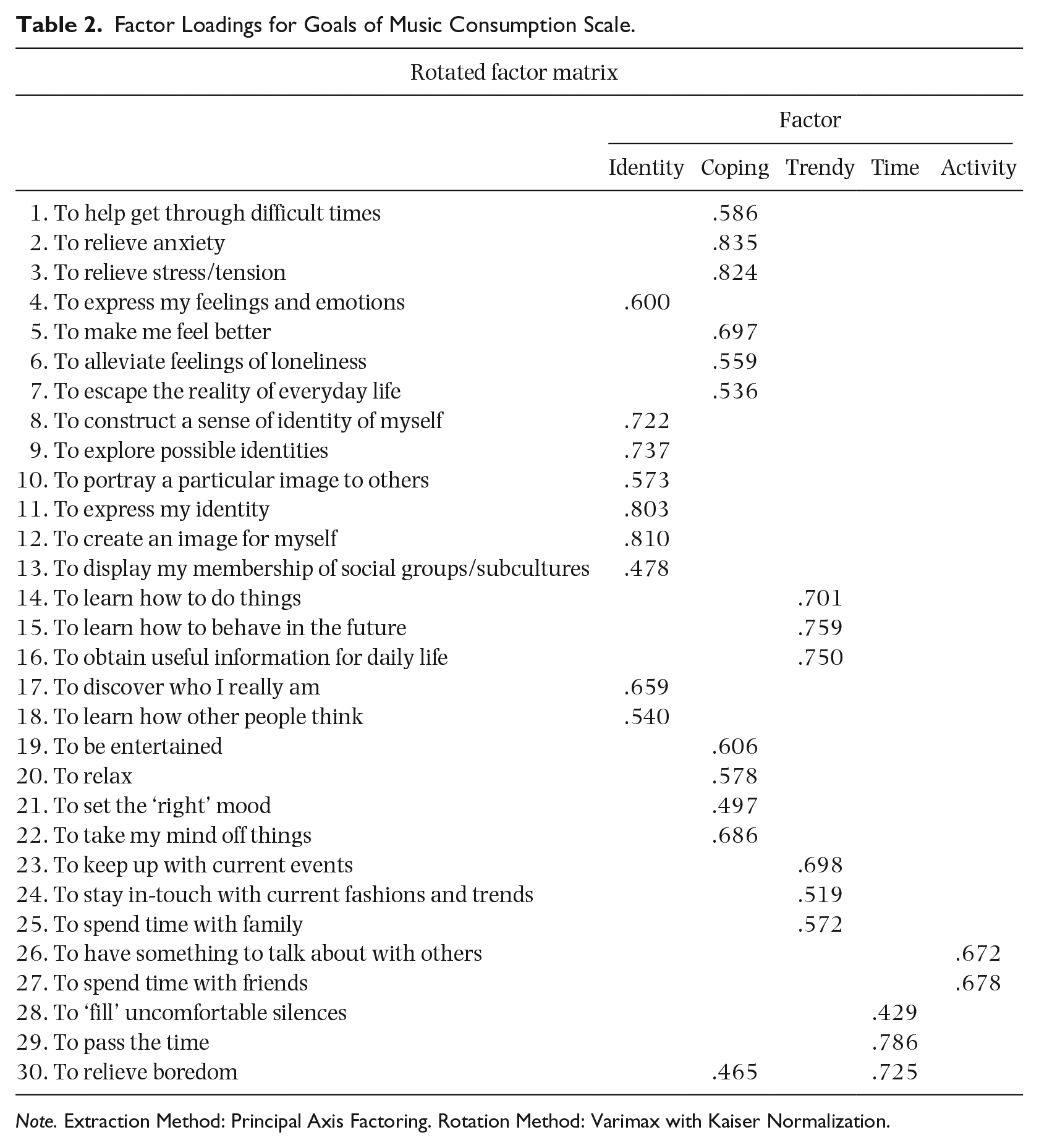
Note. Extraction Method: Principal Axis Factoring. Rotation Method: Varimax with Kaiser Normalization.
Results
Participants’ data (37 instances) were removed in cases where more than 5% of items were unanswered where total participants after removal of missing data was 205. Missing data was checked using Little’s MCAR test (p > .05), which showed that data were missing completely at random (C. Li, 2013). Missing data was replaced using the expectation maximization (EM) technique (Dong & Peng, 2013). The descriptive statistics for each dimension of culture, SES, ideal affect, and participant demographics are summarized in Table 3.
Descriptive Statistics.
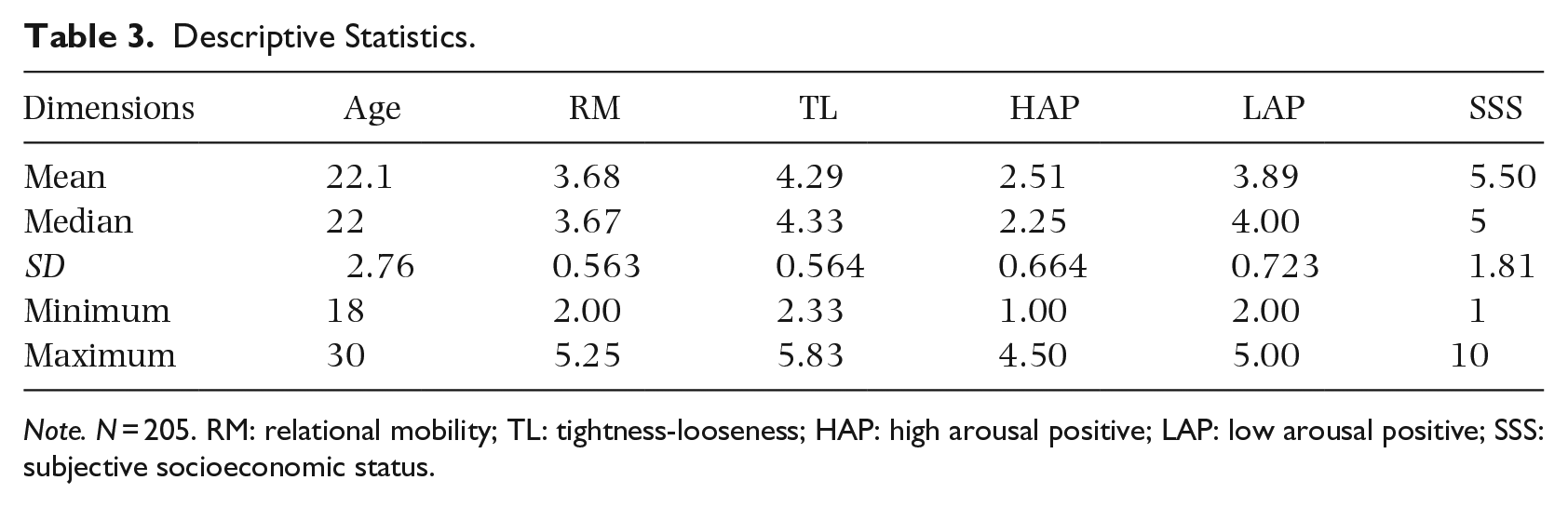
Note. N = 205. RM: relational mobility; TL: tightness-looseness; HAP: high arousal positive; LAP: low arousal positive; SSS: subjective socioeconomic status.
Liking for music
We conducted three sets of analyses to examine research questions 1, 2, and 3, respectively. The first set of analyses addressed RQ1. All three factors of musical taste were predicted in separate multiple regression analyses from participants’ scores on cultural factors, namely, ideal affect (HAP and LAP), tightness–looseness, and relational mobility. Age and gender were added as control variables. Supporting RQ1, the results (summarized in Table 4) showed that cultural factors are related to Japanese participants’ musical taste (R2 = .07, p = .012 for Western, R2 = .08, p = .004 for Rock, and R2 = .11, p < .001 for Pop). In particular, liking for Western, Pop and Rock factors were each related positively to HAP (Western: b = .20, p = .04; Rock b = .19, p = .04; Pop b = .27, p = .002). No other cultural dimensions were related to any of the musical taste scores.
Results for Hypothesis 1 (Musical Taste and Cultural Dimensions).
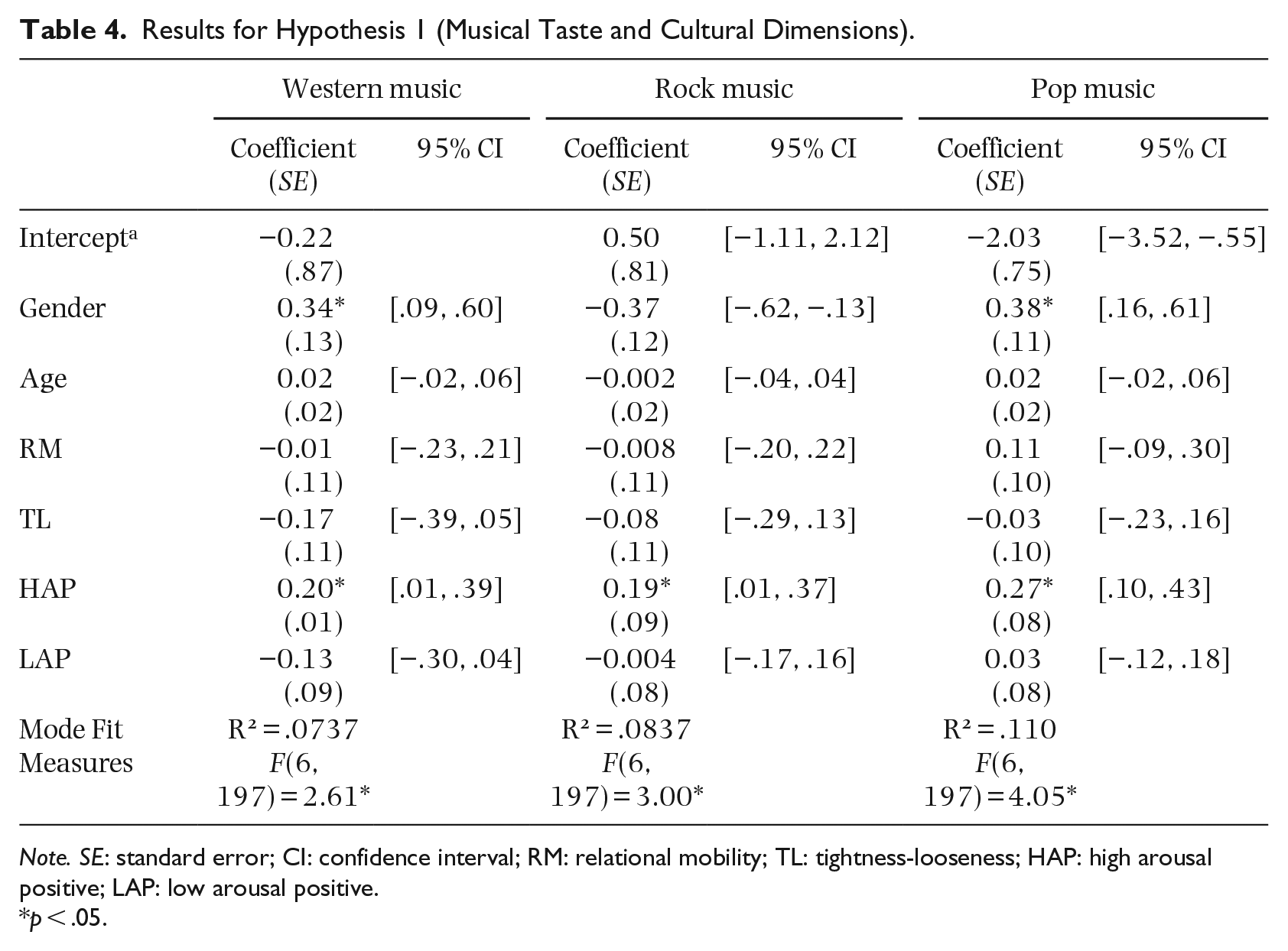
Note. SE: standard error; CI: confidence interval; RM: relational mobility; TL: tightness-looseness; HAP: high arousal positive; LAP: low arousal positive.
p < .05.
The more detailed and speculative hypotheses derived from RQ1 (H1a-d) proposed relationships between specific musical genres, using specific items (vs. factor scores) shown in Table 1, and specific cultural dimensions. For example, “rock” in the analysis for RQ1 consisted of genres that were extracted from the factor analysis, the analysis here for H1a only examined “rock” as a single genre not as a factor. H1a proposed a negative relationship between tightness and liking for rock and metal. To investigate this, a regression analysis predicted liking for rock with the same set of predictors as above but did not show a relationship with tightness (b = −.03, p = .87); and the same nonsignificant result was found for metal (b = −.17, p = .28). H1b proposed that relational mobility should be related positively to liking for jazz, which was not confirmed (b = −.00, p = .98). H1c proposed that liking for high arousal positive affect should be positively related to liking for pop, but this was also not supported (b = .12, p = .21). H1d proposed a positive relationship between LAP affect and liking for both classical (b = −.10, p = .42) and jazz (b = −.04, p = .72), but neither relationship was supported.
Goals of music consumption
The second main analysis addressed RQ2, examining the relationship between scores on the five factors concerning music consumption goals and the same set of cultural factors as before (tightness–looseness, relational mobility, HAP and LAP), examined separately with age and gender added as controls.
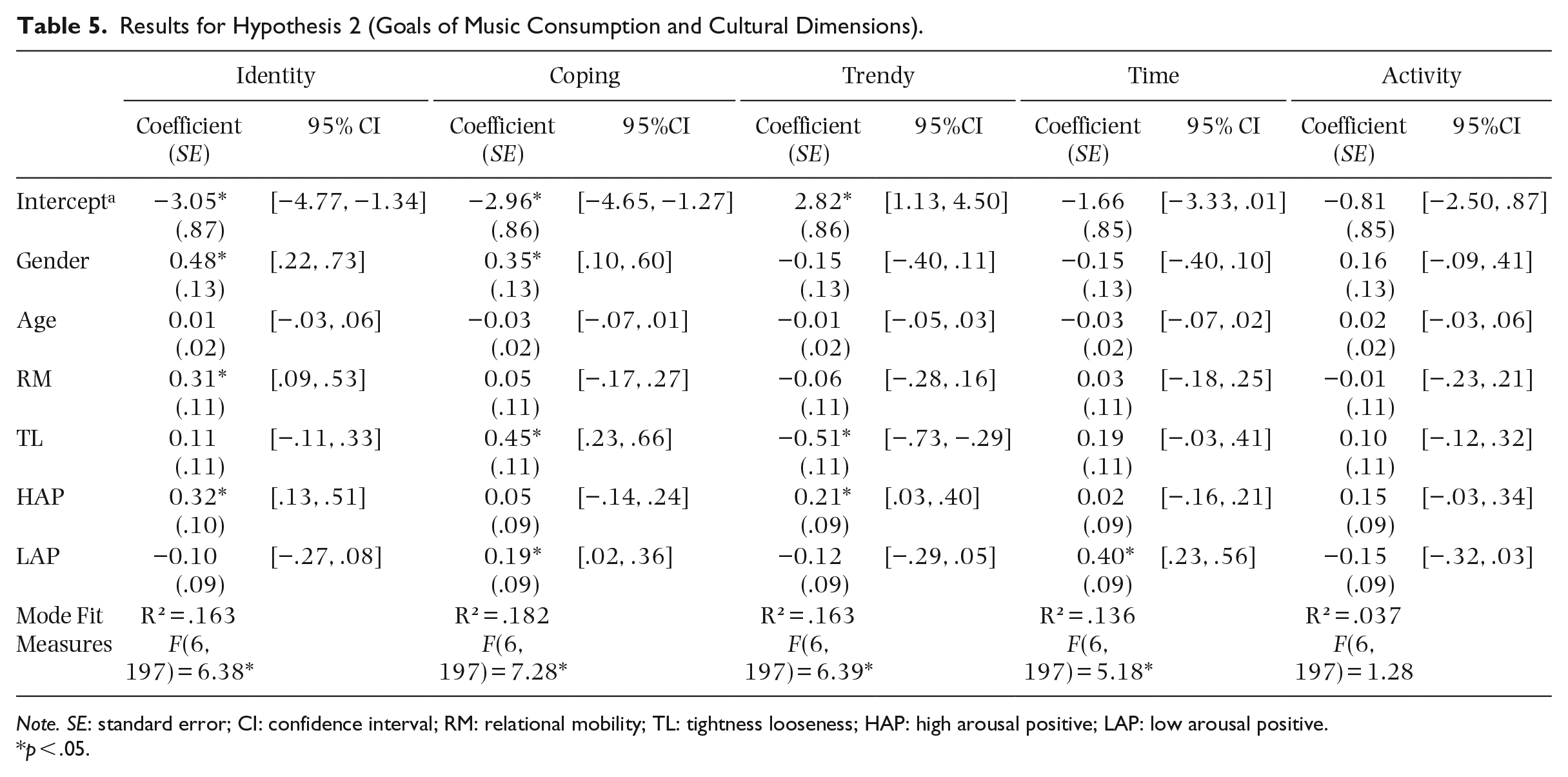
Table 5 summarizes the results. Supporting RQ2, the regression models showed that cultural factors significantly predicted four out of five goals of music consumption (R2 = .163, p < .001 for Identity, R2 = .182, p < .001 for Coping, R2 = .163, p < .001 for Trendy, R2 = .136, p < .001 for Time). Results concerning Activity were not significant (R2 = .037, p = .27)
Results for Hypothesis 2 (Goals of Music Consumption and Cultural Dimensions).
Note. SE: standard error; CI: confidence interval; RM: relational mobility; TL: tightness looseness; HAP: high arousal positive; LAP: low arousal positive.
p < .05.
This set of analyses also addresses H2a and H2b concerning whether (H2a) tightly oriented individuals might be more inclined to use music as means of coping and stress relief, and (H2b) individuals with higher relational mobility are more inclined to use music as means of identity expression. As shown in Table 5, the expected relationship between Coping and tightness–looseness was significant (b = .45, p < .001). The relationship between Identity and relational mobility was also significant (b = .31, p = .006). In addition to these findings, tightness–looseness was negatively related to using music to be Trendy (b = -.51, p = .027). HAP was positively related to Identity (b = .32, p < .001) and Trendy (b = .21, p < .001); whereas LAP also positively predicted using music for Coping (b = .19, p = .027) and to pass Time (b = .40, p < .001). While the findings concerning H2a and b are consistent with previous findings, the remaining findings are also interpretable and considered further in the “Discussion” section.
SES
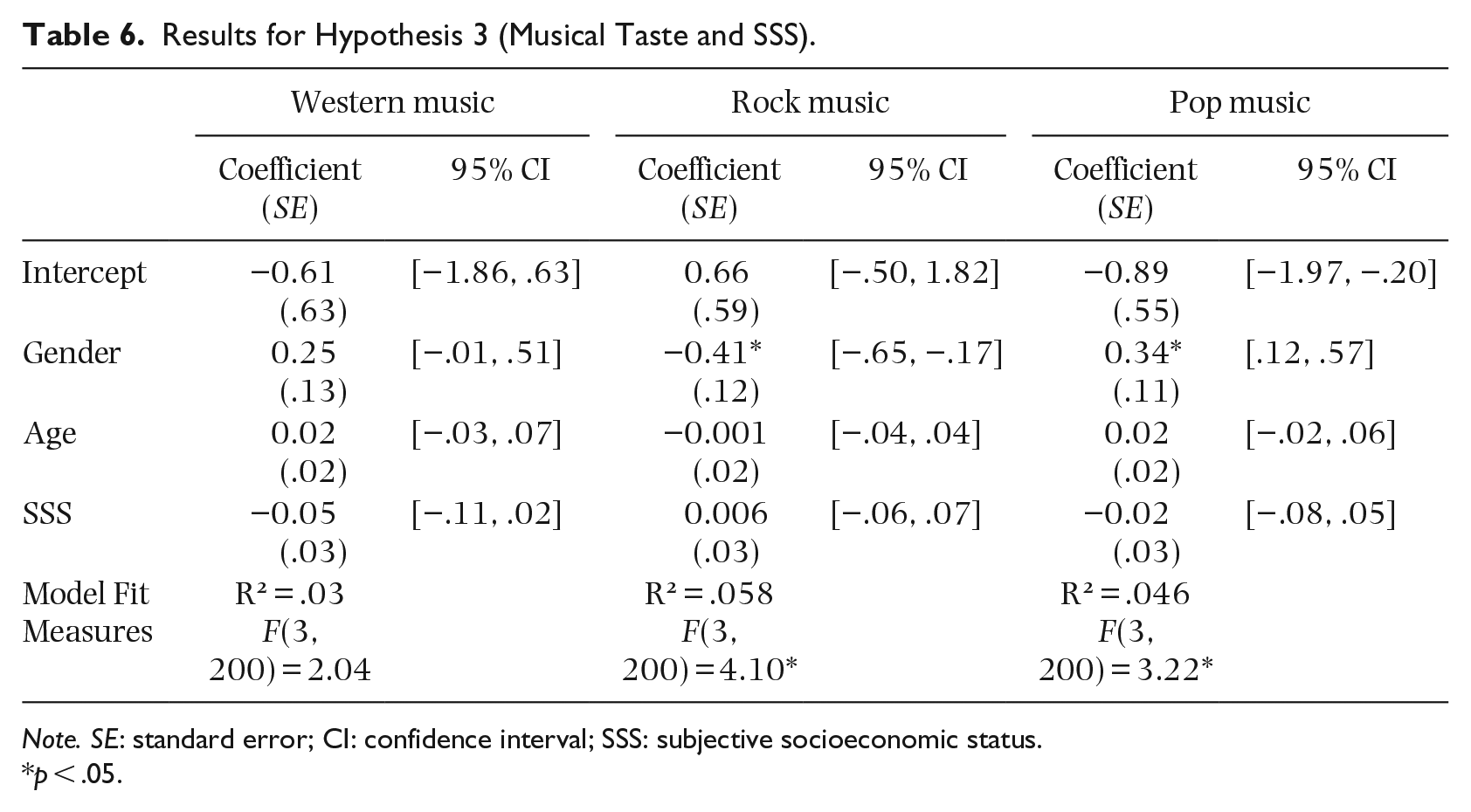
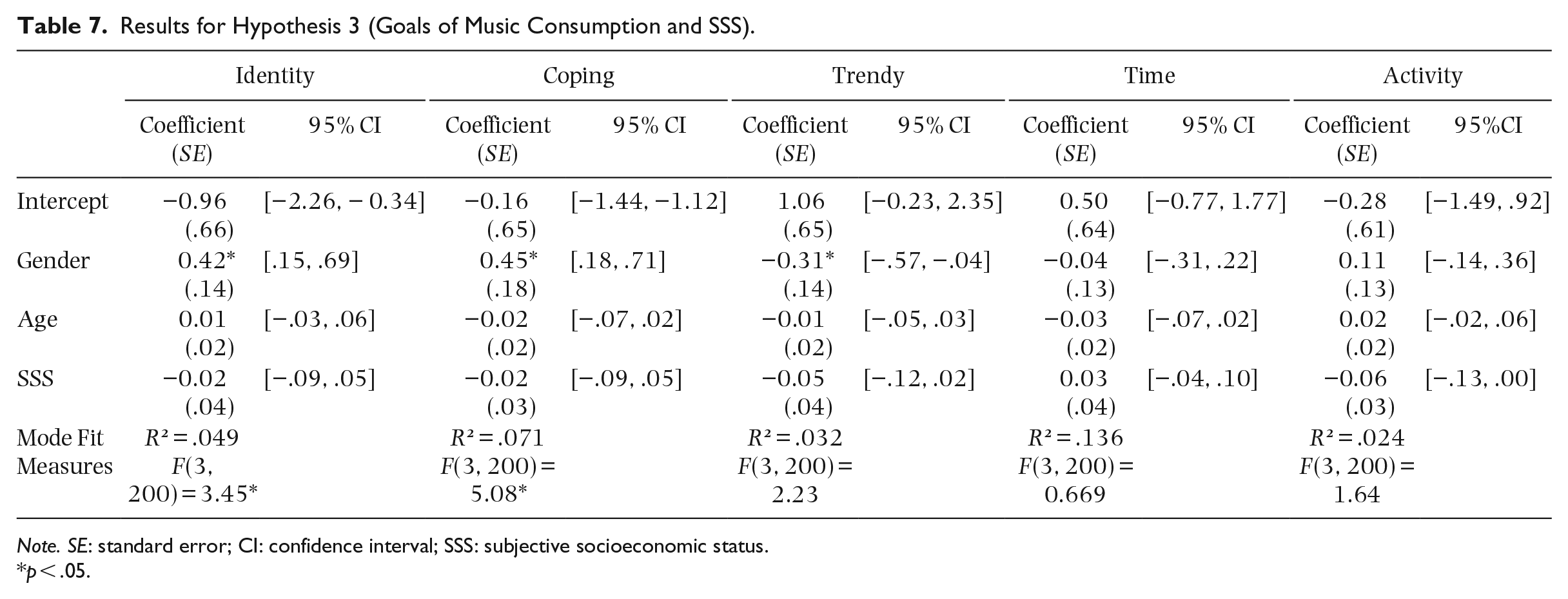
The third main analysis used two multiple regressions to determine the relationship between SSS and both musical taste and goals of music consumption, respectively, while controlling for age and sex. The results are shown in Tables 6 and 7, respectively. SSS did not relate significantly to liking for Rock, Pop, and Western factors. SSS was also not significantly related to any of the factors concerning goals of music consumption. As such, the results did not support RQ3 that individuals’ SES should be related to their liking for music or goals of music consumption.
Results for Hypothesis 3 (Musical Taste and SSS).
Note. SE: standard error; CI: confidence interval; SSS: subjective socioeconomic status.
p < .05.
Results for Hypothesis 3 (Goals of Music Consumption and SSS).
Note. SE: standard error; CI: confidence interval; SSS: subjective socioeconomic status.
p < .05.
Discussion
The study aimed to examine the role of cultural factors in music listening, specifically tightness–looseness, relational mobility, and ideal affect, using Japan as a test case, informed by prior cross-cultural research highlighting stable societal differences between Japan and Western societies on these cultural factors. Overall, findings reported here support the importance of cultural factors in musical taste and motivation for listening to music among a population that has been underrepresented in music psychology literature.
RQ1 considered the relationship between Japanese survey respondents’ scores on cultural dimensions and their musical taste. Results supported this RQ, showing that liking for music was related to ideal affect concerning high arousal positive moods. However, the specific hypotheses concerning particular cultural dimensions and liking for specific music genres were not supported.
RQ2 considered the relationship between cultural dimensions and goals of music consumption among Japanese participants. Four out of the five factors of the goals of music consumption were related to the cultural dimensions, supporting RQ2. The findings also showed numerous relationships between specific uses of music and particular cultural dimensions. Some of these relationships were as anticipated. Tightness was related to using music for coping, supporting H2a. The stress and fear of repercussions in not conforming to societal norms might lead to tightly oriented individuals looking for different means of coping with stress (Gelfand et al., 2006). In this case, music could be a plausible avenue for individuals to cope with everyday stressors. The items loading onto the “Coping” factor included for instance “To relieve stress/tension,” and “To help get through difficult times.” The pressure to conform and the inability to act independently might lead to increased stress on individuals, where they need to adapt their lifestyles and everyday behavior to fit societal norms. This echoes Gelfand et al.’s (2006) discussion concerning felt accountability, where individuals feel their behavior is under the constant scrutiny and evaluation of society.
Relational mobility was positively related to using music consumption for Identity, supporting H2b. Items loading on the “Identity” factor included “To express my identity” and “To create an image for myself.” This suggests that individuals with higher relational mobility may have a greater sense of freedom when it comes to forming new interpersonal relationships, resulting in wider a social network and greater need for uniqueness (Takemura, 2014; Takemura & Suzuki, 2015). These aspects are closely related to expressing and curating a sense of self, which translates into music consumption as a method of showcasing their unique individual behavior.
The findings also revealed some unexpected relationships between cultural dimensions and music consumptions goals, which also make intuitive sense. Specifically, tightness was negatively related to using music to be Trendy: tighter values mean that individuals are less inclined to want to stand out. High arousal ideal affect was positively related to using music for Identity and to be Trendy, whereas low arousal ideal affect was positively related to using music for Coping and to pass Time. The relationship between low arousal ideal affect and Coping reflects findings by Gilbert (2014) and Koelsch et al. (2015) that low arousal positive states have soothing qualities, and McManus et al.’s (2019) finding that low arousal positive affect negatively predicts depression and anxiety. These findings imply why individuals are more likely to utilize music as a means of Coping, particularly for managing stress and events that occur in daily life.
RQ3 addressed the relationship between SES, musical taste, and goals of music consumption. Participants’ scores on the three music preference factors did not relate significantly to their SSS. This contrasts with findings from earlier Western research (e.g., P. Liu et al., 2018; Mellander et al., 2018) showing a relationship between musical taste and SES. A potential explanation for this could be cultural omnivorism, which suggests that cultural elites in this day exhibit diverse tastes encompassing both elitist and popular cultural forms (de Vries & Reeves, 2021). However, it is simply possible that SES and musical taste are not related to one another in Japan but remain related elsewhere.
The results of this study indicate that cultural factors, especially individuals’ music consumption goals, can predict their music consumption behaviors in Japan. These findings build upon earlier work such as Lonsdale and North (2011) and Schäfer et al. (2013) by identifying factors that predict how individuals use music, emphasizing the role of culture. Moreover, musical taste was also predictable by cultural factors, specifically individuals’ ideal affect. The study’s focus on the cultural orientations of individual participants allows better insight into how these cultural factors influence the consumption and goals of using music. Clearly the findings show that culture can be used to predict music consumption, which has been underrepresented in previous research. Future research could attempt to unpack this further. For example, future work could explore how other cultural dimensions like individualism-collectivism might predict aspects of music consumption, such as collectivist tendencies leading to preference for popular music or a narrower range of tracks and genres. From a theoretical standpoint, research on music consumption focusing on culture provides a macrolevel perspective that complements the more atomistic individual-focused approach adopted by much of the existing research which often concentrates on individual differences and cognitive processes. These studies have yet to comprehensively consider the impact of culture which has a broad influence on many aspects of individuals’ lives. This study highlights the significant relationships that have been uncovered between the cultural dimensions employed and musical taste and goals of using music, contributing not only to the literature of music psychology but also cross-cultural psychology.
Future research could also investigate the possibility that the present findings generalize beyond solely music consumption as defined here. For example, music streaming algorithms could be adapted to include the findings, potentially improving consumer experience. Similarly, the finding that tighter individuals are more inclined to use music as a coping mechanism could inform other aspects of music consumption relevant to stress relief and individuals’ psychological health. Furthermore, the finding that individuals higher on relational mobility use music as means of socialization could have implications for the intricate social process of sharing music between individuals. Moreover, the findings here may not be limited to Japan: since cultural values were defined at the level of the individual (rather than nation), any two individuals with common cultural values may have common ways of consuming music. We encourage future researchers to use individual measures of cultural values as these do not seek to aggregate participants on the basis of shared nationality.
Limitations
As noted earlier, this research used a set of musical genres chosen for their relevance in different countries, including Japan. However, studies have shown that individuals differ in their interpretations of music genres (e.g., Fung, 1994; Teo et al., 2008). As such, the results are interpretable in terms of Japanese participants’ understanding of the genre labels employed. Comparisons with responses from other countries concerning theses same genre labels must be more cautious. The items used on the measure employed here were obtained from Billboard global genres; although clearly relevant to Japan, due to the global popularity of the genres, they might not encompass those genres specific to Japan which could produce a different pattern of findings to that reported here. We also draw reader’s attention to the magnitude of the effect sizes reported, which are relatively small. Despite this, the findings are still interesting as they indicate how certain cultural factors relate to music consumption in a Japanese context, consistent with previous research (e.g., Boer & Fischer, 2012; Way et al., 2020)
Beyond the immediate implications of this findings, future research can draw insights from the apparent trend within music streaming preferences toward consumption of music produced within one’s own culture (Bello & Garcia, 2021; Way et al., 2020). This may well be related to cultural factors, such as tightness or the extent to which a listener identifies with local culture (versus adopting a more cosmopolitan, internationalist worldview). Furthermore, it is improbable this research design captured all those cultural factors that relate to music consumption. In addition, future research might consider a mixed-methods approach where participants provide information concerning their understanding of music genre labels.
Conclusion
In conclusion, the findings have theoretical implications for our understanding of the musical taste and the goals of music consumption of individuals in Japan. The findings here indicate that cultural dimensions can predict to a certain extent why individuals listen to certain music or their goals music consumption. It also extends the current literature on music consumption from the perspectives of music and cross-cultural psychology, where prior works have not quite considered the cultural dimensions that have been employed here. We look forward to further research broadening these findings to a range of other countries and musical styles.
