




Abstract
Several studies have investigated emotional reactions to instrumental music. However, studies on the effect of lyrics on emotions are limited. Previous studies suggest that the importance of lyrics may vary cross-culturally. The aim of this study was twofold: to investigate the effects of lyrics on aroused emotions and psychological mechanisms with music and to explore whether these differ cross-culturally. Fifty participants from Portugal and Sweden listened to six musical stimuli based on two songs, one representing each culture. These were presented in three versions each: the original, an instrumental, and the instrumental version with lyrics on the screen. The Portuguese and Swedish participants differed notably: the presence of lyrics did not affect listeners’ happiness in neither group as predicted, but did increase sadness, albeit only in the Portuguese group. Lyrics also increased nostalgia for the Portuguese listeners as predicted and surprise-astonishment for the Swedish listeners. Regarding the mechanisms, lyrics increased the activation of episodic memory in both groups, and the activation of evaluative conditioning, contagion, and visual imagery in the Portuguese group. The present study indicates that lyrics have an effect on musical emotions and mechanisms which vary between groups of different cultural backgrounds.
Music and lyrics co-occur in most societies around the world (Clarke, 1952; Levitin, 2006; MacDonald et al., 2012). Emotions aroused by instrumental music have been explored in a broad set of studies (e.g., Juslin & Laukka, 2004; Sloboda, 1992; Zentner et al., 2008). Despite how common listening to music with lyrics is, research on the link between lyrics and emotions is scarce (Juslin, 2005; Mori & Iwanaga, 2013; Stratton & Zalanowski, 1994). In addition, because lyrics are a cultural product, we might expect the effect of lyrics on emotions to vary cross-culturally (Morling & Lamoreaux, 2008). However, very few studies have adopted a cross-cultural perspective on this relationship (e.g., Almeida & Uchida, 2018). Therefore, the aim of this study was to explore the relationship of lyrics to musical emotions in two different European cultures.
Music and emotions
There has been a growing interest in the relation between music and emotion during the last decades (Juslin & Sloboda, 2010), which has partly been motivated by literature suggesting that emotional reactions to music occur rather frequently. For instance, studies indicate that music triggers emotions in about 55% to 65% of all listening experiences (Juslin et al., 2008; Juslin & Laukka, 2004).
A comprehensive approach for explaining how music arouses emotions is described in the BRECVEMA framework. This theoretical model features eight mechanisms, which are considered to underlie the induction of musical emotions: brain stem reflex, rhythmic entrainment, evaluative conditioning, emotional contagion, visual imagery, episodic memory, musical expectancy, and aesthetic judgment. In addition to these eight mechanisms, there is the default emotion-induction mechanism, cognitive appraisal (see Juslin, 2013; Juslin & Västfjäll, 2008). Empirical studies testing the application of this framework have focused on investigating the psychological mechanisms that underlie the induction of musical emotions, in order to reveal the causes of these emotions (e.g., Juslin et al., 2014, 2015). By using instrumental music as experimental stimuli, such studies have selectively studied the effect of music, as opposed to the combined effect of musical and lyrical content on emotions.
However, a great deal of today’s music is sung, comprising both melodic and lyrical content. Therefore, considering that music induces emotions via the aforementioned mechanisms, the question which arises is, what is the effect of lyrics, if any, on this emotion-induction process? Juslin (2005) suggested that the combination of lyrics and music offers a “complementary means” of communicating emotions, a verbal and a non-verbal channel, and emphasized the urgency of studying the combined effects of music and lyrics on emotions.
Functions of lyrics
Lyrics in music have been considered to serve a number of different functions. Studies have demonstrated that, in certain situations, lyrics facilitate the exploration of feelings, problems, and difficulties (Hargreaves et al., 2002), or might reinforce the connection between genre subcultures and attitudes (Stack & Gundlach, 1992). Lyrics may also increase the availability of prosocial beliefs, lead to elevated interpersonal empathy, and foster helping behavior (Greitemeyer, 2009a, 2009b); facilitate intense discussion of feelings and personal ideas (Gardstrom, 1987), especially between adolescents (Mark, 1988); create a symbiosis between the music and the lyrics’ content (Stratton & Zalanowski, 1994); help overcome everyday problems (Gibson et al., 2000); and often have the potential to influence people’s behavior (Ballard et al., 1999; North & Hargreaves, 2008). Thus, listeners might seek for lyrics that seem rich, thoughtful, persuasive, and emotional, when choosing which music to listen to (Stratton & Zalanowski, 1994).
The general picture regarding the importance of lyrics for music-listeners’ emotions is somewhat inconsistent. Studies featuring Swedish listeners suggest that lyrics rarely underlie emotional reactions to music and are not a significant motive for listening to music (Juslin et al., 2008, 2011). A recent cross-cultural study, featuring two participant samples with individualistic and collectivistic backgrounds (for a description of this cultural dimension, see Hofstede et al., 2010; Minkov et al., 2017), found no significant differences regarding lyrics as a cause of musical emotions between the two cultural categories (Juslin et al., 2016). However, listening to the lyrics was a more prevalent listening motive in collectivist societies than in individualist ones.
Lyrics and musical emotions
Studies exploring the effect of lyrics on musical emotions are scarce and do not offer an overall consistent picture. Stratton and Zalanowski (1994) found that, when comparing emotional responses to music alone with a combination of music and lyrics, the addition of lyrics to music resulted in a stronger effect on mood. In addition, the authors proposed that when music and lyrics present conflicting affective information, the lyrics will determine the induced mood to a greater degree than the music.
However, these results were not corroborated in a study by Sousou (1997), who interpreted the contrasting findings as the result of a difference in stimulus selection. Specifically, Sousou claimed that the results by Stratton and Zalanowski (1994) may reflect the response to emotionally charged lyrics in combination with ambiguous sounding music and unclear musical selection. The musical stimuli used in Sousou’s study were, however, selected based on happy and sad music, as judged by two independent professional musicians. Thus, Sousou argues that when the music is not emotionally ambiguous, the effect of the music is greater than the effect of the lyrics on emotion induction.
A functional magnetic resonance imaging (fMRI) study supports the idea that in some cases, lyrics may play an important role for listeners’ emotions, specifically when the music is sad (Brattico et al., 2011). This study compared brain activation while listening to musical stimuli that differed in terms of valence (sad vs. happy) and presence of lyrics (instrumental vs. lyrical). The results indicated that lyrics influenced emotional response to sad music, while acoustic cues determined the emotional responses in the case of happy music.
Finally, a qualitative study aiming at exploring how particular emotion-induction mechanisms are manifested within a specific cultural setting suggested that lyrics were one of the main causes mediating emotional reactions to Portuguese fado folk music (Barradas, 2019). The majority of listeners reported that they experienced sadness and nostalgia with fado music, and that, many times, these emotions were conveyed by the message attached to the songs (i.e., the lyrical content).
With regard to perception (as opposed to induction) of emotions, Ali and Peynircioğlu (2006) tested the effects of instrumental music versus music with lyrics on the perception of four emotions (happiness, sadness, calmness, and anger). Results indicated that the presence of lyrics reinforced the perception of sadness when participants listened to sad music, and anger when participants listened to angry music. However, when happy or calm music were played, lyrics had no effect. These results suggest that lyrics can influence the perceived sadness or anger of a piece of music.
Mori and Iwanaga (2013) examined the influence of the combination of sad lyrics and happy-sounding music on perception of expressed emotion and experience of pleasantness. Participants were assigned to one of three conditions: listening to a happy-sounding music piece with foreign sad lyrics, reading a translation of the sad lyrics (with no music background), or listening to the happy-sounding music while reading the translated sad lyrics. The study found that sad lyrics were perceived as sad but, when combined with happy-sounding music, they generated a pleasant feeling in listeners. Although these studies focus on perceived musical emotions, the perception of an emotion expressed in music can also influence the emotion felt, via, for example, the activation of emotional contagion (Juslin & Västfjäll, 2008).
Lyrics as a cultural product
The definition of culture is broad and applies to several phenomena. One of these phenomena is expressive culture—the aesthetic search for cultural group leisure experiences (Hays, 1992). Overlapping this concept are cultural products—speech patterns, expressions, and song lyrics, among others (e.g., Morling & Lamoreaux, 2008; Schlegel, 1999). Music is an important cultural product, contributing to a society’s identity. In addition, the way in which lyrics and music are combined often reflects specific cultural norms (Rothbaum & Tsang, 1998). This is in line with research suggesting that Eastern and Western cultures generate products, including musical lyrics, that correspond to collectivist and individualist mind-sets, respectively (Morling & Lamoreaux, 2008). For instance, in China, which is a collectivist country, popular song lyrics have been shown to contain more themes related to collectivism, compared to lyrics of songs from the individualistic country of the United States (Rothbaum & Xu, 1995). In addition, individualism and collectivism aspects (such as affective autonomy; Schwartz, 1994) may relate to people’s use of music in their daily life, such as appreciating family-related song lyrics (Rothbaum & Xu, 1995). Lyrics were also found to be interpreted differently by listeners of cultures that differed in terms of individualism/collectivism (Susino & Schubert, 2020). Specifically, when presented to Hip Hop lyrics, Australians reported sadness, betrayal, and longing, while Cubans reported violence and sadness.
The present study
The main aim of this study was to explore the effect of lyrics on emotions aroused by music, and if this effect differs cross-culturally. More specifically, the study tested which musical emotions are moderated by the presence of lyrics in two different countries (Portugal and Sweden), and whether this relation is affected by the origin congruency between the music and the listener (congruent/familiar vs. incongruent/foreign). Finally, the effect of lyrics on specific emotion-induction mechanisms was explored. This is, to the best of our knowledge, the first study to explore these questions.
Based on previous studies, we hypothesized that in both groups, the presence of lyrics would result in higher levels of sadness-melancholy, while happiness-elation ratings would not be affected by the lyrical content (Brattico et al., 2011). Furthermore, because lyrical messages are mainly associated with nostalgia in Portuguese fado listeners (Barradas, 2019), we expected that nostalgia ratings would be higher in the Portuguese sample when lyrics were present. We could not form a similar hypothesis for the Swedish group: While one study on Swedish music-listeners found that nostalgia was one of the most commonly experienced emotions to music (Juslin et al., 2011), another study reports that lyrics were rarely regarded as a cause of music-induced emotions for Swedish participants (Juslin et al., 2008). Emotional causes were, in order of frequency of occurrence, emotional contagion (32%), brain stem response (25%), episodic memory (14%), visual imagery (7%), evaluative conditioning (6%), and lyrics (4%). Besides the hypothesized emotions, other emotions typically induced by music were measured in an exploratory manner.
In order to test these hypotheses, we used a Portuguese sample (scoring 30 on the individualism-collectivism dimension, positioning Portugal on the “collectivism” edge of the dimension compared to other European countries) and a Swedish sample (scoring 133, positioning Sweden on the “individualism” edge of the dimension, compared to other European countries; Minkov et al., 2017) of listeners. The selection of these countries was based on studies indicating that lyrics are rarely regarded as a cause of emotions induced by music in Sweden (Juslin et al., 2008, 2011), and qualitative research supporting that fado lyrics are often the mediator of emotions induced by music in Portuguese fado listeners (Barradas, 2019).
Method
Participants
Fifty participants between the ages of 18 and 44 took part in the study. Half of the participants formed the Portuguese group (12 males and 13 females, age 18–34 years, M = 24.3, SD = 4.4) and the other half, the Swedish group (13 males and 12 females, age 19–44, M = 25.8, SD = 5.2). An independent-samples t-test indicated no significant difference between the two groups with regard to age. Cochran’s nonparametric Q tests revealed no significant difference between the two groups regarding experience of playing a musical instrument or music education. Only a small percentage of listeners received formal musical education or played an instrument (8% in the Portuguese group and 12% in the Swedish group). Participation was anonymous and voluntary for all participants. The Portuguese participants received a movie ticket as compensation, while the Swedish participants could choose between a movie ticket or course credits. Most participants were students. The Portuguese participants were recruited by email, while the Swedish participants were recruited by means of posters.
Design
The study employed a 2 × 3 × 2 incomplete factorial design, with “participant origin” as the between-subjects factor (two groups: Portuguese listeners and Swedish listeners), and “lyrics” and “music origin” as the two within-subjects factors. The factor “lyrics” featured three levels: “instrumental,” “lyrics on screen,” and “sung lyrics,” while the factor “music origin” featured two levels: “culturally congruent piece” (the Swedish piece for the Swedish participants and the Portuguese piece for the Portuguese participants) and “culturally incongruent piece.” (These will be referred to as “congruent” and “incongruent” in the remainder of the manuscript.) Finally, the dependent variables consisted of aroused emotions and the underlying mechanisms (BRECVEMA). The design is incomplete because the “sung lyrics—incongruent piece” condition does not feature the lyrics aspect of the condition, as the lyrics were sung in their original (incongruent/foreign) language, and participants were thus unable to understand the semantic content. This condition was thus omitted from the analysis (see Figure 1). According to Byar et al. (1993), incomplete factorial designs may offer a reliable alternative in situations where only some possible combinations of factors are possible.
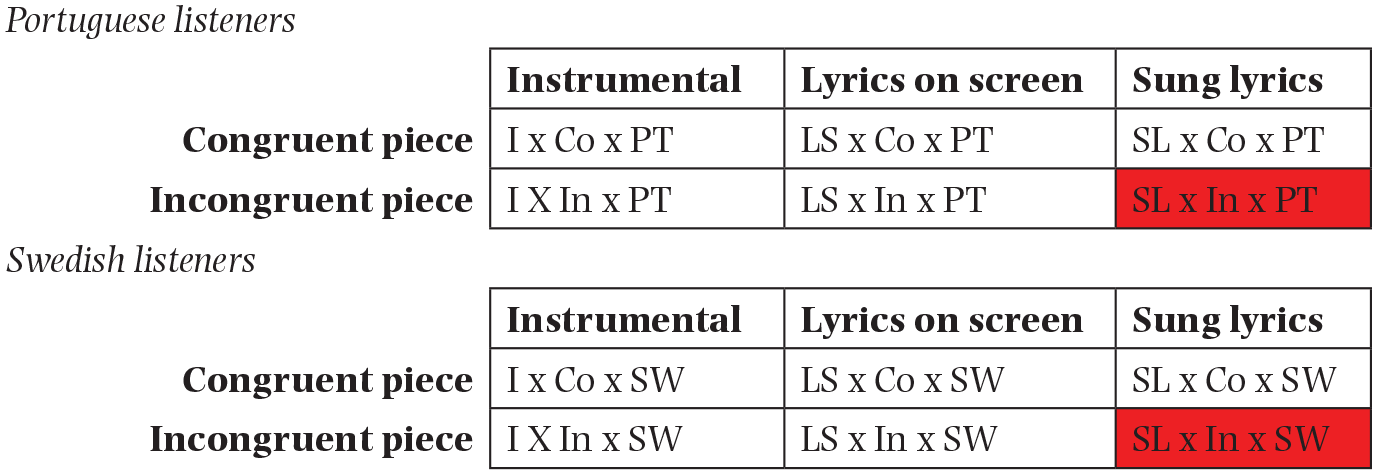
The Conditions of the Incomplete Factorial Design Used in the Experiment.
Measures
The participants rated their induced emotions on 13 scales, representing 12 discrete emotions and emotion intensity. These 12 emotion categories are typically included in research of music and emotion (e.g., Juslin et al., 2015). In addition, participants rated their familiarity with the music. The activation of the BRECVEMA emotion-induction mechanisms was measured by eight items targeting each of the eight mechanisms, in addition to one measuring cognitive appraisal and one measuring the influence of lyrics. The questionnaires were presented in participants’ native language. The original versions are written in Swedish and have been translated and back translated to English in previous studies (e.g., Juslin et al., 2014). The Portuguese versions were translated from English by the first author (who is a native Portuguese speaker with proficient English knowledge). Back translations were performed by an external independent native Portuguese speaker, also with proficient English knowledge. All items were rated on 5-point scales ranging from 0 (not at all) to 4 (a lot). (See Supplemental Appendix A for the complete set of items.)
Musical material
Participants listened to six musical stimuli. These stimuli were common for all participants in both sample groups. Half of the stimuli comprised three different versions of a Swedish folk piece and the other half three different versions of a Portuguese folk piece. The two pieces of music were selected because they represent two types of folk that characterize the Portuguese and the Swedish culture (a Portuguese fado folk song and a Swedish folk song, respectively). They both also represent a sad lyrical theme. To verify this, an independent sample of listeners was asked to rate their perception of the lyrics’ emotional expression, with results supporting the prevalence of sadness in the lyrics of both songs (see Supplemental Appendix B). No content analysis of the lyrics was performed, but both songs are similar in their message of “leaving behind someone beloved.” Finally, both pieces of music contain acoustic characteristics that have been correlated with perceived sadness (minor mode, slow tempo; Juslin & Lindström, 2010).
The Swedish piece is titled “Vem kan segla förutan vind?” (duration: 90 s). This folk song is known from Finnish-Swedish settlements, and features lyrics often perceived as sad. The version used was recorded as a single by Nina Lizells and Lee Hazel Woods in 1971. The Portuguese piece used was the fado song “Segredos” (duration: 125 s), written by Paulo Valentim in 2013. The small difference in time is compensated by the use of ecologically valid pieces of music. The use of ecologically valid stimuli is an important aspect to consider when studying complex auditory signals such as music (Tierney & Kraus, 2013).
The three versions for each piece differed in terms of lyrics and were the following: (1) “instrumental” (no lyrics), (2) “lyrics on the screen” (instrumental audio with lyrics presented as text on the screen, either in their original language or translated to the participants’ language), and (3) “sung lyrics” (the original sung versions). The first version represented an “instrumental” condition (version with no lyrics), while the other two represented “lyrics” conditions (“lyrics on screen” version and “sung lyrics” version).
The reason for including two versions for representing lyrics reflects methodological issues: first, despite the ecological validity of the “sung lyrics” version, it also features the presence of a human singing voice. The voice alone can also contribute to the induction of musical emotions, particularly via the activation of emotional contagion (e.g., Juslin, 2013). Second, participants would not be able to understand the lyrics of the incongruent piece when sung. The “lyrics on screen” version was thus included in order to account for the above two issues. Here, translated lyrics were presented on the screen, enabling participants from both groups to understand the lyrical content. In addition, this version avoided the potential confounding effect of the voice. Nevertheless, this version also lacked ecological validity. Furthermore, it has been argued that the different modalities (visual vs. auditory) may contribute to different emotional responses (Bonnel et al., 2001; Mori & Iwanaga, 2013). For these reasons, both versions were included. For the comparison between music from different origin (Swedish and Portuguese), we used the “lyrics on screen” version. However, in order to control that the effect of lyrics was not due to an effect of modality, we compared the “lyrics on screen” to the “sung lyrics” version, for the significant findings. 1
Procedure
The experiment for each group took place in two similar settings. Both sessions began with instructions informing participants that they would listen to six pieces of music and then describe their emotions, familiarity, as well as respond to questions exploring other aspects of their music experience (i.e., the underlying BRECVEMA mechanisms). The instructions clarified that they should rate their own (induced) emotions, not those expressed by the music. Before the beginning of each music, participants were asked to relax for a few minutes. After reading the instructions, the music listening test began with the first piece of music, followed by the rating scales, and thereafter the next piece, and so forth.
After the music listening test, participants filled out some background questions regarding age, musical education, and whether they played an instrument. Each participant was tested individually and listened to the music through high-quality headphones (Sony MDR-V500). The sound level was kept constant across all participants. All conditions were randomized; however, rating scales were kept constant across participants. Participants received no detailed information about the purpose of the experiment, to prevent confounding effects (Neale & Liebert, 1986). Each experimental session lasted about 30 min.
Results
Manipulation check
The scale measuring “familiarity” was included in the study as manipulation check, to check whether participants were indeed familiar with the “congruent” piece, and unfamiliar with the “incongruent” piece. A two-way analysis of variance (ANOVA), with “lyrics” (two levels: “instrumental” and “lyrics on screen”) and “music origin” (two levels: “congruent piece” and “incongruent piece”) as factors, on familiarity ratings for each group, indicated that familiarity was higher for the congruent piece in both groups, as expected, F(1, 24) = 17.63, p < .001,
Main analyses
Within each group, the analyses were conducted in two steps. The first step tested the main effect of lyrics and the interaction effect between lyrics and music origin on emotions and mechanisms. Here, we performed two-way ANOVAs, 2 with “lyrics” (two levels: “instrumental” and “lyrics on screen”) and “music origin” (two levels: “congruent piece” and “incongruent piece”) as factors.
The second step aimed to test whether the “lyrics on screen” version differed in terms of its effect on emotions from the more ecologically valid “sung lyrics” version. A repeated measures ANOVAs was performed with “lyrics” as the independent variable (two levels: “lyrics on screen” and “sung lyrics”) on the emotions and mechanisms where there was a significant effect in the first step of the analysis. This was only performed for the “congruent piece” for each participant group.
Portuguese group
First step
Table 1 presents the mean emotion ratings for each of the four experimental conditions, and the main effect of “lyrics” and interaction effect of “lyrics” and “music origin” on each emotion. The alpha level was adjusted for multiple tests (n = 13), from α = .05 to α = .0038. Regarding our hypotheses, ratings of “happiness-elation” did not differ significantly between conditions, F(1, 24) = 0.05, p = .82,
Mean Emotion Ratings, Main Effect of Lyrics, and Interaction Effects of Origin × Lyrics on Emotions for Portuguese Sample.
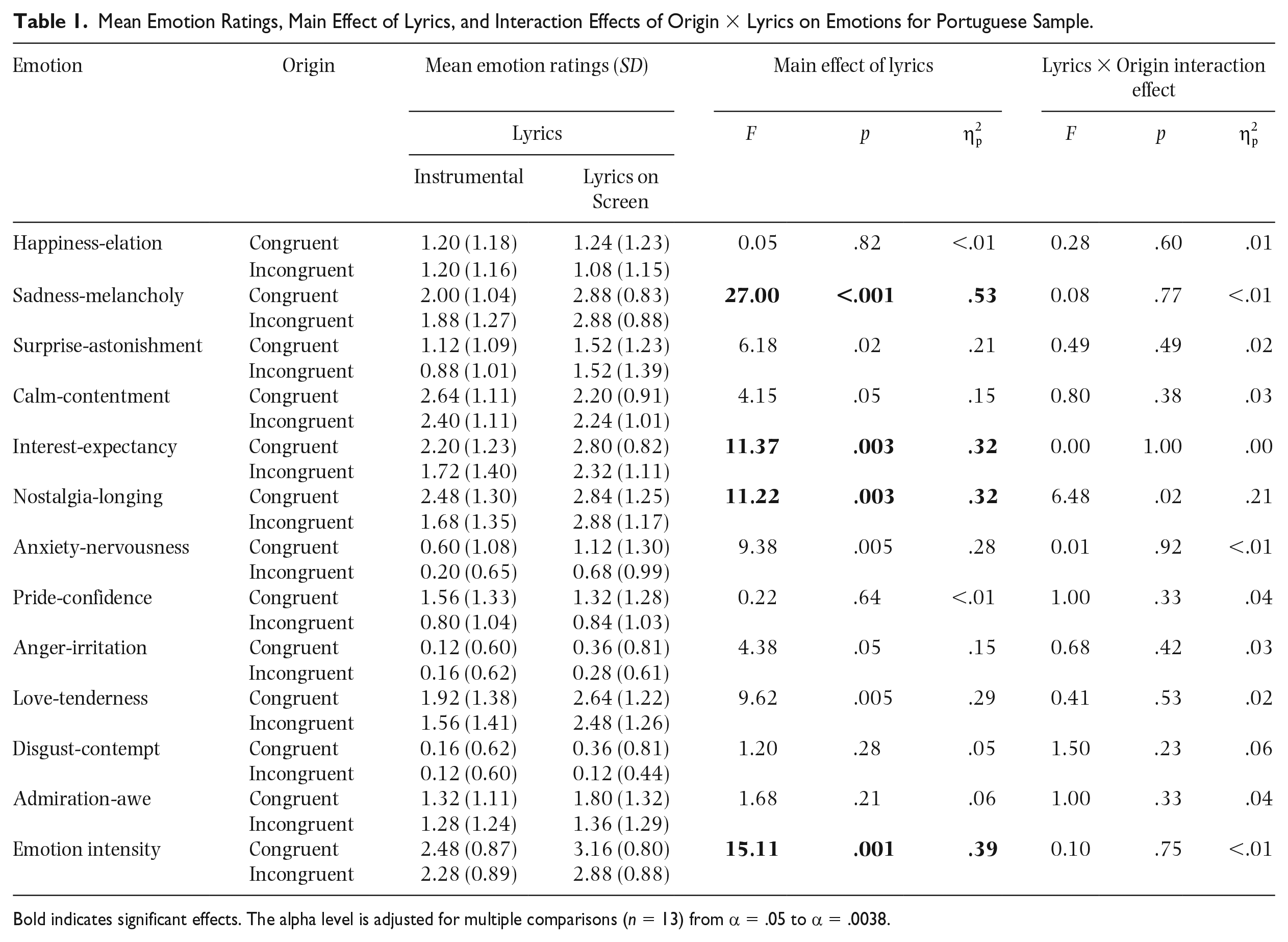
Bold indicates significant effects. The alpha level is adjusted for multiple comparisons (n = 13) from α = .05 to α = .0038.
Regarding the remaining emotions, the presence of lyrics significantly increased ratings of “interest-expectancy,” F(1, 24) = 11.37, p = .003,
Table 2 presents the mean mechanism ratings, and the main effect of “lyrics” and interaction effects of “lyrics” and “music origin” on each mechanism, with the alpha level adjusted for multiple comparisons (n = 9) from α = .05 to α = .0055. Lyrics had a significant effect on “evaluative conditioning,” F(1, 24) = 19.84, p < .001,
Mean mechanism Ratings, Main Effect of Lyrics, and Interaction Effects of Origin × Lyrics on Emotions for Portuguese Sample.
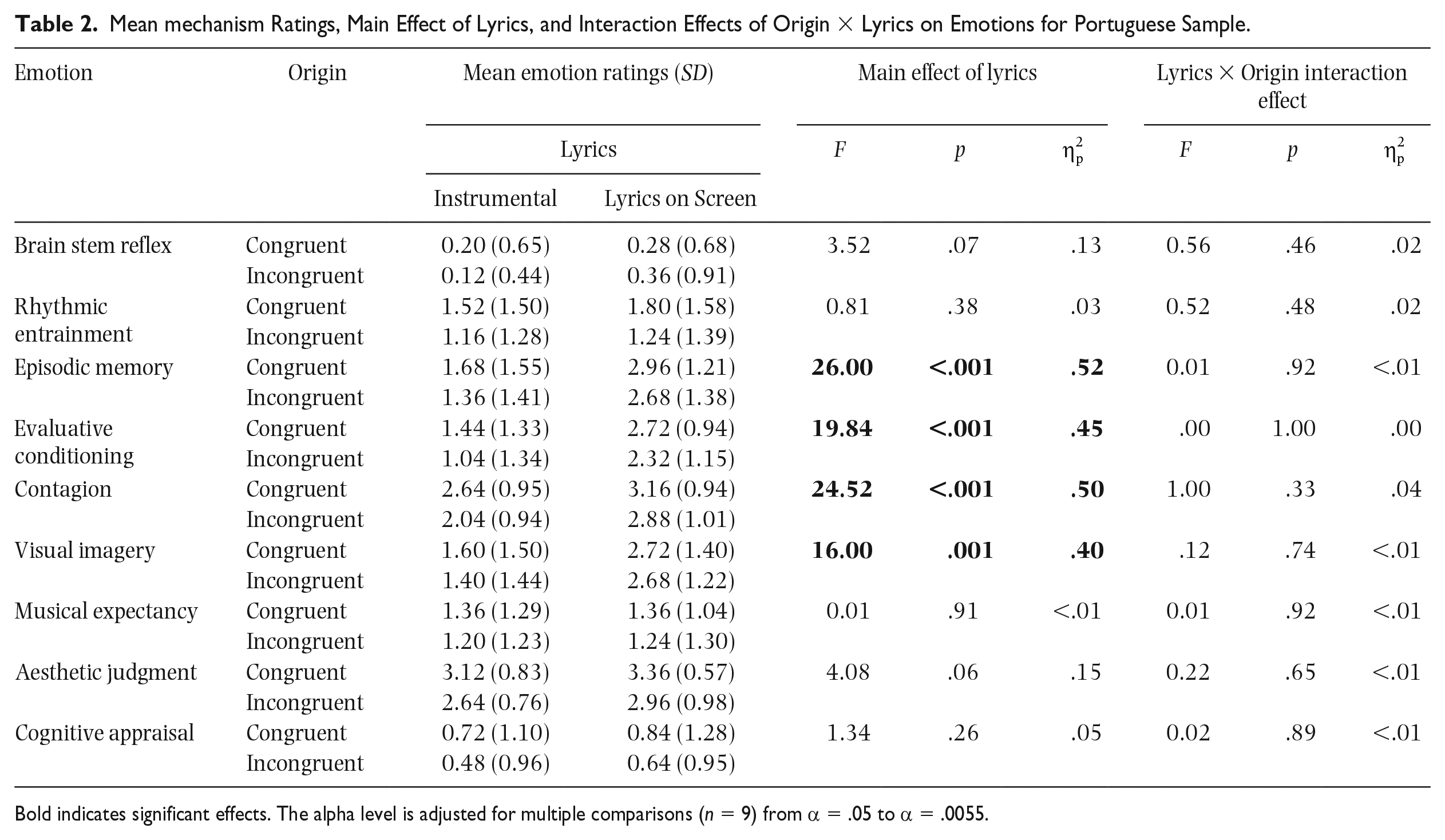
Bold indicates significant effects. The alpha level is adjusted for multiple comparisons (n = 9) from α = .05 to α = .0055.
Second step
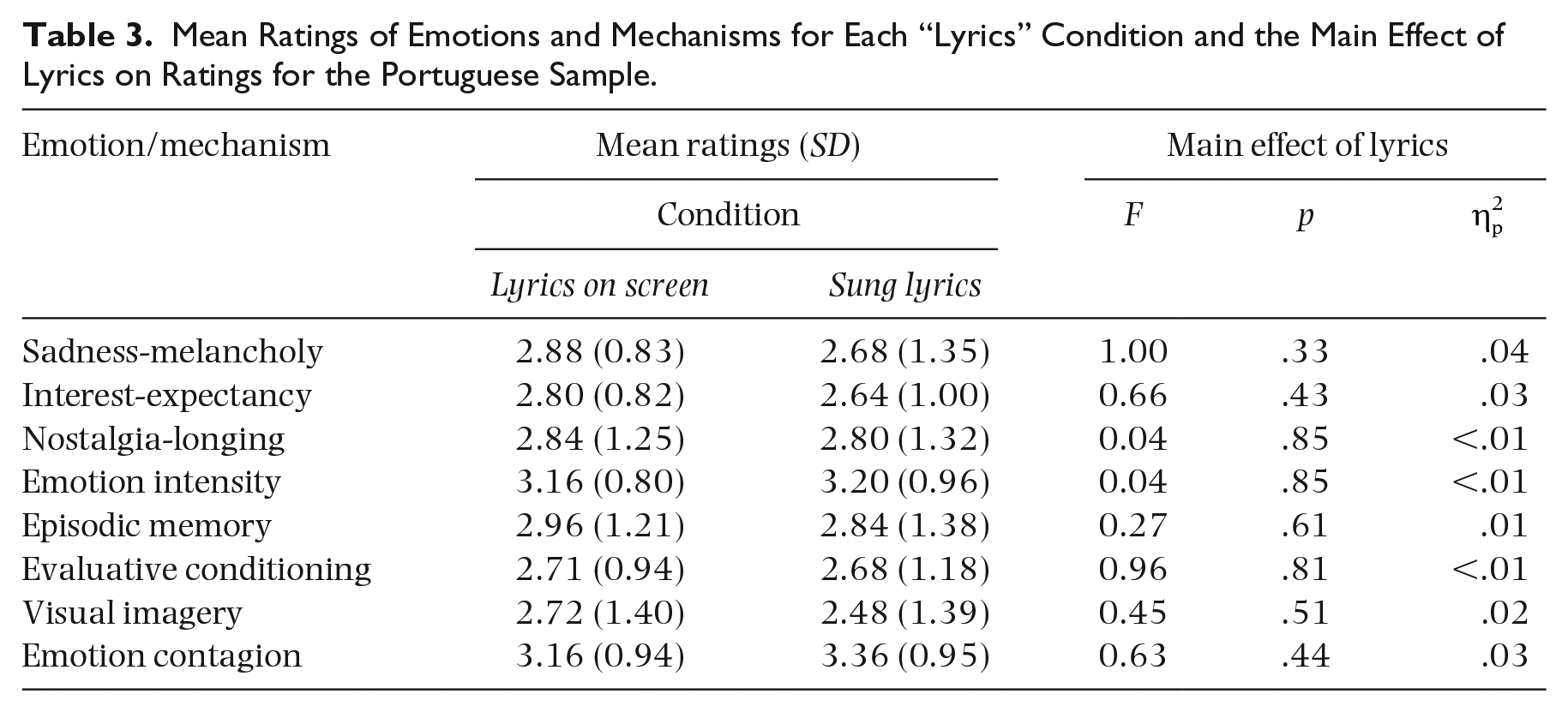
In order to control for the “lyrics on screen” condition for our significant main effects for the congruent piece, we compared ratings on the emotions and mechanisms where there was an effect on the first step of the analysis (Tables 1 and 2) in the two “lyrics” conditions (“lyrics on screen” and “sung lyrics”). As expected, ratings for the emotions and mechanisms did not differ significantly between the two conditions, ps > .05 (see Table 3).
Mean Ratings of Emotions and Mechanisms for Each “Lyrics” Condition and the Main Effect of Lyrics on Ratings for the Portuguese Sample.
Swedish group
First step
Table 4 presents the mean emotion ratings for each condition for the Swedish participants. Also presented in the table are the main effect of “lyrics” and interaction effect of “lyrics” and “music origin” on each emotion, with the alpha level adjusted for multiple tests (n = 13), from α = .05 to α = .0038. Lyrics had a significant effect on ratings of “surprise-astonishment,” with higher levels for the “lyrics on screen” condition, F(1, 24) = 15.92, p = .001,
Mean Emotion Ratings, Main Effect of Lyrics, and Interaction Effects of Origin × Lyrics on Emotions for Swedish Sample.
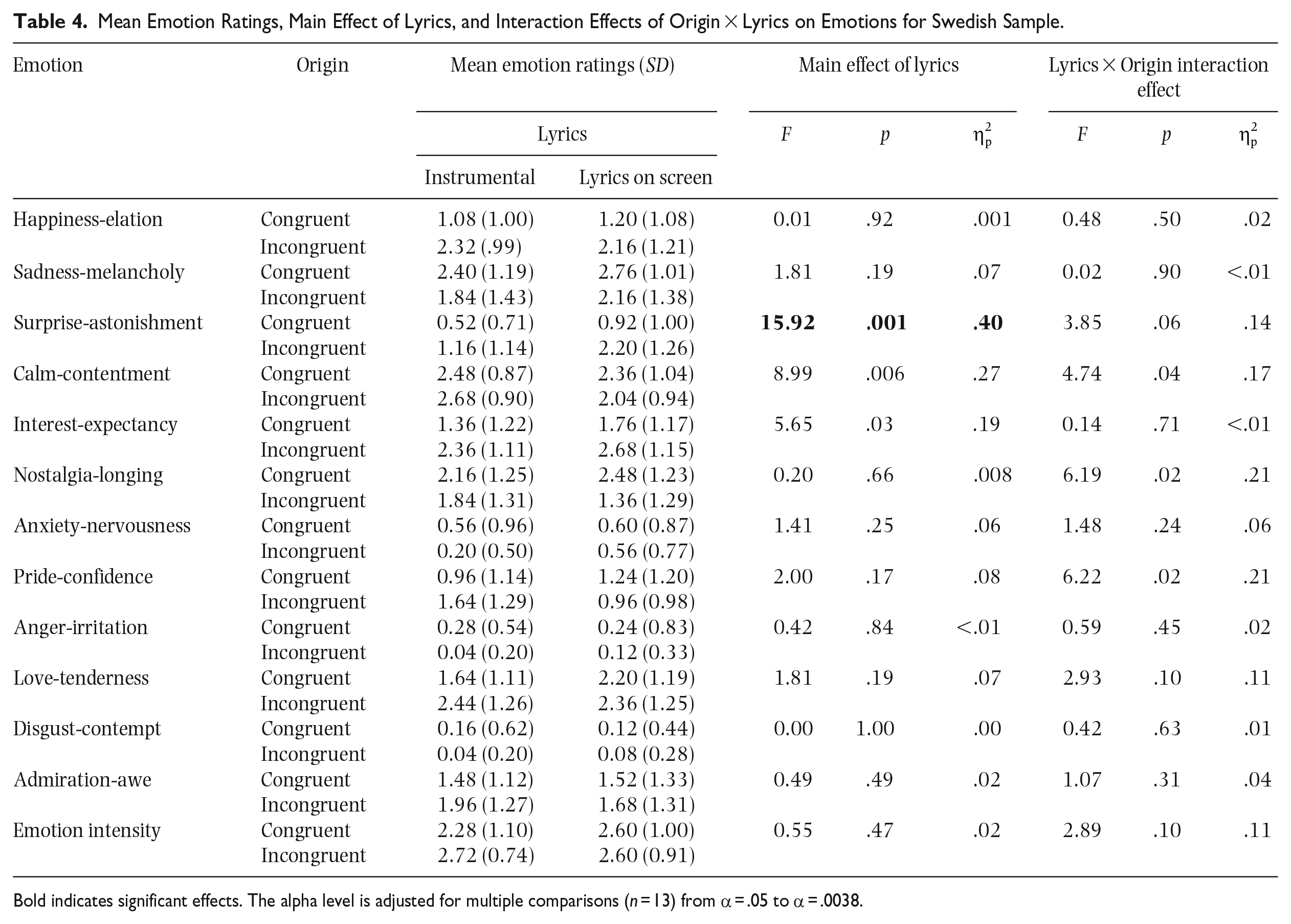
Bold indicates significant effects. The alpha level is adjusted for multiple comparisons (n = 13) from α = .05 to α = .0038.
Table 5 presents the mean mechanism ratings for each condition, and the main effect of “lyrics” and interaction effects of “lyrics” and “music origin” on each mechanism, with the alpha level adjusted for multiple comparisons (n = 9) from α = .05 to α = .0055. Significantly higher ratings of episodic memory were reported in the “lyrics on screen” compared to the “instrumental” condition, F(1, 24) = 10.63, p = .003,
Mean Mechanism Ratings, Main Effect of Lyrics, and Interaction Effects of Origin × Lyrics on Emotions for Swedish Sample.
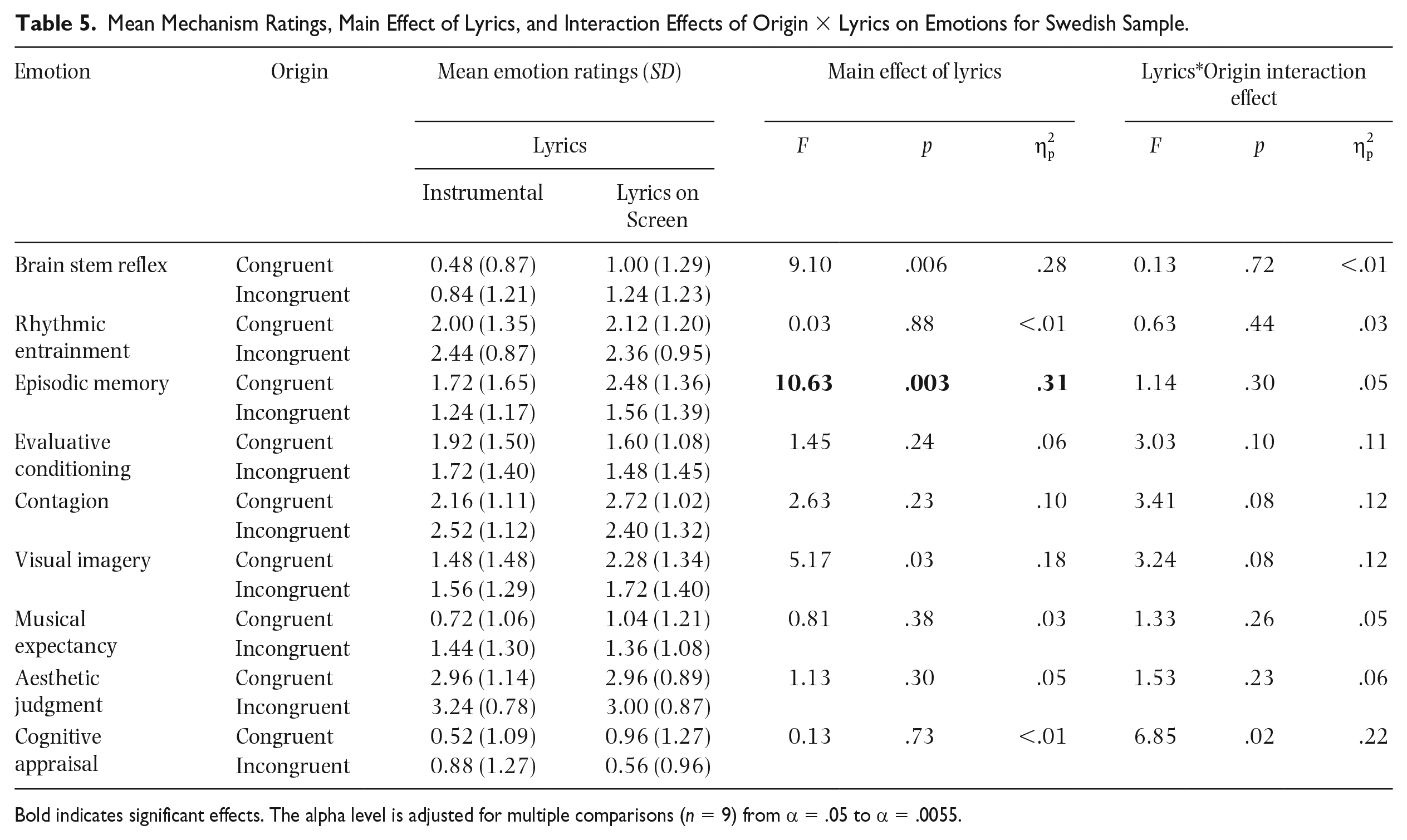
Bold indicates significant effects. The alpha level is adjusted for multiple comparisons (n = 9) from α = .05 to α = .0055.
Second step
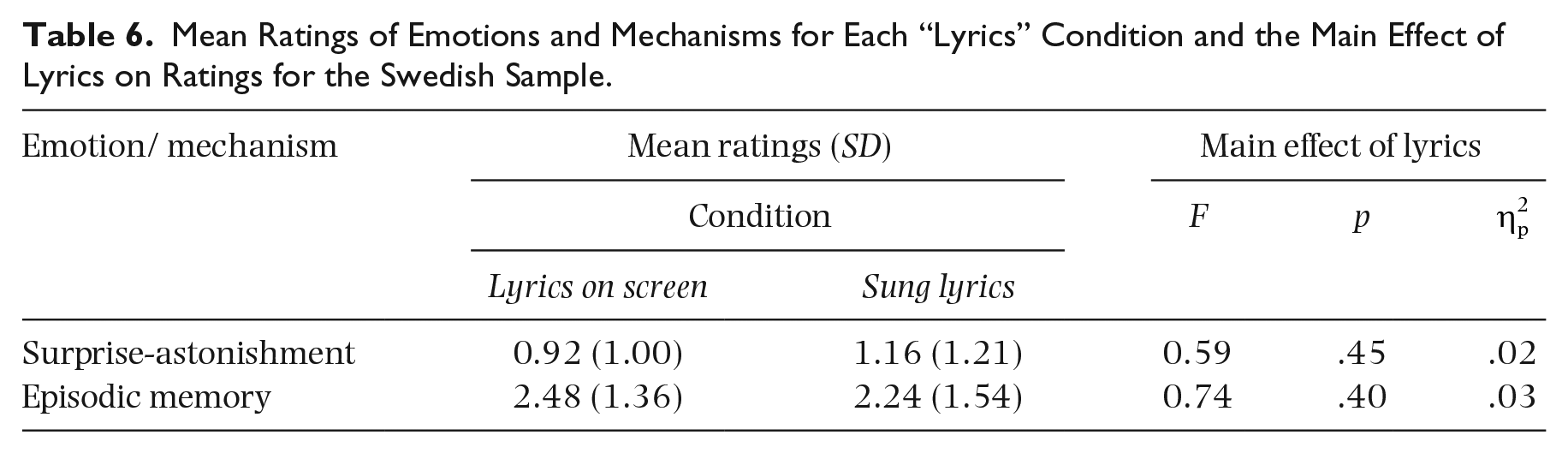
As can be seen in Table 6, ratings for “surprise-astonishment” and “episodic memory” did not differ significantly between the two “lyrics” conditions, ps > .05.
Mean Ratings of Emotions and Mechanisms for Each “Lyrics” Condition and the Main Effect of Lyrics on Ratings for the Swedish Sample.
Discussion
The present study revealed three main findings: first, lyrics had an effect on musical emotions and the induction of underlying mechanisms; second, this effect varied between groups from different cultural backgrounds; and, finally, the differences between groups were not based on the pieces’ origin.
Lyrics’ effect on emotions
Our results clearly support that there were cross-cultural differences regarding how lyrics influence emotions and mechanisms. Differences regarded a wider range of emotions and mechanisms in the Portuguese group than in the Swedish group. This is in line with previous results suggesting that lyrics are not a main cause of musical emotions for Swedish listeners (Juslin et al., 2008, 2011), but a main cause for Portuguese fado listeners, accounting for 91% of the self-reported causes of musical emotions (Barradas, 2019).
Regarding emotions for the Portuguese listeners, there was a main effect of lyrics on sadness-melancholy, nostalgia-longing, and interest-expectancy. There was also an effect of lyrics on overall emotion intensity in this group. In the Swedish group, there was a main effect of lyrics only for surprise-astonishment, while there was no effect for sadness-melancholy ratings.
These results partly support our first hypothesis. On one hand, lyrics had no effect on happiness-elation ratings in both groups. On the other hand, the presence of sad lyrics resulted in higher levels of aroused sadness-melancholy, but only in the Portuguese group. These findings are in line with previous research supporting that lyrics are more important for the arousal of sad emotions in music (Brattico et al., 2011). The lack of the effect on sadness-melancholy in the Swedish group could be interpreted as a general low interest in lyrics. Previous studies have supported that lyrics are rarely a cause of musical emotions in Sweden (Juslin et al., 2008, 2011). Confirming our second hypothesis, there was a significant effect of lyrics on nostalgia-longing, but only in the Portuguese group. This finding agrees with the results from a qualitative study indicating that the Portuguese associated lyrics with nostalgia (Barradas, 2019).
In the Portuguese sample, response patterns were surprisingly similar for both pieces of music (Swedish and Portuguese). Specifically, regardless of song origin, the presence of lyrics influenced the same emotions and mechanisms. This pattern was consistent for all emotions, apart from nostalgia-longing, where the effect of lyrics was only evident for the Swedish folk piece (incongruent piece). Nostalgia-longing might have been felt not because the song was familiar to the listener, but because nostalgia-longing was a by-effect of the music-evoked sadness. Previous research suggests that once a listener becomes sad, this emotion may also arouse nostalgia (Wildschut et al., 2006). Ortony et al. (1988), for instance, viewed nostalgia as part of the negative subset of well-being emotions. Specifically, they categorized nostalgia under the distress and loss emotions. The affective signature of nostalgia was considered to be sadness or mourning about the past. Historical nostalgia (longing for a lost past) was also associated with sadness relating closely to sad lyrics in recent studies (e.g., Batcho, 2007). Portuguese listeners also referred to nostalgia as a sad feeling (Barradas, 2019).
In the Swedish sample, the only emotion affected by the presence of lyrics was surprise-astonishment. A possible explanation for this puzzling finding can be offered based on anecdotal data; however, this would only explain part of this finding. Specifically, several participants expressed their surprise by the expression “I was born to be a seagull” featured in the lyrics of the Portuguese piece. While the Portuguese people relate this expression to a wish of freedom, the Swedish probably had no cultural reference to the connection between seagull and freedom, resulting in surprise-astonishment. Hence, we speculate that the arousal of surprise-astonishment was a by-effect of a cross-cultural pragmatic failure, that is, an inability to understand “what is meant by what is said” (Thomas, 1983, p. 91) due to cultural restrictions, rather than an effect of the lyrics per se. However, as was mentioned above, this account does not explain why the lyrics increased surprise-astonishment ratings in the Swedish music piece.
Lyrics thus had a more pronounced effect on emotions for the Portuguese compared to the Swedish participants. Below we present alternative potential explanations of why the importance of lyrics may vary cross-culturally, and why lyrics may consequently exert a more pronounced effect on emotions.
One possible explanation could be that the song-theme represents a cultural product that is not in line with cultural changes in individualistic traits over the last decades. Lyrics related to self-focus and antisocial behavior have been increasing over the last 30 years in the United States (individualistic society), whereas words related to social interaction decreased (DeWall et al., 2011). On the contrary, collectivist societies seem to prefer themes associated with social interaction, which correspond to the sub-themes of social embeddedness (e.g., love and friendship) represented in our stimuli. Health et al. (2001) have suggested that when cultural meanings are shared, emotional ideas are more likely to be communicated. Therefore, the cultural differences in prevalent lyrical themes may influence the emotions that these themes evoke.
A second possible explanation could be that the genre (folk music) is more important for collectivists than for individualists. An important aspect of collectivism is respect for tradition (Triandis, 1995), which is highly related to folk songs. Because music has become one of the most important cultural products creating an identity within societies (Schlegel, 1999), sad lyrics associated with folk may represent a cultural product that is no longer appealing to Swedish young adults, whereas the opposite is true within the Portuguese society, where fado, a sad and nostalgic type of folk, is still appealing to today’s youth, as suggested by quotations found in Barradas (2019).
A third possible explanation for the cultural differences in the effect of lyrics could be that lyrics are more salient in specific societies. Cultures are known to agree about what elements to pay attention to, and how much to weigh certain elements (Triandis, 2001). These differences in saliency of lyrics may be the result of different functions of music lyrics for different societies. Recent finding also suggest that some lyrics are interpreted differently across cultures because of stereotypes about particular genres and lyrics message (Susino & Schubert, 2020). The meaning of lyrics and their subsequent effect on emotions can vary cross-culturally: In order to give meaning to the lyrics, both Portuguese and Swedish listeners will have undergone the same psychological processes but within different cultural backgrounds (Triandis, 2007).
Therefore, differences in emotional responses could also be explained by considering the role of interest for, and attention to, the lyrics. Besides sadness-melancholy and nostalgia-longing, Portuguese participants also reported high interest-expectancy. This pattern of responses was the same for both pieces of music, regardless of music origin or familiarity. This increased interest may indicate that the lyrics were particularly salient for the Portuguese participants, which could potentially explain why these participants responded with a wider variety of emotions to lyrics compared to the Swedish participants. We speculate that this pattern of emotion activation is related to attention—how salient the lyrical themes were for the Portuguese group (Silvia, 2006): “The music ‘affords’ a certain response, but does not guarantee it. Attention is a crucial factor” (Juslin, 2013, p. 241).
Lyrics’ effect on mechanisms
Regarding reports for mechanisms in the Portuguese group, the presence of lyrics resulted in higher ratings of evaluative conditioning, contagion, visual imagery, and episodic memory. Interestingly, contagion, visual imagery, and episodic memory were the three mechanisms found to be associated with lyrics on a sample of Portuguese fado listeners (Barradas, 2019). This study suggested that when the mechanisms episodic memory and contagion were mediated by lyrics, listeners were able to feel a sort of historical nostalgia, serving identity and venting functions. Other functions were related to lyrics and visual imagery like counteracting loneliness, relaxing, and reflecting.
But how should we interpret these findings? Regarding episodic memory, conditioning, and visual imagery, all three mechanisms are closely related to memory (Juslin, 2013). It is possible that the narrative (lyrics) may have facilitated the recollection of explicit memories, enabling the activation of memory-related mechanisms (Saito et al., 2012). Finally, lyrics resulted in higher ratings of contagion. Emotion contagion is considered to be one of the components of empathy, the other one being cognitive empathy, that is, perspective-taking (Shamay-Tsoory et al., 2009). Listeners may have empathized with the situation described in the lyrics, leading to higher ratings of emotion contagion.
Regarding the Swedish group, the effect of lyrics was only evident for episodic memory, although the effect size was larger in the Portuguese group. Reports for the remaining mechanisms were not affected by the presence of lyrics. These results might derive from the notion that supports an integrated memory representation for melody and song texts (Besson et al., 1998; Serafine et al., 1984, 1986)—a biological explanation rather than an explanation based on cultural influences (e.g., Hodges & Sebald, 2011). Research supports that in song memory, lyrics and music are related by tight connections (Peretz et al., 2004).
Limitations
There are several limitations to the present study. First, all our data relied on participants’ self-reports. This implies that responses may have been affected by demand characteristics and social desirability (cf. Västfjäll, 2010). Because the information-processing involved in their emotional reactions is at least partly sub-conscious (see Juslin, 2013), reports regarding causal mechanisms should be interpreted with due caution. In terms of external validity, participants in this experiment were relatively young (mean age = 24.9 years), and age may influence the impact of cultural products (Schlegel, 1999). Future studies could explore whether these results could be replicated with older individuals. This would allow us to better understand if sad folk lyrics represent a cultural product that is no longer appealing for young Swedish adults. Psychological processes and cultural products such as lyrics mutually influence each other, creating generational differences regarding which emotions listeners search for in different societies (DeWall et al., 2011).
Regarding the musical stimuli, because of methodological issues, the “lyrics” version was represented by a condition where lyrics were presented written on the screen rather than sung, which would be a more ecologically valid version. The different modalities involved in reading versus listening to lyrics could potentially lead to differences in emotional reactions (Bonnel et al., 2001; Mori & Iwanaga, 2013). However, our second step analyses which compared ratings in the two “lyrics” conditions (i.e., “sung lyrics” and “lyrics on screen”) revealed that this was not the case in this study. Finally, from all possible cultures and music pieces, the current two are only a small selection. Thus, more research is necessary examining whether felt emotions generalize to culturally relevant music that differs from our stimuli in other terms (e.g., genre, preference for instrumental vs. music with lyrics). Future studies could also include collectivist cultures outside of Europe. Although Portugal is considered collectivistic in comparison to European countries (Hofstede et al., 2010), future studies could explore other cultures with higher scores in collectivism on a global level (e.g., China, India). We also cannot know whether the participants were influenced specifically by the presence of lyrics, the lyrics’ theme (sadness), or both. To distinguish these differences, future studies could investigate the effect of lyrics using neutral themes, which would involve no emotional message, or contrast happy themes with sad themes, or within other genres.
Implications for future research
This experimental cross-cultural study sheds light on the influence of cultural factors on emotions and mechanisms influenced by lyrics. One major implication of this study is that the song’s origin (i.e., culturally congruent vs. culturally incongruent/foreign) might not be an important factor when it comes to how lyrics influence emotions and mechanisms. The effect of lyrics was evident for the same set of emotions and mechanisms regardless of origin congruency, suggesting that the effects were not due to familiarity.
Future research could aim to replicate these findings with a wider range of musical stimuli deriving from several genres, and with broader cultural samples of participants. Such research could focus on genres and lyrics higher on individualism and lower in collectivism, enabling more general conclusions on how mechanisms are influenced by the presence of lyrics cross-culturally. Finally, future studies should attempt to explore the causes of cross-cultural differences in how lyrics influence emotions. These differences could be the result of cultural differences in the exposure to various genres or to specific lyrical narratives, or differences in the functions of lyrics and music within different societies.
Supplemental Material
sj-pdf-1-pom-10.1177_03057356211013390 – Supplemental material for When words matter: A cross-cultural perspective on lyrics and their relationship to musical emotions
Supplemental material, sj-pdf-1-pom-10.1177_03057356211013390 for When words matter: A cross-cultural perspective on lyrics and their relationship to musical emotions by Gonçalo T Barradas and Laura S Sakka in Psychology of Music
Footnotes
Authors’ note
Gonçalo T Barradas is also affiliated with Madeira Interactive Technologies Institute—NOVA-LINCS, Funchal, Portugal.
Funding
The author(s) disclosed receipt of the following financial support for the research, authorship, and/or publication of this article: The study was supported by a grant from The Ryoichi Sasakawa Young Leaders Fellowship Fund (Sylff) to Gonçalo T Barradas.

Supplemental material
Supplemental material for this article is available online.
Notes
References
Supplementary Material
Please find the following supplemental material available below.
For Open Access articles published under a Creative Commons License, all supplemental material carries the same license as the article it is associated with.
For non-Open Access articles published, all supplemental material carries a non-exclusive license, and permission requests for re-use of supplemental material or any part of supplemental material shall be sent directly to the copyright owner as specified in the copyright notice associated with the article.
