




Abstract
Introduction:
The nose is considered by some clinicians as the keystone of facial aesthetics. A treatment plan can be customized to intensify the facial aesthetics of a patient through careful evaluation of the soft tissue drape. Hence, for getting a better outcome of the treatment plan, orthodontists are supposed to have in-depth knowledge and awareness of soft tissue changes, taking into notice the ethnic and racial variation in discrete cohorts. The objective of this study is to enlist the relationship of nasal morphology with different dentoskeletal (sagittal and vertical) patterns.
Materials and Methods:
A comprehensive electronic database search was performed till July 2020, of Cochrane Library, Embase, PubMed, Scopus, Google Scholar, Web of Science, Wiley Online Library, and ScienceDirect. Only articles published in the English language were included. After excluding all the irrelevant data through careful screening, a total of 15 articles were selected which discussed the nose–dentoskeletal pattern relation.
Results and Conclusion:
The nose is found to be convex in skeletal class II, straight in class I, and concave in class III. Those with increased vertical growth may have an increased tendency of a convex nasal dorsum. Maxillary and mandibular jaw length affect the nasal parameters more than the jaw position. Nasal length and nasal depth increase with the jaw length and mandibular and maxillary/palatal-plane inclination to the cranium. A long nose with increased nasal depth is expected in long faces and those with long upper and lower jaws. An upturned nose is found with an anticlockwise-rotated maxilla.
AOI: angle of inclination Cconv: columella convexity LNLA: upper lip inclination (inclination of upper lip to FH plane) NBA: nasal base angle NLA: nasolabial angle NMA: nasomental angle NperpA: nasion perpendicular to A point NTA: nasal tip angle ROB: risk of bias SFC: soft tissue facial convexity UNLA: nasal upward tip angle (lower border of nose to FH plane)
Introduction
Facial appearance, no doubt, is a key to our instantaneous but comprehensive interpretation of any other individual. For centuries, anthropologists and clinicians have tried to objectively apprehend the real concept of facial beauty. 1 Even renaissance artists accentuated that facial beauty is predominantly rooted in symmetric and balanced proportions.
A well-proportioned face emphasizes the harmonious balance among different parts of the face. The nose, being centrally positioned on every face, cannot be overlooked, since, along with the lips and chin, it designates a unique and distinctive facial appearance to every individual. 2 It is considered by some clinicians as the keystone of facial esthetics. 3 This view is supported by Czarnecki, Nanda, and Currier, 4 who reported that the perception of facial appearance is greatly determined by the nasal form and its association with other parts of the face.
Angle 5 emphasized that if the dentition is arranged in optimum occlusion and is perfectly intact, the soft tissue would then assume a harmonious position. However, Hellman 6 contradicted this by saying that variations from normal may occur in soft tissue despite the presence of normal occlusion. Further, Czarnecki et al 4 concluded that the nose–lip–chin relationship is exceedingly significant in the determination of facial aesthetics.
Nasal growth is known to proceed relatively constantly into adolescence and is supposed to almost terminate by the age of 16 years in girls and 18 years in boys. 7 The ideal nasal proportion includes a straight nasal dorsum, with the nasal-tip cartilage and dorsal cartilage above the nasal tip creating the supratip break and the alar rims 1 to 2 mm superior to the columella when observed in a lateral view.8-10 Nevertheless, nasal features vary from race to race, along with many other facial characteristics.11-15 The shape of the nose may be considered as a sign indicating age, sex, race, and ethnicity. 16 Although it is not affected by orthodontic treatment, the tissues in proximity are, suggesting more in-depth consideration by orthodontists of nasal growth and development. 17
Recent studies argue that the standards of beauty vary from region to region, and they have brought the concept of divine proportion into question by confirming race- and gender-specific cephalometric changes. 18 According to race, the nasal shape has been categorized as Blacks having a platyrrhine-, Orientals having a mesorrhine-, and Whites having a leptorrhine-shaped nose. 19 Nasal parameter standards can be used for comparing various treatment outcomes, treatment planning, and nasal surgeries. With the shift in paradigm from hard tissue to soft tissue, treatment plans can be customized to amplify the facial aesthetics of patients through proper evaluation of the soft tissue drape. Hence, an orthodontist should have extensive comprehension of soft tissue alterations, taking into consideration the ethnic and racial discrepancy in discrete cohorts.
Objectives
This systematic review aims to enlist the relationship of nasal morphology with different dentoskeletal (sagittal and vertical) patterns.
Materials and Methods
Protocols and Registration
The PRISMA guidelines for transparent reporting of systematic reviews were followed. This study was registered at PROSPERO with the National Institute of Health Research database (NIHR) (
Information Sources, Search Strategy, and Study Selection
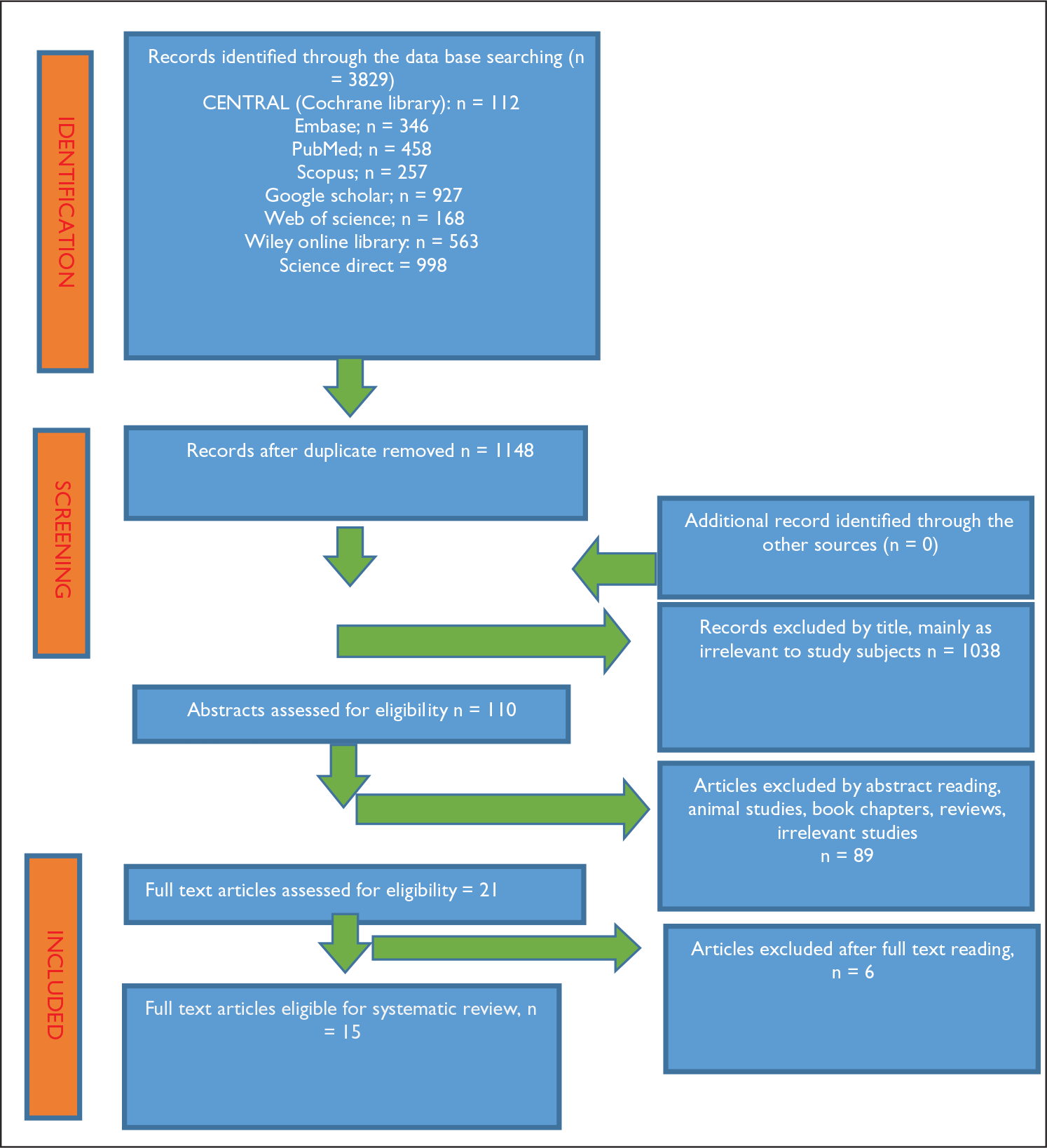
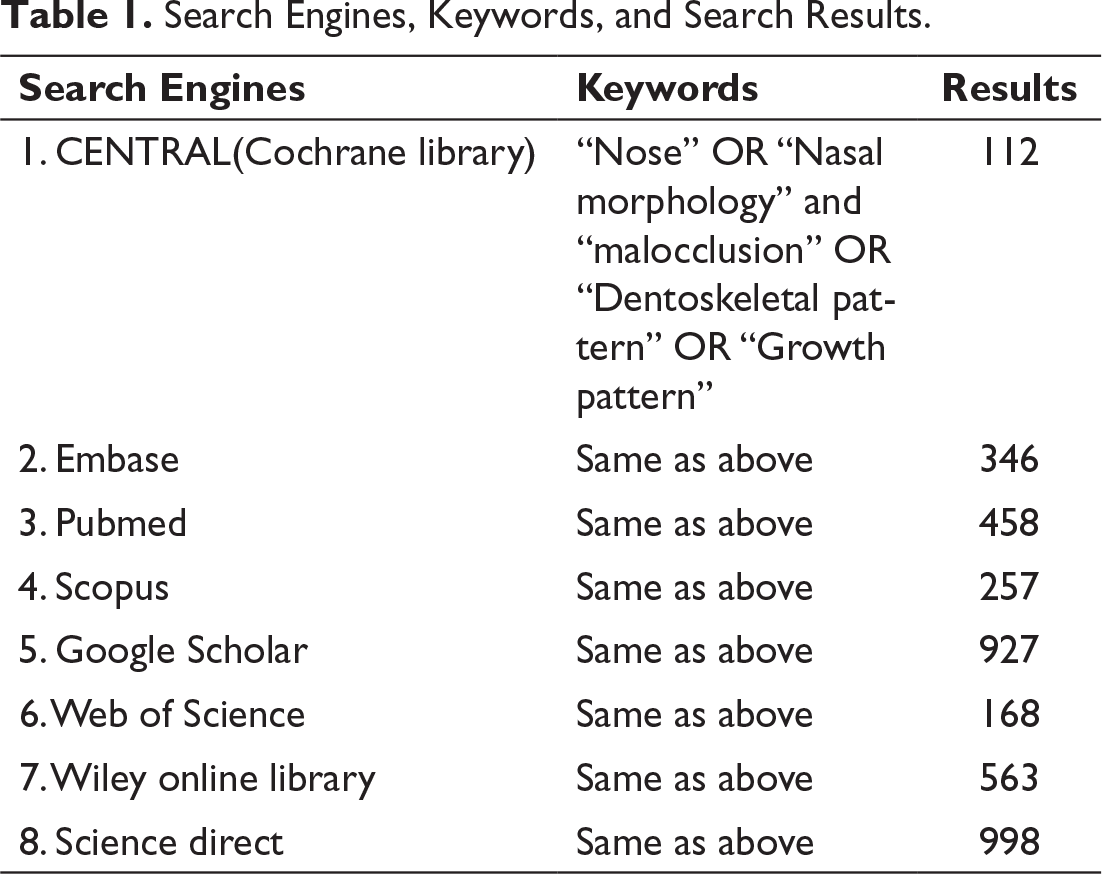
A comprehensive electronic database search was performed till July 2020 in the following relevant databases: Cochrane Library, Embase, PubMed, Scopus, Google Scholar, Web of Science, Wiley Online Library, and ScienceDirect (Table 1). A hand search was initiated after the electronic literature search to identify recent but uncited publications. The references of selected articles and relevant reviews were manually checked. No limits were set on the year and publication status of the trials in the process of exploring research in the area of interest. The results obtained from the search engines were screened for relevance based on title and abstract. Disagreements were resolved by a third reviewer. The search strategy is depicted in a flowchart in Figure 1.
Flowchart of Included Studies (PRISMA Flowchart).
Search Engines, Keywords, and Search Results.
Inclusion and Exclusion Criteria
Inclusion criteria included:
Original full-length articles focusing mainly on the relationship of various nasal morphologies with different dentoskeletal patterns, from all indexed journals;
English-language articles;
Human studies; and
Studies that used lateral cephalogram analysis for assessing the nose.
Exclusion criteria included:
Animal studies;
Other studies on the nose that did not have any relation with dentoskeletal patterns;
Review articles;
Non-English studies; and
Studies that used methods other than lateral cephalogram for nasal morphology analysis, such as anthropometric methods, facial silhouettes, photographic analysis, etc.
PICOS/PECOS
P: Participants—healthy males and females with no previous history of trauma, surgical intervention, orthodontic treatment, or congenital disease;
I/E: Intervention/Exposure—assessment of nasal morphology;
C: Comparison—different dentoskeletal patterns (sagittal and vertical);
O: Outcome—establishment of relationship between nasal morphology and different dentoskeletal patterns; and
S: Study designs—observational studies (cross-sectional and longitudinal).
Data Items and Collection
The essential information extracted from each study included: (a) author information, journal name, and publication year; (b) sample selection; (c) sample categorization (skeletal classes I to III, vertical and horizontal grower, high angle, low angle, dental classes I to III); (d) methods used; (e) nasal parameters considered; and (f) inference.
Risk of Bias in Individual Studies
This systematic review included 15 observational studies for qualitative analysis. Risk of bias (ROB) was analyzed using the ROBINS-E tool. 20 Seven components of bias were analyzed: (a) bias due to confounding; (b) bias in selection of participants in the study; (c) bias in classification of exposures; (d) bias due to deviations from intended exposures; (e) bias due to missing data; (f) bias in measurement of outcomes; and (g) bias in selection of the reported result. Finally, an overall ROB was made for each included study. Any study with at least 1 domain as serious risk was regarded as having an overall serious ROB.
Results
Study Selection
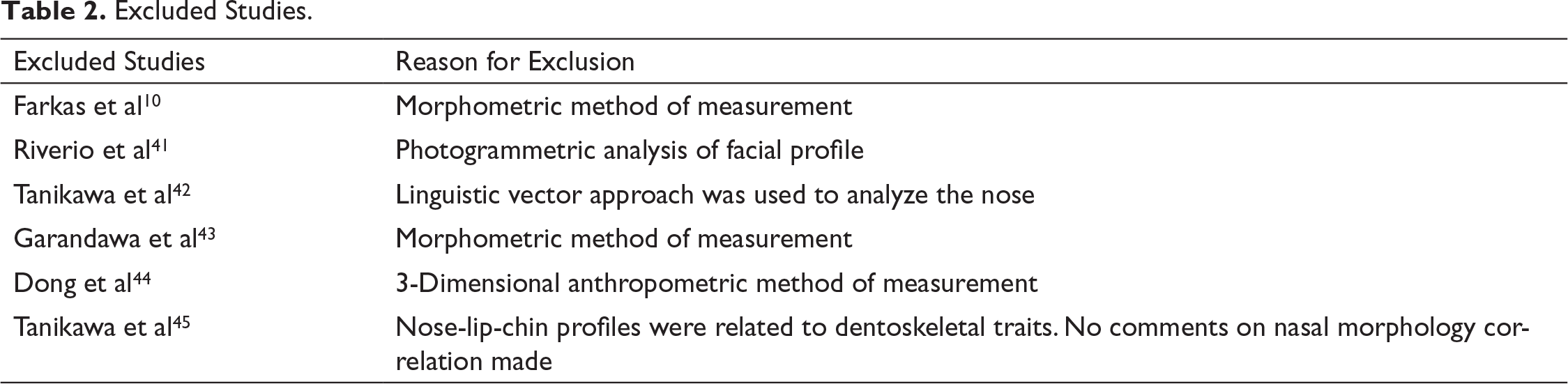
Excluded Studies.
Study Characteristics
The included studies comprised 15 observational studies, out of which 321-23 were longitudinal and the rest24-35 were cross-sectional in nature. Various authors had tried to relate the nose with different skeletal patterns: some with only sagittal patterns21, 22, 24-26, 30 (skeletal classes I to III), a few with only vertical patterns23, 33 (horizontal, vertical grower, low angle, high angle), and a few with both kinds of patterns (sagittal and vertical).27, 35 Four studies28, 29, 32, 34 assessed such relationship without classifying the sample into different sagittal and vertical groups. Four studies28, 29, 31, 32 commented on the relationship of the maxillary-/palatal-plane inclination with the nasal parameters.
Risk of Bias in Individual Studies (Figure 2)
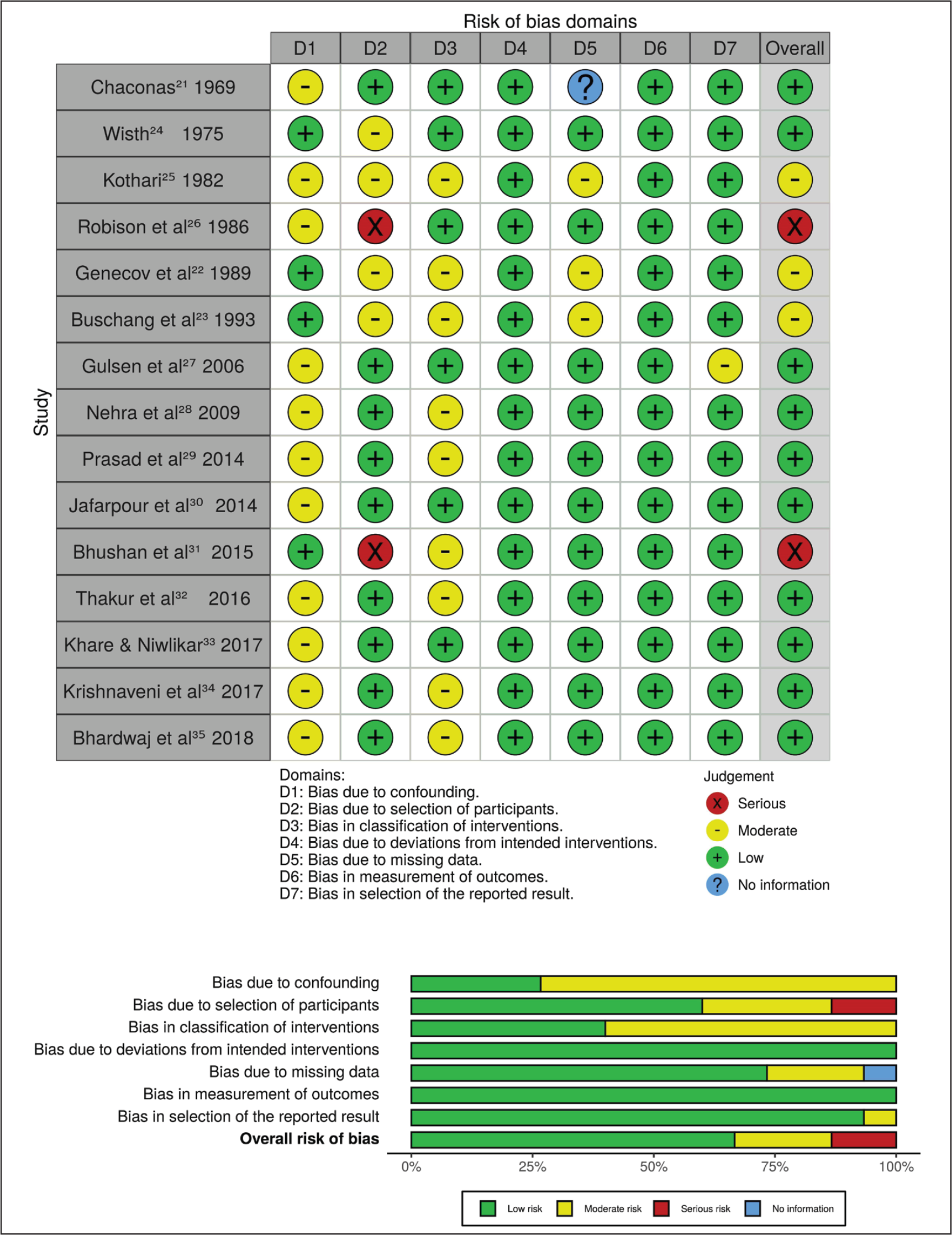
The overall ROB was graded as low for 10 studies21, 24, 27-30, 32-35, moderate for 3 studies,22, 23, 25 and serious for 2 studies.26, 31 A traffic-light plot and a weighted bar plot (Figure 2) were plotted using the robvis tool for the diagrammatic representation of the ROB in individual studies and its distribution.
In total, 7 parameters were assessed. Bias due to confounding, selection of participants, and classification of exposure were the main problematic domains assessed. A low ROB due to confounding was found in 4 studies. The rest all had a moderate ROB due to confounding. Gender is a confounding factor in this study, since it does influence the nasal morphology as reported by many studies.27, 29, 30, 32, 36, 37 Males are noted to have a larger nose in length and depth, with an increased projection from the face, lip, upper incisor, and chin, and with the nasal tip pointed downward, compared to females. Gender was equally distributed in 10 out of the 15 studies. Two studies24, 25 included only males in the sample, while 2 studies23, 26 included only females, out of which one of the studies 26 was conducted on White adolescent females only. One study 31 included only adult males with skeletal class I molar relation on both sides. In 2 studies,22, 25 only class I and class II samples were analyzed and no class III subject was present.
Thus, selection bias was graded as moderate for 4 studies,22-25 while for 2 studies26, 31 it was graded as serious.
Results of Individual Studies
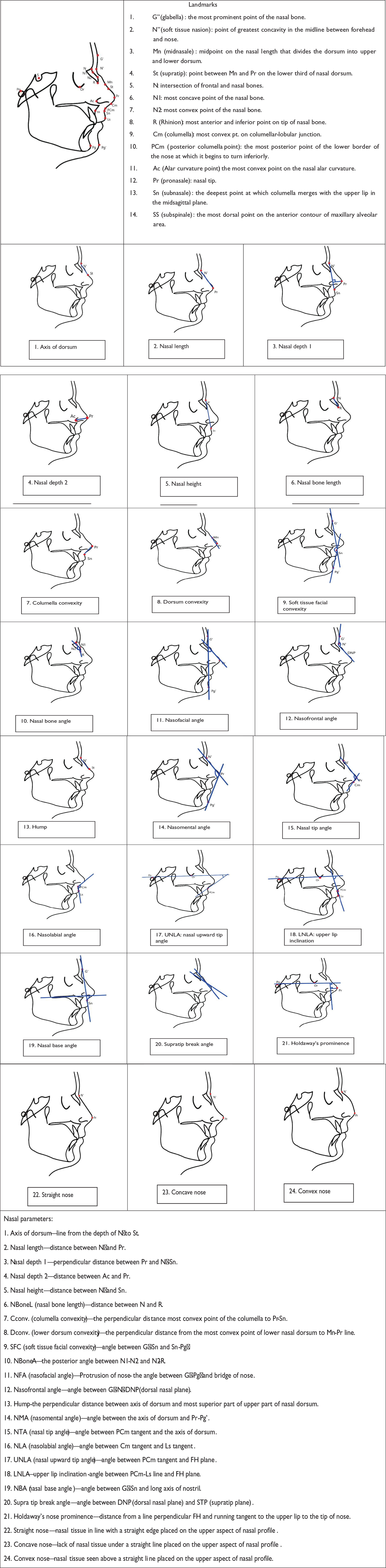
The final conclusion by each author on various landmarks and nasal parameters (Figure 3) has been summarized in Table 3.
Landmarks and Nasal Parameters.
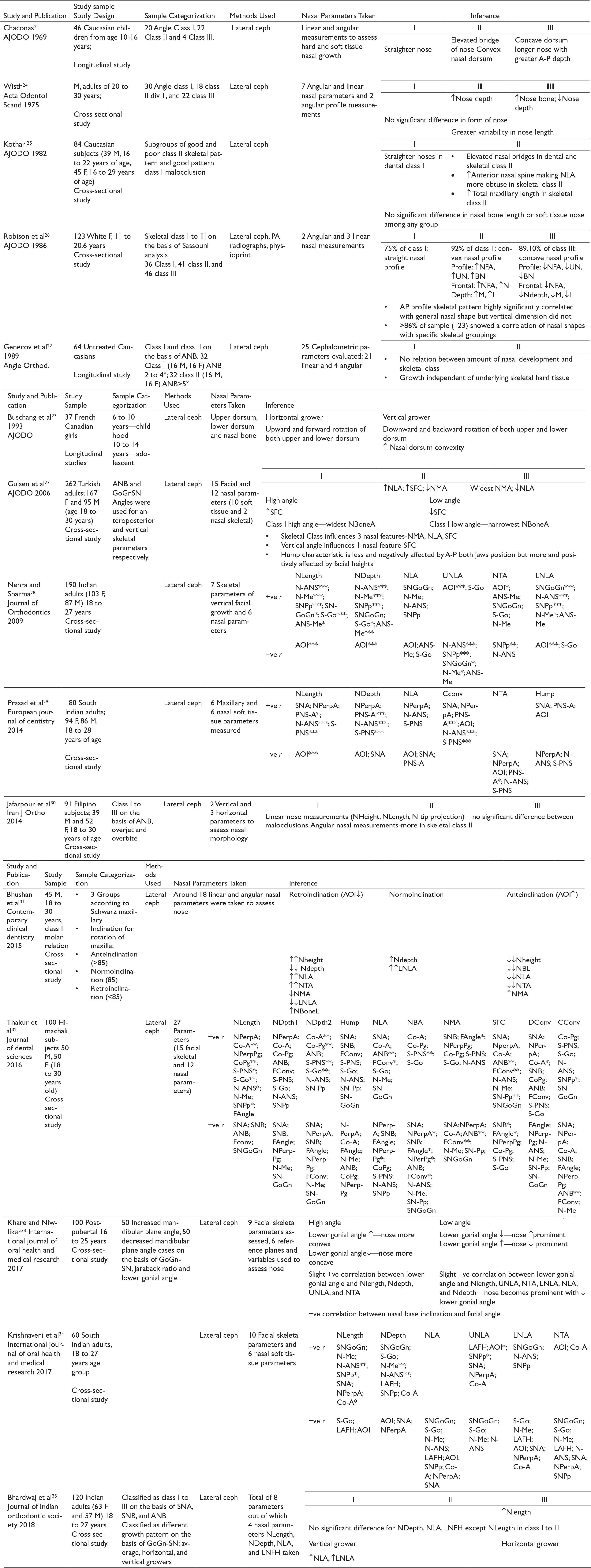
Note: *Significant (P ≤ .05); ** Very Significant (P ≤ .01); ***Highly Significant (P ≤ .001).
Four studies21, 24, 25, 33 found the nose to be convex in skeletal class II, straight in class I, and concave in class III. One study 24 found no significant difference in the nasal form among classes I to III except in nasal depth and the nose bone. One study 22 concluded no relation between the amount of nasal development and the skeletal class. Two studies23, 33 reported increased nasal dorsum convexity with increased vertical growth. One study 27 found that nasal features were affected more by anteroposterior than vertical skeletal factors. One study 30 found larger angular nasal measurements in class II. Two studies21, 35 found increased nasal length in class III. Four studies28, 29, 32, 34 reported an increase in nasal length and nasal depth with an increase in facial height and jaw length and also concluded that jaw length affected nasal parameters more than jaw position. Three studies28, 29, 34 showed an increase in nasal length and nasal depth with clockwise rotation of the maxilla. One study 31 reported an increase in nasal height and decrease in nasal depth with clockwise rotation of the maxilla. Two studies28, 34 found an upturned nose associated with anticlockwise-rotated maxilla. Two studies29, 32 found no significant association of the nasal hump with any skeletal parameter. One study 27 reported that the hump was more and positively affected by facial height and less and negatively affected by anteroposterior jaw position. Four studies28, 29, 34, 35 found no significant correlation of NLA (nasolabial angle) with any skeletal parameter, but one study 32 revealed its significant positive correlation with A point, Nasion, B point (ANB) and facial convexity. Two studies27, 32 found that SFC (soft tissue facial convexity) increased with ANB and facial convexity (class II) and also with palatal-plane and mandibular-plane inclination to the cranium (high angles). Dorsum convexity increased with maxillary length, as per one study. 32
Discussion
This is the first systematic review so far to establish the relationship of various nasal parameters with different dentoskeletal patterns. We found that there does exist a relationship of nasal morphology with underlying skeletal patterns. A convex nose was mainly found associated with class II, a straight one with class I, and a concave one with class III patterns. A nose with an increased nasal dorsum could be expected in vertical growers or high-angle cases than in horizontal growers or low-angle cases. The maxillary and mandibular jaw length affected the nasal parameters more than the jaw position.
Summary of Evidence
In earlier years, Chaconas 21 reported that class I subjects mainly had a straighter nose, class II subjects a convex nose, and class III subjects a concave nose. Since very few class III subjects had been investigated in this study, no firm statement could be made. Chaconas postulated that class II subjects could be expected to present with an elevated bridge and class III subjects with a longer nose and greater anteroposterior depth. He found that a long nose was associated with a large mandible. Meanwhile, Wisth 24 found no significant difference in the nose, soft tissue, or hard tissue, while nasal depth was found to be greater in class II subjects, with greater variability in nasal length. Class III subjects had a longer nose bone and lower nasal depth, with significantly greater variability in nasal length which was in contrast to the previous study. 21 Wisth concluded that the soft tissue profile convexity was primarily governed by the chin position and was less affected by nasal-form variations, contradicting the previous study. 21
Supporting the earlier study, 21 Kothari 25 also found elevated nasal bridges in the dental and skeletal class II group, along with a larger anterior nasal spine making the NLA more obtuse, while the class I group had a straighter nose. In agreement with Kothari 25 was another study 26 that demonstrated 75% of the class I skeletal group had a straight, 92% of the class II skeletal group had a convex, and 89.10% of the class III skeletal group had a concave soft tissue nasal profile. More than 86% of the patients illustrated the association of nasal shapes with certain skeletal groups. The study concluded that the anteroposterior-profile skeletal pattern showed a highly significant correlation with the general nasal shape but the vertical dimension did not. In profile view, the study found the nose with an increased nasofacial angle and increased upper and lower nose length in the skeletal class II group. According to the frontal-view physioprint study, convex noses and those higher in depth tended to be wider in the lower and middle sections while concave noses and those lower in depth tended to be narrower in the lower and middle sections.
Contradicting the above studies,21, 25, 26 Genecov et al 22 found no association between the amount of nasal development and skeletal class of an individual. The growth observed was relatively independent of the underlying skeletal hard tissue, which might be due to the variation in the age groups of the samples taken.
Buschang et al 23 noticed upward and forward changes in the upper and lower dorsum in horizontal growers and downward and backward rotation in vertical growers. He found increased convexity of the nasal dorsum with increased vertical maxillary growth. Gulsen et al 27 found that the class factor significantly influenced only 3 nasal features—nasomental angle (NMA), NLA, and SFC—whereas the vertical-angle factor significantly influenced only 1 nasal feature (SFC). High-angle subjects had more SFC, and class I, low-angle subjects had the narrowest nasal-bone angle. Gulsen et al. found that as the nasal-base inclination decreased, the lower-dorsum convexity increased, indicating that as the nose progressed downward, its tip tended to move downward and increased in plumpness, or vice versa. Jafarpour et al, 30 however, found no significant differences in the linear measurement of the nose among skeletal classes I, II, and III, but they reported comparatively larger angular nasal measurements in class II malocclusion.
Khare and Niwlikar 33 found that with an increase in the lower gonial angle, the nose became more convex in high-angle cases, whereas it became more prominent with a decrease in the lower gonial angle in low-angle cases. They reported an increase in the nasal-base inclination with a decrease in the facial angle, resulting in a convex facial profile and convex form of the nose; on the other hand, with a decrease in the nasal-base inclination, there was an increase in the facial angle, contributing to a concave facial profile and concave form of nose, which was in accordance with the previous studies21, 25, 26 but contradicted the other one 22 that might be attributed to the differences in sample selection, as it was conducted among participants in their early childhood. Bharadwaj et al 35 reported no significant difference between skeletal class I, class II, and class III malocclusion in nasal depth, NLA, and the nasal upward tip angle (UNLA) and only found a difference in the nasal length, in contradiction to 2 of the previous studies.26, 27 They found a significantly greater nasal length in class III malocclusion, like one previous study. 21 Adults with a vertical growth pattern were found to present with greater NLA and UNLA.
A few studies28, 29, 32, 34 simply correlated different nasal parameters with skeletal parameters without classifying the sample into different skeletal patterns. Anterior facial height (N–Me) was found to be significantly positively correlated with nasal length and nasal depth.28, 32, 34 Two studies28, 32 showed that posterior facial height (S–Go) was significantly positively correlated with nasal length and nasal depth, while one study 34 showed insignificant negative correlation with nasal length and positive correlation with nasal depth. Upper anterior facial height (N–ANS) was found to be significantly positively correlated with nasal length, nasal depth, upper lip inclination (LNLA), and columella convexity (Cconv) by some studies28, 29, 32, 34 but was found to be negatively correlated with UNLA by 2 studies.28, 34 Lower anterior facial height (ANS–Me) was found to be positively correlated with nasal length and nasal depth by one study. 28 Upper posterior facial height (S–PNS) was found to be significantly positively correlated with nasal length, nasal depth, and Cconv by 2 studies.29, 32 Lower posterior facial height’s (PNS–Go) correlation to nasal parameters was not commented upon by any of the studies. Two studies28, 34 demonstrated that mandibular-plane inclination (SN–GoGn) was positively correlated with nasal length, nasal depth, and LNLA but negatively correlated with UNLA. However, one of the studies 32 found a negative correlation between SN–GoGn and nasal length and nasal depth. Maxillary-/palatal-plane inclination to the cranium (SN–Pp) was found to be positively correlated with nasal length, nasal depth, and LNLA by 3 studies28, 32, 34 but found to be negatively correlated with UNLA by one study. 28 Also, SN–Pp was found to be negatively correlated with NTA (nasal tip angle) by 2 studies.28, 34 Maxillary position (SNA [sella, nasion, A point], NPerpA [nasion perpendicular to A point]) did not show any significant correlation with any nasal parameter as per 3 of the studies,29, 32, 34 while the same studies showed that maxillary length (Co-A,PNS–A) was significantly positively correlated with nasal length and nasal depth, and one study 29 showed its significant negative correlation with NTA. Thus, the maxilla’s length affected the nose more than its position. As per one study, 32 a significant positive correlation existed between mandibular length (Co–Pg) and nasal length and nasal depth, while mandibular position was found to be negatively correlated with SFC, NLA, and NBA (nasal base angle). Three studies28, 29, 34 showed a negative correlation of the angle of inclination (AOI) with nasal length and nasal depth, while 2 studies28, 34 showed a significant positive correlation of AOI with UNLA, thus suggesting the presence of an upturned nose in an anticlockwise-rotated maxilla. AOI was found to be negatively correlated with NTA by 2 studies,29, 31 while a positive correlation was seen in 2 other studies.28, 34
The nasal hump did not show any significant correlation with skeletal parameters as per 2 studies,29, 32 while one study 27 showed its low negative correlation with the anteroposterior position of both the jaws and positive correlation with facial heights, inferring that noses with a hump were found with backward and downward facial development rather than with forward facial development (classes I to III) and noses without a hump (straight and concave) were found with forward and upward maxillomandibular facial development rather than with downward facial development.
Limitations
Heterogeneity among the study groups, such as different age groups, different ethnic and racial groups, different genders (some studies included only males, some only females, and some both), is a probable limitation found in the studies. Also, different authors have taken different parameters, and the definition of a few parameters, like that of nasal depth, varies from author to author. Some authors considered 1 nasal depth; some classified it as nasal depth 1 and nasal depth 2; and some others categorized it as hard tissue and soft tissue nasal depth. Moreover, the profile view should not be the only view used to assess nasal morphology. Assessment of the nose from the frontal side is equally important. Thus, more studies need to be done taking the frontal view also into consideration.
Recommendations for Clinical Practice
Only altering the teeth and jaws may deteriorate an aesthetically pleasing nasal facial/dental complex. For example, the relative prominence of the nose increases as a result of lip changes that take place due to orthodontic treatment to reduce protruding incisors. Maxillary and mandibular surgeries that cause changes in the soft tissue, chin, and lower lip may also impact the relative prominence of the nose. 38 Thus, rhinoplasty alternatives should be incorporated into treatment planning in orthognathic cases. While taking any orthodontic treatment decision regarding malocclusions involving upper anterior teeth, the nasal base inclination should not be neglected, as it is imperative to consider whether orthodontic treatment of incisors alone or a combined surgical approach would more precisely result in improved posttreatment facial appearance. Likewise, a decision of non-extraction may make a difference in a borderline case having a prominent nose. Moreover, the nose plays an important role in the recognition of a familiar face and thus is a focus of several forensic studies. A straight nose has been found to be associated with the long-face type. 39 Nasal morphology assessment by orthodontists could be a great help in final face buildup in forensic facial approximation (FFA). 40
Conclusion
Taking into account the existing evidence and the most common nasal parameters analyzed and commented upon by different authors, the following conclusions can be made:
The nose is found to be convex in class II, straight in class I, and concave in class III subjects. A nose with an increased tendency of convexity of the nasal dorsum can be expected more in vertical growers or high-angle cases than in horizontal growers or low-angle cases.
The maxillary and mandibular jaw length affect the nasal parameters more than the jaw position. Nasal length and nasal depth increase with the jaw length and mandibular and maxillary/palatal-plane inclination to the cranium.
A long nose with increased nasal prominence (nasal depth) is expected in long faces and those with long upper and lower jaws. Similarly, a short/normal nose with short/normal nasal depth is expected in a short/normal face with short/normal upper and lower jaws.
With clockwise rotation of the maxilla, nasal length, nasal depth and nasal height increase, while they decrease with maxillary anticlockwise rotation.
An upturned nose is found to be associated with an anticlockwise-rotated maxilla.
NLA is not significantly correlated with most of the skeletal parameters except for ANB and facial convexity. SFC is found to be higher in class II and high-angle cases. Probably, the hump is not affected by any skeletal parameter except for facial heights. Cconv increases with an increase in upper facial heights.
Since the nose is sized in relation to different parts of the face, ignoring this relationship can undermine the effectiveness of orthognathic, profiloplastic, and orthodontic procedures. Thus, further studies on this topic with more in-depth parameters and analysis need to be undertaken, so that the relationship between nasal morphology and dentoskeletal pattern can be more clearly understood.
