




Abstract
Uprighting molar that is mesially angulated improves its periodontal status, coupled with bone deposition at the distal surface.1, 2 It also provides adequate support to its occlusal antagonist and maintains a stable occlusal pattern. Various methods for uprighting molars using springs, nickel-titanium superelastic wires, and miniscrews have been elucidated in literature.3-5 This article presents a modification of spring fabricated of nickel-titanium that is effective in uprighting mesially angulated molars with minimal invasiveness. The proposed advantage of using this spring was that buccal flaring of the angulated molar was not observed due to the mild distalizing force applied against the molar by the tugging action of the spring.
Procedure
The spring consists of two vertical arms (V1 and V2) and three horizontal arms (H1, H2, and H3) with one horizontal arm (H2) connecting the two vertical arms (Figure 1). The other two horizontal arms (H1 and H3) are inserted into the auxiliary slot of the first molar tube and second molar tube, respectively. It is fabricated from 16 × 22 nickel-titanium (NiTi), and 90-degree bends are given, using a cinching plier to create the horizontal and vertical components of the spring.
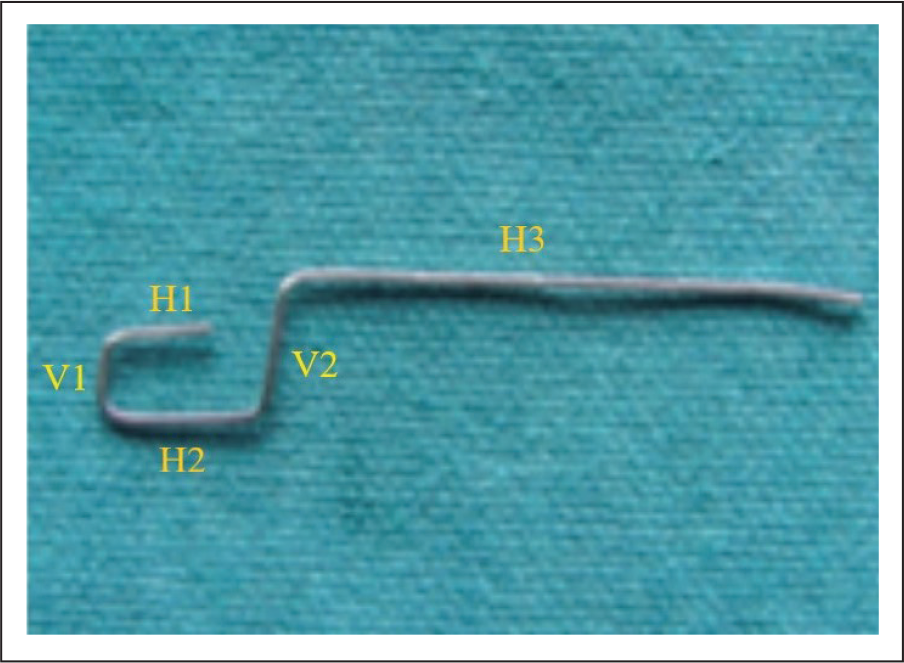
Note: V1 and V2 Stand for the Two Vertical Arms; H1, H2, and H3 stand for the Three Horizontal Arms.
During activation, the angulation of the second vertical arm (V2) is further increased to direct the force vector into a distalizing component. The angulation of the third horizontal arm (H3) is increased, which provides the uprighting component to the spring. The arms inserted into the first and second molar tubes (H1 and H3) are cinched back tightly. The presence of a mild gap between the inserted arm and the second molar tube during cinching can be appreciated since the spring is fabricated from NiTi. This mild play generates a tugging action onto the tooth, redirecting the tooth distally, preventing its buccal flaring, which is commonly observed in cases of unidirectional force application. The second horizontal arm (H2) connecting the two vertical arms (V1 and V2) provides a stable framework for constant force delivery:
Case 1
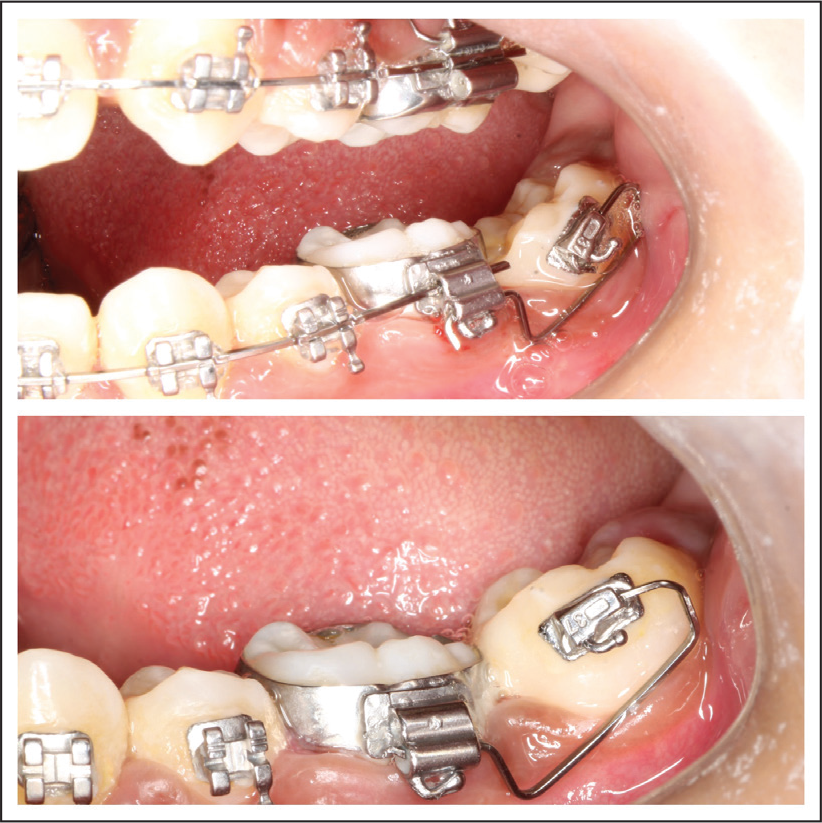
A 20-year-old patient reported to the dental clinic with a chief complaint of irregular alignment of teeth. Uprighting mechanics were initiated with respect to 37 (mandibular left second molar) after individual canine retraction was completed. Anchorage was derived from the base arch wire after the entire arch was strapped up with 022 MBT prescription. The amount of uprighting achieved in 3 months has been displayed sequentially with treatment progress in each month recorded (Figure 2-7).
Appliance Inserted Intraorally and Activated. Different Views of the Degree of Mesioangularly Impacted Second Molar (37) Seen in the Month of September (Initial Placement).
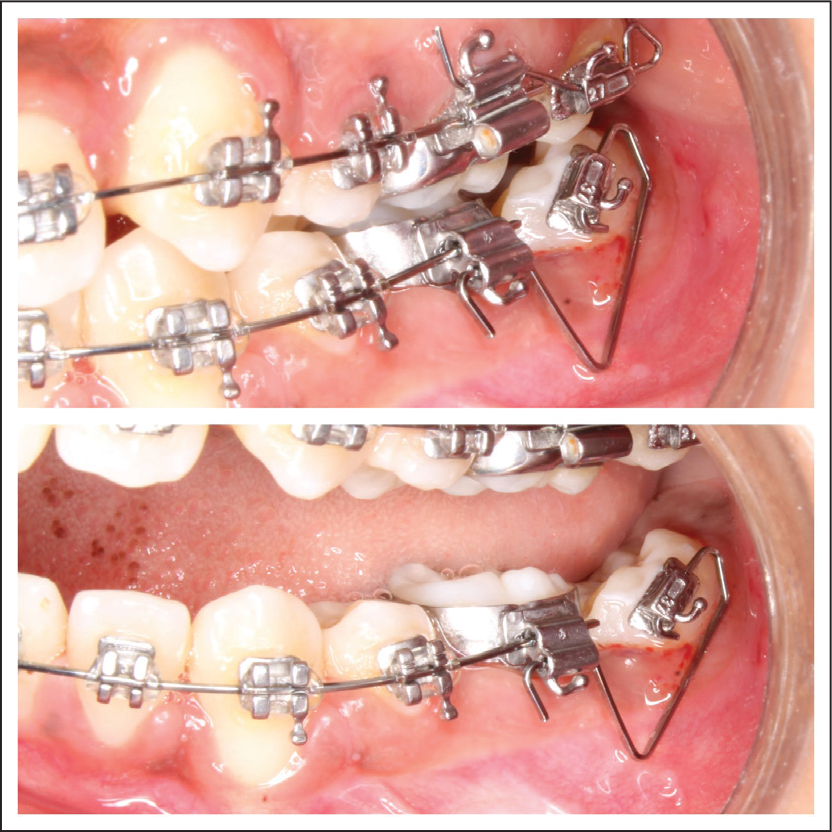
Improvement in the Degree of Impaction Seen in the Month of October (First Month Review).
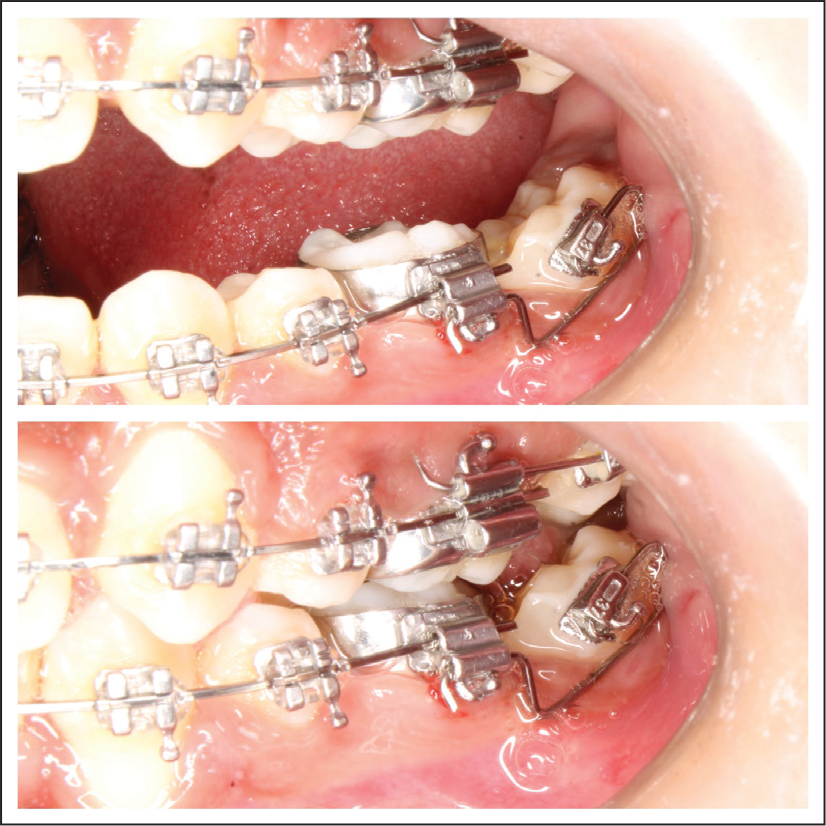
Improvement in the Degree of Impaction Seen in the Month of November (Second Month Review).
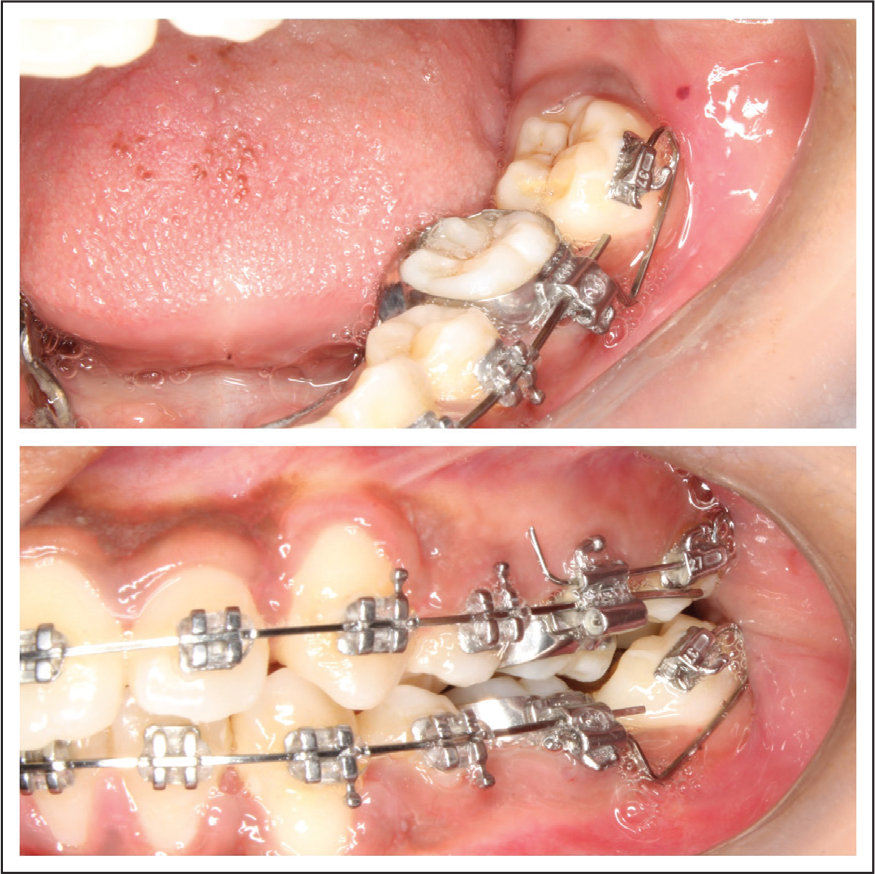
Improvement in the Degree of Impaction Seen in the Month of December (Third Month Review).
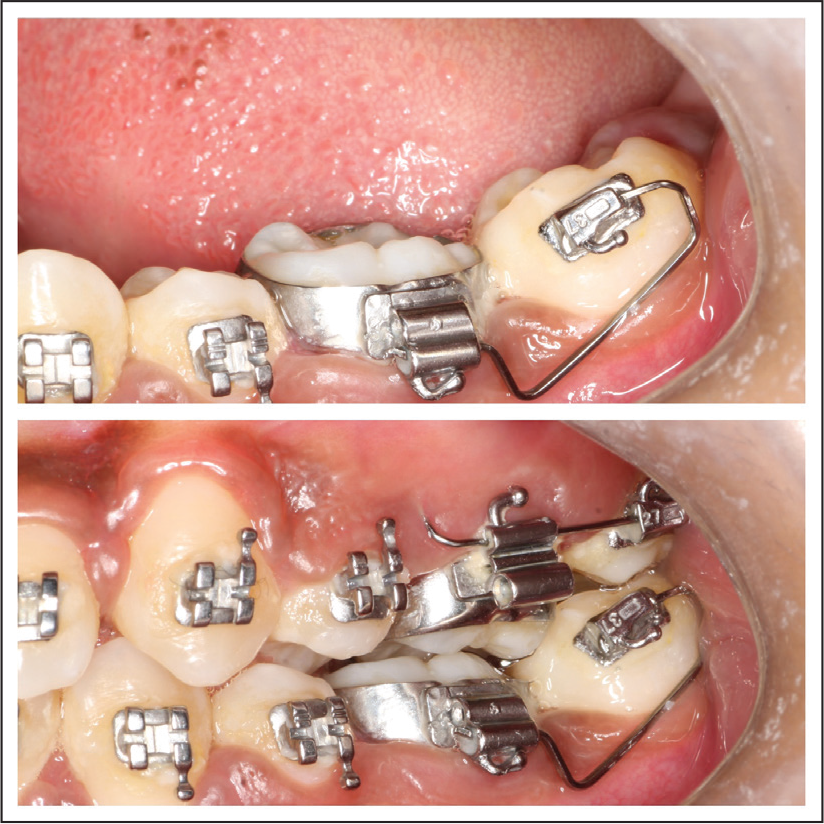
A Pre-and Post-comparison of Amount of Uprighting Achieved in a Period of 3 Months.
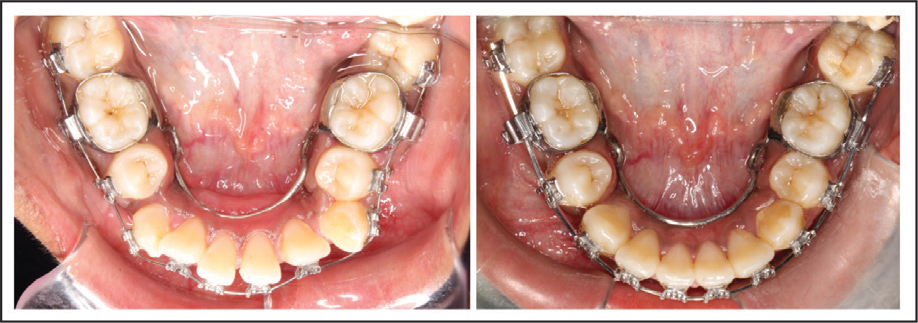
Intra-oral Mandibular Occlusal. A Significant Amount of Uprighting can be Appreciated Without Reciprocal Buccal Flaring.
Case 2
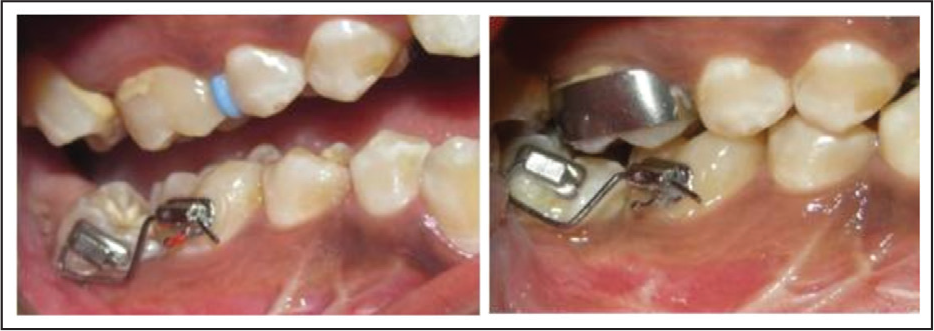
In the present case, the patient was undergoing a lingual appliance therapy, and anchorage required for uprighting came from the lingual appliance. Figure 8 shows the amount of uprighting achieved at the end of 4 months:
Uprighting Spring Fabricated from 16 × 22 NiTi Placed from Buccal Tube of First Molar to Second Molar. The Uprighting Achieved Was Recorded at the End of 4 months.
Discussion
Our spring is a simple, convenient alternative to upright moderate mesially angulated molars without encountering any periodontal complications as well as preserving arch integrity and alignment. It can be fabricated easily, minimizing chair-side time and patient inconvenience. No additional loops, bends, or complex biomechanics were utilized to facilitate the uprighting. No reciprocal effects were also observed in the rest of the arch, which served as an anchorage unit. Moreover, application of light and constant forces hasten the rate of tooth movement, improving its efficiency.
Common problems encountered during molar uprighting with round NiTi superelastic wires are buccal rolling of molars and subsequent outward expansion. 1 This can be effectively controlled by redirecting the forces distally, using the entire arch as an anchorage unit, which forms the basis of our spring mechanism. No interproximal stripping, push coil springs, or intermaxillary cross-elastics were utilized as adjunctive aids in uprighting.
Footnotes
Statement of Informed Consent
Informed consent was not sought for the present study because no identifiable images were used.
Declaration of Conflicting Interests
Funding
The authors received no financial support for the research, authorship, and/or publication of this article.
