




Abstract
The Forsus appliance is one of the most commonly used rigid fixed functional appliances in the correction of class II malocclusion. It is often seen that parts go missing with regular usage of the appliance. Replacement of the same is expensive and also requires a large inventory. An innovative low-cost and easy option for lost or broken split crimps is described in this article.
Introduction
The correction of class II malocclusion is a challenge in the day-to-day practice of an orthodontist. One of the recommended therapeutic approaches to class II malocclusion in a non-cooperative and growing patient is fixed functional jaw orthopedics through the primary mechanism of mandibular advancement. 1 The Forsus appliance is invariably used as a non-compliance class II corrector. The ForsusTM Fatigue Resistant Device (FRD) (3M Unitek, Monrovia, CA) is a fixed and a hybrid functional appliance, introduced by William Vogt. It is a three-piece, semi-rigid telescoping system incorporating a superelastic nickel–titanium coil spring that can be assembled chairside in a relatively short period of time. It is compatible with conventional fixed appliances and can be incorporated into them. The FRD attaches to the maxillary first molar and onto the mandibular archwire, distal to either the canine or the first premolar bracket. As the coil is compressed, opposing forces are transmitted to the sites of attachment.2,3 Forsus FRD is very effective in the correction of class II malocclusion through bringing about a combination of skeletal and dentoalveolar modifications. 4
The Forsus appliance kit consists of a push rod (right and left available in six different sizes), a spring module (EZ2 Module or L-pin Spring Module), measurement gauge, headgear tube on band, and split crimps. Split crimps are used to reactivate the spring module as treatment progresses. The recommendation is to add one split crimp to the push rod, and if another crimp is needed, move to a push rod of the next size (according to the manufacturer’s guidelines). Though easy to place and activate, there is a possibility of losing the components, requiring immediate intervention from the orthodontist. Split crimps, being very small in size, are often misplaced. Replacement of these crimps requires a new kit, in turn increasing the cost. Moreover, additional activation might be required, albeit occasionally. This necessitates the need for supplementary crimps. Unfortunately, the appliance kit comes with only a pair.
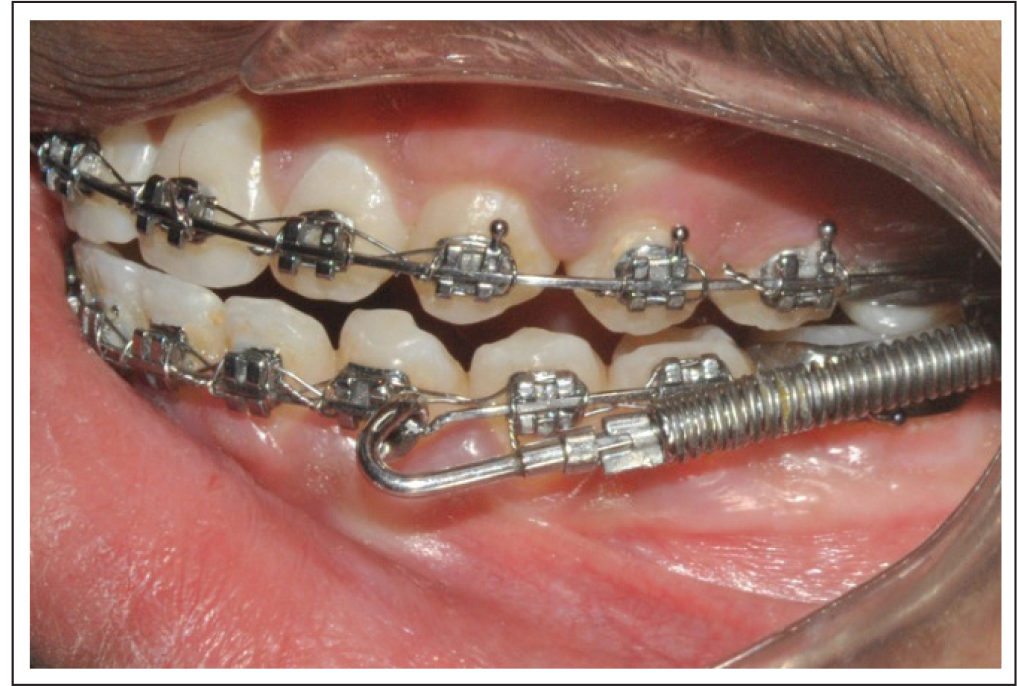
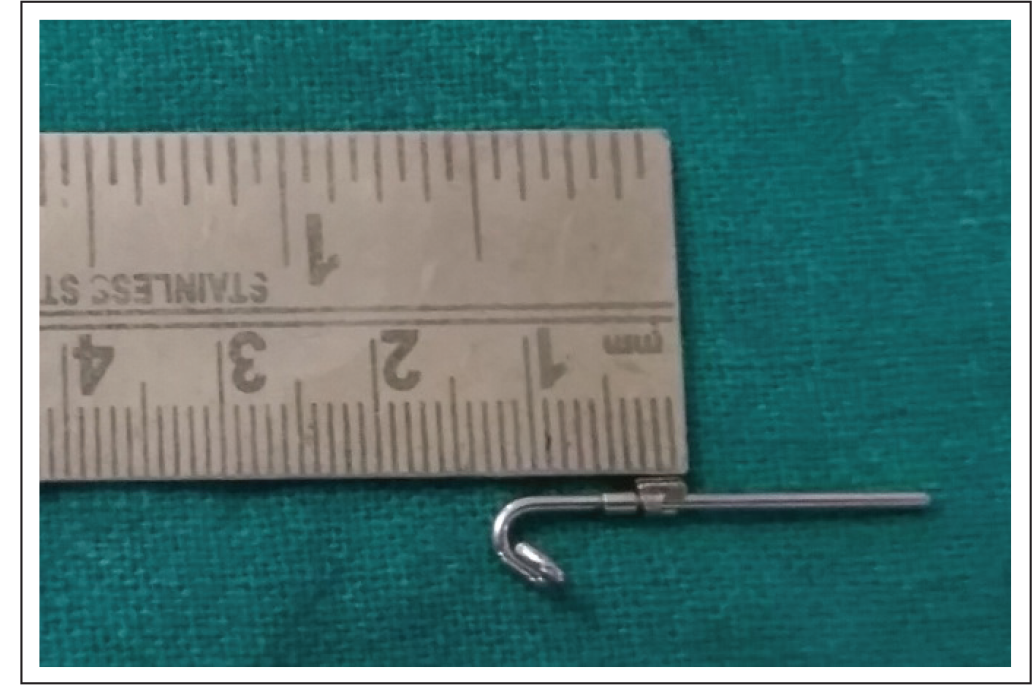
This article makes an attempt to construct an alternative split crimp with simple, available orthodontic materials. A step-by-step procedure is mentioned below to fabricate a surrogate crimp (Figure 1).
Procedure
Take a weldable Begg’s bracket and slightly open it with the help of a Weingart plier.
Pull the wings of the bracket so that the lockpin slot is opened; adapt this bracket over push rod (Figure 2).
Tighten the bracket over the push rod by compressing it with the plier.
It can be additionally spot-welded so that the new crimps formed by the bracket do not open up with force.
Depending on the activation required, the length of the Begg’s bracket can be adjusted by trimming it.
Forsus In Situ With Proxy Crimp.
Begg’s Bracket Adapted on Push Rod.
Advantages
Easy to fabricate;
No laboratory work required;
Economic and easily available in an orthodontic office;
Easy to insert and remove; and
Can be reused after sterilization.
Conclusion
This technique is found to be a cost-effective and facile alternative to split crimps, in case the latter are lost or additionally required. This helps in avoiding delay and saving chairside time.
Footnotes
Statement of Informed Consent and Ethical Approval
Necessary ethical clearances and informed consent was received and obtained respectively before initiating the study from all participants.
Declaration of Conflicting Interests
Funding
The authors received no financial support for the research, authorship, and/or publication of this article.
