




Abstract
Abstract
Background: Achieving adequate and broad occlusal contacts following orthodontic treatment usually is performed during retention phase, and it ensures good intercuspation of posterior teeth and post-treatment stability.
Objective: To investigate the changes in occlusal contacts with the use of Hawley-type retainers (Hawley’s and wrap around retainers) and compare them with other retention appliances.
Methods: The search included articles that were published until December 2018 in three popular databases. Selection criteria comprised studies evaluating number and area of occlusal contact changes during or at the end of retention phase, following orthodontic treatment. After study retrieval and selection, data extraction and individual study risk of bias assessment was performed using the Cochrane Risk of Bias tool.
Results: A total sum of eight studies reporting on outcome comparison between Hawley-type retainers with other retention appliances and untreated controls were selected. In all the eight studies, the risk of bias was unclear since blinding and random sequence generation was not reported. In all the eight reported studies, it was concluded that the number of occlusal contacts improved during retention period with Hawley type retainers, but when comparisons were done in between retainers, only two studies reported that Hawley-type retainers were better.
Conclusion: This systematic review concludes that the number and area of occlusal contacts improved during retention with Hawley-type retainers. The overall quality of available literature is poor and unclear to support the conclusion that Hawley-type retainers are better than other existing retainers in improving occlusal contacts.
Keywords
Introduction
Maintaining and improving stability achieved at the end of orthodontic treatment is always a challenge. 1 It has been stated that a good intercuspation and sufficient occlusal contacts play a key role in long-term stability of achieved orthodontic results.1, 2 Changes in occlusal contacts after the active phase of orthodontic therapy have been reported by various investigators.3, 5 Appliances used during the retention period should stabilize the results obtained at the end of active orthodontic treatment.
With a plethora of appliances for retention in place, it is imperative to study the influence of the type of retainer on the occlusal contacts.
Objectives
The objectives of this systematic review were to report literature evidence on the number, area, and location of occlusal contacts during retention with the Hawley-type retainer and compare the same with the other retainers over a period of 3–21 months post-orthodontic treatment.
Materials and Methods
This review is based on the PRISMA guidelines for systematic reviews but not registered in PROSPERO.
Inclusion and Exclusion Criteria
In vivo studies; prospective studies; and randomized controlled trials, evaluating the number and location of occlusal contacts during retention were included. No age restrictions were applied. Case reports, case series, animal studies, and in vitro studies were excluded.
Results
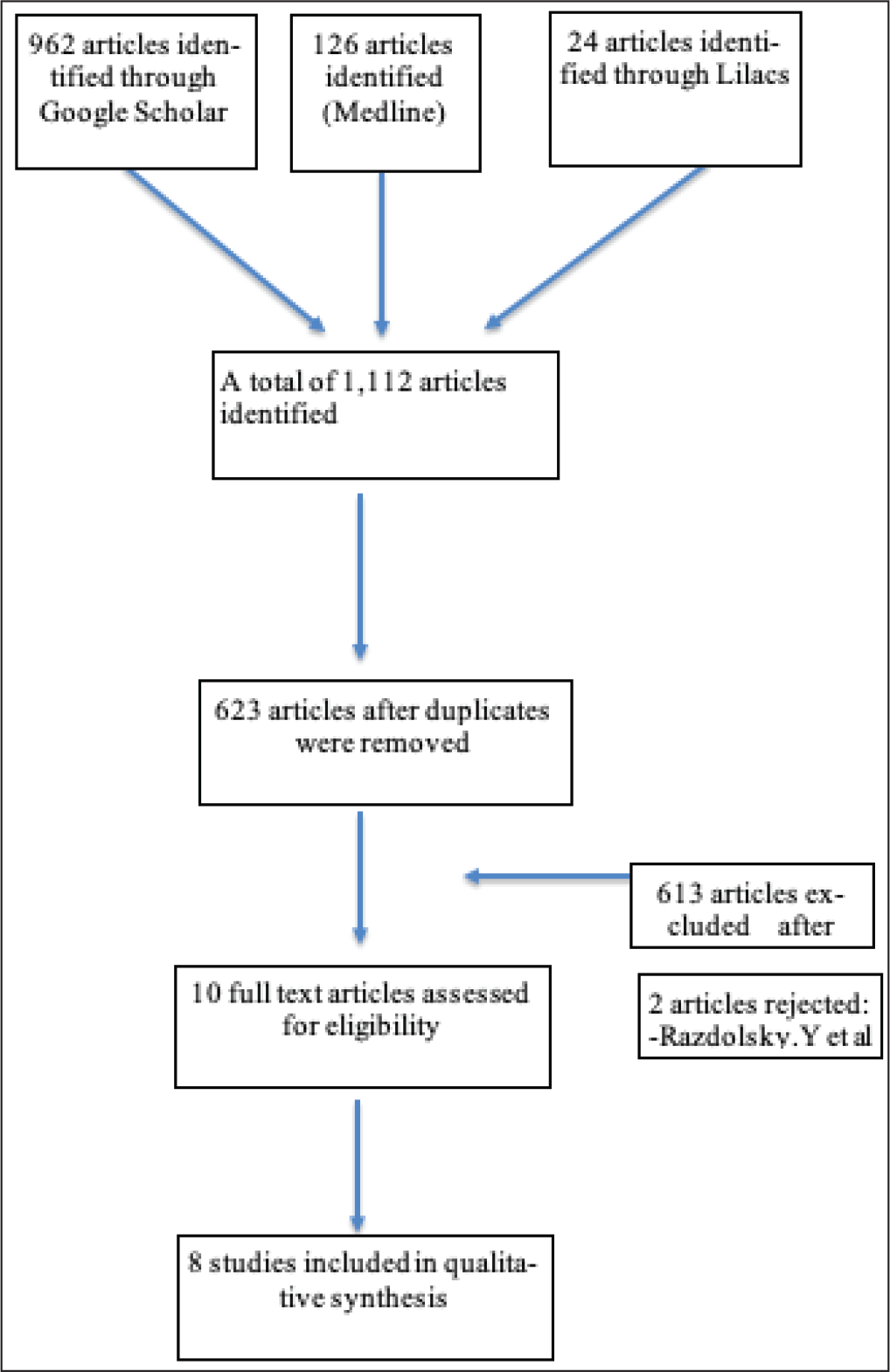
The PRISMA 2009 flowchart depicted in Figure 1 illustrates the cascade of processes involved in selecting the final list of articles for qualitative synthesis. A total of 1,112 articles were identified initially; after eliminating duplicates and reading abstracts, 10 articles were selected of which two5, 6 articles were rejected after reading the full text and a total of 8 articles were included in the systematic review. The reasons for exclusion are shown in Table 1.
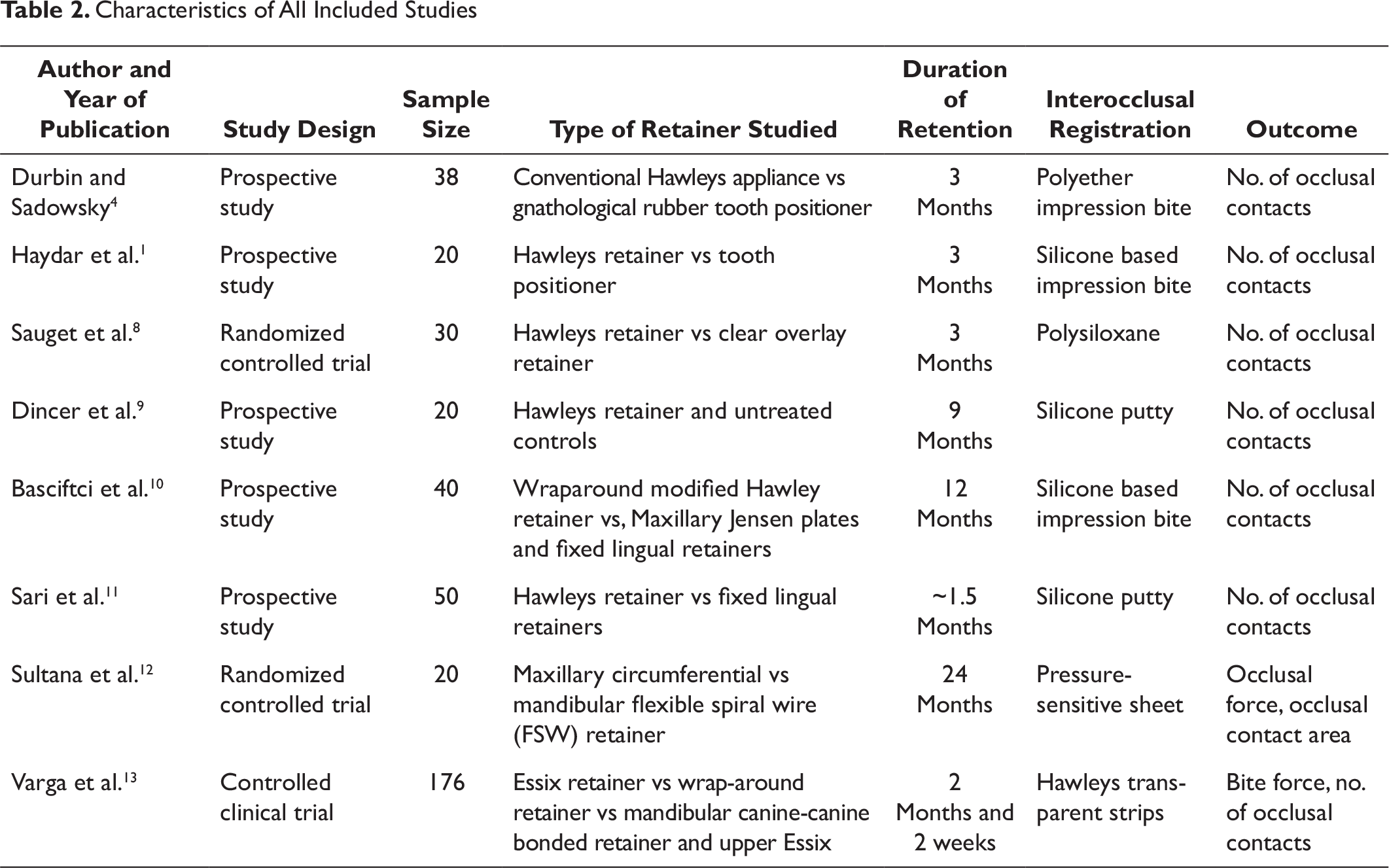
The characteristics of the included studies are summarized in Table 2.
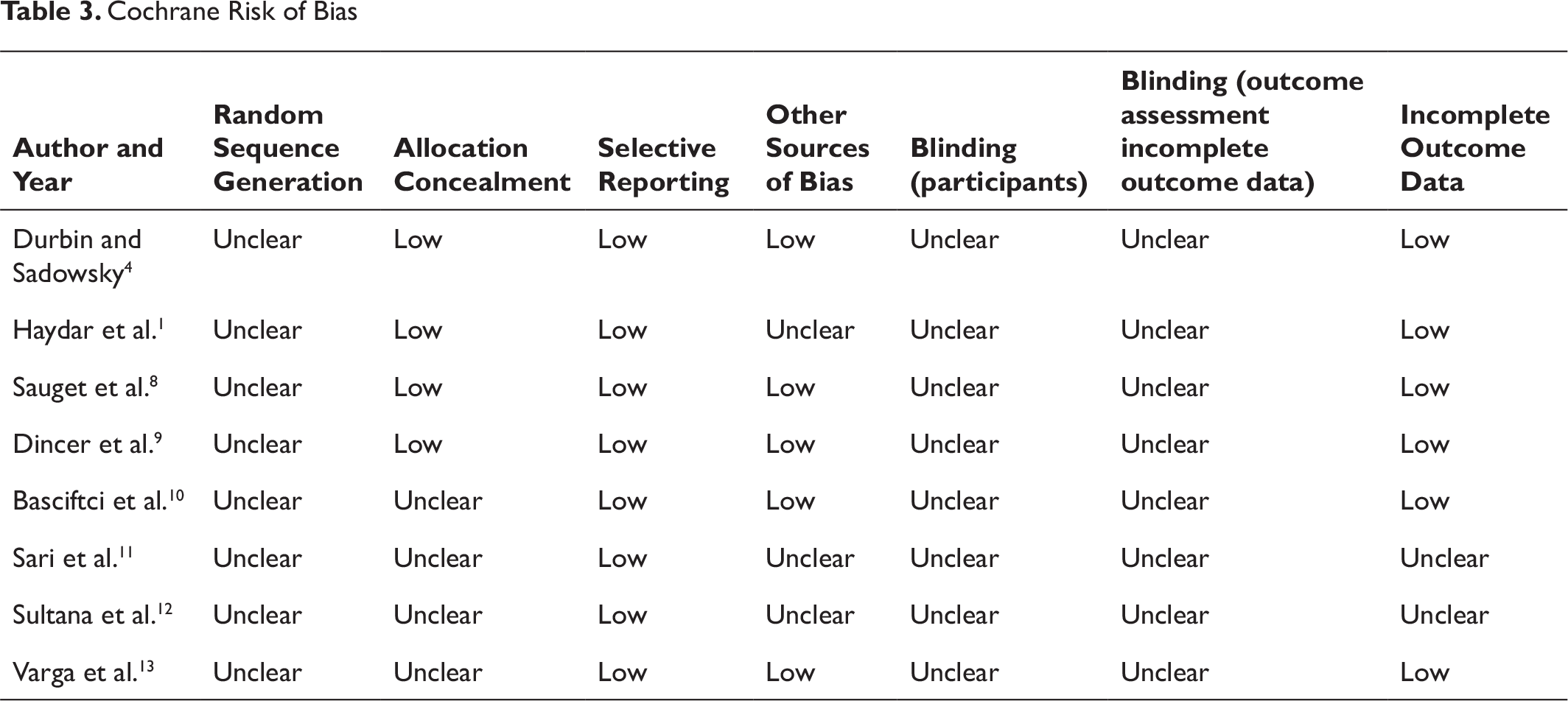
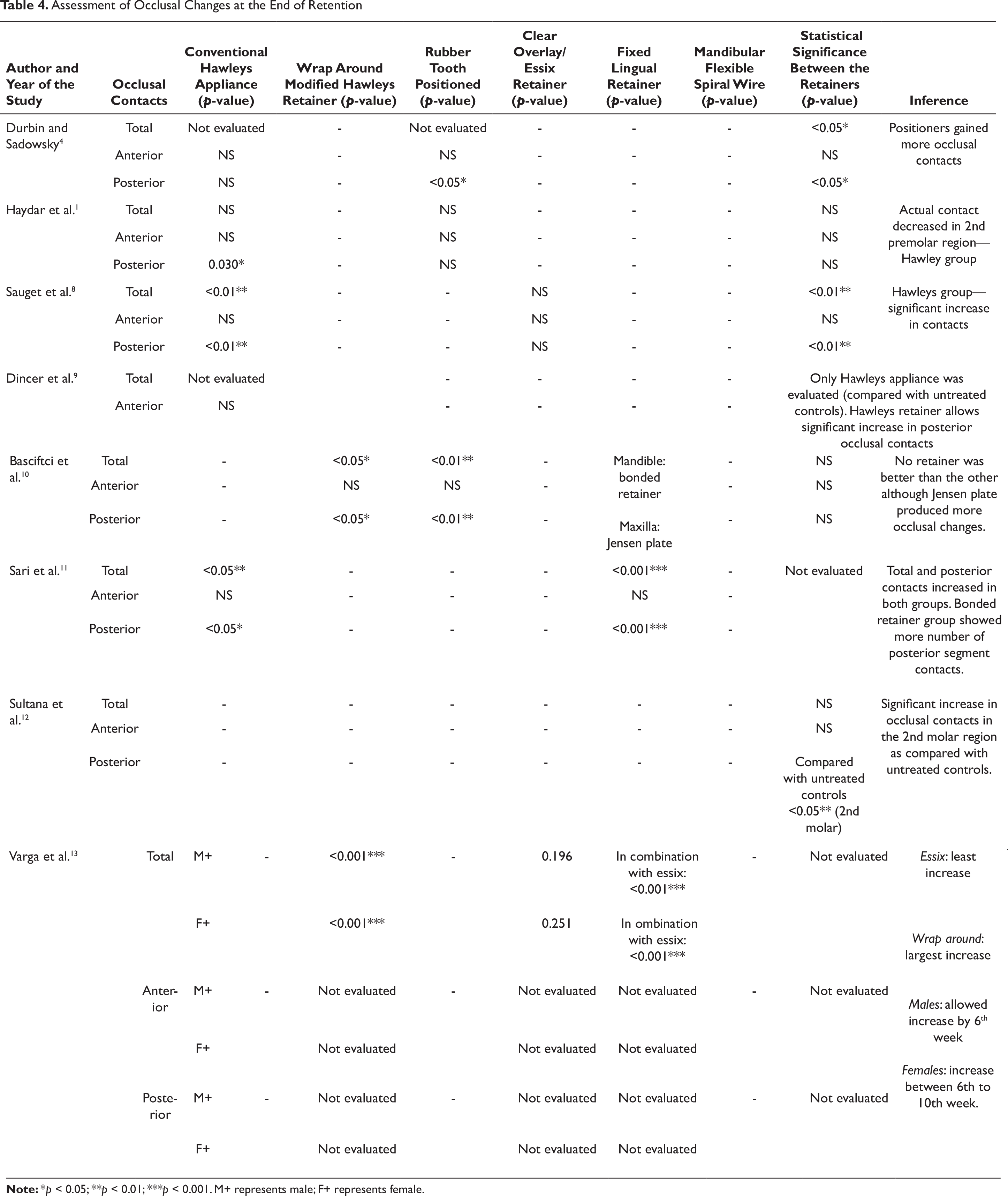
Risk of bias of the included studies were assessed using Cochrane Risk of Bias tool and compiled in Table 3. 7 A descriptive reporting of all the articles included in this review is done in Table 4. All eight studies involved subjects using Hawley-type retainers and investigated changes in occlusal contacts for a minimum of 3 months in retention and compared the same with other retention appliances like tooth positioners, clear overlay retainers, and bonded retainers. Two out of the eight studies compared Hawley-type retainers with untreated cases.
Risk of bias within the studies in this systematic review is reported in Table 3. Only two studies included in the review were RCTs and were considered as having an unclear risk of bias because these studies did not report anything on blinding of participants and blinding of outcome assessment.
PRISMA 2009 Flow Diagram
Results of Individual Studies
Rejected Studies and Reasons for Rejection

Characteristics of All Included Studies
Cochrane Risk of Bias
Assessment of Occlusal Changes at the End of Retention
All the studies1, 4, 8-13 evaluated Hawley-type retainers of which three studies10, 12, 13 evaluated modified Hawley retainer (Wrap-around or Jensen Plate). Two studies9, 12 evaluated the occlusal contact changes produced by Hawley retainer and compared it with untreated controls.
A total of five studies1, 8, 9, 12, 13 reported that in subjects using Hawley-type retainers, statistically significant increase in occlusal contacts in posterior teeth during retention period were noted.
When compared with other retainers, three studies1, 8, 13 have concluded that Hawley retainers are better than the other retainers in improving occlusal contacts. When compared with untreated controls, one study 9 reported no differences, but in the study by Sultana et. al., 12 comparison was done with an untreated group, which included matched orthodontically treated subjects and the number of occlusal contacts improved in the Hawley’s treated group.
In a study by Sari et al., 11 it was reported that subjects with lingual bonded retainers had more number of posterior occlusal contacts when compared with subjects on Hawley’s retainer. A 1-year follow-up study, 10 which evaluated the occlusal changes produced by wrap-around retainer and maxillary Jensen plate (in combination with mandibular fixed lingual retainer), was inconclusive. Two studies1, 4 compared the occlusal changes produced by Hawley retainer and tooth positioner with contradicting results. Durbin and Sadowsky 4 showed that in subjects using tooth positioner, more number of posterior occlusal contacts were noted when compared to subjects using Hawley-type retainers, but this was only 3 months after retention, but Haydar et al. 1 reported Hawley retainer to be more effective in increasing the occlusal contacts at the end of a 3-month retention.
Only Varga et al. 13 have evaluated the changes in occlusal contacts gender wise between the two time periods. It was found that in males using the wrap-around retainer, the increase in occlusal contacts was observed already at week 6, while the increase was seen in between week 6 and week 10.
Sultana et al. 12 and Varga 13 along with changes in occlusal contacts also evaluated changes in bite force. Sultana et al. 12 showed that the occlusal bite force increased significantly during retention in the molar region (especially in the second molar region). Meta-analysis could not be performed due to heterogeneity in the results of the included studies.
Discussion
Retention appliances following orthodontic treatment stabilizes the attained changes and also improves interdigitation of the dentition. There are many published systematic reviews on various aspects of retainers, but not on occlusal contact changes.
This review compiles all the available literature on how occlusal contacts change and improve during retention and the role of various retainers. There are no systematic reviews published on occlusal contact changes with the use of different retainers during retention period. This review included only prospective clinical studies and RCTs reporting on the number and area of occlusal contacts, during the retention period, since the scope of the review is limited to occlusal contact changes. Studies reporting on other parameters measuring relapse after orthodontic treatment were excluded from this review. In most of the studies, inter-occlusal records were taken with soft silicon-based impression material.
Relative tooth movements of posterior teeth in the vertical direction after active orthodontic tooth movements are termed settling. 10 Settling of the occlusion, during the retention stage, could be considered a ‘beneficial’ type of relapse. 8 These are changes in the occlusion that increase the number of inter-arch occlusal contacts. The best retention device would be one that allows settling but prevents relapse. An increase in the number of occlusal contacts represents an improved interdigitation. Maximizing tooth contacts in centric occlusion minimizes the stresses on the teeth and periodontal tissues since ideally located centric contacts cause vertically directed forces parallel to the long axes of the teeth. Thus, more ideal occlusal contacts are important factors for the maintenance of healthy periodontal status.
A total of eight full text clinical trials, investigating the performance of Hawley-type retainers in establishing occlusal contacts during retention and comparing them with other retainers, were included in this systematic review. Most of these were not randomized and data regarding allocation concealment not mentioned, and only two of the studies selected in the review were RCTs. The available literature lacks considerable evidence on the comparative role of different retainers in establishing adequate contacts, but there is sufficient evidence suggestive of an improvement in the number and area of occlusal contacts during retention with Hawley-type retainers.1, 4, 8-13
Hawley-type retainers, when compared with tooth positioners, were not superior in improving occlusal contacts.1, 4 They were inferior when compared with bonded retainers because a combination of upper and lower bonded retainers allows passive eruption of posterior teeth more easily during the retention period. When comparing Hawley-type retainers with clear thermoplastic retainers, two studies have concluded Hawley-type retainers to be better in improving number of contacts.8, 13 When compared with untreated controls, one study supported Hawley-type retainers in establishing good occlusal contacts than in orthodontically matched controls not treated with Hawley’s retainers 12 ; in one more study, non-orthodontically treated subjects were controls and reported that the number of ideally located contacts was similar between groups, and differences were observed in anterior and canine contacts between the groups.9 A conclusion that Hawley-type retainers are better than clear over lay retainers in terms of establishing good occlusal contacts can be drawn from this review.
Strengths and Limitations
The strengths of this review include using a methodology following well-established guidelines and an exhaustive search strategy based on established guidelines.
The major limitation of this review was the overall unclear risk of bias assessed by the Cochrane Risk of Bias tool. Randomization of subjects included in the studies and allocation concealment were not reported in any of the studies. Another major limitation of this review was the variation in evaluation period reported in individual studies. The methods of recording occlusal contacts were different in the selected articles, which may contribute to variation in results of primary outcomes assessed between the individual studies, which is unavoidable. Also, the results obtained were derived from specific populations with different retention protocols, which cannot be generalized to other clinical settings. None of the studies included in this review reported long-term changes. All studies included in this review reported only on number of contacts, which alone does not ensure adequate intercuspation and stability.
Recommendations for Future Research
Well-designed and properly executed RCTs are required since they provide the highest level of evidence. Trials assessing occlusal contacts with latest devices like the Tek Scan are needed to accurately assess other aspects of occlusal contacts and not just the number of contacts.
Conclusion
All the included studies reported an overall improvement in the number of occlusal contacts during retention with Hawley-type retainers. When comparing with individual retainers, the available evidence is not sufficient and clear to conclude that Hawley-type retainers improve occlusal contacts better than other retainers during the retention period. Further high-quality RCTs are required to prove the superiority of Hawley-type retainers.
Footnotes
Declaration of Conflicting Interests
The authors declared the following potential conflicts of interest with respect to the research, authorship and/or publication of this article: None of the authors have any conflict of interest.
Funding
The authors received no financial support for the research, authorship and/or publication of this article.
