




Abstract
Retainers are used after orthodontic correction to maintain the teeth in the new position while allowing remodeling of the surrounding tissue. Begg’s wrap-around retainers are the most commonly used retainers after orthodontic correction for providing stability to the achieved orthodontic correction.
It is not always possible for the patient to visit the orthodontist periodically, especially during situations like pandemics. This new design of Begg’sretainer has been modified with the addition of expansion screws for self-activation, thus reducing the need for the patient to visit the orthodontist for activation of the retainer.
Introduction
Retainers are used after orthodontic correction to maintain the teeth in the new position while allowing remodeling of the surrounding tissue. 1 Begg’s wrap-around retainers are the most commonly used retainers after orthodontic correction for providing stability to the achieved orthodontic correction. 2
It is not always possible for the patient to visit the orthodontist periodically, especially during situations like pandemics. This new design of Begg’s retainer has been modified with the addition of a jackscrew for self-activation, thus reducing the need for the patient to visit the orthodontist for activation of the retainer.
Case Report
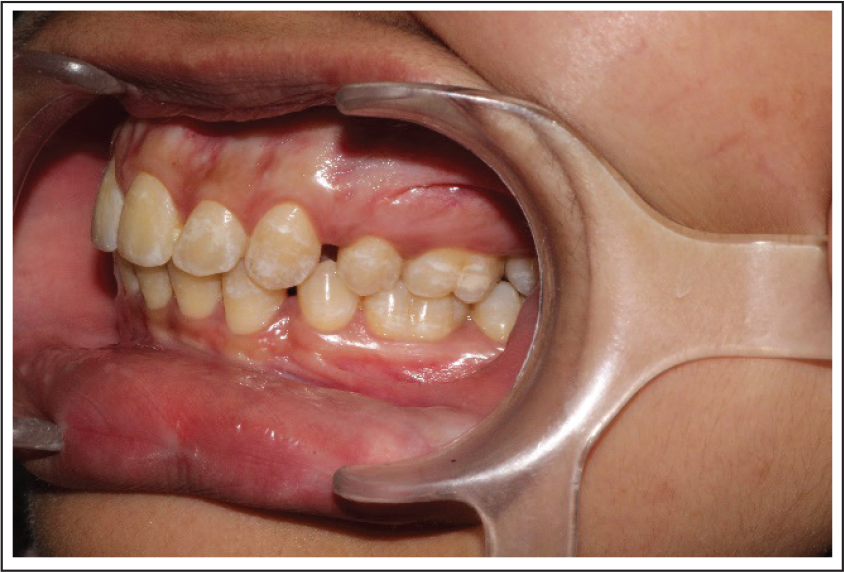
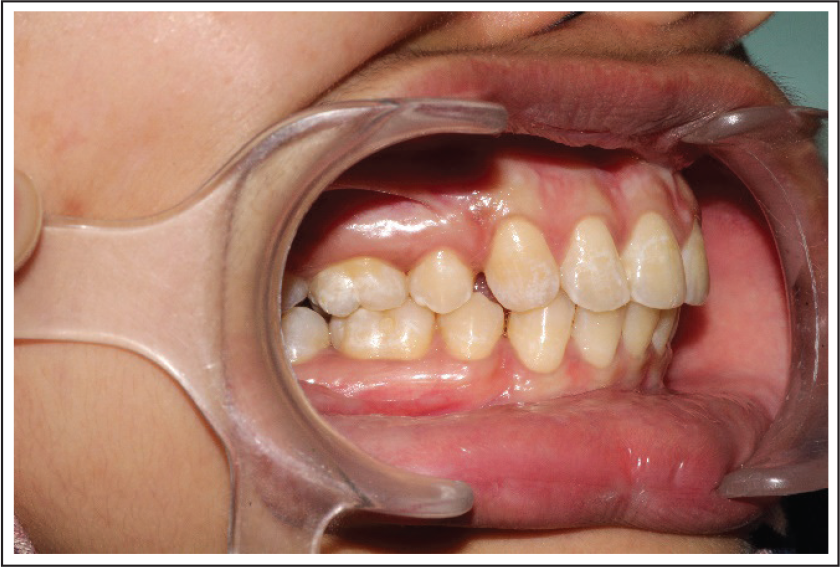
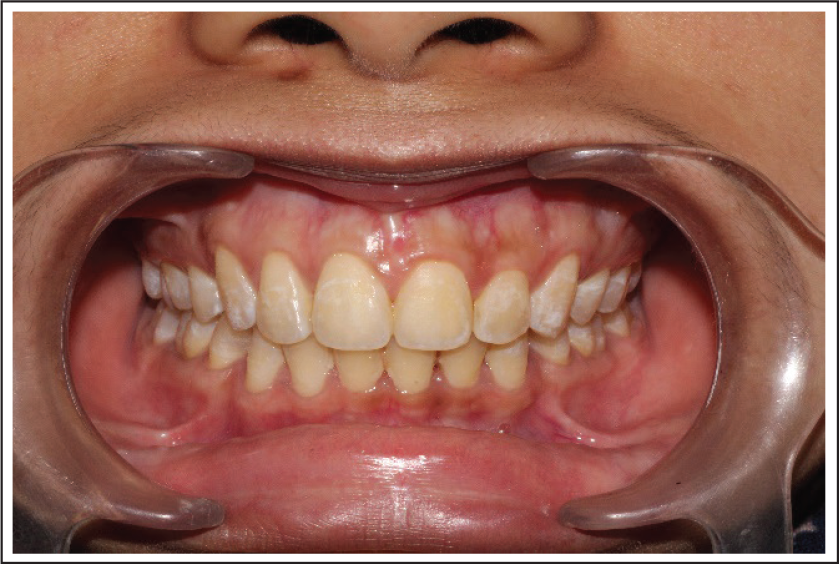
A 22-year-old patient reported to the department with postorthodontic treatment space opening of extraction spaces (Figure 1A–C).
On Intraoral examination, the patient showed extraction space opening of about 2.5mm to 3mm in the maxillary arch.
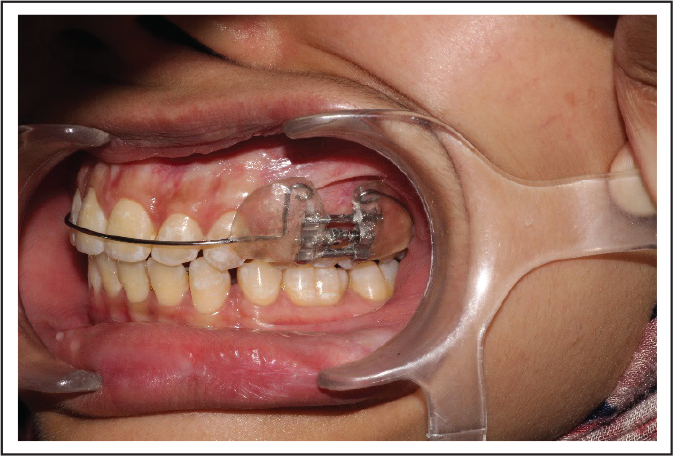
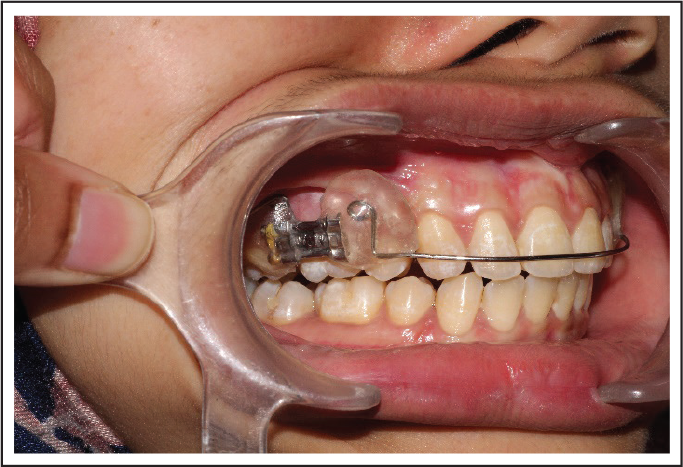
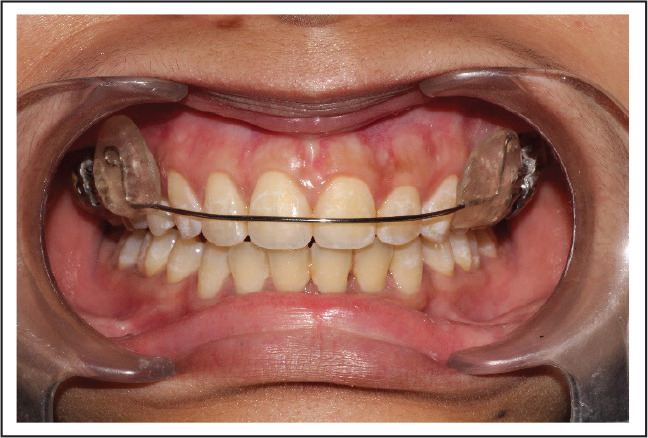
A simple screw-type wrap-around retainer was planned for the patient.
Intraoral Left: Posttreatment Replase.
Intraoral Right: Posttreatment Relapse.
Intraoral Frontal: Posttreatment Relapse.
Fabrication
Impression of the patient is taken, and cast is poured.
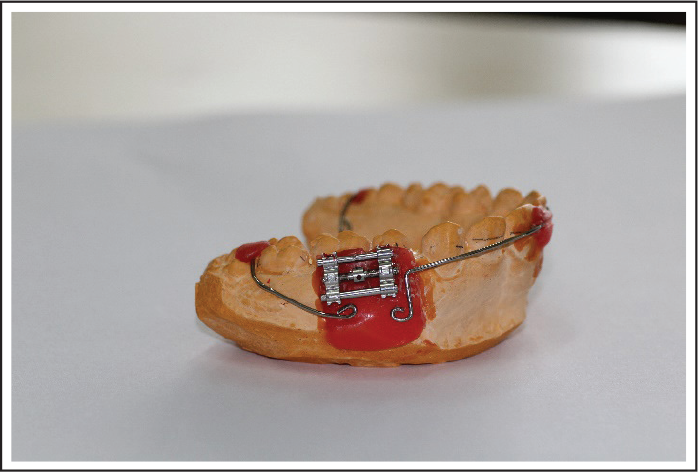
Take a piece of wax measuring 2 × 1cm of thickness of 1 mm such that itis adapted on the buccal surface in between premolar and molar region in case of extraction or in between two premolars in non-extraction case.
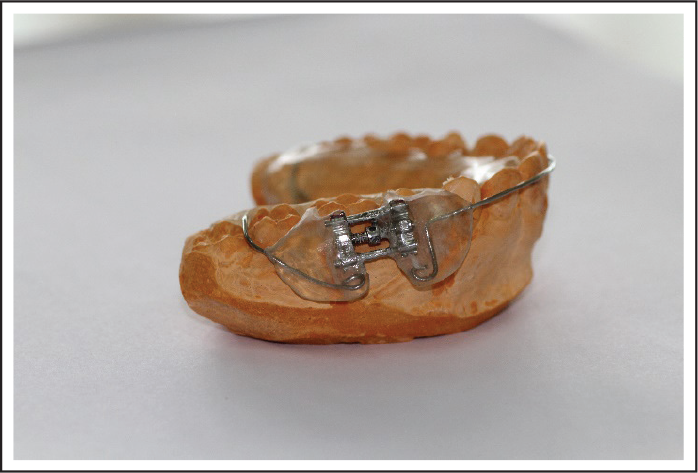
The jackscrew which is fully activated (fully opened) is placed in wax sheet.
A 0.9-mm stainless steel arch form was made on the cast touching the labial side and buccal side of teeth, and its retentive tag is adapted.
The posterior stainless steel component crosses the occlusion through facial embrasure, and its retentive tag is adapted along the palatal contour, as shown in Figure 2A.
The activated jackscrew is blocked out with wax.
Acrylizethe wire components using self-cureacrylic (Figure 2B).
Trimming and polishing of retainer is done.
Wax Up.
Fully Finished Appliance.
Clinical Procedure
Intraoral Left: With Appliance in Place.
Intraoral Right: With Appliance in Place.
Intraoral Frontal: With Appliance in Place.
Discussion
The extraction space which had opened due to relapse closed in 2 months with the use of this screw-type retainer (Figure 4A–C).
Intraoral Left: Posttreatment Space Closure.
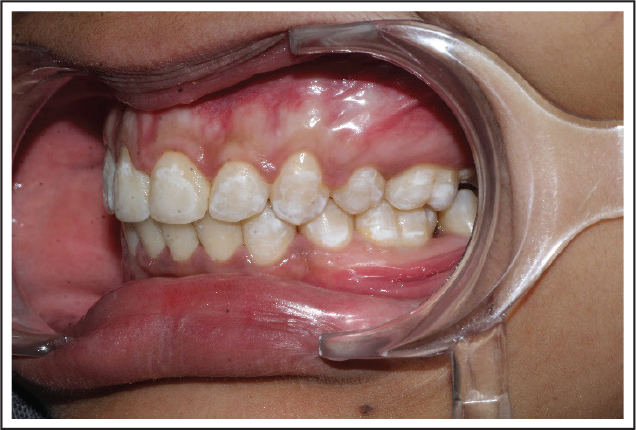
Intraoral Right: Posttreatment Space Closure.
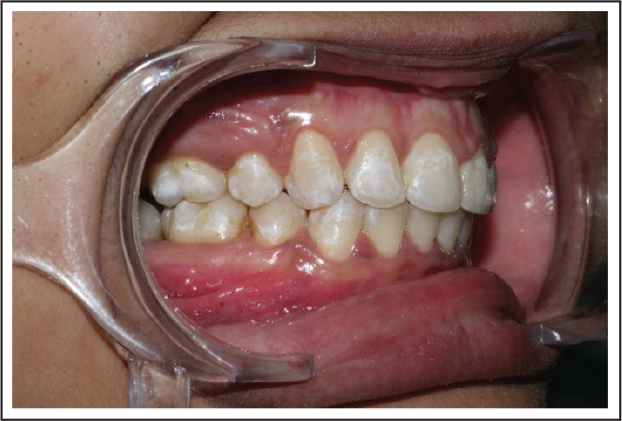
Intraoral Frontal: Posttreatment SpaceClosure.
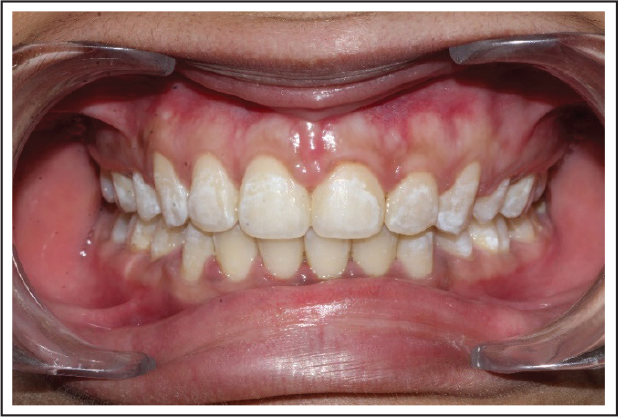
Conventional retainers with stainless steel labial bows require periodic tightening to maintain their activation. Without these adjustments, the activation loops at each end of the labial bow gradually open, reducing the force delivered by the appliance and often causing a relapse of anterior crowding. Since such relapse occurs gradually, the patient may be unaware of it until it has advanced to the degree that retreatment with fixed appliances is required. 3
Loosening of the looped ends of the labial bows can adversely affect retention of the appliance in the mouth as well. This may lead the patient to wear the retainer less, which is another significant factor contributing to the relapse of orthodontic treatment results. 3
With the addition of expansion screws to Begg’sretainer, it is possible for the patient to activate the retainer on their own. Another advantage of this appliance is that equal forces can applied on both sides by activating the expansion screw equally.
In case of minor proclination of the teeth or minor space opening of extraction space, this retainer can be used, which can easily be activated by the patient at home just by opening the screw.
Conclusion
This modified retainer system significantly reduces the number of posttreatment retainer checks required. It is capable of realigning the teeth if a patient neglects to wear it for a period of time.
Footnotes
Statement of Informed Consent
Informed consent was not sought for the present study because no identifiable images were used
Declaration of Conflicting Interests
Funding
The authors received no financial support for the research, authorship, and/or publication of this article.
