




Abstract
Creative arts and physical activities can confer cognitive and psychosocial benefits for people of all ages, including older adults. Dance is a creative and physical art form that involves improvised or choreographed movements to music and rhythmic patterns. While research shows growing evidence for health and wellbeing benefits from dance interventions for older adults, little is known about the cognitive and psychosocial advantages of having long-term expertise in dance. This scoping review identified and synthesised the existing research on the influence of sustained engagement in dance or elite-level dance skills on cognitive function and psychosocial wellbeing in older adulthood. Ten studies were included for analysis. The findings of this review show the limited research on older adults with high levels of dance expertise and may serve as a stimulus for further research to understand how maintaining different creative arts and physical activities across the lifespan supports healthy ageing.
Introduction
Life expectancy and the proportion of older adults are increasing both in Australia and across the developing world (World Health Organisation, 2022). It is critical to understand not only how to support people in navigating the challenges of ageing, but also how to optimise healthy ageing and cognitive and psychosocial wellbeing in older adults. Active participation in the arts, such as music and dance performance, and physical activity have all been examined as activities that can both preserve cognitive functioning in older adulthood and positively contribute to social, physical, and psychological wellbeing (Creech et al., 2023; McCrary et al., 2021; Singh et al., 2025).
Different streams of empirical evidence support the efficacy of exercise participation on the one hand, and music on the other, as contributing to healthy ageing and wellbeing for older adults to differing extents. Regarding exercise, evidence includes both intervention studies and epidemiological studies that compare fit and sedentary older adults on factors such as physical strength and balance, cognitive-motor function, brain composition, and others. A recent umbrella review of randomised control trial interventions for exercise on cognition identified that physical exercise interventions reliably improve older adults’ general cognition, memory and executive function (Singh et al., 2025). Other systematic reviews have identified exercise benefits on both enhancing psychological wellbeing and reducing aspects of psychological illbeing such as depression and anxiety symptoms (Bauman et al., 2016; Bragina & Voelcker-Rehage, 2018; Park et al., 2014).
Multiple studies have connected the cardiovascular benefits associated with long-term exercise engagement to improved cognitive function in adulthood, suggesting that exercise supports cerebral blood flow, reduces atrophy of certain brain tissues, and is associated with greater grey matter thickness and hippocampal volume (Erickson et al., 2009; Northey et al., 2018). Hence, exercise is reliably seen to help maintain brain function and delay neurodegenerative processes that occur in older adulthood, leading to improved cognitive performance and psychological wellbeing. In addition to neurological structures and processes, there is a range of interacting behavioural, social, and psychological processes activated through exercise that support ongoing cognitive health and wellbeing, such as having routine, motivation, social engagements, and competitive events (for discussions, see Fancourt et al., 2021; Powell et al., under review).
Research on elite or competitive older athletes has identified some cognitive benefits of having ongoing competitive athletic skills compared to non-athletes, although there is less evidence than for exercise interventions with non-athletes. A systematic review of competition-level athletes identified 41 studies that measured cognitive benefits, three of which contained masters-level competitors aged between 60 and 80 (Logan et al., 2022). Of the three studies, two reported that athletes in open-skilled sports (e.g., tennis) reported better reaction times than active and passive controls, and one showed better inhibitory control. However, one study found no differences in inhibitory control, memory, or executive function (Culpin, 2018). The third study, which assessed older marathon runners, cyclists, and controls over four years, found that while the athletes reported greater subjective health, there were no statistically significant cognitive advantages for the athlete group, as measured using the Consortium to Establish a Registry for Alzheimer's Disease neuropsychological battery (Batmyagmar et al., 2019). A neuroscientific study found that masters-level athletes had greater grey matter concentration in parietal and occipital lobe areas than sedentary controls (Tseng et al., 2013). However, this study included no active controls and thus such effects can not necessarily be attributed to long-term expertise.
Review studies focusing on the role of musical engagement and expertise in supporting cognitive function and improving wellbeing in older adults show promising initial results (Román-Caballero et al., 2018; Wolff et al., 2023). A meta-analysis of nine studies comparing cognitive function between long-engaged, currently active older musicians and non-musicians observed clear benefits for musicians in attention, inhibition, and visuospatial ability, as well as smaller effect sizes for measures of working memory, verbal fluency, and processing speed (Román-Caballero et al., 2018). Wolff et al.'s (2023) narrative review identified several studies where older musicians (10–40+ years of experience) recorded greater working memory, visuospatial ability, and other cognitive benefits, as well as increased functional preservation and neural connectivity. For example, one such study found that older musicians have larger grey matter volumes and greater cerebellar-hippocampal functional connectivity compared to non-musicians (Yamashita et al., 2022). Therefore, there is some neuropsychological evidence for both music and exercise supporting the maintenance or adaptations of cognitive functions and structures to attenuate neurodegenerative processes resulting from ageing. There is also a growing range of evidence from music intervention studies with novice musicians that supports improvements in cognitive functions, quality of life, and psychological wellbeing for older adults with and without cognitive impairment (See Ma & Ma, 2023; McCrary et al., 2021).
Dance is a complex and creative physical activity that involves generating, memorising, and executing movements, usually to music, often with prominent social and emotional components (Murillo-Garcia et al., 2021). As such, dance is often recognised as a particularly promising activity for sustaining physical health, cognitive function and wellbeing in older age (Fong Yan et al., 2024; Keogh et al., 2009). The emerging research highlighting the benefits of music and athletic expertise and experience provides encouraging ground for research on experienced dancers. Review studies highlight that ‘dual-task training’ or ‘multicomponent interventions’, which involve motor and cognitive demands, can be more effective for cognitive functioning than single-task training (Bruderer-Hofstetter et al., 2018; Netz, 2019).
As well as being included in some of the aforementioned reviews of exercise interventions, other systematic reviews have identified specific benefits of dance on cognition and executive function (Hewston et al., 2021). Further, dance interventions for older adults have been shown to improve quality of life and reduce symptoms of depression and anxiety to a similar extent to physical activity interventions, while potentially being superior in improving working memory and cognition (Fong Yan et al., 2024; Sheppard & Broughton, 2020). Blomstrand et al.'s review (2023) identified that mind-body exercise interventions, including activities such as Pilates, may improve cognitive function more than aerobic exercise and resistance training, while Quan et al.'s (2024) meta-meta-analysis shows that dance interventions support cognition for older adults with mild cognitive impairment to a greater extent than aerobic exercise. Hence, expert dancers may see benefits beyond those for expert athletes, achieving the benefits associated with physical exertion and the additional cognitive-motor and wellbeing benefits from their long-term elite dance engagement that include emotional engagement, memory, identity, synchronisation, and many others (for a model developed for these capacities in musicians, see Brancatisano et al., 2020).
However, when understanding the influence of dance performance on ageing, the limited literature largely focuses on intervention studies with novices. One systematic review investigated the impact of dance on age-related cognitive decline and found that of the 35 eligible studies, 30 were RCTs with novice dancers and only five studies contained dancers with experience (Muiños & Ballesteros, 2021). Confidence in the cognitive findings discussed was deemed low because of low-quality RCTs and high heterogeneity between different studies (Clifford et al., 2023; Muiños & Ballesteros, 2021). Older adults who participate in community dance report an increased connection to themselves, their bodies, and other people, experiencing increases in confidence and a sense of community (Chappell et al., 2021).
Crucially, there is a limited understanding of the experience of expert older dancers and how long-term engagement with dance has contributed to their cognitive and psychosocial wellbeing. The present study seeks to bring together the literature investigating those who have been high-level dancers for long periods throughout their lives to understand how such activities may enrich their lives into older adulthood. The key aim of this scoping review was to identify and synthesise the existing research on the influence of sustained engagement in dance or elite-level dance skills on cognitive function and psychosocial wellbeing in older adulthood. Further, the findings from this review will be compared to previous reviews conducted on cognitive function and wellbeing for experts in music performance and exercise/sport.
It was decided that a scoping review methodology was appropriate for this topic as an exploratory review that seeks to understand the nature and extent of the existing literature on the topic. Further, it is expected that research on dance, ageing, cognition, and wellbeing will come from a broad range of disciplines. Hence, the scoping approach provides an overview of research using various methodologies. As of April 2025, no systematic or scoping reviews have been conducted or are being conducted on this specific topic through searches in MEDLINE, the Cochrane Database of Systematic Reviews, and JBI.
Methods
This scoping review was conducted in accordance with the JBI methodology for scoping reviews (Aromataris et al., 2024), and the Preferred Reporting Items for Systematic Reviews and Meta-analysis extension for scoping reviews (PRISMA-ScR) guidelines (Tricco et al., 2018). The question was operationalised using the PCC (Participant, Concept, Context) approach. A protocol for this scoping review was registered on the Open Science Framework database.
Inclusion and Exclusion Criteria
Participants
Participants are community-dwelling older adults who have existing and ongoing expertise in dance performance. Individuals with severe physical or cognitive impairment, such as those who have dementia, were excluded. There was no specific inclusion criterion for the age of older adults, with the criteria simply being that they are identified as older adults in the literature. The researchers decided not to specify a criterion for age, since expert dancers are often considered ‘older’ at a much younger age than in other professions. Participant ages in all studies will be reported and discussed.
Concepts
Key concepts include expertise or elite-level skill in dance. Definitions of expertise and skill in athletes vary greatly in the literature, with the four most common metrics including competition experience, years of experience, professional status, and training frequency (Swann et al., 2015). In the review, we monitor and report different definitions of expertise, but all studies reporting that dancers have existing expertise or skill, and clearly define it, will be eligible. Studies that do not analyse experts and inexperienced dancers separately will be excluded, as will community or social dance studies that do not define a level of existing expertise.
Other key concepts include cognitive function, defined as mental processes involved in acquiring and manipulating information, including learning, reasoning, memory, problem-solving, and attention. Psychosocial wellbeing includes psychological, emotional, and social wellbeing. Any studies investigating these overarching constructs will be analysed for the measures used and all measures will be reported.
Context
The context is any community-based setting. Settings where participants regularly engage in these activities may be in diverse geographical locations (urban, rural, remote) and in homes, community halls, churches, schools, and others. Clinical settings, residential aged-care facilities, and hospitals were excluded. This is because the review sought older adults who maintain expertise in dance, requiring high physical and cognitive functioning not always present in these contexts.
Types of Evidence Sources
This scoping review will consider qualitative, quantitative, and mixed methods studies. Included studies may involve, for example, comparisons of cognitive functioning between experts and non-experts or qualitative investigations into dance's influence on experts’ wellbeing. Experimental studies may be included in cases where participants have existing dance experience or expertise and are not therapeutic interventions in clinical settings. Relevant systematic, scoping, and other reviews will be considered and eligible studies from each review will be considered individually. The scope of sources included peer-reviewed articles, book chapters, unpublished dissertations, and reports. Sources not available in full text or those not translatable to English were excluded. Grey literature was considered.
Search Strategy and Study Selection
The search strategy follows the three-step process outlined in the JBI Manual for Evidence Synthesis (Aromataris et al., 2024). PubMed was searched to identify articles on the topic. Words in the titles, abstracts, and index terms were used to develop a draft search strategy for PubMed. The research team tested the search strategy against key literature to set the final search strategy (see Appendix I). Databases included MEDLINE, CINAHL, PsycINFO, Scopus, Embase, Informit, Cochrane Collaboration, JBI, Web of Science, JSTOR, and Google Scholar. For Google and Google Scholar searches, the first 20 pages of results were screened. Only studies published in or translatable to English were included, as the research team contains English language readers.
All identified citations were collated, uploaded into EndNote 21 (Clarivate Analytics, PA, USA) and then uploaded to Covidence (Veritas Health Innovation, Melbourne, Australia, www.covidence.org). Title and abstract references were first screened by Authors 1 and 2 before independently reviewing the full text of selected citations in detail against the inclusion criteria. After this stage, the two reviewers met to resolve any discrepancies, which was successful, and none required an additional reviewer to resolve.
Data Extraction and Analysis
The first two authors developed the data extraction table (see Appendix II). Selected studies were presented in tables containing key study details, accompanied by a narrative account with a focus on the key concepts of age, expertise, and measures of cognition and psychosocial wellbeing. Tables were developed and piloted by the research team and adjusted accordingly. No meta-analysis or statistical comparisons will be conducted.
Results
Search Results
Searches yielded 1334 sources, including 461 duplicates. The remaining 873 went to title and abstract screening, where 805 were deemed irrelevant and removed. Of the 68 sources left for full text review, a further 58 were removed, mostly because the populations were not experienced dancers or there was a lack of clarity or clear description regarding dance experience. Others were removed because there were no separate analyses conducted for older adults and other participants or experts and other participants, or the key concepts of cognition and wellbeing not being clearly detailed or conceptualised. All review studies were removed, as relevant individual studies from all reviews were included. Ten studies were included in the review (see Figure 1).
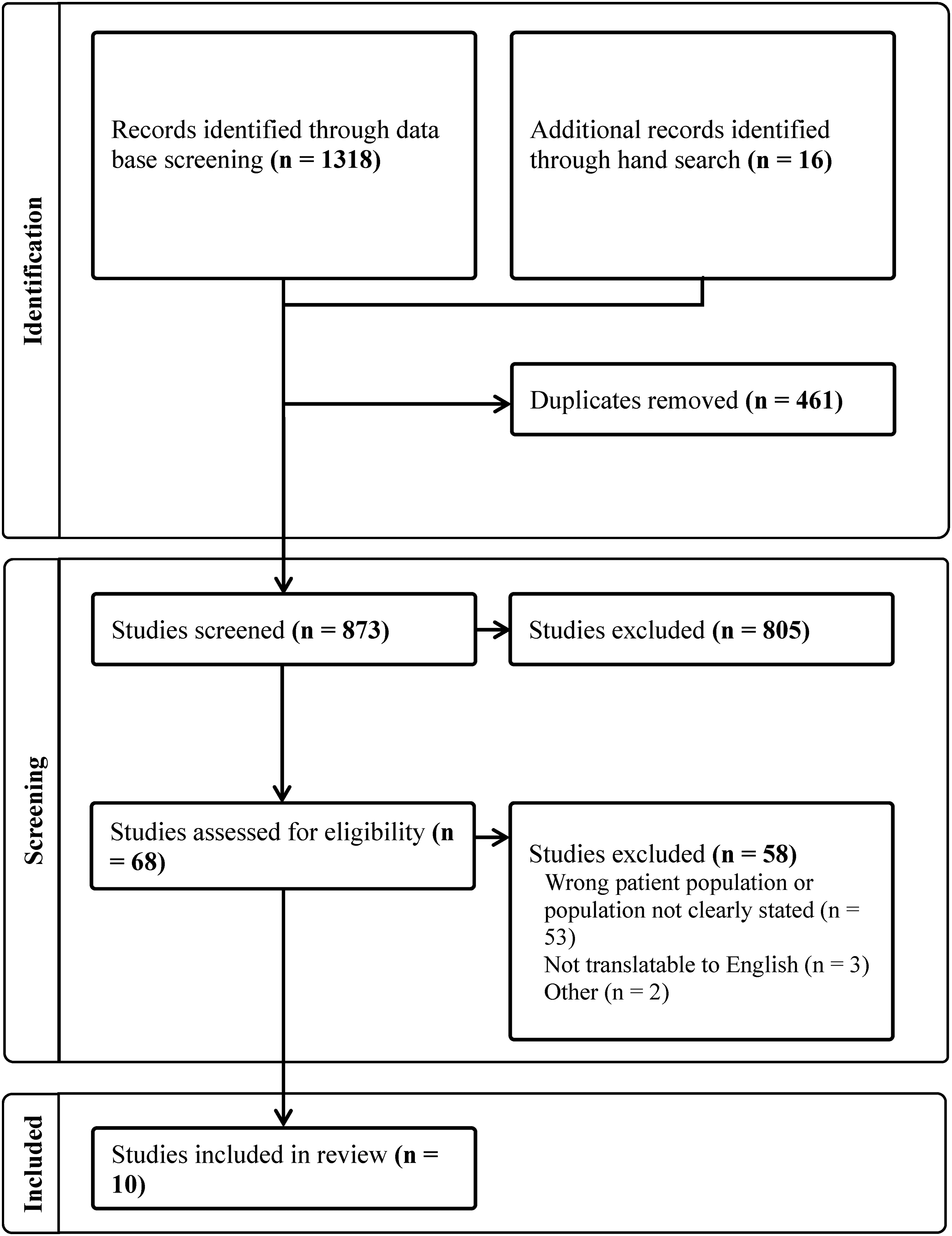
PRISMA flow chart for study inclusion.
Characteristics of Included Studies
Included studies were from Germany (3), USA (3), Canada (1), Spain (1), Portugal (1), Ireland (1) and Italy (1). Regarding methodology, eight studies were quantitative in design while three were qualitative. Of the quantitative studies, seven studies included questionnaires that compared expert dancers to non-expert dancers. Two of these also used brain imaging techniques, one to assess cortical thickness and another to assess brain volume. One study was an intervention study before and after a dance intervention with experienced dancers. Of the two qualitative studies, both used interviews with dance participants with one being a field study that also recorded observations of dancers from one professional studio (Rodrigues et al., 2020). All studies were peer-reviewed journal articles.
Samples of older adults in the studies ranged from three (Hansen & Kenny, 2019) to 108 (Verghese, 2006). Regarding expert or experienced dancers, the largest sample of dancers was 44 while the mean number across the included studies was 27.4. Most studies defined older adults as either 55, 60, or 70 years of age or older. Two studies defined or included older adults at younger ages, with one defining older adults as 36–60 (Rodrigues et al., 2020) and another including an age range from 49–70 (Noguera et al., 2020). Seven studies provided mean ages, with mean ages for dancers ranging from 55.3 to 80. Regarding gender, seven had a greater proportion of female participants. One study included only female participants while two had slightly more male participants than female (see Table 1). As the study focused on community and non-therapeutic or clinical settings, most studies (8) contained cognitively healthy adults and used measures such as the Mini Mental State Exam (MMSE; Mitchell, 2013) to measure cognitive health. One study contained a mix of cognitively healthy people and some with mild cognitive impairment, which also used the MMSE to establish criterion.
Demographic Details of Participants in all Included Studies.
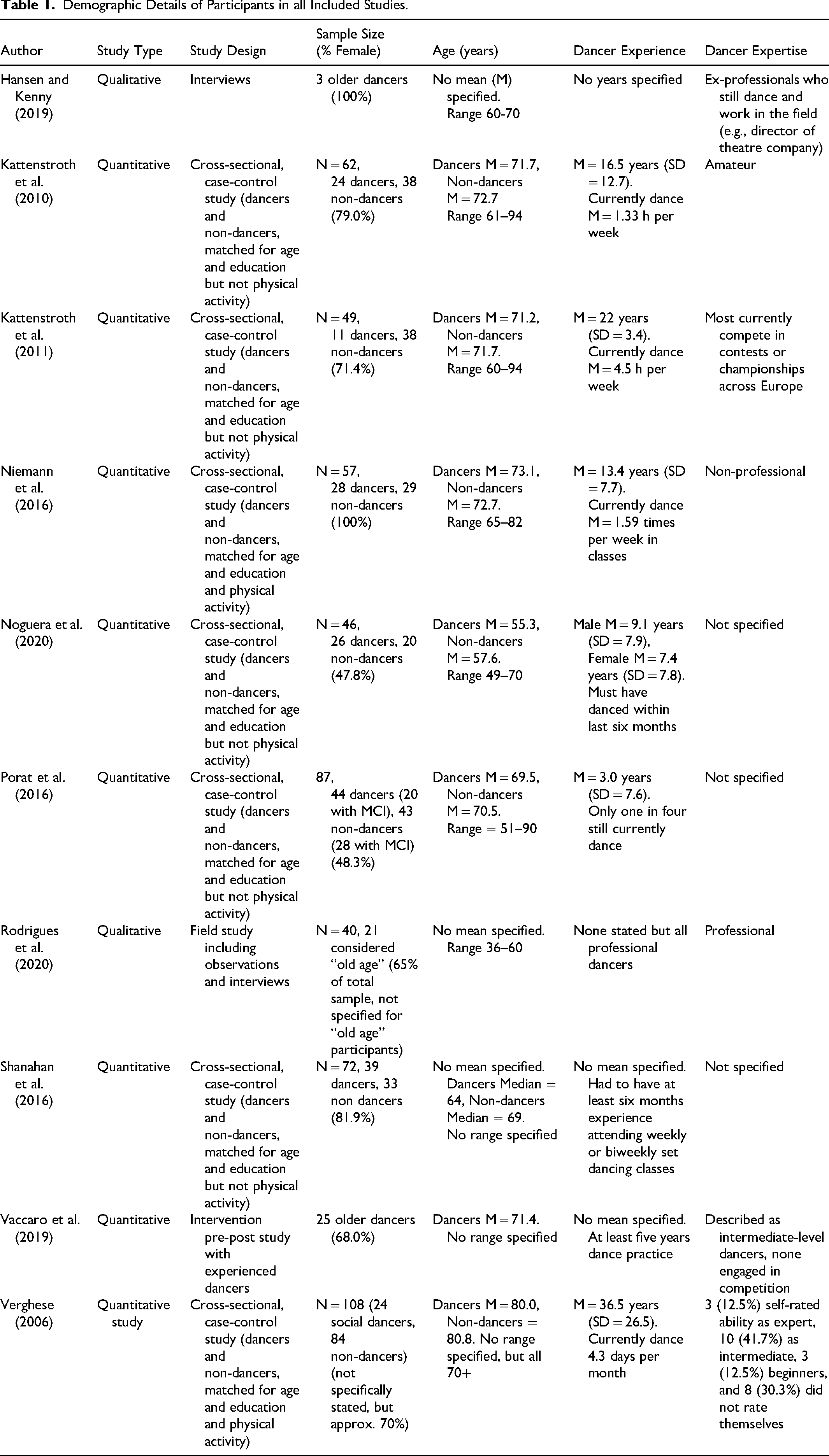
Dance experience varied greatly. The criteria for inclusion regarding experience were that participants had to have had dance experience before the commencement of the research, they had to still be currently involved with dance, had the type and extent of experience (either in years, professional status, or otherwise) clearly stated, and they had to be able to be analysed separately to non-experienced people also involved in the study. Six studies measured experience using dance years, providing mean years of dance participation. Mean scores for years of experience included approximately six months, three years, eight years, 13.4 years, 16.5 years, 22 years, and 36.5 years. Another study had a criterion that dancers had to have at least five years’ experience and currently attended a dance school, but did not provide specific years of experience for each participant. Two other studies involved people described as experienced based on being either current dancers or ex-professional dancers who are still active and involved in dance.
Within these experienced dancers, there was also variation in dance expertise. As mentioned above, one study contained all professional dancers (N = 40), while one contained all (N = 3) ex-professional dancers. One other study contained all dancers who regularly competed in dance contests and competitions. Another asked people how they described themselves regarding skill, with only three out of 24 describing themselves as experts and most describing themselves as amateur. Other studies either described participants as intermediate (1), as a composite of social and expert dancers (1), amateur dancers (1), or did not make any mention (3). Regarding dance type, this varied between ballroom (2), contemporary (1), Irish set dancing (1), salsa (1), and ballet (1), while two had participants from a range of styles and two did not mention.
One key aim of this review was to understand how expertise or experience in dance can influence the cognitive functioning and psychosocial wellbeing of older adults. Of the 10 included studies, seven studies focused on cognitive function, two focused on wellbeing, and one focused on both.
Cognitive Study Findings
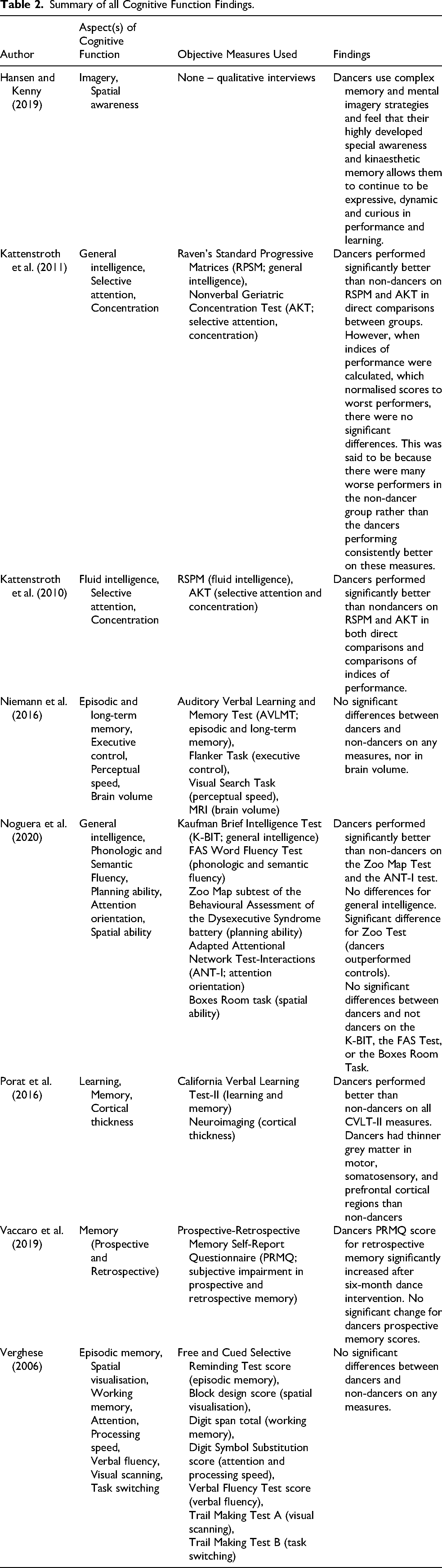
The eight studies that focused on cognitive function were analysed for the specific aspect of cognitive function measured or discussed, as well as what specific measures were used (where relevant), and what the findings were. These are presented in Table 2. Overall, findings were mixed across the studies. Of the six studied that quantitatively compared dancers with some experience to non-dancers across different cognitive measures, three saw significantly greater scores for dancers across all measures used, while one study found significant differences on two of five measures used, and two found no significant differences on any measures. The intervention study on experienced dancers who undertook a six-month dance program saw statistically significant improvements in one aspect of memory (retrospective) but not another (prospective) (Vaccaro et al., 2019). Regarding the specific aspects of cognitive function measures, results were again mixed. Domains such as attention, memory, and general intelligence were measured across multiple studies using multiple different measures.
Summary of all Cognitive Function Findings.
General Intelligence
General intelligence was used to compare dancers and non-dancers in some studies. However, it was used in others as a control variable or way of measuring impairment. Hence, it will not be analysed in detail in this review.
Attention
Regarding attention, dancers reported significantly better scores on attention measures in three of four studies. Two used the same measure, the AKT, and were conducted by the same author (Kattenstroth et al., 2010; Kattenstroth et al., 2011) while Noguera et al. (2020) observed significant differences in attention orientation using the adapted ANT-I measure. Verghese (2006) found no differences between dancers and non-dancers on attention and related constructs such as visual scanning and attention using the Digit Symbol Substitution Score and Trail Making Tests.
Memory
Various aspects of memory were measured across four studies. Porat et al. (2016) observed higher scores for dancers on short- and long-term memory (via verbal recall) on the California Verbal Learning Test-II than non-dancers. Vaccaro et al. (2019) observed statistically significant improvements for experienced dancers on retrospective (but not prospective) memory post-intervention on the Prospective-Retrospective Memory Self-Report Questionnaire after a dance intervention. Verghese (2006) and Niemann et al. (2016) observed no differences between dancers and non-dancers on long-term memory or working memory on the Auditory Verbal Learning and Memory Test or Digit Span Test respectively.
Other Measures
Noguera et al. (2020) observed significant differences in planning ability on the Zoo Map test but observed no differences for spatial ability using the Boxes Room test. Verghese (2006) found no differences in spatial visualisation skills using the Block Design test. Both Verghese (2006) and Noguera et al. (2020) found no differences in verbal or semantic fluency using different word fluency tasks, while Niemann et al. (2016) found no significant differences in executive control or processing speed. Regarding neuroimaging studies, Niemann et al. (2016) observed no differences in brain volume between dancers and non-dancers, while Porat et al. (2016) found that dancers had thinner grey matter in several cortical regions, but these results did not reach significance. While seemingly counterintuitive, thinner grey matter has been associated with dance expertise in other dance research, hypothesised that the brain structure of expert dancers may have been reorganised to uncouple vestibular perception and not feel dizzy while spinning and twirling (Porat et al., 2016).
Wellbeing Study Findings
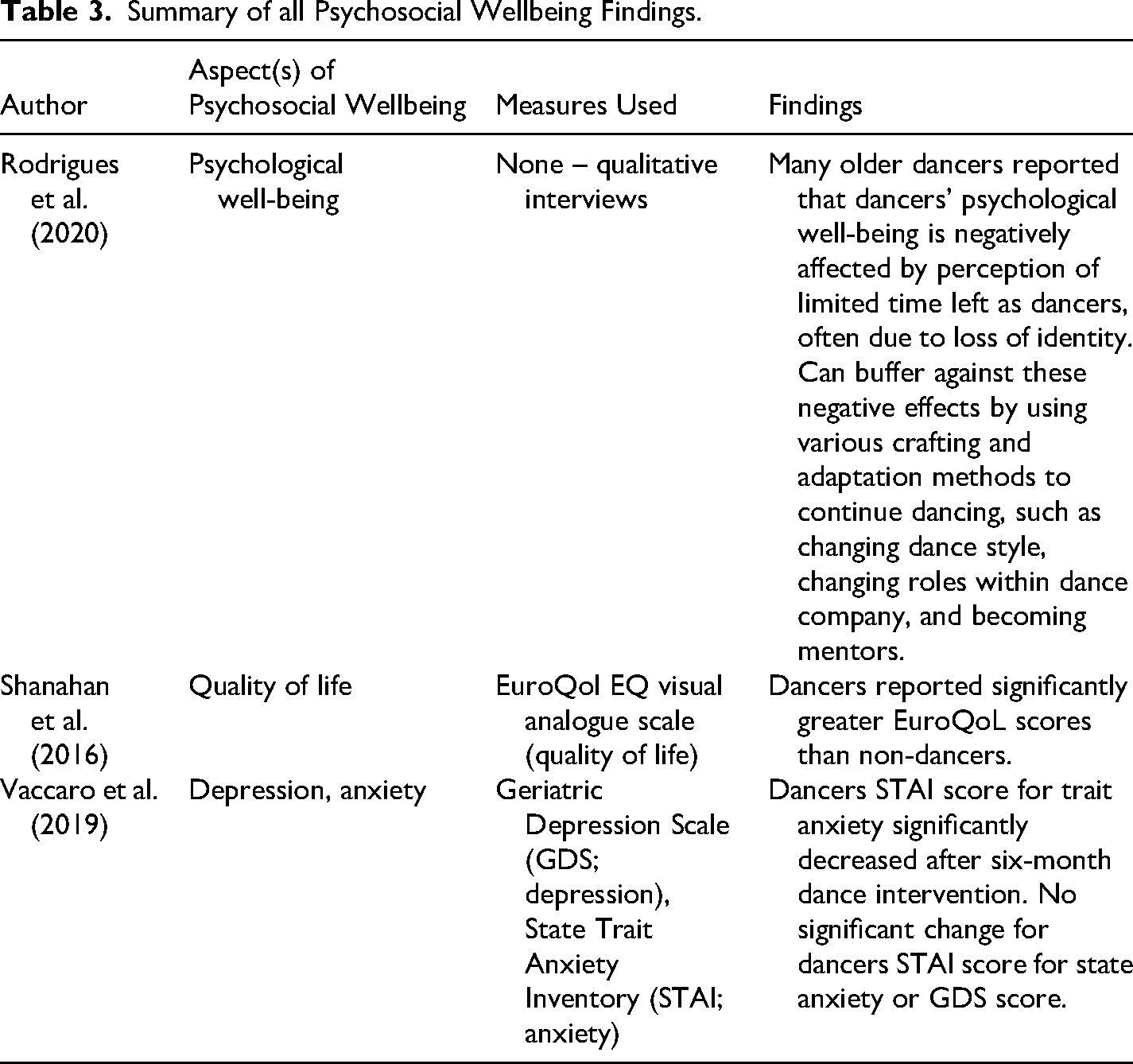
The three studies that focused on wellbeing were analysed for aspects of wellbeing measured or discussed and what the findings were (see Table 3). In Rodrigues et al. (2020), dancers discussed how ageing out of a dancer role and career negatively affects their psychological wellbeing due to losing a sense of self and identity. There were multiple ways in which the dancers reported adapting to their age and maintaining their sense of identity as dancers despite the challenges of ageing, which included changing their dance style or roles within their dance company, such as playing more character roles and becoming teachers and mentors. In the two quantitative studies, Shanahan et al. (2016) found that dancers reported significantly higher quality of life scores than non-dancers, while Vaccaro et al. (2019) found that experienced dancers reported reduced trait anxiety after a six-month dance intervention but no change in state anxiety or depression.
Summary of all Psychosocial Wellbeing Findings.
Discussion
The key aim of this scoping review was to identify and synthesise the existing research on the influence of sustained engagement in dance or elite-level dance skills on cognitive function and psychosocial wellbeing in older adulthood. The review identified 10 eligible studies, eight quantitative and two qualitative. Eight studies included findings on different aspects of cognitive function, while three reported findings on psychological wellbeing, with one study reporting outcomes for both. Findings on specific measures of cognitive function were mixed, but provided some evidence for dance experience as having cognitive benefits. Several studies showed evidence for attention – especially selective attention, concentration, and orientation – and both short- and long-term memory. However, there was no aspect of cognition for which findings were unanimously significant. There was limited evidence of improvements in spatial ability or visualisation in two different quantitative studies, despite expert dancers reporting this as a key developed skill in the qualitative research, while there was mixed or insufficient evidence supporting aspects such as planning ability, visual scanning, verbal fluency and executive function. Evidence regarding wellbeing showed limited but promising findings regarding enhanced quality of life and reduced anxiety, while one qualitative study highlighted both how ageing can negatively impact psychological wellbeing but also how dancers reported adapting to these challenges through adjusting their practice and role to potentially sustain or even enhance wellbeing.
When looking at the differences between the studies for which results were mixed, it was difficult to determine specific patterns due to the limited number of studies and heterogeneity in designs and study populations. Studies with results that supported cognitive benefits for older dancers contained a mix of competition-level and amateur dancers and years of experience ranging between three and 22 years. Participants’ mean ages were all between 69.5 and 71.7 with age and education matched between the dancer and non-dancer groups. The two studies that showed no significant results on any cognition measures contained the oldest average age of dancers (M = 80.0 and 73.1). Importantly, both studies with no significant findings included control groups that were matched for physical activity levels, while several of the other studies did not. The dancers in these studies were not professional and identified mostly as intermediate or beginners in one study (not specified in the other). While they reported over 10 years of experience (M = 36.5 and 13.4 years) and most still danced, most only once or twice a week, and the intensity of dance activities was not described.
Therefore, it is possible that the ‘dose’ of dance, in terms of current involvement, historical involvement and level of expertise achieved, was not sufficient to yield additional cognitive effects over and above the benefits of being physically active. Improved memory was observed in one study where intermediate dancers were given a dance program four days a week totalling 7.5 h a week (Vaccaro et al., 2019). However, years of dance experience for participants was unknown beyond needing at least five years’ experience to participate. Therefore, very few studies contained high-level experts or older adults who would be considered ‘experts’ by parameters used in sports research such as competitive experience, professional status, and being involved in specific elite training (Swann et al., 2015).
The measures used in all studies that used cognitive tasks were from validated cognitive test batteries. However, there was very little crossover in terms of which measures were used, which contributed to the difficulty in comparing or assessing findings. Two studies used the same measures of attention and concentration, but these studies were conducted by the same author and laboratory group. This was also the only measure that was specifically developed for a geriatric population. All other measures were from different test batteries, although some contain similar tasks. For example, the CVLT-II and the AVLT both involve learning lists of words in sequences to measure memory and scores on both correlate highly (Crossen & Wiens, 1994). However, the studies that used these two tests found contrasting results. Therefore, there are few conclusions to draw about the validated measures to explain the mixed results found across studies in the review.
It is also important to consider other additional and potentially confounding factors that may contribute to these findings. Firstly, it is possible that reverse causation is at play – where study participants are better able to start or sustain dance activities because they have stronger cognitive abilities or psychological wellbeing, rather than the activities driving improved functioning (Gow et al., 2012). This is highly possible in this predominantly cross-sectional range of research, as well as potentially in some of the longitudinal research that show leisure activities and physical activity having protective impacts on cognition and dementia for older adults (Gow et al., 2012; Mura et al., 2025), as the positive impacts of the activities then promote increased engagement. Nevertheless, future research examining consistent long-term dance engagement, beyond the single longitudinal study identified in this review, will help provide further clarity around this issue. Other potential confounding factors include variables such as socioeconomic status, general health factors, and occupation, among others (for a recent discussion on research on music, cognition, and potential confounds, see Schellenberg & Lima, 2024).
Comparisons to Findings for Dance Interventions
The findings from this scoping review reflect the dance intervention research, where while results are promising and show some benefits, they are inconsistent and somewhat difficult to confidently interpret. The systematic review of dance studies conducted by Muiños and Ballesteros (2021) found evidence for improvements in memory (in nine out of ten studies) and executive function (16 out of 23). However, in some of these studies, dance interventions performed similarly to other interventions (e.g., exercise) in improving cognition, while dance had a superior effect in others and others had no active control. Waugh et al.'s (2024) scoping review of dance intervention studies reported that evidence for cognitive and executive benefits and quality of life and wellbeing tests were mixed due to gaps in reporting of demographics and variability in controls used, rationale for dance type, and dance dose. Therefore, while there is evidence that undertaking dance activities does support various aspects of cognitive function, there are still some mixed findings, especially when comparing to active controls and other intervention conditions. While direct comparisons to the findings of the present review are not possible due to small study numbers, these findings may reflect the trends observed for experienced dancers with more research conducted. The present study supports the recommendation of Waugh et al. (2024) to focus future research on understanding the optimal dance dose that might support cognitive and wellbeing benefits, both with intervention studies with novices and especially with elite, high-level lifelong dancers.
Comparison of Cognitive Findings to Those for Older Adult Musicians and Athletes
There have also been small numbers of studies and reviews that have investigated the role of musical and athletic expertise in older adulthood. Music studies also identified benefits for attention, inhibition, and smaller effect sizes for measures of memory (Román-Caballero et al., 2018). While not found for dance in the individual studies from this review, Román-Caballero et al. (2018) observed benefits of musical expertise on visuospatial ability, verbal fluency, and processing speed. All nine controlled for education or general intelligence, indicating that while these are only correlational findings, they are not attributable to general levels of education. The small range of research on masters-level athletes and other older adults with sporting expertise has found some benefits for inhibitory control and attention, but mixed results on other measures of cognition (Logan et al., 2022; Tseng et al., 2013).
Findings here primarily identify that more research is needed across all these domains, with studies on specific cognitive functioning for experienced dancers, athletes and musicians still a growing area of research. The reasons behind the comparison are based on the notion that dance involves rhythmic coordination, motor skill and movement, and often social and emotional components (Murillo-Garcia et al., 2021). Hence, insight may be gained about experienced dancers through understanding the role of experienced or expert musicians and athletes in lieu of specific dance research. Future research should investigate these fields in tandem, to understand whether dance as music-supported physical activity does have benefits that exist over and above music or physical activity alone. Such emerging evidence would complement the growing body of evidence that supports dance interventions as providing additional cognitive benefits over exercise, such as for memory in older adults with mild cognitive impairment (Quan et al., 2024).
Limitations and Conclusions
This review had several other limitations. Most prominently is the limited research on people who would be classified as elite-level or truly expert dancers. It was decided, in order to capture a broad range of literature, not to specifically restrict for age or extent of prior experience, as long as the individual studies reported that participants were older adults with some existing dance experience (i.e., before the study). Of the seven studies that specified years of experience, only two studies contained dancers with over 20 years of experience, while only four contained some or all participants who described themselves as expert, professional, or competition level. Thus, when seeking to understand the specific cognitive and wellbeing benefits and issues that may be garnered through high-level performance over a long period, the current available research is unable to accurately detail that. This lack of research is understandable, as accessing the niche population of elite older dancers is difficult. However, as research in the field grows, perhaps we can see a delineation of different findings between experienced social dancers and experienced elite or expert dancers. Future research should seek to target this population, as well as ensure that definitions of expertise or experience are clear and detailed in the research.
The decision to include only studies that contained experienced dancers meant that some qualitative literature was excluded, as these studies often include a combination of experienced and novice dancers without the ability to separate them, or did not detail who had experience. More research should seek to review and bring together the existing qualitative research alongside this review and the more established body of work on dance intervention research for older adults. Further, while outside of the scope of this review, it is important to note that expert, long-term engagement in physical and artistic activities can provide unique and intense emotional, physical, and social challenges, leaving these experts vulnerable to ageism, anxiety, and burnout (Cardoso et al., 2025; Rustad & Engelsrud, 2022). Future research needs to consider these potential risks alongside the long-term benefits in reflecting a balanced view of elite engagement for older adults. Finally, scoping reviews of this nature cannot provide an in-depth analysis of findings, and no specific meta-analyses or statistical analyses were conducted.
This scoping review has attempted to understand the nature and extent of the existing literature regarding the cognitive and wellbeing impacts that lifelong dance experience or expertise may have for older adults. This review identified some benefits of dance experience on aspects of cognition, including aspects of executive function like attention, concentration, and memory. However, other studies found no significant benefits for any aspects of cognition. Further, a small range of studies found potential for dance expertise in supporting quality of life and reducing indicators of illbeing. More research is needed to clearly delineate the potential benefits. Specifically, the current research includes a broad range of experience levels, both in terms of years of experience and self-reported expertise level. Further research will help in growing understanding of the specific benefits of lifelong dance expertise for older adults and what neurological processes underpin these benefits. This research will add to the growing wealth of knowledge about the wide-ranging protective benefits that stem from physical and musical practices. In doing so, we can empower older adults and equip stakeholders with the knowledge to make decisions that promote cognitive-motor function, wellbeing and social engagement for older people and contribute to a society that celebrates the opportunities and benefits of an ageing population.
Footnotes

Ethical Considerations
There are no human participants in this article and informed consent is not required.
Funding
The authors disclosed receipt of the following financial support for the research, authorship, and/or publication of this article: This work was supported by the Australian Research Council Discovery Project (Grant DP210101247) held by the second and third authors.
Declaration of Conflicting Interests
The authors declared no potential conflicts of interest with respect to the research, authorship, and/or publication of this article.
Data Availability
The protocol for this paper is registered and available on the Open Science Framework database.