



Abstract

Eric MacKenzie, one of the co-founders of the ISCBFM, passed away serenely on 2 March 2017 at his home in Caen, France.
Eric was one of those rare individuals who brought about real change. His scientific contributions altered fundamentally our views of the cerebral circulation. He pioneered the creation of large multidisciplinary research groups to advance research. He was instrumental in the creation of the International Society and crucially ensuring its long-term financial well-being.
After a BSc honours degree in physiology at the University of Glasgow, Eric became a research assistant to Prof AM Harper at the Wellcome Surgical Research Institute where he received his PhD in 1976, the title of which was ‘The Effects of Noradrenaline on Cerebral Blood Flow: the Role of the Blood-Brain Barrier’. At that time, Eric had already established strong and highly productive links between the Wellcome Surgical Research Institute and the Histology Department of the University of Lund in Sweden (Christer Owman and Lars Edvinsson).
His scientific contributions during this early phase were considerable. His first publication (with John Pickard) was in Nature. His descriptions of the physiology of the cerebral circulation (particularly autoregulation to pressure alterations and neurogenic control) were elegant and definitive. Most crucially, he demonstrated in 1976 that the blood–brain barrier limited access of monoamines to cerebral resistance vessels. Before this contribution, every CBF meeting was bedevilled by putative effects (based on inadequate methodology) of monoamines on CBF: Afterwards Eric’s view held sway beautifully conceptualised in a descriptive model, taken from his PhD dissertation which appeared in the Pharmacological Reviews article in 1976 which Eric wrote with Lars Edvinsson.
Eric was awarded an MRC Travelling Fellowship for 1976–1977 which he exercised in the laboratories of Prof Don Reis in the Department of Neurology of Cornell University Medical College. On his return to Glasgow, Eric was promoted to research fellow, with teaching responsibilities in physiology and neurosurgery and administrative duties as the Deputy Steward of the Wellcome Surgical Research Institute.
A major career change took place in 1979 when Eric left Glasgow and academia to work in Paris with a major pharmaceutical industrial company. He joined the research division of L.E.R.S.-Synthélabo (now Sanofi), and created and headed a group (Brain Circulation and Metabolism) that was devoted to preclinical studies of novel neuroprotective and anti-migraine agents. Fundamental research was not neglected with important contributions to the field of experimental stroke as well as the interactions between serotonin and the cerebral circulation. In recognition, Eric MacKenzie was appointed consultant, as associate director of research to the CNRS (the major public sector research organisation in France).
With his experience of industry, Eric recognised that if cerebrovascular research was to make major advances, major multidisipinary research groups needed to be created. At this time, most cerebrovascular research was conducted in tiny groups often with access to one investigative technique (which ultimately limited their perspective). Eric saw that problems needed to be addressed with adverse range of technologies in vitro and in vivo, in experimental animals and in man.
The next major professional change in 1989 allowed Eric to participate and shape such a research environment – Cyceron. Eric resigned from L.E.R.S. and obtained full-time tenure as a senior researcher within the CNRS. Cyceron, one of the first three PET centres in France was to be opened in Caen under the auspices of the principal national research organisations as well as local institutions. From 1989 to 2005, Eric was the Deputy Director of Cyceron and Director of successive laboratories co-affiliated to the CNRS and the University of Caen-Normandy in Caen. Between 2005 and 2017, Eric continued to share his precious scientific expertise as a Director of research in the CERVOxy group hosted at Cyceron centre. The research tools were not PET based but included autoradiography, histology and genetics inter alia. The research output was prodigious in quality and quantity.
During this time, a major contribution to the field of the neurosciences was realised with the publication of a textbook entitled ‘Cerebral Blood Flow and Metabolism’ along with co-authors (Lars Edvinsson and James McCulloch). A testimony, not only to the on-going collaboration between Lund and Glasgow but between three close friends.
Eric had the privilege to participate in the founding of the ISCBFM. It was Eric who convened a meeting in Paris in March 1980 at which the goal of establishing an International Society was established. The purpose of the Society was to own and publish the Journal of Cerebral Blood Flow and Metabolism, and to assure the quality and regularity of the Biennial Symposia. Eric organised in 1983, the first meeting of the ISCBFM (XIth rCBF) with Jacques Seylaz and André Bes as co-chairmen. The meeting was held at the Palais des Congrès in Paris. Remembered by many older members of the Society, the Paris meeting was remarkable in many aspects. It was the first symposium (not yet Brain) that was officially held under the aegis of our International Society. The number of participants greatly exceeded the expectations and posters as well as parallel oral sessions were introduced for the first time. The social programme matched the scientific richness of the Paris meeting.
Subsequently, Eric was appointed to be chairman of the Programme Committee at Brain’87 in Montreal and for Brain’89 in Bologna. The final symposium during which Eric chaired the programme committee was Brain’91 in Miami. During his tenure, he established the Society’s ownership of the Brain meetings and the role of the Programme Committee alongside the local organisers in defining the scientific programme.
From 1995 to 2001, Eric was the honorary treasurer of the International Society. First elected in 1995 for two years, he was then re-elected by unanimous decision for two subsequent terms. On his appointment, the Society had limited funds and received a pittance from our successful Journal. His period in office was characterised by an exponential growth in the Society’s income, capital assets and expenditure. Perhaps this was the result of wise investment and Scottish frugality. More likely, it was the result of two major contract renegotiations with our publishers. After relinquishing the post of honorary treasurer, Eric participated in all the key meetings (from the steering committee and its successor the Board of Directors) in some capacity for 21 years. The financial well-being of the Society today is a direct consequence of Eric’s service to the Society throughout his career.
Eric was driven by his wish to share and transmit his knowledge with all his students and colleagues. His youthful and vivacious spirit was a true motivation for his entourage. Forever forward-looking, Eric had a constructively critical approach with all staff levels, criticisms that ranged from data presentation to their career plans and their linguistic education.
This brilliant and dedicated scientist and generous and open-minded colleague will be missed dearly by us.
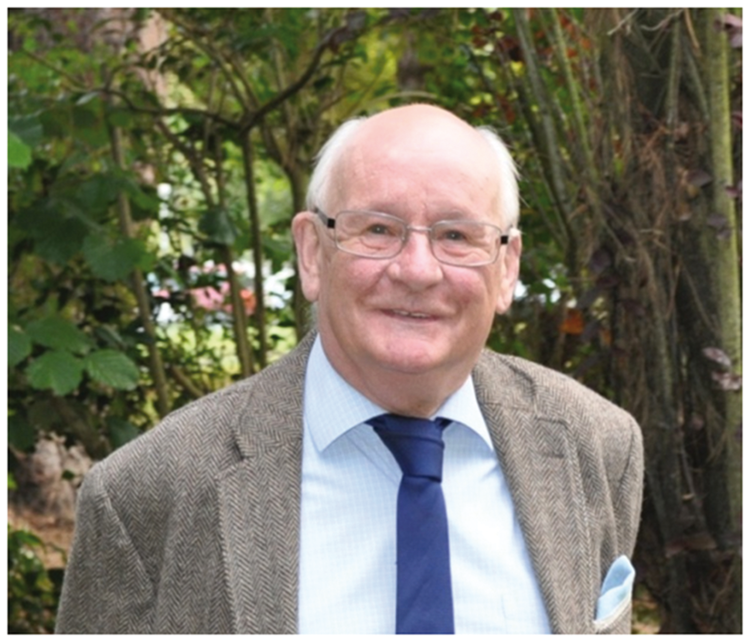
© Omar Touzani