



Abstract
In times of identity politics, journalists use group primes to organize events and reduce their complexity. Because research has mostly investigated the effects of single group primes on opinion formation and news selection, two aspects of group primes in the news have remained understudied: (1) whether they directly affect group identification itself, and (2) how these effects differ between groups. This experiment (N = 750) shows that group primes in the news cause awareness of citizens’ membership in these groups. However, citizens’ perceived group importance diverges between groups: priming groups that likely have a social change mindset increases their perceived importance, while priming groups that likely have a social mobility mindset does not. Accordingly, the effects of group primes in the news depend on shared notions of a group's status in society and the rigidity of its boundary. These findings considerably advance contemporary understanding of differential news effects relating to group identification.
Throughout the last decades, identity politics has increasingly defined political debates. Large-scale grassroots movements, such as #BlackLivesMatter and #MeToo, dominated news cycles (Gallagher et al., 2018; Kunst et al., 2019), and right-wing populist parties speak to national and ethnic identities among the dominant group (Mudde, 2007). In both cases, identity politics primes group identities to politicize their groups (Klandermans, 2014). Simultaneously, journalists employ group primes in the news, in order to fulfill the journalistic norm of balanced reporting (Entman, 1989) and create conflict frames (Bartholomé et al., 2015). It is therefore important to understand the effect of appeals to groups in the news.
Such appeals can affect the selection of news (Appiah et al., 2013) and affect motivated reasoning (Bolsen et al., 2014; Boyer et al., 2022). They influence minorities’ views of themselves (Ramasubramanian et al., 2017) and of the majority (Saleem and Ramasubramanian, 2019; Schmuck et al., 2017), or strengthen anti-immigrant attitudes (Brader et al., 2008; Matthes and Schmuck, 2017; Seate and Mastro, 2016). However, such research operates based on an untested assumption. We do not know whether there is a direct and robust effect of group primes in the news on identification with the corresponding group, causing these effects. Furthermore, there has not been a systematic investigation of how different types of group identities influence news effects. Depending on a group's status in society and the possibility to leave it for another, citizens may adopt a mindset aimed at leaving the group for a higher status one (a social mobility mindset) or a mindset aimed at improving the current group's status (a social change mindset; Tajfel and Turner, 1986). These mindsets should, in turn, hinder or promote identification, respectively.
This experiment tests the effects of priming seven different group identities (i.e. gender, age, ethnicity, social class, ideology, national, and European identity) on citizens’ cognitive and affective identification. The contribution of this survey experiment is twofold. Firstly, it offers an empirical test of the implied mechanism in numerous studies concerning group primes in the news. Secondly, it nuances our view on identity-related news effects by differentiating between groups through the mindsets they might assume. As such, this study illustrates differential media effects for groups that vary in their status in society and level of rigidity, and can function as an orientation to scholars who study news effects of group primes and are interested in how group characteristics may influence their results.
The effects of group primes in the news
Media are an important playing field in intergroup relations, as they allow groups to communicate group norms, mobilize political support, and shape stereotypes of ingroups and outgroups (Harwood and Roy, 2005). In this context, journalists use group primes to structure political debates, as policies have diverse effects on different groups (Weeden and Kurzban, 2017). This is exacerbated as journalists contrast representatives of groups with different opinions to achieve balanced reporting (Entman, 1989). Moreover, as journalists favor and construct conflict frames (Bartholomé et al., 2015), group primes help citizens choose the right “team.”
Political actors may also actively prime groups in an effort to politicize a group identity (Klandermans, 2014). As such, largescale identity politics campaigns, like #BlackLivesMatter and #MeToo, managed to generate public debates about race and gender (Gallagher et al., 2018; Kunst et al., 2019). Moreover, radical right-wing populist parties and candidates have gotten increasingly popular (Rooduijn et al., 2019), and actively use group primes in their rhetoric to politicize national, religious, and ethnic identities (Mudde, 2007). Yet, group politicization requires identification (Klandermans, 2014), and direct evidence of the effect of group primes on identification is rare. Rather, scholars focus on the effects of group primes in the news on outcomes that follow identification (see Figure 1).
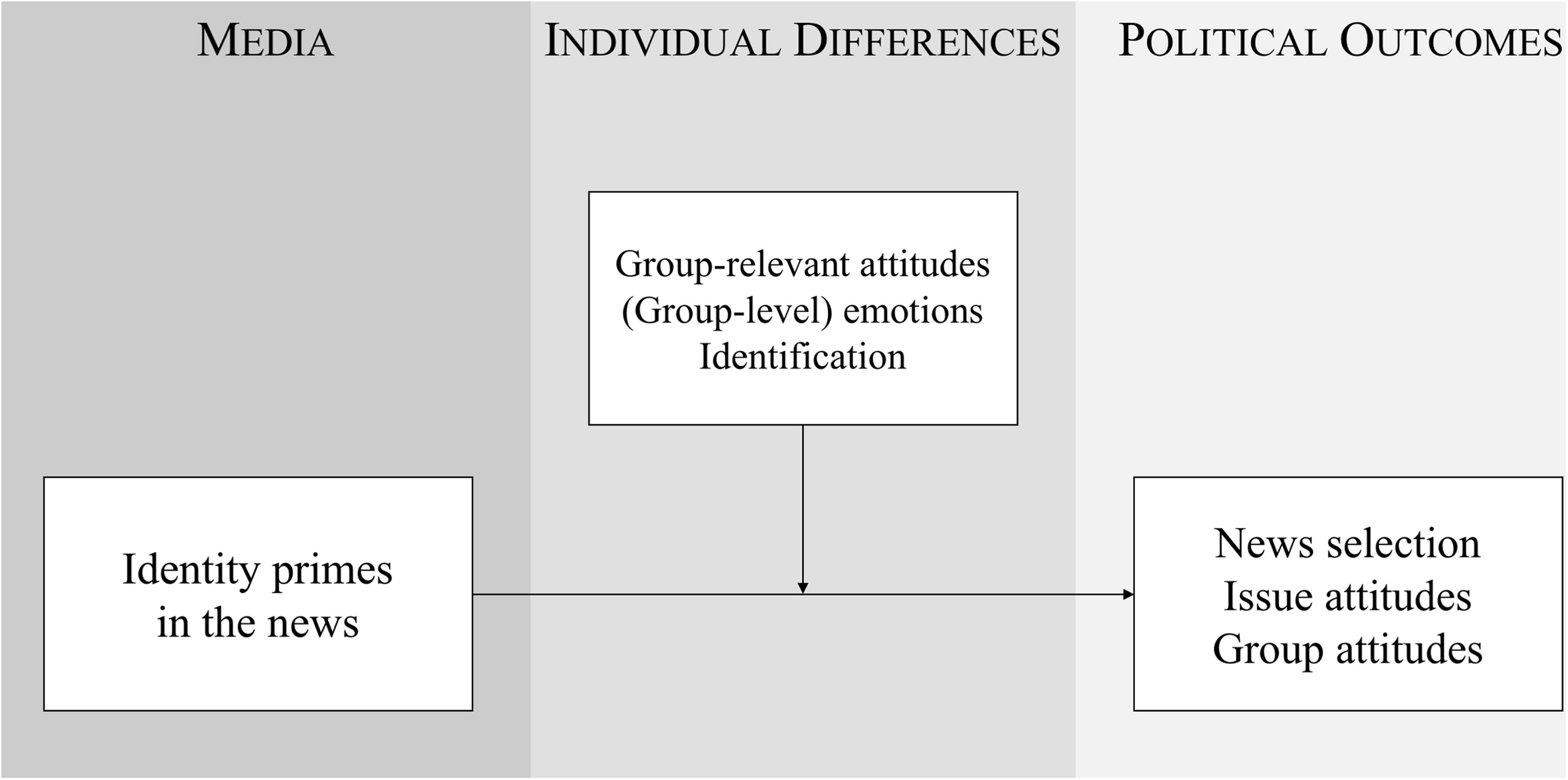
Conceptual model of existing research on news effects of group primes.
Firstly, scholars found the effects of group primes on asymmetrical selection and appreciation of news. Citizens favor positive news about ingroups and negative news about outgroups in terms of age, gender (Knobloch-Westerwick and Hastall, 2006, 2010), and race (Appiah et al., 2013), and avoid negative news about their ethnic ingroup (Abrams and Giles, 2007). Moreover, news containing one's ingroup is more arousing, better remembered, and regarded more favorable than news containing outgroups (Fujioka, 2005).
Secondly, group primes in the news impact issue attitudes. Party cues exacerbate defensive reasoning, causing issue polarization (Taber and Lodge, 2006; Slothuus and De Vreese, 2010; Boudreau and Mackenzie, 2014). Similarly, gender groups polarize when gender identity is primed instead (Boyer et al., 2022; Han and Federico, 2018) and negative depictions of religious outgroups promote support for policies that harm them (Saleem et al., 2017).
Thirdly, group primes in the news affect citizens’ attitudes towards outgroups. Immigration news causes more anti-immigration mobilization (Brader et al., 2008), feelings of contempt and harming behaviors towards immigrants (Seate and Mastro, 2017), as well as intergroup anxiety and negative attitudes towards immigrants’ human rights (Seate and Mastro, 2016) when immigrants are depicted as racial outgroups. In contrast, positive outgroup depictions can decrease negative stereotypes and promote positive evaluations of ethnic outgroups (Mastro and Tukachinsky, 2011).
Finally, and related to group identification, group primes in the news can change citizens’ views on the ingroup. Ethnic media increase minorities’ ethnic pride, while traditional media decrease self-esteem (Ramasubramanian et al., 2017). Moreover, negative depictions in the news decrease self-esteem among Latino citizens (Rivadeneyra et al., 2007). Similarly, negative group depictions decrease Muslims’ national identification and their desire to be accepted by the majority but increase their religious identification and avoidance of the majority (Saleem and Ramasubramanian, 2019; Schmuck et al., 2017).
These results show how important group identification is for news effects. Yet, the theoretical underpinnings of these studies require testing an important assumption: does priming a group identity in the news actually increase identification with the corresponding group? According to Social Identity Theory, individuals make sense of the world by dividing people into ingroups or outgroups (Tajfel and Turner, 1986). Anyone's identity entails many ingroups (e.g. their gender, age, profession) and these group identities guide individuals’ thoughts and behavior, motivated by a fundamental need for self-esteem, or a positive social identity. Most importantly for news effects, group identification depends on the relevance of a group for the situation and the possibility to experience a positive social identity through this group. Group identification is considered a prerequisite of any group effect and should therefore underlie the effects of group primes in the news.
Tajfel and Turner (1986) define a cognitive and affective dimension of identification. Scholars have proposed additional dimensions, but cognitive and affective identification are fundamental parts of every definition of group identification (Ellemers et al., 1999; Cameron, 2004; Leach et al., 2008; Postmes et al., 2013). Cognitive identification, often called identity salience, is the awareness of one's group membership. This entails, for example, how often one thinks about the group. In contrast, affective identification refers to the importance to the self. The two dimensions differ, as one might feel negative about a group while being highly aware of it. And although both dimensions should be affected by group primes in the news, they can have different causes and consequences (Ellemers et al., 1999; Bettencourt et al., 2001). It is thus important to differentiate between cognitive and affective identification to understand the effects of group primes in the news on identification.
In sum, group primes in the news affect important political and social outcomes, and these effects should be based on identification with the primed groups. All hypotheses are depicted schematically in Figure 2:
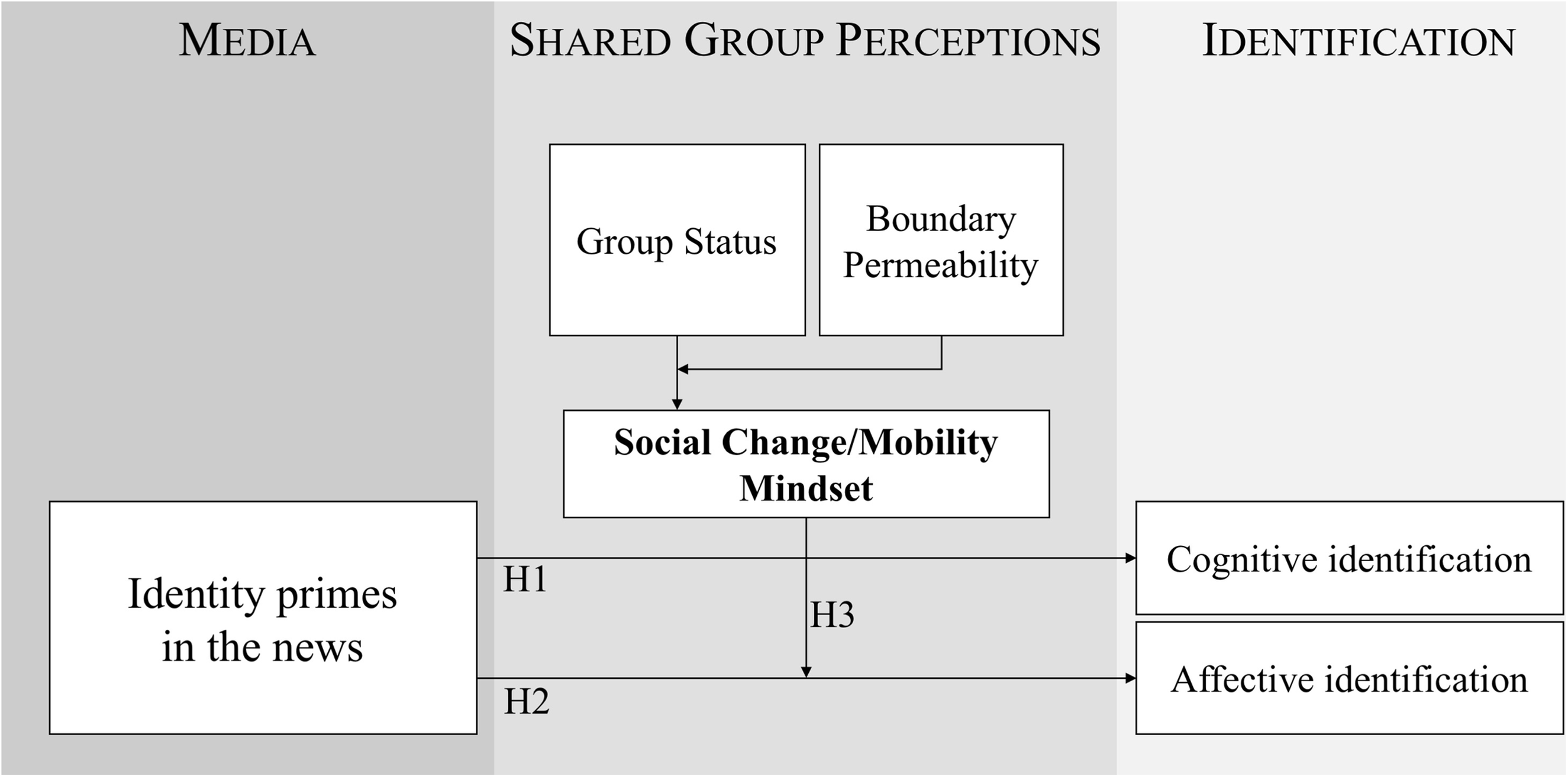
Conceptual model of the proposed hypotheses.
H1. Group primes in the news cause cognitive identification with the corresponding group.
H2. Group primes in the news cause affective identification with the corresponding group.
Group differences: Social mobility and social change mindsets
News effects are not universal (Valkenburg and Peter, 2013) and the effects of group primes depend on specific moderators (see Figure 1). For instance, the effects depend on group-relevant attitudes, such as political sophistication for partisan groups (Taber and Lodge, 2006; Slothuus and De Vreese, 2010), positive racial attitudes in the context of immigration (Mastro and Tukachinsky, 2011), or negative stereotypes about the outgroup (Gilliam and Iyengar, 2000). Secondly, (group-level) emotions can influence the effects of group primes in the news, like intergroup anxiety (Fujioka, 2005; Brader et al., 2008; Huddy et al., 2015; Seate and Mastro, 2017). Finally, prior identification influences the effects of group primes in the news (Rivadeneyra et al., 2007; Slothuus and De Vreese, 2010; Saleem et al., 2017; Seate and Mastro, 2017; Han and Federico, 2018).
Although these are important individual differences, Social Identity Theory posits that identification with a certain group should be primarily dependent on the specific group involved (Tajfel and Turner, 1986). This entails, for instance, that individuals take on either a social change mindset (SCM) or a social mobility mindset (SMM). An SCM denotes the motivation to improve the relative status of the citizens’ group. This is what communicators of identity politics try to achieve, as an SCM increases citizens’ identification with this group. In contrast, an SMM denotes the motivation to cognitively switch group membership to a group with more relative status. An SMM represses identification with low-status groups. These mindsets are thus crucial to understand identification with different groups.
Whether citizens take on an SCM or SMM depends on their perceptions of the ingroup and the relevant outgroup. These perceptions are individual differences, but are also subject to shared group norms and are often culturally defined (Hogg and Abrams, 1998). For example, national identification is associated with individualism in the U.S., but with collectivism in Indonesia (Jetten et al., 2002). We can therefore assume that, even though individual perceptions about groups cause citizens’ mindsets, these perceptions are grounded in societal norms and stereotypes (Bronfenbrenner, 1979; Valkenburg and Peter, 2013). In other words, shared perceptions of groups follow patterns in society and influence group behavior.
Which mindset citizens adopt depends on shared norms of the status hierarchy between groups and the permeability of a group's boundaries. 1 Because the negative distinction of a low-status ingroup causes negative social identity, low-status group members are motivated toward one of two options (Tajfel and Turner, 1986). They can identify with an alternative group – adopting an SMM – or improve the current group's status – adopting an SCM. Tajfel and Turner (1986) expect that low-status group members will have an SMM if they perceive the group's boundaries as permeable: if they can adopt another group, they suppress identification with the current low-status group. If the group's boundaries are perceived as impermeable, low-status group members cannot move into another group and adopt an SCM – increasing identification.
A status hierarchy in this sense is the shared perception of the position the ingroup holds in relation to an outgroup (Tajfel and Turner, 1986). It can refer to physical resources as well as power or privilege. Although status hierarchies are context-dependent, one can assume shared perceptions, such that women, citizens with low socio-economic status, or an immigration background are considered to have less status than men, citizens, with high socio-economic status, and native citizens. In terms of ideology, in a democracy, who is currently in power coincides with perceptions of group status (e.g., Huddy et al., 2015), and in the workplace, older employees have less status than younger ones (Desmette and Gaillard, 2008).
Likewise, ideas about the permeability of groups’ boundaries follow shared social norms. Permeability refers to the possibility for a group member to cross group boundaries – to switch to another group. Again, social norms and shared perceptions dictate certain differences between groups. Gender, age, and ethnicity are subject to essentialist views, while social class and political groups are not (Haslam et al., 2000). You cannot change your age or the color of your skin, but meritocratic norms ensure that social class boundaries are perceived as permeable. As are partisan group boundaries: citizens choose who to support.
In sum, we expect that group primes in the news cause citizens in SCM groups (low-status, low-permeability) to increase identification, while those in SMM groups (low-status, high-permeability) will not. Situational factors – like group primes in the news – impact both cognitive and affective identification (Ellemers et al., 1999; Bettencourt et al., 2001). However, status and group permeability only impact affective identification (idem): citizens’ mindsets do not influence their awareness of their groups, but only their perceived importance.
H3. Group primes in the news cause affective identification with the corresponding group for SCM citizens, but not for SMM citizens.
Method
We conducted a between-subjects online survey experiment, in which participants were randomly assigned to one of six mock newspaper articles with different group primes or no article at all. 2 A varied sample of 750 Austrian citizens was recruited by a panel agency, with an average age of 43 (SD = 15.34) and 52% women. The six experimental conditions contained group primes, selected to vary in terms of group permeability, regarding citizens’ (1) gender, (2) ethnicity, (3) social class, (4) age, (5) ideology, or (6) (supra-)nationality. Respondents in the control condition read no news article, to avoid unexpected activation of group identities through citizens’ individual associations (Hogg and Abrams, 1998). Participants first answered questions about their group memberships (demographics), before they were exposed to the stimulus (in the experimental groups) and answered questions about cognitive and affective identification.
Stimulus material
Priming specific social groups requires precision because citizens can hold different meanings for each group. Therefore, we use constructed news articles to manipulate the group primes, while guaranteeing commensurability across conditions. However, we used an existing news article from a legacy newspaper as a template to ensure experimental realism. The topic of the articles was unemployment, which is relevant for many groups in society. Each article was structured as follows. The title indicated that unemployment affected one group more than another, containing the first set of group primes. This was followed by a lead paragraph explaining unemployment rates and how they differ between the two groups, containing the second set of group primes. This was followed by two arguments from a representative of each group. The article applied the journalistic norm of “balanced reporting” and used group-specific arguments for the different groups.
The context, arguments and wording are held as constant as possible between the six conditions, as are the length and layout of the article. Importantly, both groups were primed an equal number of times. The six conditions contained group primes regarding (1) gender (men vs. women), (2) ethnicity (Austrians vs. citizens with another ethnicity), (3) age (younger vs. older employees), (4) social class (working class vs. middle and upper class), (5) ideology (left-wing vs. right-wing), or (6) (supra-)nationality (national and European identities). The articles discussed unemployment for the low-status and high-status groups. Because this is not directly possible for ideology and (supra-)nationality, the ideology condition discussed the effects of unemployment on the electoral support of left-wing and right-wing parties, and the (supra-)nationality condition discussed differences between Austria and the rest of the European Union. As the (supra-)national condition contained primes of two nested groups, seven group identities are primed in six conditions. See the online Supplemental Material for an example of the stimulus material.
Variables
SMM and SCM
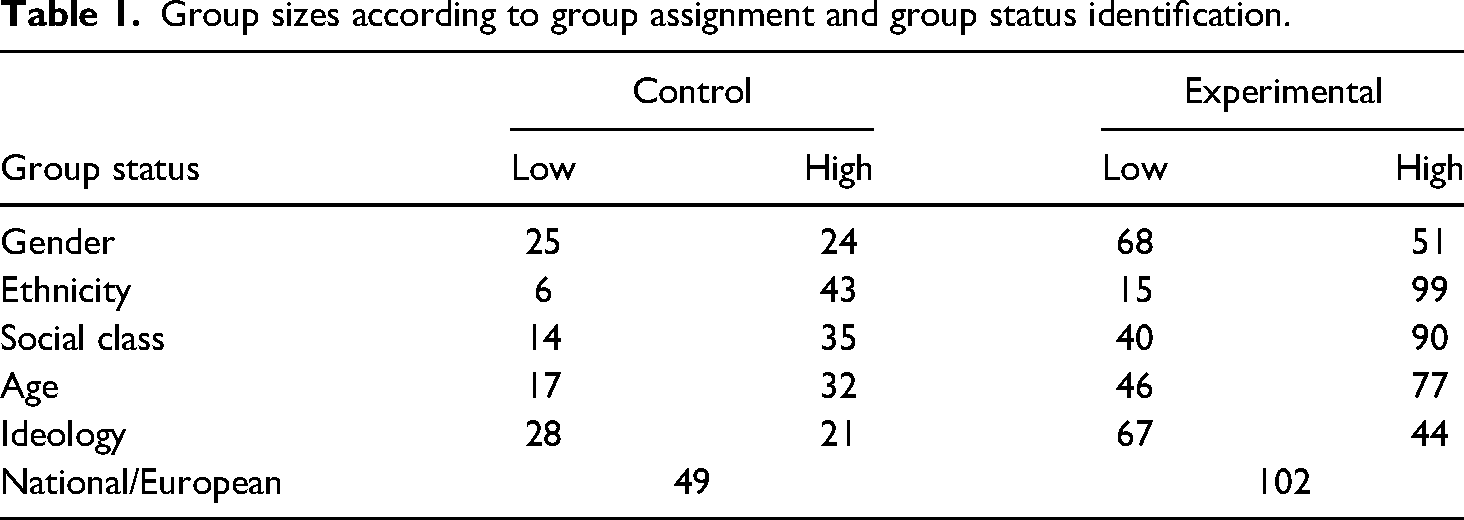
The moderating effect of citizens’ mindset is approximated by interacting shared perceptions of relative group status and group permeability. Specifically, an SCM is predicted in low-status group members in relatively impermeable groups and an SMM is predicted in low-status group members in relatively permeable groups. Group status is defined in the context of unemployment. As discussed, low-status groups in this context are women (vs. men), older employees (45 through 65 years old; vs. younger citizens and pensioners), working-class citizens (vs. middle- and upper-class citizens), citizens with an immigration background (vs. native Austrians and other western Europeans), and right-wing citizens (vs. left-wing citizens, who then supplied the president and lead the government coalition). All respondents are both Austrian residents and EU citizens, so we don’t differentiate between low or high-status groups in the (supra-)nationality condition. All low and high-status group members were represented in our sample, but the low-status group was underrepresented for ethnicity (Table 1).
Group sizes according to group assignment and group status identification.
The group identities in the different conditions are selected based on shared perceptions of group boundary permeability. As discussed in the theory section, we regard gender, 3 age, and ethnicity as relatively impermeable group identities. In contrast, considering democratic norms of meritocracy and elections, we consider social class and ideology identity group boundaries to be more permeable.
Cognitive identification
Following McGuire et al. (1979), cognitive identification is measured unobtrusively as an open-ended question. Respondents are asked: “tell us about yourself.” The reported self-descriptions are coded by two coders to include, or not, participants’ group identities. 4 Importantly, questions regarding specific social groups were asked afterward, to avoid order effects. Respondents mostly mentioned their gender and age (both 24%), followed by their social class (9%), ethnicity (6%), ideology (5%), nationality (4%), and Europe (1%).
Affective identification
To measure affective identification, respondents were asked to rate how important each of the groups is to them on a scale from 1 (not at all important) to 7 (very important). The scale was recoded such that 0 equals weak and 1 equals strong affective identification. Respondents most strongly identified with their nationality (M = .71, SD = .29), ethnicity (M = .61, SD = .32), and gender (M = .59, SD = .32), followed by their age (M = .49, SD = .31), ideology (M = .47, SD = .31), social class (M = .45, SD = .31), and Europe (M = .44, SD = .33).
Manipulation check
In a multiple-choice question, respondents identified which groups were discussed in the article. They identified the primed groups more often correctly than incorrectly, χ2 = 1600, p < .001. In five out of six experimental conditions, at least 73% identified the correct groups (gender: 86%, ethnicity: 79%, social class: 77%, age: 73%, national/European: 75%). However, only 40% correctly identified the ideology condition. They also mentioned social class groups (25%), and Austria and the EU (18%). We treat the results in the ideology condition with caution.
Results
Group primes in the news and cognitive identification (H1)
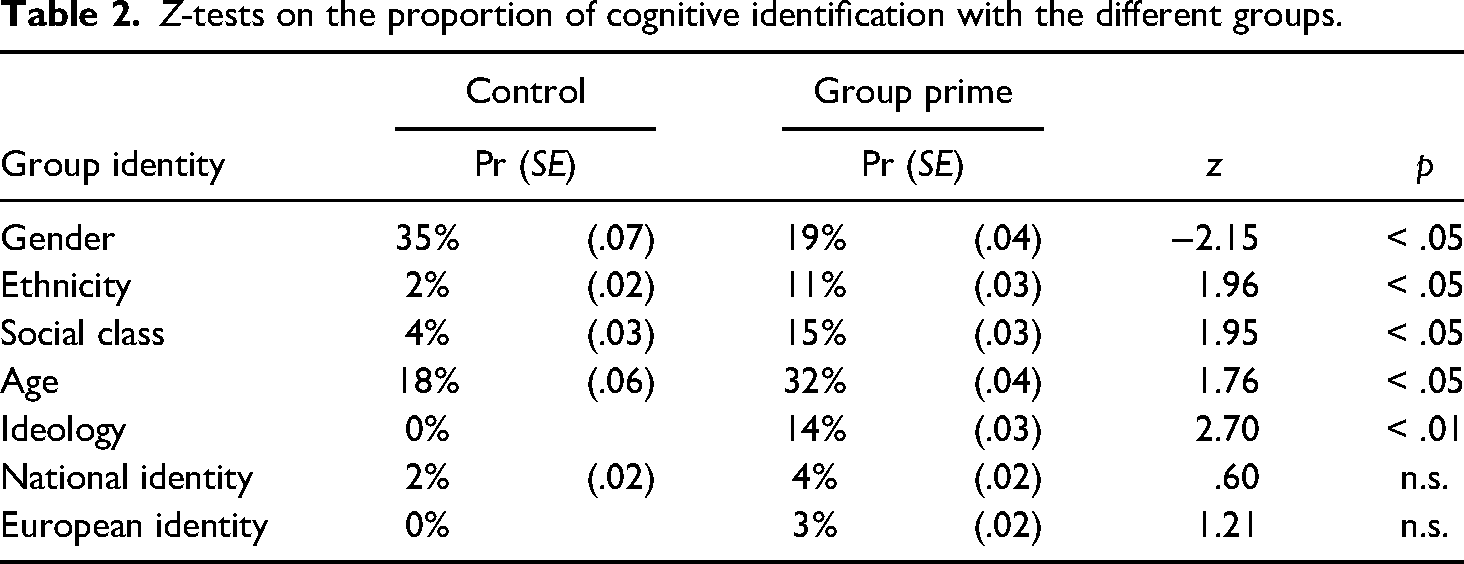
We predicted that group primes cause cognitive identification with the corresponding group (H1). As can be seen in Figure 3, the control condition resulted in strong cognitive identification with respondents’ gender (35%, SE = .07), and age (18%, SE = .06), weak cognitive identification for ethnicity (2%, SE = .02), social class (4%, SE = .03), and nationality (2%, SE = .02), and no cognitive identification for ideology and European identity (0%). Testing H1, we conduct z-tests on the proportion of respondents who mentioned a group in their self-description, between the control condition and the experimental conditions (Table 2). Cognitive identification significantly increased for participants’ ethnicity, (11%, SE = .03, z = 1.96, p = .025, r = .15), social class (15%, SE = .03, z = 1.95, p = .025, r = .15), age (32%, SE = .04, z = 1.76, p = .039, r = .13), and ideology (14%, SE = .03, z = 2.70, p = .003, r = .21), and a similar nonsignificant trend was visible for nationality (4%, SE = .02, z = .60, p = .273), and European identity (3%, SE = .02, z = 1.21, p = .113). For gender, we observe the opposite: cognitive gender identification decreased in the gender condition (19%, SE = .04, z = −2.15, p = .016, r = −.17). In sum, this means that exposure to a group prime caused cognitive identification with the corresponding group, except for the national/European condition (non-significant trend) and the gender condition (reversed effect).
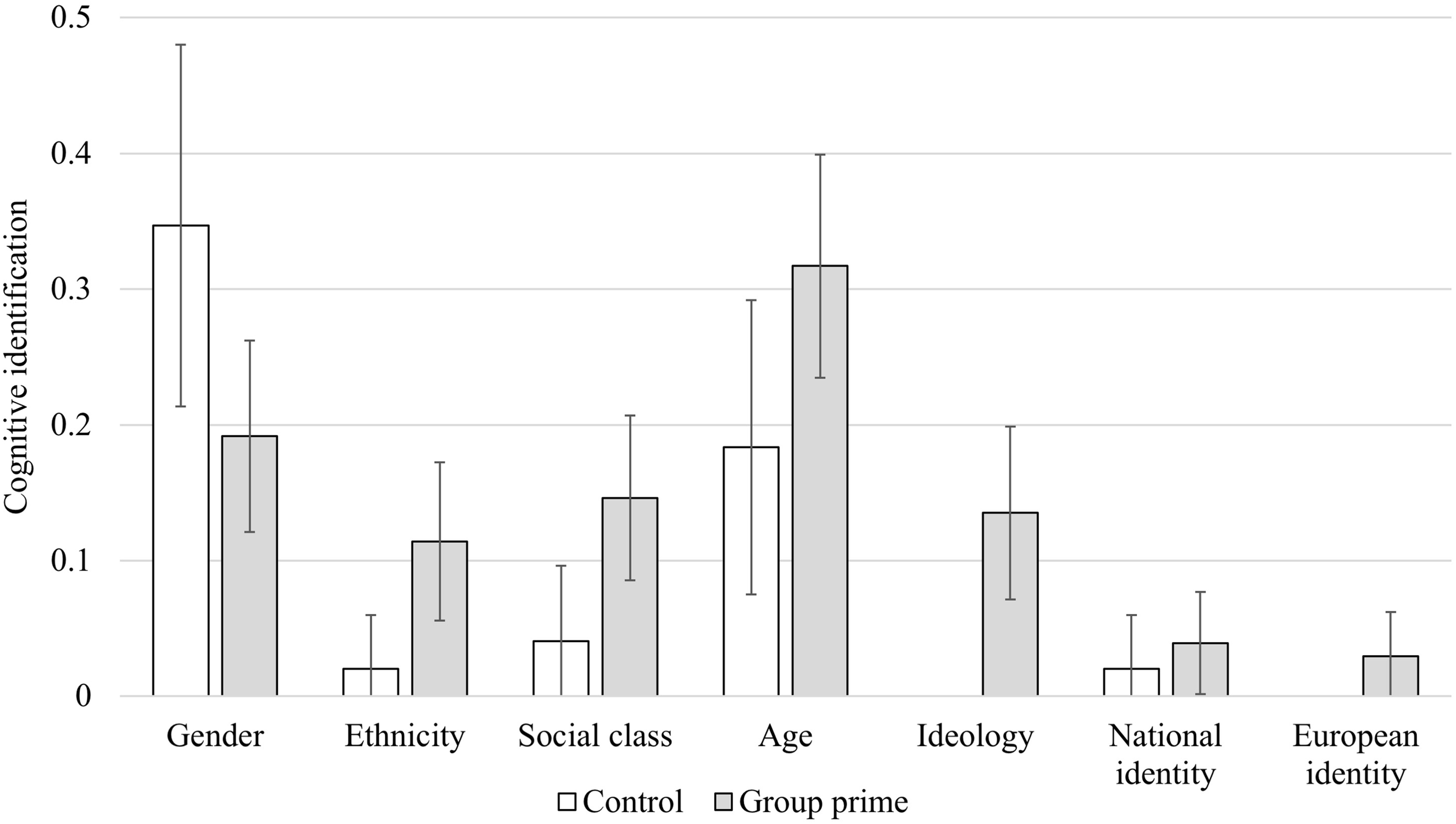
Cognitive identification with groups with and without exposure to corresponding group primes.
Z-tests on the proportion of cognitive identification with the different groups.
To isolate the effects of corresponding group primes, we calculate logistic regression models 5 for each group's cognitive identification (Table 3). For participants’ gender identification, there were (marginally) significant negative effects for the conditions gender, b = −.81, SE = .38, p < .05, ethnicity, b = −.74, SE = .38, p < .10, and ideology, b = −.82, SE = .39, p < .05. In other words, gender identification was reduced by the article with gender primes, but also by the articles with other group primes.
Log odds and standard errors explaining the effects of identity primes in the news on cognitive identification.
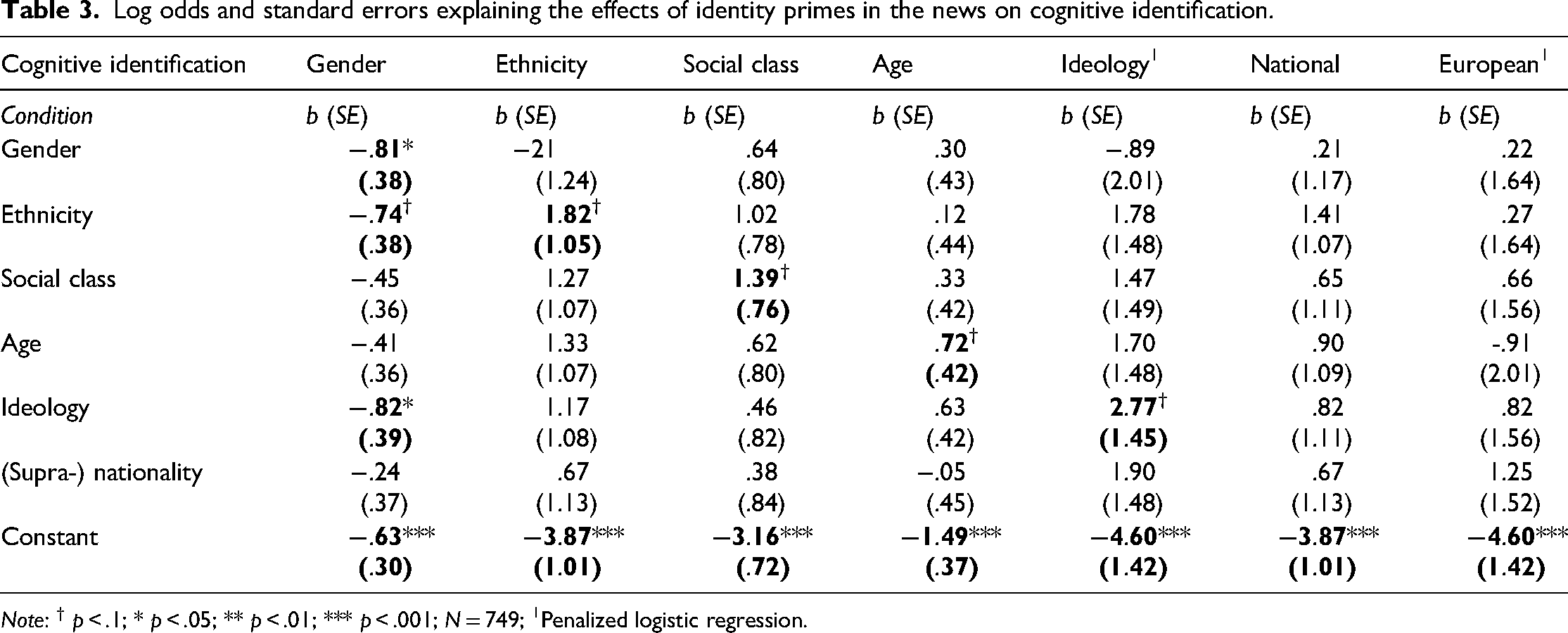
Note: † p < .1; * p < .05; ** p < .01; *** p < .001; N = 749; 1Penalized logistic regression.
In contrast, the positive effect of group primes on cognitive identification with the corresponding group is visible in the models of ethnicity, b = 1.82, SE = 1.05, p = .084, social class, b = 1.39, SE = .76, p = .068, age, b = .72, SE = .42, p = .082, and ideology, b = 2.77, SE = 1.45, p = .056. These effects were only found for the corresponding group primes. In conclusion, Hypothesis 1 is supported for four out of six conditions, and the same trend is also visible in the fifth condition. In contrast, the decrease in cognitive gender identification existed in several conditions, implying that the article caused the effect, rather than the gender group primes.
Group primes in the news and affective identification (H2 & H3)
Participants in the control condition showed most affective identification with their gender (M = .52, SD = .32), ethnicity (M = .54, SD = .35), and nationality (M = .66, SD = .31), but less with their social class (M = .39, SD = .31), age (M = .39, SD = .31), ideology (M = .36, SD = .32), and Europe (M = .37, SD = .32; Figure 4). To test Hypothesis 2, affective identification with the seven groups is regressed on the experimental manipulation and group status (Table 4, main effects models). In the experimental conditions, affective identification increased slightly, but the difference was only marginally significant for age, b = .09, SE = .05, t = 1.73, p = .086, and European identity, b = .11, SE = .06, t = 1.90, p = .059, offering little support for Hypothesis 2. Group primes in the news did not universally increase affective identification.
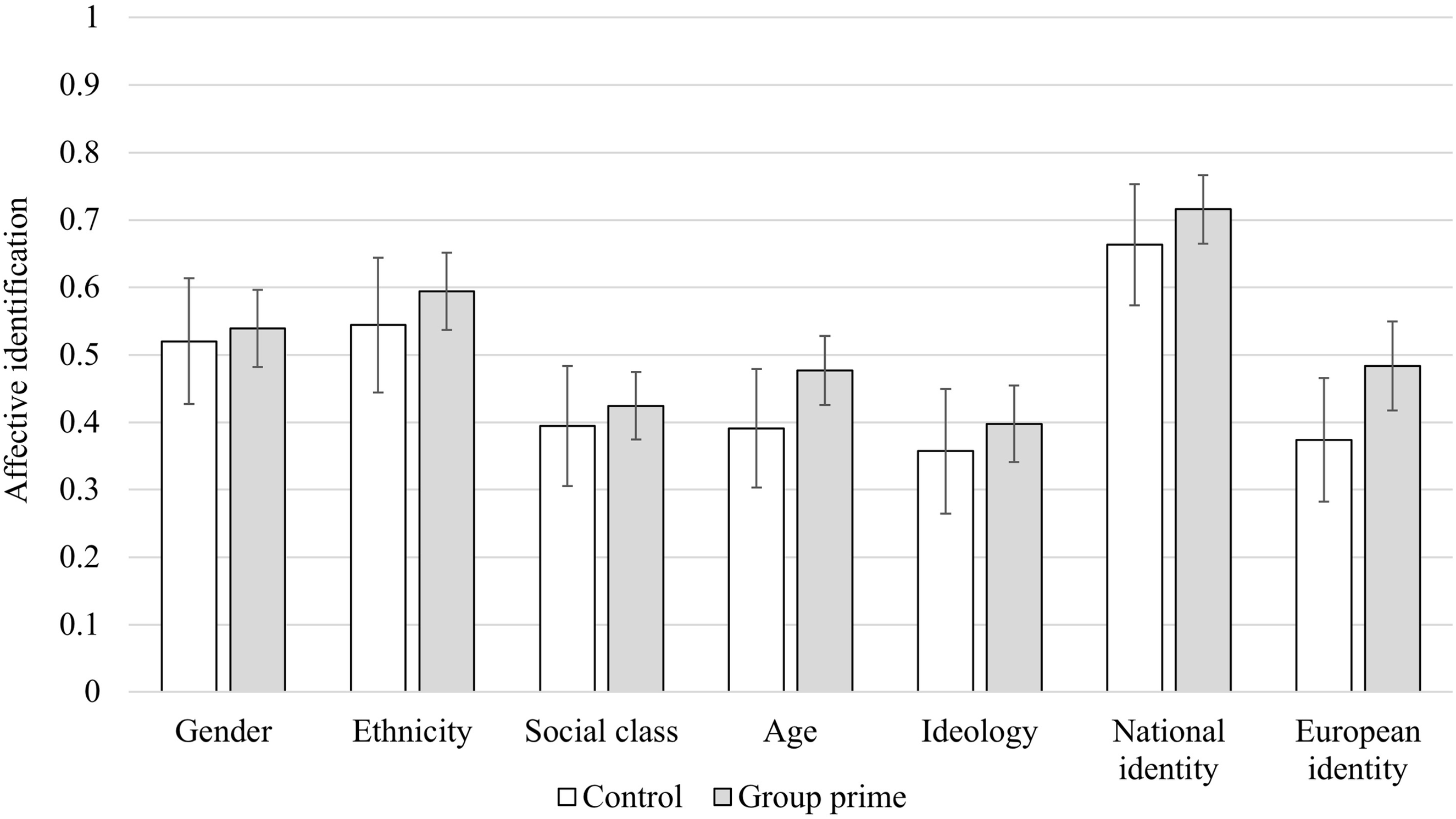
Affective identification with groups with and without exposure to corresponding group primes.
OLS regression models explaining affective identification by the group primes and group status.
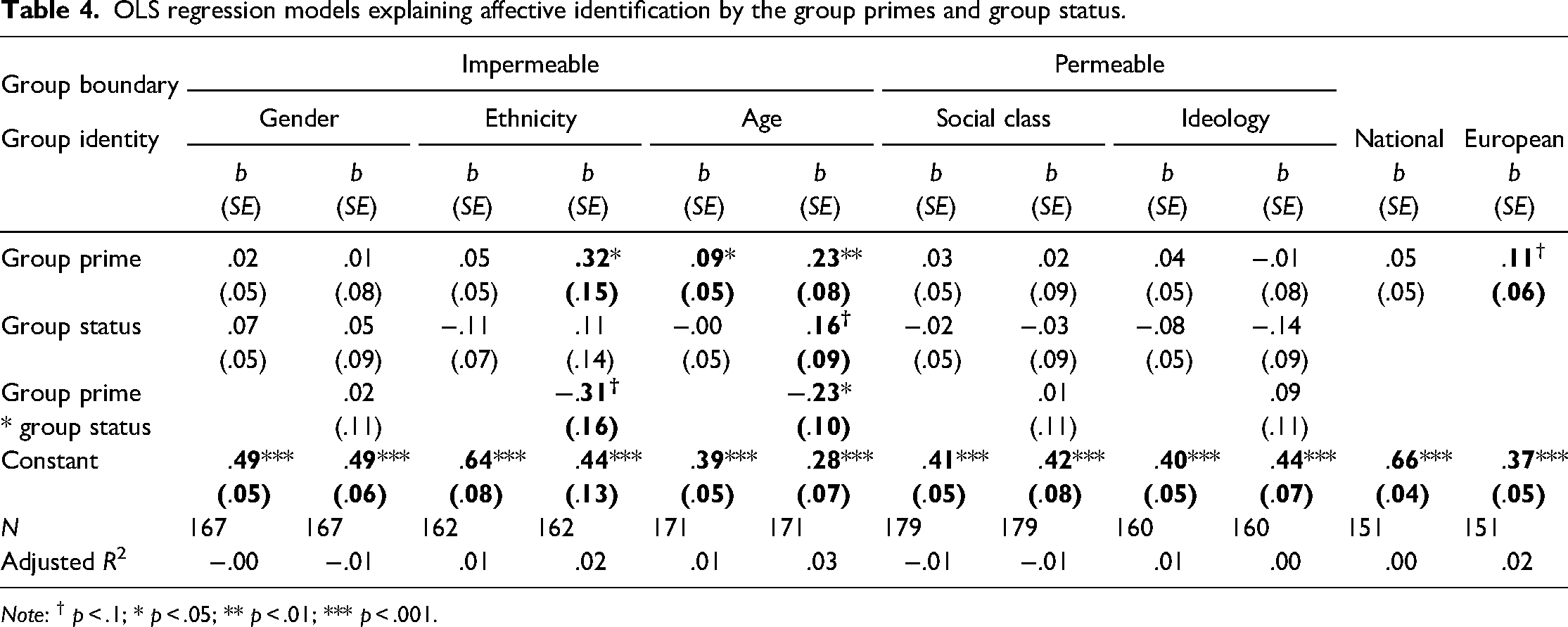
Note: † p < .1; * p < .05; ** p < .01; *** p < .001.
Finally, we expected an interaction effect of the group primes with group status for gender, age, and ethnicity, but not for social class and ideology (H3; Table 4, interaction models). In support, Figure 5 shows that group primes (marginally) increased affective identification with low-status group members’ ethnicity, b = −.31, SE = .16, t = −1.91, p = .058, and age, b = −.23, SE = .10, t = −2.24, p = .026. As expected, there were no interaction effects for the groups with permeable boundaries, social class, b = .01, SE = .11, t = .11, p = .913, and ideology, b = .09, SE = .11, t = .83, p = .405. Unexpectedly, there was no interaction effect of the group prime and group status for gender identity, b = .02, SE = .11, t = .15, p = .878. Partially supporting H3, we find that group primes in the news increased affective identification with the corresponding group for two out of three SCM groups, and not for SMM groups.
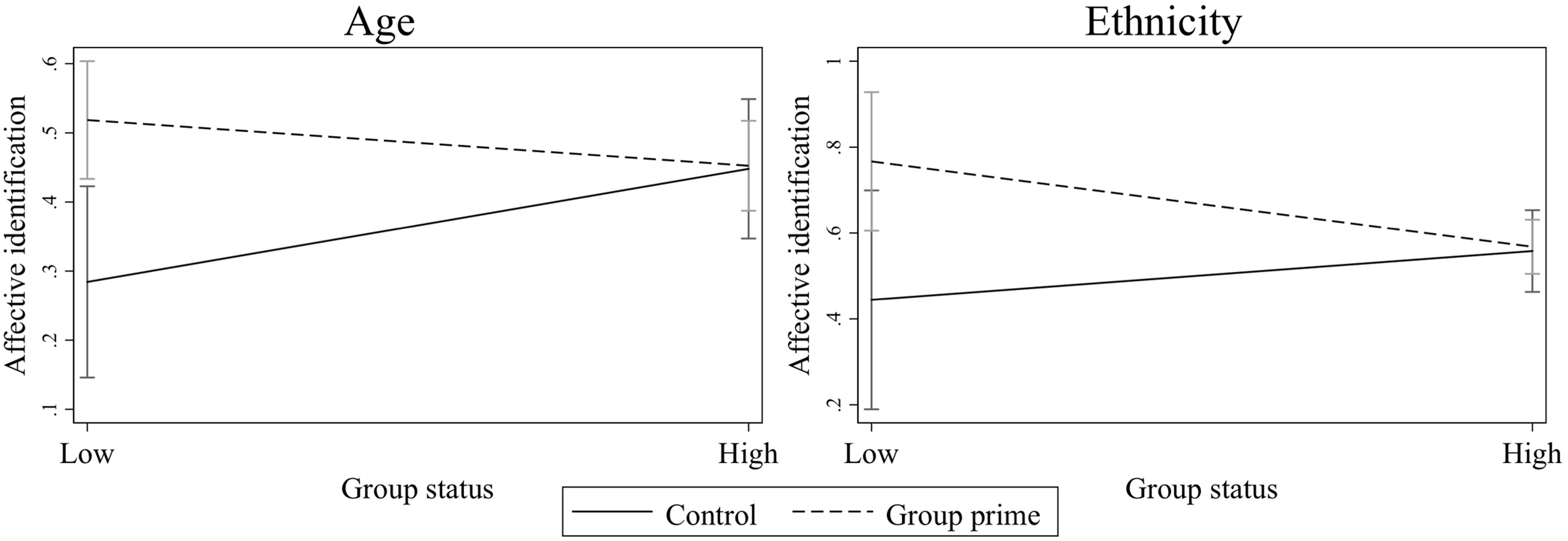
Interaction effect of group primes and group status on affective identification for groups with impermeable boundaries.
Discussion
This study set out to investigate to what extent group primes in the news cause increased identification with corresponding groups, and how this differs between groups. Except for gender identification, the results indicate that group primes in the news cause cognitive identification, but the effect on affective identification depends on shared group perceptions. Specifically, group primes in the news only increase affective identification for groups with a social change mindset – relatively low-status groups with relatively impermeable boundaries. In contrast, primes in the news do not influence affective identification for groups with a social mobility mindset – relatively low-status groups with relatively permeable boundaries. Group primes in the news thus have distinct effects on specific social groups.
These findings shed light on an important mechanism of social identification, while at the same time offering a new perspective on the way researchers can include group characteristics as a moderator. However, our results do not offer indisputable support for the hypotheses. Most notably, both cognitive and affective identification with participants’ gender group did not increase after exposure to the stimulus material. Also, the effects did not reach significance for (supra-)national identification. Moreover, some of the groups in our experiment were relatively small, making the analyses somewhat unstable. Finally, the results depend on a single-message and forced-exposure design. Therefore, more research is required to test their generalizability to other messages and contexts, as well as their occurrence outside of an experimental setting. Nevertheless, this study offers new insights into the mechanisms behind the effects of group primes in the news and contributes to political communication theory in at least three ways.
Firstly, citizens generally seem to become more aware of their group membership when it is primed in the news. However, we found two anomalies to this effect. Cognitive gender identification decreased after exposure to an article with gender primes, but also after articles containing other group primes. Consequently, the findings suggest that it was other aspects of the stimulus material that caused this effect. Perhaps, the topic of unemployment signaled a professional group identity that suppressed gender identification. This shows just how difficult it is to prime a specific group in a survey experiment. As the other group identities were only affected by the corresponding primes, it seems that we succeeded in this regard in the rest of the experiment. Moreover, there was no significant effect on cognitive identification of citizens’ national and European identities. As these nested groups were primed in the same article, the lack of clear in- and outgroups might have impeded the effect. All things considered, we carefully suggest that cognitive identification is elicited by group primes in the news, although the effect can be overridden by incidental priming of other groups or a lack of distinctive power in the article.
Another crucial contribution of this study is that priming different groups does not necessarily lead to the same news effects. Citizens’ affective identification tends to increase after being primed with specific types of groups. As would be expected from Social Identity Theory (Tajfel and Turner, 1986), group primes in the news cause affective identification for groups with a social change mindset and not for those with a social mobility mindset. Thus, members of low-status groups with impermeable boundaries are more susceptible to group primes than members of low-status groups with permeable boundaries. The exception, again, is gender, for which affective identification was not influenced by the group primes at all. There are two possible explanations for this unexpected finding. There could be a fundamental difference between gender groups and the other groups under study. However, it seems unlikely that women are not perceived to have less status than men in professional contexts, or that gender groups are perceived as relatively permeable. More likely, this unexpected finding could be caused by the lack of cognitive identification, as discussed above. These are important findings that can guide communication scholars in their investigation of why certain effects occur only for specific groups and not others. At the same time, these findings should urge us to question the generalizability across groups of previous studies on media effects on social identification.
The third contribution to political communication theory concerns the level of the moderators that we use. Social Identity Theory hypothesizes intergroup effects from individual perceptions about status and permeability (Tajfel and Turner, 1986). However, we seem able to rely on shared norms and stereotypes about groups to predict the effects of group primes in the news. So, even though the mechanism depends on individual perceptions, societal effects can be derived from shared perceptions (i.e., the macro social-contextual level, Bronfenbrenner, 1979; Valkenburg and Peter, 2013). This serves as a reminder to keep considering the social environment in which news effects take place. A strong focus on the universal human mechanism is insightful for understanding the human brain, but studying the societal impact of psychological mechanisms requires paying attention to their context.
To conclude, our findings suggest that news about identity politics should be most effective at politicizing collective identities around low-status groups with impermeable boundaries because members of such groups are most likely to adopt a social change mindset over a social mobility mindset. Historically this makes sense. Groups that have accumulated large-scale collective action for social change are exactly those groups. Examples might include the struggles for racial emancipation, LGBTQ + rights protests, or the more recent #MeToo and #BlackLivesMatter campaigns. Though, our findings also imply that, as historically dominant groups begin to lose relative status in society, their group identities might politicize more strongly too. This process might arguably explain phenomena such as the presidential election of Donald Trump and the European immigration debate. However, as this study shows, the development of such group identification is partly dependent on the way that we construct the news, and journalists should appreciate their role in identity politics.
Supplemental Material
sj-docx-1-ejc-10.1177_02673231221105168 - Supplemental material for Social mobility or social change? How different groups react to identity-related news
Supplemental material, sj-docx-1-ejc-10.1177_02673231221105168 for Social mobility or social change? How different groups react to identity-related news by Ming M Boyer and Sophie Lecheler in European Journal of Communication
Footnotes
Declaration of conflicting interests
The authors declared no potential conflicts of interest with respect to the research, authorship, and/or publication of this article.
Funding
The authors received no financial support for the research, authorship, and/or publication of this article.

Supplemental material
Supplemental material for this article is available online.
Notes
References
Supplementary Material
Please find the following supplemental material available below.
For Open Access articles published under a Creative Commons License, all supplemental material carries the same license as the article it is associated with.
For non-Open Access articles published, all supplemental material carries a non-exclusive license, and permission requests for re-use of supplemental material or any part of supplemental material shall be sent directly to the copyright owner as specified in the copyright notice associated with the article.
