




Abstract
This article investigates the entanglement between socio-economic and technological factors in conditioning people's patterns of Internet use. We analysed the influence of sociodemographic and techno-social aspects in conditioning the distinctive digital practices developed by Internet users. By using a representative sample of UK users and different methods of analysis, such as factor analysis, K-means cluster analysis and logit analysis, this study shows how techno-social variables have a stronger effect than socio-economic variables in explaining the advanced use of the Internet.
Introduction
This paper attempts to understand the entanglement between socio-economic and technological factors in conditioning people's patterns of Internet use. Several researchers have analysed different digital practices to understand what variables and patterns influence them the most (Correa, 2016; Van Deursen and Van Dijk, 2013, 2015). More specifically, some authors explain different digital practices and Internet use in relation to sociodemographic and socio-economic variables (DiMaggio et al., 2001; Fairlie, 2004), while others focus on techno-social and cultural aspects (Eynon and Geniets, 2016; Pearce and Rice, 2013; Reisdorf and Rhinesmith, 2018; Robinson, 2014). Along these lines, our research aims to investigate how (if any) socio-economic and techno-social variables are influencing digital practices. Specifically, by digital practices, we mean people's social practices mediated by digital technologies, departing from a techno-social approach that highlights ‘the equivalent, reciprocal importance of the “techno” and the “social” in a world in which the digital and the physical have become completely and irretrievably enmeshed’ (Chayko, 2019: 377). Considering the variety of studies on the relationship between Internet use and users’ background and features, this paper contributes to the understanding of patterns of Internet use by investigating the differences in the digital practices of Internet users in a representative sample of the UK Internet population. The aims of this article are threefold: firstly, to classify Internet users by taking into account the ways they use the Internet; secondly, to analyse the influence of sociodemographic and socio-economic factors (gender, age, education, working status, ethnicity, income, savings and habitat) in predicting which group of users they belong to; and finally, to analyse the influence of techno-social factors (devices, places of use, digital skills and social support) in predicting which group of users they belong to. More specifically, the main research question leading this study is:
To respond to this research question, the paper first introduces the digital divide phenomenon and its evolution, specifically focusing on the second level of the digital divide, namely the inequalities in using the Internet. Then, the methods for both collecting and analysing data are presented, followed by the presentation of the results. The discussion section analyses the role played by techno-social factors (devices, places of use, digital skills and social support) in predicting users’ membership of diverse groups characterized by specific socio-economic characteristics. Finally, the conclusion draws together the main results of our research, while pointing out some limitations of this work and its implications.
From inequalities in access to inequalities in use
In the early stages of digital divide studies, the focus of researchers (Hoffman and Novak, 1998; Katz and Aspden, 1997) and policymakers (NTIA, 1995, 1998) was on the gap between those who accessed the Internet and those who were excluded, reducing the digital divide to a technical and economic problem (Ragnedda and Muschert, 2013). This line of research, known as the first level of the digital divide (Attewell, 2001), became obsolete when the increasing availability and accessibility of the Internet enabled people to make their own digital experience. The focus, therefore, shifted from the inequalities in accessing the Internet, to the inequalities in using it, known as the second level of the digital divide (Bonfadelli, 2002). In this direction, scholars increasingly investigate these differences in use or usage gap (Van Dijk, 2005) in relation to socio-economic determinants and by focusing on users’ specificities and characteristics. Van Deursen and Van Dijk (2010), for instance, found evidence that educational level, age and employment status influence the way Internet is used. Furthermore, a consistent line of research attempted to categorize the variety of digital practices (Borg and Smith, 2018; Calderón Gómez, 2019; Dutton and Blank, 2015; Gire and Granjon, 2012), associating them with particular group or ideal types of users. Although there are divergences among the typologies produced, social position, cultural background, digital skills and technological socialization biographies were found to influence the different uses of the Internet (Blank and Groselj, 2014; Haddon, 2007; Ragnedda et al., 2019). Furthermore, literature has shown how emerging distinctive Internet cultures (Dutton and Reisdorf, 2019) are not only related to socio-economic factors (Ragnedda, 2017) but also to particular forms of the incorporation of digital technologies into daily life (techno-social factors). Hence, among these typologies, we can identify some shared trends:
Digital exclusion tends to be associated with a lack of basic accessibility to the Internet, which is still linked with economic factors: ‘a-digitals’ (Dutton and Blank, 2015), ‘non-users’ (Borg and Smith, 2018) or ‘digitally excluded’ (Calderón Gómez, 2019). Users who develop a few digital practices tend to have a lower level of digital skills, their technological domestication is associated with the use of mobile devices (smartphones) and their use tends to relate to communication activities, social media and information seeking: ‘cyber-moderated’ (Dutton and Blank, 2015), ‘sporadic users’ and ‘SME users’ (Borg and Smith, 2018) or ‘basic users’ (Calderón Gómez, 2019). Some users develop a pragmatic view of digital technologies, deploying a higher flexibility in their digital practices but without interest in technology as such, since they consider digital devices simply as means for achieving particular ends: ‘techno-pragmatists’ (Dutton and Blank, 2015), ‘instrumentalists’ (Dutton and Reisdorf, 2019) or ‘instrumental users’ (Borg and Smith, 2018). Finally, users who developed more advanced and flexible forms of use are generally self-motivated, interested in the digital world and have a higher level of digital skill: ‘e-mersives’ (Dutton and Blank, 2015), ‘cyber-savvy’ (Dutton and Reisdorf, 2019), ‘advanced users’ (Borg and Smith, 2018) or ‘cyber-experts’ (Calderón Gómez, 2019). H2 can be split into three sub-hypotheses:
Therefore, given that socio-economic and techno-social aspects have been found to generate distinctive digital practices, and in turn digital disparities, this paper classifies Internet users in relation to such aspects and their intensity of influence. This is important for scholars who are attempting to understand what influences users’ practices online and for policymaking aimed at reducing digital inequalities because it gives an overview of what aspects need to be strengthened to point digital experiences towards effective usage. In this direction, this paper assumes that
However, not all socio-economic variables have the same impact in predicting and explaining digital practices. Therefore, digging deeper into this hypothesis and splitting it into three sub-hypotheses, we are assuming the following:
This first set of hypotheses is based on previous findings that showed how socio-economic variables such as gender (Bimber, 2000; DiMaggio et al., 2001), age (Loges and Jung, 2001), racial background (Fairlie, 2004; Mesch and Talmud, 2011), education (Attewell, 2001; Clark and Gorski, 2001), geographical location (Chen and Wellman, 2004; Chinn and Fairlie, 2006) and income (Witte and Mannon, 2010) influence individuals’ access to and use of the Internet (Bonfadelli, 2002; Peter and Valkenburg, 2006; Van Deursen and Van Dijk, 2014; Van Dijk, 2005). Therefore, based on the literature, we are assuming that these variables can explain and predict different patterns of use. However, despite their importance in predicting digital practices, socio-economic features might play a minor role in explaining digital practices compared to techno-social aspects. This leads to the second hypothesis, which assumes that
We are, therefore, assuming that techno-social variables are strong predictors of advanced and more productive forms of using the Internet. From the multiple dimensions of digital divide research, we focused on the three most relevant: access gap, usage gap and skills gap. Literature has shown how both devices (used to access the Internet) and place of use influence not only the uses of the Internet, but also the quality of digital experiences (Donner et al., 2011; Ragnedda, 2018). In fact, as several studies pointed out, accessing the Internet through smartphones and tablets negatively influences users’ engagement with technologies (Mossberger et al., 2012; Pearce and Rice, 2013) and provides limited content (Napoli and Obar, 2014) and a less comprehensive range of opportunities (Napoli and Obar, 2017; Murphy et al., 2016). In the same way, previous studies showed that the place of access plays an important role in explaining Internet usage (Taipale, 2013) and types of activities (Di Maggio et al., 2004; Horrigan and Rainie, 2002). The diversity of uses can be measured in a continuum between more flexible and more limited forms of use, so we will identify the main types of digital practices developed by people.
The second sub-hypothesis is based on a strong body of research that has shown how digital skills are positively related to flexibility in Internet use (Litt, 2013). From the several theoretical classifications of digital skills, we will focus on two: (a) the distinction between medium-oriented (knowing how to use technological devices) and content-oriented (ends and goals of digital practices) digital skills (Van Deursen and Van Dijk, 2010); (b) the EU Digital Competence Framework, which classifies digital skills in informational, communicational, digital content creation, safety and problem solving (Carretero Gomez et al., 2017). From these, we could operationalize medium-oriented, informational and safety skills (see Methodology).
Finally, the third sub-hypothesis draws upon previous research that showed how social support promotes digital engagement and more flexible forms of use (Courtois and Verdegem, 2016; DiMaggio et al., 2001; Kling 2000; Selwyn, 2004), but could also engender processes of self-exclusion and preventing people from using the Internet (Calderón Gómez, 2020).
Methods
Sample
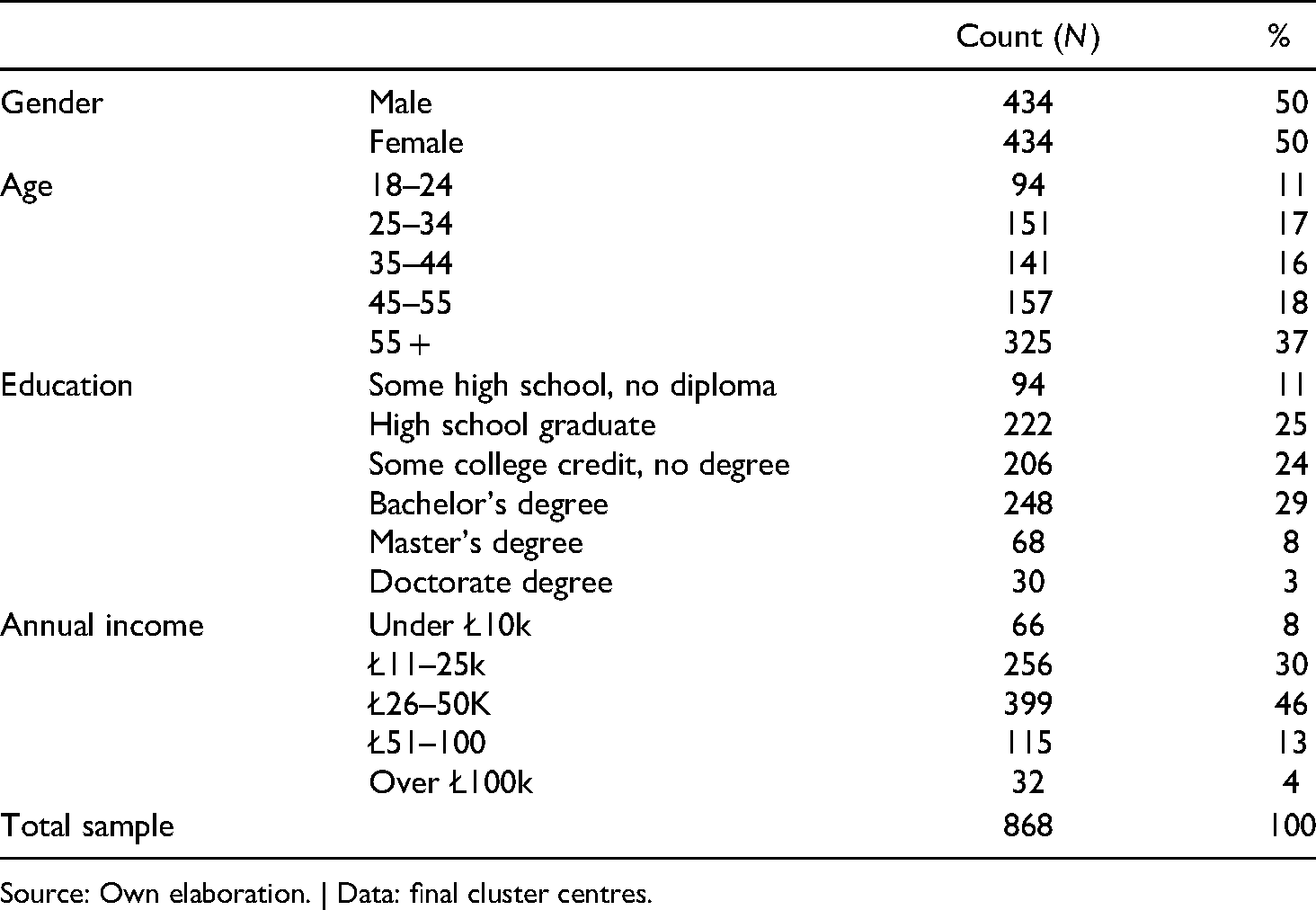
An online survey, drawing on a representative sample of the UK Internet population, was developed to collect the data. The data collection was contracted to the media marketing company Toluna. The panel was stratified according to gender, age, level of education and income (Table 1). Members of the panel received a small incentive for every survey they completed. The final sample consisted of 868 respondents over the age of 18. The sample size (868 respondents) was calculated as having a 3.33% margin of error at 95% confidence level.
Sample composition.
Source: Own elaboration. | Data: final cluster centres.
The online survey used software that checked for missing responses and then prompted users to respond. The survey was pilot tested with 20 Internet users over two rounds. Amendments were made based on the feedback provided. Statistical exploitation was performed by means of the software IBM Statistics 21.
Measure
To answer the research question and its related hypotheses, the article used three different methods of analysis, namely: (a) factor analysis (FA), (b) K-means cluster analysis and (c) Logit analysis. The FA enabled researchers to reduce the number of variables and identify some main components characterized by specific traits. A cluster analysis was used to generate different categories of Internet use. Finally, a logit analysis was used to explore the validity of the K-means typological construction (Borg and Smith, 2018).
FA
The FA was used to reduce the number of variables into a few relevant latent components. More specifically, four distinctive factorial analyses were performed (the rotated component matrix is described in Annex).
- FA1. Devices used to access the Internet, presenting a model of four factors: FA1.1. Fixed devices (desktop PC, TV, games console); FA1.2. Mobile devices (smartphone, tablet); FA1.3. Other devices (e-reader, smartwatch, etc.); FA1.4. Laptop. - FA2. Places of using the Internet, presenting a model of three factors: FA2.1. School/friends’ house; FA2.2. Work/free spot Wi-Fi; FA2.3. Home. - FA3. Digital skills, presenting a model of three factors: FA3.1. Medium-oriented skills; FA3.2. Safety skills; FA3.3. Information-filtering skills. - FA4. Digital practices, presenting a model of seven factors: FA4.1. Online participation; FA4.2. Sociability and communication; FA4.3. Productive use; FA4.4. Commercial use; FA4.5. Media consumption; FA4.6. Video games; FA4.7. Social media
K-means cluster analysis
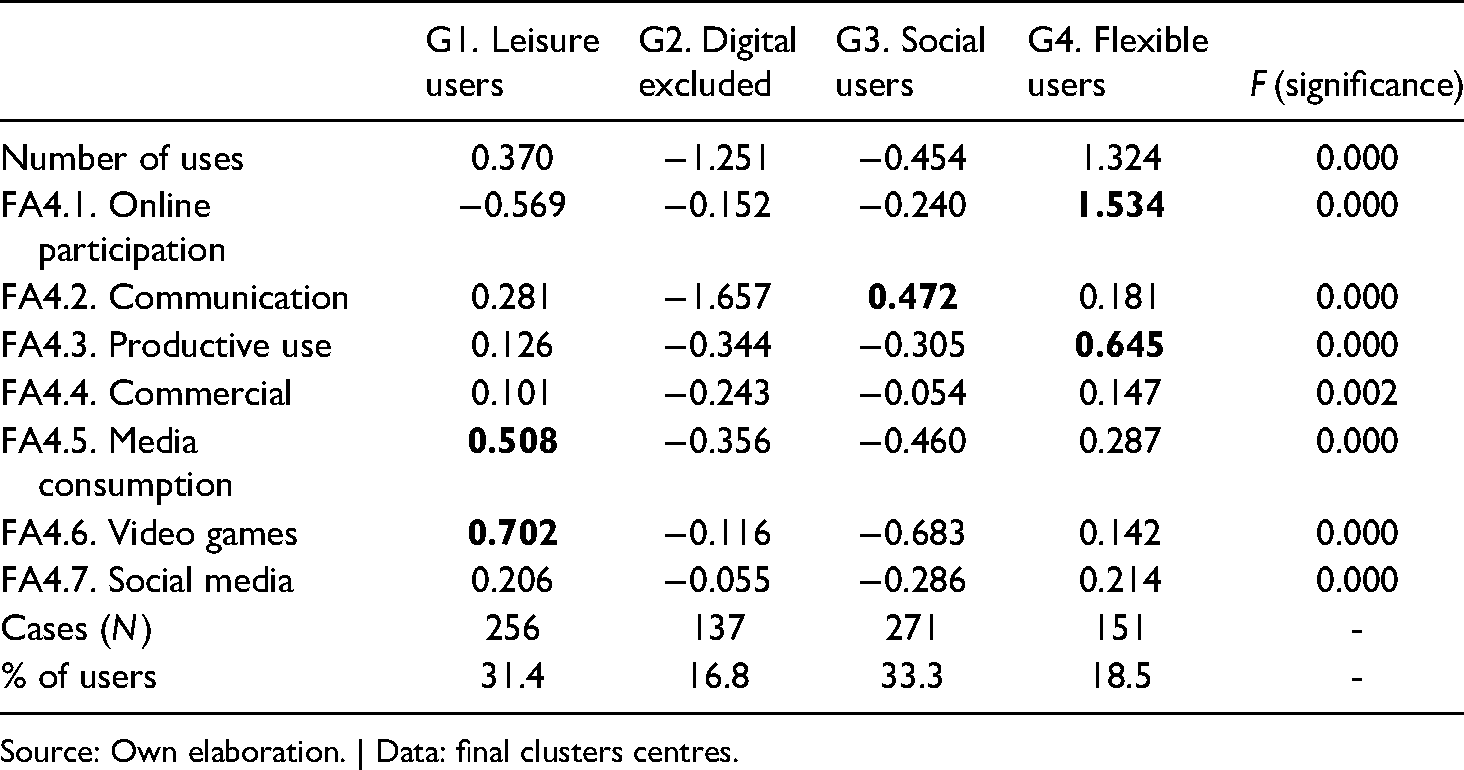
K-means cluster analysis aimed to classify the average number of Internet uses and type of digital practices (FA4). Four groups of distinctive users of the Internet were identified, namely, G1: Practical users, G2: Digitally excluded, G3: Social users and G4: Flexible users. Each cluster is statistically significant (F test: 95.5%), and their structure is presented in Table 2. Leisure users are slightly positively influenced by media consumption, particularly related to leisure activities (use of video games). The use of the media and social media positively contributes to the Social users’ category. Accessing the Internet alone is not enough to be digitally included, if users do not perform any particular activities. For this reason, we are labelling as Digitally excluded, the group that is not characterized by any specific online activity. Finally, the Flexible users are those characterized by the positive contribution of all factors, and especially oriented to online political participation.
K-means. Typology of users of the Internet.
Source: Own elaboration. | Data: final clusters centres.
Logit analysis
Finally, the logit analysis checked the statistical significance of independent variables in predicting belonging to each group. We used dependent variables: G1, G2, G3 and G4. Each logit is composed of three models to which we add new variables to the prediction:
Model 1: Sociodemographic variables (gender, age, education, working status, ethnicity, income, savings and habitat) were considered to measure their direct effect on the prediction of each cluster. Model 2: Techno-social variables (receiving social support, giving social support, number of devices used to access, number of places from which they access and number of skills mentioned) were added to explore their contribution to the prediction. Model 3: The three techno-social factorial analyses were introduced to measure their contribution to the prediction of devices used to access (FA1), places of use (FA2) and digital skills (FA3). We split this, from model 2, because in this case we address the type of uses, places and skills, instead of just focusing on the quantitative number of items mentioned, as we do on model 2.
Results
Results are structured in two sub-sections. The first section describes the socio-economic and techno-social profiles of Internet users, while the second one introduces the logit analysis to show the effects of the different independent variables on the composition of each type.
Profile of Internet users
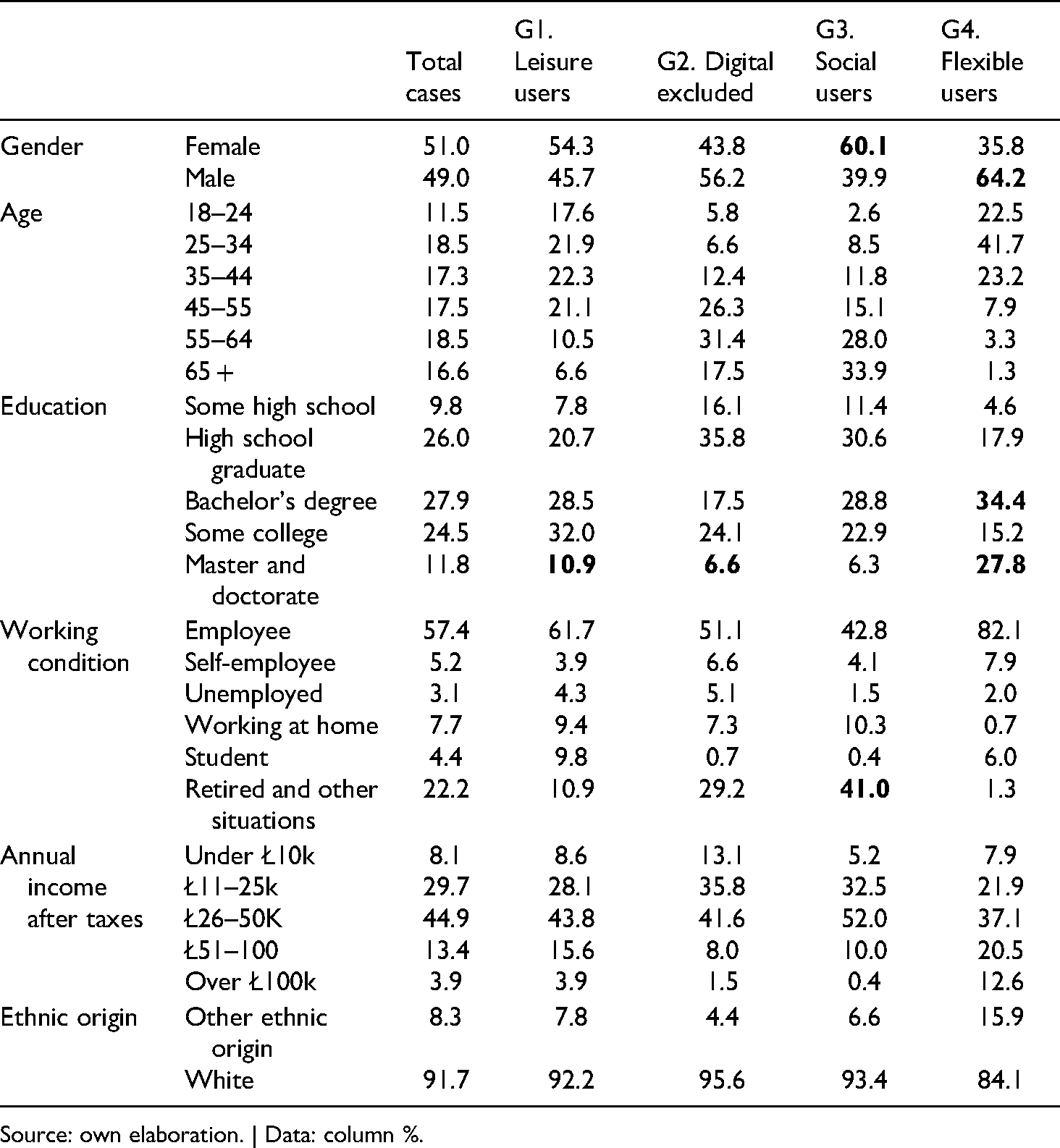
Table 3 shows socio-economic differences in using the Internet. More specifically, in terms of gender, we can observe how male consumers tend to be more connected compared to their counterparts, whereas female users are more oriented to social aspects of the Internet experience. In terms of age, the table shows how leisure activities are especially carried out by users between 18 and 55 years old, whereas social activities characterize older cohorts and retired people. The age gap is also reflected in the division between flexible users (18–44) and digitally excluded groups (45+). Moreover, flexible users are more likely to have higher education levels and be employed.
K-means. sociodemographic profile.
Source: own elaboration. | Data: column %.
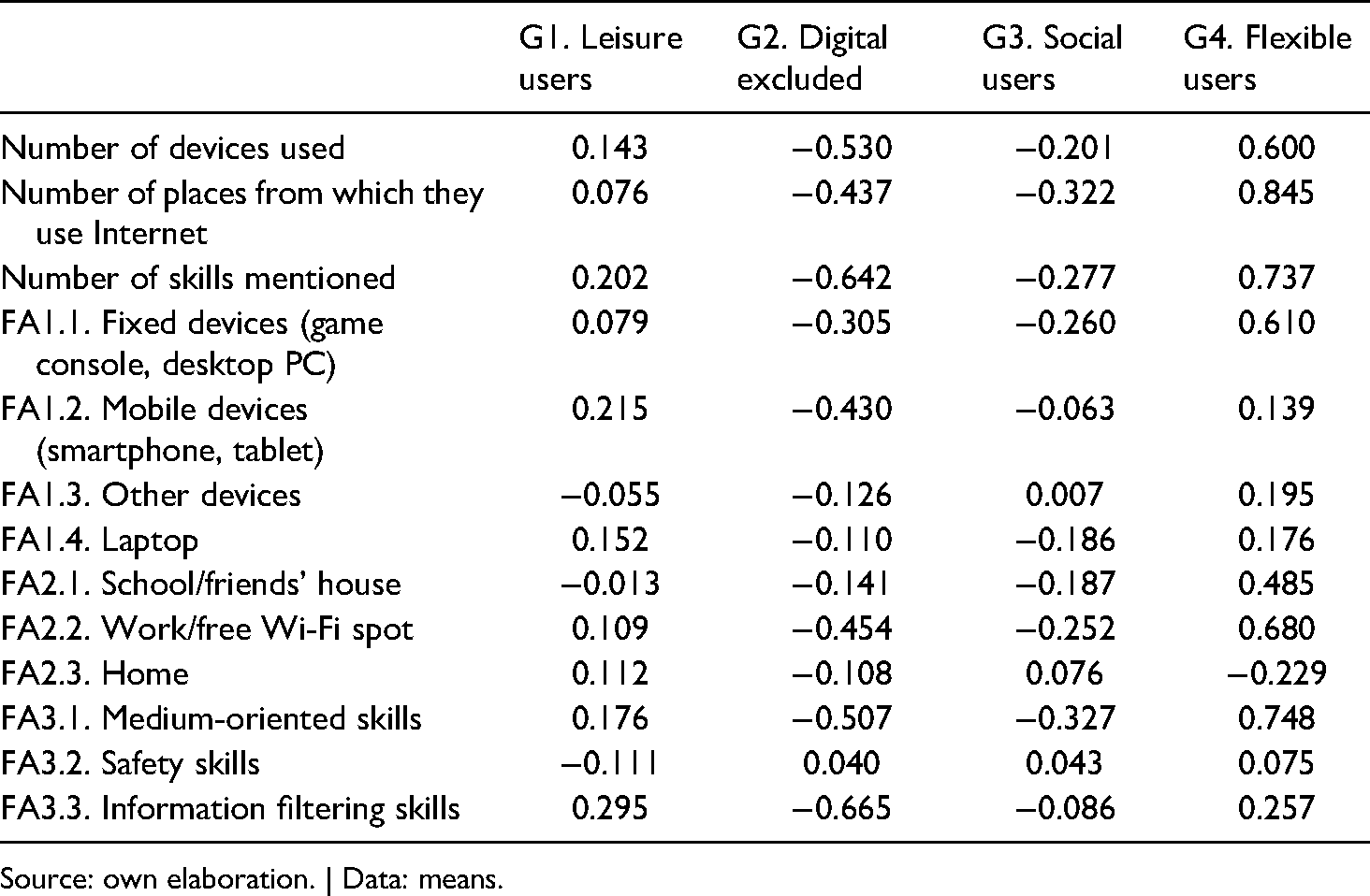
Furthermore, the characteristics listed in Table 4 detail the techno-social profile of each category of users, regarding their forms of accessibility to the Internet, places of use of digital technologies and digital skills.
K-means. techno-social profile.
Source: own elaboration. | Data: means.
The following subsections will describe the characteristics of the four clusters generated.
Leisure users
Leisure users are the second largest group after social users (31.4% of the sample), they are characterized by their practices related to videogames, media consumption and communication activities, while their online participation is under the average. Regarding their techno-social profile, leisure users stand out above the average in terms of access, places of use, digital skills and flexibility of use, slightly behind flexible users but clearly in a better position than social users and those who are digitally excluded. In terms of accessibility, they stand out in the use of laptops, fixed and mobile devices, but their use of other devices (e-readers, smartwatches, tablets, etc.) is below the average. In terms of places of use, home and work are more common places of connection than school, while in terms of digital skills leisure users represent the highest level of information-filtering skills and the second highest level (after flexible users) of medium-oriented skills.
Regarding their socio-economic profile, among leisure users, there are a higher proportion of women and younger people in comparison to the average. Their educational level is also slightly over the average, many such users have bachelor's degrees and some college studies, but the proportion of subjects with masters and doctorates is slightly below the average. Also, the leisure group is composed of workers and students, but their income is in an average range. Finally, in terms of ethnicity their composition is also very similar to the total sample.
Digitally excluded
Digitally excluded people are the smallest group (16.8% of the sample), and they are characterized by their lower level of access, digital skills and forms of Internet use. In terms of use, they rate below average in all the factors considered and are in an especially low position in terms of communication activities, media consumption and productive practices, while their use of social media is almost average. Regarding their techno-social profile, digitally excluded people have a low level of access to all the devices considered and their connectivity from different places of use is also below average. In terms of digital skills, they especially lack of medium-oriented and information-filtering skills, while their level of safety skills is on the average.
Regarding their socio-economic profile, among digitally excluded people, there are a higher proportion of men and older people (45 + years). Their educational level is also beyond the average, many people have high school qualifications, although a quarter of the sample is composed of people with some college qualification. Regarding working status, there is a higher proportion of retired and unemployed people (in comparison to the total population), while their annual income is below average. Finally, in terms of ethnicity, the proportion of white people is above average among the digitally excluded population.
Social users
Social users are the largest group of users (33.3% of the sample), and their flexibility in digital practices is below the average, in a better position than digitally excluded people but clearly behind flexible and leisure users. They stand out mainly in communication and social interaction activities, although their participation in commercial activities is almost on average as well. Regarding their techno-social profile, they are in a worse position than flexible and leisure users in terms of flexibility of access, places of use and digital skills, but they rank better than digitally excluded people. Social users’ access is associated with smartphones and mobile devices rather than PCs (laptop or desktop computer), but they use such devices mainly at home. Hence, in terms of digital skills, like digitally excluded people, social users only stand out in safety skills, although their level of information-filtering skills is higher than digitally excluded people.
Regarding their socio-economic profile, among social users there is a higher proportion of women and older people, although they are not as old as the digitally excluded group. Their educational level is below average, with high school qualifications and bachelor's degrees. In terms of working conditions, there are a higher proportion of retired people, with the number of employed people at 15 points below the sample average. In terms of income, social users position in the medium range of the rank (£26–50 K), while in terms of ethnic origin there is a slightly higher proportion of white people.
Flexible users
Finally, flexible users, who represent 18.5% of the sample, develop more flexible forms of use, since their number and types of use are clearly above the average (and above the other groups) and their factorial punctuation is positive in all the factors of use considered. Despite this flexibility, they stand out in terms of online participation and flexible uses, since in these two forms of use they present an informational advantage in comparison to the rest of the population. Regarding their techno-social profile, their levels of access, places of use and digital skills are higher than the other three groups. Therefore, their access is above average in all the devices considered, although they stand out in their use of fixed devices (PC and game consoles). In terms of places of use, their access at school and work is more important than their access at home, remarking their professional and more flexible pattern of accessibility. Finally, in terms of digital skills, they particularly stand out in medium-oriented skills, although their information-filtering and safety skills are also above average.
Regarding their socio-economic profile, among flexible users there is a higher proportion of men and younger people (especially those aged between 25 and 34 years). Their educational level is above average, since a quarter of flexible users have at least an MA degree. In addition, nine out of 10 of these users are currently working or self-employed, and their income is above average, being the group in which the proportion of people with high salaries is more common.
Socio-economic and techno-social traits of users’ profiles
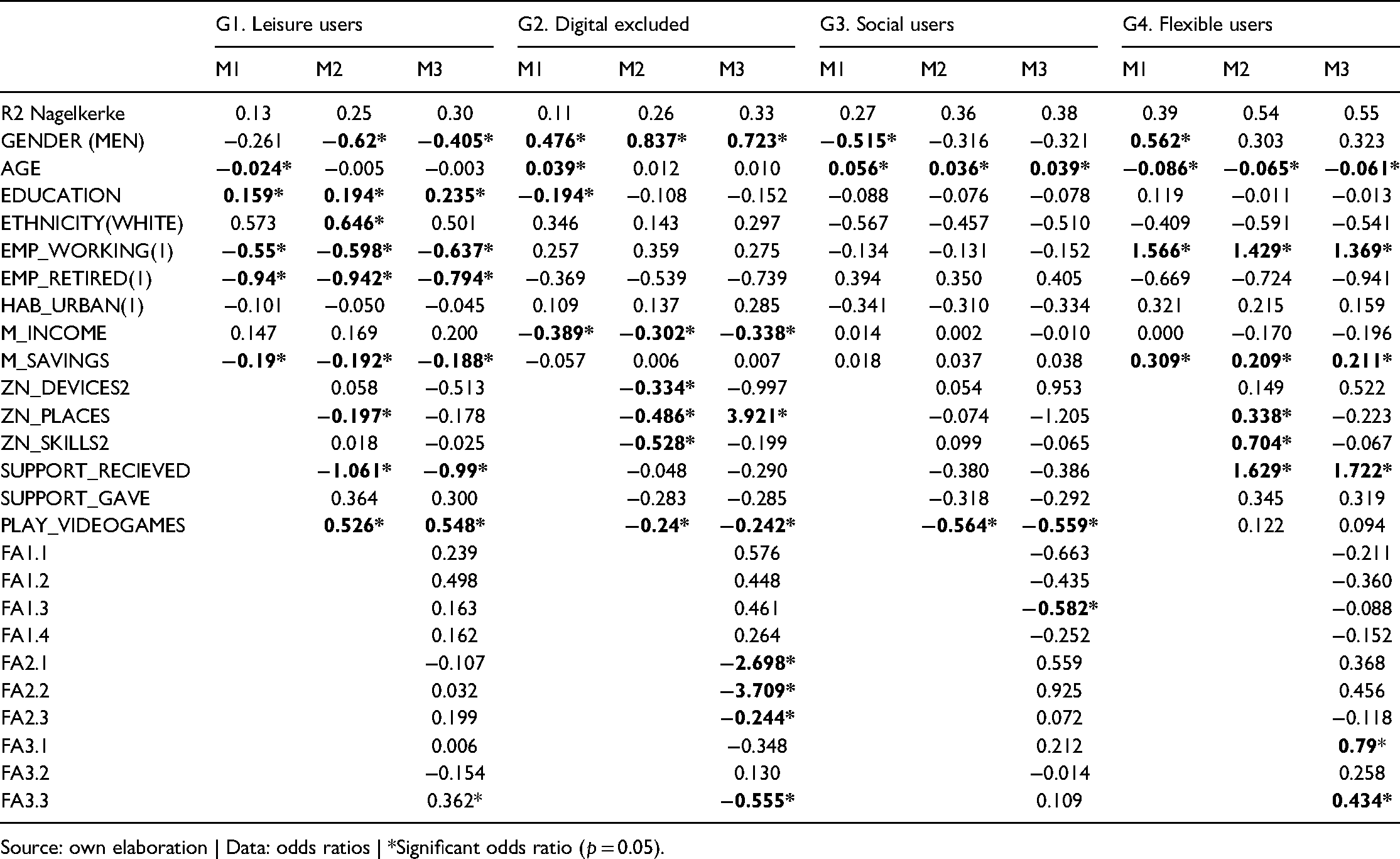
Once we have presented the main socio-economic and techno-social characteristics of the four types of Internet users, we need to measure and identify the influence of such variables in the composition of the different groups. Therefore, we are presenting the results of the logit analysis performed (Table 5), divided into three models regarding the variables included: socio-economic variables (model 1), techno-social variables (model 2) and techno-social factors (model 3).
Logistic regression analysis.
Source: own elaboration | Data: odds ratios | *Significant odds ratio (p = 0.05).
Firstly, logit analysis (Table 5) supports our hypotheses that socio-economic variables (model 1) explain a small part of people's diversity of digital practices and that the introduction of techno-social variables (models 2 and 3) substantially increases the proportion of variance explained by the analysis. In model 1, where we considered only sociodemographic variables, the amount of variance explained is low in the case of G2 (0.11) and G1 (0.13), but substantially higher in the case of G3 (0.27) and G4 (0.39). In the case of G2, the probability of being digitally excluded is significantly higher among men, older people, less educated groups and people with lower income. In the case of G1, the probability of belonging to the leisure users group is significantly higher among the younger population, better educated people, students (in terms of working situation) and people with lower savings. In the case of G3, the probability of belonging to the social users group is significantly higher among women and older people. Finally, in the case of G4, the probability of belonging to flexible users is higher among men, the younger population and especially people currently working and people who have higher savings.
In model 2, techno-social variables were introduced, differentially improving the explained variance (Nagelkerke R2) in each of the four clusters: in G1 to 0.25, in G2 to 0.26, in G3 to 0.36 and in G4, which is still the better logit model by far, to 0.54. In the case of G1, the main socio-economic variables effect is kept, but leisure users are also significantly linked with people who play videogames but who use technologies from fewer places and have not received social support. In the case of G2, only gender and income are kept as significative socio-economic variables that explain digital exclusion, but new techno-social effects appear: G2 belonging is significantly related to lower levels of accessibility (in terms of devices and places of use) and digital skills, as well as among people who do not play video games. In the case of G3, the positive correlation of age is kept, but the significant effect of gender disappears. G3 membership is also linked with people who do not play video games, but the rest of the techno-social variables considered in model 2 do not have a significant effect. Finally, in the case of G4, the effect of age, employment and savings remains, but again, the significant effect of gender disappears. In terms of techno-social variables, G4 belonging is associated with more diverse forms of access (in terms of places of use), with a higher level of digital skills and with people who have received social support.
Lastly, in model 3, we used the techno-social factors produced by the FA, which are related to the diversity of forms of access (FAC1), places of use (FAC2) and digital skills (FAC3). The variance explanation improvement of this third model is slightly better in the case of G1 (from 0.25 to 0.30) and G2 (from 0.26 to 0.33), while in G3 and G4, the R2 is quite similar to model 2. Therefore, in the case of G1, the main previous effects remain (with the exception of places of use), but G1 membership is also higher among people with higher information-filtering skills (FAC3.3). In the case of G2, most of the effects remain (with the exception of digital devices), but digital exclusion is particularly associated with lower levels of access from the three places of use considered (FAC2) and lower levels of information-filtering skills (FAC3.3). In the case of G3, the effect of age and playing video-games is kept, but social users are also significantly linked with lower levels in FAC1.3 (use of tablets, smartwatches, e-readers, etc.). Finally, in the case of G4, the effect of socio-economic variables and social support is kept, but the effect of places of use disappears. In the case of digital skills, there is a positive correlation of flexible users with medium-oriented skills (FAC3.1) and information-filtering skills (FAC3.2), but not with safety skills (FAC3.2).
Discussion
This paper identified four digital practices developed by Internet users. It shows some ‘usage gaps’ (Van Dijk, 2005) in terms of gender and age differences (Blank and Groselj, 2014), which correspond to diverse use of the Internet and the number of activities carried out online (Büchi et al., 2016). Moreover, lower education levels have been found to be connected to less flexible uses of the Internet. This is in line with the literature which shows how education and personal skills enhance the Internet experience (Correa, 2010; Van Deursen et al., 2015). Another aspect that further supports previous findings is connected to the employment status of users. It shows that being employed, thus having incomes (Duggan & Smith, 2013), is also connected to more productive use. In this direction, exploring the effects of socio-economic characteristics on the digital experience, male users, older people, less educated groups and users with lower incomes are more likely to be ‘digitally excluded’. In contrast, male users, younger people and those with higher incomes are more likely to be flexible users. When exploring the effects of sociodemographic and technological aspects, and their combinations, different results can be observed. More specifically, the socio-economic traits presented in model 1 contribute towards explaining differences in digital practices, but the inclusion of techno-social aspects better captures such diversity. Previous studies show how age (Friemel, 2016), gender (Helsper, 2010) and education (Zhang, 2013) determine frequency and variety of usage. However, our findings suggest that socio-economic traits are essential but not a unique explanation for digital practices. Our results, in fact, show that in classifying the type of Internet users and in predicting which group of users they belong to, not only socio-economic traits, but also techno-social factors are important. More specifically, in explaining the advanced use of the Internet, techno-social variables have a stronger effect than socio-economic variables. It is, therefore, the interconnection between social and techno-social variables that predict the distinctive digital practices of Internet users, rather than socio-economic variables alone. In fact, when considering the effects produced by techno-social variables, a more complex picture emerges. This shows that some socio-economic characteristics continue to influence users’ behaviour, but additional aspects start to play a role in conditioning the digital experience. For example, gender and income continue to significantly predict digital exclusion, but limited access (in terms of devices and location of use) and digital skills become significant. Moreover, even though age, employment and savings continue to be predictors of productive usage, the effect produced by gender is not significant. In contrast, diversified access, higher levels of digital skills and social support become significant. These results are reinforced by previous findings which show how places of access, intensity of use (Haight et al., 2014) and social support (Freese et al., 2006; Hassani, 2006) can influence the digital experience.
Therefore, considering the first set of hypotheses introduced in the preliminary sections of this work, socio-economic variables have been confirmed to produce an effect in explaining the diversity of Internet patterns of use. However, the effects of age disappear in influencing leisure uses and producing digital exclusion when simultaneously considering techno-social traits. In the case of gender, it does not significantly predict leisure uses if exclusively including socio-economic characteristics. Its effect on both social and productive uses disappears when introducing social and technological aspects. Moreover, H1_1 related to the limited effect of age, gender and ethnicity on either limiting or enriching the digital experience is partially confirmed. In fact, the effect of gender disappears when considering the socio-technological aspects in the case of flexible users, who were found to be more flexible given the variety of activities they carry out online. However, it continues to contribute to the digitally excluded category of users, suggesting that men are more likely to be in this category. In contrast, the effect of age on exclusion disappears when socio-technological aspects are considered, but it remains negatively associated with productive uses. This suggests that the provision of both technological and social assets creates favourable conditions for blurring the effect of age gaps, but it does not necessarily correspond to more flexible uses. It can be also explained by the tendency of older users to increase their social use of the Internet as shown by the logit. Finally, ethnicity is not significant in both cases (digitally excluded and flexible users). The effect of ethnicity is limited to predicting leisure uses only if techno-social aspects are considered. However, this result might be influenced by the scarce number of ‘non-white’ respondents, given that the sample was not calibrated on this aspect, so more research is needed in this line.
H1_2, related to the effect of income on flexible use, is partially confirmed. In fact, on the one hand income positively contributes to reducing the digitally excluded category but does not support productive use. On the other hand, increasing savings are associated with more productive use, as well as being employed. This might suggest that even though increasing incomes per se do not guarantee more flexible use, the availability of savings and having an income increase the probability of being flexible users.
In the case of H1_3, the effect of education disappears in influencing exclusion when socio-technological aspects are considered. At the same, it does not play a significant role in influencing productive use. Similarly, to what happens in the case of age, the introduction of socio-technological aspects might compensate for lack of education, but higher levels of education are not necessarily connected to more flexible use of the Internet. In contrast, they positively contribute to specific types of activities, for example, leisure uses.
Therefore, the analysis of the first set of hypotheses confirms that socio-economic features influence individuals’ access and use of the Internet (Bonfadelli, 2002; Peter and Valkenburg, 2006; Van Deursen and Van Dijk, 2014; Van Dijk, 2005); however, their contribution should be read in the light of potential competing factors, such as social and technological aspects, which might help better understand the constellation of factors that influence digital practices.
Considering the second set of hypotheses related to a potentially stronger contribution of techno-social variables to advanced uses of the Internet, the analysis of flexible users, who are those oriented to more diversified uses of the Internet, only partially confirms this assumption. In fact, this category is characterized by the simultaneous influence of socio-economic and social-techno traits. Only the effect of gender disappears when introducing social techno aspects. However, the effect of both age and education disappears when introducing social-techno aspects in the digitally excluded category, whereas age contributes to social uses and education to leisure uses of the Internet. This might indicate that social-techno-aspects can play a role in reducing the socio-economic effects by enhancing digital activities. More specifically, H2_1 assumed that flexible access (use of multiple devices and access from different places) is related with more diversified forms of uses. Focusing on flexible users, this is only partially supported in relation to different places of access. However, when considering the specific places included in the analysis (school/friends’ house; work/free Wi-Fi spot; home) none of them are significant, suggesting that this aspect should be further investigated. However, all of them play a significant role in reducing the digitally excluded group. A similar consideration applies to the number of devices that have an effect on reducing the digitally excluded category, but the specific devices considered in the research do not affect it significantly. This aspect should be further explored to identify what types of devices should be included.
H2_2 related to digital skills and more flexible forms of use is supported but only in relation to medium-oriented skills and information-filtering skills. This suggests that promoting medium-oriented skills such as updating personal knowledge of digital technologies, solving technical problems, advanced capacity of software and program use, creating media content and choosing suitable media to store and share information play an important role in increasing the variety of uses and their related productivity.
Finally, H2_3 regarding the positive relation between receiving social support and reduction of digital exclusion and giving social support and flexible forms of use cannot be confirmed. On the one hand, we could not prove that giving social support to other users influences more flexible forms of use, since this variable did not have significant effects in any of the logit models performed. In contrast, the support received contributes to more productive uses of the Internet, which suggest that these kinds of users are able to capitalize on support received to adopt new digital practices and increase their digital competencies, while leisure users, on the contrary, do not rely on social support to develop their digital practices.
Conclusions and limitations
Overall, this study provides evidence that socio-economic and techno-social aspects condition the distinctive digital practices developed by Internet users. The first main hypothesis and its sub-hypotheses presented in the introduction of this work are partially confirmed. Indeed, as we have seen, demography (H1_2) can explain both basic and advanced forms of use, which are partially confirmed in terms of gender, age and ethnicity, while income and savings (H1_2) have an effect in reducing exclusion and enhancing advanced forms of use, and education (H1_3) relates to specific forms of use (leisure). Furthermore, as we have seen, although socio-economic variables are important in predicting digital practices, they can only partially explain people's user behaviour. On the other hand, our data shows how techno-social variables have a stronger effect than socio-economic variables in explaining advanced use of the Internet, hence confirming our second main hypothesis. Techno-social aspects, at the same time, should be interpreted by taking into account socio-economic backgrounds.
This study contributes towards understanding the entanglement between socio-economic and technological factors in conditioning people's patterns of Internet use. It has not only revealed how techno-social variables play a relevant role in predicting digital practices compared to sociodemographic and socio-economic patterns, but also pointed the way to more nuanced and comprehensive analysis of digital practices and which features influence them the most.
Distinctive digital practices are connected with different forms of access, places of use and particular sets of digital skills. Therefore, productive practices are linked with access at work, with the intensive use of personal computers and with the acquisition of medium-oriented skills. On the other hand, leisure activities are connected with access at home and mobile access via different devices and with the acquisition of information-filtering skills. In the case of social users, their accessibility is closely interwoven with mobile phones and their level of digital skills is much lower, while in the case of digitally excluded groups we showed how lower levels of connectivity and digital skills can limit the use of digital technologies. These results might be useful for policy-making that aims to promote digital inclusion and tackle digital inequalities. In fact, both the knowledge and understanding of what aspects need to be strengthened to point digital experiences towards effective usage might help bridge the second level of the digital divide.
Some limitations should be acknowledged. First of all, the study cannot entirely support H2_3, regarding the influence of social support in the reduction of digital exclusion, as previous studies had pointed out (Courtois and Verdegem, 2016; Van Deursen et al., 2014). Yet, the composition of the study population raises questions about whether the sample should be more representative of ethnic groups. Finally, some of the reasons for accessing the Internet, but not being active, need to be further investigated. In depth interviews with these individuals may be helpful to explain why they are not digitally engaged and what (if anything) could be done to help them to be more involved.
In sum, and despite these limitations, this study contributes to research by showing how techno-social variables have a stronger effect than socio-economic variables in explaining advanced use of the Internet and how socio-economic variables alone, despite being important, are not enough to predict digital practices.
Footnotes
Declaration of conflicting interests
The author(s) declared no potential conflicts of interest with respect to the research, authorship and/or publication of this article.
Funding
The author(s) received financial support for the research from BritishAcademy SRG18R1\180983.
