



Abstract
Utilising a qualitative approach, this article draws on the experiences of 20 women entrepreneurs operating in a constrained context who were already adapting to ongoing adversity when an acute disaster, the 2020 Beirut blast, occurred. The article expands the study of entrepreneurial resilience under prolonged adversity to reveal new insights on resilience fatigue, rebellion against resilience, and entrepreneurial rebellion. The findings indicate that in the context of poly-crisis marked by a lack of governmental and external support amid an acute event, established women entrepreneurs can act as change agents, transforming negative feelings of prolonged frustration, mistrust, hopelessness and denial into rebellion against the dysfunctional system. In so doing, they create transformational opportunities that enable their businesses and the surrounding ecosystem to thrive and flourish.
Introduction
In a world where prolonged, multiple entangled crises have become the norm instead of the exception, it is important to advance our knowledge of crises and how they affect and are affected by entrepreneurship. Klyver and McMullen (2025) introduce the concept of poly-crisis as ‘overlapping, causally entangled external crises – like pandemics, wars, inflation, and natural disasters – that challenge assumptions of societal stability’. It is important for research to address the context of poly-crisis since, historically, our knowledge of entrepreneurship has been influenced by research undertaken in times of relative stability or by looking at crises as distinct events (Klyver and McMullen, 2025). One effective way of coping with entangled crises (Doern, 2021) is engaging in entrepreneurial activities (Ratten, 2021), which empowers individuals to take control of their future by either creating and pursuing new opportunities (Renko et al., 2012) or pivoting and ensuring the sustainability of their established activities (Williams and Shepherd, 2016b). However, in the face of persistent adversity, entrepreneur actions are limited considerably due to political instability, economic hardship and ongoing conflict (Refai and McElwee, 2023). Previous literature has examined persistent adversity in contexts of poverty (Bruton et al., 2013; Shepherd et al., 2021), prolonged civil war (Bullough et al., 2014; Williams and Fathallah, 2024) or natural disasters (Williams and Shepherd, 2016b). However, little research has examined persistent adversity, where challenging situations produce even more adverse events, such as ongoing political and economic crises compounded by sudden, unexpected and severe disasters (Klyver and McMullen, 2025). Existing theory has particular difficulties explaining entrepreneurship in such contexts as they differ from other situations marked by adversity and constraints (Klyver and McMullen, 2025; Saridakis et al., 2014). Given the recent global events, examining a poly-crisis context becomes more salient as multiple and escalating forms of adverse events continue to unfold and create disruption.
Entrepreneurial experiences, including those in experienced during crises, vary significantly based on gender (Saridakis et al., 2014). Persistent adversity affects entrepreneurial abilities and experiences more severely for women in developing countries and constrained contexts (Shepherd and Williams, 2020). Women entrepreneurs in developing countries face heightened complexity due to political instability, economic volatility and limited resource access, exacerbating existing barriers to access to finance, educational opportunities and market networks (Brush et al., 2009; Minniti and Naudé, 2010). Political instability and economic downturns can lead to abrupt policy changes and financial insecurity, complicating women’s efforts to start and sustain their businesses. Moreover, compounded socio-cultural barriers in developing countries, such as patriarchal norms and limited mobility, further constrain women’s entrepreneurial activities (Jennings and Brush, 2013; Tlaiss, 2014). The disparity in institutional support also means that women entrepreneurs in developing countries, compared with their counterparts in developed countries, have less access to business incubators, mentoring programmes and professional networks that provide critical support and resources (Brush and Cooper, 2012). These constraints hinder women’s ability to innovate and adapt, which is crucial during global crises, mainly as they fight persistently complex and escalating adversity. Against this background, this article explores how women entrepreneurs exercise resilience under persistent adversity, while concurrently coping with an acute disaster. Adopting a qualitative methodology, we conducted focus groups, in-depth interviews and netnography of 20 women entrepreneurs in Beirut, Lebanon. More specifically, this article explores the following research questions: (1) How does entrepreneurial resilience unfold when women entrepreneurs concurrently face persistent and acute adversity? (2) How do women entrepreneurs demonstrate entrepreneurial action in persistent and acute adversity?
This article contributes to the literature in three ways. First, we contribute to knowledge regarding women’s entrepreneurial resilience in light of persistent adversity, a notion that has been previously overlooked in favour of isolated instances. In the entrepreneurship literature, resilience has been discussed as a critical factor in understanding how entrepreneurs cope, adapt, recover and/or maintain functioning despite adversity (Ahmed et al., 2022; Korber and McNaughton, 2018; Shepherd and Williams, 2020). However, these studies often imply that resilience is a straightforward solution for adaptation and survival. Nevertheless, women entrepreneurs already facing persistent adversity may be forced to explore what comes beyond resilience, particularly those from developing countries. Second, we introduce the concept of women’s resilience fatigue and rebellion against resilience. Third, we uncover how entrepreneurial rebellion is a coping mechanism for navigating the complex path of compounding adversities and the resilience fatigue they experience in their contexts. This adds a layer to the entrepreneurial agency as an enabler of women entrepreneurs to move forward by illuminating their role in rebuilding their environment.
In what follows, we first provide an overview of the theoretical background by discussing the role and impact of adversity on entrepreneurship generally, and then resilience and women’s entrepreneurship, particularly to overcome and face these challenges. Next, we describe the methods, including data collection and analysis, before presenting the findings. Finally, we discuss this research’s theoretical and practical implications as supported by the theoretical framework and conclude with the main contributions of the work.
Theoretical framing
Entrepreneurship in adversity
Adversity is commonly perceived as an unfortunate event or circumstance that results in difficulty, including potential disturbance, but the consequences for an individual depend on several factors. These factors include the individual’s resources before adversity and the ability to adapt and adjust amid challenging circumstances (Williams et al., 2017). Shepherd and Williams (2020) developed an entrepreneurship model of adversity, highlighting how entrepreneurial activities assume different roles depending on whether the challenges are perceived as isolated or persistent. When adversity takes the form of a sudden and unpredictable event, entrepreneurial action serves a stabilising role by helping central actors and others either return to their baseline well-being or establish a new, enhanced baseline, as observed in post-traumatic growth (Klyver and McMullen, 2025; Shepherd and Williams, 2020; Williams and Shepherd, 2016a). Entrepreneurial actions are a recovery mechanism in response to event-based adversity such as natural disasters or business failures. In contrast, when adversity persists over an extended period and poses ongoing challenges to entrepreneurs, such as those faced by impoverished farmers in rural India or women in patriarchal communities in Bangladesh, entrepreneurial actions function as a destabilising force in response to sustained hardship (Fathallah et al., 2024; Shepherd and Williams, 2020; Williams and Fathallah, 2024). That is, individuals reduce their experience of persistent adversity through entrepreneurial actions, which may motivate additional entrepreneurial action. However, the literature does not examine contexts of adversities that incorporate persistent hardship and acute events, which is problematic. Many individuals already live under persistent adversity, such as marginalised women in poverty, and then face additional challenges due to acute disasters such as the COVID-19 pandemic (United Nations Environment Programme (UNEP), 2023). However, we do not know how these individuals adopt entrepreneurial action to respond to this compounding effect of crises, a setting that is unfortunately expanding (Klyver and McMullen, 2025). Adversity on an epic scale incorporates both definitions of adversity: it represents adverse shock events and continually unfolding challenges with no apparent end in sight (Fathallah et al., 2024; Shepherd and Williams, 2020). Indeed, such a context urges us to rethink entrepreneurship in a new reality (Klyver and McMullen, 2025).
There is also room to link entrepreneurial action due to adversity with entrepreneurial agency. Several studies shed light on the concept of entrepreneurial agency. Goss and Sadler-Smith (2018) introduced the term agency to encapsulate variations in creating opportunities. Individual abilities to make a difference involve exercising their volition despite external constraints (Spreitzer et al., 2005). McMullen and Bergman (2018) propose that entrepreneurial agency requires a different kind of novelty than human agency and suggest that the novelty of entrepreneurial agency can alter transactions responsible for reproducing existing systems or structures. Prior research highlights how significant changes in one’s circumstances can lead an individual to be more entrepreneurial in their thinking as a way to adjust (Corbett et al., 2018). Korber et al. (2022) investigate how entrepreneurs in New Zealand respond when their expectations diverge from those of angel and venture capital investors in a developing entrepreneurial environment, indicating that the agency of entrepreneurs relies on their spatial context and exposure to alternative institutional environments.
Women entrepreneurs and their resilience
Resilience is a term used to describe various phenomena, spanning from the prevention of mental health issues to successfully adapting and quickly recovering from life challenges and psychological growth after traumatic experiences (Rutten et al., 2013). Despite the absence of a universally accepted definition of resilience (Southwick et al., 2014), psychological resilience is commonly characterised as the adaptive process of maintaining functioning amidst challenging circumstances (Ahmed et al., 2022; Chadwick and Raver, 2020). According to this definition, resilience can be implied when two primary indicators are observed: an individual has encountered a stressor yet continues to function normally under the circumstances (Daou et al., 2019; Williams and Shepherd, 2018). Resilience is not limited to individuals; it is a multifaceted concept (Martin, 2012) and a dynamic, complex process (Bhamra et al., 2011). For example, an entity, whether an individual, organisation or community, develops and leverages its inherent capabilities to interact with its environment in ways that promote positive adaptation and sustain functioning before, during and after adversity (Williams et al., 2017; Williams and Shepherd, 2016b). Resilience entails thriving and functioning positively despite stress, trauma or adversity. It is affected by numerous factors, including genetics, culture, demographics and social support (Southwick et al., 2014) and by individual attributes such as emotions, management, optimism, problem-solving and life events, including early connections in childhood and the availability of resources (Martin, 2012). Scholars have conceptualised resilience as a relatively stable personality trait and a state-like capacity that can be developed (Obschonka et al., 2018). Similarly, entrepreneurial resilience is a creative recovery, transformation and learning process. It emphasises the dynamic nature of resilience as a positive development process in the face of adversity (Korber and McNaughton, 2018). Entrepreneurial resilience, as highlighted, correlates with positive well-being, venture success and enhanced performance (Hartmann et al., 2022).
Resilience can take different forms depending on whether entrepreneurs face a persistent similar adversity or navigate an unprecedented crisis or adverse event (Branzei and Fathallah, 2023; Shepherd and Williams, 2020). Resilient entrepreneurs recover from a negative event and return to the status quo. However, there is an assumption that the status quo was already positive for the entrepreneur and their ventures. We challenge this premise because entrepreneurs endure negative conditions in continuous hardship (i.e. persistent adversity), and the adverse event will only escalate adversity. If resilient entrepreneurs overcome the disruption caused by the adverse event, they will bounce back to the status quo before the event. That is, they will be back to an already adverse status quo. Conversely, resilient individuals who navigate persistent adversity through entrepreneurial actions will ignore or circumvent constraints, looking for potential opportunities (Shepherd and Williams, 2020; Shepherd et al., 2021). These entrepreneurs might successfully adapt to a common type of persistent adversity, such as poverty or political-institutional void. However, they may not be ready to adjust to a sudden acute event such as a disaster (Branzei and Fathallah, 2023; Klyver and McMullen, 2025). Someone who is initially resilient to adversity may need to revise how to respond in the event of a new crisis. Most entrepreneurship studies ‘decouple resilience from a specific stressor’ (Ahmed et al., 2022: 518) creating a significant limitation to our understanding of how resilient entrepreneurs navigate different experiences of adversity. These resilient entrepreneurs take agency in helping themselves and others, and ‘it is this agency for entrepreneurial action in which the essence of resilience lies.’ (Shepherd and Williams, 2020: 19). Nevertheless, research in entrepreneurial resilience often assumes a relatively static nature of adversity and a single response, omitting to account that entrepreneurs might face different types of adversities and must revise their responses over time (Fathallah et al., 2024; Minniti et al., 2024). Indeed, scholars recently called for research to understand how entrepreneurs are resilient in a context of multiple adversities and what comes beyond resilience (Ahmed et al., 2022; Branzei and Fathallah, 2023; Klyver and McMullen, 2025), especially that resilience might imply breaking preexisting norms and behaviours (Batjargal et al., 2023; Renko et al., 2021) and shapes responses and organising for subsequent adversity (Shepherd et al., 2020; Williams et al., 2017).
Based on resilience theory, Ledesma (2014) lists three stages an individual goes through during acute or event-based adversity. The first stage is survival, where people continue to function after trauma, even if at a reduced degree. This stage demonstrates the ability to endure and cope with difficulties, even in a limited capacity. Following adversity, individuals move to the second phase, recovery, where they return to their prior level of functioning. This stage denotes returning to the status quo and restoring baseline functionality. The third stage is thriving, where individuals prove a greater level of resilience, go beyond their original level of coping and grow in the face of repeated stressful encounters. Thriving entails a transition that includes a cognitive shift in reaction to a challenge, which results in a refocus of priorities and a stronger sense of self. Thriving is frequently the result of a significant incident or tragedy that calls into doubt a person’s sense of purpose, meaning or identity (Ledesma, 2014). The relationship between resilience and entrepreneurship has not only been examined at the entrepreneur or business level, but also at the community level. Doern et al. (2019) and Miles et al. (2016) underline how entrepreneurial activities can help reconstitute communities, making them more resilient. Williams and Shepherd (2016a) assert that resilience has not only the potential to prompt entrepreneurial actions, but also to support the resilience of others, which, in turn, contributes to their resilience or aid in the recovery of those significantly affected by the adverse event (Williams and Shepherd, 2021). Both resilience and entrepreneurial action involve persistent adversity, such as resource limitations and strategies, such as bricolage and recombination of available resources for innovative purposes. This improves the well-being of individuals, organisations and/or local communities, reducing their vulnerability to adversity (Chadwick and Raver, 2020; Doern, 2016). This positive change in well-being reinforces resilience, creating a cycle that fosters further entrepreneurial action (Baker and Nelson, 2005; Shepherd et al., 2020). Additionally, engaging in entrepreneurial action supports individuals in their recovery by prompting organisational members to re-evaluate their experiences before and after facing adverse events (Shepherd, 2003). Entrepreneurial action, particularly by those resilient to adversity, serves as a mechanism through which individuals disrupted by adverse events can gradually regain positive functioning and cultivate resilience for future challenges (Williams and Shepherd, 2021). In the face of enduring challenges, many individuals accept their circumstances and remain at a low level of well-being, whereas those with high resilience engage in entrepreneurial action (Patzelt et al., 2014). Despite these challenges, resilient individuals display entrepreneurial behaviour by overcoming limitations, identifying opportunities and embracing alternative perspectives (Patzelt et al., 2014).
Most literature on entrepreneurial resilience provides a binary view of what resilience means, opposing and contrasting resilient and vulnerable entrepreneurs and arguing that resilient entrepreneurs overcome their vulnerability (Chadwick and Raver, 2020; Doern, 2016). However, Branzei and Fathallah (2023) show that resilience and vulnerability are much more nuanced because resilient entrepreneurs can show vulnerability. More recently, primarily due to the COVID-19 pandemic and other disasters, scholarly attention is increasingly being given to entrepreneurial recovery and continuity in extreme crises (Batjargal et al., 2023; Castro and Zermeño, 2020; Long et al., 2024). Also, there is interest in understanding the experiences of women entrepreneurs in adversity, as their resilience processes might differ from men (Kogut and Mejri, 2022; Oghazi et al., 2024). For example, Brazilian and Tunisian women entrepreneurs were not found to be fearful of risks and relied not on government assistance, but on spouses, business partners and women’s networks (Kogut and Mejri, 2022). Similarly, Iranian women entrepreneurs became less fearful of failure than men during a crisis and exhibited greater resilience, asserting their entrepreneurial agency over adversity (Oghazi et al., 2024). In addition to the positive outcomes of resilience, such as business survival, empowerment, personal growth and community building, there is a dark side to excessive resilience experienced by women entrepreneurs. Long et al. (2024) discuss ‘burnout’, which they denote as synonymous with resilience fatigue and as a primary negative outcome of extended resilience. Moreover, they mention physical and mental health issues, in addition to compromised relationships, as supplementary possible negative effects of resilience. Their study utilises a qualitative methodology and studies 20 women entrepreneurs in the United States during the COVID-19 pandemic. They claim that their subjects, white middle-class women, are ideal neo-liberal resilience subjects due to cultural norms and gender roles. Scholars call for more investigation and further studies to improve our understanding of resilience and its diverse uses in different domains, especially women entrepreneurship in crisis contexts (Bhamra et al., 2011; Hartmann et al., 2022; Nassif and Garçon, 2022). While existing studies suggest that resilience can precede entrepreneurial engagement, research is scarce exploring how entrepreneurship can lead to increased resilience. Resilient individuals can employ entrepreneurial action to support the resilience of others, which, in turn, contributes to their resilience or aids in recovering those significantly affected by the adverse event (Williams and Shepherd, 2021). These motives have the potential to prompt entrepreneurial actions, thus linking entrepreneurial agency and entrepreneurial resilience once more (Shepherd et al., 2020).
This study examines the resilience and agentic actions of women entrepreneurs in a constrained context of poly-crisis characterised by persistent adversity and an acute disaster. Women, who stand at the ‘vanguard of social transformation’ (Prahalad, 2005, p. 134), continue to play a vital role in developing countries through their entrepreneurial endeavours, generating employment, economic activity and societal benefits (Minniti and Naudé, 2010) despite their constrained contexts. However, many women entrepreneurs face discrimination even after venture creation, resulting in varying levels of well-being (Ahl and Marlow, 2012; Akobo, 2018). Furthermore, these women grapple with additional challenges during crises, including the lack of resources and funding, balancing between family and work responsibilities, and navigating through a constantly working environment (Manolova et al., 2020), class inequalities, pre-existing racial and limited access to resources (Martinez Dy and Jayawarna, 2020). In addition to the positive outcomes of resilience, such as business survival, empowerment, personal growth and community building, there is a dark side to excessive resilience experienced by women entrepreneurs. Women entrepreneurs experience burnout, a primary negative outcome of extended resilience leading to resilience fatigue, physical and mental health issues and compromised relationships (Long et al., 2024). The literature assumes that fatigue leads to entrepreneurial exit (Patzelt and Shepherd, 2024) or giving up resilience (Harries et al., 2018; Yue and Cowling, 2021). As such, this article attempts to further understand the entrepreneurial resilience of women business owners by focusing on their agency in a poly-crisis.
Methodology and methods
Study context
Lebanon, known for its political instability due to historical conflicts, different power structures in the country and regional influences in the Middle East, has grappled with an unprecedented economic and financial crisis since the fall of 2019 (Fathallah and Carney, 2024). This turmoil led to protests and movements against the government, with many Lebanese citizens participating in an ‘uprising’ or a ‘revolution’ just before the onset of the COVID-19 pandemic (Jalkh, 2023). The pandemic-induced lockdowns and movement restrictions slowly stifled this uprising. During this period of compounded crises, on 4 August 2020, approximately 3000 tons of ammonium nitrate stored at the Port of Beirut exploded. This blast was one of the worst non-nuclear human-made explosions in modern history, causing extensive damage and leaving over 7500 people injured, 220 dead and more than 300,000 individuals homeless, including 80,000 children (WHO Lebanon, 2020). The explosion’s impact extended up to 10 km from the blast site and was felt as far as Cyprus, around 200 km away (BBC, 2020). It further exacerbated the humanitarian and healthcare crises amid the global pandemic (Devi, 2020; Fares et al., 2023). This devastating event reopened the wounds from Lebanon’s civil war, reinstating a compounded and unhealed trauma associated with feelings of powerlessness, hopelessness and helplessness among the Lebanese people (Jalkh, 2023). Figure 1 depicts a timeline of crises since the Lebanese independence.
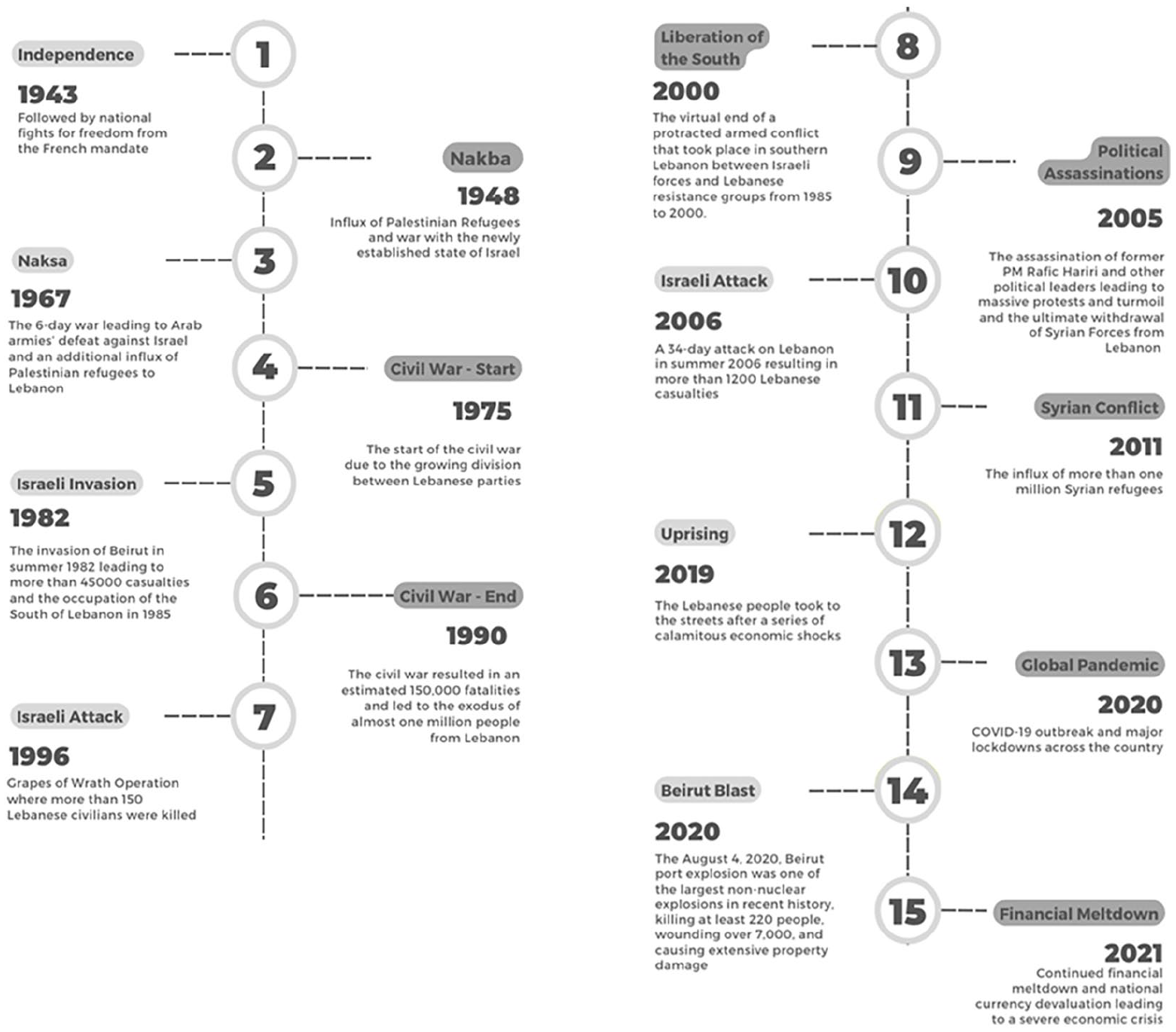
History of conflicts in Lebanon after independence (own creation inspired by Al-Hajj et al., 2021).
The explosion's aftermath saw increased mistrust towards the government among Lebanese citizens, who had already been protesting due to the economic crisis of 2019–2020 (Nassar and Nastacă, 2021). The blast’s economic toll was severe, destroying many small- and medium-sized enterprises (SMEs), with 60% rendered non-operational or unable to resume normal operations without help, which necessitated immediate emergency efforts to repair, rebuild and restart these businesses physically and economically (Nassar and Nastacă, 2021). Since SMEs shape 90% of Lebanon’s business community and contribute 50% of the GDP (Asrawi, 2010), their recovery was critical to the Lebanese economy. Women entrepreneurs, who had already faced significant challenges in employment before the explosion, were particularly affected. Although women constitute half of the Lebanese population, their workforce participation rate is only 26% across all sectors, compared to men’s 74% (Ministry of Economy and Trade, 2018). Women founders of start-ups in Lebanon are only 20% (An-Nahar, 2019), and their participation in SME leadership positions became even lower post-explosion. Lebanon ranks 136th out of 144 countries in women’s economic participation and opportunity and 145th out of 153 in overall gender gaps (World Economic Forum, 2020). As such, Lebanon’s context presents a perfect example of the impact of persistent adversity and acute adversity on women entrepreneurs in Lebanon and their resilience and recovery.
Data collection and analysis
To capture the phenomenon of entrepreneurial resilience and how it unfolds for women entrepreneurs in poly-crisis, we adopt a qualitative approach, conducting focus groups, in-depth interviews and netnography (Chakraborty and Biswal, 2022; Kozinets and Gretzel, 2023) to help us answer ‘how’ and ‘why’ questions.
First, we conducted two online focus groups with 18 entrepreneurs and entrepreneurship ecosystem experts to gain more insights into the Lebanese entrepreneurial ecosystem and extract relevant questions for the next step, the in-depth interviews. Each focus group lasted between 60 and 90 minutes, and the researcher’s acquaintances and a Lebanese network for businesswomen suggested the informants. After transcribing and analysing the two focus groups, we extracted a set of interview questions to conduct the one-to-one in-depth interviews with women entrepreneurs, while backing these questions up with relevant theories from the literature. The complete set of interview questions, which acted as an interview guide, and their fields/theories of inspiration can be found in Appendix A. Two of the focus group participants were also independently interviewed later on. Four focus group participants were not interviewed one-on-one, but were quoted in the findings because the authors found their accounts significant.
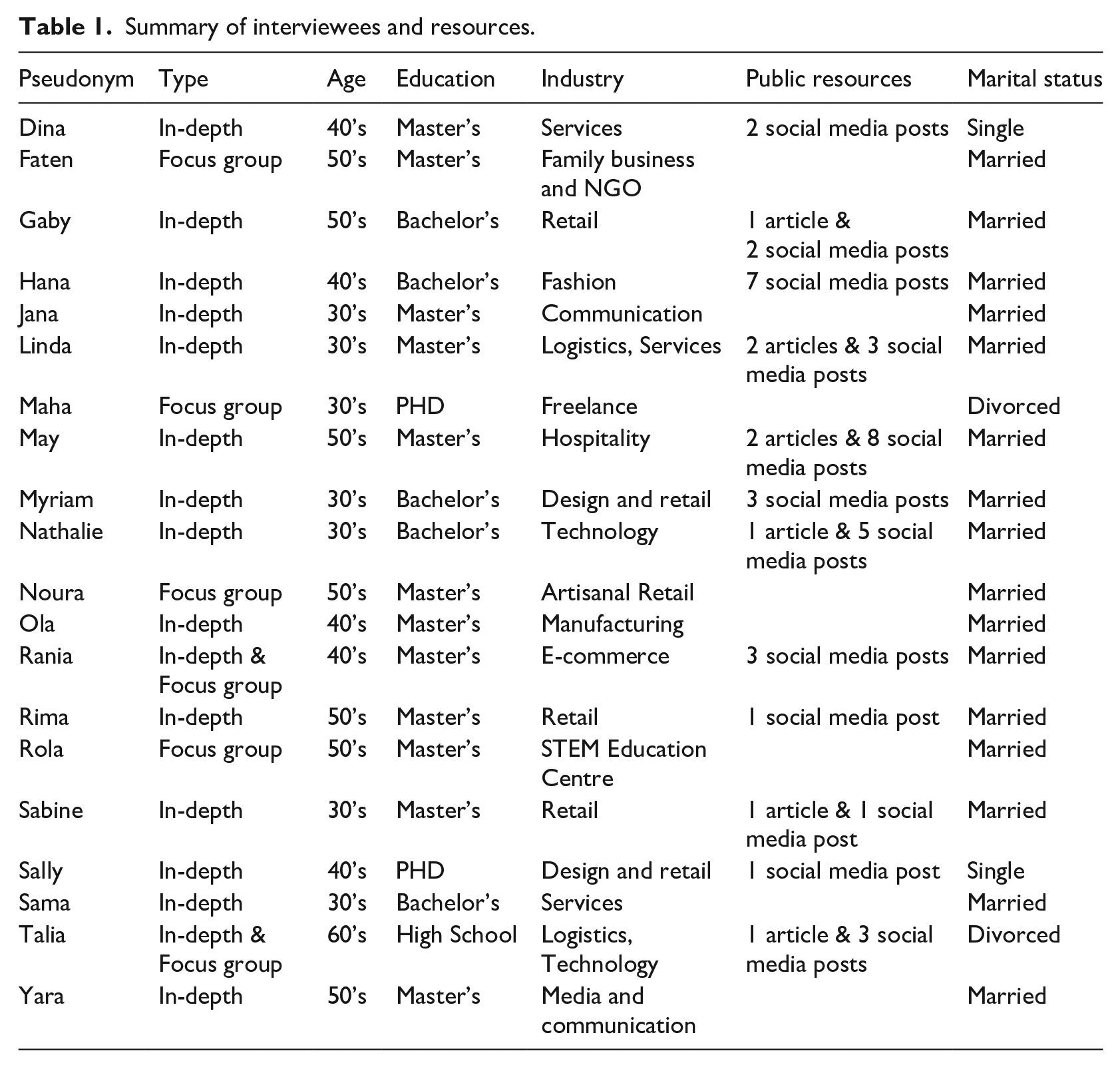
The one-on-one interviewee selection criteria consisted of women entrepreneurs directly affected by the blast, that is, either lived in the Beirut vicinity or had their businesses located in the Beirut vicinity. The selection method used was respondent recruitment from reliable sources and through referrals, as we needed research participants that fit the defined criteria about women business owners affected by the blast. To have sufficient interviewees, we resorted to a snowball recruitment method, where the number of informants grew after each interview, especially since some interviewees held key management positions in women’s business associations and could refer us to more interviewees. Notably, all interviewees are considered established entrepreneurs since they have (co)founded operational and revenue-generating enterprises, which they managed at least two years before the interviews. All informants except one had at least a bachelor’s degree, with twelve holding Master’s or MBA degrees and two holding PhD degrees. The 20 women entrepreneurs represent the complex social, cultural and religious diversity for which Lebanon is well-known. All the interviewees were given pseudonyms, and any identifying information mentioned was generalised to preserve the anonymity of the research subjects. Table 1 provides more details about the informants and the public resources used in the analysis.
Summary of interviewees and resources.
After obtaining the informant’s consent, the researchers adopted an active interview approach (Gadamer, 1989) to ensure that the interviewees opened up during the interview, given some topic sensitivity and personal privacy. An interactive reflection was attempted during the interview to enhance the understanding of interviewee experiences. Each in-depth interview lasted between 45 and 70 minutes. All focus groups and in-depth interviews were recorded and transcribed. The transcribed interviews were analysed in an iterative process and comprised multiple rounds of coding and thematic analysis inspired by the Gioia method (Gehman et al., 2018; Gioia et al., 2013; Langley and Abdallah, 2011).
As shown in the theoretical background, prior research leaves many questions about the phenomena and context under study unanswered; thus, deeming an inductive approach adequate as a study method. As such, the research team utilised an inductive qualitative analysis approach where the themes and insights emerged from the data instead of being imposed by prior theoretical frameworks. First, the researchers read the transcribed interviews carefully and coded them in a tabular format with the corresponding quotes and significance. From this coding, preliminary themes were extracted and discussed with the research team. We refined the themes several times after coding discussions with the research team while, in parallel, conducting more research on relevant theories informed by the findings, based on which the data analysis was revisited multiple times. After many iterations, the first-order codes were finalised, and the relevant quotes were listed in a large table where an illustrative version is shown in Appendix B. The complete data structure is shown in Figure 2.
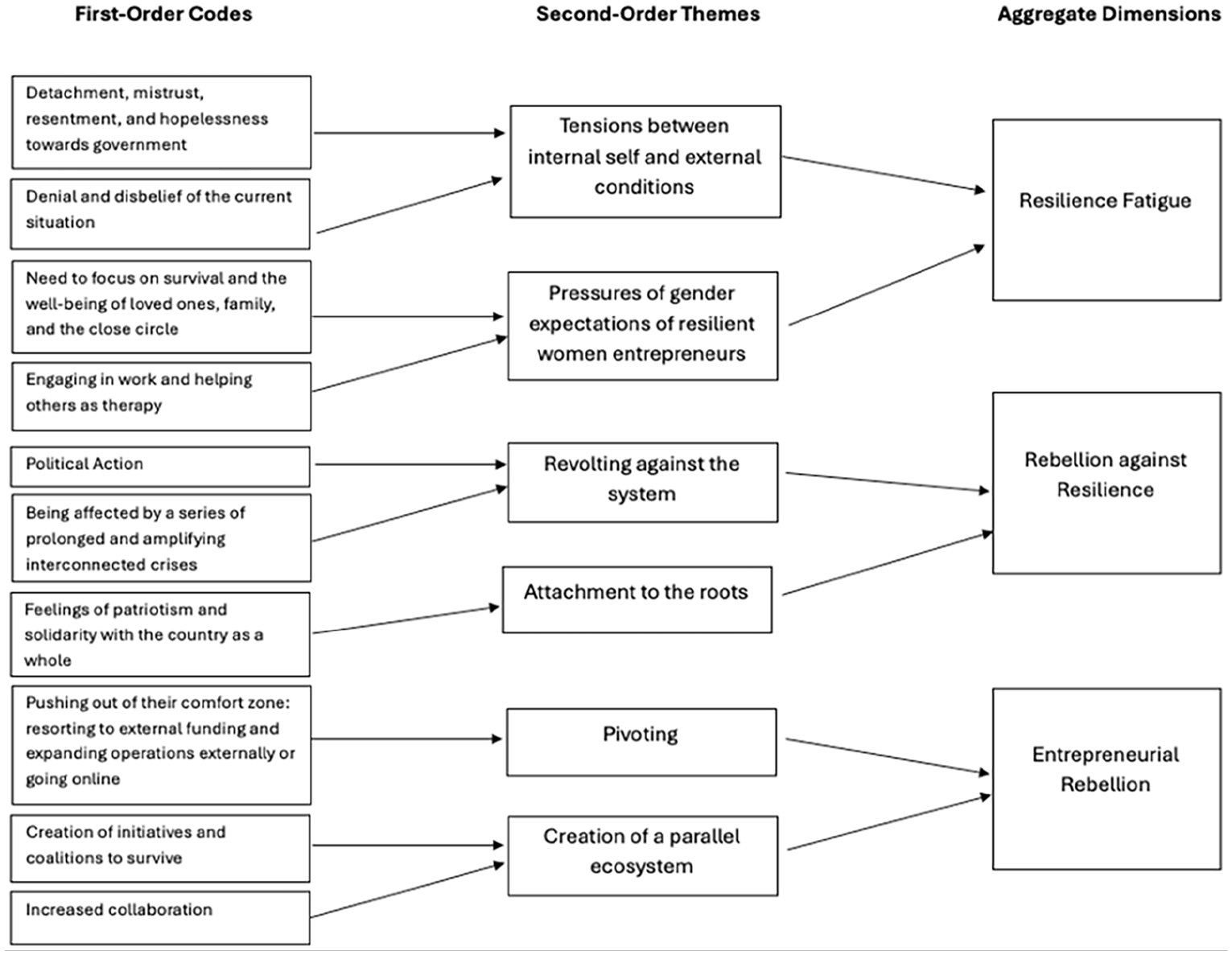
Data structure (Own work).
Since multiple interviewees mentioned how they were active on social media during the recovery period following the Beirut blast, the research team decided to use netnography (Chakraborty and Biswal, 2022; Kozinets and Gretzel, 2023) to enrich the dataset and the findings further. A careful search of online articles and features and a thorough examination of the informant’s personal and business social media accounts (LinkedIn, Facebook, Instagram and Twitter) helped capture relevant posts ranging between the time of the blast and one year later. The data obtained from social media were used for triangulation since it comprised secondary, independent and openly accessible narratives that complement interview data. The latter adds credibility and trustworthiness to the findings instead of being merely influenced by self-reporting. This type of secondary data helped capture the severity of the context, the women’s direct reactions after the blast and the evolution of their reactions as time passed. The public resources used in the analysis are listed in Table 1.
Findings
‘Revolution is born from sorrow’s womb’, Linda captions her Instagram post in both English and Arabic just one day after the big explosion, with a picture of the Beirut port on fire. This well-known quote in Lebanese society stems from Nizar Kabbani’s renowned poem, written for Beirut in response to its devastation during the Civil War. The latter reflects the persistent adversity experienced by the Lebanese people and demonstrates their ability to see the light amid the most horrendous circumstances. Our analysis of the interviews and public data sources reveals a striking duality in responses to the Beirut blast. Particularly, messages of perseverance, hope, responsibility and determination were interwoven with expressions of disbelief, anger, denial, grief and deep sadness. These reactions were not isolated to the blast itself, but were deeply shaped by their pre-existing struggles with persistent adversity. To fully understand their agency and resilience, we first examine the period before the blast, a phase we define as entrepreneurial survival and resilience, where women entrepreneurs navigated ongoing economic and social crises. We then move to their immediate reactions and strategic priorities following the explosion, introducing the concept of resilience fatigue, which is the exhaustion that comes from repeated cycles of crisis adaptation. Finally, we highlight a pivotal transformation, which we term entrepreneurial rebellion. These women, refusing to endure systemic failures passively, leveraged their agency to sustain their businesses and drive broader political and economic change. These findings shed light on the interplay between crisis, resilience and agency, offering more profound insight into how women entrepreneurs redefine resilience in the face of persistent adversity compounded by an acute disaster.
Entrepreneurial survival and resilience
Long before the Beirut blast, our informants were already navigating persistent adversity due to political instability, financial distress and COVID-19, among others. They managed to cope with such complex permacrisis and turmoil by leveraging their acquired resilience for their entrepreneurial survival. Gaby defines resilience as a coping strategy for perseverance and continuity and correlates it with continuously seeking solutions to pertinent problems facing women entrepreneurs in Lebanon:
Resilience is to always find a solution to any crisis you are facing. Resilience is not giving up and finding a fast and clever solution. Resilience is to be agile enough to know what is happening without losing your capital or sales and finding another way of doing things you always do differently. In Lebanon, this has always been the case. Others who left were not resilient enough. They left. They left the cause, they left everything behind because they can, and they moved on.
Gaby’s definition and interpretation of resilience highlight how these women entrepreneurs relied on their persistent resilience to sustain their entrepreneurial survival. Agility, quick and strategic decision-making, adaptability and strong business and financial acumen were key attributes of entrepreneurial resilience. Notably, Gaby takes pride in her unwavering resilience and has criticised entrepreneurs who struggled to persevere or adapt to mounting adversity. She links resilience to a broader cause, demonstrating that it extends beyond business and financial survival to encompass personal, patriotic and even existential dimensions.
Linda, who runs a logistics business that was very vulnerable to turbulence, explained how she and her team were exerting all possible efforts to ensure their business survival:
. . .before the explosion, Lebanon was already not in a good place, so everyone was already fighting. . . but we were all fighting this.
Linda’s description of fighting indicates how living in a context of persistent adversity never gets more manageable despite life seeming to continue normally from an external perspective. Linda also explained that: ‘providing a training session for the employees on adapting, sustaining, and surviving by creating one’s bubble was an attempt to push through’, this persistent adversity state is what subsequently ensures the viability of her business.
Jana recalled how she had to evacuate her office in downtown Beirut as soon as the Lebanese uprising started in October 2019. She mentioned how nothing that happened afterwards was normal, and paradoxically how it was normalised in Lebanese society.
So, we were all in a state of, I want to say, imbalance like we don’t know where we were. And then we had COVID, another form of abnormality. So, we started getting accustomed to a new normal, which for me was already absorbed; it was already abnormal.
Jana described artificial normalcy as a state where abnormal conditions become the accepted status quo. This unhealthy state is marked by imbalance; yet, it is perceived as standard, making it even more challenging to navigate. She explained the ongoing struggle of living and running a business amid the country’s persistent uncertainties and challenges. A week after the blast, in a public interview, Jana reflected on how operating a business in Lebanon had been difficult long before the explosion.
The entrepreneurs who set up in Lebanon know that almost all the odds are against them, yet they want to make something work in a country where nothing is provided. From the infrastructure to stability and financial means, in addition to imposed capital controls that make it impossible to operate.
Linda noted that ‘these are basic things unavailable in Lebanon. In our lives, we have been creating solutions around these basic things and do not wait for the government to act. We got used to it, and that is wrong’. This artificial normalcy has become intolerable to Linda and many other entrepreneurs. On the surface, her apparent frustration stemmed from the absence of what she called ‘basic things’, such as banking services that are vital for business transactions. On the one hand, continuously being a problem solver and finding solutions to business problems and obstacles have served the business well in sustaining and ensuring its survival. On the other hand, and at a deeper level, these persistent states of entrepreneurial survival and resilience were slowly triggering increased disappointment and fatigue. Unlike Gaby, Linda did not show pride in this coping strategy and was tired of it. She contested the continuous expectation of entrepreneurs securing an alternative replacement to offer to find workarounds, particularly where, in other contexts and countries, entrepreneurs receive support from their governments, at least by ensuring basic business necessities.
Our data show that the recurring crises that took place before the blast, what we refer to as persistent adversity in this article, have provided these women entrepreneurs with strong skills in managing crises and being able to act with adaptability, agility and readiness to pivot and change the business model.
Personal survival and resilience fatigue
The Beirut blast reminded many informants of the Civil War, which took place between 1975 and 1990. In addition to bringing back part of the trauma that these women entrepreneurs experienced during the Civil War, these flashbacks have triggered a multitude of emotions and thoughts. Talia, being one of the eldest interviewees, clearly recalled the war and how her resilient entrepreneurial experience has helped her navigate the recurrent crises in Lebanon:
My experience with disasters is very long. I was part of building [X Logistics Company] during the Civil War. We were very active during the Civil War and the Israeli invasion, and we never stopped a day of operation. We were keen to maintain the operation because we served many businesses in Lebanon and could not stop. When the blast happened on August 4th, I was saying, ‘Oh My God, not again, not again, not again!’ I did not visualise the catastrophe. Do you understand? I was like a robot, reacting as a robot.
Talia indicated that the urge to continue doing business in times of adversity and extreme crises was not simply for business reasons. On the contrary, the drive for continuity was intertwined with a sense of necessity and requirement to keep serving the larger ecosystem to avoid a total collapse of the business sector, economy and, ultimately, the country. This point demonstrates the interconnectedness between women entrepreneurs and their environment and their strong sense of responsibility towards their community. Persistent resilience can be understood as steady-state resilience, which Talia referred to as reacting like a robot. This seems to be an important analogy because it exemplifies how our entrepreneurs felt about being persistently resilient and accepting new events of adversity as they came in. Nevertheless, our entrepreneurs admitted that the Beirut blast event was unlike anything they had experienced.
Following the Beirut Blast, it became evident that women entrepreneurs exhibited varying degrees of acceptance regarding the damage, whether on a personal (micro), business (meso) or national (macro) level. Despite these differences, a recurring sentiment was sincere gratitude for having survived. Those who endured the deadly explosion, along with its physical and material consequences, often considered themselves fortunate compared to others who had suffered more significant losses. However, this sense of luck and gratitude did not extend to psychological trauma, which was often more profound than physical injuries.
Immediately after the blast, the primary concern was short-term survival and ensuring the safety of family and loved ones, a response shaped by traditional gender roles. Many women entrepreneurs demonstrated remarkable resilience, particularly in supporting their children and those close to them. Hana, who lived near the Beirut port and suffered severe injuries alongside her children, recounted her initial thoughts immediately after the explosion:
. . .my whole focus was just calming my kids, telling them we would be fine. I was working with them; I was healing anything that needed healing. Although I was bleeding, I did not know what was going on.
Most interviewees emphasised that their immediate priority was ensuring the safety and well-being of their family, loved ones and close circle. While many described proactively walking to the streets to assist with the damage and initiating various relief and community support efforts within days, not all shared the same experience. Sabine, for instance, recounted how the blast left her paralysed both personally and professionally, requiring time before she could regain her footing:
The first thing we did was check up on the family, then on our houses to see what happened to them. Then, we started watching things on TV, and it was horrible. I could not go down to Beirut for six weeks after the explosion. My work stopped for about six weeks. I could not and did not feel there was anything more I could do after this explosion.
Sabine was not alone in feeling helpless and hopeless after the blast. Many of our informants shared similar emotions, though each experienced and expressed them differently. Linda, who had demonstrated remarkable resilience in past crises, admitted that she nearly succumbed to these feelings if not for the support and proactiveness of her team. Although she had repeatedly demonstrated resilience, staying strong amid adversity and uncertainty proved challenging, especially since the blast had a deeply personal impact on everyone. In its aftermath, she found it overwhelming to process and manage individual and organisational challenges. She needed a ‘warrior’s break’, a moment to step back, reflect and re-strategise before returning to the fight. However, with her dedicated team’s unwavering support and motivation, Linda rose again and joined their efforts to help others. Just four days after the explosion, she shared a carousel of photos on Instagram, showing herself and her team wearing masks and company-branded t-shirts, smiling as they cleared shattered glass and debris from damaged homes. She captioned her photos:
What do you do when waves of helplessness and hopelessness hit you? You do what you can. You focus on your circle of influence and do your best there. This is us trying, fighting and doing. @ [company account].
Before long, Linda was back in ‘fighting’ mode. Many women entrepreneurs found solace and comfort in helping others. While the initial moments after the blast were deeply emotional, many of our informants quickly pushed past their distress, shifting their focus to action and problem-solving orientation. The interviews showed that this attitude is related to their caring and giving nature. These feminine aspects were noticeable in their reactions to the blast and the actions they took on both personal (micro) and business (meso) levels and later national (macro) levels. Our informants could switch, act and deliver, and showed an ability to switch between their hearts and logic quickly. They rebelled against their sense of fatigue, helplessness and hopelessness for the sake of bigger social good, as explained by Sally:
Suddenly, you feel everything collapsing. And that is when initiatives started. We all asked ourselves how we could help. Everyone tried to do something in their domain.
A strong theme in our data was how returning to work and helping others through pro-social initiatives was a therapeutic and effective coping mechanism for women entrepreneurs. These actions can be tied to their gender roles as caring and community-driven agents. Sabine also discussed how she has naturally leaned towards philanthropy despite staying away from her business for six weeks. Five days after the explosion, she launched a campaign on social media for two siblings who lost their parents because of the blast. Creating pro-social initiatives to help was a common reaction among many women entrepreneurs who contributed to Lebanese society in various ways after the explosion.
Complementing the interviews, findings from informant’s public accounts and articles further demonstrate how they engaged in creating funding campaigns and initiatives to alleviate the suffering of individuals and businesses that were directly affected by the blast. For example, Nathalie leveraged being part of a global hub and partnered with a regional NGO to launch a crowdfunding campaign on her Facebook page. Moreover, Linda, Gaby, Talia and May each launched a different crowdfunding campaign to support victim families, the displaced and the severely affected. Some of those campaigns were targeted to support business owners and women entrepreneurs like themselves. Faten, the founder of a women-centric NGO who lost her aunt in the blast, launched a memorial fundraising campaign in her aunt’s name that helped more than 200 women-owned small and medium enterprises (SMEs). Faten explained:
It was a wake-up call. I thought things could not be the same after August 4th, at least for me and my NGO. Before, it was more about the awareness of gender equality, doing some seminars and workshops in academia and private sector companies. Then I said no, no, no, this is not possible. I must go on the ground! So, I had this urge that this must have a meaning. For example, my aunt cannot have passed away for nothing and the 200 people [who died].
Faten’s fund had a significant impact upon the revival of women-led businesses and the support of those women on multiple levels. Nevertheless, these initiatives were insufficient to heal the more significant wounds the blast created. Faten clearly explained how her life has changed forever and how, in her opinion, dealing with grief will be a very long process with no end in sight. She even associated this grief with anger tied to the new realisation that:
Before, we were unsafe in the streets. But now it is in our homes. We nearly died in our homes or businesses. I think then there is a lot of grieving, grieving for a life that will never be the same again, so there is this grieving anger.
Many entrepreneurs were grateful to have survived the blast; even those directly affected managed to come to terms with their personal and material losses. However, the explosion left a deep scar, further eroding trust in national institutions and intensifying resentment toward the government and the ruling elite. This profound mistrust stemmed from sheer disbelief at the scale of the catastrophe, which many found difficult to process. Hana, who was hospitalised along with her daughter and suffered severe damage to both her home and office, described:
In the aftermath, I just could not believe what happened. It was like my feelings towards what happened to me, my family, and my belongings. All of it was unreal. I kind of made peace with it. But the fact that THIS happened, I mean, such a horrific thing to happen! I made peace with none of that until now. Honestly, I cannot, and I do not feel I can now. It is just unacceptable in all ways!
Like Hana, many other informants expressed profound disbelief over the blast and struggled to come to terms with it on multiple levels, particularly the national (macro) level. This response reflected a deep patriotism and solidarity with Lebanon and its people despite their overwhelming frustration and mistrust of the government. For instance, Talia emphasised that trust in the government and its institutions had eroded entirely. Hana added:
The thing is, the Lebanese are resilient. . . but things changed a lot after the explosion . . . So, people are now very depressed, I do not know . . . they can be resilient, but they do not have anything. . . You left them with nothing! What the hell were they thinking in this country? Nothing, I mean, health-wise catastrophic! Economically, catastrophic! Politically, catastrophic! Safety-wise, catastrophic! Business-wise. . . So, what do they have to hold on to? . . . There is nothing anymore. It is unbelievable!
These quotes highlight a sense of fatigue among our informants. Many interviewees expressed feeling exhausted under these circumstances, implicitly or explicitly, developing a negative connotation around the term resilience. These women reached a point where they experienced what we term resilience fatigue, both on personal (micro) and business (meso) levels. This fatigue stemmed from the realisation that their resilience, rather than propelling them toward more significant goals, often kept them in a continuous cycle of adaptation as they faced one adversity after another. This constant struggle forced them to remain in survival mode, rendering their previous efforts seemingly futile. Sama described how resilience in Lebanon has been misapplied, reinforcing what we previously referred to as artificial normalcy. She characterised Lebanese resilience as a double-edged sword, a term also used by May. Strongly opposing this acceptance, Sama’s perspective reflected clear signs of resilience fatigue:
It is not about resilience. The problem is that it is bad; we just got used to stuff and problems and lived with them. This word resilient is just a marketing thing: ‘We are resilient Lebanese’. They are not resilient. We just get used to the problems, so we are resilient, but it is not good. It is a bad thing.
The Beirut Blast was so overwhelming that many informants briefly succumbed to the weight of it, almost allowing resilience fatigue to take over. This feeling was particularly challenging as these events directly contradicted their entrepreneurial mindsets and values, which had always driven them to push through adversity. Talia even admitted that she was seeking help:
I think most of Lebanese, whether affected by the blast or not affected by the blast, they cannot take it anymore. . .Things are no longer in our hands; no matter what we do is not enough.
Despite the resilience fatigue expressed by women entrepreneurs, their social media presence painted a less grim picture. In their public posts, they consistently conveyed messages of hope, while openly acknowledging their devastation. Many of these women were seen as role models in their communities, and they embraced this role by striving to be a source of light amid the darkness. On the day of the explosion, Myriam shared a heartfelt poem on her business Instagram account. The poem, written in uppercase letters, was set against a black background and framed by a border depicting the coloured smoke of the blast and read as follows:
OK, BUT NOT OKAY LIVING BUT NOT ALIVE. MOVING BUT NUMB. HOPEFUL BUT HOPELESS. SILENT BUT SCREAMING. SAD BUT DEADENED. STRONG BUT FEARFUL. I WILL FEEL BETTER THAN THIS, MAYBE NOT YET . . . BUT I WILL.
Similarly, one week after the blast, Rania posted an outline of Lebanon’s map on her business Instagram account with a quote from the late Lebanese writer Khalil Gebran: ‘Out of suffering have emerged the strongest souls.’ She captioned the image, ‘Our hearts are broken . . . But we shall Rise again, Stronger than ever! Pray for Lebanon.’
Entrepreneurial rebellion
Our informants expressed exhaustion and frustration at constantly fighting for their business survival, instead of focusing on growth and success. While resilience is a well-known trait among the Lebanese due to ongoing adversity, many interviewees resented being labelled resilient. They exhibited signs of rebellion against the status quo, with the Beirut Blast significantly shifting their perspective from accepting resilience as an inevitable part of life to rejecting it as a toxic force that hindered their well-being and progress. This dissatisfaction with the term resilience reflected their refusal to accept persistent adversity as a permanent reality or what we previously described as artificial normalcy. The shock of the blast, coupled with resilience fatigue, transformed their approach from one of adaptation to one of rebellion. Their entrepreneurial agency fuelled a determination to recover, sustain and improve their businesses. This rebellious spirit stemmed from a deep desire to innovate and advance, rather than merely survive and address daily disruptions caused by external crises beyond their control. May described this as ‘double-edged resilience’, reinforcing the sentiments shared by other interviewees about why this constant state of resilience was no longer acceptable.
We have had enough resilience, though it is not our choice. But we are the ones who achieved this because by being resilient, by being solution finders, by being who cares and loving . . . this is double-edged resilience! We are resilient people whether we want it or not, and it is our character . . .we are built like this. . ..
Our informants acknowledged that resilience is generally a positive trait, but can also have negative and detrimental aspects. Notably, women entrepreneurs were not rejecting resilience, but rather its negative numbing effect. This shift in their perception and approach to resilience highlights their ambition to move beyond passive endurance toward a more proactive and rebellious form of resilience that drives growth and success despite challenges. Ola’s boiling frog analogy exemplifies their frustration with conventional resilience. She argues for defying resilience when it resembles numbness, rather than true adaptability, urging a shift from merely surviving adversity to actively challenging and transforming their circumstances.
We do not deserve this, as Lebanese people . . . you know the syndrome of the ‘boiling frog’? We are here, and the water is boiling a little bit, and we get adapted to it, so the frog boils without even noticing it. But then, when you go out [of the country], and you come back, and see that this is happening to you, you think: ‘Why the hell are we accepting all this? Why are we silent? Why is nobody doing anything?’ This is really very hard for me as a human being on a personal level. On a professional level, it took us many years to prove to our multinational customers that, as Lebanese, we could do it to gain that trust. And then the Beirut blast broke this! Not because as a company we cannot do this, because we are in a country where we cannot do that. – Ola
While women entrepreneurs took great pride in their ability to adapt quickly, they were also deeply frustrated by the resulting numbness and the acceptance of artificial normalcy, the status quo imposed by persistent adversity. We interpret their calls for action and defiance as a rebellion against resilience, a direct consequence of the resilience fatigue described earlier. Despite their frustration and hardships on both the micro and meso levels, these women demonstrated a strong sense of attachment and belonging to Lebanon. They resisted the idea of leaving their country and its people behind. Talia explained why she chose to remain in Lebanon:
They ask me why are you still here. I simply tell them that I am here to support the young people who do not have the potential to leave. Despite all the disasters, I am here to work with those stuck in Lebanon. So those people need our support and our help.
Our informants, particularly the more established entrepreneurs, expressed responsibility towards society. In her 60s, Talia strongly believed that she had a duty to help her fellow Lebanese citizens, and stay in Lebanon to support the community. Jana, a much younger entrepreneur, also shared attitudes of refusal to break down and stubbornness to stay and continue in Lebanon despite all the odds.
Whoever is behind this blast, they think they are going to break our spirit. They will not break our spirit! And I became even more determined to grow the company despite all odds against us! . . .COVID, for us, was a piece of cake! It is nothing compared to what we are dealing with!
Like all our entrepreneurs, Jana’s narrative reflected a rebellious attitude as she admitted that she had relied on resilience incorrectly for too long. She refused to surrender or be broken, demonstrating an evident determination to overcome resilience fatigue and transform it into unwavering resolve. In Jana’s own words, the challenges of the COVID-19 pandemic did not compare to the hardships she had faced while running a business in Lebanon. Notably, her focus extended beyond mere survival; she was deeply concerned with business sustainability and, most importantly, long-term growth.
The rebellious attitudes among these women entrepreneurs extended beyond personal (micro) and business (meso) levels; they also manifested in calls for political action, a revival of the revolution and public demonstrations. The overwhelming feelings of exhaustion, helplessness and hopelessness in achieving change at the national institutional level left them in anger, fuelling demand for rebellion against the extraordinary situation that had become normalised. For these women, accepting the status quo was akin to denying the severity of the catastrophe. Instead, they actively rejected this normalisation and called for collective defiance. May emphasised that the Lebanese people need to stand up against a system dragging them down, rather than allowing them to progress. This sentiment became even stronger after the failure of the 2019 uprising (Jalkh, 2023), leading her to advocate for even greater revolutionary action.
. . . we always find a solution, this is good, this is great. But on the other hand, sorry, we are devastated; no one participates in the revolution! Where are the people? If you are uncomfortable, raise your voice to the streets!
May and several other interviewees had been actively engaged in political action since the 2019 uprising and intensified their participation following the Beirut Blast.
I do have faith in the Lebanese people. . . It will take blood and a revolution, like the depression. Can you get out of the depression if you do not touch the bottom? . . . I do not think everybody is bad. There are many good people, we just need to bring them.
She was frequently seen protesting alongside other stakeholders in the tourism sector and sharing her perspectives internationally through various interviews and media features. On 25 August 2020, May posted a video on her Instagram account documenting a protest in which she participated. The demonstration occurred on the street where her restaurant, severely damaged by the explosion, was located. She captions this post:
Protesting against the oppressing ruling power. For the ones we lost, for the businesses that are gone. We will rise against all odds. Civil disobedience is the answer for the tourism sector.
Similarly, Nathalie, a politically active young entrepreneur, frequently shared her political views on Facebook. A recurring theme in her posts was a strong denunciation of the corrupt ruling elite, whom she held responsible for the blast and its consequences. She also urged the Lebanese people to unite against corruption and oppression, calling them to take action. One of the messages she repeatedly shared after the explosion was a direct call for accountability and justice, declaring: ‘Hang the gallows and save the people!’
Beyond their rebellious stance against the status quo and political activism, women entrepreneurs recognised the need for new strategies to ensure business survival after the blast. They refined their pivoting approaches and stepped outside their comfort zones by expanding their online operations, a transition they had already begun during the COVID-19 pandemic. They also explored previously dismissed methods such as crowdfunding. Despite immense challenges and resilience fatigue, their determination to continue was driven by a deep attachment to Lebanon. However, not all could remain. Rola, for instance, had already relocated due to financial constraints, but maintained operations in Lebanon until the blast damaged her business. She then transferred equipment to Dubai and granted her Lebanese team full autonomy over logistics. Demonstrating responsibility and resilience, her team successfully managed the move and later requested to resume operations online, despite limited profitability. Rola’s approval reflected her enduring commitment to Lebanon and her hope of returning when conditions stabilise.
. . . the decision was taken so the profit will not be from Lebanon. But we must keep the brand’s position because I will be the first to return once the government changes. So, with this government still in power, I am outside. – Rola.
Rola was attached to Lebanon and had deep empathy and a sense of responsibility towards the Lebanese community. Similarly, Nathalie shared similar thoughts:
I have been doing all the upskilling sessions in Lebanon for free. I will not ask people suffering to secure their basic needs to pay for an upskilling session. . . So, my main focus now is to try to be more exposed to other markets. Though it scares me and makes me feel unprepared, I need to keep doing the sessions for free in Lebanon.
For many women entrepreneurs, actively seeking markets beyond Lebanon was an unfamiliar territory, often outside their expertise or comfort zone. However, their resilience fatigue pushed them to take that risk, making bold moves toward business expansion and internationalisation. Importantly, this shift rarely came at the expense of their businesses in Lebanon, and most informants remained committed to keeping their local ventures running. While these efforts might appear to be mere pivoting strategies, rather than acts of rebellion, many women entrepreneurs saw them as a direct challenge to the status quo and the normalisation of artificial normalcy. Hana emphasised that surviving the blast gave these women newfound strength and courage to take greater risks for growth. Unlike in the past, when they sought merely passable solutions, stepping out of their comfort zones reinforced their hope for success and their belief in their ability to expand and thrive as entrepreneurs. Hana shared:
I proved to be stronger. I realised that I am very tough. Honestly, I have always known that I am a tough person, but after this experience, I realised that I am tougher than I thought, you know, how I dealt with it, how I just moved on, how I changed my business focus to make sure I can not only survive but grow.
May has been actively growing her restaurant and food business outside Lebanon. This was all part of her positive resilience, which she called adaptability. Nevertheless, the blast made her realise that she should go beyond her traditional adaptive methods:
At the core of resilience is adaptability. And we are fast adaptable. . . We generally know how to grow and adapt our product to the common way of life. But in such conditions, it is no longer about our adaptability to the situation but instead about going beyond it and embarking on something new, different, and sustainable long-term.
For instance, an online article featuring our informant, May, highlights how she had to innovate quickly to sustain her business by launching a pop-up branch in Saudi Arabia. She explained, ‘I needed to keep the employees safe and cash secure. I created a pop-up project in Saudi Arabia and took part of my staff there for three months.’ Alongside this realisation, May also received advice from close friends in the United States to launch a crowdfunding campaign to rebuild and reopen her damaged restaurants in Lebanon. Initially, she refused outright, insisting she would never accept donations for herself or her businesses. However, with some persuasion, she eventually changed her mind, an experience that taught her a valuable lesson. She shares:
They said you cannot make it; you do not have money, your money is stuck in the banks, you do not have anything, and everything is in cash. How are you going to do all this and rebuild? They were right, but accepting donations was tough for me. Very, very difficult! But I ended up accepting it and never looked back. It taught me a lot of valuable lessons. To give is normal, but to learn how to take is another thing.
This deep sense of pride initially contributed to the development of resilience of women like May. However, setting aside their ego and redefining their perceptions of how things should be became another form of rebellion. By embracing new, previously unconsidered growth strategies, such as crowdfunding, they unlocked new opportunities for themselves and their businesses. Despite the negative cultural connotations of some of these strategies, these women challenged implicit societal norms, taking control of their growth trajectories.
Our data reveals a significant shift in these entrepreneur’s mindset. What was once a state of persistent entrepreneurial resilience, a source of pride, transformed into a state of rebellion after experiencing resilience fatigue. This rebellion was evident in their decisive, action-oriented behaviours. Their narratives also demonstrate an ability to switch between emotional and cognitive processing when anticipating crises, where adaptability and agility become essential in pivoting and reshaping business models based on actions and agency. Gaby reflected on how – at the onset of the pandemic, amid Lebanon’s ongoing economic struggles, followed by the Beirut Blast – women entrepreneurs were forced to think outside the box. In hindsight, adopting alternative strategies, such as moving operations online, proved highly effective, particularly for those whose offices had been damaged. Gaby described how she accelerated her pivoting process in the aftermath of the explosion:
I have had the plan to open an online platform since 2017. When the crisis started, I sped up the process because I did not want to wait around to figure out how to adapt my business based on what was unfolding. I wanted to be fully in control, and I completely finished my online platform by April (2021) and expanded my sales and exports.
The outcome of these women’s resilience fatigue was channelled into proactive and rebellious actions. Their strategies demonstrated a commitment to rooting themselves, rather than uprooting and leaving, pushing beyond their comfort zones. This determination to recover and grow reflects the positive impact of entrepreneurial rebellion, highlighting resilience not as passive endurance, but as a driving force for transformation and progress. Beyond the positive outcomes at the micro level, the aftermath of the blast marked a clear shift in the business sector (meso level) from a competitive entrepreneurial environment to a more cooperative one. Instead of retreating, these women entrepreneurs took the initiative to build strong networks and coalitions, ensuring the survival and growth of businesses within their industries despite ongoing crises. Through their entrepreneurial agency, they actively fostered an alternative ecosystem, a self-sustaining network of like-minded partners and even former competitors, providing mutual support without a formal backing structure. Characterised by collaboration and coopetition (cooperative competition), this new ecosystem strengthened their ventures and inspired other women entrepreneurs and SMEs nationwide. As they pushed for change, many began collaborating with those they had previously competed against, pooling resources, expertise and knowledge to drive collective progress. Their rebellion extended beyond resisting external constraints to rejecting long-held notions, such as resilience itself, which started to feel more like an imposed burden than a source of strength due to resilience fatigue. Linda highlights this:
There has been much collaboration since the revolution and after the explosion. I felt closer to the community, especially living together through the economic crisis, COVID-19, and the explosion. This closeness increased and continued with so many emotions. There was emotional bonding between people after the August 4th explosion. I think it existed before and increased after the Beirut explosion.
Despite a shrinking market, this heightened sense of collaboration fostered a ‘we are in this together’ mentality, helping to alleviate frustrations and reignite hope for the future. While elements of this cooperation had surfaced in previous crises, it became significantly more pronounced after the Beirut Blast, as Gaby explains:
There is more collaboration. I think more partnerships should be created to keep and sustain the business. The cake is not growing, but each piece is becoming smaller. Of course, we are discussing partnerships that complement each other, not competing. Even if they are competitors, sometimes one-on-one, they can partner to grow and sustain their business. As I told you before, [it is] not only in Lebanon but a worldwide trend.
Discussion
Building on Korber and McNaughton’s (2018) framework, our findings enrich multiple streams of resilience research: resilience as an entrepreneurial trait, the role of entrepreneurial firms in fostering macro-level resilience and resilience as a process of recovery and transformation. What sets our research apart is its focus on the multiplicity of crises, the convergence of persistent adversity with an acute crisis, which creates a distinctly complex context. Our study responds to recent scholarly calls for more research on entrepreneurial resilience in a context of poly-crisis (Ahmed et al., 2022; Branzei and Fathallah, 2023; Klyver and McMullen, 2025). Moreover, our article shows how entrepreneurs move beyond the conventional form of resilience by rebelling thus, proving that resilience can take different forms to break preexisting norms and behaviours (Batjargal et al., 2023; Renko et al., 2021). Our findings establish the foundation for a conceptual framework that explains how persistent adversity, compounded by an acute disaster, shapes women’s entrepreneurial resilience and survival. This framework outlines the different phases these women navigate as they cope with ongoing challenges and their impact.
Similar to Long et al. (2024), our informants expressed frustration over the expectation of being constantly resilient. Although gender role expectations placed additional pressure on them, particularly in the aftermath of the acute disaster, macro-level factors had an even greater impact on their resilience fatigue. In Long et al.’s (2024) study, this concept was closely linked to burnout, as American women entrepreneurs struggled with the pressure of individually sustaining their businesses amid a global crisis. This response was shaped by the individualistic nature of their society, leading many to experience burnout. In contrast, women entrepreneurs in Lebanon’s extreme context approached adversity differently. Their challenges were far more severe than the pandemic alone. Nevertheless, burnout was not a prominent outcome in our study, which may be attributed to the collectivist nature of Lebanese society. This cultural context provides women entrepreneurs with a support network, allowing them to share their struggles, and preventing them from feeling isolated. In acute adversity, our findings align with some aspects of Ledesma’s (2014) framework, particularly in the survival stage following a disaster. However, as our framework illustrates, the recovery and thriving stages present a more nuanced and context-specific evolution enriched by novel concepts. We propose a preliminary framework of women’s entrepreneurial resilience and rebellion, offering insights beyond this case. This framework is designed to apply more broadly to poly-crisis contexts in developing countries, providing a deeper understanding of how women entrepreneurs navigate and transform adversity into opportunities for growth and change.
Returning to our research questions, we first examine how entrepreneurial resilience unfolds when women entrepreneurs face persistent and acute adversity concurrently. A key finding being that prolonged resilience during an acute disaster can lead to resilience fatigue, exposing the dark side of resilience (Long et al., 2024). In a collectivist society with strong patriotic sentiments, this entrepreneurial fatigue often evolves into entrepreneurial rebellion, a shift characterised by defiance against resilience and a heightened determination to sustain and thrive despite overwhelming challenges. Addressing our second research question, how women entrepreneurs demonstrate entrepreneurial action in a poly-crisis context, we found that entrepreneurial rebellion catalyses implicit and explicit agentic actions. These women actively work to sustain their businesses, while also driving positive change within their communities. Their resilience fatigue fuels a newfound agency, enabling them to step beyond their comfort zones, embrace discomfort and pivot their business models in previously unconsidered ways. These agentic actions extend beyond the personal (micro) and business (meso) levels to influence the broader macroeconomic and sociopolitical landscape. In Lebanon, political engagement and a deep attachment to their homeland were crucial in fostering an alternative, collaborative and cooperative ecosystem, starkly contrasting to the traditionally competitive business environment. This ecosystem helped sustain their ventures and facilitated ongoing growth despite adversity.
While contextual differences exist, our findings align with those of Sabel et al. (2024), who emphasise the critical role of network coopetition in times of crisis. Belonging to a supportive entrepreneurial ecosystem proves essential for resilience, demonstrating that cooperation among entrepreneurs can be a powerful mechanism for navigating prolonged and acute challenges. Several key concepts emerged from our study, including artificial normalcy, double-edged resilience, resilience fatigue, rebellion against resilience and entrepreneurial rebellion, particularly relevant to a context of poly-crisis. Figure 3 depicts the framework demonstrating women’s entrepreneurial resilience evolution into rebellion.
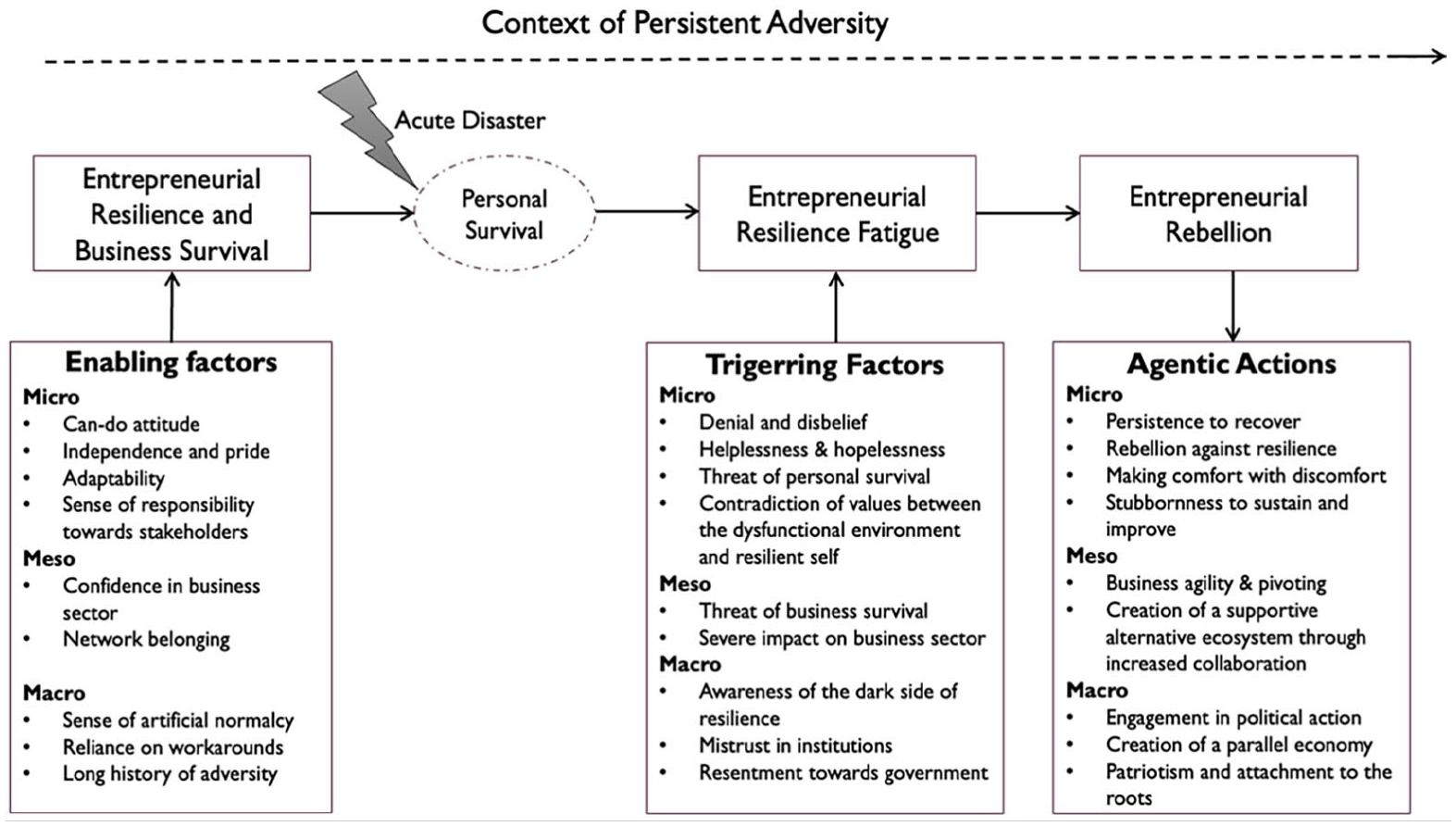
Entrepreneurial resilience evolution into rebellion in the constrained context of persistent and acute adversity (Own work).
Entrepreneurial resilience and business survival
It is salient to rethink entrepreneurship in the context of poly-crisis (Klyver and McMullen, 2025). As highlighted in the findings section, entrepreneurial resilience and business survival are prolonged in persistent adversity due to recurring uncertainty and continuous external business challenges. While identifying the root causes of this state is beyond the scope of this article, we outline the enabling factors that sustain entrepreneurial resilience and business survival across the micro, meso and macro levels. These factors were uncovered through in-depth interviews, focus groups and analyses of public social media posts from the women entrepreneurs in this study. Thus, we extend the literature on entrepreneurial resilience in adversity (Shepherd and Williams, 2020) by focusing on how resilience takes shape and evolves over different forms of stressors (Ahmed et al., 2022). We contribute to the limited understanding in our field of how resilient entrepreneurs navigate different experiences of adversity. In particular, we explain how entrepreneurs adapt to a poly-crisis context, something that unfortunately is becoming more common in our world (Klyver & McMullen, 2025). As a result, our article helps scholars to rethink entrepreneurial agency and resilience in such a new reality. At the micro level, several key attributes support continued resilience. These include a can-do attitude, a strong sense of independence and pride in their achievements despite the absence of an enabling environment, a high level of adaptability in managing their businesses and a deep sense of responsibility toward their communities. Additionally, their action-oriented mindset and ability to balance emotion with logic help them sustain resilience over time. At the meso level, the women entrepreneurs expressed confidence in the business sector’s ability to self-regulate and adapt to hardships, as it has occurred in the past. Furthermore, their sense of network belonging, including the ability to rely on like-minded businesspeople, role models and women associations, is crucial in maintaining entrepreneurial resilience. At the macro level, the artificial sense of normalcy, the ingrained reliance on workarounds to meet basic needs, and a long history of adversity contribute to their acceptance of a continuous state of adaptation and resilience. These systemic conditions reinforce the expectation that survival requires constant adjustment, shaping an entrepreneur’s ability to navigate ongoing challenges. These supporting factors help women persevere and sustain their businesses despite hardship, while undertaking calculated risk-taking actions. Despite their high agility and adaptability, women entrepreneurs experience moderate frustration, primarily because they must compete fiercely to sustain and persevere in ever-changing conditions.
Personal survival
The immediate stage entrepreneurs experience following an acute disaster or adversity is survival (Ledesma, 2014). This phase first unfolds at the personal level before extending to the business level. In the immediate aftermath of a disaster, women entrepreneurs prioritise the safety and well-being of their family members and close circles, including employees. Drawing on both instinctive and socially constructed gender roles, they naturally assume caregiving responsibilities, providing emotional and physical support to those around them. This response is deeply rooted in women’s nurturing nature and societal expectations. However, this survival state is short-lived and varies in duration depending on the severity of the disaster’s impact on each entrepreneur. During this time, the focus is on immediate, microscopic concerns rather than broader, macro-level implications. Notably, transitioning out of survival mode is often facilitated by engaging in work and helping others. Women entrepreneurs find their work therapeutic, as it brings a sense of familiarity, purpose and control. Their deep commitment to their stakeholders, such as employees, clients, suppliers and broader communities, drives them to initiate pro-social efforts, providing them with emotional relief and motivation. Even without institutional resources or tangible external support, their entrepreneurial networks, role models and proactive initiative-taking are crucial sources of encouragement and resilience.
Entrepreneurial resilience fatigue
An epic and catastrophic disaster is a ‘wake-up call’, exposing the dark side of the double-edged resilience characterising prolonged adversity. This realisation triggers a phase of entrepreneurial resilience fatigue, driven by multiple factors at the micro, meso and macro levels. Our study challenges the assumption that resilience and vulnerability are opposites (Chadwick and Raver, 2020). Our findings show that resilient entrepreneurs had to acknowledge their fatigue (vulnerability) to rebel, continue and transform in this context of adversity; thus, adding to the nuance of how vulnerability and resilience interact (Branzei and Fathallah, 2023). At the micro level, women entrepreneurs experience intense denial and disbelief about the disaster and its impact, leading to a shift in their deeply ingrained resilient mindset. This change stems from the stark contradiction between their entrepreneurial values and the dysfunctional environment surrounding them. Their initial response is often of helplessness and hopelessness, intensified by a real threat to their personal survival. This moment of crisis causes them to reject the notion of continuing their resilience as they once did. At the meso level, this sense of threat extends to their businesses, creating a ripple effect across the entire sector. As a result, women entrepreneurs begin to lose confidence in the sustainability of their ventures. At the macro level, the compounded personal and business threats imposed by the disaster force these women to recognise the artificial normalcy society and institutions have long upheld. This realisation fosters an acute awareness of resilience’s dark side and a rejection of the status quo. As the explosion’s immediate aftermath settled and the broader macroscopic picture became more apparent, their feelings of detachment, mistrust, resentment and hopelessness toward the government and its institutions deepened. This growing disillusionment ultimately led to resilience fatigue, as our findings describe. Indeed, resilience fatigue represents a negative side of entrepreneurship in adversity (Branzei and Fathallah, 2023; Long et al., 2024). However, we show that this fatigue did not lead to entrepreneurial exit (Harries et al., 2018; Patzelt and Shepherd, 2024). This stage was a necessary pause for entrepreneurs to reflect on their resilience before they get back into the game (Doern, 2021). Thus, we contribute to the literature by showcasing the different stages an entrepreneur experiences in a context of a poly-crisis and how they revise their responses over time (Shepherd and Williams, 2020; Minniti et al., 2024).
Entrepreneurial rebellion
Meek and Williams (2018) argue that persistence involves overcoming stage–gate barriers, where nascent entrepreneurs draw on their experiences. They often take incremental steps forward as motivation to persist, even when visible progress is minimal. Although our study does not focus on nascent entrepreneurs, the passive-aggressive environment in which these women operate often makes them feel like they are constantly starting over. No matter how much progress they make, external challenges repeatedly push them back, reinforcing their refusal to let their efforts go to waste, and instead fuelling a need for rebellion. For years, the women who contributed to the study have attempted to drive change. Nevertheless, they have been continuously forced to adapt and accept the status quo that structured their working conditions through collective sensemaking, a process similar to how social entrepreneurs evolve their perceptions of problems and solutions over time (Kimmitt and Muñoz, 2018). However, after reaching a tipping point, their response shifts dramatically. Instead of adapting, they rebel, marking a fundamental departure from their previous approach. Despite experiencing short-term entrepreneurial resilience fatigue, women entrepreneurs found that their engagement in their communities and personal and entrepreneurial experiences played a crucial role in their recovery. Their perseverant and resilient identity, shaped by a history of conflicts and wars, enabled them to rise above resilience fatigue relatively quickly. A fitting analogy is the ‘warrior’s break’, which can be understood as a temporary pause due to battle fatigue, but never a surrender. Their deep sense of attachment and belonging to Lebanon was key to overcoming resilience fatigue. Despite their frustration with many aspects of the national landscape, their belief in their country remained strong. This love–hate relationship was evident in interviews, as most women entrepreneurs refused to leave and even criticised those who chose to do so. Their past experiences with war and political instability reassured them that they could endure yet another crisis. Consistent with Doern (2016), their managerial experience enhanced their ability to navigate crises and rebuild their businesses. Additionally, interviews revealed that persistent adversities had, over time, provided these women with the resources and mindset necessary to cope with the aftermath of the explosion more effectively.
As ambitious, progressive and innovative entrepreneurs, these women refused to accept the new reality and rejected the status quo. The combination of acute adversity and resilience fatigue became a tipping point, pushing them to resist their circumstances and rebel against the prolonged multiplicity of crises they had endured since childhood, as many recalled flashbacks to the civil war. A defining feature of this rebellion phase was ‘rebellion against resilience’, where women entrepreneurs strongly objected to the double-edged resilience that had long shaped their lives. Their defiant attitude was not merely an act of resistance, but a natural extension of their deeply embedded resilience, strengthened by patriotism and attachment to their roots. This transformation fuelled an even stronger will and a more determined effort to survive and thrive, not just as individuals or business owners, but as a united community. While revolutionary thinking is central to disrupting the status quo through entrepreneurship, fully understanding entrepreneurship-based change requires examining the mechanisms behind the entrepreneur’s transformative actions (Corbett et al., 2018). Entrepreneurial rebellion encompasses a series of agentic actions influencing entrepreneurs and their broader environment. Although this rebellion is not always explicitly directed at the state, it often involves political actions and indirect forms of resistance against systemic corruption, inefficiency and state absence. It serves as a demonstration of independence and a refusal to succumb to imposed constraints. Instead of feeling helpless and hopeless, women entrepreneurs actively reclaim control over their personal and professional futures. This aligns with findings from Manolova et al. (2020) and Smyth and Sweetman (2015), highlighting how women entrepreneurs successfully pivot their business models in response to external challenges, reinforcing their ability to thrive in uncertain and adverse environments.
The agentic micro-level actions of women entrepreneurs are reflected in their increased determination to sustain and improve personally and professionally. At the meso level, they exhibit a renewed sense of business hope, leveraging agility and pivoting as team-driven efforts alongside stakeholders and business partners. This shift is made possible by creating an alternative supportive ecosystem built on partnerships and collaborations, which acts as their safety net in the absence of governmental support and the partial collapse of the formal entrepreneurial ecosystem. This specific context is characterised by coopetition (Sabel et al., 2024), rather than traditional competition, as the extent of damage and devastation caused by the blast rendered rivalry irrelevant. In the immediate aftermath of the disaster, businesses prioritised survival over competition, actively collaborating, even with former competitors, to mitigate the crisis impact. Within such a setting, conventional frameworks on resilient entrepreneurship that emphasise competitiveness (Gunasekaran et al., 2011; Ismail et al., 2011; Pal et al., 2014) appear insufficient or inadequate in capturing the full scope of entrepreneurial responses to extreme adversity. Women entrepreneurs further extend their agency at the macro level by engaging in political action, actively challenging the status quo and demanding the reinstitution of functional governmental systems to support the business sector. Alongside like-minded actors, they contribute to forming a parallel economy that operates beyond national borders or immediate crisis constraints. However, this shift does not diminish their patriotism, but reinforces their deep attachment to their roots. Their entrepreneurial rebellion is driven by the desire to preserve a legacy within their country of origin, ensuring their businesses survive and grow, ultimately generating broader systemic change across the environment.
Previous studies highlight a recognised disjuncture between calls buy social entrepreneurs for disruptive systems change and their efforts to remedy existing system deficiencies (Chalmers, 2021; Kimmitt and Muñoz, 2018). Our findings reveal that empowered and established women entrepreneurs navigating compounded crises exhibited a reciprocated network effect. They give back to the entrepreneurial ecosystem that once supported them. Acting as inspirational role models, they extend resilience beyond personal survival, guiding and uplifting others facing similar adversity. These women serve as change agents, leveraging their instinctive healing capacities to mend and restore what is broken within their reach. While their rebellious actions may not lead to systemic or nationwide change, they enact meaningful, localised transformations that affect their businesses, stakeholders and entrepreneurial networks. Notably, these rebellious behaviours were atypical compared to their pre-crisis approaches. However, as entrepreneurs strive to differentiate themselves and push back against overwhelming external pressures, they often find themselves compelled to rebel against the status quo. This rebellion emerges from the interplay between cognition, environment and action, a dynamic observed in previous research on entrepreneurial agency and resilience (Wood et al., 2014; Mitchell et al., 2011).
Despite our findings, we must acknowledge some potential limitations of this study. One being that all our interviewees were highly educated and remained in business after the Beirut blast, which may shape the perspectives reflected in the findings. Additionally, the requirement of proximity to the blast meant that participants were concentrated in Beirut and its surrounding areas, an urban and more developed region, potentially overlooking the experiences of entrepreneurs in rural or less developed parts of the country. As research on entrepreneurship in poly-crisis requires a deeper exploration, involving the perspectives of individuals who have had direct rather than vicarious experience with an acute disaster helps draw a clearer picture to establish a baseline understanding. Thus, our study offers rich and contextualised understanding, rather than broader inferences. We encourage further research into this important yet understudied context, where entrepreneurial agency and resilience are explored in different types of adversities, across multiple cases, and in different geographical settings.
Conclusion
This article contributes to the literature in different ways. First, our study adds to our understanding of the resilience of women entrepreneurs in a poly-crisis context thus, responding to calls for rethinking entrepreneurship in a world of overlapping and complex crises (Klyver and McMullen, 2025). Second, we shed light on how vulnerability and resilience interact (Branzei and Fathallah, 2023) through the concept of women resilience fatigue and rebellion against resilience. Third, the study unveils entrepreneurial rebellion as a coping mechanism and an agentic reaction arising from compounding adversities and resilience fatigue. The latter highlights the agency of women entrepreneurs and their role in rebuilding their environment (McMullen et al., 2021).
Our article contributes to understanding entrepreneurial resilience in extreme contexts by showing that focusing on one’s own resilience alone is not sufficient for survival in such contexts. Entrepreneurial agency is mobilised to reshape the situation for oneself and others. Indeed, we illustrate how entrepreneurial resilience could transition from an individual effort to a collective action, affecting the resilience of the community (Shepherd and Williams, 2020; Williams and Shepherd, 2016a, 2016b). In addition, this article highlights the role of entrepreneurial agency (McMullen and Bergman, 2018) in a context where resilient entrepreneurs have been challenged multiple times and in different situations. We argue that entrepreneurial agency is necessary for long-term resilience (Shepherd and Williams, 2020) when entrepreneurs operate in environments of entangled crises (Klyver and McMullen, 2025). It is this agency that helps entrepreneurs rebel against the status quo and find ways to alter their business approaches and challenge existing systems and structures. Indeed, we would assume that without entrepreneurial agency, these women might have fallen into resilience fatigue without the ability to continue fighting. However, this is a new fight because it builds on exploring new ways of persisting in this environment – reshaping one’s own journey (Renko et al., 2021) and that of others. Hence, our article contributes to the entrepreneurial resilience literature (Ahmed et al., 2022) by showing an unconventional form of entrepreneurial resilience through rebellion.
In our effort to empirically delineate the linkage between resilience and rebellion, this article synthesises an entrepreneurial resilience evolution model by explicitly highlighting the rebellion construct, which is one of the key contributions of this work. However, we still see an opportunity for further research to develop the theme of rebels with a cause. For example, opportunities remain to better understand the linkages between entrepreneur emotions and revolutionary thinking and transformative entrepreneurial action that can result (Foo, 2011). Our future work will continue to understand what comes after the rebellion state, thus attempting to complete the framework. Some questions to be answered in future research include: How would less-educated women entrepreneurs react and demonstrate resilience/rebellion in similar contexts? Is ‘resilience fatigue’ crucial for the rebellion state to emerge? What comes after rebellion? Until when does rebellion prevail? Do entrepreneurs return to the chronic resilience state, or does this state change into something else after a specific time or set of conditions? Moreover, studying a collective culture might help examine the concept of collective agency (Deschamps and Slitine, 2024; Refai et al., 2024) instead of individual agency in such context. Additionally, we believe the intersection between entrepreneurial rebellion and its effects on the entrepreneurial ecosystem could be a future research avenue. Finally, there is an opportunity to extend similar studies with a theoretical lens of non-Western feminism, such as Islamic feminism, which emphasises community well-being and ethical entrepreneurship.
Footnotes
Appendix A
Appendix B
Funding
The author(s) disclosed receipt of the following financial support for the research, authorship, and/or publication of this article: This research was supported by the King’s ODA Strategic Research Partnership Fund, awarded to the fourth author.
