



Abstract
This article explores the complex relationship between migrant entrepreneurs and entrepreneurial ecosystems (EEs) with a focus on how migrant entrepreneurs are (dis-)connected (from) to EEs. Based on 23 semi-structured interviews with migrant entrepreneurs (MEs) in a German city, the research uncovers subtle intricacies in this relationship. Beyond the expected connectedness, data surprisingly suggests that MEs face disconnectedness in four forms: entrenched segregation, resource deficits, lack of representation and alienation. Furthermore, the study scrutinises causal relationships, highlighting how discrimination as a fifth form perpetuates these elements of disconnectedness. This exploration enriches theoretical understanding by providing a nuanced view of (dis-)connectedness of MEs within EEs and related factors, including causal relationships. The findings advocate for addressing disparities in entrepreneurial landscapes to create sensible environments for MEs and their entrepreneurial avenues.
Introduction
Migrant entrepreneurs (MEs) are increasingly recognised as valuable contributors to and drivers of entrepreneurial ecosystems (EEs), acting as key resource injectors (Sandoz et al., 2022). Their contributions enhance diversity and innovation (Harima et al., 2021; Schäfer and Henn, 2018; Terstriep et al., 2023). Saxenian (2009) highlighted the critical role skilled immigrants play in shaping and advancing innovation and entrepreneurial activity within EEs in a globalised economy. This recognition is accompanied by an ostensibly growing openness within EEs to include these entrepreneurs materialised in hubs with specific programmes for MEs and political agendas (David and Terstriep, 2024; Harima et al., 2024). These ecosystems are designed to be accessible and beneficial to diverse individuals, regardless of their socio-economic background, gender, ethnicity or other characteristics (Hameed et al., 2023; Zhao et al., 2021). This inclusivity suggests that MEs should have relatively easy access to EEs.
Despite these opportunities however, research reveals that integrating MEs into EEs is not always seamless and sometimes, simply does not occur (Bolzani and Mizzau, 2020). Challenges such as the formation of ethnic enclaves, instances of discrimination and formal barriers like bureaucracy and language difficulties prove potential disconnects pointing to alienation and the sense of not belonging to these ecosystems (Neumeyer et al., 2019)—an aspect that has not been sufficiently addressed in the literature. In light of this, this study explores the relationship between MEs and local EEs, focusing on connectedness and disconnectedness, where the latter refers to a situation in which entrepreneurs are isolated or lack meaningful engagement within the formal and informal networks that constitute EEs. It examines how MEs contribute to EEs and how these ecosystems, in turn, support or hinder their inclusion and integration, facilitating or impeding the realisation of their innovative and diverse potential (Claridge, 2018; Putnam, 2000; Woolcock, 2001). Specifically, the study delves into the factors influencing ME access to resources, opportunities and support within EEs. Based on a terminological understanding of (dis-)connectedness to be developed, the research question is
How (dis-)connected are migrant entrepreneurs (MEs) to the local entrepreneurial ecosystem (EE), and how does this affect their access to resources, opportunities and support networks?
In so doing, we acknowledge that failing to include and integrate MEs means missing out on significant economic development and innovation opportunities. Understanding the factors causing ME’s (dis-)connectedness to EEs – as a core endeavour of this study – is crucial for fostering social and economic inclusion, as well as more specific policymaking and support systems, creating more inclusive and dynamic EEs (Lassalle et al., 2020; Williams and Krasniqi, 2018). Studying the relations between MEs and EEs has practical implications that benefit the entrepreneurs and the ecosystems they enrich.
Gaining insights into disconnectedness is crucial for MEs from both policy and practical perspectives, as it directly affects their ability to access resources, networks and opportunities within EEs. Weak connections to local institutions, support services and markets can result in isolation, limiting their growth and success. This disconnectedness exacerbates barriers such as cultural misunderstandings and limited social capital, hindering broader economic integration. Addressing the causes and experiences of ME’s isolation enables the development of policies that promote inclusive and supportive environments. Such insights can inform the design of ecosystems that reduce barriers and expand integration opportunities. Targeted policy interventions and practical measures are vital for fostering inclusion, ensuring equitable resource access and securing the long-term sustainability of migrant enterprises. Failure to effectively integrate MEs risks forfeiting valuable economic development and innovation opportunities. Therefore, understanding the factors influencing ME’s (dis)connectedness to EEs – central to this study – is essential for promoting social and economic inclusion, shaping nuanced policy frameworks and advancing more inclusive and dynamic ecosystems (Lassalle at al., 2020; Williams and Krasniqi, 2018). Examining the interactions between MEs and EEs holds significant practical value, benefiting entrepreneurs and enriching the ecosystems in which they operate.
Adopting an exploratory qualitative approach, we utilises data collected through 23 semi-structured interviews. By examining connectedness and disconnectedness, we seek to contribute to the scientific debate by offering (i) a nuanced perspective of the often-neglected real-life phenomenon of (dis-)connectedness of MEs in EEs, (ii) a deeper understanding of the factors driving such disconnectedness and (iii) a preliminary exploration of the causal structures underlying disconnectedness among MEs in EEs.
Exploring the interplay of MEs and EEs: Challenges and opportunities
The reciprocal relationship between MEs and EEs
The interplay between MEs and EEs represents a complex field of research encompassing challenges and opportunities. Since the early 2000s, scholars have argued (Harima et al., 2016; Saxenian, 2006, 2009; Schäfer and Henn, 2022; Wurth et al., 2022) for MEs bring in additional resources and new perspectives that, under certain conditions, may positively affect EE dynamics. By integrating their perspectives, skills, multifocal embeddedness and cultural backgrounds, MEs enhance the diversity of EEs, contributing to creativity, innovation and resilience (Harima et al., 2016; Jones et al., 2019; OECD, 2022; Solano et al., 2022a; Spigel and Harrison, 2018). These conditions comprise inclusive and open EEs (Hameed et al., 2023; Zhao et al., 2021). Despite the recognised value of MEs in enriching EEs, there is a persistent gap in understanding how systemic exclusions within EEs limit this potential. Hence, considering the duality of opportunity and constraint, questioning how the multifocal embeddedness (Solano et al., 2022b) and transnationality of MEs interacts with the inclusiveness – or lack thereof – within EEs is vital.
The lack of inclusivity in EEs presents significant challenges for MEs, who often face systemic barriers that hinder their ability to thrive; while EEs are acknowledged for fostering innovation and growth through diverse actors and resources (Spigel, 2017; Wurth et al., 2022), they can also be exclusionary, especially for marginalised groups like migrants. These entrepreneurs frequently encounter limitations in accessing social, cultural and financial capital, resulting in constrained entrepreneurship (David and Terstriep, 2024). Regulatory barriers, limited networking opportunities and restricted market access contribute to their marginalisation (Gittins et al., 2022). The lack of inclusivity not only restricts opportunities but also leads to social exclusion and feelings of detachment, further exacerbating the challenges faced by MEs (David and Terstriep, 2023; Pinto et al., 2024). In addition, research highlights that migrant women entrepreneurs face compounded barriers where gendered norms intersect with cultural biases, limiting access to financial capital and networks (Ram et al., 2017). The intersection of inclusivity and multifocal embeddedness suggests that MEs operate at the nexus of local and transnational networks. However, exclusionary EEs may inhibit the realisation of this dual embeddedness. This tension emphasises the importance of fostering inclusive ecosystems that enable MEs to harness their multifocal networks for collective benefit.
Ozkazanc-Pan (2022) critiques traditional understandings of social capital as they often overlook the power dynamics and inequalities embedded in entrepreneurial networks arguing instead, that EEs should be seen as collaborative spaces and contested communities where resource access is unevenly distributed. These exclusionary networks tend to privilege established entrepreneurs, particularly those from dominant social groups, while marginalising migrant, female or minority entrepreneurs. Consequently, she calls for rethinking social capital and advocating for a more inclusive approach that acknowledges structural barriers and creates pathways for marginalised groups to engage more effectively in EEs (Ozkazanc-Pan, 2022). Despite systemic barriers, MEs often build informal networks, draw on diaspora connections and engage in collective action to secure resources and market access (Elo and Minto-Coy, 2018; Sandoz et al., 2022). Moreover, scholars emphasise the importance of diversity and inclusion within EEs as MEs bring valuable perspectives that enhance system effectiveness and innovation (Hameed et al., 2023; Schäfer and Henn, 2018; Solano et al., 2022a). However, excluding these entrepreneurs can stifle their contributions and hinder broader ecosystem growth. To address these disparities, Ozkazanc-Pan (2022) suggests that policymakers and ecosystem builders actively work to foster more inclusive and accessible entrepreneurial environments. This involves recognising and dismantling the power structures perpetuating exclusion and ensuring equitable access to resources and opportunities for all entrepreneurs, regardless of their background. A study by Lassalle et al. (2020) on migrant enterprises in the United Kingdom reveals that targeted incubator programmes addressing linguistic and cultural barriers significantly improved ME access to funding and mentorship.
The concept of transnationality reinforces this perspective, referring to the capacity of certain MEs to operate across borders by leveraging resources and networks in both their home and host countries, enhancing the resource base and contributing to the diversity of the EEs in which they operate (David and Terstriep, 2024; Drori et al., 2009; Duan, 2022; Elo and Freiling, 2015; Terstriep et al., 2023). These practices require MEs to navigate the nuances of multiple EEs, each with its distinct conditions, expectations and opportunities. Cultural norms, particularly home-country values, significantly influence entrepreneurial activities, even if MEs operate abroad (Elo and Freiling, 2015; Freiling, 2022). Such cultural embeddedness shapes how MEs approach business strategies, resource mobilisation and network building, often allowing them to adapt and succeed in both ecosystems and thus, to build linkages between them (Sandoz et al., 2022). While transnationality can enhance ME’s resource mobilisation and market access, exclusionary practices within EEs may constrain their ability to leverage these advantages fully. Thus, fostering inclusive ecosystems is essential for transnational entrepreneurs to thrive across multiple contexts.
On a different level, research conceptualises EEs as regional networks (Stam and van de Ven, 2021). These networks support entrepreneurial activities by providing various forms of capital, resources and skilled labour and promote cultures of innovation and further development. Network formation within EEs can be understood as a dynamic process wherein regional networks facilitate mobilising and allocating key resources, including capital, skilled labour and expertise, to foster entrepreneurial activities (Stam and van de Ven, 2021). These networks serve as complex, interconnected entities that provide the necessary infrastructure for innovation and economic development (Audretsch and Belitski, 2021; Mason and Brown, 2014). As they evolve, networks promote a culture of collaboration and mutual support among entrepreneurs, investors, research institutions and other stakeholders, each contributing to creating a fertile ground for innovation (Spigel, 2016, 2017). By integrating diverse resources and capabilities, such networks facilitate the cross-pollination of ideas and knowledge exchange, ultimately driving competitiveness and growth within regional economies (Bourdieu, 1986; Wurth et al., 2022). The capital embedded in these networks is financial and relational, ideally providing entrepreneurs with the social ties and trust necessary to access opportunities, reduce transaction costs and enhance collective action (Wurth et al., 2022). As such, the formation and evolution of networks in EEs are crucial in promoting sustained innovation, improving regional competitiveness and generating broader societal benefits. This conceptualisation illustrates the importance of understanding networks as both catalysts and enablers of entrepreneurial success, shaping the trajectory of regional innovation systems and contributing to the structural transformation of economies.
The contribution of MEs to EEs, however, is not independent of the EEs themselves: EEs have the potential to play a pivotal role in supporting the integration of MEs (David and Terstriep, 2024). Inclusive and well-resourced ecosystems can provide critical support structures such as micro-financing, legal consultancy and networking opportunities, helping MEs overcome barriers to entry and growth (Lassalle et al., 2020; Williams and Krasniqi, 2018). Access to incubators, accelerators and mentoring programmes specifically tailored to the needs of MEs can also facilitate successful integration by providing the necessary tools, knowledge and connections (David and Terstriep, 2023). Policymakers should focus on reducing regulatory barriers, while incubators can design culturally tailored mentorship programmes. Local governments play a role by fostering community-driven initiatives that promote migrant-led innovation hubs. While support programmes offer significant advantages, including resource access and fostering innovation, their effectiveness for MEs is often limited by a lack of tailored services, short-term focus, network exclusion and fragmentation, as well as lacking acknowledgement of diversity among migrant entrepreneurs (Solano et al., 2022a). Addressing these challenges is crucial for ensuring these programmes support the long-term success of migrant-led ventures within the broader entrepreneurial ecosystem.
EEs that promote inclusive practices and foster robust knowledge-sharing platforms are better equipped to support the integration and success of MEs. Ecosystems that prioritise continuous learning and knowledge exchanges – for example, through workshops, seminars and collaborative networks – create fertile grounds for MEs to contribute to and benefit from collective wisdom (Audretsch and Belitski, 2021; Mason and Brown, 2014). This reciprocal learning relationship fuels individual entrepreneurial success and drives innovation and advancement within the ecosystem.
Integrating connectedness into the embeddedness discourse
According to Granovetter (1985) and Polanyi (1944), embeddedness emphasises that economic actions and outcomes are not solely determined by rational, self-interested decision-making, as neoclassical economic theories suggest. Economic actions are instead shaped by the social relationships and networks, the political life and the cultural surroundings in which they are embedded (Polanyi, 1944). Following Granovetter (1985), the concept of embeddedness suggests that economic behaviour is affected by social networks and the cultural context, with these relationships shaping and framing economic activities without strictly determining them. Social ties – anchored in trust and reciprocity – play crucial roles in economic actions. Such ties are built through consistency, communication and knowledge exchange, mutual benefit and empathy (David, 2015; Lewicki et al., 2006). Such interpersonal factors shape collective norms, networks and organisations (Putnam, 1993; Serageldin and Grootaert, 2000), creating a deeply integrated interplay that leads to either embeddedness or disembeddedness.
The ‘mixed embeddedness’ concept further adds to the picture, as MEs are often simultaneously embedded in multiple ethnic and mainstream networks (Kloosterman et al., 1999). This multiple embeddedness, also framed as multifocality (Solano et al., 2022b) when referring to socio-spatial embeddedness (David and Schäfer, 2022), involves MEs engaging with social and financial resources and goods across multiple EEs, which shapes their access to opportunities (Brzozowski, 2017; Clark and Drinkwater, 2002). While embeddedness suggests that the broader social milieu shapes economic action, the concept of disembeddedness discusses the separation of economic activities from social and cultural contexts. In this regard, disconnectedness points to the decoupling of economic activities from these traditional structures, rendering them more susceptible to the dictates of global market forces (Giddens, 1990; Harima, 2022). Disconnectedness, primarily a structural concept, refers to a state of isolation or exclusion from the connections that facilitate resource flow, collaboration and support within an ecosystem (Stam, 2015). This leads to a lack of participation. In contrast, embeddedness and mixed embeddedness are socio-cultural concepts that describe the degree to which an actor’s activities and relationships are shaped by and integrated into the ecosystem’s context. Dis-embeddedness occurs when entrepreneurs operate independently or are detached from this context. Disconnectedness can result in dis-embeddedness due to insufficient relationships (Jack and Anderson, 2002).
Research on inclusive EEs (Hameed et al., 2023; Zhao et al., 2021) identifies the advantages of incorporating diversity, in this case through MEs, to improve ecosystem effectiveness. However, EEs may encounter limitations stemming from economic downturns, regulatory obstacles and social barriers (Bolzani and Mizzau, 2020; Neumeyer et al., 2019). These challenges can engender a deficit in communication, exchange, trust and empathy, fuelling disembeddedness. Such disembeddedness of MEs can impede the perception of opportunities for market access, contracts and funding (Refai and McElwee, 2023). This, in turn, can result in social exclusion, detachment and feelings of alienation (David and Terstriep, 2023; Gurău et al., 2020; Rashid and Cepeda-García, 2020), marking disconnectedness. Connectedness, assumed by the authors as a precursor to embeddedness, involves active participation and relationships with diverse elements in a community or business setting. This active engagement contributes to understanding the local business landscape, accessing resources and opportunities and fostering a sense of belonging through trust and reciprocity. Connectedness as a multifaceted construct has attracted significant attention in psychology. Research by Townsend and McWhirter (2005: 193) highlights that ‘the construct of connectedness encompasses both the breadth (quantity) and depth (quality) of human relationships’. It thus incorporates various elements, including the quality of relationships, the degree of affinity towards an environment or relationship, and the presence of relevant emotional or attitudinal states (Barber and Schluterman, 2008), all shaped by cultural nuances in the experience and operationalisation of connectedness (Townsend and McWhirter, 2005).
Following Townsend and McWhirter (2005), anchoring connectedness at the structural level involves establishing networks, systems and frameworks that facilitate interaction and integration within a community or organisation. The structural foundation provides the necessary infrastructure for relationships and collaborations to flourish. As Figure 1 illustrates, connectedness extends to the emotional level, where trust, belonging, mutual support and benefit are cultivated (Barber and Schluterman, 2008). MEs often face problems in the host country community as only lower levels of trust or even mistrust occur, whereas in their own ethnic or home country networks, educated trust levels (Zucker, 1986) allow better connections and smoother actions. These emotional bonds enhance the effectiveness of structural connections by fostering deeper engagement and commitment. Forasmuch, embeddedness can leverage the established connections to further integrate individuals into a community’s social, economic and cultural fabric. By utilising these existing structures, embeddedness can facilitate a more profound immersion into the cultural norms and social networks, thereby enriching the overall experience of integration and participation.

Delineating (dis-)embeddedness and (dis-)connectedness.
From a social capital perspective, connectedness manifests in bonding, bridging and linking (Coleman, 1988; Tahlyan et al., 2022; Woolcock, 2001). According to Adler and Kwon (2002), social capital provides goodwill through social relations and supports taking action. Lacking social capital through disconnectedness hampers MEs building trust (Nooteboom, 2007) and thus, filling structural holes (Burt, 2000). Related to this and the resource-garnering character of social capital, lacking access to resources relevant to developing entrepreneurial endeavours works in the same way with a more destructive impact on venturing due to resources that speed down the development process of the venture or prevent ME from attaining their development goals (Ozkazanc-Pan, 2022). While bonding fosters community and shared identity, bridging enables access to diverse resources and knowledge, and linking connections provides essential support from institutions (Woolcock, 2001). Balancing and leveraging these forms significantly affect an entrepreneur’s success in an ecosystem. Disconnectedness, conversely, rests on the absence of such relationships. According to Bellingham et al. (1989), disconnectedness results in loneliness, self-alienation and a lack of meaning and [or] purpose. Figure 1 summarises the two concepts.
Methodology
Research design
To explore the complex relationship between MEs and the local EE, this study follows an abductive approach (see Table 1; Dubois and Gadde, 2002; Timmermans and Tavory, 2012; Vila-Henniger et al., 2022). Abduction entails intertwining deduction and induction within a cyclical process, linking empirical observations to theoretical constructs. As Timmermans and Tavory (2022) posit, abduction navigates the tension between pursuing familiar concepts (here: embeddedness and connectedness) and staying open to new, unexpected findings that these concepts cannot adequately explain. By alternating between established theoretical knowledge (deductive reasoning) and insights obtained from qualitative data (inductive reasoning), abduction emerges as a particularly effective method in situations where the researcher encounters ‘puzzling facts’ that cannot be readily explained by existing theories or theoretical frameworks (Bamberger, 2018: 4).
Abductive coding scheme.

Given that the study of ME (dis-)connectedness from the EE is an emerging scholarly field and evidence on this phenomenon remains scarce, advocates for the application of abductive reasoning. In this study, where established theoretical knowledge pertains to the literature on connectedness and embeddedness, while qualitative data points towards disconnectedness and disembeddedness, abduction facilitates the identification of novel explanations and theoretical extensions. By bridging the gap between what is known and unexpected empirical findings, this approach allows uncovering previously unexplored dimensions of EEs and ME experiences therein. In the realm of social constructivism as an interpretive approach that “. . . focuses on the ways that people make sense of the world, especially through sharing their experiences with others via the medium of language” (Easterby-Smith et al., 2002: 29), the study focuses on giving voice to MEs by emphasising their everyday experiences. As extant literature regards EEs as context-specific (David and Schäfer, 2022; Isenberg, 2010; Putnam, 1993; Spigel and Harrison, 2018), the EE of a single city in Western Germany was chosen as a unit of analysis. Examining data from various EEs would not yield precise findings. In line with Halberstadt and Bronstein (2021), such contextualisation is essential for understanding the specific factors shaping an entrepreneur’s connectedness within a local EE. In addition, a single and context-specific case study (Eisenhardt and Graebner, 2007) is essential, given the early research stage. Additionally, the approach aligns with the contextuality inherent in abductive reasoning, which relies on the particularities of the situation.
The study progresses as a cyclical process, following the framework proposed by Kennedy and Thornberg (2018). It begins with abductive reasoning, informed by the professional experiences of the authors and an extensive literature review shaping the interview guidelines. This is followed by data-driven inductive reasoning. The comprehensive understanding of multiple theoretical perspectives by the authors is crucial in abduction, enabling the identification of missing and [or] surprising elements or anomalies, as highlighted by Timmermans and Tavory (2012), ultimately culminating in the elaboration of propositions. Additionally, the adoption of ‘systematic combining’, an iterative process that fosters interaction between theory and data, as discussed by Dubois and Gadde (2002), further strengthens the rigour of the abductive approach.
Sampling and data collection
The study sought data on ME (dis)connectedness within EEs. Recognising that MEs are often considered a ‘hard-to-reach’ survey group (Willis et al., 2014), the sample was not intended to be representative. Instead, purposive sampling techniques (Campbell et al., 2020; Eisenhardt and Graebner, 2007; Schreier, 2018) were utilised to select information-rich cases. Various purposive sampling strategies were available, such as homogeneous, heterogeneous, snowball or theoretical sampling (cf. Flick, 2018; Patton, 2015). The selected cases came from a homogeneous demographic where entrepreneurs shared an everyday context characterised by the same EE, local environment and migration background. However, the sample was diverse regarding generational attributes, gender, place of birth, sector affiliation and social strata. The selection involved on-site visits, direct engagement and recommendations through snowball sampling.
While the study engaged ecosystem actors – including representatives from the local development agency, the chamber of commerce, the job centre and employment agency, venture capitalists and two innovation hubs – to contextualise the broader entrepreneurial environment, the analysis is confined to MEs to yield a granular understanding of their unique positionality within the ecosystem. This decision ensures analytic depth, privileging the emic perspective over a potentially superficial cross-actor analysis. Consequently, 23 in-depth interviews with MEs in the city were conducted between February and September 2023, adhering to ethical standards, guaranteeing participant confidentiality and obtaining informed consent. Sampling continued until theoretical saturation was reached, where additional interviews yielded only marginal new insights (Eisenhardt and Graebner, 2007), and no new themes emerged (Corbin and Strauss, 2015), instead revealing recurring perceptions and patterns. The semi-structured interviews, conducted conversational in German with one entrepreneur at a time at the entrepreneur’s premises and lasting between 40 and 90 minutes, followed the theoretically informed guidelines. These guidelines – aligned with the insights gained from the literature review and our experiences in the field – comprised three sections: (1) socio-demographic data, (2) entrepreneurial activity and (3) EE, including 17 primary questions and 55 detailed follow-up questions, primarily open-ended, except those about socio-demographic data. To illustrate, inquiries about the founding phase of MEs were supplemented with questions such as ‘Did you manage everything independently?’ and ‘Did you receive any support during the founding process (financial, motivational, etc.)? If so, from whom?’. These aimed to elucidate factors of connectedness to the EE, including the number and depth of relationships. Questions regarding association memberships and active involvement were intended to provide insights into structural engagement. Questions such as ‘Did you consciously choose to establish your company in this district?’ and ‘Which factors influenced your decision to set up your company in this district?’ sought to understand the emotional ties of MEs. These constructs were captured indirectly rather than through direct questioning, which aligns with social constructivist principles, which emphasise understanding phenomena through the experiences and perspectives of subjects (Philips, 2023).
To ensure scientific rigour, the interview guidelines were pre-tested with three MEs following the ‘thinking aloud’ method (Güss, 2018). This method allowed examining the nuances of communication, capturing not just the words spoken but also the subtle cues that may convey additional meaning or context within the interview dialogue. Throughout the interviews and translations, the authors critically reflected on their positionality and potential influence on the interviewees and data (Flick, 2018). Interviews were recorded, transcribed verbatim and anonymised with unique identification numbers (IDs). For this study, original quotes were translated into English and back-translated to German to maintain consistency with the original statements. Table 2 provides an overview of participants.
Participants.

Source: Own compilation (D = District; Remote = Online business).
Data analysis
The study adhered to the Gioia methodology (Gioia et al., 2013; Magnani and Gioia, 2023), a framework previously employed in abductive research approaches by other studies (Lassalle et al., 2020; Stoyanov and Stoyanova, 2022). The methodology is a well-established approach that emphasises the importance of scientific rigour in qualitative research, providing a systematic and transparent process for data collection, analysis and interpretation. Next to what was outlined in the previous section, several critical steps were followed throughout the data analysis (Welch and Piekari, 2017). First, we transcribed all interview recordings verbatim, preserving the original context and nuances of the responses. For this study, original quotes were translated into English and back-translated to German to maintain consistency with the original statements. Second, a consensual coding strategy (Kuckerts and Mandl, 2016) was employed, wherein each researcher independently coded data sections using MAXQDA, followed by consensus meetings to address and resolve any discrepancies. In addition, findings were triangulated by cross-referencing the interview data with relevant data from internal and external sources, including firm-level data from websites and field notes, further enhancing the credibility and trustworthiness of our analysis through contextualisation of interviewee narratives (Magnani and Gioia, 2023; Stoyanov and Stoyanova, 2022). This approach allowed for contextualising interviewee narratives and establishing a foundation for an ‘objective’ and internally consistent analysis, thereby minimising subjectivity. Third, the authors engaged in regular peer debriefing sessions, where they challenged each other’s assumptions, questioned the interpretations and provided critical feedback, including moving back and forth between data and literature. Complimentary external experts in the field sought input, who critically reflected the preliminary findings and interpretation and provided valuable insights and perspectives that further strengthened the credibility of the findings to ensure confirmability. Fourth, integrity was established by fostering a trusting and relaxed atmosphere with interview partners, encouraging honest and open communication. Finally, we ensured fit by deriving all questions from the overarching research objectives and specific research questions, guaranteeing alignment and relevance throughout the process.
As depicted in Table 3, the authors initiated the data analysis process by transcribing and thoroughly familiarising themselves with the data as the preliminary step. Subsequently, they engaged in abductive coding, beginning with identifying themes informed by the theoretically derived interview guidelines, facilitating the creation of a deductive codebook (Step 2a; see Table 4).
Data analysis procedure.

Source: Own compilation based on Vila-Henniger et al. (2022).
Extract of the abductive codebook.

Embracing the recommendation to remain open and responsive to the data (Dubois and Gadde, 2002), the methodology transitioned to inductive reasoning as unanticipated empirical insights emerged beyond the scope of the initial deductive codebook (Step 2b). During this step, the authors immersed themselves in the data, discerning patterns, themes and concepts that emerged directly from the data, more precisely, the experiences and perceptions of the participants. It facilitated the discovery of new insights and theories grounded in the data, particularly on the disconnectedness of MEs within the local EE and the underlying factors influencing such phenomena. For instance, the data revealed that MEs do not feel represented in institutions like the Chamber of Commerce. Further consensus meetings resulted in the development of an inductive codebook. This iterative process, characterised by alternating deductive and inductive moments, culminated in the systemic combining of the 876 quotes from deducting and 129 induction codes summarised in 43 codes (see Table 1), building the abductive codebook (Step 2c), which was subsequently utilised to re-examine the data. Throughout the process, the iterations between theory and data allowed for generating meaning out of coded excerpts to develop (second-order) themes and dimensions (research-based; Magnani and Gioia, 2023). Finally, a comprehensive abductive thematic analysis was conducted (Step 3). Thematic analysis has become increasingly favoured as a technique for qualitative data analysis, owing to its ability to discern patterns within the raw data and systematically organise these into coherent and meaningful themes and dimensions (Braun and Clarke, 2019; Campbell et al., 2021). This allowed systematically synthesising the first-order codes into seven second-order themes, each capturing a distinct aspect of (dis-)connectedness (see Table 1).
Regarding disconnectedness, as for ‘multiple segregation’, the theme encompasses various manifestations of social and spatial isolation. It highlights how individuals or groups are physically or [and] socially separated from the broader community. For example, interviewing a female migrant entrepreneur with a distinctly Turkish surname revealed that she could not secure a location for her business due to her background. Only with the help of a German friend, who negotiated with the estate agents on her behalf, she could find a suitable property. The term ‘multiple segregation’ also refers to a situation described by a Kurd who reported that Arabs tend not to shop at his store but prefer to go elsewhere.
Findings
The following sections focus on presenting the findings related to the newly derived construct of disconnectedness, deliberately omitting the results about connectedness, except for a brief overview in Section ‘Existing and missing connectedness’. This decision is grounded in several considerations. First, the construct of disconnectedness emerged as a particularly salient and novel theme throughout our analysis, warranting a concentrated and detailed exploration. By honing in on this aspect, the authors aim to comprehensively understand the factors contributing to disconnectedness based on the lived experiences of MEs, which have been underexplored in existing literature. Second, while the aspects of connectedness were extensively investigated and have significant value, they align more closely with established theoretical frameworks and existing research. Given the innovative nature of the findings on disconnectedness, dedicating our discussion to this construct allows us to contribute uniquely to the academic discourse, offering fresh insights and implications for future studies. Finally, focusing on disconnectedness enables addressing the pressing need to understand and mitigate the barriers that impede connecting and embedding within EEs.
Scenery
Situated in North Rhine-Westfalia, Germany, the city with a population of 600,000 reflects a rich migration history since the 1950s. Home to guest workers and their descendants, late repatriates, EU migrants and refugees post-2015, the city embraced diversity through the ‘Living Together in Diversity’ concept in 2020. As of 31 December 2022, the proportion of non-German residents in the total population was 19.2%, not including those with dual nationality, making an extra 11.3%. This is reflected in the economic structure of the city’s districts, encompassing not only the generations of guest workers and their descendants but also newcomers. Notably, recent figures highlight the significance of refugee migration for the city, which exceeded the rate for recognised refugees by 239% in 2021, with Ukraine (33%) and Syria (20.3%) being the primary countries of origin as of 30 September 2022.
Existing and missing connectedness
Abductive analysis indicates that contrary to initial expectations, there is a greater prevalence of disconnectedness than connectedness among the interviewed MEs and the EE. Specifically, the study revealed a general scarcity of formal collaboration networks among MEs, varying interconnectedness with German entrepreneurs, and language barriers significantly influencing partnerships. While some value chain relationships thrived, institutional support often fell short for smaller businesses. Many entrepreneurs expressed feelings of social detachment, citing segregation, discrimination, a feeling of estrangement and limited resource access. These findings align with the literature highlighting limited resource access for MEs due to cultural differences (Bolzani and Mizzau, 2020; Neumeyer et al., 2019), although this aspect of connectedness remains underexplored. This understanding of the migrant entrepreneur’s connectedness and disconnection in EEs draws from Granovetter’s foundational work (1985, 2000) in social capital economics, complemented by contributions from Coleman (1988), Burt (2001) and Portes (2000). Concepts such as bonding, bridging, structural holes, network closers and linking of social capital originate from these elaborations (Adler and Kwon, 2002; Claridge, 2018).
Bonding social capital involves strong connections within similar groups, fostering exclusive networks and support in local EEs (Engbers et al., 2017). Bridging social capital extends beyond immediate circles, forming weaker connections across diverse backgrounds and facilitating access to varied resources (Edwards, 2004; Pelling and High, 2005; Putnam, 2000). Linking social capital, proposed by Woolcock (2001), acts as a vertical intermediary within bridging social capital, involving relationships across power gradients, facilitating access to resources and demanding reciprocity (Claridge, 2018; Szreter and Woolcock, 2004).
In this vein, a lack of interconnections among entrepreneurs is evident in the EE, mainly due to the absence of formal collaboration platforms. Networking tends to be informal and localised, with some entrepreneurs expressing doubts about its broader value. An Afghan restaurant owner, for instance, stated, ‘Networking with others? I’m not sure how much that brings because nowadays, you’re bombarded with information everywhere [. . .]. I won’t network’ (ID: III/A5). Collaboration between migrant and local entrepreneurs varies, with some, like an Iranian-Turkish food entrepreneur, maintaining strong ties within their ethnic group, often facilitated by communication in their mother tongue. However, language barriers might hinder cooperation across different ethnicities, leading some entrepreneurs – for example, a Turkish business owner (ID: III/A4) – to prefer collaborations with Germans to diversify their business. Contrary to the assumption that super-diversity fosters success (Vertovec, 2022), findings suggest it can also lead to challenges, including tense inter-ethnic relationships, as noted by a Kurdish entrepreneur who experienced communication issues recalls, ‘[s]ometimes they address me in Arabic, and then I tell them to speak German because I don't speak Arabic – I'm a “German-Turk”’ (ID: III/A3).
Regarding connectedness with institutions, most interviewed entrepreneurs are registered with the Chamber of Commerce, a legal requirement in Germany. However, many found the organisation was neither helpful nor supportive. A second-generation Palestinian entrepreneur likened it to tax authorities, saying, ‘I didn’t even know that I was registered with them. . . They never introduced themselves to me’ (ID: I/I5). While some entrepreneurs received support from institutions like the Federal Employment Agency, others found these programs inaccessible. A café owner lamented, ‘There were subsidy programmes. . . but that doesn’t apply to me; they said it’s for everyone else, just not for me’ (ID: VII/S2).
Disconnectedness of MEs from local EEs
Various facets of disconnectedness were identified including (1) multiple segregations, reflecting distinct forms of social and spatial isolation; (2) lack of representation, highlighting the absence of adequate representation in social, political or economic spheres; (3) alienation, characterised by feelings of estrangement or detachment from mainstream society; (4) resource voids, indicating gaps in access to essential resources or support systems and (5) discrimination, as a transversal theme affecting all other categories. Each of these factors provides insights into the complex interplay of elements contributing to experiences of disconnectedness.
Multiple segregations
In contemporary literature (see Section ‘Exploring the interplay of MEs and EEs: Challenges and opportunities’), EEs are frequently portrayed as fertile grounds for innovation, collaboration and growth. Notably, beneath these perceived opportunities, the interviews unveiled a nuanced narrative of multifaceted segregation, extending from the educational trajectory to persist within the entrepreneurial landscape. Entrepreneurial segregation manifests through a myriad of systemic biases and societal prejudices, often echoing personal adversities akin to the struggles faced during education pathways. In this line, a second-generation Turkish entrepreneur states: ‘After primary school, I went to secondary school. That was a bit sad because I was supposed to attend a comprehensive school. Unfortunately, that wasn’t possible because of the long-distance [from his neighbourhood to the next neighbourhood]. Nobody cared. I spent my whole childhood there, so it was clear to me and anybody else that I would stay where I and others felt I had lived my life’ (ID: I/F1). This trajectory, laden with societal biases, mirrors the hurdles encountered within entrepreneurial domains.
Within the entrepreneurial landscape, systemic biases manifest through rejections and exclusions reminiscent of historical discriminatory experiences. For example, despite proficiency in multiple languages and profound integration into German and Turkish cultures, establishing a business proves challenging. A tangible hesitancy to engage with entities or individuals bearing Turkish names reflects entrenched prejudices, fostering an environment of exclusion within EEs. A Turkish female entrepreneur described her journey of finding a suitable location for her business as follows: ‘So when I was looking for a location [. . .], I was rejected without even having an appointment for a viewing. I don’t think I necessarily have an accent now. I was directly rejected, with the second question, ‘“Where are you from?” When I said, “I’m from Turkey,” it was like reliving that experience after many years. I thought I was very well-integrated and settled [after 40 years]. But I received another slap in the face as if to say, “We don't rent to Turks.”’ (ID: III/A1). Another Kurdish entrepreneur described a negative experience with the Chamber of Commerce while doing his instructor licence to train apprentices: ‘We all failed the final exam. In our group, there were only migrants. Previously, we were even asked what we were doing in the building, which created a bad atmosphere before the test’ (ID: III/A3). These societal phenomena have a considerable imprint on the entrepreneurial endeavours of the interviewees within the EE.
Also, it became apparent that segregation not only occurs among Germans and migrants but extends to neighbourhoods where MEs segregate themselves based on ethnicity and nationality. These barriers extend beyond linguistic and cultural dimensions, having a profound impact upon societal structures by influencing access to opportunities and resources. For example, the experience of being the sole Turkish baklava producer surrounded by predominantly Arab and Syrian counterparts underscores the prevailing patterns of exclusion within the entrepreneurial realm: ‘Here on this street, I’m the only Turkish Kurd. All the others around me are Arab and Syrian. They say we are all brothers, but when you do not speak Arab, they do not accept you as one of their kind’ (ID: III/A3). A Lebanese entrepreneur deepens the view: ‘In the city, Lebanese and Syrians don’t get along. There’s just a bad atmosphere. I don’t want this bad atmosphere. We ‘established’ migrants who came here a long time ago don’t want their actions to backfire on us. They get into a bad mood with us because they don’t manage to behave. The municipality needs to do something about it. They should go to work and not just make nonsense’ (ID: I/I3).
Efforts toward inclusive collaboration across cultures are met with resistance. There is even a tendency towards voluntarily withdrawing from other groups. An Afghan restaurant owner (ID: III/A5) claimed that given the constant information overload, he is unsure whether networking with others is promising. These findings suggest that this self-segregation, perpetuating an unequal environment, hinders genuine diversity and inclusivity within the EE.
Beyond personal experiences, this narrative also encompasses community perceptions, aggravated by media misrepresentations that cast migrant-centric neighbourhoods in a negative light. In this regard, the Afghan restaurant owner narrated: ‘For the media, unfortunately, the bad news is good news, and they usually make a mountain out of a molehill, and our neighbourhood is always portrayed in a bad light. I don’t want to deny that there is nothing here. And yes, most of us are people with a migrant background and different mentalities and perhaps a little louder than other neighbourhoods in the city. But that doesn’t mean people are being robbed right here’ (ID: III/A5). These portrayals accentuate the challenges MEs encounter, exacerbating their struggles within entrepreneurial spheres, thereby fostering an environment fraught with barriers and obstacles.
Nevertheless, amid these challenges, a persistent desire for integration and inclusion endures. A Turkish travel agency owner put it this way: ‘We don’t want to work exclusively with migrant agencies. We are entrepreneurs and open to any collaboration, no matter what’ (ID: I/H2), and another entrepreneur emphasised: ‘I know that my compatriots don’t get involved enough in these [German] organisations and that’s a shame. I don’t have to get involved in another Turkish association now. That wouldn’t be of any use to me. Okay, that could perhaps also bring contacts with Turkey, but not to the German society’ (ID: III/A4).
Lack of representation
In addition to experiencing multiple forms of segregation, MEs frequently encounter significant obstacles in securing representation within institutions such as Chambers of Commerce. The interviews suggest that their distinct experiences and needs are often overlooked or insufficiently addressed, resulting in disparities in access to critical support systems. Despite limited efforts to engage with entities such as the city council, Economic Development Agency, or Chamber of Commerce, targeted and comprehensive support for MEs is felt to be lacking. The absence of definitive assistance perpetuates the challenges faced by these individuals. A Kurd entrepreneur running a vegan kabab recalled: ‘When I call, it’s not easy even during the phone call. I want to make my residence permit indefinite. I've been trying to make an appointment for a year. When I call, they say, ‘Yes, you can schedule it online’. They say online, but there are no appointments online. You can’t make an appointment. [. . .] That’s why it’s difficult, not only for migrants but maybe for others too. But it’s like that, it’s just difficult now. I can’t find a solution, for example, to make an appointment with an official’ (ID: III/A3). MEs are disproportionately affected by difficulty securing appointments or obtaining essential documents, resulting in frustrations and prolonged timelines that hinder business progression.
The imbalance persists further in bureaucratic complexities, where lengthy procedures, such as visa acquisition, significantly delay entrepreneurial initiatives. An Indian tech entrepreneur who rarely speaks German but communicates in English pictured: ‘I was working after studying for 1.5 years in a startup first in Germany. I left the company, and it took me nine months to get my visa. Took me a lot of time. It is crazy. Nine months, I had to survive somehow. I could not work elsewhere, as the visa depends on the job and the company you tell them you work for. You cannot change. These are problems’’ (ID: B1). The entrepreneur contrasted his experiences with more streamlined processes in other countries, notably theUnited States, thereby underscoring the imperative for more efficient, less time-consuming procedures and multilingual assistance to facilitate smoother transitions. ‘Within 18 hours, I have my visa and can start working; I know many friends who had good ideas and wanted to do it but went to the US and started there. It would be good not to spend too much time, to stop this. Bureaucracy is great; everything they do is great. Sounds good but takes too much time, and nobody speaks English’ (ID: B1). Both examples illustrate that the institutions responsible for the successful establishment and development of businesses in the local EE, which should ideally represent and support the entrepreneurs the best, are not even accessible, let alone willing to assist.
Moreover, the underrepresentation of migrant women in the entrepreneurial landscape amplifies the struggle. The societal and cultural framework often sidelines female entrepreneurs, particularly those balancing motherhood and business ventures. These biases restrict opportunities and perpetuate unequal power dynamics, hindering diversity and innovation in EEs. A Palestinian entrepreneur reported: ‘In some cultures, men would not tolerate strong [independent] women next to them because they know that they don’t need them and will leave if they feel like it. Men only invest in dependent women because they know that they will stay with them since they are financially not free’ (ID: I/I5).
The inadequate dissemination of information, resources and programmes in multiple languages exacerbates the situation. Essential materials and guidance for starting businesses remain predominantly available in German only, deterring potential entrepreneurs from engaging in the process. The language barrier represents a substantial deterrent, prompting MEs to disengage from ‘official’ public platforms and organise within their communities, thereby constraining their visibility and opportunities. In this regard, an Iranian female doctor and tech entrepreneur posited: ‘The startup process should at least be offered as online materials in different languages, as a kind of compass, so that you know, okay, if I contact this person now, I’ll get all the info from one source or at least the person or the website can refer me further. As this has never worked out well, MEs withdrew completely from the public at some point; this applies to both non-knowledge-intensive and knowledge-intensive industries. They organise themselves and spin their networks in advance’ (ID: B3).
A female entrepreneur from Ghana also explained that the underrepresentation of minority groups in the institutional context leads to a lack of knowledge and information, which again leads to a lack of general resources. She commented: ‘[e]ven my black sisters have never heard of it [the support offered]. They’re like: Does Germany have pots where they distribute money? And I think I live here and don’t even know it myself. It’s important to know what we have to do to get it. But how can it also be that we run, struggle, run, struggle, and nobody tells us that we could have made it all easier for ourselves’ (ID: B4).
Alienation and cultural divergence
Some MEs mentioned encountering a sense of alienation influencing their connection to the EE. This estrangement stems from various aspects of their experiences, leaving them feeling disconnected and marginalised. One Turkish female entrepreneur vividly recounts the early days of migrating to Germany, recalling the challenging deal of being among the first arrivals and facing severe bullying: ‘We were among the first [Turks] to come to Germany, and it was a real struggle. I’ve experienced severe bullying; I skipped school a lot out of fear because I was physically attacked by German students. I was scared to go to school; they took away my lunch’ (ID: III/A1). The sense of being an outsider is not restricted to educational experiences alone; even in professional settings, subtle prejudices and resentments may manifest, contributing to an environment where individuals perceive the burden of biases. ‘I don’t know if it’s because of my appearance or Turkish surname, but in certain crucial situations, you feel certain resentments. You sense it!’ reported a Turkish entrepreneur born in Germany (ID: I/F1). However, these sentiments extend beyond the German borders, even within migrant communities. The struggle to fit into the perceived cultural identity becomes apparent: ‘So, I’m not the ‘right’ Turk, especially there’. He continued, ‘There’s a certain certainty in Turkey that I just don’t possess. It’s not in my mentality’.
While seeking integration and progress, entrepreneurs sometimes find themselves caught between societal expectations and personal aspirations. ‘The most important thing was, I think, the desire to progress, to integrate into society in higher circles. I believe that was the driving force to start my business’, a Turkish entrepreneur (ID: III/A4) narrated. He continued that alienation and cultural dichotomy might hinder active participation in broader business networks and associations: ‘I know that my compatriots don’t get involved enough in these associations, and that’s a shame because there’s so much ‘us vs. them’, and the exchange with German associations is missing.’
Resource voids
The challenges MEs face within the EE vary, depending on their business and sector. For instance, an Indian entrepreneur (ID: B1) elaborated on the reasons for his company’s non-registration, citing the challenge of navigating multiple startup programs in various cities – Berlin, Stuttgart and Leipzig – each with distinct requirements and opportunities. The decision is pending as he awaits acceptance into these programs. Another entrepreneur from the recruiting industry portrayed his start as follows: ‘I remember my initial hurdle. I wanted to work, but it didn’t pan out. If you work and earn 100 Euros more, they deduct it because it's counted as income – it’s logical, but a 16-year-old kid working part-time won’t understand why it gets deducted. Growing up in XXX pushes you towards the streets because you need to earn. I’ve been involved in things since I can remember; it might be statute-barred for the tax office now. When I was 15/16, I imported video games and sold them here’ (ID: I/I5).
Despite ambitions to succeed, the lack of support from governmental bodies remains evident for Mes. Financial assistance is sparse, and bureaucratic complexities further impede progress. A grocery owner remembered when starting his business: ‘Financial support from the government or the city, zero. I’ve submitted numerous applications, had several phone calls and had no chance. Yes, there was a funding program for this street [a street in the neighbourhood], where the streets had many closures. They offered to cover 50% or 80% of the rent for two years, but it didn’t apply to me. They said it was for everyone else but not for me. Why? I don't know’. (ID: VII/S2).
Support from family members and small contributions have been invaluable, enabling survival, rent payments and essential machinery purchases. A Kurd female entrepreneur noted: ‘So I tried to set up my business. Unfortunately, I lacked any financial support. So, I borrowed money from friends and relatives and then paid it off in instalments. One colleague told me I could pay him back in three months. At first, my uncle registered the business and officially employed me when the first money came in. In Germany, ‘the land of formalities’, you don’t get anything from the bank if you’re self-employed, only if you’re employed’ (ID: V/AE3).
Education barriers and qualification recognition further exacerbate the access to resources, with many entering societies without substantial certificates, venturing into businesses such as kiosks, taxis or restaurants. The German bureaucratic system, compounded by language barriers and complex paperwork, seems to be a significant hurdle for these aspirants. A Syrian tailor whose German still is rudimentary posited: ‘Sometimes I receive information in the mail. I’ve read everything they said, but what it all is about, I can’t explain’ (ID: VII/S3).
The interviewees frequently noted that existing grants do not readily support sole proprietors. Misunderstandings regarding eligibility criteria and the requirement for innovation pose additional obstacles, hindering access to essential resources. Additionally, the onset of the pandemic isolated ventures further, as they missed networking opportunities due to the absence of events. Counselling services provided by entities like the Chamber of Commerce remain underutilised, primarily due to a lack of awareness, a recurrent theme in this struggle. Or in the words of a second-generation Turkish tech entrepreneur: ‘They say they didn’t want to integrate. They are the ones who don’t want to take advantage of support. In reality, we tried everything’ (ID: B2).
Another challenge is hiring and retaining suitable employees. Despite efforts and numerous interviews, finding candidates with the necessary language skills and the ability to manage communications, especially with countries of origin, remains challenging. This issue, compounded by the challenges encountered during the initial startup phases, portrays a scenario of resilience intertwined with significant barriers. An entrepreneur from the mechanical engineering industry gave insights: ‘We’re searching for employees, male and female. It’s tough. We had a Turkish female on trial here for a few days, but it didn’t work out. We've conducted at least ten interviews. We’re preferably looking for someone with Turkish language skills who can also handle correspondence with Turkey. It’s difficult. We’re ready for hiring; the workplace is set up, and we could offer a position immediately’ (ID: III/A4).
Discrimination
The topic of discrimination in the EE was frequently broached by interviewees, even without direct prompting from the interviewers. MEs consistently narrated enduring discrimination, whether in their professional or personal lives, with some indicating that this challenge originated during their school years. A female entrepreneur articulated the fear she experienced as a child attending school in Germany and recalled, ‘I experienced it [discrimination] myself, and I skipped school a lot simply out of fear!’ (ID: III/A1). However, these experiences do not seem to induce resignation by respondents but motivate further endeavours. In this regard, an entrepreneur from the Afro-German community who has experienced discrimination emphasises her ambition: ‘[t]o be a role model’ (ID: B4). She expressed satisfaction in identifying other Afro-German women in her social circle embarking on entrepreneurial ventures.
In this context, a second-generation tech entrepreneur with Turkish roots mentions often experiencing a form of ‘positive’ discrimination. He is frequently told that despite his migrant background, he looks good and is well-integrated: ‘I was told that I don’t look Turkish, and even though I am Turkish, I am well-integrated’ (ID: B2). Relatedly, other entrepreneurs report difficulties finding suitable business spaces due to their origins and non-German-sounding names. A Turkish female entrepreneur with German citizenship does not find suitable premises in the ‘better-off’ south of the city. Consequently, she opened her business in a rather migrant and socially deprived neighbourhood. She refrained from perceiving the voluntary grouping of migrants as a free choice, attributing it instead to segregation resulting from discrimination. She narrated that she thought she was well-integrated. But then, she was taught better, in that she could not rest the location with her Turkish background (ID: III/A1).
A doctor undertaking several startups and creating job and training opportunities for many employees warned not to overlook discrimination. She further posited it remains a significant issue, even subjecting her son to racist attacks. She calls for more appreciation for this issue and emphasises that everyone can contribute to combating discrimination (ID: B3). A Kurd female entrepreneur explained: ‘My father and I have finally done everything to get recognition here. We earned here, paid taxes, reinvested, and yet we were always Kurds, Turks, never successful entrepreneurs in the eyes of the Germans. Now, we won’t invest here anymore. We’re going to invest in Dubai. There, we are recognised. There, we are valued’. (ID: V/AE3). Surprisingly, a second-generation Palestinian entrepreneur said, ‘Germany does not value what I do. I will always be a refugee from Palestine. I invest my money in Dubai and Turkey. I just pay high taxes here. Is this not enough?’ (ID: I/I5).
Summary of findings
Despite the prevailing narrative of EEs as thriving hubs for innovation, the interviews reveal a nuanced society and system-based reality of multifaceted segregation. Systemic biases and societal prejudices permeate the EE, hindering the full engagement of MEs despite language fluency and cultural integration. Segregation extends beyond Germans versus migrants, encompassing self-imposed ethnic and national distinctions within migrant communities. Beyond language and culture, these barriers shape societal structures, restricting access to opportunities and resources. Efforts for inclusive collaboration meet resistance, contributing to self-segregation and hindering genuine diversity in the EE. Media misrepresentations further amplify challenges, portraying migrant-centric neighbourhoods negatively. Amid these obstacles, a persistent desire for integration and inclusion endures.
The challenges extend to a lack of representation in institutions like Chambers of Commerce, where the unique needs of MEs are often overlooked. Bureaucratic complexities, language barriers and inadequate information dissemination exacerbate the struggle. The underrepresentation of migrant women in entrepreneurship adds to the disparities. MEs face resource voids, from financial support gaps to hiring difficulties. Discrimination remains pervasive, shaping experiences and motivations rooted in school experiences and persisting in personal and professional lives. Table 5 summarises these nuances of disconnectedness.
Constituent factors for entrepreneur disconnectedness.

Source: Own compilation.
Discussion
This study initially sought to explore the connectedness of migrant businesses within local EEs and how this connectedness influences their access to resources, opportunities and support networks (Townsend and McWhirter, 2005). However, empirical data revealed that the phenomenon of disconnectedness among MEs not only occurred, but was more significant. This revelation prompted a shift in focus toward understanding the nuances of connectedness and disconnectedness within EEs, thereby highlighting a critical and underexplored dimension of the MEs experience that warrants further scholarly investigation. Hence, this shift revealed that the concept of disconnectedness requires greater attention, as there is a noticeable gap in entrepreneurship literature regarding the definition and concept of disconnectedness. The discourse on disconnectedness has primarily occurred within psychological works (Cornell and Waite, 2009; Goossens, 2018; Klussman et al., 2020) rather than within entrepreneurship research. A stronger focus on disconnectedness also prompted us to question previous assumptions more critically and allowed us to place greater emphasis on the context and target-specific factors.
In this line, our initial premise that MEs bringing valuable resources and fresh perspectives with the scope to enhance EEs dynamics under certain conditions (Harima et al., 2016; Saxenian, 2009; Wurth et al., 2022) was evaluated. This is particularly applicable when coupling this premise with the concept of transnationality. Transnational MEs leverage resources and networks across borders, adapting to the specific conditions of multiple EEs while influenced by the cultural norms of their home country (David and Terstriep, 2024; Drori et al., 2009; Duan, 2022; Sandoz et al., 2022; Terstriep et al., 2023). This transnational mixed embeddedness (Yamamura and Lassalle, 2022) shapes their business strategies, network building, and other resources. Adding the concept of connectedness to the mixed embeddedness shows that it is not just about the existence of relationships but also the nature and depth of these connections. In other words, it is not enough to be active in a multidimensional way in EEs; what matters is one’s attitude toward the EE and the feeling connected to it. In line with Townsend and McWhirter (2005: 193), the construct of connectedness is reflected in ‘both breadth (quantity) and depth (quality) of human relationships’. Emotional aspects, trust issues and reciprocity play a crucial role in forming early modes of connectedness as a precondition of embeddedness, facilitating the transfer and effectiveness of connections. In contrast, disconnectedness highlights the barriers preventing exploiting the full potential of such relationships.
The study is, moreover, based on the further assumption that EEs are designed to foster connections among all entrepreneurial agents, including MEs, creating a supportive environment for business success (Hameed et al., 2023; Zhao et al., 2021). This design is central to connectedness as a precursor of embeddedness (Townsend and McWhirter, 2005), which in turn is intended to provide MEs with access to essential resources, networks and opportunities. However, in conceptualising disconnectedness, we challenge this optimistic view, revealing that MEs often face significant and persistent challenges within EEs. This issue impedes access to opportunities and resources for MEs, causing disconnectedness as an emotional dimension, leading to exclusion and discrimination and resulting in disembeddedness. This complexity emphasise that the challenges MEs face extend beyond structural barriers, including psychological and social factors that exacerbate their marginalisation. Considering disconnectedness also sheds light on the broader societal and regional context in which ecosystems are embedded. The concept of disconnectedness revealed that many of the experiences of MEs occur during their education period and within their communities, as a broader socio-spatial context of local EEs (Terstriep et al., 2024).
On this note, the key contribution of this study is challenging the prevailing view that EEs are universally supportive of all entrepreneurial agents. By highlighting the pervasive issue of disconnectedness faced by marginalised groups, particularly MEs, this study emphasises the necessity of critically examining how disconnectedness affects these groups (Azmat, 2013). In so doing, it advances existing knowledge by demonstrating that MEs frequently encounter persistent disconnectedness, which significantly impedes their ability to access opportunities and resources (Bolzani and Mizzau, 2020; Neumeyer et al., 2019). Only simultaneously considering both connectedness and disconnectedness provides the complete picture of MEs within EEs. While the research question initially points to the role of resources, opportunities and support networks, the results, in line with prior findings (Lassalle et al., 2020; Williams and Krasniqi, 2018), reveal the importance of these factors. However, the empirical data extend beyond these and crystallises five constituent factors: (1) multiple segregations, (2) lack of representation, (3) alienation due to cultural divergence, (4) resource voids, and (5) discrimination. As shown below, the findings allow us to take the first steps to carve out the profile of the identified factors.
Considering the study’s results, ‘multiple segregations’ (He et al., 2023; Trevizo and Lopez, 2018) denotes self-segregation that individuals levy/inflict on themselves and segregation imposed by society, hypothesising discrimination as a root cause. Individual segregation involves voluntary withdrawal from the majority society due to negative experiences and recurring discrimination, leading to a preference for their ethnic group. It often results in physical and geographical segregation, as entrepreneurs operate within their (co-)ethnicity, residing in specific neighbourhoods, especially if they face challenges securing business locations in more affluent areas due to their foreign-sounding names.
‘Lack of representation’ (Zapata-Barrero, 2023) refers to institutional voids where MEs are not adequately represented within the relevant institutions, leading to limited visibility, influence and increased challenges. It signifies the absence or underrepresentation of migrants within EE institutions (e.g. intermediary organisations), resulting in unheard voices. ‘Resource voids’ (Williams and Krasniqi, 2018) delineate situations hampering access to and exploration of resources available within the EE, such as financing, employees, information, administrative support and support measures, accentuated by language barriers. Alienation (Gurău et al., 2020) represents a deep estrangement and isolation experienced by migrants and their descendants in the migration process, stemming from deliberate and perceived exclusions that these persons encounter as individuals and entrepreneurs. Such an exclusionary dynamic perpetuates a disconnection from society and the broader entrepreneurial landscape; it constraints opportunities for Mes to participate and contribute fully to vibrant EEs. Alienation embodies a multifaceted form of marginalisation, influencing not only the economic prospects of MEs but also their sense of belonging and inclusion within the entrepreneurial fabric of society. Discrimination against MEs encompasses unfair treatment, societal vilification and institutional and systemic barriers within EE, involving intentional and unconscious biases, as well as conflict (David and Terstriep, 2023; Freiling, 2024; Gurău et al., 2020). While previous studies highlighted the challenges of foreignness faced by MEs, discrimination represents a severe emotional challenge, raising fundamental doubts about their lives.
In addition to confirming the existence of disconnectedness in EE and its underlying factors, a third contribution of this study is an initial understanding of causal structures (Figure 2). Empirical data suggest that the identified factors are interconnected through mutual interactions and causal relationships, with preliminary causal relationships identified in this study. As pointed out above, discrimination is a destructive factor for MEs that may go along with disillusionment and frustration on the individual level. Moreover, their societal position is questioned, and MEs find it hard to connect to the discriminating society. Hence, one can propose:
P1. Discrimination positively affects the segregation of MEs in multiple ways.
Once MEs perceive discrimination in multiple ways, they are compelled to exert more effort for equivalent outcomes or may receive less than their non-migrant counterparts. Discrimination can hinder MEs from accessing essential resources, particularly financial assets.
P2. Discrimination causes and [or] reinforces resource voids of MEs.
Many factors cause resource voids for MEs. Lack of representation in relevant institutions is one of the factors that brings MEs into unfavourable situations regarding resource availability. Certain calls for support will be unheard without a lobby and complicate the situation. Thus, we propose:
P3. A lack of representation of MEs in relevant institutions for entrepreneurial support causes and [or] increases their resource voids.
Also, results suggest alienation to be one of the root causes of disconnectedness for MEs within EE. Notably, their isolation leads to effects associated with segregation. Again, we propose:
P4. Alienation drives the multiple segregation of MEs in EE.

Integrated approach of connectedness and disconnectedness.
This comprehensive approach enhances our understanding of the underlying dynamics, including the roles of multifocality and mixed embeddedness (Solano et al., 2022b; Kloosterman et al., 1999). We consider (dis-)connectedness as a precursor of (dis-) mindedness, pointing to an emotional level of involvement in EEs. While embeddedness focuses on integrating economic activities within a broader social and cultural context, connectedness refers to the extent and quality of relationships and interactions that facilitate this integration. Connectedness is the foundation for embeddedness, which provides the necessary social and emotional frameworks to support deeper integration into a community or ecosystem. As the interviews demonstrated, (dis-)connectedness strongly influences ME decisions regarding levels of embeddedness, ranging from minimal cooperation and the development of parallel structures to retreating into their diaspora or increasing investments in EEs abroad. Moreover, our study suggests that disconnectedness is not simply the reverse of connectedness, involving factors such as bridging, bonding and linking, but a distinct construct that requires further validation through future research. Illustrated by the empirical data, integrating the construct of disconnectedness into EE and ME research is an added value for the academic discourse.
Limitations
Further empirical research is required to substantiate the conceptual developments on disconnectedness proposed in this study. First, the research primarily relies on subjective perceptions and retrospective accounts provided by MEs, which may introduce potential biases or inaccuracies in representing their experiences. By its nature, self-reported data may not fully encapsulate the complexities of the challenges or the broader systemic issues these entrepreneurs encounter (Williams and Krasniqi, 2018), necessitating caution in generalising findings. On this note, the paper focused solely on the perspective of MEs and could not consider triangulations by other ecosystem actors.
Second, this study utilised interviews conducted in English or in German, which was not the native languages of some respondents. Consequently, language barriers and cultural nuances may have influenced how entrepreneurs convey their experiences, potentially resulting in skewed results. Furthermore, the interpretation of responses may have been subject to researcher biases questioning the overall validity of the study’s conclusions.
Third, as is common in studies of EEs, this study also has a spatial focus (a city in the Ruhr area) to account for the contextual nature of EEs, which confines the generalisability of the findings. Consistent with Neumeyer et al. (2019), this study’s contextual focus and the limited representation of diverse migrant groups, including migrant women, may result in an incomplete understanding of the diverse experiences within migrant demographics, thereby constraining its validity for other contexts or more heterogeneous environments.
Fourth, while the study identifies significant barriers related to discrimination, it may not fully capture the complexities of racial and ethnic discrimination across different regions, industries, or demographic groups. Nuanced variations in experiences based on specific racial or ethnic backgrounds require further investigation to provide a comprehensive understanding of the impact of discrimination (Gurău et al., 2020).
Finally, the findings may also be influenced by the specific local conditions, legal frameworks and cultural contexts of the study area, potentially limiting their applicability to other settings with different socio-economic or regulatory environments. This context-specific nature underscores the need for further research in diverse environments to validate and expand upon the current conclusions.
Avenues for future research
Given the nascent state of research on ME disconnectedness in EEs, various avenues for future research emerge. First, exploring whether the identified factors constituting disconnectedness are exhaustive remains a critical challenge. Expanding the scope to include additional variables or emergent themes could provide a more comprehensive understanding of the challenges faced by MEs in EEs (Terstriep et al., 2023). Regarding the identified factors, it would make sense to highlight specific aspects of (dis-)connectedness to deepen the insights. There is also a need to empirically validate and model the proposed causal relationships between discrimination, resource voids, alienation and segregation. Developing quantitative models or employing mixed-methods approaches could offer more robust insights into the dynamics and interplay of these factors within EEs (Spigel, 2017).
Second, investigating the dynamic interplay between connectedness and disconnectedness over time can yield valuable insights into how these factors evolve and have an impact upon ME experiences. Longitudinal studies could examine how changes in the EE, the broader context or policy interventions affect these dynamics (Mason and Brown, 2014).
Third, given the paucity of research investigating the exclusionary dimensions of incorporating MEs into EEs, exploring what transpires when the expected positive outcomes fail to materialise due to the impact of ME disconnectedness is pertinent. Future studies could assess the outcomes of disconnectedness, such as business closures, emigration, leaving the EE for parallel structures or diaspora networks, investing in EEs abroad or shifts in entrepreneurial activity. Understanding how disconnectedness influences business sustainability, entrepreneurial agency and success can provide actionable insights for policymakers and support organisations.
Fourth, to understand the topic from multiple angles, it is helpful to address other ecosystem actors who may perceive the setting of MEs differently, such as local authorities, policymakers, investors, universities, venture supporters.
Finally, comparative studies across different geographic areas and EEs can also help validate the findings and identify region-specific factors influencing ME disconnectedness. Such research can provide a more nuanced understanding of how local conditions and cultural contexts shape ME experiences. Investigating the dynamic interplay of factors contributing to connectedness and disconnectedness is essential for a comprehensive understanding of the ME’s relationship with, and in, EEs. A dedicated focus on the social strata of MEs, considering their migration status, qualification level, diverse cultural and migrant backgrounds, and cultural, national and industry contexts, will affect their experiences within EEs and bring fresh perspectives to the topic. Such comprehensive analysis could provide a more nuanced understanding of how these multifaceted characteristics influence the entrepreneurial experiences of MEs within EEs. That is, by examining migration status, we can elucidate the specific challenges and opportunities faced by first-generation versus second-generation migrants, thereby informing targeted support mechanisms and policy interventions. Considering qualification levels enables us to distinguish between highly skilled and less-skilled MEs, shedding light on how varying levels of human capital influence entrepreneurial success and integration within EEs. Recognising the diverse cultural and migrant backgrounds allows us to appreciate the heterogeneity within the migrant entrepreneur population. This understanding can dispel monolithic stereotypes and highlight unique cultural assets that different groups bring to the entrepreneurial landscape. Finally, analysing the interplay of cultural, national and industry contexts allows for unveiling how external environmental factors shape entrepreneurial strategies, opportunities and constraints.
Future research should explore how ecosystem actors can co-create inclusive environments with MEs, addressing structural inequalities and fostering collaborative governance within EEs. By pursuing these research avenues, scholars can enhance the understanding of MEs experiences within EEs and contribute to developing more inclusive and supportive entrepreneurial environments.
Conclusion
Research shows that EEs that give enterprises leeway to flourish are crucial for innovation and economic growth. However, integrating MEs into these ecosystems is challenging. Our study identified five key factors contributing to ME disconnectedness from EEs: multiple segregation, segregation, resource voids, lack of representation, alienation and discrimination, and explored how these exacerbate the issue.
Theoretical implications
Theoretically, this study provides initial contributions to a nuanced understanding of disconnectedness in EEs, focusing on MEs. Theoretical implications extend to recognising disconnectedness as a multifaceted phenomenon with five constituent factors and locating the construct in its terminological neighbourhood of connectedness and (dis-)embeddedness. The study introduces initial causal relationships. The findings suggest that the disconnectedness of MEs in EEs is not a mere reflection of connectedness, as additional factors come into play and interact, prompting the debate on the extent to which factors cause connectedness and disconnectedness to interact. By identifying disconnectedness as a precursor of disembeddedness, this study contributes to prior research, particularly to the scholarly debate on discrimination and alienation tendencies (Neumeyer et al., 2019) in that it identifies factors shaping disconnectedness. The observation that disconnectedness is not only prevalent but also significant emphasises a gap in the entrepreneurship literature where the concept has been relatively underexplored in the context of EEs as supportive and inclusive environments (Hameed et al., 2023; Zhao et al., 2021).
Having positioned the concept of disconnectedness in the context of the mixed embeddedness concept (Kloosterman et al., 1999), the study extends the understanding of how emotional factors influence ME business strategies and network-building activities. The traditional mixed embeddedness concept, which considers structural and relational factors, is enhanced by recognising that the quality and depth of connections (Townsend and McWhirter, 2005) are not uniform. In line with Bolzani and Mizzau (2020) and Neumeyer et al. (2019), this finding calls for critically examining psychological and social dimensions inherent in the construct of disconnectedness in EE research. This extends beyond structural barriers to include emotional and social factors that exacerbate an ME’s marginalisation within EEs. The study highlights that many experiences of disconnectedness occur during the education period and within the broader community contexts (Terstriep et al., 2024). Focussing on disconnectedness sheds light on the broader societal and regional contexts in which EEs are embedded. This contributes to a more comprehensive understanding of how socio-spatial factors shape entrepreneurial experiences and the effectiveness of ecosystems in supporting diverse entrepreneurial agents.
Practical implications
The practical implications span individual and EE levels, targeting three groups: (i) ecosystem actors and intermediaries, (ii) policymakers and (iii) entrepreneurs, including MEs.
For ecosystem actors, transparency is pivotal. Platforms such as venture monitors can provide a comprehensive overview of the actors, actor groups and support measures available, thereby enhancing transparency and facilitating valuable relationships. This transparency can help bridge gaps and reduce the sense of disconnectedness felt by MEs, as it allows them to better identify and connect with relevant resources and stakeholders within the EE. Universities, chambers of commerce and financial institutions should take a central role in fostering an inclusive entrepreneurial environment. This includes implementing anti-discrimination measures and efforts to foster a sense of belonging (David and Testriep, 2024). Targeted outreach programmes aimed at MEs and mentorship schemes involving local entrepreneurs can provide these entrepreneurs with both practical support and social integration, reducing the barriers caused by disconnectedness. Intermediaries, such as chambers of commerce or economic development agencies, should conduct targeted outreach initiatives, including multilingual support and resources, to streamline bureaucratic processes, facilitate smoother access to essential services and create a more inclusive environment. Such initiatives will also address the information asymmetry and bureaucratic hurdles that often disconnect MEs from crucial services thus, promoting stronger participation in the EE. Universities can serve as places for cultural encounters and entrepreneurship education, while chambers of commerce should actively approach and encourage MEs to form connections within the EE. Establishing dedicated programmes for MEs within universities, such as incubators or cultural exchange platforms, can foster relationships between migrant and local entrepreneurs, directly tackling their marginalisation. Financial institutions should recognise the potential of ME-driven ventures, provide the necessary funding and address critical bottlenecks in ME endeavours. Advocating for inclusivity and ensuring fair business practices will strengthen and integrate business communities.
Policymakers, in their dual roles as EE actors and regulatory institutions, should consider reassessing entrepreneurial support programmes and recognising the potential of MEs. By understanding the emotional and social isolation that MEs may encounter in EEs, support programs can be designed to target these barriers. However, tailored support for MEs is often lacking, and a ‘one size fits all’ approach is counterproductive (Sänger, 2024; Solano et al., 2022a). Tailored support systems can influence location decisions of MEs and assist local and regional authorities in attracting promising migrant-led ventures. Moreover, reducing unnecessary bureaucratic procedures, as highlighted by global benchmarks of better practice, and enhancing transparency of public support measures are crucial. Incentivising institutions to adopt inclusive practices and increasing ME representation in decision-making bodies will further promote inclusivity. In addition, enhancing the transparency of public support measures is critical. Policymakers should ensure that MEs have clear access to information regarding available funding, grants, and other resources through both online platforms and in-person support channels. This would help MEs navigate available opportunities more effectively and ensure they are not excluded from programmes due to a lack of knowledge or understanding.
MEs should advocate, actively participate in business associations and develop strategies to address biases and discrimination within the EE. Additionally, fostering connections within migrant and non-migrant networks can provide a broader range of opportunities and support. Integrating MEs into the EE will enhance their contributions and ensure a more dynamic and inclusive entrepreneurial landscape. Offering intercultural training for all ecosystem actors, it is essential to ensure that organisations and institutions supporting MEs are culturally sensitive and can effectively engage with diverse migrant communities. Table 6 summarises the actions ideally to be undertaken.
Key actions for support programmes, ecosystem development and policy implementation.
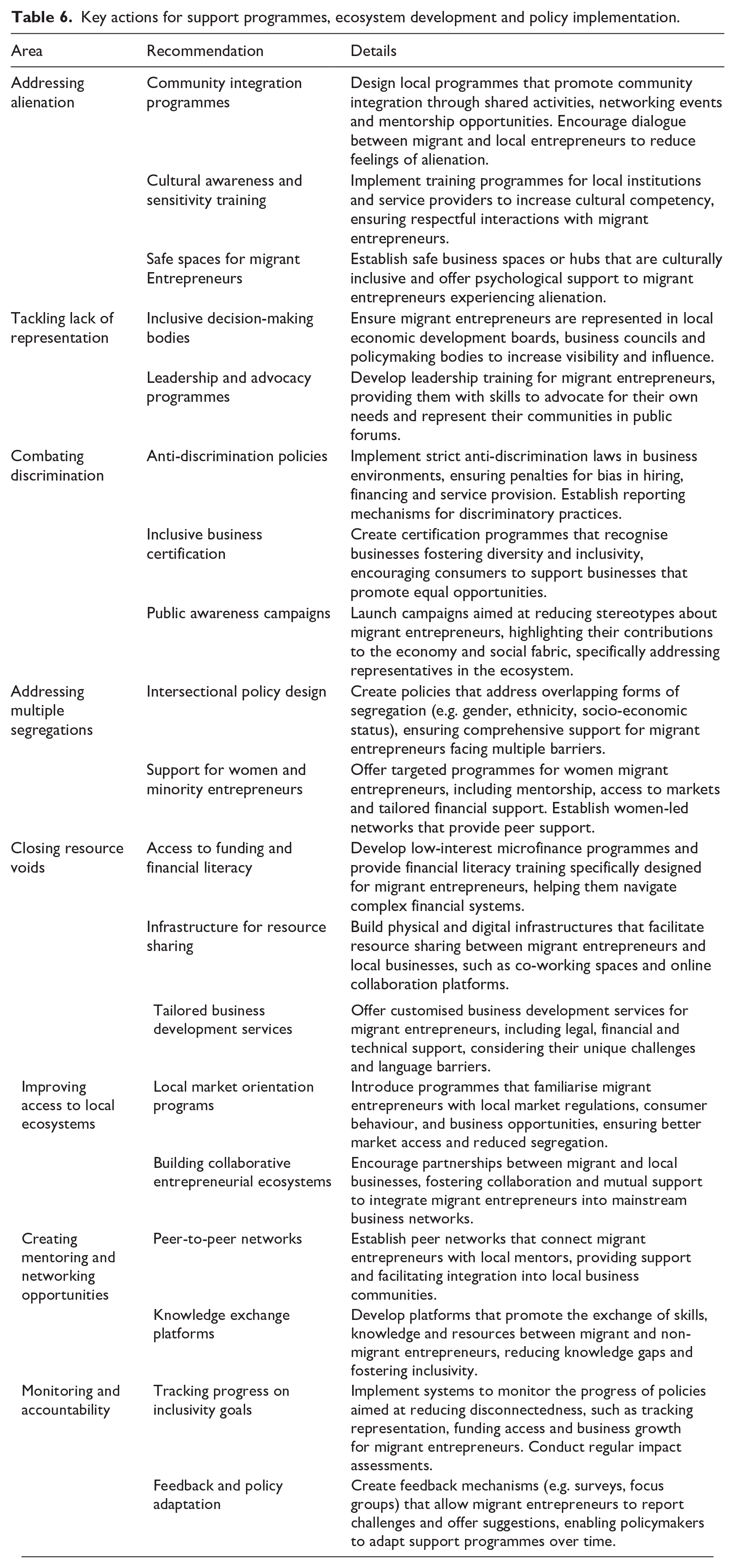
Footnotes
Funding
The author(s) received no financial support for the research, authorship and/or publication of this article.
