




Abstract
This study investigates how adults in the second half of life, both working and retired, actively manage their personal networks to support well-being as their social lives evolve with age. Between November 2022 and April 2023, 28 members of voluntary associations in Germany, aged 45 to 80 (mean age 62), participated in semi-structured interviews that included the construction of egocentric network maps. Using reflexive thematic analysis, two central themes were developed: the role of multiplex personal ties—relationships that combine multiple social roles such as friendship, caregiving, and neighbour—and the strategies individuals use to manage these networks. Multiplex ties were found to foster stability and reciprocal support, yet they can also be emotionally straining when marked by ambivalence. Retired participants often had smaller overall networks in comparison to working participants but maintained or even expanded their well-being-oriented networks, marked by fewer ambivalent relationships. The findings highlight the significance of proactive network management and the dual role of multiplex ties as both resources and potential stressors. Social participation, exemplified by engagement in voluntary associations, plays a critical role in helping older adults maintain meaningful relationships and counteract loneliness and social isolation.
Keywords
Being socially embedded is essential for both physical and mental health, particularly in later life (Holt-Lunstad et al., 2010). While the size of one’s social network signals available social resources, its composition is equally important, as different ties serve distinct functions (Agneessens et al., 2006).
Over the life course, social networks often shrink, especially in older adulthood (Bidart & Lavenu, 2005; Mollenhorst et al., 2014; Wrzus et al., 2013), yet older adults tend to frequently report greater satisfaction with their networks due to a higher proportion of emotionally close ties (Huxhold et al., 2020; Luong et al., 2011). This suggests that while peripheral connections may diminish over the life course, emotionally significant ties endure (English & Carstensen, 2014; Huxhold et al., 2020). Nonetheless, the processes through which individuals adapt to network changes, such as expanding, sustaining, or replacing ties, remain underexplored (Hollstein, 2023).
Although many relationships are initially formed by chance or circumstance, maintaining them requires intentional effort and active engagement. Studies show that a lack of opportunities for in-person interaction is one of the main reasons ties dissolve (Mollenhorst et al., 2014; Tulin et al., 2021). While the formation of ties is often circumstantial, maintaining them—and thereby fostering lasting relationships—requires individuals to make an active effort. This underlines the importance of agency in network maintenance: individuals must make conscious decisions to nurture their relationships and employ strategies to keep them active.
One potentially important but underexamined feature in this context is multiplexity, relationships that combine multiple social roles, such as being both a friend and a colleague (Mollenhorst, 2008; Verbrugge, 1979). Multiplex ties may be easier to maintain due to the variety of shared contexts they offer, increasing opportunities for interaction. However, they may also require renegotiation over time. For example, the retirement of oneself or others may remove one dimension of a tie (e.g. the workplace), requiring greater effort to sustain the remaining relationship. Moreover, multiplex ties can be emotionally supportive but also potentially stressful, especially when they are ambivalent. This paper investigates how socially active working and retired adults maintain and adapt their personal networks in ways that support their well-being. Although previous studies have described how networks shrink or transform over the life course, little is known about how older adults actively manage these transitions. This study addresses a significant gap in the literature by examining how middle-aged and older adults, particularly those who are socially active, proactively manage their personal networks to maintain their well-being. Rather than viewing changes to networks as passive consequences of ageing, we investigate how individuals strategically navigate their social networks to sustain meaningful social relationships. In doing so, we shift attention from decline to adaptation, contributing to a broader understanding of personal networks as dynamic resources shaped by older adults themselves.
Accordingly, this study addresses two research questions: (1) How do socially active middle-aged and older adults adapt or reorganise their personal networks in response to changing life circumstances? (2) Which practices and strategies do they employ to sustain social ties that promote their well-being?
Most previous studies have focused on core discussion networks, those with whom one discusses important matters, which typically capture emotionally close ties (Litwin & Stoeckel, 2014; Small, 2013). While valuable, this narrow focus overlooks other types of social relationships that contribute to well-being. Scholars have increasingly called for more attention to a broader set of ties, such as friendships, weak ties, and community affiliations, that support emotional and social health, particularly in later life (Fingerman et al., 2025). In response, this study introduces the concept of well-being networks to encompass a broader range of relationships and organisational affiliations that contribute to emotional and social well-being. These include not only strong and emotionally close ties, but also weaker or less frequent connections, organisational membership, and multiplex ties that may offer support through multiple social roles. Our empirical focus is on members of carnival clubs in North Rhine-Westphalia, Germany. These local organisations coordinate cultural events during the Carnival season, which runs annually from November 11 to February or March. Carnival is deeply rooted in the region’s cultural identity, celebrated through parades, music, costumes, and social gatherings that highlight local dialects, traditions, and community bonds (Niekrenz, 2011; Reiner et al., 2025). Importantly, these clubs go far beyond seasonal festivities. They demand significant voluntary engagement work and facilitate social involvement throughout the year (Niekrenz, 2011), for example, through summer parties, monthly informal meetups, and charity events (Steinhoff et al., 2024). These clubs are open to all, regardless of skills or health status, and are notably diverse in terms of age, education, occupation, and class (Reiner et al., 2025; Steinhoff et al., 2024). This setting offers a unique opportunity to examine both working and retired individuals within the same social setting, allowing us to explore how people across different life stages build, maintain, and adapt meaningful social networks in later life.
This study makes two main contributions. First, by examining both working and retired adults, we bridge midlife and later-life perspectives on personal networks that allow for comparison across life stages. Second, by conducting a qualitative social network analysis, we provide in-depth insights into the types, qualities, and functions of ties that support well-being. In doing so, we advance a more holistic understanding of how older adults sustain their social embeddedness and navigate transitions in later life through active network management.
Conceptual Framework
Network Change Across the Life Course
Over the life course, ageing-related transitions such as children leaving home, divorce, retirement, bereavement and declining health affect not only the size but also the composition of social networks (Ellwardt et al., 2015; Wrzus et al., 2013). These life events can disrupt existing relationships, foster new connections, or shift the intensity and function of existing ties. Research consistently shows that peripheral ties are more likely to decline with age, while close familial relationships tend to persist (Huxhold et al., 2020; Wrzus et al., 2013). Two key theoretical perspectives explain these changes: socioemotional selectivity theory (Carstensen, 1993) and the social convoy model (Kahn & Antonucci, 1980).
Socioemotional selectivity theory (Carstensen, 1993) offers a motivational explanation. It argues that as individuals age and become more aware of their limited time horizon, they prioritise emotionally meaningful relationships. This awareness influences time management, with younger adults focusing on making new connections and older adults prioritising relationships with people they already know and value. As a result, older adults are more likely to end relationships with individuals they feel less connected to, a process believed to enhance well-being. From this perspective, network reduction is not merely a consequence of loss, but a deliberate strategy to optimise emotional satisfaction (Carstensen, 1993; Hollstein, 2023).
In contrast, the social convoy model emphasises structural continuity and changes (Kahn & Antonucci, 1980). It conceptualises personal networks as convoys of relationships that travel with individuals across the life course. These networks are hierarchically structured: core ties (e.g. partners, children) tend to be stable, while peripheral ties (e.g. acquaintances, colleagues, neighbours) are more susceptible to contextual disruptions (Hollstein, 2023; Kahn & Antonucci, 1980). Changes in life circumstances, such as relocation or retirement reshape the outer layers of the convoy, while inner layers often remain intact (Antonucci et al., 2019). Together, these theories highlight both agency and constraint in later-life network change. While individuals make strategic decisions about whom to prioritise, their networks are also shaped by structural and situational forces. These theoretical perspectives also help contextualise the concept of well-being networks introduced in this paper. Socioemotional selectivity theory explains why older adults may prioritise emotionally rewarding relationships when constructing networks that support their well-being. The social convoy model highlights the layered and dynamic nature of such networks, in which core and peripheral ties serve different but complementary functions. By extending the focus beyond core discussion or kin-based ties, the concept of well-being networks captures a broader array of social actors, such as friends, acquaintances, organisations that contribute to emotional comfort, social engagement, or identity reinforcement. Understanding later-life networks through this lens allows us to better grasp how individuals navigate continuity and change in ways that sustain their well-being.
While these theories provide useful frameworks for understanding how personal networks change over the life course, their applicability is not universal. Norms around social support, emotional closeness, and the structure of social convoys vary substantially across societies and cultural contexts. For instance, definitions of kinship differ between cultures (Fuller et al., 2020). Research applying social convoy theory (Ajrouch et al., 2018) and socioemotional selectivity theory (Fung et al., 2008) in culturally diverse settings highlights the importance of contextualising social network dynamics within broader cultural frameworks.
Ties, Role Transitions, and Network Management for Well-Being
While ageing is often associated with network loss, it is crucial to recognise that not all relationships are equally beneficial for well-being. Some ties remain persistently difficult or ambivalent, particularly when they are embedded in inescapable contexts. For example, while retirement may bring relief from strained work-related ties, close family relationships can remain emotionally demanding and harder to navigate (Offer & Fischer, 2018). Ambivalent ties, those marked by both positive and negative interactions are particularly significant in later life, as they can cause emotional strain and diminish well-being (Offer, 2021; Rook & Charles, 2017). The persistence of such ties highlights that quality of relationships and not just their presence matter deeply for individuals’ mental health and overall well-being, as they can be sources of stress and emotional strain (Offer, 2021). Changes in personal relationships are often driven by shifts in individuals’ social environments. Everyday social contexts, such as workplaces, community organisations or neighbourhoods serve as arenas for social interactions and influence who enters, remains in or exits one’s network (Feld, 1981; Mollenhorst et al., 2014). The concept of multiplexity helps to illuminate how relationships differ in depth and complexity.
Relationships involving multiple roles, such as being neighbours and friends, are termed as ‘multiplex’, while those defined by a single role, such as being only neighbours, are termed ‘uniplex’ (Mollenhorst, 2008; Verbrugge, 1979). Multiplex ties typically involve more frequent contact and greater emotional closeness due to the overlap of social roles and shared settings. These ties are often more stable and enduring, particularly in times of transition such as retirement (Mollenhorst, 2008), and can serve as important sources of resilience and reciprocal support. However, multiplex ties can also be more difficult to manage (Verbrugge, 1979). Their entanglement across life domains can intensify emotional demands and make them harder to end, especially when they become ambivalent (Offer, 2021; Verbrugge, 1979). Retirement provides a good example of how a typically multiplex relationship, such as a colleague who is also a friend, can shift to a uniplex form, retaining only the friendship. As a major life course transition, retirement reshapes the structure and composition of personal networks. As professional contacts dwindle, older adults often reallocate time and energy toward family, friends, and leisure-based ties. Thus, retirees can allocate their time to relationships that hold greater emotional significance (Kauppi et al., 2021). While initial network shrinkage is common immediately after retirement, one longitudinal study suggests this reduction is temporary, with network expansion resuming within 6 to 18 months (Kauppi et al., 2021). This reflects older adults’ capacity not only to preserve emotionally significant ties but also to actively seek out new ones.
The literature increasingly recognises older adults as strategic actors in maintaining and adapting their networks. Strategies such as reaching out to new acquaintances, deepening existing ties, and withdrawing from burdensome relationships reflect a dynamic process of network management (Broese van Groenou et al., 2013; Cornwell et al., 2014; Van Tilburg & Broese van Groenou, 2002). Moreover, different types of ties serve different needs: friends often provide emotional support, while family members typically offer instrumental help (Blieszner et al., 2019; Miche et al., 2013). Ties formed in voluntary associations, religious communities, or neighbourhood settings also contribute meaningfully to emotional well-being and social integration, sometimes more so than kin ties (Pinquart & Sorensen, 2001). In essence, maintaining a diverse personal network is vital for older adults, as it mitigates the risk of social isolation and ensures access to essential support for autonomy and well-being.
In this context, the present study pays particular attention to how working and retired adults differentially manage their networks to promote well-being. While retirees may focus more on leisure- and family-oriented ties, working adults often continue to engage with professional networks. Understanding how each group adapts their networks in response to changing needs and opportunities offers new insights into the active role of personal agency in later-life well-being.
Research Design, Methods and Sample
This study employed a qualitative social network analysis approach to explore not only the structural but also the functional characteristics of personal networks (Bilecen, 2021; Sommer & Gamper, 2021). Unlike quantitative social network analysis, which focuses on numerical measures of relationships, qualitative social network analysis seeks to uncover the meanings, interpretations, and experiences behind those social ties. It typically combines qualitative interviews with the collection of egocentric networks, often using visual network maps or name generators (Bellotti, 2016; Bilecen, 2021; Sommer & Gamper, 2021). This approach allows researchers to capture not just who is connected to whom, but also how individuals interpret, sustain, and strategically manage their relationships over time. By focusing on lived experiences, this method enabled an in-depth understanding of how individuals navigate and sustain network changes over time. Semi-structured network interviews were conducted with members of carnival clubs in North Rhine-Westphalia, Germany. The first author, who had no prior affiliation with these clubs or formal volunteering, carried out the interviews in person between November 2022 and April 2023. Participants provided written informed consent, and the study received ethical approval from the University of Cologne (reference 220036LE).
For data collection, we set a minimum age of 40 years, in line with the German Ageing Survey (DEAS). This age threshold allowed us to capture adults approaching midlife as well as those in the second half of life. In 2023, life expectancy at birth in Germany was 83.3 years for women and 78.6 years for men (Statistisches Bundesamt, 2024). At the time of data collection, the standard retirement age in Germany ranged from 65 years and 10 months to 67 years, depending on birth cohort (Deutsche Rentenversicherung, 2022), situating many of our participants in the transition to retirement or in the early retired phase.
Characteristics of the Participants
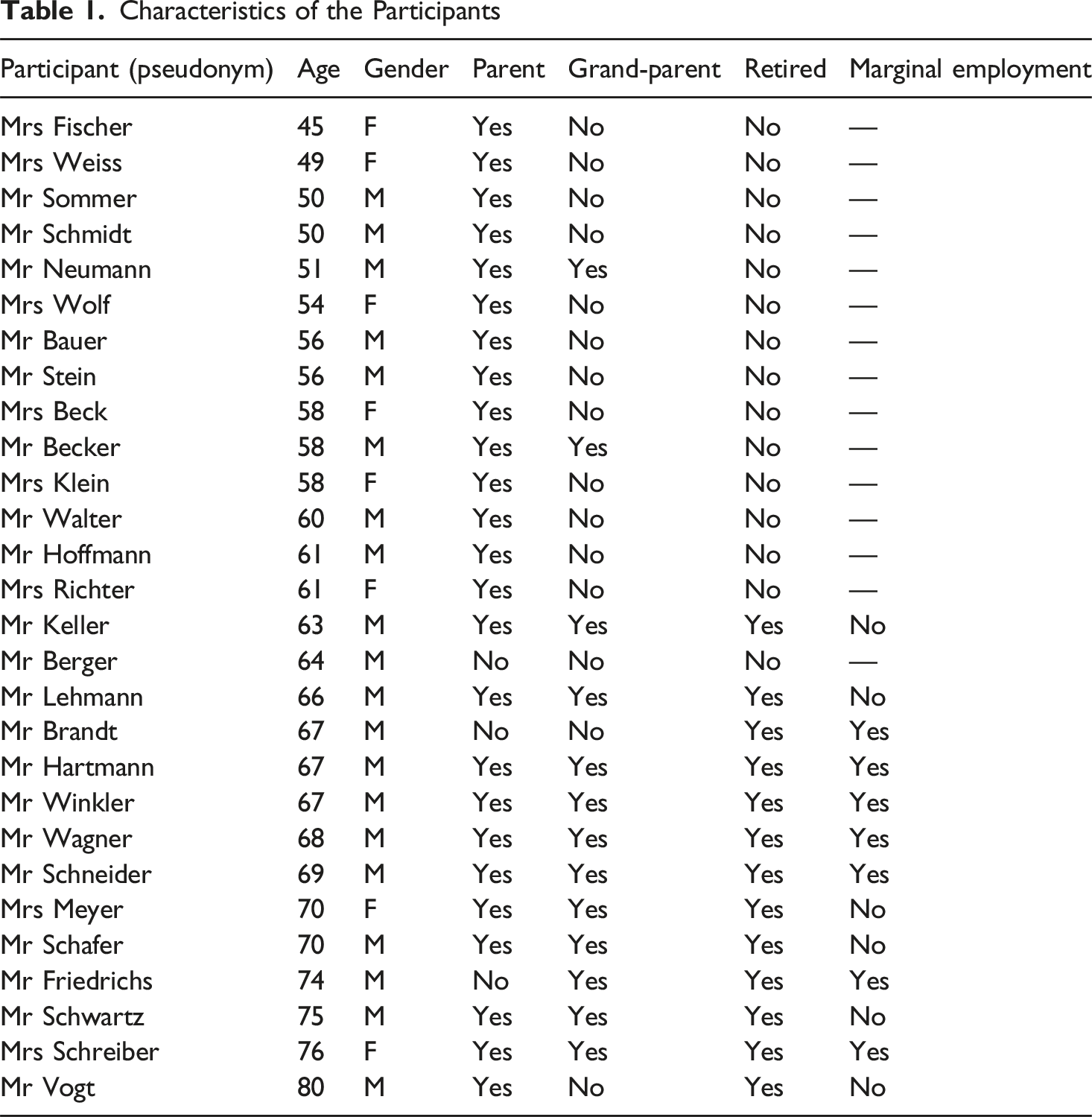
During each interview, participants created an unstructured egocentric network map (Hollstein et al., 2020), allowing for a detailed analysis of their interpersonal relationships. In these egocentric network maps, the participant occupied the central position (the ‘central ego’), with lines connecting them to each contact (the ‘ego–alter ties’) and lines representing relationships among the contacts themselves (the ‘alter–alter ties’).
Visualising these networks offered participants a comprehensive view of their social environments, prompting reflection on both ego–alter and alter–alter relationships (Marsden & Hollstein, 2023; von der Lippe & Gamper, 2017). Such sociograms thus serve as cognitive aids, revealing complex social structures and facilitating a deeper understanding than verbal responses alone (Ryan et al., 2014; Tubaro et al., 2016). The interview guide included questions on well-being, social contacts, alter–alter relationships and the role of social clubs (Steinhoff et al., 2024). Instead of using a conventional name generator based on ‘important matters’ or emotional closeness, participants were asked to list individuals or groups that contributed to their well-being in any form. This broader prompt aligned with our conceptual focus on well-being networks and captured ties not typically included in core discussion or confidant networks.
Network maps/sociograms were constructed using paper and sticky notes, with participants writing the names of individuals and organisations on notes of varying sizes (indicating perceived importance) and positioning them in relation to the central ego (based on contact frequency) during the interviews. Lines were drawn to indicate whether alters knew each other. This paper-based method, rather than a digital tool, was selected to encourage a more spontaneous and interactive process, particularly suitable for older adults (Ryan et al., 2014; Tubaro et al., 2016). Three participants opted not to draw maps, one due to impaired vision, and two preferred a verbal-only format. Participants reflected on their network structures during the interview, described changes over time, and explained the roles and meanings of specific ties. The open and flexible format allowed diverse mapping strategies, including clustering by relationship type or temporal sequence (Marsden & Hollstein, 2023). Qualitative egocentric network interviews proved to be highly beneficial. The interviews were dynamic and interactive, creating an engaging interview situation. Participants frequently mentioned that they enjoyed the activity and found developing their network maps interesting, with a few even photographing the results. Many participants reported that the mapping exercise facilitated memory recall and prompted additional insights during the conversation.
After the interviews, the network maps were digitised using VennMaker (Gamper et al., 2012) to ensure consistency, enhance comparability, and enable visual differentiation between types of alters. This was done primarily to organise the visual data in a way that would allow for clearer and more systematic comparisons between participants. Although the initial maps were created on paper to reduce technical barriers, particularly for older participants, digitising them offered several advantages. For instance, it allowed us to anonymise the information by replacing names with roles or categories, thereby helping to protect participants’ privacy. Names were anonymised and replaced with roles (e.g. ‘neighbour’, ‘club member’), and shapes were used to distinguish individuals (circles) from organisations or institutions (squares). While emotional valence (e.g. positive, ambivalent) of ties was not formally recorded on the maps, such qualities were discussed in the interviews. Throughout the digitisation process, we aimed to remain as faithful as possible to the participants’ original designs, preserving the relative placement and size of the sticky notes, as well as any evident clustering.
Analysis Protocol
All interviews were audio-recorded and transcribed verbatim. The paper-based network maps were subsequently digitised by the first author using VennMaker, with interview data integrated to inform the analysis. While the visualised maps allowed for systematic comparison across participants, we intentionally refrained from calculating formal network metrics (e.g. centrality). Instead, our focus remained on participants’ subjective interpretations and the social meanings embedded in their networks. The digitisation process facilitated pattern recognition, such as clustering, bridging positions, or isolation, which were then explored through qualitative analysis. Although the digital versions may not fully capture the original logic behind participants’ layouts, integrating visual and verbal data strengthened the consistency and depth of the cross-case analysis.
We employed reflexive thematic analysis following Braun and Clarke’s (2021) six-phase framework to identify patterns and develop themes across the data. Interview transcripts and network maps were first reviewed to gain an initial overview of the data. The first author conducted line-by-line coding using MAXQDA, drawing on both inductive and deductive approaches. The second author independently reviewed and coded portions of the material, contributing further interpretation and ensuring analytic reflexivity. Our personal and academic backgrounds informed our interpretations and introduced some elements of theoretical reasoning. The first author, having grown up in North Rhine-Westphalia, brought an insider perspective on regional carnival culture, while the second author, unfamiliar with this tradition, contributed an outsider perspective. These complementary positions enriched the interpretation of the data. Joint analysis sessions allowed the first author, who had conducted the interviews and was familiar with the participants, to gain analytical distance, while also providing cultural and contextual insights to the second author. This collaborative and reflexive process strengthened the depth and rigor of the analysis. Moreover, our disciplinary backgrounds in health sciences and sociology informed our reflexive approach and were sharpened through feedback from multiple disciplinary academic audiences.
Together, we refined semantic and latent codes and developed thematic maps to structure the findings. Initial themes were further discussed and refined through feedback from presentations at colloquia and three research conferences. All quotes were translated from German into English by the first author. The first author discussed the translations with native English-speaking researchers fluent in German to ensure accuracy in conveying nuances like slang. The project team reviewed the translated interviews to verify that the intended meanings were preserved.
Results
Overview of Themes and Their Social Functions
Multiplexity of Personal Network Ties
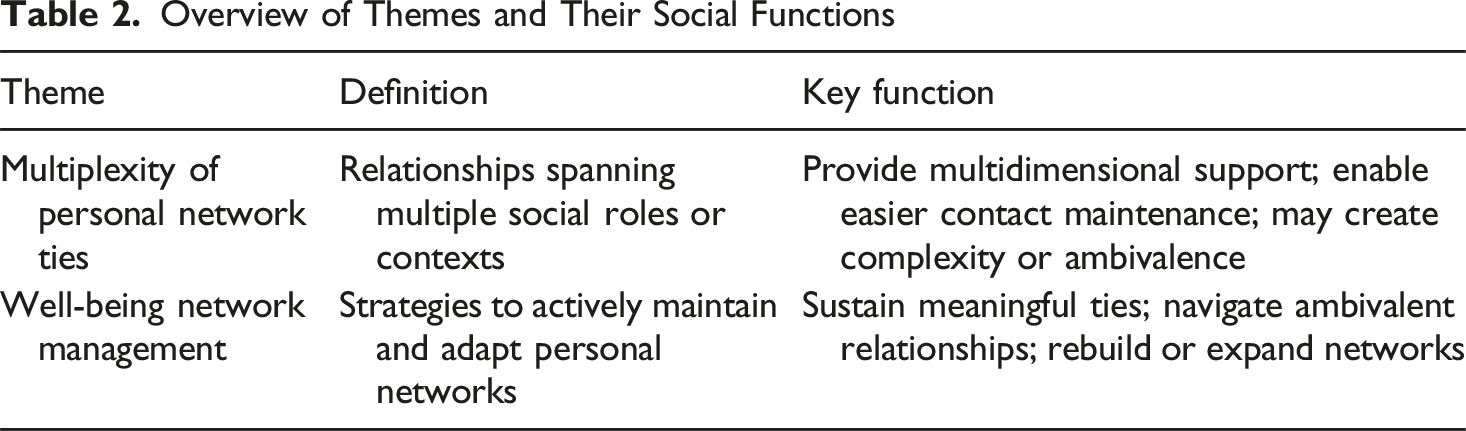
The theme ‘multiplexity of personal network ties’ refers to relationships that span multiple social roles (such as being both a neighbour and a friend), which can provide diverse types of social support due to the overlapping contexts of these roles. In our study, many participants described well-being-enhancing relationships—both kin and non-kin—that were distinctly multiplex. These ties offered various multidimensional support and were often rooted in everyday interactions across work, family, and voluntary associations. Multiplex ties have distinct advantages: They facilitate easier contact maintenance, as individuals in such relationships interact in multiple contexts and therefore have more meeting opportunities (Mollenhorst et al., 2014). Moreover, multiplex ties can provide support across various dimensions. For instance, a colleague who is also a friend may offer both emotional and informational support. Multiplex ties, such as those described by Mr Berger (64, working), often developed from overlapping professional and personal experiences: [Friend 1], […] whom I met ten years ago, through my business partner […]. And that’s how a friendship developed, not just in business, but also in private life. And we talk about things that you wouldn’t normally tell everyone, because we spent many hours in the car driving to [city 1] or [city 2], where we always had a lot of free time.
When shared contexts dissolve through retirement, relocation, or changing life stages multiplex ties can become uniplex. When the original shared roles cease to exist, therefore, maintaining such relationships becomes more challenging, necessitating increased effort. For instance, Mr Keller (63, retired), joined his former hometown’s carnival club to preserve long-standing friendships after relocating to another city: And that was mainly to keep in touch with friends from childhood, with friends we had back then […]. You didn’t have to… you used to see them every day. And to maintain contact there. That’s why. That’s how it all came about. That was always a reason to say, now we’re going back to [hometown] or to this or that, we’ll meet the old people there.
Among the retirees, 7 out of 13 continued to work part-time on a marginal basis. These participants stressed that one benefit of this arrangement was the ability to maintain connections with colleagues and clients. Maintaining geographically distant kin relationships also required effort, especially when children move away. Mr Schafer (70, retired) maintained regular contact with his grandchildren via scheduled weekly FaceTime calls: One family lives in [federal state], but we talk to each other every Sunday at 5 p.m. via FaceTime, and we make sure that we see each other every four to six weeks. So that is very important to us, so we drive the 400 kilometres there and back because it is very, very important to us. […] Just having contact once a week via FaceTime, and that is a regular meeting, nothing can beat that.
However, multiplex relationships can also have distinct disadvantages as they layered nature posed challenges: When a multiplex tie became strained or ambivalent, disentangling oneself was more difficult due to the overlapping roles and dependencies. Individuals who occupy two distinct roles, such as being both a fellow carnival club member and a colleague, or both a parent and a colleague, may encounter difficulties in managing ambivalent relationships. Participants indicated that they had developed effective strategies for handling family conflicts, but dealing with ambivalent ties that spanned multiple roles proved notably more challenging.
This was evident in Mr Hoffman’s (61, working) relationship with his son, who was taking over the family business. Divorced and remarried, he operated his own company, where conflicts occasionally arose with his son, who was taking over. In his own words: Family is difficult. My son is now taking over my business. There are things that are simply different across generations, that I see differently. And then you discuss things with your little son.
His company held significant importance for his well-being. Mr Hoffman was actively involved in various community roles: he volunteered at the carnival club, participated actively in church activities and served on the church’s steering committee, which involved a substantial commitment. Mr Hoffman’s network map (Figure 1) included only his wife, family, company, and volunteering, despite his extensive social interactions. His experience highlights how even a wide network can centre around multiplex ties that are emotionally and functionally complex. Mr Hoffmann’s network map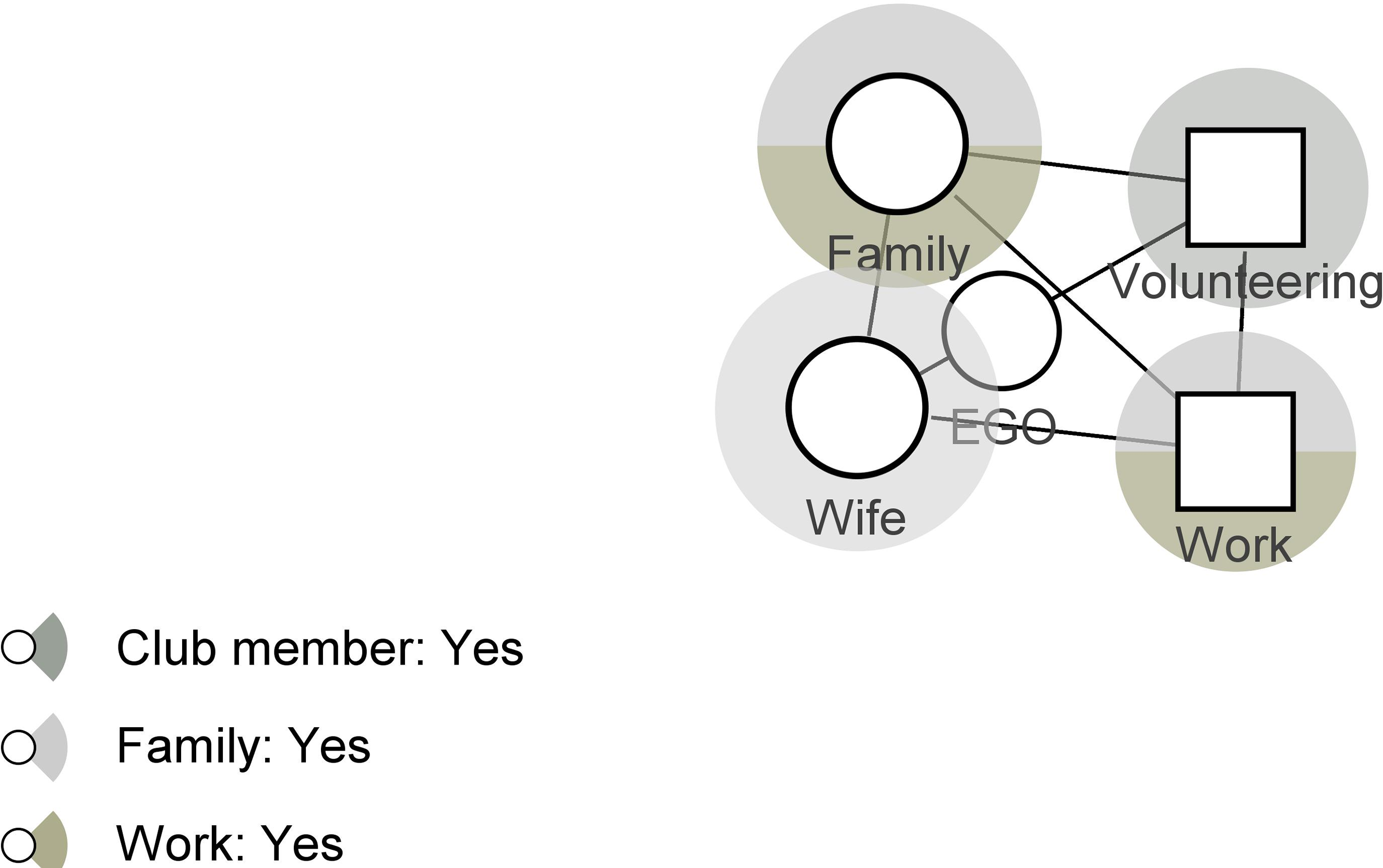
Mrs Richter’s (61, working) personal network exemplifies the complexity of multiplex relationships.
For instance, she described a long-term relationship with her boss that blended professional and personal domains (person 2): And the [person 2], for example, is… yes, actually, he’s my boss, so he’s a man I’ve worked with for many, many years and… But over time we’ve become closer and closer. So we also talk about a lot of books and… give each other book recommendations. I talk to him a lot – and I see him almost every day. So he’s simply a permanent fixture in my everyday life.
Her personal network map (Figure 2) illustrated this multiplexity, combining family responsibilities, such as caring for two chronically ill adult children, with strong workplace ties. Mrs Richter was married and had two grown-up children with chronic diseases who required significant attention. Her husband occupied a stepfather role for her children, who no longer lived with her. She maintained a close relationship with her sister. Her work brought her considerable satisfaction and inspiration, with colleagues forming a crucial part of her well-being network. In addition to the close bond with her boss described above, she shared quality time with another colleague, whom she considered a friend (person 4). Although she had an ambivalent relationship with a colleague (person 3), this tie remained central in her network: Um, this is the person who […] is a key contact person when it comes to [the job] […] and a very educated woman. I can’t say that I don’t like her, but she is very complicated and doesn’t have a lot of empathy. Mrs Richter’s network map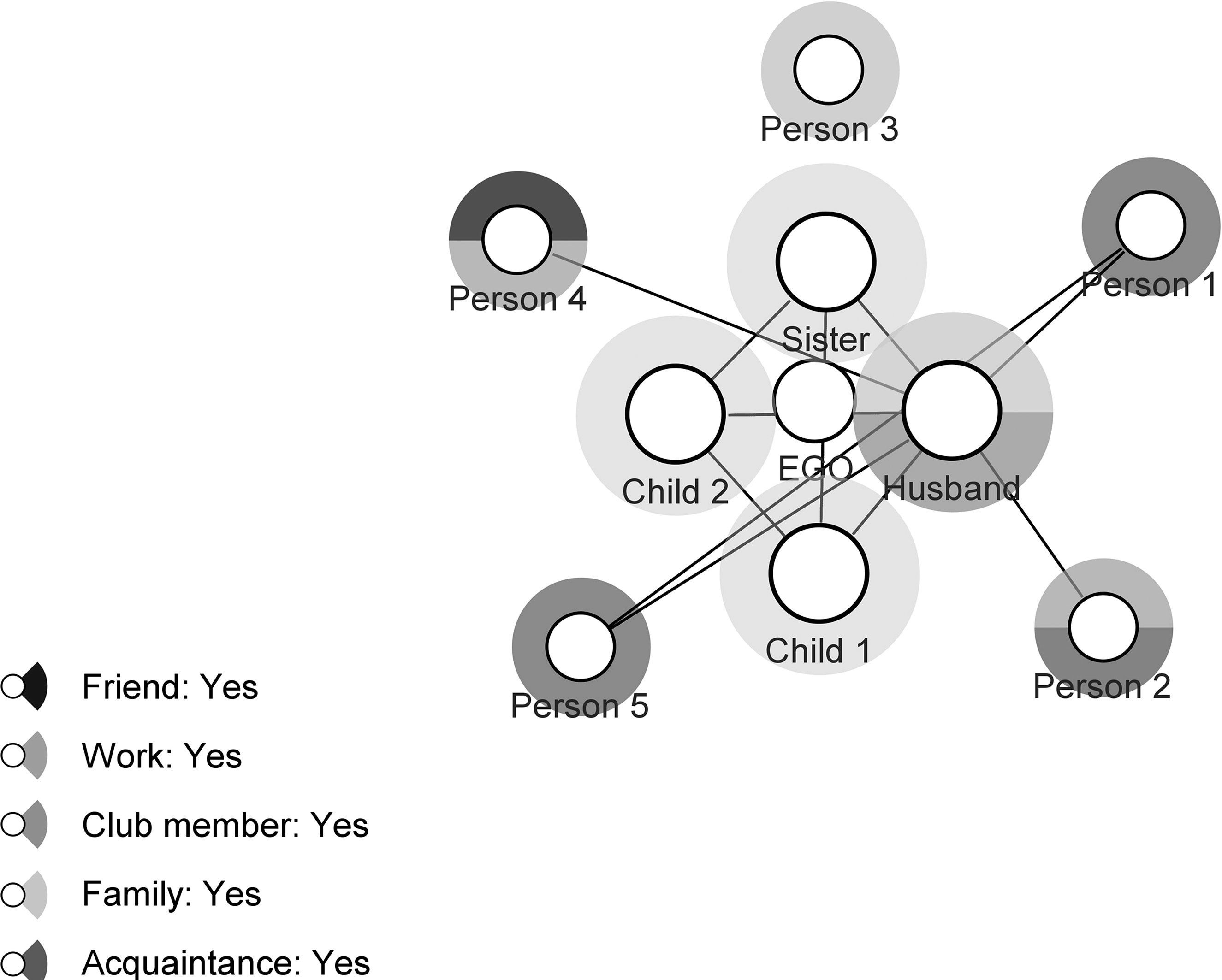
Mrs Richter and her husband cultivated close friendships with other couples, with whom they were emotionally connected. Her husband was actively involved in the carnival club, where both he and Mrs Richter served on the steering committee, which involved a substantial time commitment. Mrs Richter emphasised that having this multiplex relationship with her husband was important for her well-being.
Across participants, multiplex ties proved vital for well-being, as they supported emotional connection, offered diverse forms of support, and ensured continuity across life domains. However, they also demanded more negotiation and maintenance, especially when embedded in emotionally ambivalent or logistically challenging contexts. The interplay of geographic proximity, contact frequency, and shared life spheres shaped how such ties functioned within individuals’ broader well-being networks.
Well-Being Network Management
The theme ‘Well-being network management’ refers to the proactive strategies individuals employ to navigate and sustain their personal relationships for the personal well-being. These strategies include maintaining meaningful ties, negotiating ambivalent relationships, and expanding or reshaping networks in response to life transitions. The theme highlights that participants’ agency: rather than being passive members of their social environments, they actively reflected on and cultivated relationships to enhance their well-being. Strategies included rebuilding connections after disruptive events such as relocation or retirement, managing ambivalent ties through agreements or compromises, and sustaining long-distance relationships via regular contact.
Some participants described deliberate preferences for certain types of relationships. For example, Mr Sommer (50, working) expressed a conscious decision to avoid close friendships in favour of more casual connections, which he found less demanding: There are no friends here, either. I prefer to use the term “people” or “folks” or “acquaintances”. With friends, it starts again, with expectations, with constraints, with quirks, with foibles that you have to put up with each other, with, with the same stories that people tell over and over again. […] Yes, and, and that’s something I can’t deal with. So then I meet up with people, I prefer to have a certain non-commitment in my life. […] No, no. I don’t need friends to be happy. I need different people to, to be happy.
Others described maintaining a manageable number of close ties. Mr Becker (58, working) explained that he limited the number of friendships to ensure adequate attention to each: I have a theory: you can’t have more than five or six friends. […] If it gets too much, nothing will happen. The other relationships suffer, then it’s not good for anyone. And that’s why I think there are different types of relationships for everyone with their own abilities. There’s a kind of… everyone has a capacity. If you try to manage too many friends, then you’ll be in trouble.
Participants demonstrated a proactive approach to maintaining their social connections, actively employing strategies to stay in touch, especially with those who lived far away. Many had adopted consistent practices such as biannual vacations, weekly phone calls or daily voice messages to sustain their social ties. For Mrs Fischer (45, working), these regular exchanges significantly enhanced her well-being: So I talk to [friend 1] for 25 min every morning. When I’m in the hula hoop, she talks to me, always in three-minute intervals, like my day before, and vice versa. We both have children, roughly the same age. What a mess you had with your son and what worries and troubles. And that’s how the day starts in the morning, once you’ve got all the baggage off your chest.
For participants who experienced disruptions, such as relocation, career demands, or retirement, joining local social groups like carnival clubs served as a deliberate strategy for re-establishing connections. Mr Lehmann (66, retired), noted that after years of professional travel, his involvement in the carnival club helped rebuild a social circle: But then, about 30 years ago, I went into the sales force and was travelling from Monday to Friday and sometimes over the weekend in some German city or Austria, somewhere where I had work to do, so I wasn’t there within the family either. Of course, I kept in regular contact with my wife by phone, and also with my son, of course. But you quickly lost friends […]. Some stayed, but I would say that the extended circle became smaller as a result. That’s quite clear, because you’re no longer as present. The fact that I joined the carnival club again, I think eight years ago, meant that I got to know new people again. That was also very good for me personally in terms of the future. […] So, and I think now that you have time, everything is expanding again. So, you make more friends again.
Working participants had limited time for social relationships, which hindered their well-being. Upon retirement, they hoped to have more time for meaningful connections. Retirement often led to changes in the size of the general network. However, most well-being networks remained stable or even expanded, as retirees focused on emotionally meaningful relationships. The additional time and energy available after retirement enabled many to strengthen or rekindle social ties.
Mr Brandt (67, retired), actively managed his personal network to improve his well-being. He described a strong bond with his wife, deepened by their experience of involuntary childlessness. He prioritised her family over his own and maintained close ties with their seven godchildren, with whom they vacation annually. Valuing friendships with other childless couples, he linked major changes in his network to his previous role in a multinational corporation, where frequent international travel limited his social life. After starting his own business, he gained more time for social connections. Now semi-retired, he highlighted a shift from professional to private life, marked by deeper friendships and greater availability for others: My network has intensified somewhat in the last few years, because the professional colleagues have decreased. In other words, the… I used to be in the company, and I was always away. […] My wife always went to birthdays alone because I wasn’t there. In other words, that has shifted over the years. […] In this respect, well-being has increased in the same space, because I hadn’t defined well-being in terms of my job, my profession, but actually in terms of my private life. […] I left the corporate environment 15 years ago to become self-employed. […] So you could say that my, my, the, the intensity of meeting up more with friends, helping them, taking them somewhere by car if they need it, which I was never able to do before, that’s been the case for about 1¼ years.
His network map (Figure 3) illustrates this expansion. Mr Brandt’s network included his wife, godchildren, neighbours, and carnival club members, with multiplex ties connecting various roles, for example, a cousin who was also a close friend, father to a godchild, and fellow club member. Mr Brandt’s network map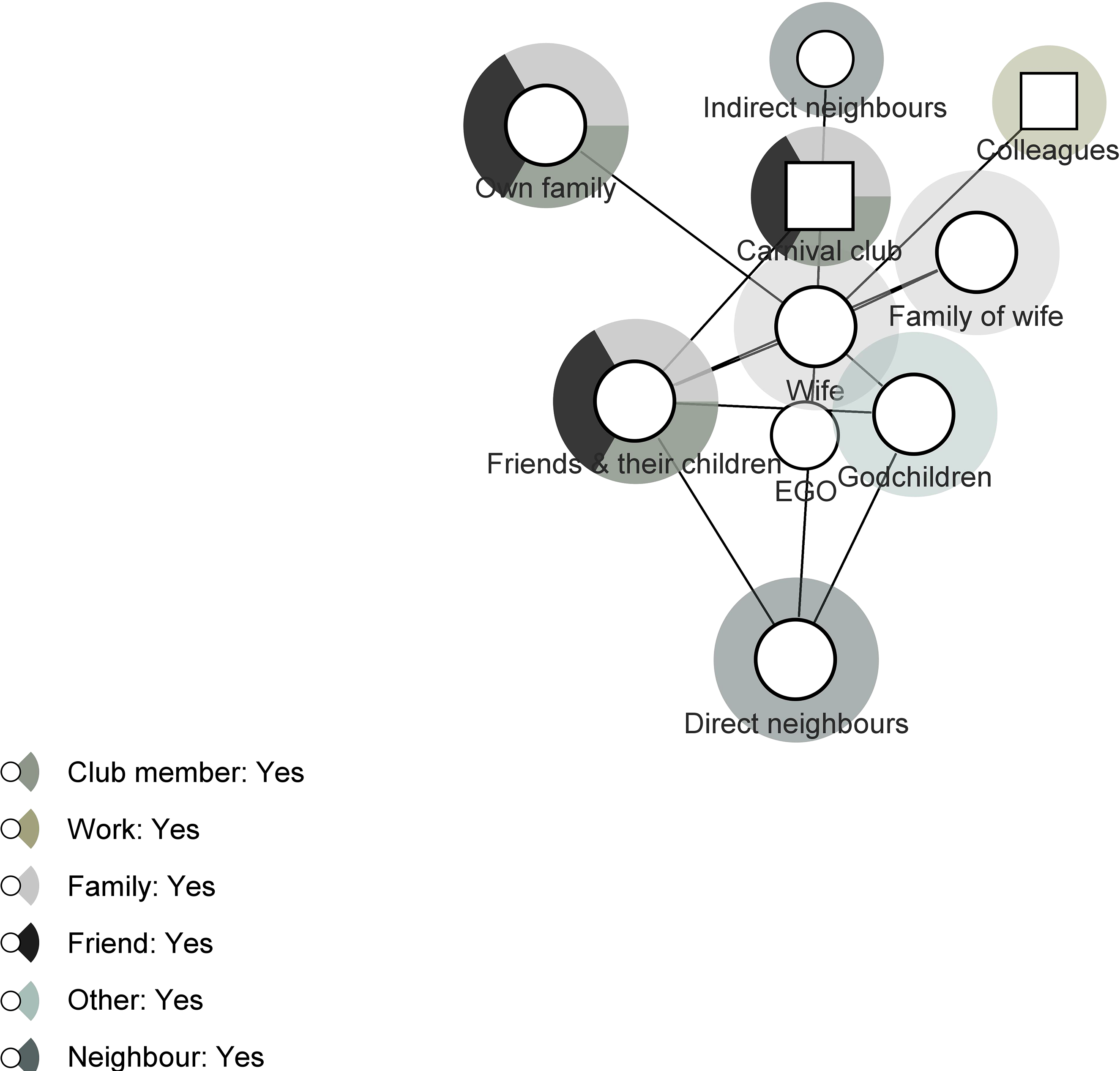
By actively changing his circumstances and personal network through a job change and subsequent retirement, Mr Brandt reduced contact with peripheral ties such as colleagues and increased his interaction with emotionally close, significant ties, thus enhancing his well-being. Joining the carnival club was an important move that enriched his well-being network, providing meaningful friendships and involvement in the steering committee. During a natural disaster that affected his home, members of the carnival club offered invaluable support, while his personal network, including family, godchildren and neighbours, also rallied to assist him. His neighbours played a crucial role in his network, contributing significantly to his overall well-being.
Managing ambivalent relationships, particularly within families, emerged as a central aspect of network maintenance. Participants employed various strategies, such as establishing agreements or compromises, to navigate ambivalent family ties. Ambivalent non-kin relationships were managed through open discussions and compromise, with termination considered only as a last resort if stress levels became overwhelming. Retired participants had fewer ambivalent relationships, both in their direct relationships and among alter–alter connections, compared to working participants.
Mr Schneider (69, retired) illustrated how ambivalent relationships are managed in both kin and non-kin contexts. Married with two adult children, he remained minimally active in his previous job, which he found fulfilling and essential for his well-being. Maintaining two residences during his career had made it difficult to establish a stable circle of friends. Joining a carnival club offered him a pre-structured social context: Because I basically had these two focal points in my life, it was difficult to build a normal, let’s say, social organisation around myself, a circle of friends, etc. Simply because you weren’t there and because you couldn’t… And basically, that was one of the main arguments back then, to just look at it, to do it and say, yes, I have a circle of friends that is organised secondarily, so to speak. Where you don’t have to do everything yourself.
Mr Schneider’s well-being network map (Figure 4) revealed several clusters including family, work, and the carnival club, with his wife as the only person connected to all. An important isolated connection was Mr Schneider’s sports trainer, who played a vital role in both his and his wife’s well-being. Mr Schneider’s network map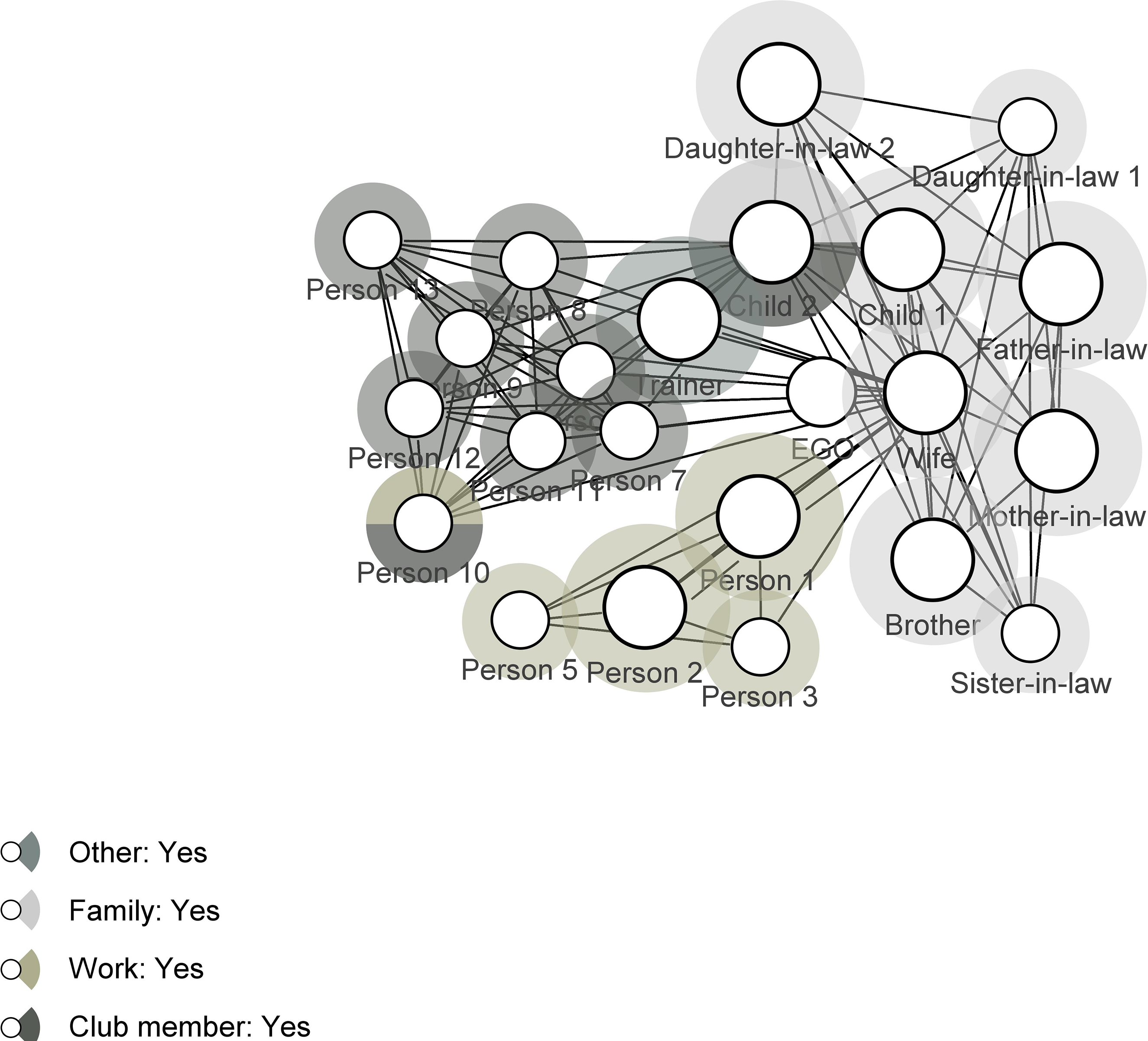
While some relationships within this context might be ambivalent, their lesser importance meant that they did not significantly impact Mr Schneider’s overall well-being. A particularly interesting multiplex tie was with person 10, a fellow club member and professional collaborator. Though he characterised this relationship as ambivalent and requiring caution, he chose to maintain it: The most interesting case, from my point of view, would be [person 10], […] in the environment between here, between the carnival club and the professional one, because on the one hand, we do a lot together. But in terms of perception, he falls into the category of the cunning rascal. So you never know exactly what is really on his mind. Especially when it comes to professional projects, etc. […] So he is someone who, on the one hand, it is certainly interesting to do things, but with whom I exercise extreme caution, especially when it comes to professional, business matters, because you cannot predict what will actually happen in the end.
Maintaining contact with this individual, however, was important to Mr Schneider, and he wished to preserve their relationship. Additionally, his work relationships contributed significantly to his well-being. His closest colleague (person 1), with whom he had frequent interactions during his career, had also relocated to North Rhine-Westphalia, where Mr Schneider resided, facilitating easier communication.
For Mr Schneider, the most pivotal person in his life was his wife. His sons were also important for him; though his relationship with one son (child 1) was strained, resulting in minimal contact. This strain was exacerbated by conflicts with his daughter-in-law (daughter-in-law 1), with whom he and his wife shared an ambivalent relationship: The relationship with the daughter-in-law is just still relatively new. So, let’s say, they only got married this year, have been together for about two years now. It was very positive at the beginning, even during the Corona period, but it changed massively this year with the wedding. So. We have to see, let’s say, psychological factors also play a role. And who is actually in charge and so on. Family structures have to come together somehow, we will have to wait and see.
These difficulties adversely affected Mr Schneider’s well-being, as well as that of his wife: Well, it just dampens the mood. […] Especially because it puts more strain on my wife’s well-being than it does on me. […] That is more difficult, especially when it comes to my daughter-in-law.
Regarding family dynamics, Mr Schneider also referred to challenges in his relationship with his sister-in-law, mentioning that they had found a way to manage the situation. His personal network serves as a notable example of navigating difficult and ambivalent ties within a family. While his relationships with his daughter-in-law and sister-in-law were characterised by ambivalence, they remained significant to him, meriting inclusion in his well-being network map.
Participants generally adopted active strategies to maintain, adapt and enhance their relationships, particularly during life transitions such as retirement. Retirees generally had greater flexibility to prioritise emotionally meaningful relationships, whereas working adults often had to navigate ambivalence and time constraints. In terms of tie compensation, the loss of long-standing relationships through death was identified as a shared challenge. Participants emphasised how challenging it was to replace such relationships.
Discussion
This study explored how working and retired adults maintain and adapt their personal networks to support well-being. By focusing on socially active individuals, we were able to examine in depth the strategies they use to manage their networks. Understanding these processes is especially relevant for adults in the second half of life, as transitions like retirement reshape the structure, composition, and opportunities within personal networks. While previous research suggests that the network size does not necessarily decrease with retirement (Broese van Groenou et al., 2013; Cornwell et al., 2014), our findings highlight the active strategies that enable this stability.
Through egocentric qualitative social network interviews, we identified two closely linked themes in the network management of adults in their second half of life: multiplexity of personal network ties and well-being network management. These themes illuminate both the opportunities and challenges individuals face in sustaining meaningful social connections. Multiplex ties often provide convenience and emotional richness but can also create complex obligations. Ambivalent multiplex ties are particularly challenging, spanning multiple life domains. Thus, well-being network management involves maintaining positive (multiplex) ties while navigating or redefining ambivalent or difficult ones that cannot easily be avoided.
Many participants’ well-being networks included multiplex relationships, which made maintenance inherently easier. The literature emphasises that tie maintenance depends on both circumstantial meeting opportunities and the effort individuals invest when such opportunities are lacking (Mollenhorst et al., 2014; Tulin et al., 2021). In our study, participants actively created new shared contexts—such as joining a carnival club—to preserve or re-establish multiplex ties. These shared activities often enabled effortless, routine contact, making friendships easier to sustain. Although research often emphasises the positive effects of multiplexity (Verbrugge, 1979), our findings also reveal its potential drawbacks. For instance, some participants worked alongside family members, blurring personal and professional boundaries. When a multiplex relationship becomes ambivalent or strained, it is often harder to manage than a similarly strained uniplex tie. This is because multiplex relationships involve overlapping contexts and more frequent interaction, making it more difficult to distance oneself or disengage. This implies that a previously beneficial resource can thus become a source of emotional strain. In this way, multiplexity can act as a double-edged sword, enhancing social support in some cases while complicating tie management in others.
Many participants described navigating relationships that were emotionally meaningful yet occasionally demanding. Rather than severing such ties, they tended to adjust expectations, negotiate compromises, or establish informal arrangements, particularly within family relationships. Socioemotional selectivity theory posits that older adults limit emotionally draining interactions, yet disengaging from multiplex relationships—particularly those spanning family and work—is difficult. These ties often persist due to necessity, obligation, or shared routines (Offer & Fischer, 2018). Research suggests that older adults often encounter more challenging family dynamics than younger adults, and family relationships are typically harder to dissolve than non-kin relationships (Offer & Fischer, 2018).
‘Well-being network management’ reflects how individuals navigate these challenging ties without necessarily dissolving them. Participants actively reshaped their social worlds by adjusting the terms of engagement rather than ending relationships entirely. For instance, retirement sometimes provided opportunities to reduce contact with difficult workplace ties, contributing to a more satisfying network in later life. However, family ties remained largely intact, even when ambivalent. Most participants described ambivalent rather than difficult relationships, consistent with socioemotional selectivity theory and the social convoy model. These relationships were not overtly conflictual but rather complex, combining affection, duty, and occasional strain. This pattern highlights how later-life transitions can prompt the deliberate restructuring of personal networks to enhance emotional well-being, prioritising close emotional ties (Carstensen, 1993).
Participants employed other strategic behaviours to preserve ties and mitigate losses. For example, following retirement, many maintained contact with former colleagues through reunions or annual trips. These practices highlight the role of consistency and intentionality in sustaining relationships when distance or life transitions threaten contact. Most friendships observed were multiplex, except for very long-standing ones, underscoring the importance of duration in relationship. These findings align with the social convoy model (Antonucci et al., 2019). The agentic behaviours observed show how older adults strategically protect, reshape, and activate their networks.
Our findings highlight important differences between working and retired adults. Retirees reported fewer ambivalent ties and greater ability to invest in emotionally meaningful relationships. With more available time, they could maintain, rekindle, or expand social connections, aligning with research showing that networks may initially contract after retirement but later expand as individuals adapt to new roles and routines (Broese van Groenou et al., 2013; Cornwell et al., 2014; Kauppi et al., 2021). This reflects the agentic approach to later-life networking, where older adults actively reshape their networks. In contrast, working participants reported more ambivalent relationships, often tied to time constraints and emotionally unfulfilling professional relationships. These patterns illustrate how life stage and available resources influence network maintenance strategies and well-being.
While participants exercised agency in managing ties, ambivalent relationships illustrate the relational nature of networks. Others’ behaviours influenced whether ties remained supportive or became sources of strain. In this sense, well-being networks are co-constructed, shaped within social contexts (Keim-Klärner et al., 2023). As Feld (1981) and Cornwell et al. (2014) argue, personal networks are embedded in interdependent social fields that both constrain and enable individual action.
Strengths and Limitations
This study offers a snapshot of well-being networks of working and retired adults, highlighting the need for further longitudinal studies, both quantitative and qualitative, to understand how personal networks evolve and what strategies are necessary for their maintenance over the life course. A notable limitation is the sample’s focus on carnival club members in an (sub-)urban area of a single German state. This specificity may not reflect the experiences of working and retired adults in rural areas, who likely face different challenges in maintaining their social networks. Moreover, all participants were German citizens and socially active, limiting the relevance of our findings to non-citizen or socially isolated groups. Furthermore, we did not obtain information regarding participants’ ethnic or gender identities, sexual orientation, or disabilities, all of which are important factors when studying relationship maintenance and management.
The broad age range (45–80 years) is another limitation. While it allowed us to include both midlife and older adults and capture early strategies of network maintenance, these groups differ in life-stage and social circumstances. Still, this heterogeneity is also a strength, offering insight into how well-being networks develop throughout the second half of life.
Most retired participants were in the younger-old age group (63–69), with fewer participants in older age brackets (only one was over 79). Since older age often brings health declines that can constrain social engagement (Broese van Groenou et al., 2013; Van Tilburg & Broese van Groenou, 2002), future studies should include more advanced-age participants to capture these dynamics. Nonetheless, the inclusion of socially engaged individuals allowed us to examine proactive, agency-driven strategies for maintaining social connectedness and well-being in later life.
Methodologically, combining qualitative interviews with visual network mapping allowed for rich insights into the structure and meaning of social ties. The mapping process supported participant reflection and enhanced data depth and validity. Future research should address current limitations by including more diverse populations, adopting longitudinal designs, and examining how health changes influence network maintenance over time.
Implications
This paper introduces the concept of well-being networks to capture the full spectrum of relationships that support well-being beyond core discussion networks. These networks include peripheral, multiplex, and non-traditional connections, such as godchildren, club members, or acquaintances—that offer meaningful support. Similarly, recent work highlights the value of ‘fringeships’, ties that fall between casual and close relationships (Fingerman et al., 2025). Expanding the focus to well-being networks calls for refined methodological tools that better reflect the complex, layered nature of social ties in later life.
Our findings also highlight the value of formal social participation in maintaining and expanding personal networks. Voluntary organisations, such as carnival clubs, offer structured opportunities for meaningful interaction and engagement in multiple social roles, mechanisms that appear to foster well-being and counteract loneliness. While our study focused on socially active older adults, future research could examine whether similar mechanisms support at-risk or socially isolated adults. Intervention studies might test how low-threshold settings (e.g., community centres) facilitate role engagement and network development to promote well-being.
Conclusion
This study contributes to a more dynamic understanding of later-life social relationships by demonstrating that socially active older adults often employ intentional and complex strategies to maintain diverse and meaningful connections. This highlights a shift towards a more dynamic and proactive view of social relationships in later life. Adopting a qualitative personal network approach, we explored how both working and retired adults manage their well-being networks. Our findings pinpoint that individuals are not merely passive recipients of social support but actively shape their networks, while also being shaped by them.
Supplemental Material
Supplemental Material - The Complexity of Connection: Multiplex Ties and Network Management in the Second Half of Life
Supplemental Material for The Complexity of Connection: Multiplex Ties and Network Management in the Second Half of Life by Paula Steinhoff and Başak Bilecen in Journal of Social and Personal Relationships.
Footnotes
Acknowledgements
We would like to thank Markus Gamper for the useful information and valuable feedback he provided at the beginning of the study and the data collection process. We would also like to thank Lea Ellwardt for supervising the project, providing feedback during the data collection process, and offering comments on an earlier version of this manuscript. We thank the colleagues and academics who provided valuable feedback on earlier versions of this work during presentations at various academic venues. Additionally, we would like to thank our research assistant, Maya Wermeyer, who assisted during the data collection and analysis process. Finally, we sincerely thank all participants for generously sharing their time, experiences, and insights during the interviews.
Author Contributions
Declaration of Conflicting Interests
The authors declared no potential conflicts of interest with respect to the research, authorship, and/or publication of this article.
Funding
The authors disclosed receipt of the following financial support for the research, authorship, and/or publication of this article: This work has been funded by the Deutsche Forschungsgemeinschaft (DFG, German Research Foundation) – 454899704.
Ethical Considerations
Ethical approval (reference: 220036LE) was granted by the Ethics Committee of the University of Cologne. All participants gave written informed consent.

Data Availability Statement
The data supporting the findings of this study are not publicly available due to ethical restrictions and the qualitative nature of the data, which includes sensitive information. This is in accordance with the terms of the ethics approval and participant consent.
Supplemental material
Supplemental material for this article is available online.
References
Supplementary Material
Please find the following supplemental material available below.
For Open Access articles published under a Creative Commons License, all supplemental material carries the same license as the article it is associated with.
For non-Open Access articles published, all supplemental material carries a non-exclusive license, and permission requests for re-use of supplemental material or any part of supplemental material shall be sent directly to the copyright owner as specified in the copyright notice associated with the article.
