




Abstract
Loneliness has been identified as a global health concern and its prevalence is increasing. Attachment theory and self-determination theory can provide insight into the underlying factors which may cause people to feel lonely. This study examined whether individuals’ attachment orientations are associated with their self-determined solitude and non-self-determined solitude, and in turn, their feelings of loneliness. Online surveys were administered to 548 adult community members (35.8%) and university students (64.2%), (M age = 33.16, SD age = 17.38, range = 18–84). The survey measured attachment orientations, motivation for solitude (i.e., self-determined and non-self-determined solitude), and loneliness. The study used a prospective correlational design with 1-week between the Time 1 and Time 2 surveys. Structural equation modelling was used to test the predictive effects of anxious and avoidant attachment orientations on loneliness, as mediated by motivation for solitude. Analyses revealed that higher motivation for non-self-determined solitude mediated the relationship between anxious and avoidant attachment on loneliness. Self-determined solitude did not mediate the relationship between anxious and avoidant attachment and loneliness. However, self-determined solitude was associated with lower loneliness. These findings highlight that higher motivation for non-self-determined solitude may be a key mechanism linking anxious and avoidant attachment orientations with loneliness. Additionally, self-determined solitude seems to play a key role in reducing loneliness. The findings expand our understanding of motivational processes for those with higher attachment anxiety and avoidance, providing key practical implications for future interventions to focus on increasing self-determined solitude through psychological need fulfilment for individuals with higher attachment anxiety and avoidance, which may help to decrease loneliness.
Humans have a fundamental need for social connection and are therefore vulnerable to loneliness when that need is unmet (Spithoven et al., 2019). Similar to hunger and thirst cues, loneliness can function as a motivational cue that prompts efforts to reconnect with others (Spithoven et al., 2019). Loneliness is defined as an unpleasant subjective experience arising from a discrepancy between desired and perceived social relationships (Perlman & Peplau, 1981), and is increasingly a global health concern (World Health Organization (WHO), 2021). Loneliness is associated with adverse mental and physical health outcomes including depression and cardiovascular disease, and approximately one in five Australians report experiencing loneliness (Australian Institute of Health and Welfare, 2023).
Loneliness is a ubiquitous experience that impacts almost all individuals at some stage in their lives (Qualter et al., 2015; Spithoven et al., 2017). Most individuals experience transient loneliness, which is short periods of loneliness tied to specific events (e.g., moving to a new city or loss of a loved one); while others may experience chronic loneliness over an extended period unrelated to specific events (Domènech-Abella et al., 2024; Martín-María et al., 2021; Qualter et al., 2015; Spithoven et al., 2017; Wolska & Creaven, 2023). Loneliness is a multidimensional construct which stems from diverse sources such as social exclusion, limited meaningful relationships or emotional neglect or disconnection (DiTommaso & Spinner, 1997; Walsh et al., 2025). While there is a multidimensional aspect to loneliness, research, including the current study, has explored the overall subjective experience of loneliness, which aims for a broader understanding of loneliness (Holt-Lunstad et al., 2015; Hughes et al., 2004) and is linked with adverse outcomes such as poor physical and mental health, diminished wellbeing, cognitive decline, and higher rates of mortality (Cacioppo & Hawkley, 2009; Park et al., 2020). Given the broad and negative health impacts associated with loneliness, understanding its determinants is important.
Aspects of the modern world, such as increased time online (Ryan et al., 2017) and reduced traditional community ties (Newiak, 2025), may contribute to social isolation and perceived disconnection, exacerbating the impact of loneliness (Newiak, 2025; Ryan et al., 2017). Other structural and socio-cultural factors, such as cultural norms and values (Heu, 2025; Heu et al., 2019; Lykes & Kemmelmeier, 2014), and socioeconomic status (Taylor et al., 2024), may play a role due to their influence on access to resources and experiences of social support. Attachment orientations are also a factor that may predict and explain loneliness (Mikulincer et al., 2021; Zhang et al., 2022). While changing attachment orientations can be challenging, understanding the impact of an individual’s attachment orientation on loneliness can inform more effective and scalable intervention strategies.
Attachment theory
Attachment theory explains how individuals’ emotional and relational patterns are developed via early childhood experiences (Bowlby, 1969). Attachment theory states that infants are predisposed to create a lasting psychological relationship, often with their primary caregiver to ensure physical and emotional safety, shaping their beliefs about themselves and others (Bowlby, 1969). Over time these beliefs are consolidated into a relational schema (beliefs and expectations of others and relationships), which are carried into adulthood and form their internal working model (Bowlby, 1969, 1998). A person’s internal working model influences how they perceive, respond, and interact with others, thereby shaping their social relationships, emotional wellbeing, emotion regulation ability, and attachment orientation (Bowlby, 1969, 1998).
Adult attachment orientations have widely been conceptualised as two continuous orthogonal dimensions (i.e., attachment anxiety and attachment avoidance) (Brennan et al., 1998; Mikulincer et al., 2021; Wei et al., 2007). Individuals with high attachment anxiety but low avoidance would be considered as having an anxious attachment orientation (negative view of self; positive view of others; seeks reassurance; fear of abandonment). Conversely, individuals with high attachment avoidance but low anxiety would be considered as having an avoidant attachment orientation (positive view of self; negative view of others; high self-esteem; suppressed desire and fear of intimacy and relationships). Those low on both dimensions would be considered as having a secure attachment orientation (positive view of self and others; high self-esteem; comfortable with intimacy and relationships). Finally, those who are high on both dimensions would be considered as having a fearful-avoidant attachment orientation (negative view of self and others; fearful of relationships; socially avoidant) (Brennan et al., 1998; Mikulincer et al., 2021; Wei et al., 2007). Those with higher attachment anxiety and attachment avoidance were found to have inconsistent distress regulation throughout their early attachment experiences, impeding the development of effective emotion regulation and emotional intelligence (Borawski et al., 2022; Mikulincer & Shaver, 2019). Given the impact attachment orientations have on how individuals experience relationships, they are useful for understanding how loneliness is experienced.
Individuals with higher attachment anxiety are characterised as hypervigilant, fearing abandonment, and needing continual reassurance from others. Individuals with higher attachment anxiety were typically raised by caregivers who were inconsistent with meeting the child’s needs, causing them to struggle to predict if the caregiver would respond and meet their needs appropriately (Bifulco, 2014; Mikulincer et al., 2021; Mikulincer & Shaver, 2010, 2012, 2019). This inconsistency increases the likelihood of hyperactivation of the attachment system, fuelled by recurrent attempts to seek proximity and security from the caregiver and displayed through behaviours such as excessive dependence, seeking approval, and expressing distress (Bifulco, 2014; Mikulincer et al., 2021; Mikulincer & Shaver, 2010, 2012, 2019). As a result, individuals high in attachment anxiety often struggle to form secure and trusting adult relationships. Their heightened need for reassurance and fear of abandonment can leave them feeling chronically insecure, contributing to overly dependent interpersonal behaviours (Benoit & DiTommaso, 2020; Mikulincer et al., 2021; Mikulincer & Shaver, 2010, 2012, 2019; Pepping et al., 2018).
Individuals with higher attachment avoidance are described as highly self-reliant and independent. Those with higher attachment avoidance typically had caregivers who were unresponsive to their needs and aloof, neglectful, or dismissive (Mikulincer et al., 2021; Mikulincer & Shaver, 2010, 2012, 2019; Shorey & Snyder, 2006). This style of parenting results in chronic deactivation of their attachment system, resulting in emotional suppression and a strong desire to maintain emotional distance from others to regain control and protect themselves from potential rejection or abandonment (Mikulincer et al., 2021; Mikulincer & Shaver, 2010, 2012, 2019). In adulthood, individuals with higher attachment avoidance report difficulty forming close relationships due to fear of intimacy and often prioritise independence and autonomy over emotional connection (Martins et al., 2023; Mikulincer et al., 2021; Mikulincer & Shaver, 2010, 2012, 2019; Pepping et al., 2018). This results in difficulty expressing vulnerability and seeking support from others, as they have learnt to rely only on themselves for their emotional safety (Martins et al., 2023; Mikulincer et al., 2021; Mikulincer & Shaver, 2010, 2012, 2019; Pepping et al., 2018). However, individuals with low attachment anxiety and avoidance are more securely attached. They typically had their needs met consistently and were shown flexible communication patterns, a range of emotion regulation strategies, and consistency in parenting, facilitating healthy relationship development in adulthood (Benoit & DiTommaso, 2020; Mikulincer et al., 2021; Mikulincer & Shaver, 2010, 2012, 2019; Shorey & Snyder, 2006).
Several studies have found that individuals with high attachment anxiety and avoidance were more likely to experience loneliness than those who are securely attached (Benoit & DiTommaso, 2020; Heatley Tejada et al., 2017; Mikulincer et al., 2021; Shorter et al., 2022; Wei et al., 2005; Zhang et al., 2022). Those with higher attachment anxiety and avoidance may experience heightened loneliness as they struggle with trust, intimacy, emotion regulation, emotional intelligence, and effective communication in relationships, leading to difficulties in forming and maintaining close, fulfilling connections with others (Borawski et al., 2022; Mikulincer et al., 2021; Mikulincer & Shaver, 2013; Wei et al., 2005). Insecurely attached individuals may implicitly create environments that increase isolation between others or misinterpret healthy relational experiences as rejecting, thus increasing their risk of feelings of loneliness (Mikulincer et al., 2021; Wei et al., 2005). Research suggests that consistent with their childhood experiences, avoidantly attached individuals may not manage to completely deactivate their attachment needs but may simultaneously devalue interpersonal relationships or create emotional distances between themselves and others (Mikulincer et al., 2021; Wei et al., 2005). On average, those with higher attachment anxiety report more optimism towards interpersonal relationships compared to those with higher attachment avoidance, but still find it difficult to feel fulfilled in most relationships due to their hyperactivated attachment system (Hayden et al., 2017; Mikulincer et al., 2021).
Research suggests that several mechanisms link attachment and loneliness, such as psychological need satisfaction (Wei et al., 2005), emotional intelligence and self-worth (Borawski et al., 2022), online (Benoit & DiTommaso, 2020) and general social support (Yang et al., 2024), self-esteem (So & Fiori, 2022), early maladaptive schemas (Jalilian et al., 2023), and low social skills (DiTommaso et al., 2003). Solitude is experienced by all individuals; but it is not experienced uniformly, and when experienced negatively is linked to heightened loneliness (Lay et al., 2019). Individuals prone to loneliness (e.g., those with higher attachment anxiety and avoidance) often seek out solitude, making it essential to understand the motivation behind this behaviour (Mikulincer et al., 2021). However, research on motivation for solitude as a mechanism connecting attachment and loneliness remains limited. Given that individuals with higher attachment anxiety and avoidance differ in how they seek and experience time alone, examining their underlying motivations may offer valuable insight into the processes contributing to loneliness.
Motivation for solitude
Motivation for solitude is conceptualised as two distinct constructs: self-determined solitude and non-self-determined solitude (Nicol, 2005). Self-determined solitude is often intrinsically motivated, autonomous, and about seeking solitude for self-reflection and creativity (Nicol, 2005; Thomas & Azmitia, 2019). Conversely, non-self-determined solitude is often extrinsically motivated and involves seeking solitude to avoid negative consequences such as negative emotions or rejection from peers (Nicol, 2005; Thomas & Azmitia, 2019). Higher motivation for self-determined solitude and non-self-determined solitude are considered distinct constructs rather than a motivational continuum, as they have different implications for psychosocial adjustment and wellbeing (Thomas & Azmitia, 2019). Self-determined motivation is associated with adaptive outcomes such as increased wellbeing, life satisfaction, and positive affect, but is not associated with loneliness or negative affect (Nguyen et al., 2019; Thomas & Azmitia, 2019; Yuan & Grühn, 2023). Conversely, higher non-self-determined motivation is associated with maladaptive outcomes such as negative affect, loneliness, and lower wellbeing and life satisfaction (Nguyen et al., 2019; Thomas & Azmitia, 2019; Yuan & Grühn, 2023).
When solitude is autonomously chosen and experienced as value-consistent or restorative, it is less likely to amplify loneliness (Lay et al., 2019; Nguyen et al., 2018, 2019, 2022). In contrast, when solitude is motivated by threat-related concerns such as overwhelm or anticipated rejection, it operates as a defensive withdrawal and is linked to greater loneliness (Lay et al., 2019; Nguyen et al., 2018, 2019, 2022). Therefore, motivation for solitude is a meaningful psychological mechanism, through which insecure attachment may influence loneliness (Thomas & Azmitia, 2019). Self-determination theory can provide theoretical insights into the motivational differences for individuals seeking solitude and how these motivations can influence whether solitude is experienced positively or negatively. For example, if someone believes others find them “too much” and seeks solitude to give other people a break from them, this reflects higher non-self-determined solitude, which would likely be negative for anxiously attached individuals who desire closeness and reassurance.
Self-determination theory
While little empirical research has examined solitude and attachment (Bowlby, 1969; Mikulincer et al., 2021), self-determination theory (Ryan & Deci, 2000a) can provide insight into motivations to be alone. Self-determination theory is an organismic theory that views humans as inherently proactive organisms with innate psychological needs for autonomy (ability to make choices and control behaviours), competence (mastery and competence in tasks and actions), and relatedness (meaningful connections and sense of belonging) (Ryan & Deci, 2000a, 2020). The theory proposes that individuals have natural growth tendencies and are motivated to pursue activities that satisfy these needs, leading to optimal functioning and wellbeing (Ryan & Deci, 2000a, 2020). Self-determination theory outlines how motivation varies not only in strength, but also in its quality. That is, the quality of motivation exists on a continuum from amotivation (no motivation) through to extrinsic motivation (external motivation to engage in behaviour), and then to intrinsic motivation (internal motivation to participate in an activity for inherent satisfaction or enjoyment) (Ryan & Deci, 2000a, 2020). The sub-theory on basic psychological needs explains how behaviours become more self-determined (voluntary actions and behaviours based on the individual’s values and interests), autonomous, and intrinsically motivated when individuals perceive their innate needs to be fulfilled (Ryan & Deci, 2000a, 2020). When these needs are not met, behaviours tend to be enacted for non-self-determined and extrinsically motivated reasons, for example as motivated by external sources such as rewards and punishment (Ryan & Deci, 2000a, 2020). Self-determined behaviour and intrinsic motivation increase wellbeing and life satisfaction compared to non-self-determined behaviours (Ryan & Deci, 2000a; 2000b, 2020).
From an integrated self-determination and attachment perspective, individuals high in attachment anxiety or avoidance are likely to demonstrate more extrinsically motivated and less self-determined behaviour. Their hyperactivating, in the case of anxiety, or deactivating, in the case of avoidance, attachment strategies may impede satisfaction of basic psychological needs, thereby constraining autonomous motivation (La Guardia et al., 2000; Wei et al., 2005). For individuals with higher attachment anxiety, their hyperactivated attachment system and negative view of themselves may result in neglect of their basic psychological needs, as they were taught that these needs are partially to blame for their unlovability (La Guardia et al., 2000; Wei et al., 2005). Conversely, for individuals with higher attachment avoidance, their deactivated attachment system and negative view of others may underlie their belief that others are not able to fulfil their needs; thus, they can only rely on themselves (La Guardia et al., 2000; Wei et al., 2005). Therefore, given the motivational tendencies of those with higher attachment anxiety and avoidance, it is important to understand how they are motivated to be alone and how they may experience solitude.
Due to their hyperactivated attachment system and reliance on others to meet their psychological needs, it is likely that individuals with higher attachment anxiety will be more externally motivated for solitude (Mikulincer et al., 2021; Nguyen et al., 2019, 2021; Wei et al., 2005). Therefore, those with higher attachment anxiety may be more likely to experience higher motivation for non-self-determined solitude and less self-determined solitude (Mikulincer et al., 2021; Nguyen et al., 2019; Thomas & Azmitia, 2019). Individuals with higher attachment avoidance are likely to have more motivation for solitude as they experience hypo-activated attachment systems and may devalue the capacity that others could meet their psychological needs (Mikulincer et al., 2021; Thomas & Azmitia, 2019). However, due to their emotional suppression and avoidance, those with higher attachment avoidance have struggled to fulfil their innate needs and, thus, will be less likely to experience self-determined solitude (Nguyen et al., 2021; Wei et al., 2005). While their motivation may seem autonomous as they often willingly choose solitude, it would most likely be deemed as introjected motivation, a subset of extrinsic motivation, as solitude for individuals with higher attachment avoidance would be a preference to avoid relatedness, preserve emotional safety, and avoid adverse outcomes (Mikulincer et al., 2021; Nguyen et al., 2019, 2021). Thus, they will be more likely to exhibit higher motivation for non-self-determined solitude and experience less self-determined solitude (Mikulincer et al., 2021; Thomas & Azmitia, 2019).
Research aims and hypotheses
The current study examines how individuals’ anxious and avoidant attachment orientations (Ainsworth et al., 1978; Bowlby, 1969) are associated with their motivation for solitude (self-determined and non-self-determined solitude; Thomas & Azmitia, 2019), which, in turn, predicts loneliness. Research to date has predominantly focused on loneliness without consideration of the interplay between the motivation for behaviours relevant to loneliness through drawing upon fundamental theories of human motivation such as self-determination theory. Exploring this will provide a more comprehensive understanding of loneliness and help inform the development of future interventions aimed at mitigating the potential health impact of loneliness. Therefore, based on attachment theory, self-determination theory, and the empirical research described above, several hypotheses were devised.
Given the motivational and behavioural tendencies associated with individuals with higher attachment anxiety and avoidance, it is expected that the relationship between attachment orientation and loneliness will be mediated by individuals’ motivations for solitude, consistent with self-determination theory (see Figure 1). Specifically, anxious and avoidant attachment orientations are expected to be associated with higher non-self-determined motivation for solitude, which in turn will predict greater loneliness (H1: anxious attachment; H2: avoidant attachment). Additionally, both attachment orientations are expected to be associated with lower self-determined motivation for solitude, which will also predict greater loneliness (H3: anxious attachment; H4: avoidant attachment). Hypothesised relations between anxious and avoidant attachment orientations, self-determined solitude, non-self-determined solitude, and loneliness.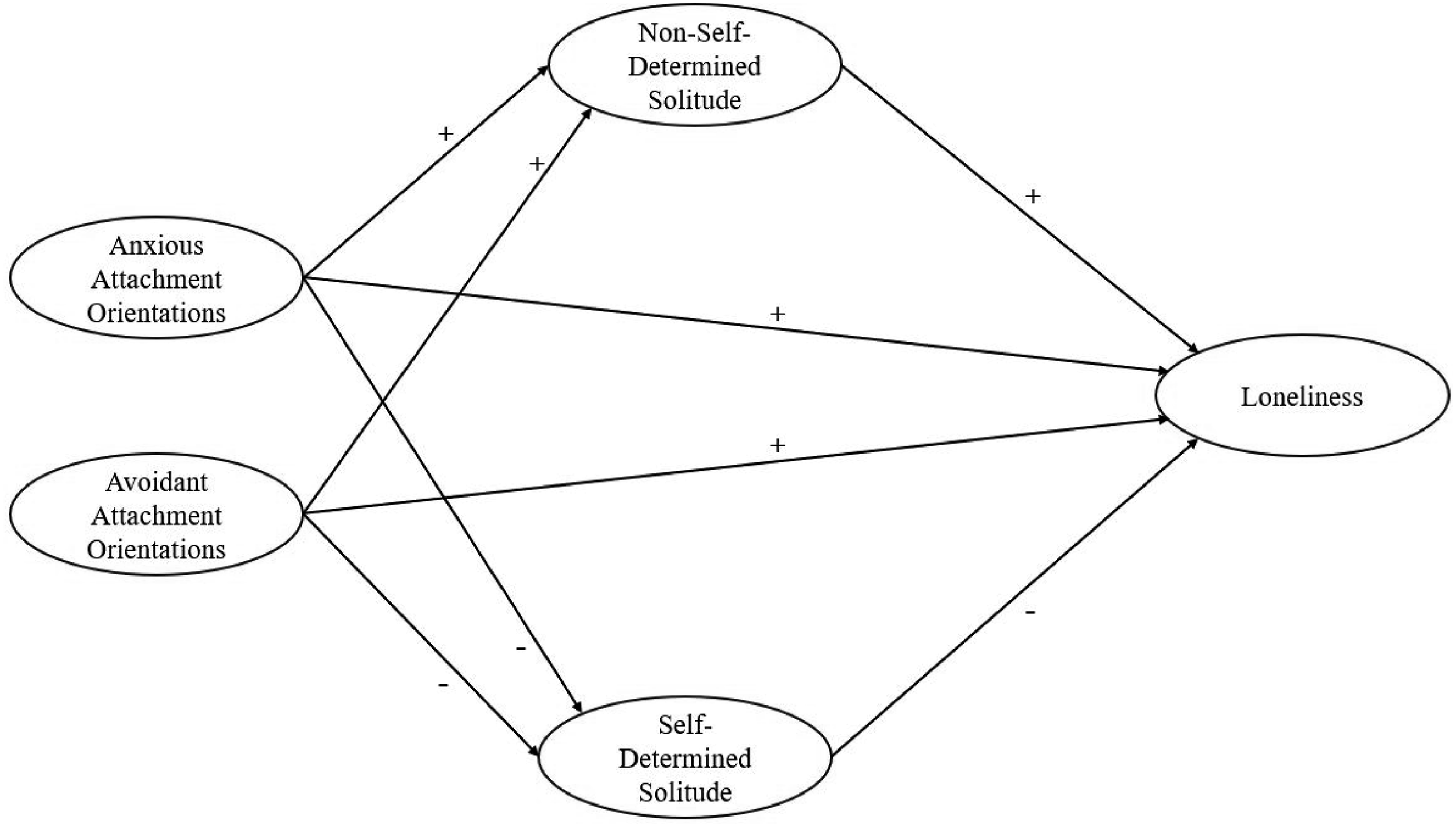
Method
Participants
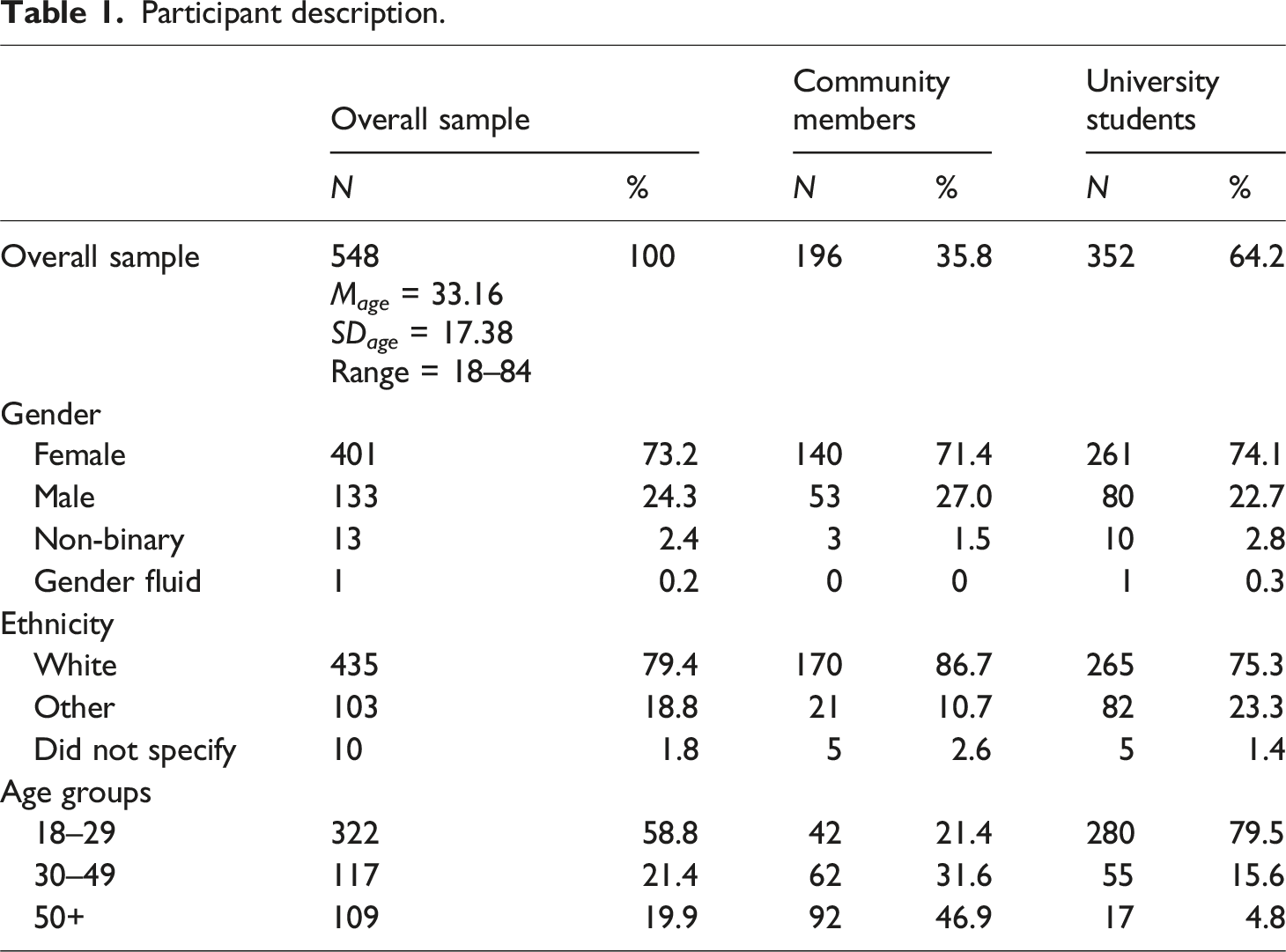
Participant description.
Design
This study used a quantitative prospective correlational design to investigate the predictive effect of anxious and avoidant attachment orientations on loneliness when mediated by motivation for solitude (self-determined and non-self-determined solitude). Measures of attachment orientations and motivation for solitude were administered at Time 1, and feelings of loneliness were measured at Time 2. An a priori power analysis was conducted using G*Power, which indicated that the minimum sample size required to detect a small to medium effect (f2 = .10, 95% power, α = .05) based on regression with four predictors was 191 participants (Faul et al., 2007). The present sample size exceeded minimum requirements to attain sufficient power.
Measures
Attachment orientations
Attachment orientations were measured using the Experience in Close Relationships Scale - Short Form (ECR-S; Wei et al., 2007). The questionnaire contains 12 items measured on a 7-point Likert scale (1 = strongly disagree to 7 = strongly agree) with two subscales: Anxiety and Avoidance (e.g., Anxiety “I do not often worry about being abandoned”; Avoidance “I am nervous when people get too close to me”). Negatively worded items were recoded, and scores were summed to determine subscale total, with a minimum score of seven and the highest score of 42. Lower scores on both subscales indicated a secure attachment orientation; higher scores on the Anxiety subscale indicated an anxious attachment orientation; and higher scores on the Avoidance subscale indicated an avoidant attachment orientation. This questionnaire exhibited good reliability on both subscales in prior research (Anxiety α = .77 to α = .86; Avoidance α = .78 to α = .88; Wei et al., 2007) and in the current study (Anxiety α = .79; Avoidance α = .74). Prior research showed that the scale had satisfactory convergent and discriminant validity as it was associated with other aspects of relationship functioning such as Excessive Reassurance Seeking Scale (ERSS; Joiner & Metalsky, 2001), and the subscales had small correlations reflecting distinct dimensions (Wei et al., 2007). Anxious and avoidant attachment orientations were treated as continuous variables to allow the extent to which an individual endorses each to be modelled simultaneously. Grouping participants based on attachment orientation was not feasible in the current study due to low prevalence of orientations such as fearful-avoidant, and debate within the literature on cutoffs for classification of orientations.
Motivation for solitude
Motivation for solitude was measured using the Motivation for Solitude Scale-Short Form (Thomas & Azmitia, 2019). The scale contains 14 items measured on a 4-point Likert scale (1 = not at all important to 4 = very important) with two sub-scales: Self-Determined Solitude and Non-Self-Determined Solitude (e.g., Self-Determined Solitude “It sparks my creativity”; Non-Self-Determined Solitude “I can’t be myself around others”). Mean scores were calculated for each subscale, with higher scores indicating greater endorsement of that subscale. The scale showed good reliability on both subscales in prior research (Self-Determined Solitude α = .81; Non-Self-Determined Solitude α = .89; Thomas & Azmitia, 2019) and the current study (Self-Determined Solitude α = .81; Non-Self-Determined Solitude α = .91). Prior research showed that the scale had satisfactory convergent and discriminant validity as it showed correlations with the Psychological Well-being Scale (Ryff, 1989; Ryff & Keyes, 1995) and had small correlations reflecting distinct dimensions (Thomas & Azmitia, 2019).
Loneliness
Loneliness was measured by the UCLA 3-item Loneliness Scale (Hughes et al., 2004). The scale contained three items on a 3-point Likert scale (1 = hardly ever to 3 = often) (e.g., “How often do you feel left out?”). Scores were summed to obtain a total score ranging from three to nine, with higher scores indicating greater loneliness. This scale showed good reliability in prior research (α = .82; Hughes et al., 2004) and the current study (α = .85). Prior research showed that the scale had satisfactory convergent and discriminate validity as it showed correlations with the Center for Epidemiologic Studies–Depression Scale (CES-D; Turvey et al., 1999; Hughes et al., 2004). The UCLA 3-item loneliness scale was selected over a more extensive scale as it is widely used and psychometrically sound to assess the broad subjective experience of loneliness and reduce participant burden.
Procedure
Ethical approval was obtained from the Human Research Ethics Committee at two universities in South-East Queensland, Australia (reference: 2024/043; ETH2023-0813). Invitations to participate in the online survey were posted on social media and the subject pool for eligible first-year university students to participate. Participants accessed the survey using an online survey tool (Qualtrics©) via their electronic devices. Participants began by providing demographic information and then completed the initial questionnaire (Time 1). Participants were sent a link via email prompting them to complete the follow-up survey (Time 2) containing the same measures 1 week later. Email, phone number, and student number (where applicable) were used to match responses. The survey took approximately 15–20 minutes to complete on each occasion.
Data analysis
Prior to analysis, variables were examined in SPSS, version 29.0 for missing data and to ensure the regression diagnostics and assumptions were met. There was no significant multicollinearity based on bivariate correlations (r < .70) between variables within the model. Structural equation modelling was used to test the hypothesised mediated effects through the lavaan package in R (R Core Team, 2024; Rosseel, 2012). The hypothesised model was tested using maximum likelihood estimation with robust Huber-White standard errors (MLR) and full information maximum likelihood (FIML) to account for missing data (24.5% due to non-completion of the follow-up survey). Direct and indirect effects were deemed significant when 95% confidence intervals (CI) did not include zero. The hypothesised models were evaluated for goodness of fit using the Comparative Fit Index (CFI) and Tucker-Lewis Index (TLI), which require values near or >0.90 (Hu & Bentler, 1995; Weston & Gore, 2006); the standardised root mean square residual (SRMR) which requires values <0.08, and the root mean square error of approximation (RMSEA) which require values <0.06 (Hu & Bentler, 1995, 1999).
Results
Preliminary analyses
Descriptive statistics and Pearson correlations between variables.
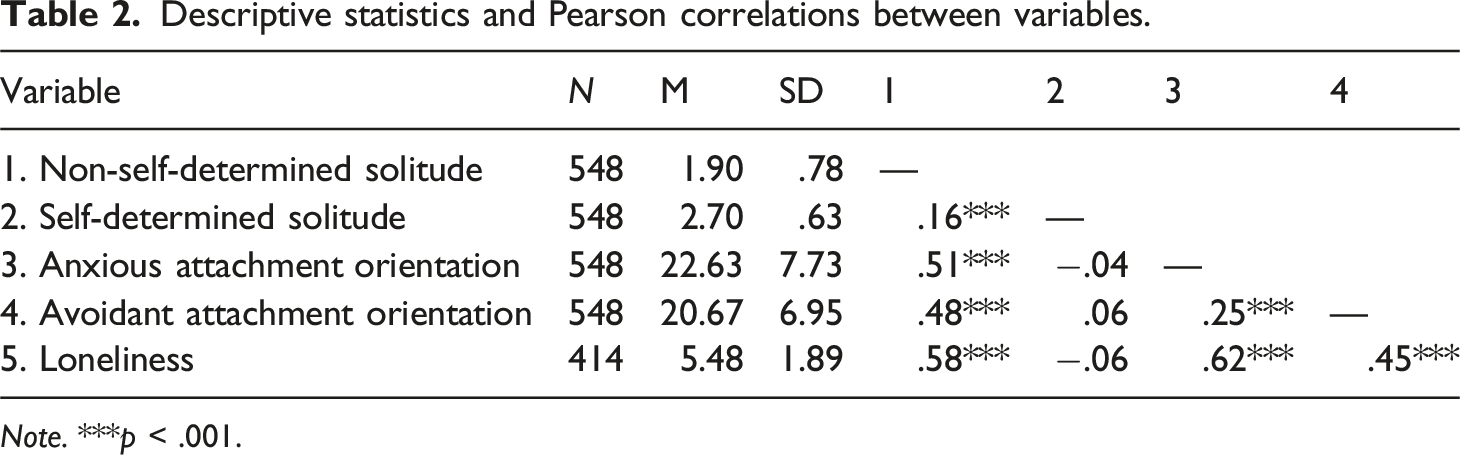
Note. ***p < .001.
Model tests
Structural equation modelling was used to investigate the predictive effect of anxious and avoidant attachment orientations on loneliness when mediated by self-determined and non-self-determined solitude. The initial model had a poor fit to the data χ2 (368) = 1494.49, p < .001, robust CFI = 0.84, robust TLI = .82, SRMR = .08, RMSEA = .08. Item 5 (i.e., “I turn to my partner for many things, including comfort and reassurance.”) of the ECR-S was dropped due to very low standardised factor loading (.07). Six covariances between residuals of similarly worded items within sub-scales were also specified where modification indices suggested likely substantive improvement to model fit. The final model showed acceptable fit-to-data, χ2 (335) = 923.34, p < .001, robust CFI = .91, robust TLI = .90, SRMR = .06, RMSEA = .06. All standardised factor loadings in the final model were >.40, p < .001 (with the exception of Experience in Close Relationships Scale Item 1 [.24] “It helps to turn to my romantic partner in times of need”, which was retained due to domain coverage within the avoidant attachment construct, given one item was already removed). Please see Supplemental Table 1 for factor loadings. Please see Figure 2 for the standardised path coefficients. Path coefficients reported in-text are unstandardised. Standardised path coefficients for the predictive effect of anxious and avoidant attachment orientations on loneliness when mediated by non-self-determined solitude and self-determined solitude.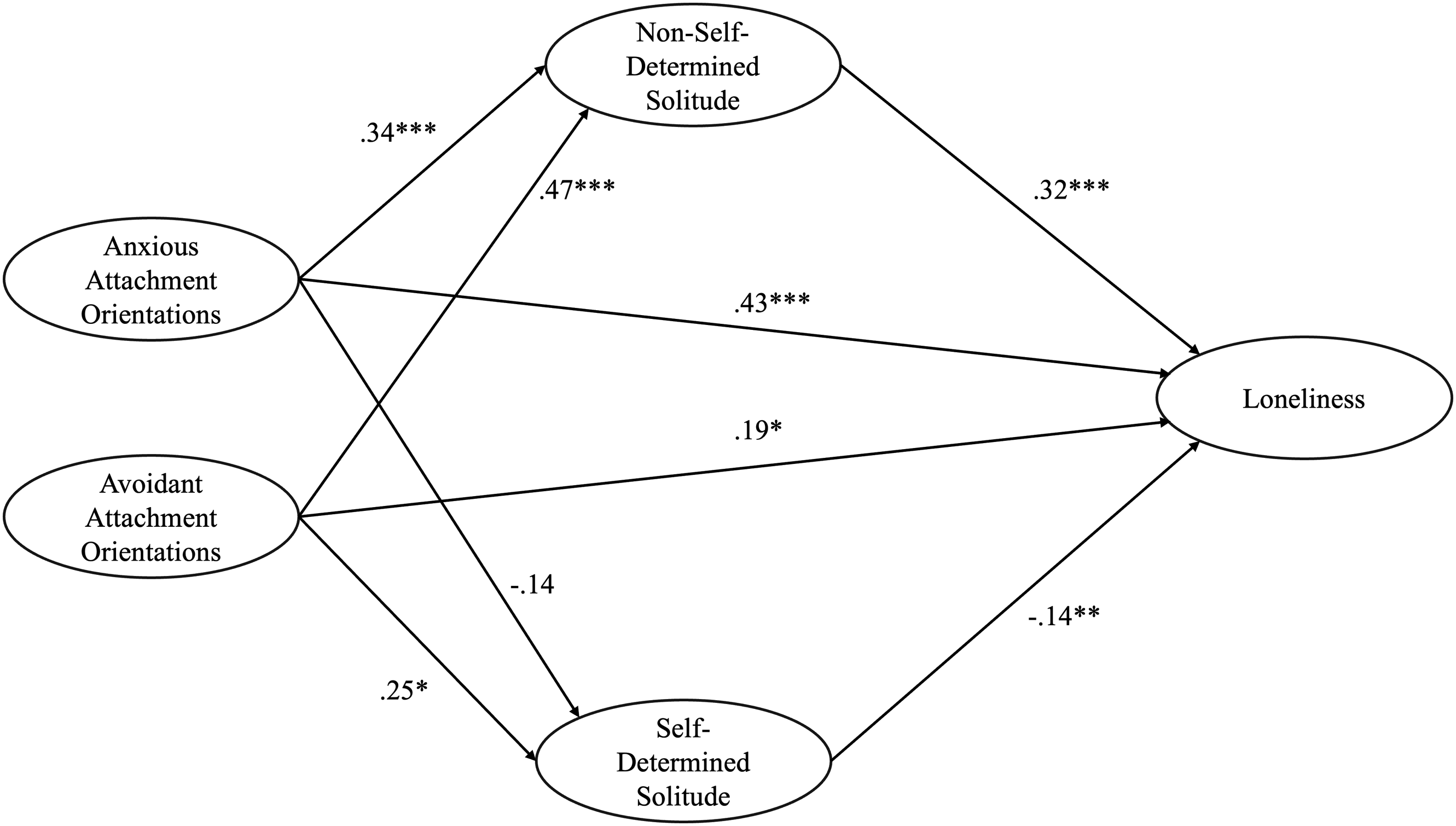
Anxious attachment orientations had a significant positive direct effect on non-self-determined solitude, B = .18, SE = 0.03, p = <.001, 95% CI [0.12, 0.24], and loneliness, B = .17, SE = 0.03, p = <.001, 95% CI [0.11, 0.24]. Anxious attachment orientations had a non-significant negative direct effect on self-determined solitude, B = −.06, SE = 0.03, p = .069, 95% CI [−0.12, −0.00]. Avoidant attachment orientations had a significant positive direct effect on non-self-determined solitude, B = .91, SE = 0.24, p < .001, 95% CI [0.45, 1.38], loneliness, B = .28 SE = 0.12, p = .021, 95% CI [0.04, 0.51], and self-determined solitude, B = .38, SE = 0.15, p = .012, 95% CI [0.08, 0.67]. Non-self-determined solitude had a significant positive direct effect on loneliness, B = .25, SE = 0.06, p < .001, 95% CI [0.14, 0.36]. Self-determined solitude had a significant negative direct effect on loneliness, B = −.14, SE = 0.05, p = .003, 95% CI [−0.23, −0.05].
The indirect effect from anxious attachment orientations through non-self-determined solitude to loneliness was significant, B = .04, SE = 0.01, p < .001, 95% CI [0.02, 0.07], supporting H1. The indirect effect from avoidant attachment orientations through non-self-determined solitude to loneliness was significant, B = .23, SE = 0.08, p = .003, 95% CI [0.08, 0.38], supporting H2. The indirect effect from anxious attachment orientations through self-determined solitude to loneliness was non-significant, B = .01, SE = 0.01, p = .118, 95% CI [−0.00, 0.02]; thus, H3 was not supported. The indirect effect from avoidant attachment orientations through self-determined solitude to loneliness was non-significant, B = −.05, SE = 0.03, p = .053, 95% CI [−0.11, 0.00], thus H4 was not supported.
Discussion
The current research examined how anxious and avoidant attachment orientations (Ainsworth et al., 1978; Bowlby, 1969) predict motivation for solitude (self-determined and non-self-determined solitude; Thomas & Azmitia, 2019), and in turn, loneliness. Results revealed that motivation for solitude is a key mechanism which mediates the relationship between anxious and avoidant attachment orientations and loneliness.
Anxious and avoidant attachment orientations directly predicted higher loneliness. These findings extend and support attachment theory (Bowlby, 1969), and prior research which has shown that individuals with higher attachment anxiety and avoidance are predisposed to experience heightened loneliness (Benoit & DiTommaso, 2020; Mikulincer et al., 2021; Mikulincer & Shaver, 2013; Shorter et al., 2022; Wei et al., 2005). Those with higher attachment anxiety may experience more loneliness due to their hyperactivated attachment system, which causes a strong desire for acceptance and a fear of abandonment from others, resulting in dependency on others to satisfy their needs (Mikulincer et al., 2021; Shorey & Snyder, 2006; Wei et al., 2005). Whereas those with higher attachment avoidance may experience greater loneliness due to their deactivated attachment system and tendency to suppress their attachment needs through high self-reliance, interdependence, and emotional suppression (Mikulincer et al., 2021; Shorey & Snyder, 2006; Wei et al., 2005). Therefore, those with insecure attachment orientations may inadvertently create circumstances that enhance isolation from others or misinterpret healthy relational experiences due to a perceived lack of belonging, thus increasing their feelings of loneliness (Mikulincer & Shaver, 2010, 2013; Wei et al., 2005).
Both forms of motivation for solitude predicted loneliness. First, higher motivation for non-self-determined solitude predicted greater loneliness. The finding is consistent with self-determination theory (Deci & Ryan, 2012) and prior research indicating that when solitude is motivated by non-self-determined reasons rather than intrinsic desire, individuals are more likely to experience negative emotional outcomes such as loneliness (Nguyen et al., 2019; Thomas & Azmitia, 2019; Yuan & Grühn, 2023). Second, self-determined solitude directly predicted lower loneliness. The finding is consistent with self-determination theory (Deci & Ryan, 2012) and previous research, which has found that due to the intrinsic nature of self-determined solitude, individuals are more likely to experience positive emotional outcomes such as lower loneliness (Nguyen et al., 2019; Thomas & Azmitia, 2019; Yuan & Grühn, 2023). This highlights the importance of promoting experiences of solitude as intrinsically rewarding to reduce feelings of loneliness and improve overall wellbeing (Nguyen et al., 2019; Ryan & Deci, 2000b; Thomas & Azmitia, 2019; Yuan & Grühn, 2023).
Consistent with expectations, both anxious and avoidant attachment orientations predicted higher motivation for non-self-determined solitude, which in turn predicted greater feelings of loneliness. This finding indicates that higher motivation for non-self-determined solitude appears to account for the experiences of loneliness as anxious and avoidant attachment increases. The findings suggest that insecure attachment likely negatively influences the interpretation of solitude as something outside of an individual’s control or capacity (e.g., feeling rejected or left out) which in turn exacerbates loneliness (Benoit & DiTommaso, 2020; Mikulincer et al., 2021; Mikulincer & Shaver, 2013). Additionally, the findings support research highlighting that individuals with higher attachment anxiety and avoidance may have difficulties meeting their basic psychological needs due to their dysregulated attachment systems which may result in higher motivation for non-self-determined solitude and, in turn, predict feelings of loneliness (La Guardia et al., 2000; Wei et al., 2005).
In contrast with expectations, self-determined solitude did not mediate the relationship between anxious attachment orientations and loneliness. The finding provides insight into the interplay between attachment (Bowlby, 1969) and self-determination theories (Deci & Ryan, 2012), While attachment anxiety is negatively associated with self-determined solitude, and self-determined solitude is negatively associated with loneliness, the strength of these pathways is insufficient to yield a statistically significant indirect effect. This may suggest other important variables also account for the increased risk of loneliness on those who have higher attachment anxiety. For example, those with higher attachment anxiety typically experience more difficulties in regulating their emotions (Borawski et al., 2022; Walker et al., 2022), which likely also results in increased loneliness. Potentially, even when individuals with higher attachment anxiety choose to be in solitude, their internal state encompassing difficulty finding security within themselves and high reliance on others, may have reduced their ability to experience self-determined solitude, which in turn increases feelings of loneliness (Borawski et al., 2022; Mikulincer et al., 2021; Nguyen et al., 2019; Thomas & Azmitia, 2019). The finding highlights the complex interplay between attachment, motivation, and wellbeing and the importance of targeting interventions for attachment orientations aimed at reducing loneliness and promoting overall wellbeing. Further, future research may benefit from exploring other mechanisms, such as coping strategies and emotional regulation, that may help explain this relationship.
In contrast with expectations, self-determined solitude did not mediate the relationship between avoidant attachment orientations and loneliness. However, the path was approaching significance. The finding suggests that while attachment avoidance is positively associated with self-determined solitude, thus these individuals at times choose solitude, and experience value in that experience of aloneness, it in turn does not reduce loneliness. However, as avoidant attachment orientations had a significant direct effect via both self-determined and non-self-determined solitude, it suggests an interesting and complex relationship between those with higher attachment avoidance and solitude. Our results suggest that solitude for those with higher attachment avoidance can be experienced both adaptively and maladaptively. It appears that for some people, solitude can be chosen for pleasure or for other intrinsic rewards, while for others it feels imposed upon them (e.g., they hold beliefs that no one would want to be around them or they are broadly undesirable) (Mikulincer et al., 2021; Nguyen et al., 2019; Thomas & Azmitia, 2019). Therefore, due to the nuanced relationship, future research should investigate the underlying mechanisms (i.e., need fulfilment) that may explain the relationship between attachment orientations and self-determined and non-self-determined solitude as well as explore the different circumstances (e.g., avoidantly attached individuals seeking solitude to cope with another person coming too close) that influence experiencing self-determined solitude. Further, the findings can help to inform interventions tailored to the specific needs of individuals with insecure attachment to increase self-determined solitude. However, caution is needed when tailoring interventions for individuals with higher attachment avoidance to avoid intensifying their beliefs regarding the need for independence, which may increase social isolation.
Implications
The current research has several theoretical implications. First, to our knowledge, no empirical research has integrated the investigation of attachment orientations and self-determination theory constructs to date. Therefore, this research has expanded the understanding of the interplay between attachment and self-determination theories regarding the mechanisms underpinning experiences of loneliness among those with higher attachment anxiety and avoidance. Specifically, higher motivation for non-self-determined solitude mediated the associations between anxious and avoidant attachment orientations, and loneliness. However, self-determined solitude did not mediate the relationship between anxious and avoidant attachment orientations and loneliness. This has noteworthy theoretical implications as it expands our understanding of attachment and self-determination theories by providing specific mechanisms (i.e., self-determined and non-self-determined solitude) which explain how an individual’s attachment orientation predicts their motivation for solitude, which predicts their feelings of loneliness (Bowlby, 1969; Deci & Ryan, 2012; Thomas & Azmitia, 2019).
Second, the research established temporal precedence concerning how an individual’s attachment orientations and motivations for solitude prospectively predict feelings of loneliness. This has important theoretical and empirical implications as it provides insight into why particular effects occur and how they are structured over time, providing a more nuanced understanding of the interconnectedness of attachment and self-determination theories. For example, insecure attachment orientations may influence an individual’s behavioural tendencies (e.g., need for reassurance or avoidance of emotional closeness), which in turn, impacts their motivational processes and ability to be self-determined in their behaviours, which then influences wellbeing outcomes.
The current research also has practical implications that can be used to inform the development of future interventions for reducing loneliness. The research identified that higher motivation for non-self-determined solitude is a key mechanism in explaining the relationship between anxious and avoidant attachment orientations and loneliness. Further, self-determined solitude plays a key role in reducing loneliness. A key practical implication of this study is to use motivation, as conceptualised in self-determination theory, as a key mechanism when developing interventions to reduce loneliness. For example, as individuals with higher attachment anxiety and avoidance may struggle to meet their basic psychological needs, future interventions should focus on psychological need satisfaction for individuals with higher attachment anxiety and avoidance to increase self-determined behaviours (e.g., self-determined solitude) (La Guardia et al., 2000; Wei et al., 2005).
According to self-determination theory, need-supportive strategies can increase self-determined behaviour and psychological need satisfaction (Hagger et al., 2020; Teixeira et al., 2020). Research has identified several motivation and behaviour change techniques to increase need satisfaction (Hagger et al., 2020; Teixeira et al., 2020). For example, future interventions may use autonomy-supportive strategies to reduce higher motivations for non-self-determined solitude. These interventions may include providing choice and meaningful rationale regarding behaviour (e.g., selecting activities that align with individual values and interests) and use this when planning intervention to support insecurely attached individuals to be able to intentionally engage in value-driven activities in moments of solitude (Hagger et al., 2020; Teixeira et al., 2020) This would align with emerging evidence about building positive solitude (Adams et al., 2025).
To our knowledge, no research has been conducted on how to achieve psychological need fulfilment for those with insecure attachment orientations. Potentially, creating a sense of independence, developing supportive reassuring relationships, and enhancing skills (e.g., emotion regulation) may increase need fulfilment for those with higher attachment anxiety (Hagger et al., 2020; Wei et al., 2005). For those with higher attachment avoidance, balancing their need for independence with connection and increasing awareness of their defence mechanisms (e.g., emotional distancing) may increase need fulfilment (Hagger et al., 2020; Wei et al., 2005). However, as there is currently no research on need fulfilment based on attachment orientations, future interventions would benefit from being co-designed with individuals who have higher attachment anxiety and avoidance to understand what psychological need fulfilment looks like for them, thus increasing self-determined behaviours and, in turn, reducing loneliness. Further, future research would benefit from investigating the underlying factors influencing need satisfaction for individuals with higher attachment anxiety and avoidance.
Strengths, limitations, and future directions
The study had several strengths. The prospective design facilitated the establishment of the temporal sequence of effects, providing a robust test of the hypothesised processes. Further, the study sampled a wide age range of adults, including general community members and students in Australia. This increased the generalisability of the findings across adulthood and enhanced the understanding of adults’ feelings of loneliness based on their attachment orientations and motivations.
The findings should also be considered in light of some limitations. First, the majority of the sample was from an individualist society, and the literature shows cross-cultural differences based on cultural norms and values in how loneliness is perpetuated (Heu, 2025; Heu et al., 2019; Lykes & Kemmelmeier, 2014). Therefore, caution is needed when generalising these findings across cultures. Additionally, as females and university students were overrepresented in the sample, caution is needed when generalising these findings to males and non-student populations. Therefore, future research should aim for a more representative sample based on gender and non-student populations. Further, the study did not explicitly compare how those in relationships may differ from those who are not, and future research should explore these differences. Additionally, the current research did not measure time spent in solitude; future research may benefit from exploring the potential relationship between time spent in solitude and motivation for solitude.
Second, the use of self-report measures can be subject to inaccuracies and social desirability bias (Fisher & Katz, 2000). However, the current research aimed to minimise bias by choosing valid and reliable measures, but due to the population measured, social desirability cannot be ruled out. For example, according to attachment theory, individuals with higher attachment anxiety and avoidance have a strong desire to be perceived positively by others, so they may under or over-report experiences to achieve this (Bowlby, 1998; Corcoran & McNulty, 2018; Mikulincer & Shaver, 2003). However, there is currently no research on how this influences response styles. Thus, it may be a beneficial area for future research. For example, future research could utilise multi-group confirmatory factor analysis to compare response styles and variability between individuals based on their attachment orientations (Bandalos & Finney, 2018). Further, as the study focused on the experiences of individuals based on the extent of their anxious and avoidant attachment orientations, further research may benefit for exploring the experiences of those with secure or fearful avoidant attachment orientations as a distinct group. Additionally, while the UCLA 3-item Loneliness Scale (Hughes et al., 2004) is psychometrically sound, due to its brevity is limited in its ability to assess the multidimensional nature of loneliness (DiTommaso & Spinner, 1997; Walsh et al., 2025). Therefore, further research may benefit from incorporating a more comprehensive measure to explore context-specific loneliness.
Third, due to the prospective design, there was some participation attrition at the second time point. While statistical tests indicate this attrition was at random and thus unlikely to introduce significant bias, the potential for bias none-the-less remains. However, FIML was used to estimate missing data, minimising bias associated with attrition and maintaining statistical power (Segerstrom, 2020). While the prospective design provides some indication of the temporal sequence of effects, due to the 1-week interval between data collection and the correlational nature of the data, causality cannot be inferred, and practice effects may be present. Therefore, future experimental and longitudinal research with greater time intervals is needed to infer temporal sequence and causality. As an individual’s attachment orientation cannot be manipulated, experimental research could focus on manipulating self-determined solitude through need satisfaction. Additionally, while self-determined and non-self-determined solitude were utilised as a mediators, it is plausible that they may moderate the relationship between solitude and loneliness (Nguyen & Rodriguez, 2024), thus this may be a beneficial area of future research.
Conclusion
The current study evaluated the effect of anxious and avoidant attachment orientations on loneliness when mediated by motivation for solitude. The study has expanded our understanding of the interplay between attachment and self-determination theories in terms of how individuals with higher attachment anxiety and avoidance are motivated for solitude, which in turn predicts their loneliness. Understanding these motivational processes and experiences is imperative for developing interventions to effectively reduce loneliness. Therefore, a key practical implication of this research is for future research to examine ways to reduce the motivations to seek solitude for non-self-determined reasons through psychological need fulfilment in those with higher attachment anxiety and avoidance, which may foster decreased loneliness. Further, the study provides direction for future research regarding attachment orientations and motivation for solitude, particularly through the exploration of other mechanisms (e.g., need fulfilment, coping strategies, and emotion regulation) and situations (e.g., those with higher attachment avoidance seeking solitude to cope with another person coming too close) that influence experiencing self-determined solitude and in turn feelings of loneliness.
Supplemental material
Supplemental material - Attachment orientations predicting loneliness: The role of self-determined and non-self-determined solitude
Supplemental material for Attachment orientations predicting loneliness: The role of self-determined and non-self-determined solitude by Samantha G. O’Brien, Daniel J. Brown, Ashleigh B. Bryant, Hugh A. Hampton, Daniel J. Phipps & Jacob J. Keech in Journal of Social and Personal Relationships
Ethical considerations
The Griffith University Human Research Ethics Committee (reference: 2024/241) and the University of Southern Queensland Human Research Ethics Committee (reference: ETH2023-0813) approved this research.
Footnotes
Author contributions
Samantha G. OBrien: Data curation, Formal Analysis, Investigation, Visualization, Writing – original draft, Writing – review & editing; Daniel J. Brown: Conceptualization, Investigation, Methodology, Project administration, Resources, Supervision, Writing – review & editing; Ashleigh B. Bryant: Investigation, Writing – review & editing; Hugh A. Hampton: Investigation, Writing – review & editing; Daniel J. Phipps: Methodology, Writing – review & editing; Jacob J. Keech: Conceptualization, Data curation, Formal Analysis, Investigation, Methodology, Project administration, Resources, Supervision, Visualization, Writing – review & editing.
Declaration of conflicting interests
The authors declared no potential conflicts of interest with respect to the research, authorship, and/or publication of this article.
Funding
The authors received no financial support for the research, authorship, and/or publication of this article.
Open science statement

Supplemental material
Supplemental material for this article is available online.
References
Supplementary Material
Please find the following supplemental material available below.
For Open Access articles published under a Creative Commons License, all supplemental material carries the same license as the article it is associated with.
For non-Open Access articles published, all supplemental material carries a non-exclusive license, and permission requests for re-use of supplemental material or any part of supplemental material shall be sent directly to the copyright owner as specified in the copyright notice associated with the article.
