




Abstract
Limited research has explored the connections between relational power and sexual motivations in couple relationships. Self-determination theory provides a framework to explore the links between relational power and different types of sexual motivations. Data were taken from 1,668 newly married couples that participated in three waves of the nationally representative CREATE study. Using an Actor-Partner Interdependence Model (APIM) framework, this study examined how perceptions of shared relationship power were associated with both partners’ harmonious and inhibited sexual passion, and whether connections were mediated by partners’ sexual autonomy. Results demonstrated that for both partners, a sense of shared power was predictive of greater harmonious sexual passion and less inhibited sexual passion over time. Although concurrent indirect effects were found for both partners, no longitudinal indirect effects were significant. These findings highlight the importance of both partners feeling that they have influence in the relationship for both partners’ sexual well-being.
Sexual passion is an important element of couple relationships that has been linked to various sexual and relational outcomes, such as relationship satisfaction (Busby et al., 2019, 2022), attachment security (Busby et al., 2022), and sexual satisfaction (Busby et al., 2020, 2022). Sexual passion captures how sexuality is internalized into one’s identity and is closely related to forms of motivation (Busby et al., 2023b; Vallerand, 2015). These motivations can either be well-integrated and congruent with one’s life and goals (i.e., harmonious passion) or over-controlled (i.e., inhibited passion), and each type of passion has been shown to have different associations with sexual and relationship satisfaction (Busby et al., 2019). That said, scholars have only recently begun to study how sexual passion is expressed in romantic relationships, and more research is needed to understand predictors of sexual passion expression (Leonhardt et al., 2020a).
To better understand the way individuals are motivated to engage in sexual behaviors (i.e., sexual passion), other relationship or environmental factors need to be taken into consideration. Some scholars have theorized that a high degree of perceived power motivates individuals to approach desired behaviors or experiences (similar to harmonious passion), whereas a low degree of perceived power leads to more inhibited behaviors (similar to inhibited passion; Keltner et al., 2003). Although ideas of power have not directly been applied to sexual passion, relational power has been linked with various sexual outcomes (Brezsnyak & Whisman, 2004; Johansen et al., 2023; Körner & Schütz, 2024), suggesting that partners’ perceptions of power would likely influence the way they are motivated to engage in the sexual relationship as well. To date, however, only one known study has examined the associations between relational power and partners’ sexual passion (Leavitt et al., 2024), but questions remain as to whether these links persist across time and what factors could explain these associations. Using theoretical ideas from self-determination theory (SDT), the present study will address these limitations by examining whether perceptions of shared power are associated with harmonious and inhibited sexual passion across several years, and testing whether these connections are mediated by partners’ sense of sexual autonomy.
Literature review
Theoretical framework
A common approach to understanding human motivation is self-determination theory (SDT, Ryan & Deci, 2020). In this theory, two subtypes of motivation are studied to help understand individual behavior and well-being: intrinsic and extrinsic motivation. Behaviors that are intrinsically motivated are self-determined (Ryan & Deci, 2020), meaning they are autonomously chosen and done for one’s own enjoyment of the activity (Deci & Ryan, 2000). Intrinsic motivations occur when individuals fully choose to engage in behaviors because they want to, rather than feeling pressured or controlled to engage in certain behaviors (Ryan & Deci, 2017). In contrast, extrinsic motivations are controlled motivations, meaning that such behaviors are exhibited for reasons other than intrinsic enjoyment, and often derive from internal or external pressures.
One way to differentiate intrinsic from extrinsic motivation is by the relative degree of autonomy one feels in being able to enact desired behaviors (Ryan & Deci, 2017). Autonomy refers to the ability to fully engage in behaviors out of one's own free will without being controlled by external or internal pressures, and autonomy-supportive environments are established in relationships when partners are open to the other's point of view (Ryan & Deci, 2017). In other words, autonomy supportive environments are likely created when partners are open to influence from each other, which is an important aspect of relational power (Cromwell & Olson, 1975). Considering that marital power processes could shape partners’ sense of relational autonomy (e.g., Forbush et al., 2024), it is likely that partners’ perceptions of power could also influence the level of autonomy felt in the sexual relationship, which could in turn shape partners’ motivations to engage in the sexual relationship.
Marital power
Marital power could be one factor that facilitates intrinsic or extrinsic sexual motives. Power has been conceptualized as the amount of influence one person has over another (Cromwell & Olson, 1975; Keltner et al., 2003), or “the ability or capacity to change a partner's thoughts, feelings, and/or behavior so they align with one’s own desired preferences” (Simpson et al., 2015, p. 409). In a relational context, power is often manifested in power processes, which represent the communication and negotiation strategies couples use when making decisions (Farrell et al., 2015; Miller et al., 2022; Shehan & Lee, 2001, p. 215). More specifically, process power becomes evident when one partner has more control or influence than the other when making decisions (Farrell et al., 2015), which could occur through exerting dominance in leading the conversation or through negating the other partner’s perspective. This form of power, rather than examining power outcomes (e.g., who makes the most decisions; Farrell et al., 2015; Simpson et al., 2019) or power bases (e.g., how many resources each partner has; Miller et al., 2022), may be particularly salient for understanding how power influences relationship outcomes because interactions are the setting in which partners can control the outcomes of each other (Vanderdrift et al., 2019). A person who perceives that their partner does not listen or refuses to talk about issues in the relationship is thought to have lower power (Miller et al., 2022) because these behavioral patterns reflect processes occurring in the relationship that would likely lead to a partner feeling controlled or having little influence over the other (i.e., lower power). In contrast, a sense of shared power would occur when both partners can express their opinions and come to decisions together (Miller et al., 2022).
The importance of creating a sense of equality during negotiation processes is becoming increasingly apparent. For instance, couples who perceive a more equal balance of power tend to report higher levels of relationship well-being (Handley et al., 2019; Johansen et al., 2023; Leonhardt et al., 2020b), greater behavioral closeness (Oyamot et al., 2010), and less attachment insecurity (Leonhardt et al., 2020b). Although scholars have occasionally discussed the role of power in couples’ sexual relationships (e.g., Impett & Peplau, 2003), only a few studies have actually tested whether power dynamics influence partners’ sexual outcomes. These studies have found that partners’ perceptions of their own greater power were associated with greater sexual satisfaction (Körner & Schütz, 2024), shared decision-making power was positively correlated with sexual desire (Brezsnyak & Whisman, 2004), and a lack of power was associated with less sexual harmony (e.g., harmonious sexual passion; Leavitt et al., 2024). For women, perceiving an equal balance of power was associated with greater relationship satisfaction, which in turn predicted more sexual desire (Johansen et al., 2023). Although few studies have directly examined the associations between power and sexual motivations or passion (for an exception, see Leavitt et al., 2024), these prior studies examining power and sexual outcomes generally suggest that the power dynamic in the relationship has the potential to shape the sexual outcomes of both partners, with a sense of greater power facilitating better sexual outcomes.
Sexual passion
Sexual passion is an element of sexual relationships that has recently started to gain traction in empirical research. In general, a passion refers to something that an individual loves and values, is motivated to invest energy into across time, and is internalized into their identity (Vallerand, 2015). It is important to note that this more recent conceptualization of sexual passion is very different than earlier conceptualizations that were more aligned with short-term emotions of sexual or romantic desire for a partner (e.g. Regan & Berscheid, 1999; Sternberg, 1988), rather than a sustained passion integral to the long-term well-being of the sexual and couple relationship (Busby et al., 2023a). The way that passions are expressed may differ based on an individual’s level of intrinsic (i.e., autonomous) or extrinsic (i.e., controlled) motivation as outlined in SDT (Busby et al., 2020; Vallerand, 2015). For instance, those who are intrinsically motivated to engage in behaviors would have a greater ability to integrate the passion into their daily life and feel autonomous in doing the activity (Vallerand, 2015). In contrast, passions that are extrinsically motivated would either become all-consuming where individuals are unable to balance their passion with other aspects of life (Vallerand, 2015), or would lead to more inhibited and avoidant tendencies out of feeling controlled by external pressures (Busby et al., 2020).
In relation to sexuality, there are two domains of passion that will be used in this study: harmonious and inhibited sexual passion (Busby et al., 2019). Harmonious sexual passion is an intrinsically motivated passion, meaning that individuals are able to engage in sexual behaviors in an autonomous and flexible way that aligns with their values and other areas of their life (Philippe et al., 2017). This expression of passion leads to positive feelings and thoughts during sexual experiences (Philippe et al., 2017) and positive sexual and relationship outcomes (Busby et al., 2020, 2022). Inhibited sexual passion is extrinsically motivated in which individuals are more reluctant to pursue their sexual impulses and are hesitant to engage in sexual behaviors (Busby et al., 2019). Even though inhibited individuals also have desires to engage in sexual behaviors based on physical pleasure and enjoyment, the motivation behind such behaviors is often intermixed with feelings of inhibition or avoidance (Busby et al., 2020). This form of passion has consistently been predictive of poorer couple functioning and outcomes (Busby et al., 2020, 2022).
Sexual autonomy as a mediator
Only one known study has examined the connections between power and sexual passion. This study indicated that wives’ perceptions of a power imbalance were negatively associated with their own harmonious sexual passion and husbands’ perceptions of a power imbalance were negatively associated with their own and their partner’s harmonious passion (Leavitt et al., 2024). However, data were cross-sectional and associations between power and inhibited passion were not tested. Although not directly examining power and sexual passion, another study found that couples who were motivated to engage in behaviors that promoted closeness and intimacy (which a sense of greater power could facilitate; Keltner et al., 2003) generally reported greater sexual desire during shared sexual experiences (Impett et al., 2008).
Research has yet to examine how power dynamics in a marriage could influence motivations in the sexual domain over time. Sexual autonomy may be particularly influential in the facilitation of sexual motivations, considering that autonomy is the underlying basic need that differentiates between intrinsic and extrinsic motivations (Ryan & Deci, 2017), and that autonomy in the sexual relationship is more proximal to sexual passion than autonomy in other contexts. Indeed, a sense of autonomy or distinction from one’s partner, especially if there is a high level of closeness in the relationship as well, is shown to be an important factor in enhancing sexual desire and satisfaction (Muise & Goss, 2024). In the context of the current study, partners who perceive that they have a shared level of influence when expressing their opinions and making decisions with their partner would likely feel more open and comfortable expressing themselves in their sexual relationship (e.g., greater sexual autonomy). This increased sense of sexual autonomy over time could lead to less inhibited sexual passion and greater harmonious sexual passion as partners feel more comfortable to express themselves and be authentic in their sexual relationship.
Actor-partner effects
Relational power is a complex and multidimensional concept that is more fully understood when both partners are examined interdependently (Dunbar, 2004; Overall et al., 2023). Past research has found that husbands’ perception of a power imbalance was negatively linked with their partner's harmonious sexual passion (e.g., Leavitt et al., 2024), but less is known about whether these same patterns would occur with inhibited passion and across time. That said, several studies have found that one partner’s perception of power is predictive of both partners’ relationship outcomes (Leonhardt et al., 2020b; Oka et al., 2016; Overall et al., 2023), and that both partners’ perceptions of power are distinct predictors of each partner’s outcomes (Overall et al., 2023). Additionally, an important element of the facilitation of intrinsically motivated passions (i.e., harmonious) is an autonomy-supportive environment (Ryan & Deci, 2017). Although both partners may have different perceptions of power in the relationship, one partner’s perception of more autonomy-supportive behaviors from their partner could likely facilitate better relational outcomes for both partners (Ryan & Deci, 2017). Thus, even if one partner perceives a greater sense of shared power than the other, this could be linked with both partners’ sexual motivations as it could be an indication of a better overall relational environment. Since the existing research on power (Leonhardt et al., 2020b), and sexual passion (Busby et al., 2024) has shown gender differences, and we planned to distinguish couples in the actor/partner model by gender (Kenny, 2019), we will be exploring our research questions with different-sex couples.
Current study
Because of the clear implications of sexual passion for relational and sexual functioning, it is imperative to identify antecedents of harmonious and inhibited passion. Thus, the primary aim of the current study was to explore longitudinal connections between perceptions of marital power and sexual passion among wives and husbands (see Figure 1). Based on empirical research and theoretical ideas aligned with SDT, the following hypotheses were tested: Conceptual model representing APIM of sexual autonomy as a mediator between perceptions of shared power and sexual passion. When operationalized in an APIM model, all predictor and outcome covariances were also included.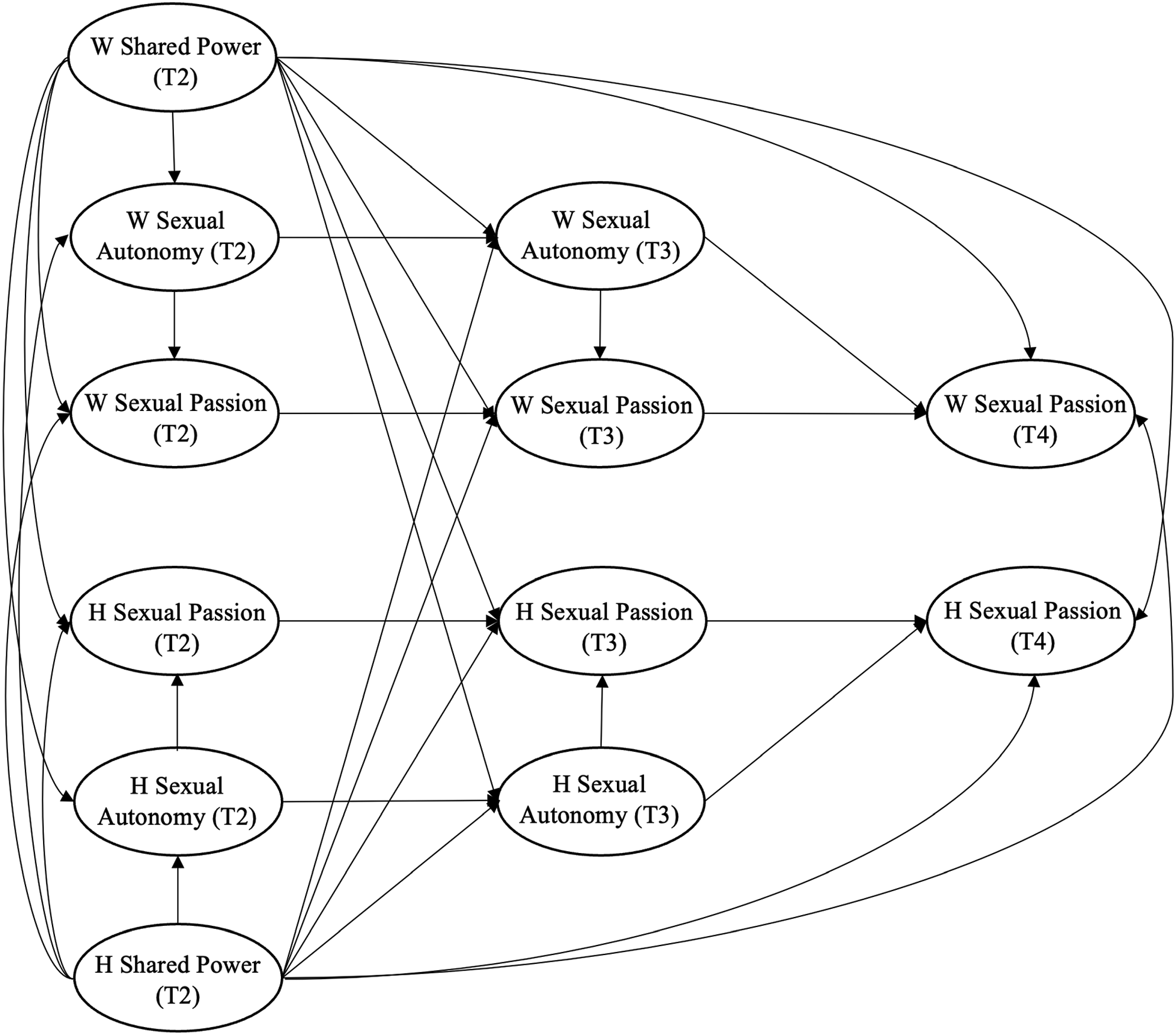
Wives’ and husbands’ perceptions of shared power will be positively associated with their own and their partner’s harmonious sexual passion, such that greater perceptions of shared power will be associated with both partners’ greater harmonious passion concurrently, one year later, and two years later.
Wives’ and husbands’ perceptions of shared power will be negatively associated with their own and their partner’s inhibited sexual passion, such that greater perceptions of shared power will be associated with less inhibited passion concurrently, one year later, and two years later.
Wives’ and husbands’ sexual autonomy will mediate all hypothesized actor associations, such that a perception of shared power will be positively associated with one’s own sexual autonomy, which in turn will be associated with less inhibited and greater harmonious sexual passion across time.
Sexual autonomy will mediate all hypothesized partner associations, such that wives’ and husbands’ perceptions of shared power will be positively associated with their partner’s sexual autonomy, which in turn will be associated with their partner’s less inhibited and greater harmonious sexual passion over time.
Method
Participants and procedures
Data for this study were drawn from Waves 2, 3, and 4 of the Couple Relationships and Transition Experiences (CREATE) study (James et al., 2022). The CREATE project includes a nationally representative sample of newly married couples that were recruited using a two-stage cluster stratification sampling method. Following IRB approval for the study, 239 counties were selected using a probability proportion to size (PPS) design. The counties were selected based on county population size, marriage, divorce, and poverty rates, and the racial-ethnic distribution of the county. Participants were recruited from the selected counties if they were married within a selected time frame (2013–2015), the marriage was at least one partner’s first marriage, couples were living in the U.S., and at least one partner was between the ages of 18–36. Couples who met these requirements were sent letters with instructions of how to participate in the study, and those who accepted and completed the survey were given a US$50.00 visa gift card for their time. Of the 11,889 couples invited to participate, 2,181 completed the survey and were included in the study. Of these couples in Wave 1, 1,898 couples had both partners participate in the surveys and 283 couples only had one partner participate. Four couples asked to be removed from the study, leaving 2,177 original couples in the study at Wave 1.
Summary statistics for demographic variables, marital power, sexual autonomy, and sexual passion measures split by gender (N = 1,668 couples).
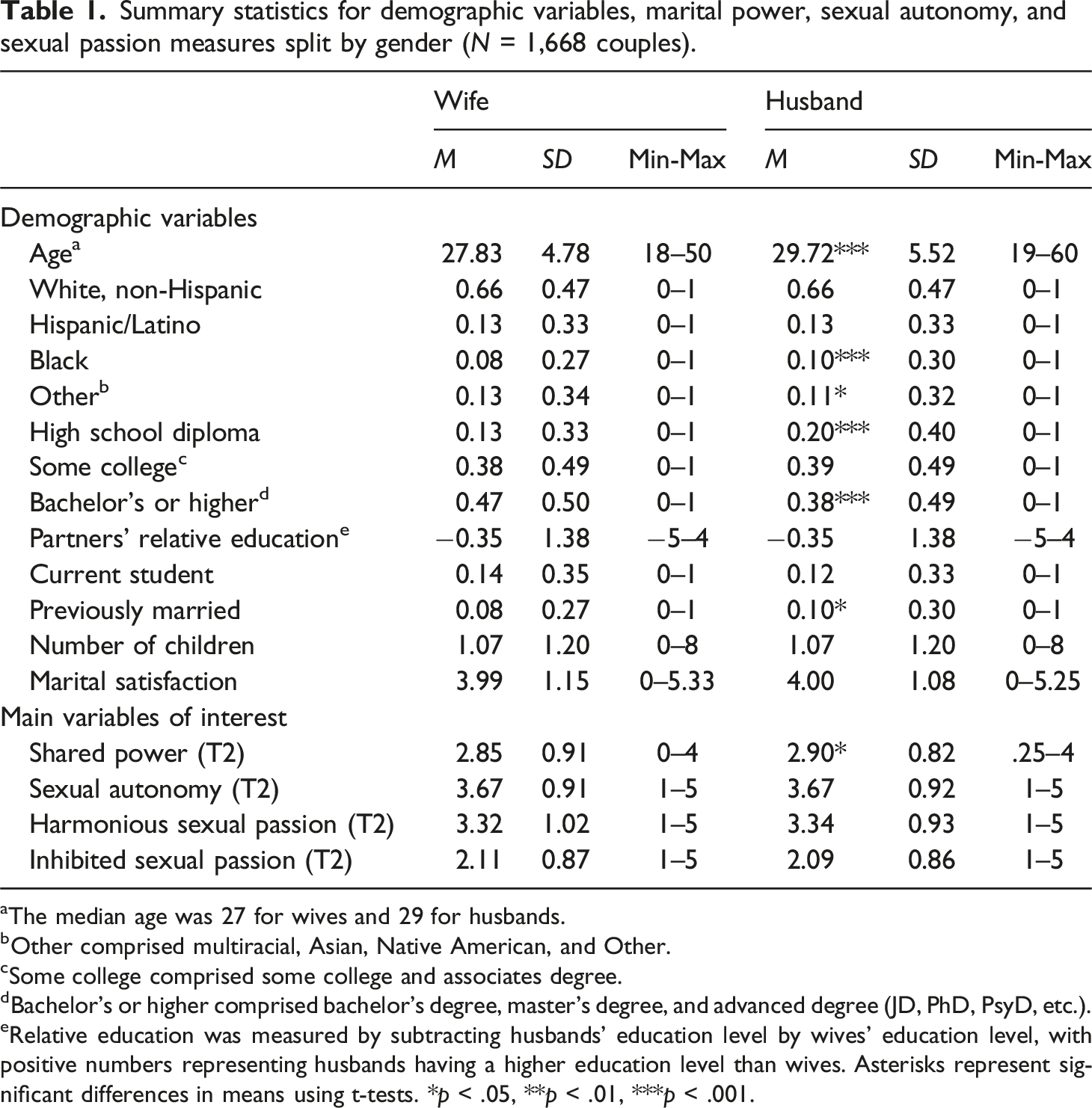
aThe median age was 27 for wives and 29 for husbands.
bOther comprised multiracial, Asian, Native American, and Other.
cSome college comprised some college and associates degree.
dBachelor’s or higher comprised bachelor’s degree, master’s degree, and advanced degree (JD, PhD, PsyD, etc.).
eRelative education was measured by subtracting husbands’ education level by wives’ education level, with positive numbers representing husbands having a higher education level than wives. Asterisks represent significant differences in means using t-tests. *p < .05, **p < .01, ***p < .001.
Measures
Shared power
Shared power was assessed at Time 2 as a latent construct using the four-item Perceived Power Imbalance Scale (Miller et al., 2022). This scale represented power processes, or the communication processes couples engage in that can either create a sense of shared power or a power imbalance. Husbands and wives responded to three items representing a perception of their partner having greater power (i.e., “When I want to talk about a problem in our relationship, my partner often refuses to talk with me about it”) and one item representing a sense of shared power (i.e., “My partner and I talk about problems until we both agree on a solution”). Participants indicated how strongly they agreed with each item using a 5-point Likert scale ranging from 1 (strongly disagree) to 5 (strongly agree), and the three items representing a power imbalance were reverse coded so that higher numbers represented a greater perception of shared power (α = wives: 0.84, husbands: 0.81).
Sexual autonomy
Sexual autonomy was measured at Times 2 and 3 using three items representing how autonomous and flexible partners felt in their sexual relationship. These items have been used as a measure of autonomy in the SDT framework in a recent study (Price et al., 2023). For one item, participants used a 1 (very dissatisfied) to 5 (very satisfied) scale to indicate how satisfied they were with the amount of creativity and flexibility in their sexual relationship. The next two items also used a 1 (strongly disagree) to 5 (strongly agree) scale where respondents indicated how much they agreed with one statement that said “In our sexual relationship I am able to fully be myself without inhibition” and one statement that said “I find that it is very difficult to express my needs and desires to my partner in the sexual area.” The last item was reverse coded so that higher scores indicated greater sexual autonomy (α = wives: 0.72, husbands: 0.73).
Harmonious and inhibited sexual passion
Harmonious and inhibited sexual passion were measured at Times 2, 3, and 4 using items adapted from Vallerand (2010) and Lalande et al. (2017), which were later validated by Busby et al. (2019). Harmonious sexual passion was measured using three items representing greater harmony in one’s sexual relationship (i.e., “My strong sexual interests are well-integrated into my relationship with my partner”). Participants indicated how often they experienced this in their relationship using a five-point scale ranging from 1 (never) to 5 (very often). Higher scores represent greater harmonious sexual passion (α = wives: 0.93, husbands: 0.91).
Inhibited sexual passion was measured using three items that represented inhibition in the sexual relationship (i.e., “I often feel reluctant to act on sexual urges that I have for my partner”). Husbands and wives indicated how often they experienced this type of passion using a five-point scale ranging from 1 (never) to 5 (very often). Higher scores represent greater inhibited sexual passion (α = wives: 0.81, husbands: 0.77).
Control variables
The current study used several control variables that could influence the associations between the main variables of interest. First, the age of both partners were included as continuous variables as past research has indicated that sexual well-being tends to decline as couples get older (Forbes et al., 2017). Power is thought to be influenced by one partner’s resources (e.g., income, education) compared to the other (Dunbar, 2004; Keltner et al., 2003), which is why we included a variable for partner’s relative education. This was constructed by subtracting wives’ education level from husbands’ education level (e.g., positive values indicate husbands had more education than wives). The number of children at Time 2 was included as a continuous variable.
Because relationship satisfaction is also associated with sexual outcomes (McNulty et al., 2016), the current study included both partners’ relationship satisfaction as control variables using four items from the Couple Satisfaction Index (CSI; Funk & Rogge, 2007). For three items, partners reported how satisfying, rewarding, and warm and comfortable their relationship was using a 6-point scale from 0 (not at all) to 5 (completely). Partners then reported how happy they were in their relationship using a 7-point scale from 0 (extremely unhappy) to 6 (perfect). Higher scores indicated greater relationship satisfaction (α = wives: 0.95, husbands: 0.94).
Analytic approach
Several preliminary descriptive analyses were conducted in Stata 18 to explore patterns in the main variables of interest. First, paired sample t-tests were conducted to examine differences between husbands’ and wives’ mean levels among all main variables of interest. Second, bivariate correlations were conducted to examine the connections between the independent variables (shared power), the mediating variables (sexual autonomy), and the dependent variables (harmonious and inhibited sexual passion).
Prior to conducting the main analyses, measurement invariance was tested across time for wives’ and husbands’ sexual passion variables (T2, T3, T4) and sexual autonomy variables (T2, T3). Following guidelines from Widaman and colleagues (2010), a series of steps were conducted to test for weak, strong, and strict equivalence. If the CFI changed more than 0.01 across one step, the prior model was used as an indicator of the level of measurement equivalence. Strong invariance is preferred for longitudinal mediation (Little, 2024).
Next, to test direct and indirect associations between marital power and sexual passion, four Actor-Partner Interdependence Models (APIM’s) were conducted in MPlus version 8.8. In all models, Full Information Maximum Likelihood (FIML) was used to account for missing data. Model fit was assessed using the Comparative Fit Index (CFI), Root Mean Square Error of Approximation (RMSEA), and Standardized Root Mean Square Residual (SRMR).
The first longitudinal APIM estimated direct actor and partner effects between shared power and inhibited sexual passion across Times 2, 3, and 4. The second APIM followed this same pattern, but with harmonious sexual passion as the outcome variable. The third APIM (see Figure 1) examined the associations between wives’ and husbands’ perceptions of shared power at Time 2, both partners’ sexual autonomy at Times 2 and 3, and inhibited sexual passion at Times 2, 3, and 4. The fourth APIM estimated the same associations, but used harmonious sexual passion as the outcome variable rather than inhibited passion. Both models estimated direct actor and partner effects and indirect actor effects (one’s shared power predicting their own sexual passion through their own sexual autonomy) and partner effects (one’s shared power predicting their partner’s sexual passion through their partner’s sexual autonomy) concurrently and across 1- and 2-year periods. More specifically, partner effects were only estimated from power to autonomy, but not estimated from one’s own sexual autonomy to their partner’s sexual passion. Theoretically, it makes more sense for one’s own sense of autonomy to predict one’s own motivations rather than their partner’s, whereas a perception of shared power is more of a couple-level variable (Miller et al., 2022) which could predict both partners’ sexual autonomy and motivations. Control variables were included as predictors in the models. Wives’ and husbands’ marital satisfaction and earlier waves of sexual passion and sexual autonomy were controlled for in their own hypothesized paths (e.g., wives’ marital satisfaction was a predictor of wives’ autonomy and sexual passion). Once appropriate model fit was established, direct effect models were estimated with the maximum likelihood estimator with 1,000 iterations, and both mediation models were estimated with 5,000 bootstrap draws with bias corrected confidence intervals (Hayes, 2009; Preacher & Hayes, 2008).
Structural invariance was also tested in both models to determine whether there were significant gender differences in the hypothesized paths for wives and husbands. Paths that were not statistically different between partners were constrained to be equal in the main analyses. Due to the complexity of the models, a series of Wald tests were used to estimate changes in chi-square when specified direct paths were constrained to be equal. First, stability paths were constrained to be equal across waves. Following this, actor effects for all main variables of interest were constrained to be equal. For the first two models (examining direct effects), all actor effects were constrained to be equal simultaneously. In the third and fourth models, actor effects were constrained to be equal one wave at a time (concurrently, across one wave, and across two waves). Wald tests were then conducted constraining partner effects to be equal following the same pattern as actor effects.
Results
Descriptive statistics and measurement invariance testing
Bivariate correlations of the model’s dependent, independent, and mediating measures (N = 1,668 couples).
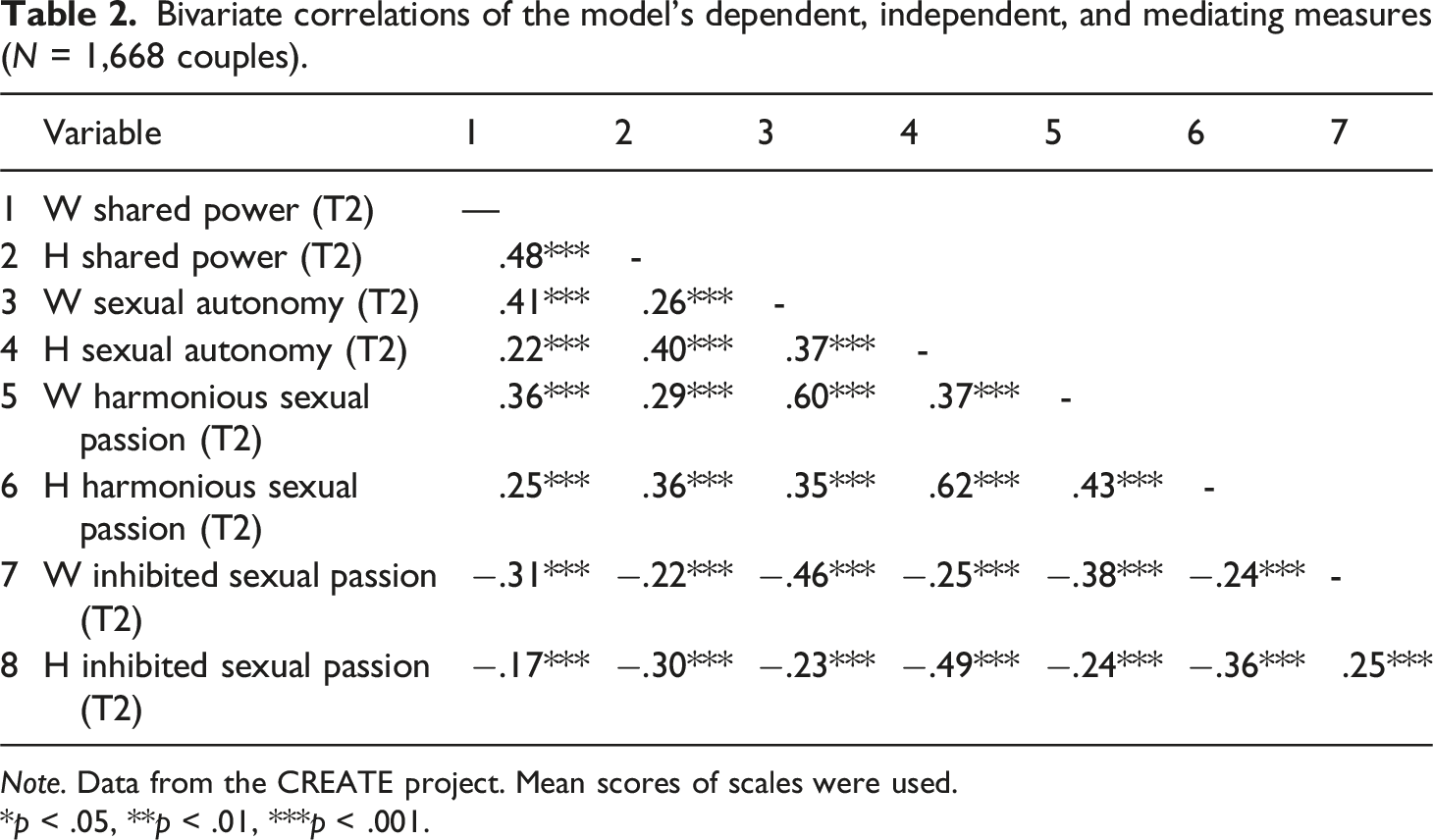
Note. Data from the CREATE project. Mean scores of scales were used.
*p < .05, **p < .01, ***p < .001.
Model 1: APIM predicting inhibited sexual passion
APIM of shared power predicting inhibited sexual passion (N = 1,668 couples).
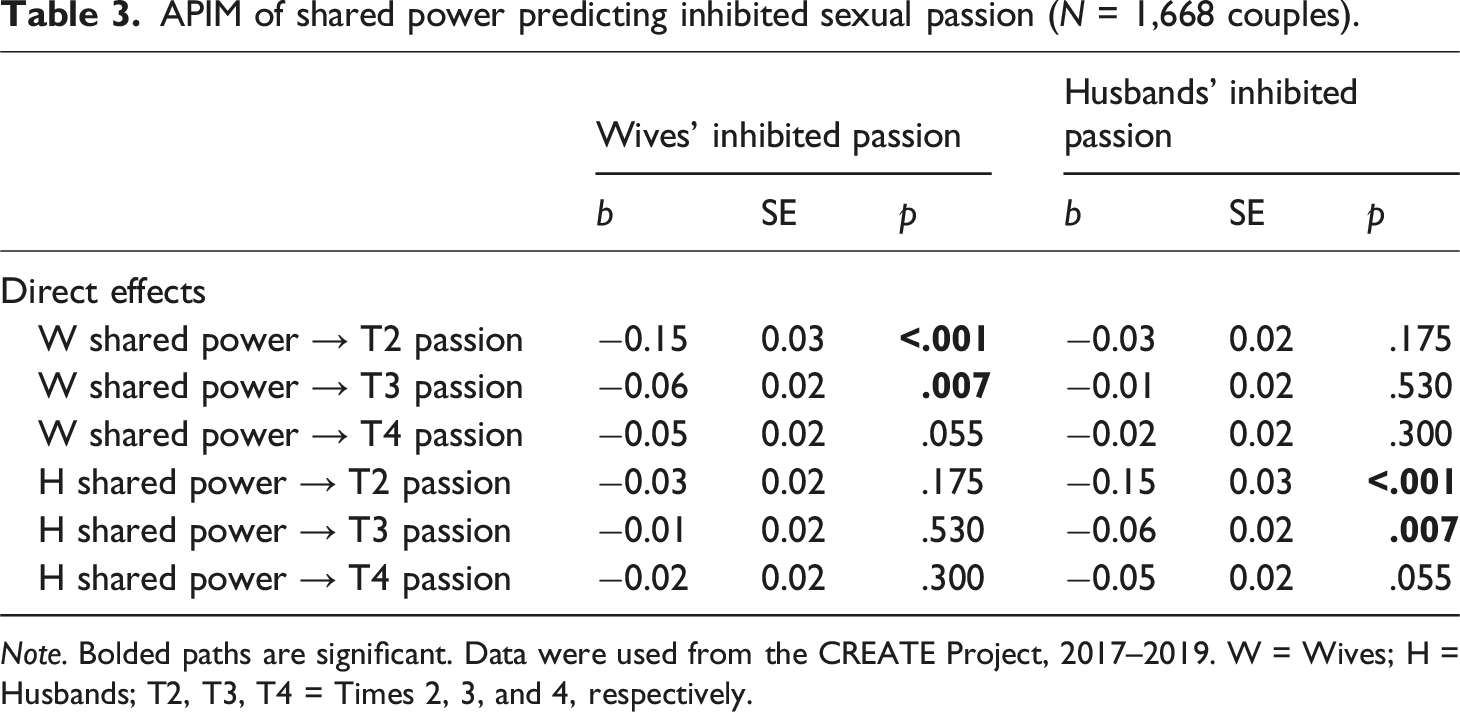
Note. Bolded paths are significant. Data were used from the CREATE Project, 2017–2019. W = Wives; H = Husbands; T2, T3, T4 = Times 2, 3, and 4, respectively.
Model 2: APIM predicting harmonious sexual passion
APIM of shared power predicting harmonious sexual passion (N = 1,668 couples).
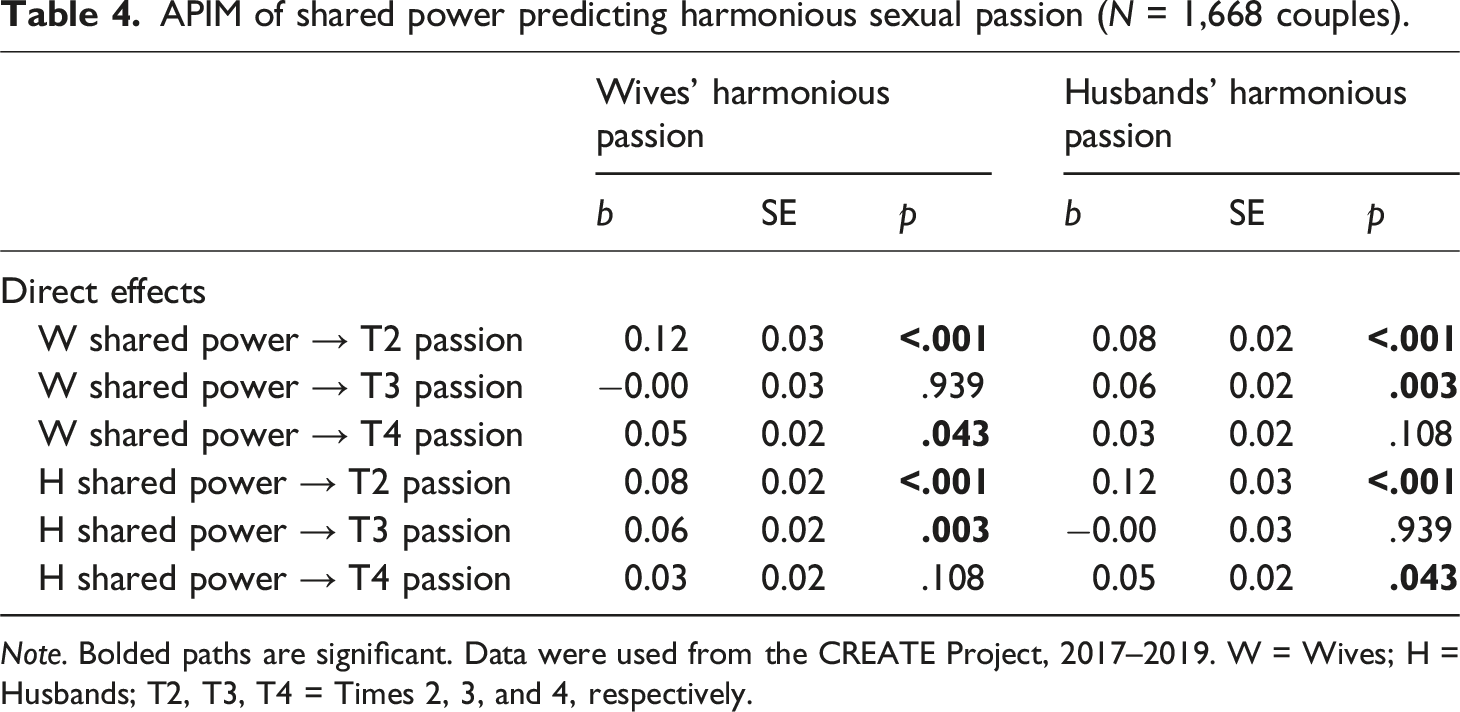
Note. Bolded paths are significant. Data were used from the CREATE Project, 2017–2019. W = Wives; H = Husbands; T2, T3, T4 = Times 2, 3, and 4, respectively.
Model 3: APIM mediation model predicting inhibited sexual passion
APIMeM of shared power predicting inhibited sexual passion with autonomy as a mediator (N = 1,668 couples).
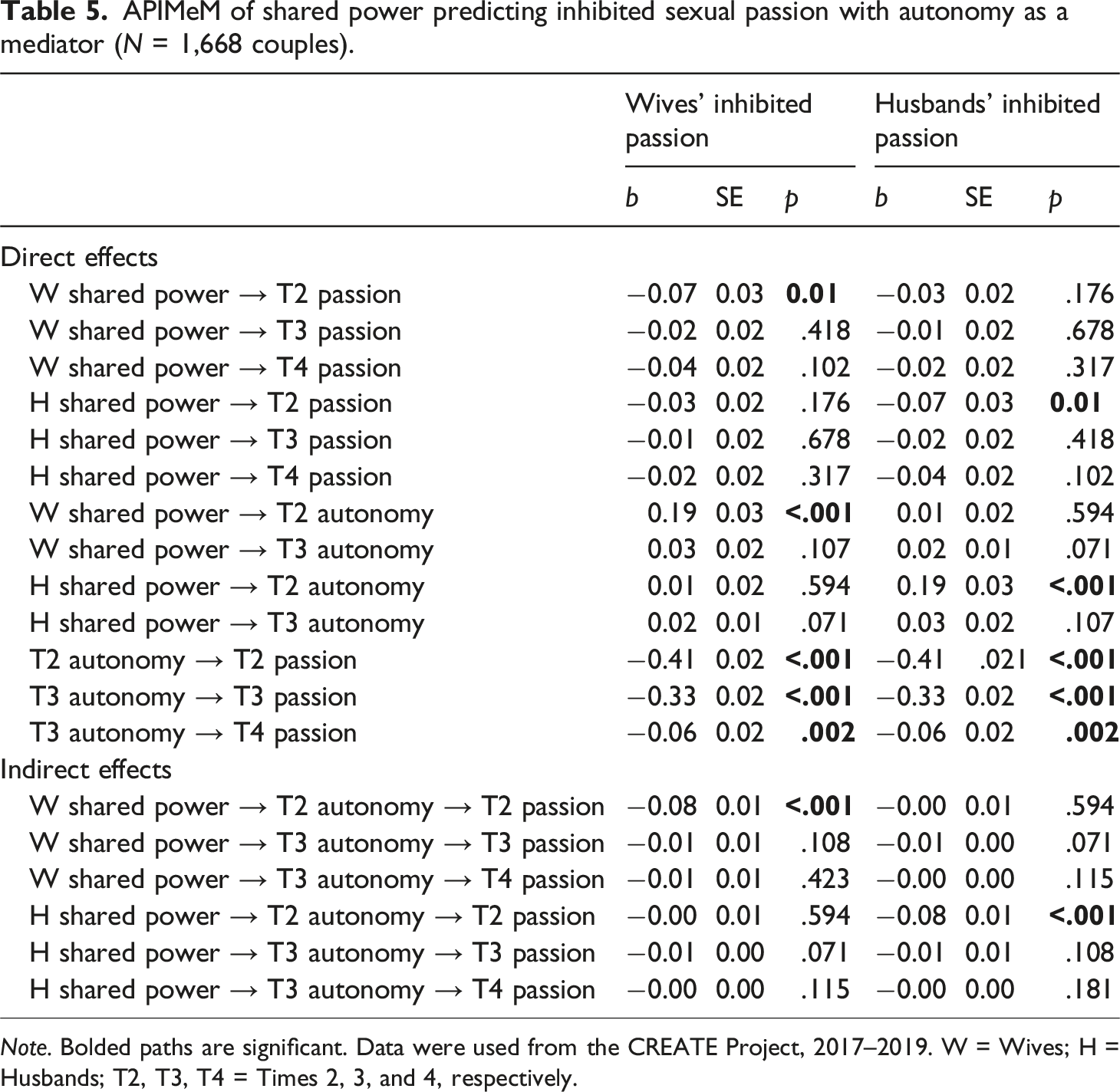
Note. Bolded paths are significant. Data were used from the CREATE Project, 2017–2019. W = Wives; H = Husbands; T2, T3, T4 = Times 2, 3, and 4, respectively.
Model 4: APIM mediation model predicting harmonious passion
APIMeM of shared power predicting harmonious sexual passion with autonomy as a mediator (N = 1,668 couples).
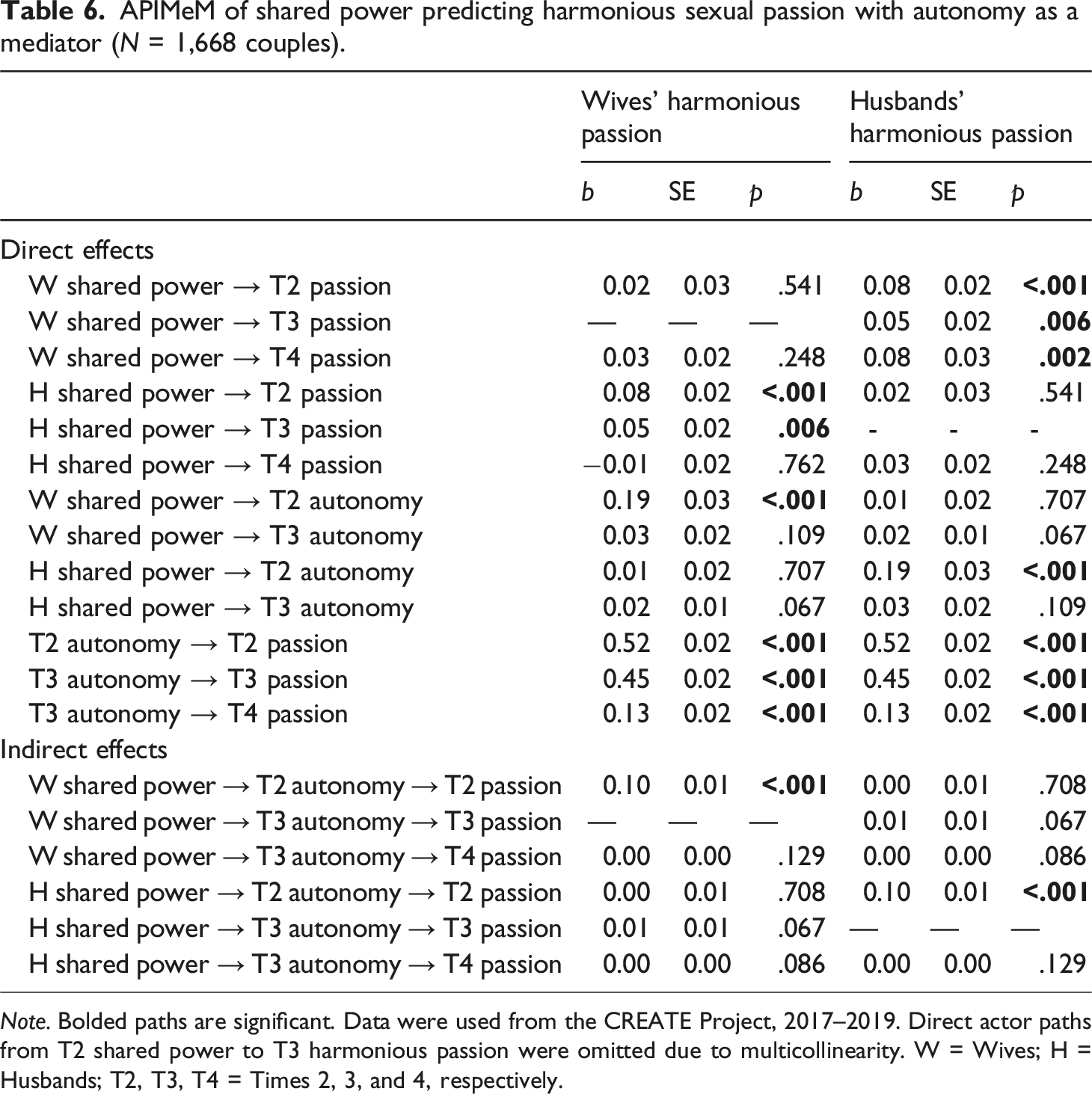
Note. Bolded paths are significant. Data were used from the CREATE Project, 2017–2019. Direct actor paths from T2 shared power to T3 harmonious passion were omitted due to multicollinearity. W = Wives; H = Husbands; T2, T3, T4 = Times 2, 3, and 4, respectively.
Gender differences
Following the main analyses, Wald tests were conducted to explore whether paths differed for wives and husbands (see Supplemental Table S6). In the first three models, no associations significantly differed by gender other than autoregressive paths. In the fourth model predicting harmonious sexual passion, gender differences were found for autoregressive paths and the partner path between shared power at Time 2 and harmonious sexual passion at Time 4, such that wives’ perceptions of shared power were more strongly associated with husbands’ harmonious passion than the association between husbands’ perceptions of shared power and wives’ harmonious sexual passion. All other paths were constrained to be equal between partners in the final analyses.
Discussion
Although relationship power has been shown to predict various couple relationship outcomes (e.g., Handley et al., 2019; Overall et al., 2023), little is known about how perceptions of power influence partners’ sexual motivations. Through a framework of Self-Determination Theory (SDT), the current study used data from a nationally representative sample of 1,668 newly married couples to examine the longitudinal associations between marital power, sexual autonomy, and sexual passion. In general, findings from this study provided evidence for the longitudinal direct connections between shared power and sexual passion. Additionally, for both partners, shared power was indirectly associated with one’s own harmonious and inhibited sexual passion at the same time point through one’s own sexual autonomy, but no indirect effects were found longitudinally.
The first hypothesis - that shared power would be associated with one’s own harmonious and inhibited sexual passion concurrently and longitudinally - was mostly supported. The results of the direct-effect models indicated that wives’ and husbands’ perceptions of shared power were negatively associated with their own inhibited sexual passion concurrently and predicted decreases in their inhibited sexual passion one year later. Additionally, shared power was positively associated with one’s own harmonious sexual passion concurrently and predicted increases in harmonious passion two years later, which aligns with studies that have found links between power and sexual desire (Brezsnyak & Whisman, 2004; Johansen et al., 2023). These findings also strongly support SDT ideas of intrinsic/extrinsic motives (Ryan & Deci, 2017) as individuals who feel like both partners have influence in the marriage experienced greater harmonious passion or intrinsic motives for sex (i.e., motives for sex are aligned with one’s values and well-integrated into the couple’s relationship) and less inhibited passion or extrinsic motives for sex (i.e., avoidant motives to engage in sexual behaviors with one’s partner; Busby et al., 2019). These findings highlight that marital processes that create a sense of shared power are important to implement, especially during the first few years of marriage, as they could have far-reaching effects on couples’ sexual motivations across time.
Another important contribution of this study was the dyadic exploration of power dynamics and sexual passion. Partner effects were only found for harmonious sexual passion, which provided partial support for the second hypothesis. Husbands’ and wives’ perceptions of shared power were associated with their partner’s greater harmonious sexual passion concurrently and predicted increases in their partner’s harmonious sexual passion across one year. This demonstrates that one’s partner perceiving an autonomy-supportive environment is associated with both partners having greater intrinsic motivations in the sexual relationship, which aligns with theoretical ideas in SDT suggesting that when one partners’ psychological needs are fulfilled (e.g., through a shared-power environment), both partners could benefit (Ryan & Deci, 2017). However, it is interesting that the individual’s perception of shared power only predicted decreases in their own inhibited sexual passion, which could be an indication that their own perception of power more strongly predicts extrinsic motives in the sexual relationship, whereas a partner’s perception of shared power could help both members of the dyad experience more sexual harmony.
Our third hypothesis, in line with SDT (Ryan & Deci, 2017), was that if a shared-power dynamic was present, partners would experience an increased sense of autonomy in the sexual relationship, which would then lead to less inhibited and greater harmonious sexual passion. This idea was partially supported in the current study, as concurrent indirect effects were statistically significant but longitudinal indirect effects were not. Although sexual autonomy was predictive of sexual passion across time, husbands’ and wives’ perceptions of shared power were not significantly associated with increases in their own sexual autonomy across time. This suggests that it may be more important for couples to focus on creating a shared power environment to help partners’ feel a greater sense of sexual autonomy at the current time point, which could in turn help partners to have greater harmonious passion and less inhibited passion. Because sexual autonomy did not mediate links between shared power and sexual passion across time, future research should seek to identify other mechanisms through which power could influence sexual passion across time.
Notably, most actor and partner associations did not significantly differ by gender. These findings suggest that when it comes to the processes through which shared power associates with sexual passion, husbands and wives are quite similar. Although this may be surprising as sexuality can be experienced very differently among men and women (Conley & Klein, 2022), and that women’s sexual motives have been shown to drive the sexual experience for both partners (Cooper et al., 2013), the processes through which power influences sexual passion seem to be fairly similar for both partners. This aligns with elements of SDT which suggest that men and women have the same psychological needs (autonomy, relatedness, competence; Ryan & Deci, 2017), and that the fulfillment of such needs could lead to similar outcomes.
Limitations, implications, and future directions
Although this study provides important contributions to this field of research, there are limitations to note. The analyses only consisted of newly married, different-sex couples. Although the sample is nationally representative and results could be applicable to many groups of people, more research is needed to examine these connections in same-sex or cohabiting couples. Disability status and sexual orientation measures were not included in the study, which could be important to include in future studies. Additionally, although the measures for power and sexual passion were validated measures (Busby et al., 2019; Miller et al., 2022), the sexual autonomy measure could be more thorough, which could provide stronger linkages between autonomy, sexual passion and power. It should also be noted that although longitudinal analyses are optimal for getting as close as possible to causal relationships as they capture change over time, this study is not causal.
One of the main ways future research could build upon this study is by examining the bidirectional associations between power and sexual passion across time. Several studies have indicated that greater sexual satisfaction at one time point is predictive of greater relationship satisfaction later on (e.g., Cao et al., 2019; McNulty et al., 2016; Park et al., 2023), which suggests that domains of sexual passion could predict changes in power as well. Additionally, approach and avoidance motives have been examined in sexual relationships (e.g., Impett et al., 2005; Impett et al., 2008), and these motives in some ways resemble intrinsic and extrinsic motivations (Carver, 1996). Future research could build upon this study by examining whether similar patterns occur with power and approach and avoidant sexual motivations, and also examine these processes on a daily level, which could tap into partners' daily experiences of power and sexual motivations.
This study also has important implications for practitioners. Therapists working with couples who are experiencing sexual problems (especially when inhibition is present) could examine the couple power dynamic as a potential source for such problems. The power process scale used in this study has been developed as a questionnaire that could be given to couples at the beginning of therapy to understand whether a power imbalance is present (Miller et al., 2022), and could ultimately aid practitioners in identifying interaction patterns for couples to work on that could improve couples’ sexual relationship.
Conclusion
Theoretical ideas of power have suggested that individuals’ perceptions of power facilitate different types of motivations (Keltner et al., 2003), but these ideas have rarely been applied to examining partners’ sexual motivations in romantic relationships. This study provides evidence for the connections between marital power, sexual autonomy, and sexual passion across time. More specifically, partners who feel a sense of shared power in the couple relationship were shown to have greater harmonious and less inhibited sexual passion. These findings highlight the importance of creating a shared-power environment, which could help to promote better sexual outcomes. Future research is needed to understand the complex nature of these processes over time and other potential mechanisms that help to explain how power is associated with sexual passion.
Supplemental Material
Supplemental Material - Power and passion: An exploration of the relationship between marital power processes and sexual passion styles
Supplemental Material for Power and passion: An exploration of the relationship between marital power processes and sexual passion styles by Ashley Forbush, Dean Busby, Jeremy Yorgason and Erin Holmes in Journal of Social and Personal Relationships
Footnotes
Authors’ contributions
AF conceived of the study, jointly designed the study, conducted analyses, and drafted the manuscript; DB jointly designed the study and revised previous versions of the manuscript. JY and EH revised previous versions of the manuscript. All authors read and approved the final manuscript.
Declaration of conflicting interests
The author(s) declared no potential conflicts of interest with respect to the research, authorship, and/or publication of this article.
Funding
The author(s) received no financial support for the research, authorship, and/or publication of this article.
Open research statement
As part of IARR’s encouragement of open research practices, the authors have provided the following information: This research was not pre-registered. The data used in the research are not available. The materials used in the research are available. The materials can be obtained by emailing
Correction (October 2025):
Article updated; for further details please see the Article Note at the end of the article.
Ethical statement
Article note
The following updates were made to this article:
1. The sentence Wives' and husbands' perceptions of shared power will be negatively associated with their own and their partner's inhibited sexual passion, such that greater perceptions of shared power will be associated with both partners' greater inhibited passion concurrently, one year later, and two years later. has been changed to Wives' and husbands' perceptions of shared power will be negatively associated with their own and their partner's inhibited sexual passion, such that greater perceptions of shared power will be associated with less inhibited passion concurrently, one year later, and two years later.
2. The sentence Although sexual autonomy was positively associated with one's own inhibited passion across all three waves, the longitudinal actor associations between shared power (T2) and sexual autonomy (T3) were not statistically significant (see  ). has been changed to Although sexual autonomy was negatively associated with one's own inhibited passion across all three waves, the longitudinal actor associations between shared power (T2) and sexual autonomy (T3) were not statistically significant (see Table 5).
Data Availability Statement
This study was not preregistered. The manuscripts data will not be deposited. Analysis code is available through email with the corresponding author.
Supplemental Material
Supplemental material for this article is available online. Supplementary materials were included for measurement and structural invariance testing and unconstrained Actor-Partner Interdependence Models.
References
Supplementary Material
Please find the following supplemental material available below.
For Open Access articles published under a Creative Commons License, all supplemental material carries the same license as the article it is associated with.
For non-Open Access articles published, all supplemental material carries a non-exclusive license, and permission requests for re-use of supplemental material or any part of supplemental material shall be sent directly to the copyright owner as specified in the copyright notice associated with the article.
