




Abstract
Intimate partner violence is widespread in sub-Saharan Africa with women the usual victims. Efforts to address intimate partner violence (IPV) include interventions with information communication technologies (ICT) that are being used to raise awareness and promote the empowerment of women. Thus, there is a need to examine the relationship between ICT ownership and IPV among women in sub-Saharan Africa. We conducted a cross-sectional study of four countries in sub-Saharan Africa using the Demographic and Health Survey data. Ownership of ICT was the main predictor variable that was measured by ownership of a radio, television, mobile phones, and access to the Internet. The outcome variable was IPV, which was measured in two forms: physical and sexual violence. A multivariable analysis using binary logistic regression was used to examine the association between ownership of ICT devices and intimate partner violence (IPV) among women. In Zambia and Mali, women who own ICT devices were significantly less likely to experience sexual violence than those who did not own ICT devices. Predictors such as age, place of residence, education, wealth status, employment status, number of children and age at first marriage were significantly associated with experiences of IPV, even though the strength of this relationship varied across countries and types of IPV. Access to ICT should be promoted among women because ICT can raise awareness and offer women a platform for receiving social support and advice about coping with intimate partner violence.
Keywords
Introduction
Intimate partner violence (IPV) is widespread in most countries and remains a critical public health and human rights issue. A significant majority of IPV is perpetrated by men against women (World Health Organization, 2012). However, studies have shown that men also experience intimate partner violence (Lien & Lorentzen, 2019; Walker et al., 2020). Intimate partner violence includes physical, sexual and emotional violence inflicted by a current or former partner or spouse (World Health Organization, 2013). Sub-Saharan Africa has high levels of violence against women (Pesando, 2022) with a prevalence of 36% which exceeds the global average of 30% (World Bank, 2019). Among the 15 countries where the greatest proportion of individuals agree with husbands beating their wives in certain circumstances, 14 are located in the sub-Saharan region of Africa (Devries et al., 2013; García-Moreno et al., 2005). Although countries in sub-Saharan Africa are signatories to international and regional frameworks that protect and promote women’s rights and have enacted various acts to protect women from any form of gender-based violence, violence against women continues to increase. Violence against women and girls has been described by the United Nations as a “global pandemic” that destroys lives, fractures communities and holds back development (United Nations, 2014).
The rapid growth of ICT infrastructure in sub-Saharan Africa, including mobile phones, Internet access, and social media, provides a unique opportunity to examine how technology can impact women’s experiences of IPV. Studies suggests that ICT devices can empower women by providing access to information (Voth Schrag et al., 2022; Warnecke, 2017), support networks (Warnecke, 2017), and resources that challenge gender norms and reduce dependence on abusive partners (Cardoso & Sorenson, 2017). For example, access to ICT devices have been linked to less tolerant attitudes towards wife-beating (Gillanders & McNamara, 2024). In communities where a higher proportion of women own mobile phones, individuals tend to exhibit less tolerance towards IPV (Jensen & Oster, 2009; Mattu & Saha, 2024; Pesando, 2022). At the same time, ICTs have also been implicated in facilitating control and surveillance by abusive partners (Brown et al., 2018; Sambasivan et al., 2019; Zaidi et al., 2015), highlighting the dual nature of technology’s impact on IPV. Understanding how ICT ownership relates to IPV in sub-Saharan Africa is essential for developing targeted interventions that mitigate the risks or capitalise on the protective benefits of technology for women. This study aims to answer two key questions: What are the levels of IPV by ICT ownership among women in sub-Saharan Africa? Secondly, what is the association between ICT ownership and IPV among women in this region?
In efforts to reduce violence against women, ICTs are being used in awareness campaigns and community-based training to address gender inequalities. Access to ICT may shape women’s attitudes towards behaviors that are undesirable such as IPV (Pesando, 2022). With access to ICT, women can join social media platforms where they learn that violence cannot be tolerated. With ICT, women have a learning platform where they can learn through radio, television, and the Internet about violence against women (Pesando, 2022). Through access to ICT, women have improved knowledge of IPV and can disclose to family members, report IPV, and receive support from others or leave abusive relationships (El Morr & Layal, 2020). Furthermore, ICT contributes to changing women’s attitudes about their rights and role in society. ICTs provides access to new information and may contribute to changes in how women view life and can alter the traditional gender norms and values. This challenges the patriarchal structures triggering violence against women by their male partners (Uduji & Okolo-Obasi, 2018). However, there is evidence that some of the violence that women experience is linked to exposure to ICTs (Brown et al., 2018). In some instances, even women who own cell phones are unable to escape the violence or the perpetrator (Zaidi et al., 2015). Through ICT, women are exposed to both online and offline gender-based violence perpetrated by current or former intimate partners (Sambasivan et al., 2019).
Despite the growing use of ICT devices in sub-Saharan Africa, there is limited research specifically examining the relationship with IPV. While there has been one study that investigated ICT ownership and its association with the justification of wife-beating (Cardoso & Sorenson, 2017), the broader body of research on this topic remains sparse. Cardoso and Sorenson (2017) found that ownership of any ICT device was associated with an increased likelihood of rejecting wife-beating, with the strongest effect reported among women from households with a computer (Cardoso & Sorenson, 2017). Other studies have indirectly explored the role of ICT in the context of health promotion and awareness-raising. For example, mobile phones and smartphones have been used to promote health (Anto-Ocrah et al., 2022; George et al., 2020) and raise awareness about IPV (Rodríguez-Rodríguez et al., 2019). In sub-Saharan Africa, a few studies have focused on mobile phones’ association with IPV (Gillanders & McNamara, 2024; Mattu & Saha, 2024; Pesando, 2022), but these studies did not focus on other ICT devices such as televisions, radios, or Internet access. There is a need for comprehensive research that considers a broader range of ICT devices (e.g., radio, television, and Internet access) and how they may influence women’s experiences of IPV across different countries in sub-Saharan Africa. Conducting this study is timely and necessary as ICT usage continues to expand in the region, potentially transforming how women navigate abusive relationships. The findings could lead to the development of technology-based interventions aimed at preventing IPV, offering a fresh and innovative approach to tackling gender-based violence in sub-Saharan Africa. ICT devices, such as mobile phones and computers, offer women access to social media platforms and other digital tools that can empower them and connect them to support networks for women experiencing IPV (El Morr & Layal, 2020). Furthermore, the study can contribute to global discussions on leveraging technology to promote women’s rights and protect them from violence, thus aligning with broader international goals such as gender equality and women’s empowerment. By investigating this relationship, the study seeks to inform policymakers and practitioners on the potential of ICT to empower women, raise awareness about IPV, and offer platforms for reporting and accessing support.
It is important to focus on a multi-country study of IPV because the sub-Saharan Africa region has one of the highest levels of IPV in the world. As a result of IPV, women suffer physical injuries (Thomas et al., 2021; Wong et al., 2016) which in some instances result in death (Abrahams et al., 2009; AbiNader et al., 2023). They also experience reproductive health problems such as unintended pregnancies (Anand et al., 2017; Pallitto et al., 2013), sexually transmitted infections (STIs) (Dhakal et al., 2014; Hess et al., 2012), increased risk of HIV (Kuchukhidze et al., 2023; Shri & Muhammad, 2021) and mental health disorders (Brown et al., 2020; Jewkes, 2013). Not only are women affected by IPV, but so are their children who witness the violence. Studies have shown that there are variations in IPV across the region which depend on contextual factors (Cools & Kotsadam, 2017; True, 2012). Thus, there is a need to conduct a study that examines these variations based on ownership of ICT. This paper describes the variation in IPV prevalence in four sub-Saharan Africa countries: Angola, Uganda, Mali, and Zambia.
The study applies the social exchange theory to understand the association between ICT ownership and IPV among women in sub-Saharan Africa. In the context of social exchange theory, gendered expectations within relationships influence the costs and rewards that women perceive in staying or leaving a relationship. In patriarchal societies within sub-Saharan Africa, intimate relationships are shaped by gender norms that dictate distinct roles for men and women (Adjei, 2017; Sikweyiya et al., 2020). Women are often expected to prioritise family stability and remain in relationships, even when faced with abuse (Adjei, 2017; Rasool, 2016; Sigalla et al., 2018). These expectations influence how women interpret the costs and rewards of their relationships, with the potential loss of social status, family support, and financial security seen as high costs of leaving. Conversely, the perceived reward of staying may be tied to fulfilling societal roles and maintaining familial or community approval (Adjei, 2017). Additionally, the power dynamics between men and women can influence women’s access to resources (such as social support or financial independence) and their tolerance of costs (physical or sexual violence). Women with access to ICT might experience an increase in perceived alternatives, empowering them to challenge existing power imbalances in relationships where IPV occurs. This theoretical lens helps in identifying the conditions under which ICT can be a tool for empowerment and when it might increase vulnerability, thereby guiding interventions and policy decisions to support women effectively.
Social exchange theory
To understand and explain intimate partner violence against women, various theories have been used. As stated above, this study uses the social exchange theory. Social exchange is not a singular theory (Sabatelli et al., 2018); rather, it is a collection of different viewpoints that share basic ideas and key concepts. These perspectives collectively contribute to the framework for understanding social exchange. The foundation for social exchange theory was established in the 1950s and early 1960s, by researchers such as sociologists George Homans (1961) and Peter Blau (1964) and social psychologists John Thibaut and Harold Kelley (1959). Social exchange theory views relationships metaphorically as social exchanges (Sabatelli et al., 2018).
Social exchange theory is a behavioural approach to understanding social relationships (Gelles, 1982). It posits that social interactions are motivated by the desire to receive positive outcomes (rewards) and avoid negative experiences (punishments and costs) from interactions with others (Gelles, 1982). In these relationships, partners exchange resources, aiming to maximise benefits (rewards) while minimising costs. Partners negotiate with each other, creating varying levels of attraction and dependency within the relationship (Sabatelli & Shehan, 1993). Individuals are drawn to others when the relationship yields positive outcomes (rewards) rather than costs (Sabatelli & Shehan, 1993). Rewards are anything perceived as enjoyable and satisfying, such as love, appreciation, status, practical services (like household chores and support), money, and respect or prestige (Landor & Barr, 2018). Costs are any losses or punishments, such as the expenditure of time, money, energy, and effort (Landor & Barr, 2018). Resources are the assets that individuals bring to a relationship for exchange.
The core idea in social exchange theory is that individuals assess rewards versus costs, considering both a comparison level (CL) (expectations based on their current relationship) and a comparison level for alternatives (CLalts) (potential benefits from other relationships), to choose the most advantageous social relationships (Landor & Barr, 2018). The comparison levels represent a type of cognition that directly influences how individuals assess their exchange relationships (Sabatelli et al., 2018). When the actual outcomes in a relationship align with what is deemed important and valued, people tend to feel more attracted to and satisfied with the relationship (Sabatelli et al., 2018). However, when outcomes consistently fall below these expectations, dissatisfaction is likely to arise (Sabatelli, 1984). Women’s comparison levels (what they believe they deserve in relationships) are influenced by socialisation into traditional gender roles. ICT access can help shift these comparison levels by providing women with new information, awareness, and alternative sources of support, leading to higher expectations of equitable treatment and lower tolerance for abuse. ICT access could increase women’s awareness of alternative life paths, including leaving abusive relationships. Access to information, social networks, and services through mobile phones or the Internet may present viable alternatives to staying in abusive relationships, altering their CLalts. This would explain why women with access to ICT are less likely to experience sexual violence in countries like Zambia and Mali, as ICT increases both perceived and real alternatives to staying in violent relationships. Social exchange theory has been applied to understanding intimate relationships, including mate selection, relationship dissolution, and sexual behaviour (Baumeister & Vohs, 2004). A prominent interpretation of exchange theory in mate selection suggests that men trade their economic resources and/or social status for women’s physical attractiveness, sex, or household services (Becker, 1981).
Based on the social exchange theory, power dynamics in couples are characterised by the unequal distribution of various resources such as education, job opportunities, earning potential, time availability, income, and wealth (Dribe & Stanfors, 2009). Women with fewer economic options, who are deeply invested in their relationships (such as being married), and who experience less dissatisfaction (for instance, less severe abuse) tend to have stronger feelings of commitment (Rusbult & Martz, 1995). This commitment can lead women staying in relationships even if they are unhappy. Also, when women have limited power and access to alternative resources, their comparison levels for alternatives (CLalts) are lower, reducing their perceived ability to leave abusive relationships. ICT ownership, however, can help shift these dynamics by offering women access to information (Voth Schrag et al., 2022; Warnecke, 2017), social networks (Warnecke, 2017), and economic opportunities (Summers et al., 2020; Warnecke, 2017), thereby increasing their CLalts and altering the power dynamics within relationships. As ICTs provide women with alternative avenues for social and financial empowerment, they increase women’s comparison levels for alternatives (CLalts), enabling them to better assess their options outside of abusive relationships. This shift in power dynamics highlights the transformative role ICTs can play in changing women’s lived realities in patriarchal contexts.
The theory also suggests that violence is more likely if the benefits outweigh the costs for the abuser. If the costs (such as legal trouble or social disapproval) are high, the abuser is less likely to be violent (Meyer et al., 2024). Ellis (1989) used this theory to explain why IPV might be more common among cohabiting couples than among married couples. He argued that marriage creates stronger social norms against violence, increasing the costs for married men. However, (Rodríguez-Menés and Safranoff (2012) criticise this view, arguing that social exchange theory does not adequately consider gender dynamics. They believe that whoever has more power in the relationship (usually men) is more likely to use violence if they think they can get away with it. This perspective explains why some women, even when empowered, continue to experience violence and choose to leave the relationships. A study exploring the impact of violence exposure on the investment-model among college women indicated that violence negatively impacts relationship satisfaction and commitment and is positively correlated with intentions to terminate the relationship (Rhatigan & Street, 2005). Individuals weigh the costs and benefits of a relationship before deciding to stay or leave (Copp et al., 2015).
Based on the social exchange theory violence is used when the costs of being violent are perceived to be less than the rewards (Gelles, 1993). In the context of IPV, for women, the benefits of leaving might be protecting their children from witnessing violence (Estrellado & Loh, 2019), seeking safety, and improved mental and physical health. The costs of leaving might be the economic dependence of unemployed women on their partners who are perpetrators (Anderson, 2007; Estrellado & Loh, 2019; Lenze & Klasen, 2017), the social stigma of having a failed marriage or relationship and the lack of support systems (Sichimba et al., 2020). Through ICT ownership, women can challenge the controlling behaviour in various ways, for instance, women will have access to information and resources about IPV (Gillanders & McNamara, 2024; Mattu & Saha, 2024; Pesando, 2022). ICT ownership allows women to connect with support networks and discreetly seek help (Al-Alosi, 2020). They can also report, and capture evidence of violence using their mobile phones or leave the relationships (Al-Alosi, 2020). For instance, a study indicated that 90% of women who used ICT reported leaving their abusive partner within the year (Glass et al., 2010). In other words, ICT ownership could enhance women’s social bonds and sense of control through reducing the likelihood of IPV and providing them with resources to address it. However, the same ICT devices can be used by the perpetrators to monitor and control the victim’s online activity and communication (Al-Alosi, 2020). This shows how ICT ownership could be a potential for both protection and risk of intimate partner violence.
Methods
Study design and sample size
Data for this study were derived from the most recent DHS conducted in four countries in sub-Saharan Africa: Angola (2016 DHS), Uganda (2016 DHS), Mali (2018 DHS), and Zambia (2018 DHS). The Demographic and Health Survey (DHS) program is a nationally representative household survey conducted in most developing countries by the national statistics agencies with support from global partners such as ICF International and the United States Agency for International Development (USAID). Each country’s DHS utilised the sampling frame which was established using the enumeration areas (EAs) from the most recent Census of Population and Housing. The sampling frames contained data for each country’s enumerations areas classified by regions and rural-urban.
The DHSs employed a stratified two-stage sampling approach. In the first stage, EAs were selected, with the probability based on the size of each stratum. In the second stage, households are systematically with equal probability selected in each EA. All women aged 15–49 years and men aged 15–59 years who spend a night before the interview date qualified to be interviewed. The DHS uses standardised questionnaires to collect data, including a Household Questionnaire, a Woman’s Questionnaire, a Man’s Questionnaire, and a Biomarker Questionnaire (Croft et al., 2018). A detailed description of the methods used in these surveys is included in the respective country survey report (Croft et al., 2018). The data collected in the DHS surveys include background characteristics, marriage and sexual activity, fertility, family planning, maternal and child health, nutrition, HIV/AIDS, and intimate partner violence. Our study used the module on IPV, which is included in the individual women recode file (IR). The DHS datasets are publicly available from the DHS website https://dhsprogram.com/(Croft et al., 2018).
The samples of women interviewed in each country were as follows: Angola (N = 14,379); Uganda (N = 18,509); Zambia (N = 13,683) and Mali (N = 10,519). These samples translated into overall response rates of 95%, 96%, 94% and 97%, respectively. However, in this analysis we restricted the samples to those women who completed the IPV module. The IPV module was administered to one randomly selected woman of reproductive age in each household. Depending on the country sample size the total number of women who answered the IPV questions varies. The women were asked about their IPV experiences. Because we focused on IPV, we restricted our analysis to women aged 15–49, who were either currently married or were formerly married at the time of the survey. This is because the DHS administered the IPV module to only women who had ever been married and were in the age range 15–49 years. Furthermore, this group of women are at a heightened risk of experiencing IPV. This resulted in the following study sample (N = 7,669) for Angola; (N = 7,530) for Uganda; (N = 7,355) for Zambia and (N = 3,356) for Mali.
Study variables
Outcome variable
The outcome variable for this study is IPV and more specifically, two forms of violence: physical and sexual. For this analysis, our outcome variables were the experience of any form of physical violence and any form of sexual violence in the past 12 months prior to the survey. Physical violence included any of the following acts: being pushed, slapped, punched with a fist, kicked, strangled, threatened by knife, and arm twisted. Therefore, experiencing any of the seven acts of physical violence was classified as having experienced physical violence. Sexual violence included any of the following acts; ever been physically forced into unwanted sex and forced into unwanted sexual acts. The experience of any of the sexual acts qualified the respondent as having experienced sexual violence. All these variables had two response categories (yes/no). Therefore, the outcome variable IPV (Physical and Sexual) were constructed as composite variables comprising of experience of either any physical violence or any sexual violence.
Independent variables
The main predictor variable is ownership of ICT, which was assessed by ownership of a mobile phone, television, or radio, and access to the Internet. 1 The DHS collected information on ownership of ICT devices at household level. All the households were asked if they owned a radio, mobile phone, television and whether they had access to the Internet. All these ICT variables were captured with response categories (yes/no). A composite variable was then generated by combining the four individual ICT variables. Thus, the variable ownership of any ICT device was constructed as a binary variable with (yes/no) response category. These ICT devices are now widely used as platforms to receive information on social support and advice about dealing with IPV. Multiple correspondence analysis, which is used to analyse nominal categorical data, was used to create an ICT composite variable that would measure the proportion of women who own at least one ICT device or have access to the Internet. This variable ownership of an ICT device was constructed as a binary variable (yes/no). The study controlled for the following predictor variables: age of the woman in years (15–24, 25–34, 35–49), educational level (no education, primary, secondary, tertiary), place of residence (rural, urban), household wealth quintile (poor, moderate, rich), employment status (working, not working), children ever born (Zero, 1–2, 3–4, 5+), and age at first marriage (less than 15, 15–19, 20–24, 25+). Multicollinearity was assessed for all the predictor variables to separate the predictor effects of the interrelated variables.
Statistical analysis
Statistical analysis was performed using Stata version 17 software and considered survey design and post-stratification weights in DHS datasets. Survey design was accounted for in their analysis by using “svy” statistical commands that allow for the incorporation of the two-stage sampling design that was used in the DHS sampling. The post-stratification weights provided in the DHS datasets were used to ensure that the sample estimates are representative of the population. The “svyset” command was used to define the survey weights. Before analysis the syntax “svyset cluster [pweight = sampleweight], strata (stratum)” was executed to account for the weights, primary sampling units (PSUs), and stratification in the dataset, this process ensured that the analysis produced population-representative estimates.
Statistical analysis was conducted in three stages. In the first stage, a univariate analysis was conducted to describe variations in the prevalence of IPV among women in sub-Saharan Africa countries with a series of frequencies and percentage distributions. Bivariate analysis was then performed through cross-tabulation of the main predictor variable (ICT ownership) and other predictor variables with the outcome variable using Pearson’s Chi-square test. Finally, a univariate and a multivariate binary logistic regression analysis was performed between ICT ownership and IPV, while controlling for other predictor variables. Unadjusted odds ratios (UOR) and adjusted odds ratios (AOR) with corresponding p-values were calculated.
In this study, we analysed the association between ICT ownership and the experience of physical and sexual violence separately. We did not expect ICT ownership to affect physical and sexual violence in the same way among women of reproductive age. Separate univariate and multivariate logistic regressions model were performed for each outcome.
Ethical consideration
Permission to use the country datasets for Angola, Uganda, Mali, and Zambia was sought from the DHS Program. There was no need to obtain any ethical approval for the secondary analysis because all ethical protocols were fulfilled by ICF International and the country’s statistic agencies during the initial stages of the primary data collection (DHS program, 2021).
Results
Sociodemographic characteristics of respondents
Percentage distribution of ever-married women aged 15–49 by background characteristics in SSA countries.
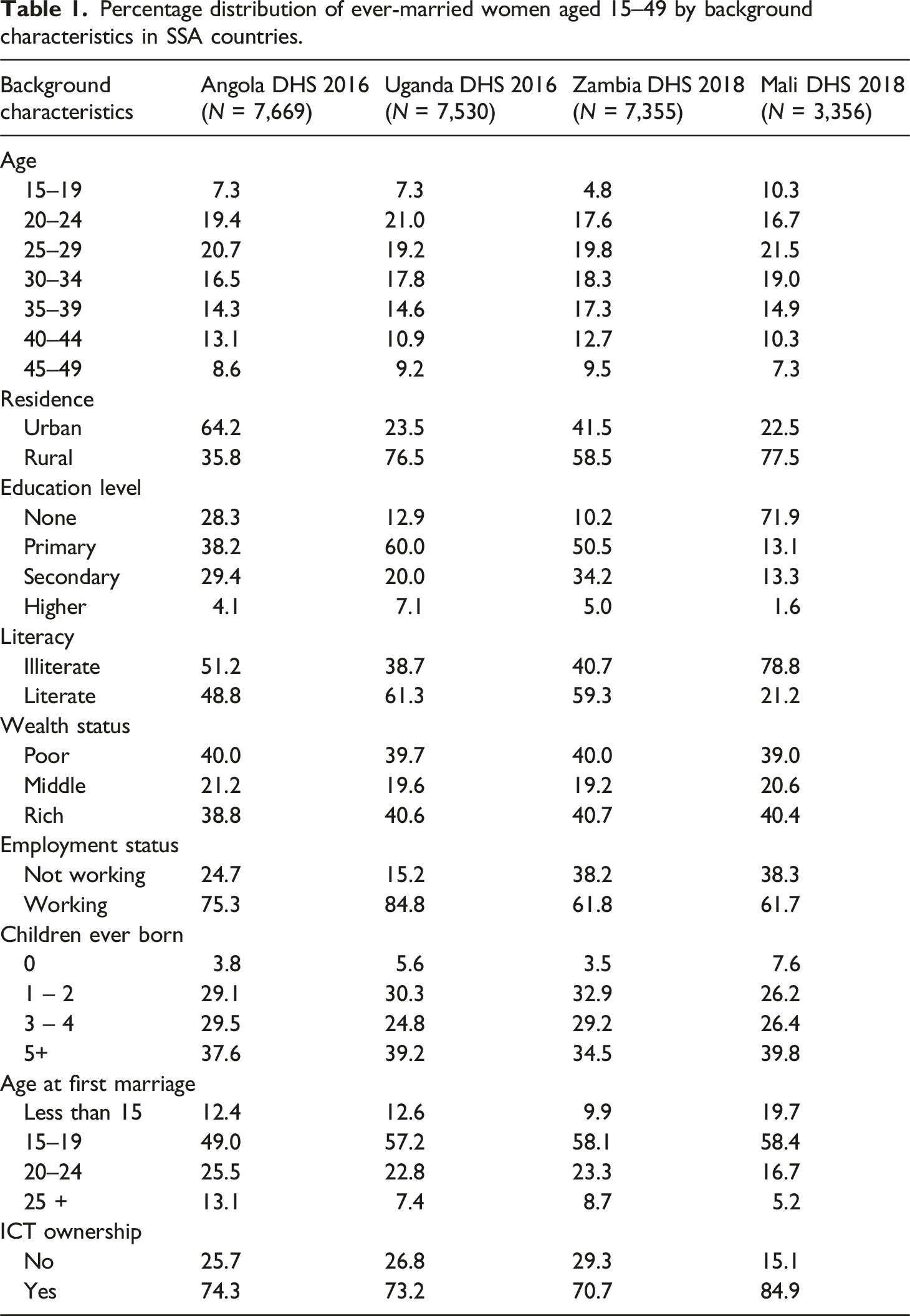
With ICT ownership, measured by ownership of a mobile phone, radio, television and Internet access, use was higher in Mali (84.9), compared to Angola (74.3%), Uganda (73.2%), and Zambia (70.7%). The level of wealth status did not vary by country, with the percentages approximately the same for poor, middle, and rich for Angola (40%, 21% and 39%), Uganda (40%, 20% and 41%), Zambia (40%, 19% and 41%), and Mali (39%, 21% and 40%). The majority (60%) of women in the four countries were in the middle wealth status or higher. A greater proportion of the women in Angola (75%), Uganda (85%), Zambia (62%), and Mali (62%) were working at the time of the survey.
Figure 1 shows that the proportion of women who experienced physical violence was lower among women who owned ICT devices such as mobile phones, radio, television and had Internet access compared to those who did not own the ICT devices. However, among women who owned ICT devices in the four countries, higher reports of physical violence were reported in Angola (25%) with the fewest reports in Mali (18%). In Uganda and Zambia, the reports of physical violence (20%) were similar for women who owned ICT devices. Uganda had the highest reports of physical violence (29%) among women who did not own ICT devices, while in Angola and Zambia, the reports of physical violence (24%) were similar for women who did not own the ICT devices. In Mali, physical violence was 19% among women who did not own ICT devices. Percent distribution of women who experienced physical violence in past 12 months by country and ownership of ICT in SSA countries.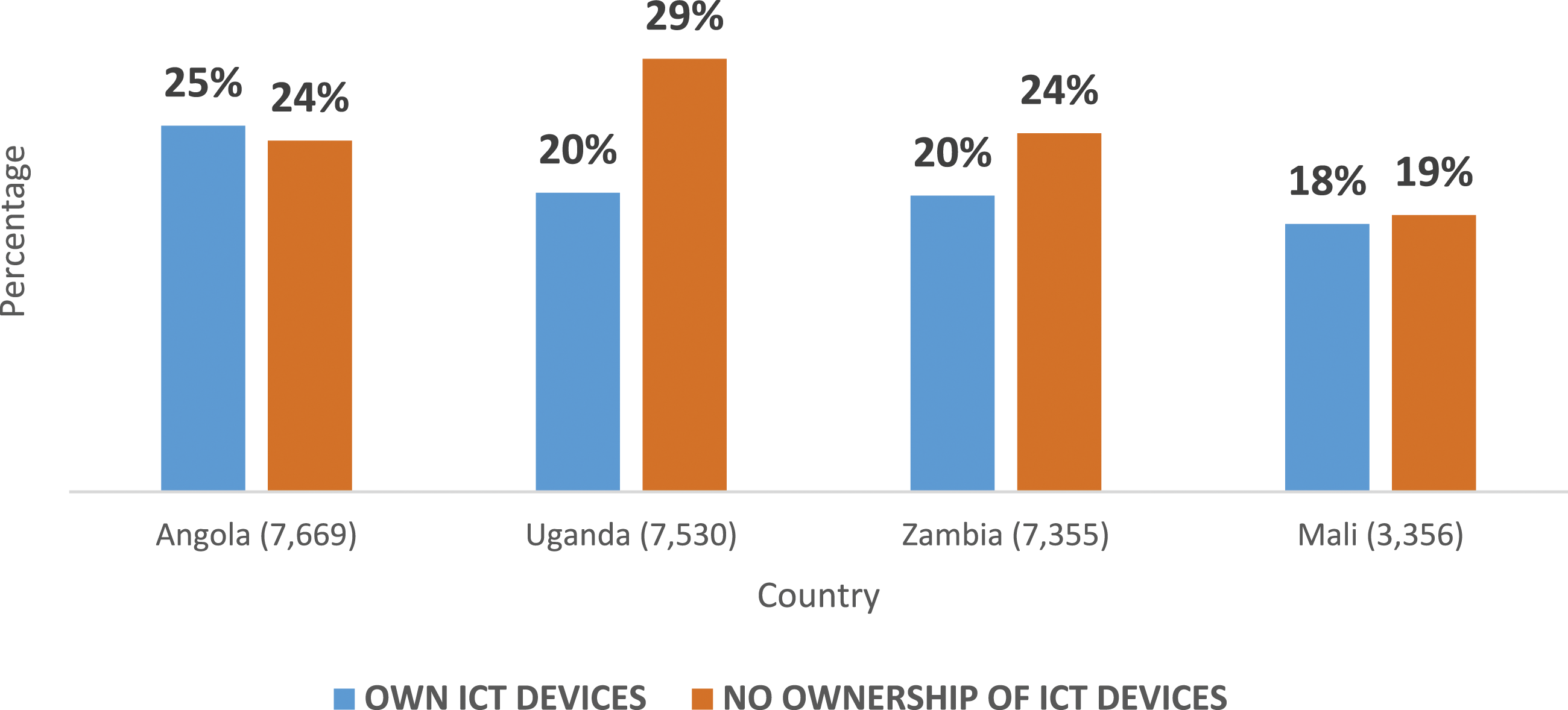
Figure 2 shows that the proportion of women who experienced sexual violence was lower among those who owned ICT devices compared to those who did not. In the four countries, among women who owned the ICT devices, higher reports of sexual violence were in Uganda (16%), followed by Zambia with 9% and the lowest number of reports were in Angola and Mali at 7%. In both Mali and Angola, the women who owned ICT devices had a similar number of reports of sexual violence. Uganda had the greatest proportion of women who experienced sexual violence, which was 18% among women who did not own ICT devices. Among women who did not own ICT devices in the four countries, the highest number of reports of sexual violence were in Uganda (18%) followed by Zambia with 14% and Mali at 11%. The lowest reports among the four countries of sexual violence among women who did not own the ICT devices were in Angola at 7%. In Angola, the proportion of women who experienced sexual violence was the same for those who owned ICT devices and those who did not. For further information on the distribution of women who experienced intimate partner violence by ownership of ICT devices in SSA countries, see Appendix 1. Percent distribution of women who experienced sexual violence in past 12 months by country and ownership of ICT in SSA countries.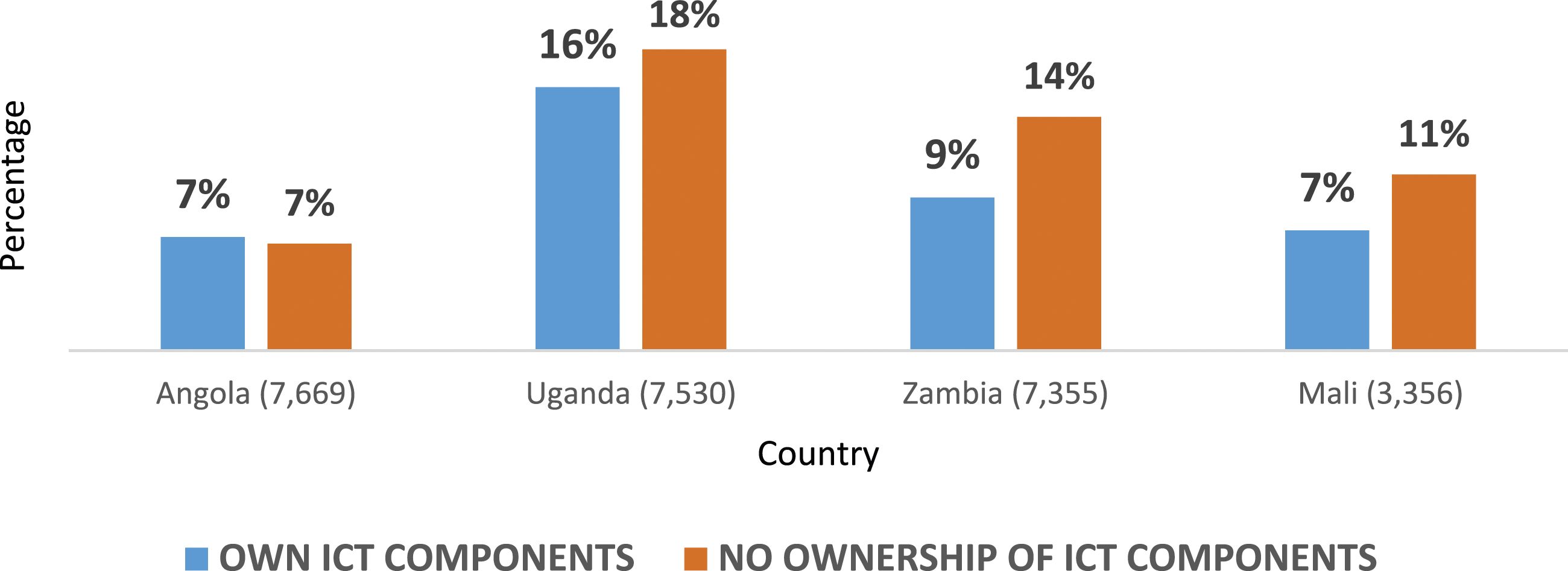
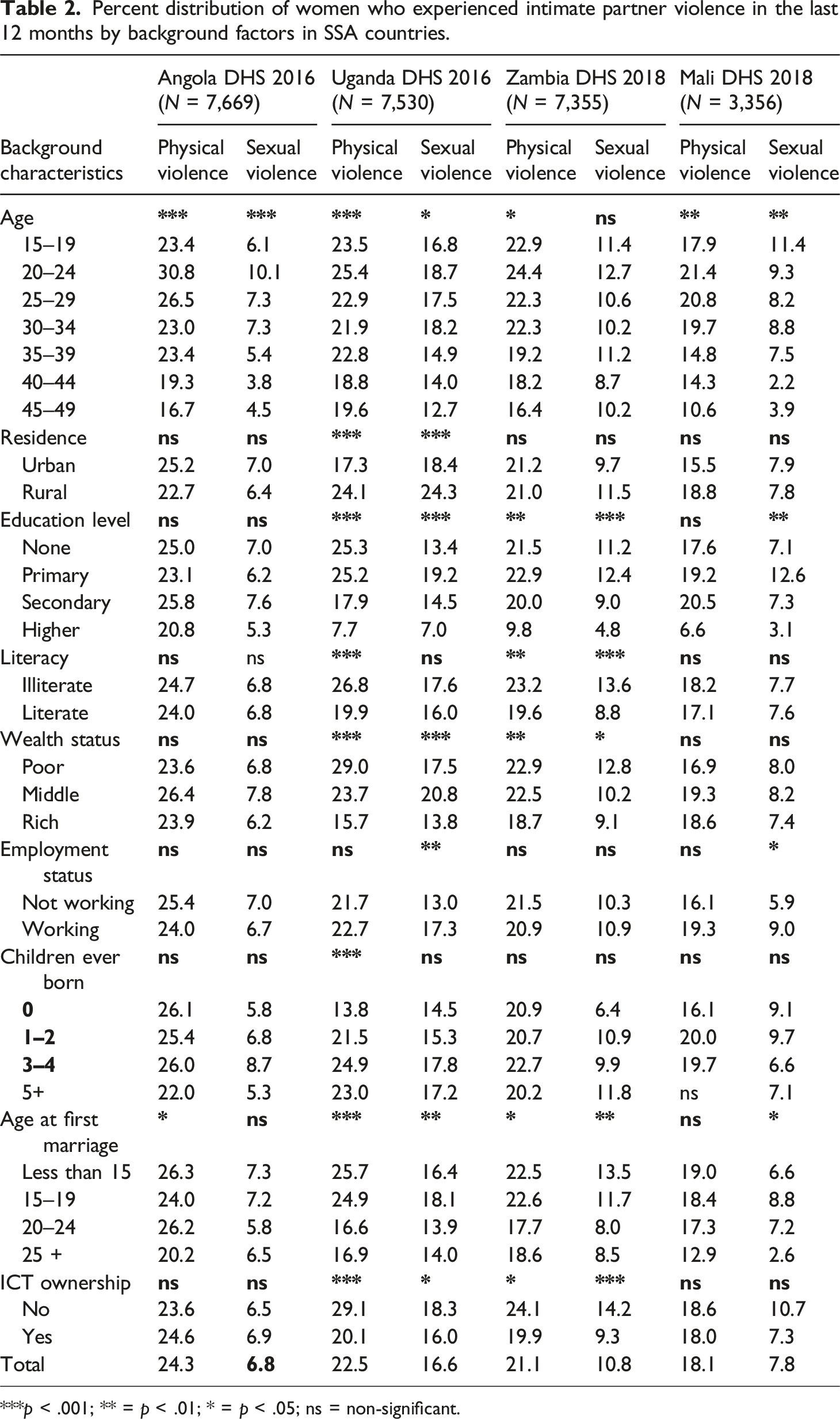
Percent distribution of women who experienced intimate partner violence in the last 12 months by background factors in SSA countries.
***p < .001; ** = p < .01; * = p < .05; ns = non-significant.
Wealth status was significantly associated with both physical and sexual violence in two countries: Uganda and Zambia. In Uganda, women whose wealth status is poor, and middle had higher reports of physical violence, (29% and 23.7%) respectively, than women classified as rich (15.7%); as well as higher reports of sexual violence (17.5% and 20.8%) compared to the rich women with 13.8%. Similarly, in Zambia, higher reports of physical and sexual violence were among women whose wealth status was poor and middle while lower among the rich women.
Out of the four countries, place of residence was significantly associated with physical and sexual violence in Uganda. Women in urban areas of Uganda had lower reports of physical violence 17.3% and sexual violence 18.4% than their counterparts in rural areas with 24.1% reporting physical violence and 24.3% reporting sexual violence.
The level of education was significantly associated with physical and sexual violence in Uganda and Zambia, while in Mali it was significantly associated with sexual violence. Women in Uganda who had no education, with primary and secondary education had higher reports of physical violence 25.3%, 25.2%, and 17.9%, respectively than women with higher education 7.7%. Women who experienced sexual violence were higher among those with no education, with primary and secondary education with 13.4%, 19.2% and 14.5%, respectively compared to those with higher education 7%. Also, in Zambia women who experienced physical and sexual violence were high in the three categories: those without education, with primary and secondary education compared to those with higher education. It was only in Zambia where literacy was significantly associated with both physical and sexual violence, meanwhile in Uganda it was significantly associated with physical violence. In Zambia, women who are illiterate constituted greater reports of physical 23.2% and sexual 13.6% violence than their counterparts who were literate with 19.6% reporting physical violence and 8.8% reporting sexual violence. In Uganda, women who are illiterate had higher reports of physical violence, 26.8% compared to literate women at 19.9%.
It was only in Uganda and Mali where employment status was significantly associated with sexual violence. In Uganda, women who were working had higher reports of sexual violence 17.3% than women who were not working 13%. In Mali higher reports of sexual violence were among the working women 9% compared to those not working 6%. Out of the four countries, children ever born was significantly associated with physical violence in Uganda. Women in Uganda, who had 3-4 children had higher reports of physical violence 24.9%, followed by those with more than five children with 23%, while only 21.5% of women with 1–2 children reported experiencing physical violence. Women without children had lower reports of physical violence 13.8%. The reports of sexual violence were also higher among women with children and lower among women with no children.
Age at first marriage was significantly associated with both physical and sexual violence in Uganda and Zambia while in Mali it was significantly associated with sexual violence. As expected, women in Uganda whose age at first marriage was less than 15 had higher reports of physical violence 26%, followed by those whose age at first marriage was 15–19 with 25%, and those whose age was 20–24, 25 and older with 17%. Also, in Uganda, the reports of sexual violence were high among women whose age at first marriage was 15–19 with 18.1%, those who got married at less than 15 had 16.4% reports, while lower reports were among those who got married at the age of 20–24, 25 and older with 14%. Zambia also had similar reports as Uganda where women who got married at age 15–19 and less than 15 had higher reports of physical violence 23%, and lower reports 18% were among those who got married at age 20–24. In Mali, higher reports of physical violence were among women whose age at first marriage was less than 15 with 19%, followed by those whose age was 15–19 with 18.4%, among the 20–24 it was 17.3% and lower among those whose age was 25 and older. The reports of sexual violence were high among women whose age at first marriage was less than 15, 15–19 and 20–24, lower reports were among whose age was 25 and older.
ICT ownership was significantly associated with both physical and sexual violence in Uganda and Zambia. Women in Uganda who did not own ICT devices had higher reports of physical violence 29.1% than women who owned ICT devices 20.1%. Reports of sexual violence were also higher among women who did not own ICT devices 18.3% compared to women who owned the devices 16%. Also, in Zambia, higher reports of physical and sexual violence were among women who did not own ICT devices 24.1% and 14.2% respectively, while lower reports of physical and sexual violence were among women who owned ICT devices 20% and 9.3% respectively.
Predictors of experience of intimate partner violence
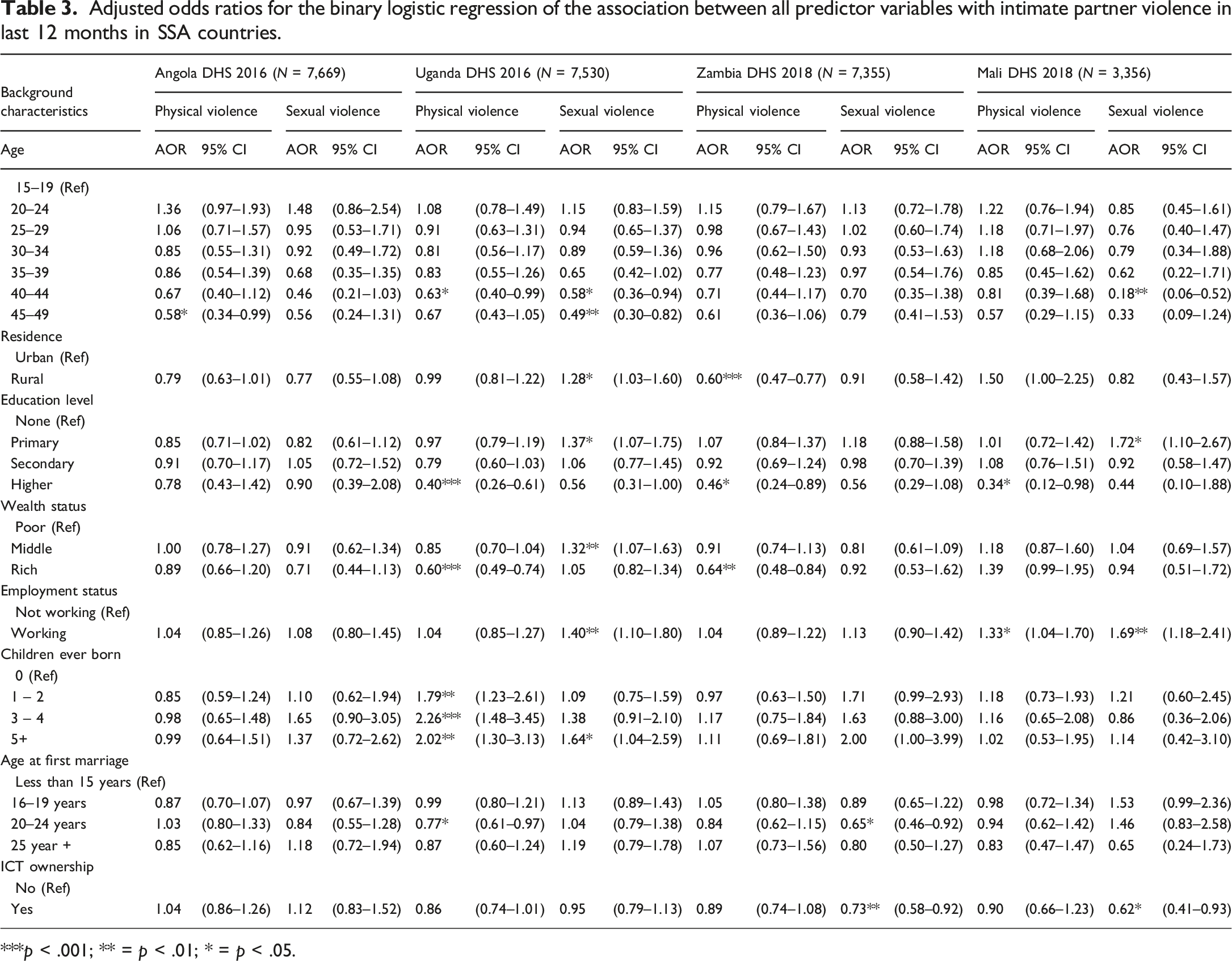
Adjusted odds ratios for the binary logistic regression of the association between all predictor variables with intimate partner violence in last 12 months in SSA countries.
***p < .001; ** = p < .01; * = p < .05.
In Uganda, women in the age group 40–44 were significantly less likely to experience physical violence (AOR = 0.6; 95% CI: 0.40 – 0.99) and sexual violence (AOR = 06; 95% CI: 0.36–0.94), compared to women aged 15–19. In Uganda, women aged 45–49 were less likely to experience sexual violence compared to women aged 15–19 (AOR = 0.5; 95% CI: 0.30 – 0.82). Women in rural areas of Uganda were significantly more likely to experience sexual violence than their counterparts in urban areas (AOR = 1.3; 95% CI: 1.03–1.60). Meanwhile, in Zambia, women in rural areas had significantly reduced odds of experiencing physical violence (AOR = 0.6; 95% CI: 0.47–0.77).
As expected, in three countries (Uganda, Zambia, and Mali), women with higher education were significantly less likely to experience physical violence compared to women with no education, (AOR = 0.4; 95% CI: 0.49–0.74; AOR = 0.5, 95% CI: 0.24–0.89; AOR = 0.3; 95% CI: 0.12–0.98). Women with primary education in Uganda and Mali were significantly more likely to experience sexual violence, compared to women with no education (AOR = 1.4; 95% CI: 1.07–1.75; AOR = 1.7; 95% CI: 1.10–2.67).
Based on wealth status, women in Uganda and Zambia who are rich were significantly less likely to experience physical violence compared to women who are poor (AOR = 0.6; 95% CI: 0.49–0.74; AOR = 0.6; 95% CI: 0.48–0.84). Among the four countries, it was only in Uganda where women from a middle wealth status were significantly more likely to experience sexual violence compared to women from the poor wealth status (AOR = 1.3; 95% CI: 1.07–1.63). In terms of employment status, women who were working in Mali were significantly more likely to experience both physical and sexual violence compared to women who were not working (AOR = 1.3; 95% CI: 1.04–1.70; AOR = 1.7; 95% CI: 1.18–2.41). In Uganda, the working women had significantly increased odds of experiencing only sexual violence than women who were not working (AOR = 1.4; 95% CI: 1.10–1.80).
It was only in Uganda were children ever born was significantly associated with experiences of both physical and sexual violence. Women in the country who had 1-2 and 3-4 children had an increased likelihood of experiencing physical violence compared to women with no children (AOR = 1.8; 95% CI: 1.23–2.61; AOR = 2.3; 95% CI: 1.48–3.45). Women with more than five children were significantly more likely to experience both physical and sexual violence than women with no children (AOR = 2.0; 95% CI: 1.30–3.13). The association of age at first marriage with intimate partner violence was statistically significant in two countries, Uganda and Zambia. Women in Uganda whose age at first marriage was between 20–24 were significantly less likely to experience physical violence compared to women whose age at first marriage was younger than 15 (AOR = 0.8; 95% CI: 0.61–0.97). Also, in Zambia, women whose age at first marriage was between 20-24 had a significantly lower likelihood of experiencing sexual violence, compared to women whose age at first marriage was less than 15 (AOR = 0.7; 95% CI: 0.46–0.92). Ownership of ICT devices was significantly associated with sexual violence in two out of the four countries. In Zambia and Mali, women who owned ICT devices were significantly less likely to experience sexual violence compared to women who did not own ICT devices (AOR = 0.7; 95% CI: 0.58–0.92; AOR = 0.6; 95% CI: 0.41–.0.93).
In the four countries, the determinants that influenced physical and sexual violence varied. In Angola, only age was significantly associated with physical violence, while in Uganda, it was age, educational level, wealth status, children ever born, and age at first marriage. In Zambia, the determinants which were significantly associated with physical violence were place of residence, educational level, and wealth status. In Mali, it was educational level and employment status. Educational level, in Zambia, Mali and Uganda, was associated with physical violence. Age and wealth status are consistently associated with physical violence in two countries, Uganda and Zambia.
In terms of sexual violence, none of the determinants were associated with sexual violence in Angola. Among the four countries, Angola presented a different situation which requires further examination of the determinants of both sexual and physical violence in the country. In Uganda, age, place of residence, educational level, wealth status, employment status, and children ever born were significantly associated with sexual violence. Meanwhile, in Zambia, age at first marriage and ICT ownership were significantly associated with sexual violence. In Mali, it was age, educational level, employment status, and ICT ownership that were significantly associated with sexual violence. Uganda and Mali share the most determinants of sexual violence such as age, educational level, and employment status.
Discussion
The main objective of the study was to examine the association between ownership of ICT devices and IPV among women in four countries in sub-Saharan Africa: Angola, Mali, Uganda and Zambia. Women in Zambia and Mali who own ICT devices had a lower likelihood of experiencing sexual violence compared to those who did not own ICT devices. This is consistent with studies which have shown that ICT devices can provide women with access to information, resources and support networks that empower them (Cardoso & Sorenson, 2017). ICT ownership, through increased access to media and information, could raise awareness among women about their rights and available resources in cases of violence. Women become more aware of their rights and resources available to them in cases of violence. For example, in an Amazonian community, the introduction of a television has been linked to the changing perceptions of gender roles (Cardoso & Sorenson, 2017), which might also explain why women with ICT access are more likely to reject IPV. However, some studies suggest that ICT can also be used by intimate partners to control and monitor women, facilitating violence (Dimond et al., 2011; Madanda et al., 2009).
These findings can be interpreted through the lens of the social exchange theory. ICT ownership, as a resource, may shift the power dynamics within relationships by providing women with greater access to support networks, information, and potentially economic opportunities. Social exchange theory posits that individuals weigh the costs and rewards of remaining in or leaving a relationship (Gelles, 1982; Sabatelli et al., 2018; Sabatelli & Shehan, 1993). In this context, ICT ownership might lower the perceived costs of leaving or resisting abusive relationships by providing women with alternative sources of support and information, which could lead to a re-evaluation of their comparison levels (CLs) and comparison levels for alternatives (CLalts). Women who own ICT devices may experience greater autonomy and access to resources outside the relationship, leading to a shift in the power dynamic, which might help reduce their vulnerability to violence.
The finding that women owning ICT devices in Zambia and Mali are less likely to experience sexual violence are in support of studies which have shown that mobile phone are associated with a lower likelihood of women experiencing emotional, physical and sexual violence (Dalal et al., 2022; Pesando, 2022). ICT is being used to implement interventions proven effective in tackling sexual gender-based violence (SGBV) for both prevention and response (Philbrick et al., 2022). Organisations involved in addressing SGBV, including the Sexual Violence Research Initiative (SVRI) and the World Bank, have noted and affirmed the growing utilization of ICT to prevent and address SGBV worldwide (Hayes, 2014). However, it is important to emphasize that these results are correlational, and no causal conclusions can be drawn from this study. While ICT ownership appears to be associated with reduced experiences of sexual violence in the two countries, the direction and underlying mechanisms of this relationship remain unclear. It is possible that women who own ICT devices have greater access to information, resources, and support networks, which could empower them to navigate violent relationships more effectively (Cardoso & Sorenson, 2017). Yet, other factors, such as the social and economic context in which these women live, may also contribute to their reduced likelihood of experiencing violence.
In addition to ICT ownership, this study controlled for various demographic and socio-economic characteristics which are risk factors or protective factors for IPV. Women aged 45-49 had a lower likelihood of experiencing both sexual and physical violence in the past 12 months compared to women aged 15–19. In Mali, those aged 40-44 had a reduced likelihood of experiencing sexual violence. This is consistent with studies that have indicated that as age increases, the experiences of physical violence decrease among older women (Pathak et al., 2019). As women age, they may gain more economic independence and social support networks. This increased independence can make them less reliant on abusive partners and give them more resources to leave if needed.
Women with higher levels of education in Uganda, Zambia, and Mali were less likely to experience physical violence compared to women with no education suggesting that education may serve as a protective factor. This agrees with studies that have shown that women with higher levels of education are less likely to experience physical or sexual violence (Dalal et al., 2022; Oluwagbemiga et al., 2023). Social exchange theory can help explain this finding, as educated women may have higher comparison levels, meaning they expect more equitable and respectful treatment in their relationships. Education may also increase women’s awareness of resources and legal protections, thus enhancing their perceived alternatives outside the relationship (CLalts). However, it is important to note that women with primary level education in Uganda and Mali were significantly more likely to experience sexual violence compared to women with no education. This is consistent with studies which have shown that women with low levels of education experience IPV that might be linked to their financial dependence on their partners (Rapp et al., 2012; Weitzman, 2018). This may indicate that education alone is not sufficient to protect against IPV without other resources, such as financial independence or social support. Women from a wealthier financial status in Uganda and Zambia had a reduced likelihood of experiencing physical violence compared to those who are poor. It was only in Uganda where women from a middle wealth status were more likely to experience physical violence compared to women who are poor.
Employment was also associated with IPV outcomes in this study, though the relationship varied across countries. In Uganda, employed women were significantly less likely to experience sexual violence than unemployed women. However, in Mali, employed women were more likely to experience both physical and sexual violence compared to unemployed women. This is consistent with studies which have shown that women who are employed tend to be independent and are able to voice their opinions within a relationship, which exposes them to an increased risk of IPV (Castro et al., 2008; Dalal, 2010; Vyas & Watts, 2009). Employment can strengthen a woman’s social bonds by providing them with some financial autonomy, which potentially reduce dependence on an abusive partner and making it easier to leave the relationship. Employment can alter the cost-benefit analysis of staying in an abusive relationship for women. It offers economic independence, a sense of accomplishment, and improved self-esteem and this increases the perceived benefits of leaving an abusive relationship. From a social exchange theory perspective, employed women may have more alternatives (CLalts), making it easier to leave abusive relationships.
Limitations of the study
This study has a number of limitations. First, the ownership of ICT devices in the household does not mean that women have access to ICT. The ICT might be available within the home, although the woman might not be able to use it. The study is cross-sectional, which makes it impossible to infer causality. We are unable to detect the direction of the association between ICT ownership and IPV. However, the study’s findings are important in the formulation of policies and programmes aimed at addressing violence against women. Ownership of ICT devices should be promoted among women given the findings that women who own ICT devices reported lower levels of sexual violence. This shows that ICT may be raising awareness and offering women a platform for social support and advice about IPV. The spread of ICTs within the region might be leading to positive changes in existing values and beliefs, which promote gender inequalities and expose women to abuse. Although access to ICT should be advocated for women, policy makers should be aware that women’s ownership of ICT devices may cause some partners to become more violent due to the increased independence that comes with the use of the devices.
Another significant limitation of this study is the exclusion of gender identity and disability variables when examining experience of intimate partner violence. By not accounting for these critical factors, the study potentially overlooks the unique experiences and vulnerabilities of individuals who do not conform to binary gender norms or who live with disabilities. This omission restricts the depth of understanding regarding how IPV affects these diverse populations and may lead to incomplete or biased conclusions. Future research should integrate gender identity and disability to provide a more comprehensive analysis of IPV, ensuring that the experiences of all individuals are represented. Further research is also needed to explore the specific mechanisms through which ICT ownership reduces IPV and to understand the variations observed across countries. Future research can explore the specific ways women in sub-Saharan Africa utilise ICTs to navigate abusive relationships and access support networks. Such understanding can be used to enhance policies that reduce violence against women.
Future research
Given the cross-sectional nature of this study, future research should aim to explore the mechanisms through which ICT ownership might influence IPV experiences. Longitudinal studies are needed to determine whether ICT devices actively reduce IPV and to understand the causal mechanisms through which ICT ownership might influence IPV and whether this relationship varies across different forms of violence. Future research should examine the specific ways in which women use ICT to prevent or cope with violence. Understanding the role of ICT in sub-Saharan Africa can inform targeted interventions that utilise the potential of technology to empower women and prevent IPV. Furthermore, examining the intersections of ICT use with gender identity and disability is crucial to provide a more comprehensive understanding of how diverse groups experience IPV.
Conclusion
In conclusion, this study reveals that ownership of ICT devices was statistically insignificantly associated with experiences of physical violence, but women who own ICT devices are more protected from sexual violence. The strength of this relationship varies across countries and types of IPV. These findings suggest that ICT ownership could be a tool for women’s empowerment and protection against sexual violence. The link between ICT ownership and reduced sexual violence aligns with social exchange theory by highlighting how ICT ownership may alter the perceived costs and rewards in intimate relationships, influencing women’s vulnerability to sexual violence. When women own ICT devices, they gain access to valuable resources such as information, social support networks, and empowerment tools, which can shift the power dynamics in their relationships. This shift in the balance of power potentially makes women less vulnerable to sexual violence, as their partners may perceive a higher cost for abusive behaviour due to the greater autonomy and external support women gain from ICT use. Women with ICT access may have higher expectations (CLs) for what they deserve in a relationship and become more aware of alternative options (CLalts) outside of abusive situations. Promoting ICT access and digital literacy through government initiatives could be helpful. Governments can invest in programmes that increase access to affordable ICT devices and Internet connectivity, especially for women in vulnerable communities. ICT can be used in IPV interventions to raise awareness and as a channel for women to communicate or report any practices related to IPV.
Supplemental Material
Supplemental Material - Information communication technologies and intimate partner violence among women in sub-Saharan African countries
Supplemental Material for Information communication technologies and intimate partner violence among women in sub-Saharan African countries by Marifa Muchemwa, Million Phiri and Oluwatoyin Aladejebi in Journal of Social and Personal Relationships
Footnotes
Declaration of conflicting interests
The author(s) declared no potential conflicts of interest with respect to the research, authorship, and/or publication of this article.
Funding
The author(s) disclosed receipt of the following financial support for the research, authorship, and/or publication of this article: This study was conducted with support from the United States Agency for International Development (USAID) through The DHS Program (#720-OAA-18C-00083). The views expressed are those of the authors and do not necessarily reflect the views of USAID or the United States Government.
Open research statement
As part of IARR’s encouragement of open research practices, the author(s) have provided the following information: This research was not pre-registered. The data used in the research are available. The data can be obtained at:  . The materials used in the research are available. The materials can be obtained by emailing:
Supplemental Material
Supplemental material for this article is available online.
Note
References
Supplementary Material
Please find the following supplemental material available below.
For Open Access articles published under a Creative Commons License, all supplemental material carries the same license as the article it is associated with.
For non-Open Access articles published, all supplemental material carries a non-exclusive license, and permission requests for re-use of supplemental material or any part of supplemental material shall be sent directly to the copyright owner as specified in the copyright notice associated with the article.
