




Abstract
Research highlights the positive impact of social connectedness on subjective well-being. In this paper, we test a model in which an identity-based mechanism links a structural form of connectedness (significant social ties) with two psychological well-being outcomes, life satisfaction and self-esteem. Using data from the LIVES Longitudinal Lausanne Youth Study (LIVES-LOLYS, N = 422), a longitudinal mediation path model tests direct and indirect effects, via the strength of social identification, of the number of significant social ties in two life domains (friends and family) on life satisfaction and self-esteem. Results showed positive associations between the number of significant ties and social identification in the concordant domain, empirically linking the structural and subjective forms of social connectedness. Moreover, our model displays significant indirect effects in the friend domain, but not in the family domain. Having more friends as significant social ties predicted higher social identification with friends, and this was longitudinally associated with higher life satisfaction and self-esteem. Findings show a new mechanism linking structural and subjective forms of social connectedness, unpacking their concerted impact in protecting well-being. The differences between the friend and family domains are discussed in the framework of both life-course and social identity perspectives.
Introduction
Extensive research over the last decades has evidenced the importance of social relations for psychological well-being. Two pivotal meta-analyses on the associations between social isolation and health for example revealed the tremendous beneficial potential of significant group memberships and social networks, suggesting that the consequences of being socially disconnected were comparable to unfavorable health behaviors such as regular smoking (Holt-Lunstad et al., 2010, 2015). Psychological (Holt-Lunstad et al., 2015), social-psychological (Haslam et al., 2009), and sociological (Smith & Christakis, 2008) lines of research have presented ample evidence regarding the social dimensions underlying well-being. Social connectedness (Santini et al., 2015) and social integration (Brissette et al., 2000) research, in turn, has revealed that being socially connected generally predicts better mental health and subjective well-being.
Notwithstanding the ample evidence in favor of the critical role of social relations as a key resource for well-being, the inner workings of the nuanced and context-dependent impact of social connectedness on well-being remain underexplored (Hoffman et al., 2023). A key reason for this relative neglect is that connectedness and relationality have two fundamental facets that have only rarely been examined jointly. On the one hand, relations are defined by structural characteristics that are captured by the number, configuration, and frequency of actual social relations and contacts (e.g., with friends, peers, colleagues, and family members). On the other hand, relations have a subjective dimension that pertains to social identities and a psychological sense of belonging to social groups.
The present article unpacks the relationship between social relations and well-being by jointly considering the role of both structural and subjective facets of social relations for subjective well-being, assessed with life satisfaction and self-esteem. In the context of life transitions in young adulthood, we longitudinally test a mediation model whereby social identification (with friends and family) accounts for the impact of significant social ties on well-being.
Structural and subjective dimensions of social relations
Groups and social connections are grounds of social contact. But within social groups, psychological links are established and groups thereby become sources of meaning, belongingness, and identification (Turner et al., 1987). Identification with social groups thus subjectively defines who we are (Jetten et al., 2012). The literature on the subjective dimensions of social connectedness, and most prominently the ‘social cure’ approach (Jetten et al., 2012), highlights the role of social identification as a robust predictor of psychological well-being. Social identity promotes well-being through different social cure pathways (C. Haslam et al., 2018), such as increased social support (S. A. Haslam et al., 2005), need satisfaction (Greenaway et al., 2016, 2017), sense of control, and self-efficacy (Guan & So, 2016). The role of multiple and positive social identities as vital psychological resources (Jetten et al., 2015, 2017) has been revealed across a variety of health contexts, including mental health (Häusser et al., 2020), stroke recovery processes (C. Haslam et al., 2008), prevention and alleviation of depressive symptoms (Cruwys et al., 2013, 2014a, 2014b), and adjustment with aging transitions (C. Haslam et al., 2014). By contrast, the absence of social identification is a significant predictor of vulnerabilities throughout the lifespan (Pacquiao & Douglas, 2019; Rook & Charles, 2017). Feeling isolated and the subjective state of loneliness have been associated with the experience of depressive symptoms (Barger et al., 2014; Cruwys et al., 2013, 2014a, 2014b), anxiety (Lee & Robbins, 1998), and common mental disorders (Postmes et al., 2019).
Notwithstanding the undisputed role of subjective dimensions of connectedness as a key determinant of physical and mental health, evidence also supports the conjecture that structural dimensions of social connectedness are linked to the capacity to achieve and maintain well-being (Tsai & Papachristos, 2015). Structural aspects of social relations can be assessed with social network measures (e.g., network size, presence of social ties, homophily, density, centrality 1 ) and participation in social activities (e.g., number and frequency of social contacts). Although social contacts have shown strong associations with health and longevity, the evidence remains inconclusive regarding directionality of this association and the respective role of content, quantity, and quality of social contacts. For instance, Shor and Roelfs’ (2015) meta-analysis on the effects of social contact on mortality showed that contact with family members had no significant effect on mortality. Based on the moderate effect sizes and the lack of association for some subgroups (i.e., women) in this study, social contact frequency may thus not be as beneficial to one’s health as previously thought. Moreover, the mere quantification of social contacts has been considered a reductionist operationalization of social relations that overlooks the subjective dimensions of social relations (Sani et al., 2012).
Linking structural and subjective dimensions of social relations in explanations of well-being
Social identity processes operate within social structures defined by measurable characteristics of social relations such as the number and frequency of social contacts. Yet, despite the plausible assumption that well-being is shaped by both structural and subjective dimensions of social relations, studies addressing both aspects simultaneously are rare. In social network research, for example, social relations are measured as the number of social ties, position of a node (i.e., an individual) in the network, and network composition. By integrating social identity and social network approaches, Mojzisch and colleagues (2021) explored the interactive effects of social network centrality and social identification on stress. Their findings showed that being a central and prominent actor in a group is only beneficial for buffering stress when a subjective sense of belonging (i.e., identification) is present. Another study with college sports club teams revealed that network centrality and density (the number of actual ties proportionate to the potential ties) modelled positively with team identification which was taken as a proxy of well-being (Graupensperger, Panza, et al., 2020). Outdegree 2 friendship was positively correlated to all dimensions of social identification, whereas indegree social interaction 3 was only related to ingroup ties, where social contacts determined social identification. While in this study measures of well-being were not directly included, in a subsequent study on identity maintenance, changes to athletic identity were examined as associated with student-athletes’ mental health, teammate social support, and connectedness from before to during Covid-19 pandemic. Results revealed that student-athletes who reported greater connectedness with teammates reported lower dissolution of their athletic identity and in most models reported better mental health and well-being (Graupensperger, Benson, et al., 2020). Walker and Lynn (2013), in turn, studied the relationship between role identity and social network size, density, and closeness to role-based others. The results indicate that the quantity of role-based contacts plays a pivotal role in shaping the prominence of one’s role identity, whereas the emotional attachment, as measured by the strength of relationships with role-based ties, does not exhibit a similar influence. Consequently, the study revealed that identity salience does not arise solely from social and emotional attachments to role-based groups. Instead, the findings suggest that a role identity becomes more conspicuous when role-based individuals become deeply integrated into an individual’s social network.
Social integration research offers another demonstration of the role of perceived structural facets of social relationships (e.g., significant social ties, number of significant others, and frequency of contacts) as health and well-being determinants. For instance, Lim and Putnam (2010) demonstrated that congregational social contacts and religiosity predict life satisfaction, through increased religious identity. Herein, the structural measure of congregational connections predicted religious identity as the subjective significance of religion for defining one’s self.
Another line of research has examined the role of actual social contact with significant others (family and friends, in particular) and identification with those others as explanations for well-being. One study compared the effects of group identification and social contact as predictors of mental health in the context of friendship in army groups. Group identification had a greater impact on mental health than social contact, indicating that mere social contact may not always result in improved well-being (Sani et al., 2012). Similarly, a longitudinal comparison of the effects of the intensity of family interaction and family identification on ill-health in undergraduates showed that greater family identification at T1 predicted lower physical health issues at T2, whereas the reverse hypothesis was not confirmed (Wakefield et al., 2016). Additionally, family contact at time 1 was reported to be unrelated to ill-health at time 2. Another longitudinal study on university identification and contact of undergraduate students found that higher university identification leads to better subjective well-being over time, while reciprocal causality was not confirmed. Moreover, no effect of university student contact on subjective well-being was observed over time (Wakefield et al., 2018). Similarly, Cruwys et al. (2014a, 2014b) study revealed that controlling for frequency of group attendance, higher identification predicted less severe depression. The findings of this approach thus consistently suggest that greater social identification predicts greater well-being in family contexts and interpersonal relations. In other words, the protective effect of social relationships on well-being cannot be reduced to effects of mere contact.
To sum up, the literature yields mixed evidence regarding the exact nature of the process that links structural and subjective connectedness to health and well-being. Some studies showed a moderating effect of social identification in the relationship between network centrality (as a structural measure of connectedness) and stress (Mojzisch et al., 2021). Other research, however, has presumed a mediating role of social identification: network centrality and density were found to be predictors of social identification, used as a proxy of psychological well-being (Graupensperger, Panza, et al., 2020). Sani and colleagues (2012) have found an additive effect in their model including both structural and subjective measures as predictors of well-being, yet their results indicated a possible mediation mechanism which was discussed as an avenue for future research.
Social connectedness and well-being in young adulthood
The analysis of the joint role of structural and subjective forms of social connectedness is particularly important in the context of young adulthood. Well-being at this critical period of the life course has become a major public health concern, since “many of the factors that contribute to lifelong well-being are, or are not, acquired or solidified” (Ross et al., 2020, p. 472). This period of life is also characterized by shifting patterns of social relationships and networks that define critical life course transitions during young adulthood, such as leaving the parental home, entering the labour market, or going through educational transitions such as starting university (Wrzus et al., 2013). Such life course transitions involve a gradual shift in social identities, where changes in the salience of certain identities occur due to multiple self-categorizations and socially functional identifications (Emler, 2005). Adolescents and young adults thus experience demands for coping with identity change and challenge, with potentially significant effects for their well-being. Iyer and colleagues (2009) for example investigated educational transitions as a case of identity change where the transition (before starting university and after 2 months at university) yielded a detrimental effect on well-being, but identification as a university student improved well-being.
Social identity contents are modulated based on the importance of social ties with peers, friends, colleagues, and family. Transition to adulthood implies greater belonging to social groups and differentiations in the importance and presence of ties and identification with family members (Scabini et al., 2007).
However, the relative social obligation of maintaining significant social ties (Feld, 1981) may cause complex relational patterns such as problematic and ambivalent social ties (de Bel et al., 2021). In this case, significant social ties may not be easily changed or regulated as they interfere with growth and support (family ties) or interfere with social desirability and sense of belonging (friendship ties). Conclusively, modifications in social identity include changes in how individuals are defined and treated by the people they already know, and changes in social ties they may know and regularly associate with (Emler, 2005). Thus, comparing such ties and the social identification with family members and friends in transition to adulthood sheds light on significant intertwined associations.
Transition to adulthood also critically impacts perceived well-being and self-appraisal processes of individuals (Bakouri & Staerklé, 2015; Hoffman et al., 2023). “Subjective well-being (SWB) reflects an overall evaluation of the quality of a person’s life from their own perspective” (Diener et al., 2018, art. 15, p. 1). Subjective well-being constructs generally include an individual’s perception of their own quality of life. Thus, different operationalizations can be considered to appraise the subjective evaluation like general satisfaction with life (Diener et al., 1985). Additionally, other life domains may contribute to the perceived subjective well-being among which self-appraisal processes (i.e., self-esteem) can be considered as more culturally- and developmentally-sensitive indicators of SWB (Diener et al., 2018).
The present research
The aim of the present study is two-fold: on the one hand we examine the link between structural (significant social ties in the context of family and friendship relations) and subjective forms of connectedness (social identification with friends and family) in the context of young adulthood. On the other hand, we longitudinally investigate the mechanism linking these two forms of social connectedness to life-satisfaction and self-esteem (as dimensions of well-being). We test a model with a longitudinal indirect association between significant social ties and well-being through social identification. We focus on friendship and family dimensions because these are considered the most important relationships during adolescence and early adulthood (Luijten et al., 2021).
More specifically, we hypothesized that participants with a higher number of significant social ties at T1 will have higher levels of identification with the corresponding group at T2 for friends (H1) and family (H2) dimensions, and that a higher level of identification at T1 for friends (H3) and family (H4) dimensions will predict better well-being one year later at T2. On top of these direct associations, we expect that the number of ties with friends (H5) and family (H6) will be indirectly associated with well-being through social identification with the concordant group.
Method
Participants and data
Sociodemographic characteristics of participants in the study.
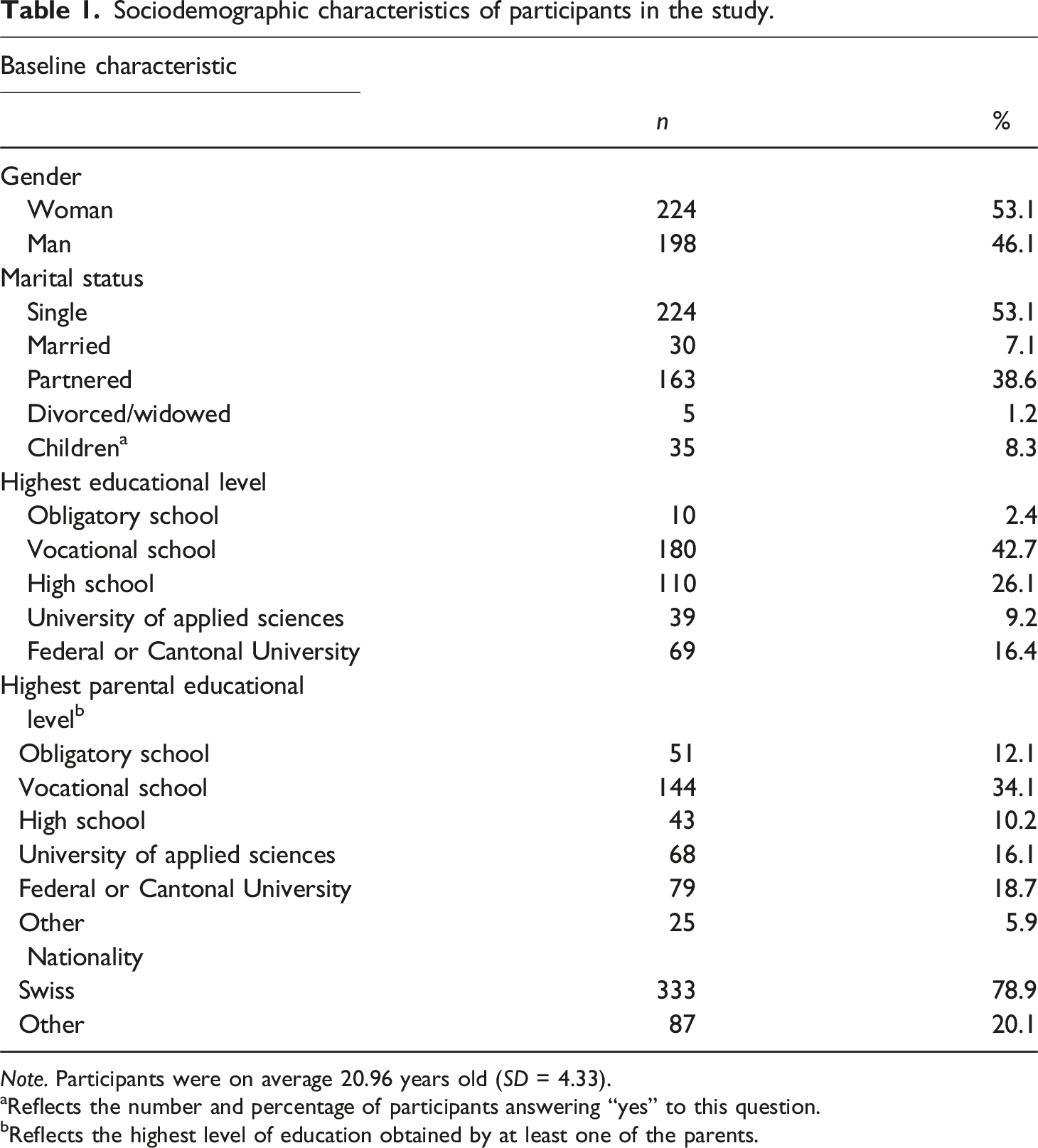
Note. Participants were on average 20.96 years old (SD = 4.33).
aReflects the number and percentage of participants answering “yes” to this question.
bReflects the highest level of education obtained by at least one of the parents.
Ethical considerations
The manuscript adheres to ethical guidelines specified in the APA Code of Conduct as well as authors’ national ethics guidelines. At the time of data collection, explicit institutional approval by an ethics committee was not required on the university or national level. The research ethics commission at the university was only constituted after data collection for this study was complete. Nevertheless, the authors confirm that strict measures were taken to ensure anonymity and confidentiality of participants. Any identifying information was removed, contact information was stored in an encrypted, password locked file on a separate server from the research data, and only accessible to members of the research team. No sensitive information was collected, and no potential risks were bestowed by participation in the study. Moreover, participation was entirely voluntary, and subject to informed consent. Letters were addressed to parents when participants were below legal age at the start of the study and voluntarily consented to their participation.
Measures
All measures were assessed using a six-point Likert scale (1 = not at all, 6 = yes, absolutely). Social identification with family members and friends was measured on a two-item scale for each group. Attachment (‘I am very attached to my friends’, adapted from Phinney, 1992) and ties (‘I have strong bonds with my friends’, adapted from Leach et al., 2008) were averaged to create a measure of identification with friends (r T1 = .78, r T2 = .82) and family (r T1 = .83, r T2 = .86).
Subjective well-being was assessed with two items adapted from the Satisfaction with Life Scale (Diener et al., 1985) using the statements ‘The conditions of my life are excellent’, and ’I am satisfied with my life’ (r T1 = .47, r T2 = .49).
Self-esteem was measured with three items adapted from the Rosenberg Global Self-Esteem Scale (Rosenberg, 1965) using items like ‘On the whole, I am satisfied with myself’, ‘At times I think I am no good at all (reversed)’, ‘I feel that I have a number of qualities’. (α T1 = .69, α T2 = .72).
Frequencies of categories mentioned as significant social ties in the two study waves.
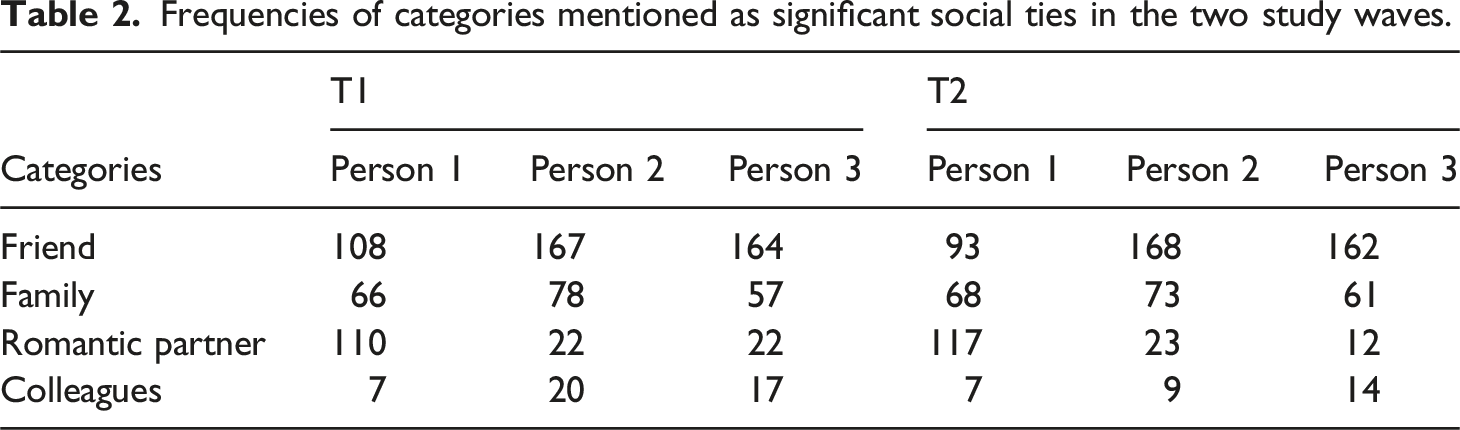
The following measures were included as control variables: age, gender, total number of significant social ties mentioned (ranging from 0 to 3, M T1 = 2.79, M T2 = 2.69), and order of reported ties (i.e., friends before family, family before friends, and romantic partner before friends or family).
Analytic strategy
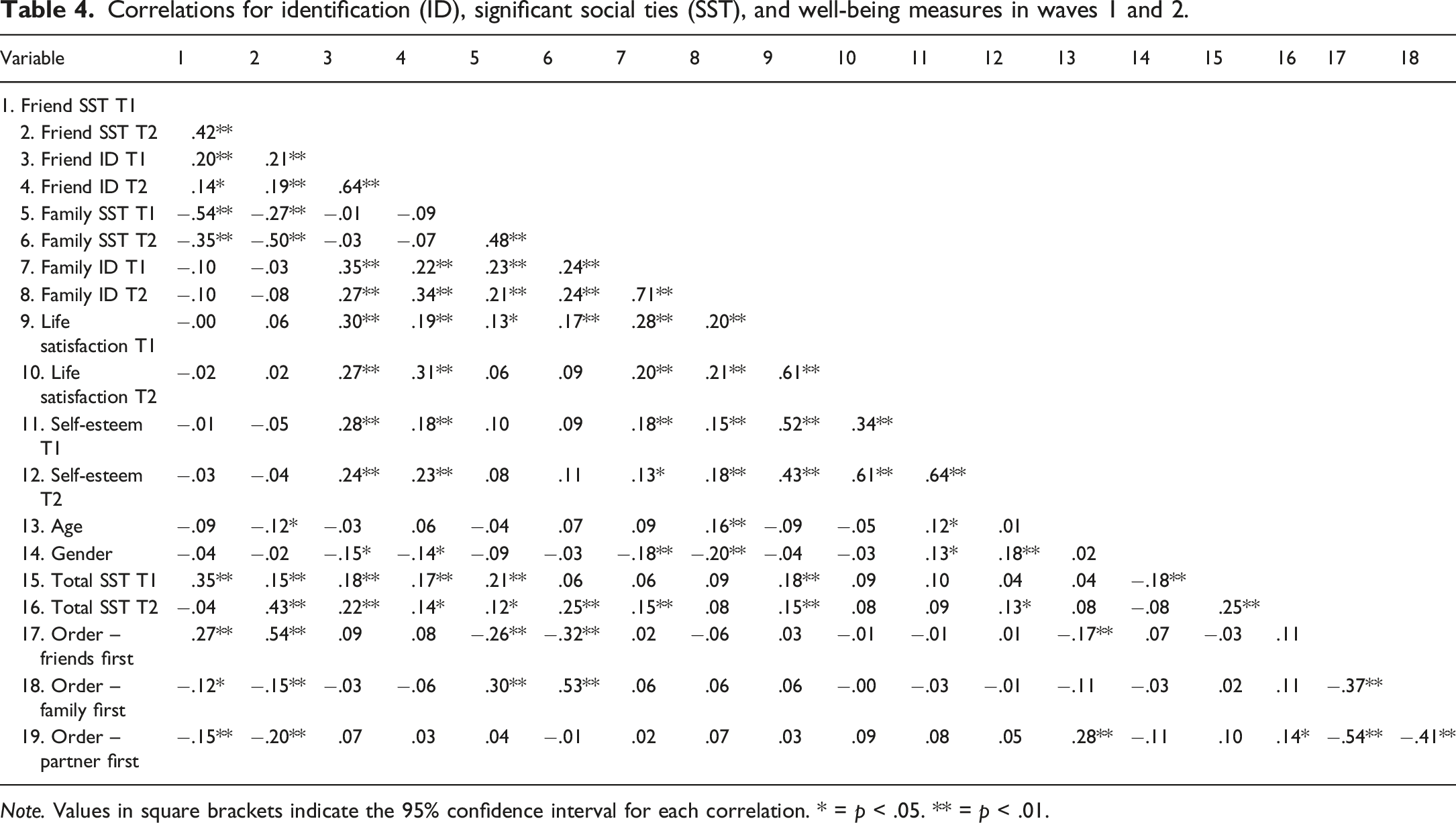
Our aim was to longitudinally test the relationship between significant social ties and identification with family and friends, and their impact on self-esteem and life satisfaction. We first present descriptive statistics and correlations of the social connectedness and well-being measures at the two time points. We then tested our hypotheses using a cross-lagged path analysis using the lavaan version 0.6 package in R software (R Development Core Team, 2023; Rosseel, 2012).
Using a cross-lagged design affords advantages as well as challenges. The most prominent advantage is that including a predictor and an outcome that were measured at two subsequent timepoints allows for greater certainty in asserting a causal influence. Given that a mediation describes a process in which a variable produces a causal impact on an outcome through an intermediate variable, a longitudinal design provides the best-fitting analytic tool for testing a mediation hypothesis (Little, 2024). Though our data did not provide three time points, modelling the predictor and mediator at T1 and the outcome at T2 presents a necessary compromise between the ideal and the possible. Using a structural equation modelling (SEM) approach allowed us to include within the same model both outcome variables (life satisfaction and self-esteem) and to estimate the four indirect paths (Figure 1). A total of four Indirect effects were estimated within the lavaan path model in R, each of them computed based on the product of the predictor and corresponding mediator (Rosseel, 2012). Path analysis model with the indirect effects of identification.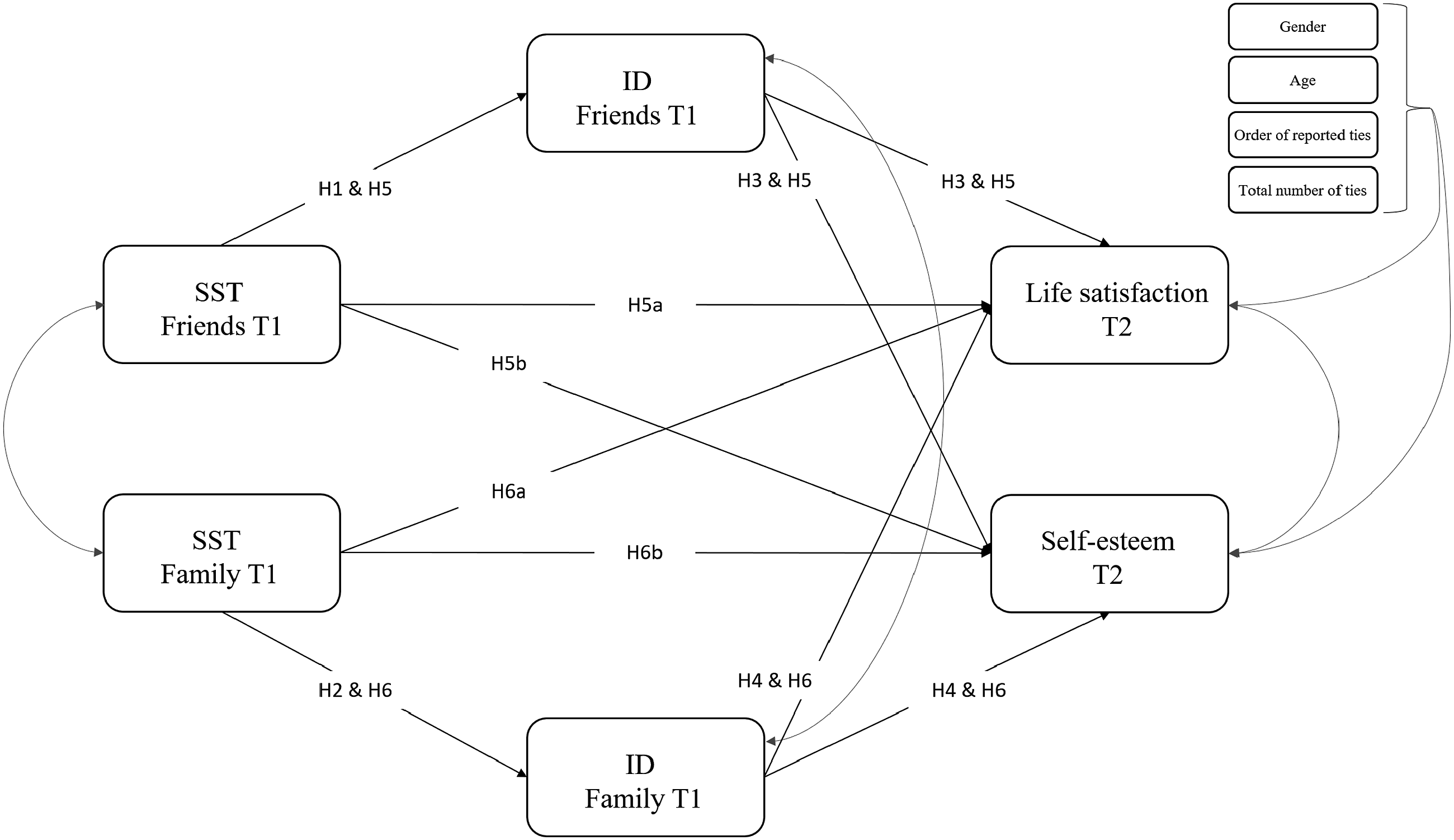
Nevertheless, attrition is an inherent feature of longitudinal research, and the management of missing data in such designs represents a major challenge, requiring different forms of estimation (Schafer & Graham, 2002). Missing data were imputed using the lavaan built-in FIML option (the model with complete data is provided in the supplementary materials and shows comparable results). Of participants in the study, N = 288 had complete data with no missing pieces of information, 6.35% of the data was missing and needed imputing. As data was continuous (we did not impute the missing exogenous categorical variables), the selected estimator was maximum likelihood (Little et al., 2014). All regression coefficients in the model are standardized, and confidence intervals are at 95%. All regression coefficients in the model are standardized, and confidence intervals are at 95%.
Results
Descriptive statistics
Means, standard deviations and difference tests for identification, significant social ties, and well-being measures at waves 1 and 2.
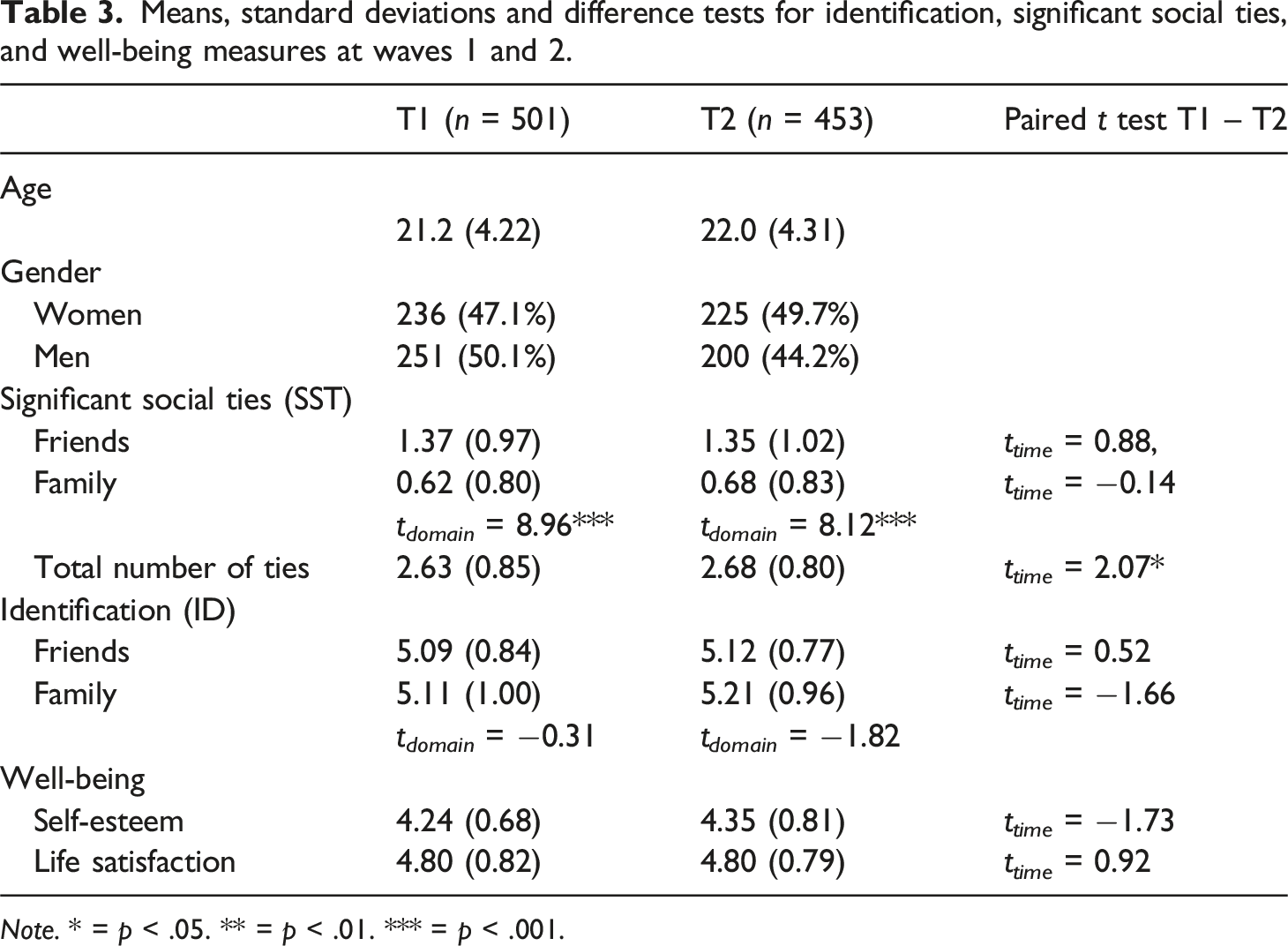
Note. * = p < .05. ** = p < .01. *** = p < .001.
Correlations for identification (ID), significant social ties (SST), and well-being measures in waves 1 and 2.
Note. Values in square brackets indicate the 95% confidence interval for each correlation. * = p < .05. ** = p < .01.
Longitudinal path analysis
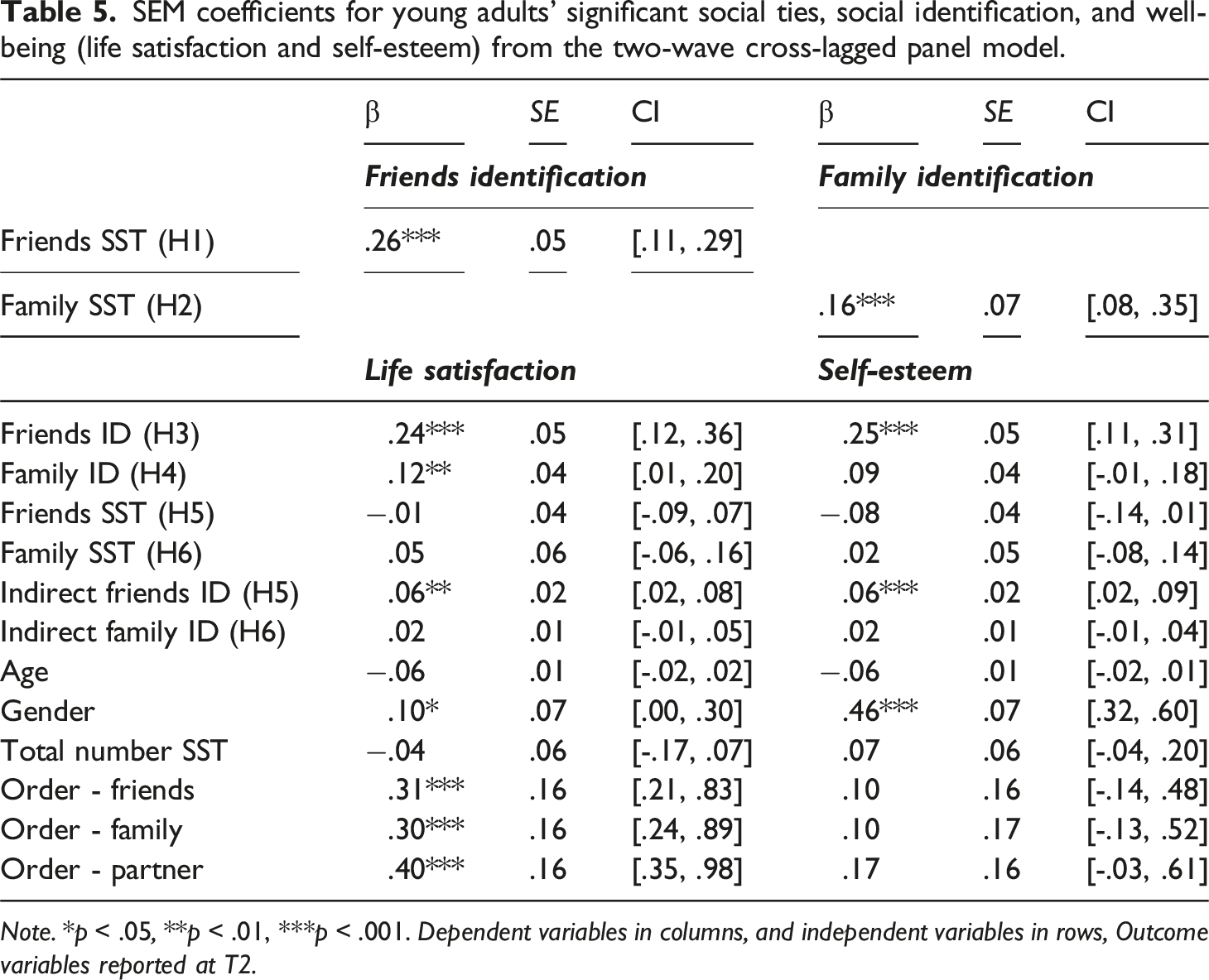
SEM coefficients for young adults’ significant social ties, social identification, and well-being (life satisfaction and self-esteem) from the two-wave cross-lagged panel model.
Note. *p < .05, **p < .01, *** p < .001. Dependent variables in columns, and independent variables in rows, Outcome variables reported at T2.
Supporting hypotheses 1 and 2, the number of significant social ties with friends was a strong and positive predictor of level of identification with friends (β = .26, p < .001; CI [.11, .29]). Furthermore, the number of significant social ties with family was a strong and positive predictor of level of identification with family (β = .16, p < .001; CI [.08, .35]). Supporting hypothesis 3, identification with friends at T1 positively predicted both life satisfaction and self-esteem at T2. As shown in Table 5, hypothesis 4 was only partially supported, as identification with family at T1 positively and significantly predicted only life satisfaction at T2. While the coefficient for self-esteem at T2 was positive as well, it did not reach a reliable level of significance.
The indirect effects regarding the friendship dimension were positive and significant, supporting hypothesis 5. The coefficient for the indirect effect via identification with friends at T1 between number of significant ties with friends at T1 and life satisfaction (β = .06, p < .001; CI [.02, .09]) was of the same magnitude as for self-esteem (β = .06, p < .001; CI [.02, .09]), both at T2. The indirect effects via family identification between number of significant family ties and life satisfaction (β = .02, ns) and self-esteem (β = .02, ns), however, was not detected, leading us to reject hypothesis 6. This pattern of results suggests an indirect, or mediating role for identification with friends (but not with family) in the association between social ties and well-being. Results showed that all total effects of the social ties measures at T1 on well-being at T2 were non-significant (H5a&b, H6a&b).
Discussion
This study tested the relationship between structural and subjective forms of social connectedness and well-being in a longitudinal design. Our first aim was to examine the predictive link between significant social ties and social identification in two important life domains (friendship and family). Significant social ties as the structural component of connectedness and identification as its subjective component represent two approaches to social connectedness that have rarely been jointly investigated (Hoffman et al., 2023). Our second aim was to examine the mechanism that integrates how these different approaches to social connectedness shape life-satisfaction and self-esteem. We investigated the longitudinal indirect association between significant social ties and life satisfaction and self-esteem via social identification. We focused on friendship and family dimensions because these are considered the most important relationships during adolescence and early adulthood (McLean et al., 2016).
Results partially supported the hypotheses: Our model shows that significant social ties in both friends and family domains are positively associated with their respective subjective identification confirming our first and second hypotheses. The third and fourth hypotheses concerning the role of identification as predictor of well-being were only partially supported: identification with friends and family at T1 were both positively associated with life satisfaction and self-esteem at T2, but identification with family did not reach significance as a predictor of self-esteem. The model only yielded partial support for our fifth and sixth hypotheses. Significant indirect effects on well-being emerged in the friends (Hypothesis 5), but not in the family (Hypothesis 6) domain. Reporting more friends as significant social ties at T1 predicted higher social identification with friends at T1, and this was associated with higher life satisfaction and self-esteem at T2. Reporting more significant family ties at T1 was associated with higher social identification with family at T1, but this had no significant association with life satisfaction and self-esteem at T2. The model included age, gender, overall number of ties, as well as the order of important ties mentioned as control variables. Age did not emerge as a predictor for either life satisfaction or self-esteem. Gender, in turn, had a significant effect for both self-esteem and life satisfaction: men had significantly higher self-esteem and life satisfaction than women. Results revealed that all total effects of the social ties measures at T1 on well-being at T2 were nonsignificant.
In line with findings by Wakefield and colleagues (2016), we did not observe a direct effect of significant social ties on well-being but observed an indirect effect via identification. This indicates a mechanism whereby it is one’s subjective sense of connectedness that produces the protective effect of structural connectedness for well-being over time. However, we only found this protective mechanism in the friends, but not the family domain. Investigating the indirect effects of structural and subjective components of social connectedness in a cross-lagged design, our findings extend those found by Sani and colleagues (2012) who found an additive mechanism of significant social contacts and identification. Thus, our results are consistent with the proposed mediating role of social identification in the relationship between structural social ties and well-being as proposed in the discussion of their results (Sani et al., 2012).
Our findings highlight the key role of social identification in connecting the structural measures of social ties to well-being, thereby supporting the view that the subjective component of social relations is the driving force between structural social relations and well-being (Jetten et al., 2017; Sani et al., 2012). Social identification operates as the missing link of the process that leads from social ties to psychological well-being: unfolding from a structural contact measure to the subjective sense of belonging and resulting in individual well-being. Our findings are thus in line with studies showing that congregational contacts increase life satisfaction through increased religious identity (Lim & Putnam, 2010), and that being a structurally popular actor in a group is beneficial for buffering stress only when a subjective sense of identification is present (Mojzisch et al., 2021). Hence, social identification is not the mere epiphenomenon of social ties. While social ties are grounds for social relations to shape and take place, social identification is the process of attributing meaning and attachment to these relationships (Jetten et al., 2012) that operates through the sense of support and trust (S. A. Haslam et al., 2005).
Nevertheless, our results are domain-specific regarding this indirect mechanism. The indirect effect was corroborated in the friends but not family domain, for both life satisfaction and self-esteem which suggests subtleties between the family and friendship domains coherent with a life-course perspective (Emler, 2005). While both friends and family refer to essential relational dimensions among young adults (McLean et al., 2016), peers appear to be especially important in late adolescence and early adulthood (Felsman & Blustein, 1999). The relative importance of peers in the context of the transition to adulthood may partially explain why the protective role of social identification is stronger in the friends versus the family domain. Empirically, our results show that the frequency of mentioned social ties with friends was more than twice as high as the frequency of mentioned family ties, corroborating differences in contextual salience of these two identity domains (Emler, 2005). Nevertheless, it is essential to recognize that family remains an immensely significant social group throughout the life course. However, the complex nature of familial ties, often characterized by ambivalence (Connidis & McMullin, 2002), can influence their salience during certain life course transitions. Additionally, a notable distinction arises between friends and family. Unlike friendships, that are typically chosen and achieved through personal agency, family relationships are primarily ascribed. Consequently, the role of identification in determining well-being within the familial context appears to be comparatively diminished.
Furthermore, this lack of an indirect effect is not entirely at odds with prior research. Graupensperger, Benson and colleagues (2020) have indeed found that increased network connectedness was associated with reduced identity dissolution and enhanced psychological well-being, but no indirect effects were uncovered, and the changes in identity did not account for a significant portion of the relationship between connectedness and mental health indicators. This pattern of results suggests that the concerted mechanism of structural and subjective forms of connectedness is contextual and depends on the relational domain.
The transition to adulthood is characterized not only by changes in who we are but also fundamentally in whom we know and how we engage with these people, marking a shift from parents and siblings (family ties) to peer-oriented relationships and intimate partnerships. This set of changes are crucial, as issues of autonomy and identity are paramount in this life stage (Benson & Elder, 2011; Côté & Levine, 2015; Erikson, 1970). As recent cohorts of young adults exhibit prolonged financial dependence on parents and delayed independence (Buchmann & Kriesi, 2011), voluntary relationships, particularly friendships, become essential in fulfilling developmental needs by offering emotional support, identity affirmation, and social validation (Emler, 2005). These relationships provide a unique platform for testing and consolidating new social identities, acting both as a buffer against transition challenges and as a supportive framework (Veenstra & Laninga-Wijnen, 2023). Such dynamics underscore the relative importance of peer interactions over familial ties, where the thrust towards autonomy often competes with dependencies towards family members, potentially leading to ambivalence in familial relationships (de Bel & Widmer, 2024). Thus, embeddedness in peer groups may contribute more significantly to well-being than family relationships during this life stage, highlighting why social identification with friends plays a stronger protective role compared to family domains.
From a methodological perspective, our participants were instructed to mention only up to three network members as significant social ties, and they were also guided not to mention their parents. These instructions may have biased their responses to the detriment of the family domain and thus represent an inherent limitation of our study. It is therefore possible that the lack of effect of family ties and identification represents an artefact of our design, given that with a higher number of significant ties respondents might have indicated more family members (including parents). On another level, the designed limitation of three network members (a relatively low number) may have forced respondents to make selections based on importance or availability, thereby representing both a possible source of bias in operationalizing the social ties, but also a potential advantage to the extent that respondents were promoted to select the most important network members. Consequently, future research should test whether mentioning a greater number of significant ties, as well as including parents leads to the same conclusions. It should also include objective measures of social ties, as is done in social network analysis (Girardin & Widmer, 2015; Sapin et al., 2016; Widmer et al., 2018).
Another inherent limitation of our study is that we were unable to test the same structural-subjective indirect mechanism for romantic partners in the model, as we did not have a measure of identification for this category. Given that many participants mentioned their romantic partner as the first significant tie, in addition to a possible ambivalence of considering romantic partner as family or friend, future research may consider the possibility that the same indirect mechanism operates also for the subjective association with one’s partner in understanding well-being (though measuring social identification with a single partner would move the study away of the original group-based conceptualizations of social identity). These limitations afford critical avenues for future studies, both to respond to some drawbacks of our design and to further advance articulation between different forms and levels of social connectedness.
Furthermore, the limitations of using a survey methodology and the constraints of data collection within a school environment prevented the administration of a comprehensive demographic questionnaire. Consequently, our demographic data does not include details such as race, sexual orientation, and social class, which indeed warrant further exploration.
Conclusion
Through the differentiation of structural and subjective aspects of social relationships, this research expands comprehension of the underlying social processes contributing to subjective well-being. In order to unpack the complex association between social connectedness and well-being, we integrated structural and subjective connectedness dimensions into a unified model, thereby emphasizing a mechanism that goes beyond mere additive effects. This approach serves as a valuable complement to prior studies that have focused on either structural or subjective factors determining well-being. It also implies that the association between social connectedness and well-being is part of a greater story. Our study highlights the momentousness of experiencing subjective feelings of belonging within our social worlds (compared to mere social contacts), and the crucial role that this sense of belongingness plays in impacting our subjective well-being. Adopting a life-course perspective, we explored domain-specific social relationships, namely significant social ties and social identification within the family and friend domains. Our results demonstrate that not only both significant social ties and social identification with friends matter for subjective well-being, but also that identification drives the effect of the social ties, at least in the friends domain.
The results of our study can be employed for developing social interventions targeting social relationships aimed at improving health and well-being, for example in situations of addiction or injuries. Considering that social network interventions often target the mere structural level of connectedness, our findings suggest that these interventions should focus on both objective and subjective levels that operate in concert to shape people’s well-being.
Supplemental Material
Supplemental Material - Social ties and social identification: Influences on well-being in young adults
Supplemental Material for Social ties and social identification: Influences on well-being in young adults by Anahita Mehrpour, Adar Hoffman, Eric D. Widmer and Christian Staerklé in Journal of Social and Personal Relationships.
Footnotes
Author’s note
Mehrpour, A., Hoffman, A., Staerklé, C., and Widmer, E. (2022). The Impact of Significant Social Ties and Social Identification with friends and family on Well-Being: The contextual mediating role of Identification. Swiss Psychological Society Conference 2022. Zurich, Switzerland.
Acknowledgements
We thank Alain Clémence, Mouna Bakouri, Marlène C. Barbosa, and Aline Hofer for their participation in collecting, organizing, and coding data, and the members of NCCR Lives for their suggestions and comments on earlier versions of this paper.
Declaration of conflicting interests
The author(s) declared no potential conflicts of interest with respect to the research, authorship, and/or publication of this article.
Funding
The author(s) disclosed receipt of the following financial support for the research, authorship, and/or publication of this article: This research benefited from the support of the Swiss National Centre of Competence in Research LIVES – Overcoming vulnerability: Life course perspectives (NCCR LIVES), financed by the Swiss National Science Foundation (grant number: 51NF40-185901).
Ethical statement
Open research statement
As part of IARR’s encouragement of open research practices, the authors have provided the following information: This research was not pre-registered. The are no aspects of the research that were pre-registered. The data used in the research are available. The data can be obtained and is openly available in SwissUBase and Forsbase:  . The materials used in the research are available. The materials can be obtained by emailing:
Data availability statement
The data that supports the findings of this study are openly available in SwissUBase and Forsbase: Hoffman, A., Juarez, V., & Staerklé, C. (2021). LOLYS Waves 1–4 (2012–2015) (1.0.1) [Data set]. FORS - Swiss Centre of Expertise in the Social Sciences. https://doi.org/10.23662/FORS-DS-696-2
Supplemental Material
Supplemental material for this article is available online.
Notes
References
Supplementary Material
Please find the following supplemental material available below.
For Open Access articles published under a Creative Commons License, all supplemental material carries the same license as the article it is associated with.
For non-Open Access articles published, all supplemental material carries a non-exclusive license, and permission requests for re-use of supplemental material or any part of supplemental material shall be sent directly to the copyright owner as specified in the copyright notice associated with the article.
