




Abstract
The study tests two competing theoretical perspectives on the relationship between personal values and global life satisfaction, and the mediation of life domain satisfaction, contributing with novel empirical data across three countries and continents: United States (N = 497), North America; Mozambique (N = 544), Africa; and Portugal (N = 541), Europe. Structural equation modelling showed that personal values and life domain satisfaction associated in both ways differently and similarly with global life satisfaction across countries. Global life satisfaction significantly associated with benevolence in the three samples; with stimulation in the U.S. and Mozambique, but not in Portugal; with tradition in Mozambique and Portugal, but not in the US; and with achievement only in Portugal. The two theoretical perspectives received partial support from the data, suggesting that each may explain part of the phenomena. Life domain satisfaction mediated the relationship between personal values and global life satisfaction. However, the person-environment congruency values perspective received the most support from the data, showing that personal values differ in how they predict global life satisfaction across samples. The differences found suggest a possible connection with individualism-collectivism and the developmental level in each country, but also with other dominant cultural values such as uncertainty avoidance and indulgence.
Introduction
While the literature has identified well-known predictors of subjective well-being (SWB), none can fully account for its variability within or between nations. The meaning of SWB itself and the cultural traits within different nations can also play a role in shaping its predictors (Oishi & Gilbert, 2016; Sagiv & Schwartz, 2022). SWB is a broad construct, composed of a cognitive dimension, measured by global life satisfaction (GLS) and satisfaction with various life domains (LDS), as well as an affective dimension, measured by the reporting of the experience of positive and negative emotions (Diener et al., 2017; Galinha & Pais-Ribeiro, 2008). The measures of GLS and LDS, as main components of SWB, are shaped by the respondents’ unique appraisals in relation to their context, past experiences, values, and expectations—and they are considered particularly adequate for cross-cultural comparisons, because they reflect the individual’s general living conditions and socioeconomic contexts (Oishi, 2012).
Personal values are motivational principles that guide and explain attitudes, norms, opinions, and actions in various contexts (Davidov et al., 2008). They are expressed as enduring beliefs (Rokeach, 1973) that function as desirable, cross-situational goals that vary in meaning and serve as guiding principles in people’s lives (Schwartz, 1996). They remain a critical but understudied predictor in well-being studies, with the potential to explain national and cultural differences. For example, what values are more or less associated with SWB, and what processes underlie these relationships?
Few studies have analyzed the relationship between values and well-being across countries. With the exception of the studies of Sortheix and Lönnqvist (2014) and Sortheix and Schwartz (2017), most empirical results are based on the comparisons of non-immigrant and immigrant samples within the same country, which may reflect some degree of acculturation (Bobowick et al., 2011). Previous researchers highlighted the need for cross-cultural studies on values and SWB, using heterogeneous samples from outside Europe (Muthukrishna et al., 2020; Sortheix & Lönnqvist, 2014). African countries, such as Mozambique, for example, are almost absent from the scientific literature on SWB (Oishi & Gilbert, 2016). This study addresses these gaps, contributing new cross-cultural data on the relationships between personal values and life satisfaction (LS), from three different nations: the U.S., Mozambique and Portugal. Furthermore, theories explaining the complex relationship between values and SWB offer different views, but empirical results are inconsistent and more cross-cultural studies are needed to test those theories (Sagiv, et al., 2015; Sagiv & Schwartz, 2022; Schwartz & Sortheix, 2018). The current study presents novel cross-cultural data on values and well-being, comparing results across cultures to provide an empirical basis for testing competing theories.
Two main lines of research have attempted to explain the relationship between personal values and SWB: I) the “healthy values” perspective, based on self-determination theory, proposes that there are universal healthy and unhealthy values and goals related to SWB (e.g., Deci & Ryan, 2008; Ryan & Deci, 2002); on the other hand, II) the person environment “values congruency” or “cultural fit” perspective proposes that the impact of personal values on SWB is context-specific and depends either on the congruence between personal and cultural values (Oishi et al., 1999b; Sagiv & Schwartz, 2000), or between personal values and the socioeconomic development of nations (Schimmack et al., 2005; Sortheix & Lönnqvist, 2014). Finally, a process-focused approach argues that not only is it important to identify the predictors and mean levels of SWB, but it is also important to understand the underlying processes in which personal values can contribute to variations in SWB and that theoretical attempts to integrate cross-cultural variations in the processes of SWB are lacking (Oishi et al., 1999a; Oishi & Sullivan, 2005).
The present study contributes to this line of inquiry by empirically testing the above theoretical perspectives, analyzing the association and mediation processes between personal values, GLS and LDS, as main components of SWB, while comparing the results across three different countries and cultures: the U.S., Mozambique and Portugal.
Personal values
Personal values are central to understanding individuals’ attitudes and behavior. The theory of basic values defines them as desirable goals that vary in degree of importance and are trans-situational (Sagiv et al., 2017). One of the most influential models of values featured 10 values (Schwartz, 1992)—benevolence, universalism, self-direction, stimulation, hedonism, conformity, tradition, security, achievement, and power—organized in a continuous circumplex and later expanded to comprise 19 values (Schwartz et al., 2012; Sagiv et al., 2017; Sagiv & Schwartz, 2022). Four motivational goals underlie the continuum of personal values: (I) growth or anxiety-free versus self-protection or anxiety-avoidance values; (II) personal versus social-focus values; and (III) openness to change versus conservation values or self-enhancement versus self-transcendence values (Supp. material, Table 1). The pursuit of values from one axis is likely to conflict with the values on the opposing side (Davidov et al., 2008).
Understanding the dimensions of personal values is essential to analyzing their impact on SWB. Although values are intimately related to SWB, the associations between personal values and SWB are generally weak (Bobowick et al., 2011; Oishi et al., 1999b; Sagiv & Schwartz, 2000). It may be that this association is not direct but mediated by other variables. For example, Oishi and Sullivan (2005) suggest that to better understand cross-cultural differences in SWB, it is important to look for mediators of the effects of cultural values on SWB.
Cultural values
Cultural values may relate with personal values in predicting SWB. Individualism, uncertainty avoidance, indulgence, masculinity, and power distance are each cultural dimensions that vary across nations (Hofstede et al., 2010). Hofstede defined individualism—one of the most studied variables in relation to SWB—as the tendency within a culture to focus on the individual rather than on the group. In individualistic societies, people base their identity on personal accomplishments, whereas in collectivistic societies they may act in accordance with the greater good of the in-group (Hofstede, 1980; Hofstede et al., 2010). Empirical studies have found that these cultural dimensions interact with SWB processes in different ways across nations (Diener et al., 2017; Diener & Suh, 2000). For example, the concept of SWB itself and the relationship between the dimensions of SWB, such as positive and negative affect, vary across cultures (Oishi et al., 2013; Suh et al., 1998; Diener & Tay, 2015). The predictors of SWB, such as self-consistency, self-esteem, personality, and harmony are different between individualistic and collectivistic societies (Diener & Diener, 1995; Galinha et al., 2014; Suh, 2002; Suh et al., 1998). In this study, the differences across countries will be analyzed using a triangulation approach, taking into consideration what is known about the dominant cultural values of each country.
Two theoretical perspectives on values and subjective well-being
Having defined the main concepts in the study, we now present a more comprehensive view of two theories that explain how personal values relate to SWB and the empirical results that support each theory.
Healthy values perspective
This approach proposes that there are universal healthy values, based on growth and intrinsic motivations (e.g., self-direction, benevolence, universalism, and stimulation), that positively associate with mental health and well-being and there are universal unhealthy values, based on self-protection and extrinsic motivations (e.g., conformity, tradition, security and power) that negatively associate with well-being (Deci & Ryan, 2008; Schwartz, 2015). This theory is also related with Maslow’s (1954) hierarchy of needs, suggesting that the pursuit of growth values leads to self-actualization while the pursuit of anxiety/deficiency values reflect the need to protect oneself against insecurity and threat—and, therefore, are negatively associated with SWB. However, while some authors suggest that the pursuit of growth values leads to perceptions, attitudes and behaviors that promote SWB, others suggest that the reverse causal direction may also be true: feeling happy and satisfied with life generates emotional resources that may lead individuals to adhere to growth values. Unhappy people may pursue self-protection values to attenuate uncertainty and foster needs satisfaction (Bilsky & Schwartz, 1994; Schwartz, 2015).
Empirical studies supporting this perspective found positive associations between the openness value and LS, and negative associations between the security value and LS (Ryan & Deci, 2002). Growth values were positively associated with SWB, while self-protection values were negatively associated with it, across samples of immigrants in Spain (Bobowick et al., 2011). The Sortheix and Lönnqvist (2014) study partially supports this perspective, showing a positive association between growth values (benevolence and hedonism) and SWB and a negative association of self-protection values (power and security)—across 25 European samples—while other values showed different associations with LS, moderated by the socioeconomic development of the countries. For example, the values of universalism and achievement showed opposite associations with LS, depending on the countries’ high or low level of the Human Development Index (HDI). The Sortheix and Schwartz (2017) study, across 32 countries, also corroborated that growth orientation and person-focus values (e.g., openness to change) related positively to SWB. In contrast, self-protection orientation and social-focus values (e.g., conservation values) related negatively to SWB. However, results supporting the healthy values perspective show inconsistencies; for example, tradition, conformity, security, achievement, and universalism show no clear trend. Also, the results available are mostly based on European samples (Sortheix & Schwartz, 2017). Thus, to further test the healthy values perspective, with different samples, in this study, it is hypothesized that (H1) growth or anxiety-free, healthy values (e.g., stimulation, benevolence) associate with higher GLS, while self-protection or anxiety-avoidance values (e.g., tradition) associate with lower GLS, across three countries.
Person-environment value congruency perspective
This approach emphasizes the influence of context in shaping the way personal values relate to SWB within a nation (Sagiv et al., 2015). Two of the most studied contextual factors are cultural values and socioeconomic development. The study of the congruence between the cultural context and personal values (or cultural fit), focuses on the way cultural values determine which personal values are stronger predictors of SWB within a nation (Fulmer et al., 2010; Oishi et al., 1999b; Sagiv & Schwartz, 2000; Schwartz et al., 2012). For example, satisfaction with the self is more strongly associated with SWB in individualist than in collectivist cultures (Kitayama & Markus, 1995). Thus, the congruence between personal and cultural values leads to greater well-being, because if a person does not share the values of the culture in which they are immersed, interactions with the social environment are probably less satisfactory (Triandis, 1995; Lu, 2006). For example, around 30% of individuals do not follow the dominant values present in their culture, experiencing a weaker fit between their own values and the culturally dominant ones, resulting in incongruence and lower SWB (Oishi et al., 1999b; Triandis, 1995). This is probably even more true in collectivist cultures, where the congruence between personal values and group values is more valued (Sagiv & Schwartz, 2000; Suh et al., 1998). Empirical studies supporting this perspective reveal that the endorsement of collectivistic values was predictive of LS in collectivistic societies, while the reverse effect in individualistic societies was not observed (Li & Hamamura, 2010). Oishi et al., (1999b) found that the attainment of different values across collectivistic societies (e.g., financial satisfaction) and individualistic societies (e.g., satisfaction with freedom and self-esteem) was associated with LS. Sagiv and Schwartz (2000), in samples of Israeli and German students, found that the association of personal values with SWB differed among students of psychology (associating more strongly with benevolence and universalism) and business students (associating more strongly with achievement and power). Sortheix and Lönnqvist (2015) found that the similarity between individual and group values was positively related to LS. Also, based on samples from 32 countries, Sortheix and Schwartz (2017) found that cultural egalitarianism significantly moderated the association of all personal values with LS. For example, in less egalitarian countries, self-direction, stimulation and hedonism values relate more positively to LS; power and achievement values relate less negatively to LS; security, conformity and tradition values relate more negatively to LS; and universalism and benevolence values relate less positively to LS. In this study, the moderation of culture on the relation between values and LS was stronger than the moderation of socioeconomic context (Sortheix & Schwartz, 2017). Recently, Watanabe et al. (2020) found that the personal values in adolescence that associated with well-being later in life (adulthood) differed between U.S. participants (e.g., belief and challenging) and Japanese participants (e.g., care, graduating from school, and commitment to values), suggesting a mediating effect of culture. Thus, more important than how personal values associate with SWB, is how these values fit into one’s social context.
Thus, the person-environment values congruency perspective will be tested in the hypothesis that (IIa) personal values predict GLS differently across countries depending on their cultural and developmental context. Three samples that differ in levels of individualism and socioeconomic development will be compared. On the individualism scale, the U.S. scores 91% and is considered highly individualistic, while Mozambique (15% estimated value) and Portugal (27%) are considered collectivistic (Hofstede et al., 2010; House et al., 2004; Triandis, 1989). If the dominant cultural values of individualism-collectivism play a role in the association between personal values and GLS, we might expect that (a) values with a social-focus (e.g. tradition and benevolence) will be stronger predictors of GLS in Portugal and Mozambique than in the U.S., whereas values with a person-focus (e.g., stimulation and achievement) would be stronger predictors of GLS in the U.S. than in Portugal and Mozambique - consistent with the level of individualism-collectivism in each nation.
A second well-studied factor in relation to person-environment values congruency is the socioeconomic context (Sagiv et al., 2015; Sagiv & Schwartz, 2022). Wealth is linked to the development of nations, which, in turn, is a good predictor of the nation’s cultural values (Schimmack et al., 2005). Therefore, if one’s values fit the socioeconomic context of one’s country, that has a positive impact on one’s SWB (Sortheix & Lönnqvist, 2014). Several authors have discussed how individualism and post-materialistic or self-transcendence values are probably related to autonomy and independence in wealthy countries. In turn, collectivism may be more functional in developing countries, in which people need to cooperate in order to survive and grow. For example, in highly developed countries, individuals are more likely to have the resources to make personal choices, compared with individuals in developing countries, who may be more concerned with the satisfaction of basic needs, thus limiting their choices (Inglehart, 1977; Schimmack et al., 2005; Veenhoven, 1999). Based on empirical evidence from 25 European samples, Sortheix and Lönnqvist (2014) tested the hypothesis that in highly developed countries, LS was positively predicted by social-focus values (e.g., benevolence and tradition) and negatively by personal-focus values (e.g., achievement). The results showed that in countries with low HDI, achievement was positively correlated and universalism was negatively correlated with LS, whereas in countries with high HDI, the opposite pattern was observed. Power was negatively correlated with LS in both types of countries. In low HDI countries, all openness to change values (self-direction, stimulation, hedonism) were positively related to LS in low HDI countries, while in high HDI countries this was not the case and the opposing value of tradition was positively related with LS. In low HDI countries, the social-focus orientation values were negatively related with LS, while in high HDI countries they were not significant, except benevolence which was positively related with LS in all countries.
In another study with an Iranian sample, a personal-focus value (achievement) was positively related to SWB—but so was the social-focus value of tradition (Joshanloo & Ghaedi, 2009). Studies in less developed and educated countries found positive associations of economic status and material goals to SWB (Howell & Howell, 2008), while the pursuit of material goods was negatively related to well-being in richer nations (Dittmar, 2008). Finally, in the study of Sortheix and Schwartz (2017) country-level HDI moderated the association between eight values and LS, observing a similar pattern for cultural egalitarianism. Interestingly, moderation by HDI was stronger for power, whereas non-significant for the association of benevolence or hedonism to LS.
In sum, empirical studies support, to a certain extent, the notion that the fit between personal values and the cultural and/or socioeconomic contexts positively predicts SWB (Sagiv et al., 2015; Sagiv & Schwartz, 2022). Thus, still considering the person-environment values congruency perspective, the hypothesis (HIIb) will test that personal values predict GLS differently across countries depending on the socioeconomic development level of each country. According to the HDI ranking of 187 countries, at the time of data collection, the U.S. occupied fifth place (.91), followed by Portugal in 41st place (.82), and Mozambique in 178th place (.39) (United Nations Development Program UNDP, 2015). So, if the development level of each country plays a role in the relationship between personal values and GLS, it is expected that self-enhancement values (e.g., achievement) are stronger predictors of GLS in low-development countries (e.g., Mozambique), where basic needs go somewhat unfulfilled, while self-transcendence and conservation values (respectively, benevolence and tradition) are stronger predictors of GLS in highly (US) or moderately (Portugal) developed countries, where basic needs are generally met.
Countries cultural and socioeconomic context
The hypotheses above will be tested by comparing data from three countries and cultures, following Norenzayan and Heine’s (2005) strategy of triangulation, where the differences and similarities between samples in specific variables, contribute towards understanding the role played by each country’s cultural context in the analyzed phenomena. Two cultures can be similar in one dimension but different in others. For example, Portuguese and Mozambicans share a collectivistic culture and a common history, as Mozambique was occupied as a Portuguese territory from 1505 to 1975, and share the same official language, while Americans are mainly individualistic, do not share this common history and speak a different language. Thus, if individualism-collectivism cultural traits are at play, Portuguese and Mozambicans results should be similar to each other, and different from the Americans. Furthermore, the U.S. is the wealthiest country, and Mozambique is the least wealthy. If wealth is at play, Americans and Mozambicans should be different from each other, and Portuguese should be in between.
The three countries in the study also diverge in other important cultural dimensions (Hofstede et al., 2010). The U.S. and Mozambique 1 are more alike in Indulgence (respectively .68, .80 estimated) and Uncertainty Avoidance (.46, .44 estimated) compared to Portugal (.33, .99). Portugal and Mozambique are more alike in Masculinity (.31, .38 estimated) and Power Distance (.63, .85 estimated) and different from the US (.62, .40). Finally, the US and Portugal are more alike in long-term orientation (.26, .28), compared with Mozambique (.11 estimated). These cultural dimensions may also help to explain cross-cultural differences and similarities, beyond the individualism-collectivism dimension.
Mediation of life domain satisfaction between values and LS
Related with the previous theories and hypotheses, Oishi and Sullivan (2005) proposed that to better understand of the direct contribution of culture on well-being, which is usually weak, it is advantageous to look for mediators of the effects of cultural values on SWB. While mediators do not directly express cultural factors, they may reflect the influence of those factors in similar individuals within a nation. For example, some authors proposed that the relationship between LDS and LS varies depending on an individual’s value orientations. Thus, the more one values achievement, the more one’s daily achievement satisfaction is related to SWB (Oishi et al., 1999a). Therefore, a line of research has focused on the mediators of the relationship between personal values and well-being that allow us to understand specific ways in which values contribute to well-being. For example, prosocial money spending was found to be a mediator between self-transcendence values and increased happiness (Hill & Howell, 2014), while the negative effects of materialism on well-being were stronger among people who endorsed family and religious values as well as materialistic ones, due to the conflict of these opposing value systems (Burroughs & Rindfleisch, 2002). Oishi et al., (1999a) found that GLS was strongly predicted by social life for individuals with high benevolence, while it was strongly influenced by family life for individuals with high conformity, and satisfaction with grades was a stronger predictor of GLS for individuals who valued achievement. As far as we know, there are no studies that have looked at the mediation role of LDS satisfaction between personal values and GLS, and so it is important to confirm these mediation results across different countries.
In accordance with a process-focus approach, we hypothesize (III) that LDS are significant mediators of the relationship between relevant personal values and GLS. We expect that: (IIIa) materialistic LDS (e.g., satisfaction with achieving and standard of living) have a mediating effect between self-protection values (e.g., tradition and achievement) and GLS; while (IIIb) post-materialistic LDS (e.g., satisfaction with relationships and community connectedness) have a mediating effect between growth values (e.g., benevolence and stimulation) and GLS.
Overview of the study
Two different perspectives have attempted to explain the relationships between values and SWB. The healthy values and the person-environment value congruency theories diverge in the assumption as to whether there are personal values that are universally linked to SWB or if the association between values and SWB depends on the congruence between personal values and the context. Finally, a perspective that has been focusing on the processes, is searching for the indirect impact of personal values on SWB. Empirical results supporting each perspective are somewhat inconsistent or insufficient and need further examination, particularly on personal values in countries outside Europe, which is the aim of the present study.
Method
Participants
Participants were 1,541 university students from three different countries: (1) 489 from East Carolina University (U.S.), between 18 and 54 years old (M = 19.02; SD = 2.92), 64.4% female, 35.6% male; 77% Caucasian, 14.7% African, 3% Hispanic, 2% Asian, 3.2% Other; approximately 88.8% American, 1.7% African, 1.2% Italian, 0.3% Canadian, 8% Other; (2) 526 from Eduardo Mondlane University (Maputo, Mozambique), between 18 and 45 years old (M = 25.17; SD = 5.18), 43.1% female, 55.4% male, 1.5% not responded; 92.6% African, Asian 0.9%, 0.9% Caucasian, 1.9% Other; approximately 93.4% Mozambican, 0.4% Congolese, 0.2% Angolan, 0.2% Brazilian, 0.2% Burundi, 0.02% Portuguese, 0.2% Rwandese, 0.2% Timorese, 5.2% not responded; and (3) 526 from several Lisbon universities, between 18 and 66 years old (M = 22.98, SD = 8.02), 56.2% female, 43% male (Lisbon, Portugal); 86.6% Caucasian, 6% African, 0.4% Asian, 3.5% other, 3.5% not responded; approximately 87.5% Portuguese, 0.7% African, 3.2% Other, 8.4% not responded. Using the Daniel Soper’ (2021) a-priori sample size calculator for structural equation models (version 4.0) - given the number of 18 observed and nine latent variables in the model, the anticipated effect size of .20, the desired probability of .05 and the statistical power levels of .80 - the minimum sample size required to detect the specified effect and given the structural complexity of the model is between 400 and 460.
Materials
To measure the variables in the study, three scales were used, either in English or Portuguese versions.
Personal values
The Portrait Values Questionnaire (PVQ; Schwartz et al., 2001) measures the profile of values with which an individual identifies, on a six-point scale from 1 “not at all like me” to 6 “very much like me.” The 40 PVQ items are divided into 10 values, representing motivational goals that can be collated into four higher level motivational value types forming two bipolar dimensions: (a) Openness to Change values (stimulation, self-direction and some hedonism) versus Conservation values (security, tradition and conformity); and (b) Self-enhancement values (achievement, power and some hedonism) versus Self-transcendence values (universalism and benevolence). We could not obtain a good fit for the measurement model with the 10 values of the PVQ in the three samples. Therefore, four personal values were selected, based on two criteria (each value had to represent one of the four bipolar dimensions of the circumplex model and metric equivalence across the three samples had to be guaranteed): (1) stimulation (excitement, novelty, and challenge in life) represents Openness to change; (2) tradition (respect, commitment, and acceptance of the customs and ideas that one’s culture/religion imposes) represents Conservation; (3) achievement (personal success through demonstrated competence) represents Self-Enhancement; and (4) benevolence (to preserve and enhance the welfare of people with whom one is in frequent personal contact) represents Self-Transcendence. A model with these four correlated latent variables was tested and showed good fit in the Mozambican sample χ238 = 93.98, p < .001, (CFI = .89; SRMR = .05; RMSEA = .05, 90% CI [.03, .04]) in the U.S. sample χ238 = 90.2, p < .001, (CFI = .95; SRMR = .05; RMSEA = .05, 90% CI [.04, .07]). In the Portuguese sample, due to a negative variance, the error of the item PVQ 6 “He thinks it is important to do lots of different things in life...” was constrained, yielding a χ239 = 133.6, p < .001, (CFI = .91; SRMR = .06; RMSEA = .07, 90% CI [06, .08]). The multigroup model with the four latent variables (Figure 1), each measured by three items, except for stimulation, which was measured by two items, with factor loadings above .29, yielded an excellent fit of χ2115 = 317.85, p < .05, (CFI = .92; RMSEA = .03; 90% CI [.03, .04]). The comparison of this model with a constrained model where all the factor loadings were defined to be equal was not significant, Δχ213 = 18.15, p = .152, guaranteeing metric equivalence across samples. Measurement Model of Personal Values, Satisfaction with life domains and Global Life Satisfaction, U.S. (n = 497), Mozambican (n = 544), and Portuguese (n = 541) samples, respectively from left to right, standardized estimates.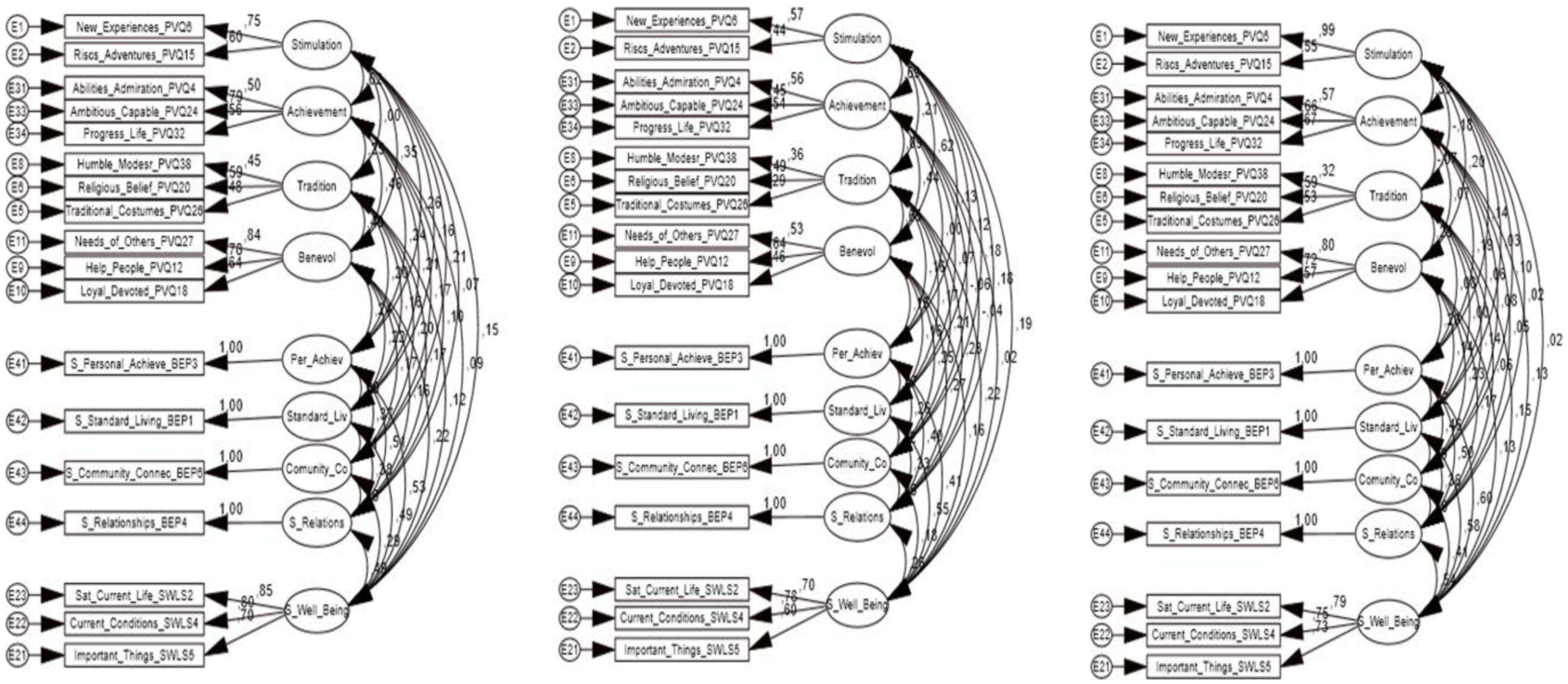
Global life satisfaction
The 5-item Satisfaction with Life Scale (SWLS; Diener et al., 1985; Neto, 1993) measures global judgments of LS on a seven-point scale, from 1 (Strongly Disagree) to 7 (Strongly Agree). A model with a latent variable specified by four observed variables, using a matrix database, yielded for each sample: U.S., χ22 = 3.99, p = .136, (CFI = .99; SRMR = .01); Mozambique, χ22 = 29.6, p = .000, (CFI = .96; SRMR = .04); and Portugal, χ22 = 10.8, p = .005, (CFI = .99; SRMR = .02). A multigroup model with three items freely estimated was χ20 = 0, (CFI = 1; SRMR = .02), with factor loadings above .59, and metric equivalence across samples (Δχ24 = 7, p = .136).
Satisfaction with life domains
The Personal Wellbeing Index (PWI: International Wellbeing Group, 2006; Pais-Ribeiro & Cummins, 2008) measures personal satisfaction with eight LDS/items: standard of living, health, achieving in life, relationships, safety, community connectedness, future security, and spirituality/religion. Participants responded to items using a 0–10 scale (Completely Dissatisfied to Completely Satisfied). Each domain contributed independently to the variance of GLS. So, a one-factor model with four observed variables (standard of living, personal achievement, relationships, and community connectedness), using a matrix database, fitted the data well in the three samples: U.S., χ22 = 11.59, p = .003, (CFI = .98; SRMR = .03); Mozambique, χ22 = 15.21, p < .001, (CFI = .96; SRMR = .04); and Portugal, χ22 = 17.4, p < .001, (CFI = .97; SRMR = .03). The baseline model yielded a χ26 = 44.24, p < .001, (CFI = .97; SRMR = .03), and measurement equivalence was obtained (Δχ26 = 6.8, p = .340). All the items’ factor loadings were above .41.
Procedure
After obtaining permission from the universities and teachers involved, students in the Mozambican and the Portuguese samples were invited, at the end of classes, to participate in a study about SWB and relationship experiences. Prior to accepting the survey, participants received a written informed consent explaining the objectives of the study, that their participation was anonymous and confidential and that no gratification or discomfort were expected as a result of their collaboration, and that they were allowed to answer only the questions they wanted and stop participating at any time with no penalty. The study procedures were all in accordance with the ethical standards of the American Psychological Association and the national ethics guidelines. An e-mail address of the researcher was given if there were any questions related to the research project. Data collection for the U.S. sample was identical, except that participants completed the questionnaire online and it was one option available for obtaining a course credit. Data was collected between 2010 and 2013, when approval of an ethics committee was not mandatory. The authors of the study do not have any conflict of interest or any other interest that might be interpreted as influencing the research. All databases, measures, informed consents, models tested and supplemental material are available at https://osf.io/ncrbk/?view_only=c6c41483cb2741b28e7b04e1b179676e
Statistical analysis
For the statistical analysis of the data, we used raw data. Due to missing data that was not missing completely at random, parameters were estimated using the maximum likelihood algorithm, with AMOS (18th version). Univariate outliers were substituted by the winsorizing method and multivariate outliers were deleted. As a first step, a confirmatory factorial analysis for each measure in the study was tested. Next, a multi-group measurement model was defined with all the latent variables in the study and the metric invariance of the factor loadings of the items across samples was tested. Finally, a structural model was specified, and the hypotheses of the study were tested by a structural invariance analysis. For the analysis of the significance of the mediation effects, the Sobel test was performed. Centered scores of personal values were used in all analyses, subtracting the mean values of each of the 40 items from the individual item values, and by doing so eliminating individual differences in the use of the response scale (Schwartz, 2009). For the effect size estimates, squared multiple correlations were estimated.
Results
A measurement model was specified with the four values (stimulation, achievement, tradition, benevolence); the GLS latent variable; and four LDS - standard of living, personal achievement, relationships, and community connectedness (Figure 1). The fit of the model in each sample was: χ2103 = 170.4, p < .05, (CFI = .97; SRMR = .04; RMSEA = .04, 90% CI [.027–.046]) in the American (factor loadings >.45); χ2103 = 203.1, p < .05, (CFI = .93; SRMR = .04; RMSEA = .04, 90% CI [.034–.051]) in the Mozambican (factor loadings >.29); and χ2103 = 286.6, p < .05, (CFI = .92; SRMR = .05; RMSEA = .06, 90% CI [.050–.066]) in the Portuguese (factor loadings >.32). Cross-country measurement equivalence was obtained by comparing a baseline multi-group model (χ2309 = 660, p < .05, (CFI = .94; SRMR = .04; RMSEA = .03, 90% CI [.024–.030]) with a model with all factor loadings constrained to be equal across samples, and the difference was not significant (Δχ218 = 20.6, p = .300).
Standardized estimates of the correlations between domain satisfaction, personal values and GLS, in each country.
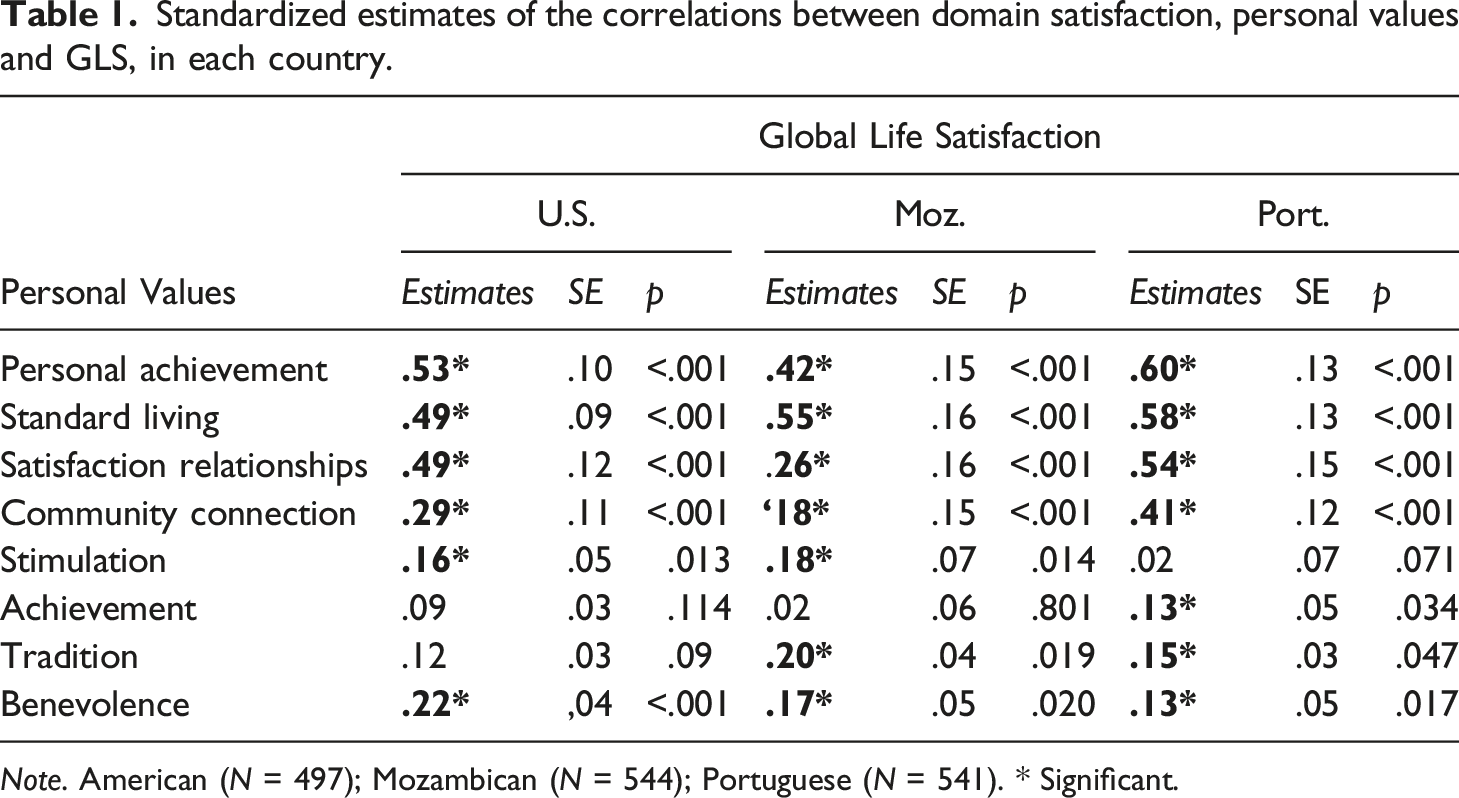
Note. American (N = 497); Mozambican (N = 544); Portuguese (N = 541). * Significant.
Structural differences of personal values as predictors of GLS, cross-cultural comparison
To test personal values as predictors of GLS, a structural model was defined where the four values were specified as IVs and GLS as DV (Supp. Material Figure 1). The baseline multi-group model yielded a χ2201 = 422.2, p < .05, (CFI = .95; SRMR = .04; RMSEA = .03, 90% CI [.023–.030]). According to the standardized estimates, only benevolence (.19, p < .05) in the U.S. and achievement in Portugal (.15, p < .05) significantly contributed to GLS, beyond the contribution of the other values. These structural models explained, respectively, 6% and 5% of variance of GLS, while in the Mozambican model none of the four values significantly predicted GLS (with 10% of variance explained), suggesting that personal values were sharing variance in predicting GLS.
(a) Estimates of the structural model of personal values as predictors of GLS. (b) Estimates of the structural model of satisfaction with life domains as predictors of GLS.
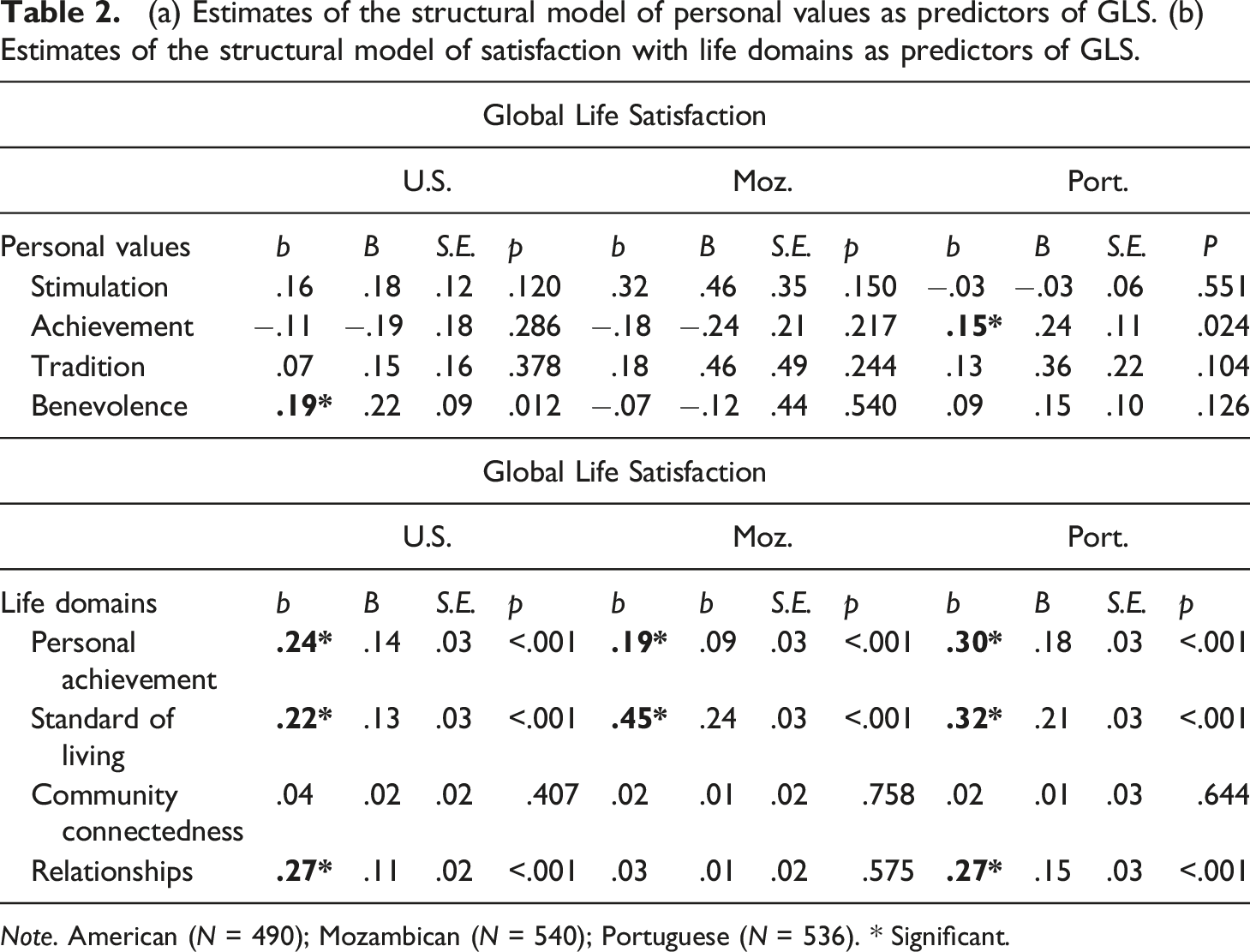
Note. American (N = 490); Mozambican (N = 540); Portuguese (N = 536). * Significant.
Mediation effects of life satisfaction domains between personal values and GLS
In a final step, the hypotheses that materialistic LDS have a mediating effect between self-protection values (IIIa) and GLS; and that post-materialistic LDS have a mediating effect between self-transcendence values and GLS (IIIb) were tested. To this end, we specified four models: Model 1A—where satisfaction with community connection was a mediator between benevolence and GLS and where satisfaction with standard of living was a mediator between achievement and GLS, yielding a χ2274 = 591.9, p < .0001, (CFI = .93; SRMR = .05; RMSEA = .03, 90% CI [.024–.030]; Figure 2); Model 1B—where satisfaction with community connection was a mediator between stimulation and GLS and where satisfaction with standard of living was a mediator between tradition value and GLS, yielding a χ2274 = 621, p < .0001, (CFI = .93; SRMR = .05 RMSEA = .03, 90% CI [.026–.031]); Model 2A—where satisfaction with relationships was defined as a mediator between stimulation value and GLS and satisfaction with achievement was defined as a mediator between achievement value and GLS, yielding a χ2274 = 564, p < .0001, (CFI = .94; SRMR = .05 RMSEA = .03, 90% CI [.023–.029]); and, Model 2B—where satisfaction with relationships was defined as a mediator between benevolence value and GLS and satisfaction with achievement was defined as a mediator between tradition value and GLS, yielding a χ2274 = 562.1, p < .000, (CFI = .94; SRMR = .05 RMSEA = .03, 90% CI [.023–.029]).
2
Domain satisfaction as mediators of the structural effect of personal values in global life satisfaction: Model 1B (up) Mozambican sample; Model 2A (down) U.S. Sample, standardized estimates.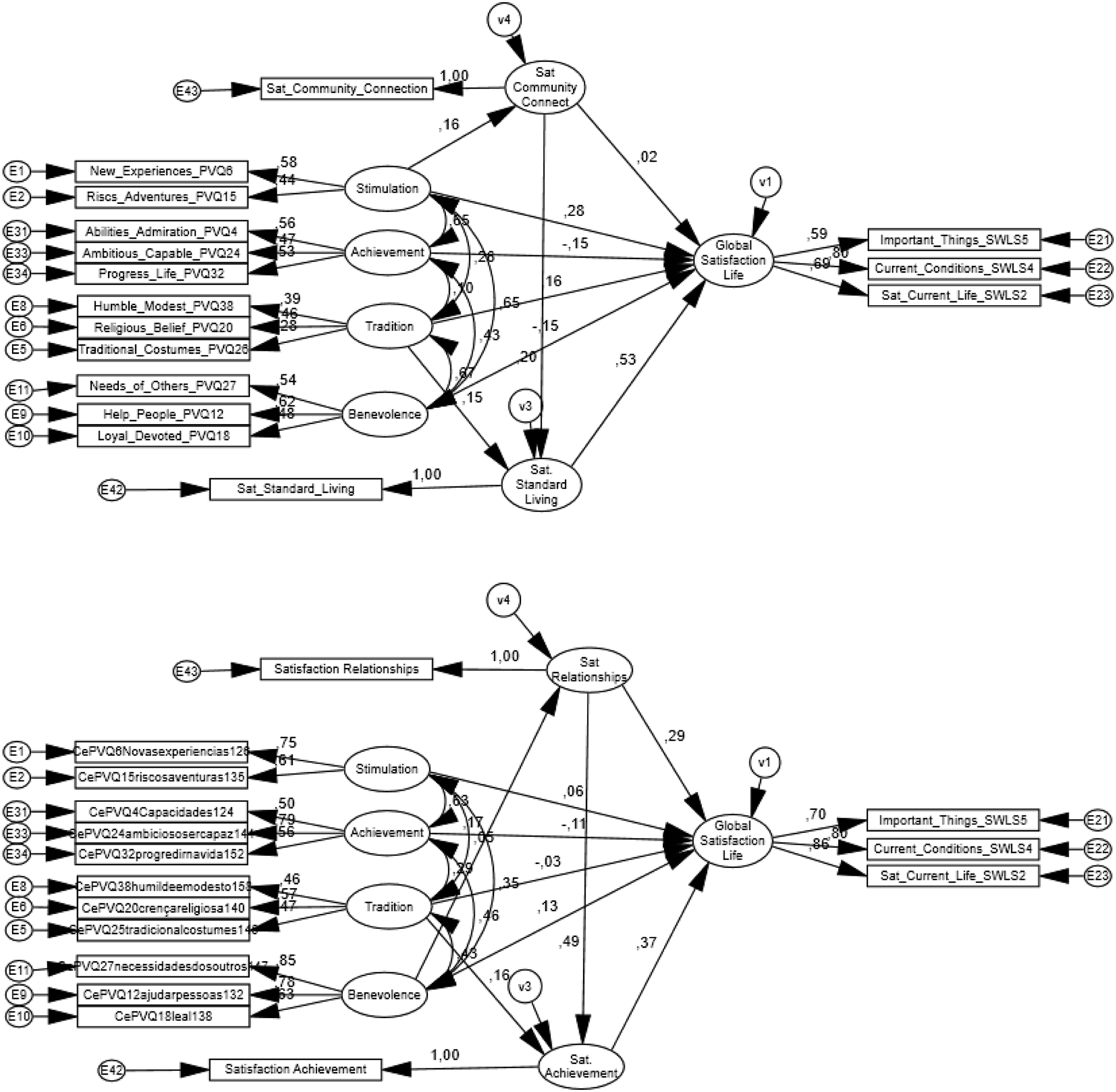
Mediating effects of life satisfaction domains between personal values and GLS.
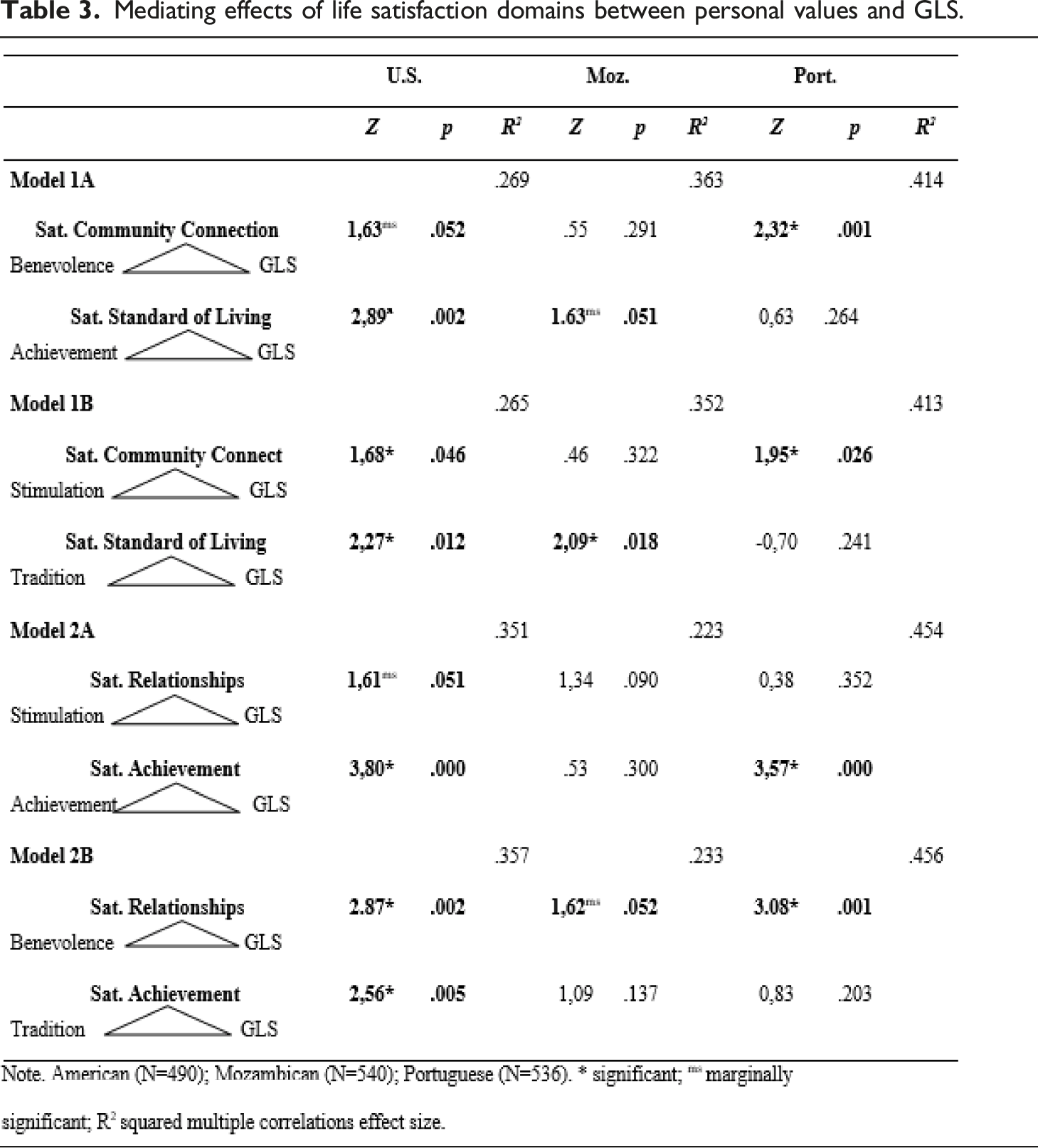
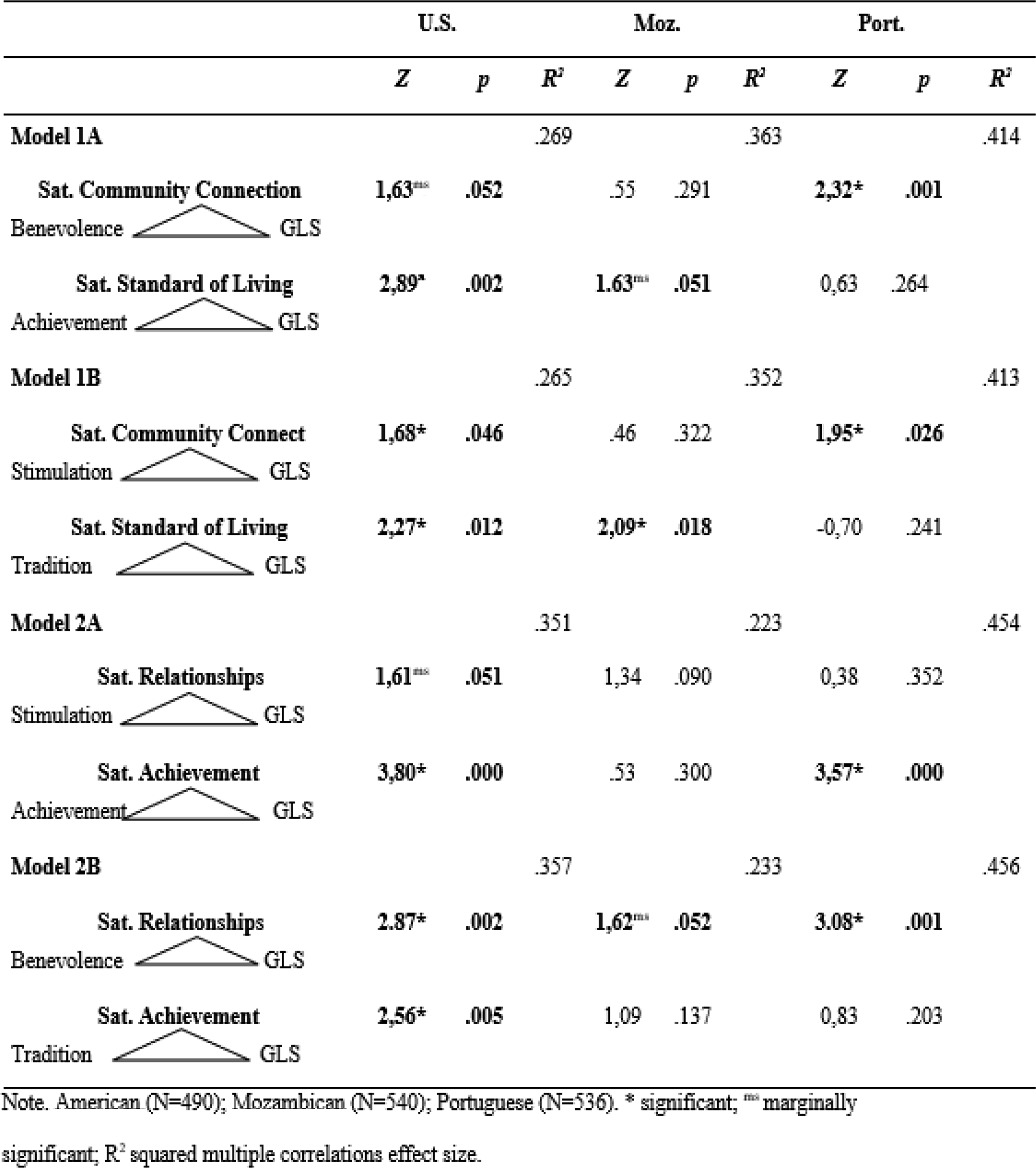
Interestingly, all mediation effects were significant in the U.S. sample, fully confirming hypotheses IIIa and b, although only partially confirming them in the Portuguese and Mozambican samples. Satisfaction with relationships was a significant mediator between benevolence and GLS in all samples, confirming hypothesis IIIa in this mediation.
Discussion
Personal values contribute to well-being in direct and indirect ways, which have practical implications for individuals and society. Sagiv et al. (2017) identified three theories on the relation between values and well-being, however empirical support of these theories is sparce and inconsistent across studies. In the current study, hypotheses were tested related with two of those theories: (a) the healthy values perspective that focuses on the content of values and proposes that endorsing healthy values, such as growth values is positively related with well-being, whereas endorsing self-protection values may be detrimental for well-being (Bilsky & Schwartz, 1994; Deci & Ryan, 2008; Ryan & Deci, 2002); and (2) the person-environment value congruency perspective focuses on the context and assumes that values are likely to lead to well-being when they are congruent to the prevailing cultural and socioeconomic environment, focusing on the importance of the fit between the individuals’ personal values and their living contexts (Oishi et al., 1999b; Suh et al., 1998; Triandis, 1995; Sagiv & Schwartz, 2022). Finally, a process oriented perspective argues that besides the direct contribution of personal values on SWB, it is important to search for the indirect processes in which personal values contribute to GLS. For example, how LDS mediate the effects of personal values on GLS. The results for each perspective are discussed below (see Table 1 of supplemental material for personal values classification).
Association between personal values and global life satisfaction
The correlational results of this study partially support the healthy values theory (hypothesis I), because benevolence, which is a healthy value, was significantly associated with GLS in the three countries’ samples, suggesting that “preserving and enhancing the welfare of others around us” fosters relationship satisfaction and is critical for well-being. Yet, other healthy values measured in this study (such as stimulation) or unhealthy values (such as tradition) did not significantly associate with SWB in the three samples. In fact, the American data was the one that most closely reflected this perspective, as the healthy values of benevolence and stimulation were positively associated with GLS and not the unhealthy value of tradition. However, the Mozambican and the Portuguese data did not, as the unhealthy value of tradition was the higher correlate of GLS in both countries. Maybe the healthy values perspective is more suitable in highly developed countries like the U.S., or it is more consistent with the specific U.S. cultural values.
The correlational results also only partially support the person-environment congruency value perspective. In accordance with the hypothesis IIa, results show that social-focus values (such as benevolence and tradition) are significantly correlated with GLS in both collectivist countries—Mozambique, and Portugal. However, the positive association of stimulation with GLS in Mozambique and of achievement with GLS in Portugal (both personal-focus values) would rather be expected in more individualistic countries. These associations may also be explained by other dominant cultural values in those countries, such as the very high level of indulgence (80% estimated score) in Mozambique—emphasizing personal enjoyment over restraint, and weaker control of impulses —and the extremely high level of uncertainty avoidance (99%) in Portugal—conveying a collective use of rigid codes and rules, as well as hard work, creating a sense of security in the future (Hofstede et al., 2010; Supp. Material, Table 2).
In the U.S. sample the correlation of stimulation (a personal-focus value) with GLS also supports the cultural fit hypothesis, while the correlation of benevolence (a social-focus value) with GLS does not. Being a highly individualistic country (91%), it is expected that personal-focus values would be more strongly associated with GLS and not social-focus values. The higher benevolence in the US may be better explained by the cultural values of liberty and justice for all, and of caring for close ones (Hofstede et al., 2010), or by the higher socioeconomic level of the country (Sortheix & Lönnqvist, 2014).
The correlational results also partially support the person-environment values congruency perspective, related with the developmental level of the countries, stated in hypothesis IIb. As expected, in the most developed country, namely the U.S. (HDI 91), the growth or self-transcendence value of benevolence was significantly associated with GLS, while the self-enhancement value of achievement was not. In Mozambique, however, with a low development level (HDI 39), the self-enhancement value of achievement was not significantly correlated with GLS, while benevolence was, which is contrary to this perspective. In Portugal, a medium-developed country (HDI 82), where basic needs are satisfied, the positive association of the self-transcendence value of benevolence and the conservation value of tradition with GLS are in line with this perspective, while the positive association of the self-enhancement value of achievement with GLS is not. This result would rather be expected in low HDI countries. However, a high score in achievement value in Portugal was also found in the study of Weckroth and Kemppainen (2016), based on the European Social Survey data.
In summary, the correlations between the four personal values measured in this study and GLS were not universal across countries, as proposed by the healthy values, except benevolence. Results suggest that the associations may rather be shaped by the salient cultural traits of the countries or by their socioeconomic context, as also found in previous studies with European samples (Sortheix & Lönnqvist, 2014; Sortheix & Schwartz, 2017). It should also be noted that because personal values are organized in a circular structure with several higher order classifications (Table 1, supplemental material), multiple interpretations of the results are possible, varying according to each hypothesis.
Cross-cultural differences in personal values as predictors of global life satisfaction
In addition to the association analyses, differences across countries were tested, showing that the three countries’ samples were similar in the effect of benevolence (growth value) on GLS. These results support the healthy values perspective (hypothesis I), in which benevolence is expected to be universally associated with GLS. However, another healthy value such as stimulation did not positively associate with GLS in the three samples, but only in the U.S. and Mozambique. Furthermore, the unhealthy value of tradition associated positively with GLS in Mozambique and Portugal, not supporting this perspective, and giving more support to the cultural fit theory.
The Mozambican and the Portuguese samples were more alike in the association of tradition (a social focus value) to GLS, and different from the U.S., where tradition was not a significant predictor, supporting the cultural congruence fit theory. Interpreting these results based on the differences and similarities across countries, following the triangulation strategy (Norenzayan & Heine, 2005), both collectivist countries were more alike in the contribution of the social-focus value of tradition to GLS and different from Americans (individualistic), for whom tradition was not a significant predictor of GLS. According with the cultural congruency values perspective rational, social-focus values such as tradition (related to the commitment and acceptance of the customs and ideas of one’s culture) are positively associated with GLS in collectivist countries where harmony with one’s social groups and norms are important (Hofstede et al., 2010; Triandis, 1989; Suh et al., 1998), which is supported by the results.
On the other hand, the U.S. and the Mozambican samples were more alike in the contribution of stimulation (an openness to change value) and the non-significant contribution of achievement (a self-enhancement value) to GLS, and different from the Portuguese one, where stimulation did not significantly predict GLS, and achievement was its main predictor. These results are not fully consistent with any of the theories, except in the U.S. sample that support the cultural congruency theory, because personal-focus values such as stimulation (related with excitement, novelty, and challenge in life) are more congruent with individualistic cultures and expected to be associated with GLS in those, but not in the Mozambican sample (Kitayama & Markus, 1995; Suh et al., 1998). A more suitable interpretation for this result according to cultural fit theory would be the probable contribution of the high level of indulgence (80% estimated score) in Mozambique (Hofstede et al., 2010), as previously discussed “emphasizing personal enjoyment over restraint.”
The fact that the personal-focus value of achievement (related to personal success through demonstrated competence) was not significant in the Mozambican sample may be explained by the country’s high level of collectivism, according to the cultural fit perspective (Oishi et al., 1999b; Triandis, 1995). However, achievement being a self-enhancement value, it is expected to be associated with GLS in a low developmental country as Mozambique and it was not. Therefore, this result rather supports the role of culture (hypothesis IIa) in shaping the relationship between personal values and LS, instead of the socioeconomic context (hypothesis IIb). In turn, the non-significant contribution of achievement to GLS, in the U.S., along with the significant contribution of benevolence (a self-transcendence value) to GLS, is more in line with the socioeconomic level of the country (hypothesis IIb; Sagiv et al., 2015; Sagiv & Schwartz, 2022; Sortheix & Lönnqvist, 2014). Because in highly developed countries people have more resources and are more willing to embrace self-transcendence values such as benevolence, rather than self-enhancement values such as achievement, which are more adaptive values where the resources are scarce (Sortheix & Lönnqvist, 2014). Other results partially supported this perspective, like the association of benevolence (self-transcendence value) with GLS in Portugal (a medium developed world country, still one of the poorest in Europe), while other results did not, like the association of achievement (self-enhancement value) with GLS in Portugal and not in Mozambique, a low development country.
In sum, correlational and structural comparison results across countries provided partial support to both theories tested in the hypotheses: the healthy values perspective (Bilsky & Schwartz, 1994; Deci & Ryan, 2008; Ryan & Deci, 2002); and the person environment congruency values perspective, either related with the dominant cultural values of each country (Kitayama & Markus, 1995; Li & Hamamura, 2010; Oishi et al., 1999b; Suh et al., 1998; Triandis, 1995; Sagiv et al., 2015; Sagiv & Schwartz, 2022) or with the socioeconomic level of each country (Sagiv et al., 2015; Sortheix & Lönnqvist, 2014). Similar results were observed in previous studies with European samples, also only partially supporting the existing theoretical models (Sortheix & Lönnqvist, 2014; Sortheix & Schwartz, 2017). However, the results of this study, with the four values measured, seems to support the cultural congruency values perspective more, considering the individualism-collectivism of the countries, but also considering other dominant cultural values of the context, such as indulgence and uncertainty avoidance, as well as the socioeconomic level of the countries.
Mediating effects of life domain satisfaction between personal values and global life satisfaction
Finally, as personal values are shown to make a small direct contribution to SWB, a line of research demonstrates the importance of searching for the mediating factors through which personal values indirectly contribute to SWB. For instance, the ways in which LDS mediate the effects between personal values and GLS (Oishi et al., 1999a; Oishi & Sullivan, 2005).
In this study, mediation analysis results fully confirmed the hypotheses IIIa and IIIb in the American sample. In individuals who valued self-protection values more (e.g., tradition and achievement), materialistic LDS (e.g., standard of living and achievement satisfaction) contributed significantly more to GLS. Also, for individuals who valued growth values more (e.g., benevolence and stimulation), post-materialistic LDS (e.g., satisfaction with relationships and with community connection) contributed more to GLS. In the Mozambican and Portuguese samples, these hypotheses received only partial support. In the Mozambican sample, higher achievement and tradition values predicted a higher contribution of standard of living to GLS. In the Portuguese sample, higher benevolence and stimulation values, predicted a higher contribution of satisfaction with community connection to GLS; and, naturally, higher achievement values predicted a higher contribution of achievement to GLS. Notably, the mediation effect of satisfaction with relationships between benevolence and GLS was significant in the three samples, suggesting that satisfaction with relationships’ contribution to GLS is related to the self-transcendent value of benevolence.
In sum, results confirmed the hypotheses that LDS are significant mediators of the effects of related personal values on GLS (Oishi et al., 1999a; Oishi & Sullivan, 2005), showing interesting paths by which personal values contribute to GLS. The fact that not all mediators worked the same way across samples in our study, suggests that the mediation effects between personal values and GLS may also be moderated by the cultural context, giving more support to the cultural fit perspective (Oishi et al., 1999b; Sagiv et al., 2015; Sagiv & Schwartz, 2022; Schimmack et al., 2002).
Cross-cultural comparison of life domain satisfaction to global life satisfaction
Interestingly, the structural effects of LDS on GLS varied significantly across countries. In the US sample, satisfaction with relationships was the strongest predictor of GLS, whereas in the Portuguese sample it was the third, after satisfaction with achievement in life and standard of living, while in the Mozambican sample it was not significant, after satisfaction with one’s standard of living and achievement. The results seem to express some kind of deprivation effect, as satisfaction with standard of living is more important to GLS in Mozambique (a less developed country), while satisfaction with relationships is more important in the U.S., the most highly developed country, which is consistent with previous findings (Dittmar, 2008; Howell & Howell, 2008) and with the notion that materialistic/extrinsic LDS are stronger predictors of GLS in poorer countries compared with the wealthier ones, more oriented towards post-materialistic values (Inglehart, 1977; Schimmack et al., 2005; Veenhoven, 1999).
Conclusion
Personal values and LDS differently predicted GLS across American, Mozambican, and Portuguese samples. The two theories on the relationship between values and well-being received partial support from the data, suggesting that each may be explaining different aspects of the phenomenon. However, the person-environment congruency value received the most empirical support, suggesting that the relationship between personal values and LS may be shaped not only by the individualism-collectivism of the countries, but also by other dominant values in the context, as well as the socioeconomic development of countries. Also, LDS mediated the effects of personal values on GLS in the three samples, showing the processes by which personal values indirectly contribute to well-being.
Limitations
Limitations of the study are the reliance on non-representative samples of university students limiting the external validity of the results. The cultural context of the samples was analyzed more broadly, however not controlling for other social or department affiliations of the individuals that may also contribute towards explaining the associations between values and LS. For example, demographic information such as gender, sexual orientation, income, employment and socioeconomic status, social class, residency, and disability were not collected. Also, the use of only four personal values and the cognitive dimension of SWB is a limitation in the context of SEM analysis related to the number of latent variables that can be reliably estimated in one model and with the criteria for obtaining measurement equivalence across cultures. Further, our study is cross-sectional not allowing for causal direction analyses between the model variables. Finally, the data of this study was collected between 2010 and 2013, reflecting the reality of that pre-pandemic period.
Theoretical and practical implications
The relation of personal values to SWB is complex and the existing theories highlight the contribution of several factors such as the personal intrinsic motivations, the dominant cultural values and the socioeconomic context, which are partially empirically supported. Further studies are needed with samples from outside Europe to test the consistency of the results and to analyze the conditions and processes by which each factor contributes more or less to the association of values and well-being. Moreover, the improvement and integration of the three theories’ perspectives in this study has practical implications for educators, counselors and leaders in supporting both individuals and society to achieve a more successful socialization and happiness.
Footnotes
Declaration of conflicting interests
The author(s) declared no potential conflicts of interest with respect to the research, authorship, and/or publication of this article.
Funding
The author(s) disclosed receipt of the following financial support for the research, authorship, and/or publication of this article: This work was supported by The Sciences and Technology Foundation (BPD/26479/2006).
